



Choosing the right portable Bluetooth speaker can feel overwhelming with so many options flooding the market. Two standout models from JBL's lineup—the Charge 4 and the Xtreme 4—represent different philosophies in portable audio design. While both deliver that signature JBL sound quality, they target distinctly different user needs and budgets.
At the time of writing, these speakers sit in completely different price tiers, with the Charge 4 positioned as an affordable everyday option and the Xtreme 4 commanding premium pricing for its advanced features. Understanding which approach works better for your lifestyle requires diving into what makes each speaker unique.
Before jumping into specifics, it's worth understanding what separates good portable speakers from great ones. The fundamental challenge with any portable speaker is physics—larger drivers (the components that produce sound) generally create better bass and overall sound quality, but they also mean bigger, heavier speakers that are harder to carry around.
Frequency response refers to how well a speaker reproduces different sound frequencies, from deep bass (low frequencies around 60Hz) to crisp treble (high frequencies up to 20,000Hz). Most portable speakers struggle with the lowest bass frequencies simply because they lack the physical space for large drivers.
Power output, measured in watts RMS (Root Mean Square), tells you how much continuous power the speaker can handle. Higher wattage generally means louder potential volume, but driver quality and speaker design matter just as much for actual performance.
Signal-to-noise ratio measures how much unwanted background noise the speaker produces relative to the music signal. A ratio above 80dB is considered good for portable speakers, ensuring clean sound reproduction.
The real decision comes down to balancing these technical factors with practical considerations: How portable do you need the speaker to be? What's your budget? Where will you primarily use it?
The JBL Charge 4 launched in 2019 as JBL's answer to the growing demand for versatile, affordable portable speakers. Its key innovation was combining decent sound quality with a built-in powerbank feature—something that set it apart from competitors at the time.
The JBL Xtreme 4, arriving in 2024, represents JBL's latest thinking on premium portable audio. Five years of technological advancement show in its revolutionary swappable battery system, upgraded Bluetooth connectivity, and significantly more powerful audio hardware.
This generational gap matters because Bluetooth technology, battery efficiency, and digital signal processing have all improved dramatically in recent years. The Xtreme 4 benefits from Bluetooth 5.3 (versus the Charge 4's Bluetooth 4.2), offering better range, more stable connections, and improved power efficiency.
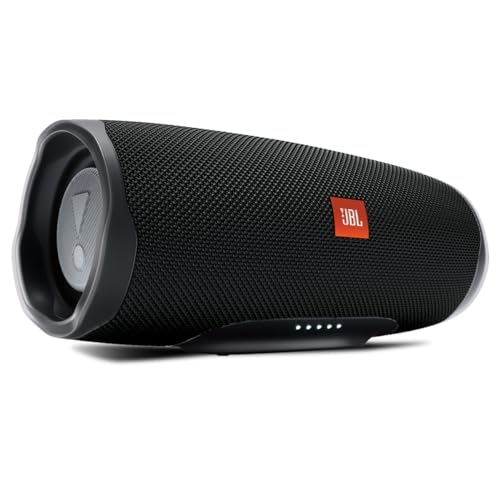
The most immediately obvious difference between these speakers is size. The Charge 4 measures roughly 8.7 inches long and weighs just over 2 pounds, making it genuinely pocketable for larger pockets or easily tossed into any bag. Its cylindrical design feels natural to carry and fits comfortably in most car cup holders.
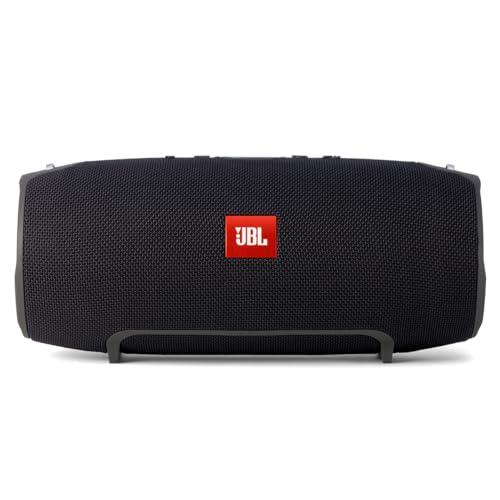
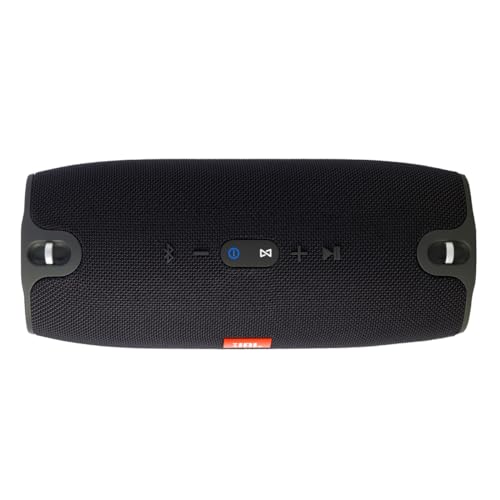
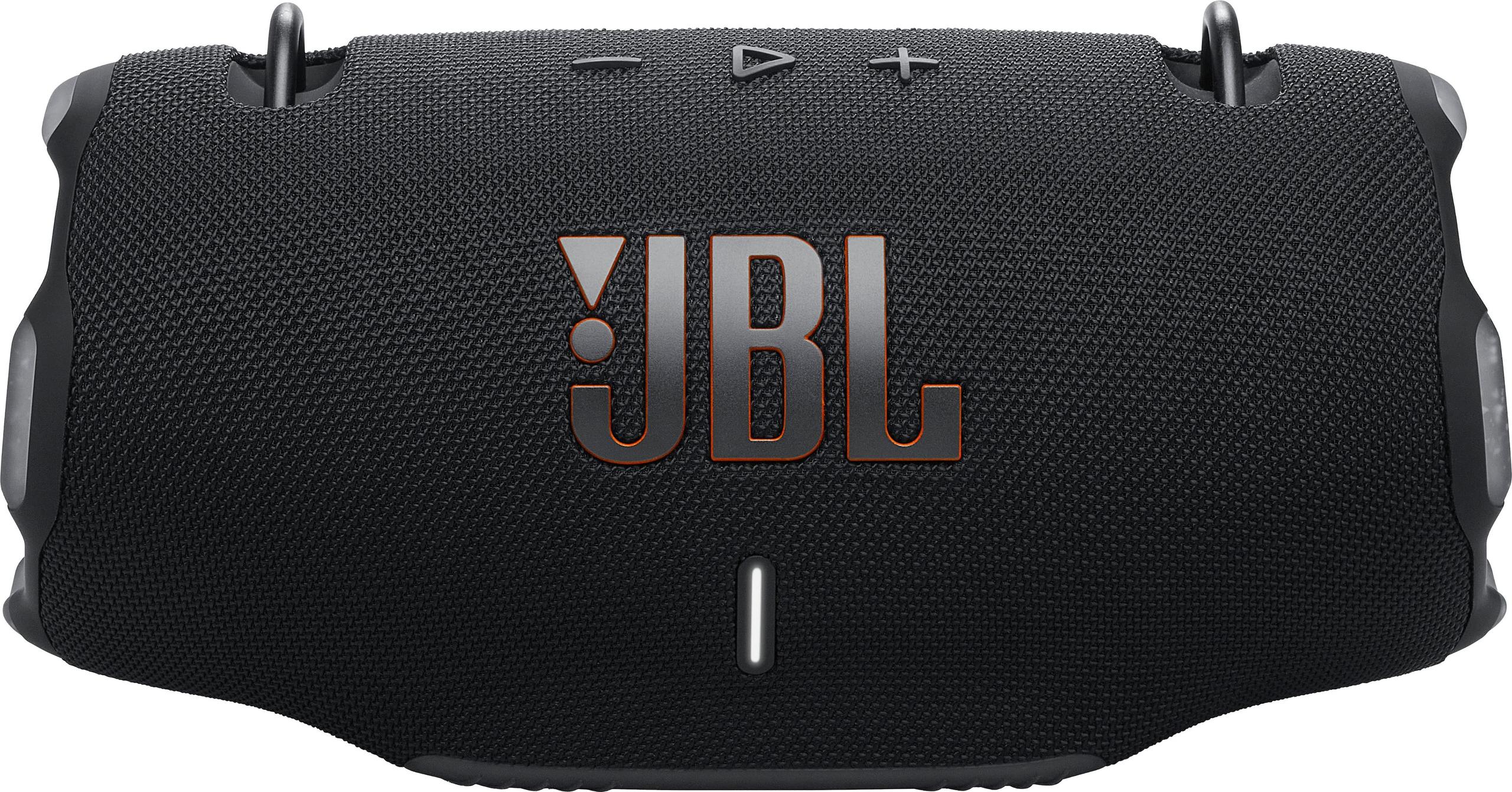
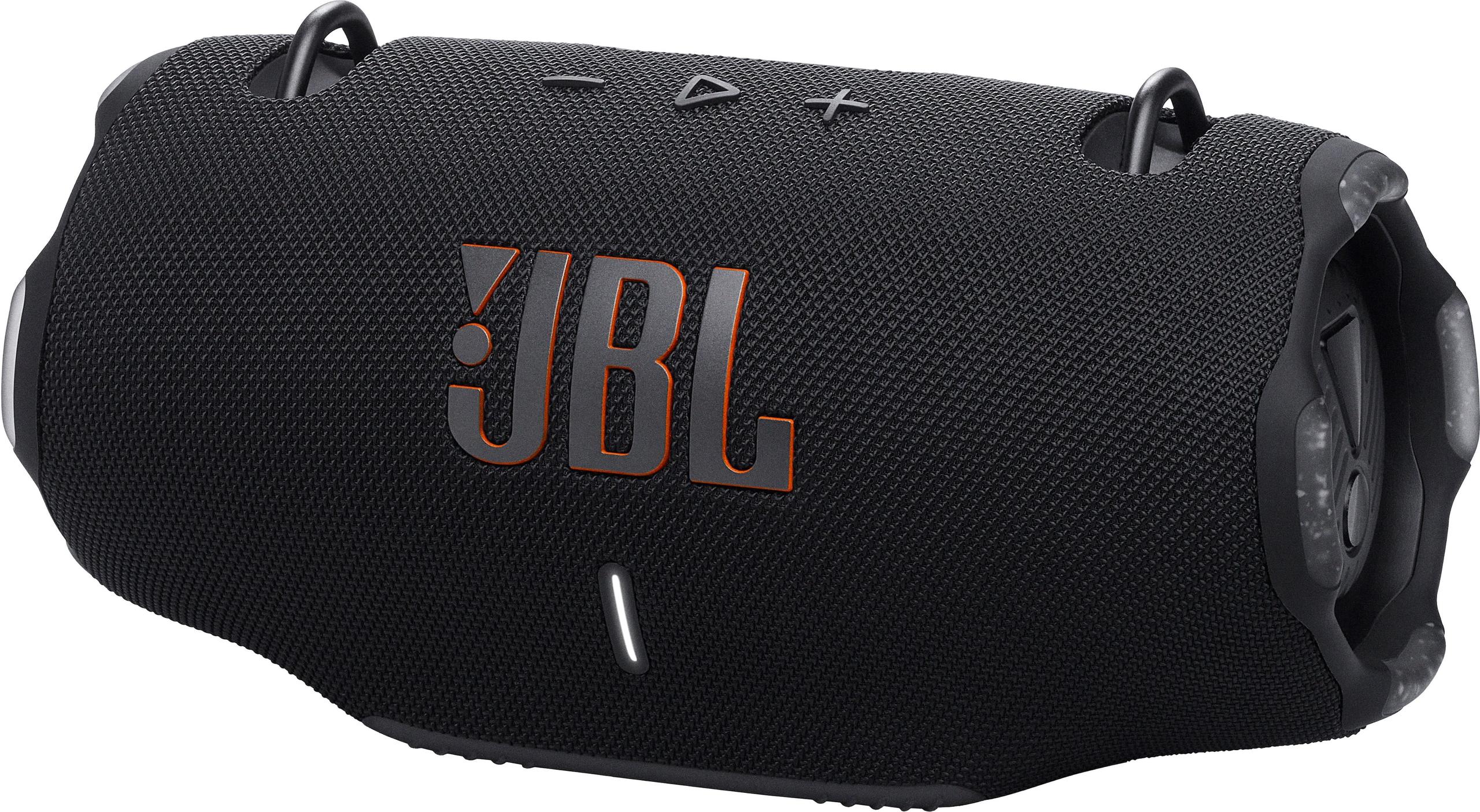
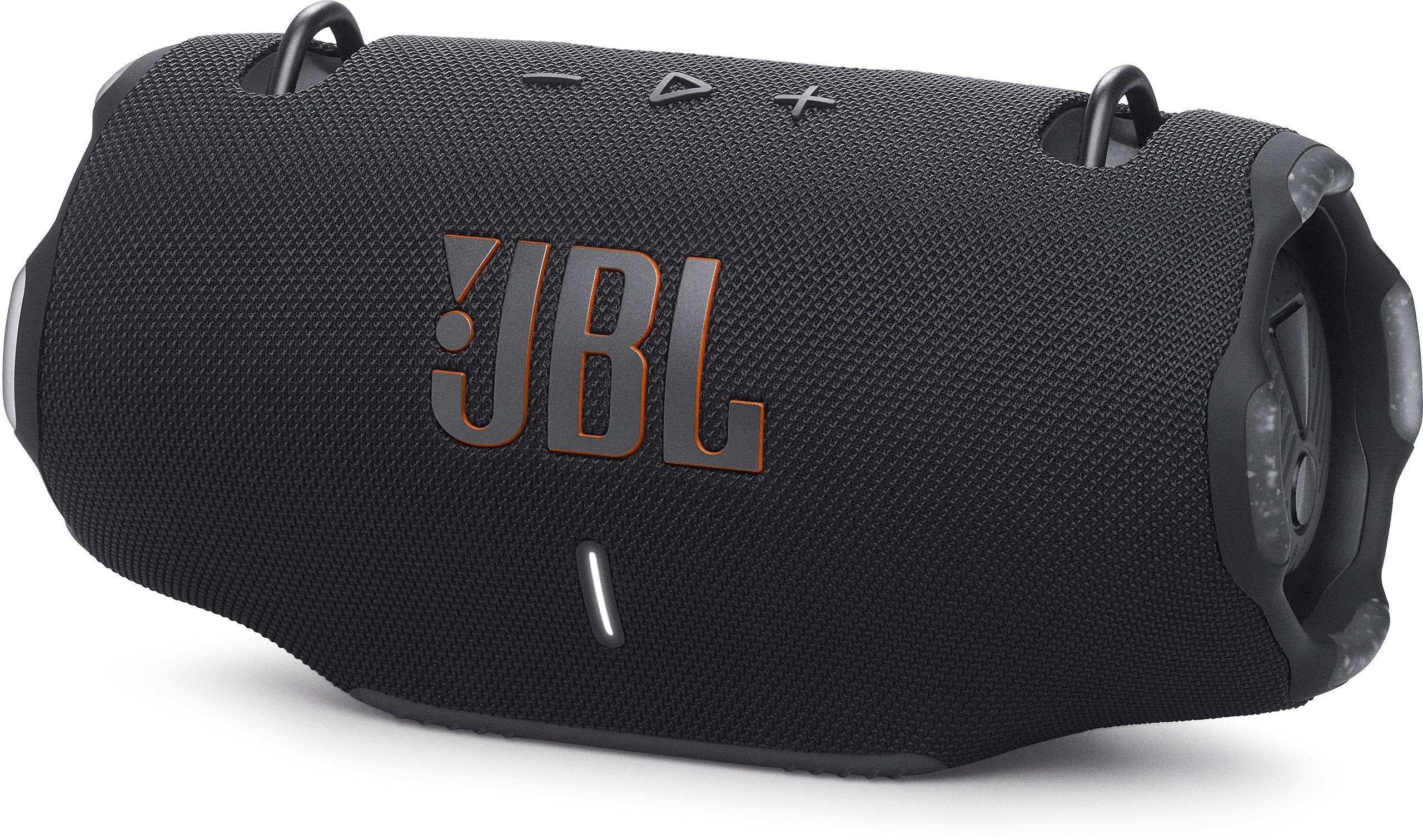
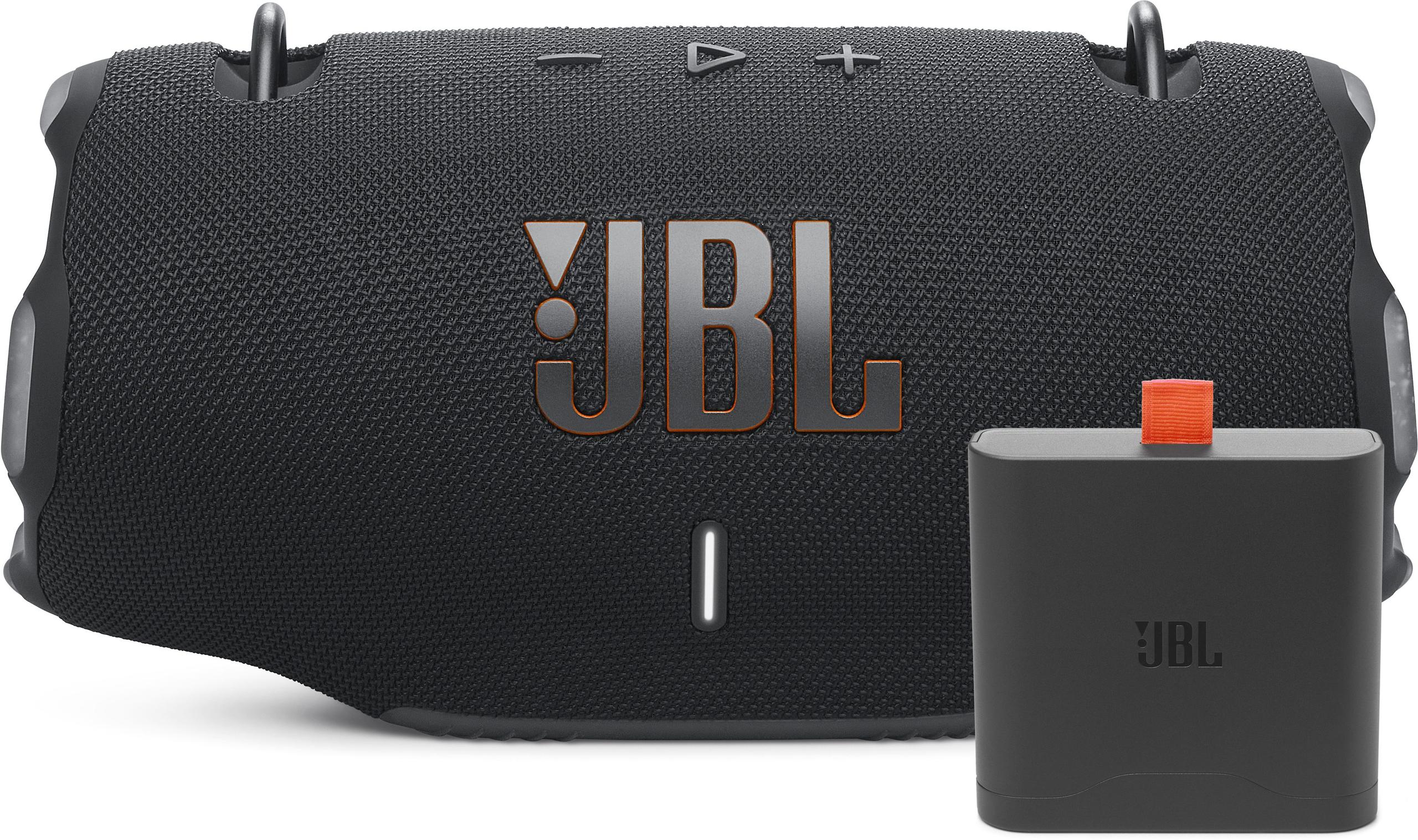
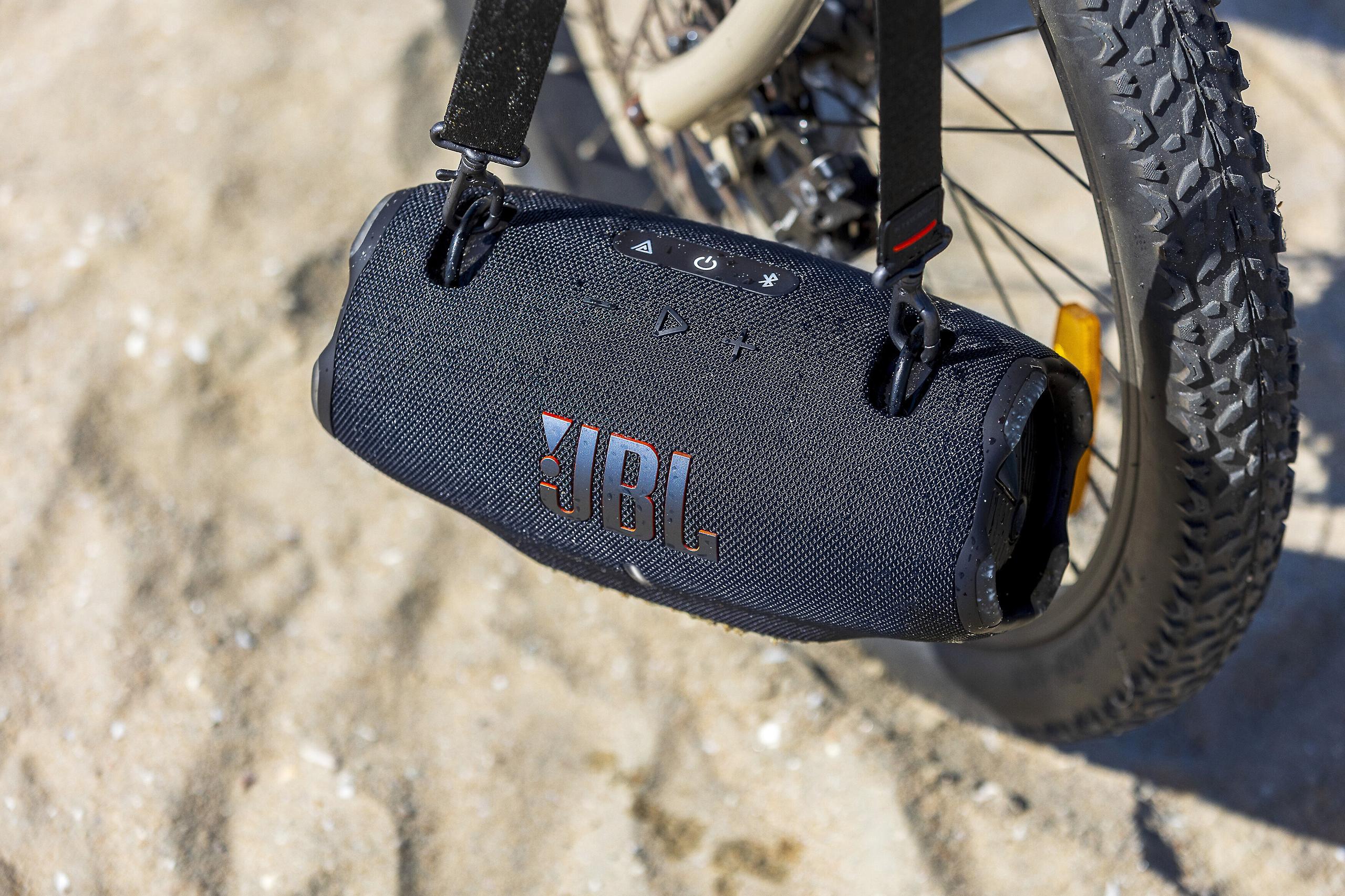
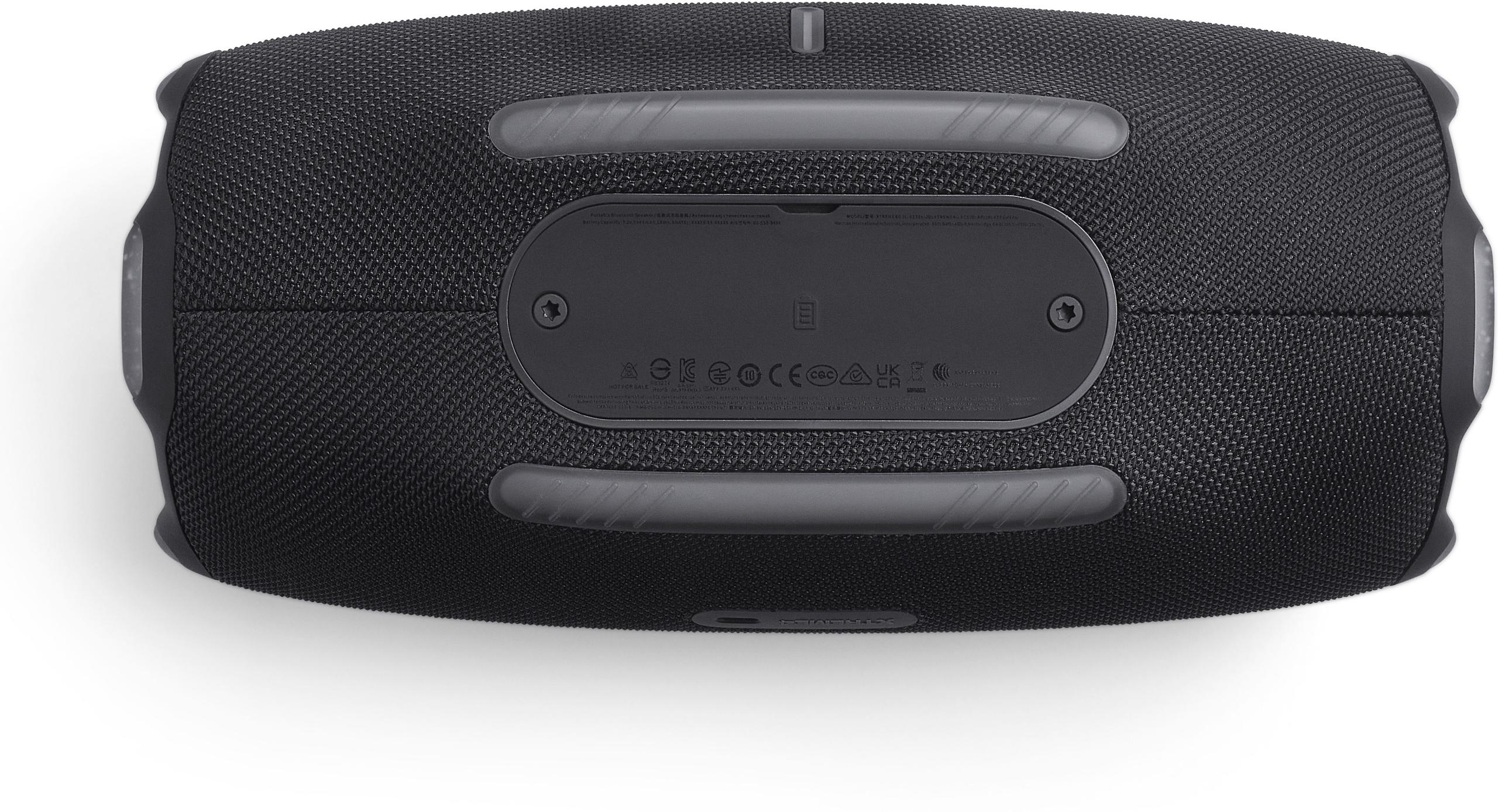
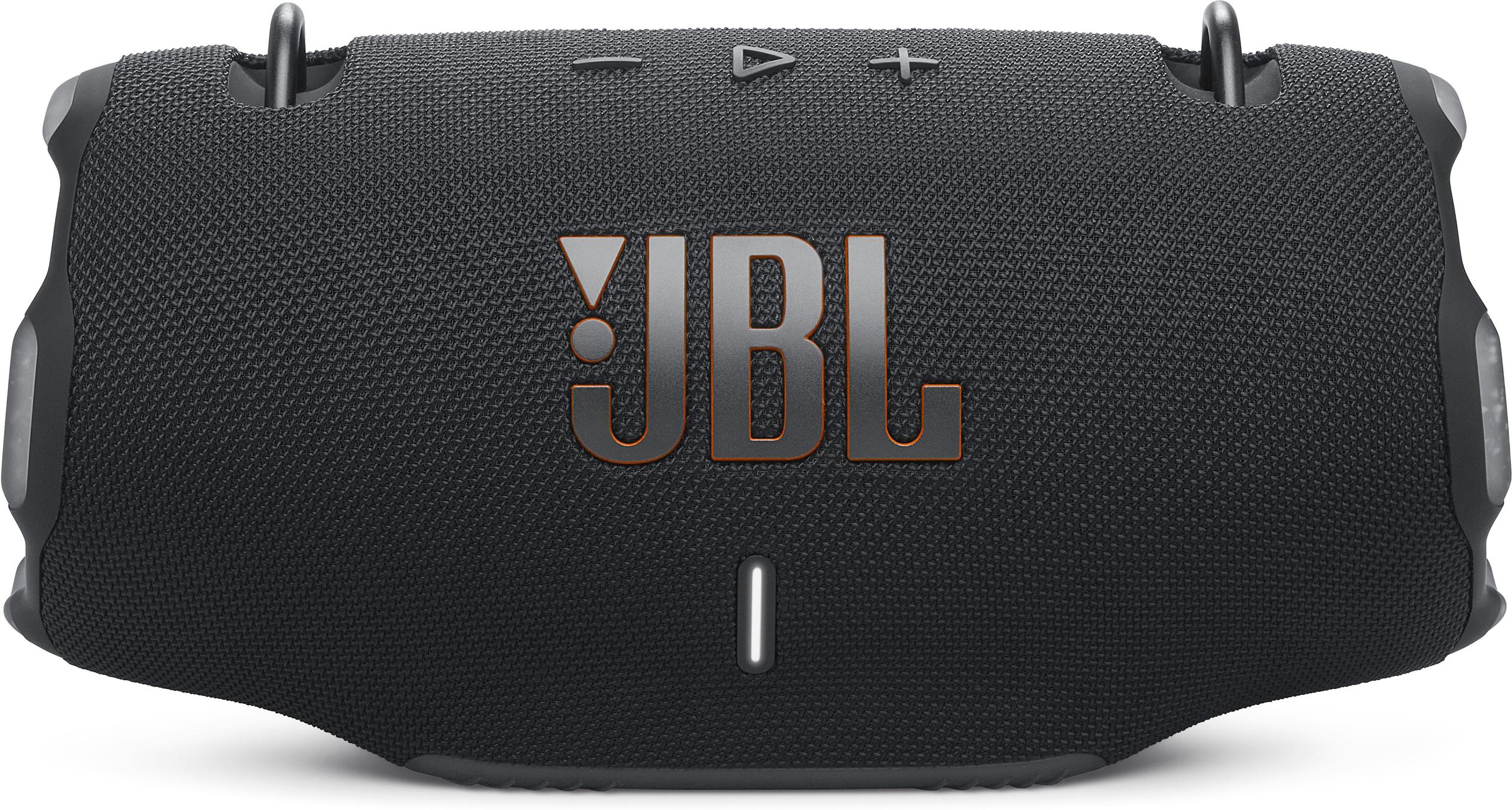
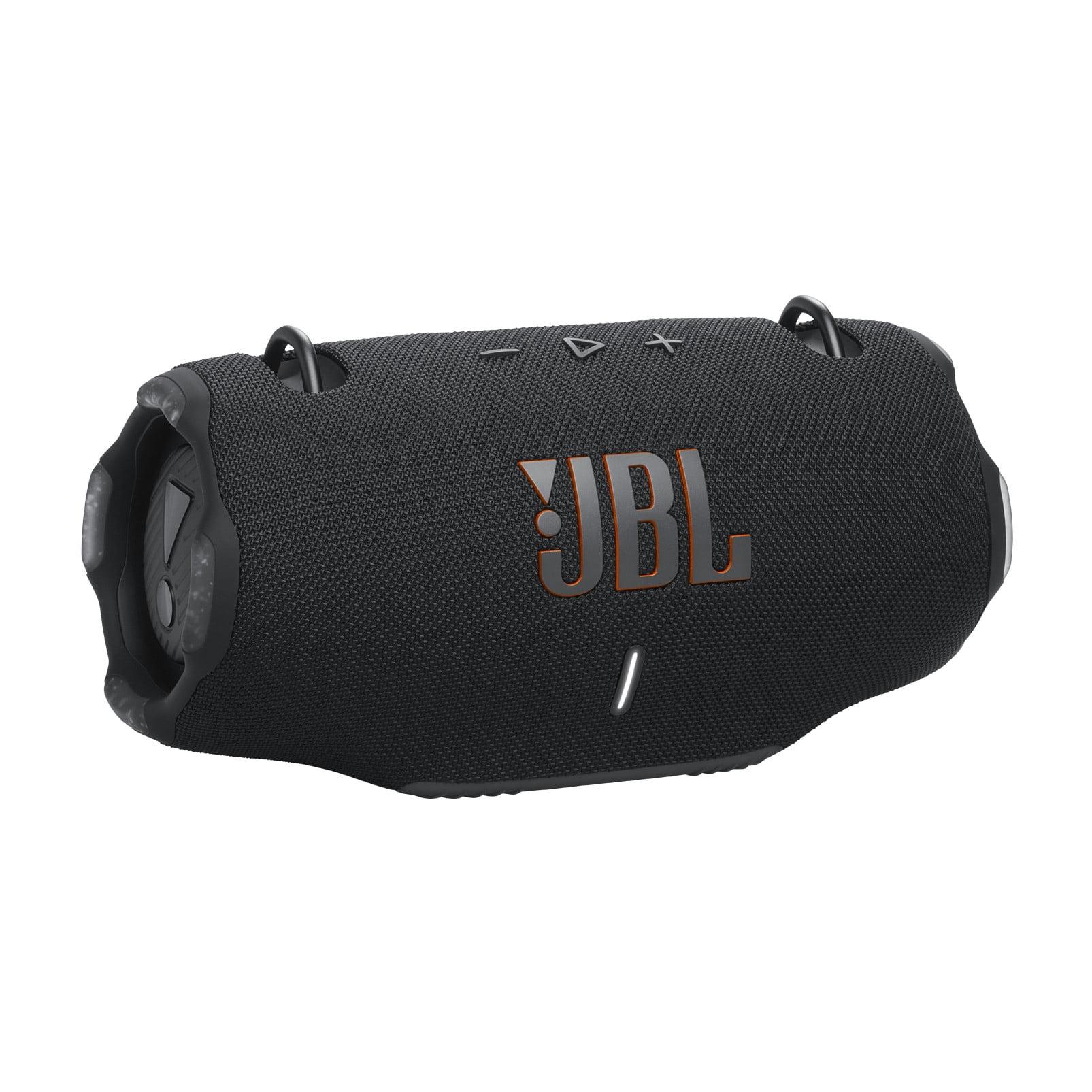
The Xtreme 4, at nearly 12 inches long and over 4 pounds, clearly prioritizes performance over ultimate portability. JBL includes a shoulder strap (with a built-in bottle opener—a nice touch), acknowledging that this isn't a speaker you'll casually slip into a backpack. The rectangular design is more furniture-like, meant to sit prominently rather than hide away.
This size difference directly impacts how you'll use each speaker. The Charge 4 excels as a personal audio companion—perfect for solo listening, small gatherings, or situations where you need to move frequently. The Xtreme 4 is clearly designed for stationary use where audio quality trumps convenience.
Here's where the differences become dramatic and the Xtreme 4's premium pricing starts to justify itself.
The Charge 4 delivers 30 watts RMS through a single racetrack-shaped driver and dual passive radiators (components that enhance bass without requiring additional power). This setup produces respectable volume for personal listening and can adequately fill small to medium rooms. However, our research into user experiences reveals that pushing the Charge 4 to maximum volume results in noticeable audio compression—the sound becomes less dynamic and instruments start blending together.
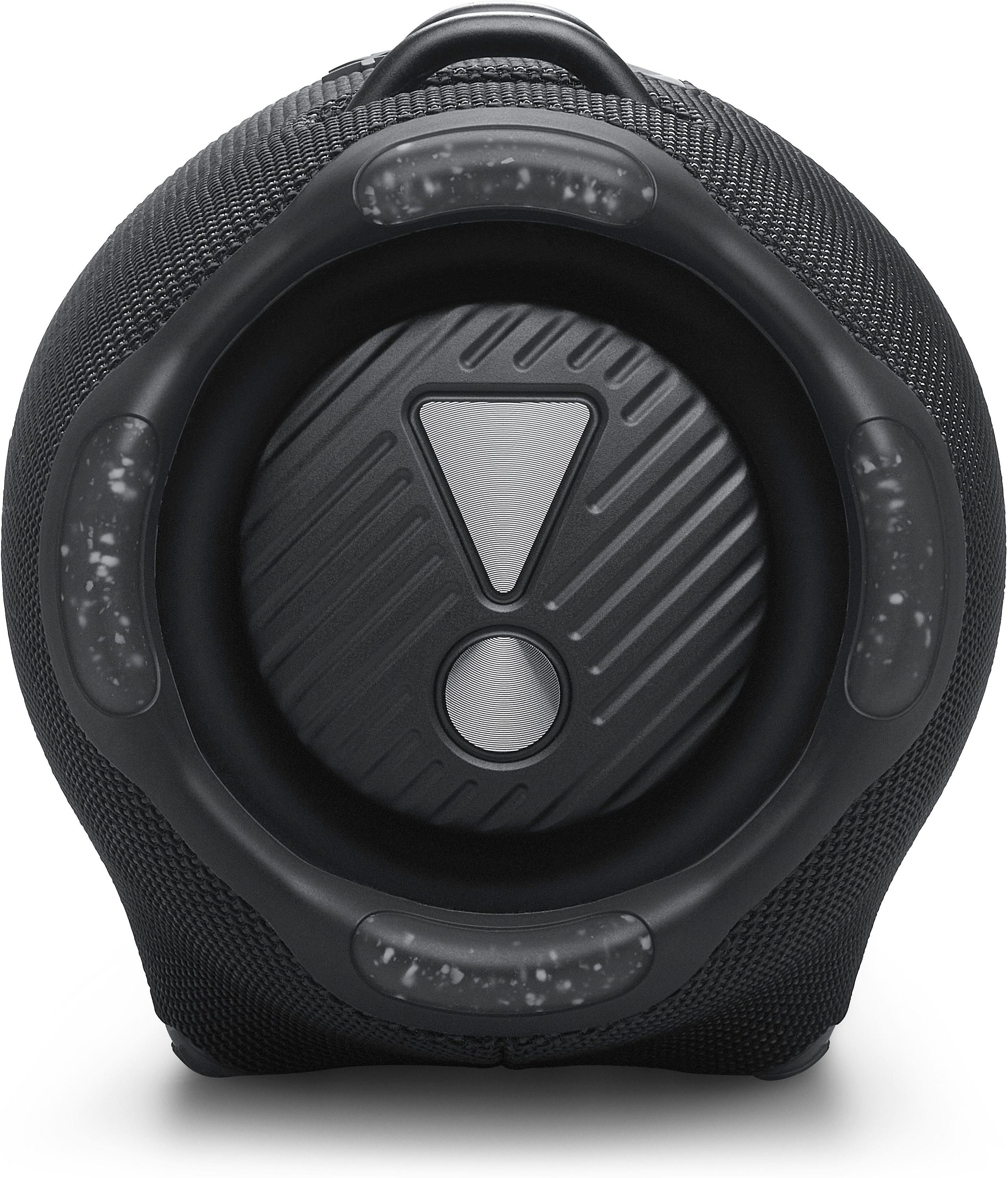
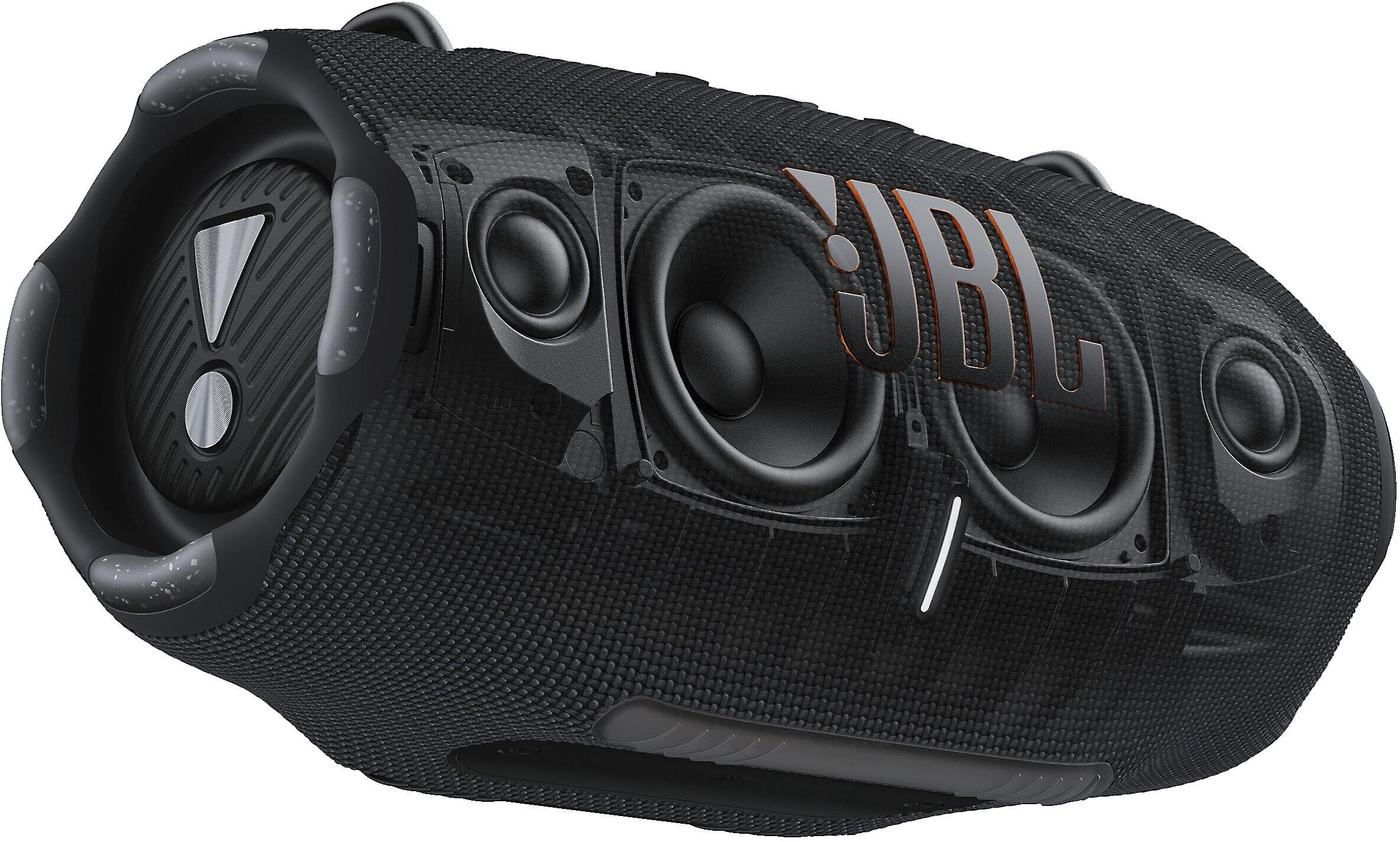
The Xtreme 4 is a completely different beast, featuring dual 70mm woofers and dual 20mm tweeters. When plugged into AC power, it delivers a substantial 100 watts RMS (2x 30W woofers + 2x 20W tweeters). Even on battery power, it maintains 70 watts RMS, still more than double the Charge 4's output.
This power difference translates to real-world performance in meaningful ways. While the Charge 4 works well for intimate gatherings of 5-10 people, the Xtreme 4 can comfortably provide background music for parties of 20+ people or fill medium-sized outdoor spaces without strain.
The Charge 4 produces mono audio, meaning all sound comes from a single point source. This isn't necessarily bad—many portable speakers use mono designs—but it limits the soundstage (how wide and immersive the music feels). Expert reviews consistently praise the Charge 4's well-balanced midrange, making vocals and lead instruments clear and present. However, the limited low-bass response means you won't feel the deep rumble in electronic music or the full impact of movie soundtracks.
The Xtreme 4 offers true stereo separation with its dual-driver design, creating a noticeably wider soundstage. The dedicated woofers and tweeters mean better frequency separation—bass frequencies don't interfere with treble reproduction, resulting in clearer overall sound. The frequency response extends down to 44Hz, capturing more of those deep bass notes that the Charge 4 simply can't reproduce.
One crucial technical detail: the Xtreme 4's power output varies significantly between AC and battery operation. When plugged in, you get the full 100 watts and optimal sound quality. On battery power, the reduced 70-watt output still delivers excellent performance but represents a compromise that premium buyers might find frustrating.
Neither speaker is primarily designed for home theater use, but they handle it differently. The Charge 4's mono design means you lose stereo separation completely, making it unsuitable for movies or TV shows where positional audio matters. However, its clear midrange reproduction makes dialogue reasonably intelligible.
The Xtreme 4 works better as a TV speaker upgrade, offering genuine stereo sound and enough power to fill most living rooms. The 5-band equalizer in JBL's app allows you to boost dialogue frequencies or enhance bass for action movies. Still, neither speaker can match dedicated soundbars for home theater applications—they lack the wide soundstage and precise channel separation that movies demand.
Both speakers excel in battery life, but they achieve it through different strategies and offer different additional benefits.
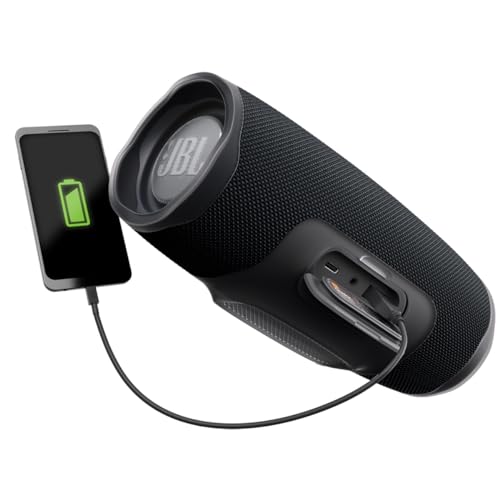
The Charge 4 features a 7,500mAh lithium-ion battery delivering up to 20 hours of playback, though real-world usage typically yields around 13 hours depending on volume and content. What makes this speaker unique is its powerbank functionality—you can charge smartphones, tablets, or other USB devices through its USB-A port. This dual-purpose design proves incredibly valuable during camping trips, power outages, or long days away from charging outlets.
The Xtreme 4 takes a revolutionary approach with its removable, swappable battery system. The standard battery provides 24 hours of playback, but you can purchase additional battery packs for extended use without downtime. This modular approach is unprecedented in portable speakers and particularly valuable for commercial applications or extended outdoor adventures.
The Xtreme 4 also includes a "Playtime Boost" mode that extends battery life to 30 hours by optimizing power consumption. However, this mode significantly reduces bass output, essentially turning your premium speaker into a less capable device. It's a feature that sounds better on paper than in practice.
Fast charging capabilities differ significantly. The Charge 4 requires about 4 hours for a complete charge via USB-C. The Xtreme 4 charges faster at 3.5 hours and includes rapid charging features—10 minutes provides 90 minutes of playback, which proves genuinely useful for those "forgot to charge" moments.
Both speakers are designed for outdoor use, but they approach durability differently.
The Charge 4 carries an IPX7 waterproof rating, meaning it can handle complete submersion in up to 1 meter of water for 30 minutes. This rating covers most real-world scenarios: poolside splashes, beach use, or even accidentally dropping it in shallow water. The fabric and rubber construction feels solid and has proven reliable over the years since its 2019 release.
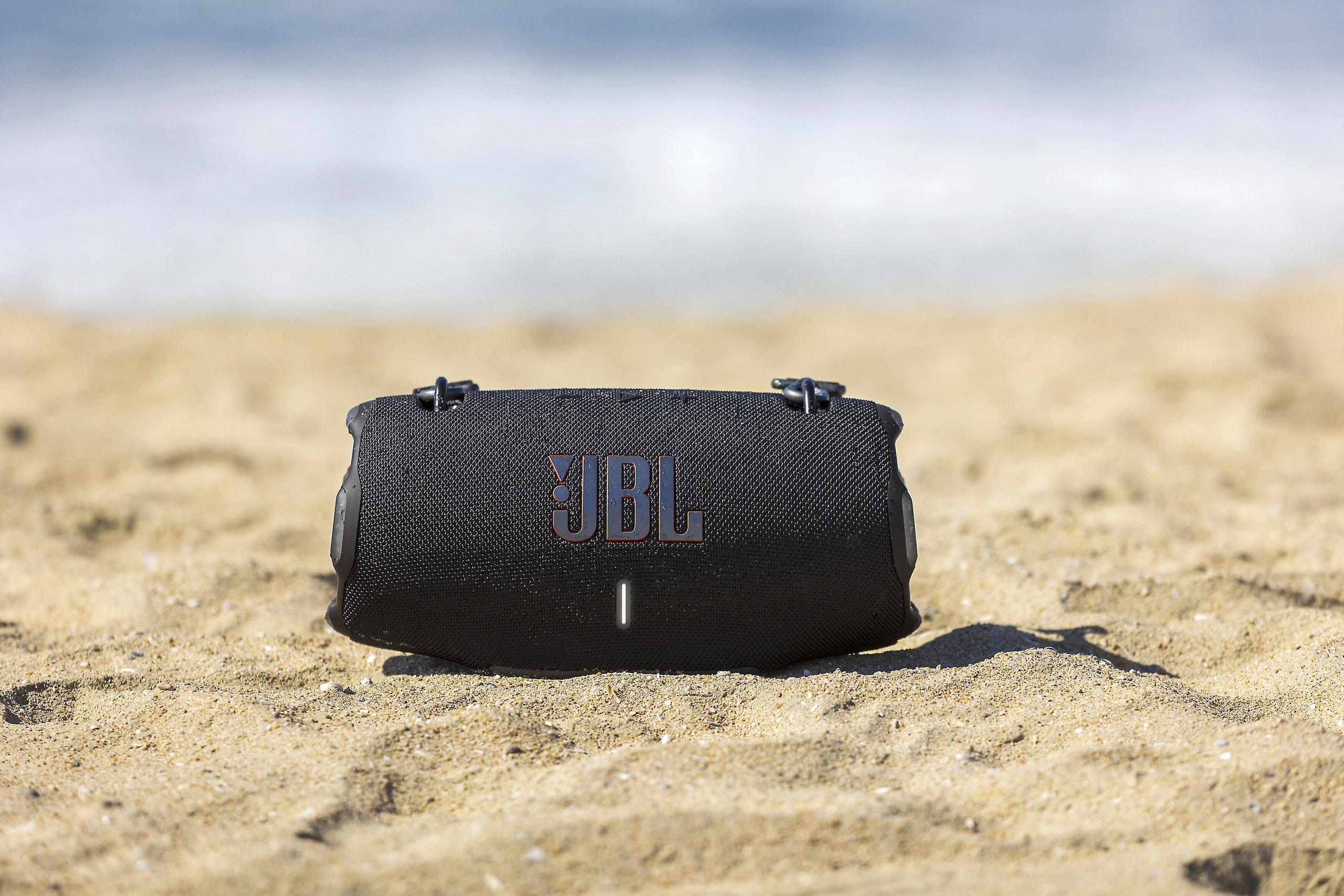
The Xtreme 4 ups the ante with an IP67 rating, adding dust protection to its waterproof capabilities. The "6" rating means complete protection against dust ingress, while the "7" maintains the same water protection as the Charge 4. The rugged rubber bumpers and premium materials suggest this speaker is built for more extreme outdoor use—camping in dusty environments, beach trips where sand is inevitable, or construction site applications.
The technological generational gap becomes most apparent in connectivity features.
The Charge 4 uses Bluetooth 4.2, which was perfectly adequate in 2019 but shows its age now. It supports connecting two devices simultaneously, allowing friends to take turns playing music without re-pairing. The JBL Connect+ feature lets you link over 100 compatible JBL speakers for larger sound systems, though this mainly works with other older JBL models.
The companion app for the Charge 4 is basic, offering little beyond speaker pairing and Connect+ functionality. There's no equalizer, no advanced features, and no firmware updates that meaningfully improve functionality.
The Xtreme 4 showcases 2024 technology with Bluetooth 5.3, providing better range, more stable connections, and improved battery efficiency. The multipoint connection is more sophisticated, handling device switching more seamlessly.
More importantly, the Xtreme 4 includes comprehensive app integration with a 5-band equalizer, multiple presets, and detailed control over audio characteristics. You can actually tune the sound to your preferences or specific music genres—something impossible with the Charge 4.
The Xtreme 4 also features Auracast technology, a newer standard for connecting multiple speakers. While this is more future-forward than the Charge 4's Connect+, fewer devices currently support Auracast, making it less immediately useful.
At the time of writing, these speakers occupy vastly different price segments, with the Xtreme 4 costing roughly three times as much as the Charge 4. This pricing gap raises important questions about value and necessity.
The Charge 4 represents exceptional value in portable audio. For its price range, it delivers reliable performance, useful features (especially the powerbank functionality), and proven durability. It punches above its weight class in build quality and provides about 80% of what most users need from a portable speaker at 30% of premium pricing.
The Xtreme 4 justifies its premium pricing through genuinely superior performance, innovative features, and future-proof technology. However, the question isn't whether it sounds better—it clearly does—but whether the improvement is worth the significant price premium for your specific needs.
Consider the cost per hour of enjoyment: if you use a portable speaker frequently for gatherings, outdoor activities, or as a primary music source, the Xtreme 4's superior sound quality and advanced features may justify the investment. For casual users who primarily need background music for small groups, the Charge 4 offers better value.
You're budget-conscious but still want reliable JBL quality. The speaker works perfectly for personal listening, small gatherings, and casual outdoor use. The powerbank feature adds genuine utility that you won't find in similarly priced competitors.
Students, casual users, and anyone who prioritizes portability over maximum sound quality will appreciate the Charge 4's compact size and versatile functionality. It's also ideal as a first "good" portable speaker—you can experience JBL's sound signature without a major financial commitment.
The Charge 4 excels for camping, hiking, or travel where size and weight matter. The powerbank feature becomes invaluable during power outages or extended time away from charging outlets.
Audio enthusiasts who can hear and appreciate the difference in sound quality. If you host gatherings regularly, the Xtreme 4's ability to fill larger spaces with quality sound becomes essential.
The swappable battery system appeals to heavy users—tour guides, outdoor instructors, or anyone who needs guaranteed all-day performance. Commercial users will appreciate the reliability and professional audio quality.
Tech enthusiasts who want the latest features—advanced EQ, newest Bluetooth standards, and premium app integration—will find value in the Xtreme 4's comprehensive feature set.
Neither speaker is universally "better"—they serve different needs exceptionally well. The Charge 4 succeeds as an accessible, versatile portable speaker that delivers solid performance without breaking the bank. Its combination of decent sound, powerbank functionality, and true portability creates compelling value.
The Xtreme 4 represents what happens when engineering priorities shift toward maximum performance within portable constraints. It's genuinely impressive technology that delivers on its promises, but at a price that demands careful consideration.
For most users, the Charge 4 provides sufficient quality and features for typical portable speaker use cases. The Xtreme 4 makes sense for those who know they need and will appreciate its advanced capabilities.
The generational technology gap between these 2019 and 2024 speakers illustrates how rapidly portable audio has evolved. If you're choosing between them today, you're really choosing between proven, affordable performance and cutting-edge, premium capabilities. Both approaches have merit—your specific needs and budget should determine which path makes sense for you.
| JBL Charge 4 | JBL Xtreme 4 |
|---|---|
| Release Year - Technology generation gap affects features and performance | |
| 2019 (mature, proven technology) | 2024 (latest features and connectivity) |
| Size & Weight - Critical for portability and daily use | |
| 8.7" x 3.7" x 3.7", 2.1 lbs (truly portable) | 11.7" x 5.9" x 5.5", 4.6 lbs (requires shoulder strap) |
| Power Output - Determines maximum volume and sound quality | |
| 30W RMS (good for small groups) | 100W RMS (AC) / 70W RMS (battery) - fills large spaces |
| Audio Configuration - Affects stereo separation and soundstage | |
| Mono speaker with single driver + passive radiators | True stereo with dual woofers + dual tweeters |
| Frequency Response - Shows bass depth and treble extension | |
| 60Hz–20kHz (limited low bass) | 44Hz–20kHz (deeper bass response) |
| Battery Life - Real-world usage time | |
| Up to 20 hours rated (13 hours typical use) | Up to 24 hours (30 hours with Playtime Boost mode) |
| Powerbank Feature - Charges other devices like phones | |
| Yes, USB-A port (5V/2A) - major convenience factor | No dedicated powerbank (bidirectional USB-C only) |
| Water Resistance - Protection level for outdoor use | |
| IPX7 waterproof (submersible to 1 meter) | IP67 waterproof + dustproof (superior protection) |
| Bluetooth Version - Affects connection stability and range | |
| Bluetooth 4.2 (adequate but aging) | Bluetooth 5.3 (latest standard, better performance) |
| App Features - Sound customization and control options | |
| Basic app with minimal features | Advanced app with 5-band EQ and presets |
| Multi-Speaker Connectivity - Link multiple units together | |
| JBL Connect+ (100+ older JBL speakers) | Auracast (newer standard, fewer compatible devices) |
| Battery Innovation - Charging convenience and flexibility | |
| Fixed internal battery, 4-hour charge time | Revolutionary swappable battery system + fast charging |
| Price Category - Value positioning at time of writing | |
| Budget-friendly ($100-150 range) | Premium pricing ($280-400 range) |
The JBL Charge 4 offers exceptional value for budget-conscious buyers, delivering solid sound quality and useful features like powerbank functionality at an affordable price point. The JBL Xtreme 4 justifies its premium pricing with significantly better sound quality, innovative swappable batteries, and advanced features, but costs roughly three times more than the Charge 4.
The primary differences are size, power, and audio quality. The JBL Charge 4 is compact and portable with 30W mono sound, while the JBL Xtreme 4 is larger with 100W stereo sound from dual woofers and tweeters. The Xtreme 4 also features newer Bluetooth 5.3 technology and app-based EQ controls that the Charge 4 lacks.
The JBL Charge 4 is significantly more portable at just 2.1 pounds and 8.7 inches long, easily fitting in backpacks or bags. The JBL Xtreme 4 weighs over 4 pounds and measures nearly 12 inches, requiring the included shoulder strap for comfortable transport and targeting stationary use rather than constant mobility.
The JBL Charge 4 excels as a powerbank with a dedicated USB-A port that can charge phones, tablets, and other devices at 5V/2A. The JBL Xtreme 4 has bidirectional USB-C charging but lacks dedicated powerbank functionality, making the Charge 4 better for device charging needs.
The JBL Xtreme 4 gets significantly louder with 100W of power compared to the Charge 4's 30W output. The Xtreme 4 can fill large indoor spaces and medium outdoor areas without distortion, while the Charge 4 works best for small to medium rooms and intimate gatherings.
The JBL Charge 4 produces mono sound from a single driver, requiring two units linked via JBL Connect+ for stereo. The JBL Xtreme 4 delivers true stereo sound from its dual woofer and tweeter configuration, providing better soundstage and instrument separation from a single unit.
The JBL Xtreme 4 produces significantly better bass with its dual 70mm woofers and frequency response down to 44Hz. The JBL Charge 4 has limited low-bass response starting at 60Hz, making it less suitable for bass-heavy music genres like hip-hop or electronic music.
Both speakers are waterproof, but the JBL Xtreme 4 offers superior protection. The Charge 4 has IPX7 rating for water submersion up to 1 meter, while the Xtreme 4 features IP67 rating that adds complete dust protection alongside the same water resistance.
The JBL Xtreme 4 offers longer battery life with up to 24 hours of playback (30 hours in Playtime Boost mode) compared to the Charge 4's 20 hours rated (13 hours typical). The Xtreme 4 also features revolutionary swappable batteries for unlimited runtime with additional battery packs.
Yes, both speakers support multi-speaker connectivity but use different technologies. The JBL Charge 4 uses JBL Connect+ to link with over 100 compatible older JBL speakers. The JBL Xtreme 4 uses newer Auracast technology, which offers better performance but works with fewer currently available speakers.
The JBL Xtreme 4 is superior for parties with its powerful 100W output, stereo sound, and ability to fill large spaces without distortion. The Charge 4 works well for intimate gatherings of 5-10 people but lacks the volume and bass response needed for larger parties or outdoor events.
Neither speaker is ideal for home theater, but the JBL Xtreme 4 performs better with true stereo separation and 5-band EQ for dialogue enhancement. The Charge 4's mono design eliminates stereo separation completely, making it unsuitable for movies where positional audio matters. Both lack the wide soundstage that dedicated soundbars provide.
We've done our best to create useful and informative comparisons to help you decide what product to buy. Our research uses advanced automated methods to create this comparison and perfection is not possible - please contact us for corrections or questions. These are the sites we've researched in the creation of this article: rtings.com - whathifi.com - whathifi.com - soundguys.com - soundguys.com - streamtechreviews.com - youtube.com - versus.com - applevis.com - versus.com - jbl.com - jbl.com - walmart.com - comparisontabl.es - harmanaudio.com - manuals.plus - jbl.com.sg - jbl.com - mm.jbl.com - bestbuy.com - newpower99.com - forums.woot.com - bestbuy.com - pcrichard.com - digitaltrends.com - youtube.com - tomsguide.com - jbl.com - kh.jbl.com - harmanaudio.com - ro.harmanaudio.com - otza.com - audiolab.com - youtube.com - bhphotovideo.com

Privacy Policy
Terms and Conditions - Affiliate Policy
Home Security
© Copyright 2008-2026.
11816 Inwood Rd #1211, Dallas, TX 75244