

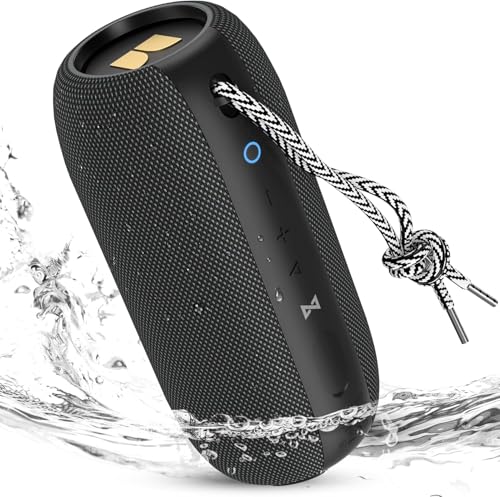


When you're shopping for a portable Bluetooth speaker, you're essentially choosing between two very different philosophies. Do you want something that disappears into your pocket, or are you willing to carry something larger for significantly better sound? The Monster S320 Superstar and JBL Go 3 represent these opposing approaches perfectly, and understanding their differences will help you make the right choice for your lifestyle.
Before diving into these specific speakers, it's worth understanding what separates good portable speakers from mediocre ones. The fundamental challenge in portable audio is the physics of sound reproduction – larger drivers (the actual speakers inside the device) can move more air and produce deeper bass, but they also require more power and space. This creates an inevitable trade-off between size, battery life, and sound quality that every manufacturer must navigate.
The key specifications that matter most are output power (measured in watts), battery life, water resistance ratings, and Bluetooth version. Output power directly affects how loud a speaker can get and how full it sounds, while battery life determines how long you can use it away from a charger. Water resistance, indicated by IP ratings, tells you how well the speaker handles moisture and dust – crucial for outdoor use.
The Monster S320 launched as part of Monster's renewed focus on high-performance portable audio, emphasizing their "Pure Monster Sound" technology. Released in recent years as Monster attempted to reclaim market share from brands like JBL and Ultimate Ears, it represents their commitment to not compromising on audio quality even in portable formats.
The JBL Go 3, released in 2020, evolved from JBL's successful Go series that has been refined over several generations. JBL learned from earlier versions, adding better water resistance and improving the overall design while maintaining the ultra-portable form factor that made the series popular.
These release timelines matter because they show different market strategies. JBL perfected the ultra-portable category through iteration, while Monster entered later with a more powerful approach designed to differentiate from the crowded small-speaker market.
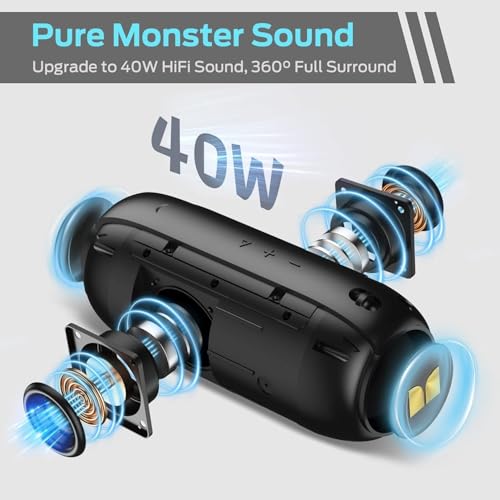
The most dramatic difference between these speakers is their power output, and this translates into real-world performance differences that are immediately noticeable. The Monster S320 delivers 40 watts of power through dual 2-inch drivers, while the JBL Go 3 produces 4.2 watts through a single smaller driver. That's nearly ten times more power, which doesn't just mean the Monster gets louder – it means it can fill larger spaces with richer, more detailed sound.
Power output in speakers isn't just about volume; it's about headroom. Headroom is the difference between a speaker's average output and its maximum capacity. More headroom means the speaker can handle sudden loud passages in music without distortion, producing cleaner sound at all volume levels. The Monster S320's 40-watt output provides substantial headroom for dynamic music, while the JBL Go 3 operates closer to its limits during louder passages.
The Monster's dual-driver configuration creates true stereo separation, meaning you'll hear instruments and voices positioned across a sound stage rather than everything coming from a single point. This 360-degree stereo effect makes music sound more spacious and immersive. The Go 3's mono output, while perfectly adequate for its size, simply can't create this spatial effect.
Bass response represents another significant difference. The Monster S320's larger drivers can reproduce lower frequencies more effectively, giving you that satisfying thump in hip-hop tracks or the rumble of movie soundtracks. The JBL Go 3 handles midrange and treble well for its size but can't physically produce deep bass due to the small driver and compact enclosure.
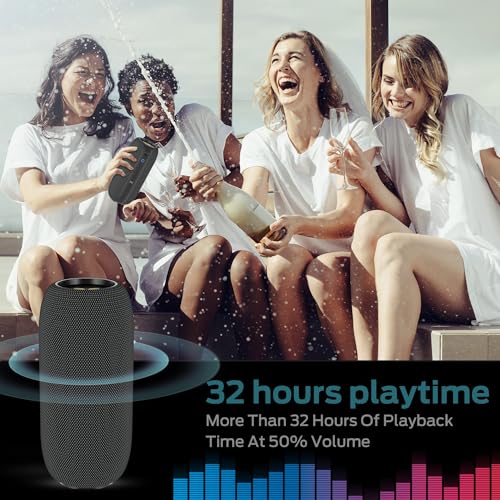
Perhaps the most striking specification difference is battery performance. The Monster S320 claims up to 32 hours of continuous playback, while the JBL Go 3 provides about 5 hours. This isn't just a minor difference – it represents completely different usage patterns.
The Monster's extended battery life comes from a larger 2500mAh lithium-ion polymer battery, compared to the Go 3's much smaller power cell. This means the Monster S320 can run for an entire weekend camping trip without needing a recharge, while the JBL Go 3 requires daily charging with regular use.
However, there's a practical consideration here. The longer battery life comes with trade-offs in size and weight. The Monster S320 weighs about 720 grams (roughly 1.6 pounds), while the JBL Go 3 weighs just 209 grams. If you're hiking long distances or trying to minimize luggage weight, those extra 500 grams matter significantly.
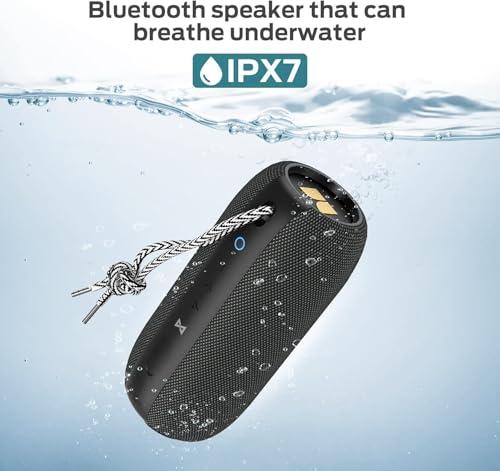
Both speakers earn strong marks for durability, but they approach ruggedness differently. The Monster S320 carries an IPX7 waterproof rating, meaning it can be completely submerged in up to one meter of water for 30 minutes. It's also described as shockproof, suggesting it can handle drops and impacts better than typical speakers.
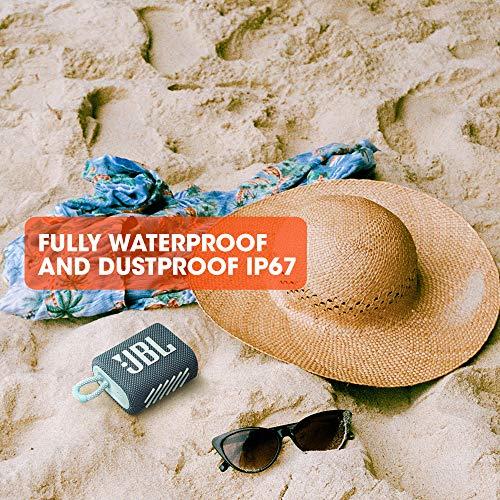
The JBL Go 3 features an IP67 rating, which provides the same level of water protection but adds complete dustproofing. The "6" in IP67 means no dust can enter the device, while IPX7 only addresses water resistance. For desert camping or beach use where sand and dust are concerns, the Go 3's complete environmental sealing offers an advantage.
Both speakers handle shower use excellently, though the JBL Go 3's compact size and integrated loop make it easier to hang from shower caddies or hooks. The Monster's larger size requires more thoughtful placement but provides better sound quality for bathroom acoustics.
The Monster S320 uses Bluetooth 5.0, while the JBL Go 3 features the newer Bluetooth 5.1 standard. Both provide reliable connections, but Bluetooth 5.1 offers slightly better power efficiency and connection stability. In practical terms, you're unlikely to notice significant differences in daily use.
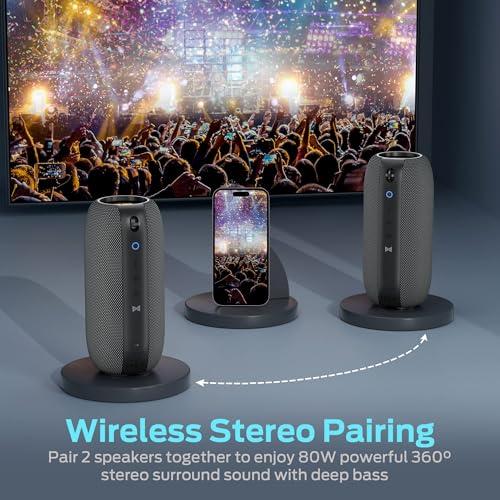
Where connectivity becomes interesting is in additional features. The Monster S320 includes True Wireless Stereo (TWS) capability, allowing you to pair two units wirelessly for genuine stereo separation and doubled power output – up to 80 watts total. This transforms the system from a single portable speaker into a serious stereo setup for parties or larger gatherings.
The Monster also includes an auxiliary input, letting you connect non-Bluetooth devices with a cable. This proves valuable for connecting older devices or situations where Bluetooth isn't ideal, such as airplane entertainment systems or when you want to preserve phone battery life.
The JBL Go 3 focuses on simplicity, providing only Bluetooth connectivity. This isn't necessarily a limitation – it reduces potential failure points and keeps the user interface straightforward.
Based on extensive user feedback and professional reviews, the sound quality differences align with the power specifications. The Monster S320 consistently receives praise for its ability to reproduce full, rich sound with surprising bass depth for a portable speaker. Users frequently note that it can serve as a primary speaker for small apartments or dorm rooms, not just outdoor use.
The JBL Go 3 earns recognition for punching above its weight class in sound quality, particularly for voice clarity and midrange reproduction. It excels with podcasts, audiobooks, and vocal-heavy music but struggles with bass-heavy genres like electronic music or hip-hop. Multiple reviews emphasize that it maintains clarity even at maximum volume, which is impressive for such a small driver.
Volume capabilities show the expected difference. The Monster S320 can fill medium-sized rooms or outdoor spaces effectively, while the JBL Go 3 works best for personal listening or small group settings. If you're trying to provide background music for a backyard barbecue, the Monster handles the task easily while the Go 3 would struggle to compete with conversation and ambient noise.
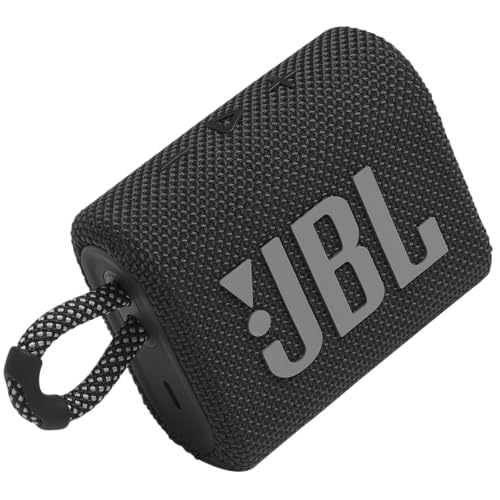
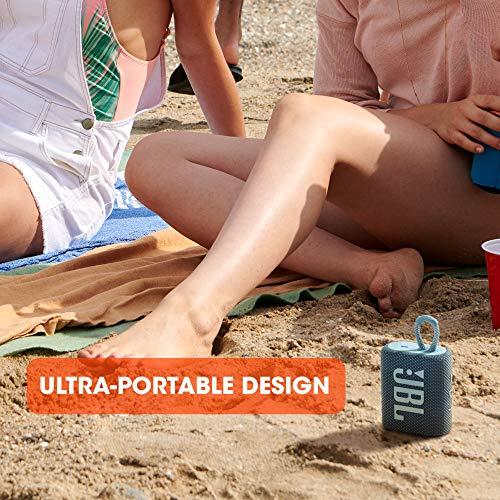
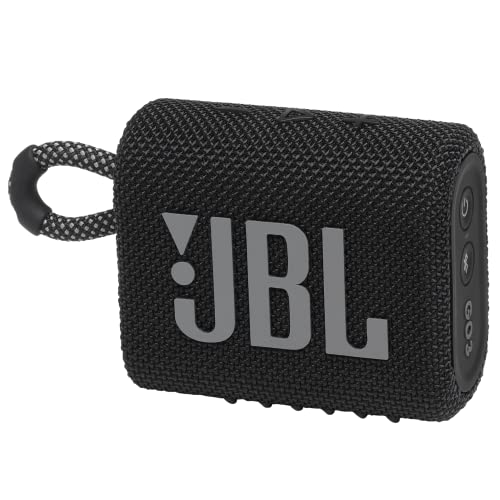
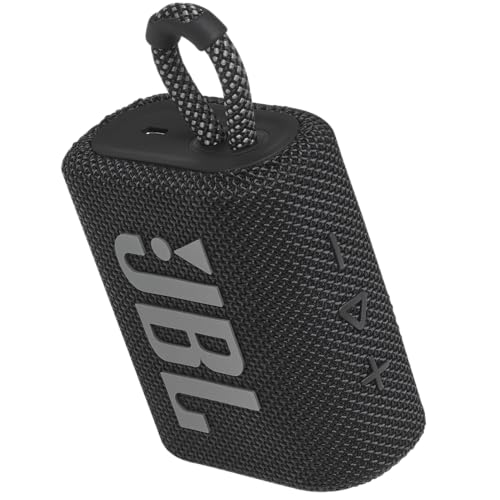
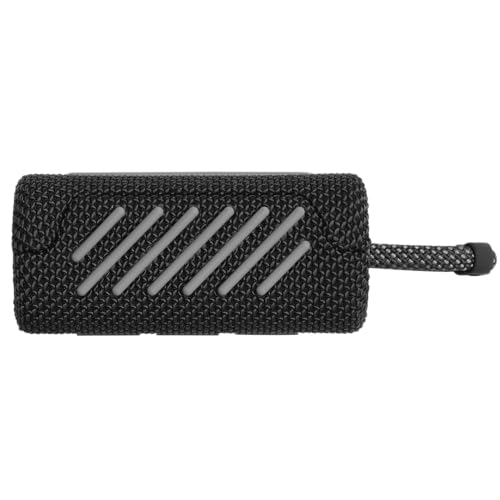
The portability difference between these speakers cannot be overstated. The JBL Go 3 measures just 87.5 × 75 × 41.3mm – small enough to fit in most jacket pockets and light enough to forget you're carrying it. The integrated fabric loop allows easy attachment to backpacks, belt loops, or shower hooks without requiring additional accessories.
The Monster S320, at 87 × 87 × 190mm, requires dedicated space in a bag and conscious carrying. While still portable compared to home speakers, it's more analogous to carrying a water bottle – manageable, but something you plan around rather than something that disappears into your everyday carry.
This size difference affects usage patterns significantly. The JBL Go 3 works as an always-available audio companion that you might use spontaneously throughout the day. The Monster S320 functions more as a destination speaker that you bring specifically for situations where audio quality matters.
For home theater applications, neither speaker truly excels, but they serve different roles. The Monster S320 can function as a temporary improvement over TV speakers, providing clearer dialogue and more dynamic range for movie watching. Its stereo separation helps with spatial audio effects, though it can't match a dedicated soundbar or surround sound system.
The JBL Go 3 works better as a personal device for late-night viewing or in bedrooms where you want better audio than phone speakers without disturbing others. Its compact size makes it ideal for small spaces where larger speakers would be impractical.
Neither speaker supports advanced audio codecs like aptX or LDAC that would improve streaming quality from high-end sources. They rely on standard Bluetooth audio compression, which is perfectly adequate for most music streaming services and video content but won't satisfy audiophiles seeking maximum fidelity.
At the time of writing, the JBL Go 3 typically retails in the budget-friendly category under $50, representing exceptional value for its feature set and build quality. The established JBL brand reputation, proven durability, and surprising sound quality for the size create a compelling package for cost-conscious buyers.
The Monster S320 commands a higher price point, generally falling into the mid-range portable speaker category. The significantly higher output power, extended battery life, and additional features like TWS pairing justify the premium for users who need the extra capability.
Value assessment depends heavily on your usage patterns. If you primarily listen alone or in small groups, the Go 3's lower price and superior portability provide better value. If you frequently need to fill larger spaces with sound or want a speaker that can handle multi-day usage without charging, the Monster's higher price makes sense.
The decision between these speakers should align with your primary use cases and priorities. Choose the JBL Go 3 if you value ultimate portability and need a speaker that can travel anywhere without planning. It excels for personal listening during commutes, workouts, or travel where size and weight restrictions matter. The lower price point also makes it an excellent choice for students, as a secondary speaker, or for anyone wanting to try portable speakers without a significant investment.
The Monster S320 makes sense when audio quality and performance matter more than minimizing size. It's ideal for people who host gatherings, spend extended time outdoors, or want a speaker that can serve multiple roles in their audio setup. The TWS pairing capability provides a clear upgrade path, letting you start with one unit and add a second later for true stereo performance.
For most people, the decision comes down to this: Do you want a speaker that disappears into your daily routine, or do you want one that provides noticeably better performance when you need it? The JBL Go 3 succeeds at the former, while the Monster S320 excels at the latter.
Both speakers represent solid engineering choices within their respective categories. The Go 3 proves that ultra-portable speakers can deliver satisfying sound quality and durability, while the S320 demonstrates that you don't have to sacrifice portability entirely to achieve good audio performance. Understanding which approach fits your lifestyle will lead you to the right choice.
| Monster S320 Superstar Portable Bluetooth Speaker | JBL Go 3 Portable Bluetooth Speaker |
|---|---|
| Output Power - Determines maximum volume and sound fullness | |
| 40W (fills rooms and outdoor spaces effectively) | 4.2W (suitable for personal listening and small groups) |
| Battery Life - Critical for extended use without charging | |
| Up to 32 hours (weekend trips without recharging) | Up to 5 hours (requires daily charging with regular use) |
| Speaker Configuration - Affects stereo separation and soundstage | |
| Dual 2" drivers with 360° stereo sound | Single driver with mono output |
| Size & Weight - Determines true portability | |
| 87 × 87 × 190mm, 720-730g (requires bag space) | 87.5 × 75 × 41.3mm, 209g (pocket-sized with carrying loop) |
| Water Resistance - Protection level for outdoor use | |
| IPX7 waterproof + shockproof (submersible, impact resistant) | IP67 waterproof + dustproof (submersible with complete dust sealing) |
| Bluetooth Version - Affects connection stability and power efficiency | |
| Bluetooth 5.0 (reliable range and stability) | Bluetooth 5.1 (newer standard with better efficiency) |
| Multi-Speaker Pairing - Ability to connect multiple units | |
| True Wireless Stereo (TWS) - pairs for 80W combined output | No multi-speaker connectivity |
| Wired Connectivity - Options beyond Bluetooth | |
| AUX input included (connects non-Bluetooth devices) | Bluetooth only (no auxiliary input) |
| Charging Time - How long to reach full battery | |
| Not specified (likely 3+ hours given large battery) | 2.5 hours via USB-C |
| Frequency Response - Range of audio reproduction | |
| 20Hz - 20kHz (full range with deep bass capability) | 110Hz - 20kHz (limited bass due to small drivers) |
| Voice Features - Hands-free calling and assistant support | |
| Voice assistant support, hands-free calling | No microphone or voice features |
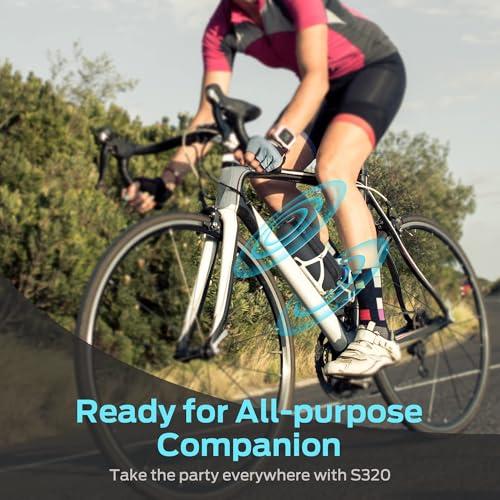
The Monster S320 Superstar is significantly better for outdoor parties and gatherings. With 40W of power output compared to the JBL Go 3's 4.2W, the Monster can easily fill outdoor spaces with sound and compete with ambient noise. The Monster S320 also features True Wireless Stereo pairing, allowing you to connect two units for 80W of combined power - perfect for larger gatherings.
There's a dramatic difference in battery life. The Monster S320 Superstar provides up to 32 hours of continuous playback, while the JBL Go 3 offers about 5 hours. This means the Monster can run for an entire weekend without charging, making it ideal for camping trips or extended outdoor events, whereas the JBL Go 3 requires daily charging with regular use.
The JBL Go 3 is far more portable, weighing just 209g and measuring small enough to fit in most jacket pockets. It includes an integrated fabric loop for easy attachment to bags or carabiners. The Monster S320 Superstar weighs 720-730g and requires dedicated bag space, making it less convenient for daily carry but still manageable for planned outings.
Both speakers are waterproof and excellent for shower use. The JBL Go 3 has an IP67 rating (waterproof and dustproof), while the Monster S320 Superstar features IPX7 waterproofing plus shockproof construction. The JBL Go 3's compact size and hanging loop make it easier to position in showers, but both handle water exposure without issues.
The Monster S320 Superstar delivers significantly better sound quality with its 40W dual-driver setup that creates true stereo separation and deeper bass response. The JBL Go 3 provides surprisingly good sound for its tiny size, with clear vocals and midrange, but lacks the power and bass depth of the Monster. For serious music listening, the Monster S320 is the clear winner.
The Monster S320 Superstar uses Bluetooth 5.0 and includes additional features like AUX input for wired connections and True Wireless Stereo pairing. The JBL Go 3 features the newer Bluetooth 5.1 standard for slightly better efficiency but only supports single-device Bluetooth connectivity with no additional input options.
Only the Monster S320 Superstar supports multi-speaker pairing through its True Wireless Stereo (TWS) feature, allowing you to connect two units wirelessly for genuine stereo separation and 80W combined output. The JBL Go 3 cannot be paired with additional speakers and operates as a standalone mono speaker only.
This depends on your needs. The JBL Go 3 offers exceptional value in the ultra-portable category with proven durability and surprisingly good sound for its size and lower price point. The Monster S320 Superstar provides better value if you need higher performance, with significantly more power, longer battery life, and additional features justifying its higher cost.
Both speakers handle podcasts and audiobooks well, but with different strengths. The JBL Go 3 excels at voice clarity and is perfect for personal listening during commutes or in bed. The Monster S320 Superstar provides richer, fuller voice reproduction and can fill rooms with clear dialogue, making it better for shared listening or when you want premium audio quality.
Both speakers are built for outdoor use but with different approaches. The Monster S320 Superstar features shockproof construction alongside IPX7 waterproofing, making it better for rugged activities. The JBL Go 3 offers IP67 protection with complete dust sealing plus JBL's proven drop-test durability. The JBL Go 3's smaller size also makes it less likely to be damaged during active adventures.
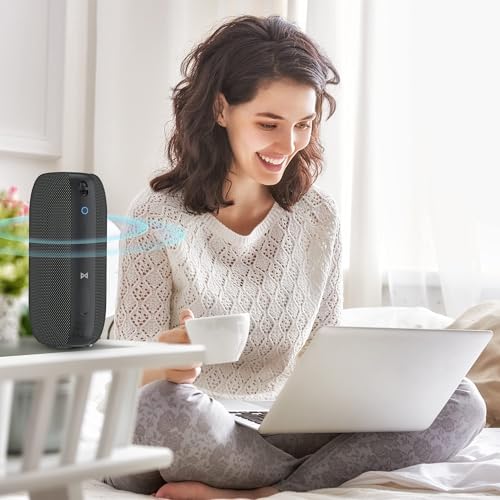
The Monster S320 Superstar can serve as a primary speaker for small apartments or dorm rooms, providing room-filling sound with good bass response and stereo separation. The JBL Go 3 works better as a secondary speaker or for personal listening in small spaces, though it lacks the power to serve as a main audio source for anything beyond intimate settings.
The JBL Go 3 charges fully in about 2.5 hours via USB-C, making it convenient for daily use. The Monster S320 Superstar also uses USB-C charging but requires longer charging times due to its much larger 2500mAh battery, though exact charging times aren't specified. The trade-off is the Monster S320's exceptional 32-hour runtime once fully charged.
We've done our best to create useful and informative comparisons to help you decide what product to buy. Our research uses advanced automated methods to create this comparison and perfection is not possible - please contact us for corrections or questions. These are the sites we've researched in the creation of this article: youtube.com - runbazaar.com - youtube.com - exceldisc.com - youtube.com - 961souq.com - walmart.com - eshtir.com - mct-audio.com - hk.monsterstore.com - alibaba.com - cdn.tgdd.vn - device.report - manualslib.com - alibaba.com - rtings.com - streamtechreviews.com - english.achoreviews.com - smarthomesounds.co.uk - soundguys.com - rtings.com - walmart.com - soundguys.com - youtube.com - youtube.com - jbl.com - youtube.com - selectoguru.com - versus.com - videoandaudiocenter.com - harmanaudio.com - jbl.com - bestbuy.com - forum.hifiguides.com - manuals.plus - kh.jbl.com - th.jbl.com - mm.jbl.com - jbl.com - bestbuy.com - youtube.com - youtube.com - youtube.com - jbl.com - bestbuy.com - bestbuy.com - jbl.com.tw - youtube.com

Privacy Policy
Terms and Conditions - Affiliate Policy
Home Security
© Copyright 2008-2026.
11816 Inwood Rd #1211, Dallas, TX 75244