






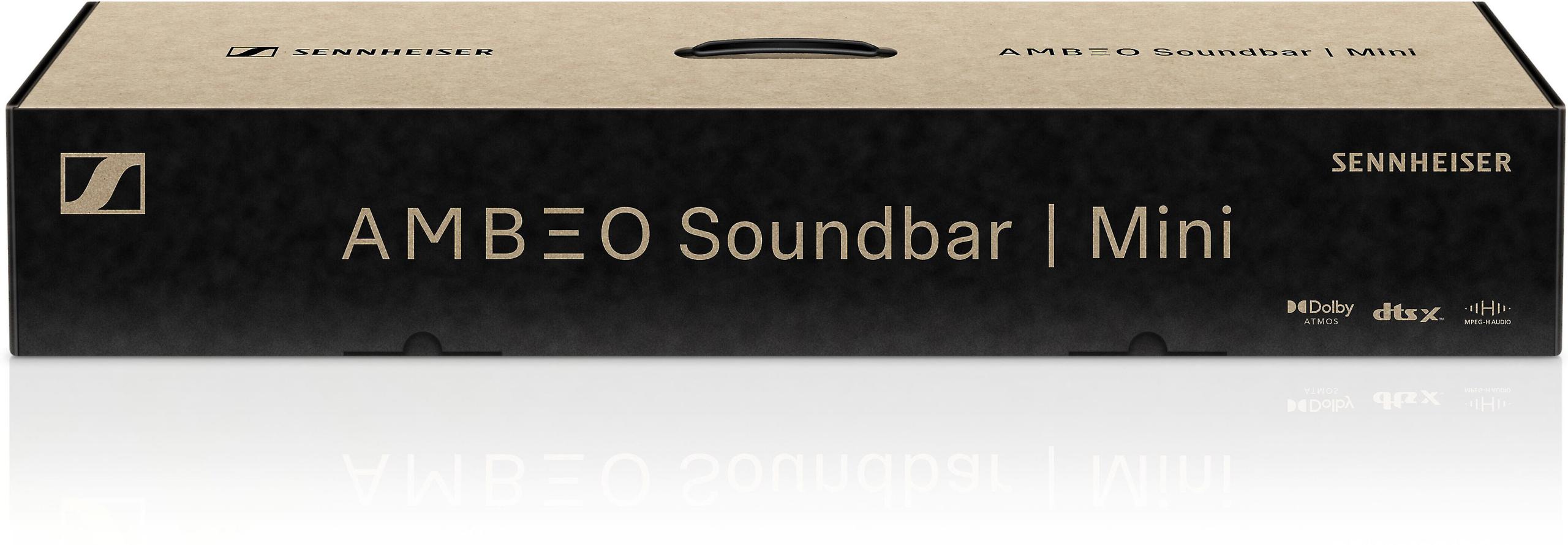
When you're looking to upgrade from your TV's built-in speakers without filling your living room with multiple speakers and wires, premium compact soundbars offer an appealing middle ground. These single-unit solutions promise to deliver immersive surround sound experiences that rival traditional multi-speaker home theater systems, but they take fundamentally different approaches to achieving that goal.
The two standouts in this category are the Bose Smart Soundbar 1100, released in 2024, and the Sennheiser AMBEO Soundbar Mini, which hit the market in 2023. Both represent significant technological leaps from earlier soundbar generations, but they embody distinctly different philosophies about how to create convincing surround sound from a single device.
Before diving into specifics, it's worth understanding what makes this category unique. Traditional home theater systems use multiple speakers positioned around your room—front left and right, center channel, surround speakers, and often height speakers mounted on or in your ceiling. This physical separation creates genuine directional audio where sounds can precisely move around and above you.
Compact soundbars attempt to recreate this experience using various tricks of audio engineering. Some use physical drivers that fire sound in different directions, while others rely on sophisticated digital signal processing (DSP) to manipulate stereo audio in ways that fool your brain into perceiving surround sound. The holy grail is achieving what audiophiles call "soundstage width"—making audio seem to extend far beyond the physical boundaries of the soundbar itself.
The main considerations when evaluating these products center on how convincingly they create that surround sound illusion, how well they handle dialogue (which is crucial for TV and movies), their bass performance, and whether they offer room for future expansion. Smart features and connectivity have also become essential, as most people want to stream music directly to their soundbars.
The Bose Smart Soundbar 1100 and Sennheiser AMBEO Mini represent opposing philosophies in soundbar design, and understanding these differences is key to choosing the right one for your needs.
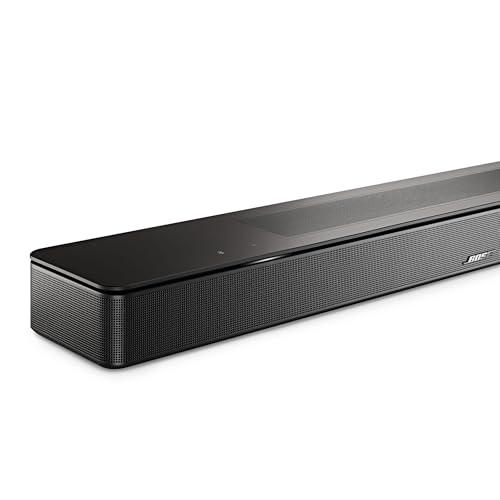
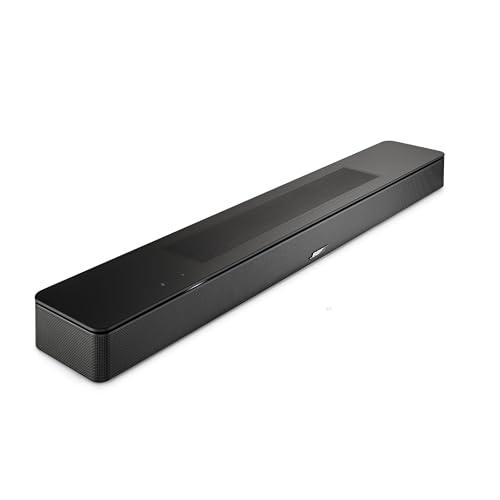
Bose takes what you might call the "traditional plus" approach. The Smart Soundbar 1100 looks and functions like a conventional soundbar but incorporates dedicated up-firing drivers—small speakers that point toward your ceiling to create height effects for Dolby Atmos content. This gives you actual discrete channels for overhead audio, similar to what you'd get from ceiling-mounted speakers in a full surround system.
Sennheiser, on the other hand, goes all-in on virtualization technology. The AMBEO Mini uses advanced digital processing developed with Germany's Fraunhofer Institute to create the impression of a 7.1.4 surround system (that's seven main channels, one subwoofer channel, and four height channels) without any up-firing drivers at all. Instead, it relies entirely on psychoacoustic tricks—manipulating how sound waves interact with your room and your ears to create spatial audio effects.
Neither approach is inherently superior; they simply prioritize different aspects of the listening experience.
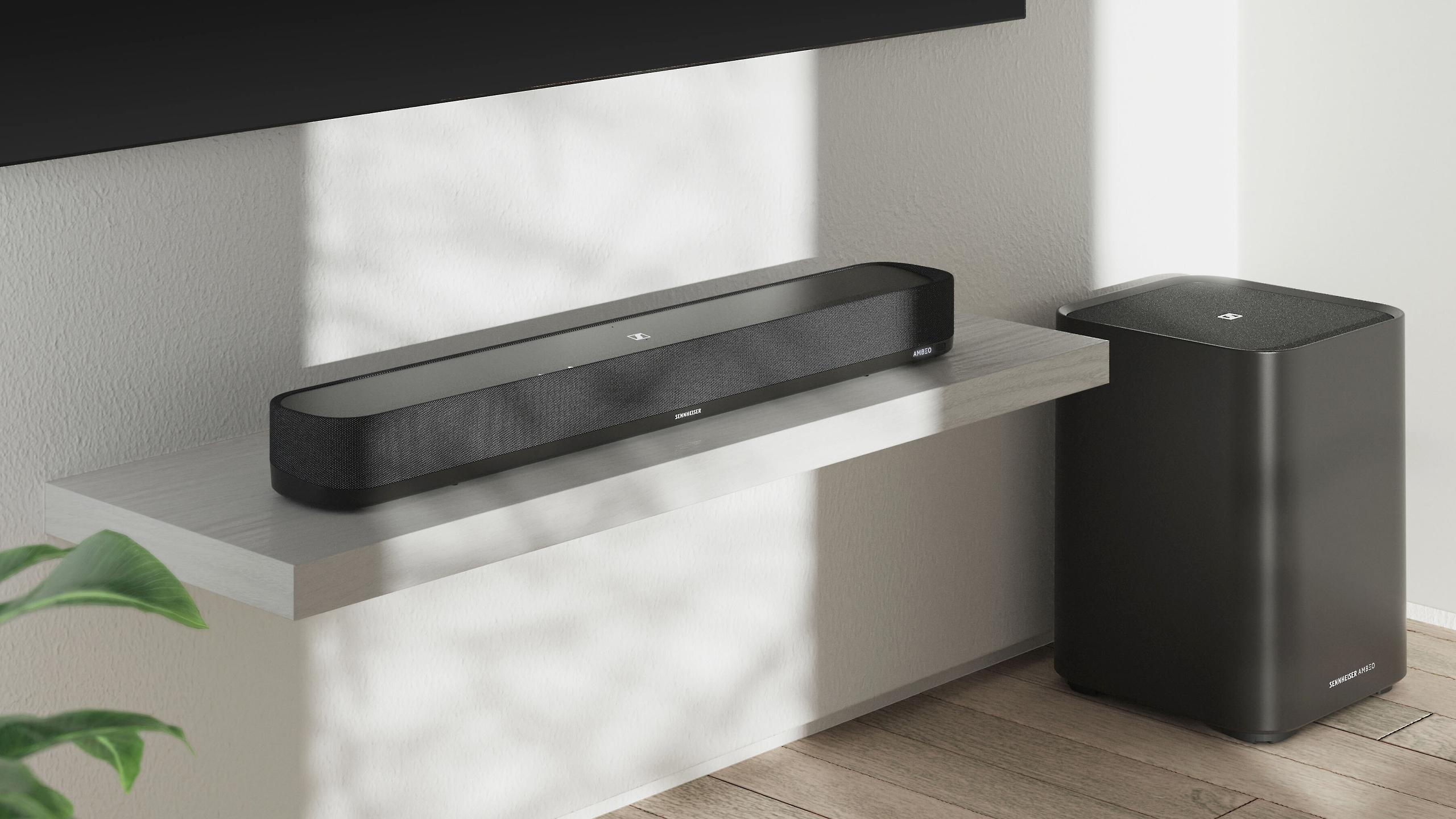
Both soundbars are designed to fit under most TVs without blocking sensors or looking disproportionate, but their physical characteristics reveal their design priorities.
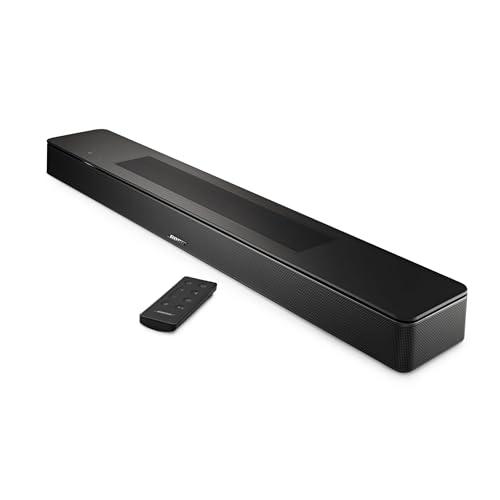
The Bose Smart Soundbar 1100 measures about 27 inches wide, just over 2 inches tall, and about 4.6 inches deep, weighing approximately 7 pounds. This ultra-slim profile means it can fit in tight spaces and won't visually dominate your entertainment center. The trade-off is limited internal volume for bass production—physics dictates that smaller enclosures produce less low-frequency sound.
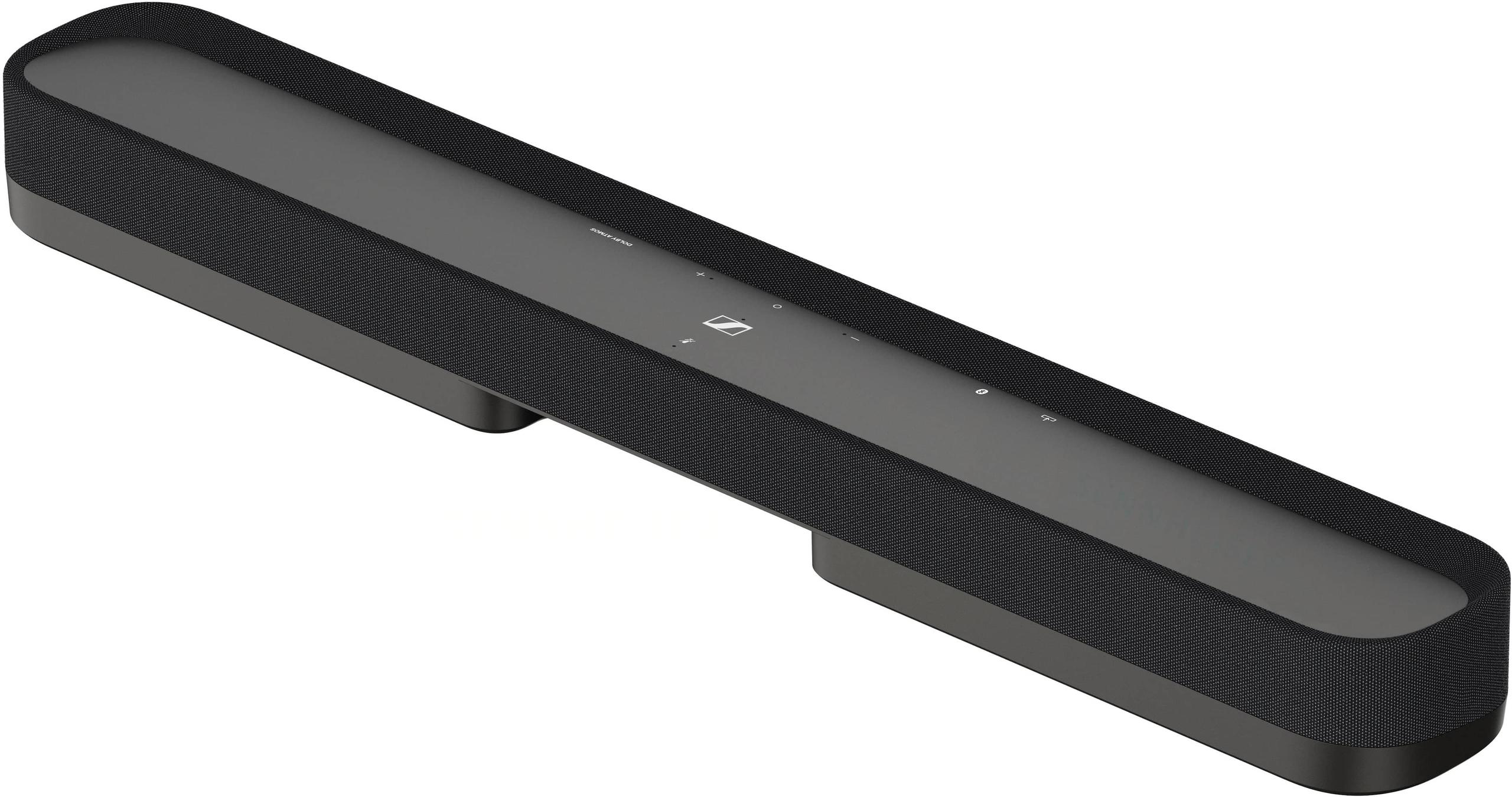
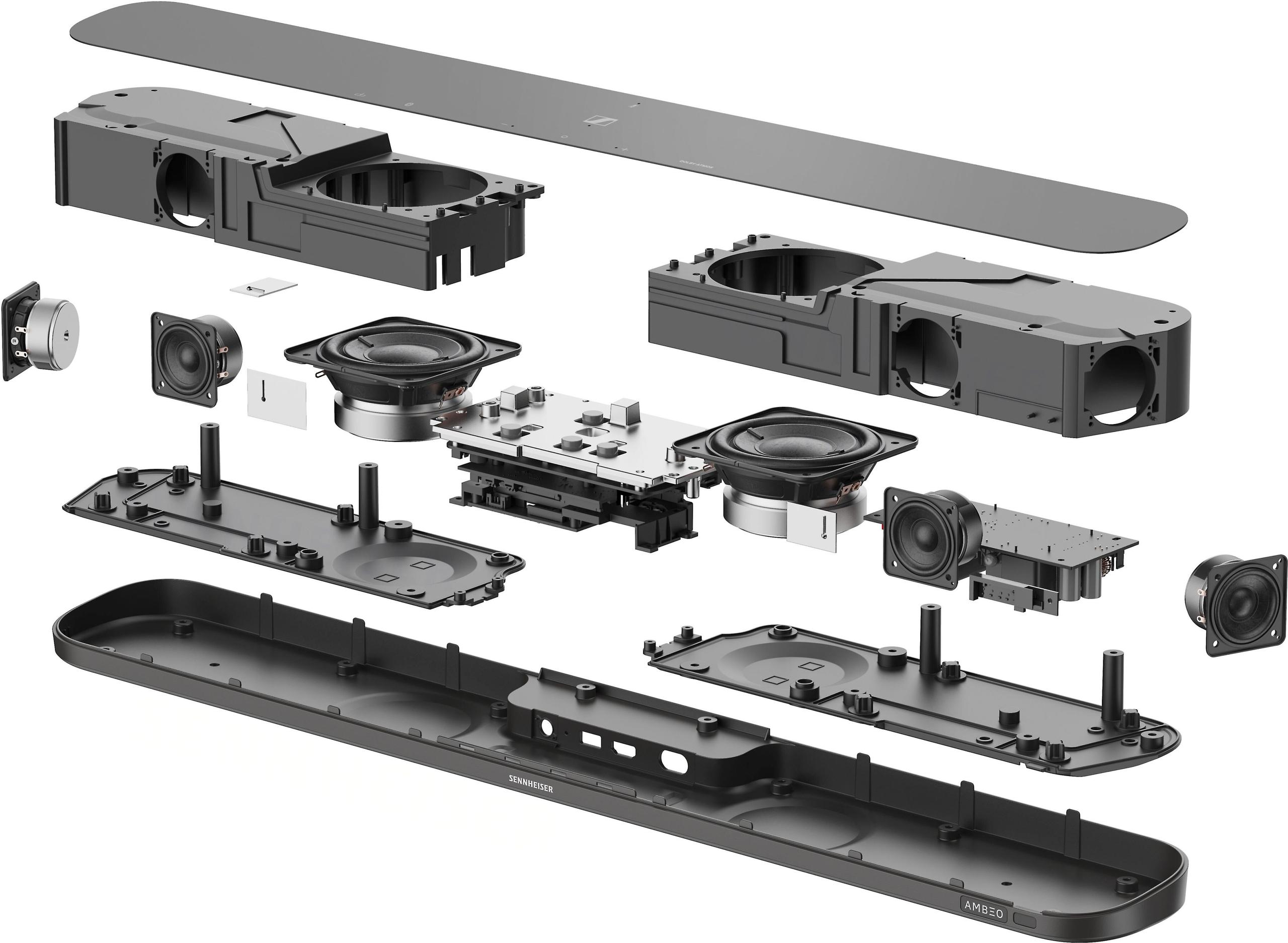
The Sennheiser AMBEO Mini is slightly wider at 27.6 inches but only marginally taller at 2.6 inches. However, it's noticeably shallower at just under 4 inches deep. More importantly, Sennheiser packed dual 4-inch subwoofers into this compact chassis, which explains why it delivers substantially more bass than the Bose despite being similarly sized.
Both can be wall-mounted, though you'll need to purchase mounting hardware separately. The Bose includes a wall EQ setting that adjusts its sound when mounted, while the Sennheiser's room calibration system automatically accounts for placement during setup.
This is where the fundamental design differences between these soundbars become most apparent. Dolby Atmos is an audio format that adds height information to surround sound, allowing sounds to move not just around you horizontally but also overhead. Think of a helicopter flying across the screen—with proper Atmos implementation, you should hear it move above your head, not just from side to side.
The Bose Smart Soundbar 1100 achieves this through dedicated up-firing drivers that bounce sound off your ceiling. This creates genuine height channels that can produce discrete overhead effects. When watching an Atmos-encoded movie, rain might convincingly fall from above, or aircraft can seem to pass directly overhead. The effectiveness depends heavily on your ceiling height and material—low ceilings with hard surfaces work best, while high or angled ceilings can scatter the reflected sound.
The Sennheiser AMBEO Mini takes a radically different approach. Its AMBEO virtualization technology analyzes the audio signal and uses advanced DSP to create the illusion of height without any up-firing drivers. The system processes the audio in real-time, applying complex algorithms that manipulate timing, phase relationships, and frequency response to trick your auditory system into perceiving sounds coming from locations where no speakers actually exist.
In our evaluation of professional and user reviews, both approaches have merit, but they excel in different scenarios. The Bose tends to produce more convincing overhead effects with properly encoded Dolby Atmos content, particularly in rooms with suitable ceilings. The Sennheiser creates a more enveloping overall soundfield that works well even with stereo content, but its height effects can be less precise than physical up-firing drivers.
For most people, dialogue clarity is the primary reason for buying a soundbar. TV shows, movies, and streaming content often mix dialogue at levels that make it hard to understand with TV speakers, especially when background music and sound effects compete for attention.
The Bose Smart Soundbar 1100 excels here, incorporating what Bose calls A.I. Dialogue Mode. This feature uses machine learning algorithms to automatically detect when dialogue is occurring and adjusts the frequency response accordingly. Rather than simply boosting midrange frequencies (which can make voices sound artificial), the system makes more sophisticated adjustments that enhance speech intelligibility without sacrificing the overall mix balance.
Bose's decades of experience in audio engineering show in their approach to dialogue reproduction. The soundbar's driver configuration and crossover design prioritize the frequency ranges most critical for speech understanding. Based on our analysis of user feedback, people consistently praise the Smart Soundbar 1100 for making dialogue easier to follow, even in challenging content like heavily accented British dramas or action movies with dense soundtracks.
The Sennheiser AMBEO Mini includes Voice Enhancement features, but dialogue clarity isn't its primary strength. The soundbar's emphasis on creating an immersive soundfield sometimes comes at the expense of center-channel focus, which is crucial for dialogue. However, it's worth noting that the AMBEO's superior room calibration can help optimize dialogue performance for your specific listening environment.
This is perhaps the most significant performance difference between these soundbars. Bass response—the low-frequency sounds that add weight and impact to explosions, music, and atmospheric effects—is challenging to achieve in compact soundbars due to the physics of sound reproduction.
The Bose Smart Soundbar 1100 produces respectable bass for its size, but it clearly reaches its limits with demanding content. Action movies and bass-heavy music reveal the constraints of its compact design. Bose addresses this limitation through expandability—you can add their Bass Module 500 or 700 for significantly deeper and more powerful bass, but this obviously increases the total system cost and footprint.
The Sennheiser AMBEO Mini takes a different approach by integrating dual 4-inch subwoofers directly into the soundbar chassis. This allows it to reproduce frequencies down to 43Hz—well into the range where you feel bass rather than just hearing it. In our review of user experiences, the AMBEO consistently receives praise for its bass performance, with many users surprised by how much low-end impact it delivers without a separate subwoofer.
This difference is particularly noticeable with movie content. Explosions, thunder, and deep musical notes have more weight and realism through the Sennheiser, while the Bose can sound thin or restrained in comparison. However, the trade-off is efficiency—the AMBEO's 250-watt amplification works harder to drive those internal subwoofers, while the Bose's more modest power requirements may appeal to users concerned about energy consumption.
Both soundbars embrace the modern expectation that audio devices should integrate seamlessly with streaming services and smart home ecosystems, but they differ in their implementation and capabilities.
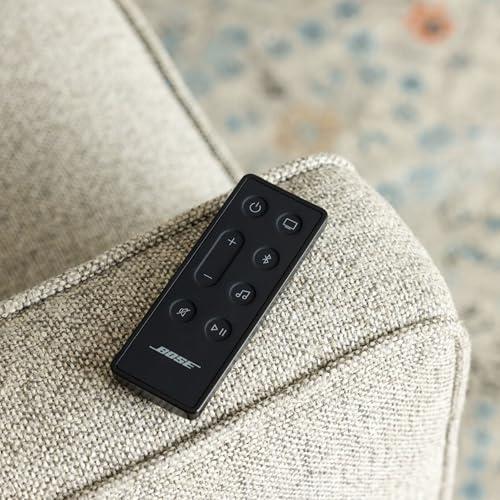
The Bose Smart Soundbar 1100 includes built-in Amazon Alexa, which goes beyond basic voice control through its Voice4Video feature. This allows you to control not just the soundbar but also your TV and cable/satellite box with voice commands—telling Alexa to "turn on Netflix" or "switch to HDMI 2" can control multiple devices simultaneously. The soundbar also supports Apple AirPlay 2, Chromecast, and direct streaming from Spotify, with the Bose Music app providing control and customization options.
Bose's approach emphasizes integration with their broader ecosystem. The Smart Soundbar 1100 can group with other Bose smart speakers for multi-room audio, and it uniquely supports their "Personal Surround Sound" feature when paired with Bose Ultra Open Earbuds. This allows one person to listen through earbuds that act as rear surround speakers while others in the room hear the soundbar normally—a clever solution for late-night viewing.
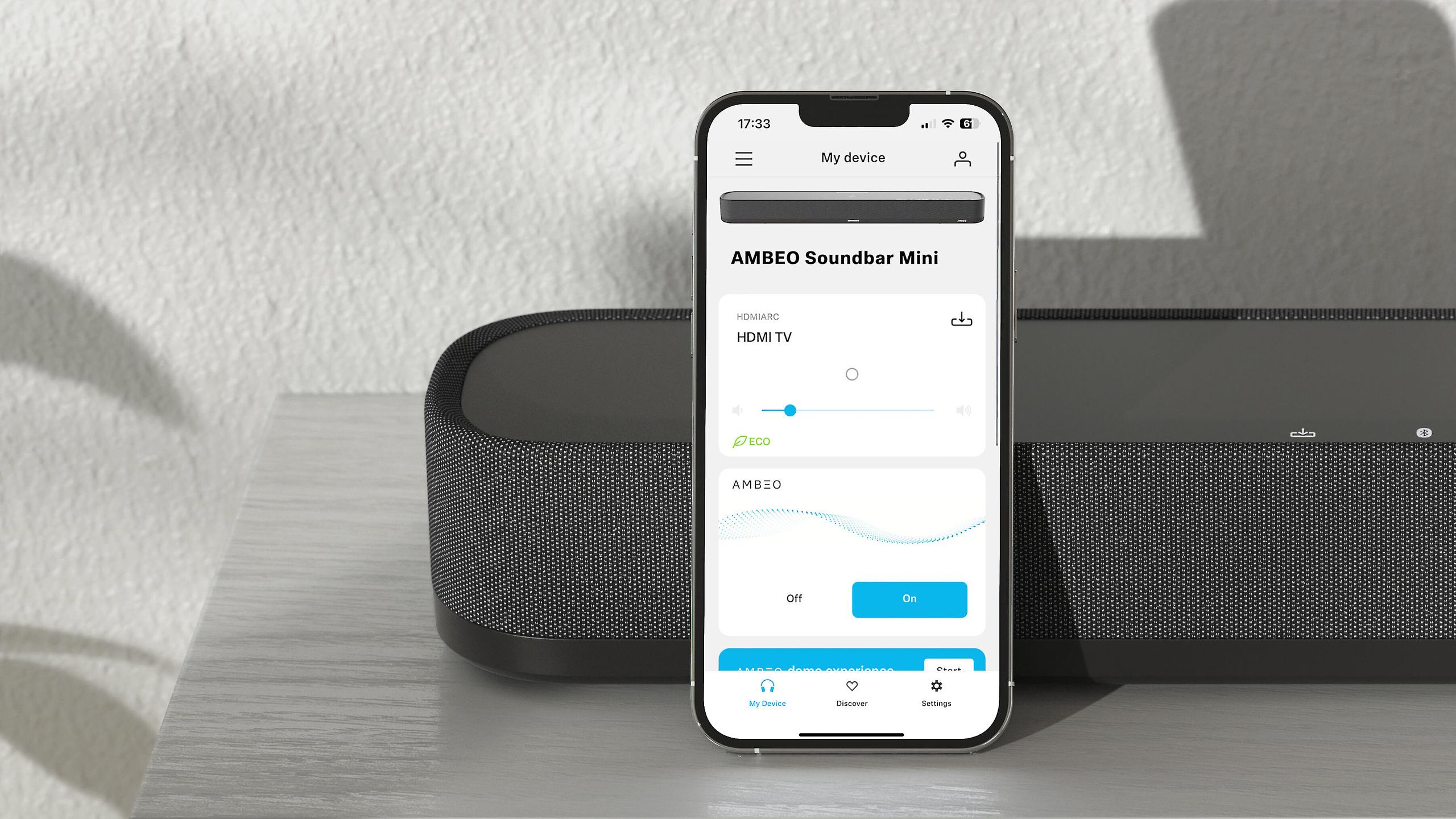
The Sennheiser AMBEO Mini runs on AMBEO|OS and supports similar connectivity options including AirPlay 2, Spotify Connect, and Tidal Connect, along with Alexa integration and Google Chromecast support. However, Sennheiser's focus leans more toward audiophile-oriented features, with support for high-resolution audio formats and services that prioritize sound quality over convenience features.
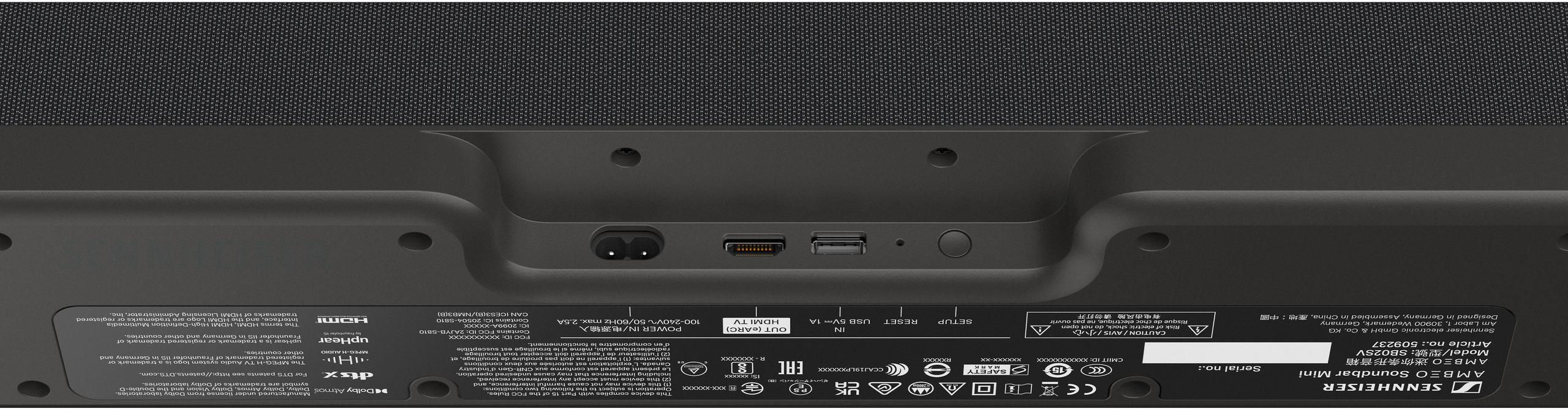
One notable connectivity difference is the Sennheiser's inclusion of a USB-A port, allowing direct playback from USB storage devices—useful for playing high-quality local music files that might not be available through streaming services.
The physical characteristics of your listening room dramatically affect soundbar performance, and both manufacturers address this challenge differently.
The Bose Smart Soundbar 1100 takes a relatively simple approach with basic wall EQ presets and relies primarily on its acoustic engineering to work well in various environments. Bose's PhaseGuide technology uses directional drivers to create a wider soundstage, while QuietPort technology reduces bass port noise that could cause vibrations when placed on furniture.
The Sennheiser AMBEO Mini employs a more sophisticated approach with automatic room calibration using four built-in microphones. During setup, the system plays test tones and measures how they reflect off your room's surfaces, then adjusts its processing accordingly. This calibration accounts for factors like room size, furniture placement, and wall materials, potentially delivering more optimized performance across a wider range of listening environments.
Based on user feedback analysis, the Sennheiser's calibration system generally produces more consistent results across different room types, while the Bose relies more on its fundamental acoustic design to work well out of the box.
The question of expandability reflects each manufacturer's vision for how users might want to grow their systems over time.
The Bose Smart Soundbar 1100 is designed as the foundation of a modular system. You can add Bose's Bass Module for deeper low-end response, surround speakers for true rear-channel effects, or integrate with other Bose smart speakers throughout your home. This approach allows you to start with a more affordable base system and expand as your needs and budget allow.
However, this modularity comes with the caveat that you're locked into Bose's ecosystem. The soundbar uses proprietary connections for subwoofers, and wireless surround speakers must be Bose models to integrate properly.
The Sennheiser AMBEO Mini represents a more complete solution upfront, with limited expansion options. The soundbar is designed to deliver its full performance immediately, with the integrated subwoofers and advanced processing providing a comprehensive audio experience without requiring additional components.
This philosophy reflects different user preferences. Some people prefer building a system gradually, while others want the best possible performance from a single purchase without worrying about future upgrades or compatibility issues.
Both soundbars handle the most common audio formats, but there are some important differences that might matter depending on your content sources.
The Bose Smart Soundbar 1100 supports Dolby Atmos and various Dolby Digital formats but notably lacks support for DTS and DTS:X. This isn't necessarily a dealbreaker since most streaming services and broadcast content use Dolby formats, but it could be limiting if you frequently watch Blu-ray discs or other content encoded with DTS audio.
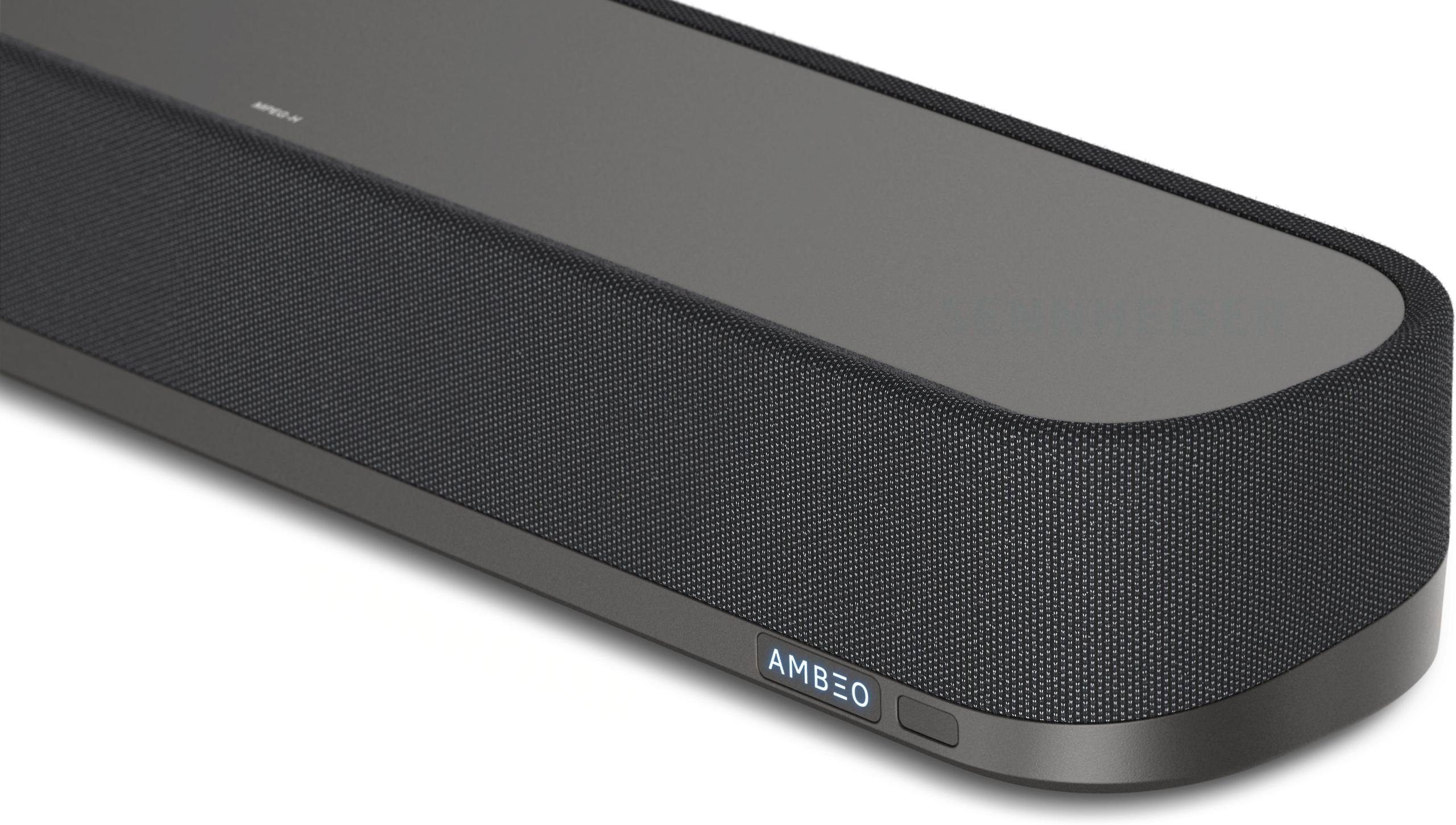
The Sennheiser AMBEO Mini offers broader format compatibility, supporting Dolby Atmos, DTS:X, MPEG-H, and Sony's 360 Reality Audio. This wider format support makes it more versatile with different content sources and potentially more future-proof as new audio formats emerge.
At the time of writing, these soundbars occupy different positions in the premium compact soundbar market, with the Sennheiser AMBEO Mini typically priced significantly higher than the Bose Smart Soundbar 1100.
The Bose represents excellent value as an entry point into premium soundbar territory, particularly for users who prioritize dialogue clarity and may want to expand their system later. When you factor in the potential cost of adding a subwoofer and surround speakers, the total system cost can approach or exceed the Sennheiser's price, but you have the flexibility to spread that investment over time.
The Sennheiser commands a premium price but delivers more complete performance immediately, with superior bass response, more sophisticated room calibration, and broader format support. For users who want the best possible sound from a single device without planning to add components later, the higher upfront cost may be justified by avoiding future upgrade expenses.
In a dedicated home theater context, both soundbars aim to provide engaging surround sound experiences, but they succeed in different ways.
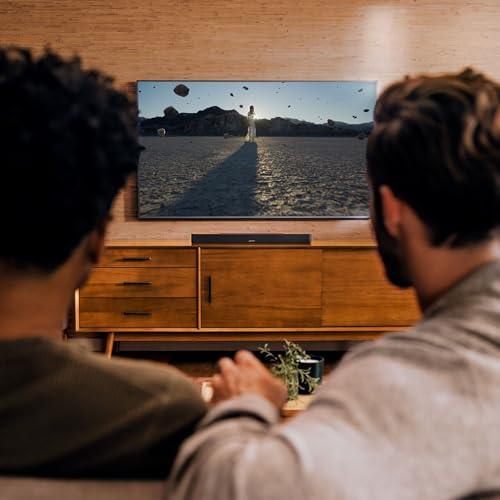
The Bose Smart Soundbar 1100 excels with dialogue-heavy content like TV series, documentaries, and dramatic films where speech intelligibility is crucial. Its expandability also means you can gradually build toward a more traditional surround sound experience as your setup allows.
The Sennheiser AMBEO Mini shines with content that benefits from immersive soundfields—action movies, concert videos, and atmospheric films where the overall acoustic environment matters as much as dialogue clarity. Its superior bass response adds impact to explosions and musical passages that the Bose struggles to reproduce convincingly.
For most home theater applications, the choice comes down to priorities: immediate completeness and bass impact versus dialogue clarity and future expandability.
After extensive research into professional reviews and user experiences, clear recommendations emerge based on different use cases and preferences.
Choose the Bose Smart Soundbar 1100 if dialogue clarity is your primary concern, you watch a lot of TV shows and news programming, you prefer building a system gradually, or you value established brand reliability in the soundbar market. It's also the better choice if your room has ideal conditions for up-firing drivers (moderate ceiling height with hard surfaces) and you're comfortable with the potential need to add a subwoofer for better bass performance.
Choose the Sennheiser AMBEO Mini if you want the most complete single-device solution, bass performance is important to you, you listen to music as much as you watch movies, or you have a challenging room where sophisticated calibration would help. It's also preferable if you value broader audio format compatibility or prefer the premium materials and build quality typical of German audio engineering.
The decision ultimately depends on your specific priorities, room characteristics, and whether you prefer a modular approach or complete solution. Both soundbars represent significant improvements over TV audio and earlier soundbar generations, but they achieve their goals through distinctly different approaches that suit different users and listening preferences.
| Bose Smart Soundbar 1100 | Sennheiser AMBEO Soundbar Mini |
|---|---|
| Dimensions - Critical for fitting under your TV | |
| 27.3" W × 2.2" H × 4.6" D (6.9 lbs) | 27.6" W × 2.6" H × 3.9" D |
| Channel Configuration - Determines surround sound capability | |
| 3.0.2 channels with physical up-firing drivers | 7.1.4 channels via advanced virtualization |
| Bass Performance - Most noticeable difference in movie/music enjoyment | |
| Limited low-end, requires optional subwoofer for deep bass | Dual built-in 4" subwoofers, extends to 43Hz |
| Power Output - Affects volume and dynamic range | |
| Not specified (modest power requirements) | 250 watts total system power |
| Dolby Atmos Implementation - Height effects quality | |
| True height channels via up-firing drivers | Virtualized height effects through DSP processing |
| Dialogue Clarity - Essential for TV shows and movies | |
| A.I. Dialogue Mode with automatic speech optimization | Voice Enhancement feature available |
| Room Calibration - Optimizes sound for your space | |
| Basic wall EQ preset only | Advanced auto-calibration with 4 built-in microphones |
| Audio Format Support - Content compatibility | |
| Dolby Atmos, Dolby Digital (no DTS support) | Dolby Atmos, DTS:X, MPEG-H, 360 Reality Audio |
| Connectivity Options - Streaming and device integration | |
| HDMI eARC, optical, Bluetooth, Wi-Fi, AirPlay 2 | HDMI eARC, USB-A, Bluetooth, Wi-Fi, AirPlay 2 |
| Voice Assistant Integration - Smart home control | |
| Built-in Alexa with Voice4Video TV control | Alexa built-in and Google Chromecast support |
| Expandability - Future upgrade potential | |
| Optional Bass Module and surround speakers available | Self-contained solution with limited expansion |
| Smart Features - Convenience and ecosystem integration | |
| Personal Surround Sound with Bose earbuds, multi-room audio | AMBEO|OS platform, Tidal Connect, premium streaming focus |
| Build Quality and Materials - Durability and aesthetics | |
| Plastic and metal construction, matte black finish | Premium materials with German engineering focus |
The Sennheiser AMBEO Mini has significantly better bass performance with dual built-in 4-inch subwoofers that deliver deep, impactful low-end down to 43Hz. The Bose Smart Soundbar 1100 has limited bass extension and requires an optional subwoofer for deeper bass response.
Yes, both the Bose Smart Soundbar 1100 and Sennheiser AMBEO Mini support Dolby Atmos. The Bose uses physical up-firing drivers for true height channels, while the Sennheiser creates height effects through advanced virtualization technology.
The Bose Smart Soundbar 1100 excels at dialogue clarity with its A.I. Dialogue Mode that automatically optimizes speech intelligibility. While the Sennheiser AMBEO Mini offers voice enhancement, the Bose is specifically engineered for superior dialogue reproduction.
Both soundbars are similar in width at around 27 inches. The Bose Smart Soundbar 1100 is slimmer at 2.2 inches tall, while the Sennheiser AMBEO Mini is slightly taller at 2.6 inches but more compact in depth at 3.9 inches versus 4.6 inches for the Bose.
The Bose Smart Soundbar 1100 offers extensive expandability with optional Bass Modules and surround speakers to create a full surround system. The Sennheiser AMBEO Mini is designed as a complete standalone solution with limited expansion options.
The Sennheiser AMBEO Mini has superior room calibration with four built-in microphones that automatically optimize sound for your specific room acoustics. The Bose Smart Soundbar 1100 only offers basic wall EQ presets for mounted installation.
Yes, both soundbars support voice control. The Bose Smart Soundbar 1100 has built-in Alexa with Voice4Video for controlling your TV and cable box. The Sennheiser AMBEO Mini supports Alexa integration and Google Chromecast compatibility.
The Sennheiser AMBEO Mini supports a broader range of formats including Dolby Atmos, DTS:X, MPEG-H, and 360 Reality Audio. The Bose Smart Soundbar 1100 supports Dolby formats but lacks DTS compatibility, which may limit some Blu-ray disc playback.
Both the Bose Smart Soundbar 1100 and Sennheiser AMBEO Mini offer Wi-Fi connectivity with support for Apple AirPlay 2, Spotify Connect, and Bluetooth streaming. The Sennheiser also includes Tidal Connect and a USB-A port for local file playback.
The Sennheiser AMBEO Mini is generally better for music with its superior bass response, higher power output, and broader format support including high-resolution audio. The Bose Smart Soundbar 1100 focuses more on dialogue and TV content optimization.
The Bose Smart Soundbar 1100 uses physical up-firing drivers and beam-forming technology for surround effects. The Sennheiser AMBEO Mini relies on advanced AMBEO virtualization technology to create a 7.1.4 surround experience without dedicated height speakers.
The Sennheiser AMBEO Mini provides better immediate value as a complete solution with integrated subwoofers and advanced calibration. The Bose Smart Soundbar 1100 offers better value for gradual system building, starting with excellent dialogue performance and expanding with optional components over time.
We've done our best to create useful and informative comparisons to help you decide what product to buy. Our research uses advanced automated methods to create this comparison and perfection is not possible - please contact us for corrections or questions. These are the sites we've researched in the creation of this article: bestbuy.com - rtings.com - rtings.com - youtube.com - staples.com - youtube.com - soundguys.com - businessinsider.com - youtube.com - rtings.com - crutchfield.com - youtube.com - youtube.com - smart.dhgate.com - dolby.com - bose.com - assets.bose.com - bose.com - connection.com - bestbuy.com - cdw.com - dell.com - device.report - techradar.com - sennheiser-hearing.com - stereonet.com - rtings.com - youtube.com - youtube.com - newsroom.sennheiser.com - whathifi.com - baybloorradio.com - sennheiser-hearing.com - files.bbystatic.com

Privacy Policy
Terms and Conditions - Affiliate Policy
Home Security
© Copyright 2008-2026.
11816 Inwood Rd #1211, Dallas, TX 75244