






When you're ready to upgrade from your TV's built-in speakers, premium soundbars promise to deliver that coveted home theater experience without the complexity of a full surround sound system. But with prices reaching into four-figure territory, choosing between high-end options like the Devialet Dione and Sennheiser AMBEO Soundbar Mini requires understanding what you're actually getting for your investment.
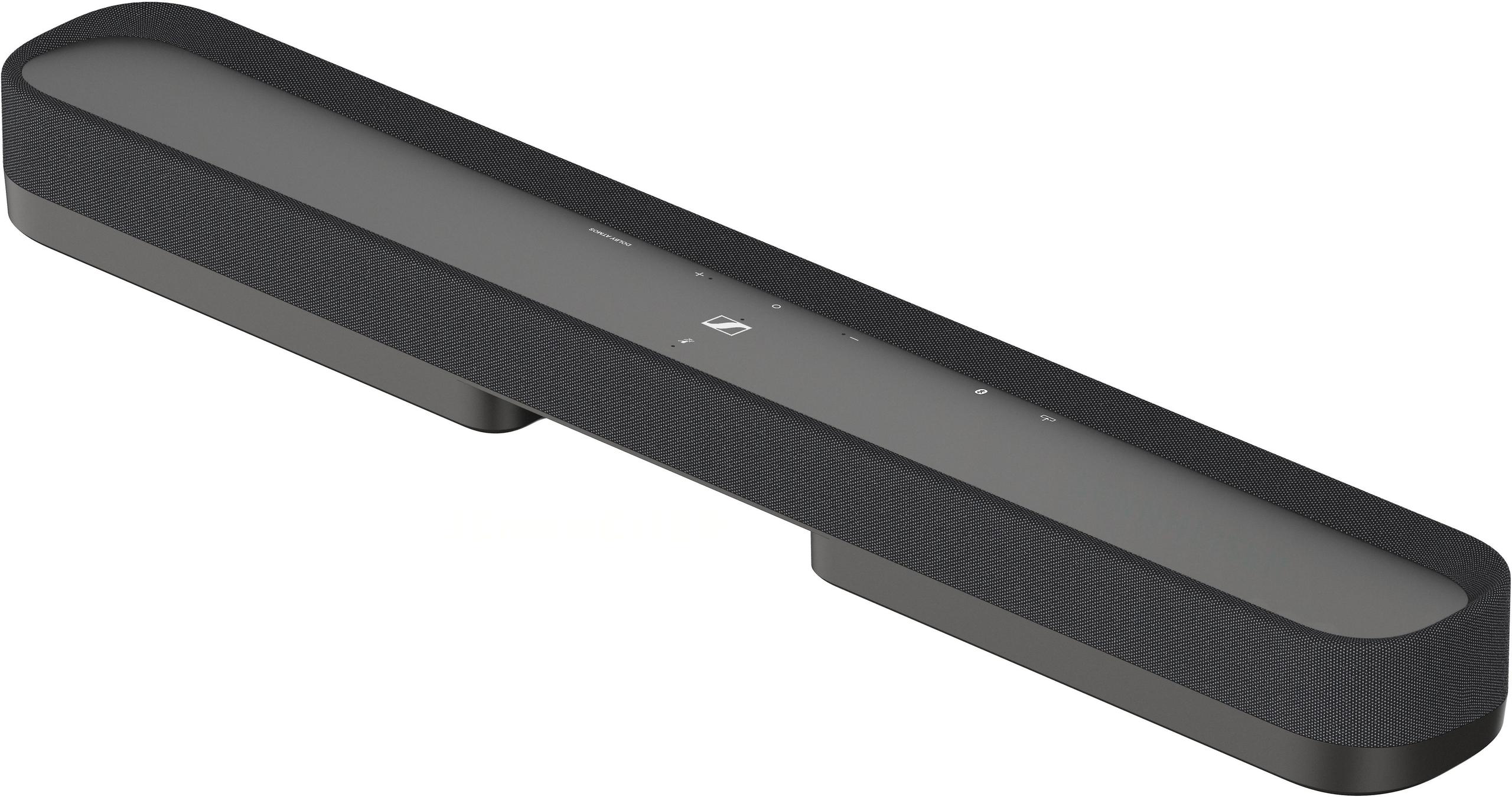
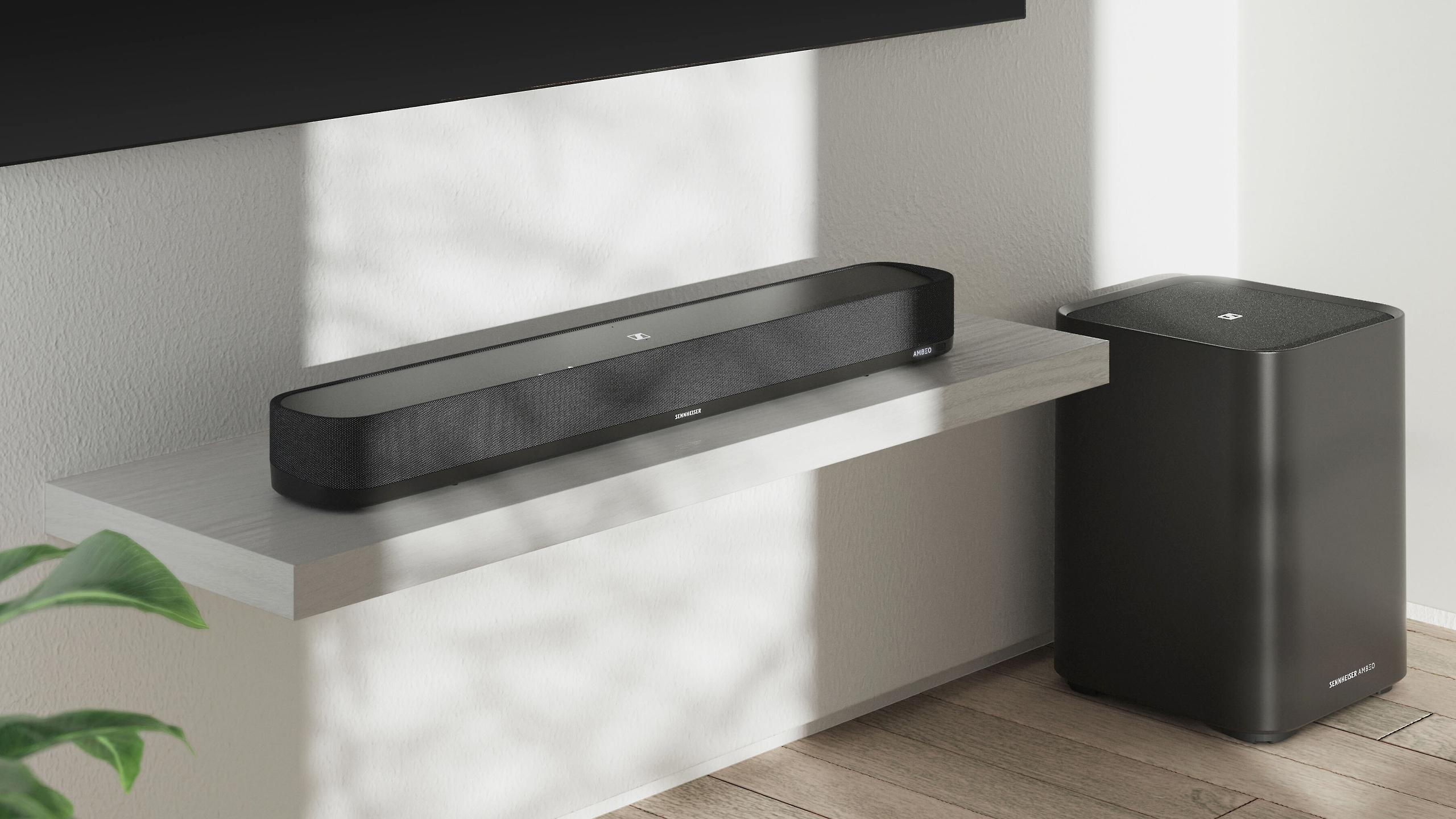
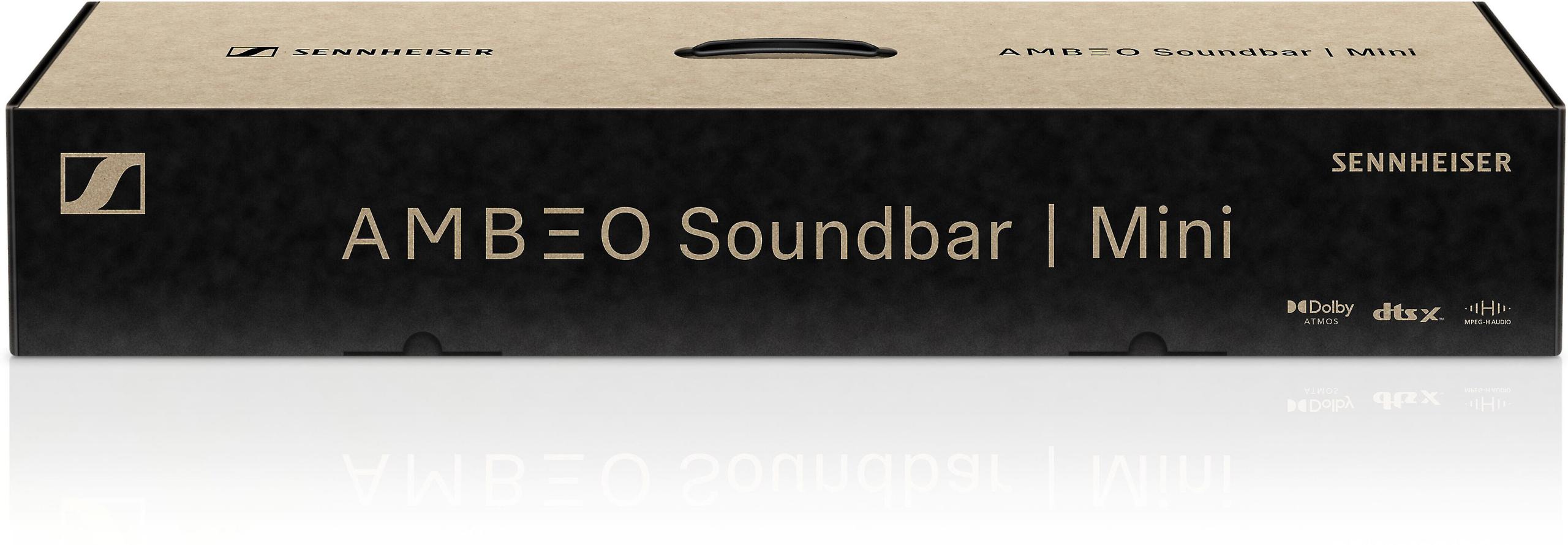
Both soundbars launched in recent years as flagship products from audio companies with serious audiophile credentials. The Devialet Dione represents the French company's first venture into soundbars, bringing their expertise from ultra-premium wireless speakers. Meanwhile, the Sennheiser AMBEO Mini arrived in 2023 as a more compact version of Sennheiser's larger AMBEO soundbar, designed to bring their spatial audio technology to smaller spaces and budgets.
Premium soundbars occupy a unique space in home audio. They're designed for people who want exceptional sound quality but don't want speakers scattered around their room or the complexity of a traditional surround sound receiver setup. The best ones aim to create an immersive, three-dimensional sound experience that rivals dedicated speaker systems.
The key considerations when evaluating any premium soundbar include sound quality across different types of content, the ability to create convincing surround effects, bass performance, build quality, and overall value. Some prioritize raw acoustic performance, while others focus on advanced digital processing to create virtual surround effects.
What makes this comparison particularly interesting is that both the Devialet Dione and Sennheiser AMBEO Mini take fundamentally different approaches to achieving similar goals. Understanding these differences is crucial to making the right choice for your specific situation.
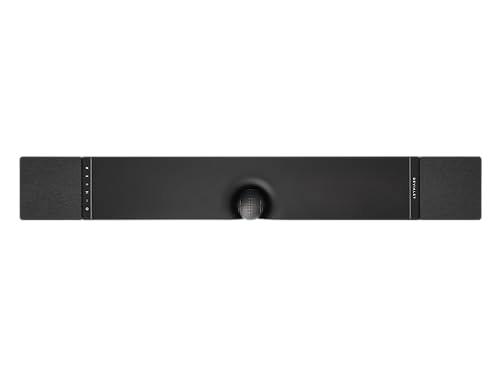
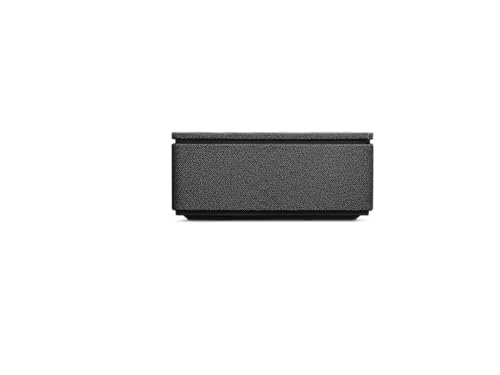
The Devialet Dione represents what we might call the "brute force" approach to soundbar design. It packs an impressive 17 individual drivers into its substantial chassis, including nine full-range speakers and eight dedicated subwoofers. These aren't just small drivers either – they're aluminum units with neodymium magnets, the same high-quality components you'd find in expensive bookshelf speakers.
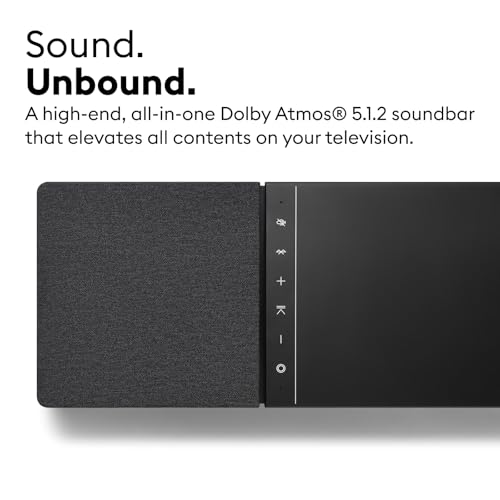
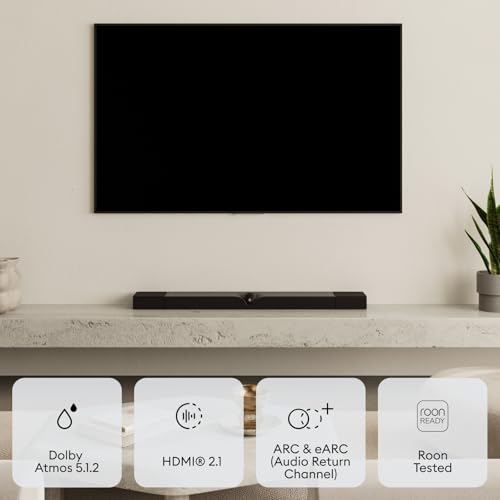
This physical approach means the Dione creates true 5.1.2 surround sound. That technical notation tells you exactly what you're getting: five main channels (front left, center, front right, surround left, surround right), one dedicated subwoofer channel, and two height channels for Dolby Atmos effects. Each of these channels has dedicated drivers pointing in the appropriate directions.
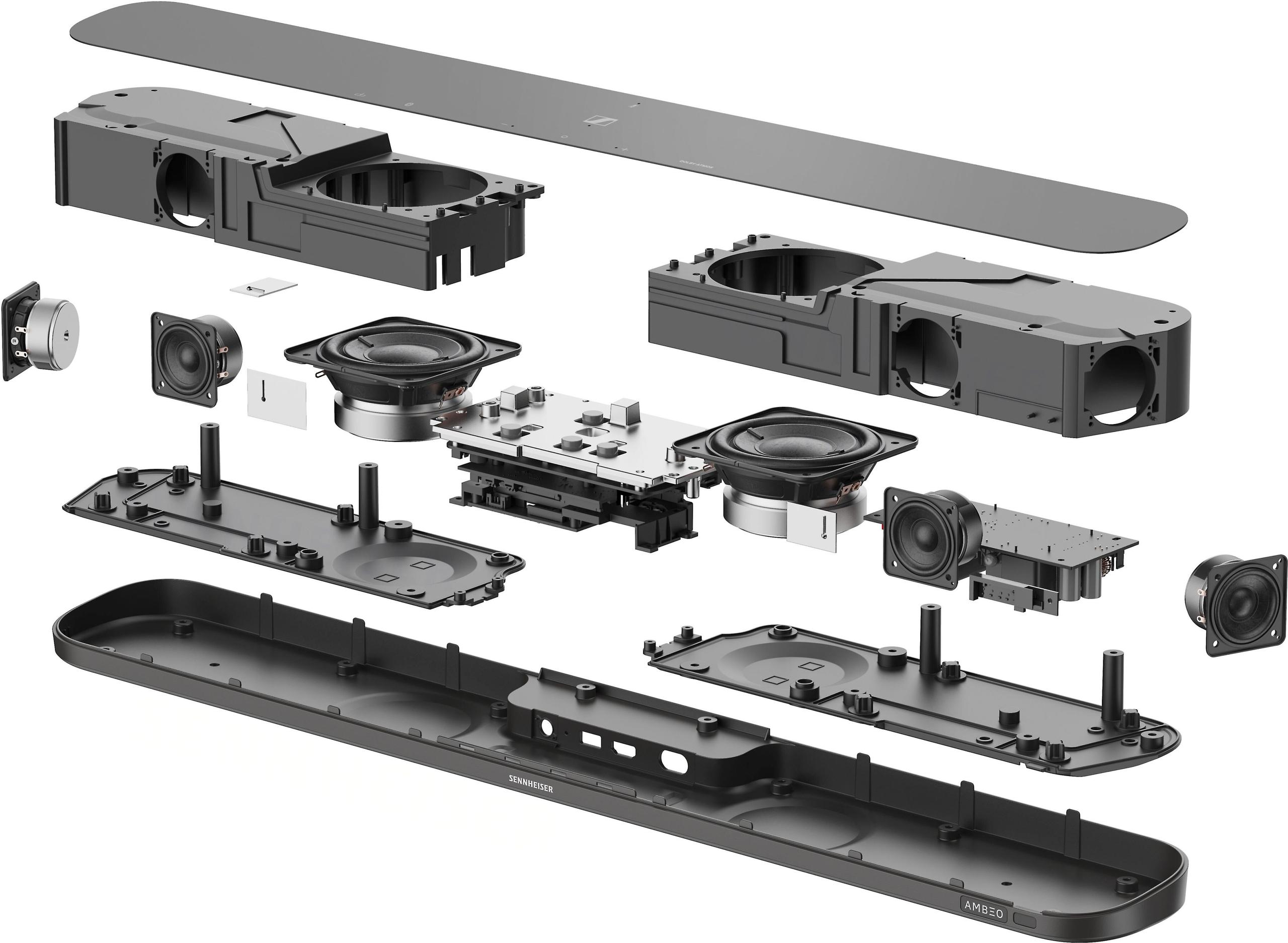
The Sennheiser AMBEO Mini, by contrast, takes a more sophisticated digital approach. It uses just six drivers – four full-range speakers and two subwoofers – but employs advanced processing to create what's called "virtualized" 7.1.4 surround sound. This means software algorithms analyze the audio and manipulate how sound reaches your ears to create the impression of speakers that aren't physically there.
Both approaches have merit, but they excel in different scenarios and have different limitations.
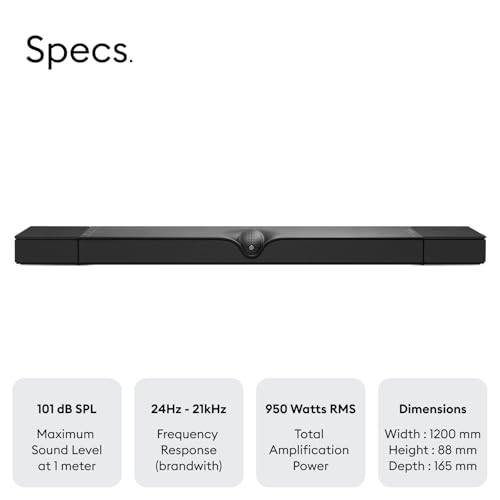
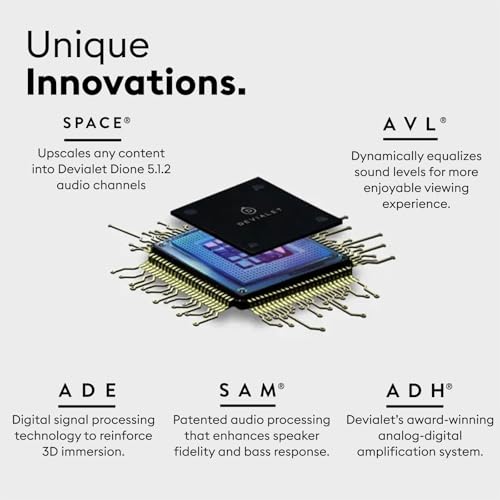
The raw numbers tell an interesting story. The Devialet Dione pumps out 950 watts of RMS power, which refers to the continuous, sustainable power output rather than peak marketing numbers. This substantial amplification uses Devialet's proprietary ADH (Analog Digital Hybrid) technology, which combines the sound purity of Class A amplifiers with the efficiency of Class D designs.
ADH amplification is genuinely innovative – it uses a pure Class A analog stage to define the signal's character while Class D stages provide the muscle to drive speakers to high volumes. This hybrid approach delivers the best of both worlds: the warm, detailed sound that audiophiles love from Class A designs, with the power and efficiency needed for a room-filling soundbar.
The AMBEO Mini delivers 250 watts of conventional amplification, which sounds modest in comparison but is actually quite reasonable given its compact size and reliance on digital processing rather than brute force. The real limitation isn't the power output but the physical constraints of fitting meaningful bass drivers in such a small enclosure.
This is where the philosophical differences become most apparent. Bass performance often determines whether a soundbar feels like a genuine home theater upgrade or just a slightly better TV speaker.
The Devialet Dione reaches down to 24Hz, which is genuinely impressive for any speaker system, let alone a soundbar. To put this in perspective, most music and movie content doesn't contain meaningful information below 30Hz, so the Dione captures virtually everything in a recording. This deep bass capability comes from those eight dedicated aluminum subwoofers arranged in what Devialet calls a "push-push" configuration, where opposing drivers cancel out vibrations that would otherwise rattle the cabinet.
The result is bass that you feel as much as hear, without the muddy or boomy characteristics that plague many soundbars when they try to reproduce low frequencies. The Dione's SAM (Speaker Active Matching) technology continuously monitors and adjusts the subwoofers' behavior, ensuring they reproduce exactly what was recorded rather than adding artificial coloration.
The AMBEO Mini, constrained by its compact size, only reaches 43Hz with its built-in drivers. While this covers the fundamentals of most content, it misses the really impactful low-end that makes action movies feel cinematic. Sennheiser acknowledges this limitation by offering an optional AMBEO Sub, but this additional purchase significantly increases the total system cost and somewhat defeats the purpose of a compact, all-in-one solution.
Creating convincing surround sound from a single bar requires different types of audio wizardry. The Devialet Dione uses what the company calls SPACE technology – a proprietary algorithm that analyzes incoming audio and redistributes it across the bar's 17 physical drivers to create an expanded soundstage.
More importantly, the Dione includes actual upward-firing drivers for Dolby Atmos height effects and side-firing drivers that bounce sound off your room's walls to create the impression of surround speakers behind you. This physical approach tends to create more convincing directional effects, especially in well-designed rooms with appropriate wall surfaces for reflections.
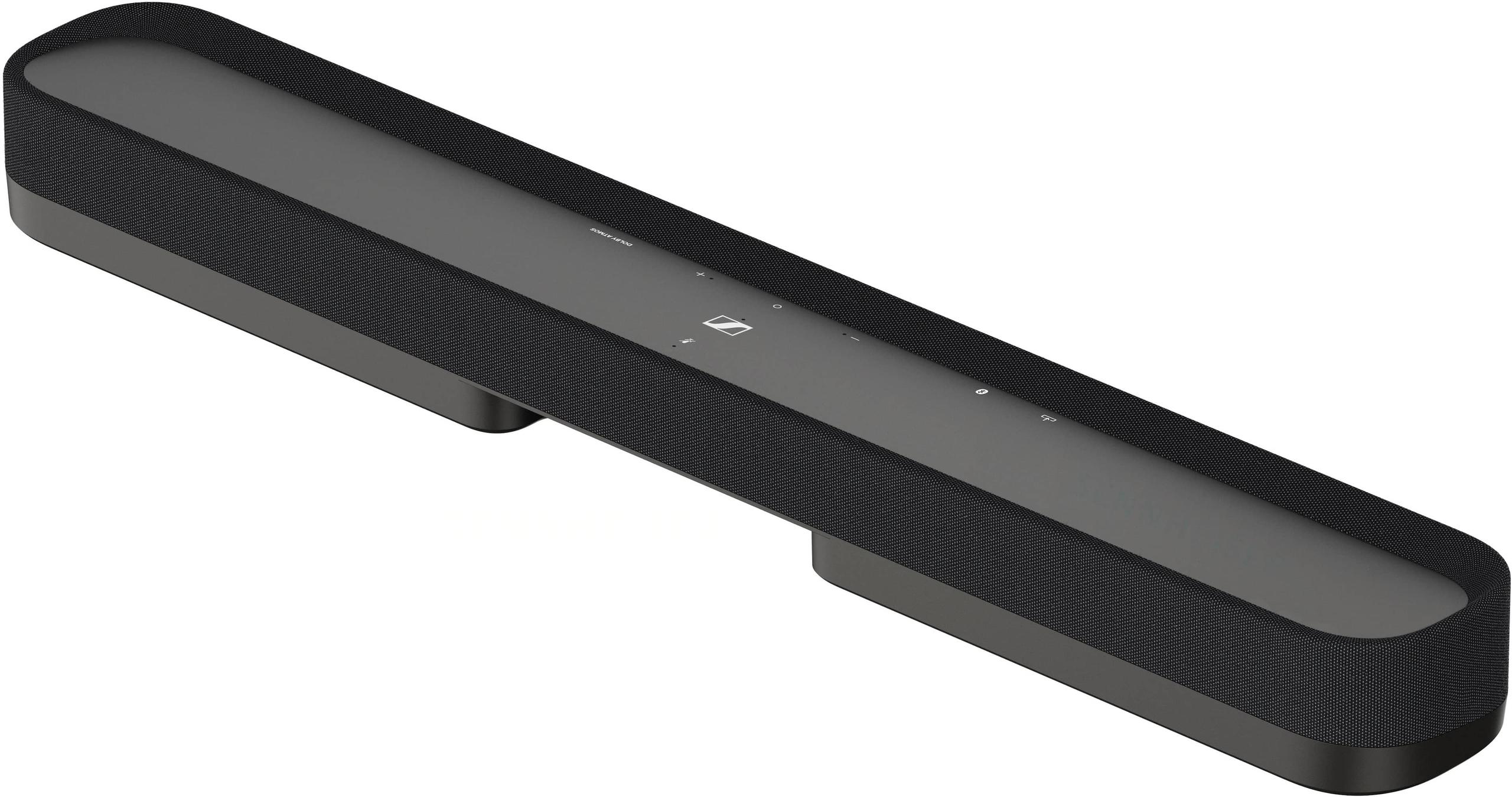
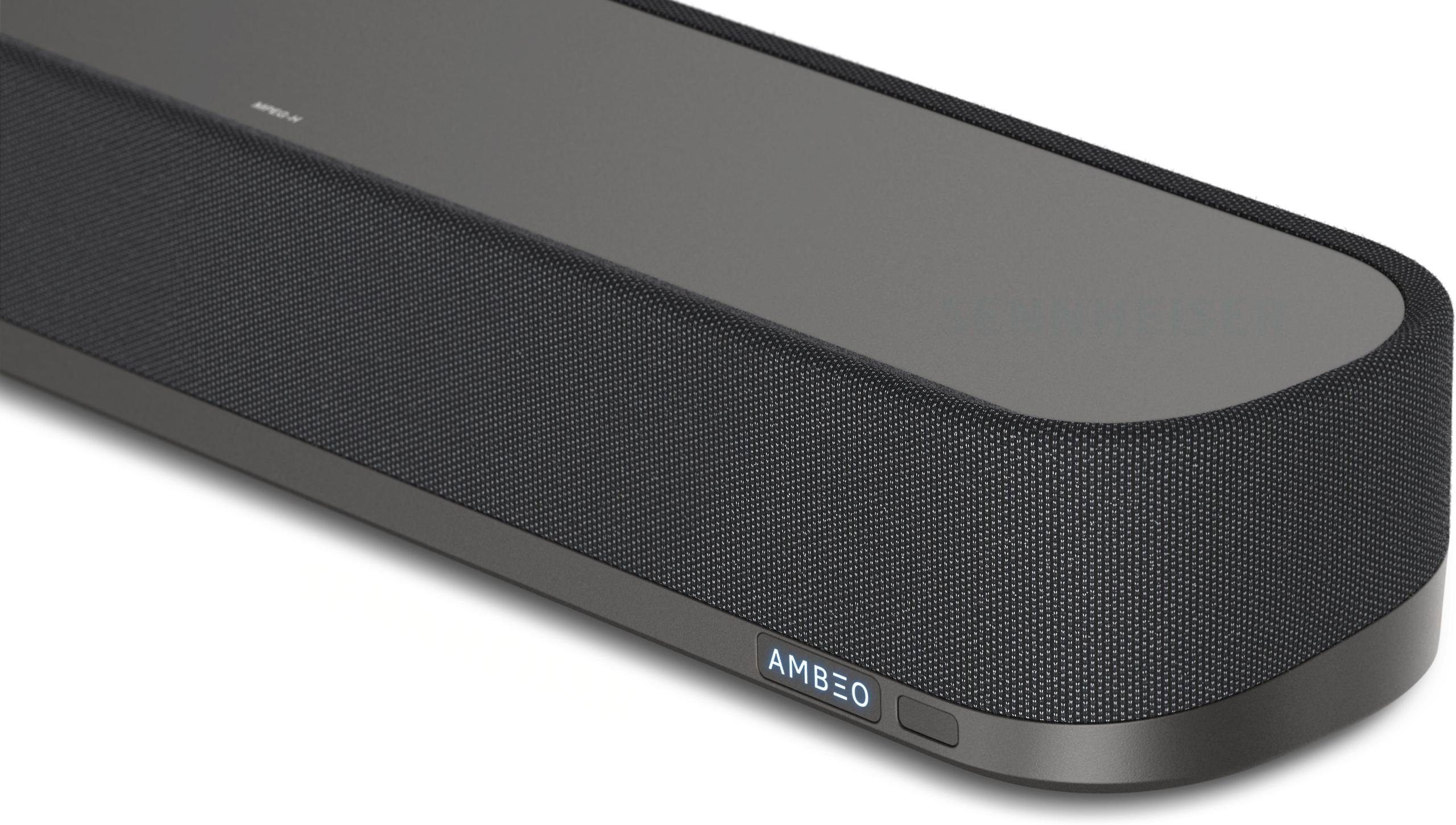
The AMBEO Mini's virtualization technology is genuinely impressive for its size. Sennheiser's AMBEO processing creates phantom speakers through careful manipulation of how sound reaches each ear, exploiting psychoacoustic principles about how our brains interpret directional audio cues. The technology supports not just Dolby Atmos but also DTS:X, MPEG-H, and Sony's 360 Reality Audio formats.
However, virtual surround has inherent limitations. It works best in specific listening positions and can break down if you move around the room or if your room's acoustics don't cooperate. The AMBEO Mini does an admirable job creating width and some sense of immersion, but it can't match the physical presence and directionality that dedicated drivers provide.
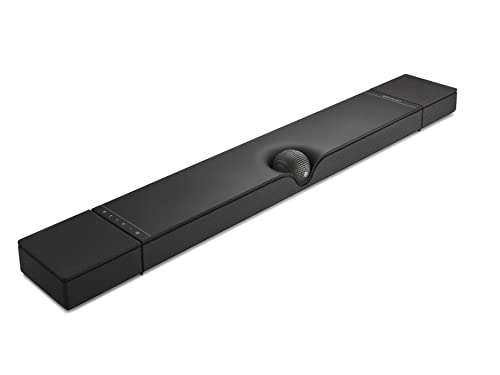
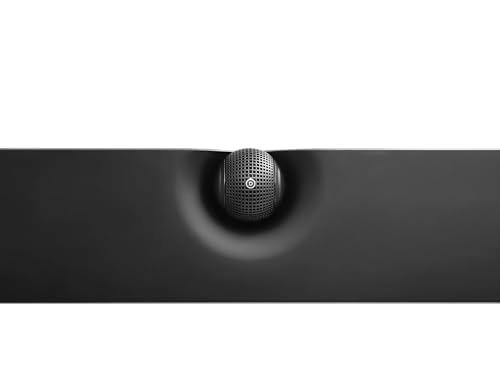
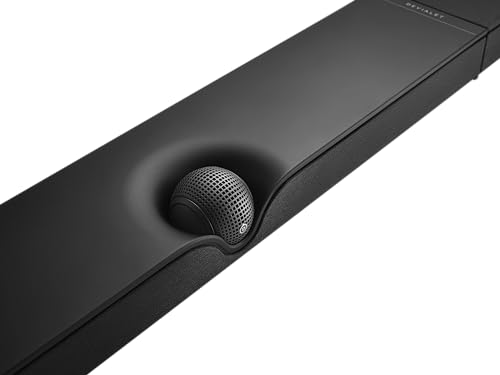
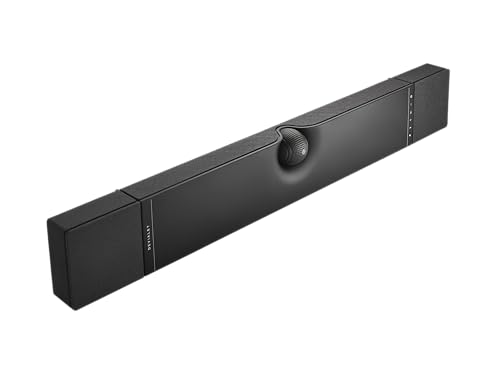
One of the Dione's most distinctive features is its rotating ORB center channel. This spherical housing contains the center driver and can rotate 180 degrees depending on whether the soundbar is placed on furniture or wall-mounted. This mechanical adaptation ensures the center channel always fires directly toward the listening position, maintaining optimal dialogue clarity and center-stage effects regardless of placement.
This might seem like a small detail, but center channel performance is crucial for home theater. Dialogue clarity can make or break the viewing experience, and having a physically optimized center driver that adapts to your setup is a genuinely useful innovation.
Both soundbars include automatic room calibration, but they implement it differently. The Dione uses four built-in microphones to analyze your room's acoustics and adjusts its processing accordingly. This calibration works with Devialet's ADE (Advanced Dimensional Experience) technology to optimize the soundbar's beamforming and reflection patterns for your specific space.
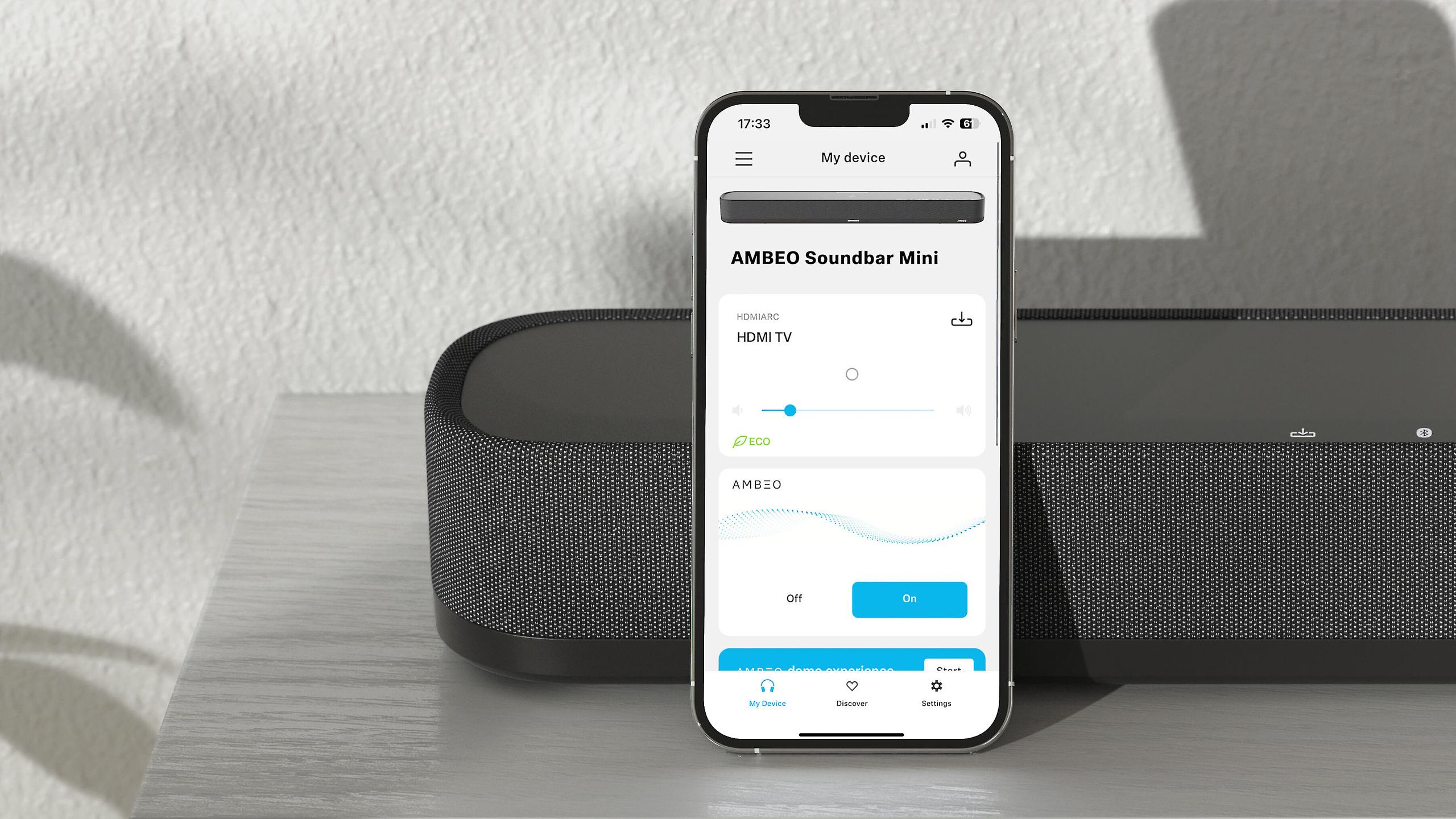
The AMBEO Mini also includes automatic calibration through its AMBEO|OS system, which measures room characteristics and adapts the virtualization algorithms accordingly. Given that virtual surround is more sensitive to room acoustics than physical drivers, this calibration is particularly important for the AMBEO's performance.
While both soundbars excel with movies, their music performance reveals important differences in design philosophy. The Devialet Dione includes a dedicated Music Mode that disables spatial processing and focuses on pure stereo reproduction. This reflects Devialet's audiophile heritage – they understand that sometimes you want accurate, unprocessed sound rather than artificial enhancement.
The Dione's ADH amplification and high-quality drivers deliver the kind of detailed, dynamic music reproduction that audiophiles expect. It supports high-resolution audio up to 24-bit/96kHz, and its frequency response and low distortion characteristics make it genuinely suitable for critical music listening.
The AMBEO Mini takes a different approach, focusing on creating an immersive musical experience through its AMBEO processing. While this can make streaming music feel more enveloping and spacious, it's less suitable for purist music listening where accuracy is the priority.
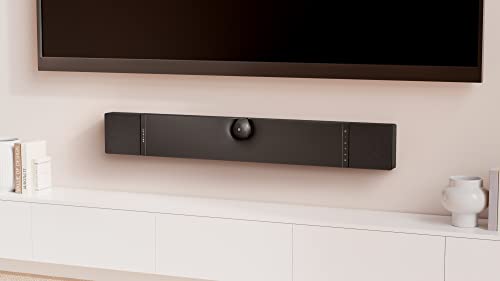
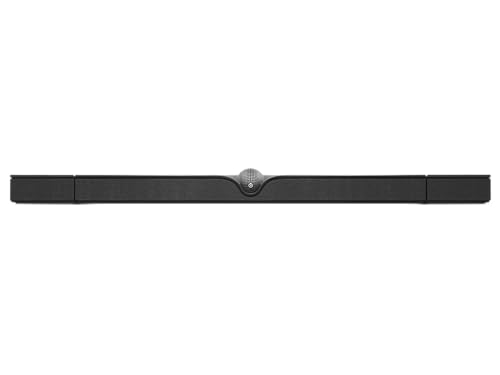
The Devialet Dione is unabashedly large at 1200mm wide – that's nearly four feet. It weighs 12 kilograms and has a substantial presence that commands attention. The design is undeniably premium, with its matte black aluminum construction and that distinctive ORB center sphere, but it requires significant space and won't disappear visually in your room.
The AMBEO Mini lives up to its name at just 700mm wide and weighing only 3.3 kilograms. It's designed to be discreet and blend seamlessly with smaller TVs and more compact living spaces. For many people, this size difference will be the deciding factor regardless of performance considerations.
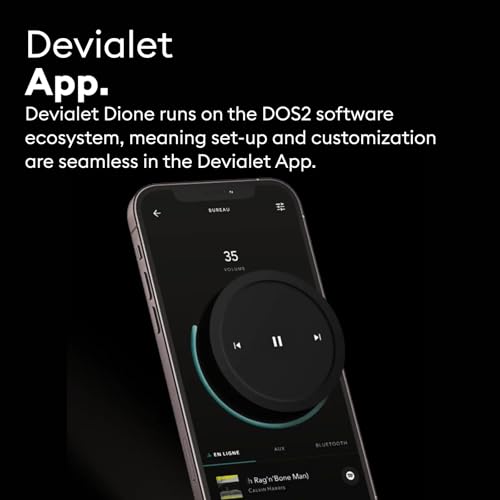
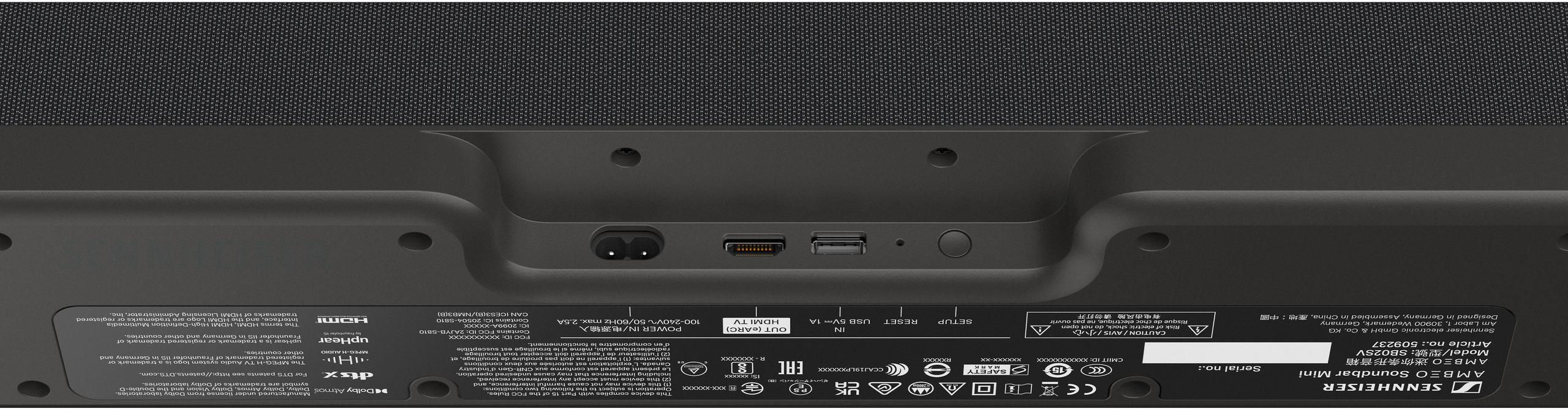
Both soundbars include HDMI eARC for high-quality audio from your TV, along with comprehensive wireless connectivity including Wi-Fi, Bluetooth, AirPlay 2, and Spotify Connect. However, the AMBEO Mini includes built-in Alexa voice control, while the Dione focuses purely on audio performance without voice assistant integration.
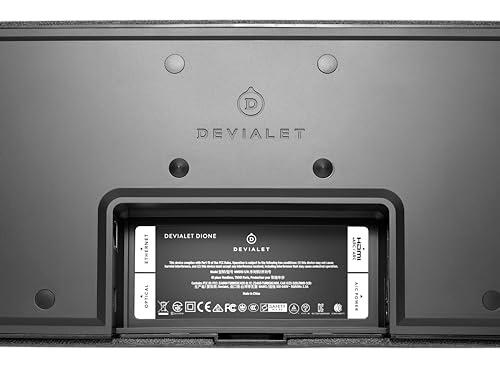
The Dione offers slightly more comprehensive connectivity with additional optical input and Ethernet connectivity, plus it can integrate into Devialet's broader ecosystem of wireless speakers for multiroom audio.
At the time of writing, both soundbars occupy the premium price tier, though the AMBEO Mini positions itself as the more accessible option. However, when you factor in the cost of adding Sennheiser's subwoofer to achieve comparable bass performance, the total system cost approaches that of higher-tier competitors.
The Devialet Dione represents what we might call "honest" premium pricing – its higher cost reflects genuine engineering advantages and superior components. You're paying for 17 high-quality drivers, sophisticated amplification, and innovative mechanical engineering like the ORB technology.
The AMBEO Mini asks you to pay premium pricing for advanced processing and brand reputation, but its physical limitations mean you're not getting premium acoustic performance without additional purchases.
For dedicated home theater use, the differences become even more pronounced. The Dione's ability to generate genuine impact and room-filling sound makes action movies feel properly cinematic. Its bass extension means you'll feel explosions and rumble effects that the AMBEO Mini simply can't reproduce without additional components.
The Dione's physical approach to surround sound also tends to work better in larger rooms where virtual surround processing can struggle to maintain convincing directional effects across multiple seating positions.
However, if you're working with a smaller room or apartment where a large soundbar would overwhelm the space, the AMBEO Mini's compact form factor and respectable performance make more practical sense.
Choose the Devialet Dione if you want the best possible sound quality from a single unit and have the space to accommodate it. It's ideal for people who take both music and movie audio seriously, want deep bass without additional components, and appreciate innovative engineering. The Dione works best in medium to large rooms where its substantial output and wide soundstage can be fully appreciated.
The Sennheiser AMBEO Mini makes sense if space constraints are your primary concern, you value features like voice control, or you want the option to build a more elaborate system gradually. It's better suited to smaller rooms, apartments, or situations where visual discretion is important.
However, be honest about your expectations. The AMBEO Mini delivers impressive performance for its size, but it can't match the physical authority and presence of a larger, more powerful system like the Dione. If you're coming from basic TV speakers, the difference will be dramatic. But if you're upgrading from a decent soundbar or speaker system, the AMBEO Mini might feel like a lateral move rather than a clear upgrade.
Ultimately, both soundbars represent their manufacturers' serious attempts to deliver premium audio experiences, but they serve different priorities and spaces. The Devialet Dione prioritizes absolute performance, while the AMBEO Mini prioritizes integration and convenience. Understanding which approach better matches your specific situation and expectations will guide you to the right choice.
| Devialet Dione Soundbar | Sennheiser AMBEO Soundbar Mini |
|---|---|
| Channel Configuration - Determines surround sound authenticity | |
| True 5.1.2 physical channels with dedicated drivers | Virtualized 7.1.4 channels via digital processing |
| Total Driver Count - More drivers typically mean better sound separation | |
| 17 drivers (9 full-range + 8 subwoofers) | 6 drivers (4 full-range + 2 subwoofers) |
| Power Output - Higher wattage delivers more dynamic range and room-filling sound | |
| 950W RMS (nearly 4x more amplification power) | 250W RMS (adequate for smaller rooms) |
| Bass Extension - Lower frequency = more impactful movie experience | |
| 24Hz (cinema-grade bass without external subwoofer) | 43Hz (requires optional $700 subwoofer for deep bass) |
| Dimensions - Size affects placement options and visual impact | |
| 1200 × 77 × 165mm, 12kg (substantial presence) | 700 × 65 × 100mm, 3.3kg (compact and discreet) |
| Amplification Technology - Affects sound quality and efficiency | |
| ADH® Analog Digital Hybrid (audiophile-grade) | Conventional Class D amplification |
| Unique Features - Signature technologies that differentiate each product | |
| Rotating ORB® center channel, SPACE™ upmixing | AMBEO virtualization, built-in Alexa voice control |
| Connectivity Options - Determines how you can connect sources | |
| HDMI 2.1 eARC, Optical, Ethernet, Wi-Fi, Bluetooth 5.0 | HDMI eARC only, Wi-Fi, Bluetooth 5.0, USB-A |
| Room Calibration - Automatically optimizes sound for your space | |
| 4 built-in microphones with ADE® processing | AMBEO\|OS automatic calibration system |
| Music Performance - Important if you listen to stereo music regularly | |
| Dedicated Music Mode with audiophile-grade reproduction | AMBEO processing focuses on immersion over accuracy |
| Expandability - Options for future system upgrades | |
| Complete standalone system, integrates with Devialet ecosystem | Can add up to 4 wireless AMBEO subwoofers |
| Release Year - Indicates technology generation and feature currency | |
| Recent release with latest Devialet technologies | 2023 launch as compact AMBEO variant |
The Sennheiser AMBEO Soundbar Mini is specifically designed for smaller spaces at just 700mm wide, making it ideal for compact living rooms or apartments. The Devialet Dione Soundbar at 1200mm wide is better suited for larger rooms where its substantial size and power can be fully utilized.
The Devialet Dione Soundbar includes eight built-in subwoofers that reach down to 24Hz, providing cinema-quality bass without any additional components. The Sennheiser AMBEO Mini only reaches 43Hz and benefits significantly from adding Sennheiser's optional AMBEO Sub for proper low-end impact.
The Devialet Dione creates true 5.1.2 surround sound using 17 physical drivers with dedicated upward and side-firing speakers. The Sennheiser AMBEO Mini uses advanced digital processing to virtualize 7.1.4 channels, which is impressive but cannot match the directional accuracy of physical drivers.
The Sennheiser AMBEO Soundbar Mini measures 700 × 65 × 100mm and weighs only 3.3kg, making it very compact. The Devialet Dione Soundbar is significantly larger at 1200 × 77 × 165mm and weighs 12kg, requiring more substantial furniture or wall mounting.
The Devialet Dione excels at music with its audiophile-grade ADH amplification and dedicated Music Mode that provides pure stereo reproduction. The AMBEO Mini focuses more on spatial enhancement and immersive processing rather than critical music listening accuracy.
Yes, both the Devialet Dione Soundbar and Sennheiser AMBEO Mini support Bluetooth 5.0, Wi-Fi, AirPlay 2, and Spotify Connect for wireless streaming. The AMBEO Mini additionally includes built-in Alexa voice control for hands-free operation.
The Devialet Dione delivers 950W RMS of amplification power with 17 drivers, producing significantly more output and dynamic range. The Sennheiser AMBEO Mini provides 250W RMS, which is adequate for smaller rooms but cannot match the room-filling power of the Dione.
Both soundbars support Dolby Atmos, but implement it differently. The Devialet Dione uses physical upward-firing drivers for true height effects, while the Sennheiser AMBEO Mini creates virtual height channels through digital processing. The AMBEO Mini also supports additional formats like DTS:X and 360 Reality Audio.
The Devialet Dione Soundbar provides better value for ultimate performance with its complete feature set and no need for additional components. The Sennheiser AMBEO Mini appears more affordable initially but may require expensive subwoofer additions to achieve comparable bass performance.
Both soundbars include automatic room calibration. The Devialet Dione uses four built-in microphones with ADE processing to optimize beamforming for your space. The AMBEO Mini employs AMBEO|OS calibration to adapt its virtualization algorithms to your room's acoustics.
The Sennheiser AMBEO Mini offers simpler setup with its compact size, single HDMI connection, and built-in voice control. The Devialet Dione requires more consideration for placement due to its size but offers more comprehensive connectivity options including optical and Ethernet inputs.
Yes, both the Devialet Dione Soundbar and Sennheiser AMBEO Mini support wall mounting. The Dione features a unique rotating ORB center channel that automatically adapts when wall-mounted to maintain optimal dialogue delivery. The AMBEO Mini is lighter and easier to mount due to its compact design.
We've done our best to create useful and informative comparisons to help you decide what product to buy. Our research uses advanced automated methods to create this comparison and perfection is not possible - please contact us for corrections or questions. These are the sites we've researched in the creation of this article: rtings.com - crutchfield.com - devialet.com - ooberpad.com - bhphotovideo.com - kjwestone.co.uk - whathifi.com - devialet.com - devialet.com - sound-advice.online - kjwestone.co.uk - device.report - tmraudio.com - devialet.com - devialetchat.com - projectorscreen.com - soundandvision.com - bestbuy.com - youtube.com - av.com - audiofi.ca - devialet.com - blog.son-video.com - audioconnection.com.au - baybloorradio.com - cdn.abicart.com - smarthomesounds.co.uk - e-piphany.co.za - cloneyaudio.com - devialet.com - catalog.asbis.ee - av.com - soundandvision.com - youtube.com - comparisontabl.es - techradar.com - sennheiser-hearing.com - stereonet.com - rtings.com - youtube.com - youtube.com - newsroom.sennheiser.com - whathifi.com - baybloorradio.com - sennheiser-hearing.com - files.bbystatic.com

Privacy Policy
Terms and Conditions - Affiliate Policy
Home Security
© Copyright 2008-2026.
11816 Inwood Rd #1211, Dallas, TX 75244