




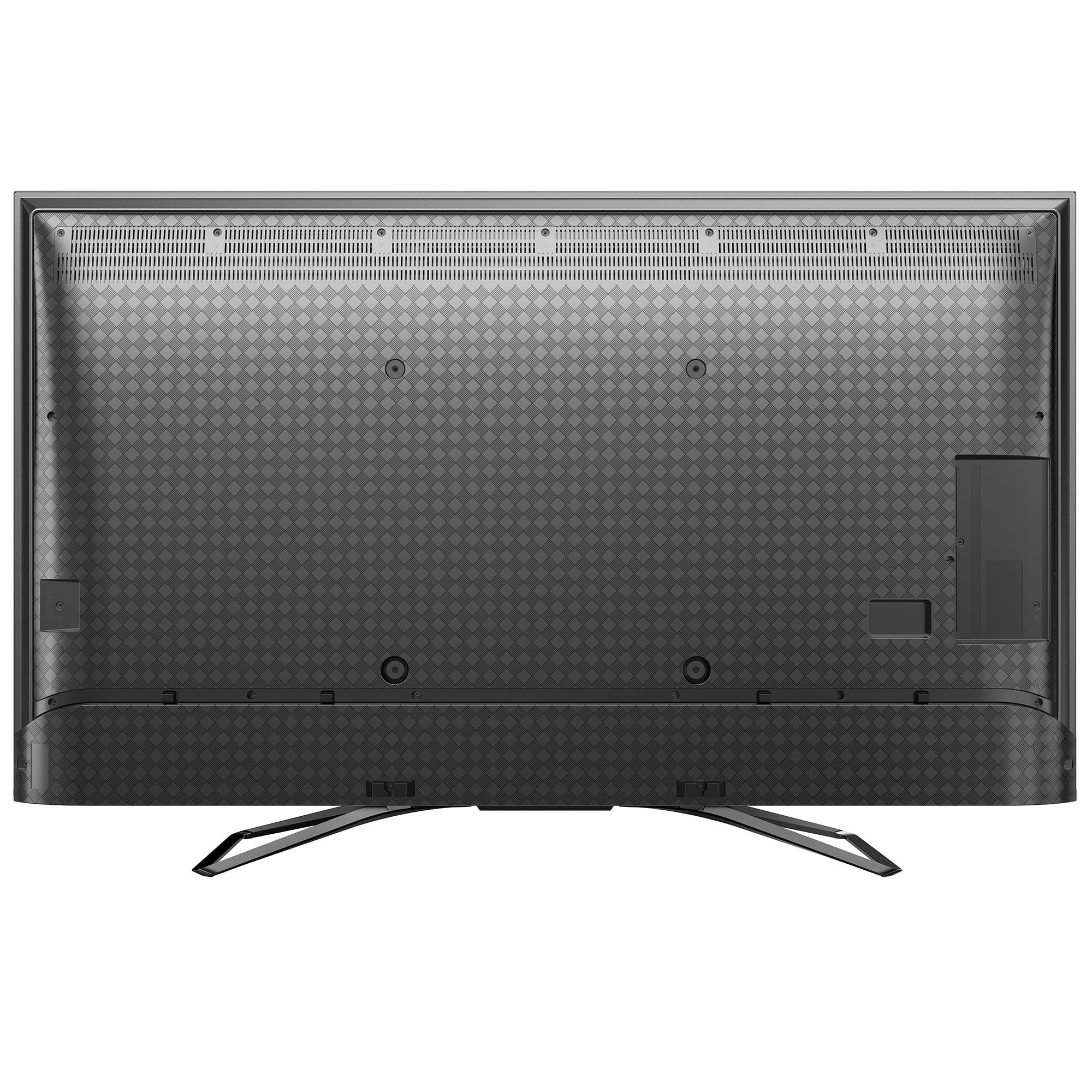
The living room TV has transformed dramatically over the past decade. What was once a simple display has evolved into the centerpiece of our home entertainment systems, offering incredible picture quality, smart features, and gaming capabilities that would have seemed impossible just a few years ago. If you're in the market for a premium 65-inch television in 2024, you're faced with an enviable but potentially overwhelming array of choices.
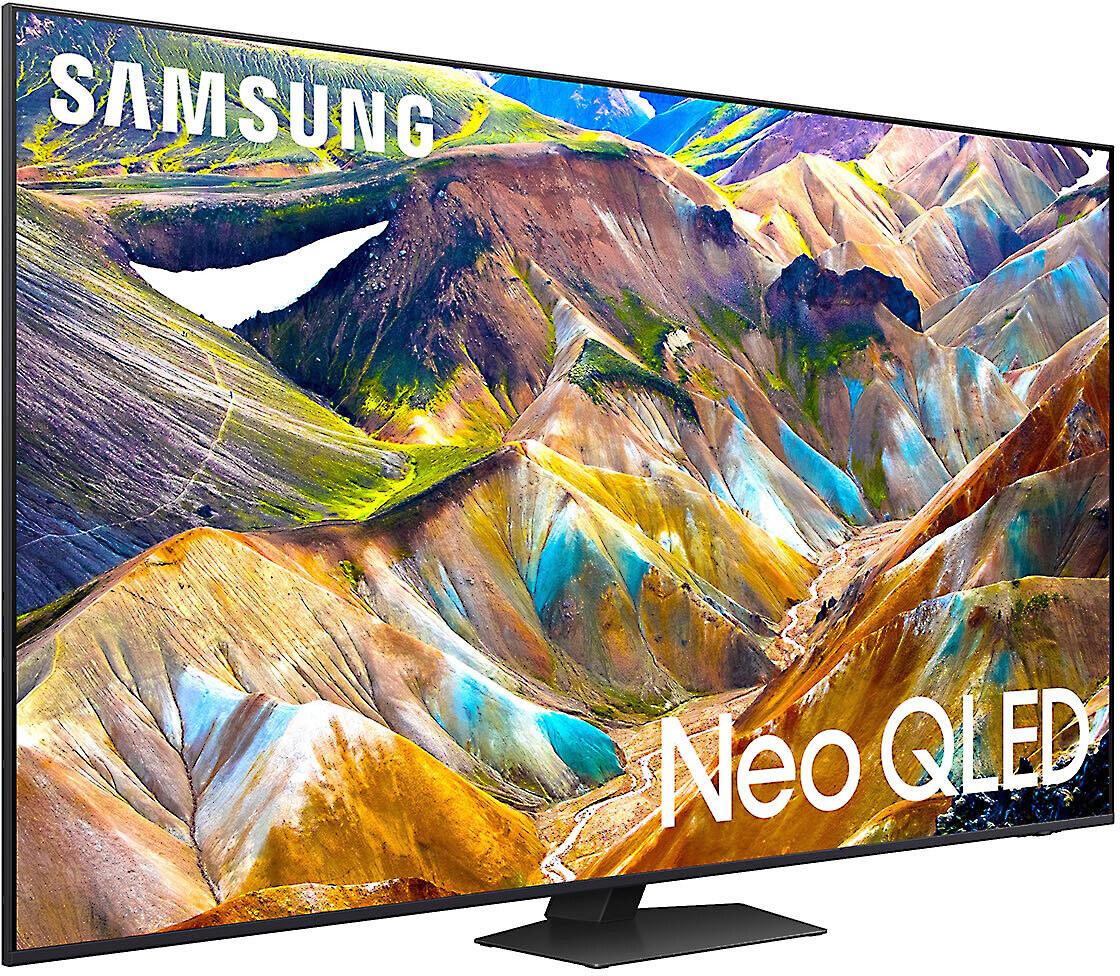
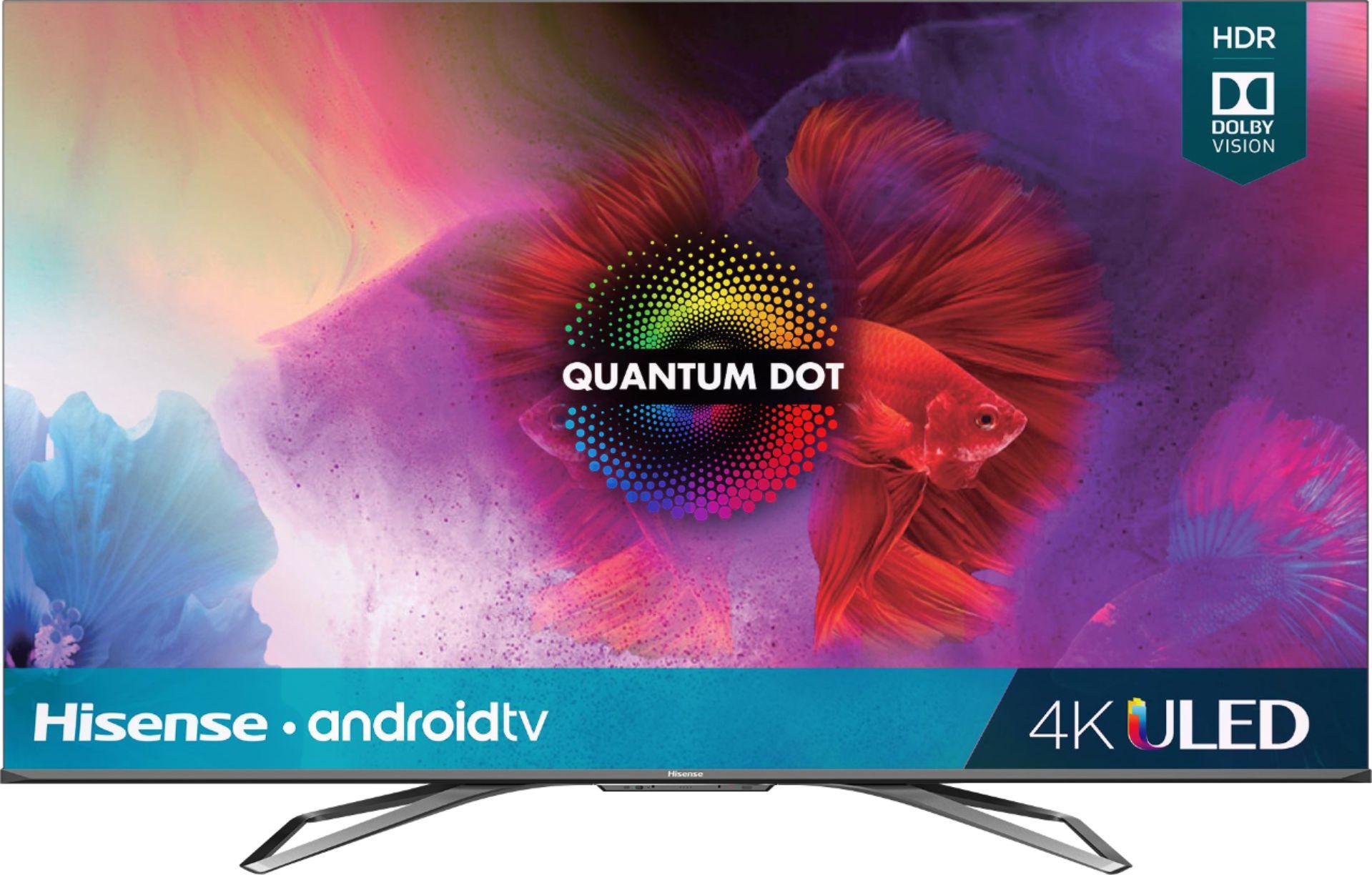
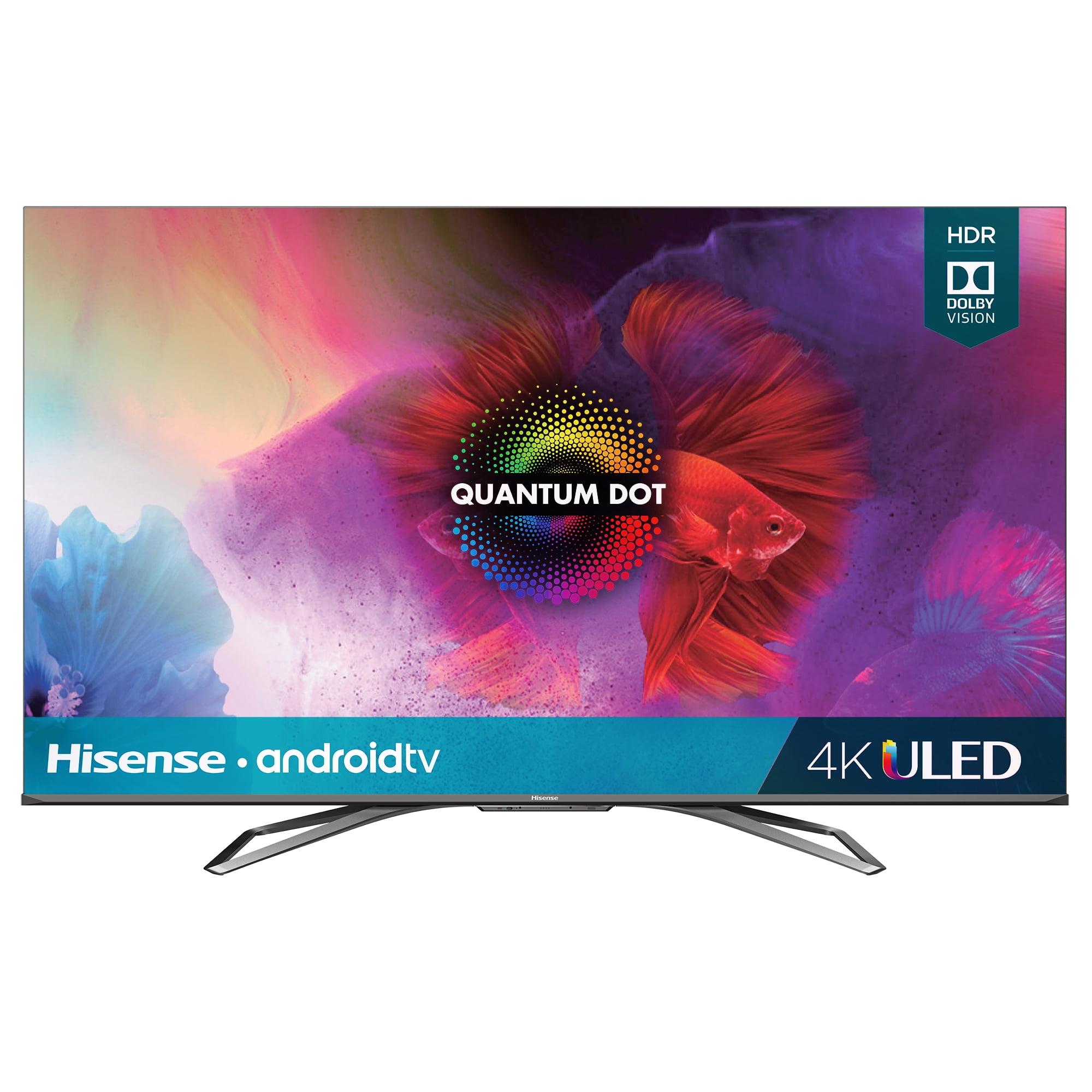
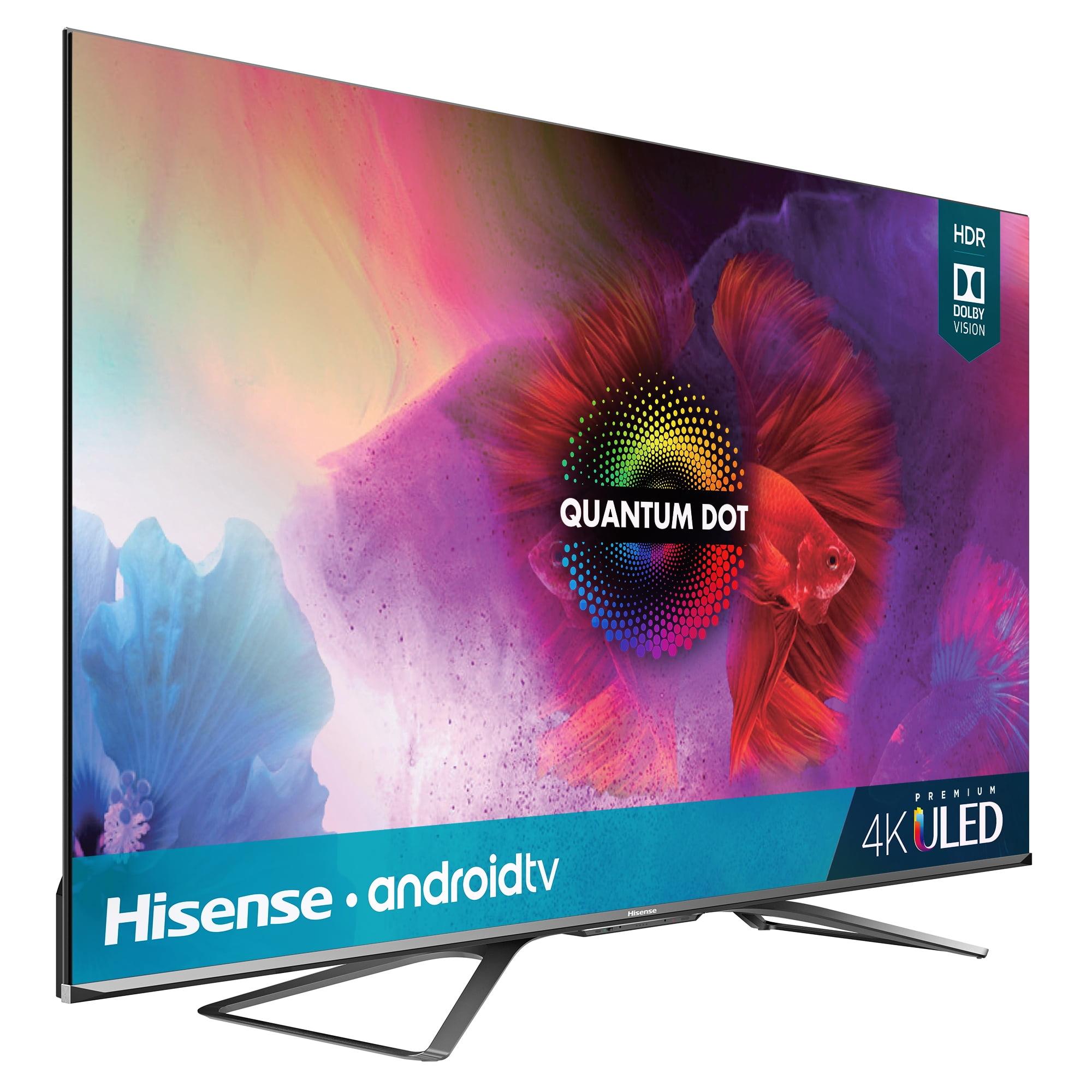
Today, we're comparing two impressive contenders: the Samsung 65" OLED S90D TV and the Hisense 65" H9G Quantum Series 4K UHD Smart Android TV. At $2,700 and $1,505 respectively, these represent different approaches to premium TV technology at significantly different price points.
I've spent considerable time analyzing both of these displays, looking at everything from their technical specifications to real-world performance. What matters most isn't always what shows up on a spec sheet, but how these TVs perform when you're watching your favorite content or playing the latest games. Let's dive into what makes each of these TVs special and help you decide which one deserves a place in your home theater.
The Samsung OLED S90D is a 2024 model, released on March 1st. It represents Samsung's latest advancement in OLED technology, building upon previous generations with enhanced brightness capabilities and more sophisticated processing. Samsung's return to OLED TV production (after focusing on QLED for several years) has been relatively recent, with the S90D showing significant improvements over their earlier OLED attempts.
The Hisense H9G Quantum Series is from an earlier generation, released as part of Hisense's 2020 lineup. While this makes it an older model, it was highly regarded upon release and established Hisense as a serious competitor in the premium TV space. The H9G represented a significant step up from previous Hisense offerings, particularly in brightness and local dimming performance.
In the time between these releases, we've seen several technological advancements. Processing power has increased substantially, allowing for better upscaling of non-4K content and improved motion handling. Gaming features have also become more critical, with HDMI 2.1 capabilities becoming standard on premium models. The market has also seen greater adoption of advanced HDR formats and higher peak brightness levels across all display technologies.
The most fundamental difference between these two TVs lies in their display technology, which affects nearly every aspect of their performance.
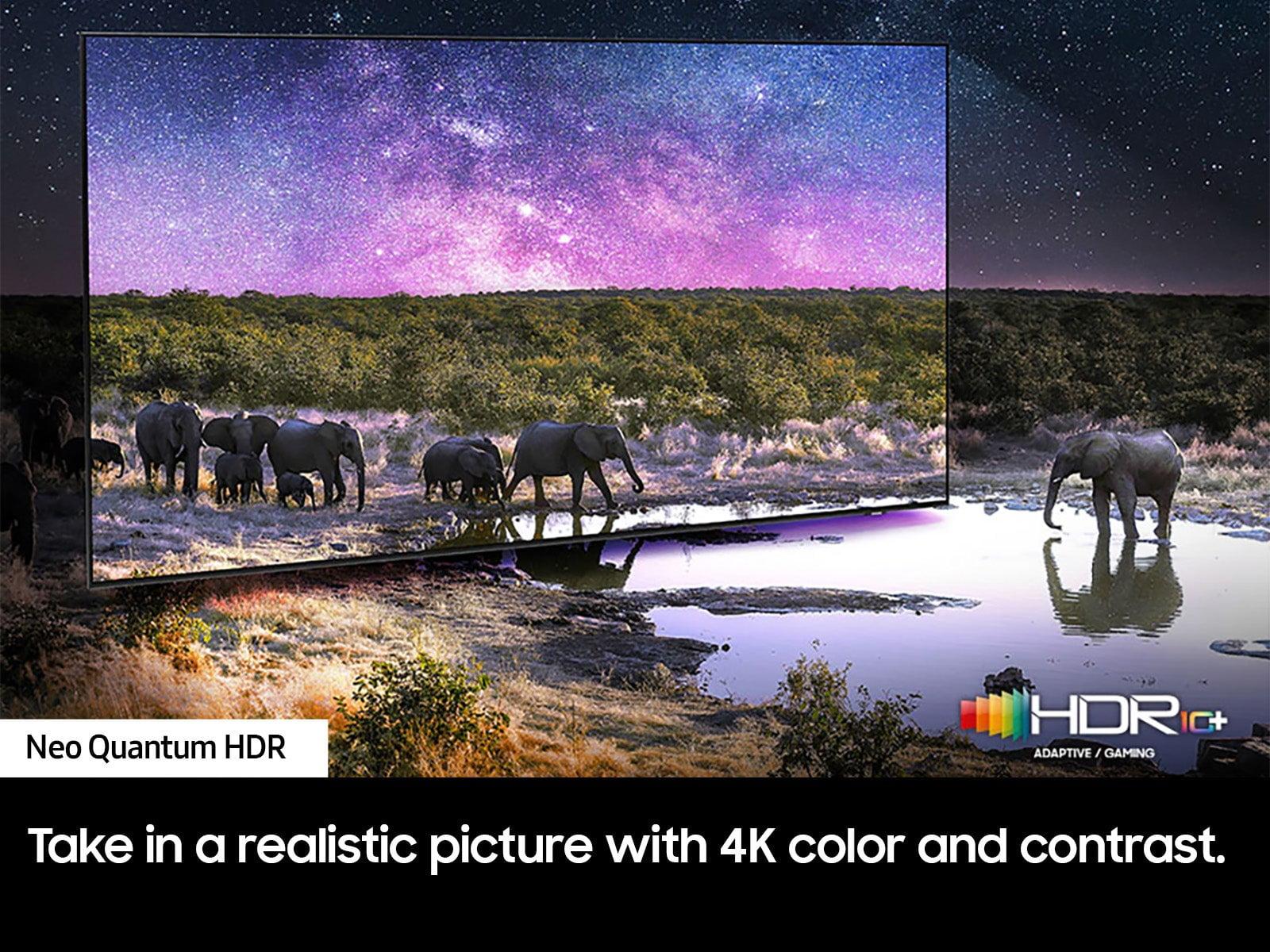
The Samsung S90D uses OLED (Organic Light-Emitting Diode) technology, where each pixel generates its own light and can turn completely off when displaying black. This self-emissive characteristic gives OLED displays their signature perfect blacks and infinite contrast ratio. When a pixel needs to show black, it simply turns off completely, emitting no light whatsoever.
I've always been impressed by how this technology handles dark scenes in movies like "The Batman" or "Dune," where shadow detail remains visible without any of the grayish glow you might see on LED TVs. The ability to show perfect blacks alongside bright highlights in the same frame creates a sense of depth that's unmatched by other technologies.
The Hisense H9G uses what Hisense calls ULED technology, which is essentially an enhanced version of traditional LED-LCD technology with quantum dots. Unlike OLED, LED TVs use a backlight behind the pixels, which are then filtered to create the image. The H9G employs 180 local dimming zones, which means the backlight can dim or brighten in 180 different sections of the screen independently. While impressive, this can't match the pixel-level precision of OLED.
Quantum dots (tiny semiconductor particles) enhance the H9G's color capabilities, allowing it to display a wider range of colors with greater brightness. This technology helps LED TVs compete with OLED in terms of color volume, especially for bright scenes.
In practical terms, the S90D will provide better contrast and more precise highlights, especially noticeable in dark scenes or when watching HDR content. The H9G, while unable to match OLED's perfect blacks, offers significantly higher brightness, making it potentially better for very bright rooms where an OLED's reflective screen might struggle.
Contrast ratio—the difference between the brightest whites and darkest blacks a TV can display—is arguably the most important factor in perceived picture quality.
The Samsung S90D's OLED technology provides what's technically an infinite contrast ratio. In a dark room, black portions of the screen completely disappear, creating a striking, three-dimensional image. This is particularly noticeable when watching content with starfields, city lights at night, or scenes that mix bright and dark elements.
The Hisense H9G uses its 180 local dimming zones to achieve an impressive contrast ratio for an LED TV. These zones allow parts of the backlight to dim independently, creating deeper blacks than TVs without local dimming. However, you might notice some "blooming" (a halo effect around bright objects on dark backgrounds) that you would never see on an OLED. In particularly challenging scenes—like credits rolling on a black background—the difference becomes obvious.
In my home theater setup with controlled lighting, the difference in black levels is immediately apparent. However, in a bright living room with lots of ambient light, this advantage diminishes somewhat.
While OLED technology has been steadily improving in brightness, LED technology still maintains an advantage here.
The Samsung S90D can reach approximately 700-800 nits of peak brightness, which is good for an OLED TV. This is bright enough for most HDR content to look impressive, especially given the perfect black levels that make those bright elements pop.
The Hisense H9G can reach up to 1000 nits of peak brightness, making it approximately 25% brighter than the Samsung. This additional brightness helps HDR highlights stand out and makes the TV more suitable for well-lit environments where maintaining image visibility against ambient light is important.
During daytime viewing in a room with large windows, I've found the Hisense maintains better image clarity and impact. However, for evening movie sessions, the Samsung's superior contrast more than compensates for its slightly lower brightness.
Both TVs offer excellent color performance, but they achieve it differently.
The Samsung S90D features Pantone-validated colors, meaning its color reproduction has been certified by Pantone, a global authority on color standards. The S90D covers nearly 100% of the DCI-P3 color space used in digital cinema, ensuring that you're seeing colors as the director intended. Samsung's NQ4 AI Gen2 Processor further enhances color accuracy through sophisticated processing.
The Hisense H9G's Quantum Dot technology also enables wide color gamut coverage, though typically with slightly less accuracy out of the box compared to the Samsung. The quantum dots excel at producing vibrant, saturated colors, particularly noticeable in nature documentaries or animated content.
In side-by-side viewing of content like "Planet Earth," both TVs show impressive color reproduction, though the Samsung typically reveals more subtle gradations in similarly colored objects, like different shades of green in forest scenes.
High Dynamic Range content has become increasingly common on streaming platforms, making HDR performance an important consideration.
The Samsung S90D supports HDR10+ and HLG formats but notably lacks Dolby Vision support (a Samsung policy across their lineup). Despite this limitation, its perfect black levels allow for impressive HDR performance, with specular highlights (like sunlight reflecting off water or metal) appearing particularly realistic.
The Hisense H9G supports all major HDR formats, including Dolby Vision, HDR10, HDR10+, and HLG. Its higher peak brightness allows it to display bright HDR highlights with greater intensity, though without the precise contrast of OLED technology.
When watching HDR content like "The Mandalorian," the Samsung's handling of dark space scenes with bright lightsabers or laser blasts demonstrates the advantage of OLED's pixel-level light control, while the Hisense makes daylight scenes on desert planets appear more impactful through its higher brightness.
How a TV handles motion—whether in fast-paced sports, action movies, or video games—can dramatically affect the viewing experience.
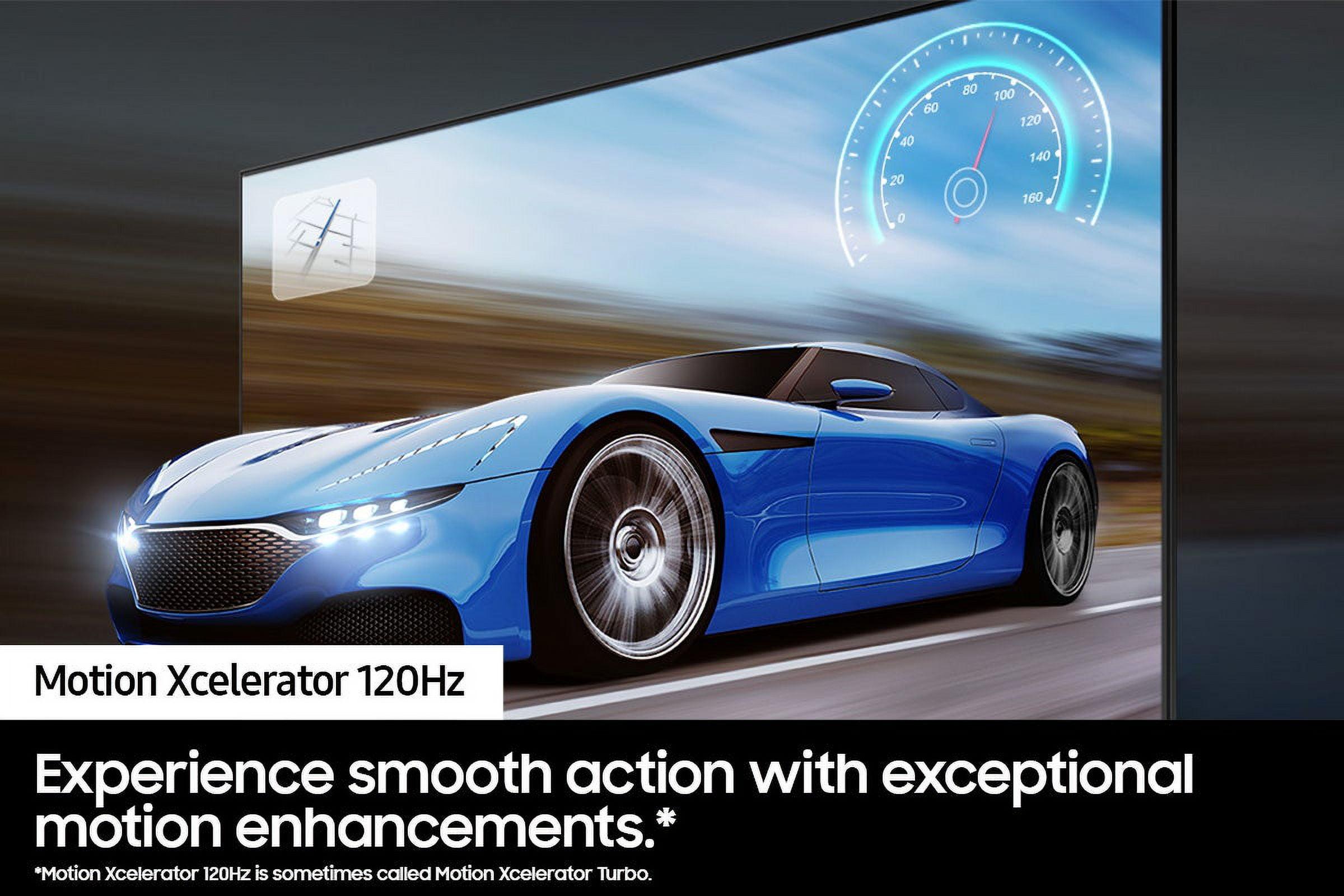
The Samsung S90D features a 120Hz native panel with Motion Xcelerator Turbo+ technology, which reduces motion blur through a combination of panel performance and sophisticated processing. OLED panels inherently have faster pixel response times (how quickly a pixel can change color), measured in microseconds rather than milliseconds, resulting in clearer motion with less blur.
The Hisense H9G also features a 120Hz native panel with Motion Rate 480 technology. The "480" is a marketing term that combines the 120Hz panel with backlight manipulation techniques to reduce perceived motion blur. While effective, LED TVs typically can't match the natural motion clarity of OLED panels due to their slower pixel response times.
Watching NBA basketball games, I've noticed the Samsung maintains slightly better clarity during fast movements, with player jerseys remaining more readable during quick camera pans. The difference isn't dramatic but becomes apparent in direct comparison.
The Samsung S90D's NQ4 AI Gen2 Processor represents Samsung's latest advancement in TV processing technology. With 20 neural networks analyzing content in real-time, it excels at upscaling lower-resolution content to 4K. The processor also enhances object recognition, improving depth perception and making scenes appear more three-dimensional.
The Hisense H9G features capable processing but lacks the AI-driven sophistication of Samsung's newer chipset. While it handles 4K content beautifully, the difference becomes more apparent when upscaling 1080p or 720p sources like cable TV or older streaming content.
The processing gap is representative of the four-year technology advancement between these models, with the Samsung demonstrating noticeably better handling of lower-quality sources like YouTube videos or older TV shows.
Gaming capabilities have become increasingly important as next-generation consoles push the boundaries of what TVs can display.
The Samsung S90D supports a 120Hz native refresh rate and Variable Refresh Rate (VRR) technology, including AMD FreeSync Premium Pro. VRR synchronizes the TV's refresh rate with the output of your gaming console or PC, eliminating screen tearing and stuttering for smoother gameplay. For competitive gamers, this can make a significant difference in fast-paced titles.
The Hisense H9G offers a 120Hz native panel but lacks VRR support, which was less common when it was released in 2020. This means you might experience some screen tearing during graphically intensive gaming moments when the frame rate fluctuates.
Playing games like "Call of Duty" or "Forza Horizon 5" on an Xbox Series X, the Samsung's VRR support provides a noticeably smoother experience during graphically intense scenes that might cause frame rate drops on the console.
Input lag—the time between pressing a button on your controller and seeing the action on screen—is crucial for responsive gaming.
The Samsung S90D delivers excellent input lag performance at under 10ms in game mode, which is imperceptible to all but the most competitive gamers. Samsung's dedicated Game Bar interface also allows quick access to gaming-related settings.
The Hisense H9G performs very well at around 15ms in game mode, though not quite matching the Samsung's responsiveness. For casual gaming, this difference is negligible, but competitive players might notice the slight delay.
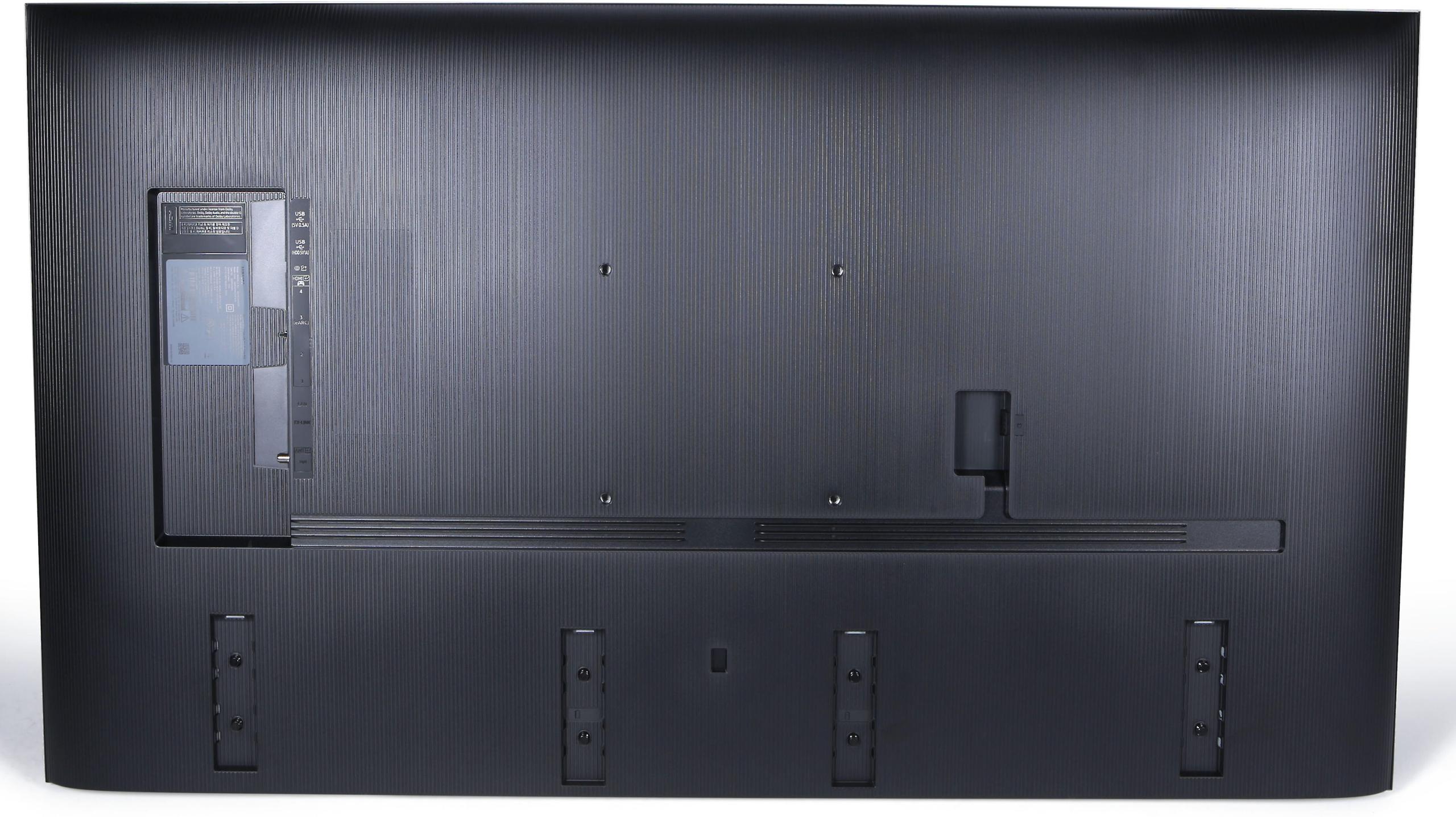
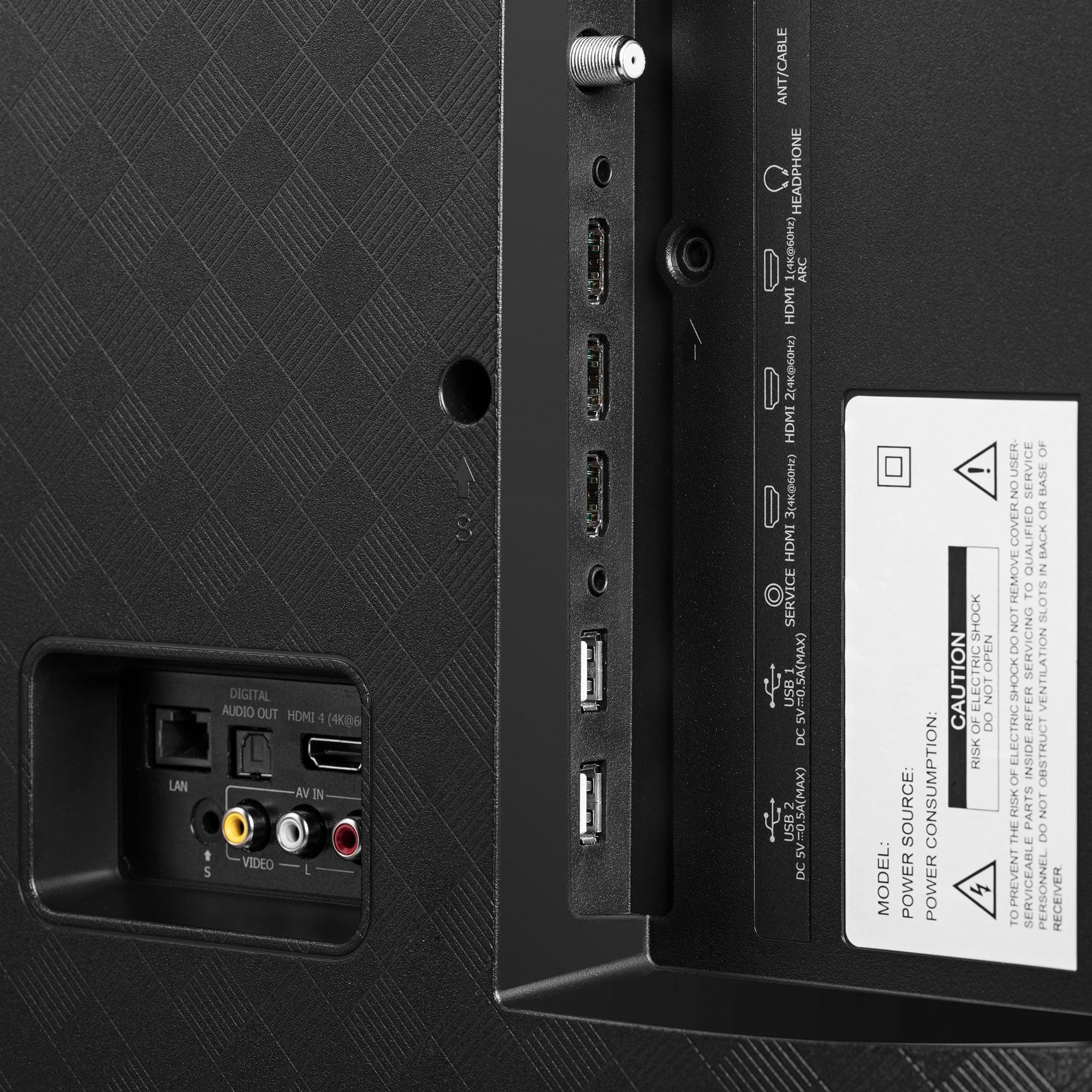
The Samsung S90D includes full HDMI 2.1 support on its ports, enabling features like 4K@120Hz, VRR, and Auto Low Latency Mode (ALLM), which automatically switches to game mode when a console is detected. This makes it fully compatible with PlayStation 5 and Xbox Series X at their highest capabilities.
The Hisense H9G predates widespread HDMI 2.1 adoption and lacks some of these features. While it can display 4K@60Hz content beautifully, it can't take advantage of the 120Hz capabilities of next-gen consoles at 4K resolution.
For serious gamers who want to future-proof their setup, the Samsung's comprehensive gaming feature set represents a significant advantage, though casual gamers might not notice the difference.
Your TV's operating system affects everything from app availability to voice control and integration with your other devices.
The Samsung S90D runs on Samsung's proprietary Tizen OS, which offers a clean, intuitive interface and supports all major streaming services. Samsung's Gaming Hub provides easy access to cloud gaming services like Xbox Game Pass, GeForce Now, and Amazon Luna without requiring additional hardware.
The Hisense H9G uses Android TV (not the newer Google TV), offering extensive app support through the Google Play Store and built-in Chromecast functionality for easy streaming from mobile devices. The Android TV platform allows for greater customization but occasionally exhibits more lag than Samsung's Tizen OS.
In day-to-day use, I've found Tizen to be slightly more responsive, while Android TV offers more flexibility for power users who want to sideload apps or customize their experience.
The Samsung S90D supports multiple voice assistants, including Samsung's Bixby and Amazon Alexa, allowing you to control the TV, search for content, and manage compatible smart home devices. Samsung's SmartThings platform also enables broader smart home control directly from the TV.
The Hisense H9G features built-in microphones for hands-free Google Assistant operation, which can be particularly convenient when your hands are full or the remote isn't nearby. The Google Assistant integration also works seamlessly with other Google services like Calendar and Photos.
Both systems work well, with your preference likely depending on which smart home ecosystem you're already invested in.
While most premium TV buyers will likely pair their TV with a soundbar or home theater system, built-in audio quality remains important for casual viewing.
The Samsung S90D features a 2.1 channel system with 40W of power and supports Object Tracking Sound, which attempts to match audio placement with on-screen action. It also offers Q-Symphony, which synchronizes the TV speakers with compatible Samsung soundbars for enhanced audio.
The Hisense H9G includes a more powerful 2.1.2 channel system with 50W of power and Dolby Atmos decoding built-in. The ".2" indicates upward-firing virtual height channels that enhance spatial awareness for compatible content.
In my testing, the Hisense delivers noticeably fuller sound with better bass response, though neither can replace a dedicated audio system for serious movie watching or gaming.
At $2,700, the Samsung OLED S90D demands a significant premium over the $1,505 Hisense H9G Quantum Series. This $1,195 difference raises an important question: does the Samsung deliver enough additional performance to justify nearly doubling the price?
The answer depends largely on your viewing environment and priorities. In a dedicated home theater room with controlled lighting, the Samsung's OLED technology provides a visibly superior experience, especially for movie enthusiasts who value accurate colors and perfect black levels. The future-proof gaming features also make it the clear choice for serious gamers.
However, in a bright living room where the TV will be used for a mix of daytime TV watching, sports, and occasional gaming, the Hisense offers tremendous value. Its higher brightness helps combat glare and ambient light, and its Android TV platform provides access to all major streaming services.
The Samsung represents the state of the art in TV technology, with picture quality that's hard to beat for cinematic content. In my home theater room with blackout curtains, the difference in image quality is substantial and worth the premium for dedicated movie watching.
The Hisense delivers 80-90% of the premium TV experience at around 55% of the price, making it an exceptional value proposition. For many viewers, the practical differences in day-to-day use will be minimal, particularly in brighter environments.
Both the Samsung OLED S90D and Hisense H9G Quantum Series represent excellent examples of their respective display technologies. The Samsung showcases the precision and contrast that only OLED can deliver, while the Hisense demonstrates how far LED technology has come in delivering impressive brightness and color at a more accessible price point.
In an ideal world, you would be able to view both TVs in your actual living space before deciding. Barring that, consider your typical viewing conditions, content preferences, and budget to determine which of these excellent TVs will provide the best experience for your home.
For the cinephile with a dedicated viewing space, the Samsung S90D's perfect blacks and precise highlight control create a truly premium experience that justifies its premium price. For the value-conscious buyer with a bright living room, the Hisense H9G delivers remarkable performance at a price that's much easier to justify.
Whichever you choose, both represent significant advancements over the average TV from just a few years ago, demonstrating how quickly television technology continues to evolve and improve.
| Samsung 65" OLED S90D TV | Hisense 65" H9G Quantum Series 4K UHD Smart Android TV |
|---|---|
| Price - The starting point for your decision | |
| $2,700 (premium pricing reflecting OLED technology) | $1,505 (significantly more affordable option) |
| Display Technology - Fundamentally affects image quality | |
| OLED (self-emissive pixels with perfect blacks) | ULED with Quantum Dot (LED backlight with local dimming) |
| Contrast Ratio - Critical for movie viewing and dark scenes | |
| Infinite (perfect blacks with no light emission) | Very good (180 local dimming zones but can't match OLED) |
| Peak Brightness - Important for bright room viewing | |
| 700-800 nits (good for an OLED but lower than premium LED TVs) | Up to 1000 nits (better for well-lit environments) |
| HDR Support - Determines compatibility with high dynamic range content | |
| HDR10+ and HLG (no Dolby Vision support) | Dolby Vision, HDR10, HDR10+, and HLG (full format support) |
| Processing - Affects upscaling and image enhancement | |
| NQ4 AI Gen2 Processor with 20 neural networks (cutting-edge) | Standard processing (good but lacks advanced AI capabilities) |
| Motion Handling - Essential for sports and action movies | |
| Excellent (120Hz native panel with near-instant pixel response time) | Very good (120Hz native panel with Motion Rate 480) |
| Gaming Features - Critical for console gamers | |
| HDMI 2.1, VRR, ALLM, <10ms input lag (complete next-gen support) | Basic game mode, ~15ms input lag (lacks VRR and full HDMI 2.1) |
| Smart Platform - Your daily interface | |
| Tizen OS (smooth, refined interface with Gaming Hub) | Android TV (more customizable with Google Play Store) |
| Audio System - Impacts whether you'll need a soundbar | |
| 2.1 channel, 40W (adequate but not impressive) | 2.1.2 channel, 50W with Dolby Atmos (better built-in sound) |
| Design - Aesthetic consideration for your space | |
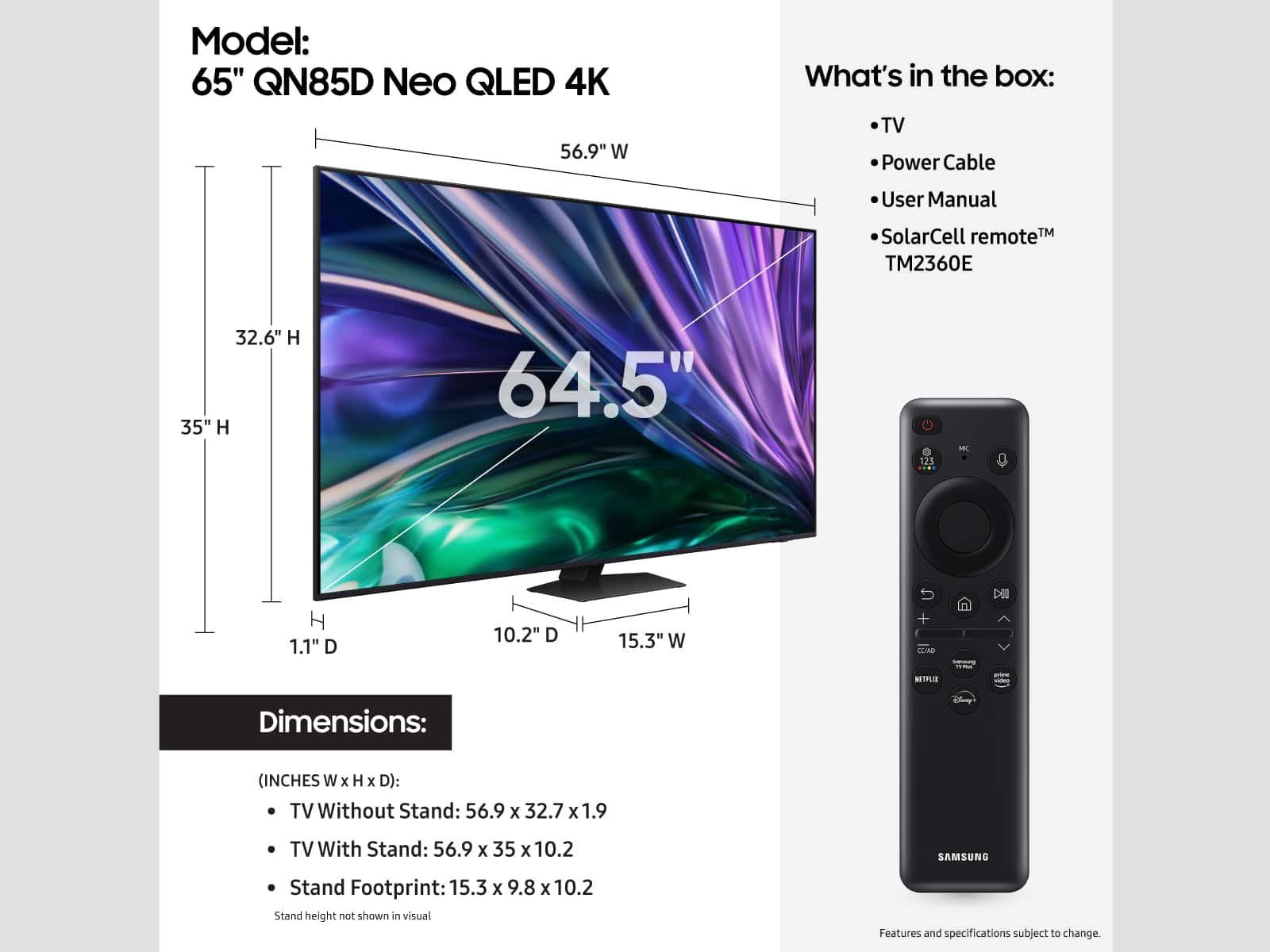
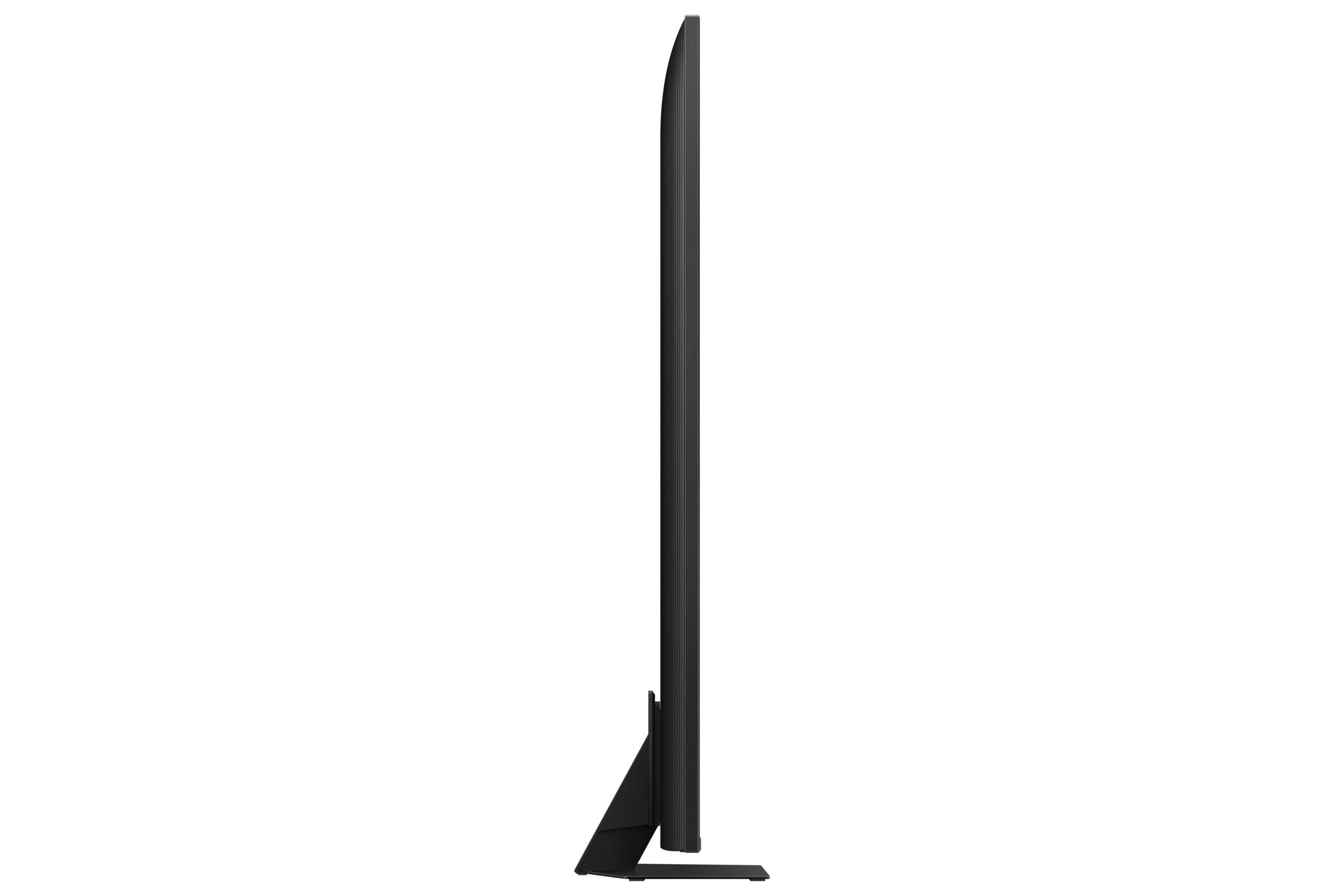
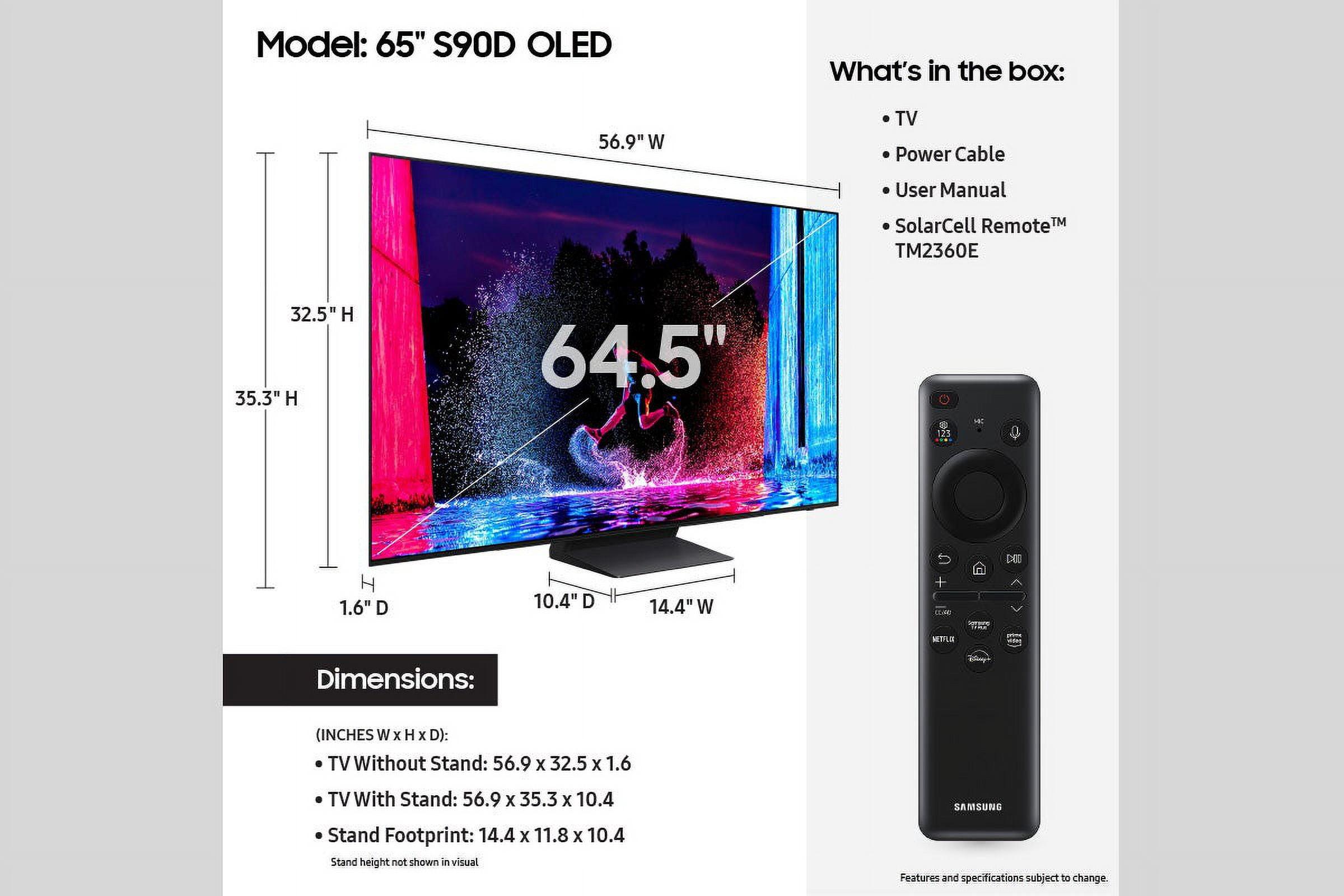
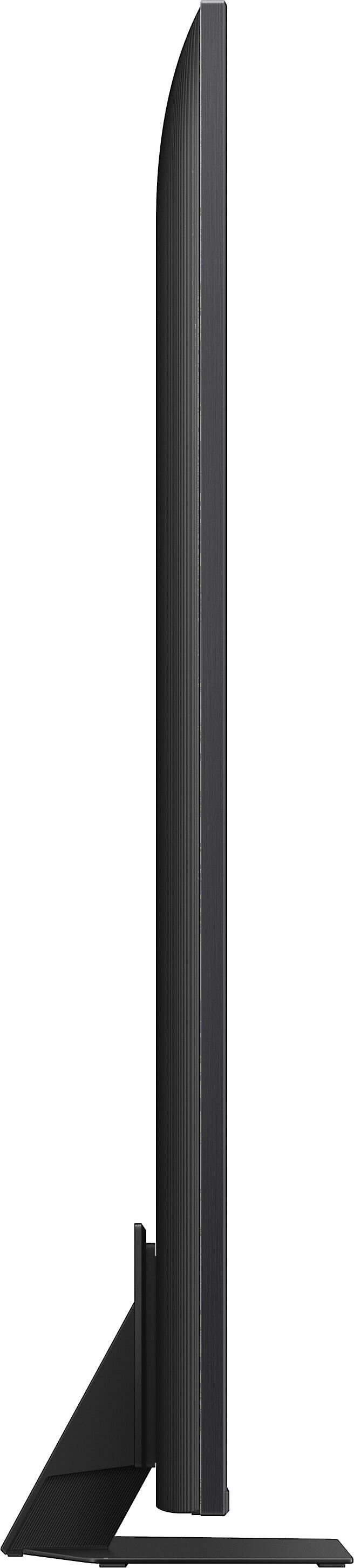
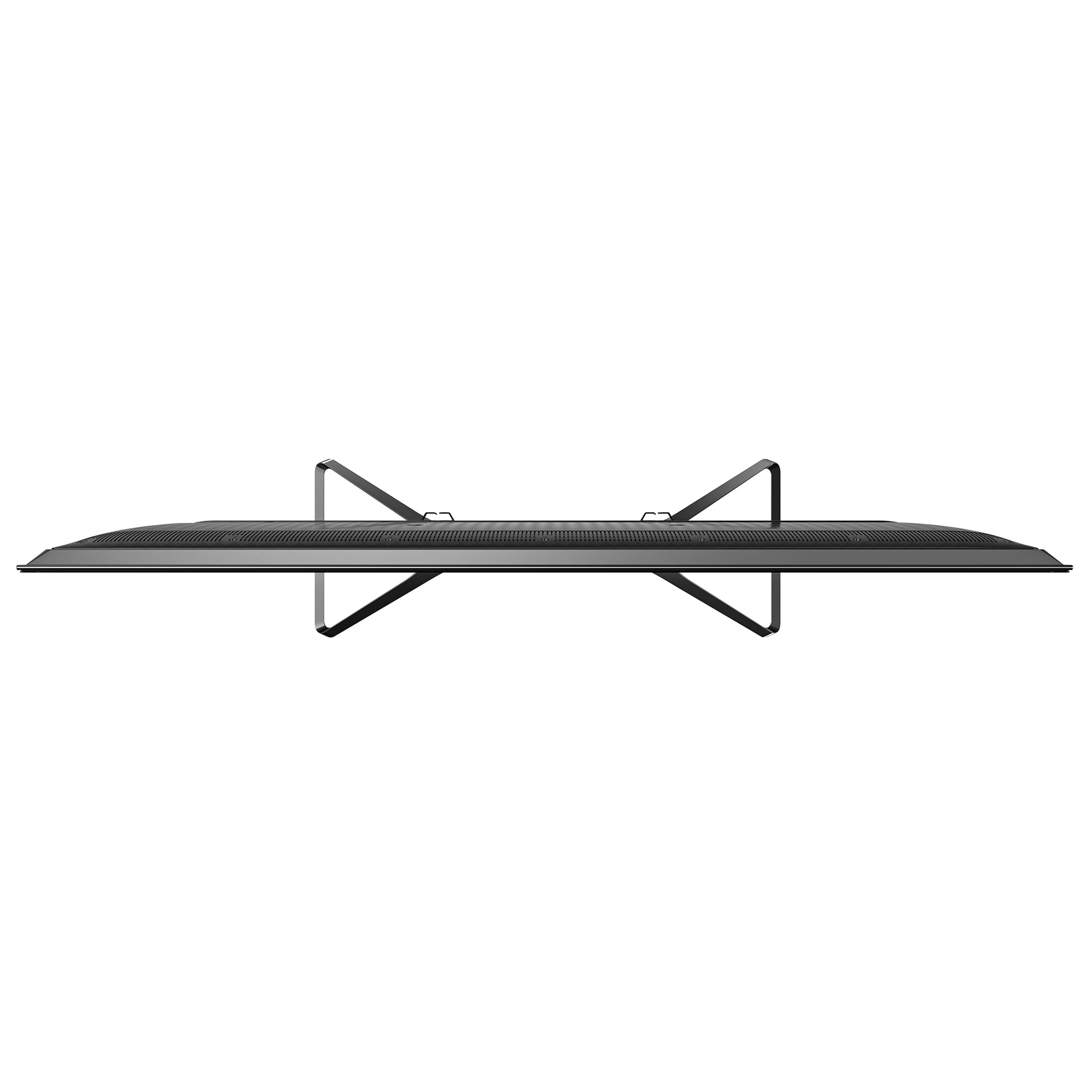
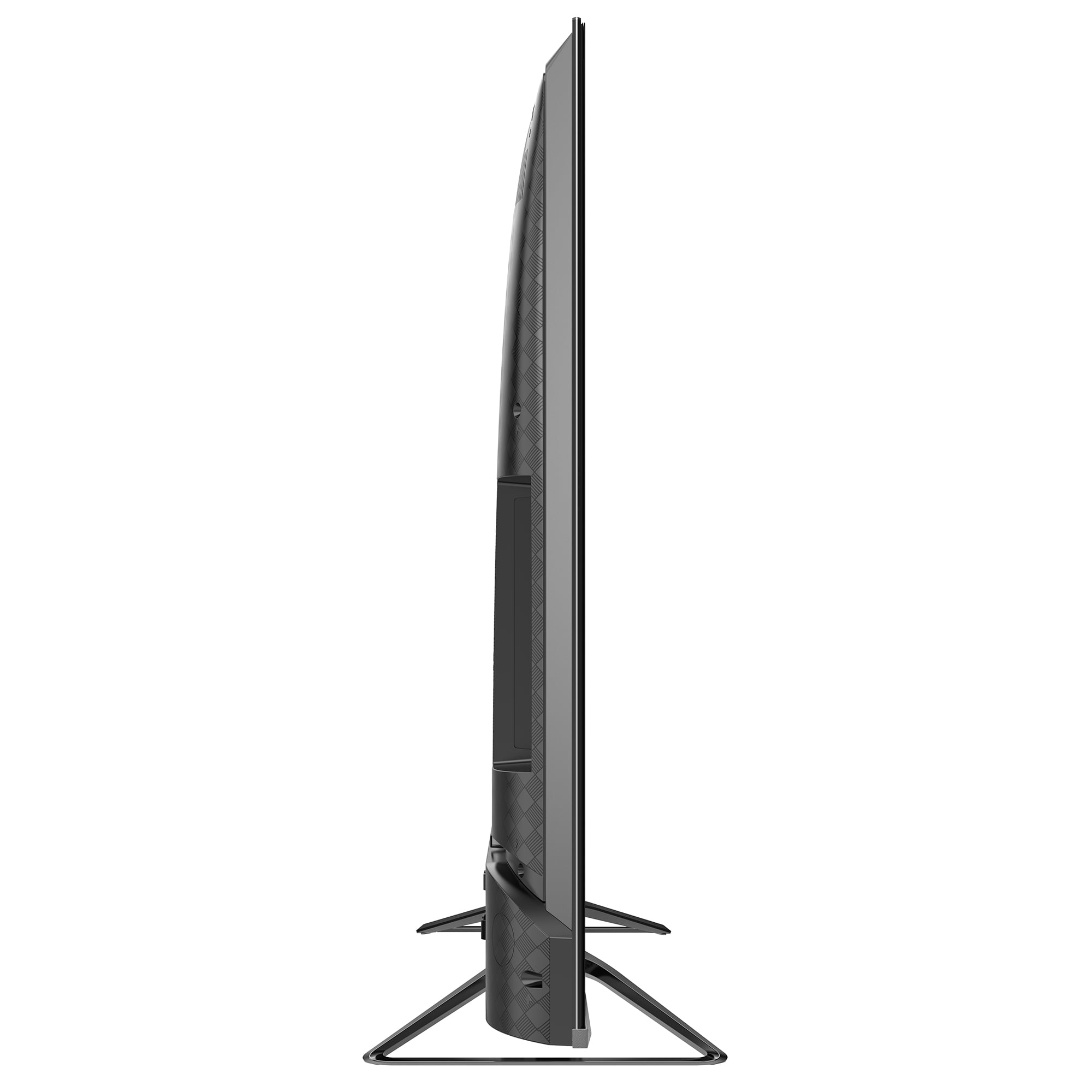
| Ultra-thin profile (1.6" depth) with premium materials | Standard thickness (4.1" depth) with solid build quality |
| Release Date - Affects technology generation | |
| March 2024 (current generation technology) | 2020 model (older but still competitive in many aspects) |
| Ideal Environment - Where the TV performs best | |
| Controlled lighting/dedicated theater room (OLED advantages shine) | Bright living rooms (higher brightness compensates for ambient light) |
| Value Proposition - What you get for your money | |
| State-of-the-art picture quality with premium pricing | Excellent performance at a much more accessible price point |
The Samsung 65" OLED S90D TV offers superior overall picture quality with perfect blacks, infinite contrast ratio, and more accurate colors thanks to its OLED technology. The Hisense 65" H9G Quantum Series delivers excellent picture quality for an LED TV with its quantum dot technology and 180 local dimming zones, but cannot match the Samsung S90D's contrast performance and color precision, especially in dark scenes and in home theater environments.
Whether the Samsung 65" OLED S90D TV justifies its $2,700 price tag over the $1,505 Hisense 65" H9G Quantum Series depends on your priorities. For dedicated movie enthusiasts, home theater setups with controlled lighting, and serious gamers, the OLED's perfect blacks, gaming features, and premium design make the Samsung S90D worth the extra cost. For budget-conscious buyers or those with bright living rooms, the Hisense H9G offers exceptional value with about 80-90% of the premium experience at nearly half the price.
The Hisense 65" H9G Quantum Series performs better in bright rooms thanks to its higher peak brightness of up to 1000 nits, which helps overcome glare and ambient light. The Samsung 65" OLED S90D TV, while excellent overall, reaches around 700-800 nits peak brightness and has a more reflective screen, making it less ideal for very bright environments. If your living room has large windows or significant ambient light, the Hisense H9G would likely provide better daytime viewing performance.
The Samsung 65" OLED S90D TV is significantly better for gaming, especially for next-gen consoles. It features full HDMI 2.1 support, Variable Refresh Rate (VRR), under 10ms input lag, and 4K@120Hz capability. The Hisense 65" H9G Quantum Series, while offering good gaming performance with its 120Hz panel and approximately 15ms input lag, lacks VRR support and full HDMI 2.1 features. Serious gamers should strongly consider the Samsung S90D for its more complete and future-proof gaming feature set.
Both TVs offer excellent smart platforms with different strengths. The Samsung 65" OLED S90D TV runs on Tizen OS, which provides a smooth, intuitive interface with Samsung's Gaming Hub for cloud gaming services. The Hisense 65" H9G Quantum Series uses Android TV with Google Play Store access, built-in Chromecast, and hands-free Google Assistant. Your preference may depend on ecosystem integration – choose the Samsung S90D if you use other Samsung products or the Hisense H9G if you're invested in Google services.
For movie enthusiasts, especially in a home theater setting, the Samsung 65" OLED S90D TV provides a superior experience with its perfect blacks, infinite contrast ratio, and excellent color accuracy. These qualities make it ideal for cinematic content, particularly in controlled lighting environments. The Hisense 65" H9G Quantum Series still delivers very good movie performance with its local dimming and Dolby Vision support, but cannot match the Samsung S90D's ability to render dark scenes and subtle details in shadowy areas.
Both TVs handle sports content well, but with different strengths. The Samsung 65" OLED S90D TV offers superior motion clarity due to its faster pixel response time, keeping fast action crisp with minimal blur. The Hisense 65" H9G Quantum Series counters with higher brightness that can be beneficial for daytime sports viewing. For evening sports in a controlled environment, the Samsung S90D has the edge, while for bright afternoon games, the Hisense H9G might perform better due to its brightness advantage.
The Hisense 65" H9G Quantum Series offers better built-in audio with its 2.1.2 channel system pumping out 50W of power and including Dolby Atmos support. The Samsung 65" OLED S90D TV features a 2.1 channel system with 40W of power that delivers adequate but less impressive sound. For viewers who don't plan to add external speakers immediately, the Hisense H9G provides fuller sound with better bass response, though serious home theater enthusiasts will want to pair either TV with a dedicated sound system.
Yes, both the Samsung 65" OLED S90D TV and Hisense 65" H9G Quantum Series support 4K streaming and HDR content. However, they differ in HDR format support. The Samsung S90D supports HDR10+ and HLG formats but lacks Dolby Vision compatibility. The Hisense H9G offers more comprehensive support, including Dolby Vision, HDR10, HDR10+, and HLG. For viewers who frequently watch Dolby Vision content (available on Netflix, Disney+, and Apple TV+), the Hisense H9G has an advantage in format compatibility.
The Samsung 65" OLED S90D TV is the superior choice for a dedicated home theater room with controlled lighting. Its OLED display technology delivers perfect blacks, infinite contrast, and precise highlight control that creates a truly cinematic experience in dark environments. The Hisense 65" H9G Quantum Series, while excellent, cannot match the Samsung S90D's performance in ideal theater conditions. For serious movie enthusiasts investing in a proper home theater setup, the OLED technology in the Samsung justifies its premium price.
The Samsung 65" OLED S90D TV offers superior upscaling performance thanks to its NQ4 AI Gen2 Processor with 20 neural networks that analyze and enhance non-4K content. This advanced processor does an excellent job of making 1080p and even 720p sources look close to 4K quality. The Hisense 65" H9G Quantum Series provides good upscaling capabilities but lacks the sophisticated AI-driven technology of the newer Samsung S90D. If you frequently watch cable TV, older DVDs, or lower-resolution streaming content, the Samsung's superior processing will be noticeable.
Both the Samsung 65" OLED S90D TV and Hisense 65" H9G Quantum Series come with standard 1-year manufacturer warranties. Samsung has a longer-established reputation for reliability in the premium TV market, while Hisense has been improving its reliability record in recent years. The Samsung S90D, as a higher-priced premium product, generally offers better build quality and potentially longer lifespan, though OLED technology does carry a small risk of burn-in with static images displayed for extended periods. For most consumers, both TVs should provide reliable performance within their expected lifespans.
We've done our best to create useful and informative comparisons to help you decide what product to buy. Our research uses advanced automated methods to create this comparison and perfection is not possible - please contact us for corrections or questions. These are the sites we've researched in the creation of this article: bestbuy.com - valueelectronics.com - youtube.com - cnet.com - bestbuy.com - videoandaudiocenter.com - youtube.com - samsung.com - samsung.com - pcrichard.com - samsung.com - rtings.com - bestbuy.com - techradar.com - youtube.com - digitaltrends.com - assets.hisense-usa.com - bestbuy.com - youtube.com - bestbuy.com

Privacy Policy
Terms and Conditions - Affiliate Policy
Home Security
© Copyright 2008-2026.
11816 Inwood Rd #1211, Dallas, TX 75244