






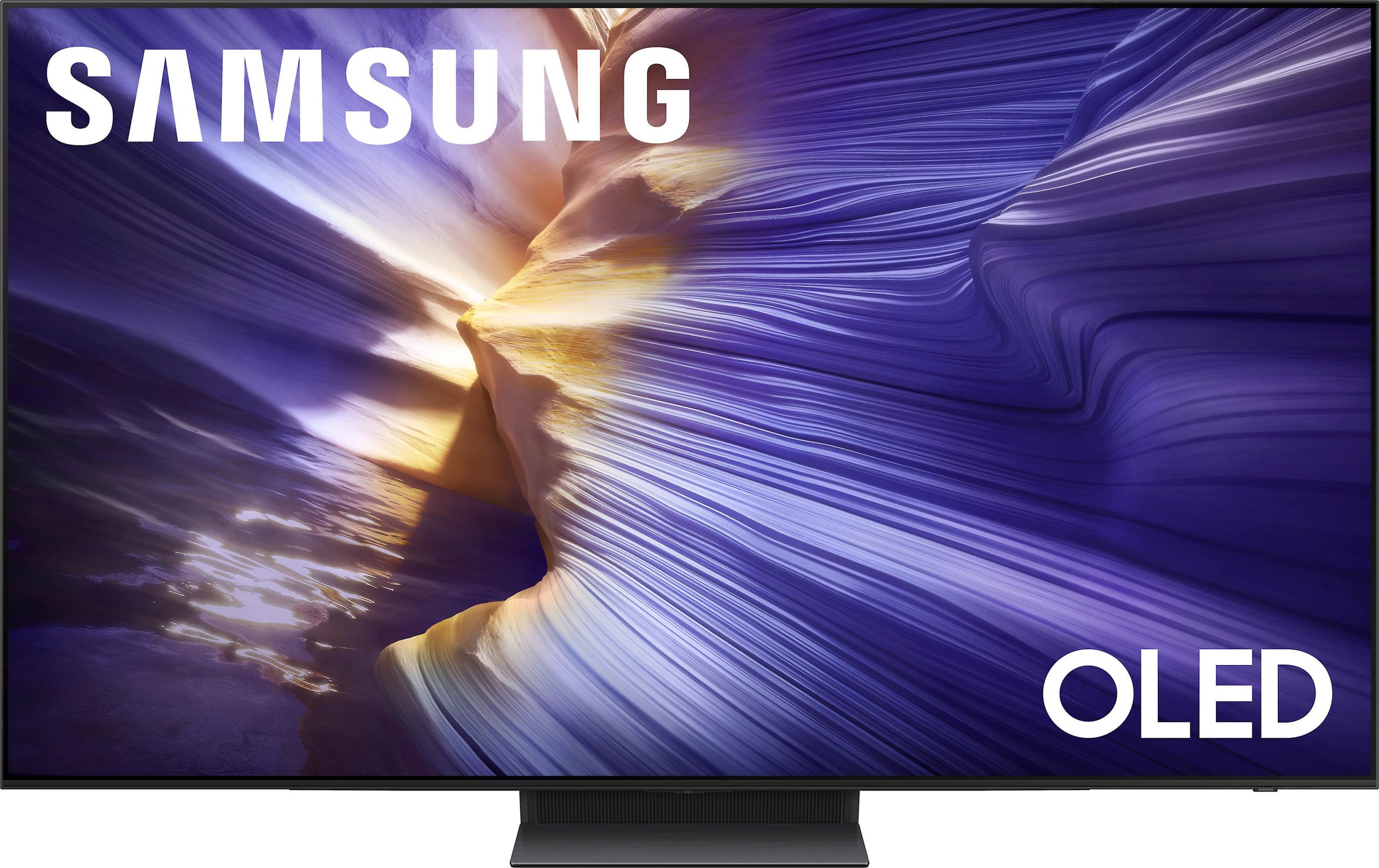
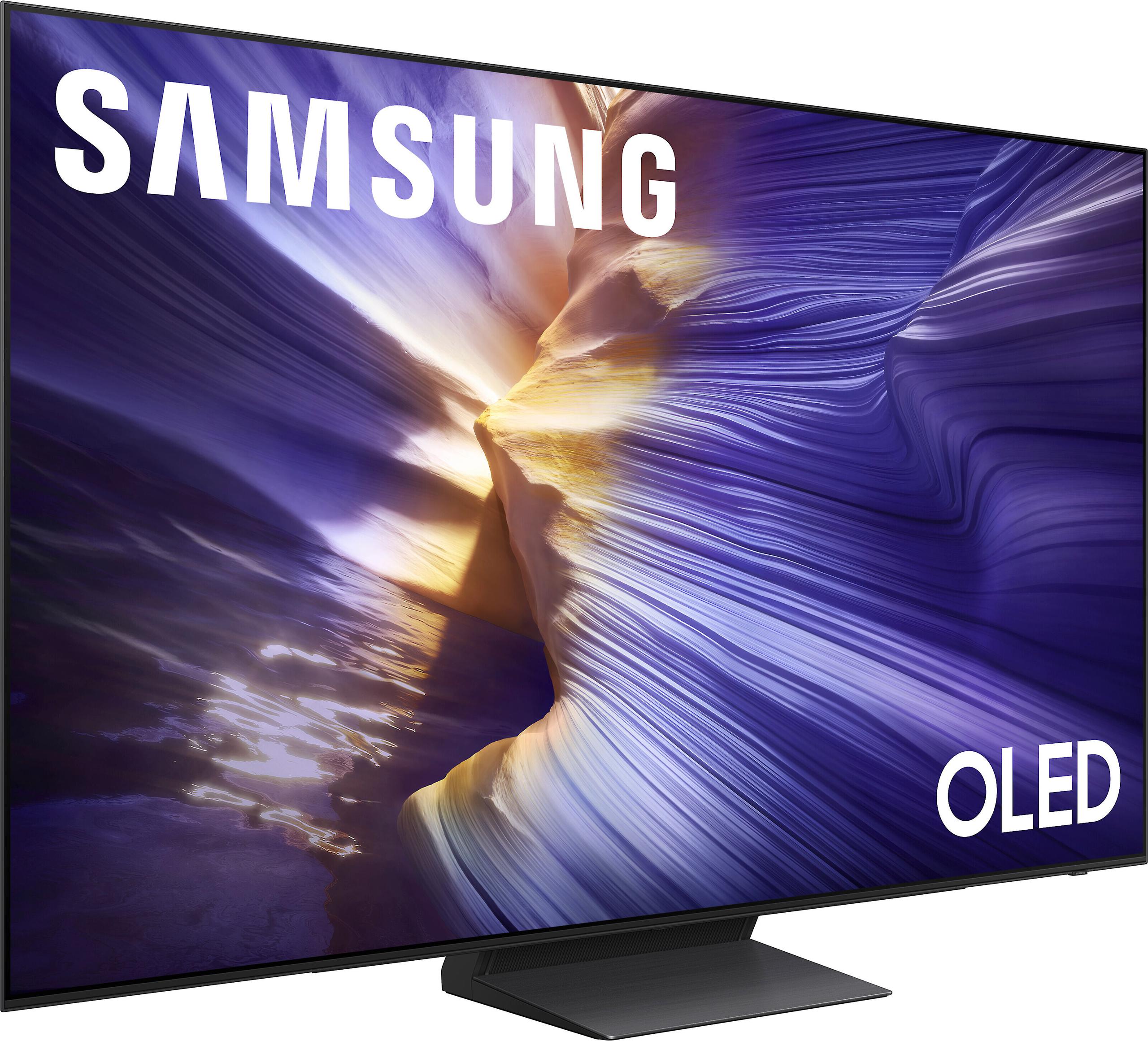
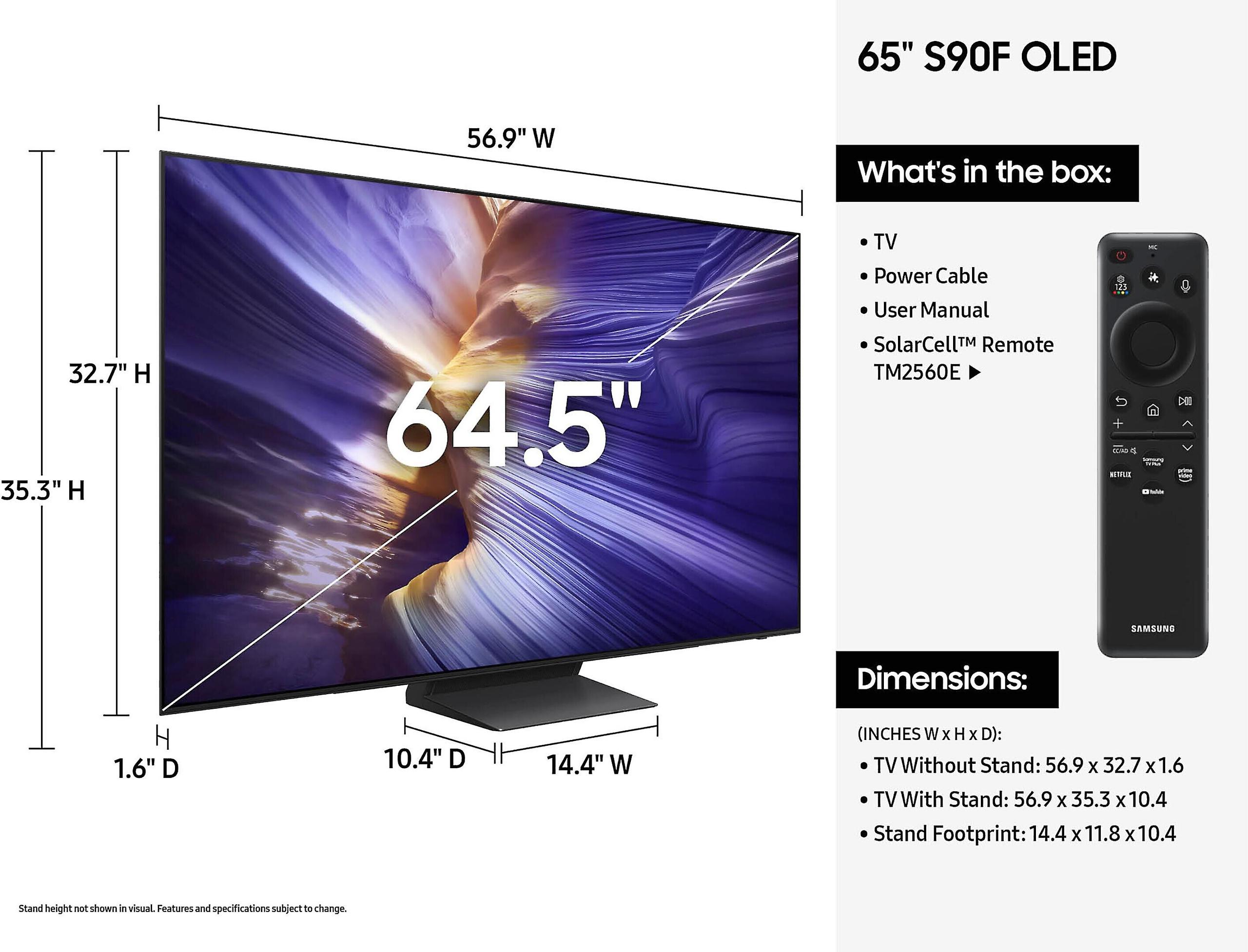



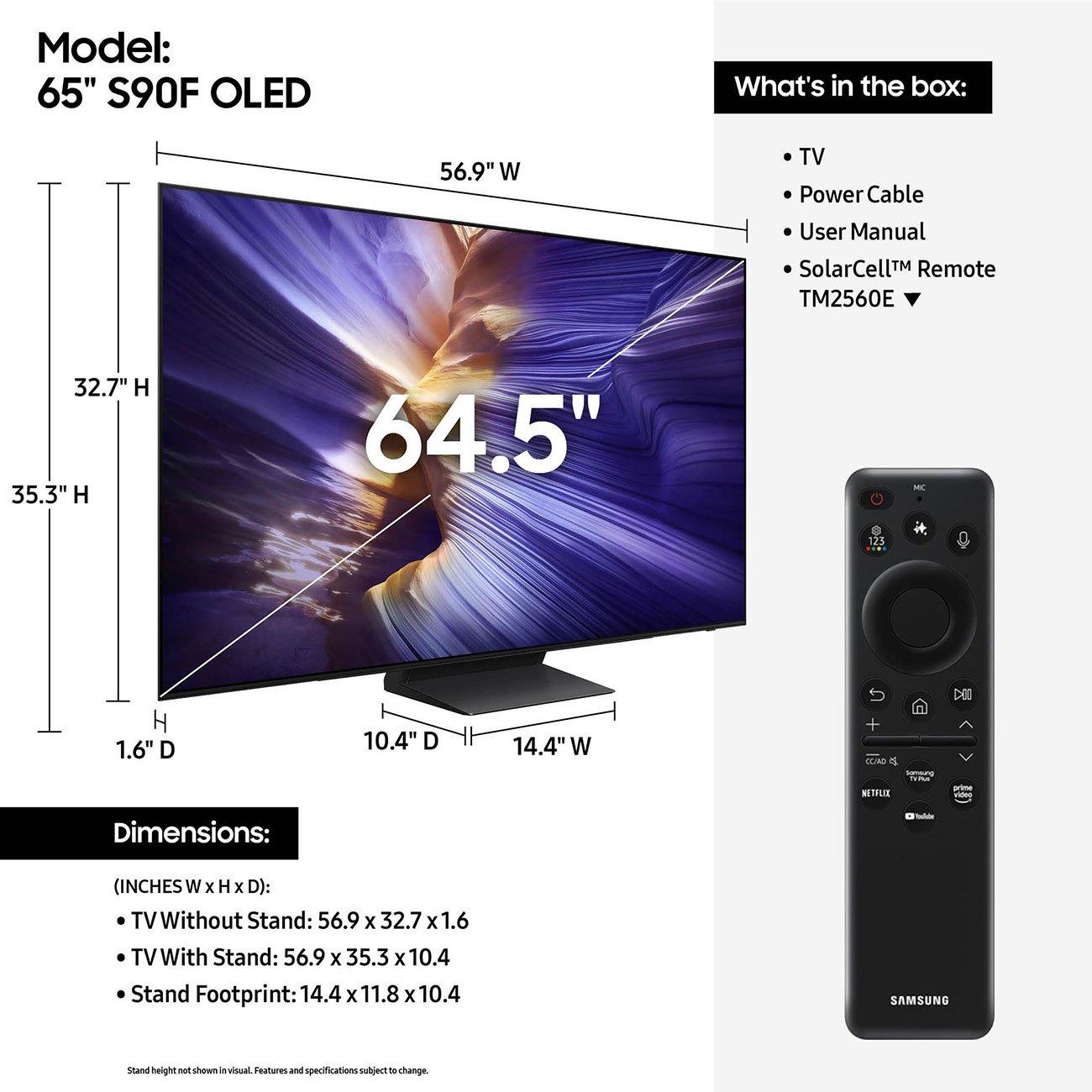

When Samsung released two radically different premium 65-inch TVs in 2025, they created an interesting dilemma for buyers. The Frame Pro and S90F OLED represent completely different philosophies about what a high-end television should be. One doubles as wall art, while the other focuses purely on delivering the best possible picture. Both cost serious money, but they're targeting entirely different needs.
After diving deep into the specs, expert reviews, and user feedback, it's clear these TVs excel in opposite areas. The choice between them isn't just about picture quality—it's about how you live with technology in your home.
The television market has evolved beyond simply comparing screen sizes and resolutions. Today's premium TVs fall into distinct categories that serve different lifestyle needs. Traditional performance TVs prioritize picture quality, gaming capabilities, and technical specifications above all else. Lifestyle TVs, on the other hand, consider how the device integrates into your living space when it's both on and off.
The Frame Pro pioneered the lifestyle TV category, treating the display as furniture that happens to show content. Meanwhile, the S90F OLED represents Samsung's commitment to pure performance, using cutting-edge display technology to deliver the most impressive picture possible.
Understanding these different approaches helps explain why these TVs use completely different display technologies, pricing strategies, and feature sets. One isn't necessarily better than the other—they're solving different problems for different people.
The most fundamental difference between these TVs lies in their display technology, which affects everything from how they look in your room to what kind of content they display best.
The Frame Pro uses Samsung's Neo QLED technology with Mini-LED backlighting—essentially thousands of tiny LED lights behind the LCD panel that can dim and brighten individually. Think of it like having a grid of flashlights behind a colored transparency, where each flashlight can adjust its brightness independently. This creates much better contrast than traditional LCD TVs because dark areas can actually get darker while bright areas stay bright.
What makes the 2025 Frame Pro special is how dramatically Samsung improved the brightness. Previous Frame models could barely hit 600 nits of peak brightness (nits measure how bright something can get—a sunny day outside is about 10,000 nits). The new model exceeds 1,000 nits, making HDR content much more impactful and ensuring the TV looks great even in bright rooms with lots of windows.
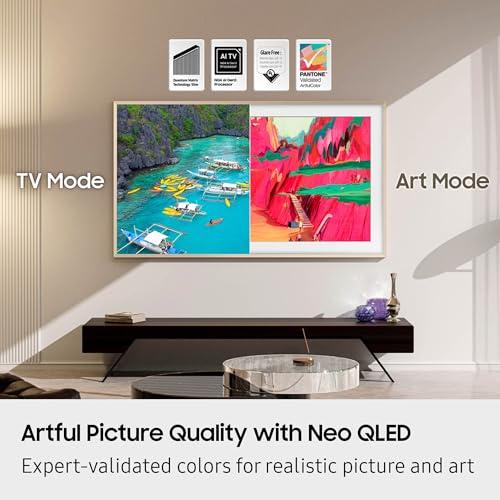
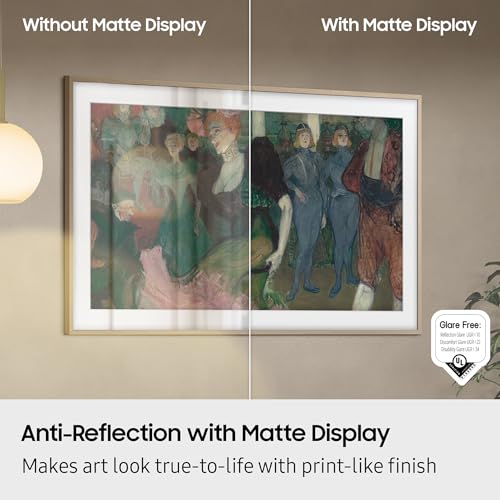
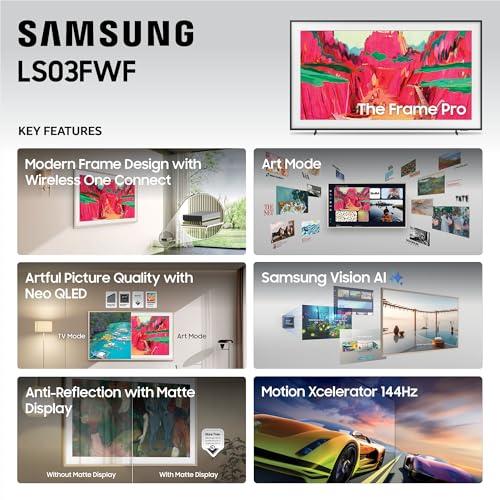
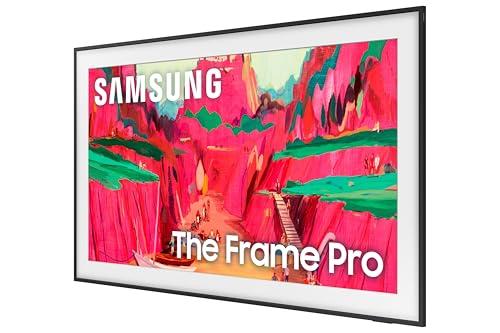
The matte coating is another crucial element. Most TVs have glossy screens that reflect light like mirrors, but the Frame Pro uses a matte finish that scatters reflections. This makes it look more like a real painting or photograph when displaying art, but it also means you can watch TV without fighting glare from lamps or windows.
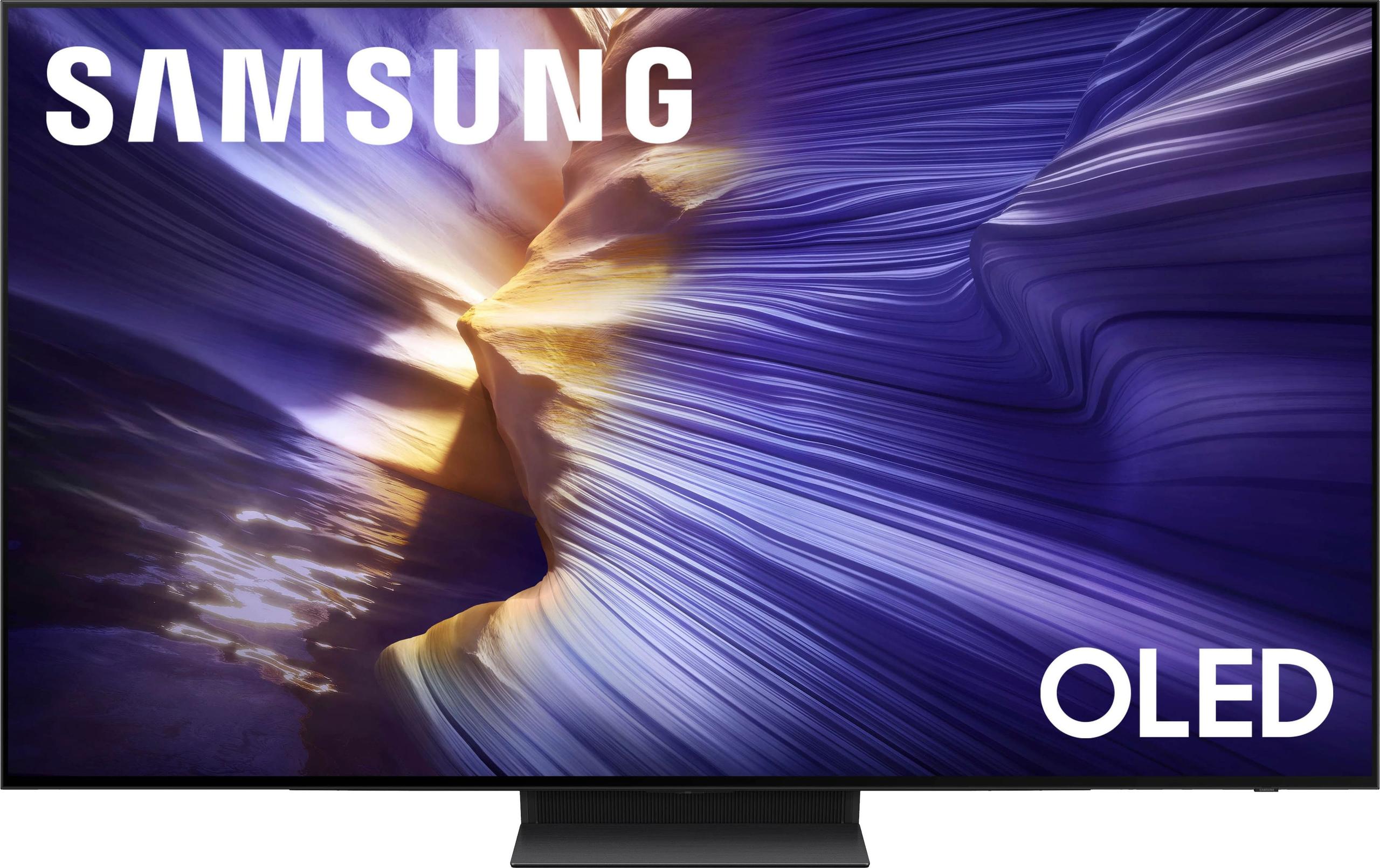
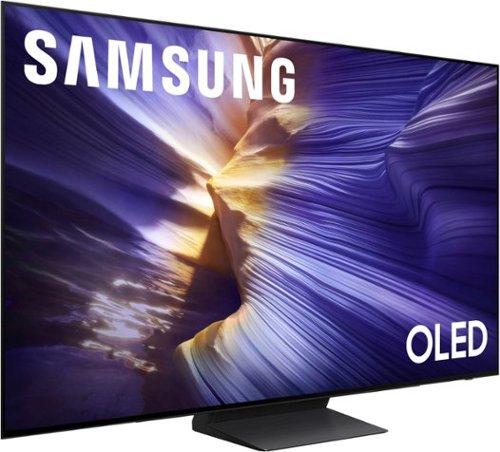
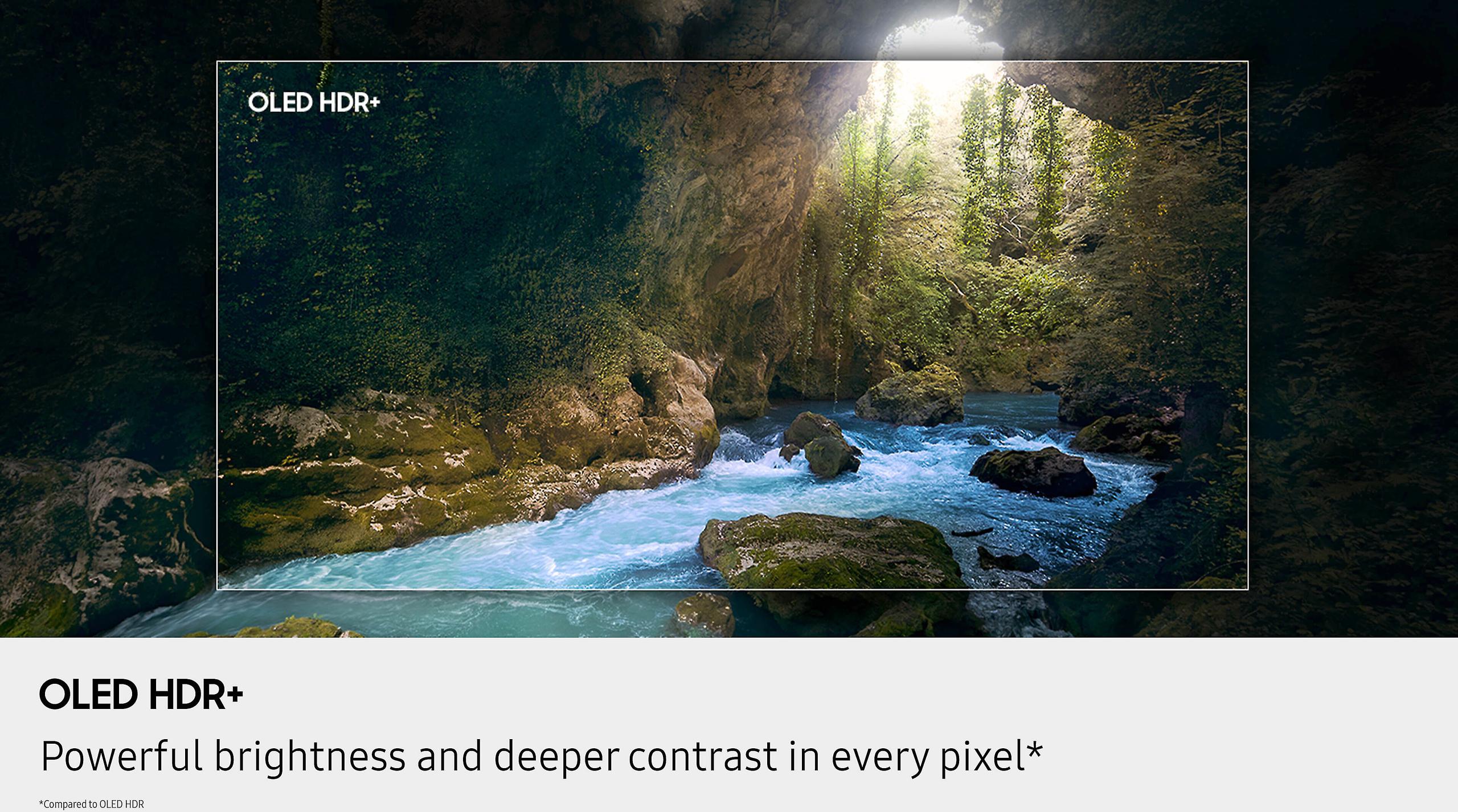
The S90F OLED uses quantum dot OLED technology, which is significantly different from LCD-based displays. Instead of backlighting, each pixel produces its own light. When a pixel needs to be black, it simply turns off completely—resulting in perfect blacks that LCD displays can't match, no matter how many local dimming zones they have.
The "QD" part stands for quantum dot, tiny particles that convert blue light into precise red and green colors. This combination delivers incredibly vibrant colors while maintaining the perfect blacks that make OLED special. It's like having millions of tiny colored lightbulbs that can each turn on and off independently.
However, there's a catch with the S90F OLED that buyers should know about. Samsung uses what the industry calls a "panel lottery"—depending on the size and when you buy, you might get a QD-OLED panel or a different WOLED (white OLED) panel. Both are OLED technology, but QD-OLED typically offers better color performance. It's frustrating that you can't guarantee which one you'll receive.
Brightness might seem like a simple spec, but it fundamentally changes how a TV performs in real homes. The Frame Pro excels here, pushing over 1,000 nits in HDR content. This means HDR movies and shows look punchy and dramatic, with bright highlights that really pop. More importantly, this brightness combined with the matte coating makes the TV perfectly usable in bright living rooms, sunrooms, or anywhere with lots of natural light.
The S90F OLED takes a different approach. While it delivers impressive HDR brightness and incredibly vibrant colors, it's not as bright in standard (SDR) content, and the glossy coating makes it vulnerable to reflections. In a bright room, you might find yourself fighting glare or wishing the TV could get brighter to overcome ambient light.
This brightness difference shapes everything about how these TVs fit into your home. The Frame Pro works in any lighting condition, while the S90F OLED performs best in controlled lighting environments.
Here's where the S90F OLED dominates. Perfect blacks create an infinite contrast ratio—the difference between the brightest and darkest parts of the image. When you watch a movie with space scenes or dark atmospheric content, OLED's perfect blacks make the experience dramatically more immersive.
The Frame Pro has improved contrast thanks to its Mini-LED technology, but it still can't achieve true blacks. Dark scenes might look slightly grayish compared to OLED, and you might notice some blooming around bright objects in dark scenes (think subtitles floating over a dark background—the area around the text might appear slightly brighter than pure black).
For movie enthusiasts and anyone who watches a lot of content in dark rooms, this difference is significant. OLED's perfect blacks create a more cinematic experience that's hard to match with any LCD-based technology.
Both TVs deliver excellent color performance, but in different ways. The Frame Pro achieves 93.4% coverage of the UHDA-P3 color space and 70.3% of Rec. 2020—technical measurements that essentially mean it can display a wide range of vibrant, accurate colors. The quantum dot technology ensures colors stay saturated and accurate even at high brightness levels.
The S90F OLED delivers the characteristic vibrant colors of QD-OLED technology. Colors appear especially saturated and lifelike, particularly reds and greens. The combination of perfect blacks and vibrant colors creates images with exceptional depth and dimensionality.
For art display, the Frame Pro's color accuracy and matte coating provide a more authentic viewing experience that mimics how you'd see actual paintings or photographs. For entertainment content, the S90F OLED's vibrant colors and perfect blacks create more dramatic, engaging visuals.
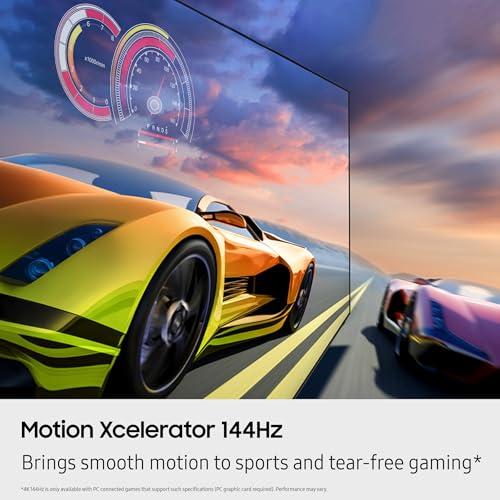
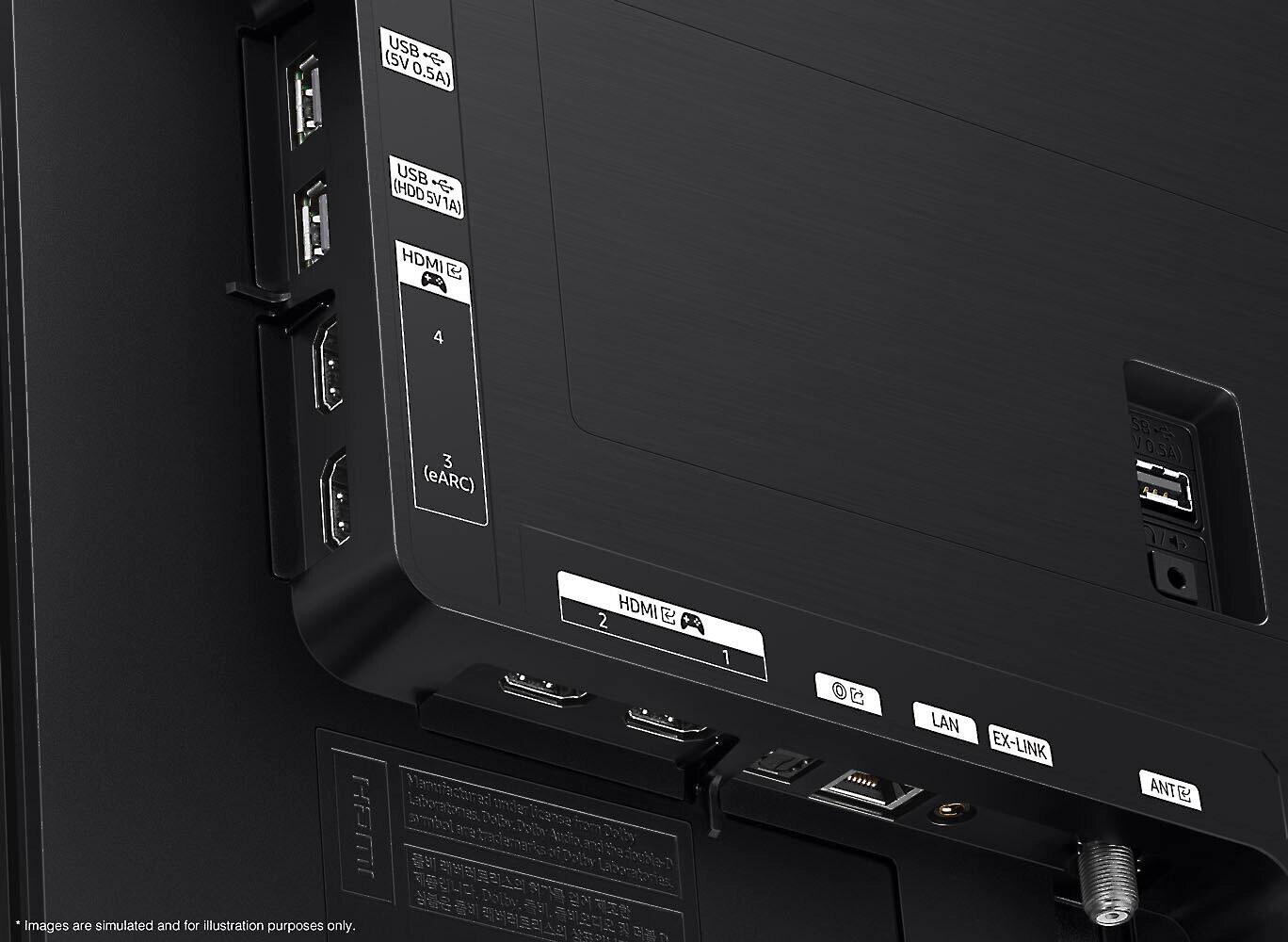
Gaming performance has become crucial for modern TVs, and here we see a stark difference between these models. The S90F OLED excels as a gaming display with low input lag (the delay between pressing a button and seeing the action on screen), near-instant pixel response times, and support for 4K gaming at 144Hz refresh rate across all four HDMI ports.
The Frame Pro presents a concerning issue for gamers. Based on available testing data, input lag measures over 30 milliseconds—significantly higher than the sub-10 millisecond standard we expect from premium Samsung TVs. This makes competitive gaming frustrating, as you'll notice a delay between your controller inputs and on-screen action.
Both TVs support variable refresh rate (VRR) technologies that sync the display with your gaming console to eliminate screen tearing, but the Frame Pro's high input lag undermines its gaming potential. If gaming is important to you, the S90F OLED is the obvious choice.
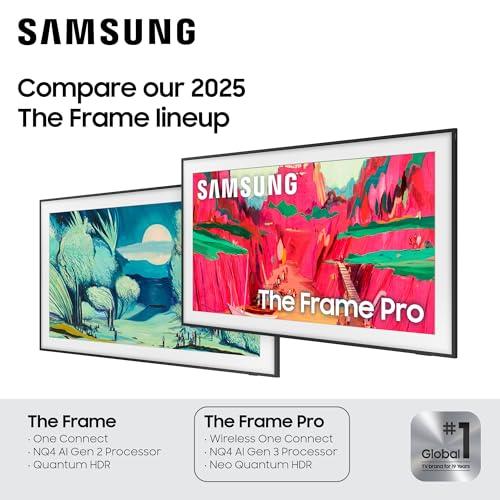
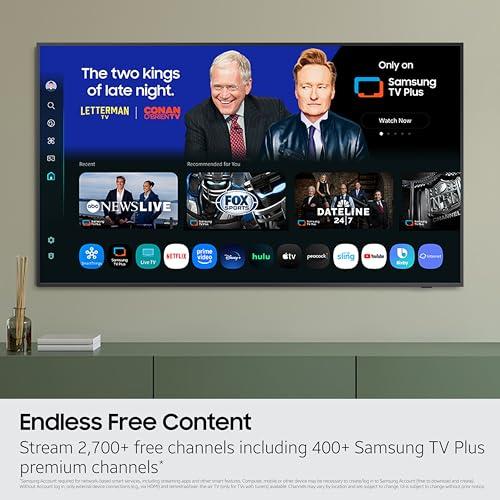
Both TVs use Samsung's NQ4 AI Gen3 processor and run the Tizen smart TV platform, so the basic smart TV experience is similar. You'll get all major streaming apps, built-in voice assistants, and Samsung's typically responsive interface.
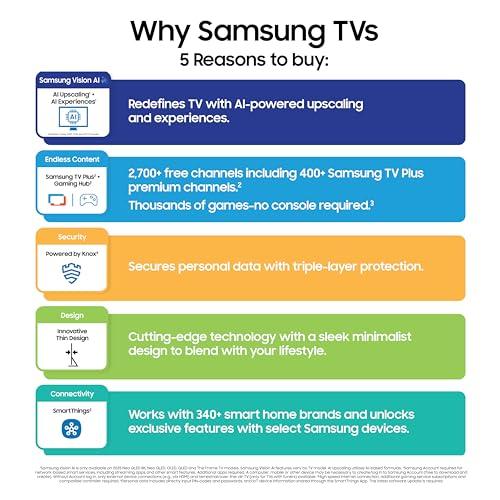
The S90F OLED includes Samsung Vision AI, which analyzes content and optimizes picture and sound settings automatically. The 4K AI Upscaling Pro feature transforms lower-resolution content by adding detail and reducing noise—particularly valuable since much streaming content isn't native 4K.
The Frame Pro focuses its AI processing on art display and picture optimization for its dual-purpose nature. The TV can recognize different types of content and switch between entertainment and art modes seamlessly.
This is where the Frame Pro justifies its existence and premium pricing. When turned off, it becomes a digital picture frame displaying curated artwork from Samsung's Art Store or your personal photos. The matte coating and customizable bezels make it look remarkably like a real framed piece hanging on your wall.
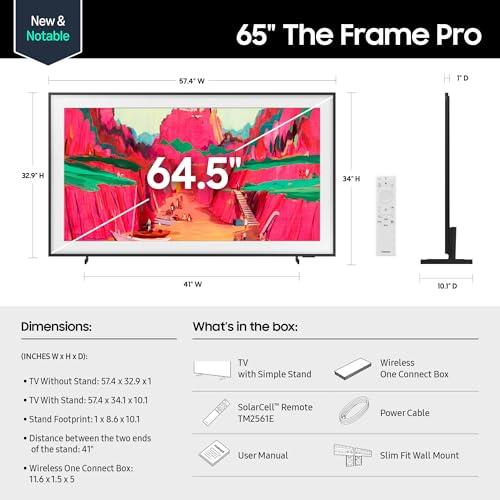
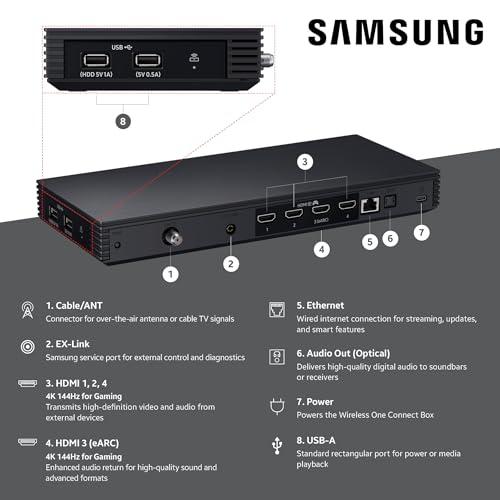
The 2025 model introduces the Wireless One Connect Box—a game-changing feature that eliminates all visible cables. This box connects to all your devices and transmits video and audio wirelessly to the TV from up to 33 feet away. You can hide the box in a cabinet or entertainment center while the TV mounts completely flush to the wall with no visible connections.
For design-conscious homeowners, this integration is invaluable. The TV doesn't dominate your room's aesthetic when turned off, and the wireless connectivity maintains clean lines without cable management challenges.
The S90F OLED offers no lifestyle features—it's purely a traditional TV that happens to deliver exceptional picture quality.
Both TVs include respectable built-in audio systems, but neither replaces a dedicated sound system for serious viewing. The Frame Pro features a 40W system with Dolby Atmos, Object Tracking Sound, and Q-Symphony Pro (which coordinates with compatible Samsung soundbars).
The S90F OLED includes Adaptive Sound Pro with AI-enhanced optimization that adjusts audio based on content type and room acoustics.
For casual viewing, both systems are adequate. For movie nights or gaming sessions, you'll want to add a soundbar or surround sound system to either TV.
At the time of writing, these TVs occupy very different price tiers, with the Frame Pro commanding a significant premium over the S90F OLED. This price difference reflects their different target markets and feature sets.
The S90F OLED offers exceptional value for pure performance, delivering flagship OLED picture quality at a competitive price point. For buyers focused on getting the best possible picture quality per dollar, it's hard to beat.
The Frame Pro charges a premium for its lifestyle integration features, wireless connectivity, and dual-purpose design. You're paying extra for the ability to use your TV as wall art and eliminate cable clutter—features that don't directly improve picture quality but significantly enhance how the TV integrates into your home.
For dedicated home theater setups, the choice is clear. The S90F OLED's perfect blacks, low input lag, and vibrant colors make it ideal for dark-room viewing. The glossy coating that's problematic in bright rooms actually enhances picture quality in controlled lighting environments.
The Frame Pro's matte coating, while great for art display and bright-room viewing, slightly reduces contrast and color saturation compared to glossy displays. In a dedicated theater room, these compromises aren't worth the lifestyle benefits.
However, if your "home theater" is actually your family room where the TV needs to work well during both day and nighttime viewing, the Frame Pro's brightness and reflection control might be more practical.
The decision between these TVs comes down to priorities and use cases. Choose the S90F OLED if you want the best possible picture quality, plan to do serious gaming, can control room lighting, and value performance over aesthetics. It's particularly compelling for its exceptional price-to-performance ratio.
Choose the Frame Pro if room aesthetics matter as much as picture quality, you want the TV to function as wall art, you have a bright room with lots of windows, or you value wireless connectivity and cable management. The premium pricing makes sense if these lifestyle benefits are important to your living situation.
Neither TV is objectively better—they excel in different areas for different users. The S90F OLED is the enthusiast choice for picture quality and gaming, while the Frame Pro is the design-conscious choice for seamless home integration. Understanding which category matters more to you makes the decision straightforward.
Both represent Samsung's 2025 technology at its best, just applied to solve different problems. The key is honestly evaluating whether you need a TV that doubles as art or one that simply delivers the most impressive picture possible.
| Samsung 65" The Frame Pro 4K Neo QLED Smart TV 2025 | Samsung 65" S90F OLED 4K Vision AI Smart TV 2025 |
|---|---|
| Display Technology - Determines picture quality and room suitability | |
| Neo QLED Mini-LED with matte coating | QD-OLED with glossy coating |
| Peak Brightness - Critical for HDR impact and bright room viewing | |
| Over 1,000 nits (excellent for any lighting) | Strong HDR brightness (best in controlled lighting) |
| Black Levels - Affects contrast and dark scene detail | |
| Improved but not perfect blacks | Perfect blacks with infinite contrast |
| Gaming Input Lag - Essential for responsive gaming | |
| Over 30ms (poor for competitive gaming) | Low input lag (excellent for all gaming) |
| Refresh Rate - Smoothness for gaming and sports | |
| 144Hz with VRR support | 144Hz with VRR support |
| Design Integration - How it fits in your living space | |
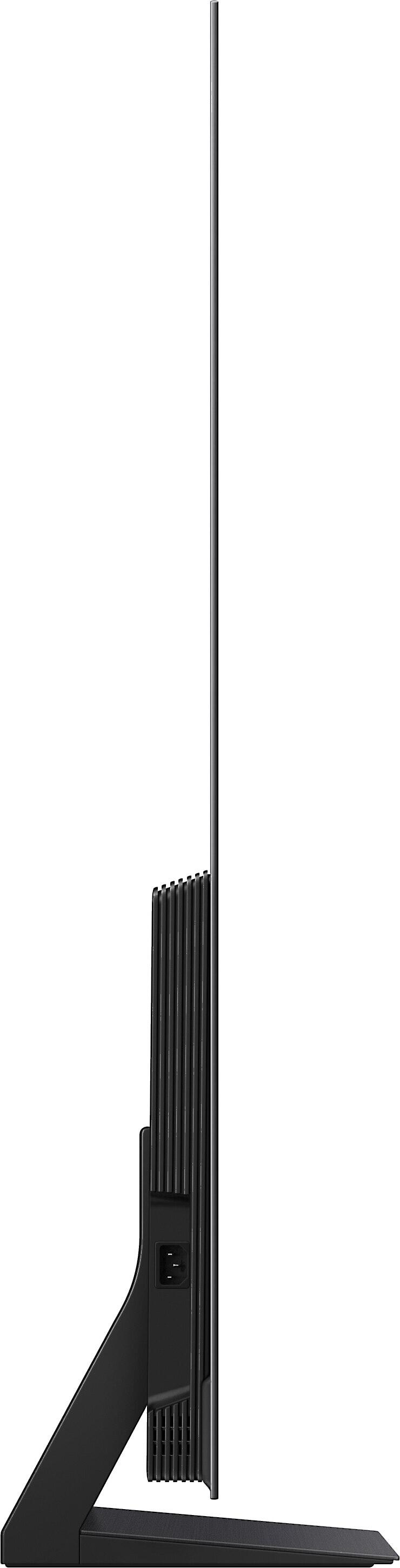
| Art Mode, customizable bezels, flush wall mounting | Traditional TV design |
| Cable Management - Installation flexibility | |
| Wireless One Connect Box (no visible cables) | Standard wired connections |
| Room Lighting Suitability - Where it performs best | |
| Excellent in bright rooms due to matte coating | Best in controlled lighting environments |
| Color Performance - Vibrancy and accuracy | |
| 93.4% UHDA-P3, quantum dot enhancement | QD-OLED vibrant colors (panel lottery applies) |
| Smart Features - AI and processing capabilities | |
| NQ4 AI Gen3, Tizen OS, art display optimization | NQ4 AI Gen3, Samsung Vision AI, 4K AI Upscaling Pro |
| Audio System - Built-in sound quality | |
| 40W 2.0.2CH with Dolby Atmos, Q-Symphony Pro | Adaptive Sound Pro with AI enhancement |
| Value Proposition - What you're paying for | |
| Premium for lifestyle features and design integration | Exceptional OLED performance at competitive pricing |
| Best Use Cases - Who should choose this TV | |
| Design-conscious users, bright rooms, art display | Performance enthusiasts, gamers, dark room viewing |
The Samsung S90F OLED delivers superior picture quality for movies thanks to its perfect black levels and infinite contrast ratio. Dark scenes look dramatically better on OLED technology, while the Samsung Frame Pro offers brighter HDR highlights but cannot achieve true blacks. For dedicated movie watching, especially in dark rooms, the S90F OLED provides a more cinematic experience.
The Frame Pro uses Neo QLED Mini-LED technology with thousands of tiny LED backlights behind an LCD panel, delivering excellent brightness but limited black levels. The S90F OLED uses self-emitting pixels that turn completely off for perfect blacks. Neo QLED excels in bright rooms, while OLED provides superior contrast and dark scene detail.
The Samsung S90F OLED is significantly better for gaming with low input lag and near-instant pixel response times. The Frame Pro shows concerning input lag over 30ms, making it unsuitable for competitive gaming. Both support 144Hz refresh rates, but the S90F OLED delivers the responsive gaming experience serious gamers need.
The Samsung Frame Pro excels in bright rooms with over 1,000 nits brightness and an anti-reflective matte coating that minimizes glare. The S90F OLED has a glossy coating that reflects light and lower SDR brightness, making it better suited for controlled lighting environments. For bright living rooms or spaces with lots of windows, the Frame Pro is the clear choice.
The Frame Pro doubles as wall art when turned off, displaying curated artwork or personal photos through Art Mode. It features customizable bezels, a matte coating that mimics real paintings, and the innovative Wireless One Connect Box that eliminates all visible cables. The S90F OLED lacks these lifestyle features and functions purely as a traditional TV.
The Samsung S90F OLED provides exceptional value, delivering flagship OLED performance at a competitive price point. The Frame Pro commands a significant premium for its lifestyle features and design integration. If you prioritize pure performance per dollar, the S90F OLED is the better value. If lifestyle integration matters, the Frame Pro may justify its higher cost.
Both TVs use Samsung's NQ4 AI Gen3 processor and Tizen OS platform, providing similar smart TV capabilities. The S90F OLED includes Samsung Vision AI and 4K AI Upscaling Pro for enhanced content optimization. The Frame Pro focuses its AI processing on art display and dual-purpose functionality. Both offer comprehensive streaming app support and voice assistant integration.
For dedicated home theater rooms with controlled lighting, the Samsung S90F OLED is superior due to its perfect blacks, vibrant colors, and glossy coating that enhances picture quality in dark environments. The Frame Pro's matte coating reduces contrast slightly, making it less ideal for dark-room theater viewing despite its other advantages.
The Frame Pro suffers from high gaming input lag and cannot achieve perfect black levels despite its Mini-LED technology. The S90F OLED is vulnerable to reflections in bright rooms and uses a "panel lottery" system where you might receive different panel types. Both TVs have adequate but not exceptional built-in audio systems.
The Wireless One Connect Box in the Frame Pro is crucial for its clean aesthetic appeal, transmitting video and audio wirelessly up to 33 feet away. This eliminates all visible cables and allows true flush wall mounting. The S90F OLED uses standard wired connections. This feature is most valuable for design-conscious users who want minimal visual clutter.
The Samsung Frame Pro adapts to various lighting conditions with its bright output and matte anti-glare coating, working well from bright daylight to evening viewing. The S90F OLED performs best in consistent, controlled lighting due to its glossy coating and reflection susceptibility. For versatile lighting performance, the Frame Pro has the advantage.
Choose the S90F OLED if display technology and pure picture quality are your priorities - OLED's perfect blacks and vibrant colors create superior visual experiences. Choose the Frame Pro if lifestyle features matter more - its art display capabilities, wireless connectivity, and room integration justify the premium for design-conscious buyers who want more than just a TV.
We've done our best to create useful and informative comparisons to help you decide what product to buy. Our research uses advanced automated methods to create this comparison and perfection is not possible - please contact us for corrections or questions. These are the sites we've researched in the creation of this article: tomsguide.com - youtube.com - smarthomesounds.co.uk - images.samsung.com - rtings.com - samsung.com - bestbuy.com - bestbuy.com - businessinsider.com - dentonstv.com - samsung.com - flatpanelshd.com - samsung.com - jefflynch.com - youtube.com - costco.com - youtube.com - t3.com - rtings.com - bestbuy.com - stereonet.com - samsung.com - bestbuy.com - flatpanelshd.com - myallsouth.com - pcrichard.com - samsung.com - bestbuy.com - samsung.com - samsung.com - samsung.com

Privacy Policy
Terms and Conditions - Affiliate Policy
Home Security
© Copyright 2008-2026.
11816 Inwood Rd #1211, Dallas, TX 75244