

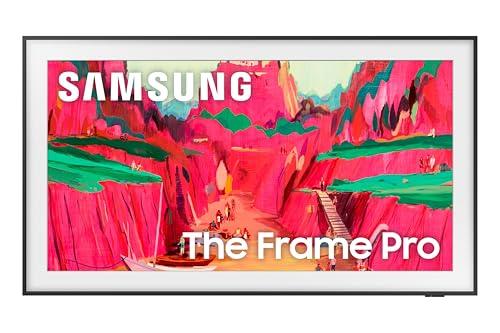



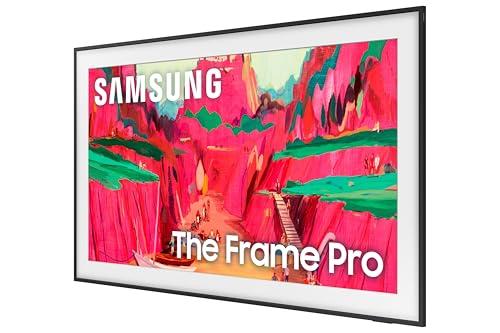

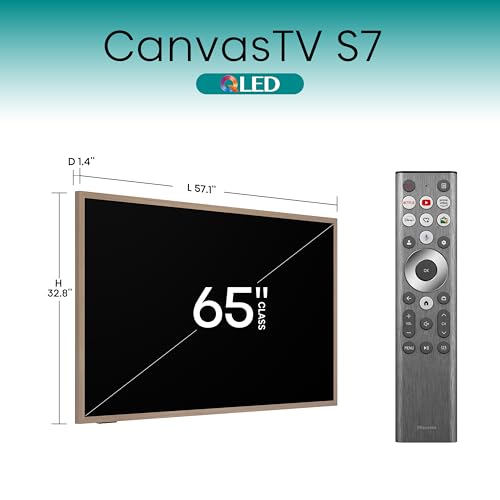






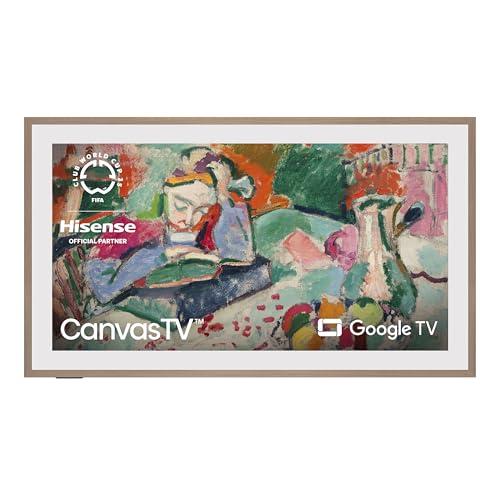



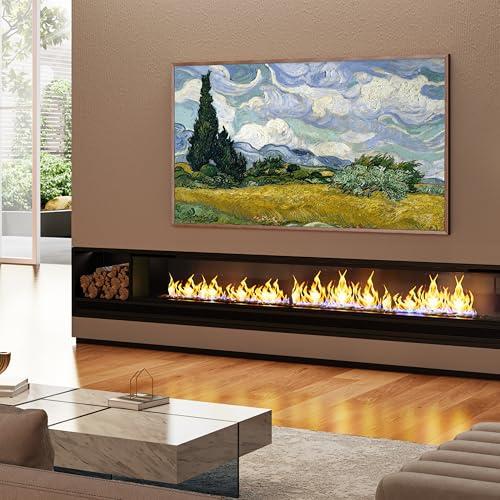
Art-focused TVs have carved out a fascinating niche in the display market, and 2024-2025 has brought us two compelling options that tackle the same problem from different angles. The Samsung Frame Pro represents the premium evolution of Samsung's popular Frame series, while the Hisense CanvasTV arrives as a value-focused challenger that promises similar aesthetics at a fraction of the cost.
These aren't your typical TVs. Both models prioritize blending seamlessly into your living space when you're not actively watching content, transforming into digital art galleries that can genuinely fool guests into thinking you've hung expensive paintings on your wall. But underneath their art-focused exteriors lie modern QLED displays with serious entertainment chops.
The core appeal of art TVs centers on solving a common living room dilemma: what to do with that big black rectangle when it's turned off. Traditional TVs create visual dead zones in carefully designed spaces, but art TVs flip this completely. They become active décor elements that enhance your room's aesthetic rather than detracting from it.
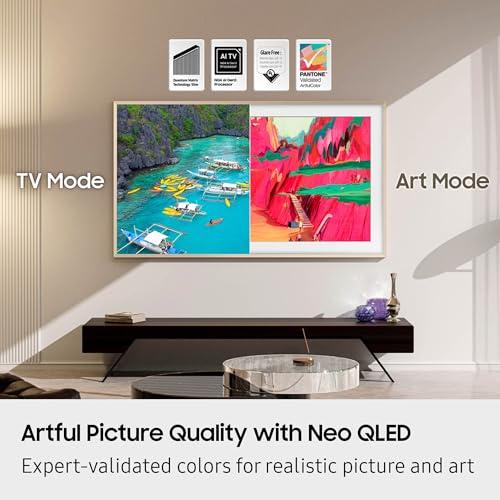
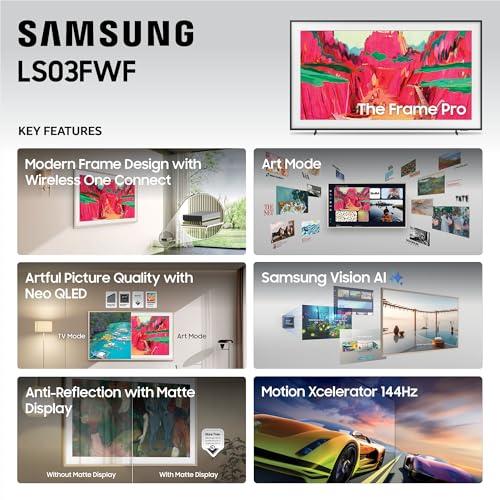
Art TVs share several key characteristics that separate them from standard displays. The most crucial is anti-glare technology – specialized matte coatings that eliminate reflections and make displayed artwork look like actual paintings rather than backlit screens. Both the Samsung Frame Pro and Hisense CanvasTV excel here, though they achieve this effect through slightly different approaches.
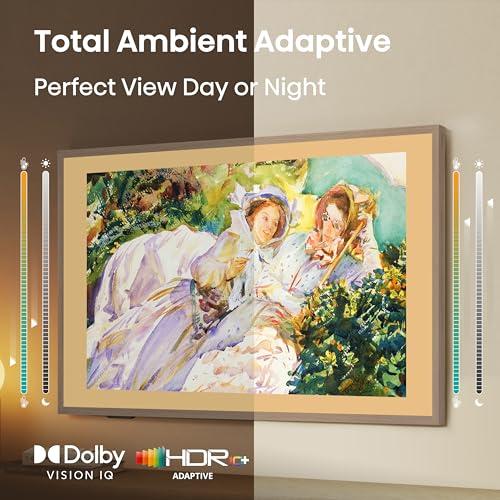
Motion sensors automatically detect when someone enters the room, switching from power-saving mode to displaying artwork. Ambient light sensors adjust brightness to match your room's lighting, ensuring the "paintings" look natural whether it's bright afternoon sunlight or dim evening ambiance. These smart features create the illusion that you're looking at physical artwork rather than a digital display.
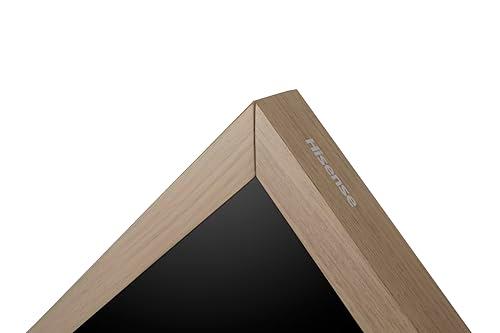
Perhaps most importantly, both TVs offer customizable physical frames that attach magnetically or clip on, allowing you to match your existing décor. This attention to physical design details sets art TVs apart from standard models that might have thin bezels but still obviously look like electronics.
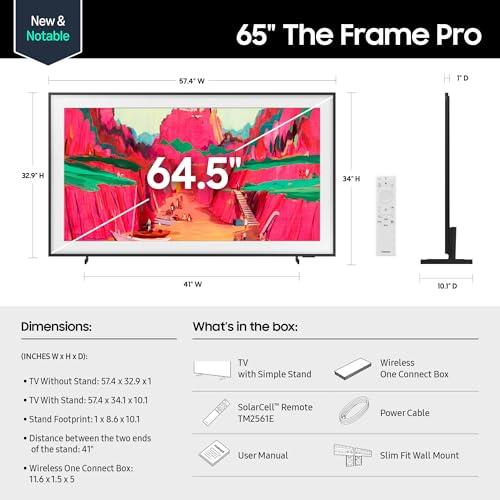
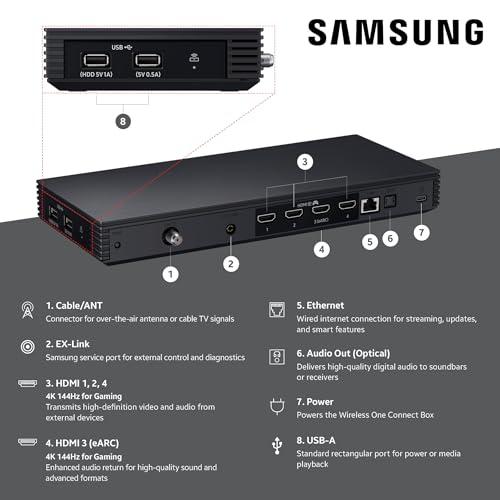
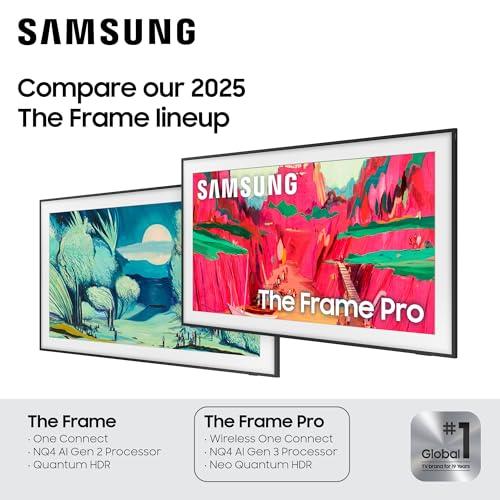
Released in 2025, the Samsung Frame Pro represents Samsung's most ambitious Frame TV yet. The biggest innovation is the Wireless One Connect Box – a revolutionary system that transmits video and audio completely wirelessly to the TV using Wi-Fi 7 technology. This eliminates every single cable between your TV and components, creating the cleanest possible installation.
The wireless transmission works through "Omni-Directional Technology" that can push 4K signals up to 10 meters (about 33 feet) away, even through walls and furniture. For anyone who's struggled with cable management in a living room, this is genuinely game-changing. You can hide all your streaming devices, game consoles, and cable boxes in a completely different room or closet.
Under the hood, the Samsung Frame Pro packs serious display technology. It uses Neo QLED with Mini LED backlighting – a significant upgrade from previous Frame models. Mini LEDs are exactly what they sound like: thousands of tiny LEDs that provide much more precise local dimming than traditional LED backlighting. This means darker blacks, brighter highlights, and better overall contrast.
The display pushes over 1,000 nits of peak brightness (nits measure how bright a display can get), which puts it in premium TV territory. For context, many budget TVs max out around 400-500 nits. This extra brightness makes HDR content really pop, especially in bright rooms where you might have the Frame Pro displaying art during the day.
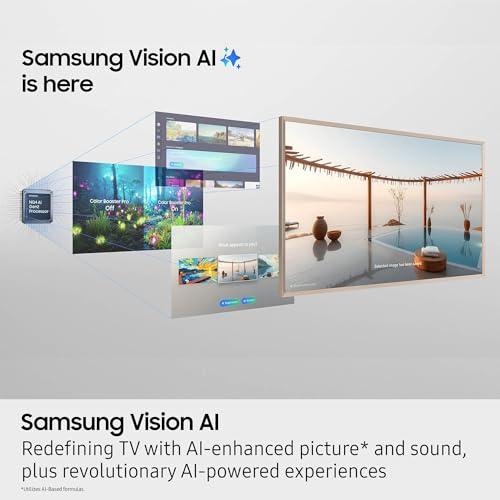
Samsung's NQ4 AI Gen3 Processor handles the heavy lifting for picture processing. This chip uses artificial intelligence to upscale lower-resolution content, smooth out motion, and optimize HDR tone mapping in real-time. It's the same processor found in Samsung's flagship TVs, which explains part of the premium pricing.
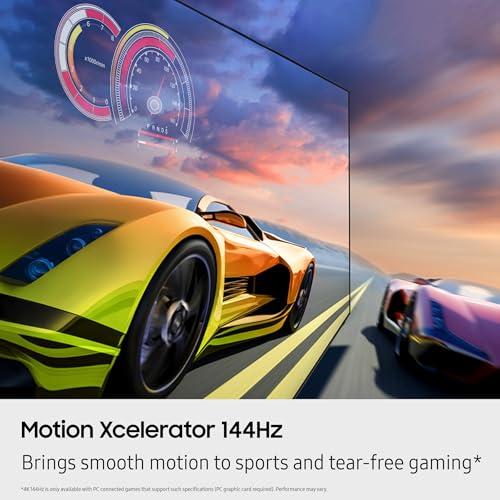
The Samsung Frame Pro supports a 144Hz refresh rate, meaning it can display 144 unique frames per second for incredibly smooth motion. This benefits both fast-paced movies and gaming, though as we'll discuss, gaming performance has some notable limitations.
The Hisense CanvasTV launched in 2024 as a direct challenger to Samsung's Frame dominance, and it takes a refreshingly straightforward approach. Rather than revolutionary wireless connectivity, Hisense focused on delivering the core art TV experience at roughly half the price of comparable Samsung models (at the time of writing).
The display uses traditional QLED technology with Quantum Dot Color enhancement. Quantum dots are microscopic crystals that, when hit by blue LED light, emit extremely pure red and green colors. This creates a much wider color gamut – basically, the range of colors the TV can display – compared to standard LED TVs. The Hisense CanvasTV can reproduce over a billion color shades, creating vibrant, lifelike images whether you're watching movies or displaying artwork.
Where the CanvasTV really impresses is its Hi-Matte anti-glare coating, which reduces reflections to just 5%. In practical terms, this means artwork and video content remain clearly visible even with bright windows or lamps creating direct reflections on the screen. The matte texture also adds to the authentic painting illusion when in Art Mode.
Peak brightness reaches 450 nits – substantially lower than the Frame Pro but still adequate for most viewing environments. The trade-off is a more affordable price point while maintaining the essential art TV functionality that most buyers actually care about.
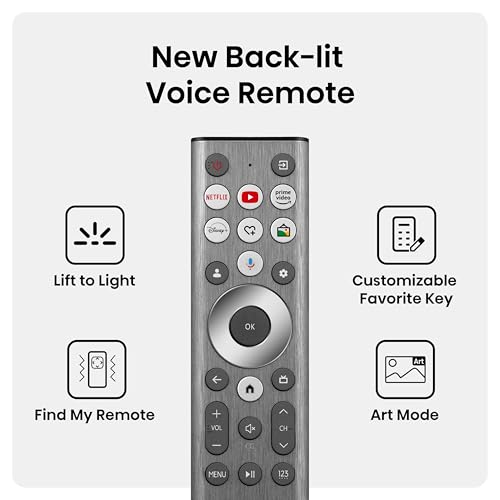
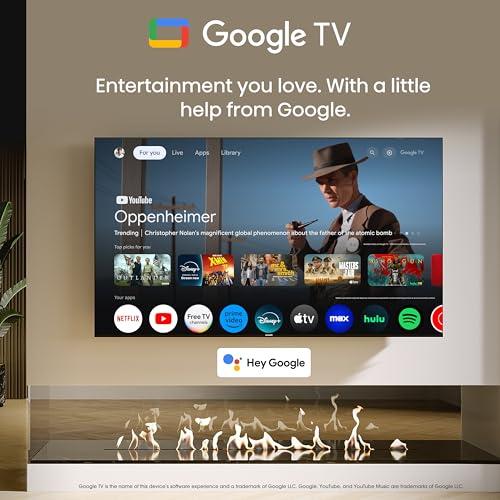
The CanvasTV runs Google TV, which many users find more intuitive and responsive than Samsung's Tizen platform. Google TV integrates seamlessly with Android phones and Google services, plus it offers excellent voice control through Google Assistant.
The display performance gap between these models is significant, though both deliver satisfying experiences in their respective price ranges. The Samsung Frame Pro's Mini LED backlighting creates noticeably better contrast ratios. When you're watching a movie with dark scenes, the Frame Pro can make blacks look deeper and more realistic while simultaneously making bright elements pop with authority.
This advantage becomes most apparent in challenging content like space movies, nighttime scenes, or any HDR content with dramatic lighting. The Frame Pro's superior local dimming means it can darken specific areas of the screen while keeping other areas bright, creating that cinematic depth that makes you feel like you're peering through a window rather than looking at a flat display.
The Hisense CanvasTV uses direct LED backlighting with a respectable 5000:1 contrast ratio. While this can't match Mini LED performance, it's perfectly adequate for most content, especially in moderately lit rooms. The difference becomes less noticeable during typical TV watching – sitcoms, news, sports, and most streaming content look excellent on both displays.
Color performance tells an interesting story. The Frame Pro achieves wider color gamut coverage thanks to its advanced quantum dot implementation and superior backlighting. Colors appear more saturated and accurate, particularly in the red and green spectrums where quantum dot technology excels. However, the CanvasTV delivers surprisingly competitive color reproduction that satisfies most viewers.
Both TVs excel at the core art TV function: making digital artwork look authentic. The matte coatings work similarly well, though the Frame Pro's superior brightness helps maintain color vibrancy in very bright rooms where the CanvasTV might appear slightly washed out.
Gaming reveals the most dramatic performance difference between these models. The Hisense CanvasTV absolutely destroys the Samsung Frame Pro in gaming scenarios, which is surprising given their relative market positioning.
Input lag measures the delay between when you press a controller button and when the action appears on screen. Lower numbers are critical for responsive gaming, especially in competitive scenarios. The CanvasTV achieves approximately 5.4 milliseconds of input lag, which is excellent by any standard. Most serious gamers consider anything under 10ms acceptable, so this puts the Hisense firmly in enthusiast territory.
The Samsung Frame Pro suffers from input lag exceeding 30 milliseconds – a significant handicap that makes precise gaming feel sluggish and unresponsive. This is puzzling given Samsung's generally strong gaming performance in other TV lines. The Frame Pro does include a micro HDMI port directly on the TV that bypasses some processing for lower lag, but this defeats the purpose of the wireless One Connect Box and creates cable management issues.
Both TVs support modern gaming features like Variable Refresh Rate (VRR), which synchronizes the display's refresh rate with your console's frame rate to eliminate screen tearing. Auto Low Latency Mode (ALLM) automatically switches to game mode when it detects gaming input. The CanvasTV supports both 4K at 144Hz and 1080p at 240Hz, while the Frame Pro maxes out at 4K 144Hz.
For casual gaming – story-driven games, turn-based strategy, or single-player adventures where precise timing isn't critical – both TVs work fine. But for competitive online gaming, fighting games, or any scenario where response time matters, the CanvasTV is the clear choice.
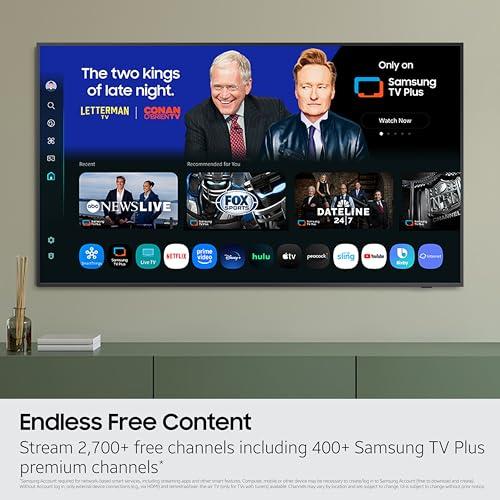
The smart platform battle reveals interesting philosophical differences. Samsung's Tizen platform on the Frame Pro offers deep integration with Samsung's ecosystem, including SmartThings home automation, Samsung phone connectivity, and advanced features like Samsung Vision AI. The Art Store provides access to over 3,000 curated artworks, though this requires a subscription after the initial trial period.
Google TV on the CanvasTV takes a simpler, more universal approach. The interface feels snappier and less cluttered than Tizen, with excellent integration for Google services and Android devices. Most importantly for art TV buyers, the CanvasTV includes hundreds of artworks with no subscription required – a significant long-term value advantage.
Both platforms support major streaming services and voice control, though Google TV's search and recommendation algorithms generally outperform Samsung's offerings. The CanvasTV also supports Apple HomeKit alongside Google Assistant, providing broader smart home compatibility.
Audio performance on both TVs exceeds typical flat-panel expectations. The Samsung Frame Pro features a 40W 2.0.2 channel system with Dolby Atmos support and Samsung's Object Tracking Sound (OTS) technology. OTS attempts to make sound appear to come from specific locations on screen, creating a more immersive experience.
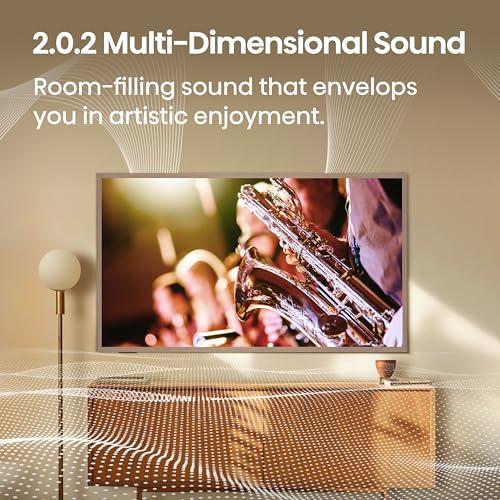
The Hisense CanvasTV counters with a 36W 2.0.2 system that includes upward-firing speakers for height effects and DTS Virtual:X processing. User reports consistently describe the CanvasTV's audio as "booming" and surprisingly full for a slim TV.
Both TVs benefit from their upward-firing speakers, which bounce sound off your ceiling to create a sense of height and space. While neither replaces a dedicated sound system for serious home theater use, both perform admirably for everyday viewing and casual movie nights.
The installation experience highlights each TV's design philosophy. The Samsung Frame Pro's wireless setup is genuinely impressive when it works correctly. You can mount the TV flush to the wall with zero visible cables, then place the One Connect Box anywhere within range – in a cabinet, closet, or even another room entirely. The result is the cleanest possible aesthetic integration.
However, this wireless system introduces potential reliability concerns. If the wireless connection experiences interference or drops, you have no wired backup option. Some users report occasional connectivity issues, particularly in homes with complex Wi-Fi environments or significant wireless interference.
The Hisense CanvasTV uses traditional wired connections with decent cable management features. While not as revolutionary as wireless transmission, this approach offers complete reliability and easier troubleshooting if issues arise.
Both TVs excel at their primary art display function. The motion sensors work reliably, switching to artwork when someone enters the room and returning to power-saving mode when empty. Ambient light adjustment helps maintain natural-looking artwork throughout the day.
At the time of writing, the Samsung Frame Pro commands roughly double the price of the Hisense CanvasTV – a significant premium that demands careful justification. The Frame Pro's advantages include superior display technology, wireless connectivity, premium build quality, and Samsung's established ecosystem integration.
The CanvasTV counters with comparable anti-glare performance, significantly better gaming capability, free artwork access, and solid overall performance at roughly half the cost. For many buyers, the CanvasTV delivers 80% of the art TV experience at 50% of the cost.
Choose the Samsung Frame Pro if you prioritize cutting-edge display technology and wireless installation is crucial for your room layout. It's ideal for bright living rooms where the superior brightness maintains artwork visibility, and for Samsung ecosystem users who value tight integration with other Samsung devices. The wireless connectivity particularly benefits open-concept spaces where hiding cables is challenging or impossible.
The Frame Pro also suits buyers who view their TV purchase as a long-term investment and want the most advanced technology available. The superior picture processing and brighter display will likely age better as content and streaming quality continue improving.
Choose the Hisense CanvasTV if value is your primary concern and you want art TV features without premium pricing. It's perfect for gaming-focused households where the superior input lag performance matters. The simpler Google TV interface appeals to users who prefer straightforward operation over advanced features.
The CanvasTV excels in typical home environments where extreme brightness isn't necessary and traditional wired installation is acceptable. The free artwork access makes it particularly attractive for families who want the art TV experience without ongoing subscription costs.
Both TVs successfully deliver the core promise of art-focused displays: transforming your TV from an eyesore into an attractive room element while providing solid entertainment performance. The choice ultimately depends on whether wireless connectivity and premium display technology justify the significant price premium over the CanvasTV's excellent value proposition.
For most buyers, the Hisense CanvasTV offers the sweet spot of art TV functionality at a reasonable price, while the Samsung Frame Pro represents the pinnacle of the category for those willing to pay for wireless convenience and superior display performance.
| Samsung 65" The Frame Pro 4K Neo QLED Smart TV 2025 | Hisense 65" S7N CanvasTV QLED 4K Smart Display |
|---|---|
| Display Technology - Core image quality and contrast performance | |
| Neo QLED Mini LED with full-array local dimming | Traditional QLED with direct LED backlighting |
| Peak Brightness - Critical for HDR impact and bright room viewing | |
| 1,000+ nits (excellent for any lighting condition) | 450 nits (adequate for most rooms, struggles in very bright spaces) |
| Anti-Glare Performance - Essential for the art TV experience | |
| Matte display with excellent glare reduction | Hi-Matte coating reducing reflections to 5% |
| Connectivity Innovation - Biggest differentiator between models | |
| Wireless One Connect Box (eliminates all cables) | Traditional wired setup with cable management clips |
| Gaming Performance - Input lag matters for responsive gameplay | |
| 30ms+ input lag (poor for competitive gaming) | 5.4ms input lag (excellent for all gaming scenarios) |
| Refresh Rate - Smooth motion for sports and gaming | |
| 144Hz (supports 4K@144Hz on all 5 HDMI ports) | 144Hz native (4K@144Hz and 1080p@240Hz support) |
| HDMI 2.1 Ports - Modern gaming console compatibility | |
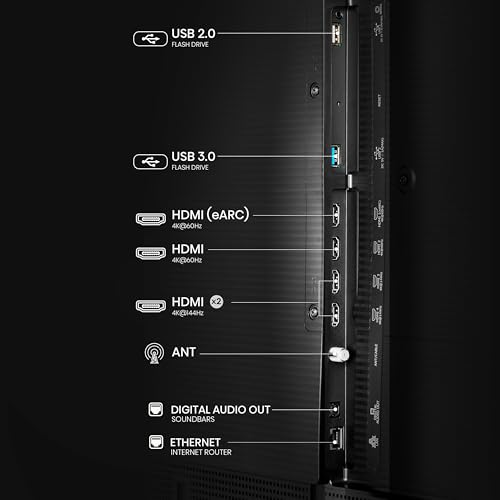
| 5 ports (all support full 4K 144Hz bandwidth) | 2 ports (ports 3 and 4 support 4K 144Hz) |
| Smart Platform - Daily user experience and app performance | |
| Samsung Tizen with ecosystem integration | Google TV (generally smoother interface) |
| Art Mode Content - Ongoing costs and artwork selection | |
| Samsung Art Store with 3,000+ works (subscription required) | Hundreds of included artworks (no subscription fees) |
| Audio System - Built-in sound quality | |
| 40W 2.0.2CH with Dolby Atmos and Object Tracking Sound | 36W 2.0.2CH with DTS Virtual:X and upward-firing speakers |
| Frame Customization - Aesthetic integration options | |
| Multiple bezel options with premium materials | Magnetic frame system (teak standard, white/walnut optional) |
| Processor - Picture processing and AI upscaling capabilities | |
| NQ4 AI Gen3 (flagship-level processing) | Hi-View Engine PRO with AI PQ Engine |
| HDR Support - Content compatibility and processing | |
| Neo Quantum HDR, HDR10+ Adaptive/Gaming | Dolby Vision IQ, HDR10, HDR10+, HDR10+ Adaptive, HLG |
The Samsung Frame Pro delivers superior picture quality with its Neo QLED Mini LED technology, achieving over 1,000 nits of brightness compared to the Hisense CanvasTV's 450 nits. The Frame Pro's full-array local dimming creates deeper blacks and better contrast for cinematic content. However, the CanvasTV offers excellent picture quality for its price range and supports more HDR formats including Dolby Vision.
The Hisense CanvasTV is significantly better for gaming with just 5.4ms input lag compared to the Samsung Frame Pro's 30ms+ lag. Both support 144Hz refresh rates and modern gaming features like VRR and ALLM, but the CanvasTV's responsive performance makes it ideal for competitive gaming while the Frame Pro struggles with fast-paced games.
Yes, both the Samsung Frame Pro and Hisense CanvasTV excel as art displays with effective anti-glare coatings and customizable frames. The Frame Pro offers access to over 3,000 curated artworks through Samsung's Art Store, while the CanvasTV includes hundreds of artworks with no ongoing subscription fees required.
The Samsung Frame Pro performs better in very bright rooms due to its superior 1,000+ nits brightness, maintaining vibrant colors and clear artwork visibility even with direct sunlight. The Hisense CanvasTV handles moderate lighting well but may appear washed out in extremely bright conditions, though its anti-glare coating still reduces reflections effectively.
The biggest installation difference is the Samsung Frame Pro's revolutionary Wireless One Connect Box that eliminates all cables between components and the TV, creating the cleanest possible wall-mounted appearance. The Hisense CanvasTV uses traditional wired connections with good cable management features but cannot achieve the completely cable-free look of the Frame Pro.
The Hisense CanvasTV runs Google TV, which most users find more intuitive and responsive than the Samsung Frame Pro's Tizen platform. Google TV offers better search functionality and cleaner interface design, while Tizen provides deeper Samsung ecosystem integration for users with other Samsung devices.
Both TVs offer surprisingly good built-in audio with upward-firing speakers. The Samsung Frame Pro features 40W output with Dolby Atmos and Object Tracking Sound technology, while the Hisense CanvasTV provides 36W with DTS Virtual:X. User reviews consistently praise the CanvasTV's "booming" sound quality that rivals the Frame Pro's more sophisticated audio processing.
The Hisense CanvasTV provides exceptional value, delivering most art TV benefits at roughly half the cost of the Samsung Frame Pro. While the Frame Pro offers premium features like wireless connectivity and superior brightness, the CanvasTV covers essential art TV functionality with better gaming performance and no subscription fees for artwork.
Yes, both the Samsung Frame Pro and Hisense CanvasTV support 4K gaming at up to 144Hz with modern consoles. However, the CanvasTV provides much better gaming experience due to its low 5.4ms input lag, while the Frame Pro's high input lag makes competitive gaming frustrating despite supporting the same refresh rates and gaming features.
For dedicated home theater use, the Samsung Frame Pro edges ahead with superior contrast, brighter HDR performance, and more sophisticated picture processing that benefits movie watching in controlled lighting. However, the Hisense CanvasTV offers broader HDR format support including Dolby Vision and performs well for most home theater applications at a more accessible price point.
The Samsung Frame Pro offers multiple premium bezel options with sophisticated mounting systems, while the Hisense CanvasTV uses a practical magnetic frame system with teak standard and optional white or walnut frames. Both achieve convincing picture frame aesthetics, though the Frame Pro provides more premium materials and finish options.
The Samsung Frame Pro likely offers better long-term value for buyers prioritizing cutting-edge technology, with its advanced Mini LED display and wireless connectivity potentially aging better over time. However, the Hisense CanvasTV provides immediate value with no ongoing subscription costs for artwork and superior gaming performance that remains relevant as gaming technology advances.
We've done our best to create useful and informative comparisons to help you decide what product to buy. Our research uses advanced automated methods to create this comparison and perfection is not possible - please contact us for corrections or questions. These are the sites we've researched in the creation of this article: tomsguide.com - youtube.com - smarthomesounds.co.uk - images.samsung.com - rtings.com - samsung.com - bestbuy.com - bestbuy.com - businessinsider.com - dentonstv.com - samsung.com - flatpanelshd.com - samsung.com - jefflynch.com - youtube.com - costco.com - bestbuy.com - hisense.sg - tomsguide.com - content.syndigo.com - rtings.com - hisense-usa.com - youtube.com - bestbuy.com - youtube.com - displayspecifications.com - displayspecifications.com - manuals.plus - displayspecifications.com - bestbuy.com - hisense-canada.com - manuals.plus - bargainoutletandmore.com - bestbuy.com - device.report

Privacy Policy
Terms and Conditions - Affiliate Policy
Home Security
© Copyright 2008-2026.
11816 Inwood Rd #1211, Dallas, TX 75244