

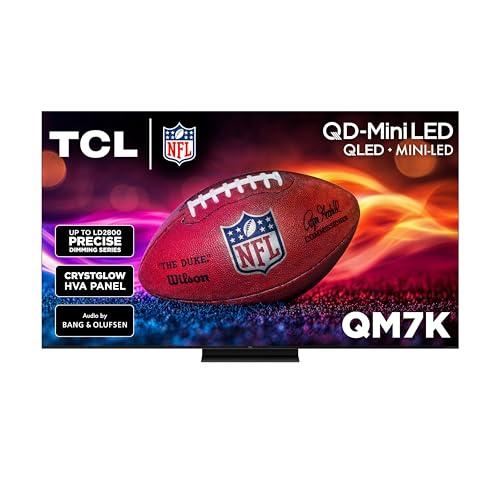
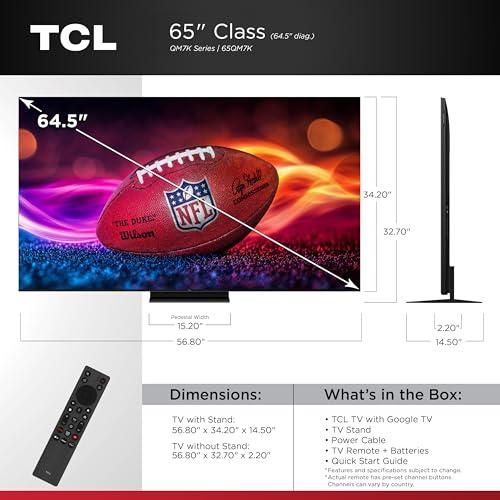
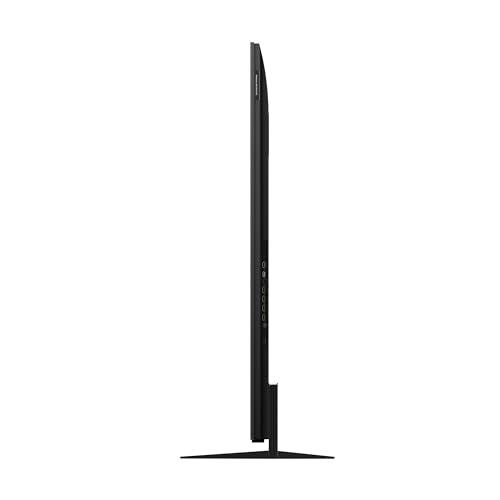
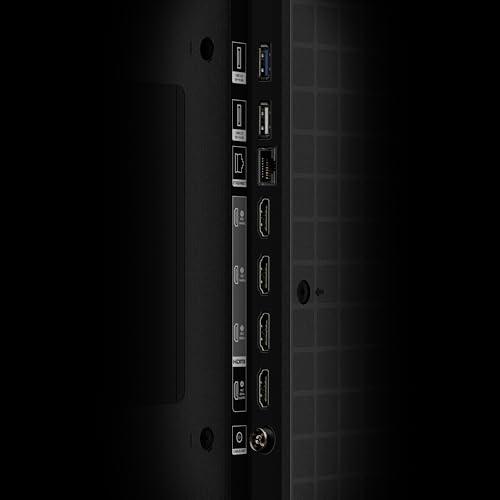
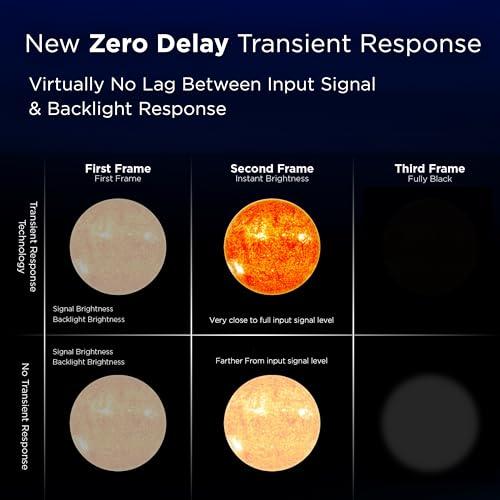

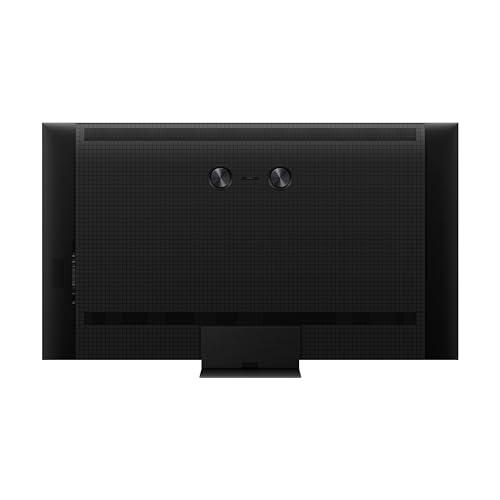
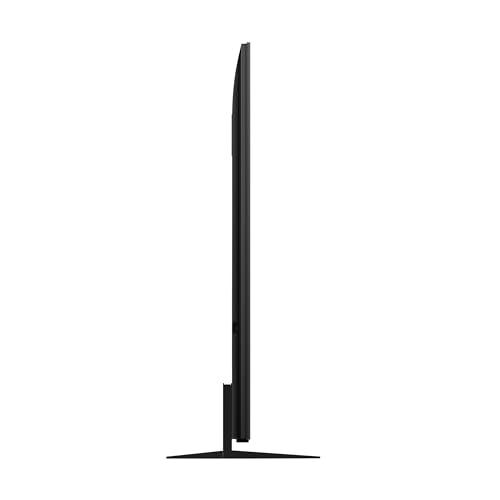
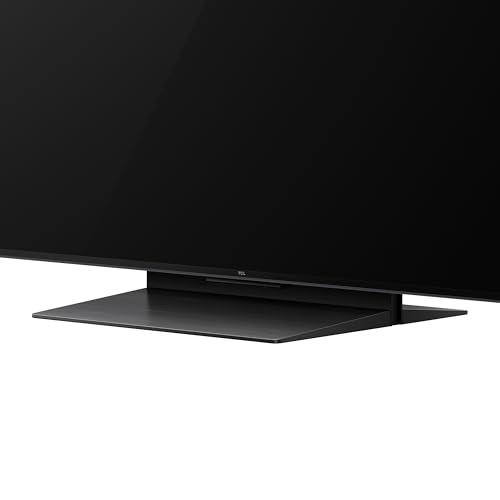
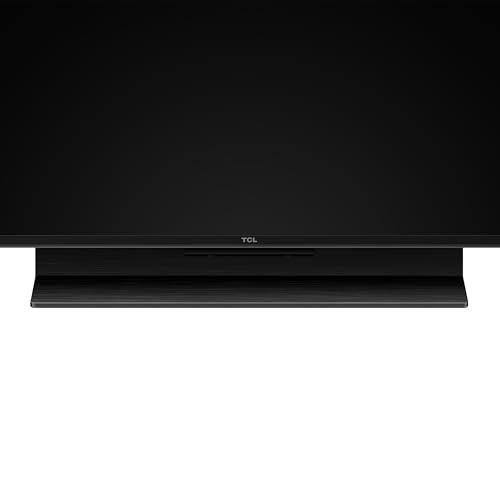

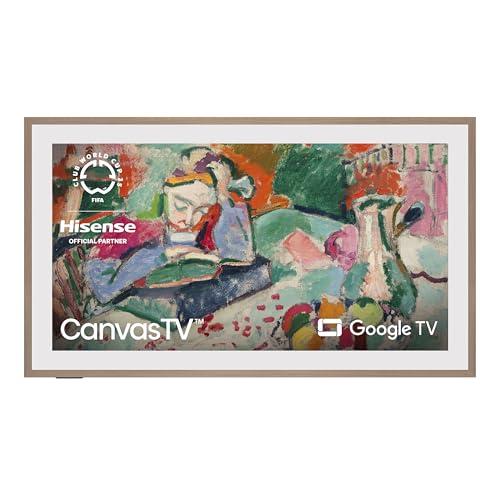

Shopping for a premium 65-inch TV in 2024 feels a bit like choosing between a sports car and a luxury sedan—both will get you where you're going, but they take completely different approaches. The TCL 65QM7K represents the performance-first mindset, packing flagship-level picture quality into a mid-range price. Meanwhile, the Hisense 65" S7N CanvasTV asks a different question entirely: what if your TV could be both entertainment centerpiece and living room art?
At the time of writing, these TVs are priced within about $50 of each other, making the choice less about budget and more about priorities. Both launched in 2024 as each company's answer to different market demands, and understanding their distinct philosophies is key to making the right choice for your home.
The 65-inch premium TV market has become incredibly competitive, with manufacturers pushing different technologies to stand out. The core considerations haven't changed much: you want excellent picture quality, smooth smart features, good gaming performance, and reasonable value. What has changed is how companies achieve these goals.
The most important performance metrics to focus on are peak brightness (measured in nits), local dimming capability, color accuracy, input lag for gaming, and how the TV handles reflections in bright rooms. These factors determine whether you'll enjoy HDR movies, whether games feel responsive, and whether the TV looks good during daytime viewing.
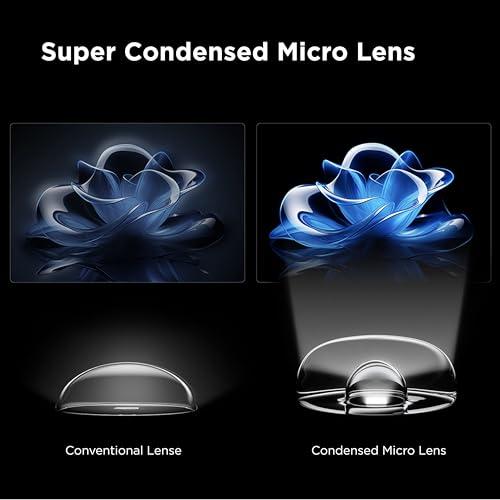
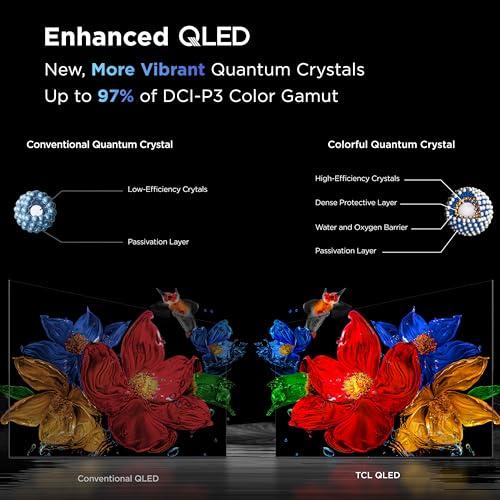
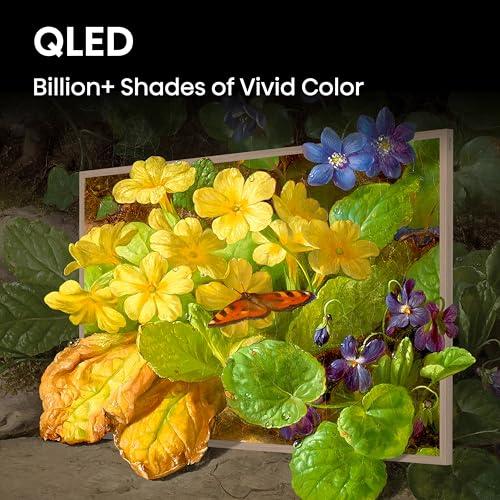
Both the TCL QM7K and Hisense CanvasTV use QLED technology, which means they have a quantum dot layer that improves color reproduction compared to standard LED TVs. However, they implement this technology very differently, leading to distinct strengths and weaknesses.
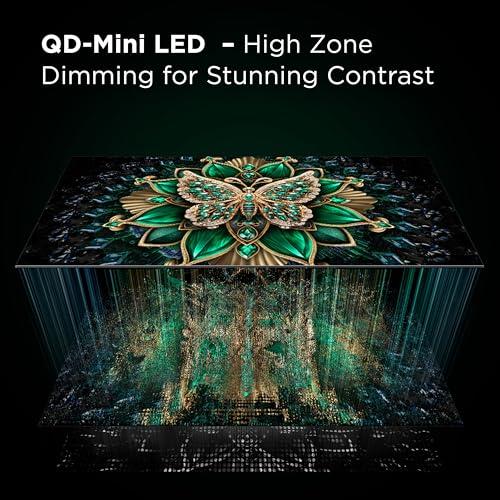
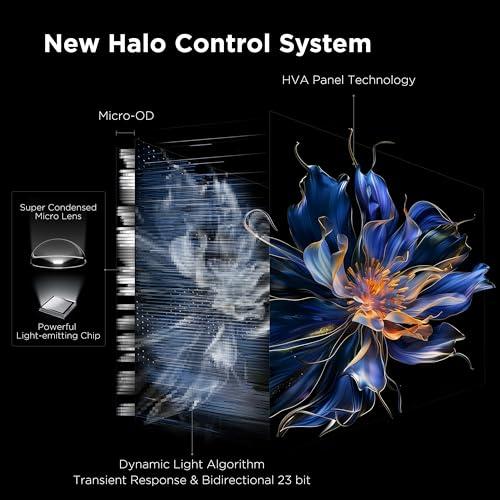
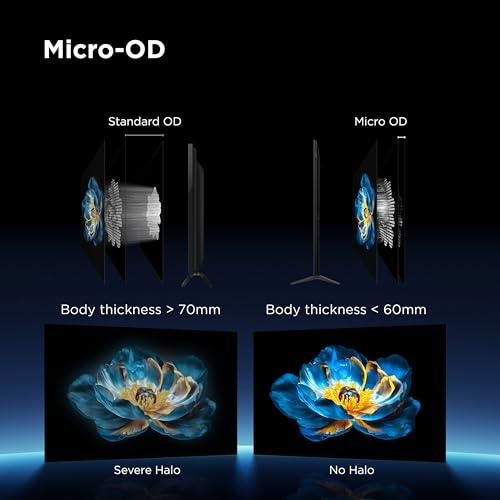
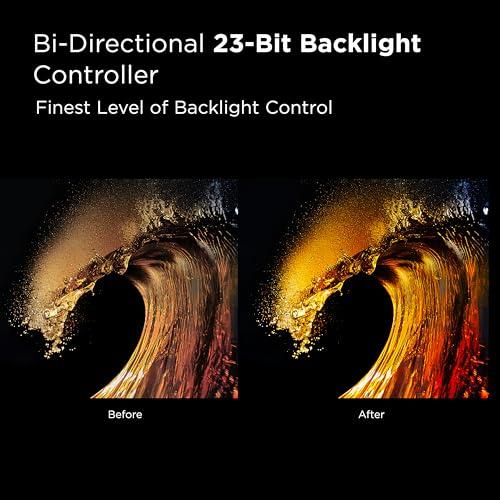
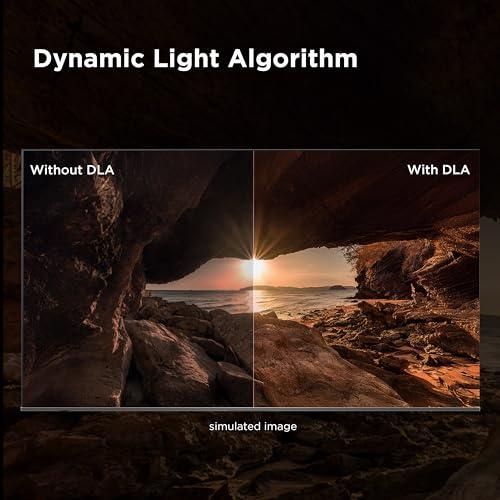
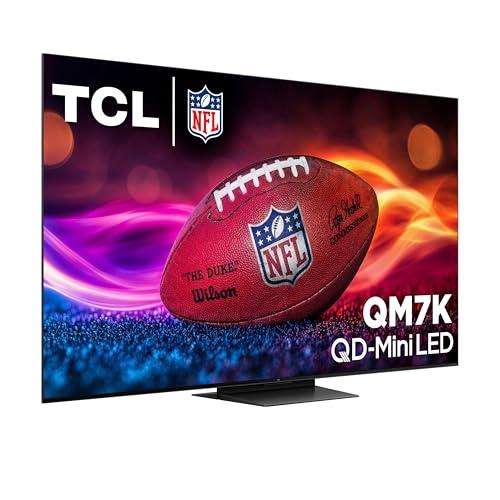
The biggest technical difference between these TVs lies in their backlighting systems. The TCL QM7K uses QD-Mini LED technology, which sounds complicated but basically means it has thousands of tiny LED lights behind the screen that can be controlled independently. This is called "local dimming"—instead of the entire screen getting brighter or darker together, different zones can adjust independently.
The TCL QM7K features up to 2,500 local dimming zones, which is honestly impressive for a TV at this price point. More zones mean better contrast because the TV can make dark parts of the image truly dark while keeping bright parts bright. Think of watching a movie with a starry night sky—the stars can pop while the space around them stays black, rather than everything looking grayish.
The Hisense CanvasTV takes a different approach with traditional QLED and full-array local dimming, but with far fewer zones. While the exact number isn't specified, traditional QLED TVs in this price range typically have dozens rather than thousands of zones. This means less precise control over contrast, but Hisense spent their engineering budget elsewhere.
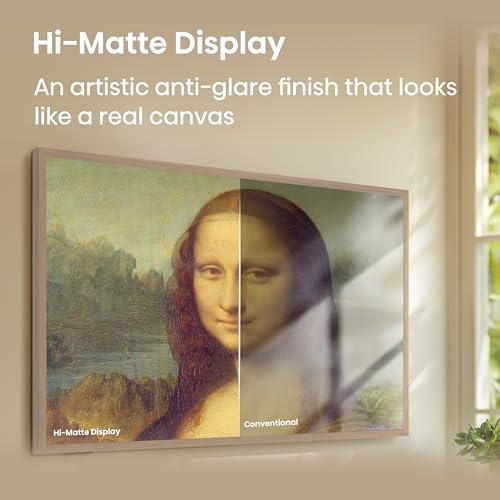
Where Hisense invested instead was in an anti-glare coating they call "Hi-Matte Display." This reduces reflections to just 5% compared to standard glossy TV screens. If you've ever tried watching TV during the day with windows nearby, you know how frustrating reflections can be. The Hisense essentially eliminates this problem, though there's a trade-off we'll discuss.
Peak brightness might be the most important specification you've never thought about. It's measured in nits (a unit of luminance), and it determines how impactful HDR content looks. HDR, or High Dynamic Range, is what makes modern movies and shows look more realistic with brighter highlights and deeper shadows.
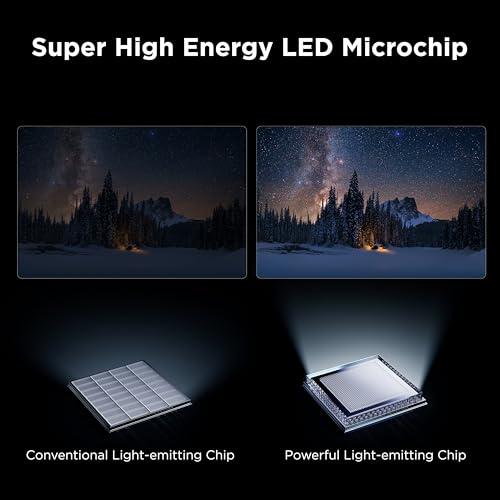
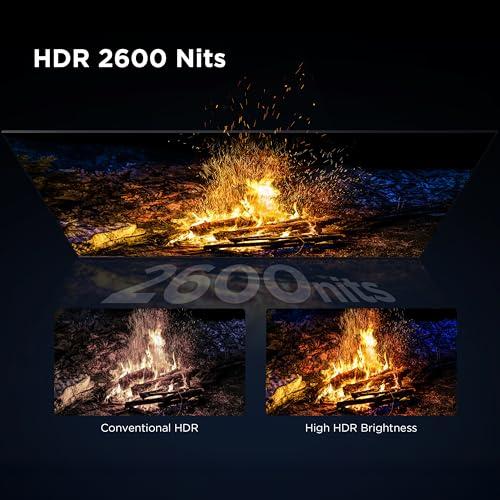
The TCL QM7K achieves a peak brightness of 2,600-3,000 nits, which puts it in flagship TV territory. This is genuinely impressive—just a few years ago, you'd pay twice as much for this level of performance. For context, standard LED TVs typically peak around 400-600 nits, so the TCL is roughly five times brighter in HDR highlights.
The Hisense CanvasTV peaks at approximately 450 nits, which is respectable but significantly lower. Here's where the engineering trade-offs become apparent: that anti-glare coating that eliminates reflections also reduces the maximum brightness the panel can achieve. It's physics—you can't have both maximum brightness and zero reflections.
This creates an interesting real-world scenario. In a dark room watching HDR movies, the TCL QM7K will deliver much more impactful highlights—think sun glinting off water or explosions in action movies. But in a bright living room during the day, the Hisense's anti-glare coating means you'll actually see a clearer image despite the lower peak brightness.
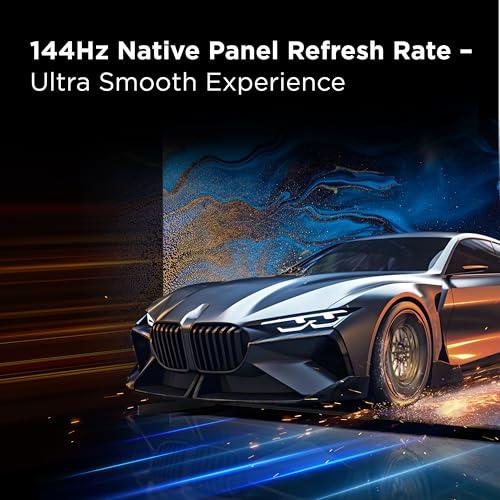
Both TVs target serious gamers with 144Hz native refresh rates, which is excellent for smooth motion in fast-paced games. To put this in perspective, most TVs still use 60Hz panels, and even gaming-focused models often max out at 120Hz. The higher the refresh rate, the smoother motion appears, especially in competitive gaming.
The TCL QM7K goes further with something called "Game Accelerator 288," which can push variable refresh rate (VRR) up to 288Hz at 1080p resolution. VRR synchronizes the TV's refresh rate with your gaming console or PC's frame rate, eliminating screen tearing—those horizontal lines that appear when the display and graphics don't sync up properly.
Input lag is another crucial gaming metric, measuring the delay between pressing a button and seeing the action on screen. The Hisense CanvasTV achieves 5.4ms input lag, which is excellent for competitive gaming. The TCL QM7K measures around 13ms, which is still very good but noticeably higher. For most gamers, both are perfectly acceptable, but competitive esports players might prefer the Hisense's faster response.
Both TVs support ALLM (Auto Low Latency Mode), which automatically switches to game mode when it detects a gaming console, and both have dedicated gaming interfaces for quick setting adjustments. The TCL QM7K includes AMD FreeSync Premium Pro certification, while the Hisense supports both AMD FreeSync and NVIDIA G-Sync compatibility.
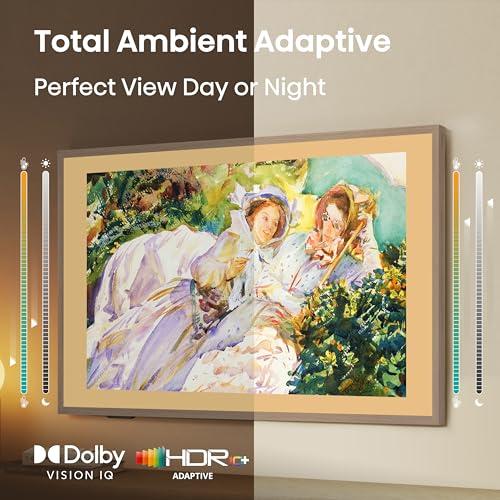
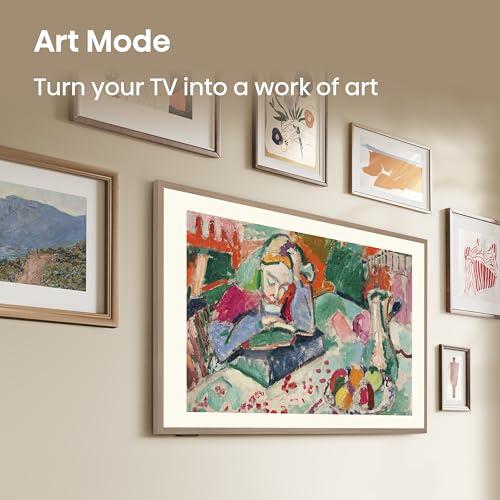
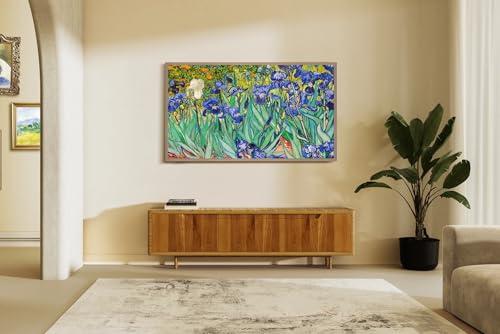
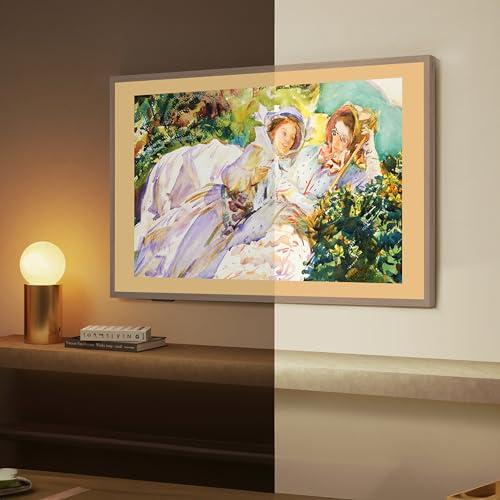
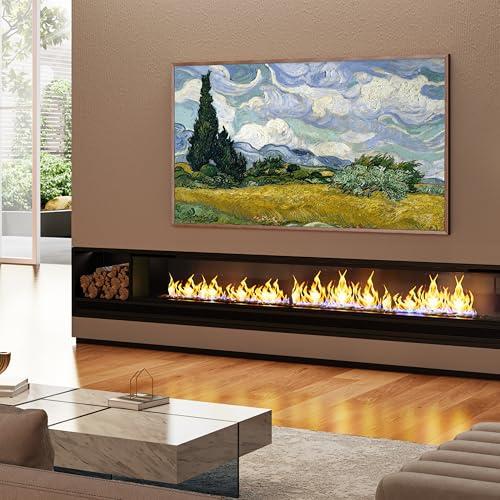
Here's where the Hisense CanvasTV becomes genuinely unique. Art Mode transforms your TV into a digital art gallery when you're not watching content. This isn't just a screensaver—it's a carefully engineered feature that makes the TV look like an actual framed painting on your wall.
The system includes over 120 curated artworks at no additional cost, which is a significant advantage over Samsung's Frame TV that charges subscription fees for art access. Motion sensors detect when someone enters the room and automatically display artwork, then switch to power-saving mode when the room is empty.
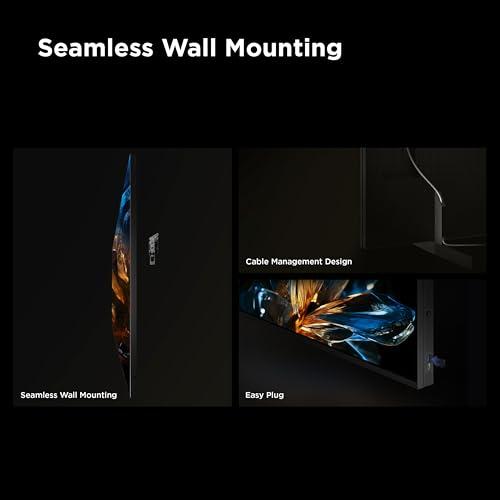
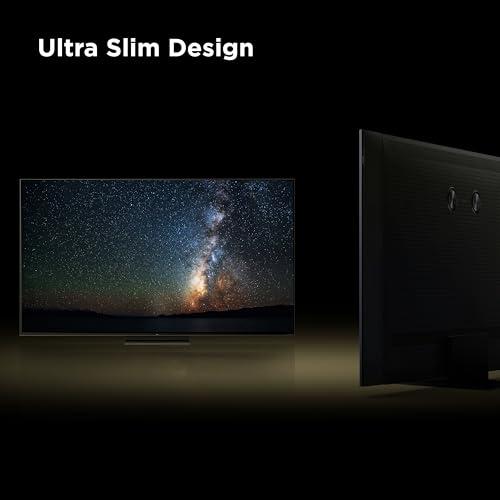
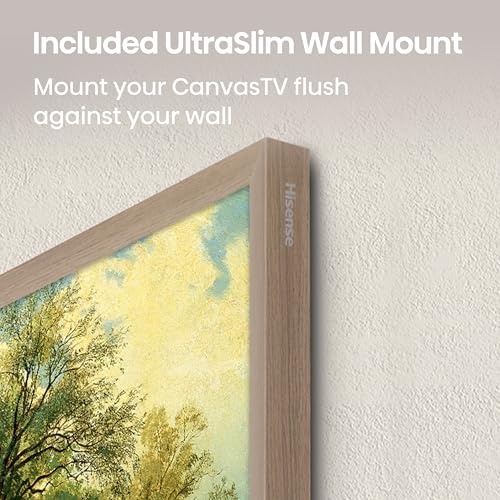
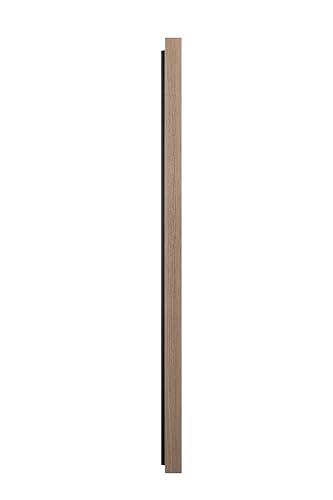
The anti-glare coating plays a crucial role here, giving displayed artwork the matte texture of real paintings rather than the glossy sheen of typical TV screens. Combined with the ultra-slim wall mount that positions the TV just 3mm from the wall, the effect is remarkably convincing.
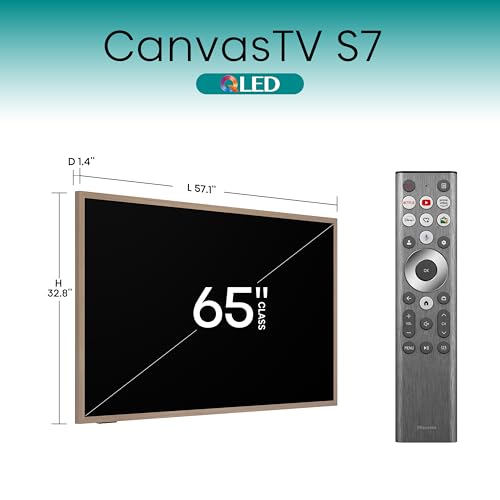
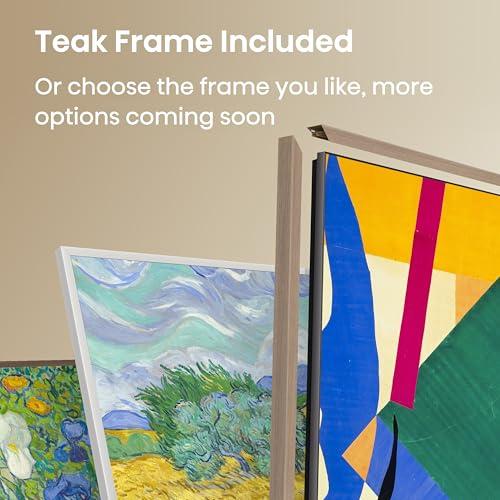
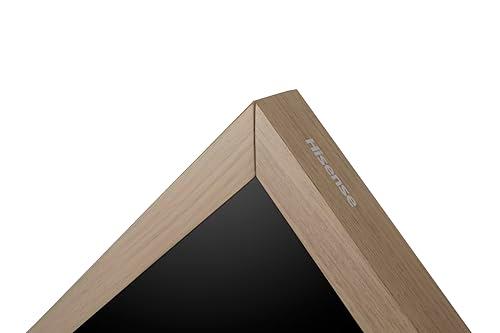
Customizable magnetic frames complete the illusion. The TV comes with a teak frame, but you can purchase white, walnut, or other finishes separately. Switching frames takes minutes and doesn't require tools—they simply snap into place magnetically.
For many households, this dual-purpose functionality justifies choosing the Hisense despite its lower peak brightness. Instead of a black rectangle dominating your living room wall, you have what appears to be tasteful artwork that happens to also be an excellent TV.
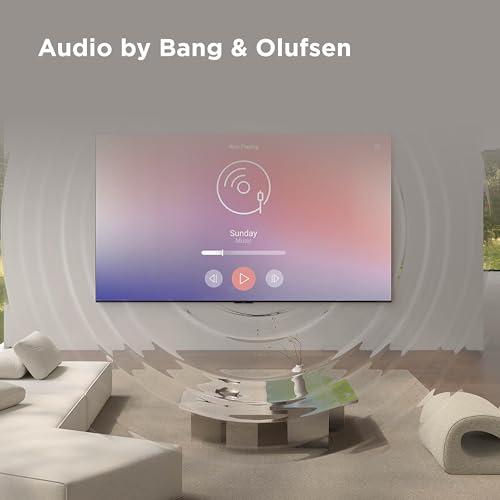
TV audio often gets ignored in specifications, but it shouldn't. The TCL QM7K features a 60W audio system tuned by Bang & Olufsen, a premium Danish audio company. This partnership typically results in better sound processing and more balanced audio compared to generic TV speakers.
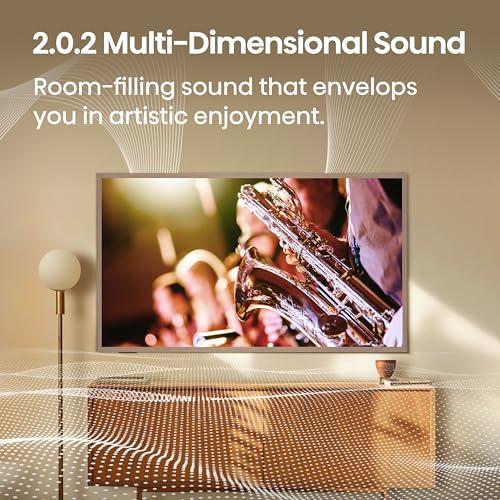
The Hisense CanvasTV takes a different approach with a 2.0.2 channel system that includes upward-firing speakers for Dolby Atmos effects. This creates more immersive surround sound by bouncing audio off your ceiling. The total power output is 36W, lower than the TCL, but the upward-firing speakers can create a more three-dimensional soundscape.
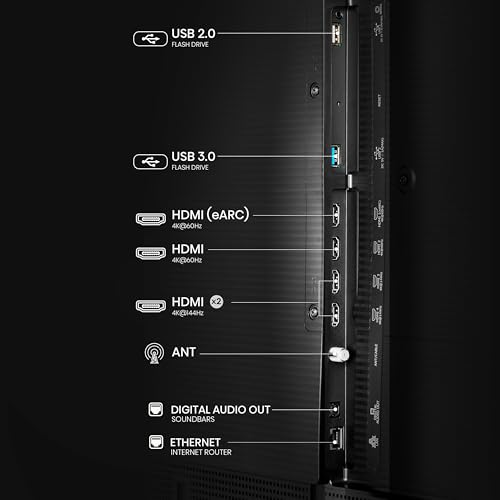
Both systems support audio pass-through to external sound systems via eARC (enhanced Audio Return Channel), so if you have a soundbar or receiver, both TVs will send high-quality audio without compression. For built-in audio, the TCL likely has an edge in pure volume and clarity, while the Hisense offers more spatial effects.
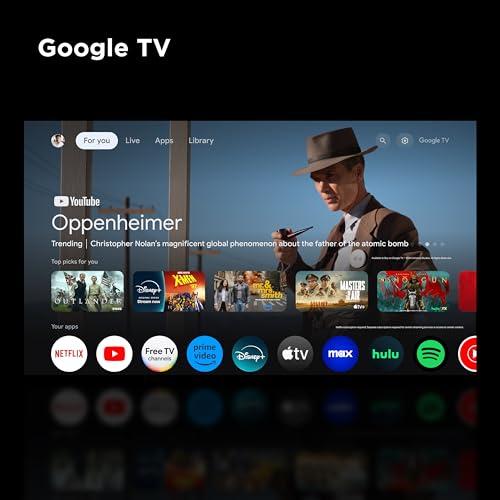
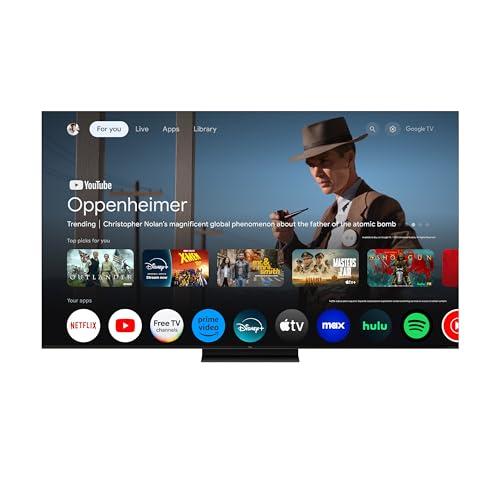
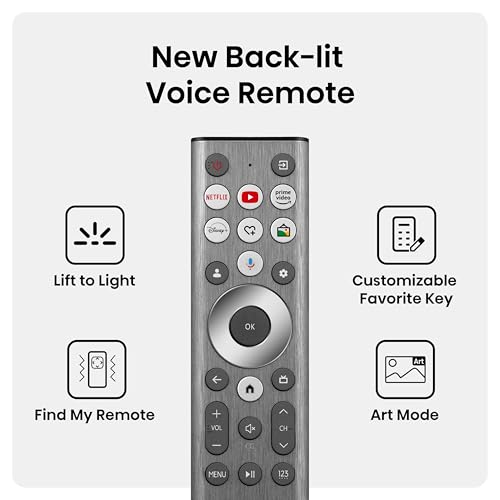
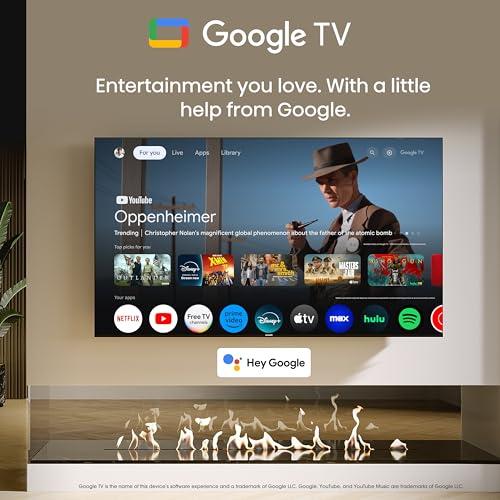
Both TVs run Google TV, which has become one of the better smart TV platforms. It's more intuitive than older Android TV interfaces and integrates well with other Google services. Both include voice control, Chromecast built-in, and support for major streaming apps.
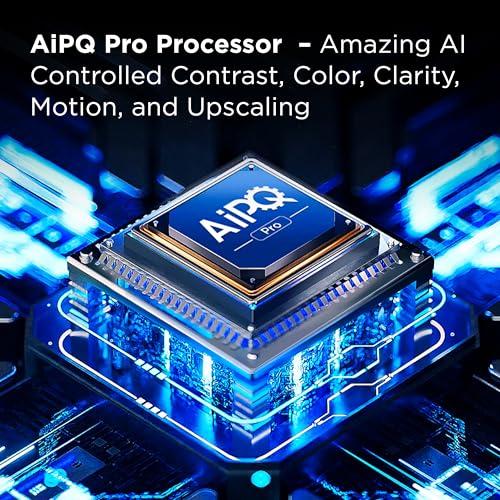
The TCL QM7K includes what TCL calls "AiPQ Pro Processor" with various AI-driven picture enhancement features. These automatically adjust picture settings based on content type and room lighting. The Hisense CanvasTV includes similar AI processing but focuses more on the art display features and room sensing for power management.
Performance-wise, both are responsive and handle app switching well. The Google TV interface is identical on both, so your choice here comes down to additional features rather than basic functionality.
Understanding how these TVs perform in actual home environments is crucial for making the right choice.
Dark Room/Home Theater Setup: The TCL QM7K dominates here. Its combination of high peak brightness and extensive local dimming creates the kind of HDR performance you'd expect from much more expensive TVs. Watching movies like "Blade Runner 2049" or "Mad Max: Fury Road" showcases the dramatic difference that 2,500+ nits can make in highlight details and overall impact.
Bright Living Room: This is where the Hisense CanvasTV shines, literally. Its anti-glare coating maintains image quality even with windows or lamps creating reflections. The TCL QM7K, despite its higher brightness, can appear washed out in these conditions because its glossy screen reflects ambient light.
Gaming Performance: Both excel for different reasons. The TCL QM7K offers higher maximum refresh rates and premium gaming certifications, making it ideal for serious gamers with high-end PCs or those who prioritize every possible performance advantage. The Hisense CanvasTV's lower input lag makes it better for competitive console gaming where reaction time matters most.
Aesthetic Integration: Only the Hisense CanvasTV addresses this need. If your TV needs to look good when turned off—in a living room, bedroom, or any space where aesthetics matter—the art mode functionality and slim profile create genuine value that the TCL can't match.
At the time of writing, these TVs are priced similarly, making the value comparison about features rather than pure cost. The TCL QM7K delivers significantly better traditional TV performance per dollar spent. You're getting flagship-level HDR performance, gaming features, and audio quality at a mid-range price.
The Hisense CanvasTV asks you to pay a modest premium for unique lifestyle features. You're trading some peak performance for anti-glare functionality and art mode capabilities. Whether this represents good value depends entirely on your priorities and room setup.
Choose the TCL QM7K if you:
Choose the Hisense CanvasTV if you:
These TVs represent two different philosophies about what a modern TV should be. The TCL QM7K is uncompromisingly focused on delivering the best possible viewing experience, using advanced Mini-LED technology to achieve performance that was flagship-exclusive just a few years ago.
The Hisense CanvasTV recognizes that TVs are furniture as much as electronics. It sacrifices some peak performance to solve real-world problems like daytime glare and aesthetic integration, creating genuine utility that many households will value more than extra nits of brightness.
Neither choice is wrong, but one is likely much better for your specific situation. Consider your room lighting, how you use your TV, and whether aesthetic considerations matter in your space. The TCL QM7K delivers more traditional value, while the Hisense CanvasTV offers unique benefits you can't get elsewhere at this price point.
| TCL 65QM7K QD-Mini LED 4K Google TV | Hisense 65" S7N CanvasTV QLED 4K Smart Display |
|---|---|
| Peak Brightness - Critical for HDR impact and bright room performance | |
| 2,600-3,000 nits (flagship-level HDR performance) | ~450 nits (adequate but significantly dimmer) |
| Local Dimming Technology - Controls contrast and black levels | |
| QD-Mini LED with up to 2,500 zones (exceptional contrast control) | Full-array LED with fewer zones (good but less precise) |
| Anti-Glare Performance - Essential for daytime viewing comfort | |
| Standard glossy panel (reflections in bright rooms) | Hi-Matte coating reduces reflections to 5% (excellent for bright spaces) |
| Gaming Performance - Refresh rate and input lag for responsive play | |
| 144Hz native, up to 288Hz VRR, ~13ms input lag | 144Hz native, up to 240Hz VRR, 5.4ms input lag |
| Audio System - Built-in sound quality | |
| 60W Bang & Olufsen system with Dolby Atmos | 36W 2.0.2 channel with upward-firing speakers |
| Art Mode Features - Dual-purpose functionality as decor | |
| None (traditional TV only) | 120+ free artworks, motion sensors, customizable magnetic frames |
| Wall Mounting Design - Aesthetic integration | |
| Standard TV mount (projects from wall) | Ultra-slim 3mm from wall mount included (painting-like appearance) |
| Smart Platform - Interface and streaming capabilities | |
| Google TV with AiPQ Pro processor | Google TV with art mode integration |
| Best Use Case - Primary scenarios where each excels | |
| Dark rooms, home theaters, performance-focused viewing | Bright living rooms, aesthetic integration, dual-purpose display |
| Overall Value Proposition - What you're paying for | |
| Maximum traditional TV performance at mid-range price | Lifestyle features and bright-room usability with good performance |
The Hisense 65" S7N CanvasTV is significantly better for bright rooms due to its Hi-Matte anti-glare coating that reduces reflections to just 5%. While the TCL 65QM7K has much higher peak brightness, its glossy screen will show reflections that make daytime viewing difficult in bright spaces.
The TCL 65QM7K delivers superior picture quality with 2,600-3,000 nits peak brightness and up to 2,500 local dimming zones using QD-Mini LED technology. The Hisense CanvasTV offers good picture quality but peaks at only 450 nits with fewer local dimming zones, resulting in less impactful HDR performance.
Both TVs offer excellent gaming features with 144Hz refresh rates. The TCL 65QM7K supports higher VRR up to 288Hz and has more gaming certifications, while the Hisense CanvasTV has lower input lag at 5.4ms versus 13ms. Competitive gamers may prefer the Hisense for faster response times.
Yes, the Hisense CanvasTV includes Art Mode with over 120 curated artworks, motion sensors, and customizable magnetic frames. The anti-glare coating gives it a matte finish like real paintings. The TCL 65QM7K doesn't offer any art display features.
The TCL 65QM7K is significantly better for dedicated home theater use due to its much higher peak brightness (2,600-3,000 vs 450 nits) and superior local dimming with 2,500 zones. This creates more impactful HDR performance and better contrast in dark viewing environments.
Yes, both the TCL 65QM7K and Hisense CanvasTV use Google TV with similar smart features, voice control, and streaming app support. The main difference is that the Hisense includes additional art mode integration features.
The TCL 65QM7K likely has better overall sound quality with its 60W Bang & Olufsen audio system. The Hisense CanvasTV has a 36W system but includes upward-firing speakers for Dolby Atmos effects, creating more immersive surround sound despite lower total power.
Both TVs feature native 144Hz refresh rates, which is excellent for smooth motion. The TCL 65QM7K can push VRR up to 288Hz at 1080p, while the Hisense CanvasTV maxes out at 240Hz VRR. Both are more than adequate for gaming and sports viewing.
The TCL 65QM7K offers better traditional TV performance value with flagship-level HDR capabilities at a mid-range price. The Hisense CanvasTV provides good value if you want unique art display features and anti-glare functionality, though you sacrifice some peak performance.
The TCL 65QM7K handles HDR content exceptionally well with its high peak brightness and extensive local dimming. The Hisense CanvasTV supports all major HDR formats but with much lower peak brightness, resulting in less dramatic HDR highlights and impact.
The Hisense CanvasTV is designed specifically for wall mounting with an included ultra-slim mount that positions it just 3mm from the wall, creating a painting-like appearance. The TCL 65QM7K uses standard wall mounting and will project further from the wall.
Choose the TCL 65QM7K for maximum picture quality, home theater performance, and traditional TV value. Choose the Hisense CanvasTV if you have a bright room with windows, want art display functionality, or need the TV to look decorative when turned off.
We've done our best to create useful and informative comparisons to help you decide what product to buy. Our research uses advanced automated methods to create this comparison and perfection is not possible - please contact us for corrections or questions. These are the sites we've researched in the creation of this article: bestbuy.com - businessinsider.com - tomsguide.com - tomsguide.com - rtings.com - tomsguide.com - youtube.com - rtings.com - consumerreports.org - youtube.com - youtube.com - displayspecifications.com - youtube.com - tcl.com - tcl.com - tcl.com - youtube.com - rcwilley.com - bestbuy.com - tclcentral.com - displayspecifications.com - tomsguide.com - tcl.com - brandsmartusa.com - tcl.com - tcl.com - gizmochina.com - nfm.com - dolby.com - alexraytv.com - bestbuy.com - hisense.sg - tomsguide.com - content.syndigo.com - rtings.com - hisense-usa.com - youtube.com - bestbuy.com - youtube.com - displayspecifications.com - displayspecifications.com - manuals.plus - displayspecifications.com - bestbuy.com - hisense-canada.com - manuals.plus - bargainoutletandmore.com - bestbuy.com - device.report

Privacy Policy
Terms and Conditions - Affiliate Policy
Home Security
© Copyright 2008-2026.
11816 Inwood Rd #1211, Dallas, TX 75244