


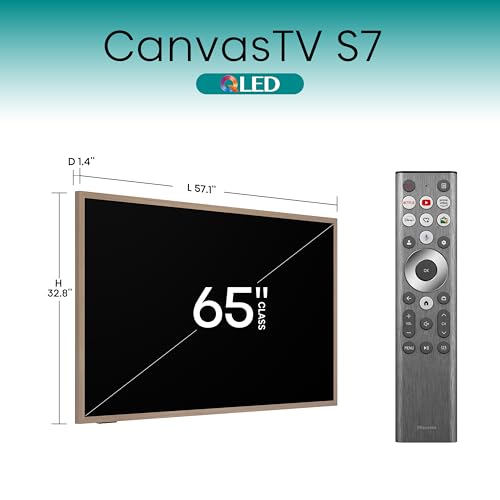

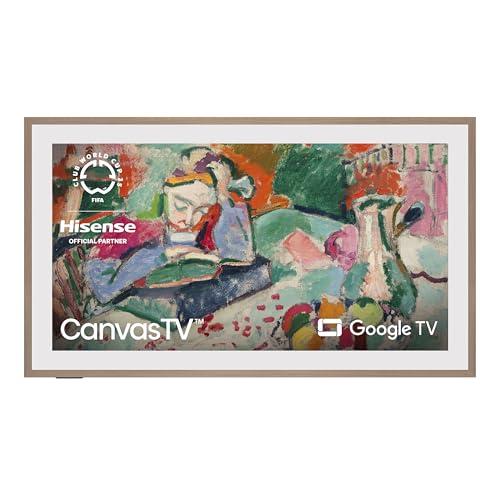

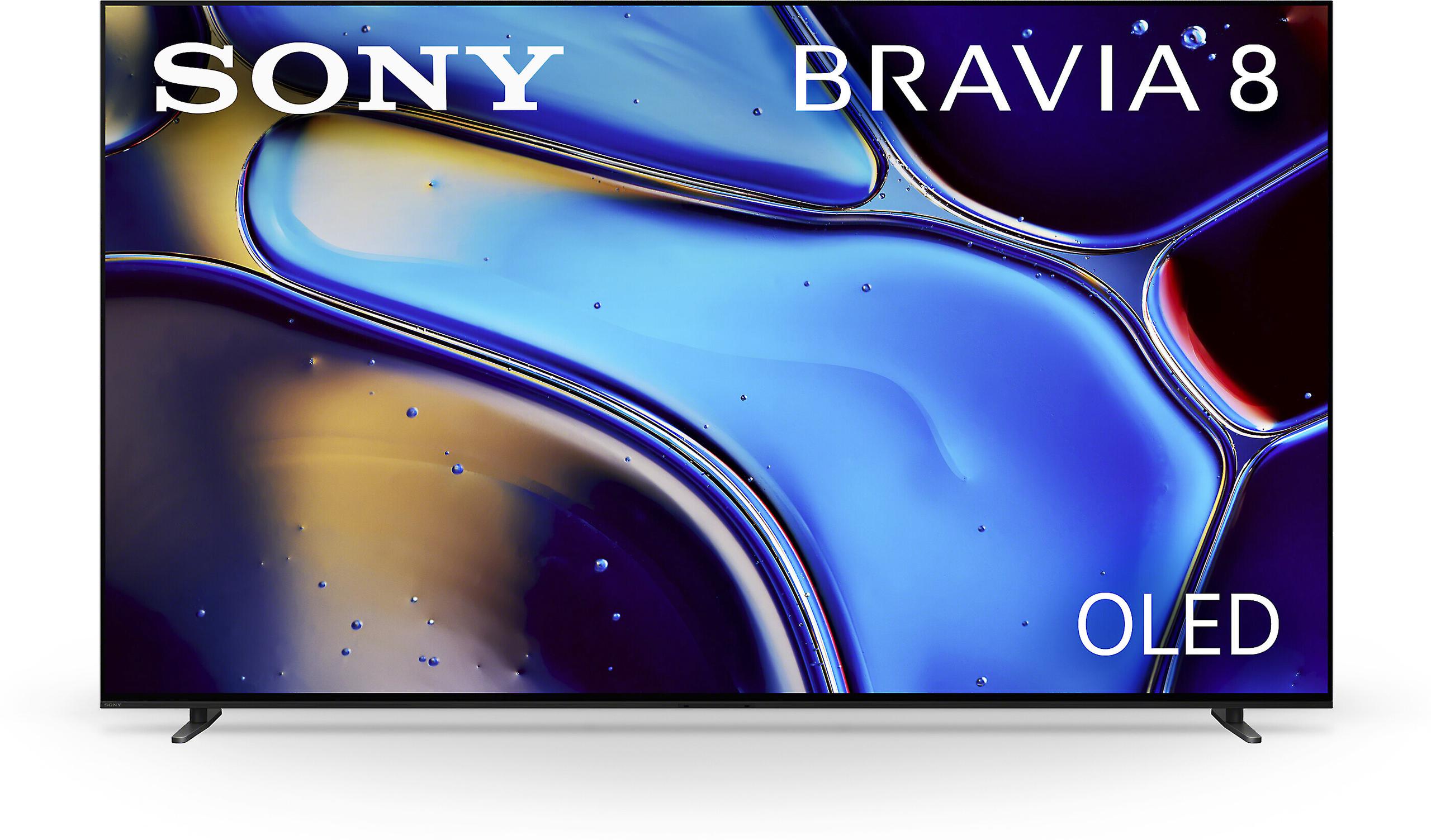
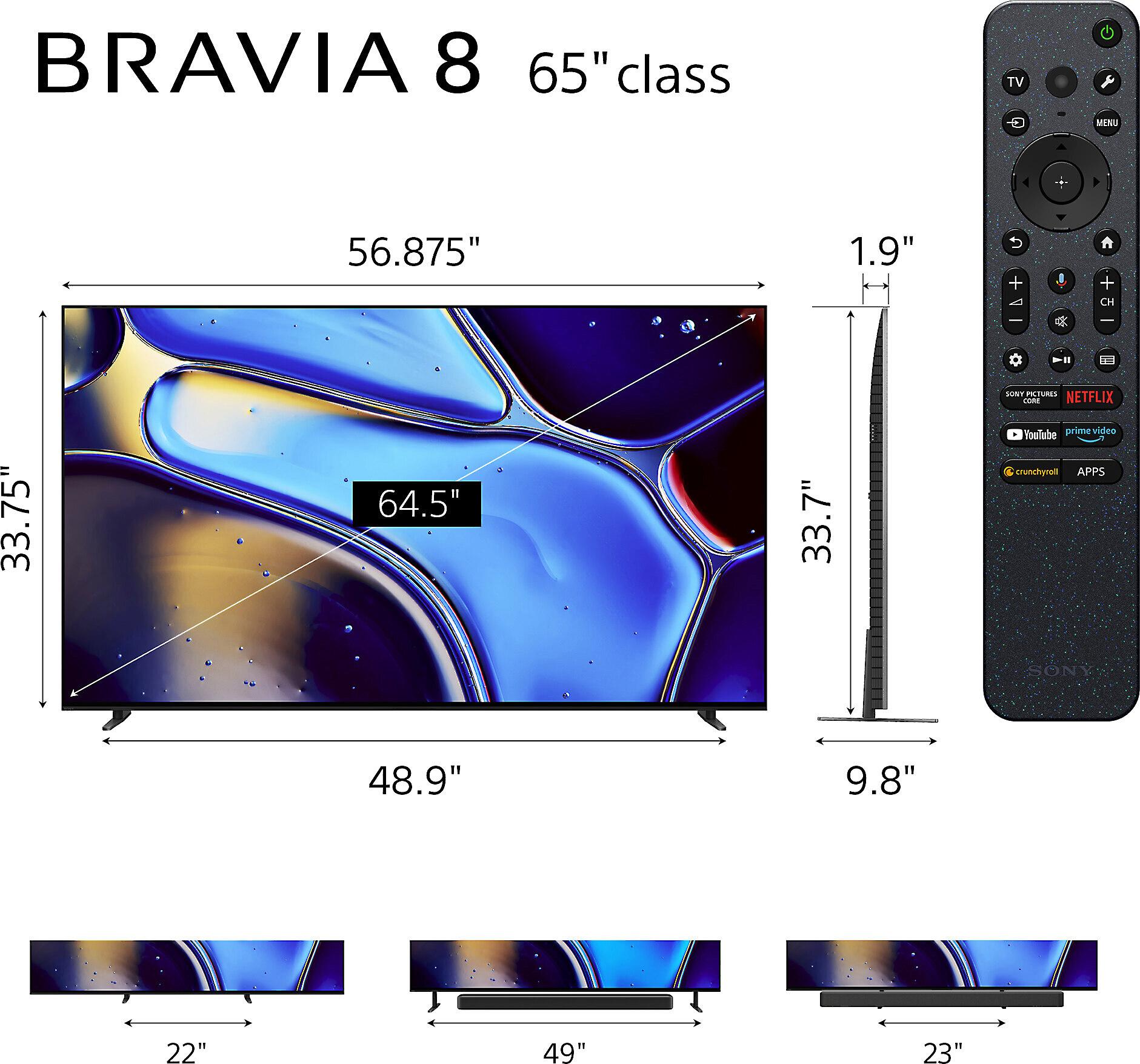
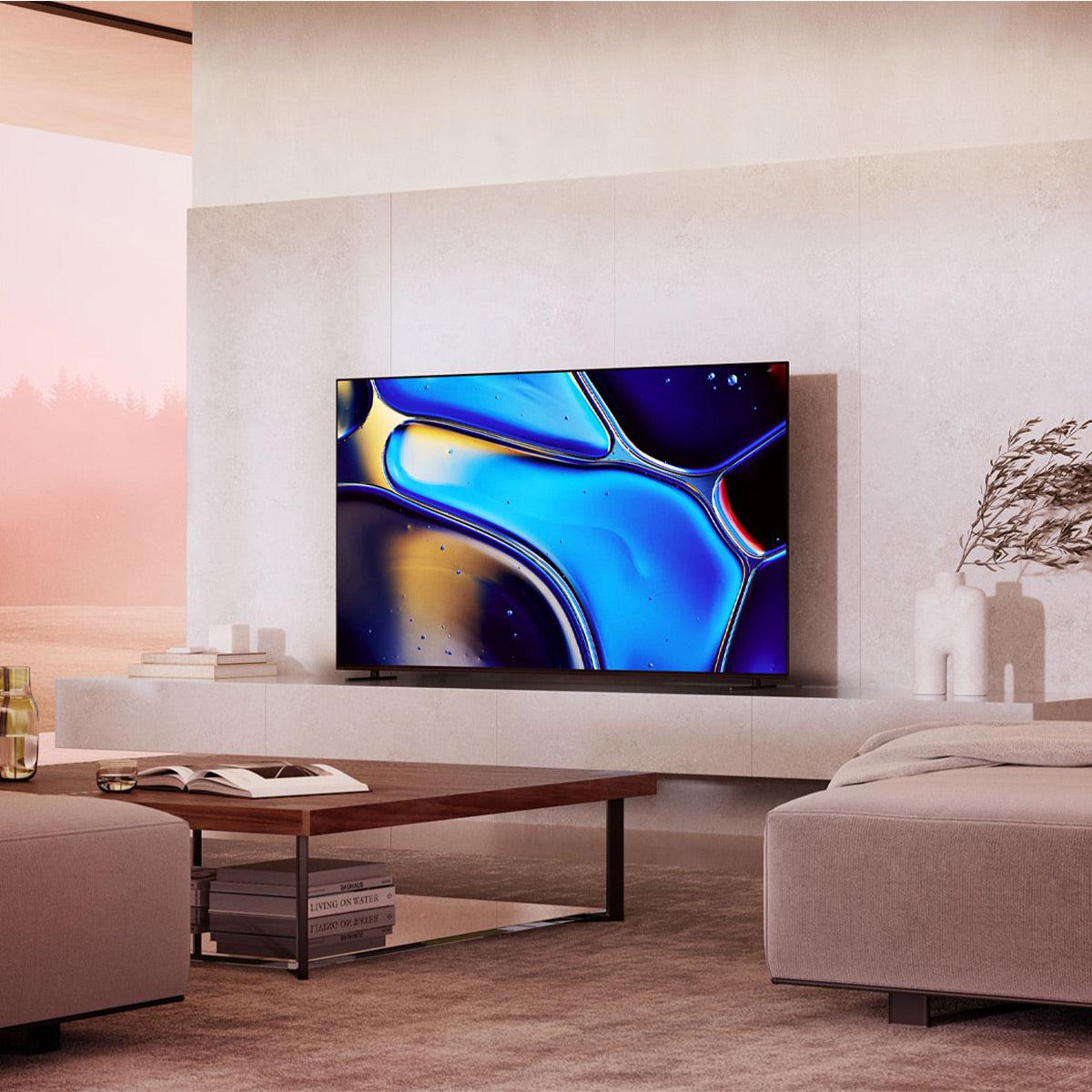
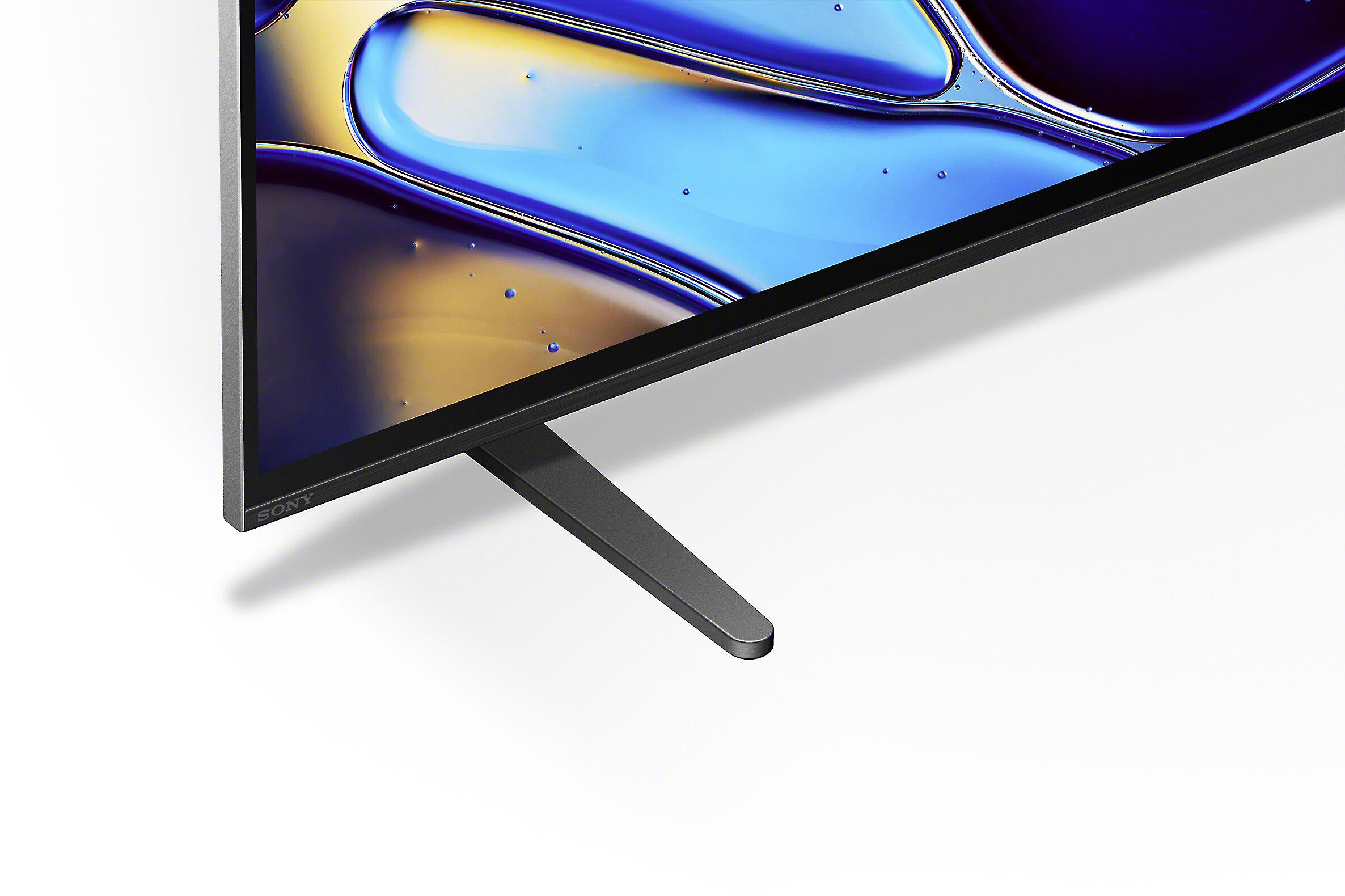
When you're shopping for a premium 65-inch TV in 2024, you're not just buying a screen—you're choosing how your living space will look and feel for the next several years. Two standout options represent completely different approaches to what a modern TV should be: the Hisense S7N CanvasTV that doubles as wall art, and the Sony BRAVIA 8 OLED that prioritizes pure cinematic performance.
Both TVs launched in 2024, riding the wave of several important technological advances that have reshaped the premium TV market. OLED technology has become brighter and more durable, while QLED displays have gained better color accuracy and anti-glare properties. Smart TV platforms have matured significantly, and gaming features now support refresh rates that were unthinkable just a few years ago.
The fundamental question isn't which TV is objectively better—it's which philosophy matches your lifestyle and viewing habits.
The 65-inch size has become the sweet spot for most living rooms, offering an immersive experience without overwhelming smaller spaces. At this size, the differences between display technologies become more pronounced, making your choice more critical.
When evaluating premium TVs, several factors matter most: picture quality in your specific lighting conditions, how you'll actually use the TV, gaming performance if that's important to you, and the overall value proposition. The Hisense CanvasTV and Sony BRAVIA 8 approach these priorities from entirely different angles.
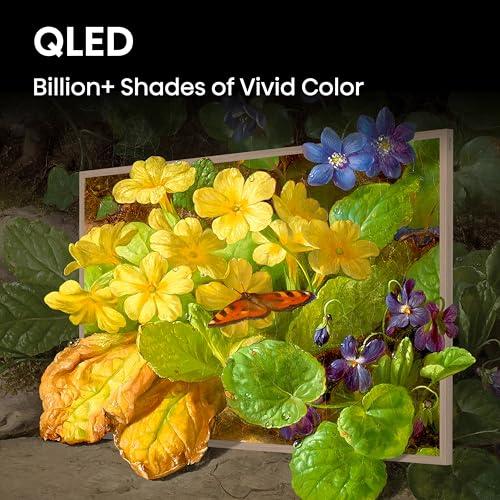
The Hisense S7N CanvasTV uses QLED (Quantum Dot Light Emitting Diode) technology, which is essentially an advanced LED TV with a special layer called quantum dots that purify and intensify colors. Think of quantum dots as tiny crystals that glow with very specific colors when hit by light, creating more accurate and vibrant hues than traditional LED TVs.
The Sony BRAVIA 8 uses OLED (Organic Light Emitting Diode) technology, where each pixel is essentially a microscopic light bulb that can turn completely on, dim to any level, or turn completely off. This gives OLED displays perfect black levels—when a pixel is off, it produces zero light, creating true black rather than the dark gray you see on most TVs.
Here's where it gets interesting: OLED typically wins in dark rooms because of those perfect blacks, but QLED often performs better in bright rooms because it can get much brighter and, in the case of the CanvasTV, includes special anti-glare treatment.
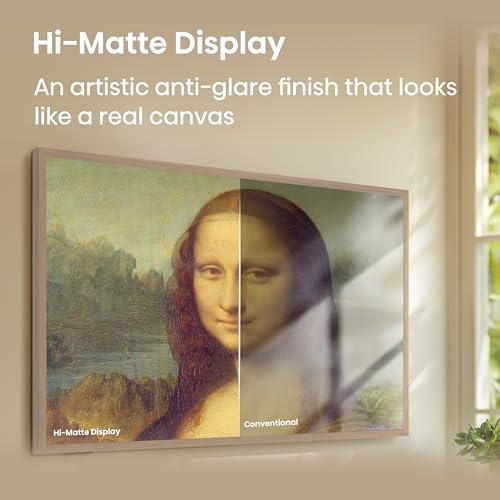
The Hisense CanvasTV features something called Hi-Matte Display technology, which reduces reflections to just 5% compared to typical glossy TV screens. If you've ever struggled to watch TV with sunlight hitting the screen, you'll understand why this matters. The matte coating diffuses reflections while maintaining color vibrancy—a technical achievement that makes this TV practical in bright living spaces where traditional TVs struggle.
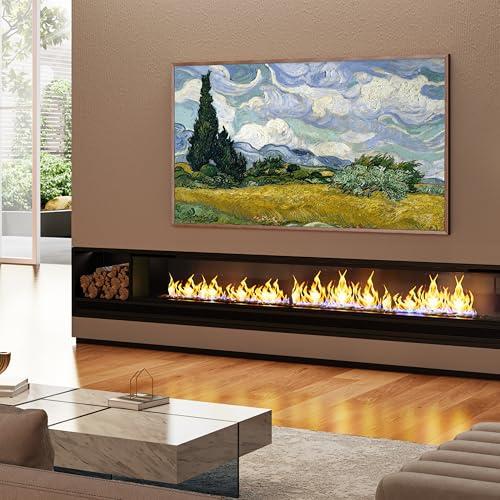
This anti-glare coating also serves the CanvasTV's artistic purpose, giving the screen a texture that genuinely resembles a painted canvas rather than a glossy electronic display.
Peak brightness determines how well a TV handles High Dynamic Range (HDR) content—those ultra-realistic movies and shows that can display everything from the deepest shadows to blazing sunlight in the same scene. The Sony BRAVIA 8 achieves the infinite contrast ratio that OLED is famous for, meaning the ratio between the brightest and darkest parts of the image is essentially unlimited.
However, OLED displays have a brightness ceiling. While the exact specifications vary by model and measurement conditions, OLED TVs typically max out around 400-600 nits (a measurement of brightness), while the Hisense CanvasTV can sustain higher brightness levels, reaching up to 450 nits peak with better sustained brightness performance.
In practical terms, this means the Sony BRAVIA 8 will give you more dramatic contrast in dark rooms—those space scenes where stars pop against the void of space look absolutely stunning on OLED. But the CanvasTV will maintain better visibility and color accuracy when you're watching during the day with ambient light.
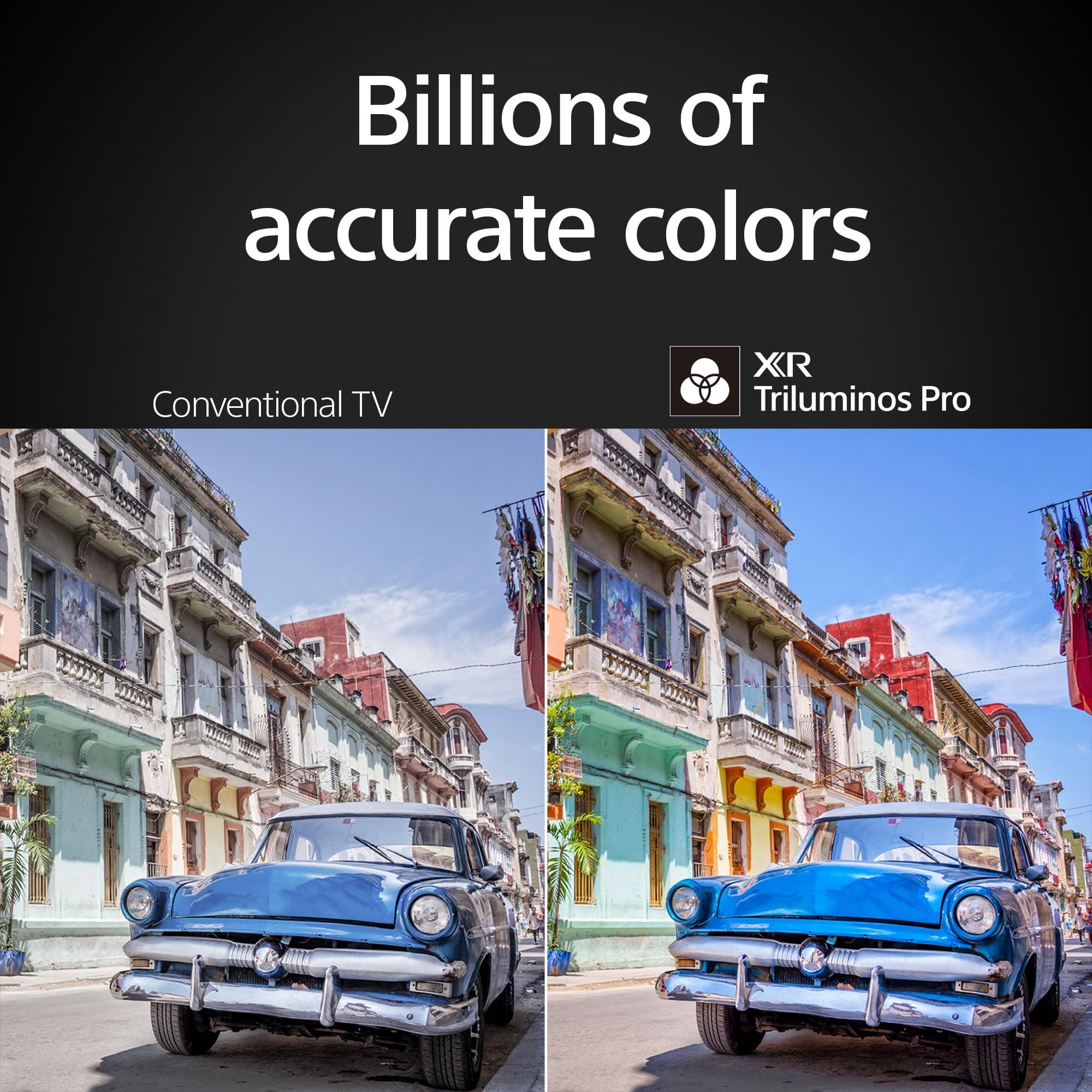
The Sony BRAVIA 8 uses XR Triluminos Pro, Sony's advanced color processing that's tuned for cinematic accuracy. This system is designed to reproduce colors exactly as filmmakers intended, making it excellent for movie watching. Sony's reputation in professional monitors carries over here—colors look natural and film-accurate.
The Hisense CanvasTV takes a different approach with Quantum Dot technology, which can reproduce over a billion color shades. Quantum dots excel at producing very pure, saturated colors, especially in the red and green spectrums. This makes content look more vibrant and eye-catching, though not necessarily more accurate to the original source.
Think of it this way: if you're watching a nature documentary, the Sony will show you colors that match what the cameras captured, while the Hisense might make those colors pop a bit more dramatically.
Motion handling is crucial for sports, action movies, and gaming. The Hisense CanvasTV operates at a native 144Hz refresh rate, meaning it can display 144 unique images every second. This is paired with MEMC (Motion Estimation, Motion Compensation) processing that creates intermediate frames to smooth out fast motion.
The Sony BRAVIA 8 runs at 120Hz with XR OLED Motion processing. While the refresh rate is lower on paper, Sony's motion processing is sophisticated, analyzing visual elements across frames to reduce judder and blur effectively.
For most content, both TVs handle motion well. The Hisense has an advantage for high-refresh gaming and extremely fast sports, while the Sony's processing tends to look more natural with film content.
Gaming has become a major consideration for TV buyers, and here the differences are significant. The Hisense CanvasTV was clearly designed with serious gaming in mind, supporting 4K resolution at 144Hz refresh rate and even 1080p at an incredible 240Hz. These specifications matter for PC gaming, where frame rates above 60fps are increasingly common.
The TV also includes Variable Refresh Rate (VRR) support and Auto Low Latency Mode (ALLM), with input lag measured at just 5.4 milliseconds—essentially instantaneous for gaming purposes.
The Sony BRAVIA 8 supports 4K at 120Hz, which covers most console gaming needs perfectly. It includes special PlayStation 5 optimizations, including Auto HDR Tone Mapping that automatically adjusts HDR settings for optimal PS5 performance. The input lag in game mode is also very low, though not quite matching the Hisense.
For competitive PC gaming or if you want future-proof gaming performance, the CanvasTV has clear advantages. For console gaming, both TVs perform excellently, with the Sony having a slight edge for PlayStation users.
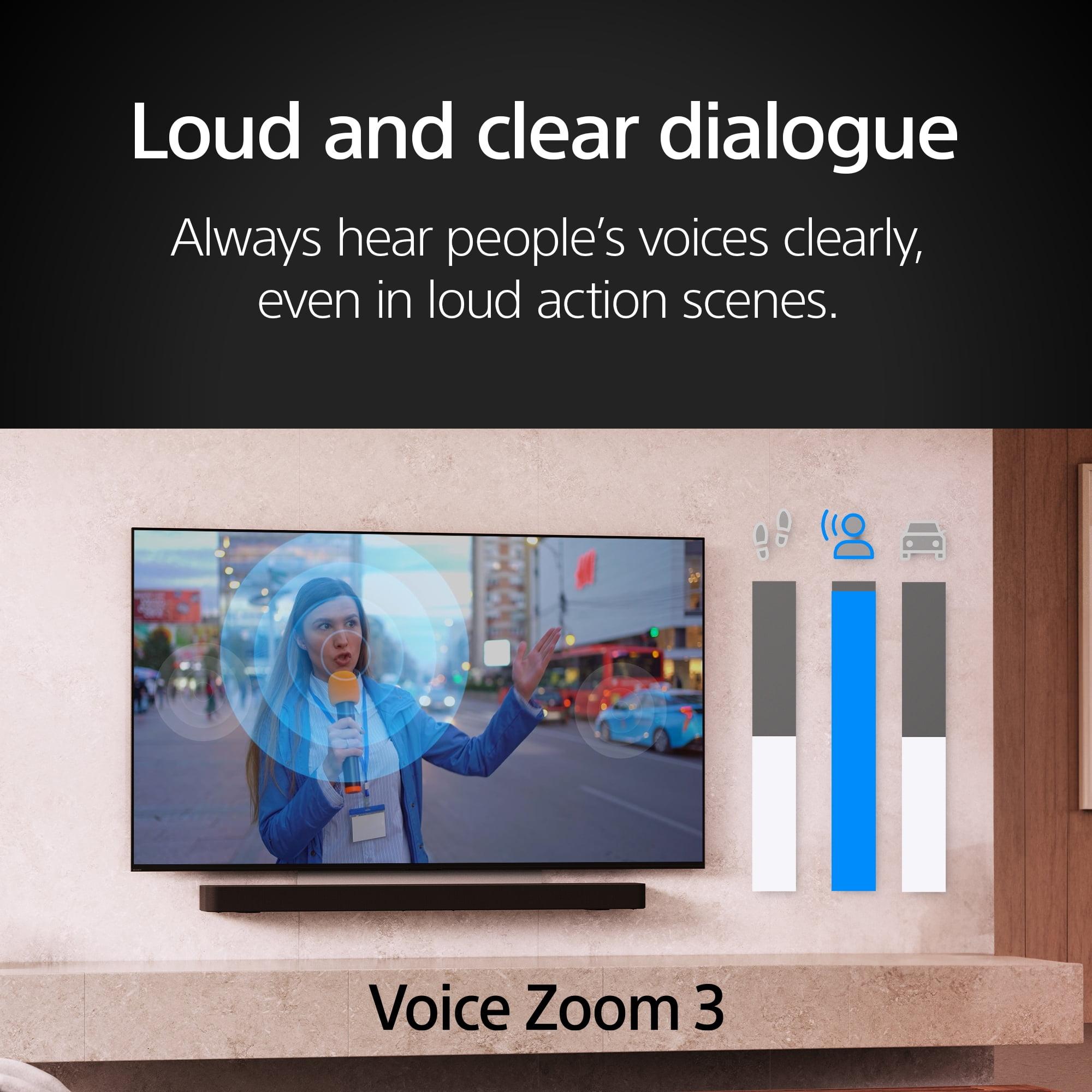
Both TVs have moved beyond basic built-in speakers, but they've chosen different paths. The Sony BRAVIA 8 features Acoustic Surface Audio+, which is genuinely innovative—the entire OLED screen acts as a speaker. This creates precise sound positioning where dialogue appears to come from characters' mouths rather than from speakers below the screen.
The system includes a 2.1-channel setup with 50 watts total power, and the result is remarkably clear dialogue and good spatial audio without external speakers.
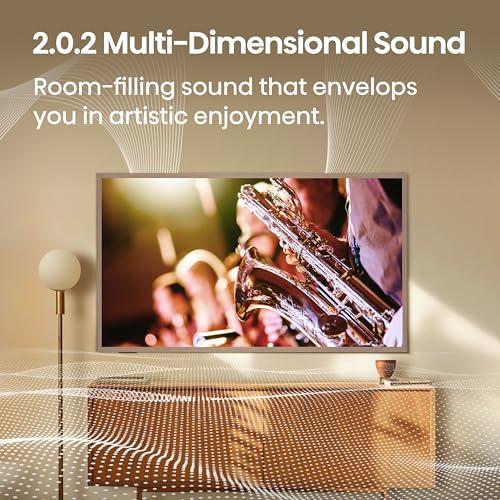
The Hisense CanvasTV takes a more traditional but effective approach with a 2.0.2 channel system that includes upward-firing speakers for height effects. This creates a more enveloping surround sound experience with DTS Virtual:X processing. While the total power output is lower at 36 watts, the upward-firing speakers can create a more immersive experience for movies with proper surround sound mixing.
Neither TV will replace a dedicated sound system for audiophiles, but both offer significantly better audio than typical flat-panel TVs. The Sony edges ahead for dialogue clarity and innovation, while the Hisense provides more immersive surround effects.
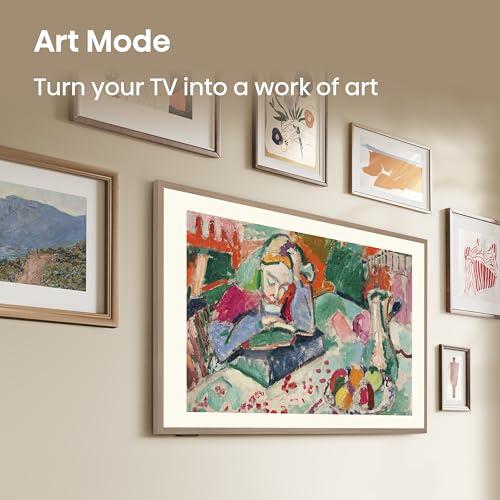
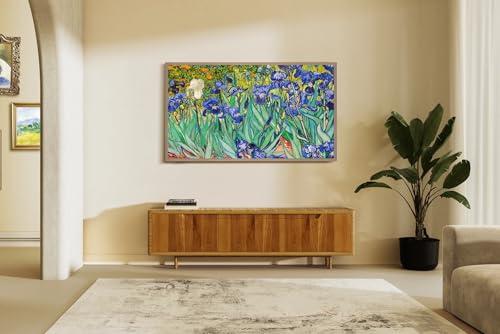
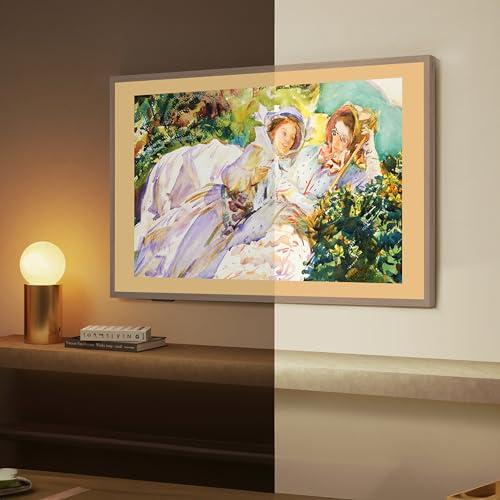
The CanvasTV's Art Mode isn't just a gimmick—it's a fundamental shift in how a TV can function in your home. When not actively watching content, the TV displays curated artwork or your personal photos, transforming into what genuinely looks like a framed painting.
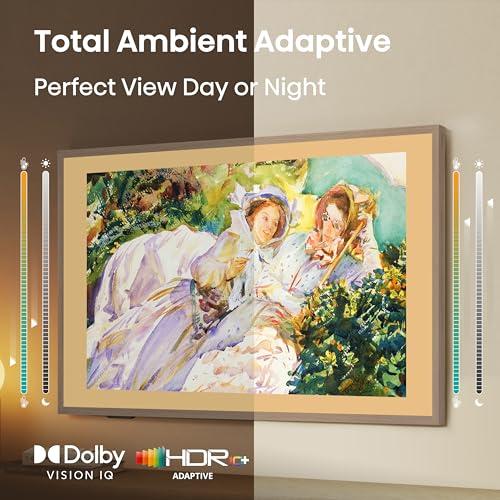
The system includes motion sensors that activate the display when someone enters the room and ambient light sensors that adjust brightness to match your lighting conditions throughout the day. Importantly, Hisense includes hundreds of artworks with no subscription fees—a significant advantage over Samsung's Frame TV, which charges for its art library.
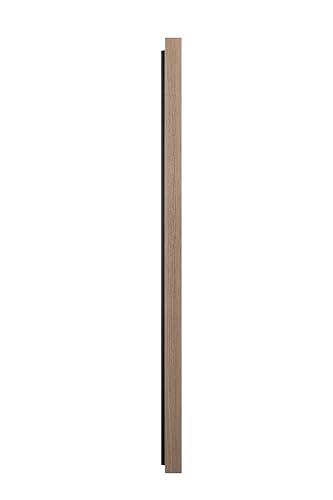
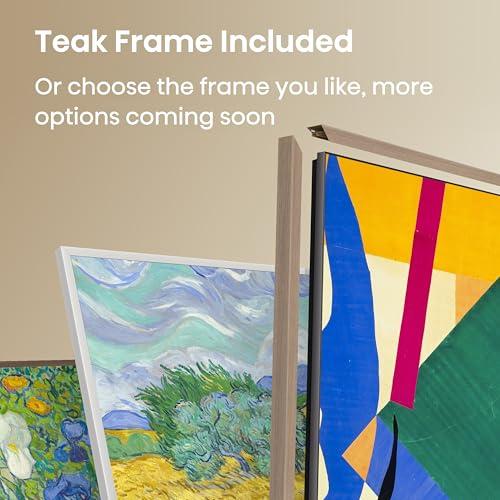
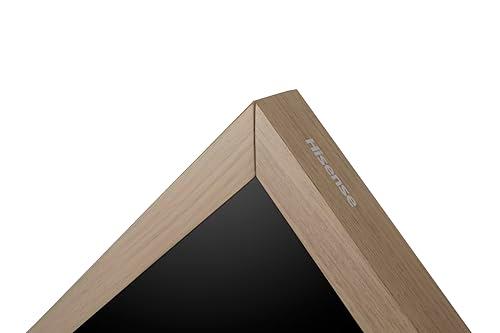
The customizable magnetic frames (available in teak, white, and walnut) and ultra-slim wall mount that positions the TV just 3mm from the wall complete the illusion. This isn't just about aesthetics—it fundamentally changes how the TV integrates into your living space.
The Sony BRAVIA 8 takes the traditional approach, focusing entirely on being the best possible TV for entertainment. When it's off, it's clearly a turned-off TV, which some people actually prefer.
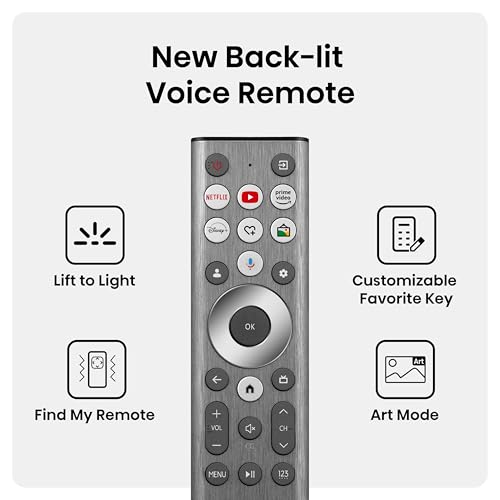
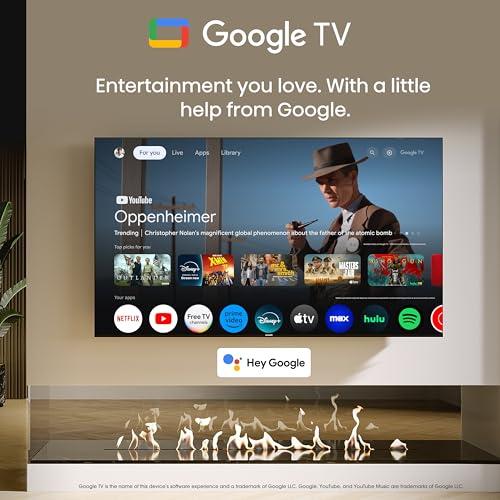
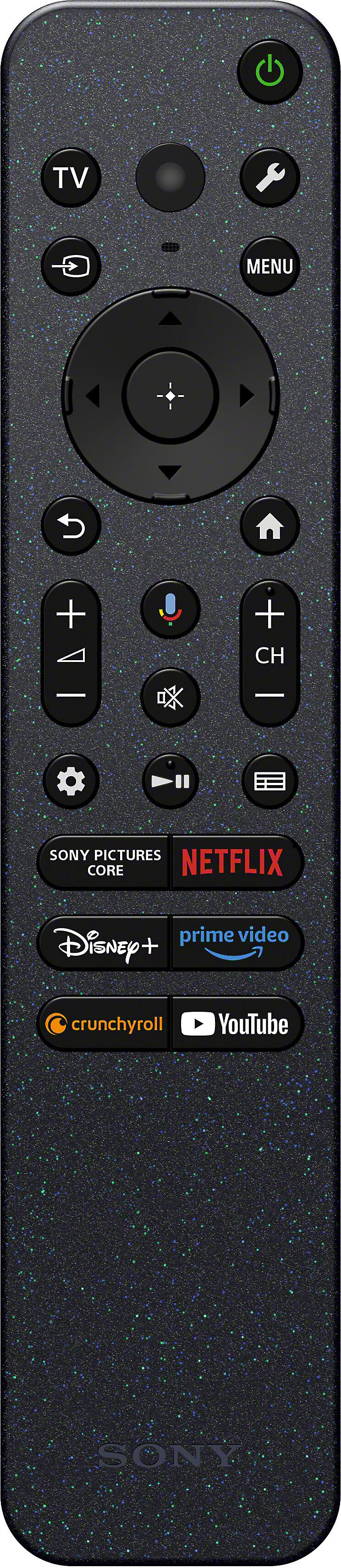
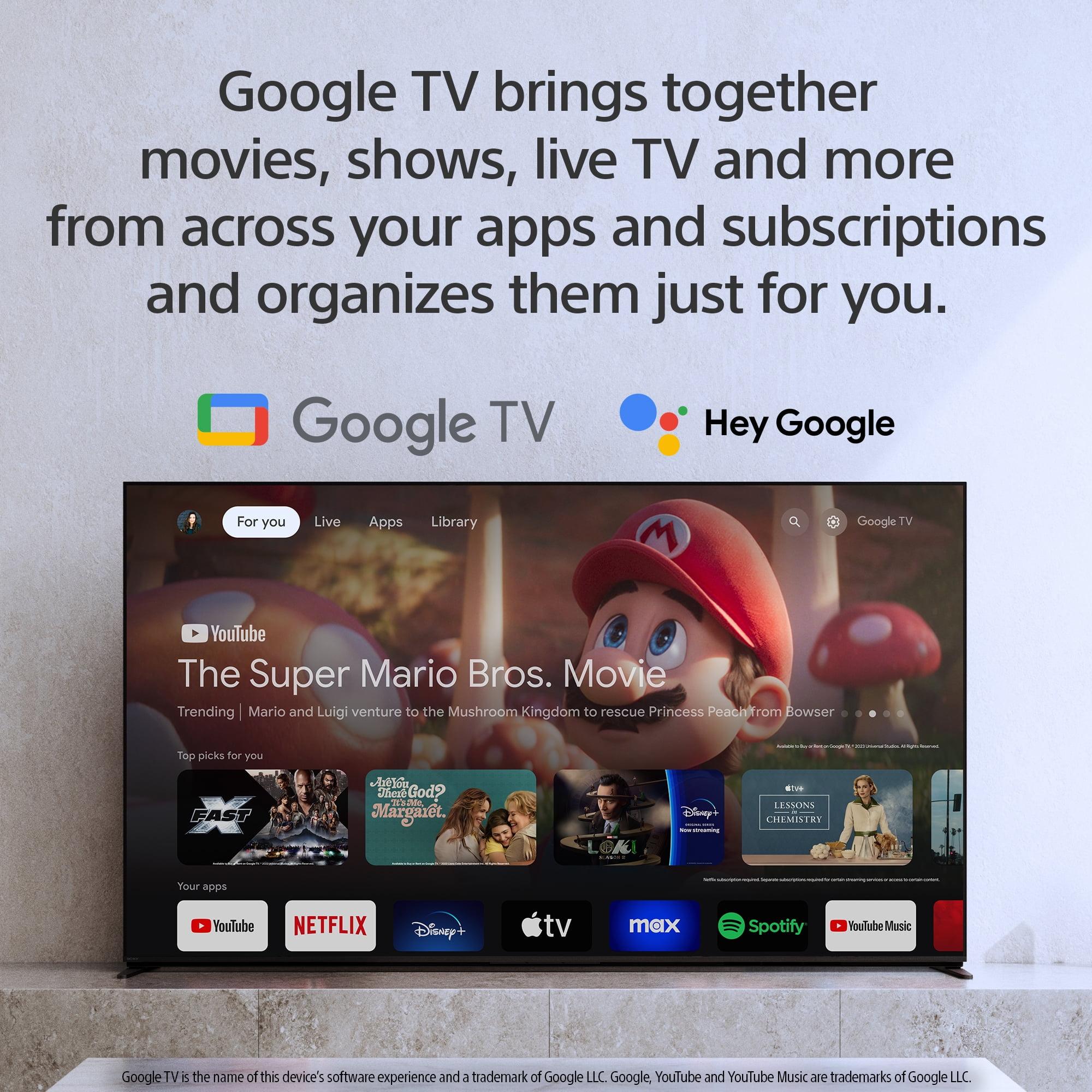
Both TVs run Google TV, which has matured into one of the better smart TV platforms. The interface is intuitive, content discovery is excellent, and app support is comprehensive. Voice control through Google Assistant works well on both displays.
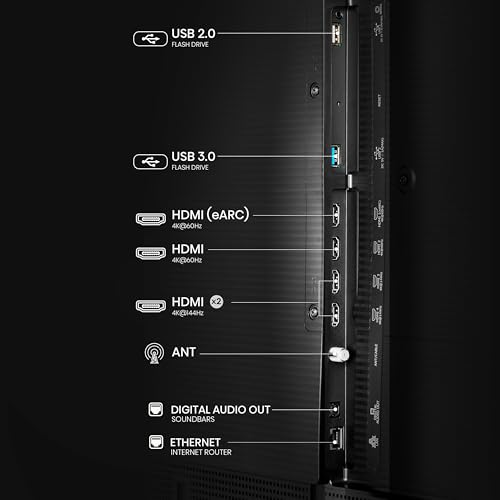
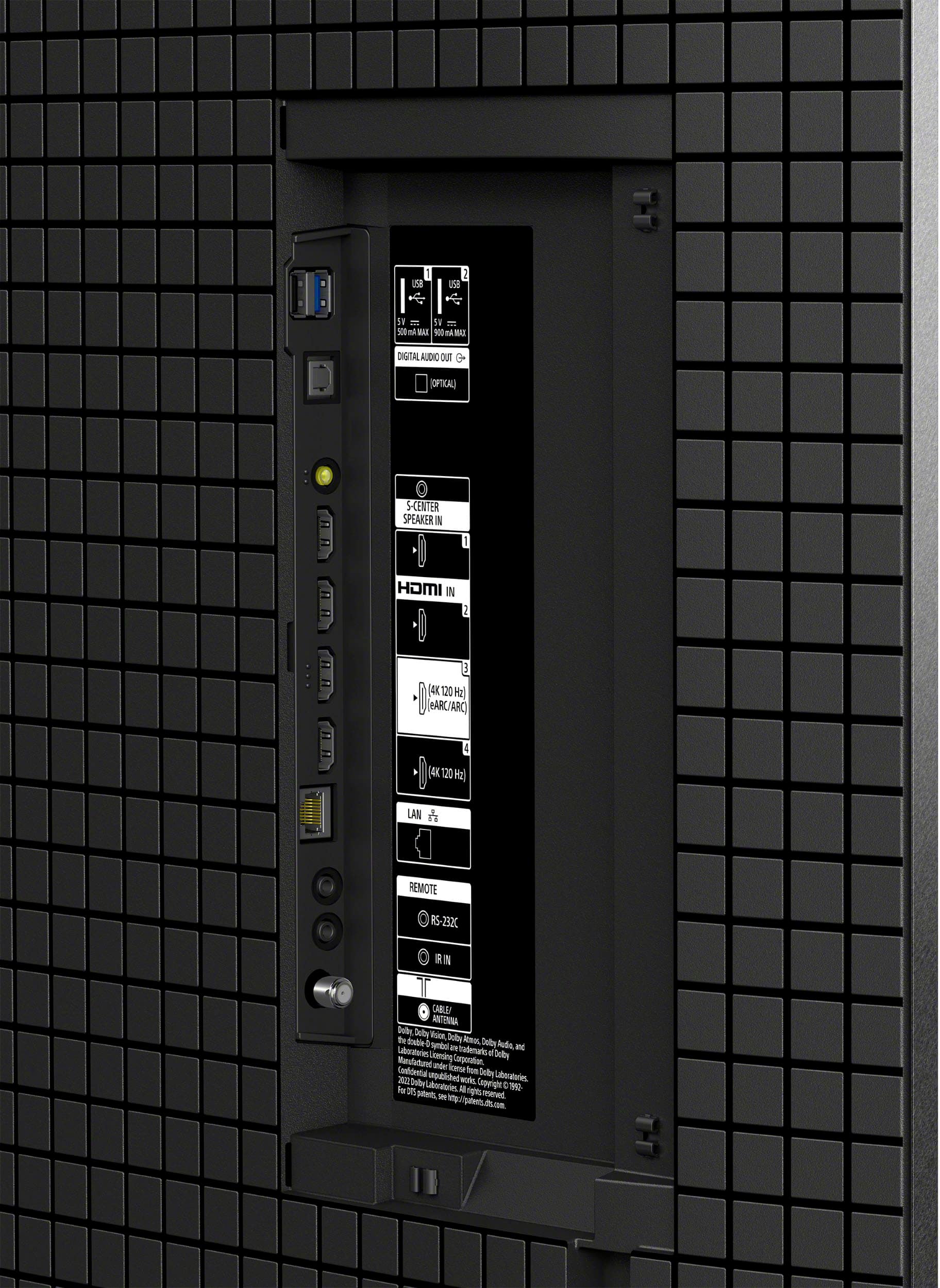
Where they differ is in connectivity options. The Hisense CanvasTV includes two HDMI 2.1 ports supporting full 48Gbps bandwidth, crucial for high-refresh gaming. The Sony BRAVIA 8 also includes HDMI 2.1 support with eARC for high-quality audio passthrough to soundbars or receivers.
Both support all major streaming services, Chromecast built-in, and Apple AirPlay 2 for wireless streaming from mobile devices.
For dedicated home theater use, the choice becomes more complex. The Sony BRAVIA 8 excels in controlled lighting environments where you can appreciate its perfect black levels and accurate colors. Film enthusiasts will particularly appreciate Sony's color accuracy and motion processing, which preserves the cinematic experience filmmakers intended.
The CanvasTV offers advantages for multi-purpose rooms where the TV might be visible even when not in use. The anti-glare coating helps maintain picture quality even with some ambient light, though it's not ideal for completely bright rooms during HDR movie watching.
For gaming in a home theater setup, the Hisense provides more future-proof specifications, while the Sony offers better integration with PlayStation consoles.
At the time of writing, both TVs compete in the premium segment but approach value differently. The Hisense CanvasTV typically offers more features and versatility per dollar, while the Sony BRAVIA 8 provides more refined picture quality per dollar.
Consider longevity: OLED displays can potentially suffer from burn-in if static images (like art) are displayed for extended periods, though modern OLED panels have significantly improved in this area. The CanvasTV's QLED technology is more resistant to burn-in, making it better suited for always-on art display applications.
Both TVs should provide excellent service for many years, but their different strengths mean they'll age differently depending on how display technology evolves and your usage patterns change.
Choose the Hisense S7N CanvasTV if you want a TV that enhances your living space even when you're not watching it. It's ideal for bright rooms, serious gamers, and anyone who appreciates innovative design. The anti-glare coating and art functionality make it genuinely versatile in ways traditional TVs aren't.
The dual-purpose nature means you're essentially getting a large digital art frame and a premium TV for one price, which represents exceptional value for the right buyer.
Choose the Sony BRAVIA 8 OLED if picture quality is your primary concern and you primarily watch in controlled lighting conditions. It's perfect for movie enthusiasts, PlayStation gamers, and anyone who wants proven OLED performance with Sony's reputation for quality.
The decision ultimately comes down to your priorities: innovative versatility versus traditional excellence. Both represent the cutting edge of their respective approaches, and both will deliver years of excellent performance in their intended use cases.
Your room lighting, viewing habits, and whether you want your TV to be a piece of art when not in use should guide your final choice. There's no wrong answer here—just different philosophies about what a premium TV should be in 2024.
| Hisense 65" S7N CanvasTV QLED | Sony BRAVIA 8 65" 4K OLED |
|---|---|
| Display Technology - Fundamentally affects picture quality and room suitability | |
| QLED with Quantum Dot color and Hi-Matte anti-glare coating | Traditional WOLED with self-illuminating pixels |
| Peak Brightness - Critical for HDR performance and bright room viewing | |
| 450 cd/m² peak with sustained brightness advantage | ~400-600 cd/m² typical OLED range with perfect blacks |
| Contrast Ratio - Determines depth and realism of dark scenes | |
| 5000:1 static contrast (very good for QLED) | Infinite contrast ratio (perfect blacks when pixels turn off) |
| Refresh Rate - Important for gaming and smooth motion | |
| 144Hz native (supports 4K@144Hz, 1080p@240Hz) | 120Hz (supports 4K@120Hz with VRR) |
| Gaming Performance - Input lag and response time for competitive gaming | |
| 5.4ms input lag, 4.8ms response time, ALLM/VRR support | Low input lag in game mode, PlayStation 5 optimizations |
| Anti-Glare Performance - Crucial for bright living rooms | |
| Hi-Matte coating reduces reflections to 5% | Standard glossy OLED panel (reflective in bright conditions) |
| Art Mode Functionality - Transforms TV into wall art when not in use | |
| Full art gallery with motion/light sensors, free artwork library | Not available (traditional TV-only functionality) |
| Audio System - Built-in sound quality without external speakers | |
| 36W 2.0.2 system with upward-firing speakers, DTS Virtual:X | 50W 2.1 system with Acoustic Surface Audio+ (screen as speaker) |
| Color Processing - Affects color accuracy and vibrancy | |
| Quantum Dot technology (1.07 billion colors, vibrant saturation) | XR Triluminos Pro (cinema-accurate, natural color reproduction) |
| Wall Mounting Design - How the TV integrates into your room aesthetically | |
| Ultra-slim mount (3mm from wall), magnetic swappable frames | Traditional TV mounting and appearance |
| Smart TV Platform - Interface and streaming app experience | |
| Google TV with free art library, no subscription fees | Google TV with superior upscaling via XR processor |
| HDR Format Support - Compatibility with premium streaming content | |
| HDR10, HDR10+, HDR10+ Adaptive, Dolby Vision, HLG | HDR10, Dolby Vision with scene-by-scene optimization |
| Primary Use Case - Who this TV is designed for | |
| Dual-purpose TV/art display for bright rooms and gamers | Traditional premium TV for movie enthusiasts and dark rooms |
The Hisense 65" S7N CanvasTV is significantly better for bright rooms due to its Hi-Matte anti-glare coating that reduces reflections to just 5%. This makes it viewable even with direct sunlight hitting the screen. The Sony BRAVIA 8 OLED has a glossy screen that reflects ambient light, making it better suited for darker viewing environments.
The Hisense CanvasTV uses QLED technology with quantum dots that enhance color vibrancy and can get brighter, while the Sony BRAVIA 8 uses OLED with self-illuminating pixels that can turn completely off for perfect blacks. OLED excels in dark rooms with infinite contrast, while QLED performs better in bright environments.
The Hisense 65" S7N CanvasTV offers superior gaming performance with 144Hz refresh rate, 4K@144Hz support, and 5.4ms input lag. It also supports 1080p@240Hz for competitive gaming. The Sony BRAVIA 8 supports 4K@120Hz with special PlayStation 5 optimizations but has lower overall gaming specs.
Only the Hisense CanvasTV has dedicated Art Mode that transforms it into a digital art gallery with motion sensors, ambient light adjustment, and hundreds of included artworks at no extra cost. The Sony BRAVIA 8 OLED functions as a traditional TV only and doesn't offer art display features.
Both TVs offer impressive built-in audio. The Sony BRAVIA 8 features innovative Acoustic Surface Audio+ technology where the screen itself acts as a speaker with 50W total power. The Hisense CanvasTV has a 36W 2.0.2 system with upward-firing speakers for surround sound effects. The Sony typically provides clearer dialogue, while the Hisense offers more immersive surround experience.
For movie watching in dark rooms, the Sony BRAVIA 8 OLED delivers superior picture quality with perfect blacks, infinite contrast, and cinema-accurate colors through XR Triluminos Pro processing. The Hisense 65" S7N CanvasTV offers vibrant colors with quantum dot technology but cannot match OLED's contrast performance in dark viewing conditions.
The Hisense CanvasTV typically offers better value by combining TV functionality with art display features, anti-glare technology, and superior gaming specs. The Sony BRAVIA 8 provides premium OLED picture quality and brand reputation but focuses solely on traditional TV performance without additional versatility features.
Yes, both the Hisense 65" S7N CanvasTV and Sony BRAVIA 8 OLED run Google TV platform with access to all major streaming services including Netflix, Disney+, Prime Video, YouTube, and Apple TV+. Both also support Chromecast built-in and voice control through Google Assistant.
For dedicated home theaters with controlled lighting, the Sony BRAVIA 8 excels with its perfect blacks, infinite contrast ratio, and cinema-accurate color reproduction. However, the Hisense CanvasTV offers advantages for multi-purpose rooms and provides superior gaming performance if that's part of your home theater experience.
The Hisense 65" S7N CanvasTV includes an ultra-slim wall mount that positions the TV just 3mm from the wall with customizable magnetic frames (teak, white, walnut) for an art-like appearance. The Sony BRAVIA 8 OLED uses traditional TV mounting without special aesthetic considerations or frame options.
Both TVs handle motion well, but differently. The Hisense CanvasTV offers higher 144Hz refresh rate with MEMC processing for extremely smooth motion in fast sports. The Sony BRAVIA 8 uses sophisticated XR OLED Motion processing at 120Hz that often looks more natural with broadcast sports content, though with slightly less raw smoothness.
The Sony BRAVIA 8 OLED has potential burn-in risk with static images displayed for extended periods, though modern OLED panels are much more resistant than earlier generations. The Hisense 65" S7N CanvasTV uses QLED technology that's immune to burn-in, making it ideal for Art Mode and static content display without long-term concerns.
We've done our best to create useful and informative comparisons to help you decide what product to buy. Our research uses advanced automated methods to create this comparison and perfection is not possible - please contact us for corrections or questions. These are the sites we've researched in the creation of this article: bestbuy.com - hisense.sg - tomsguide.com - content.syndigo.com - rtings.com - hisense-usa.com - youtube.com - bestbuy.com - youtube.com - displayspecifications.com - displayspecifications.com - manuals.plus - displayspecifications.com - bestbuy.com - hisense-canada.com - manuals.plus - bargainoutletandmore.com - bestbuy.com - device.report - bestbuy.com - bestbuy.com - crutchfield.com - avsforum.com - electronics.sony.com - sony.com - store.sony.co.nz - sony.com - displayspecifications.com

Privacy Policy
Terms and Conditions - Affiliate Policy
Home Security
© Copyright 2008-2026.
11816 Inwood Rd #1211, Dallas, TX 75244