





If you've ever found yourself turning up the TV volume just to understand what the characters are saying, or felt like explosions sound more like gentle pops, you're not alone. Modern TVs, despite their impressive picture quality, often have terrible built-in speakers. They're simply too thin to house decent audio components. This is where soundbars come in—compact, elongated speakers designed to sit under or mount near your TV to dramatically improve audio quality without the complexity of a full surround sound system.
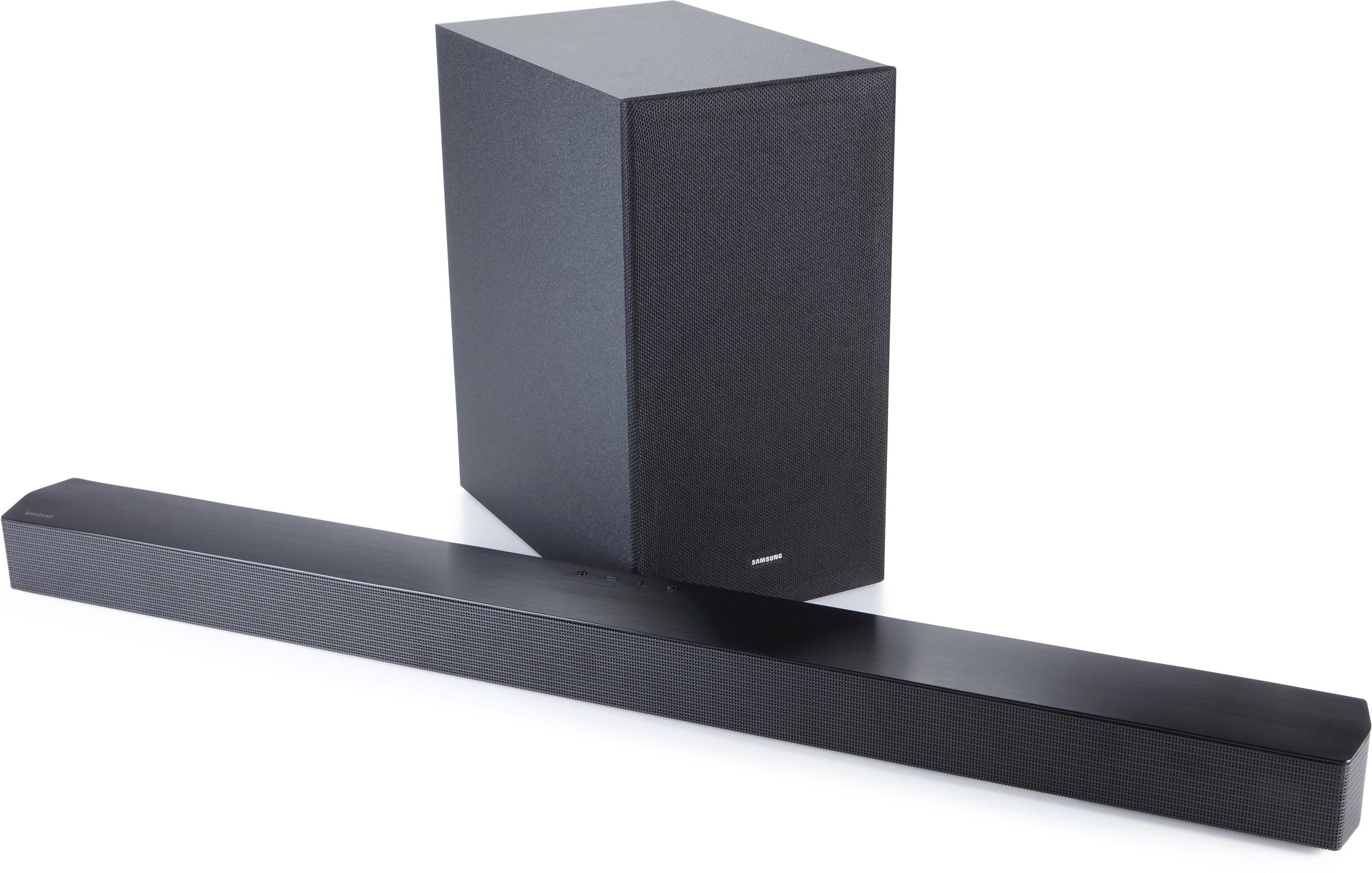
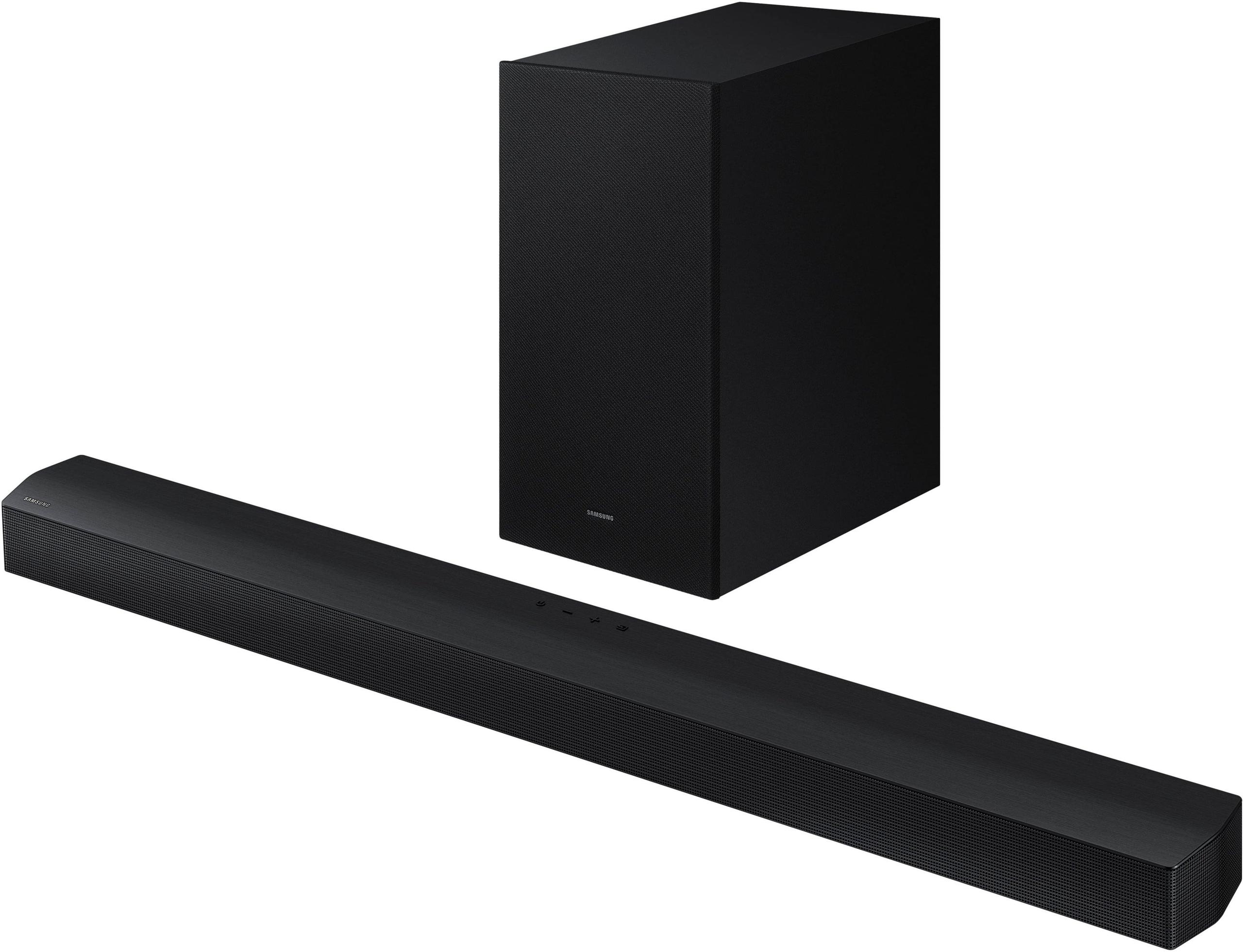
Today we're comparing two very different approaches to solving your TV's audio problems: the Bose Smart Soundbar 1100 and the Samsung HW-B550D. These represent opposite ends of the soundbar spectrum—premium versus budget—and each has compelling arguments for your entertainment setup.
Before diving into our comparison, it's worth understanding what separates good soundbars from mediocre ones. The most crucial factor is dialogue clarity. If you can't understand what people are saying on screen, nothing else matters. This depends heavily on having a dedicated center channel—a speaker specifically tuned for human voices.
Bass response is another critical element. TV speakers produce virtually no low-frequency sound, so even basic bass improvement feels transformative. However, there's a big difference between adequate bass and the kind of deep, room-filling low-end that makes action movies truly immersive.
Spatial audio capabilities determine whether you feel surrounded by sound or like it's just coming from one direction. Technologies like Dolby Atmos create the illusion of sound moving around and above you, while simpler virtual surround processing tries to widen the soundstage using clever audio tricks.
Smart features have become increasingly important as streaming dominates entertainment consumption. Voice control, wireless connectivity, and app integration can significantly enhance the user experience beyond just better sound quality.
The Bose Smart Soundbar 1100, released in 2023, represents Bose's entry into the premium compact soundbar market. It's built around the company's decades of acoustic expertise and emphasizes what Bose does best: crystal-clear dialogue and intelligent audio processing. At launch, it positioned itself as a smart, sophisticated option for users who prioritize voice clarity and seamless integration with modern smart homes.
The Samsung HW-B550D, available since 2021, takes a completely different approach. Samsung focused on delivering maximum value by including a wireless subwoofer and covering the basics well. It's part of Samsung's strategy to offer compelling audio upgrades at accessible price points, recognizing that many consumers want better TV sound without premium pricing.
These different launch timeframes matter because audio technology has evolved rapidly. The Bose soundbar benefits from more recent advances in AI-powered dialogue processing and refined Dolby Atmos implementation, while the Samsung model represents the solid, proven approach of pairing a basic soundbar with a dedicated subwoofer.
In our research across professional reviews and user feedback, the Bose Smart Soundbar 1100 consistently dominates in dialogue clarity. Its AI Dialogue Mode uses machine learning to automatically detect when people are speaking and adjusts the tonal balance in real-time. This isn't just a simple boost to mid-range frequencies—it's sophisticated processing that maintains the natural character of voices while ensuring they cut through background music and sound effects.
The technology works by analyzing the audio signal multiple times per second, identifying speech patterns, and dynamically adjusting frequency response. Users consistently report being able to lower their TV volume while still understanding every word, which is particularly valuable for late-night viewing or homes with varying hearing abilities among family members.
The Samsung HW-B550D, while offering voice enhancement features, uses more traditional dialogue processing. It includes a dedicated center channel, which helps compared to TV speakers, but the enhancement is more of a fixed boost rather than intelligent adaptation. Consumer Reports noted that dialogue reproduction is "reasonable" but lacks the clarity and refinement of premium options.
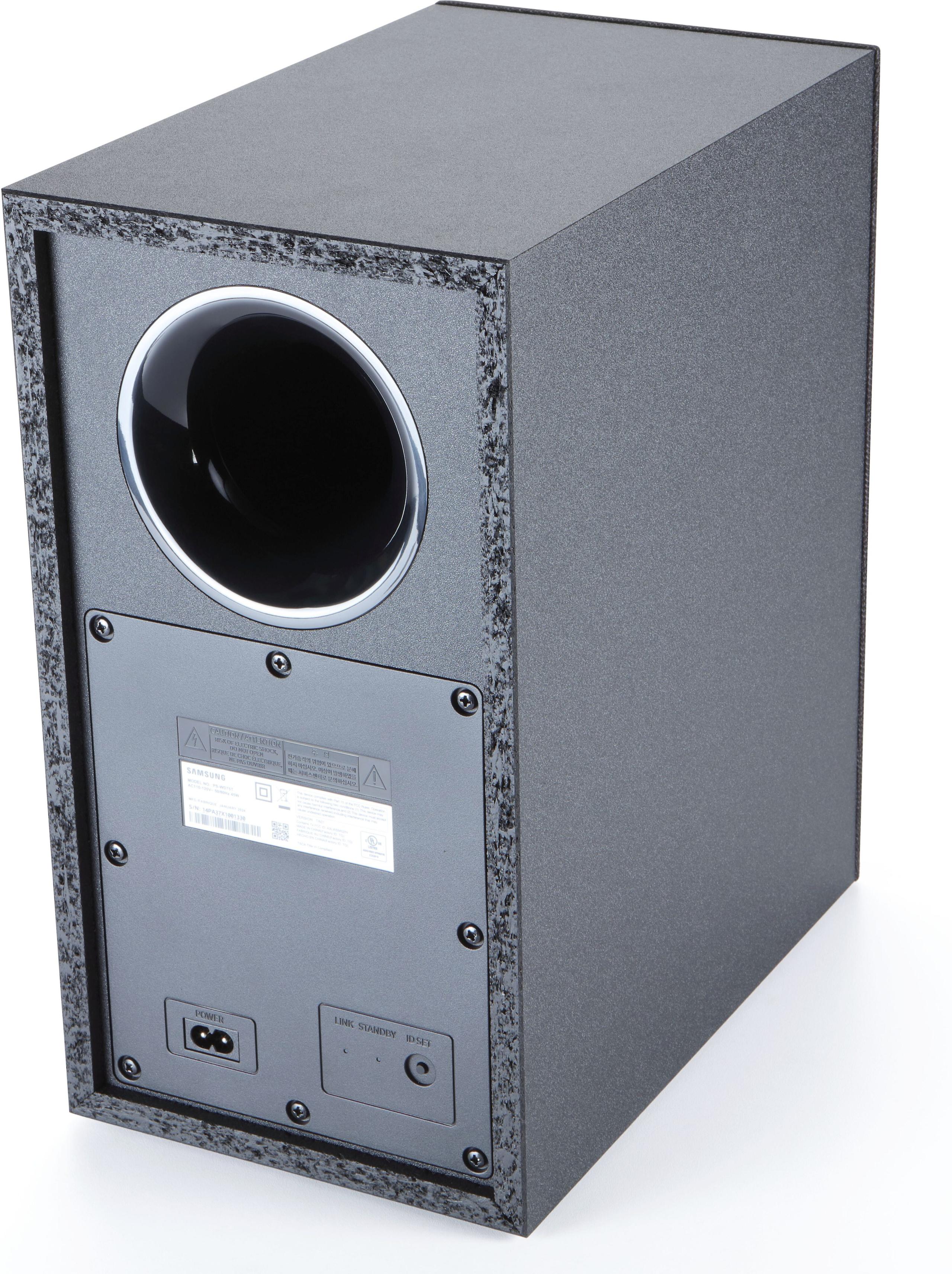
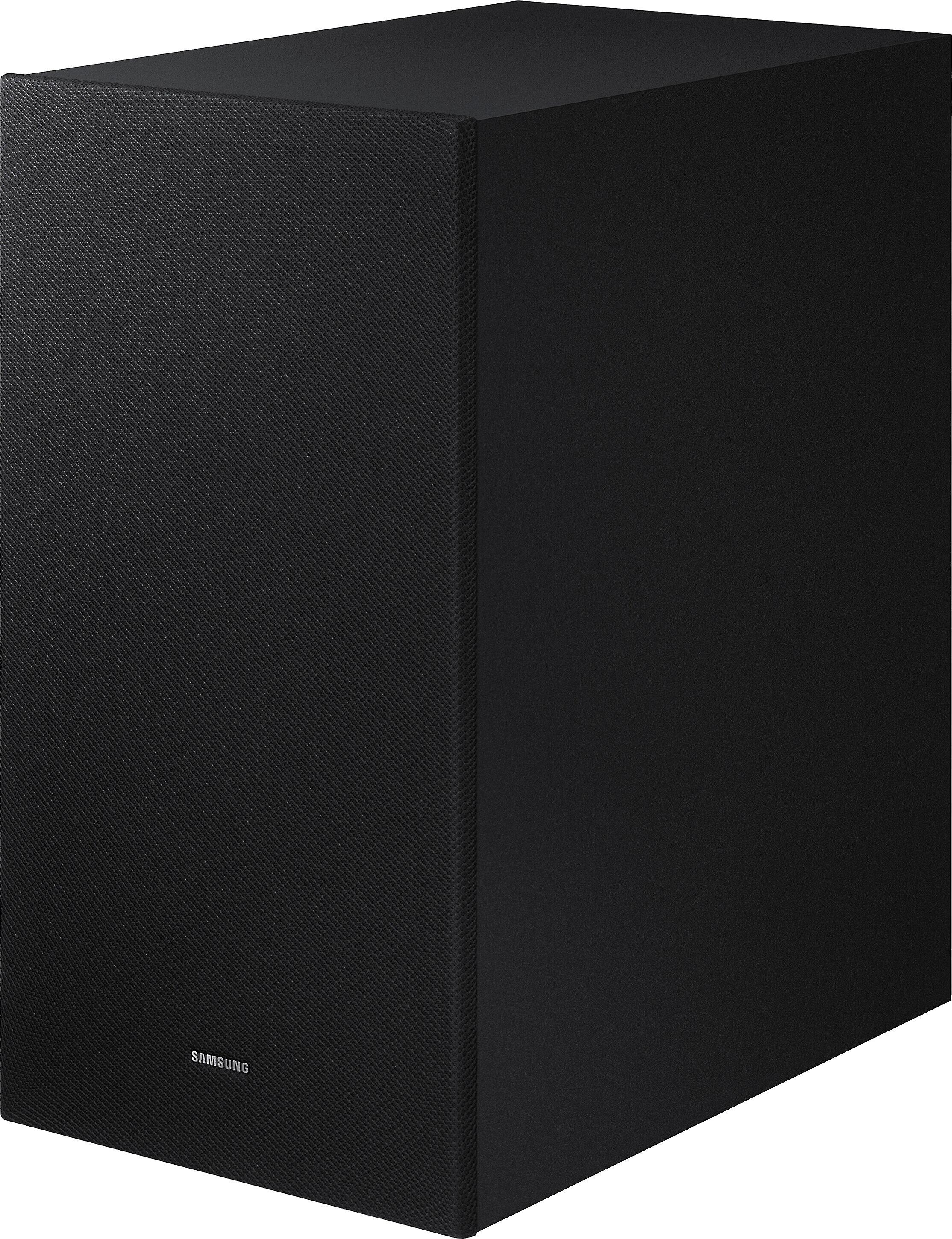
This category reveals the fundamental trade-off between these approaches. The Samsung soundbar includes a wireless subwoofer with a 5-inch driver right in the box. This immediately provides bass impact that the Bose unit simply cannot match on its own. Users consistently praise the Samsung's ability to add punch to action scenes and depth to music.
However, the Bose soundbar demonstrates superior bass quality within its limitations. Its QuietPort technology uses specially designed ports with screens to reduce air turbulence, allowing cleaner bass response from the compact enclosure. While it won't rattle your windows, the bass it produces is tight and well-controlled.
For the complete bass experience with the Bose system, you'll need to add an optional Bass Module, which significantly increases the total system cost but delivers bass quality that exceeds the Samsung's included subwoofer.
The Bose Smart Soundbar 1100 includes actual up-firing drivers—small speakers that bounce sound off your ceiling to create overhead effects for Dolby Atmos content. This is genuine three-dimensional audio processing, not simulation. When watching Atmos-encoded movies, helicopters actually seem to fly overhead, and rain sounds like it's falling around you.
Even more impressive is Bose's TrueSpace technology, which analyzes non-Atmos content and creates spatial effects from regular stereo or surround soundtracks. This means you get immersive audio even from older movies or shows not specifically mixed for Atmos.
The Samsung model uses DTS Virtual:X, which attempts to create similar effects through audio processing alone, without additional drivers. While this can widen the soundstage somewhat, it cannot create true overhead effects. The spatial enhancement is more subtle and primarily expands the sound horizontally rather than adding genuine height dimension.
Professional reviews consistently note that the Bose soundbar maintains its composure at high volumes, with minimal distortion even when pushed hard. Its PhaseGuide technology uses precisely controlled acoustic beams to create a wide soundstage without the muddiness that often accompanies loud playback on compact speakers.
The Samsung system, particularly its subwoofer, can sound somewhat "tubby" and congested at higher volumes, according to Consumer Reports testing. While perfectly adequate for normal listening levels, it doesn't scale as gracefully when you want to crank up an action movie.
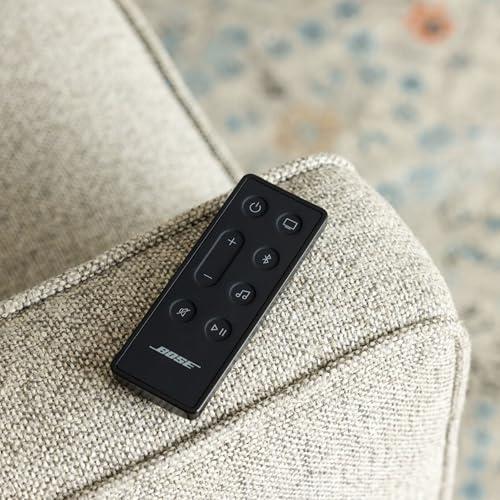
The Bose Smart Soundbar 1100 is essentially a smart speaker that happens to excel at TV audio. Built-in Amazon Alexa with noise-rejecting microphones means you can control your smart home, check weather, or play music even when the soundbar is playing content loudly. The Voice4Video feature extends Alexa's capabilities to control your TV and cable box, potentially reducing remote clutter.
Wi-Fi connectivity enables streaming from virtually every major service—Spotify, Apple Music, Pandora, and more—directly to the soundbar without needing your TV or phone. AirPlay 2 and Chromecast support mean seamless casting from any device.
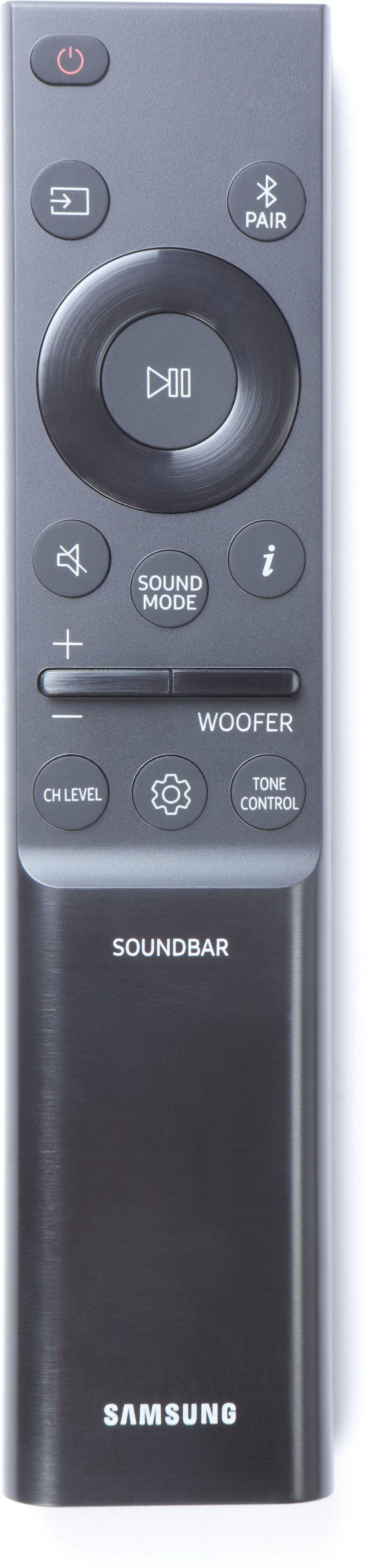
The Samsung soundbar keeps smart features minimal. Bluetooth connectivity allows wireless music streaming from phones or tablets, and it can pair with up to two devices simultaneously. However, there's no built-in voice assistant, no Wi-Fi streaming, and no dedicated app control.
For some users, this simplicity is actually preferable. There's no setup complexity, no software updates, and no potential connectivity issues. You connect it to your TV and it just works.
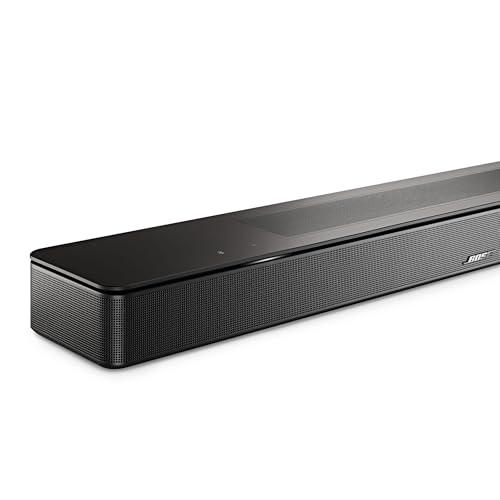
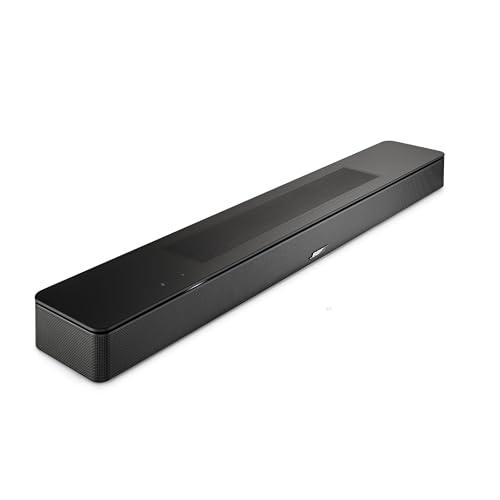
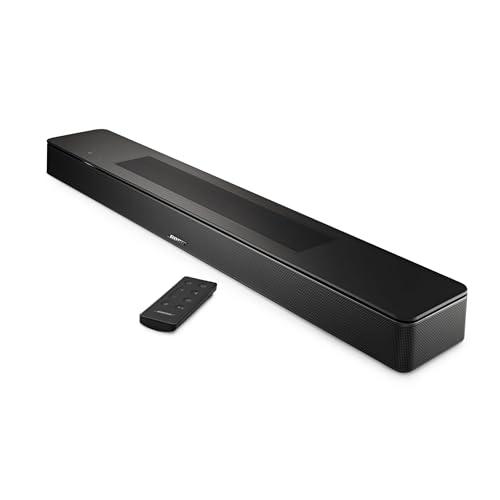
The Bose unit feels distinctly premium. Its metal and plastic construction has the solid heft you'd expect from a high-end audio component. At just over 27 inches wide, it fits under most TVs without dominating the space visually. The matte black finish is understated and professional.
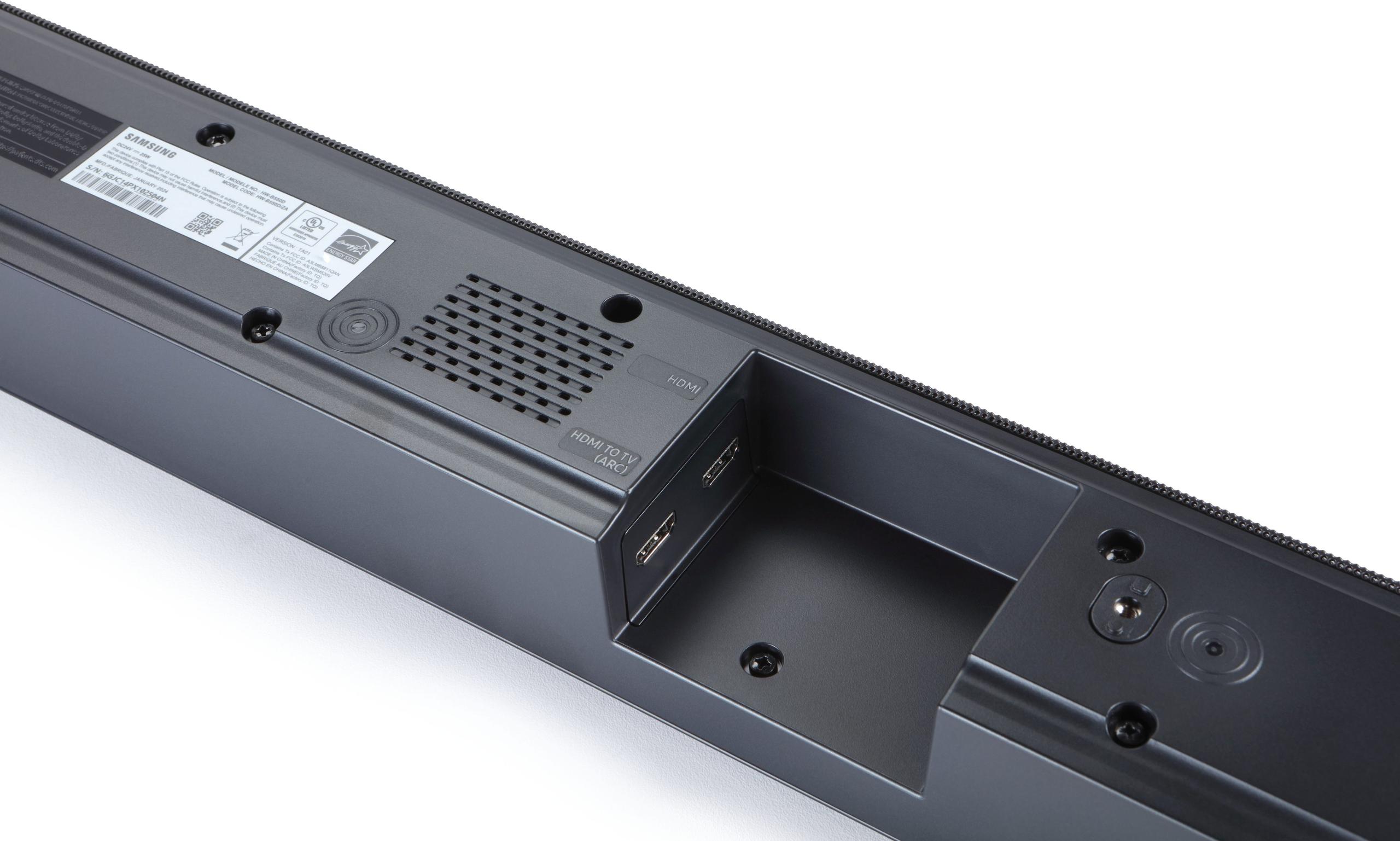
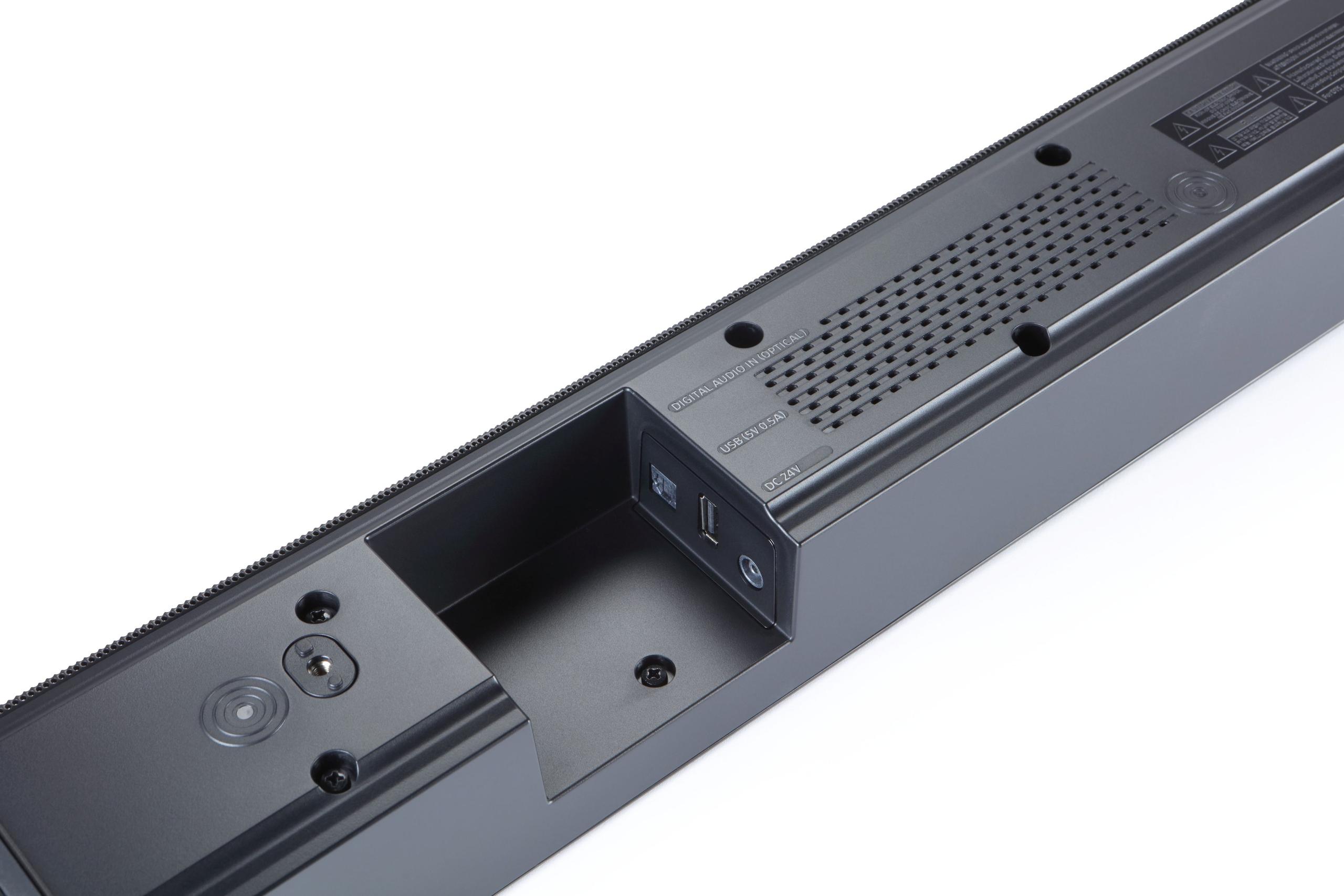
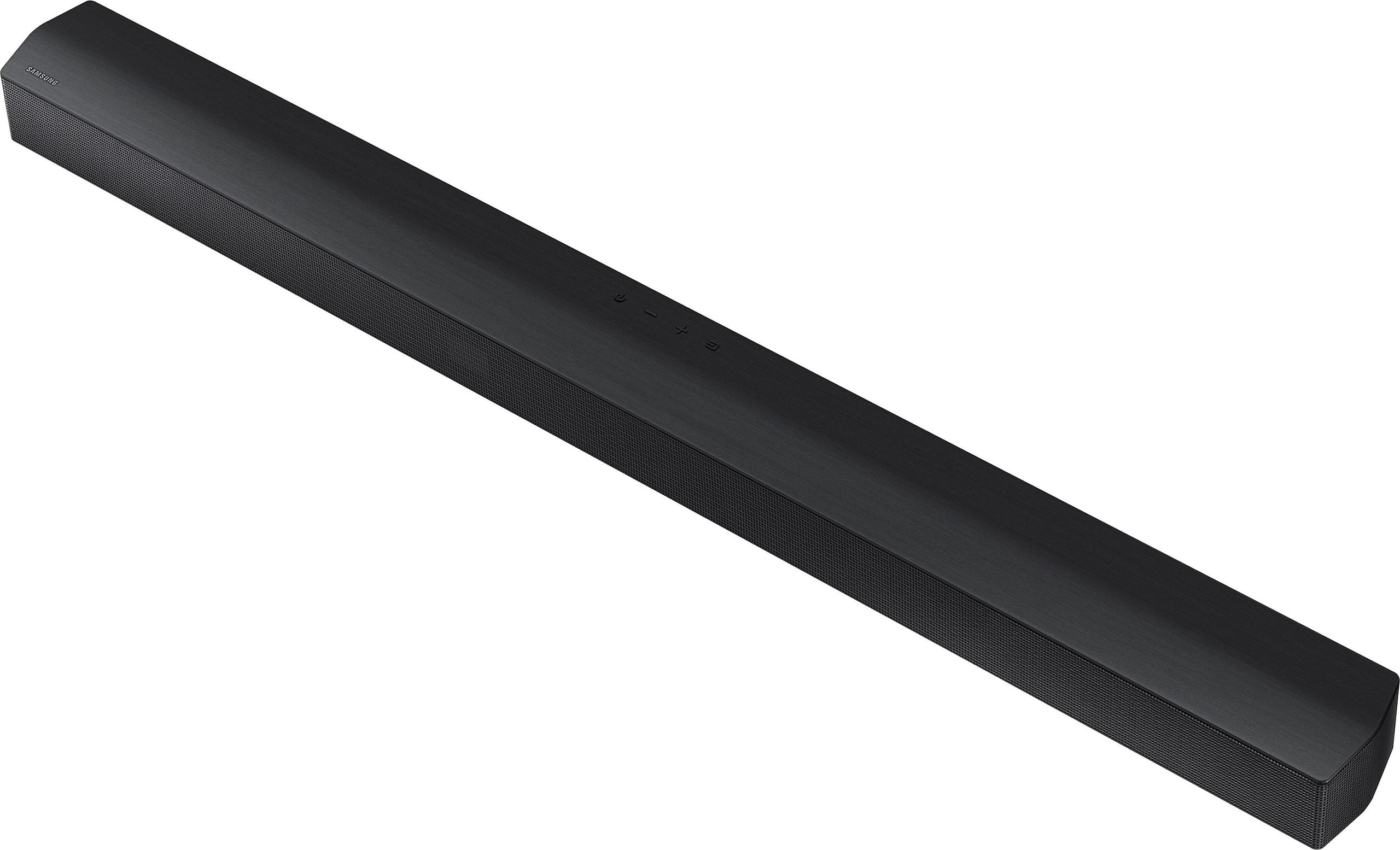
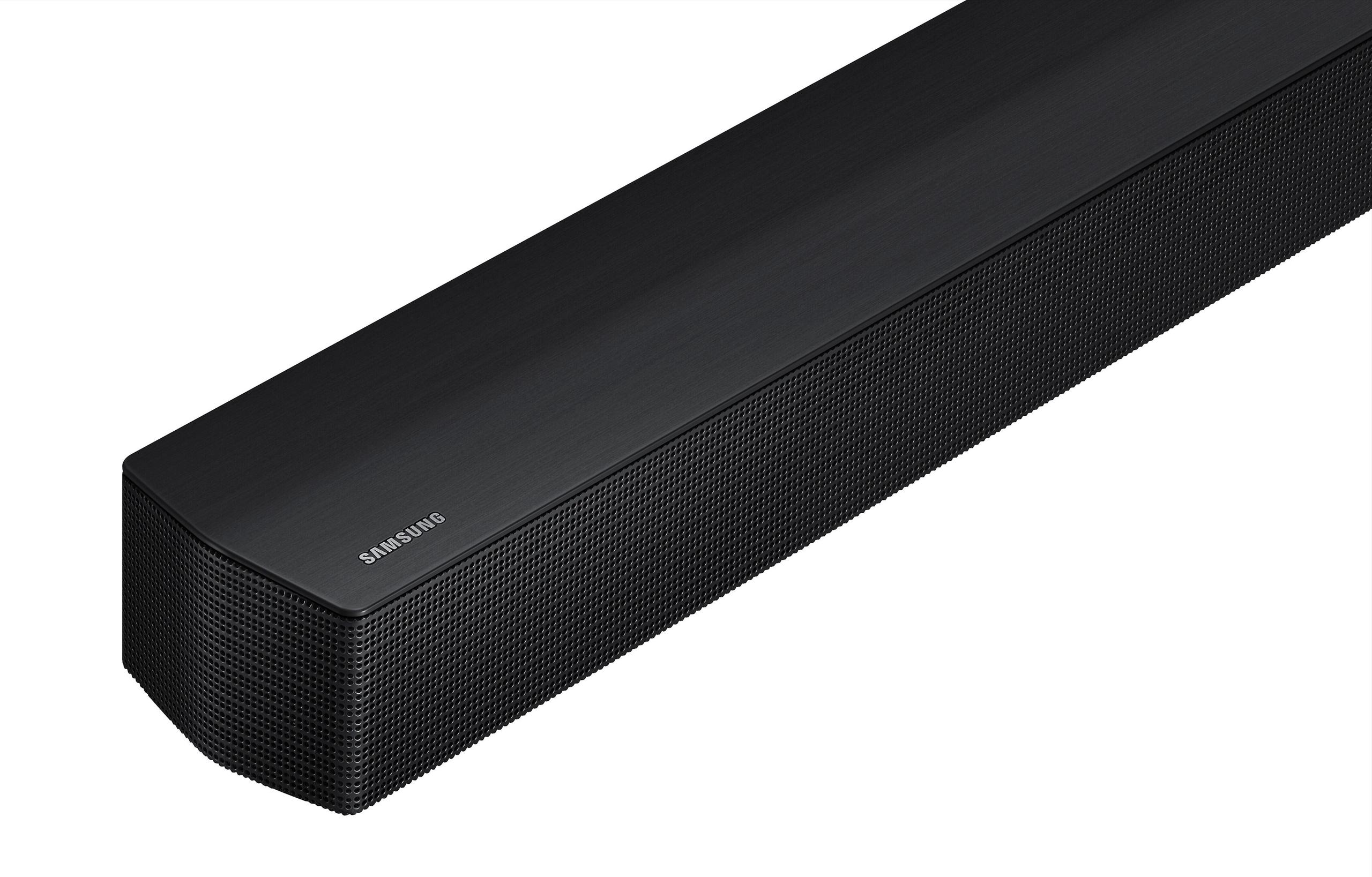
The Samsung system is notably larger at nearly 34 inches wide but lighter in construction. The included wall mounting kit is a nice touch, and the wireless subwoofer can be placed anywhere within range, offering flexibility in room placement.
Both systems can be wall-mounted, but the Bose soundbar maintains its sleek profile when mounted, while the Samsung unit may look somewhat bulky depending on your TV size.
For serious home theater enthusiasts, expandability becomes crucial. The Bose Smart Soundbar 1100 can grow into a full surround system with optional wireless rear speakers and Bass Modules. More uniquely, it supports "Personal Surround Sound" by pairing with compatible Bose earbuds, creating a private surround experience without disturbing others.
The Samsung HW-B550D is largely what you get out of the box. While the wireless subwoofer provides flexibility in placement, there aren't expansion options for rear speakers or additional components.
For movie enthusiasts building a dedicated home theater room, the Bose system's upgrade path makes it more future-proof, even if the initial investment is higher.
Both soundbars include game-specific audio modes, but they approach gaming audio differently. The Samsung model uses cross-talk cancellation to reduce distracting ambient sounds and emphasize important gaming audio cues. Its included subwoofer provides satisfying bass for explosions and environmental effects.
The Bose soundbar's strength in gaming comes from its superior dialogue clarity, crucial for story-driven games, and its spatial audio capabilities, which can provide competitive advantages in multiplayer games where positional audio matters.
At the time of writing, the Samsung HW-B550D represents exceptional value in the budget soundbar category. You get a complete system with meaningful bass improvement over TV speakers, acceptable dialogue enhancement, and basic smart features at a very accessible price point.
The Bose Smart Soundbar 1100 commands a significant premium but delivers genuinely superior performance in most categories that matter for daily use. The question becomes whether the performance improvements justify the price difference, and whether you'll utilize the advanced smart features.
For a typical living room setup where the soundbar primarily handles TV and casual music listening, the Samsung provides 80% of the benefit at roughly half the cost. For users who prioritize audio quality, smart home integration, or plan to expand their system over time, the Bose investment makes more sense.
Choose the Samsung HW-B550D if you're looking to dramatically improve your TV's audio without breaking the bank. It's perfect for apartments, secondary viewing areas, or anyone who primarily watches TV and occasionally streams music. The included subwoofer means you get satisfying bass immediately, and the system's simplicity means it'll work reliably for years without fuss.
The Samsung model also makes sense if you're not particularly interested in smart features beyond basic Bluetooth streaming. Some users prefer audio equipment that focuses purely on sound reproduction without additional complexity.
Choose the Bose Smart Soundbar 1100 if dialogue clarity is paramount—perhaps you have family members with hearing difficulties or frequently watch content with heavy accents or complex audio mixing. Its smart features justify the premium if you're building an integrated smart home ecosystem or want the convenience of voice control.
The Bose option is also the better choice for music enthusiasts. Its superior drivers and acoustic engineering make it more enjoyable for dedicated music listening, and the wireless streaming options mean it can serve as your primary music system.
Both soundbars successfully solve the fundamental problem of poor TV audio, but they represent different philosophies about how much you should spend and what features matter most.
The Samsung HW-B550D proves that you don't need to spend premium prices for meaningful audio improvement. It delivers the basics exceptionally well and includes a subwoofer that many premium soundbars omit. For most users upgrading from TV speakers, it provides excellent value and satisfaction.
The Bose Smart Soundbar 1100 justifies its premium pricing through superior engineering, smarter features, and noticeably better performance in key areas. If audio quality is important to your daily entertainment experience and you appreciate well-designed technology, the investment makes sense.
The decision ultimately comes down to your priorities: immediate value and complete functionality versus long-term performance and smart features. Both approaches have merit, and both companies have created products that succeed within their respective market segments.
| Bose Smart Soundbar 1100 | Samsung HW-B550D 3.1 Channel Sound Bar |
|---|---|
| Channel Configuration - Determines surround sound capability | |
| 3.0.2 (dedicated height channels for true Dolby Atmos) | 3.1 (includes subwoofer but no height channels) |
| Dolby Atmos Support - Creates overhead sound effects | |
| Yes, with dedicated up-firing drivers for genuine height effects | No, uses DTS Virtual:X for simulated spatial audio |
| Subwoofer Inclusion - Critical for bass response | |
| Not included (optional Bass Module sold separately) | Wireless 5" subwoofer included in the box |
| Voice Assistant Integration - Smart home control capability | |
| Built-in Amazon Alexa with noise-rejecting microphones | None (basic remote control only) |
| Wireless Streaming Options - Flexibility for music playback | |
| Wi-Fi, Bluetooth 5.0, AirPlay 2, Chromecast, Spotify Connect | Bluetooth only (multi-device pairing up to 2 devices) |
| AI Audio Processing - Automatic sound optimization | |
| AI Dialogue Mode with real-time speech enhancement | Adaptive Sound Lite with basic content analysis |
| HDMI Connectivity - Video and audio passthrough | |
| 1 HDMI eARC output only | 1 HDMI input + 1 HDMI output (1.4 standard, 1080p passthrough) |
| Physical Dimensions - Space requirements under TV | |
| 27.3" W × 2.2" H × 4.6" D (compact, premium build) | 33.9" W × 2.4" H × 3.0" D (larger but includes wall mount kit) |
| App Control - Setup and customization options | |
| Full Bose Music app with multiroom audio and detailed settings | No dedicated app (remote control only) |
| Expandability - Future upgrade potential | |
| Optional Bass Modules, Surround Speakers, and Personal Surround with earbuds | Limited expansion options beyond included subwoofer |
| Audio Format Support - Compatibility with different content | |
| Dolby Digital, Dolby Digital Plus, Dolby TrueHD, Dolby Atmos | Dolby Digital, DTS (no Dolby Atmos or DTS:X support) |
| Room Calibration - Automatic sound adjustment | |
| Wall EQ preset only (no advanced room correction) | No room calibration features |
The Bose Smart Soundbar 1100 significantly outperforms the Samsung HW-B550D for dialogue clarity. The Bose soundbar features AI Dialogue Mode that automatically adjusts tonal balance in real-time to enhance speech, while the Samsung model uses basic voice enhancement that's less sophisticated and effective.
Only the Bose Smart Soundbar 1100 supports true Dolby Atmos with dedicated up-firing drivers that create genuine overhead sound effects. The Samsung HW-B550D does not support Dolby Atmos, instead using DTS Virtual:X for simulated spatial audio without actual height channels.
The Samsung HW-B550D has significantly better bass out of the box because it includes a wireless 5-inch subwoofer. The Bose Smart Soundbar 1100 produces limited bass on its own and requires purchasing an optional Bass Module separately for comparable low-frequency performance.
The Bose Smart Soundbar 1100 has built-in Amazon Alexa with noise-rejecting microphones for voice control of the soundbar, smart home devices, and TV functions. The Samsung HW-B550D does not include any voice assistant capabilities and relies solely on remote control.
The Bose Smart Soundbar 1100 provides extensive wireless streaming with Wi-Fi, Bluetooth 5.0, AirPlay 2, Chromecast, and Spotify Connect. The Samsung HW-B550D only offers Bluetooth connectivity, though it can pair with up to two devices simultaneously.
For home theater use, the Bose Smart Soundbar 1100 is superior due to its Dolby Atmos support, expandability options, and excellent dialogue clarity. The Samsung HW-B550D works well for basic home theater improvement but lacks the advanced features and upgrade potential that serious home theater enthusiasts typically want.
The Samsung HW-B550D is simpler to set up with basic plug-and-play functionality and no app requirements. The Bose Smart Soundbar 1100 requires the Bose Music app for setup but offers more customization options once configured.
The Bose Smart Soundbar 1100 offers extensive expansion options including optional Bass Modules, wireless surround speakers, and unique Personal Surround Sound with compatible earbuds. The Samsung HW-B550D has limited expansion options beyond its included wireless subwoofer.
The Bose Smart Soundbar 1100 is better for music due to its superior audio processing, wider soundstage, and comprehensive wireless streaming options. The Samsung HW-B550D handles music acceptably but is primarily designed for TV audio enhancement.
Both soundbars include gaming-optimized audio modes. The Samsung HW-B550D uses cross-talk cancellation to reduce distracting sounds, while the Bose Smart Soundbar 1100 benefits from superior spatial audio that can provide competitive advantages in games where positional audio matters.
The Samsung HW-B550D offers excellent value for budget-conscious buyers, providing significant audio improvement over TV speakers with an included subwoofer. The Bose Smart Soundbar 1100 justifies its higher price through superior sound quality, smart features, and expandability for users prioritizing performance.
The Bose Smart Soundbar 1100 delivers noticeably clearer, more balanced audio with excellent dialogue reproduction and spatial effects. The Samsung HW-B550D provides acceptable sound quality with stronger bass impact but less refined overall performance, particularly in midrange clarity and treble detail.
We've done our best to create useful and informative comparisons to help you decide what product to buy. Our research uses advanced automated methods to create this comparison and perfection is not possible - please contact us for corrections or questions. These are the sites we've researched in the creation of this article: bestbuy.com - rtings.com - rtings.com - youtube.com - staples.com - youtube.com - soundguys.com - businessinsider.com - youtube.com - rtings.com - crutchfield.com - youtube.com - youtube.com - smart.dhgate.com - dolby.com - bose.com - assets.bose.com - bose.com - connection.com - bestbuy.com - cdw.com - dell.com - device.report - bestbuy.com - crutchfield.com - avsforum.com - consumerreports.org - abt.com - pcrichard.com - samsung.com - samsung.com - rtings.com - samsung.com - jeffsappliance.com

Privacy Policy
Terms and Conditions - Affiliate Policy
Home Security
© Copyright 2008-2026.
11816 Inwood Rd #1211, Dallas, TX 75244