




When your TV's built-in speakers just aren't cutting it anymore, a quality soundbar can transform your viewing experience without the complexity of a full surround sound system. But with so many options available, choosing the right one can feel overwhelming. Today, we're diving deep into two popular choices that represent different approaches to better TV audio: the Bose Smart Soundbar 1100 and the Sennheiser AMBEO Soundbar Plus.
These soundbars, released in 2022 and 2022 respectively, showcase how the technology has evolved to deliver increasingly sophisticated audio processing in compact packages. Both promise to fill your room with immersive sound, but they take notably different paths to get there.
Before we compare these specific models, it's worth understanding what makes modern soundbars so much better than their predecessors. The biggest game-changer has been Dolby Atmos support—a technology that creates three-dimensional sound by bouncing audio off your ceiling to simulate overhead speakers. This means explosions can rumble above you, helicopters can fly overhead, and rain can seem to fall from the sky.
Another crucial advancement is virtualization technology—sophisticated digital processing that tricks your brain into hearing sounds coming from directions where there aren't actually any speakers. Think of it as an audio illusion that makes a single soundbar sound like you're surrounded by multiple speakers.
The key considerations when shopping for a soundbar include how well it handles dialogue (since this is primarily a TV upgrade), how convincingly it creates that surround sound experience, what smart features it offers, and how it fits into your specific room and setup.
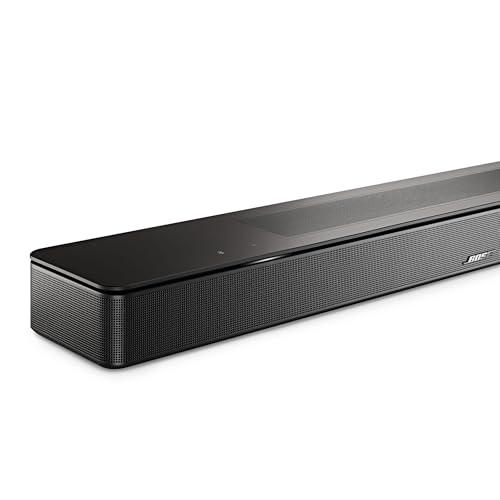
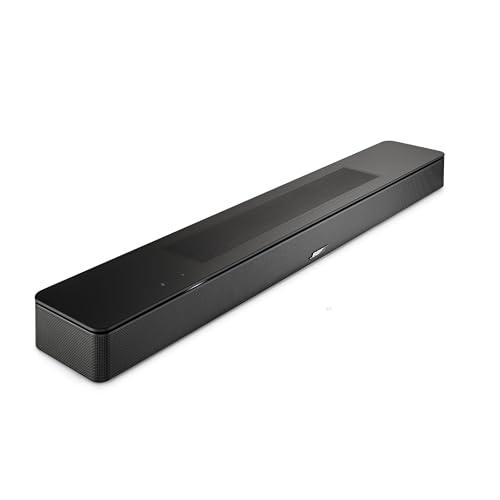
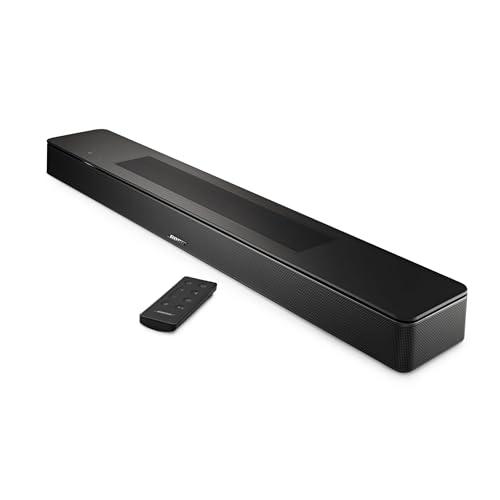
The Bose Smart Soundbar 1100 represents what we'd call the "smart and sensible" approach. At the time of writing, it sits in the mid-range price category and focuses heavily on dialogue clarity, smart home integration, and the kind of features that make daily TV watching more enjoyable. Bose designed this as a versatile upgrade that works well in most living rooms without requiring a lot of thought or additional components.
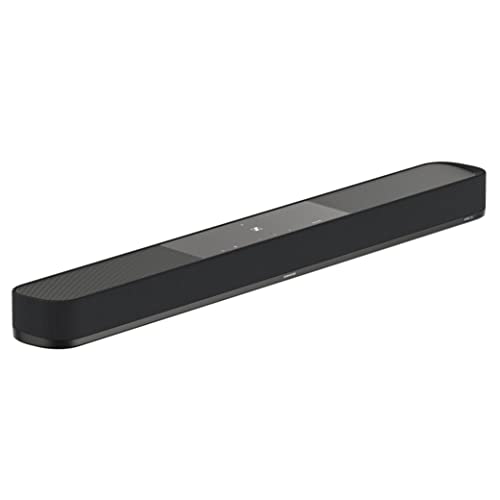
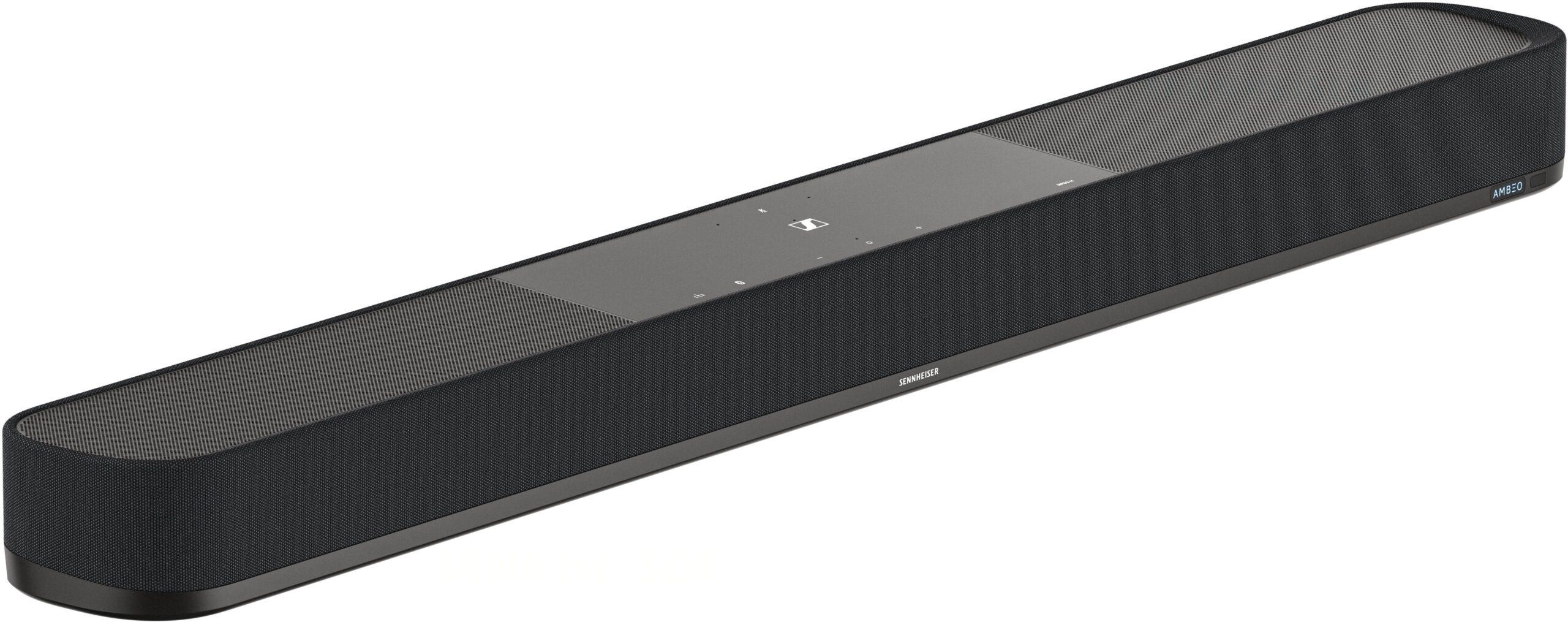
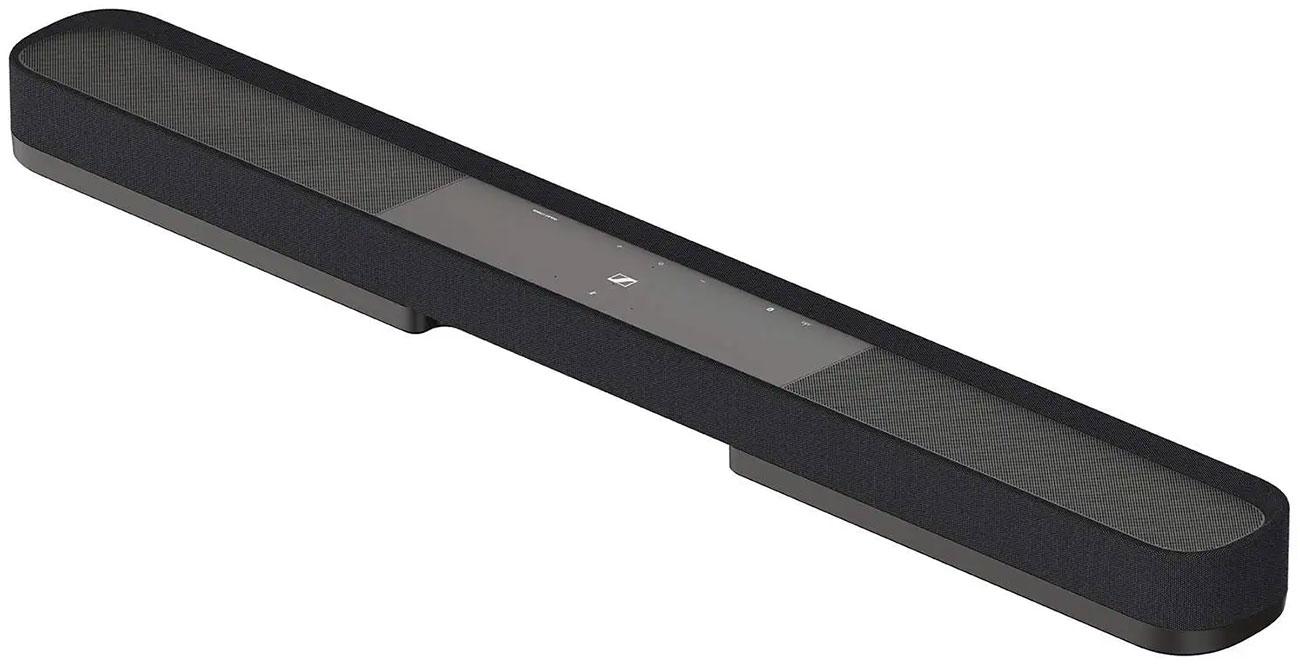
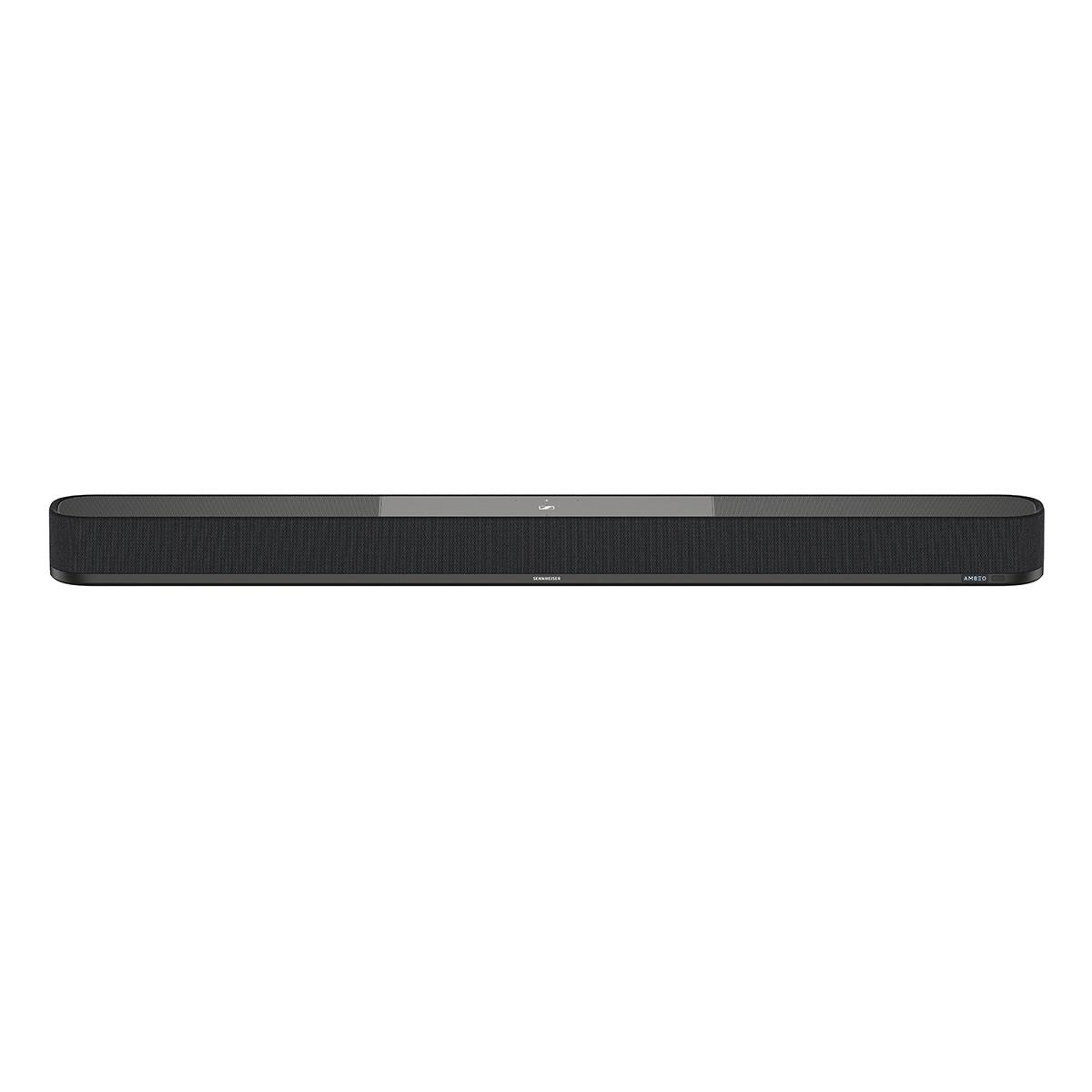
The Sennheiser AMBEO Soundbar Plus, on the other hand, takes the "audiophile single-solution" approach. Priced significantly higher at launch, it's designed for people who want the most immersive possible sound experience from a single soundbar. Sennheiser packed advanced virtualization technology and built-in subwoofers into a premium package aimed at serious home theater enthusiasts.
These different philosophies become apparent the moment you start using either device, and understanding which approach suits your needs better is key to making the right choice.
The Bose Smart Soundbar 1100 uses a 3.0.2 channel configuration, which might sound technical but breaks down simply: three main speakers across the front (left, center, right), zero traditional surround speakers, and two upward-firing drivers that bounce sound off your ceiling. This setup includes five total speakers plus a center tweeter, all working together to create what Bose calls a "spacious" soundstage.
What really sets the Bose Smart Soundbar 1100 apart is its focus on dialogue clarity. The A.I. Dialogue Mode uses artificial intelligence to automatically detect when people are speaking and adjusts the audio balance to make voices crystal clear without drowning out background music or sound effects. If you've ever found yourself constantly adjusting volume during movies—turning it up to hear dialogue, then quickly turning it down when the action starts—this feature is a game-changer.
Bose's TrueSpace technology takes non-Atmos content (which includes most regular TV shows and older movies) and processes it to create a more immersive experience. It's not quite the same as true Dolby Atmos, but it adds height and space to regular stereo or surround sound content.
However, the Bose Smart Soundbar 1100 has one significant limitation: bass response. Without an additional subwoofer, it struggles with deep, rumbling low frequencies. The included QuietPort technology helps minimize distortion and squeeze more bass from the compact design, but physics ultimately wins—there's only so much low-end you can get from a slim soundbar without dedicated bass drivers.
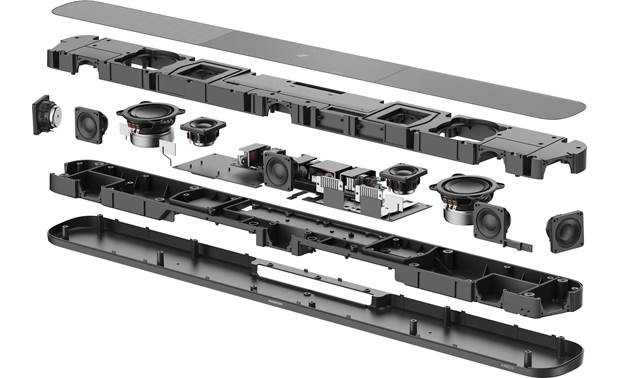
The Sennheiser AMBEO Soundbar Plus takes a completely different approach. Instead of expecting you to add a separate subwoofer later, Sennheiser built dual 4-inch subwoofers directly into the soundbar. This immediately gives it an advantage in bass response, with frequency response extending down to 38Hz—low enough to feel the rumble of explosions and the deep notes in music.
But the real star of the show is Sennheiser's AMBEO 3D virtualization technology. Developed in collaboration with the Fraunhofer Institute (a renowned German research organization), this system creates what many users describe as the most convincing "surround sound from a single box" experience available. The technology doesn't just bounce sound off your ceiling—it analyzes your room's acoustics and adjusts the audio processing to create convincing sound placement in three-dimensional space.
The Sennheiser AMBEO Soundbar Plus delivers 400 watts of total power through nine built-in speakers, each powered by its own dedicated amplifier. This setup, combined with support for advanced audio formats like DTS:X (which the Bose doesn't support), creates a more enveloping experience, particularly for movie content.
What's particularly impressive is how the Sennheiser AMBEO Soundbar Plus handles room calibration. Using built-in far-field microphones, it listens to test tones bouncing around your room and automatically adjusts its output to compensate for your room's unique acoustic characteristics. This means it sounds optimized whether you're in a small apartment or a large living room.
Based on our research into professional reviews and user feedback, several key performance areas separate these soundbars:
Dialogue Clarity: The Bose Smart Soundbar 1100 consistently receives praise for making voices easy to understand, even in complex audio scenes. The Sennheiser AMBEO Soundbar Plus also handles dialogue well, but users report that the Bose has a slight edge in this specific area.
Bass Extension: This is where the Sennheiser AMBEO Soundbar Plus clearly wins. The built-in subwoofers provide rumbling low-end that the Bose Smart Soundbar 1100 simply can't match without adding a separate subwoofer module.
Surround Sound Immersion: Professional reviewers consistently rank the Sennheiser AMBEO Soundbar Plus higher for creating convincing 3D audio effects. The AMBEO virtualization technology creates more precise sound placement and a wider, more enveloping soundstage.
Music Performance: Both soundbars handle music well, but the Sennheiser AMBEO Soundbar Plus's superior frequency response and more powerful amplification make it notably better for dedicated music listening.
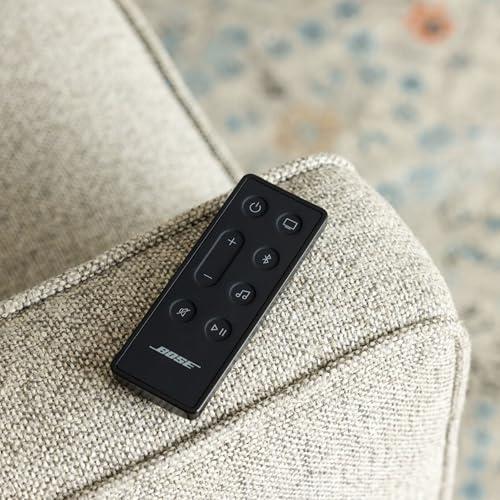
The Bose Smart Soundbar 1100 shines when it comes to smart features and daily usability. Built-in Amazon Alexa means you can control not just the soundbar, but your entire smart home setup using voice commands. The Voice4Video feature is particularly clever—it lets you use Alexa to control your TV and cable box, not just the soundbar itself.
For streaming music, the Bose Smart Soundbar 1100 supports all the major platforms: Apple AirPlay 2, Google Chromecast, and Spotify Connect. The Bose Music app ties everything together, allowing you to group the soundbar with other Bose speakers throughout your home for multi-room audio.
One unique feature is SimpleSync compatibility with Bose Ultra Open Earbuds. This creates a "personal surround sound" experience where the earbuds act as rear speakers that only you can hear—perfect for late-night movie watching without disturbing others.
However, the Bose Smart Soundbar 1100 has limited physical connectivity. It includes only one HDMI eARC port, one optical input, and a proprietary 3.5mm output for adding Bose subwoofers. This means it can't serve as a hub for multiple devices.
The Sennheiser AMBEO Soundbar Plus takes a more traditional approach to connectivity, offering more physical input options including two HDMI ports, optical, RCA, USB, and even Ethernet. This flexibility makes it easier to connect multiple devices directly to the soundbar.
For smart features, the Sennheiser AMBEO Soundbar Plus supports both Amazon Alexa and Google Assistant, though these require separate smart speakers—they're not built into the soundbar itself. The Smart Control app offers detailed customization options including four-band graphic EQs and multiple sound presets optimized for different content types.
The room calibration process deserves special mention. While it can be time-consuming and requires a quiet environment, users report that the results are worth the effort, with the soundbar delivering noticeably better performance after calibration.
The Bose Smart Soundbar 1100 measures just 27.3 inches wide and 2.2 inches tall, making it one of the more compact options available. At 6.9 pounds, it's light enough for easy wall mounting and won't overwhelm smaller TV stands. The minimalist design fits well in most living rooms without drawing attention to itself.
The Sennheiser AMBEO Soundbar Plus is substantially larger and heavier, reflecting its premium positioning and the additional drivers inside. While exact dimensions weren't specified in our research, user reports suggest it's better suited to larger TVs (55 inches and up) and more spacious rooms.
Our research into user reviews and professional testing reveals some interesting patterns. Bose Smart Soundbar 1100 owners consistently praise the dialogue clarity and ease of setup, but many end up purchasing the optional Bass Module within the first year to address the limited low-end response. When factoring in this additional cost, the total investment approaches the price of the Sennheiser AMBEO Soundbar Plus.
Sennheiser AMBEO Soundbar Plus users, meanwhile, report being impressed by the immersive audio experience right out of the box. The room calibration process, while sometimes finicky, typically results in noticeably improved performance. The main complaints center around the size and the learning curve required to take full advantage of all the customization options.
For home theater use specifically, the Sennheiser AMBEO Soundbar Plus consistently receives higher marks for movie watching, particularly action films and content with dynamic soundtracks. The Bose Smart Soundbar 1100 excels at TV shows, news, and dialogue-heavy content.
At the time of writing, the Bose Smart Soundbar 1100 represents solid value in the mid-range category, particularly if you prioritize smart features and dialogue clarity. However, the potential need for additional components should factor into your budget planning.
The Sennheiser AMBEO Soundbar Plus commands a premium price but delivers a more complete audio solution upfront. For dedicated home theater enthusiasts, the advanced virtualization technology and built-in subwoofers justify the higher cost.
You're looking for a versatile TV audio upgrade that excels at dialogue clarity and smart home integration. This soundbar makes sense for smaller to medium rooms, apartment dwellers who need to be mindful of neighbors, and anyone who values the convenience of voice control and seamless streaming integration. If you primarily watch TV shows, news, or dialogue-heavy content, the Bose Smart Soundbar 1100 will likely exceed your expectations.
The modular approach also suits people who prefer to start with a smaller investment and expand later. Just keep in mind that adding a subwoofer significantly increases the total cost.
You want the most immersive single-soundbar experience available and have a dedicated space for home theater use. This soundbar makes sense for larger rooms, serious movie enthusiasts, and anyone who listens to music as much as they watch TV. If you have a 55-inch or larger TV and sit at least 8 feet away, the Sennheiser AMBEO Soundbar Plus can deliver an experience that rivals much more complex multi-speaker systems.
The premium price is justified if you value having a complete solution that doesn't require additional purchases to achieve satisfying bass response.
Both soundbars excel in their intended roles, but they serve different audiences and use cases. The Bose Smart Soundbar 1100 is the better choice for most people—it offers excellent dialogue clarity, comprehensive smart features, and fits well in typical living room setups. The Sennheiser AMBEO Soundbar Plus is the better choice for dedicated home theater enthusiasts who want the most immersive possible audio experience from a single device.
Your room size, content preferences, and budget approach should ultimately guide your decision. Both represent significant upgrades over TV speakers, but understanding their different strengths ensures you'll be happy with your choice for years to come.
| Bose Smart Soundbar 1100 | Sennheiser AMBEO Soundbar Plus |
|---|---|
| Channel Configuration - Determines surround sound capability | |
| 3.0.2 channels with 5 speakers + center tweeter | 7.1.4 virtual channels with 9 built-in speakers |
| Built-in Subwoofer - Critical for bass without extra purchases | |
| No built-in subwoofer (optional Bass Module required) | Dual 4" built-in subwoofers included |
| Total Power Output - Affects volume and dynamic range | |
| Unspecified (estimated under 200W) | 400W with dedicated Class D amplifiers |
| Frequency Response - Shows how deep bass extends | |
| Not specified (limited low-end extension) | 38Hz to 20kHz (excellent bass extension) |
| Dolby Atmos Support - Essential for immersive overhead effects | |
| Yes, with 2 up-firing drivers | Yes, with advanced AMBEO 3D virtualization |
| DTS Format Support - Important for movie compatibility | |
| No DTS or DTS:X support | Full DTS:X and DTS support |
| Voice Assistant Integration - Convenience for smart home users | |
| Built-in Amazon Alexa with Voice4Video | External Alexa/Google Assistant compatible |
| Room Calibration - Optimizes sound for your specific space | |
| Basic Wall EQ preset only | Advanced auto-calibration with far-field microphones |
| Physical Connectivity - Flexibility for multiple devices | |
| 1 HDMI eARC, 1 optical, proprietary sub output | 2 HDMI, optical, RCA, USB, Ethernet |
| Dimensions - Important for TV compatibility and placement | |
| 27.3" W x 2.2" H x 4.6" D (compact design) | Larger premium build (exact dimensions not specified) |
| Streaming Services - Wireless music and content options | |
| AirPlay 2, Chromecast, Spotify Connect, Bluetooth | AirPlay 2, Chromecast, Spotify Connect, TIDAL Connect |
| Expandability - Future upgrade potential | |
| Bose Bass Module and Surround Speakers compatible | Optional AMBEO Sub, less expansion needed |
| Best Room Size - Optimal performance environment | |
| Small to medium rooms (up to ~200 sq ft) | Medium to large rooms (200+ sq ft recommended) |
The Bose Smart Soundbar 1100 is better suited for small rooms due to its compact 27.3-inch width and optimized performance in spaces up to 200 square feet. Its dialogue-focused tuning works well in close listening environments, while the Sennheiser AMBEO Soundbar Plus is designed for larger spaces and may overpower smaller rooms.
The Sennheiser AMBEO Soundbar Plus includes dual 4-inch built-in subwoofers, providing complete bass response without additional purchases. The Bose Smart Soundbar 1100 lacks built-in bass drivers and typically requires the optional Bose Bass Module for satisfying low-end performance, especially for movies and music.
The Bose Smart Soundbar 1100 excels at dialogue clarity with its A.I. Dialogue Mode that automatically adjusts tonal balance for crystal-clear voices. While the Sennheiser AMBEO Soundbar Plus also handles dialogue well, the Bose is specifically optimized for speech intelligibility in TV content.
Both soundbars support Dolby Atmos, but the Sennheiser AMBEO Soundbar Plus delivers more immersive overhead effects through its advanced AMBEO 3D virtualization technology and 9-speaker array. The Bose Smart Soundbar 1100 provides good Atmos performance with 2 up-firing drivers but creates a less enveloping experience.
The Sennheiser AMBEO Soundbar Plus is superior for dedicated home theater use, offering 400W power, built-in subwoofers, DTS:X support, and more convincing surround sound virtualization. The Bose Smart Soundbar 1100 works well for casual movie watching but lacks the power and bass extension for true cinematic experiences.
The Bose Smart Soundbar 1100 offers superior smart integration with built-in Amazon Alexa, Voice4Video TV control, and seamless streaming through AirPlay 2 and Chromecast. The Sennheiser AMBEO Soundbar Plus supports voice assistants but requires external devices and focuses more on audio customization than smart home integration.
The Bose Smart Soundbar 1100 provides better initial value for users prioritizing dialogue clarity and smart features, though adding a subwoofer increases total cost. The Sennheiser AMBEO Soundbar Plus offers better long-term value for home theater enthusiasts, delivering a complete high-performance solution without requiring additional purchases.
Both the Bose Smart Soundbar 1100 and Sennheiser AMBEO Soundbar Plus work with any TV through HDMI eARC/ARC or optical connections. The Sennheiser offers more connectivity options with dual HDMI ports, RCA, and USB inputs, while the Bose focuses on wireless connectivity and eARC for modern TV integration.
The Bose Smart Soundbar 1100 offers simpler setup through the intuitive Bose Music app with guided installation. The Sennheiser AMBEO Soundbar Plus requires more complex room calibration using built-in microphones, which takes longer but optimizes performance for your specific space.
Both soundbars handle music well, but the Sennheiser AMBEO Soundbar Plus delivers superior music performance with its 400W power output, extended frequency response, and dedicated amplifiers for each speaker. The Bose Smart Soundbar 1100 provides good music quality but lacks the bass extension and power for serious music listening.
The Bose Smart Soundbar 1100 has a much more compact footprint at 27.3 inches wide and 2.2 inches tall, making it ideal for smaller TV stands and wall mounting. The Sennheiser AMBEO Soundbar Plus is substantially larger and heavier, requiring more space and working best with 55-inch or larger TVs.
The Sennheiser AMBEO Soundbar Plus supports more audio formats including Dolby Atmos, DTS:X, and MPEG-H for maximum movie compatibility. The Bose Smart Soundbar 1100 supports Dolby Atmos and Dolby Digital formats but lacks DTS support, which may limit compatibility with some Blu-ray discs and streaming content.
We've done our best to create useful and informative comparisons to help you decide what product to buy. Our research uses advanced automated methods to create this comparison and perfection is not possible - please contact us for corrections or questions. These are the sites we've researched in the creation of this article: bestbuy.com - rtings.com - rtings.com - youtube.com - staples.com - youtube.com - soundguys.com - businessinsider.com - youtube.com - rtings.com - crutchfield.com - youtube.com - youtube.com - smart.dhgate.com - dolby.com - bose.com - assets.bose.com - bose.com - connection.com - bestbuy.com - cdw.com - dell.com - device.report - techradar.com - pocket-lint.com - moon-audio.com - stereonet.com - rtings.com - abt.com - projectorscreen.com - youtube.com - videoandaudiocenter.com - crutchfield.com - sennheiser-hearing.com - newsroom.sennheiser.com

Privacy Policy
Terms and Conditions - Affiliate Policy
Home Security
© Copyright 2008-2026.
11816 Inwood Rd #1211, Dallas, TX 75244