

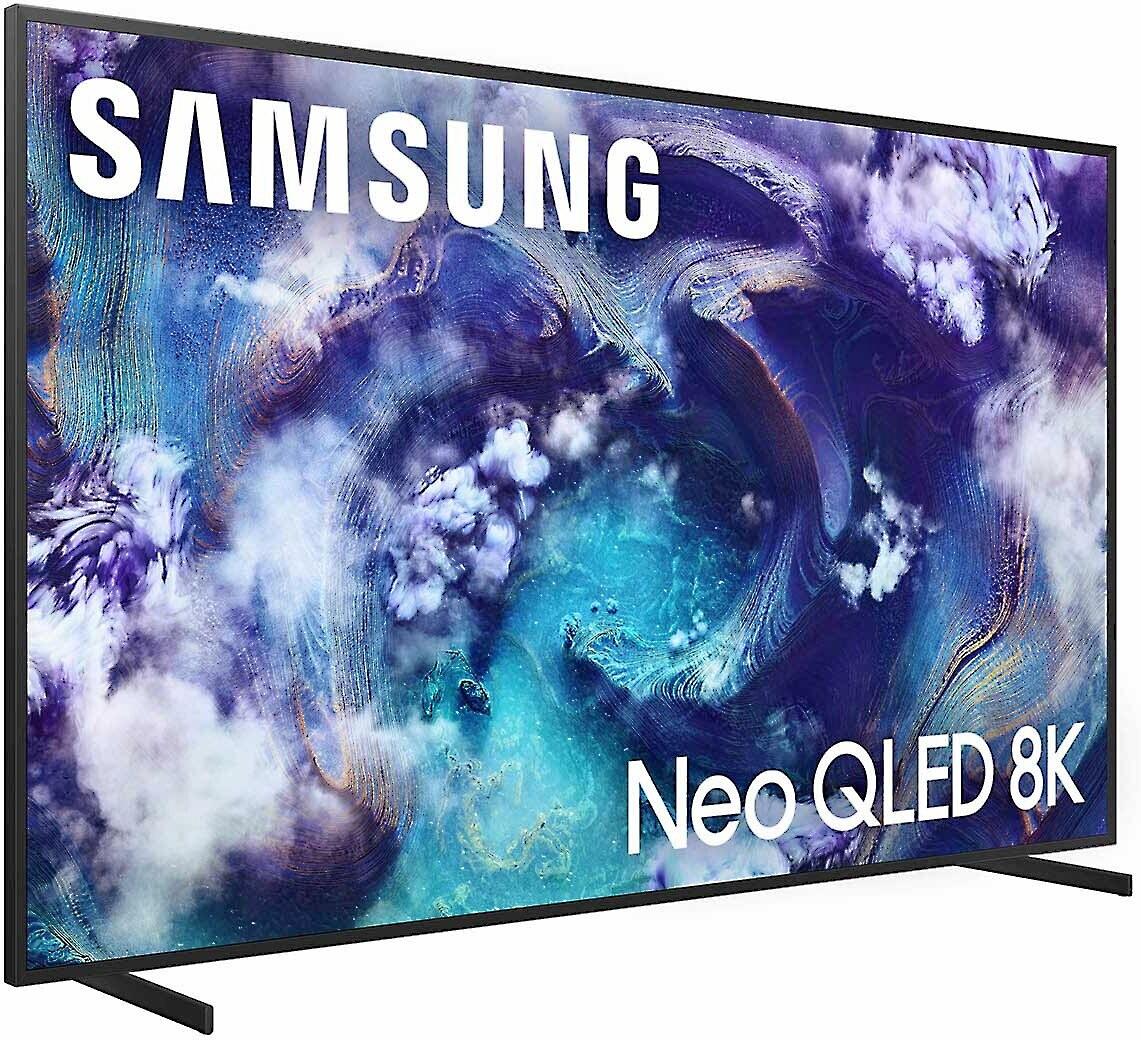
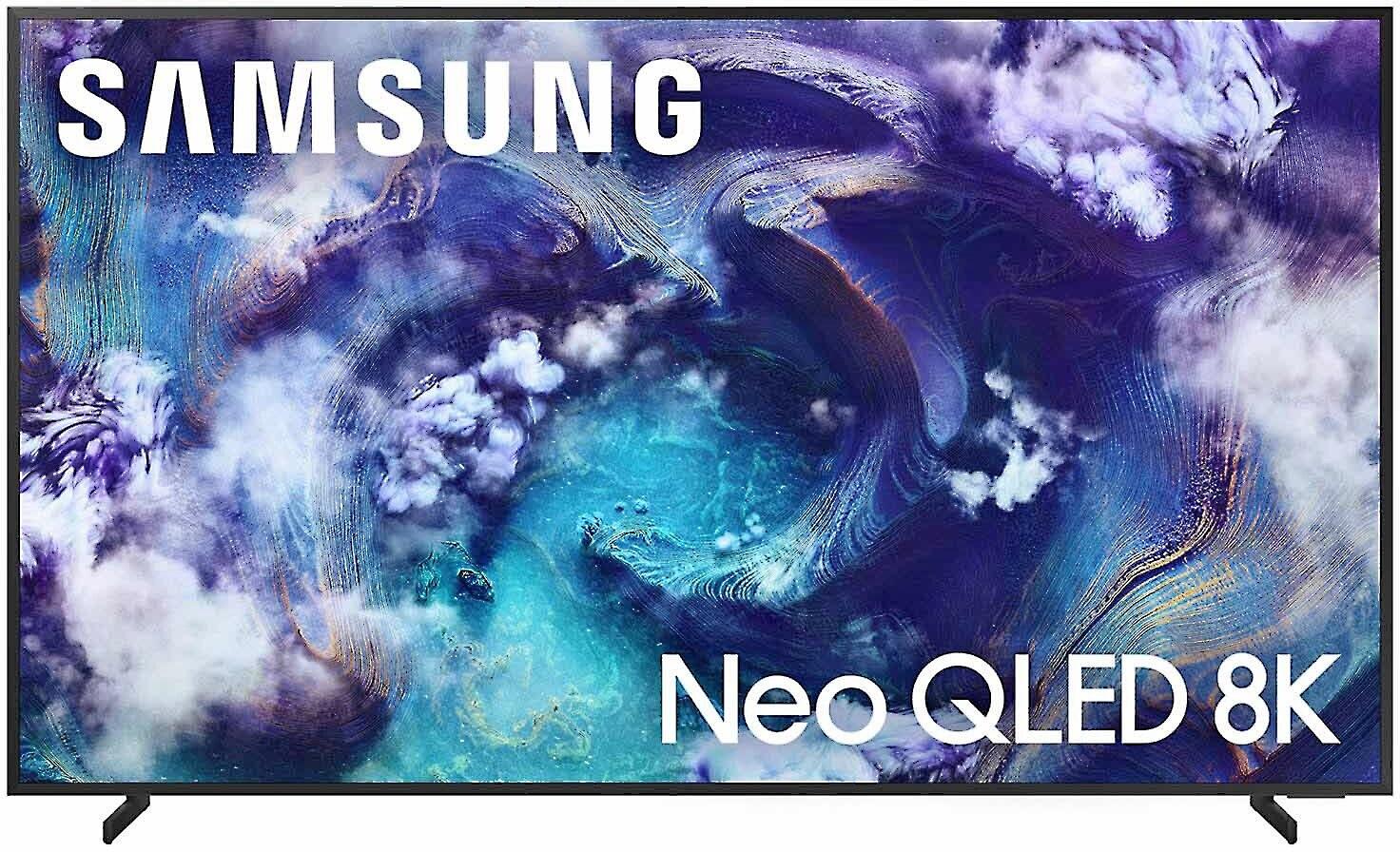
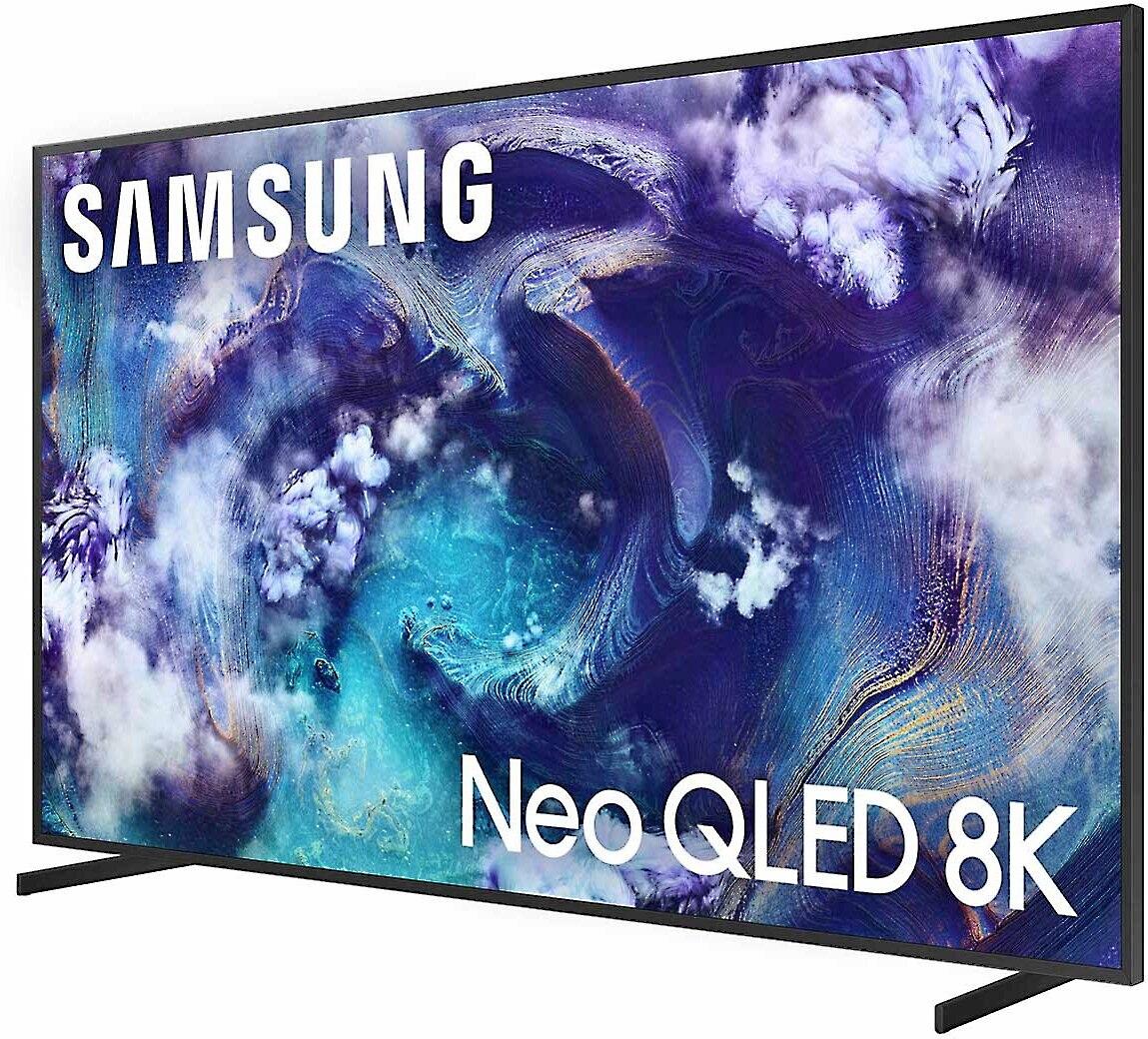

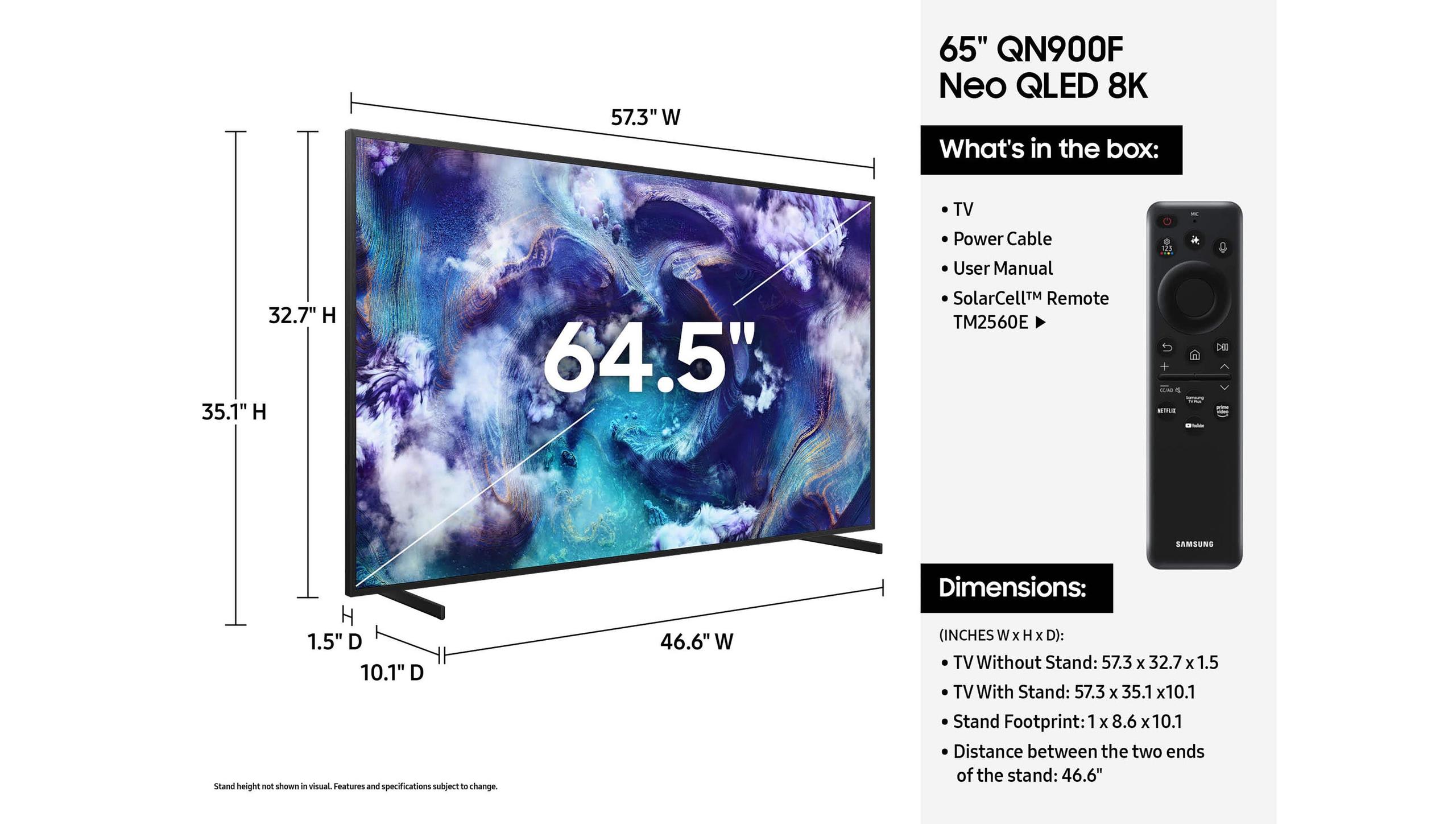
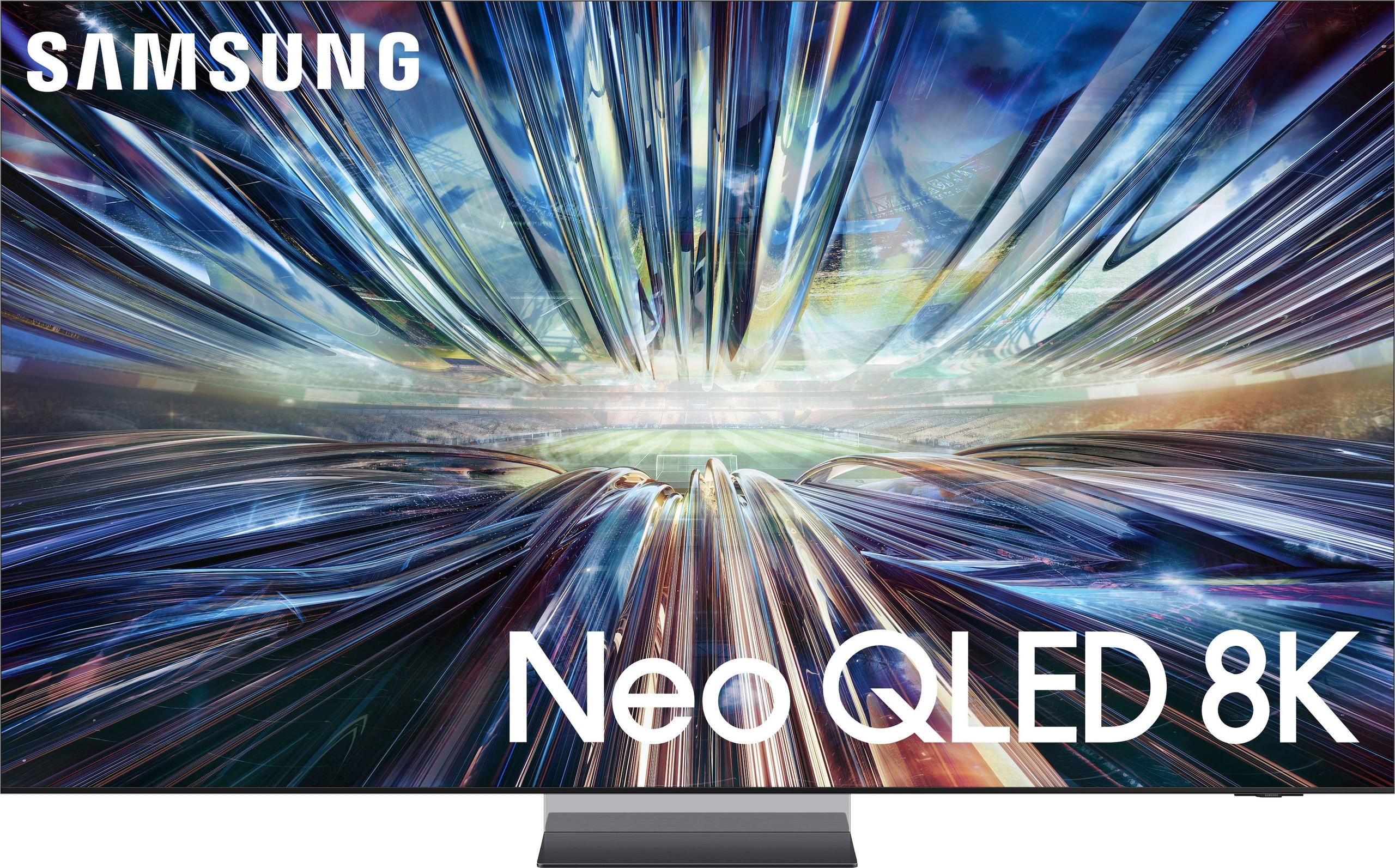
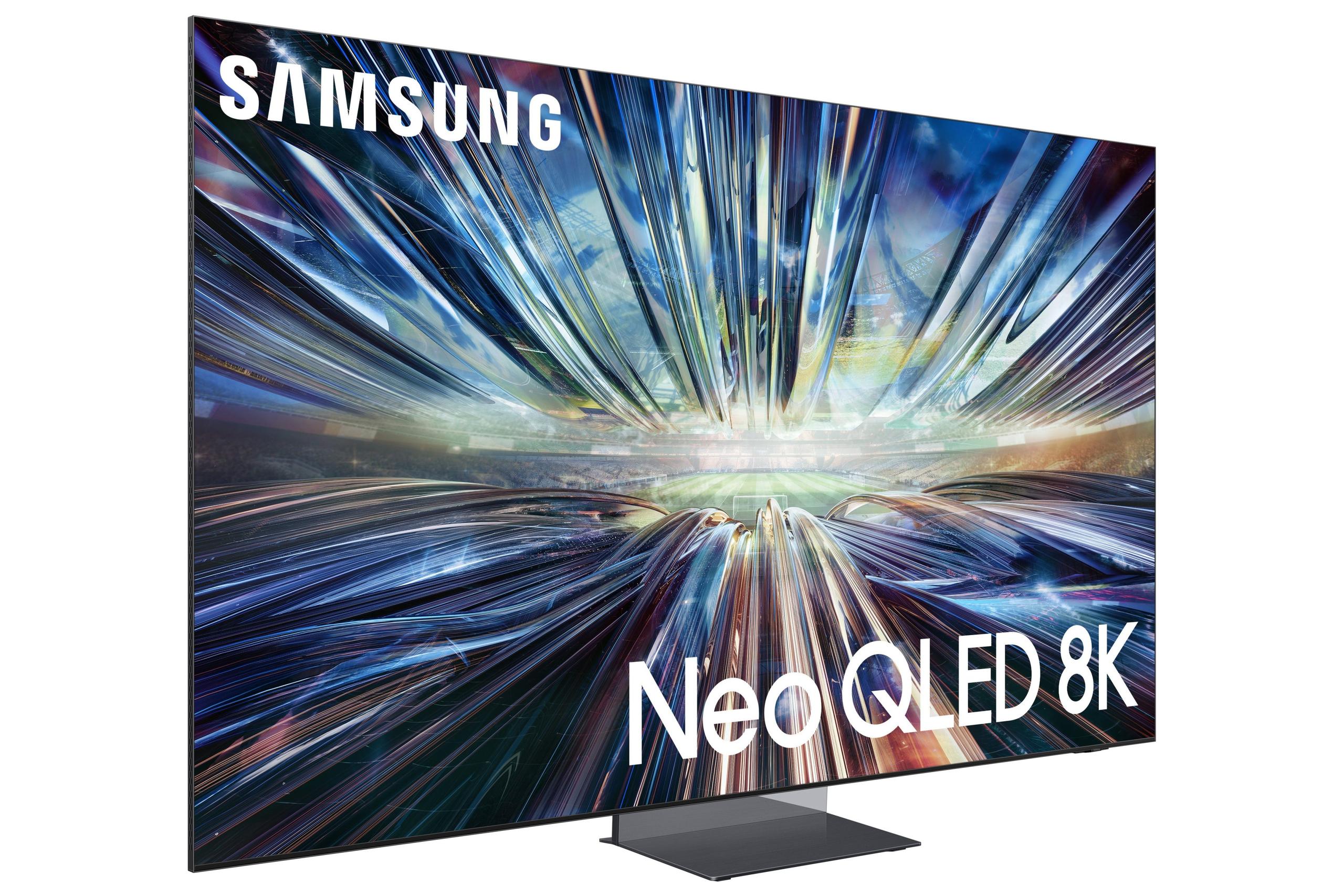
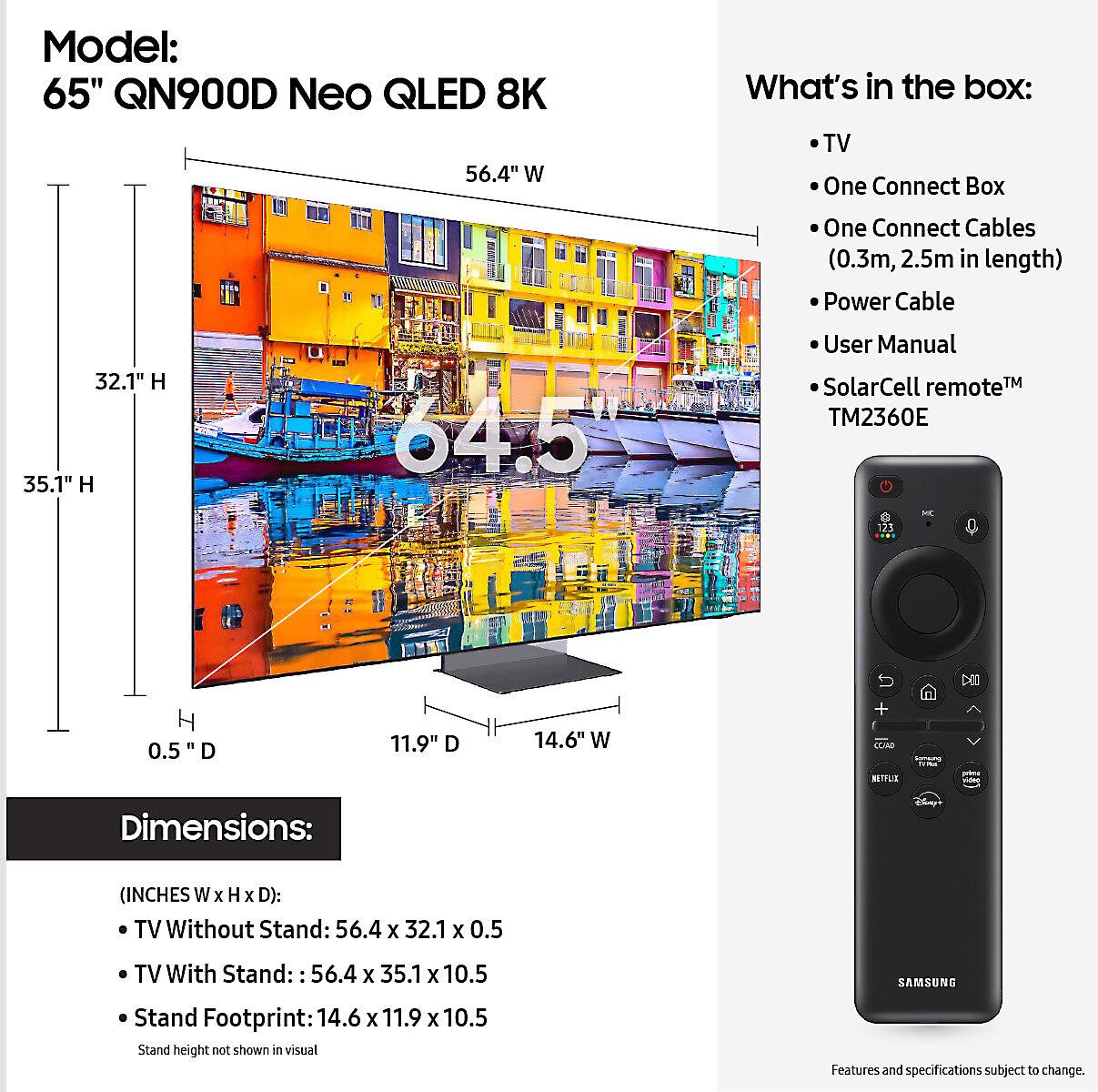
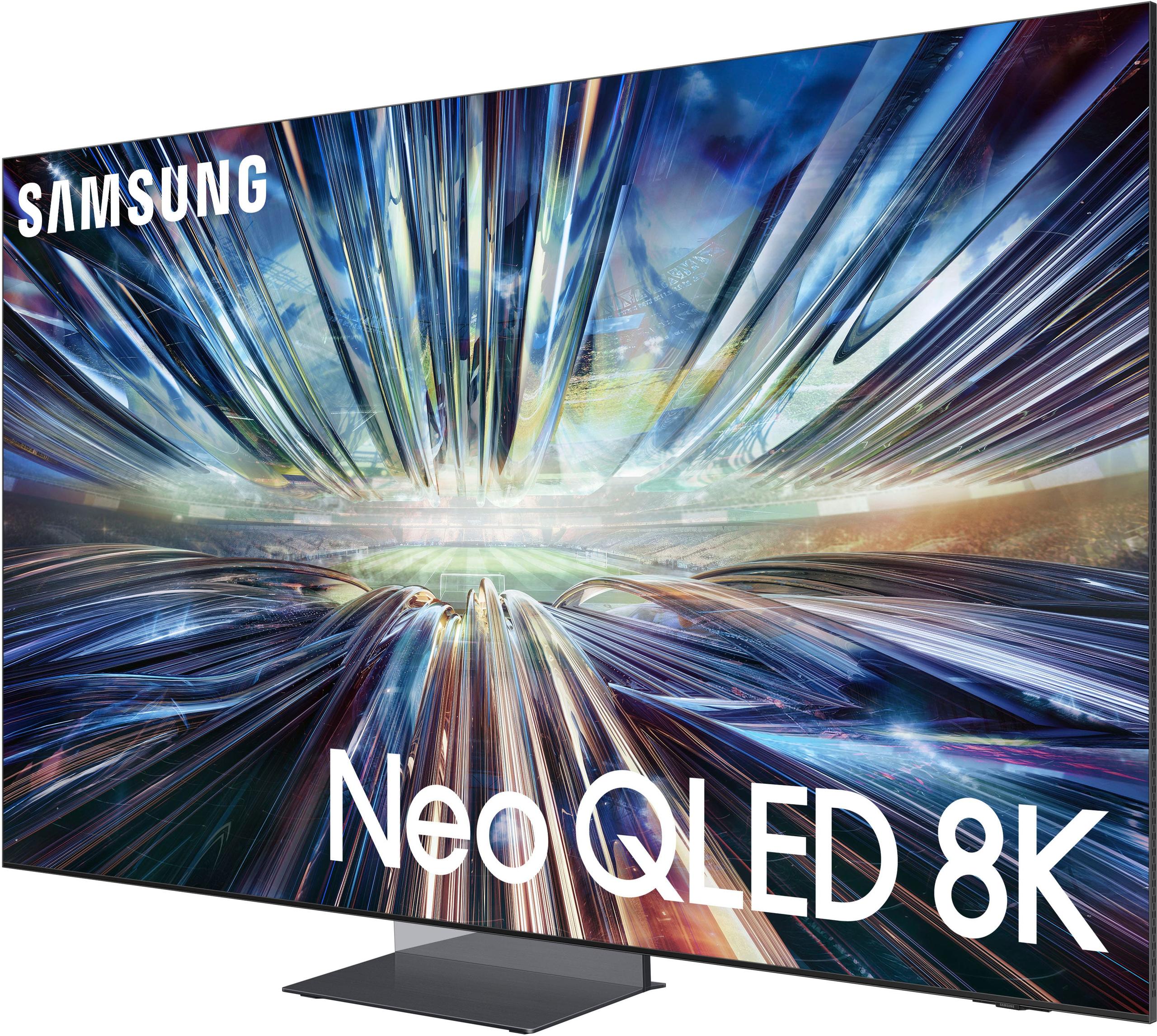
If you're shopping for a premium 8K TV and have narrowed it down to Samsung's offerings, you've probably encountered two models that seem confusingly similar: the QN900F from 2025 and the QN900D from 2024. Here's where it gets interesting—and frankly, a bit weird. The newer model isn't necessarily better across the board, and at the time of writing, the older model costs significantly less while delivering superior performance in several key areas.
This situation perfectly illustrates why understanding the details matters when you're spending thousands on a TV. Let's break down what you really need to know to make the right choice for your home theater.
Before diving into specifics, it's worth understanding what you're getting into with 8K TVs. These displays pack four times as many pixels as 4K TVs—we're talking about 7,680 x 4,320 pixels crammed into your screen. That's an absolutely massive amount of detail, but here's the catch: there's virtually no native 8K content available for consumers yet.
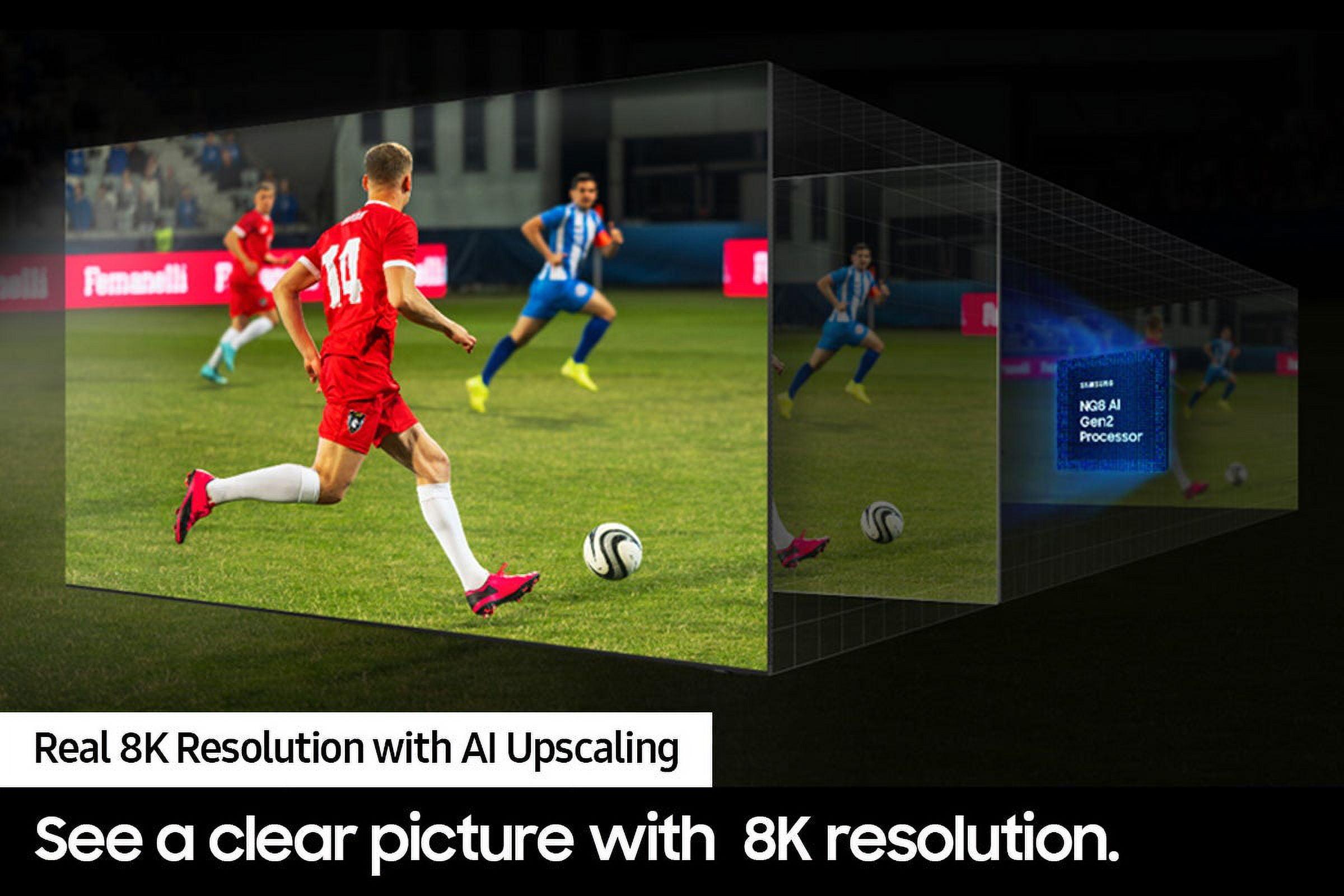
So why buy 8K? The real magic happens in upscaling—the process where the TV's processor takes lower-resolution content and intelligently fills in the missing pixels to create a sharper, more detailed image. Modern AI-powered upscaling can work miracles, making your Netflix shows, Blu-rays, and even old DVDs look dramatically better than they would on a standard 4K TV.
The key considerations for any premium 8K TV include picture quality (brightness, contrast, and color accuracy), gaming performance for console enthusiasts, smart features and processing power, and overall value. Both the QN900F and QN900D excel in these areas, but in surprisingly different ways.
Here's where things get confusing. Samsung equipped the QN900D from 2024 with their NQ8 AI Gen3 Processor, while the newer QN900F uses the NQ8 AI Gen2 Processor. Yes, you read that correctly—the 2025 model uses an older processor than the 2024 model.
This isn't a typo or oversight. Samsung positioned the QN900F as their entry-level 8K TV for 2025, which means they had to cut costs somewhere. Unfortunately, they chose to downgrade the processing power, which is arguably the most important component in an 8K TV since it handles all that crucial upscaling work.
The NQ8 AI Gen3 Processor in the QN900D uses advanced neural networks to analyze each frame of content in real-time. It examines texture, lighting, motion, and even the type of content you're watching (sports, movies, animation) to apply the most appropriate upscaling and enhancement algorithms. This processor is at least twice as fast as Samsung's 4K TV processors, and it shows in the results.
Based on professional reviews and user feedback, the QN900D consistently delivers more accurate upscaling with fewer artifacts—those annoying digital imperfections that can make upscaled content look artificial or overly sharp. The difference is particularly noticeable with heavily compressed streaming content, where the superior processor can better reconstruct lost detail.
This is where the comparison gets really interesting. The QN900F introduces Samsung's most significant display innovation in years: a matte anti-reflective coating that virtually eliminates screen glare. If you've ever struggled to watch TV during the day because of window reflections, you'll understand why this is revolutionary.
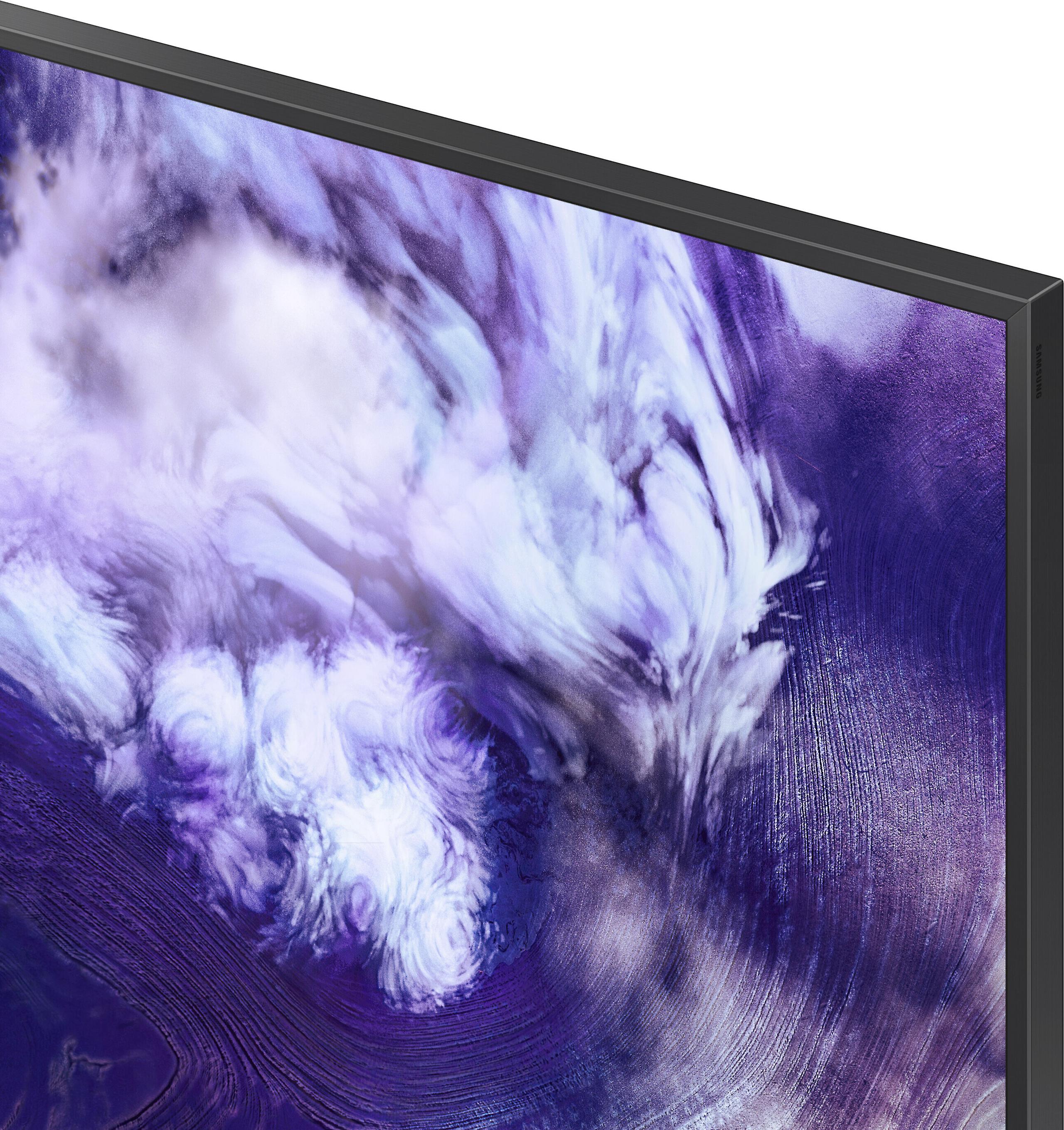
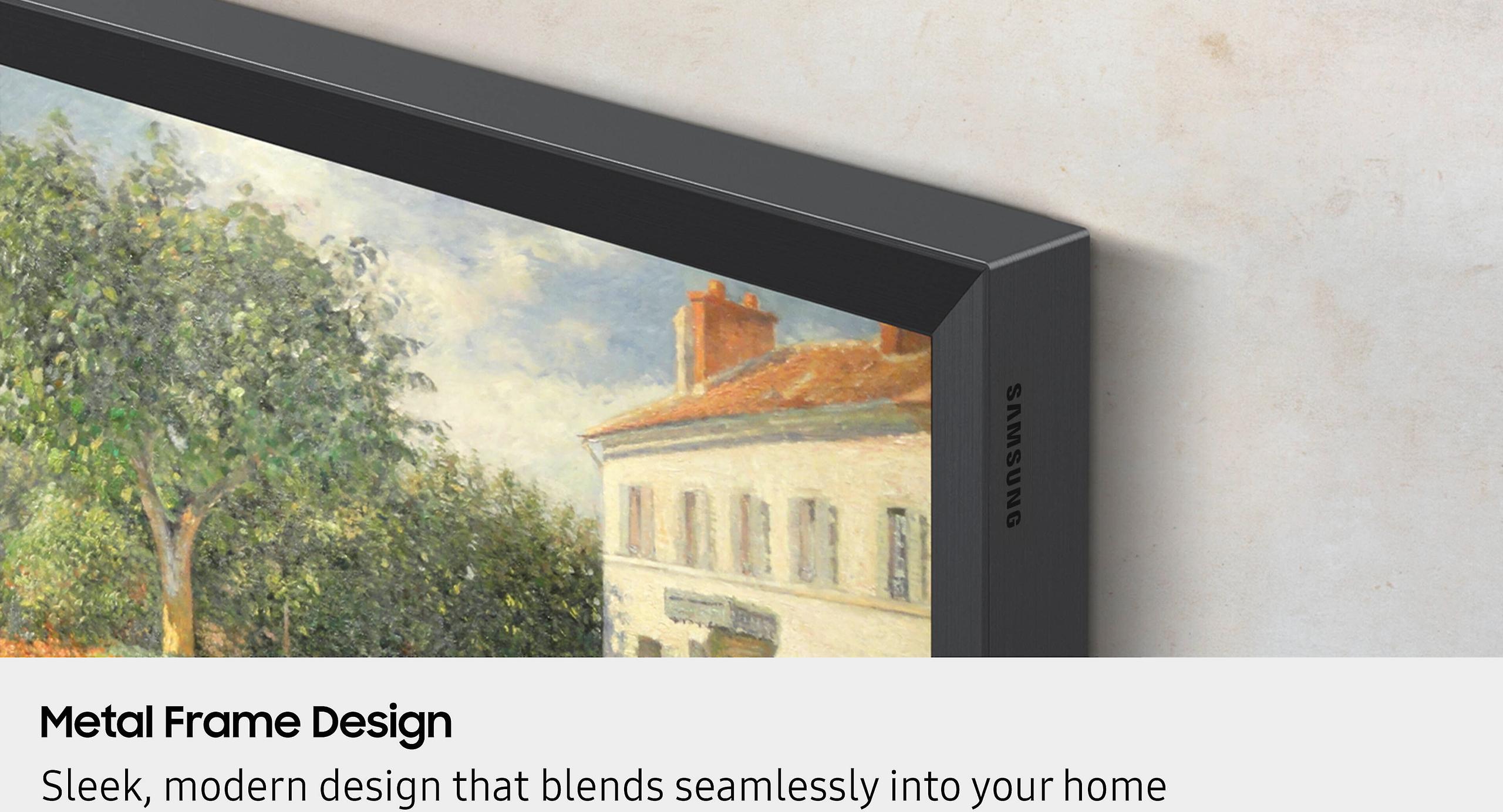
This anti-glare technology, borrowed from Samsung's premium OLED TVs, makes the screen appear almost like a painting when it's turned off. During bright daylight viewing, where most TVs become nearly unwatchable mirrors, the QN900F maintains excellent contrast and color accuracy. It's genuinely impressive technology that solves one of the biggest problems with large TVs in modern homes with lots of windows.
However, there's a trade-off. Some users have reported that this matte coating can make the picture appear slightly duller or less vibrant compared to traditional glossy screens, especially in darker viewing environments. The effect varies by individual sensitivity and viewing conditions, but it's worth considering if you primarily watch in a controlled, dark room.
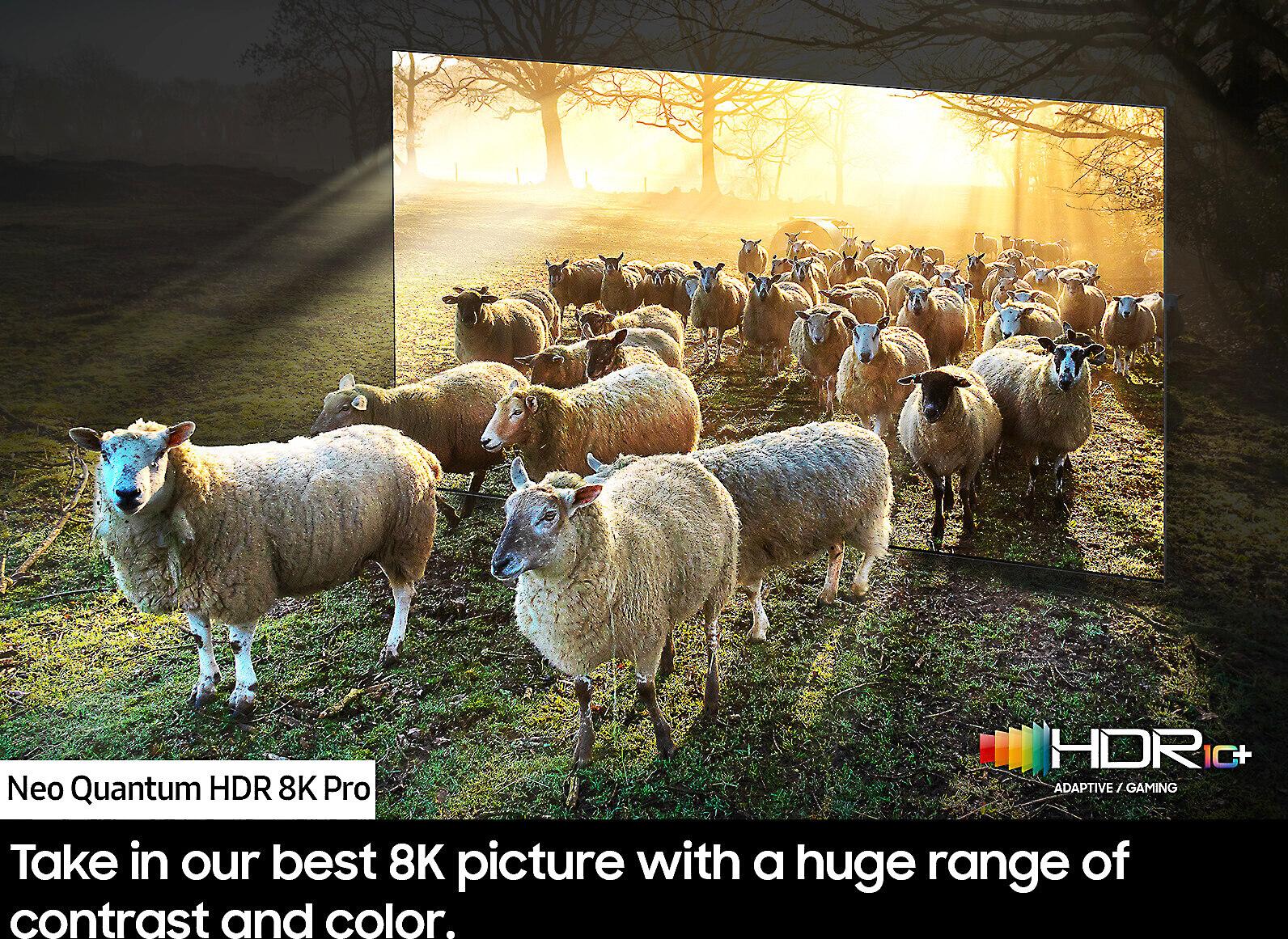
The QN900D, meanwhile, uses a traditional glossy screen but compensates with superior overall picture processing. It achieves similar peak brightness levels (both TVs hit around 2,300-2,400 nits) but delivers what many reviewers consider more natural, accurate colors and better overall HDR performance.
Both TVs use Mini-LED backlighting with thousands of tiny LEDs providing precise local dimming. This technology allows for incredibly deep blacks right next to brilliant whites—crucial for that cinematic experience. The QN900F features 1,446 individual dimming zones, while the QN900D uses a similar but slightly different configuration that still delivers excellent contrast control.
For gamers, the differences between these TVs become stark. The QN900D was clearly designed with serious gaming in mind, supporting refresh rates up to 240Hz when using Variable Refresh Rate (VRR) technology. VRR synchronizes the TV's refresh rate with your gaming console or PC's frame rate, eliminating screen tearing and stuttering for incredibly smooth gameplay.
The newer QN900F caps out at 165Hz for gaming—still excellent by most standards, but a step backward from its predecessor. However, it partially redeems itself with significantly lower input lag, measuring just 11.4 milliseconds at 4K 60Hz. Input lag is the delay between when you press a button and when that action appears on screen, and lower is always better for responsive gaming.
Both TVs support all the latest gaming features including Auto Game Mode (which automatically switches to optimal gaming settings when it detects a console), HDMI 2.1 bandwidth on multiple ports, and comprehensive VRR support including AMD FreeSync and NVIDIA G-Sync compatibility.
For competitive gaming or if you have a high-end gaming PC capable of pushing frame rates above 165Hz, the QN900D is the clear winner. For casual gaming or if you prioritize responsiveness over maximum refresh rates, the QN900F's lower input lag might be more important.
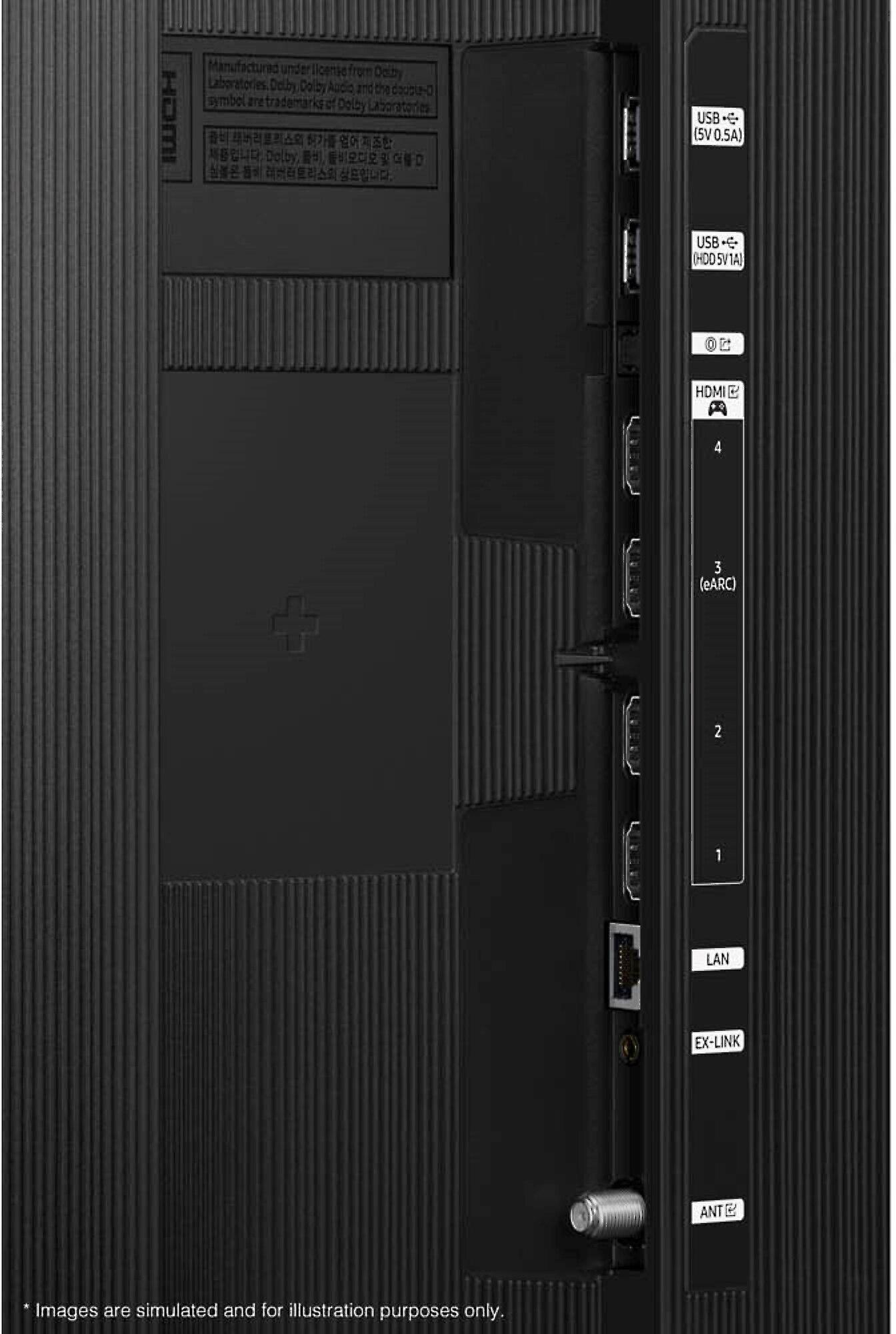
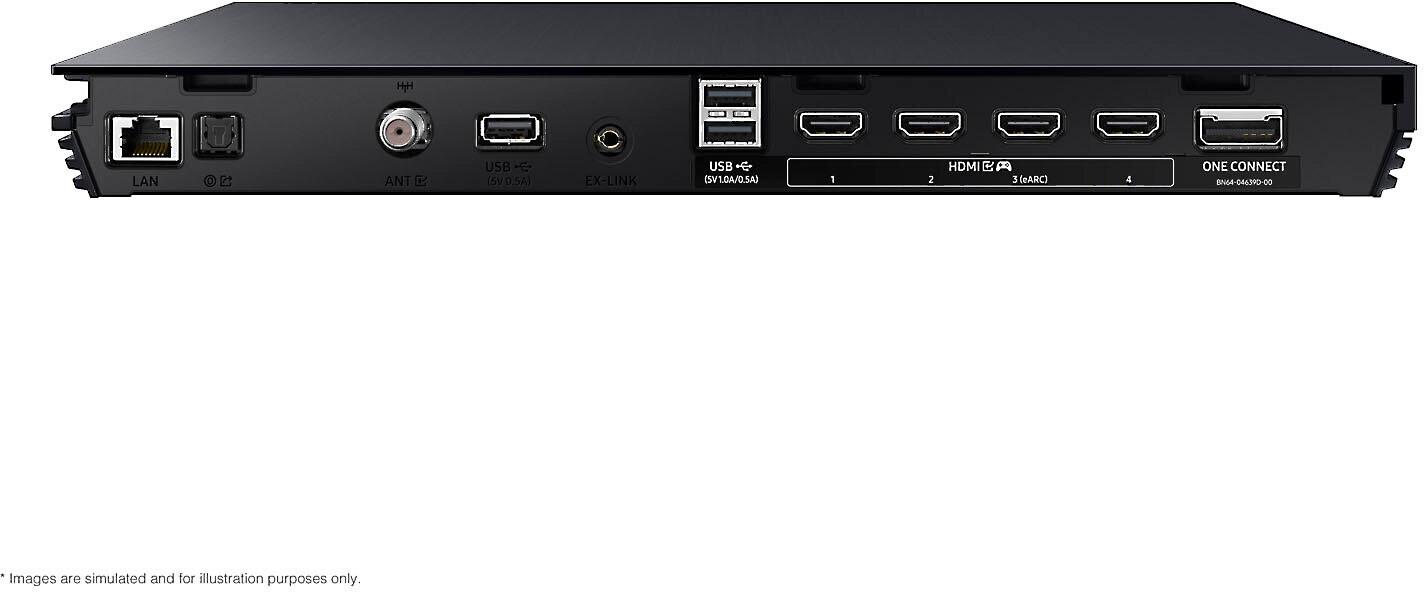
The QN900D includes Samsung's One Connect Box—a separate unit that houses all the TV's inputs and connections. This might seem like an unnecessary complication, but it's actually a premium feature that simplifies installation dramatically. All your devices (gaming consoles, streaming boxes, sound systems) connect to the One Connect Box, which then sends everything to the TV through a single, thin cable.
This setup is particularly valuable for wall-mounted installations or if you want to hide all your cables and equipment in a cabinet. The One Connect Box can be placed up to several feet away from the TV, making cable management much cleaner and allowing for more flexible room layouts.
The QN900F eliminates this feature, requiring direct connections to the TV itself. While this simplifies the overall setup and reduces potential points of failure, it also means more visible cables and less installation flexibility.
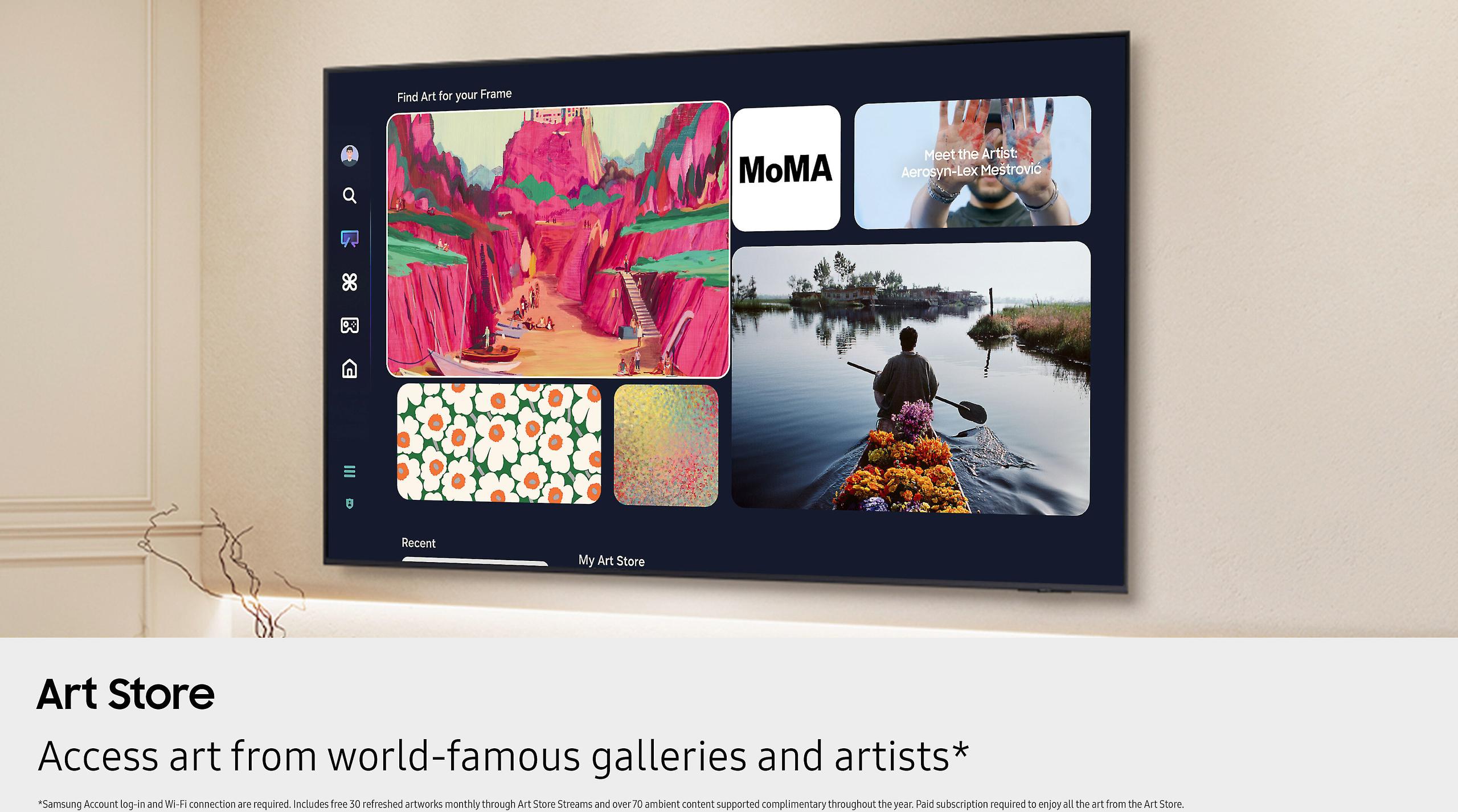
On the software side, the QN900F runs Tizen 9.0, Samsung's latest smart TV platform with enhanced AI recommendations and improved interface design. The QN900D uses an earlier version of Tizen but still provides comprehensive smart TV functionality with access to all major streaming services, voice control, and Samsung's various AI-powered features.
At the time of writing, the pricing situation strongly favors the QN900D. Despite being the older model, it typically costs over $1,000 less than the QN900F while offering superior processing power, better gaming capabilities, and the premium One Connect Box feature.
The QN900F's higher price reflects its newer model status and the cost of that innovative anti-glare technology, but from a pure performance standpoint, it's hard to justify the premium unless that anti-glare coating is essential for your viewing environment.
This pricing dynamic creates an unusual situation where the "older" model represents better value for most buyers. The QN900D has also had time for any initial software bugs to be resolved and has received consistent firmware updates throughout 2024.
For dedicated home theater setups, the choice between these TVs often comes down to your room design. If you have a controlled lighting environment—think basement theater room with blackout curtains and minimal ambient light—the QN900D is likely the better choice. Its superior processing power, gaming capabilities, and proven picture quality make it ideal for serious movie watching and gaming.
However, if your "home theater" is actually your living room with large windows and varying lighting conditions throughout the day, the QN900F's anti-glare technology becomes incredibly valuable. There's nothing worse than spending thousands on a premium TV only to have it become a mirror during afternoon viewing sessions.
The audio performance is comparable between both models, featuring multi-channel speaker systems with Object Tracking Sound—technology that moves audio around the screen to match the action. Both support Dolby Atmos for three-dimensional sound, though serious home theater enthusiasts will likely pair either TV with a dedicated sound system anyway.
Based on extensive research into professional reviews and user feedback, here's how I'd break down the decision:
Choose the QN900D if you're looking for maximum value in a premium 8K TV. It offers flagship performance at a significantly lower price point, making it ideal for enthusiasts who want cutting-edge picture quality without paying the absolute premium for the latest features. It's particularly compelling for gamers who want that 240Hz refresh rate capability and for anyone planning a clean, professional installation using the One Connect Box.
The QN900F makes sense for specific situations: bright rooms where glare is a constant problem, buyers who prioritize having the latest technology regardless of cost, or those who want their TV to essentially disappear into the wall like a piece of art when it's turned off.
When evaluating 8K TVs, several technical metrics matter more than others. Peak brightness determines how vibrant HDR content can look and how well the TV performs in bright rooms. Both TVs excel here, but brightness alone doesn't tell the whole story.
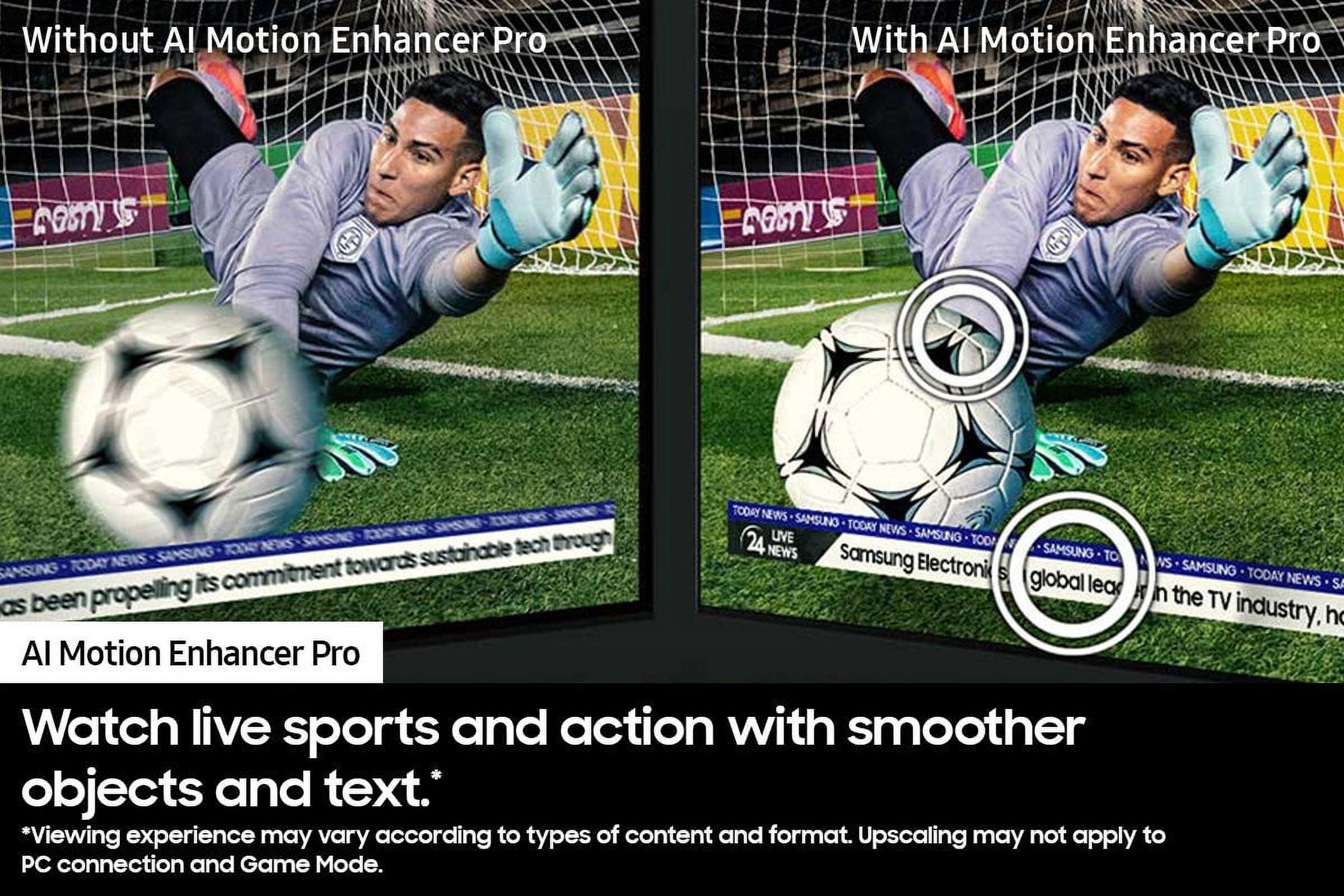
Color gamut coverage—how much of the visible color spectrum the TV can reproduce—is crucial for lifelike images. Local dimming performance affects contrast ratios and how deep the blacks can get while maintaining bright highlights. Motion handling determines how well the TV displays fast action without blur or artifacts.
The QN900D generally excels across these metrics thanks to its superior processor, while the QN900F focuses more on solving the ambient light problem that affects all these other measurements.
After analyzing the technical specifications, professional reviews, and user feedback, the QN900D emerges as the better overall choice for most buyers. It delivers superior performance in the areas that matter most for daily viewing while costing significantly less.
However, the QN900F's anti-glare technology isn't just a gimmick—it's a genuine solution to a real problem that affects many living rooms. If you've struggled with TV glare in your space, paying the premium might be worth it.
The irony is that Samsung's cost-cutting measures for their 2025 entry-level 8K model resulted in a TV that's less capable than its predecessor in several key areas, despite carrying the newer model designation. This situation won't last forever—eventually, the QN900D will be discontinued and prices will normalize—but for now, it represents an exceptional value in the premium TV market.
For most buyers, I'd recommend the QN900D unless you have a specific glare problem that the QN900F's matte coating would solve. The superior processing power, gaming capabilities, and overall value proposition make it the smarter choice for anyone wanting flagship 8K performance without paying flagship prices.
| Samsung 65" Neo QLED 8K QN900F Vision AI Smart TV 2025 | Samsung QN900D Series 65" Neo QLED 8K Smart TV |
|---|---|
| Processor - The brain that handles crucial 8K upscaling and AI features | |
| NQ8 AI Gen2 Processor (counterintuitively older than 2024 model) | NQ8 AI Gen3 Processor (more advanced despite being 2024 model) |
| Anti-Glare Technology - Critical for bright rooms with lots of windows | |
| Revolutionary matte anti-reflective coating virtually eliminates glare | Standard glossy screen susceptible to ambient light reflections |
| Gaming Refresh Rate - Maximum smoothness for high-end gaming setups | |
| 165Hz maximum (still excellent for most gamers) | 240Hz with VRR (superior for competitive gaming and high-end PCs) |
| Input Lag - Responsiveness for gaming, lower is better | |
| Excellent 11.4ms at 4K 60Hz (very responsive) | Higher input lag but still gaming-capable |
| One Connect Box - Premium feature for clean installations | |
| Not included (direct TV connections required) | Included (enables near-wireless setup with external connection box) |
| Peak Brightness - HDR performance and daytime viewing capability | |
| 2,350 nits (excellent HDR performance) | 2,338 nits (virtually identical brightness levels) |
| Local Dimming Zones - Contrast control for deeper blacks | |
| 1,446 zones in 52x28 grid (precise backlight control) | Similar Mini-LED configuration with proven performance |
| Smart Platform - Latest features and interface design | |
| Tizen 9.0 with 256 neural networks (newest features) | Earlier Tizen version but comprehensive functionality |
| Design Philosophy - Physical appearance and installation | |
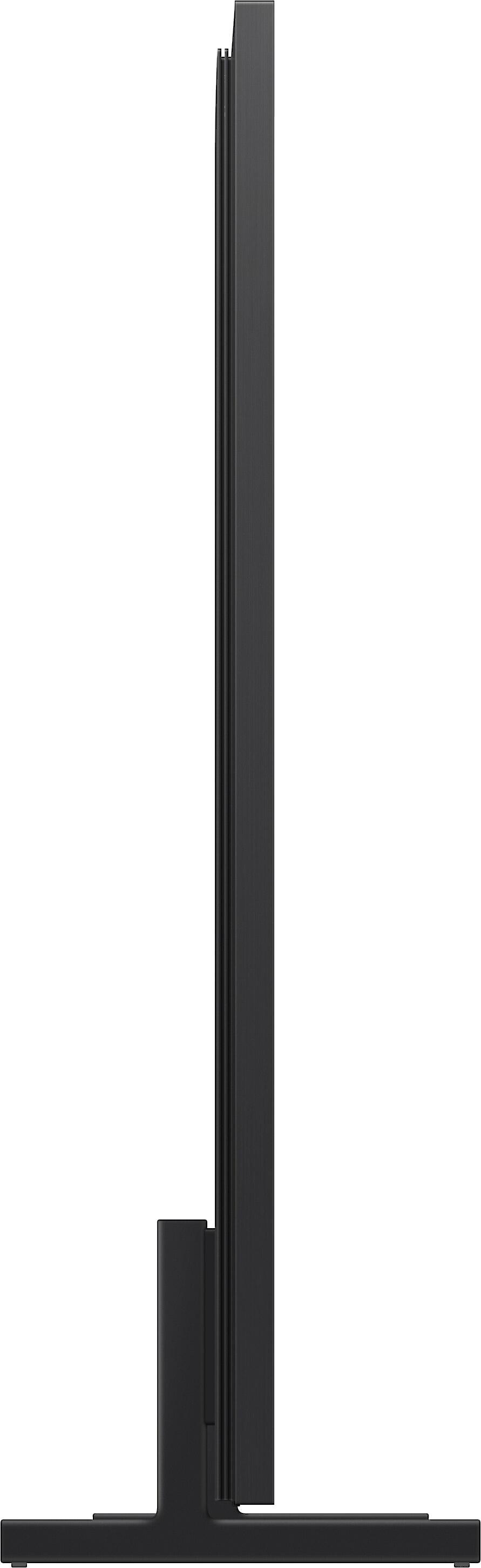
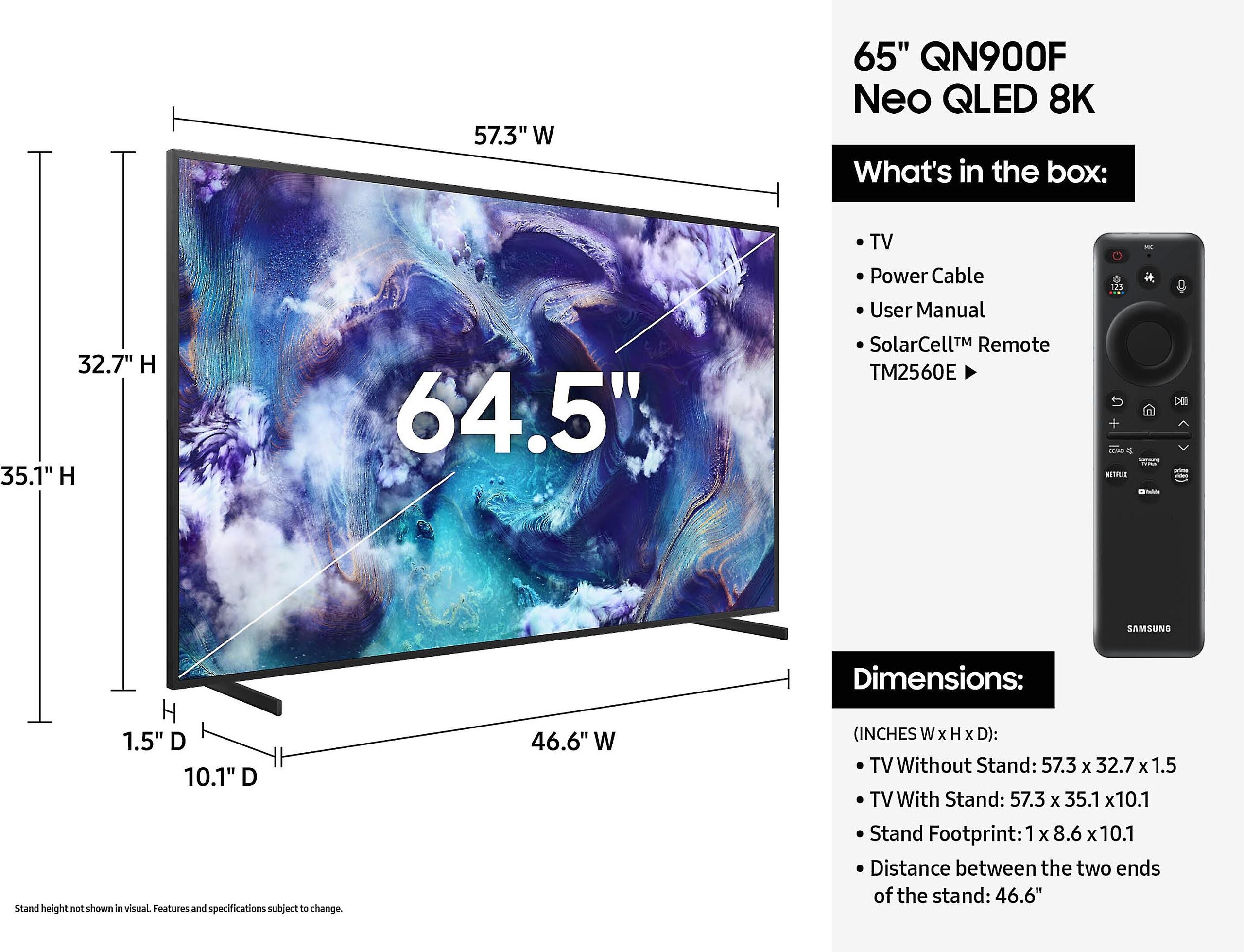
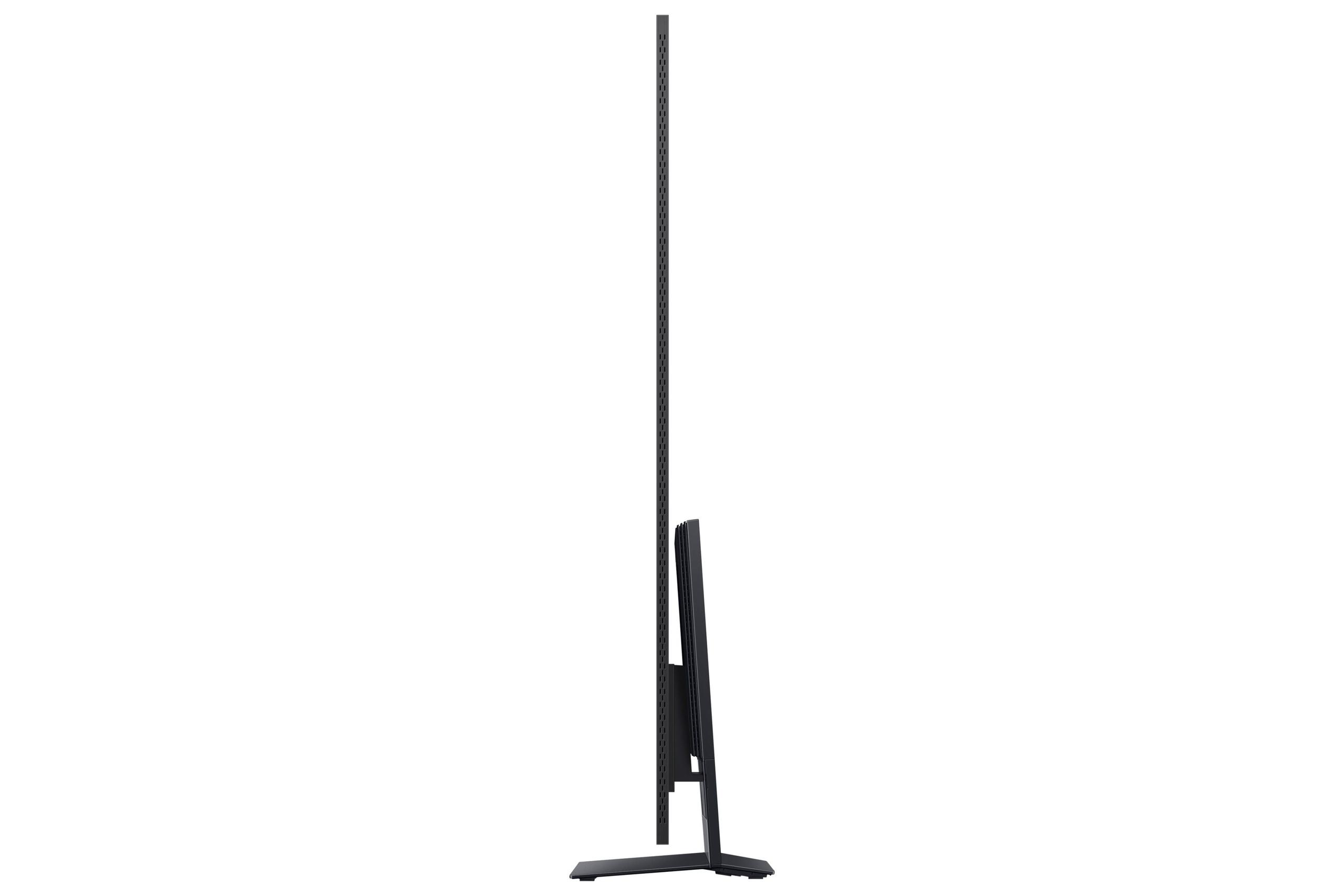
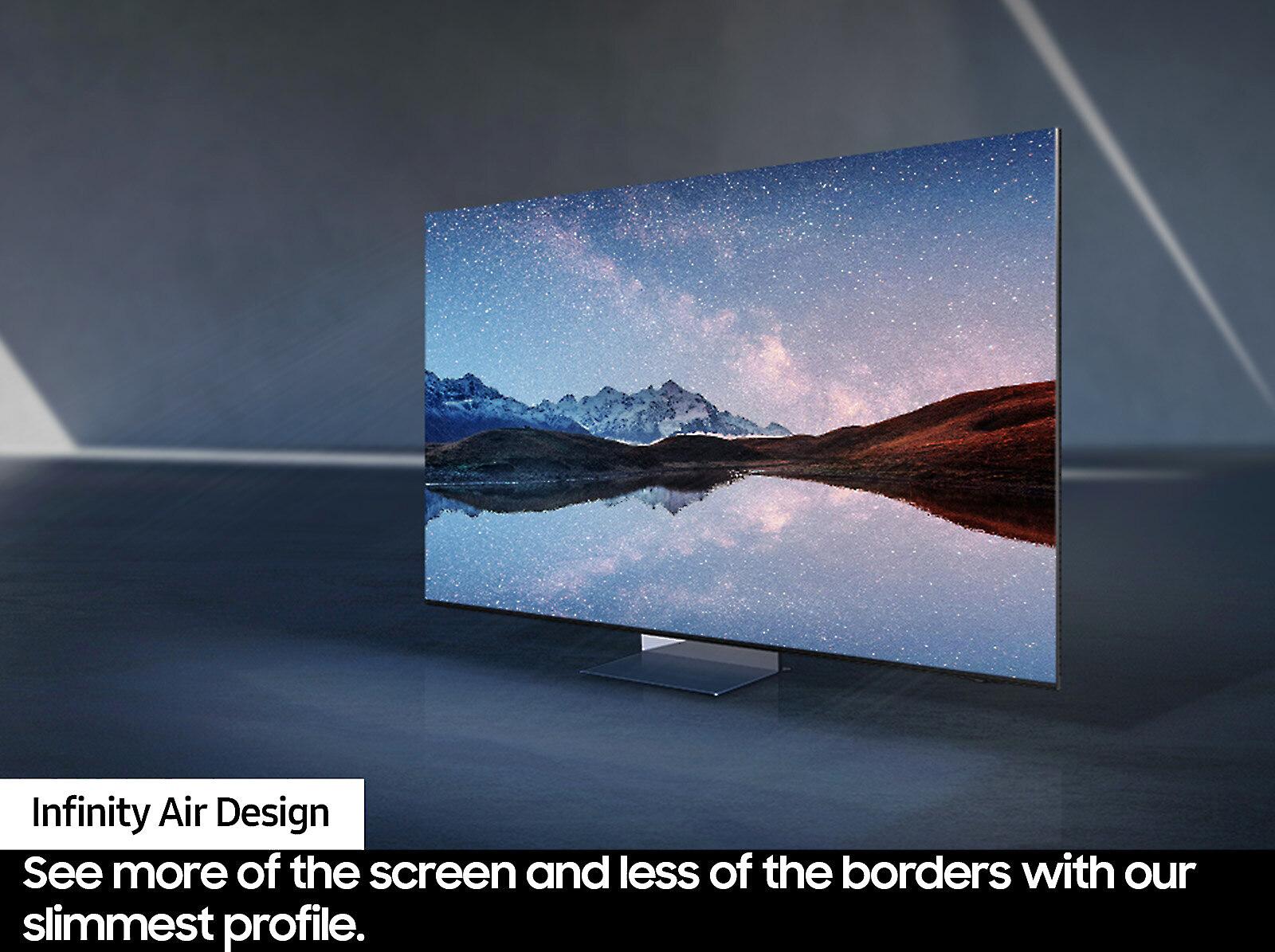
| 14mm thick with picture frame aesthetic and adjustable feet | Slimmer 12.9mm profile with center pedestal stand |
| Market Positioning - Value proposition at time of writing | |
| Entry-level 8K for 2025 at premium pricing | Former 2024 flagship now available at significant discount |
The Samsung QN900D offers better overall value, delivering superior processing power, gaming capabilities, and the premium One Connect Box feature at a significantly lower price point. The Samsung QN900F costs considerably more while actually using an older processor, making the QN900D the smarter choice for most buyers seeking flagship 8K performance.
The biggest difference is the QN900F's revolutionary anti-glare matte coating that virtually eliminates screen reflections, making it ideal for bright rooms. However, the QN900D features a more powerful NQ8 AI Gen3 Processor compared to the QN900F's Gen2 processor, resulting in better upscaling and overall picture quality in most viewing conditions.
The Samsung QN900D is superior for serious gaming, supporting up to 240Hz refresh rates with VRR technology and comprehensive HDMI 2.1 features. While the QN900F has lower input lag at 11.4ms, its maximum 165Hz refresh rate makes it less suitable for high-end gaming setups that can push higher frame rates.
Both achieve similar peak brightness levels around 2,300+ nits, but picture quality differs in important ways. The QN900D generally delivers more accurate colors and better HDR performance thanks to its superior processor. The QN900F excels in bright rooms due to its anti-glare coating but may appear slightly duller in darker environments.
The Samsung QN900F runs the newer Tizen 9.0 platform with enhanced AI recommendations and improved interface design. The QN900D uses an earlier Tizen version but still provides comprehensive smart TV functionality with all major streaming services and voice control features.
The One Connect Box, included with the QN900D but not the QN900F, is a separate unit that houses all TV inputs and connections. It allows for much cleaner cable management and easier wall mounting since only one thin cable connects to the TV itself, making it especially valuable for professional home theater installations.
The Samsung QN900F is specifically designed for bright rooms with its matte anti-reflective coating that eliminates virtually all glare and reflections. The QN900D uses a traditional glossy screen that can become difficult to watch in rooms with lots of ambient light or large windows.
Counterintuitively, the older Samsung QN900D has the more powerful NQ8 AI Gen3 Processor, while the newer QN900F uses the NQ8 AI Gen2 Processor. This is because Samsung positioned the QN900F as their entry-level 8K model for 2025, requiring cost cuts including processor downgrade.
8K upscaling is crucial since virtually no native 8K content exists for consumers. The QN900D's superior Gen3 processor consistently delivers more accurate upscaling with fewer artifacts, especially important for streaming content. The QN900F still provides good upscaling but with less processing power behind it.
For controlled lighting environments like basement theater rooms, the Samsung QN900D is ideal with its superior processing, proven picture quality, and gaming capabilities. The QN900F's anti-glare coating provides less benefit in dark rooms and may actually reduce perceived image vibrancy compared to the QN900D's glossy screen.
Despite being the 2024 model, the Samsung QN900D is generally the better choice due to superior performance at a lower price. Only choose the newer QN900F if you specifically need the anti-glare coating for a bright room or want the latest Tizen platform features regardless of the performance and value trade-offs.
We've done our best to create useful and informative comparisons to help you decide what product to buy. Our research uses advanced automated methods to create this comparison and perfection is not possible - please contact us for corrections or questions. These are the sites we've researched in the creation of this article: rtings.com - samsung.com - techradar.com - dolby.com - youtube.com - samsung.com - youtube.com - samsung.com - samsung.com - samsung.com - samsung.com - displayspecifications.com - samsung.com - rtings.com - bestbuy.com - merlinstv.com - news.samsung.com - bestbuy.com - videoandaudiocenter.com - bestbuy.com - avsforum.com - bestbuy.com - walts.com - images.samsung.com - samsung.com - avsforum.com - samsung.com

Privacy Policy
Terms and Conditions - Affiliate Policy
Home Security
© Copyright 2008-2026.
11816 Inwood Rd #1211, Dallas, TX 75244