

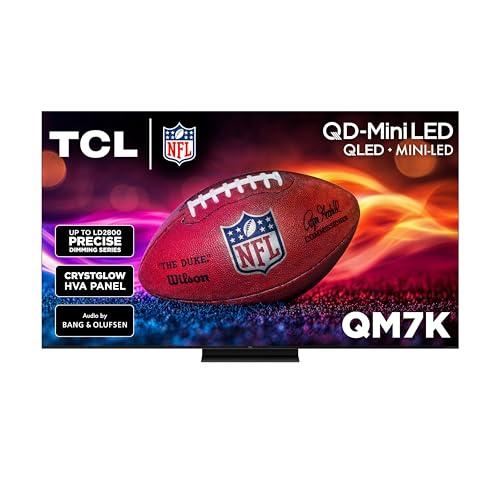
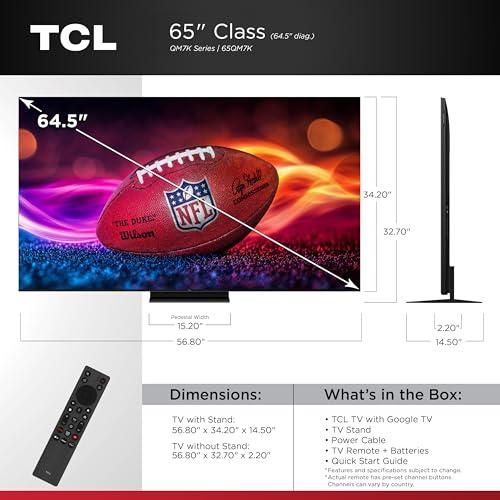

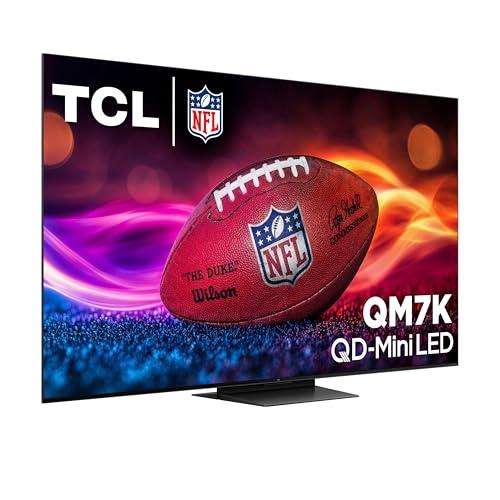
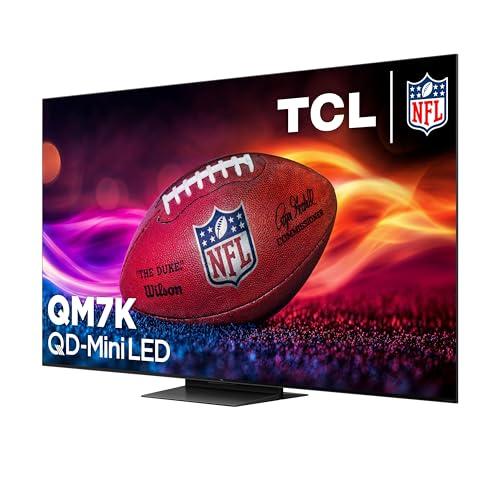
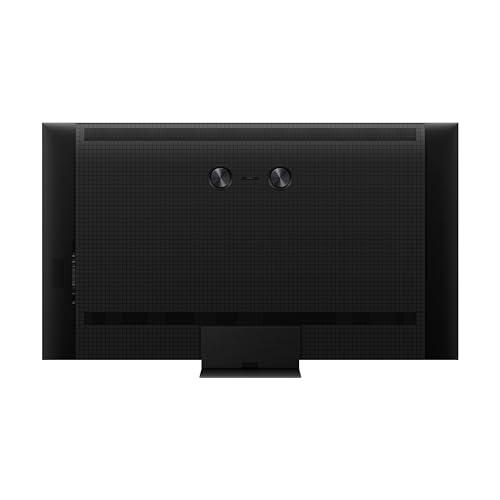
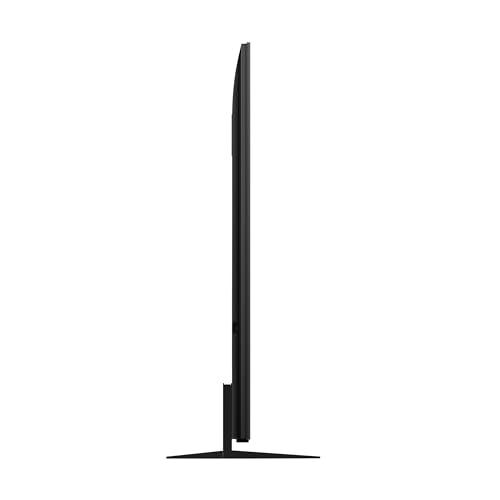
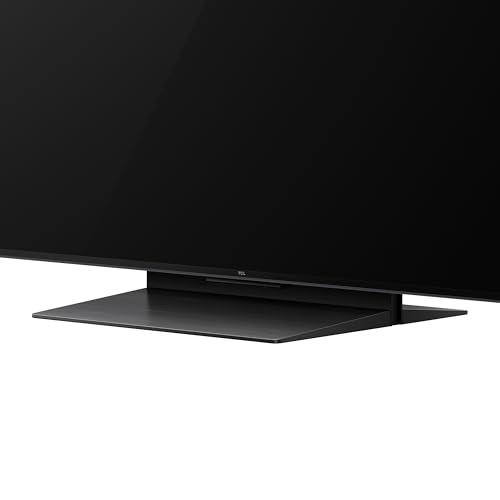
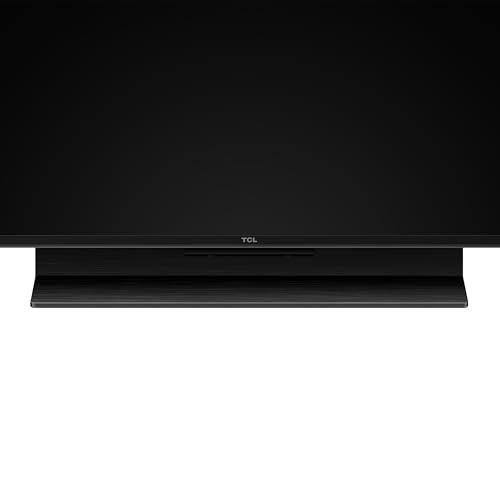
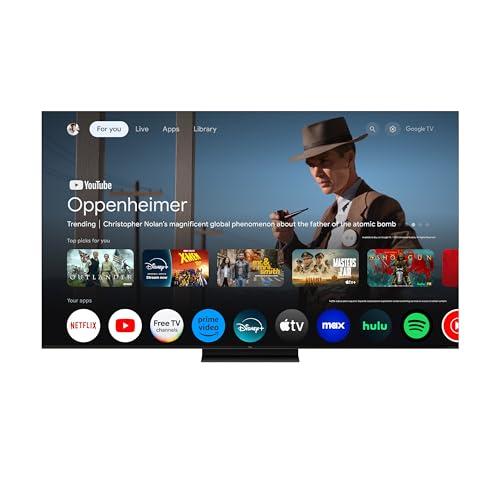
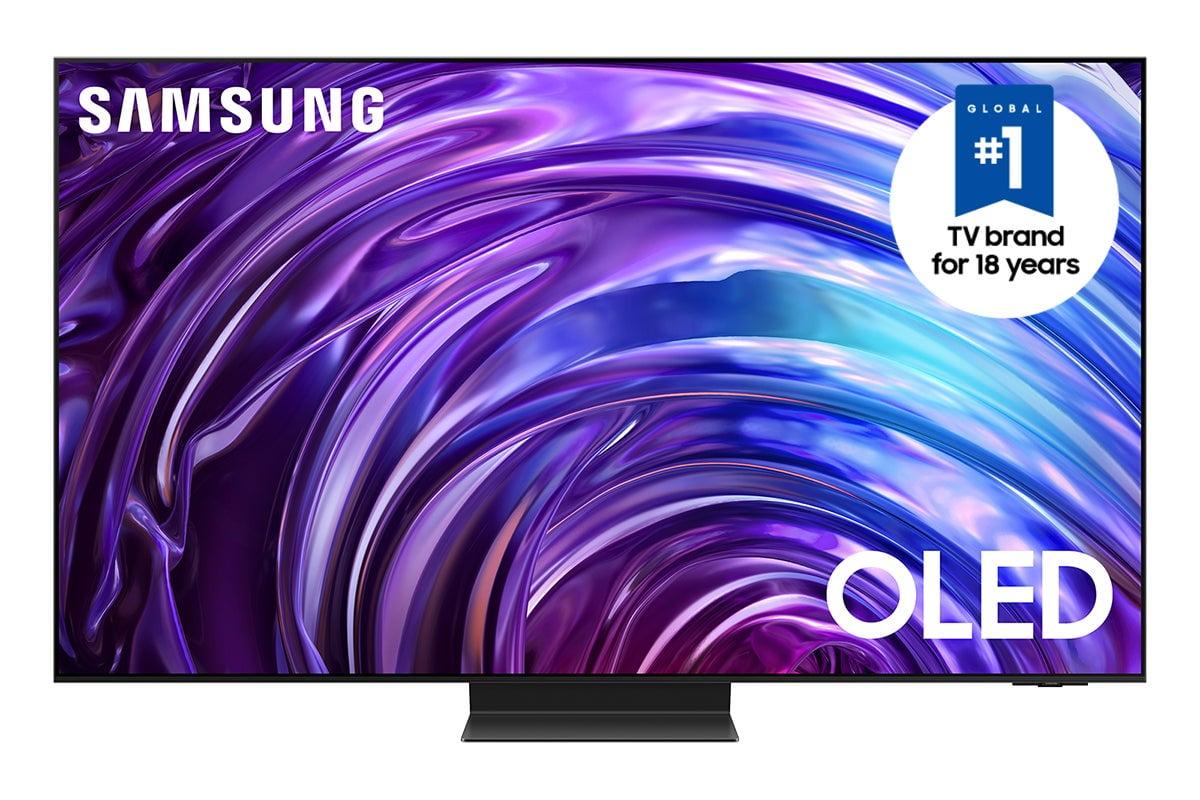
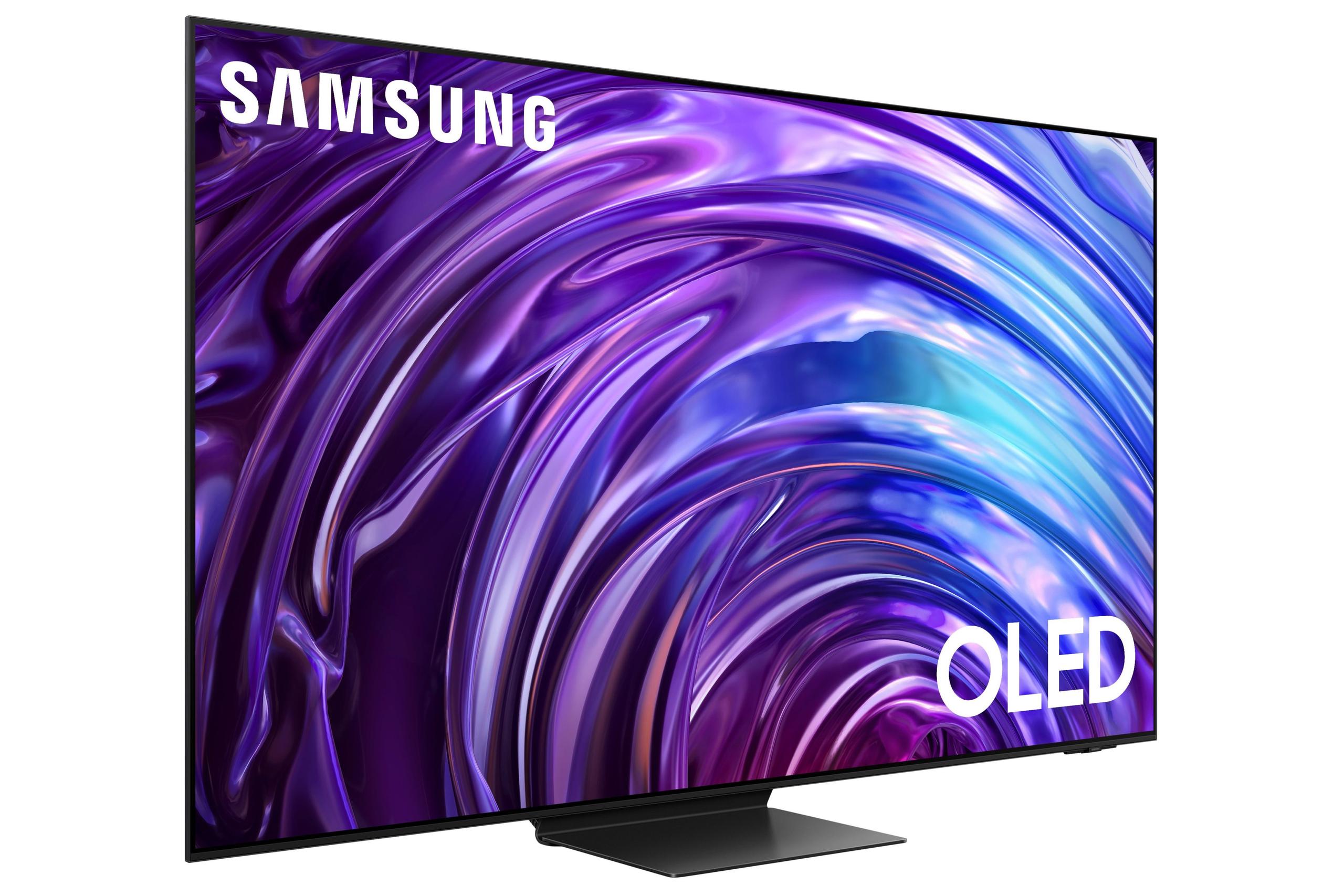
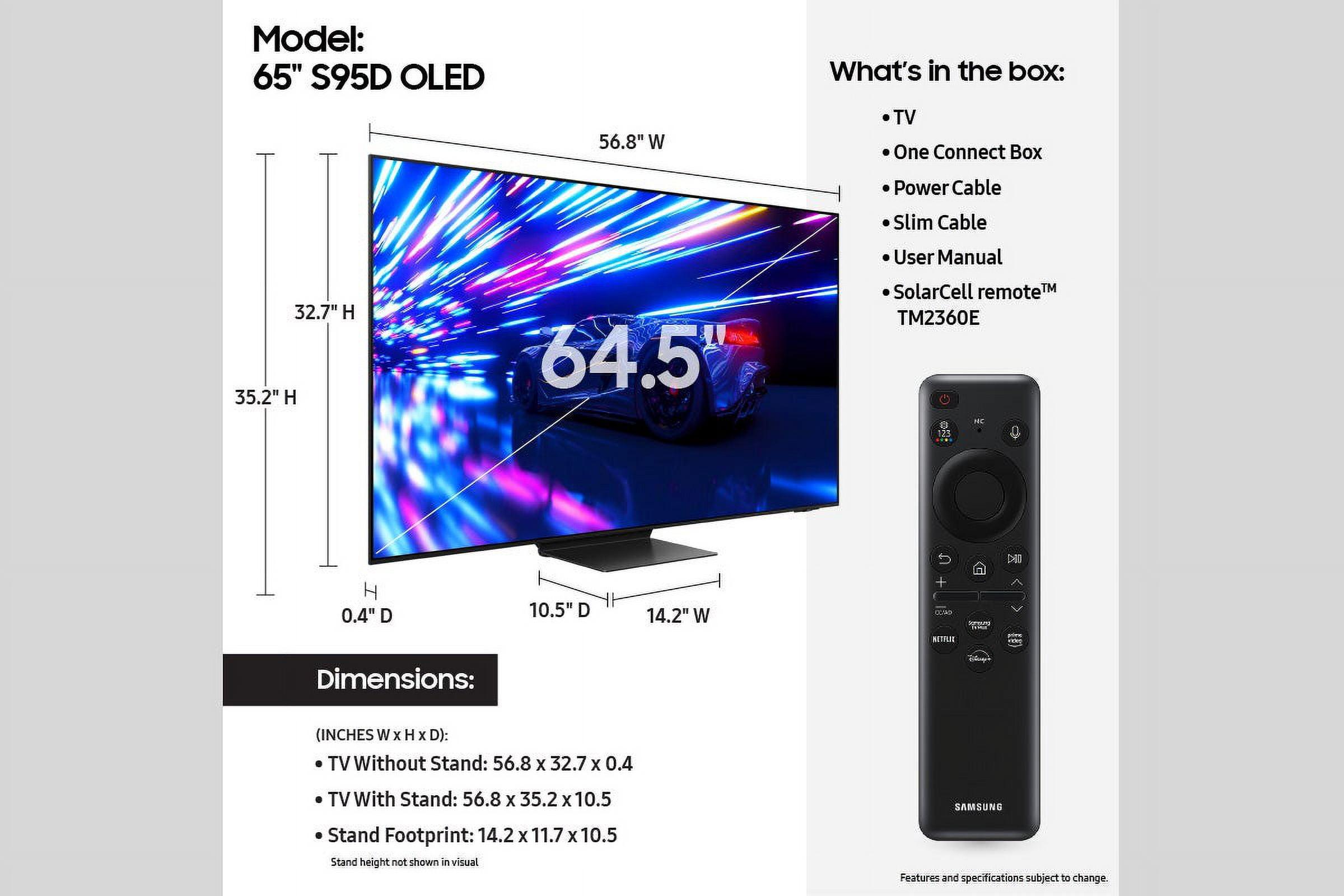
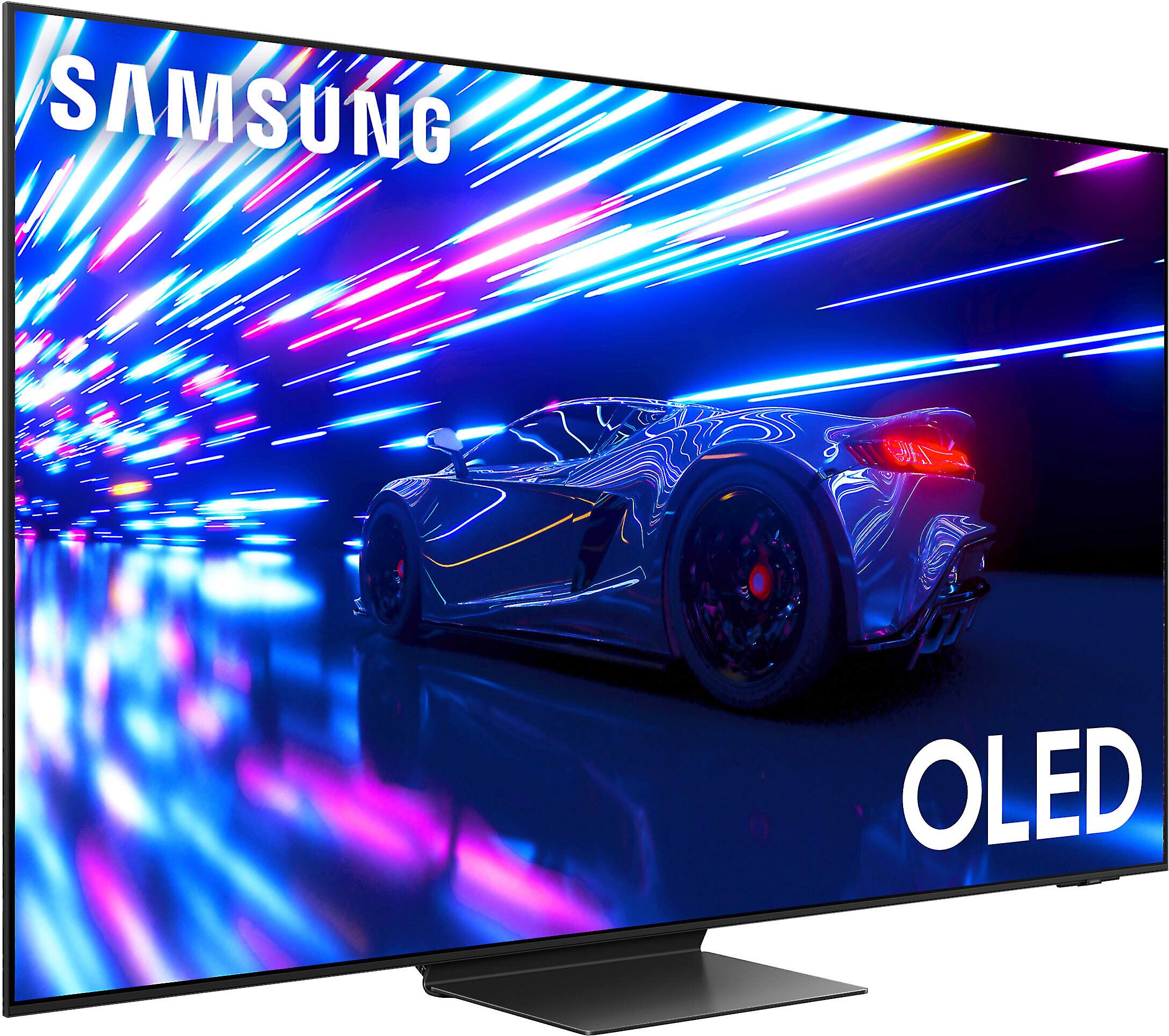
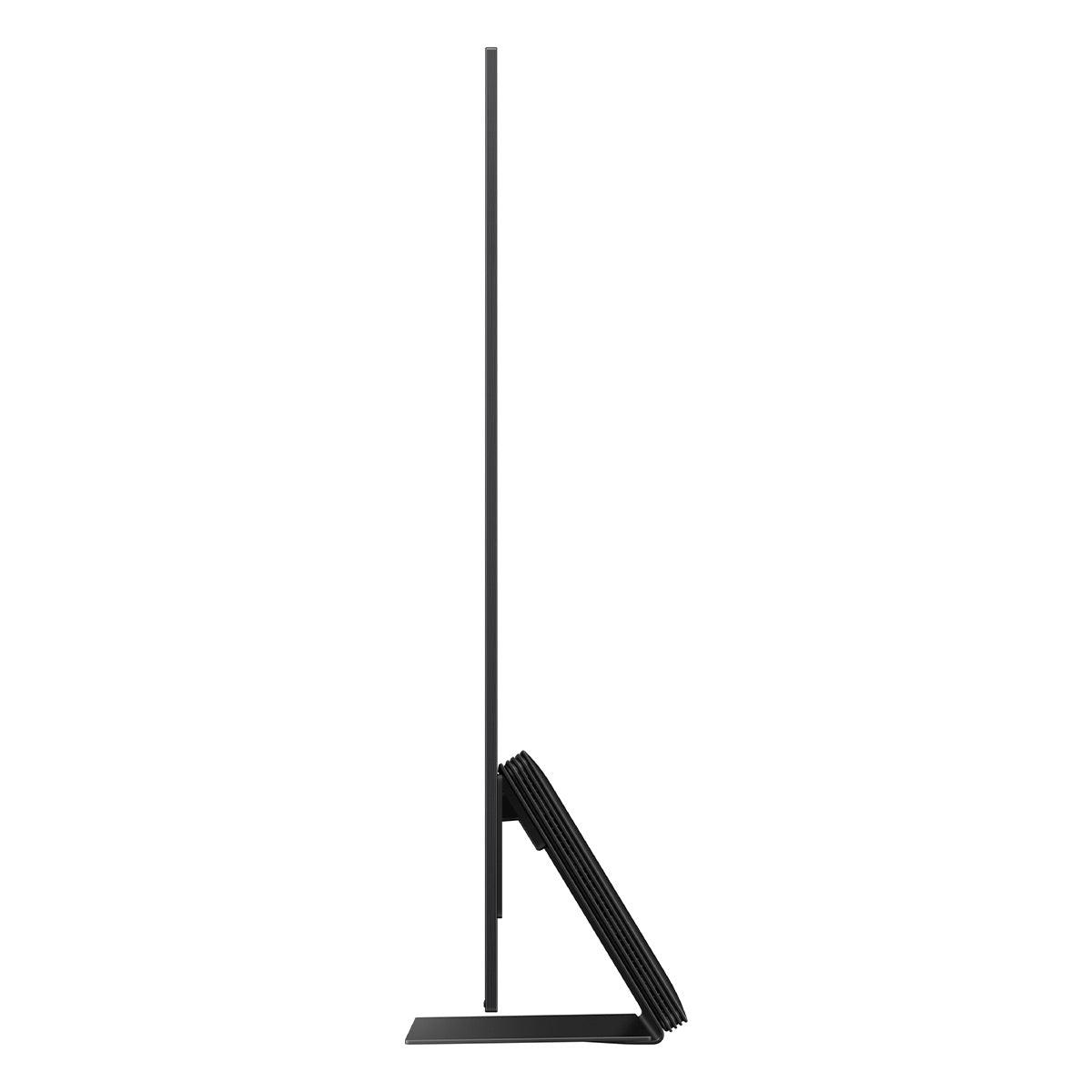
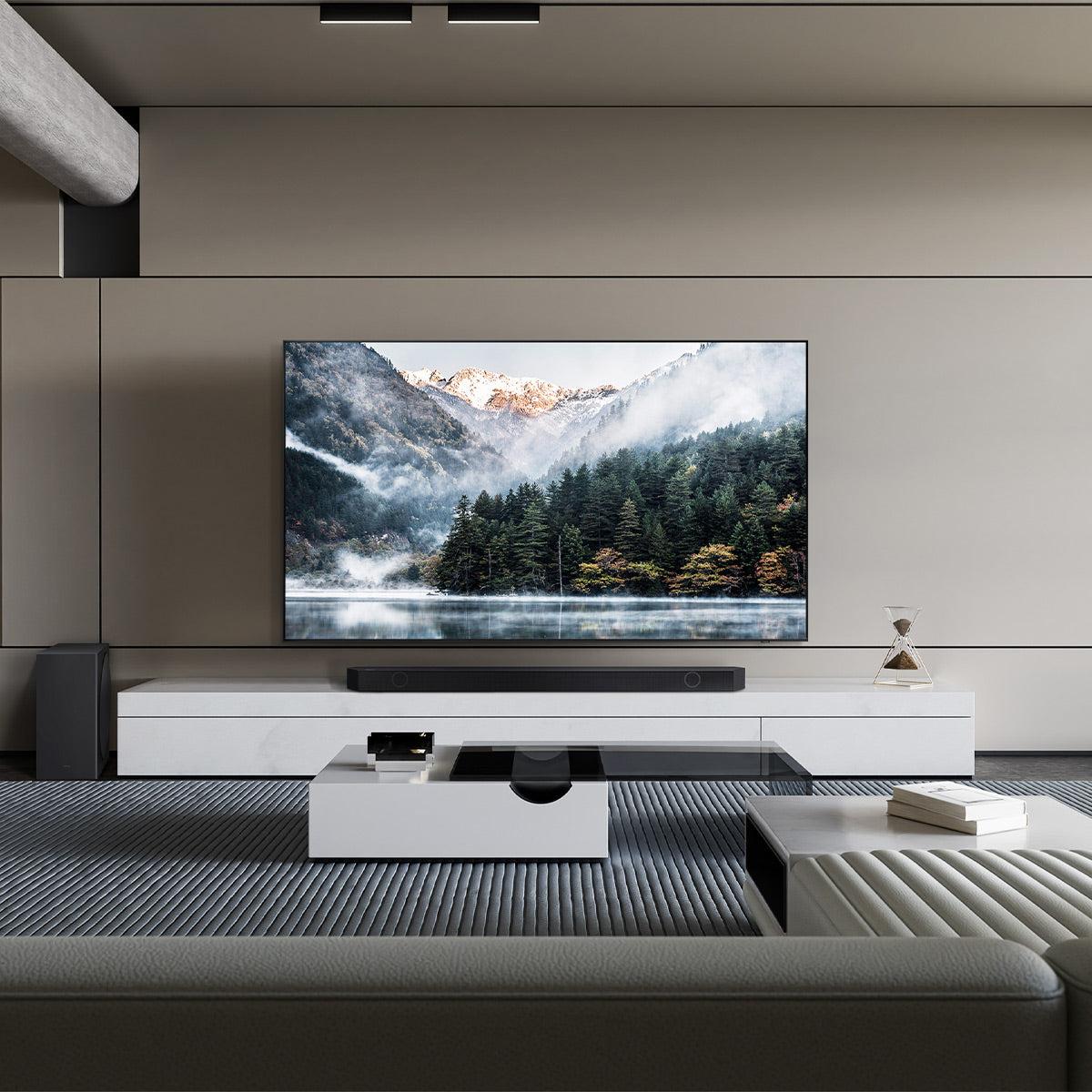
When shopping for a premium 65-inch TV in 2024, you'll inevitably encounter two fundamentally different approaches to creating stunning pictures: Mini-LED with quantum dots and OLED with quantum dots. The TCL 65QM7K and Samsung S95D represent the best of each technology, but they solve the same problems in completely different ways.
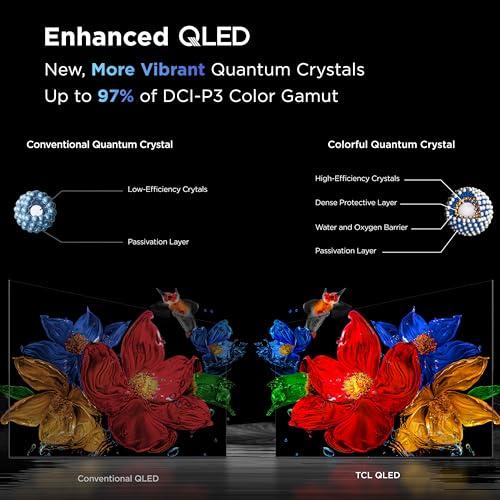
Both TVs launched in 2024, riding the wave of quantum dot technology that has transformed color reproduction over the past few years. Quantum dots are microscopic particles that convert blue light into precise red and green wavelengths, creating more accurate and vibrant colors than traditional displays. But that's where the similarities end—these TVs use opposing philosophies to achieve premium picture quality.
At the time of writing, the TCL QM7K costs roughly half what you'd pay for the Samsung S95D, creating one of the most interesting value propositions in the premium TV market. This isn't just a simple case of "you get what you pay for"—it's about understanding which technology better serves your specific viewing environment and preferences.
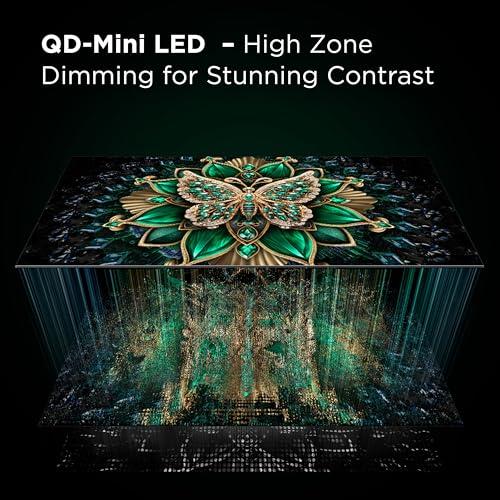
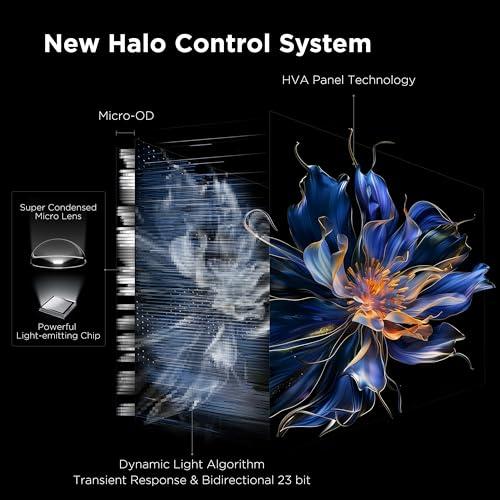
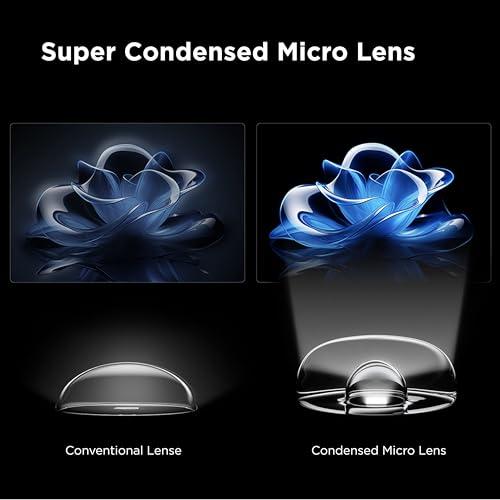
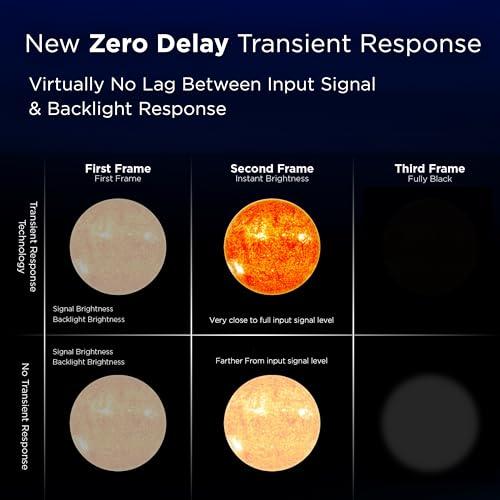
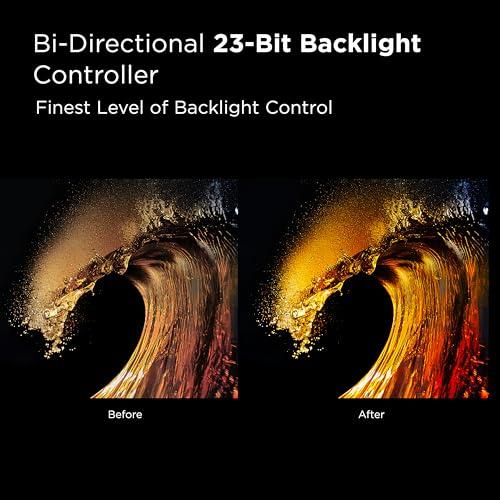
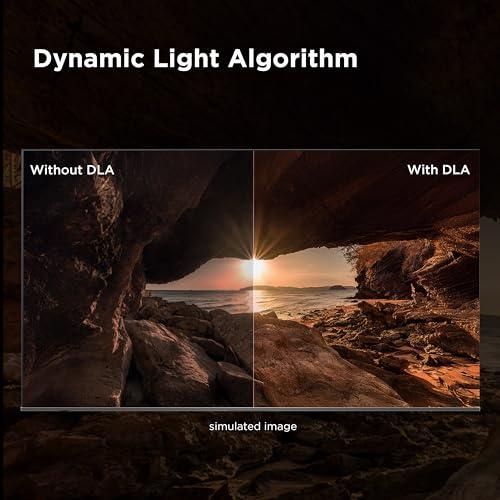
The TCL QM7K uses what's called QD-Mini LED technology. Think of it as thousands of tiny LED lights arranged behind the screen in precise zones—up to 2,500 of them, to be exact. Each zone can dim or brighten independently, creating what we call "local dimming." When you're watching a night scene with bright stars, the zones behind the stars blast at full brightness while the zones behind the dark sky dim to nearly black. The quantum dots then take this controlled backlighting and convert it into incredibly pure colors.
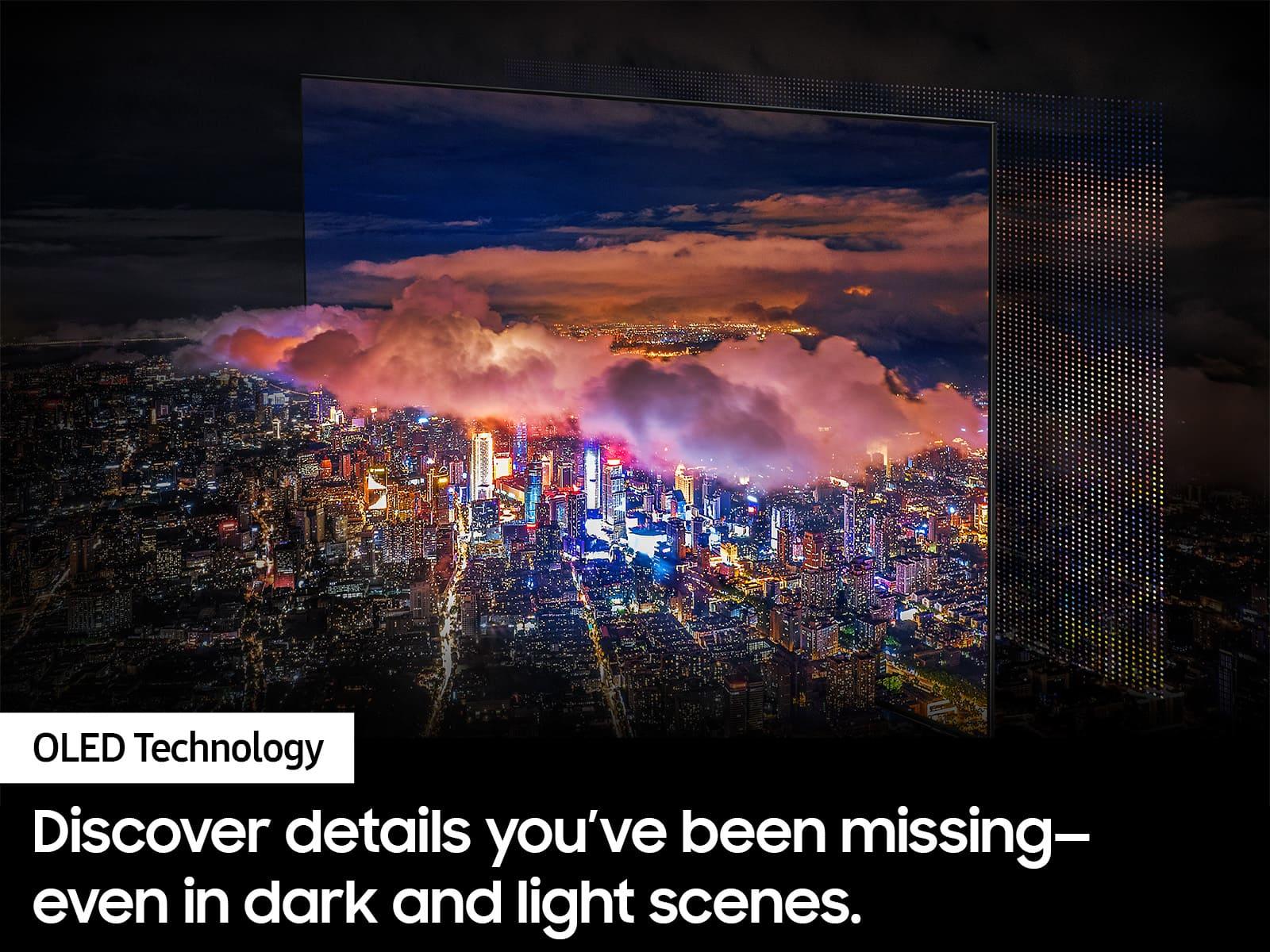
The Samsung S95D, meanwhile, uses QD-OLED technology where each individual pixel creates its own light. Instead of backlighting, every single dot on the screen can turn completely on, completely off, or anywhere in between. When a pixel needs to be black, it simply turns off—creating what we call "true blacks" or "perfect blacks." The quantum dot layer still handles color conversion, but there's no backlight to manage.
These different approaches create distinct advantages and limitations that affect everything from room lighting requirements to gaming performance to long-term durability.
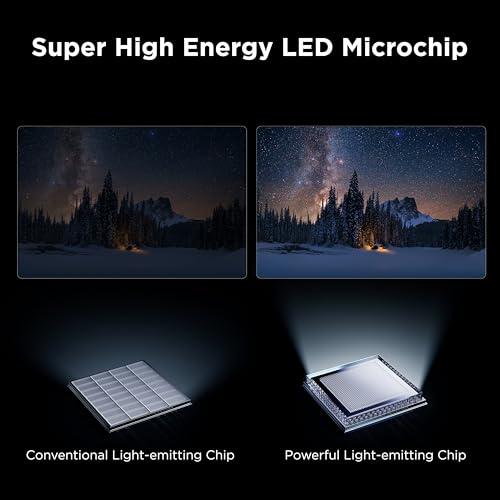
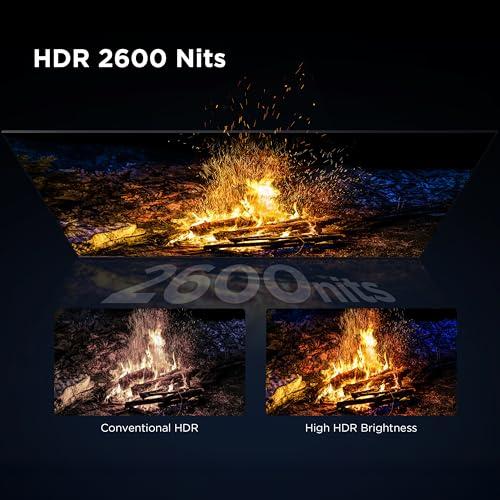
Here's where the TCL QM7K shows its strength most dramatically. Our research into professional reviews consistently shows this TV reaching 2,600 to 3,000 nits of peak brightness—that's bright enough to make HDR highlights truly pop even in a room with windows and ambient lighting. For context, a typical sunny day outside measures around 10,000 nits, while most standard TVs barely reach 400-500 nits.
The Samsung S95D reaches approximately 1,700 nits, which sounds impressive until you realize it's roughly half the output of the TCL. In practical terms, this means the Samsung will start to look dim in bright rooms where the TCL continues to shine. If you have a living room with windows or if family members prefer keeping lights on while watching TV, the brightness advantage of Mini-LED technology becomes immediately apparent.
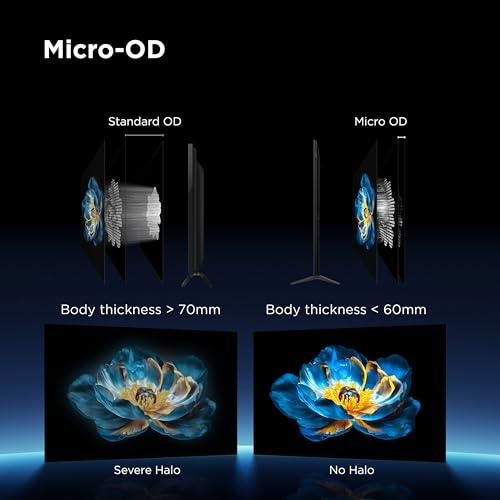
But raw brightness numbers don't tell the complete story. The Samsung's OLED technology means it can achieve perfect blacks by turning pixels completely off, creating what's called infinite contrast ratio. The TCL QM7K, despite its impressive 2,500 local dimming zones, still has some light leakage from its backlight system. You might notice subtle gray areas in what should be pure black scenes, especially when viewing in completely dark rooms.
This creates an interesting trade-off: the TCL handles bright room viewing better, while the Samsung excels in dark, theater-like environments. Your room's lighting conditions significantly influence which technology will serve you better.
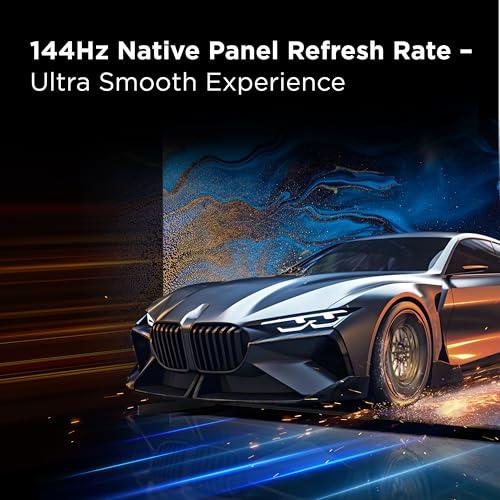
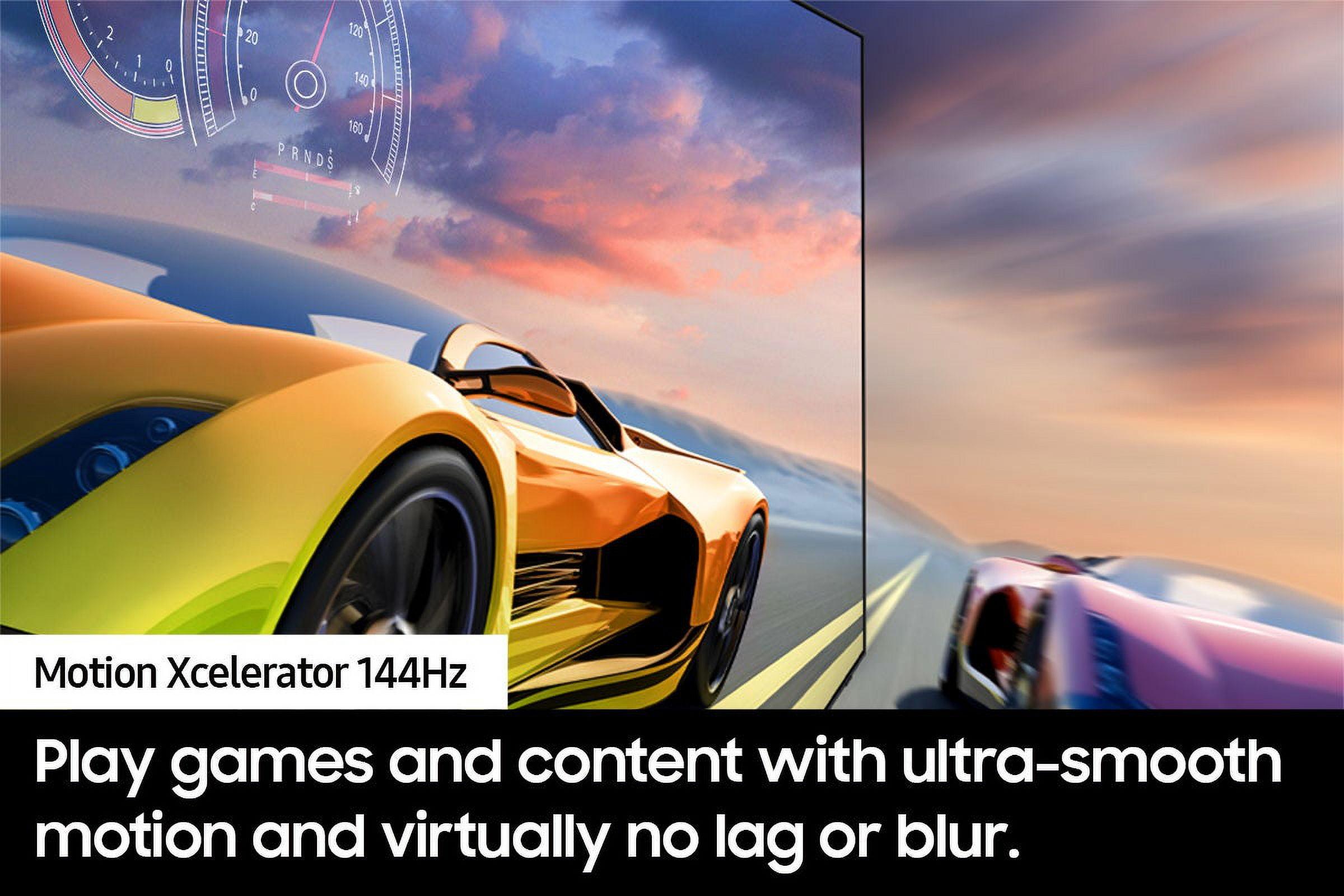
Gaming performance reveals another fascinating contrast between these technologies. The TCL QM7K supports a native 144Hz refresh rate and can push variable refresh rates up to 288Hz in certain gaming modes. For PC gamers or those with high-end gaming systems, this translates to incredibly smooth motion and reduced blur during fast-paced action scenes.
The Samsung S95D caps out at 120Hz, but its OLED technology provides near-instantaneous response times. Professional reviews consistently measure input lag—the delay between pressing a controller button and seeing the action on screen—at just 5.9 to 9 milliseconds on the Samsung. That's fast enough for competitive esports gaming where every millisecond matters.
If you're primarily gaming with consoles like PlayStation 5 or Xbox Series X, which typically output 4K content at 60Hz or 120Hz, the Samsung's lower input lag often proves more valuable than the TCL's higher refresh rate capabilities. But for PC gaming enthusiasts who can push frame rates above 120fps, the TCL QM7K offers a smoother experience.
Both TVs support variable refresh rate (VRR) and auto low-latency mode (ALLM), essential features for modern gaming. The Samsung includes additional gaming features through its Gaming Hub, which provides access to cloud gaming services directly through the TV interface.
Color reproduction highlights the philosophical differences between these displays. Professional calibrators consistently praise the Samsung S95D for its color accuracy, particularly with skin tones and natural scenes. Samsung validates their colors against Pantone standards, ensuring what you see matches how content creators intended their work to appear.
The TCL QM7K takes a different approach, delivering colors that are technically accurate but tuned for impact. Many users describe TCL's color presentation as more "vibrant" or having more "pop." This isn't necessarily wrong—it's a stylistic choice that many viewers prefer, especially when watching animated content or vibrant HDR material.
For home theater enthusiasts who prioritize watching movies as directors intended, the Samsung's more neutral color tuning often proves preferable. The OLED technology also provides superior viewing angles, meaning picture quality remains consistent even when you're sitting off to the side of the screen. The TCL QM7K uses a VA-type panel that can show color shifting when viewed from extreme angles, though this rarely affects normal viewing positions.
High Dynamic Range (HDR) content showcases the strengths and limitations of each technology most clearly. HDR works by expanding the range between the darkest and brightest parts of an image, creating more realistic and impactful visuals.
The TCL QM7K excels with HDR highlights—those bright explosions, sunny skies, or glinting metal surfaces that should make you squint slightly. Its extreme brightness capability means these highlights truly stand out from the surrounding image. However, you might notice some "blooming" or light halos around very bright objects against dark backgrounds, an artifact of the backlight system bleeding light between dimming zones.
The Samsung S95D handles HDR differently but equally impressively. While its highlights aren't as blindingly bright, the perfect black levels create incredible contrast. A candle flame in a dark room looks more realistic because the surrounding darkness is truly black, not the dark gray that even the best LCD displays produce.
Both TVs support all major HDR formats including Dolby Vision, HDR10+, and standard HDR10, ensuring compatibility with content from Netflix, Disney+, Apple TV+, and 4K Blu-ray discs.
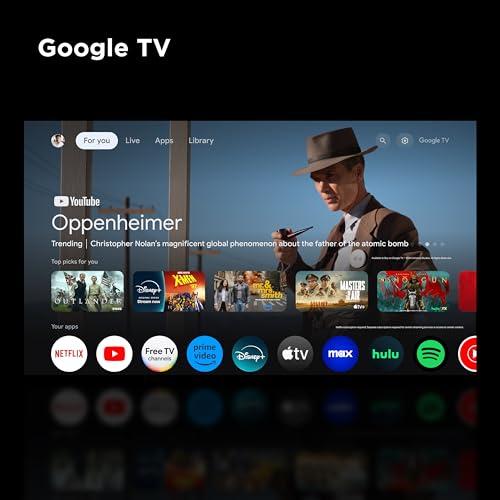
The software experience differs significantly between these TVs. The TCL QM7K runs Google TV, which provides access to essentially every streaming app available, excellent voice control through Google Assistant, and seamless integration with Android phones and Chromecast devices. The interface feels familiar if you've used modern Android devices, and app performance generally remains smooth and responsive.
Samsung's S95D uses their Tizen operating system, which offers a more curated but potentially limited app selection. However, Samsung includes their Gaming Hub for cloud gaming and SmartThings integration for smart home control. The interface feels more premium and polished, though some users find it less flexible than Google TV.
For voice control enthusiasts, the TCL's Google Assistant integration typically provides more comprehensive responses and better smart home integration. Samsung supports both Alexa and their own Bixby assistant, but the experience varies depending on your existing smart home ecosystem.
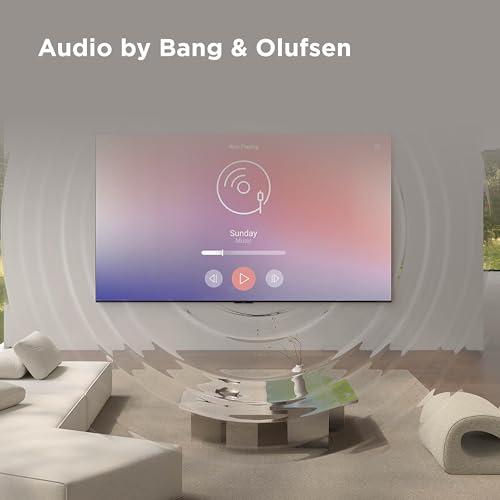
Audio performance represents another area where these TVs take different approaches. The TCL QM7K partners with Bang & Olufsen for a 60W audio system that prioritizes power and impact. The sound is louder and more dynamic, with strong bass response that can fill a room without additional speakers.
The Samsung S95D uses Object Tracking Sound+ technology, which attempts to move audio around the screen to match on-screen action. While not as powerful as the TCL's system, it typically provides better dialogue clarity and more balanced sound across different content types.
Both TVs support Dolby Atmos for immersive surround sound, though serious home theater enthusiasts will likely add a dedicated sound bar or speaker system regardless of which TV they choose.
Long-term reliability represents perhaps the most significant difference between these technologies. The TCL QM7K uses LCD technology that's immune to burn-in—those permanent ghost images that can appear on screens displaying static content for extended periods. The LED backlights may dim slightly over 7-10 years, but the display won't develop permanent damage from normal use patterns.
OLED technology in the Samsung S95D has largely solved burn-in issues that plagued earlier generations, but the possibility still exists with extreme usage patterns. Leaving news channels with static logos or playing games with persistent UI elements for hundreds of hours could potentially cause permanent image retention. Modern OLEDs include pixel-shifting and other protective measures, making burn-in unlikely with normal viewing habits.
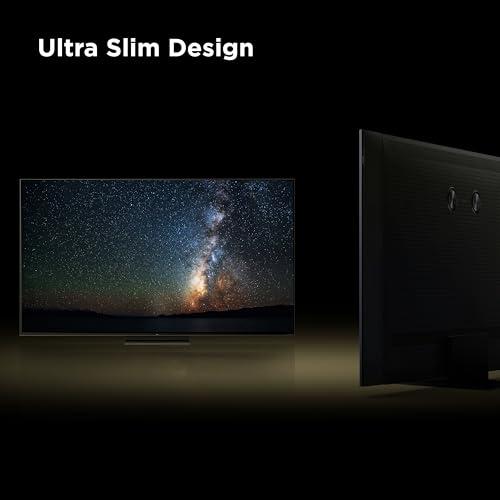
The Samsung's ultra-thin design comes with trade-offs—the display panel itself isn't user-serviceable, while the TCL's more traditional construction allows for potential backlight repairs if needed years down the line.
After analyzing professional reviews and user feedback, clear usage patterns emerge for each TV. The TCL QM7K excels for users with bright living rooms who want premium features without premium pricing. If your TV faces windows, if family members prefer ambient lighting while watching, or if you're primarily gaming with high-refresh-rate systems, the TCL delivers exceptional value.
The Samsung S95D justifies its premium pricing for dedicated home theater environments and users who prioritize absolute picture quality over value considerations. If you have light control in your viewing room, watch primarily movies and high-end streaming content, or demand the most accurate color reproduction available, the Samsung's OLED technology provides a genuinely superior experience.
For most families, the TCL QM7K delivers 85-90% of the Samsung's picture quality at roughly half the cost, making it the smarter choice when budget considerations matter. The Samsung makes sense for enthusiasts who've optimized their viewing environment and want the absolute best display technology available.
The decision ultimately comes down to your room's lighting, your budget flexibility, and how much you value incremental improvements in picture quality. Both represent excellent examples of their respective technologies—you're choosing between two different philosophies rather than good versus better options.
| TCL 65QM7K | Samsung 65" S95D |
|---|---|
| Display Technology - Fundamental difference affecting brightness, contrast, and room suitability | |
| QD-Mini LED with 2,500+ local dimming zones | QD-OLED with per-pixel light control |
| Peak Brightness - Critical for bright room viewing and HDR impact | |
| 2,600-3,000 nits (excellent for bright rooms) | ~1,700 nits (best for controlled lighting) |
| Contrast Ratio - Determines black level quality and shadow detail | |
| 7,000:1 static, 30M:1 dynamic (very good for LCD) | Infinite contrast (perfect blacks, OLED advantage) |
| Refresh Rate - Important for gaming and sports viewing | |
| Native 144Hz, up to 288Hz VRR | 120Hz maximum |
| Input Lag - Critical for competitive gaming responsiveness | |
| ~15-20ms (adequate for casual gaming) | 5.9-9ms (excellent for competitive gaming) |
| Burn-in Risk - Long-term reliability consideration | |
| No burn-in risk (LCD technology) | Minimal risk with modern protections (OLED) |
| Viewing Angles - Affects seating flexibility in room | |
| Limited (HVA panel, color shifting off-axis) | Excellent (OLED maintains quality at all angles) |
| Smart Platform - Affects app selection and ecosystem integration | |
| Google TV (comprehensive apps, superior voice control) | Samsung Tizen (curated apps, gaming hub integration) |
| Audio System - Built-in sound quality | |
| Bang & Olufsen 60W (powerful, dynamic sound) | Object Tracking Sound+ (balanced, dialogue clarity) |
| Design Profile - Aesthetic and mounting considerations | |
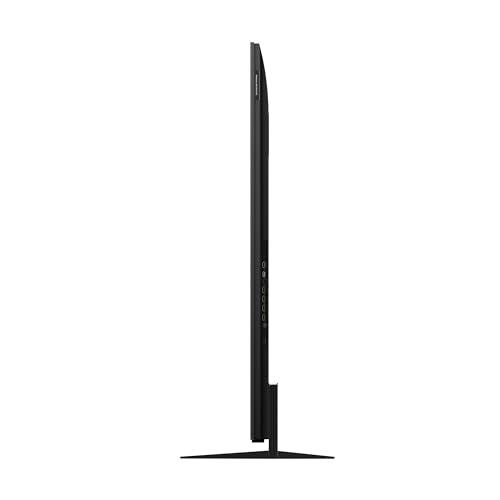
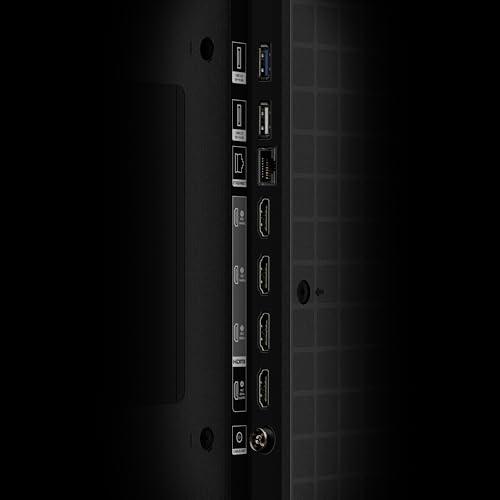
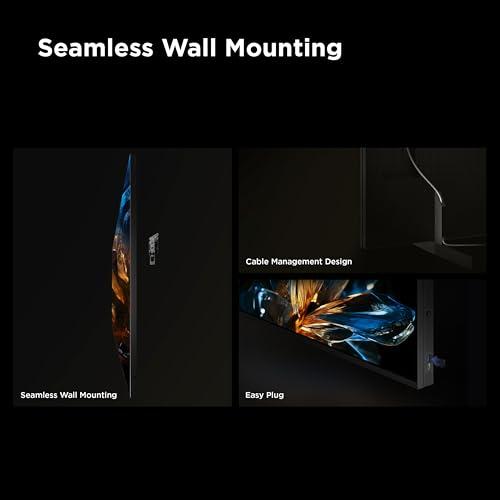
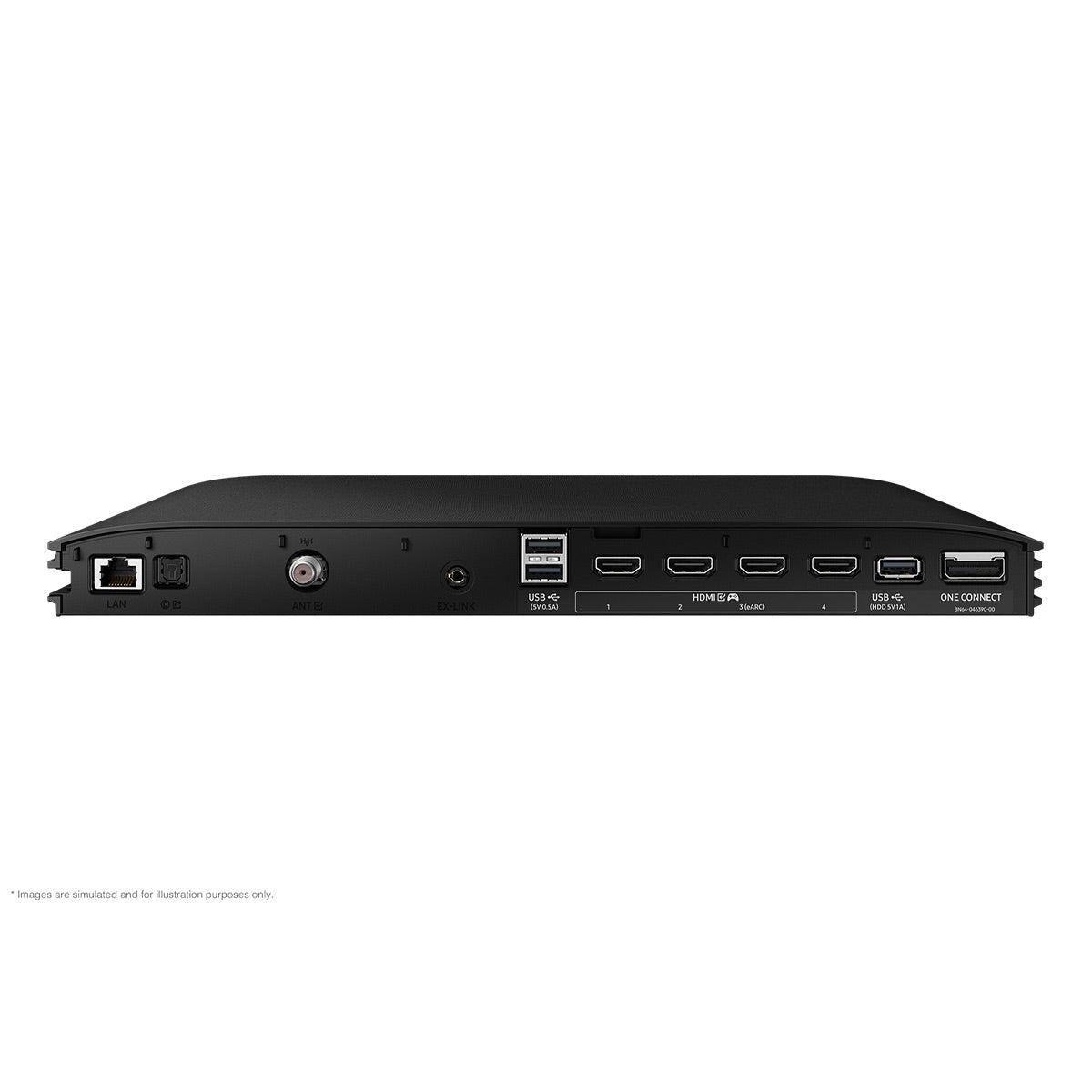
| Standard thickness with traditional inputs | Ultra-thin 11mm with external One Connect box |
| Anti-Glare Features - Reduces reflections in bright rooms | |
| Standard glossy finish | Matte anti-glare coating (game-changer for bright rooms) |
| HDR Formats - Content compatibility | |
| Dolby Vision, HDR10+, HDR10, HLG | Dolby Vision IQ, HDR10+, HDR10, HLG |
| Gaming Features - Console and PC gaming optimization | |
| VRR, ALLM, high refresh rates | VRR, ALLM, Gaming Hub, ultra-low lag |
The TCL 65QM7K is significantly better for bright rooms due to its exceptional peak brightness of 2,600-3,000 nits, nearly double that of the Samsung S95D. The TCL's Mini-LED backlighting can overcome ambient light and maintain vibrant HDR highlights even with windows or lamps in the room. While the Samsung has anti-glare coating, its lower brightness makes it better suited for controlled lighting environments.
The TCL 65QM7K uses QD-Mini LED technology with thousands of LED backlights arranged in zones behind the screen, while the Samsung S95D uses QD-OLED where each pixel creates its own light. This means the Samsung can achieve perfect blacks by turning pixels completely off, while the TCL relies on dimming zones that can't reach true black but can get much brighter overall.
For competitive gaming, the Samsung S95D excels with its ultra-low input lag of 5.9-9ms and Gaming Hub features. For high-refresh gaming, the TCL 65QM7K offers superior 144Hz native refresh rates and up to 288Hz variable refresh rate. Console gamers typically prefer the Samsung's responsiveness, while PC gamers benefit from the TCL's higher refresh capabilities.
The TCL 65QM7K has no burn-in risk since it uses LCD technology. The Samsung S95D has minimal burn-in risk with modern OLED protections, but permanent image retention remains theoretically possible with extreme usage patterns like leaving static logos on screen for hundreds of hours.
The Samsung S95D offers superior color accuracy with Pantone-validated colors and more natural skin tones, making it ideal for cinematic content. The TCL 65QM7K delivers more vibrant, punchy colors that many viewers prefer but may be slightly oversaturated compared to filmmaker intentions.
The Samsung S95D achieves infinite contrast ratio with perfect blacks, while the TCL 65QM7K offers 7,000:1 static contrast. In dark scenes, the Samsung's ability to turn pixels completely off creates superior shadow detail and realism, though the TCL's impressive local dimming still delivers excellent contrast for LCD technology.
The Samsung S95D is ideal for dedicated home theaters with controlled lighting, where its perfect blacks and accurate colors create the most cinematic experience. The TCL 65QM7K works well in home theaters too, but its brightness advantage is less beneficial in dark rooms where the Samsung's superior contrast becomes more apparent.
The TCL 65QM7K runs Google TV with comprehensive app selection, excellent voice control, and seamless Android integration. The Samsung S95D uses Tizen OS with a more curated app selection but includes Gaming Hub and SmartThings integration. Google TV typically offers more flexibility and broader app compatibility.
The Samsung S95D maintains excellent picture quality from any viewing angle due to OLED technology. The TCL 65QM7K uses a VA panel that can show color shifting when viewed from extreme side angles, though this rarely affects normal seating positions in most rooms.
The TCL 65QM7K features Bang & Olufsen partnership with 60W speakers delivering powerful, dynamic sound. The Samsung S95D uses Object Tracking Sound+ for better dialogue clarity and balanced audio. Both support Dolby Atmos, though the TCL generally produces louder, more impactful sound.
The TCL 65QM7K reaches 2,600-3,000 nits peak brightness, making HDR highlights truly spectacular even in bright rooms. The Samsung S95D achieves approximately 1,700 nits, which creates excellent HDR in controlled lighting but may appear dim in bright environments.
The TCL 65QM7K offers exceptional value by delivering premium features at a significantly lower price point, with no burn-in concerns for worry-free usage. The Samsung S95D justifies its premium pricing for users who prioritize absolute picture quality and have optimized viewing environments, making it worthwhile for dedicated home theater enthusiasts.
We've done our best to create useful and informative comparisons to help you decide what product to buy. Our research uses advanced automated methods to create this comparison and perfection is not possible - please contact us for corrections or questions. These are the sites we've researched in the creation of this article: bestbuy.com - businessinsider.com - tomsguide.com - tomsguide.com - rtings.com - tomsguide.com - youtube.com - rtings.com - consumerreports.org - youtube.com - youtube.com - displayspecifications.com - youtube.com - tcl.com - tcl.com - tcl.com - youtube.com - rcwilley.com - bestbuy.com - tclcentral.com - displayspecifications.com - tomsguide.com - tcl.com - brandsmartusa.com - tcl.com - tcl.com - gizmochina.com - nfm.com - dolby.com - alexraytv.com - techradar.com - videoandaudiocenter.com - avsforum.com - cnet.com - abt.com - merlinstv.com - nfm.com - rtings.com - flintsfurniture.com - samsung.com - bestbuy.com - displayspecifications.com

Privacy Policy
Terms and Conditions - Affiliate Policy
Home Security
© Copyright 2008-2026.
11816 Inwood Rd #1211, Dallas, TX 75244