




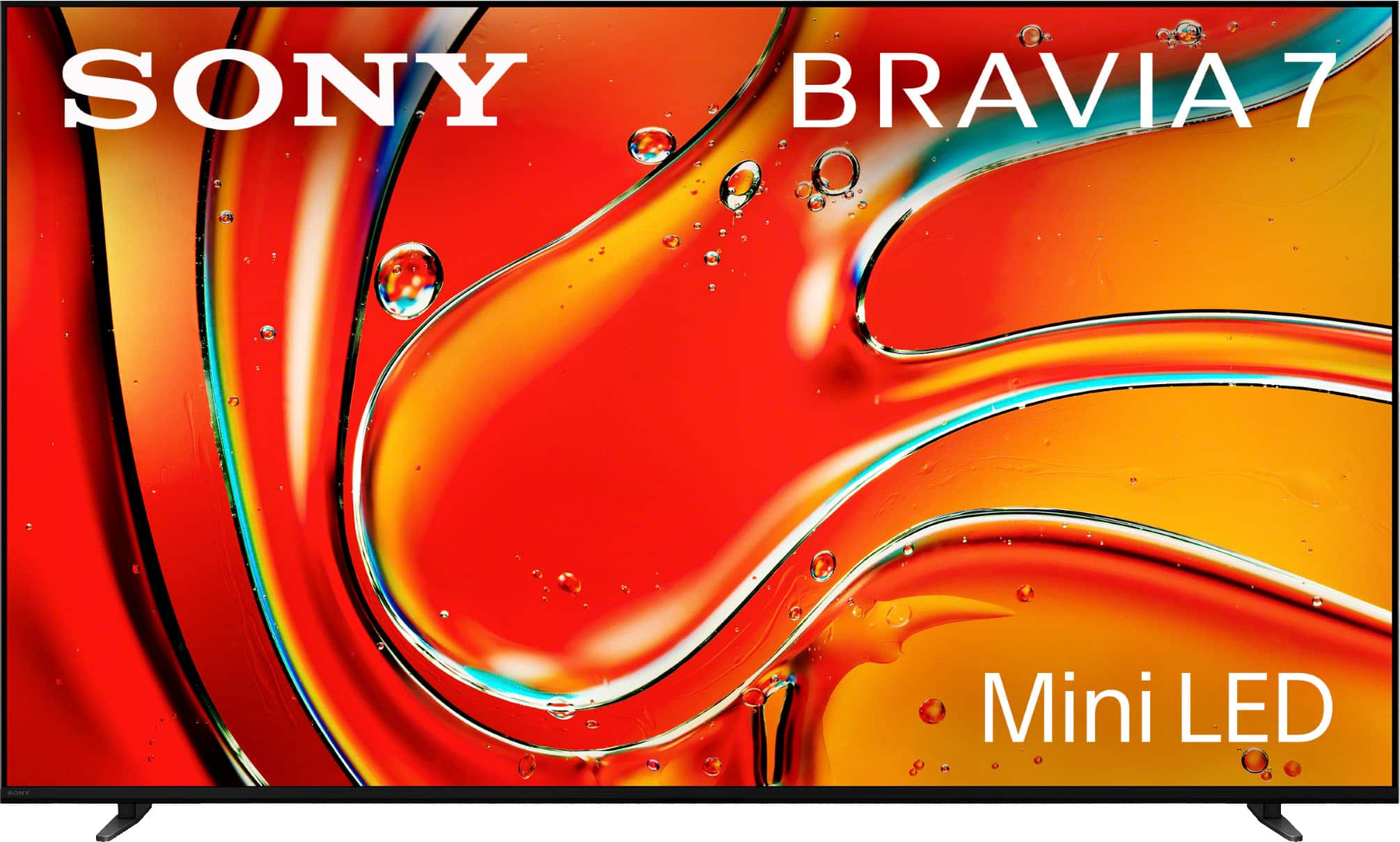
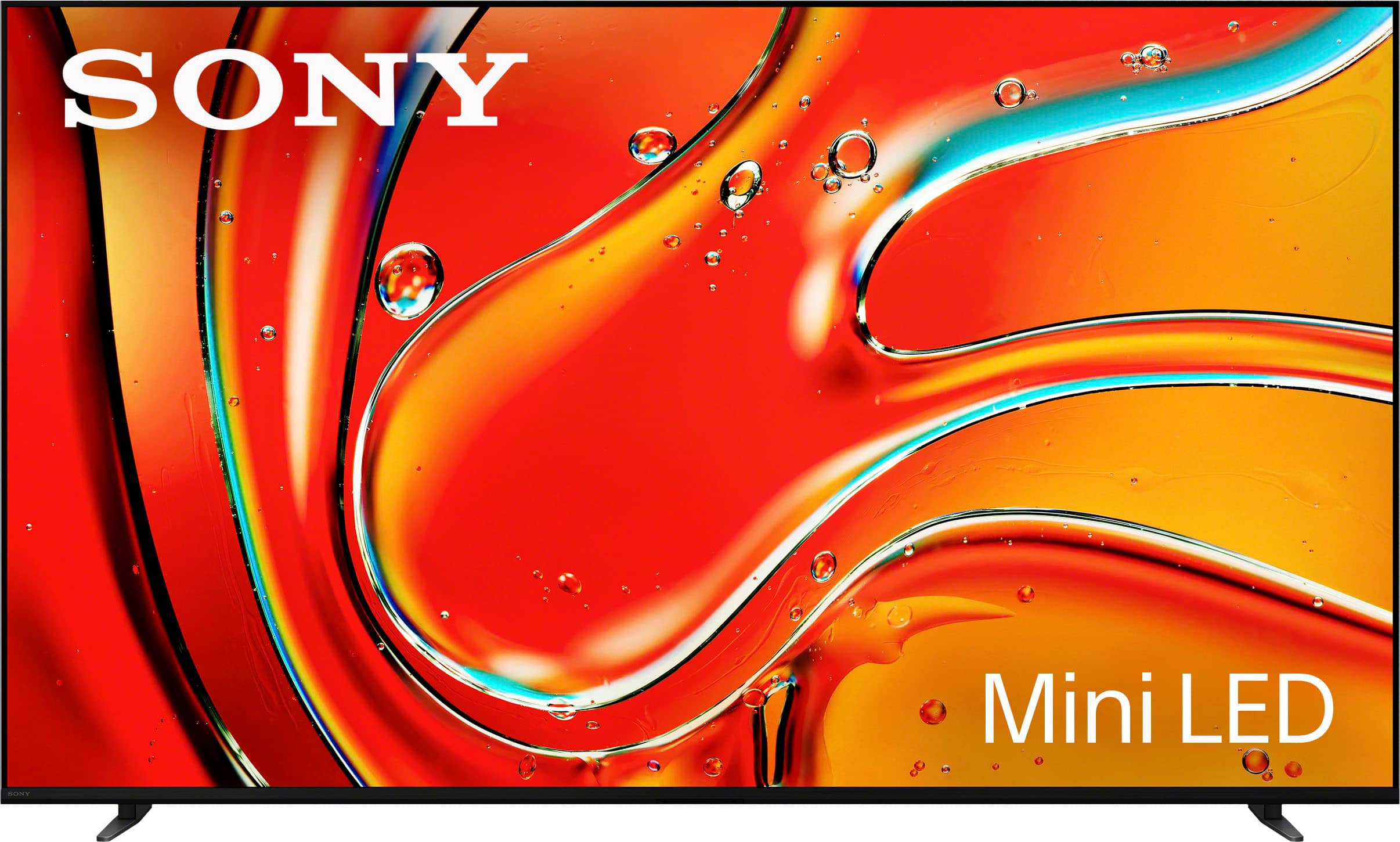
Shopping for a premium 65-inch TV without flagship pricing? You're in luck—both the TCL 65QM7K and Sony BRAVIA 7 deliver impressive performance that would have cost twice as much just a few years ago. But these two TVs take distinctly different approaches to picture quality and gaming, making your choice far from obvious.
At the time of writing, the TCL 65QM7K sits in the upper mid-range segment while the Sony BRAVIA 7 commands a premium that's roughly 50% higher. That price difference isn't arbitrary—it reflects fundamentally different philosophies about what makes a great TV experience.
The premium mid-range segment has exploded in quality since 2023, when both these models debuted. We're talking about TVs that deliver 90% of flagship performance at 60% of the cost. This sweet spot emerged as manufacturers figured out how to pack advanced display technologies like Mini LED backlighting and quantum dot color enhancement into more affordable packages.
What defines this category? First, you get sophisticated local dimming—that's where the TV can brighten or dim different sections of the screen independently, creating deeper blacks and brighter highlights. Second, there's comprehensive gaming support with high refresh rates and variable refresh rate (VRR) technology that syncs the TV's display with your gaming device for smoother motion. Third, you get mature smart TV platforms that actually work well, not the sluggish interfaces that plagued budget TVs for years.
The key considerations when shopping in this range aren't just about picture quality anymore. Gaming performance, smart features, audio quality, and long-term software support all matter significantly. Most importantly, you need to understand your primary use cases—are you building a home theater, creating a gaming setup, or looking for an all-purpose family room TV?
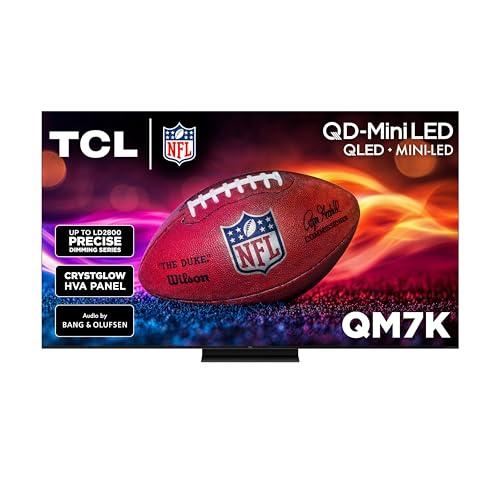
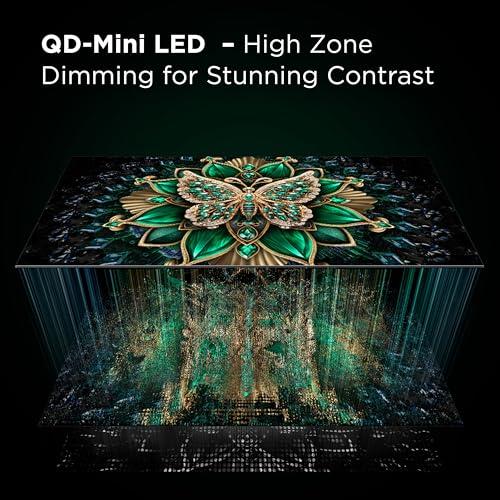
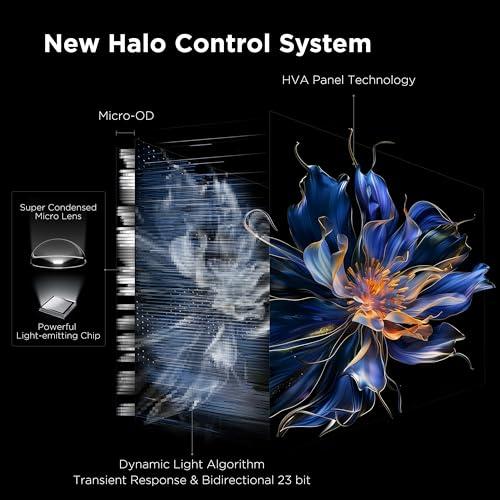
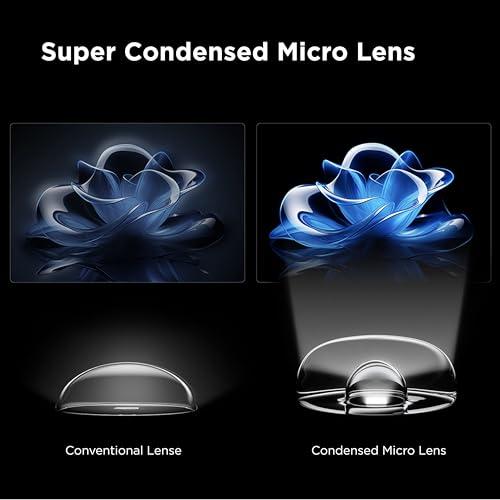
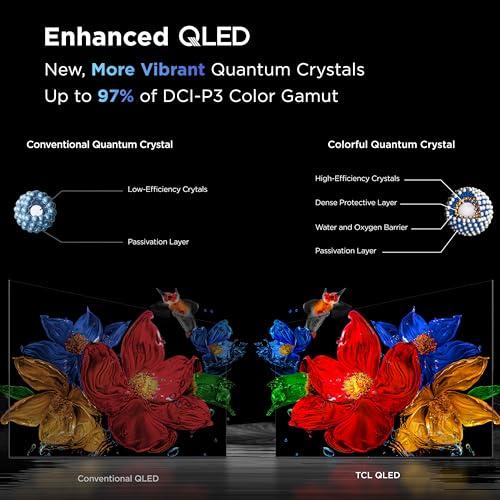
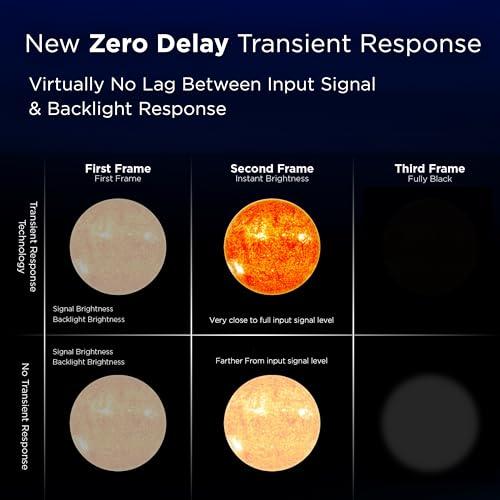
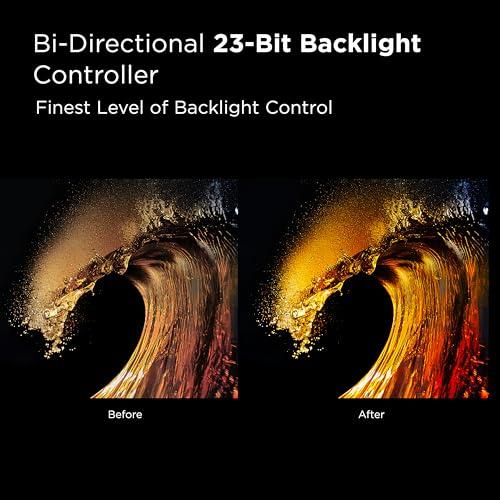
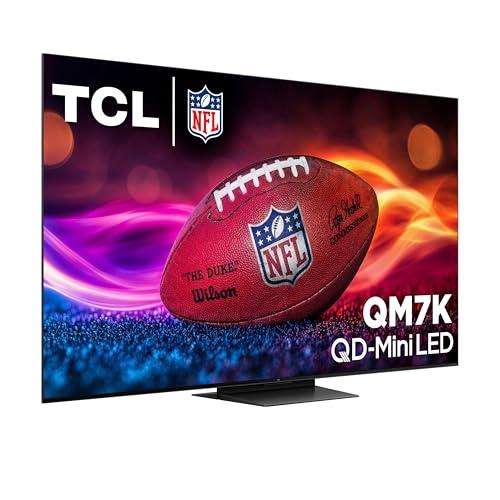
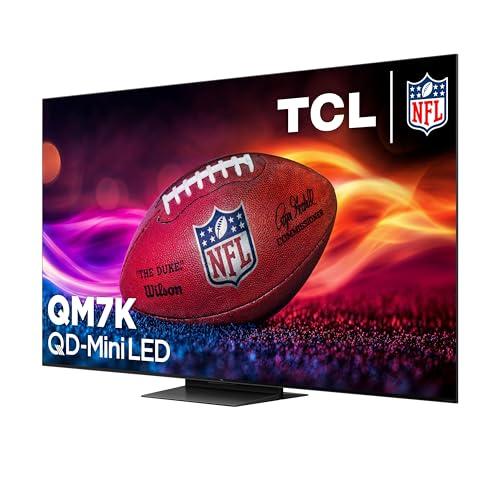
The TCL 65QM7K uses what's called QD-Mini LED technology, which sounds complex but breaks down simply. Mini LED means thousands of tiny LED lights behind the screen instead of traditional edge-lit backlighting. The "QD" stands for Quantum Dot—a layer of microscopic particles that converts backlight into incredibly pure colors. TCL combines these with up to 2,500 local dimming zones and their proprietary Halo Control System.
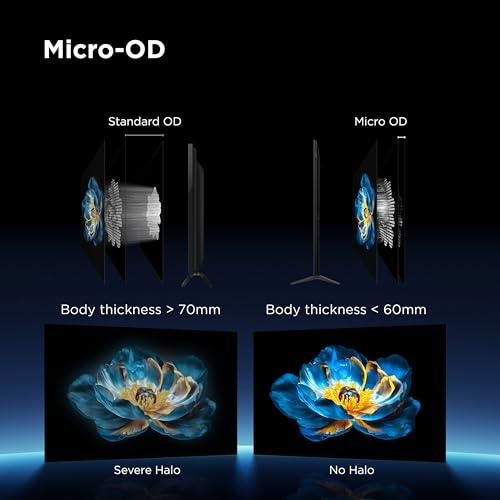
Here's what that actually means for you: when you're watching a movie with a bright explosion against a dark sky, the TCL can make that explosion blindingly bright while keeping the surrounding darkness truly black. The Halo Control System specifically tackles the "blooming" problem where bright objects create unwanted light halos—a common issue with cheaper Mini LED TVs.
The Sony BRAVIA 7 takes a different approach. It also uses Mini LED backlighting, but Sony focuses less on raw specifications and more on intelligent processing. Their Cognitive Processor XR doesn't just analyze the picture—it tries to process images the way human brains do, emphasizing the parts of the screen your eyes naturally focus on first.
This difference in philosophy shows up immediately. The TCL hits you with spectacular brightness and pop, while the Sony delivers more natural, film-like images that feel easier on the eyes during long viewing sessions.
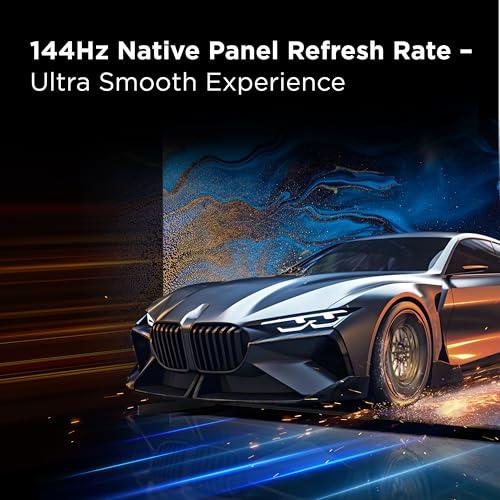
Gaming performance separates these TVs most dramatically. The TCL 65QM7K pushes a native 144Hz refresh rate—that's 144 complete screen refreshes per second. For context, most movies run at 24fps and TV shows at 30fps or 60fps. But modern PC games can push well beyond 100fps, and the TCL's Game Accelerator 288 feature can theoretically handle up to 288Hz refresh rates at 1080p resolution.
Why does this matter? Higher refresh rates mean smoother motion, especially in fast-paced games. If you're playing competitive shooters or racing games, the difference between 60Hz and 144Hz is immediately noticeable—movements feel more fluid, and input lag (the delay between pressing a button and seeing the response) drops significantly.
The Sony BRAVIA 7 caps out at 120Hz, which is still excellent and matches what current PlayStation 5 and Xbox Series X consoles can output. But Sony's strength lies in optimization rather than raw specifications. Their PlayStation 5 integration includes automatic HDR tone mapping that adjusts picture settings specifically for each game, creating more consistent visual quality across different titles.
Based on our research into user experiences and professional reviews, the choice here depends entirely on your gaming setup. PC gamers with high-end graphics cards will appreciate the TCL's higher refresh rate ceiling, while console gamers might prefer the Sony's more polished gaming features.
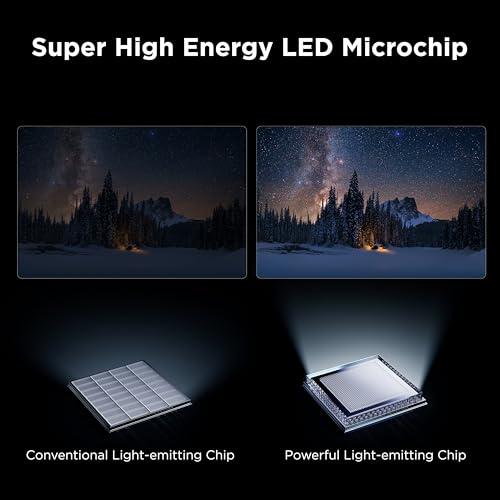
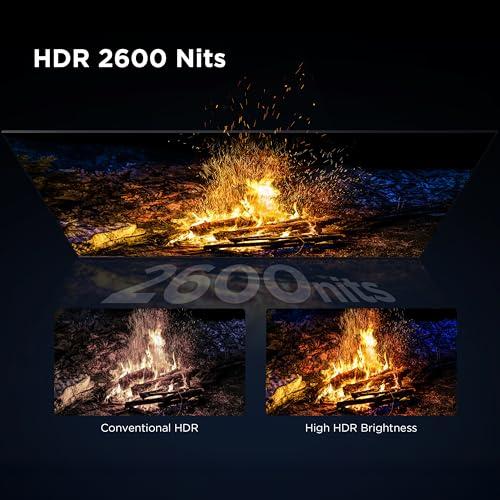
Brightness specifications tell only part of the story, but they're crucial for HDR (High Dynamic Range) content. The TCL 65QM7K achieves peak brightness around 3,000 nits in HDR highlights—that's genuinely bright enough to create the sun-like intensity that HDR content creators intended. For comparison, a typical sunny day outside measures about 100,000 nits, while older TVs topped out around 400-500 nits.
This massive brightness advantage makes the TCL exceptional for bright rooms. If your TV faces windows or you watch during daytime with lights on, higher brightness cuts through ambient light to maintain picture quality. It also means HDR highlights in movies—like sunlight streaming through windows or bright explosions—look genuinely impressive rather than washed out.
The Sony BRAVIA 7 doesn't publish specific brightness numbers, which typically indicates more modest peak brightness. However, Sony's processing often makes their TVs look brighter than the raw specifications suggest. Their tone mapping algorithms—the software that decides how to display different brightness levels—tend to be more sophisticated than competitors.
Color performance reveals another philosophical split. The TCL aims for wide color gamuts and vibrant presentation, supporting 1.07 billion colors through its quantum dot layer. This creates immediately impressive pictures with saturated, punchy colors that grab your attention.
The Sony prioritizes color accuracy over saturation. Their XR Triluminos Pro technology focuses on reproducing colors as content creators intended, particularly in skin tones and natural objects. Sony includes studio-calibrated picture modes for Netflix and Prime Video, meaning these streaming services will look exactly as their creators intended when you select the appropriate mode.
For home theater enthusiasts, this difference is significant. If you want your TV to disappear and let you focus on the movie, Sony's more natural approach works better. If you want pictures that pop and impress guests, the TCL's vibrant presentation might appeal more.
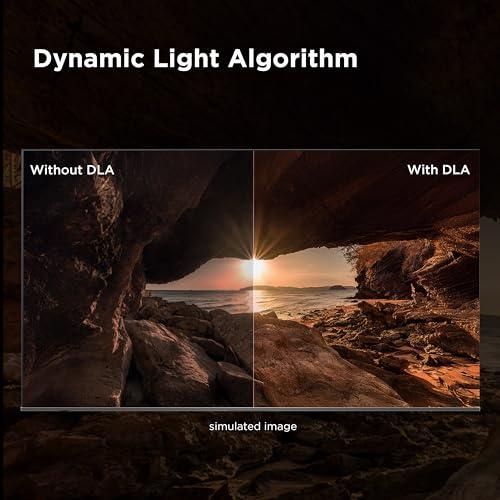
Both TVs use full-array local dimming, but with different zone counts and algorithms. The TCL boasts up to 2,500 dimming zones—individual sections of the backlight that can be controlled independently. More zones generally mean more precise light control and less blooming around bright objects.
However, zone count isn't everything. Sony's fewer zones are managed by more sophisticated algorithms that predict where blooming might occur and adjust accordingly. In practical terms, both TVs deliver excellent contrast, but the TCL might show slight blooming in challenging scenes with bright objects against dark backgrounds, while the Sony handles these transitions more gracefully.
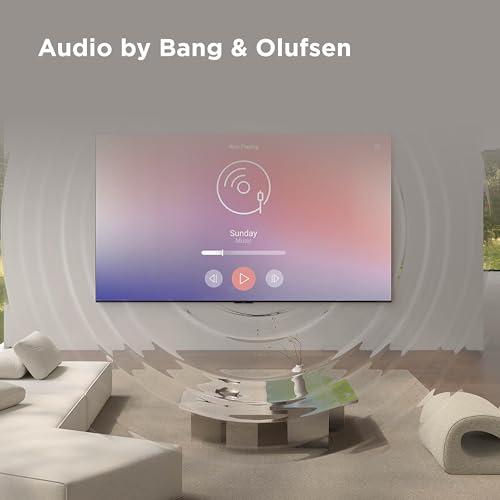
Audio quality often gets ignored in TV comparisons, but it shouldn't. The TCL 65QM7K includes a 60W audio system developed with Bang & Olufsen, featuring dedicated tweeters for high frequencies and sophisticated digital signal processing. This partnership isn't just marketing—Bang & Olufsen brings real audio expertise, and the higher wattage provides more dynamic range and volume capability.
The Sony BRAVIA 7 uses a 40W system with their Acoustic Multi-Audio technology, which positions different speakers to match sound with on-screen action. While less powerful on paper, Sony's processing often makes their audio feel more immersive and dialogue clearer.
From our research into user feedback, both TVs deliver surprisingly good built-in audio that exceeds expectations for flat-panel TVs. However, if you're building a serious home theater setup, you'll likely add a soundbar or surround system regardless, making this factor less critical for many buyers.
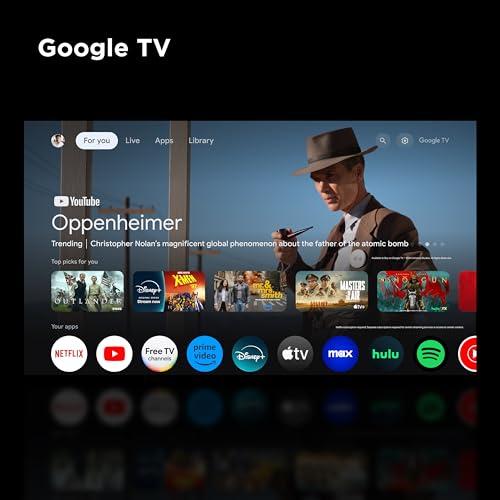
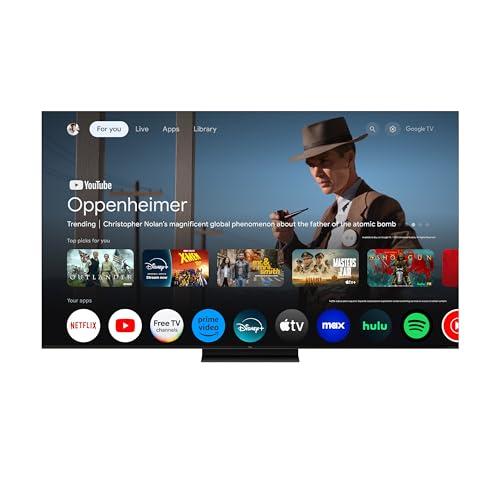
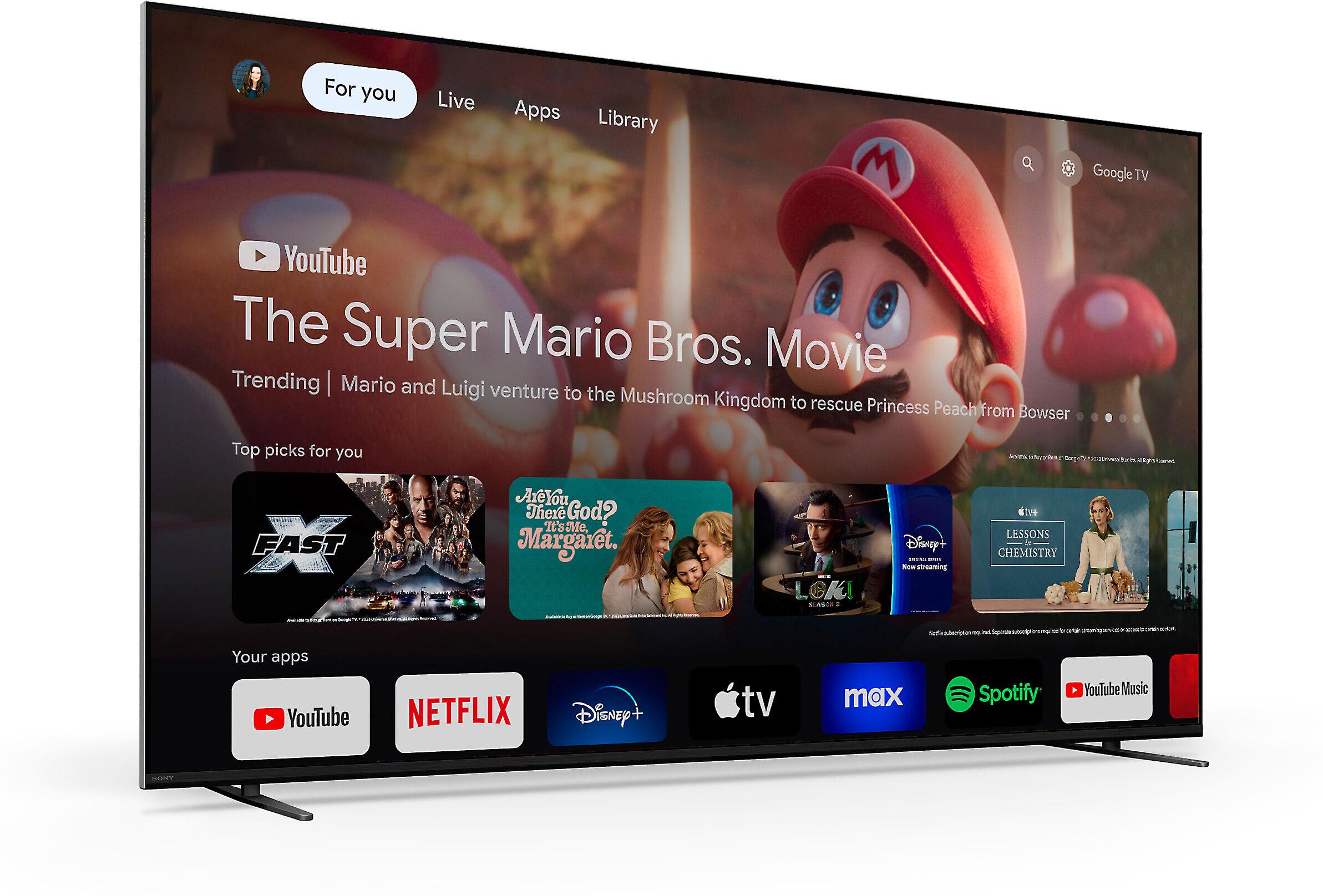
Both TVs run Google TV, but implementation matters. The TCL includes far-field microphones for hands-free voice control—you can literally talk to your TV from across the room without picking up the remote. This feature works better than expected and feels surprisingly natural once you adapt to it.
The Sony sticks with traditional remote-based voice control but integrates more deeply with Sony's content ecosystem. You get pre-loaded credits for Sony Pictures movies and optimized settings for Sony's streaming service.
Long-term software support represents a significant consideration that many buyers overlook. Sony has a stronger track record of providing updates for older TV models, while TCL's support history is shorter simply because they're newer to the premium TV market in North America. This doesn't necessarily predict future performance, but it's worth considering if you plan to keep your TV for many years.
In a dedicated home theater environment, several factors become more important. Room lighting control, seating distance, and acoustic treatment all influence which TV works better.
The Sony BRAVIA 7 excels in controlled lighting environments. Its more natural color reproduction and sophisticated processing create a cinema-like experience that doesn't fatigue your eyes during long movie sessions. The IMAX Enhanced certification and studio-calibrated modes provide authentic filmmaker intent.
The TCL 65QM7K works better in multi-purpose rooms where you can't always control lighting. Its superior brightness maintains picture quality even with some ambient light, and the vibrant colors look impressive from wider viewing angles during casual family viewing.
For serious home theater enthusiasts who prioritize accuracy over impact, the Sony aligns better with professional display calibration principles. For families who want an impressive centerpiece that works well across different viewing scenarios, the TCL offers more flexibility.
Choose the TCL 65QM7K if you:
The TCL represents exceptional value for what you get. It's essentially a flagship TV from 2022 at a mid-range 2024 price, with gaming features that exceed most current flagships.
Choose the Sony BRAVIA 7 if you:
The Sony costs more but delivers the polished experience Sony is known for, with processing sophistication that's difficult to quantify but easy to appreciate during daily use.
At the time of writing, the TCL 65QM7K offers better pure value—you get more advanced display technology and higher specifications for significantly less money. It's the obvious choice for gaming enthusiasts and anyone wanting maximum performance per dollar.
The Sony BRAVIA 7 commands its premium through refinement rather than raw specs. If you're building a home theater or want a TV that will age gracefully over many years, Sony's approach makes more sense despite the higher initial cost.
Both represent excellent choices in the premium mid-range segment, but they serve different priorities. The TCL maximizes what's possible at its price point, while the Sony focuses on doing everything well rather than excelling in specific areas. Your choice should align with your primary use cases and how much you value specifications versus refinement.
Neither TV will disappoint, but understanding these fundamental differences ensures you'll pick the one that best matches your expectations and viewing habits.
| TCL 65QM7K | Sony BRAVIA 7 |
|---|---|
| Peak Brightness - Critical for HDR impact and bright room viewing | |
| 3,000 nits (exceptional for daytime viewing and HDR highlights) | Not specified (likely lower, but sophisticated tone mapping) |
| Refresh Rate - Determines gaming smoothness and motion clarity | |
| 144Hz native, up to 288Hz VRR (future-proof for high-end PC gaming) | 120Hz native with VRR (perfect for current consoles) |
| Local Dimming Zones - Controls contrast precision and blooming | |
| Up to 2,500 zones with Halo Control System (industry-leading precision) | Full-array local dimming with XR Backlight Master Drive (fewer zones, smarter algorithms) |
| Display Technology - Foundation of picture quality | |
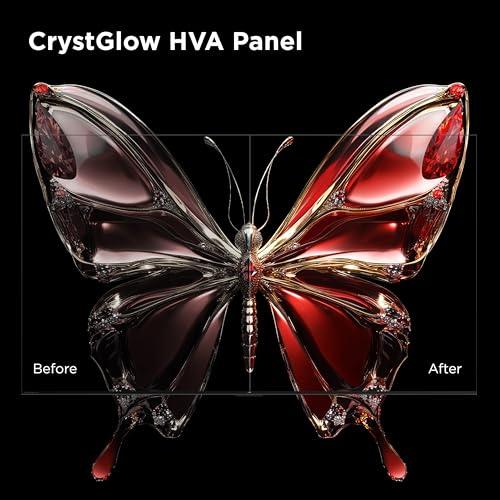
| QD-Mini LED with CrystGlow HVA Panel (maximum brightness and color) | Mini LED QLED with Cognitive Processor XR (natural, film-like processing) |
| Gaming Features - Performance for competitive and console gaming | |
| Game Accelerator 288, AMD FreeSync Premium Pro, 2 HDMI 2.1 ports | PlayStation 5 optimization, Auto HDR Tone Mapping, 2 HDMI 2.1 ports |
| Audio System - Built-in sound quality and power | |
| 60W Bang & Olufsen with Dolby Atmos (higher power, premium partnership) | 40W with Acoustic Multi-Audio and Dolby Atmos (sophisticated positioning) |
| Smart Platform - User experience and long-term support | |
| Google TV with far-field voice control (hands-free operation) | Google TV with Sony content integration (studio-calibrated modes) |
| HDR Support - Format compatibility for premium content | |
| Dolby Vision IQ, HDR10+, HDR10, HLG (comprehensive format support) | Dolby Vision, HDR10, HLG, IMAX Enhanced (filmmaker-focused) |
| Design Philosophy - Overall approach to performance | |
| Specification-focused with cutting-edge gaming features (maximum value) | Processing-focused with cinematic refinement (premium experience) |
| Best Use Cases - Who should choose each TV | |
| PC gaming, bright rooms, value seekers, tech enthusiasts | Console gaming, home theaters, movie lovers, brand loyalists |
The TCL 65QM7K is significantly better for gaming, especially PC gaming. It offers a 144Hz native refresh rate with Game Accelerator 288 that can reach up to 288Hz VRR, while the Sony BRAVIA 7 caps at 120Hz. The TCL also includes AMD FreeSync Premium Pro certification and ultra-low input lag. However, the Sony BRAVIA 7 excels for PlayStation 5 users with dedicated console optimization and Auto HDR Tone Mapping.
The TCL 65QM7K is substantially brighter with 3,000 nits peak brightness, making it exceptional for bright rooms and daytime viewing. The Sony BRAVIA 7 doesn't specify peak brightness but likely achieves lower numbers. For rooms with lots of windows or ambient light, the TCL maintains picture quality much better than the Sony.
The TCL 65QM7K emphasizes vibrant colors and impressive brightness with its QD-Mini LED technology and 2,500 local dimming zones. The Sony BRAVIA 7 focuses on natural, film-like images with sophisticated Cognitive Processor XR processing. The TCL delivers more "wow factor" while the Sony provides more accurate, cinema-like reproduction.
Both TVs run Google TV, but with different implementations. The TCL 65QM7K includes far-field microphones for hands-free voice control, letting you control the TV without the remote. The Sony BRAVIA 7 offers deeper content integration with studio-calibrated modes for Netflix and Prime Video, plus Sony Pictures movie credits. Both support Google Assistant, Chromecast, and AirPlay 2.
The TCL 65QM7K features a more powerful 60W audio system developed with Bang & Olufsen, providing higher volume and dynamic range. The Sony BRAVIA 7 uses a 40W system with Acoustic Multi-Audio technology that positions sound to match on-screen action. Both support Dolby Atmos, but the TCL delivers more raw power while the Sony offers more sophisticated audio processing.
The TCL 65QM7K provides exceptional value with flagship-level display technology, gaming features, and brightness at a mid-range price point. You get more advanced specifications per dollar spent. The Sony BRAVIA 7 costs significantly more but offers refined processing, brand reputation, and likely better long-term software support. The TCL maximizes performance per dollar, while the Sony focuses on premium experience quality.
Both work well for home theaters but serve different priorities. The Sony BRAVIA 7 excels in controlled lighting environments with its natural color reproduction, IMAX Enhanced certification, and studio-calibrated picture modes. The TCL 65QM7K works better in multi-purpose rooms where you can't always control lighting, thanks to its superior brightness. For dedicated home theaters prioritizing accuracy, choose the Sony. For flexible family rooms, the TCL adapts better.
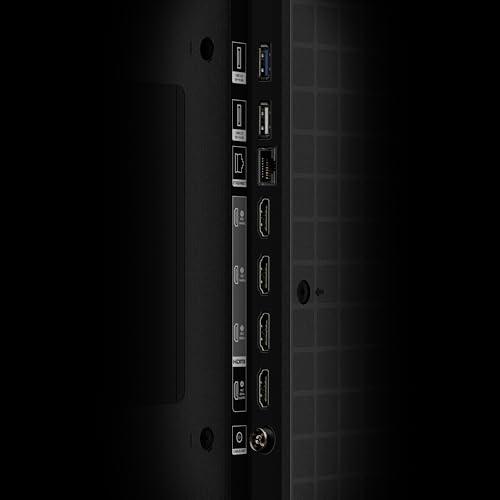
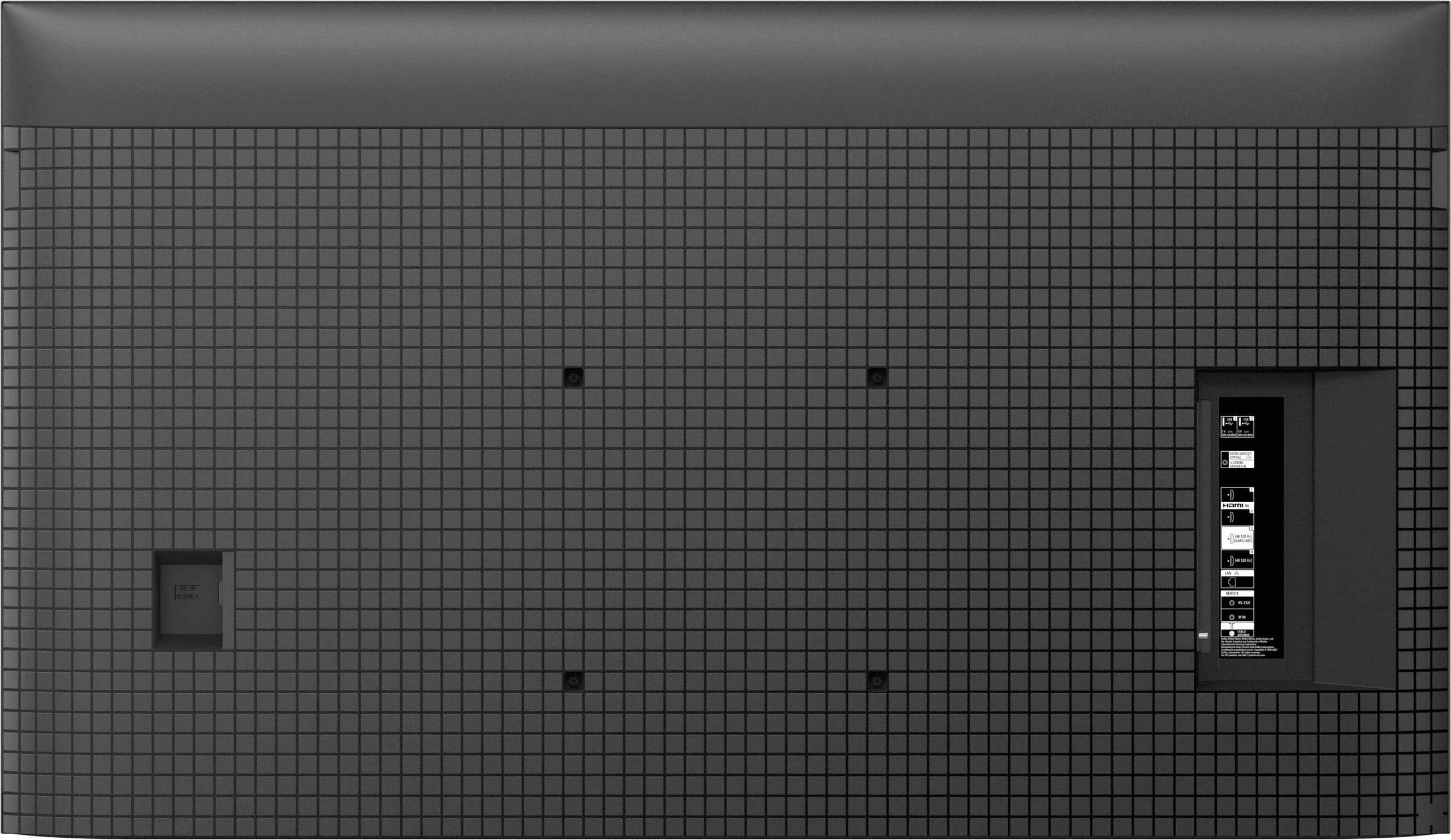
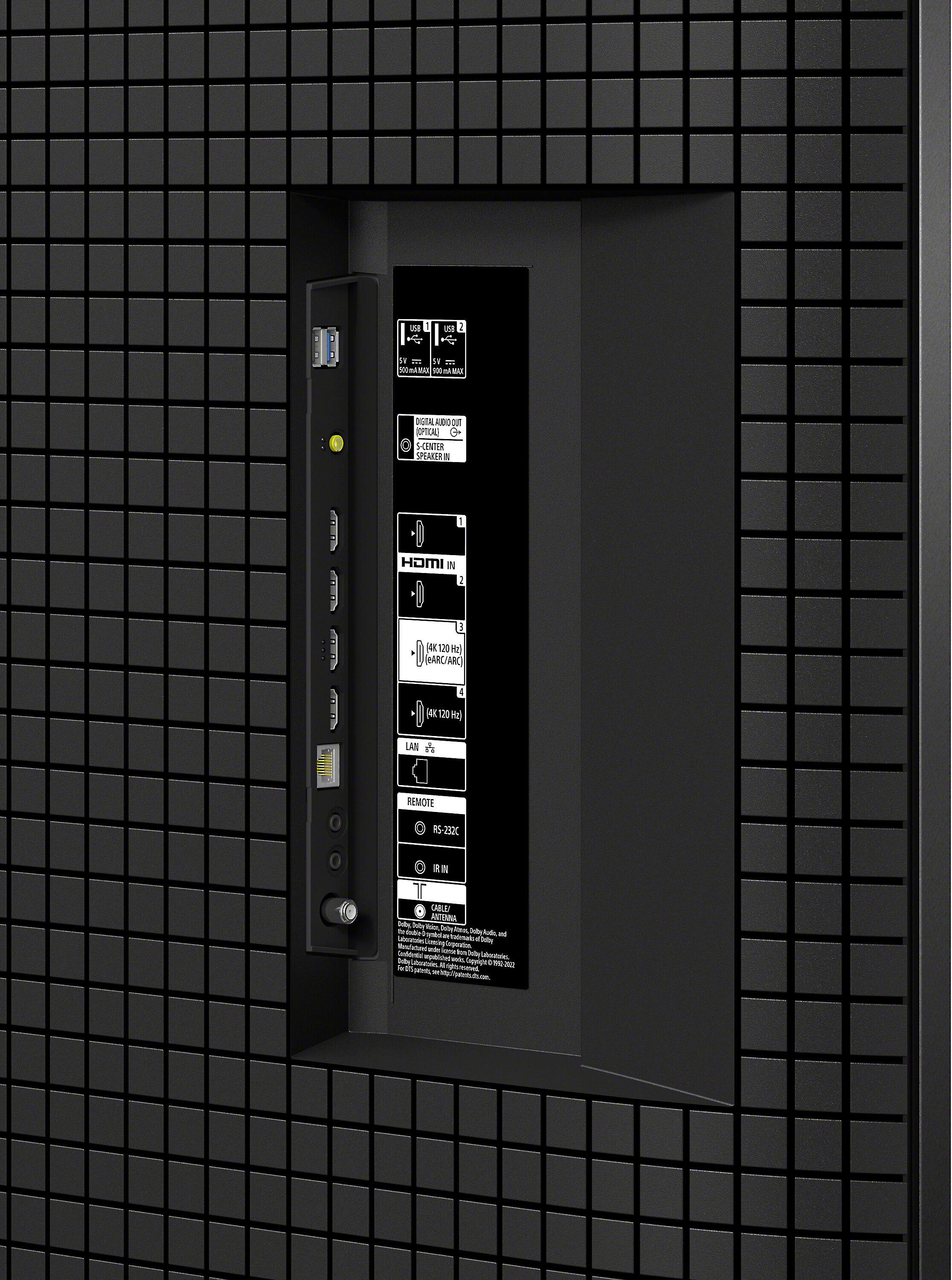
Both TVs offer 4 HDMI ports total, with 2 HDMI 2.1 ports each supporting 4K at high refresh rates. The TCL 65QM7K includes Wi-Fi 5, Bluetooth, and USB ports, while the Sony BRAVIA 7 adds Bluetooth 5.3 and additional USB connectivity. Neither has a significant connectivity advantage, though some users might prefer having more HDMI 2.1 ports for multiple gaming devices.
The TCL 65QM7K supports a wider range of HDR formats including Dolby Vision IQ, HDR10+, HDR10, and HLG. The Sony BRAVIA 7 supports Dolby Vision, HDR10, HLG, and adds IMAX Enhanced certification. Both handle all major streaming service HDR formats, but the TCL includes the newer Dolby Vision IQ that adjusts based on room lighting conditions.
Sony has a stronger track record for long-term software updates and customer support, typically providing updates for 4-5 years. The Sony BRAVIA 7 likely receives more consistent updates and feature additions over time. TCL's support history in North America is shorter but improving. If you plan to keep your TV for many years, the Sony offers more confidence in continued software support, while the TCL provides better initial value.
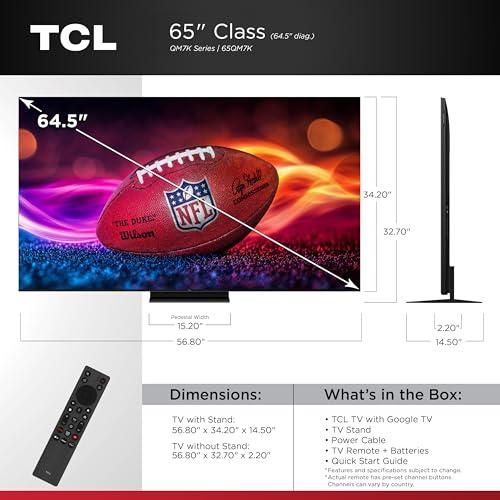
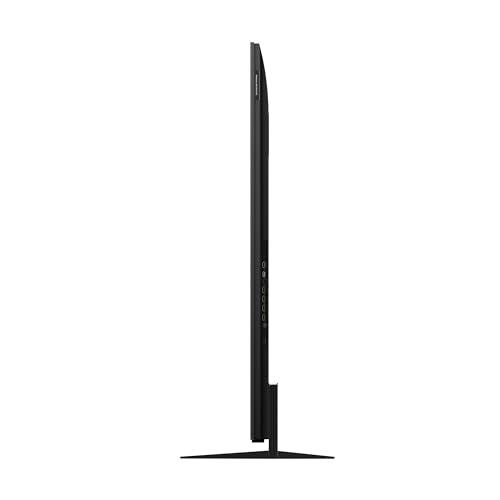
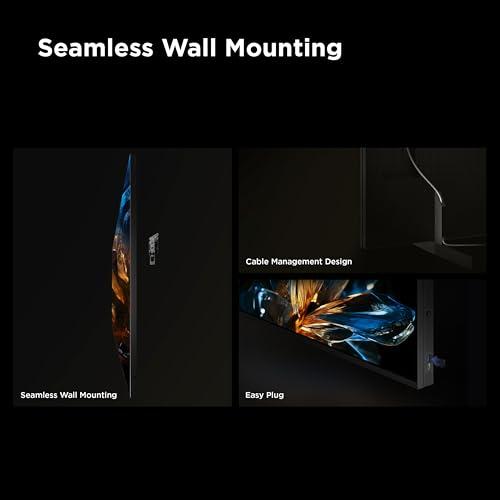
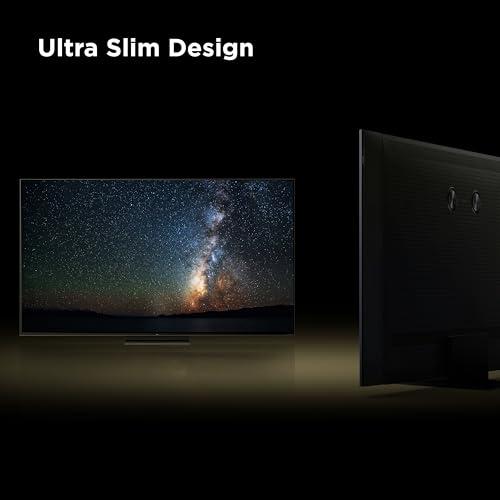
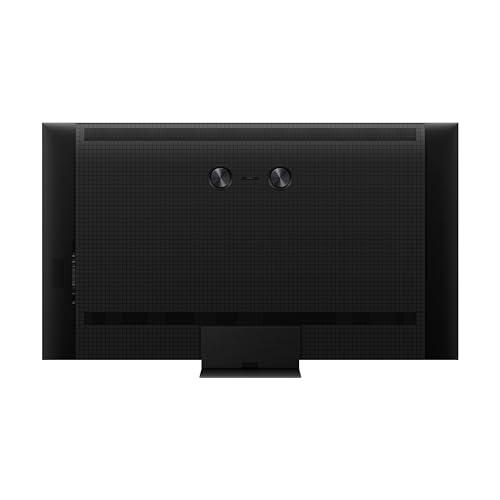
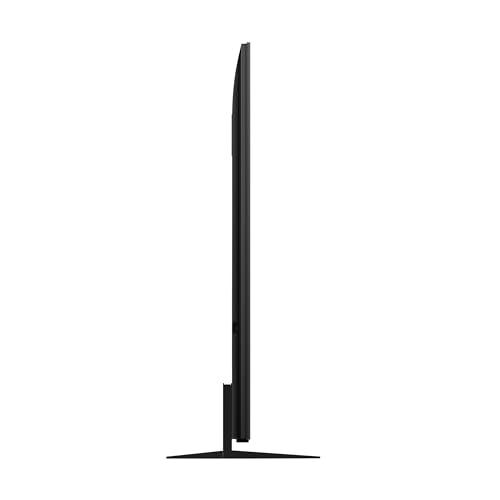
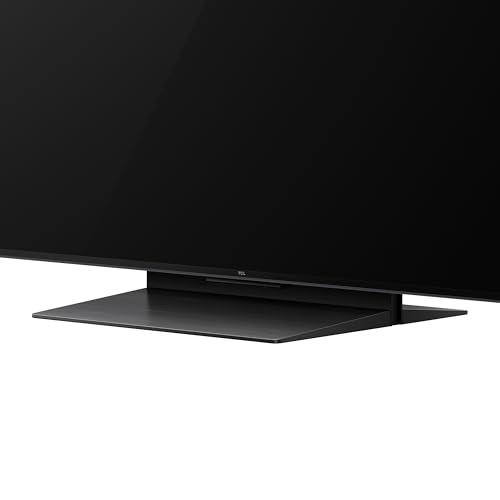
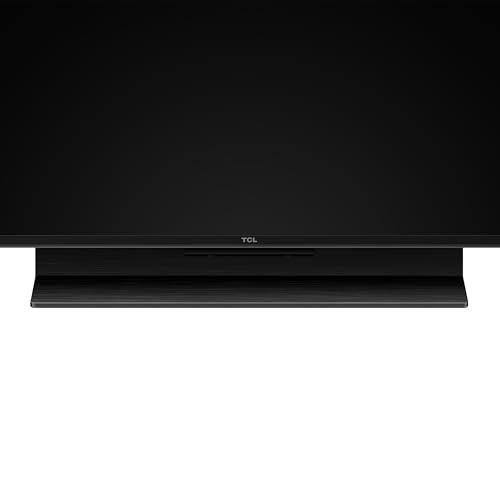
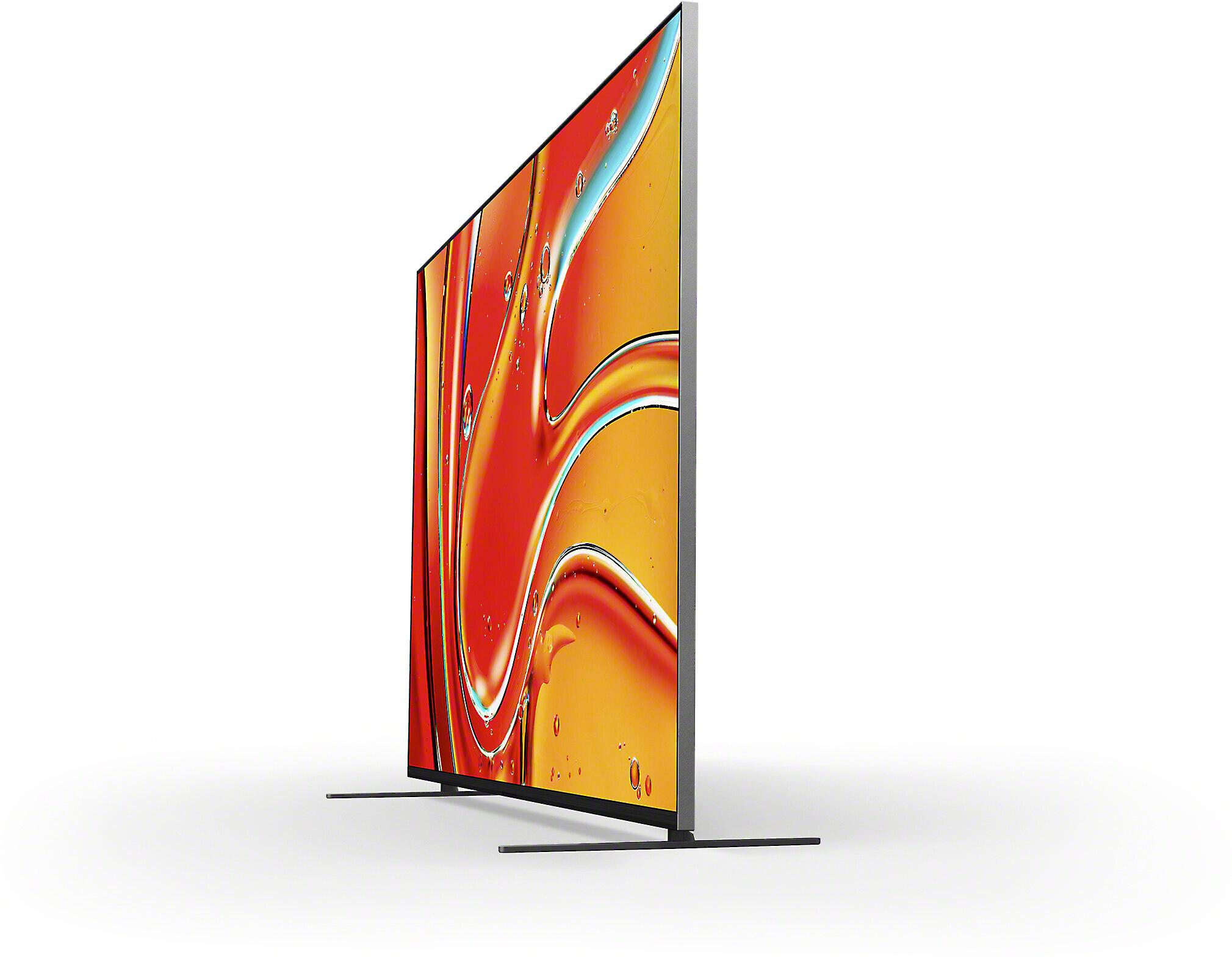
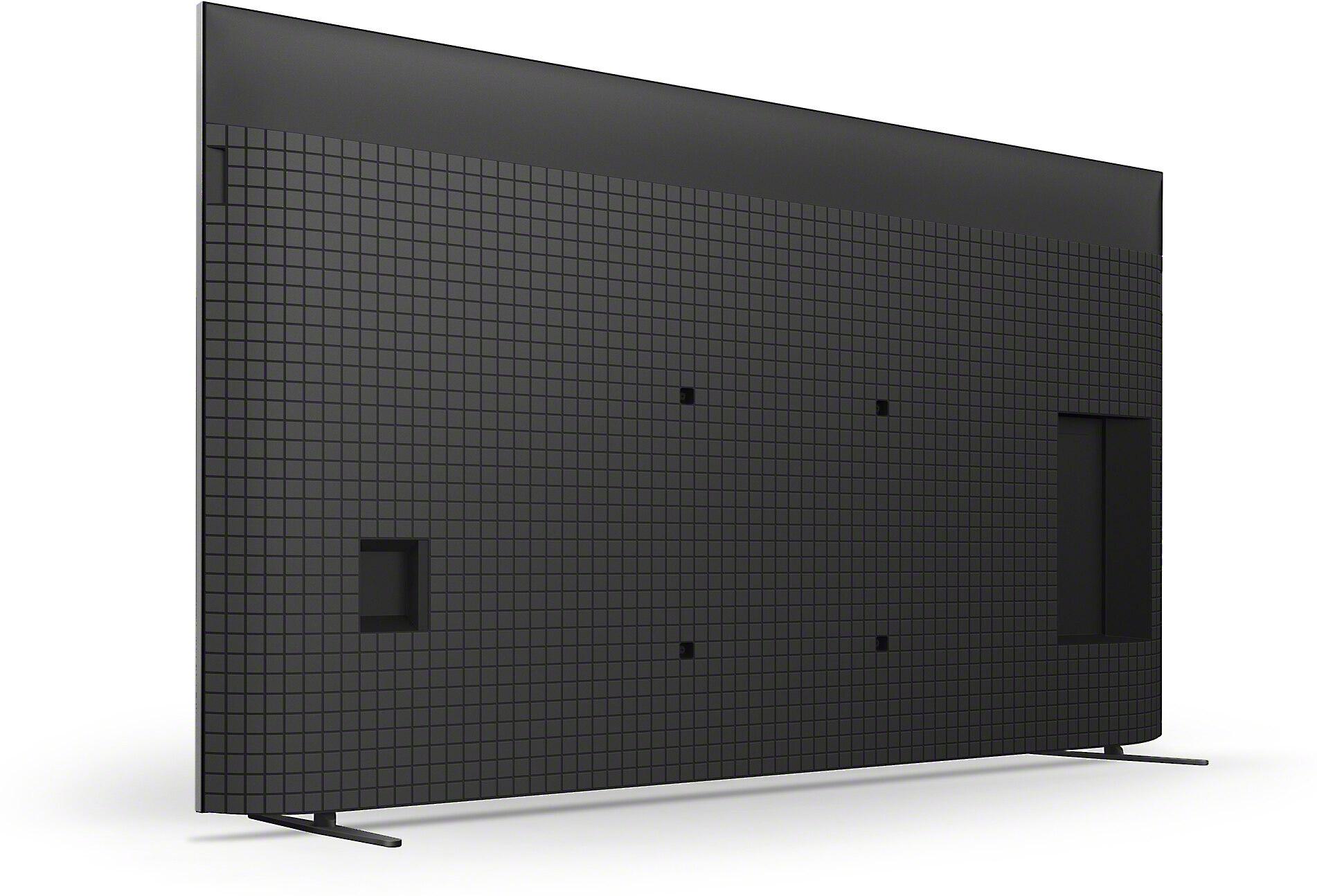
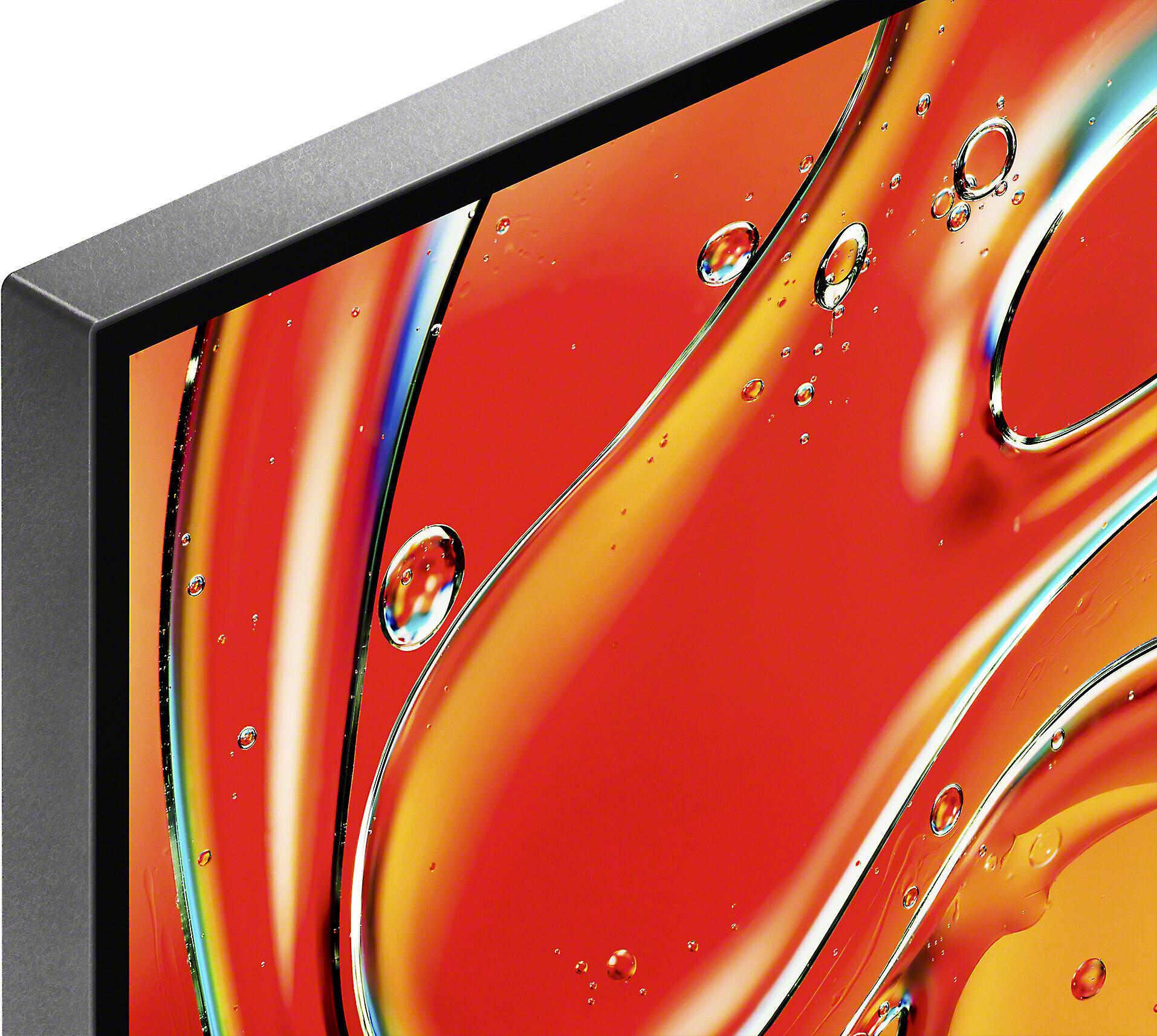
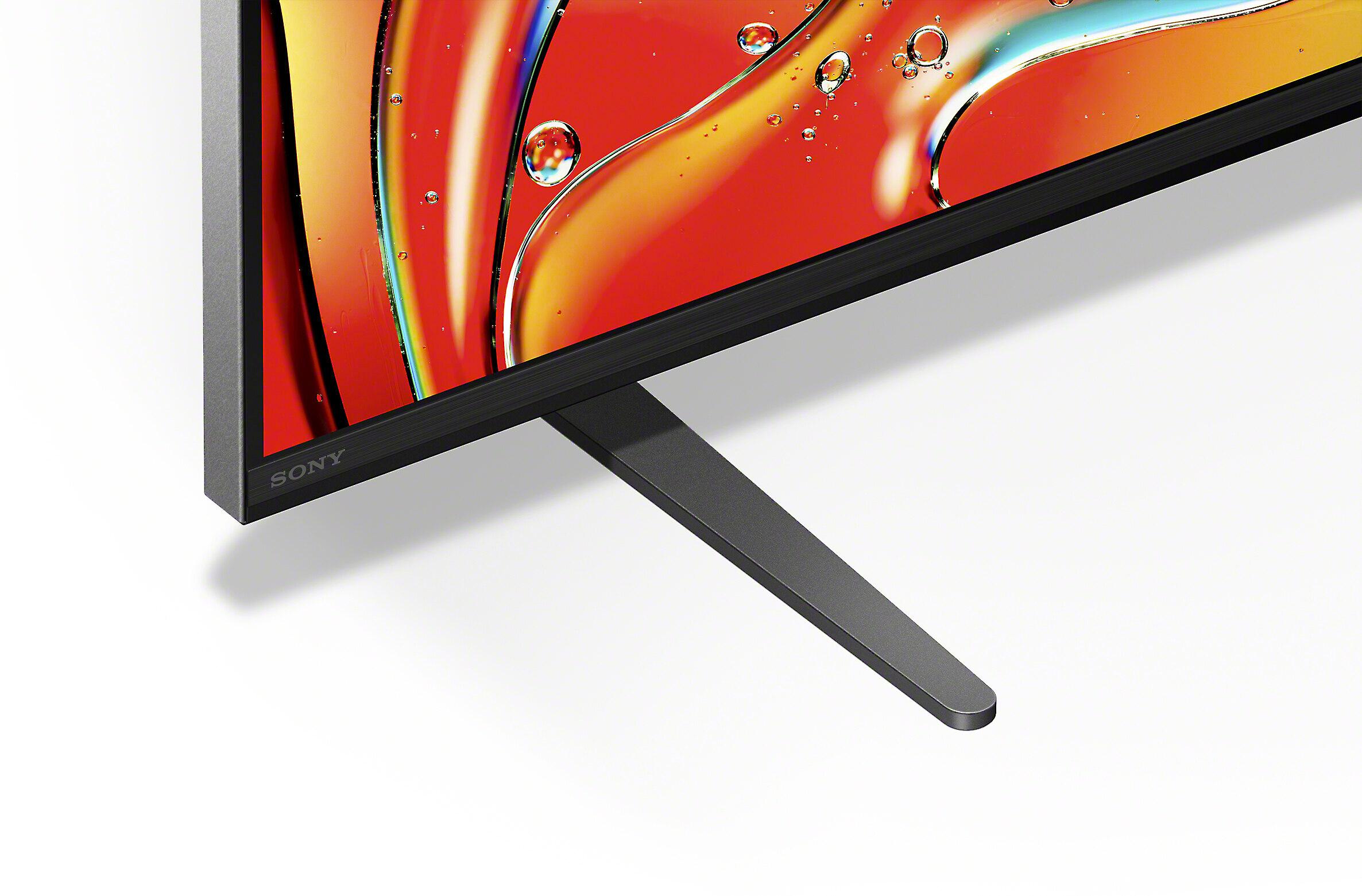
The TCL 65QM7K features an ultra-slim profile optimized for wall mounting with minimal bezels. The Sony BRAVIA 7 includes a premium four-way stand system with multiple positioning options to accommodate soundbars. Both TVs look premium, but the TCL emphasizes sleekness while the Sony focuses on functional flexibility and build quality.
For mixed usage combining gaming, movies, and casual viewing, your priorities determine the choice. Choose the TCL 65QM7K if you game regularly, watch in bright rooms, or want maximum features for the price. Choose the Sony BRAVIA 7 if you prioritize movie watching, prefer natural colors, or want proven brand reliability. The TCL excels at gaming and bright room viewing, while the Sony delivers more balanced performance across all content types.
We've done our best to create useful and informative comparisons to help you decide what product to buy. Our research uses advanced automated methods to create this comparison and perfection is not possible - please contact us for corrections or questions. These are the sites we've researched in the creation of this article: bestbuy.com - businessinsider.com - tomsguide.com - tomsguide.com - rtings.com - tomsguide.com - youtube.com - rtings.com - consumerreports.org - youtube.com - youtube.com - displayspecifications.com - youtube.com - tcl.com - tcl.com - tcl.com - youtube.com - rcwilley.com - bestbuy.com - tclcentral.com - displayspecifications.com - tomsguide.com - tcl.com - brandsmartusa.com - tcl.com - tcl.com - gizmochina.com - nfm.com - dolby.com - alexraytv.com - bestbuy.com - bestbuy.com - avsforum.com - avsforum.com - crutchfield.com - sony.com - rtings.com - schaeferstv.com - youtube.com - displayspecifications.com

Privacy Policy
Terms and Conditions - Affiliate Policy
Home Security
© Copyright 2008-2026.
11816 Inwood Rd #1211, Dallas, TX 75244