

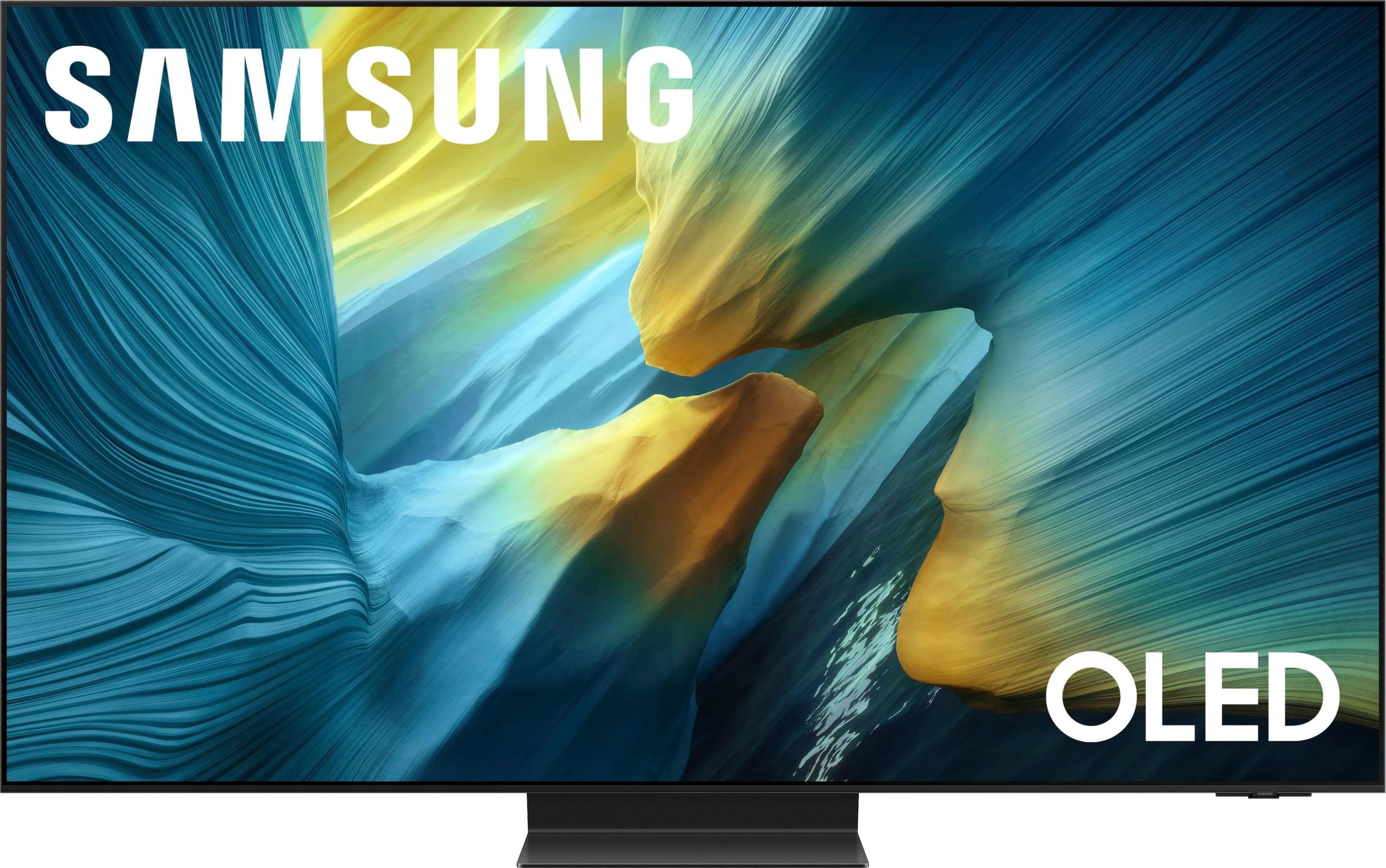
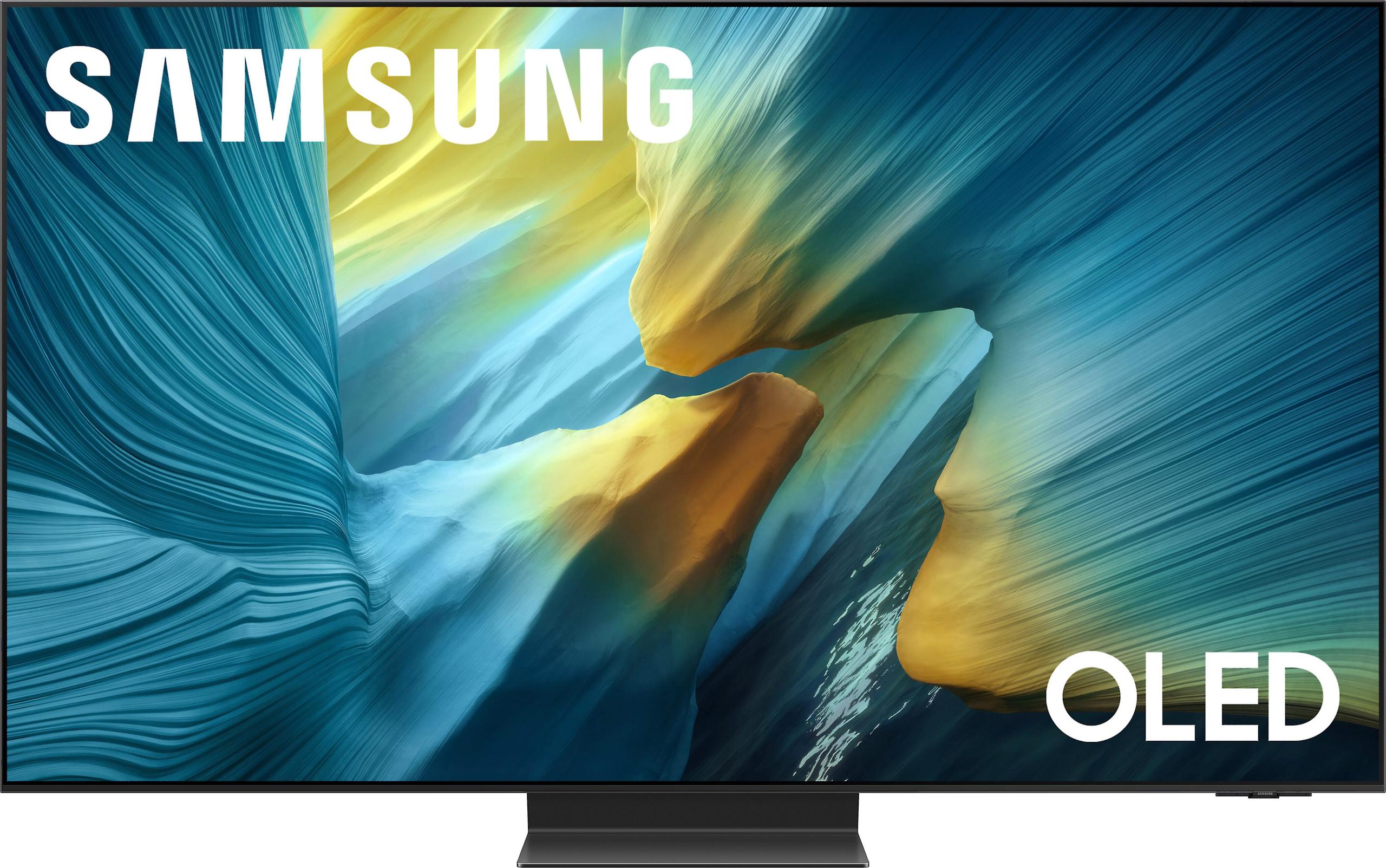
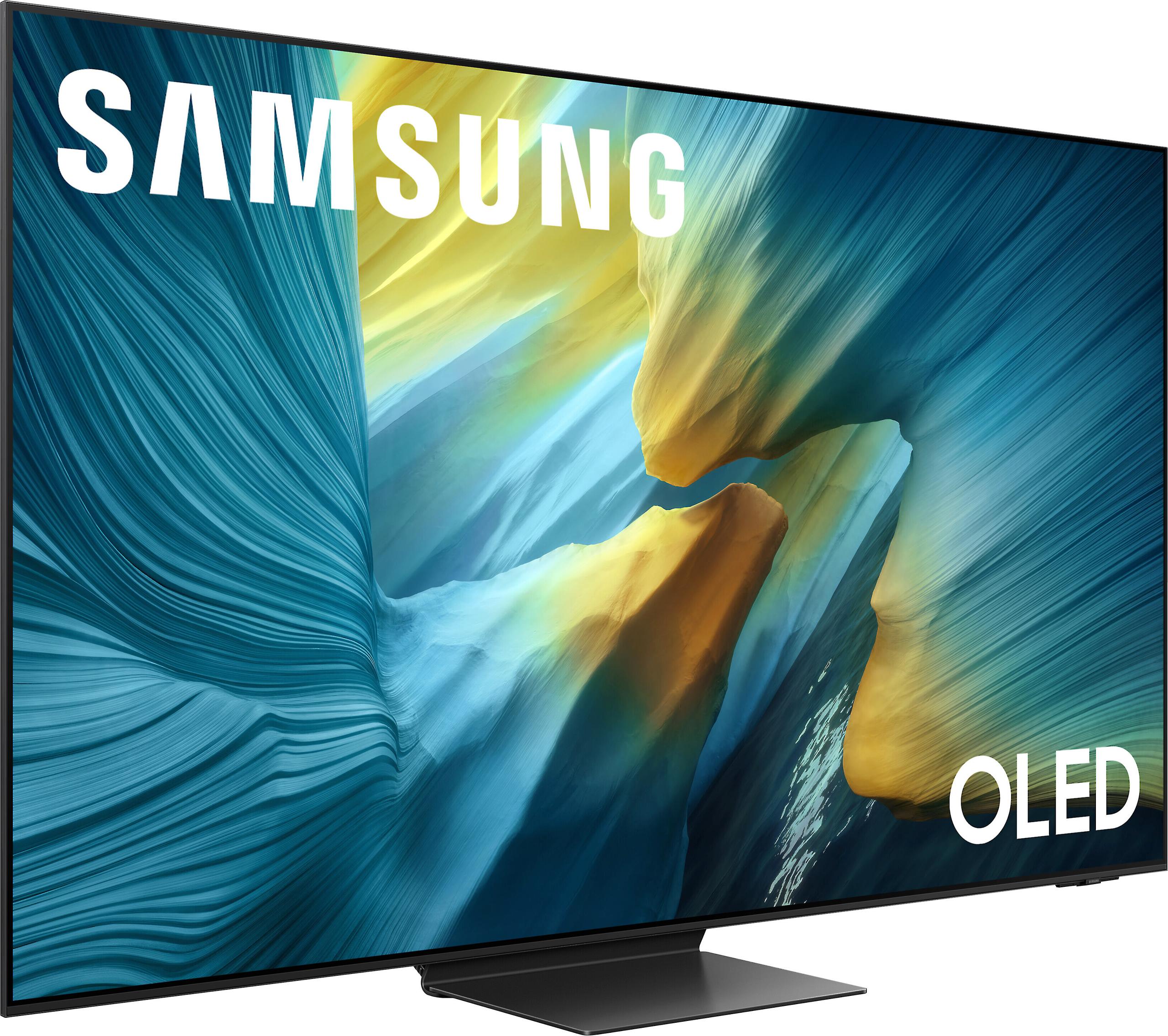

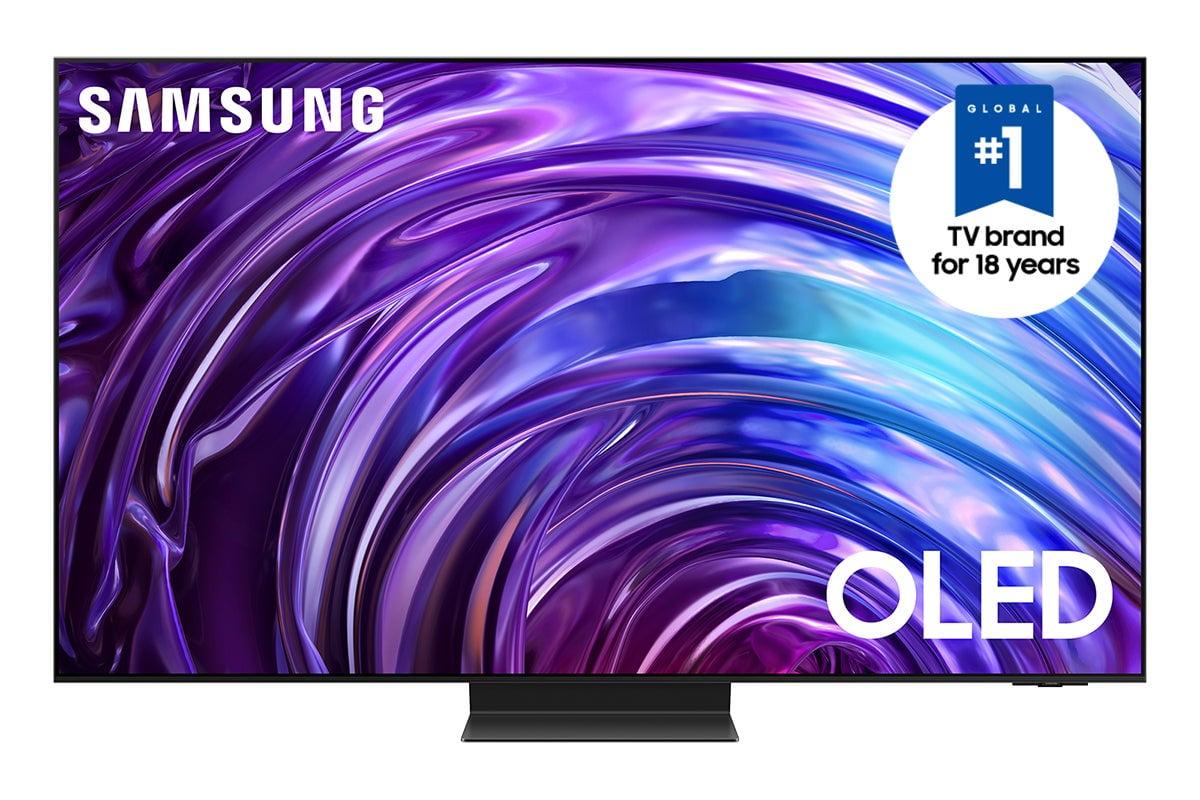
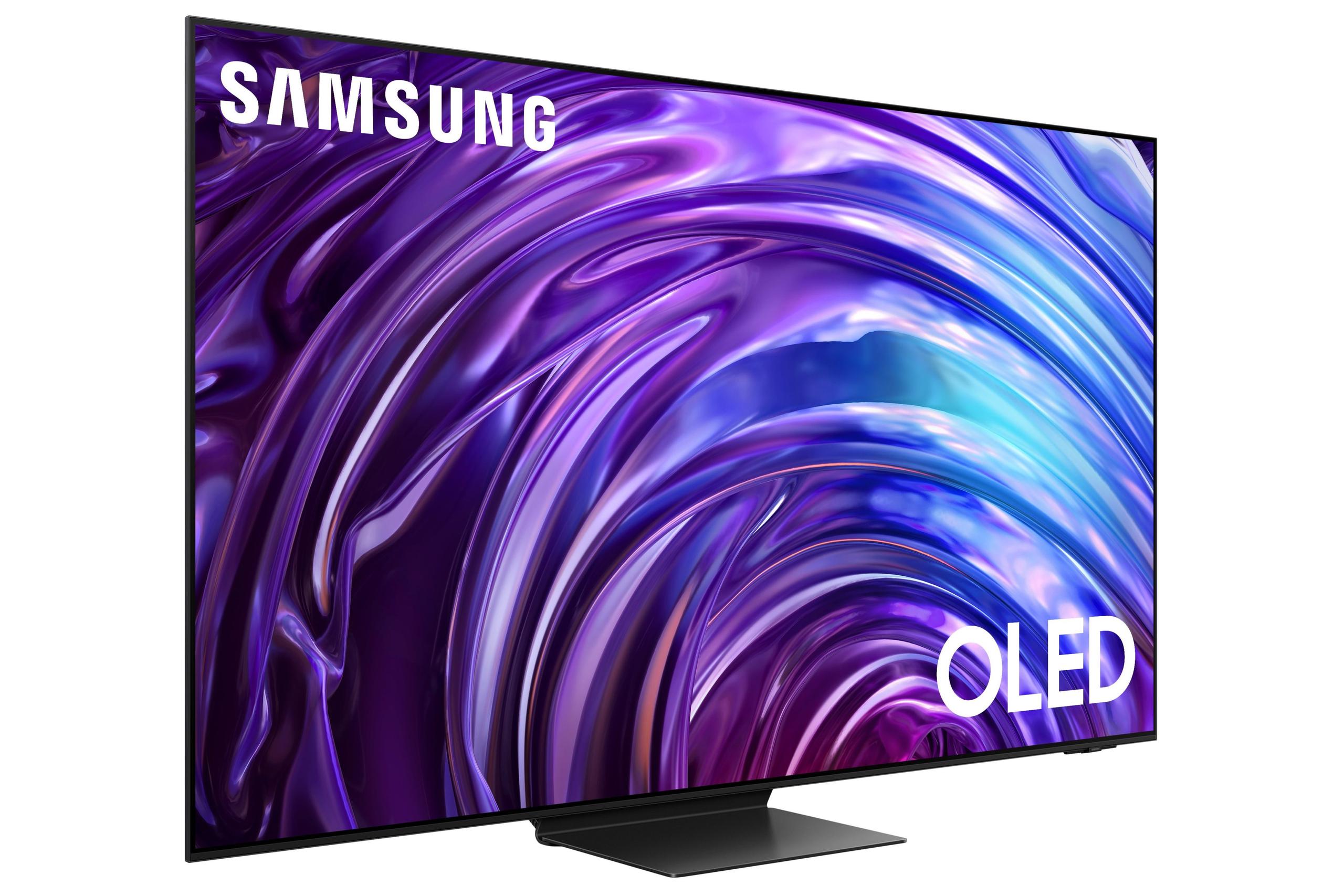
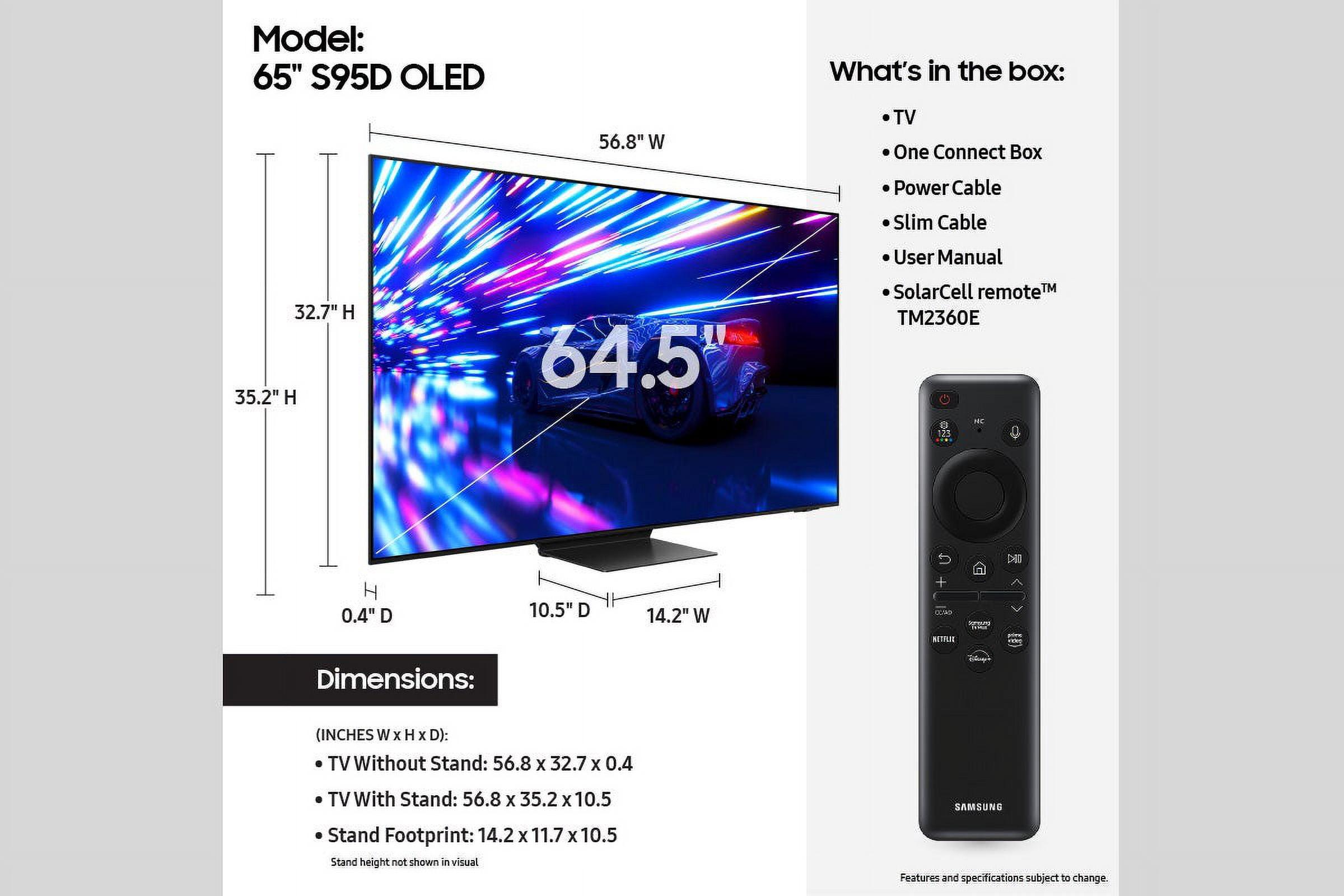
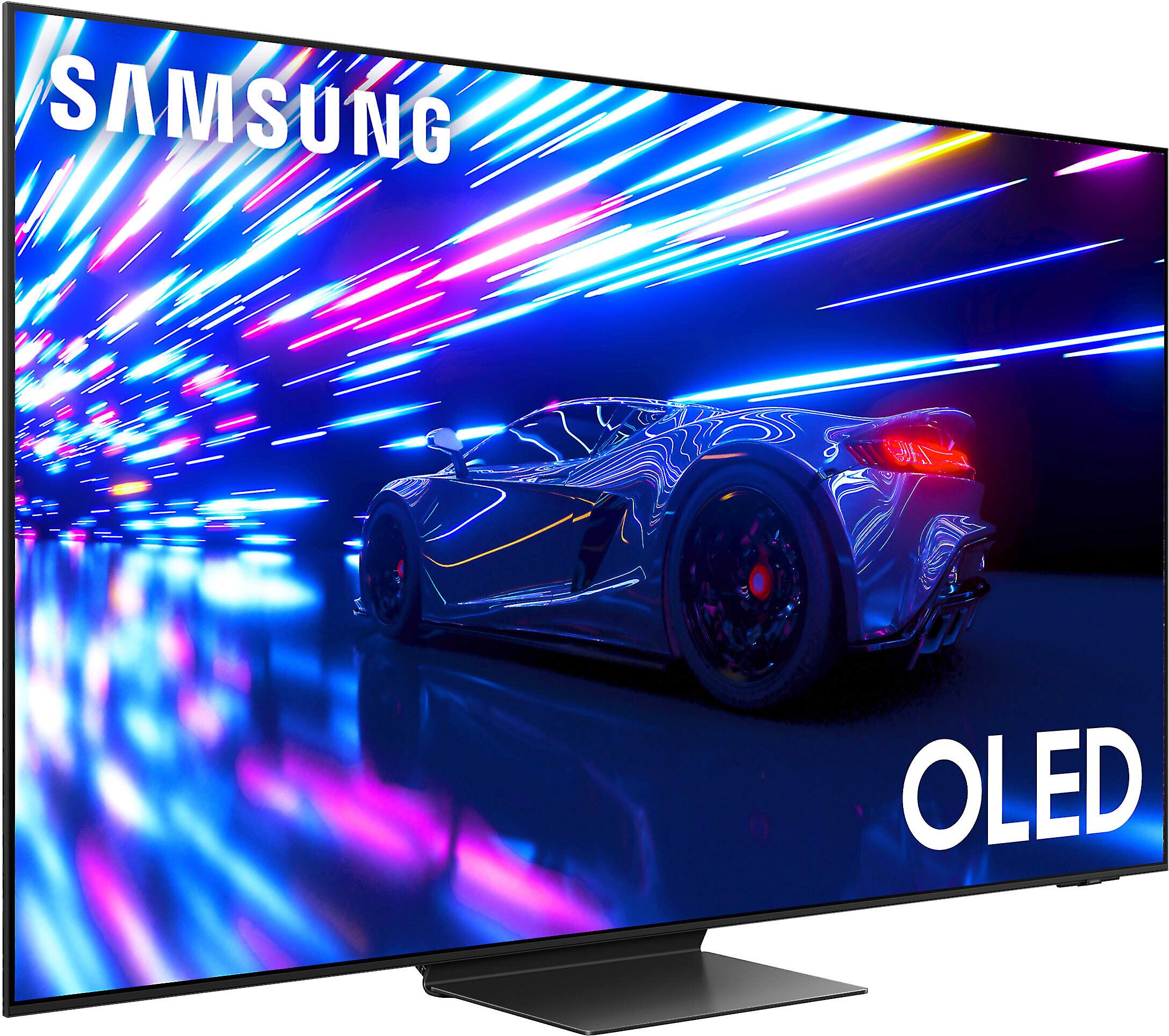
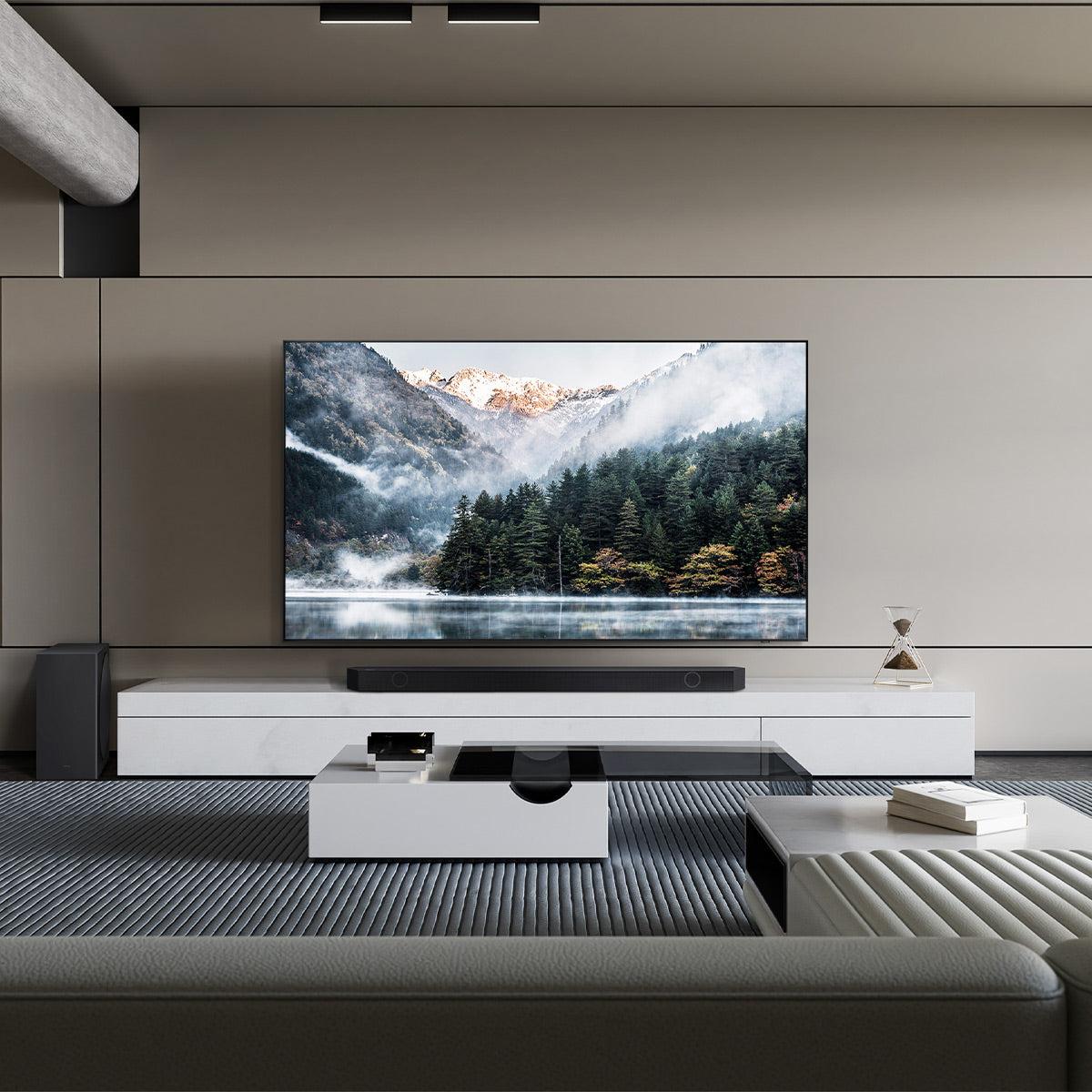
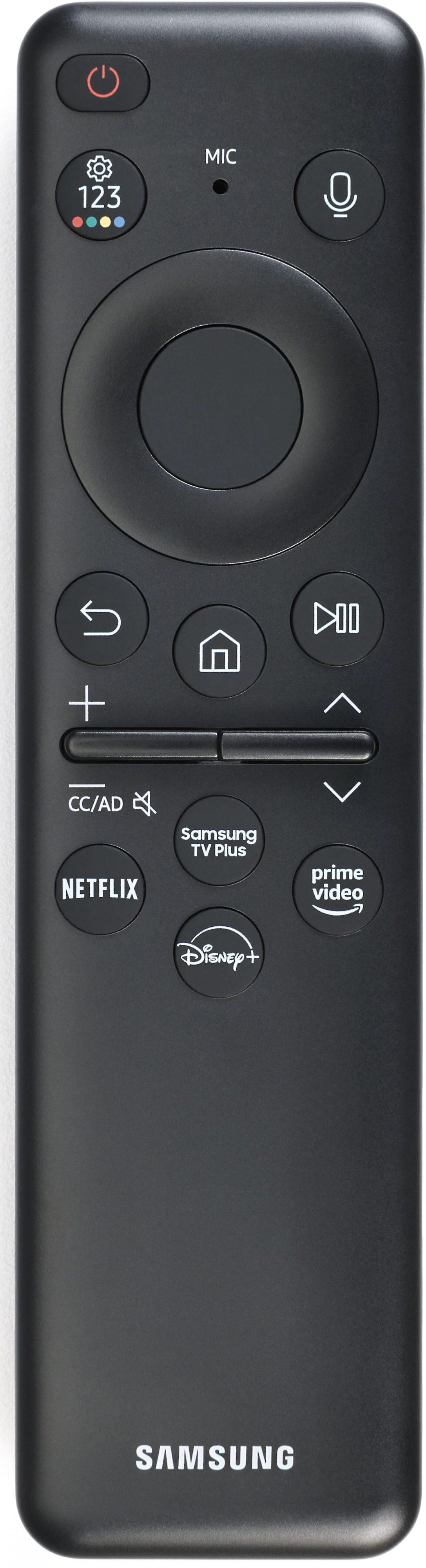
The TV landscape changes quickly, and Samsung's flagship OLED TVs represent some of the most advanced display technology available to consumers. Both the Samsung 65" S95D 4K OLED Smart TV from 2024 and the newer Samsung 65" OLED S95F 4K Smart TV 2025 utilize QD-OLED technology, which combines quantum dots with organic light-emitting diodes. This hybrid approach delivers the perfect blacks and infinite contrast of traditional OLED while enhancing brightness and color volume through quantum dot color conversion.
The S95D was released in spring 2024 and quickly established itself as one of the year's standout premium TVs, particularly notable for introducing Samsung's anti-glare technology. The S95F, announced at CES 2025 and released in March 2025, builds upon this foundation with claimed improvements in brightness, processing power, and anti-glare capabilities.
When investing in a premium TV that costs over $2,000, several factors deserve careful consideration: picture quality (brightness, contrast, color accuracy), anti-glare capabilities for bright rooms, gaming performance, and smart features. Let's examine how these two flagship models compare and which might better suit your viewing environment and budget.
| Feature | Samsung S95F (2025) | Samsung S95D (2024) |
|---|---|---|
| Display | 65" 4K QD-OLED (4th gen) | 65" 4K QD-OLED (3rd gen) |
| Processor | NQ4 AI Gen3 (128 neural networks) | NQ4 AI Gen2 (20 neural networks) |
| Peak Brightness | ~2,400 nits (measured, 10% window) | ~1,900 nits (measured, 10% window) |
| Refresh Rate | 165Hz | 144Hz |
| Anti-Glare | OLED Glare Free 2.0 | OLED Glare Free |
| Software Support | 7 years guaranteed | Not specified |
| Price | $3,300 | $2,200 |
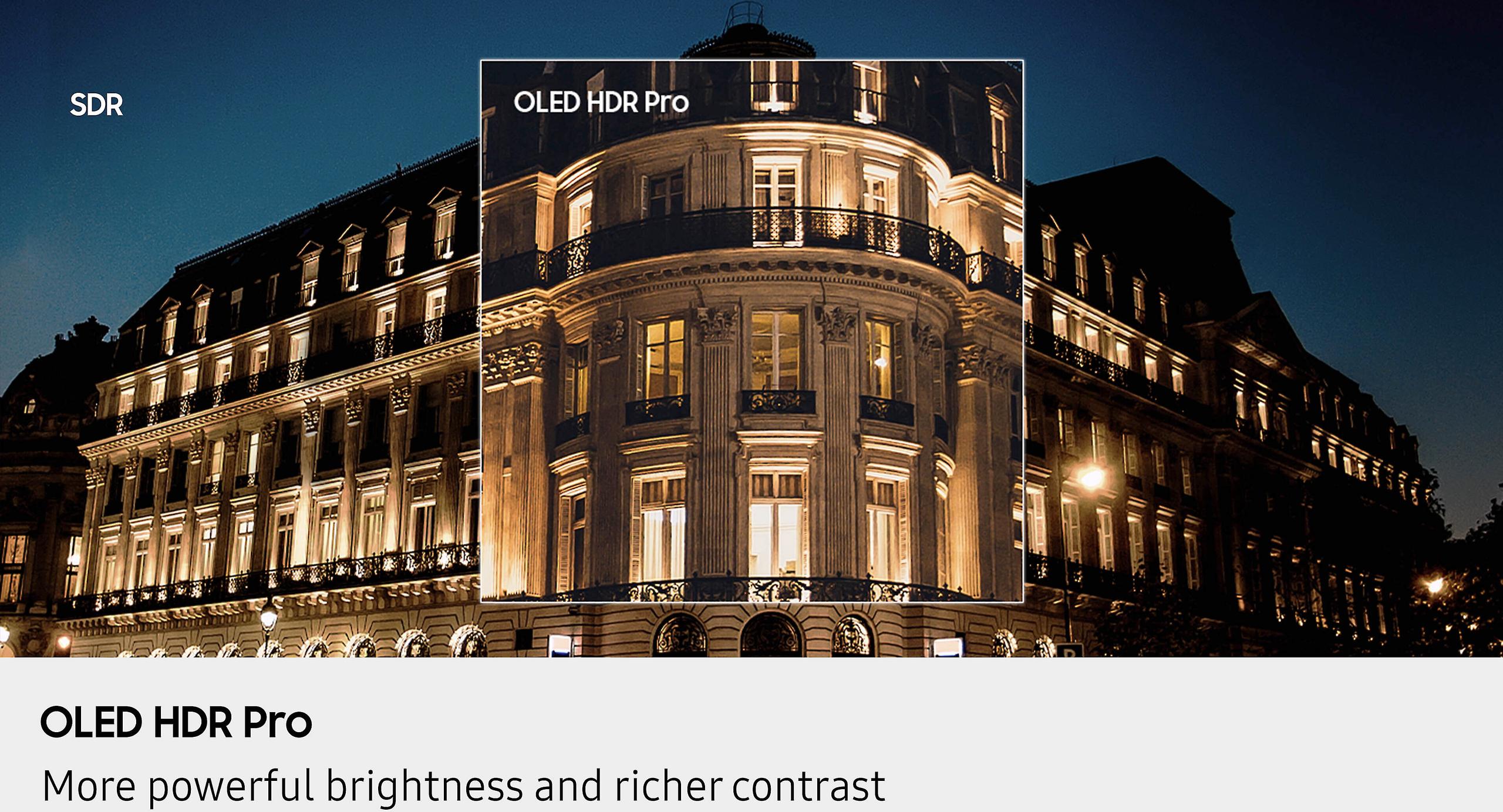
Perhaps the most significant advancement in the S95F is its dramatic increase in brightness. While standard OLEDs typically peak around 1,000 nits (a measurement of light output), independent testing has shown the S95F reaching approximately 2,400 nits in a 10% window HDR test pattern—about 25-30% brighter than the S95D's already impressive 1,900 nits.
This brightness boost makes a meaningful difference when watching HDR content, where specular highlights (like sunlight reflecting off metal or water) appear more realistic and impactful. The S95F's brightness advantage is even more noticeable in full-screen bright content like snow scenes or beach settings, where it maintains higher overall luminance.
I've noticed that this extra brightness headroom doesn't just impact HDR viewing—it also makes the S95F more versatile in extremely bright rooms where even the S95D might struggle against direct sunlight.
Both models feature Samsung's Quantum Dot technology, which helps achieve nearly 100% coverage of the DCI-P3 color space (the standard used for digital cinema) and impressive coverage of the wider BT.2020 gamut. The color volume—the ability to maintain saturated colors at different brightness levels—is outstanding on both sets.
The S95F incorporates Samsung's latest Color Booster Pro technology, which provides slightly more refined color gradations and improved color volume at the highest brightness levels. This results in subtly more natural-looking skin tones and smoother color transitions in challenging content like sunset scenes.
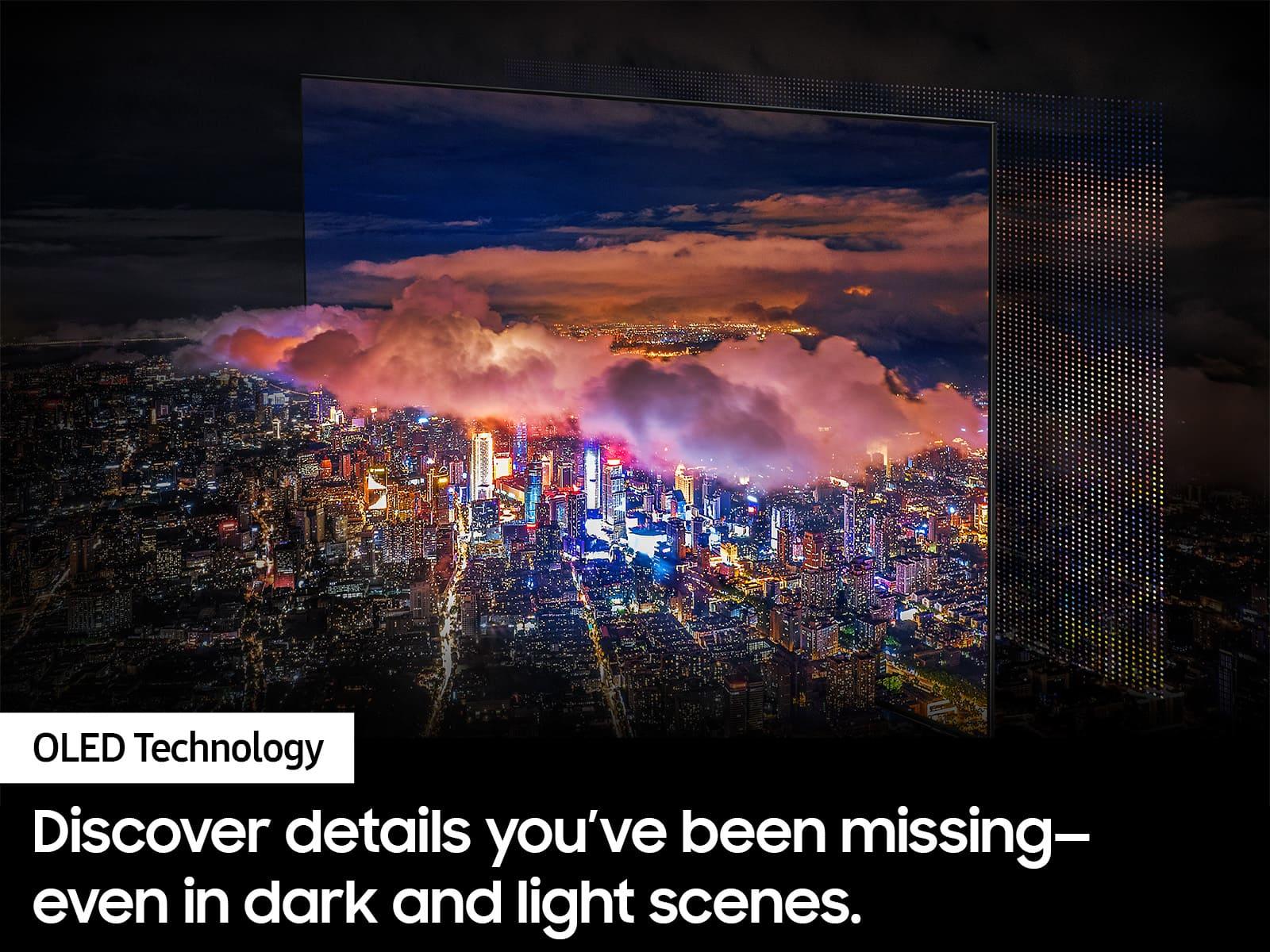
OLED technology's primary advantage is its ability to completely turn off individual pixels, creating perfect blacks and infinite contrast. Both TVs excel in this area, delivering exceptional shadow detail and depth.
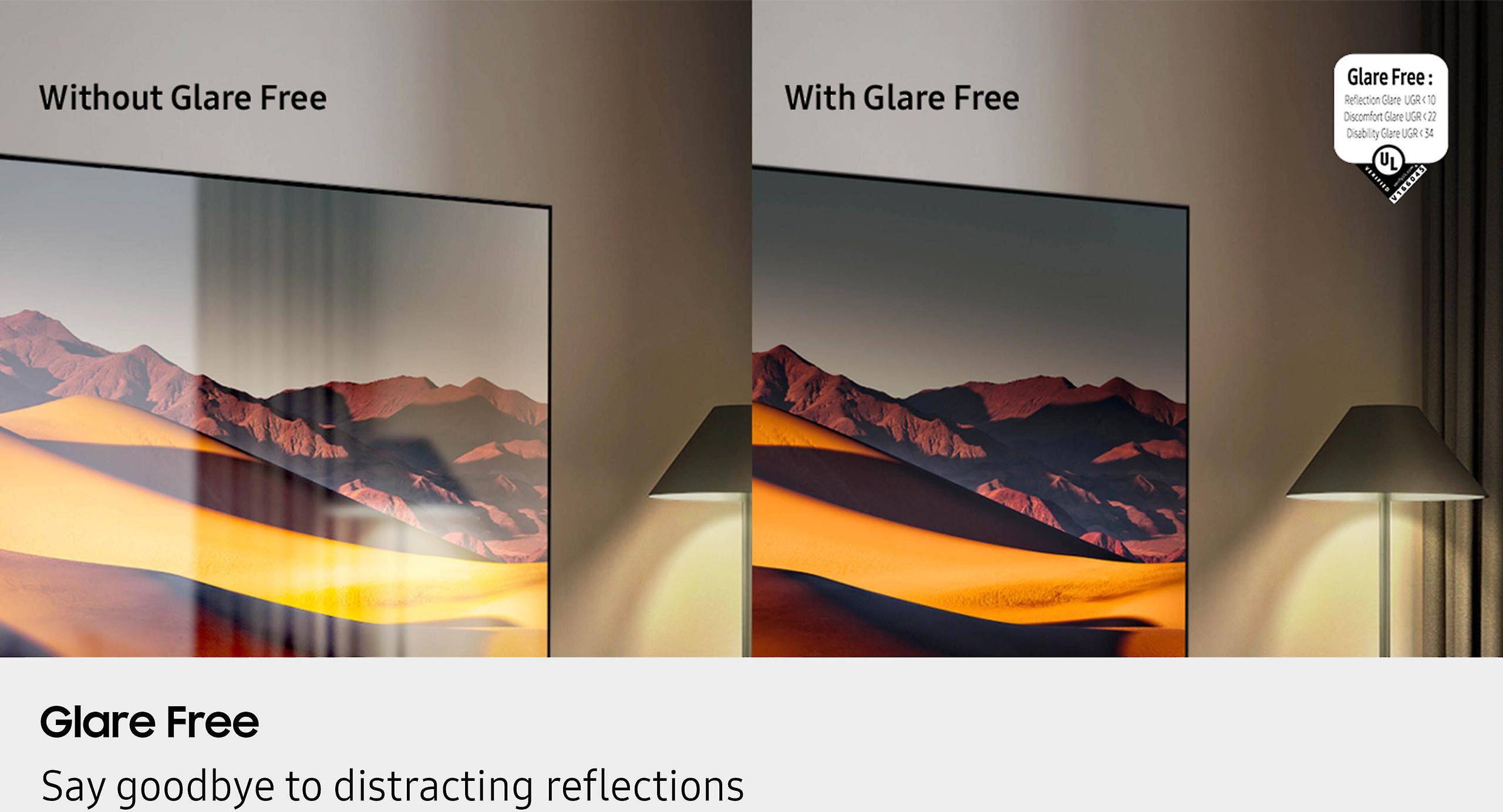
However, the S95F's anti-glare coating (Glare Free 2.0) has been refined to better preserve black depth in bright rooms—a common weakness of the original Glare Free technology on the S95D, which could sometimes make blacks appear slightly grayish when ambient light was present.
Samsung's Glare Free technology represented a major innovation when introduced on the S95D, dramatically reducing reflections and glare compared to traditional glossy OLED panels. The S95F's upgraded Glare Free 2.0 offers even better reflection handling while simultaneously addressing some complaints about the original coating: namely, that it could slightly reduce image clarity and vibrancy.
The new coating provides a better balance between glare reduction and preserving image quality, making the S95F the current leader for bright room viewing while minimizing the compromise in dark room performance.
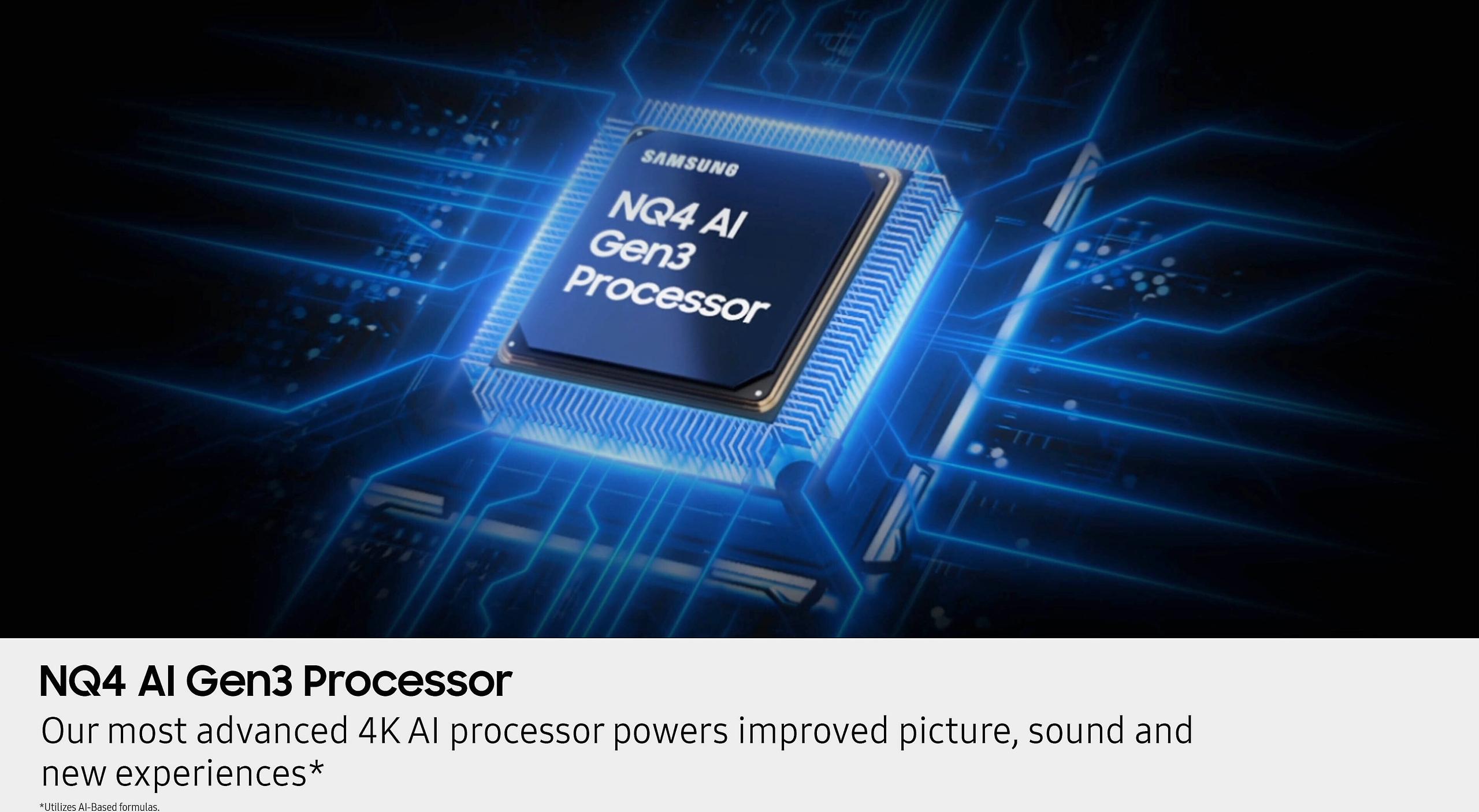
The S95F features Samsung's latest NQ4 AI Gen3 processor, which leverages 128 neural networks for content analysis and enhancement—a significant increase from the 20 neural networks in the S95D's Gen2 processor. This translates to more sophisticated 4K upscaling, particularly noticeable when watching 1080p or lower-resolution content.
In practice, the differences are somewhat subtle with high-quality 1080p sources but become more apparent with challenging content like compressed streaming shows or older DVD content. The S95F does a better job reducing noise while preserving fine details, though the S95D already excels in this area compared to mid-range TVs.
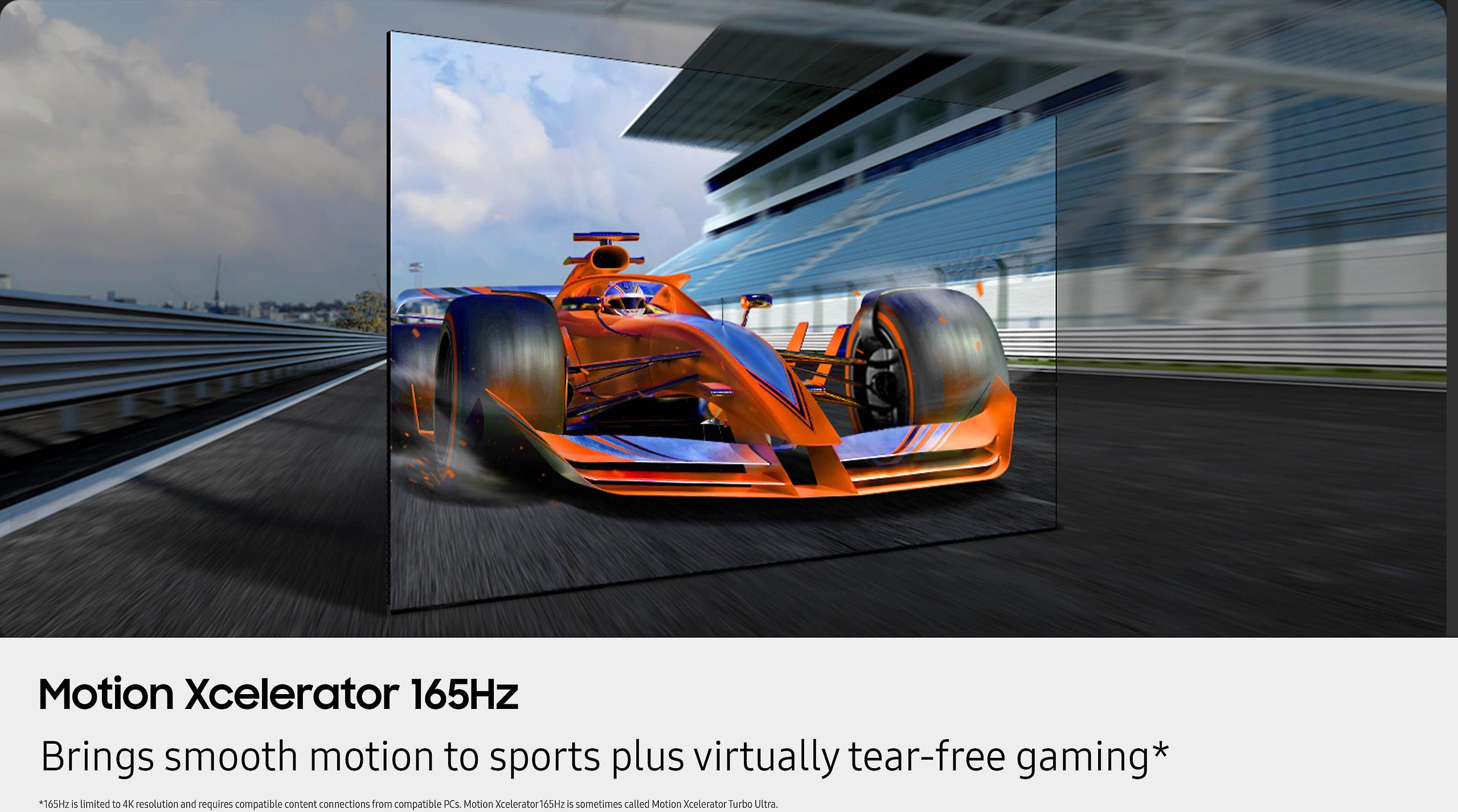
Both TVs handle motion exceptionally well, though the S95F's AI Motion Enhancer Pro shows modest improvements in complex motion scenarios like fast sports action or camera pans across detailed landscapes. The difference is noticeable but not dramatic enough to be a primary purchasing factor for most viewers.
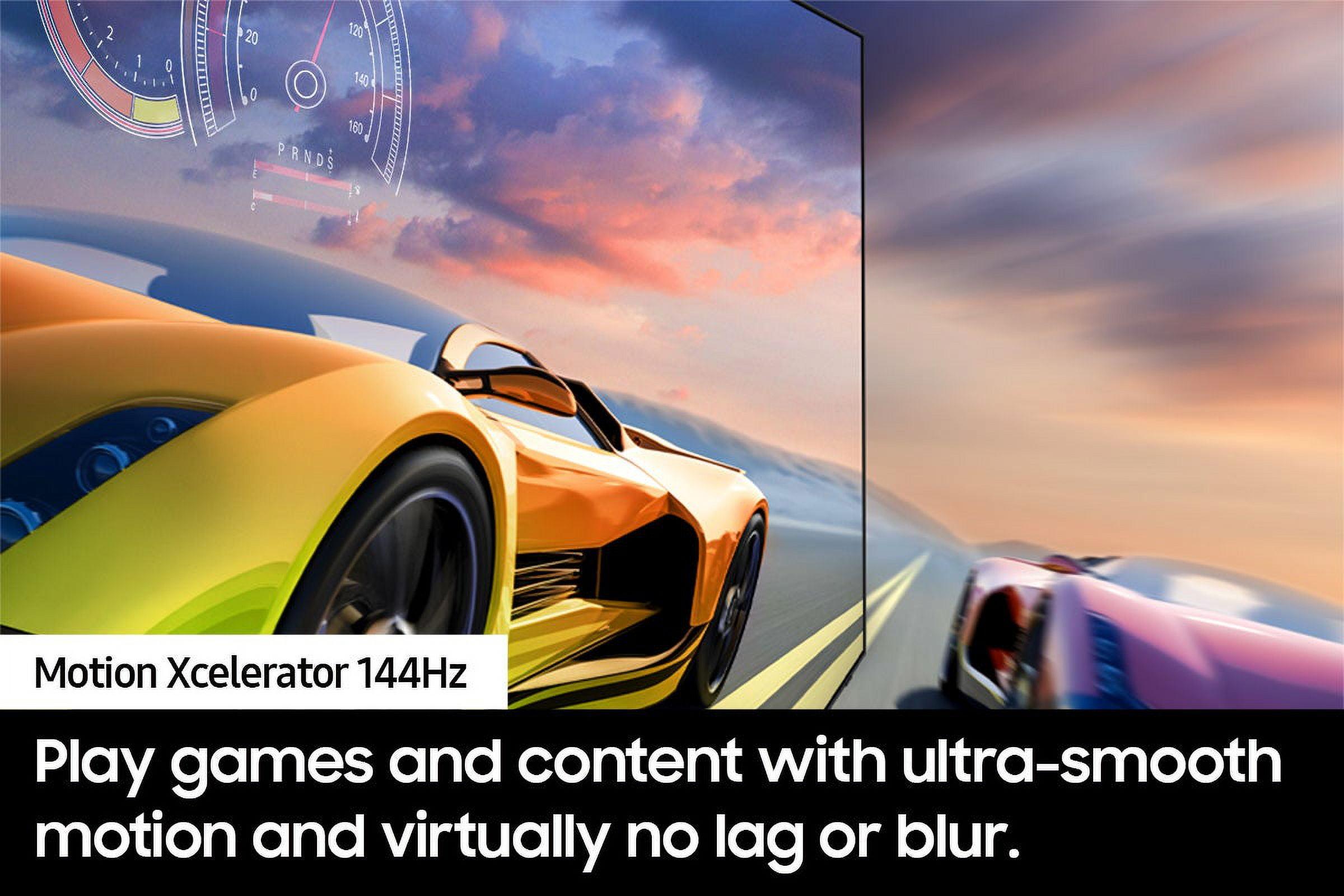
The S95F's slightly higher refresh rate (165Hz vs 144Hz) provides a marginal improvement in motion clarity, though both TVs deliver excellent performance for sports and action viewing.
Real Depth Enhancer is Samsung's technology for selectively boosting contrast in the foreground of scenes, creating a heightened sense of depth. The S95F's implementation is more sophisticated, with improved object recognition allowing for more precise contrast enhancement without affecting background elements.
Similarly, the Auto HDR Remastering Pro feature on the S95F (which converts standard dynamic range content to HDR-like quality) shows improved accuracy in tone mapping compared to the S95D's version, resulting in fewer instances of overbrightened highlights or unnatural color shifts.
For serious gamers, both TVs represent excellent choices, though the S95F has a slight edge with its 165Hz refresh rate compared to the S95D's 144Hz. This 21Hz difference is realistically minimal in practical gaming scenarios—both deliver exceptionally smooth motion and low input lag.
Both TVs support Variable Refresh Rate (VRR), AMD FreeSync Premium Pro, and Auto Low Latency Mode (ALLM), ensuring compatibility with the latest gaming consoles and PCs. Input lag measurements are virtually identical, with both TVs achieving approximately 9ms in Game Mode at 4K/120Hz—imperceptibly fast for all but the most competitive gamers.
Samsung's Game Bar interface appears on both models, providing quick access to gaming-related settings and information like current frame rate and HDR status. The S95F adds some minor refinements to this interface and includes AI Auto Game Mode, which can automatically optimize picture settings based on the type of game being played.
Both TVs support the full 48Gbps bandwidth of HDMI 2.1 across all four ports, allowing for 4K/120Hz gaming with HDR and VRR simultaneously—a welcome feature for households with multiple gaming devices.
Both TVs run Samsung's Tizen operating system, though the S95F features the latest 2025 version with several refinements to the user interface. Navigation feels slightly more responsive on the newer model, likely due to the more powerful processor.
The S95F incorporates Samsung Vision AI, powered by those 128 neural networks mentioned earlier, which enhances content recommendations and search capabilities. It also improves the far-field voice recognition for controlling the TV hands-free from across the room.
A significant advantage of the S95F is Samsung's commitment to 7 years of software updates, ensuring compatibility with new streaming services and features through 2032. The S95D doesn't come with this explicit guarantee, though Samsung has typically supported premium models with updates for 3-4 years.
Both TVs feature a 4.2.2 channel speaker system with 70W of total power—impressive for built-in TV audio. The Object Tracking Sound+ (OTS+) technology uses upward-firing speakers to create a more immersive soundstage, with sounds matched to on-screen action.
In practice, both models deliver similar audio performance, with clear dialogue and reasonable bass extension for a flat panel TV. Neither can replace a dedicated sound system or soundbar for a true home theater experience, but they're certainly above average for built-in audio.
Both support Q-Symphony, which allows the TV speakers to work in conjunction with compatible Samsung soundbars rather than being disabled when the soundbar is active, creating a more enveloping sound experience.
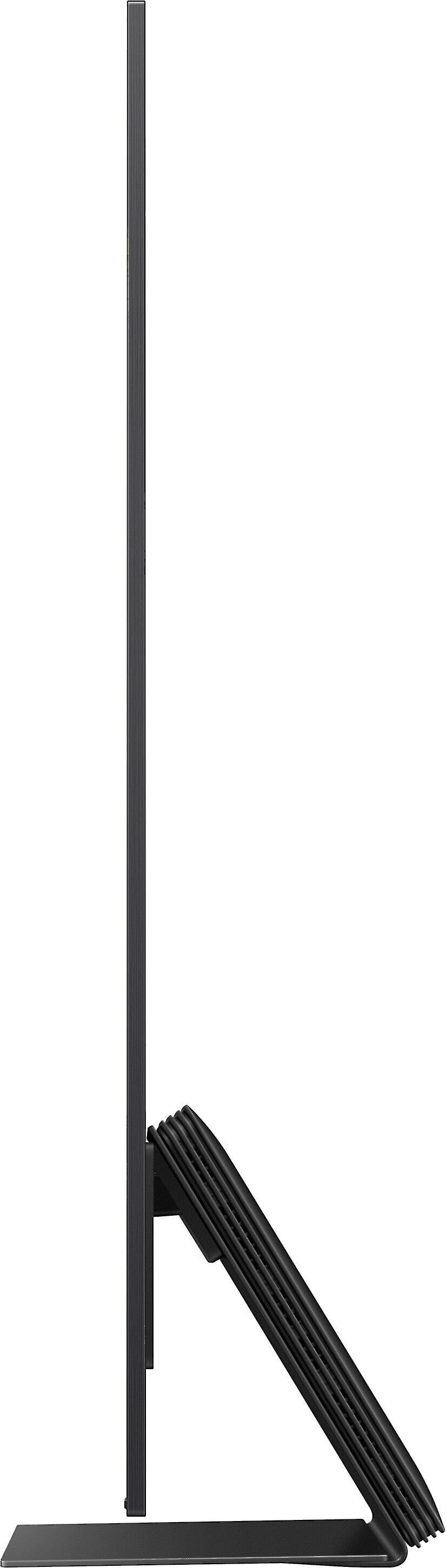
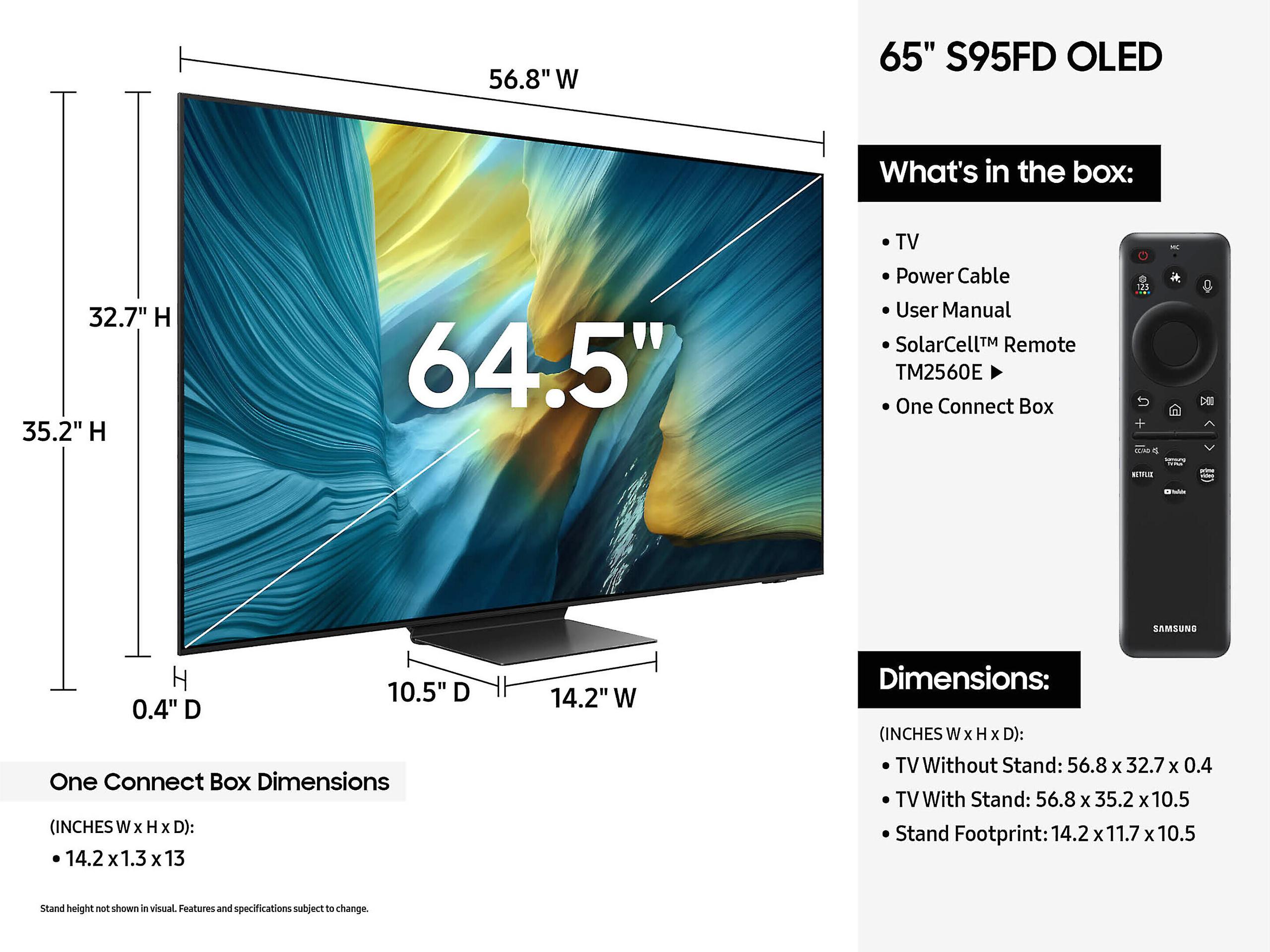
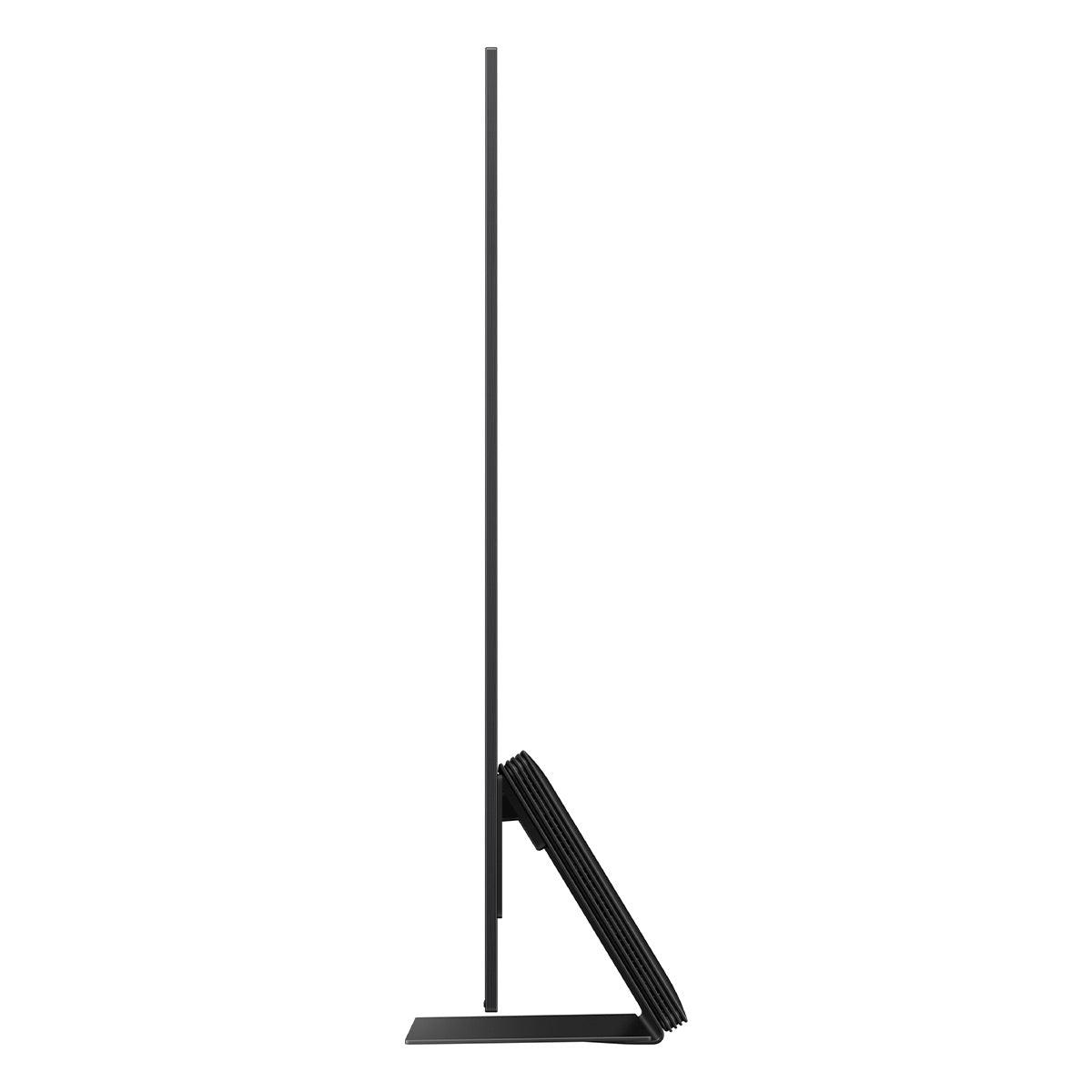
The physical design differences between the models are subtle. Both feature ultra-thin bezels and minimalist stands, with the panel itself measuring just 11mm thick. The S95F has some minor refinements to the rear panel design, but these won't impact most installations.
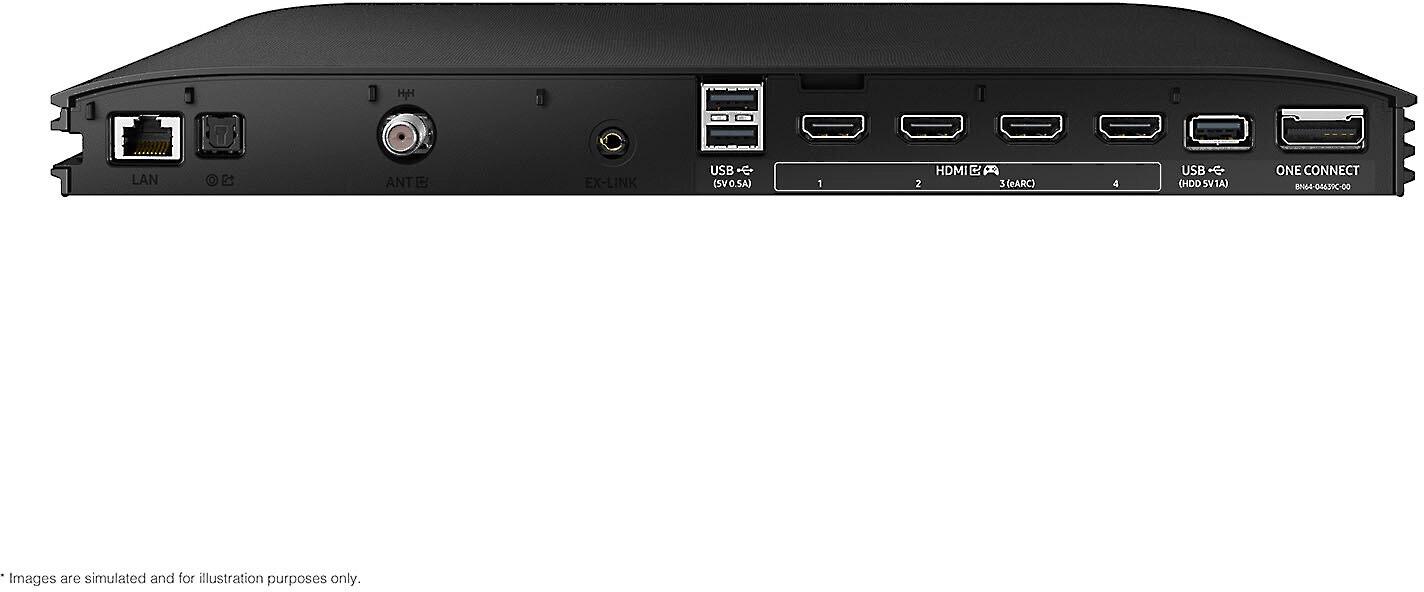
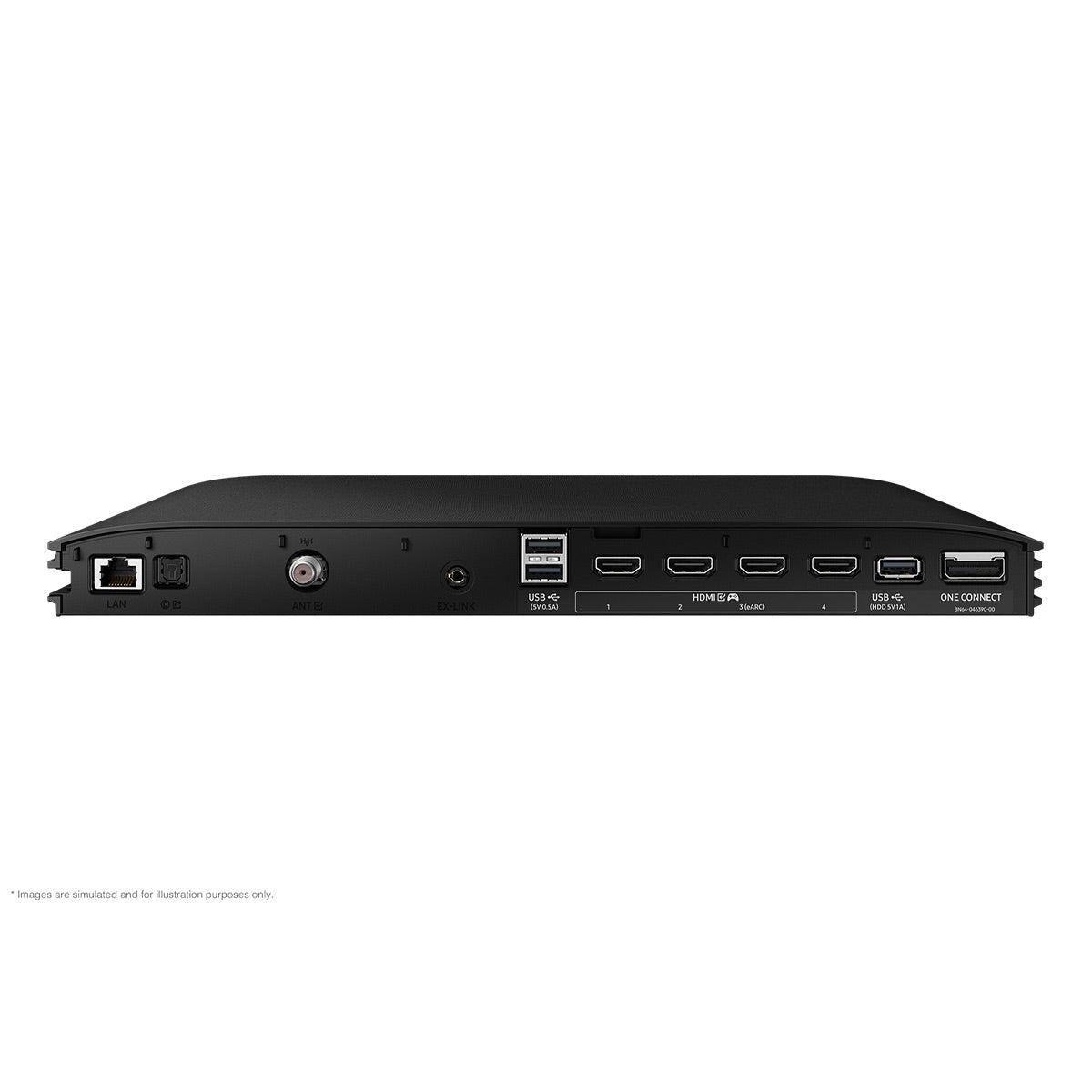
Both TVs are compatible with Samsung's One Connect Box, which houses all connections and power supply separately from the display panel, allowing for cleaner installation with just a single thin cable running to the TV itself.
Connectivity options are identical, with four HDMI 2.1 ports supporting the full 48Gbps bandwidth, eARC, VRR, and ALLM. Both also include optical audio output, ethernet, and Wi-Fi 6 connectivity.
With approximately $1,000 separating these models (the S95F at $3,300 and the S95D at $2,200), value considerations become crucial to the purchasing decision.
The S95F's price premium delivers several tangible benefits: significantly higher brightness, improved anti-glare technology, more advanced processing, a slightly higher refresh rate, and the guarantee of software support through 2032. For viewers with very bright rooms who want the absolute best performance regardless of price, these advantages may justify the cost difference.
However, the S95D remains an exceptional TV that outperforms many current competitors. Its brightness capabilities already exceed most other OLEDs on the market, and its anti-glare coating still provides excellent reflection handling in bright environments. For many viewers, these capabilities will be more than sufficient, making the $1,000 savings quite attractive.
It's also worth noting that the S95D will likely see further price reductions as it approaches the end of its retail lifecycle, potentially increasing its value proposition even further.
Both the Samsung 65" OLED S95F 4K Smart TV 2025 and the Samsung 65" S95D 4K OLED Smart TV represent pinnacle achievements in consumer display technology. The decision between them ultimately comes down to whether the S95F's improvements in brightness, anti-glare performance, and processing justify its significantly higher price tag for your specific viewing environment and content preferences.
For most viewers in typical living rooms with moderate ambient light, the S95D offers tremendous value while still delivering exceptional picture quality. Those with challenging viewing environments featuring direct sunlight or extreme ambient brightness will appreciate the S95F's improvements more tangibly.
In a dedicated home theater setting with controlled lighting, either TV will provide a spectacular viewing experience, with the S95F offering slightly better HDR impact and the S95D providing better value. Whichever model you choose, you'll be getting one of the finest consumer displays currently available—a remarkable demonstration of how far TV technology has advanced in recent years.
| Samsung 65" OLED S95F 4K Smart TV 2025 | Samsung 65" S95D 4K OLED Smart TV |
|---|---|
| Release & Pricing - Key for value assessment | |
| March 2025 release at $3,300 | 2024 release at $2,200 (significantly better value) |
| Panel Technology - Affects overall picture performance | |
| 4th Gen QD-OLED (5-layer tandem structure) | 3rd Gen QD-OLED (still excellent but previous generation) |
| Peak HDR Brightness - Critical for HDR impact and bright room viewing | |
| ~2,400 nits (measured, 10% window) - noticeably brighter | ~1,900 nits (measured, 10% window) - already excellent |
| Anti-Glare Technology - Important for rooms with windows/lighting | |
| OLED Glare Free 2.0 (improved black levels in bright rooms) | OLED Glare Free (excellent but can slightly gray blacks in bright rooms) |
| Processor - Impacts upscaling, motion handling and smart features | |
| NQ4 AI Gen3 with 128 neural networks | NQ4 AI Gen2 with 20 neural networks (difference noticeable with lower quality sources) |
| Refresh Rate - Matters for gaming and fast motion content | |
| 165Hz (marginal real-world improvement) | 144Hz (already excellent for most gaming) |
| Audio System - Built-in sound quality | |
| 70W 4.2.2CH speakers with OTS+ and Dolby Atmos | 70W 4.2.2CH speakers with OTS+ and Dolby Atmos (virtually identical) |
| Software Support - Affects long-term usability | |
| 7 years of guaranteed updates (through 2032) | No specific guarantee (typically 3-4 years for premium models) |
| Gaming Features - Important for console/PC gamers | |
| HDMI 2.1, ALLM, VRR, FreeSync Premium Pro, 9ms input lag | HDMI 2.1, ALLM, VRR, FreeSync Premium Pro, 9ms input lag (identical core features) |
| Best For - Summary recommendation | |
| Very bright rooms, dedicated home theaters, users wanting the absolute best regardless of price | Excellent value for typical living rooms, still premium performance at 33% less cost |
The Samsung 65" OLED S95F 4K Smart TV 2025 costs approximately $1,100 more than the Samsung 65" S95D 4K OLED Smart TV. The extra cost is justified if you have a very bright viewing environment, want the absolute best HDR performance, or value the 7-year software update guarantee. For most users with typical living rooms, the S95D offers better value while still delivering premium picture quality.
The Samsung S95F has better bright room performance than the Samsung S95D due to its improved Glare Free 2.0 technology and higher peak brightness of around 2,400 nits compared to the S95D's 1,900 nits. Both TVs handle reflections exceptionally well, but the S95F maintains deeper blacks and better contrast when ambient light is present.
The Samsung S95F offers approximately 25-30% higher peak brightness, improved anti-glare technology, and more advanced processing than the Samsung S95D. These differences result in more impactful HDR highlights, better handling of reflections, and slightly better upscaling of lower-quality content. Color accuracy and black levels are excellent on both models.
Both the Samsung S95F and Samsung S95D are excellent for gaming, offering HDMI 2.1, VRR, ALLM, and low input lag (around 9ms). The S95F has a slightly higher refresh rate (165Hz vs 144Hz), but this difference is minimal in real-world gaming. The S95F also features more advanced AI game optimization. Either TV will satisfy even demanding gamers.
Both the Samsung S95F and Samsung S95D run on Samsung's Tizen OS, but the S95F features the latest version with a more responsive interface and enhanced AI capabilities. The most significant advantage of the S95F is its guaranteed 7 years of software updates compared to no specific guarantee for the S95D (typically 3-4 years for premium models).
For dedicated home theater movie viewing, the Samsung S95F offers slightly better performance than the Samsung S95D due to its higher peak brightness, which enhances HDR impact, and more sophisticated processing for improved upscaling. However, in controlled lighting, the differences are subtle, and both deliver exceptional cinematic experiences with perfect blacks and vibrant colors.
Both the Samsung S95F and Samsung S95D use similar QD-OLED panel technology with expected lifespans of 100,000+ hours to half brightness. The S95F may have slightly better longevity due to its newer generation panel technology, but both are built to last many years with normal viewing habits. The S95F's guaranteed 7-year software support provides additional long-term value.
The Samsung S95F and Samsung S95D feature identical 70W 4.2.2 channel speaker systems with Object Tracking Sound+ (OTS+) and Dolby Atmos support. Sound quality is virtually identical between models, with both providing above-average built-in audio. For optimal home theater experience, pairing either TV with a soundbar or dedicated audio system is recommended.
While the Samsung S95D doesn't come with a specific software support guarantee like the Samsung S95F's 7-year promise, Samsung typically provides updates to premium models for 3-4 years. The S95D should receive new features and compatibility updates through at least 2027, though this isn't guaranteed. The S95F will be officially supported through 2032.
Both the Samsung S95F and Samsung S95D handle motion exceptionally well for sports content. The S95F has slight advantages with its higher refresh rate (165Hz vs 144Hz) and more advanced motion processing, resulting in marginally clearer fast action. The S95F's higher brightness also helps with daytime sports viewing, but both TVs deliver excellent sports performance.
Yes, both the Samsung S95F and Samsung S95D support standard VESA wall mounting (400x300mm pattern). Both models are ultra-thin (approximately 11mm) and work with Samsung's One Connect Box, which allows for a clean installation with just a single thin cable running to the TV itself, making them excellent options for wall mounting.
For a dedicated home theater with controlled lighting, the Samsung S95F offers marginally better performance than the Samsung S95D due to its higher peak brightness (benefiting HDR content) and more advanced processing. However, the S95D still delivers exceptional picture quality at a significantly lower price, making it the better value option for most home theaters unless budget is not a concern.
We've done our best to create useful and informative comparisons to help you decide what product to buy. Our research uses advanced automated methods to create this comparison and perfection is not possible - please contact us for corrections or questions. These are the sites we've researched in the creation of this article: businessinsider.com - tomsguide.com - youtube.com - avsforum.com - zdnet.com - samsung.com - pioneertvandappliance.com - samsung.com - displayspecifications.com - samsung.com - techradar.com - videoandaudiocenter.com - avsforum.com - cnet.com - abt.com - merlinstv.com - nfm.com - rtings.com - flintsfurniture.com - samsung.com - bestbuy.com - displayspecifications.com

Privacy Policy
Terms and Conditions - Affiliate Policy
Home Security
© Copyright 2008-2026.
11816 Inwood Rd #1211, Dallas, TX 75244