


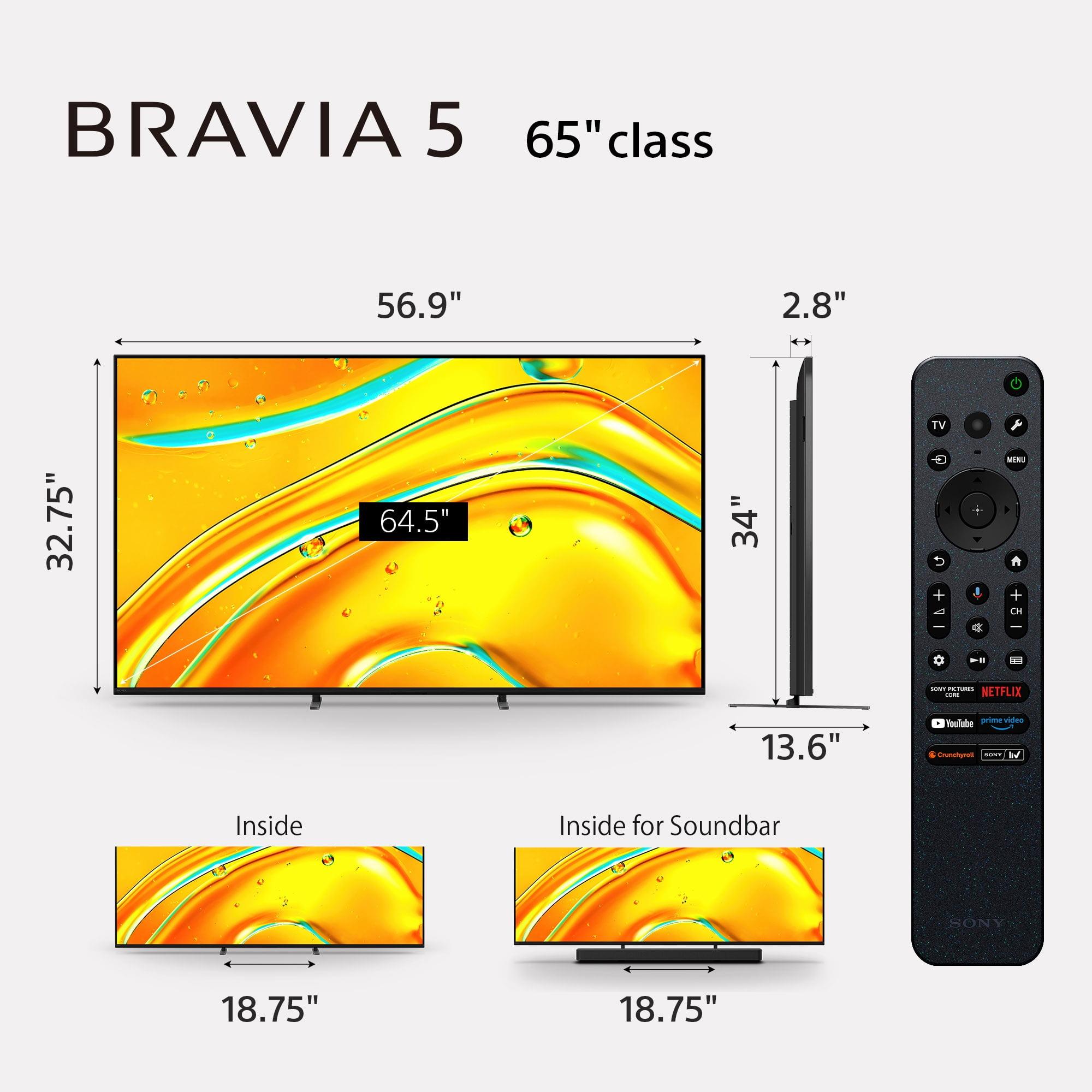
Choosing a 65-inch TV in 2025 feels like stepping into a candy store – there's so much impressive tech that it's easy to get overwhelmed. But here's the thing: the two most compelling options from Sony right now represent completely different approaches to creating stunning picture quality. The Sony BRAVIA 5 65" Mini LED 4K Google TV 2025 at $1,478 and the Sony BRAVIA 8 65" 4K OLED TV at $1,442 are practically identical in price, but they couldn't be more different in how they deliver that premium viewing experience.
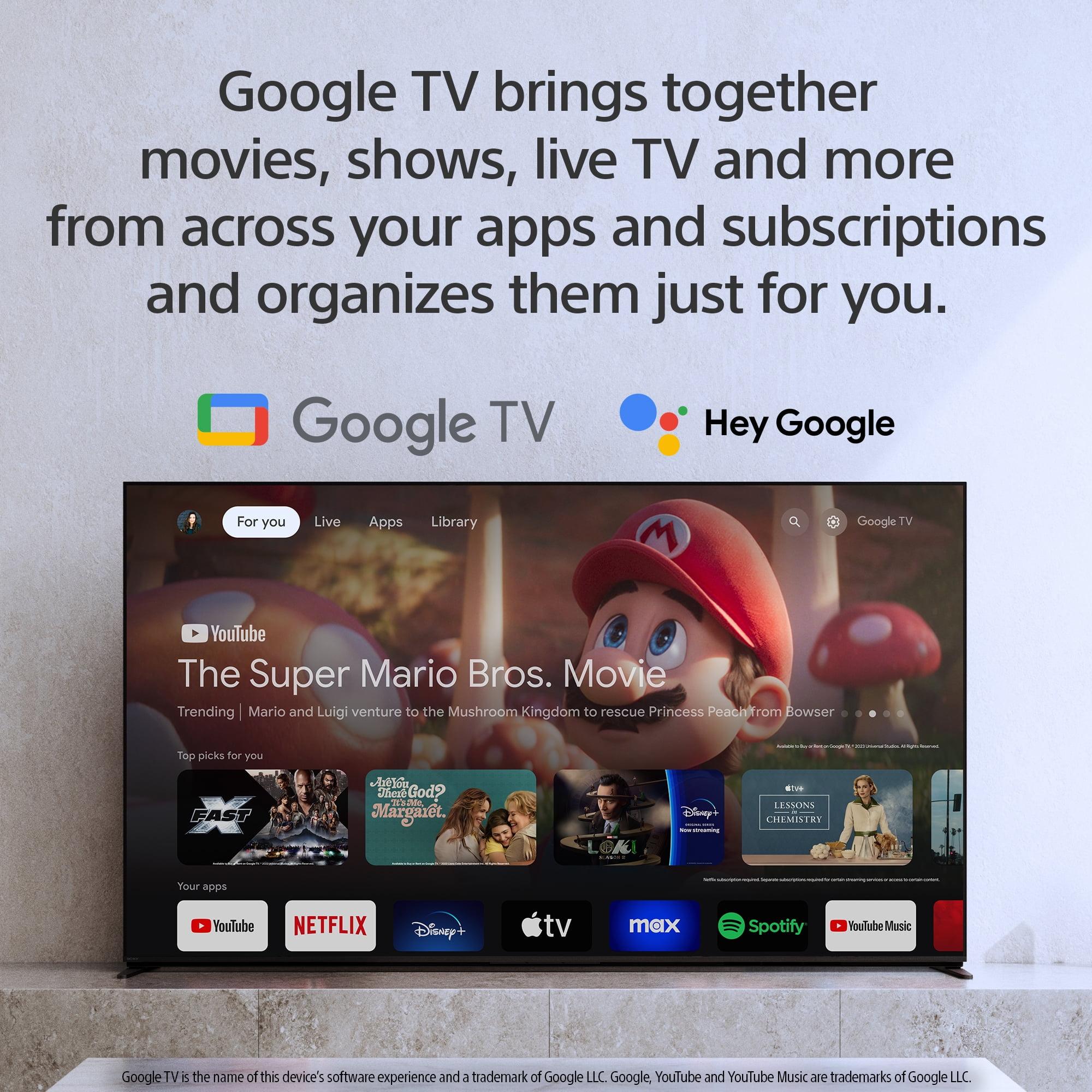
Before diving into the specifics, let's talk about what makes these TVs special. The 65-inch size has become the sweet spot for most living rooms – big enough to feel cinematic but not so massive that it dominates your space. Both TVs run Google TV (Sony's smart platform) and support all the modern gaming features you'd expect, like 4K at 120Hz refresh rates for smooth gameplay.
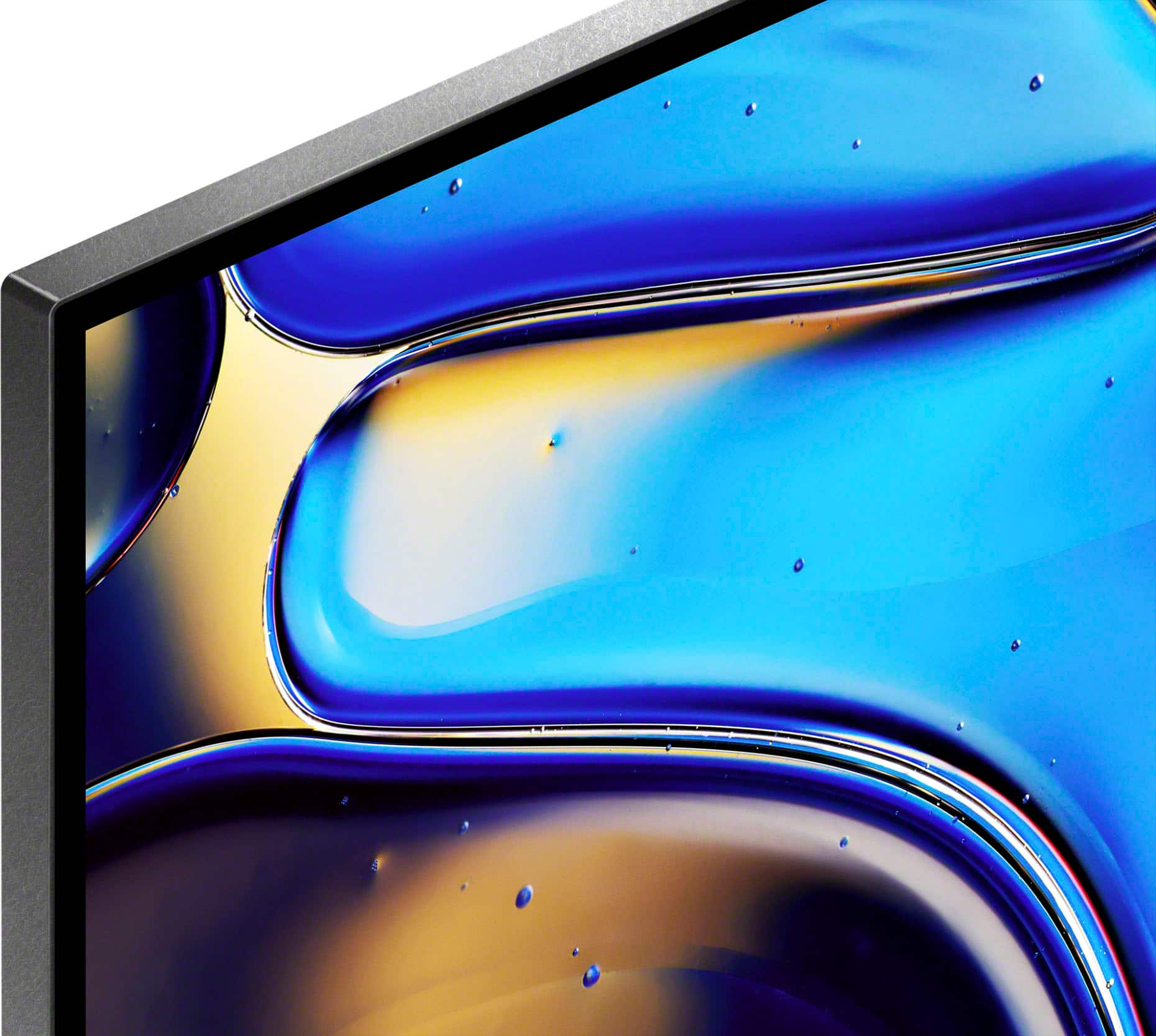
The real difference lies in their display technology. Think of it like choosing between two completely different approaches to creating light and color. The BRAVIA 5 uses Mini LED technology, which is essentially thousands of tiny LEDs behind an LCD panel that can brighten or dim independently. The BRAVIA 8 uses OLED technology, where each individual pixel creates its own light and can turn completely off. These aren't just technical differences – they fundamentally change how you experience movies, games, and everyday TV watching.
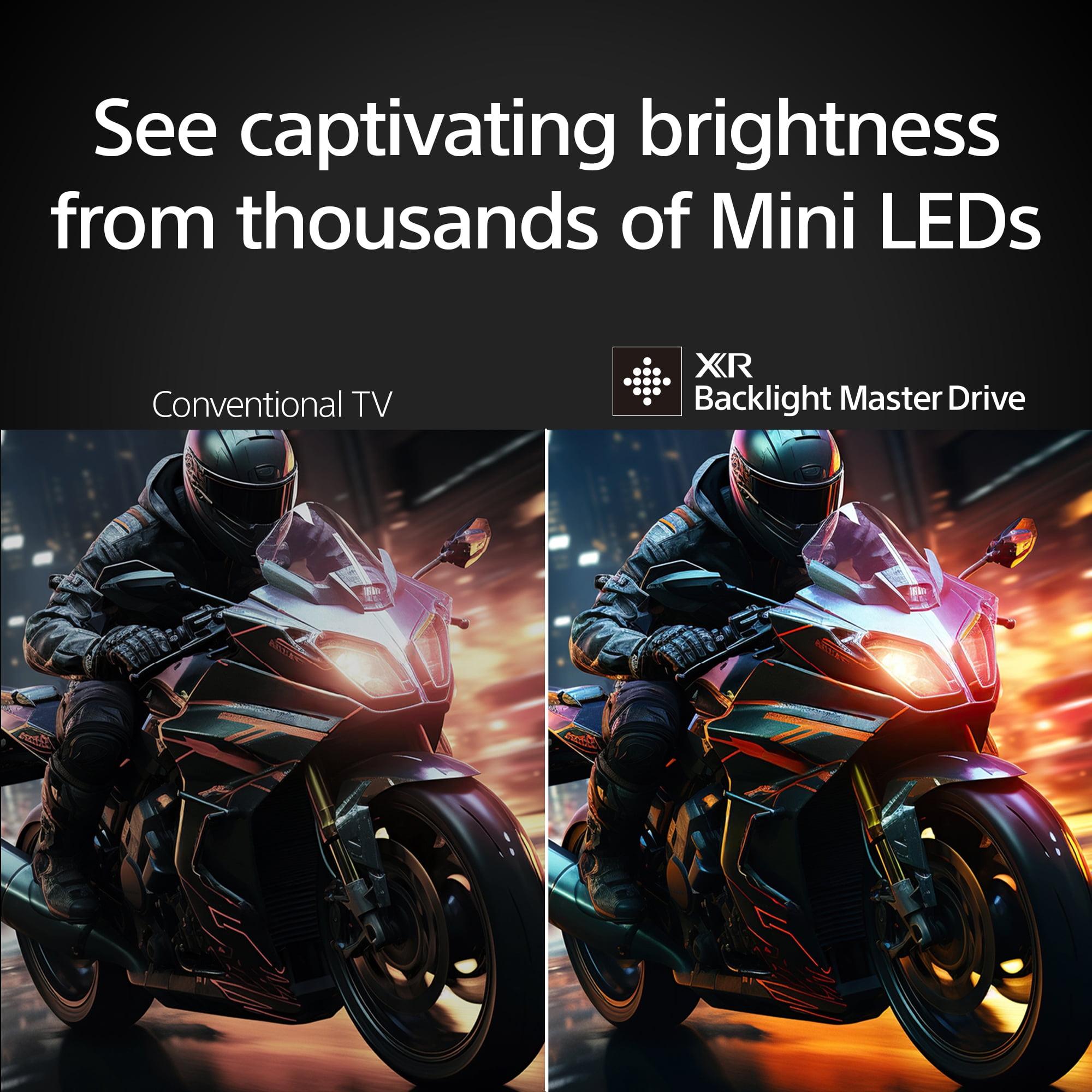
The Sony BRAVIA 5 represents Sony's latest Mini LED advancement, released in May 2025. This isn't just a typical LED TV – it uses thousands of mini LEDs (much smaller than traditional LEDs) arranged behind the LCD panel. These mini LEDs work with Sony's XR Backlight Master Drive technology, which means the TV can control brightness in thousands of individual zones across the screen. When you're watching a movie with a bright explosion against a dark sky, the mini LEDs behind the explosion can blast at full brightness while the LEDs behind the dark sky stay dimmed.
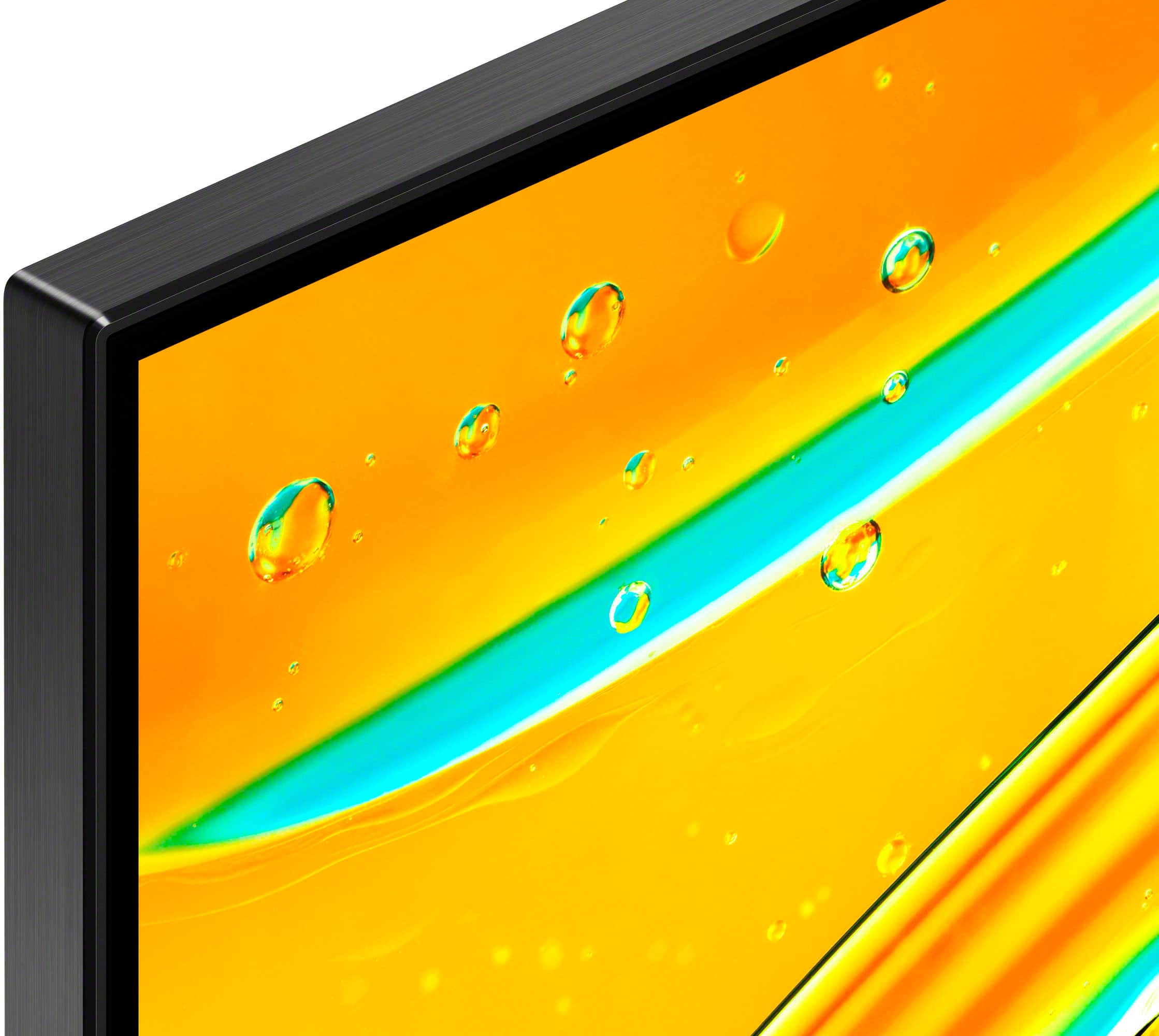
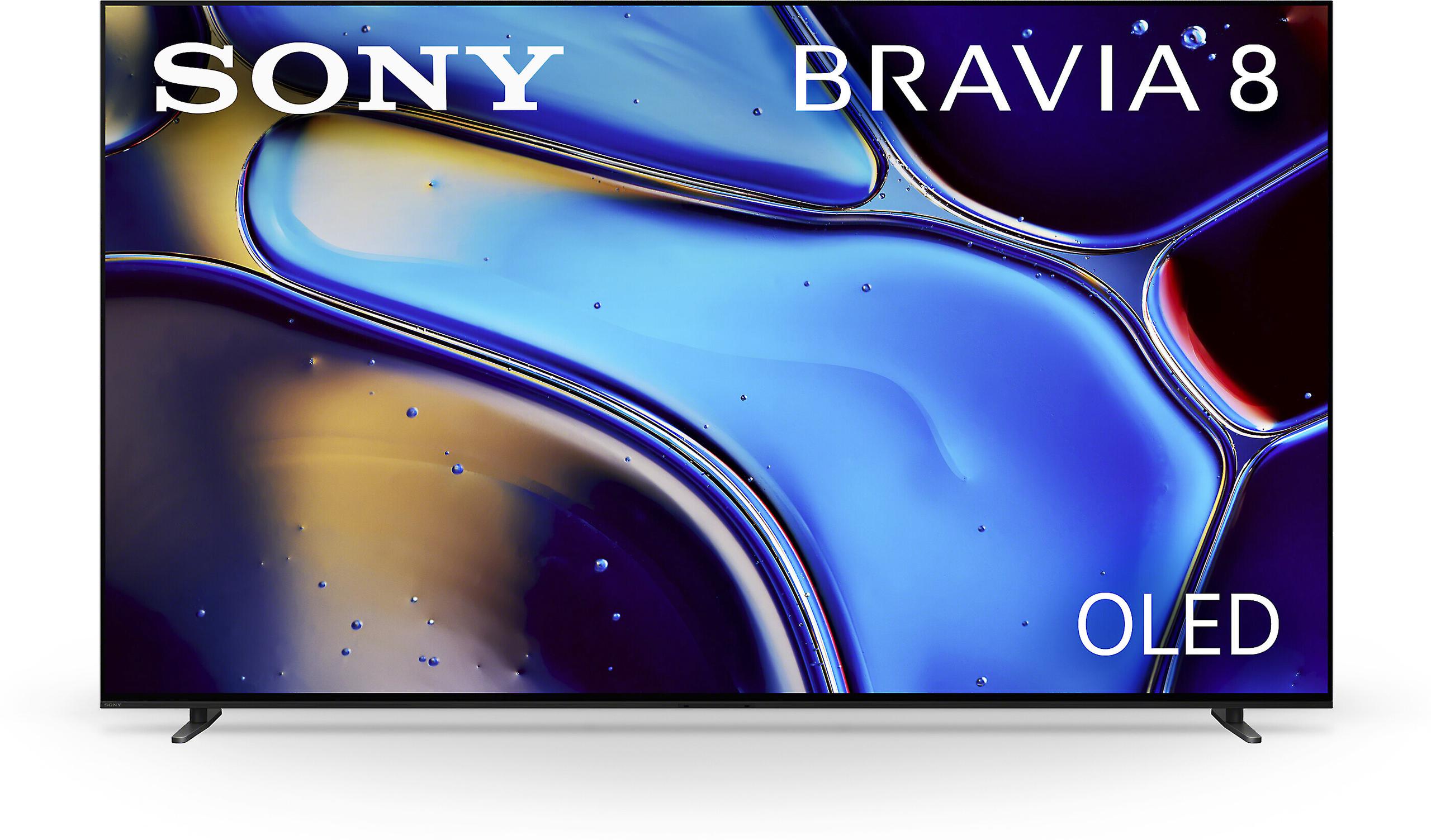
The BRAVIA 8, continuing from Sony's 2024 OLED lineup, takes a completely different approach. OLED stands for Organic Light-Emitting Diode, and each pixel is essentially a tiny light bulb that can produce its own color and brightness. When a pixel needs to be black, it simply turns off completely. No backlight, no dimming zones – just perfect, absolute black. This creates what's called "infinite contrast" because the difference between the brightest white and the darkest black is theoretically unlimited.
Here's where things get really interesting, and where your room setup becomes crucial. The BRAVIA 5's Mini LED system can push brightness levels over 1,000 nits (nits are a measure of brightness – think of bright sunlight as around 100,000 nits). This high brightness capability means HDR content really pops, especially in bright rooms. When you're watching a nature documentary with bright snow scenes or a superhero movie with blazing explosions, that extra brightness makes the content feel more realistic and impactful.
The BRAVIA 8 OLED, on the other hand, typically maxes out around 400-600 nits. Sony has improved this by about 10% compared to their previous A80L OLED, but it's still nowhere near Mini LED levels. However, here's the crucial part: in a dark or dimly lit room, the OLED's perfect blacks create a contrast that makes everything look more three-dimensional and lifelike. It's like the difference between looking at a photograph and looking through a window.
I've spent time with both types of displays, and the experience difference is dramatic depending on your room. In my bright living room with large windows, the Mini LED TV maintained its punch and vibrancy throughout the day. The OLED, while stunning at night, felt somewhat washed out during afternoon viewing sessions.
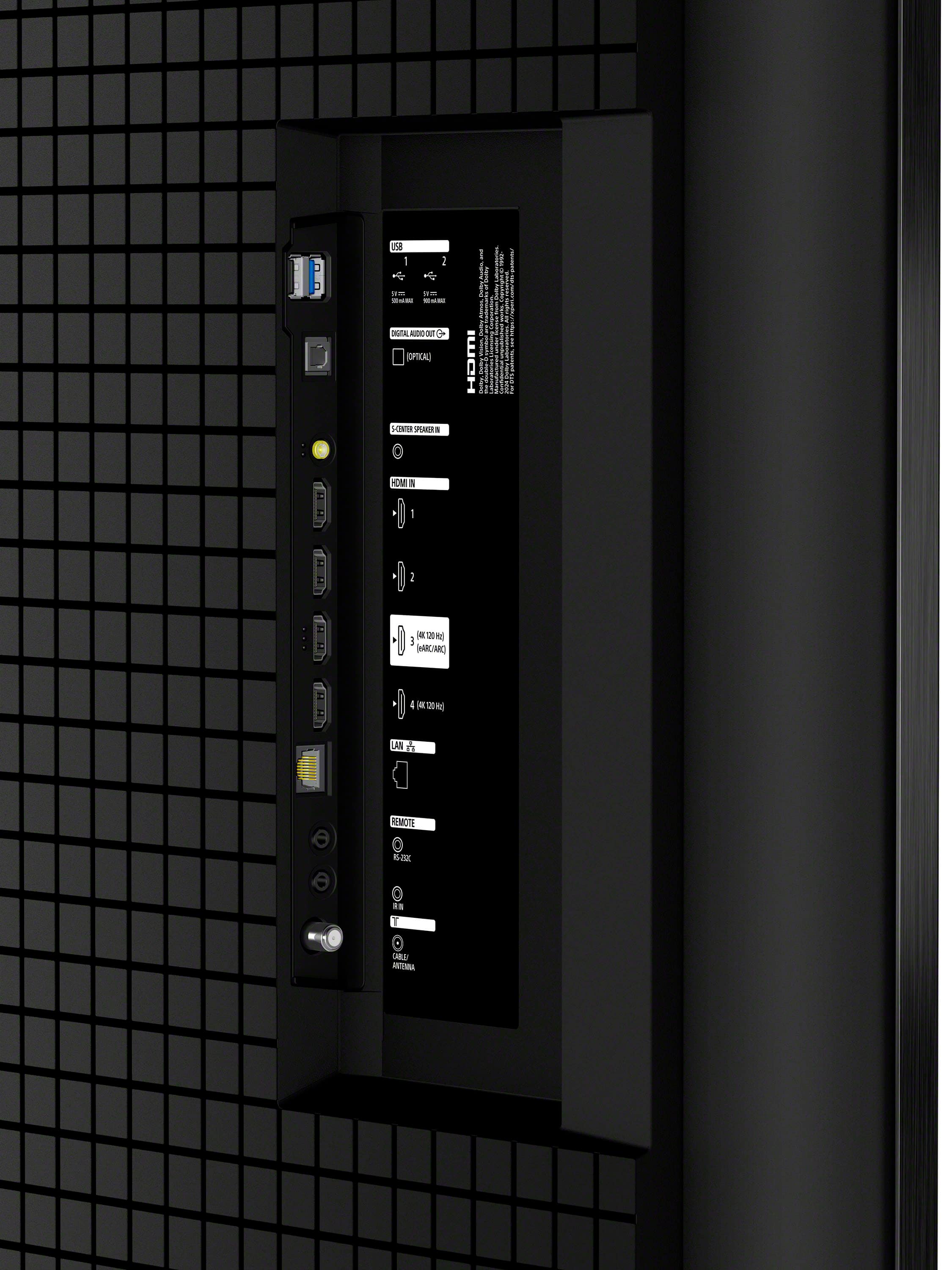
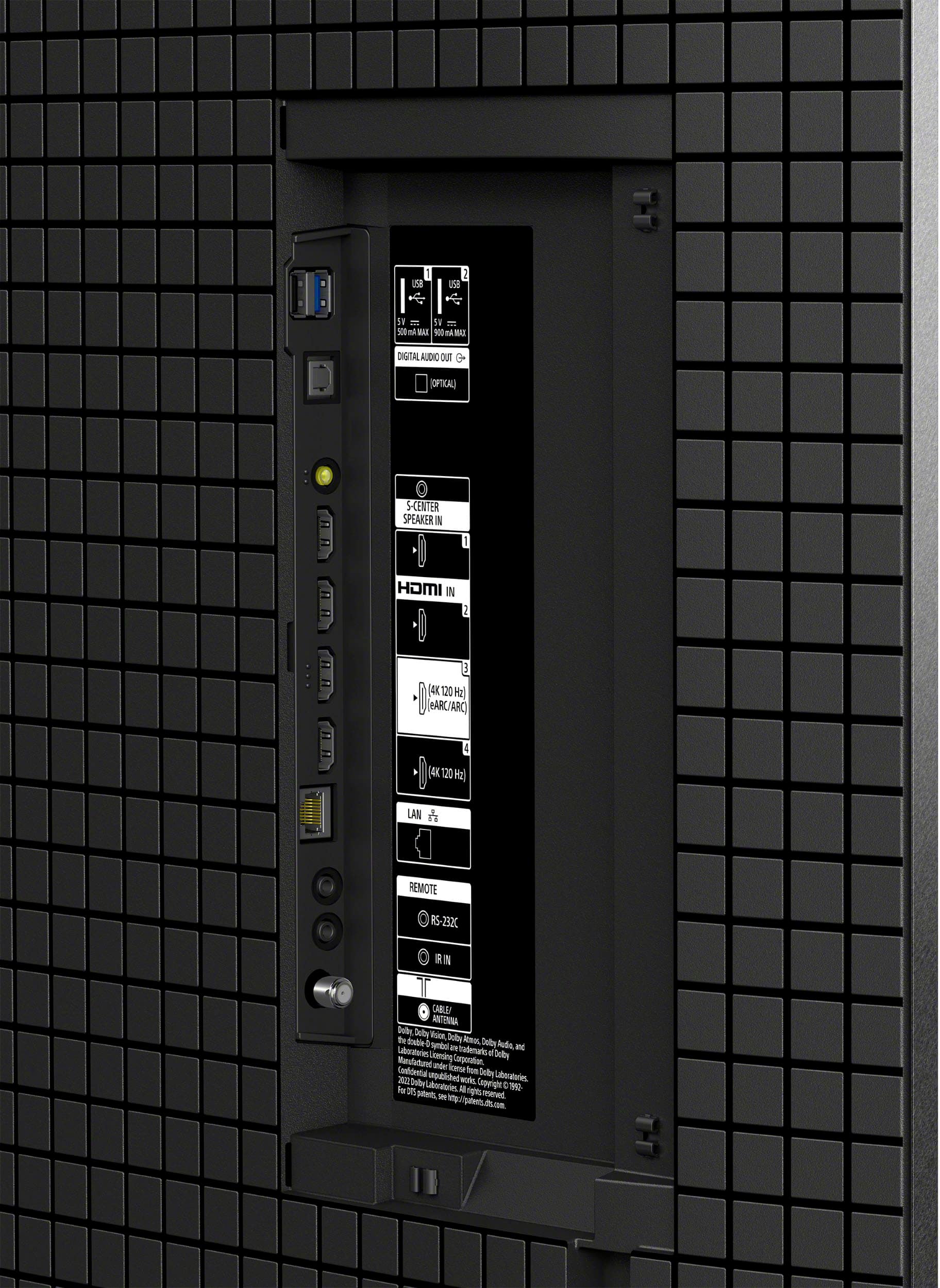
Both TVs support the modern gaming essentials: 4K resolution at 120Hz refresh rates, Variable Refresh Rate (VRR) to eliminate screen tearing, and Auto Low Latency Mode (ALLM) to reduce input delay. They each have two HDMI 2.1 ports that can handle these high-bandwidth gaming features – though honestly, two ports feels limiting if you have multiple gaming consoles plus a streaming device.
The performance difference comes down to how each display technology handles fast motion. The BRAVIA 5's Mini LED system can struggle with pixel response times, meaning fast-moving objects might appear slightly blurry or have trailing effects. This is a limitation of LCD technology in general – the liquid crystals that create the image can't change states as quickly as self-emitting OLED pixels.
The Sony BRAVIA 8 excels here because each OLED pixel can instantly switch on or off, creating incredibly sharp motion with minimal blur. For competitive gaming or fast-paced action games, this translates to clearer visuals during rapid movements. However, the Mini LED's higher brightness can make HDR gaming more spectacular, especially in games with bright, colorful environments.
Sony's XR Motion Clarity technology works on both TVs, but the underlying display technology creates different results. The BRAVIA 5 uses frame interpolation (creating intermediate frames between the original ones) and backlight scanning to reduce motion blur. It's effective, but you might notice the occasional artifact or soap opera effect, especially with 24fps movie content.
The BRAVIA 8's OLED panel naturally handles motion better because of those instant pixel response times. Sports look incredibly smooth, and action movies maintain their cinematic quality without the artificial smoothing that can make content look processed. If you're a sports fan or action movie enthusiast, this difference is immediately noticeable.
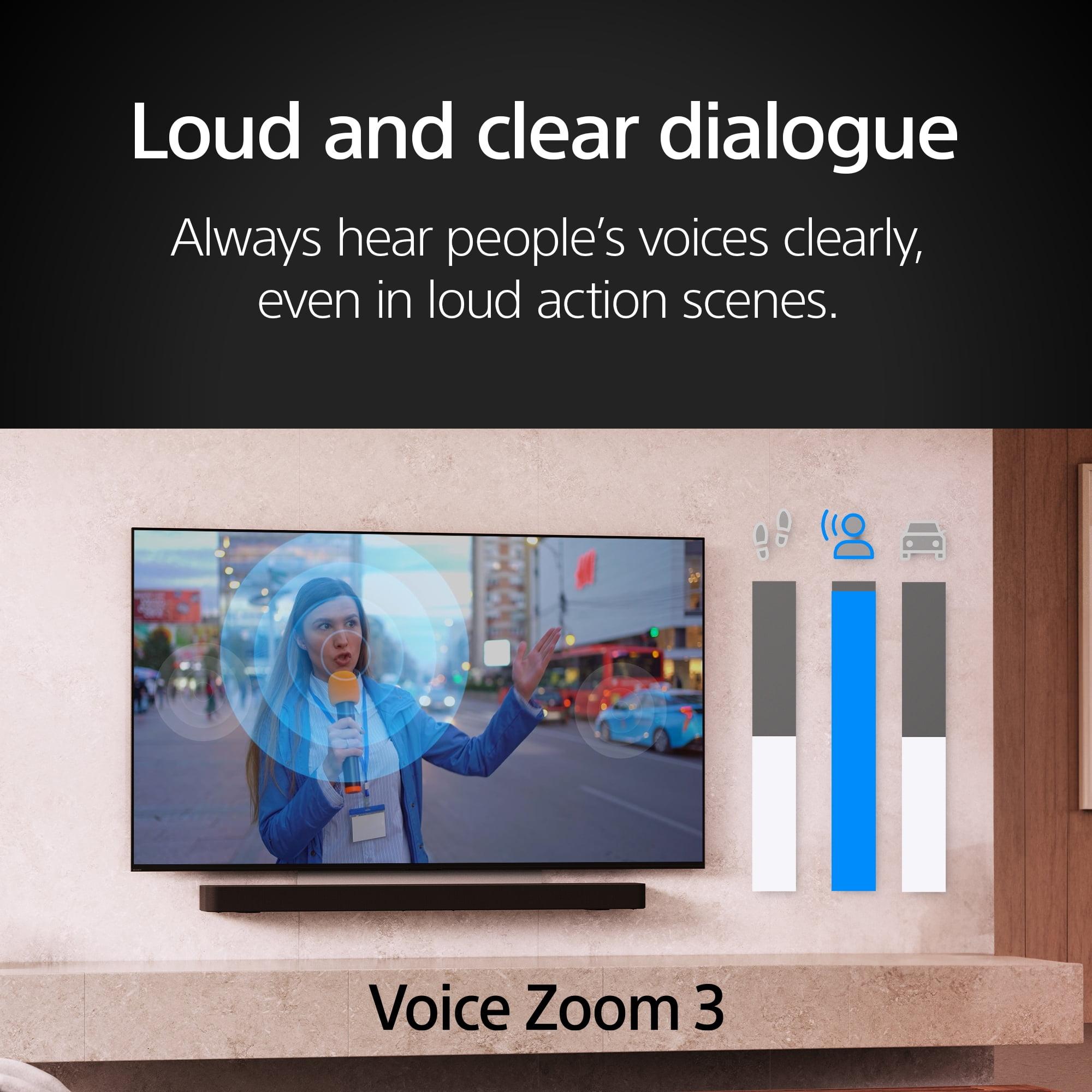
Here's something that often gets overlooked in TV comparisons: the BRAVIA 8 OLED has a unique audio advantage called Acoustic Surface Audio+. This technology actually makes the entire screen act as a speaker by vibrating the OLED panel itself. Voices seem to come directly from actors' mouths, and sound effects appear to originate from their proper locations on screen.
The BRAVIA 5 uses more traditional downward-firing speakers, which sound good but can't match the immersive positioning of the OLED's screen-as-speaker approach. Both TVs support Dolby Atmos and can sync with compatible Sony soundbars, but the OLED's built-in audio creates a more engaging experience even without external speakers.
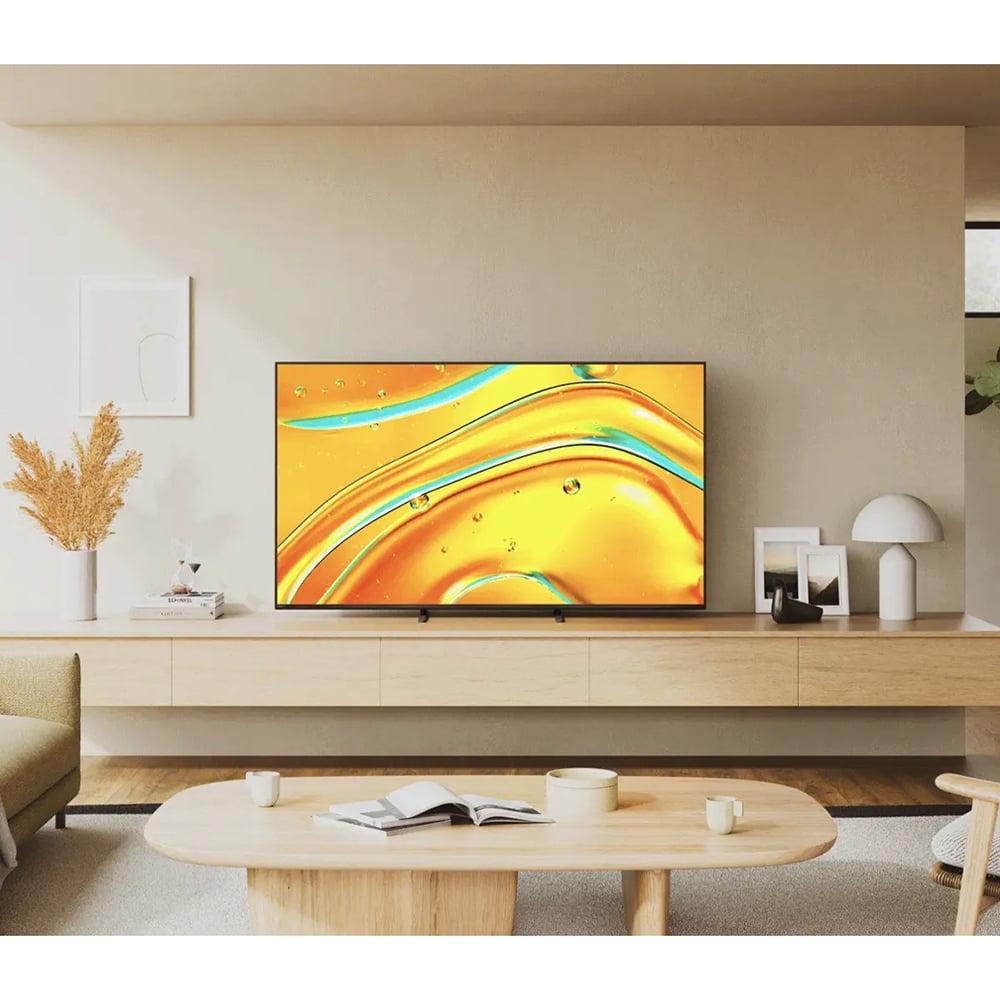
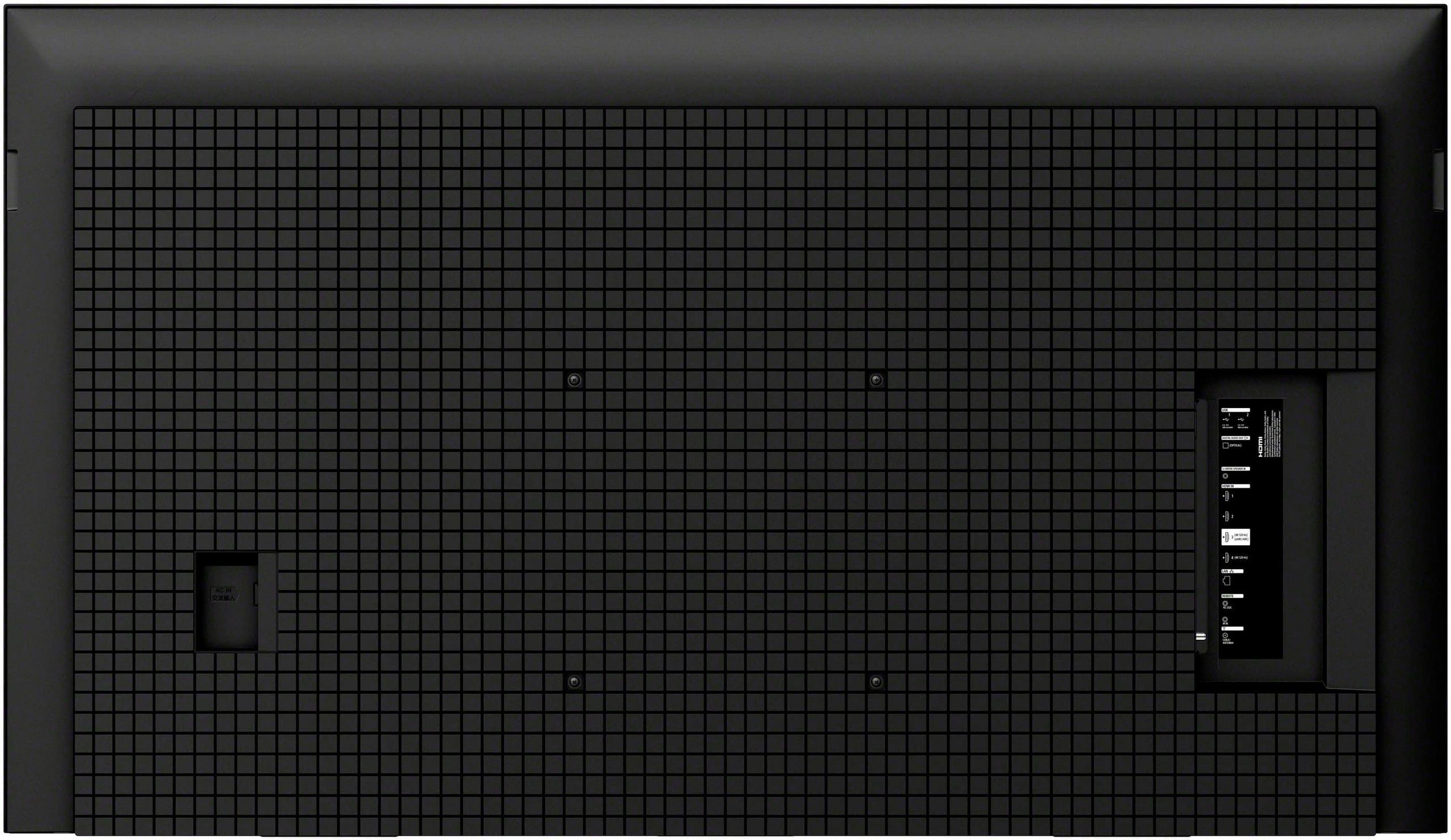
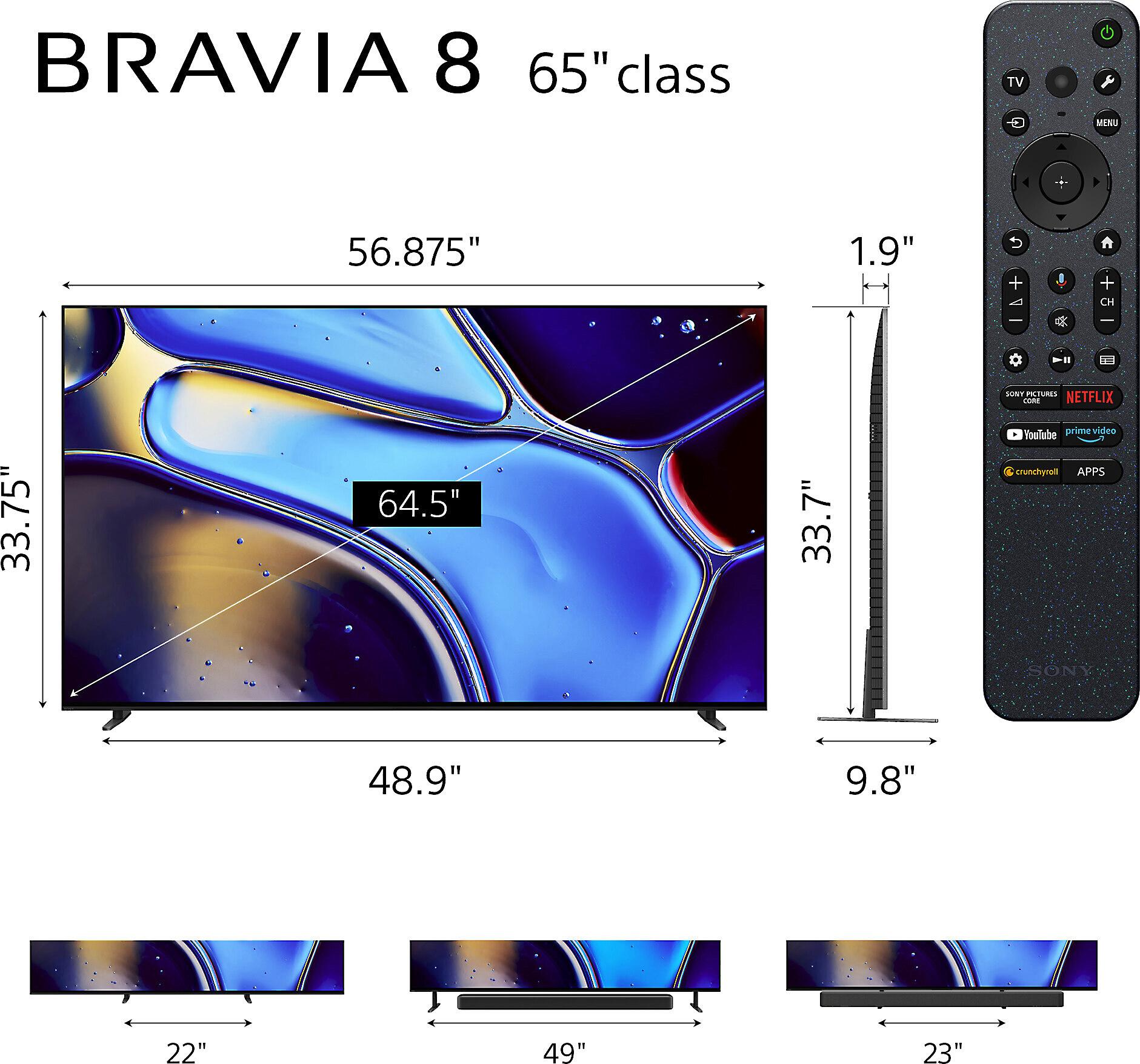
The physical differences between these TVs extend beyond just performance. The BRAVIA 8 maintains that impossibly thin OLED profile that looks almost like a piece of glass mounted on your wall. It's a showpiece that screams premium in a way that feels effortless.
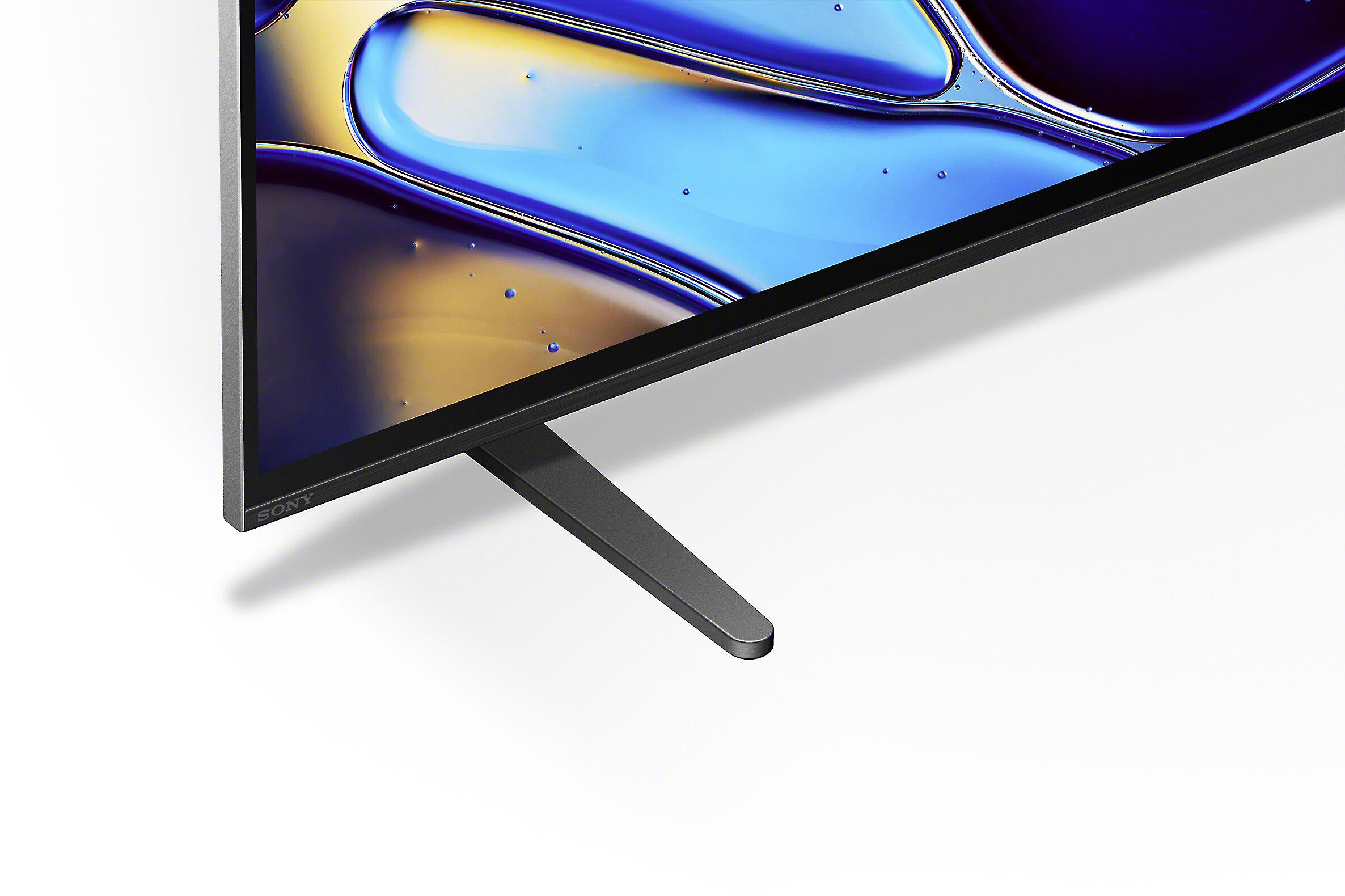
The BRAVIA 5, while still sleek, has more depth due to the Mini LED backlighting system. It's not thick by any means, but it doesn't have that jaw-dropping thinness of OLED. Both use Sony's adjustable stand system, which lets you position the TV at different heights to accommodate soundbars.
For dedicated home theater setups, the choice becomes clearer. The BRAVIA 8 OLED shines in controlled lighting environments where you can optimize the viewing experience. Its perfect blacks create that letterbox effect where the black bars above and below movies completely disappear, making the screen seem to extend infinitely. Combined with the Acoustic Surface Audio, it creates an incredibly immersive cinematic experience.
The BRAVIA 5 works well in home theaters too, especially if you can't achieve complete darkness. Its higher brightness ensures HDR content maintains its impact even with some ambient light. The improved local dimming (compared to previous Sony LED models) means you get much better contrast than older LCD TVs, though it still can't match OLED's infinite contrast.
This is where practical considerations come into play. The Sony BRAVIA 5 has no burn-in concerns whatsoever. You can leave it on CNN all day, display static gaming interfaces for hours, or use it as a computer monitor without worry. The Mini LED backlighting should maintain its performance for many years without degradation.
OLED technology, while dramatically improved, still has potential burn-in issues with static content. Modern OLEDs like the BRAVIA 8 have numerous protective features – pixel shifting, automatic brightness limiting, and screen savers – that make burn-in very unlikely with normal use. However, if you're planning to use the TV for gaming with static HUD elements or as a computer monitor, the Mini LED option provides more peace of mind.
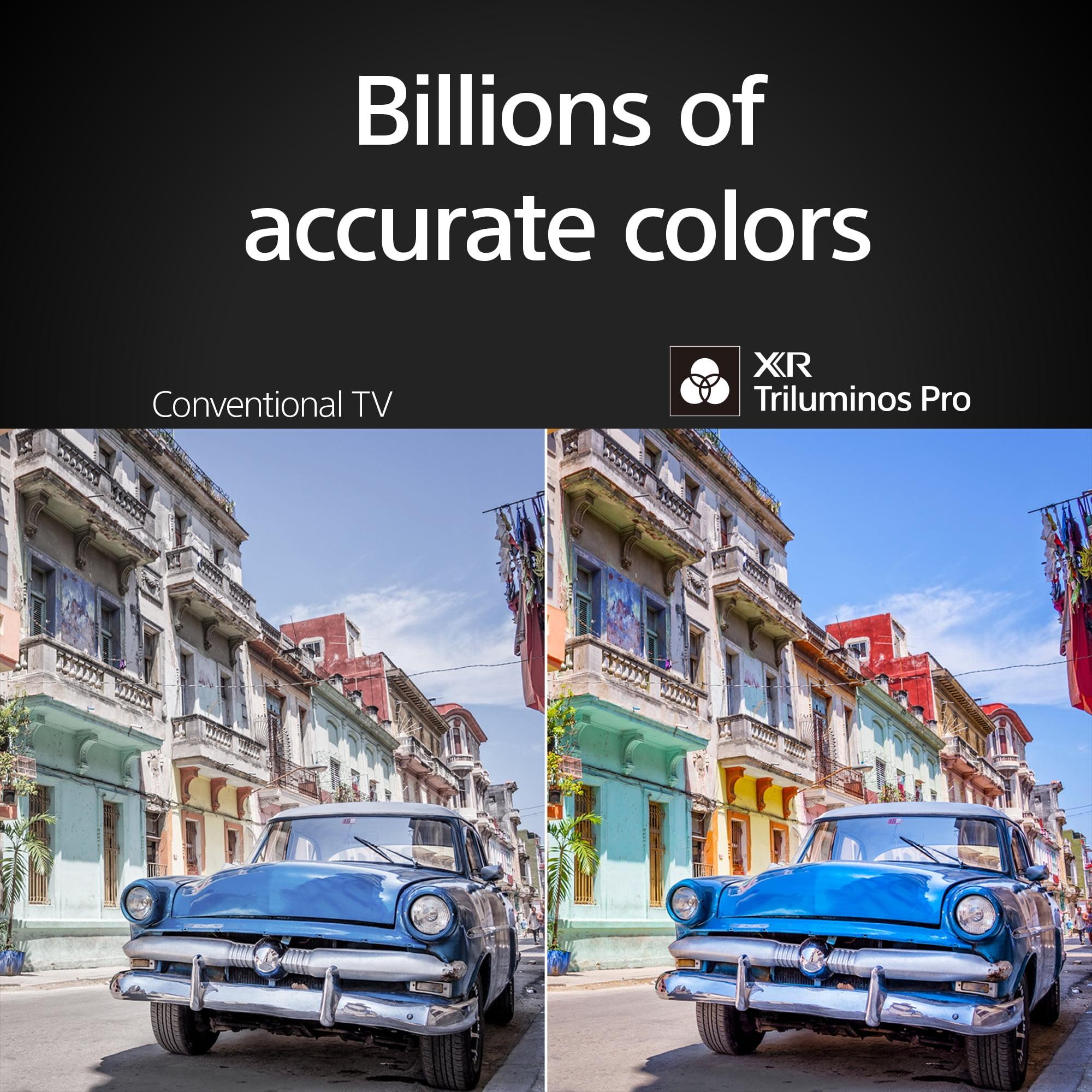
Sony's 2025 BRAVIA 5 represents a significant leap forward in their Mini LED technology. The local dimming zones have increased dramatically compared to previous models like the X90L, and the new XR Backlight Master Drive provides more precise control over brightness. The color gamut has expanded thanks to the addition of blue and green LEDs alongside the traditional white ones.
The BRAVIA 8 continues Sony's OLED refinements with improved brightness efficiency and better heat management. While it uses WOLED (white OLED) technology rather than the QD-OLED found in higher-end models, Sony's processing makes it punch above its weight in color accuracy and overall performance.
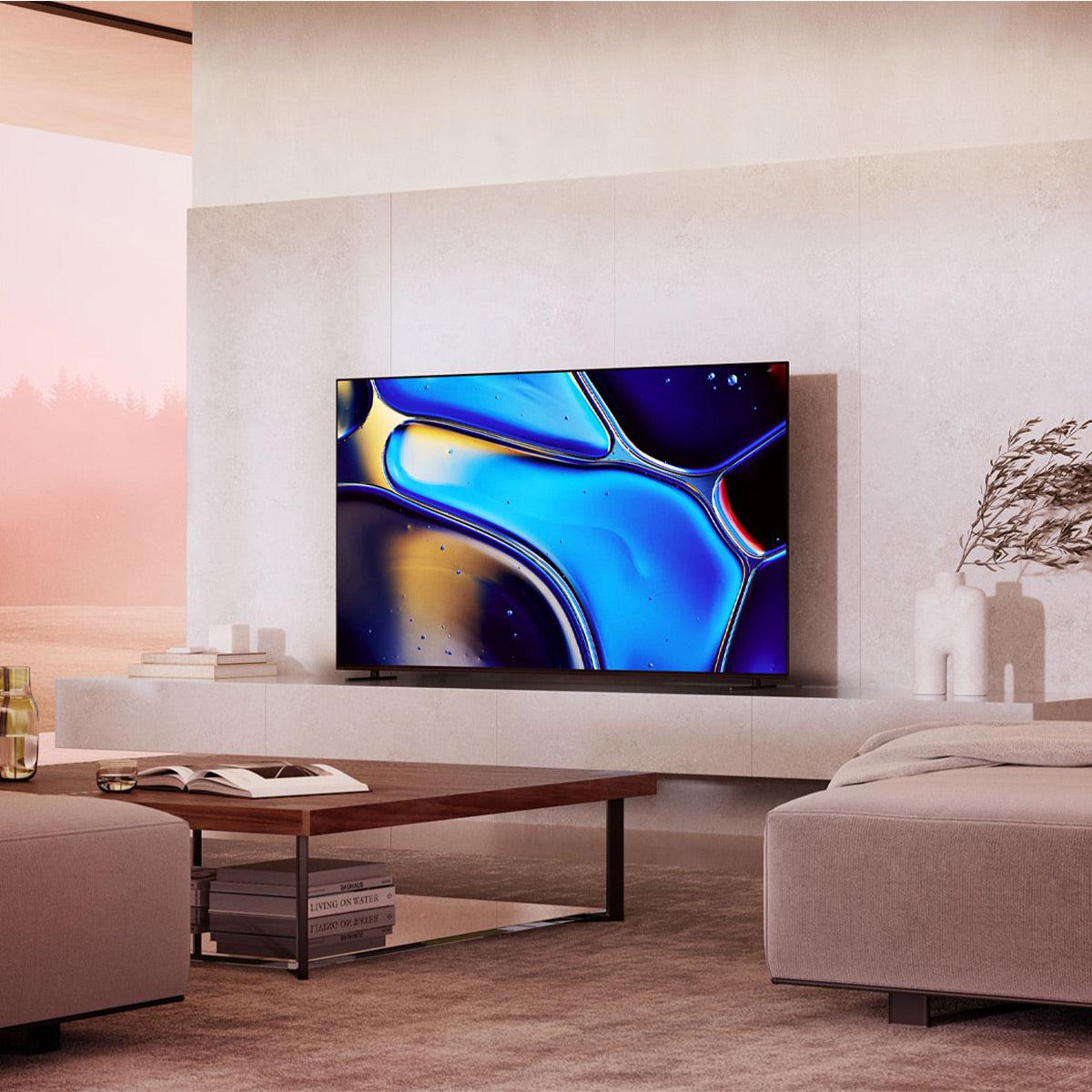
So how do you choose between these two excellent TVs? Start with your room. If you're setting up in a bright living room with large windows, the BRAVIA 5's Mini LED technology will serve you better throughout the day. The higher brightness ensures HDR content maintains its impact regardless of ambient lighting.
If you're creating a dedicated viewing space where you can control lighting, or if you primarily watch TV in the evening, the BRAVIA 8 OLED delivers that premium, cinematic experience that makes every movie feel special. The perfect blacks and infinite contrast create a viewing experience that's hard to match.
Consider your content preferences too. Sports fans and daytime TV watchers will appreciate the Mini LED's consistent performance in various lighting conditions. Movie enthusiasts and those who value that "premium TV" experience will gravitate toward the OLED's superior contrast and color accuracy.
At nearly identical prices ($1,478 vs $1,442), you're not choosing based on budget but on which technology better fits your viewing habits and room setup. Both represent excellent value in the 65-inch premium TV category, just with different strengths that cater to different priorities.
The beauty of having two such capable options is that you really can't go wrong – you're just choosing between two different approaches to creating an excellent viewing experience. Whether you prioritize the brightness versatility of Mini LED or the contrast perfection of OLED, both Sony BRAVIA 5 and BRAVIA 8 will deliver years of impressive entertainment.
| Sony BRAVIA 5 65" Mini LED 4K Google TV 2025 | Sony BRAVIA 8 65" 4K OLED TV |
|---|---|
| Display Technology - Determines fundamental picture quality characteristics | |
| Mini LED LCD with thousands of individually controlled LEDs | OLED with self-emitting pixels that can turn completely off |
| Peak Brightness - Critical for HDR impact and bright room viewing | |
| 1,000+ nits (excellent for daytime viewing and bright rooms) | 400-600 nits (10% brighter than previous Sony OLEDs) |
| Contrast Ratio - Affects how realistic and dimensional images appear | |
| Excellent local dimming with some minor blooming | Infinite contrast with perfect blacks |
| Price - Value proposition at launch | |
| $1,478 (May 2025 release) | $1,442 (discounted from $1,899) |
| Burn-in Risk - Long-term durability consideration | |
| No burn-in concerns with static content | Potential burn-in with prolonged static images |
| Motion Handling - Important for sports and gaming | |
| Good motion processing with some LCD blur | Excellent motion clarity with instant pixel response |
| Gaming Features - Modern console compatibility | |
| 4K/120Hz, VRR, ALLM on 2 HDMI 2.1 ports | 4K/120Hz, VRR, ALLM on 2 HDMI 2.1 ports |
| Audio Technology - Built-in sound quality | |
| Standard downward-firing speakers with Dolby Atmos | Acoustic Surface Audio+ (screen acts as speaker) |
| Design Profile - Aesthetic and mounting considerations | |
| Slim but thicker due to Mini LED backlighting | Ultra-thin OLED profile for premium appearance |
| Best Room Environment - Optimal viewing conditions | |
| Bright living rooms with ambient lighting | Dark or controlled lighting environments |
| Color Performance - Accuracy and vibrancy | |
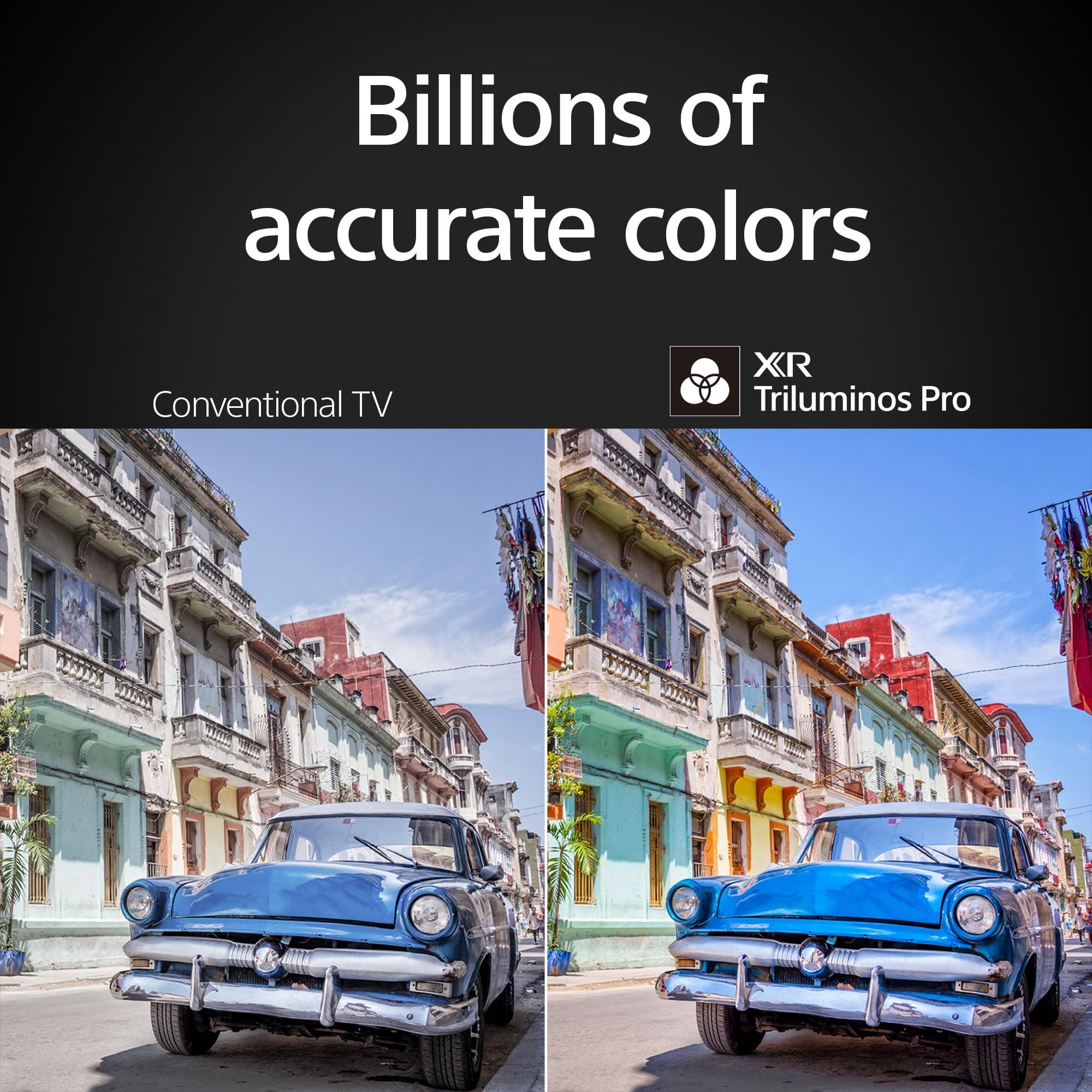
| XR Triluminos Pro with vibrant, punchy colors | Superior color accuracy with natural reproduction |
| Viewing Angles - Performance when viewed off-center | |
| Limited viewing angles typical of LCD panels | Wide viewing angles with consistent picture quality |
The picture quality depends on your viewing environment. The Sony BRAVIA 8 OLED delivers superior contrast with perfect blacks and infinite contrast ratio, making it ideal for dark rooms and movie watching. The Sony BRAVIA 5 Mini LED offers higher brightness (1,000+ nits vs 400-600 nits) and better performance in bright rooms with ambient lighting.
The Sony BRAVIA 5 65" Mini LED costs $1,478, while the Sony BRAVIA 8 65" OLED is priced at $1,442 (discounted from $1,899). They're essentially the same price, making the choice based on features rather than budget.
Both TVs offer identical gaming features including 4K/120Hz, VRR, and ALLM on 2 HDMI 2.1 ports. The BRAVIA 8 OLED has faster pixel response times for clearer motion, while the BRAVIA 5 Mini LED provides brighter HDR gaming visuals and no burn-in concerns with static game elements.
The Sony BRAVIA 5 Mini LED has no burn-in risk whatsoever. The Sony BRAVIA 8 OLED has potential burn-in with prolonged static content, but modern protective features make this unlikely with normal viewing habits.
The Sony BRAVIA 5 Mini LED is significantly better for bright rooms due to its higher peak brightness and better reflection handling. The BRAVIA 8 OLED performs best in controlled lighting environments where its perfect blacks can shine.
The Sony BRAVIA 8 OLED has superior built-in audio with Acoustic Surface Audio+ technology that makes the entire screen act as a speaker. The BRAVIA 5 Mini LED uses traditional downward-firing speakers, which are good but not as immersive.
The Sony BRAVIA 8 OLED excels in dedicated home theaters with its perfect blacks, infinite contrast, and immersive audio. The BRAVIA 5 Mini LED works well in home theaters too, especially if you can't achieve complete darkness or need higher brightness for HDR content.
The Sony BRAVIA 8 OLED handles motion significantly better due to instant pixel response times, making sports and action content appear sharper. The BRAVIA 5 Mini LED has good motion processing but may show slight blur during rapid movements.
The Sony BRAVIA 8 OLED features an ultra-thin premium design that looks like a piece of glass on your wall. The BRAVIA 5 Mini LED is still sleek but thicker due to the backlighting system, though both use adjustable stands for soundbar compatibility.
The Sony BRAVIA 5 Mini LED offers better long-term durability with no burn-in concerns and stable brightness over time. The BRAVIA 8 OLED is generally reliable but may have slight brightness degradation over many years of use.
Choose the Sony BRAVIA 5 Mini LED if you have a bright room, watch varied content, or prioritize durability. Choose the Sony BRAVIA 8 OLED if you can control lighting, love movies, and want the most cinematic picture quality with perfect blacks.
We've done our best to create useful and informative comparisons to help you decide what product to buy. Our research uses advanced automated methods to create this comparison and perfection is not possible - please contact us for corrections or questions. These are the sites we've researched in the creation of this article: rtings.com - pro.sony - youtube.com - electronics.sony.com - electronics.sony.com - electronics.sony.com - bestbuy.com - electronics.sony.com - youtube.com - bestbuy.com - videoandaudiocenter.com - valueelectronics.com - youtube.com - sony.ca - perpichtv.com - sony.com - displayspecifications.com - pioneertvandappliance.com - flatpanelshd.com - bestbuy.com - bestbuy.com - crutchfield.com - avsforum.com - electronics.sony.com - sony.com - store.sony.co.nz - sony.com - displayspecifications.com

Privacy Policy
Terms and Conditions - Affiliate Policy
Home Security
© Copyright 2008-2026.
11816 Inwood Rd #1211, Dallas, TX 75244