

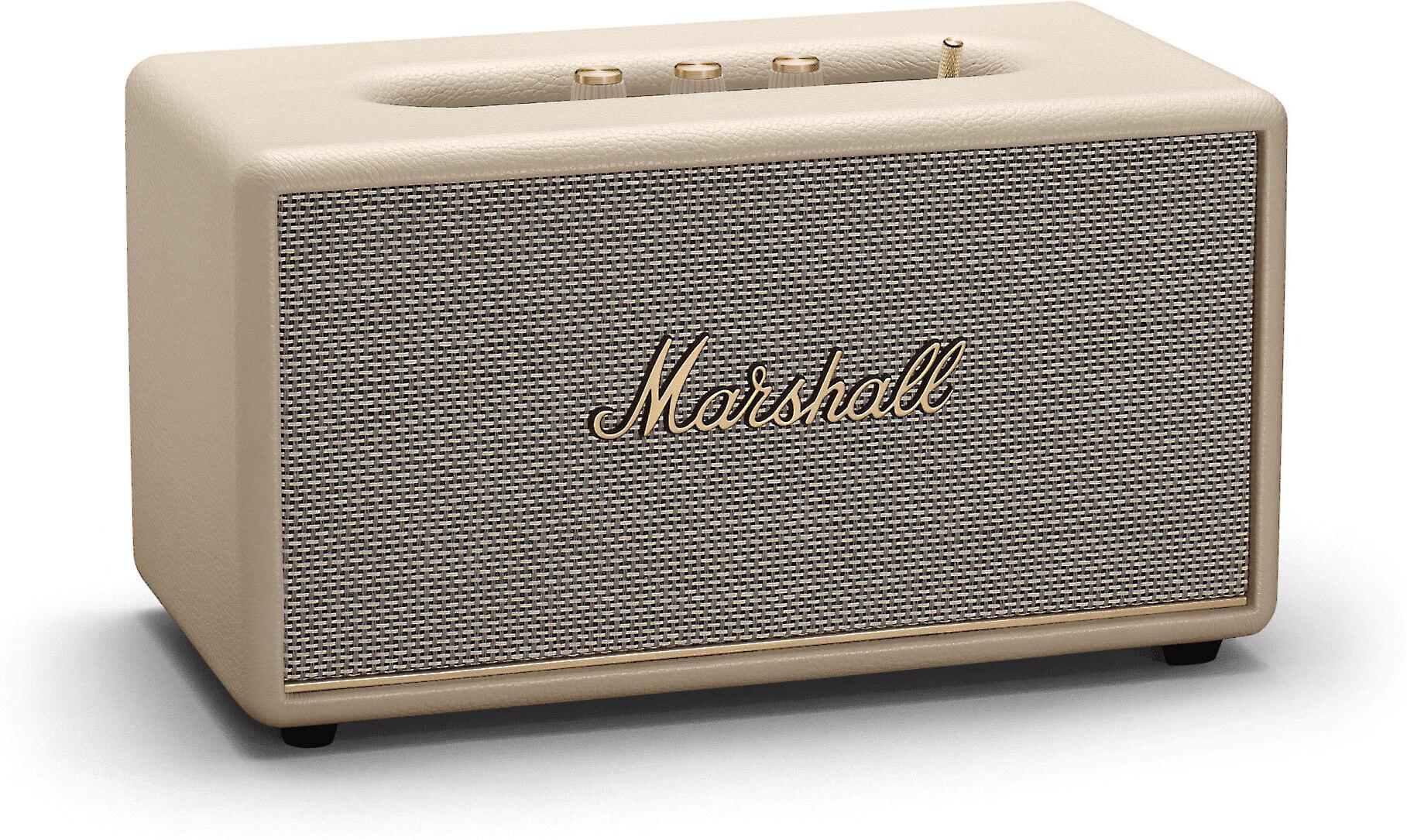
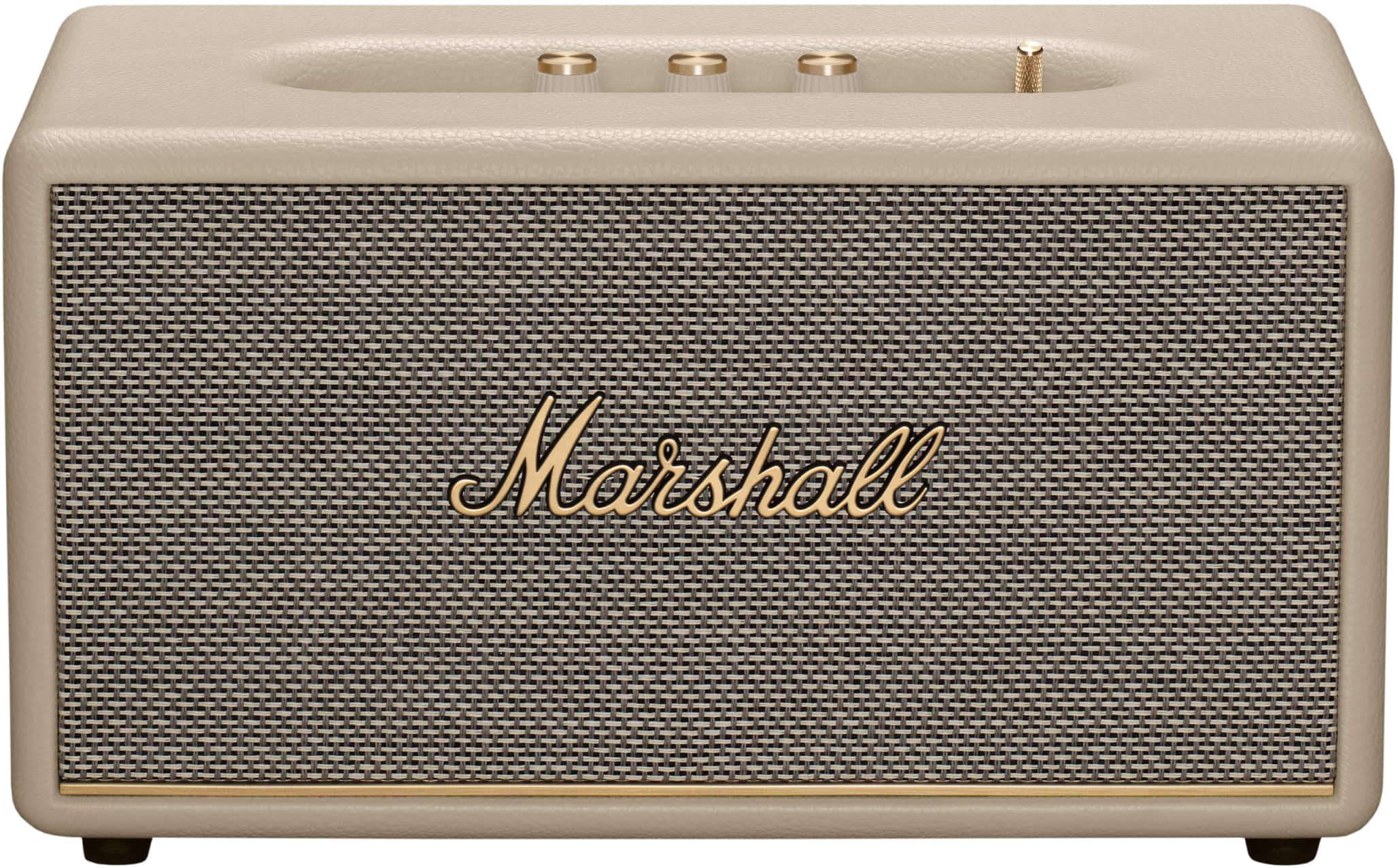
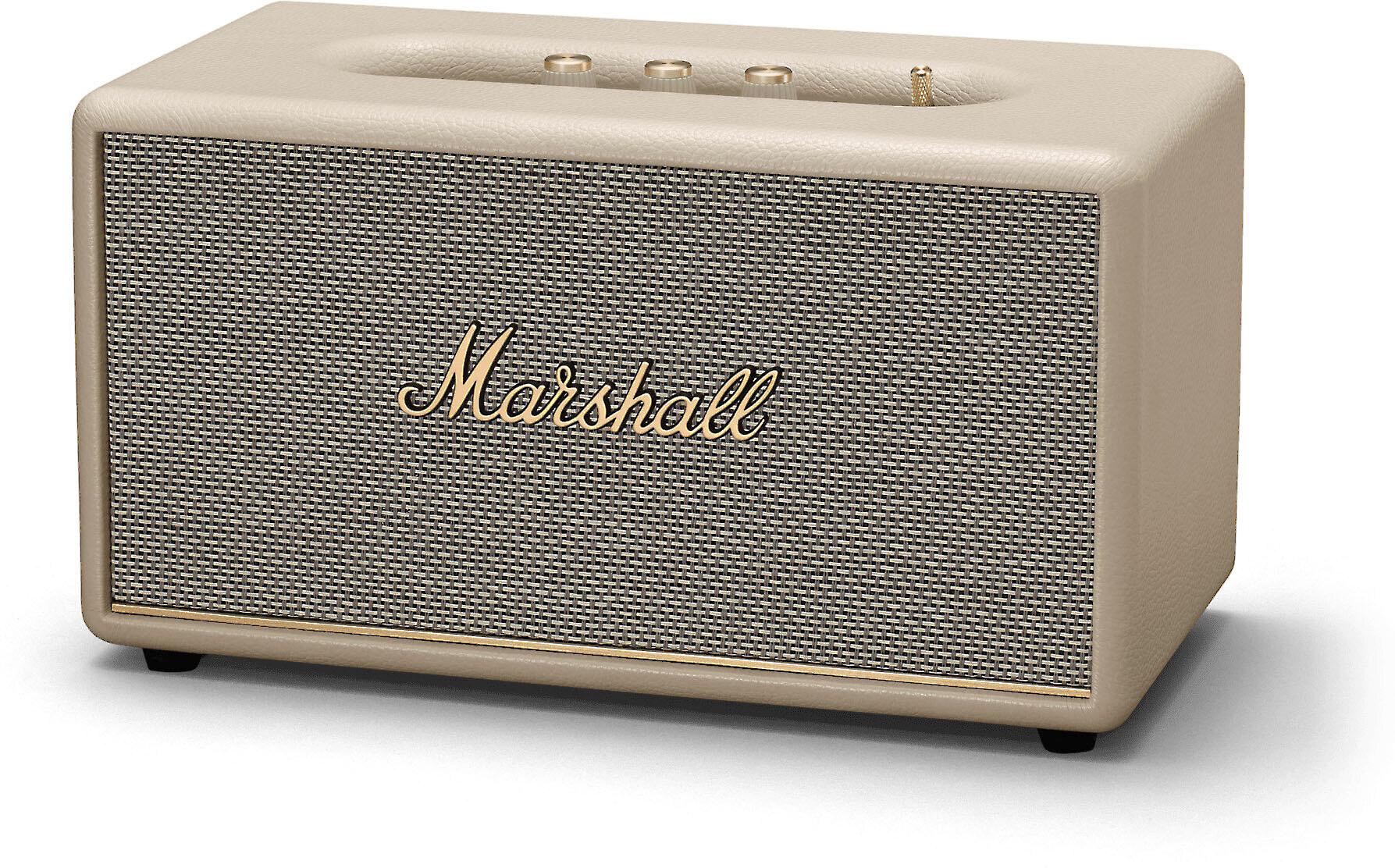
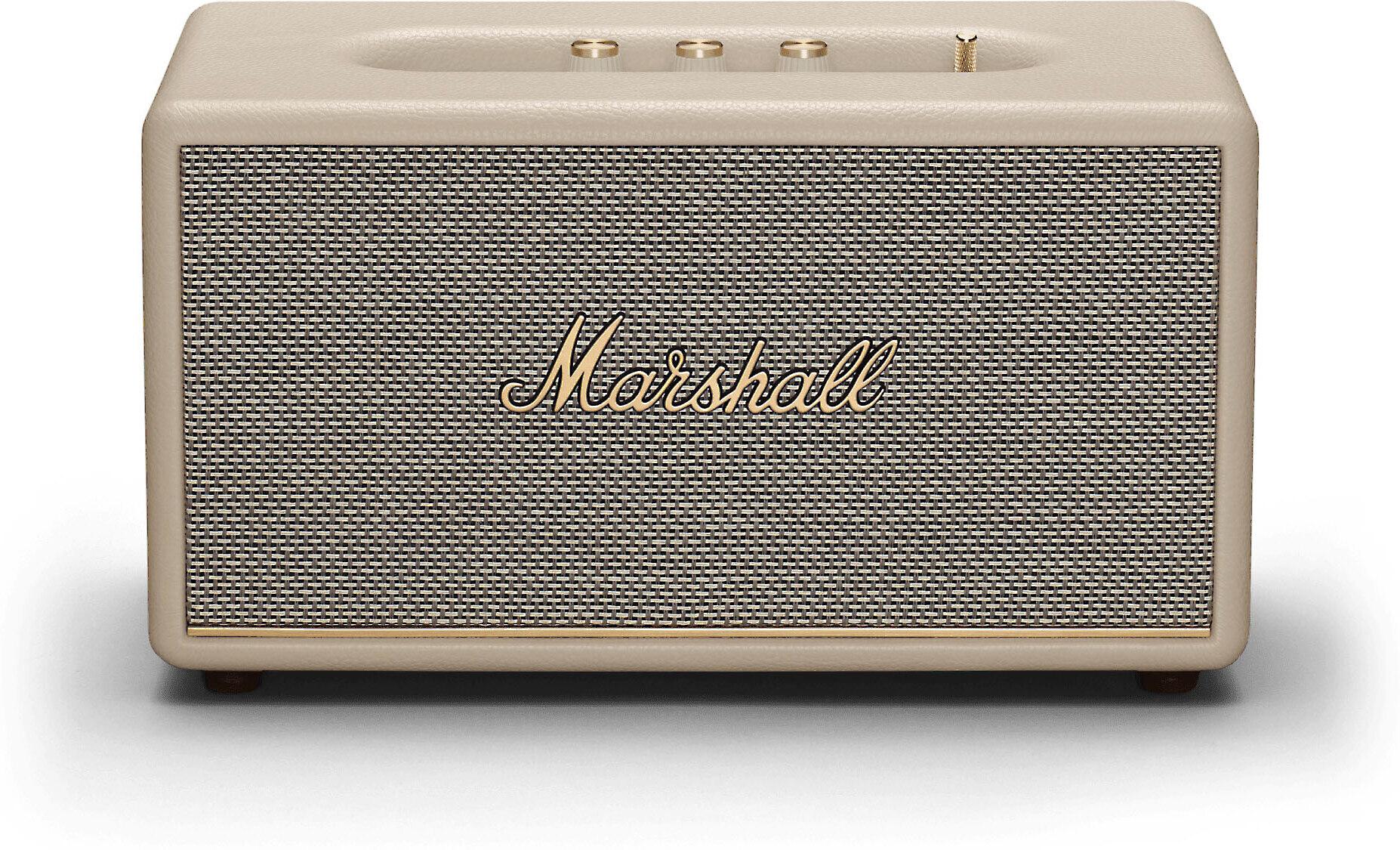
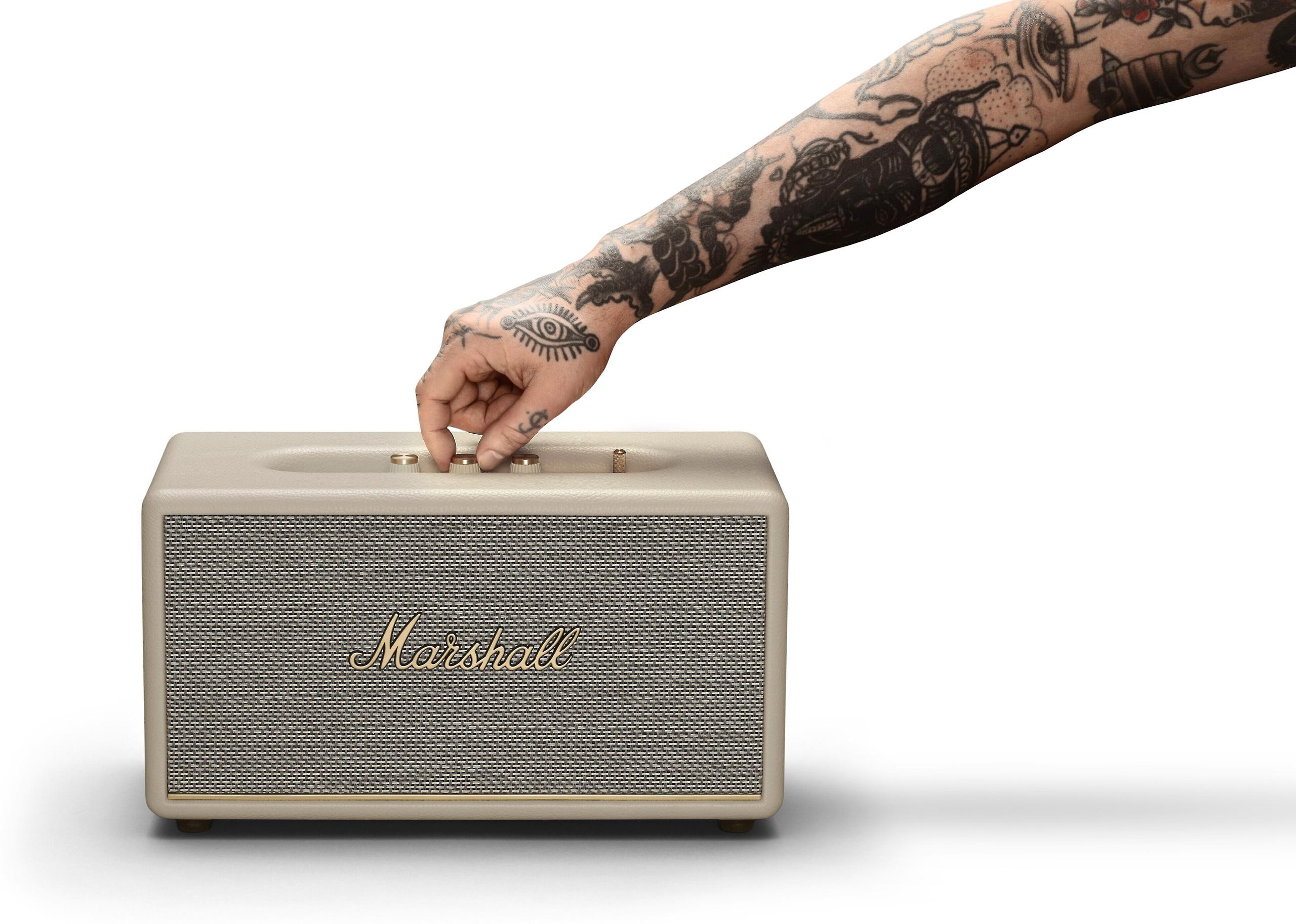
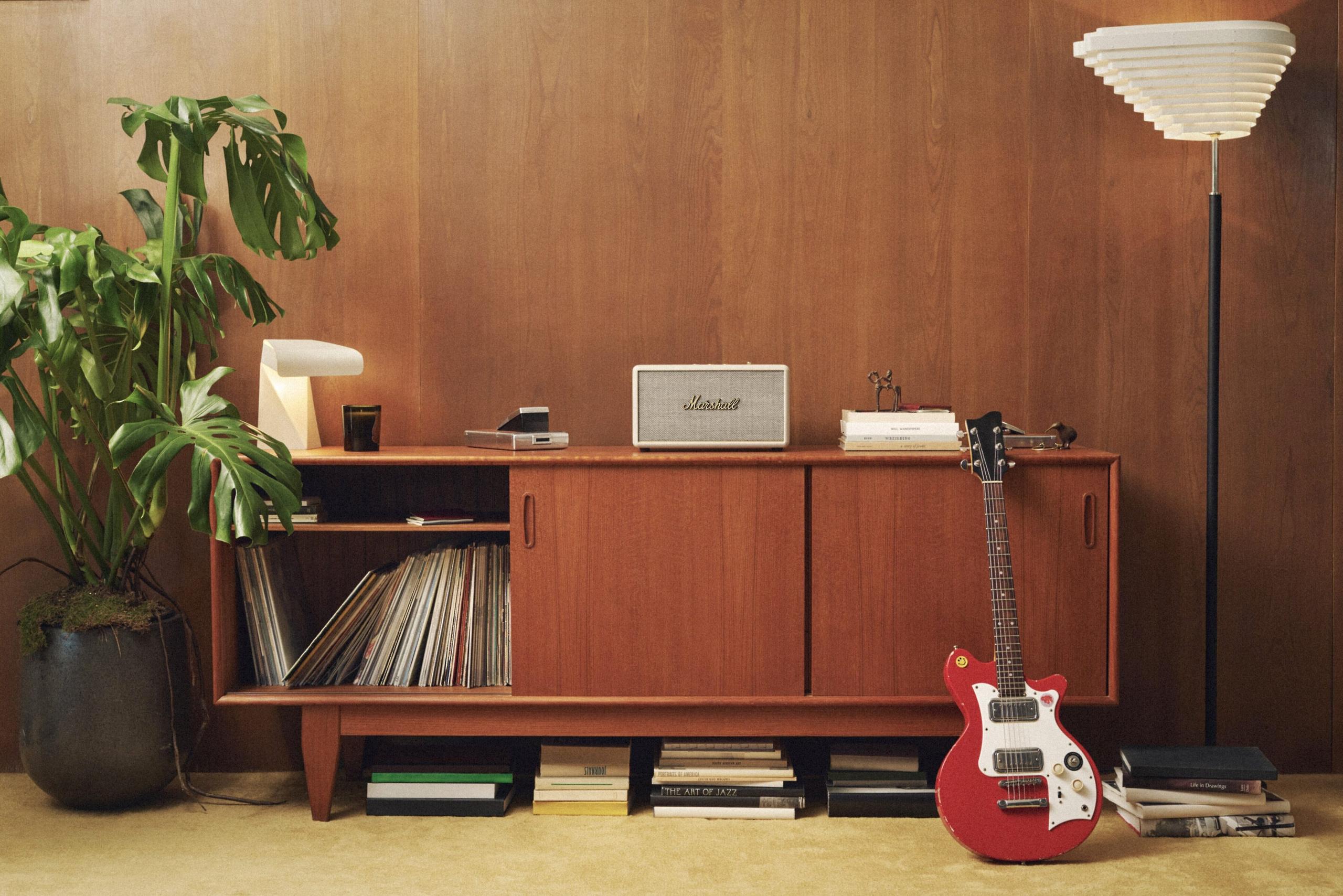
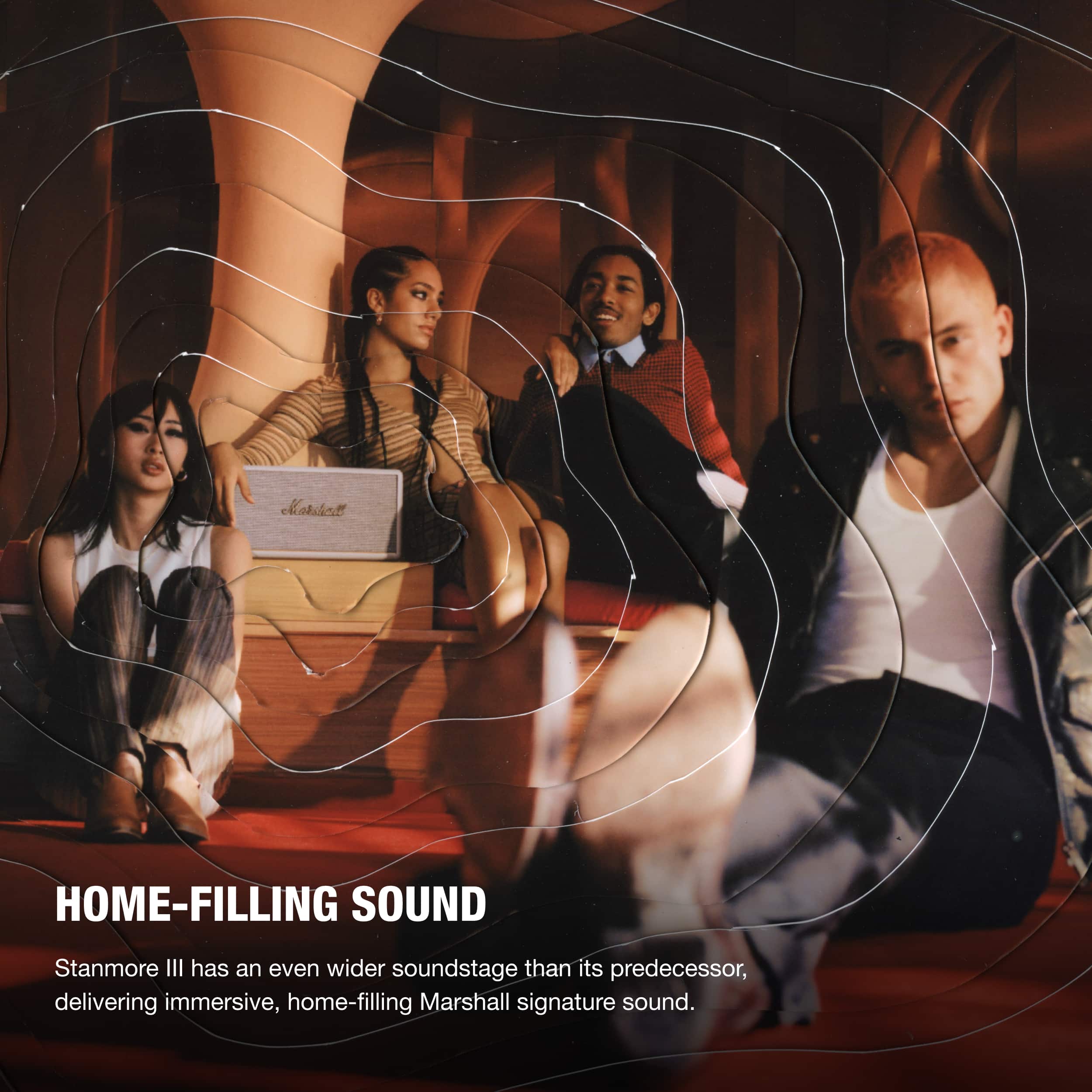

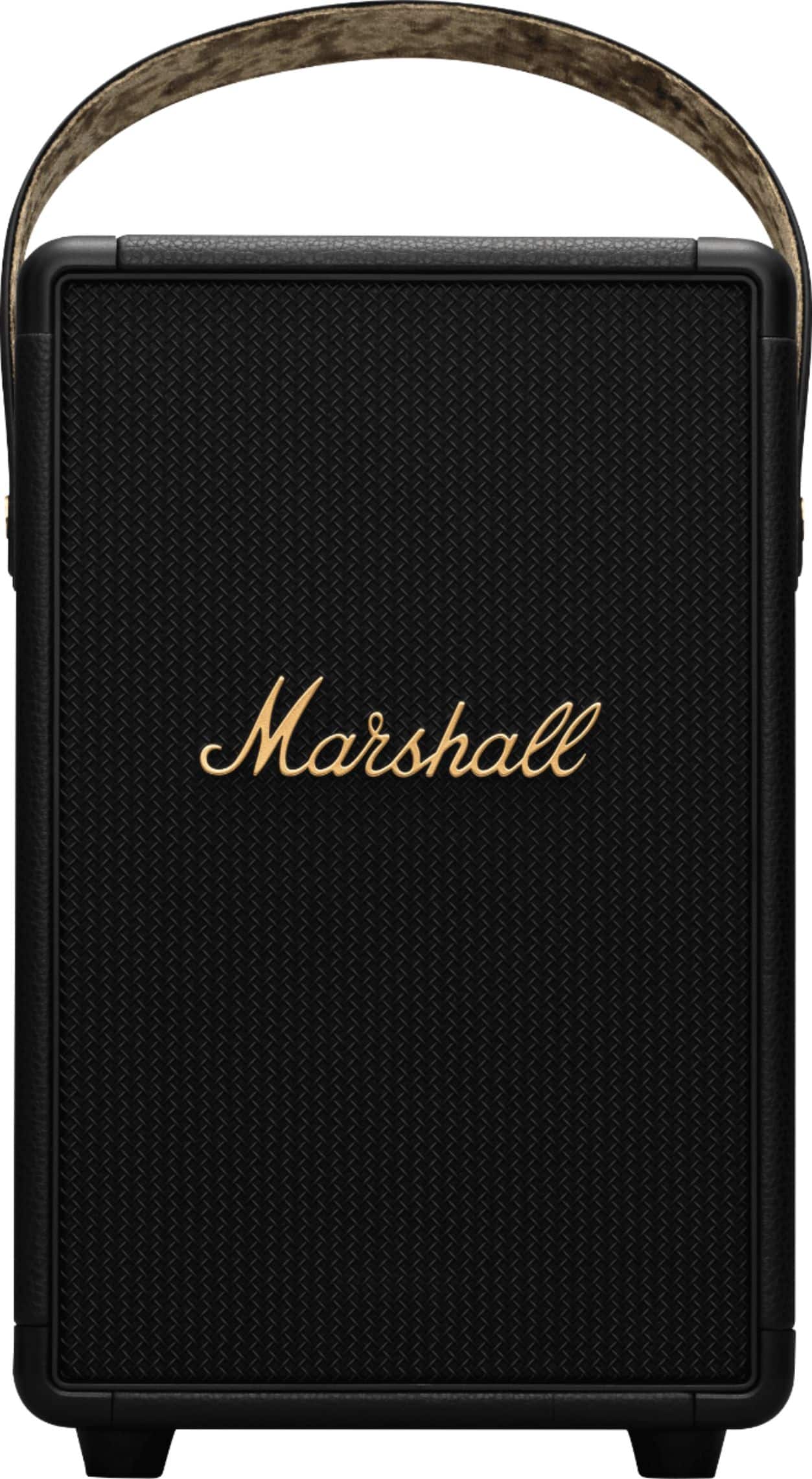
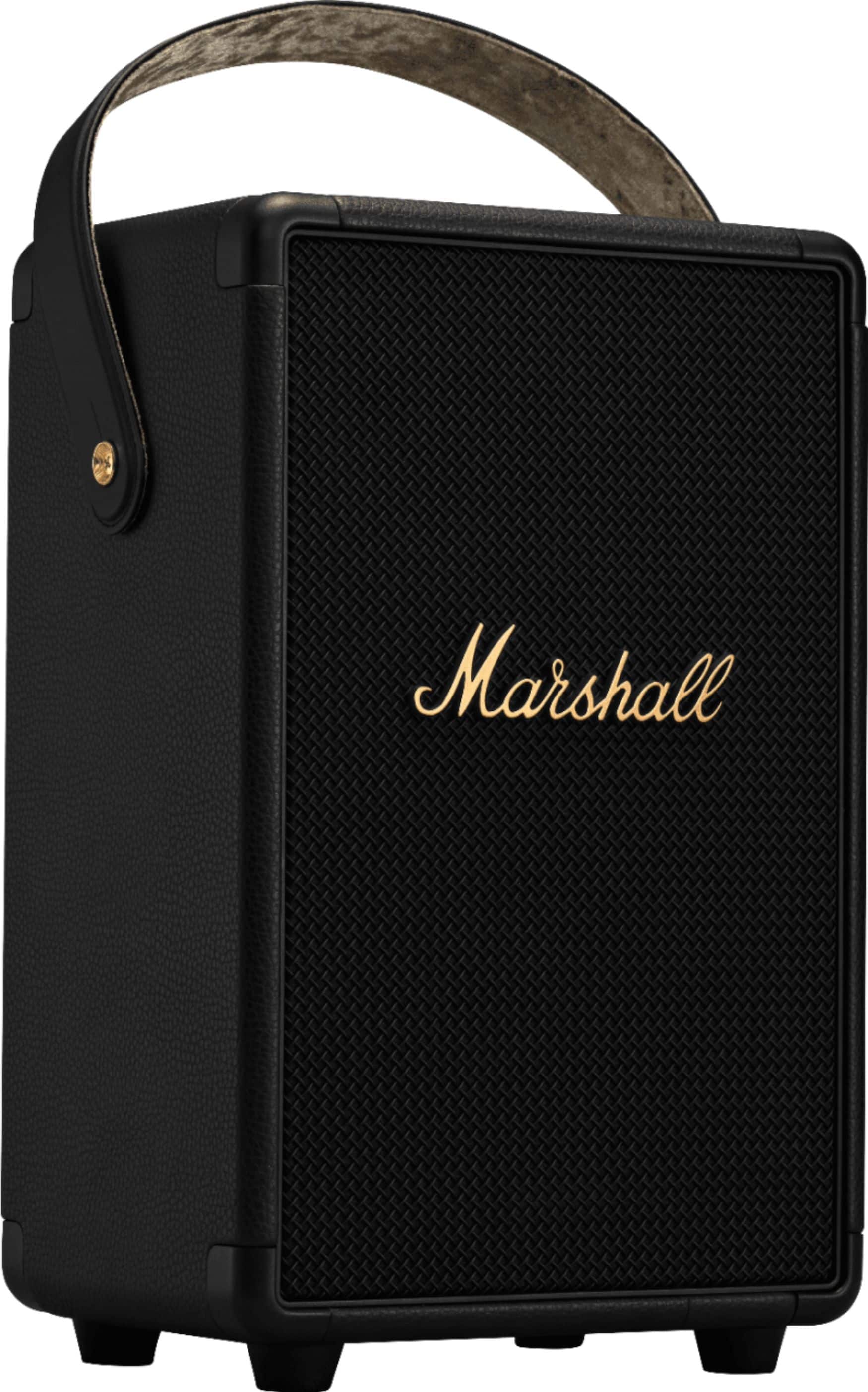
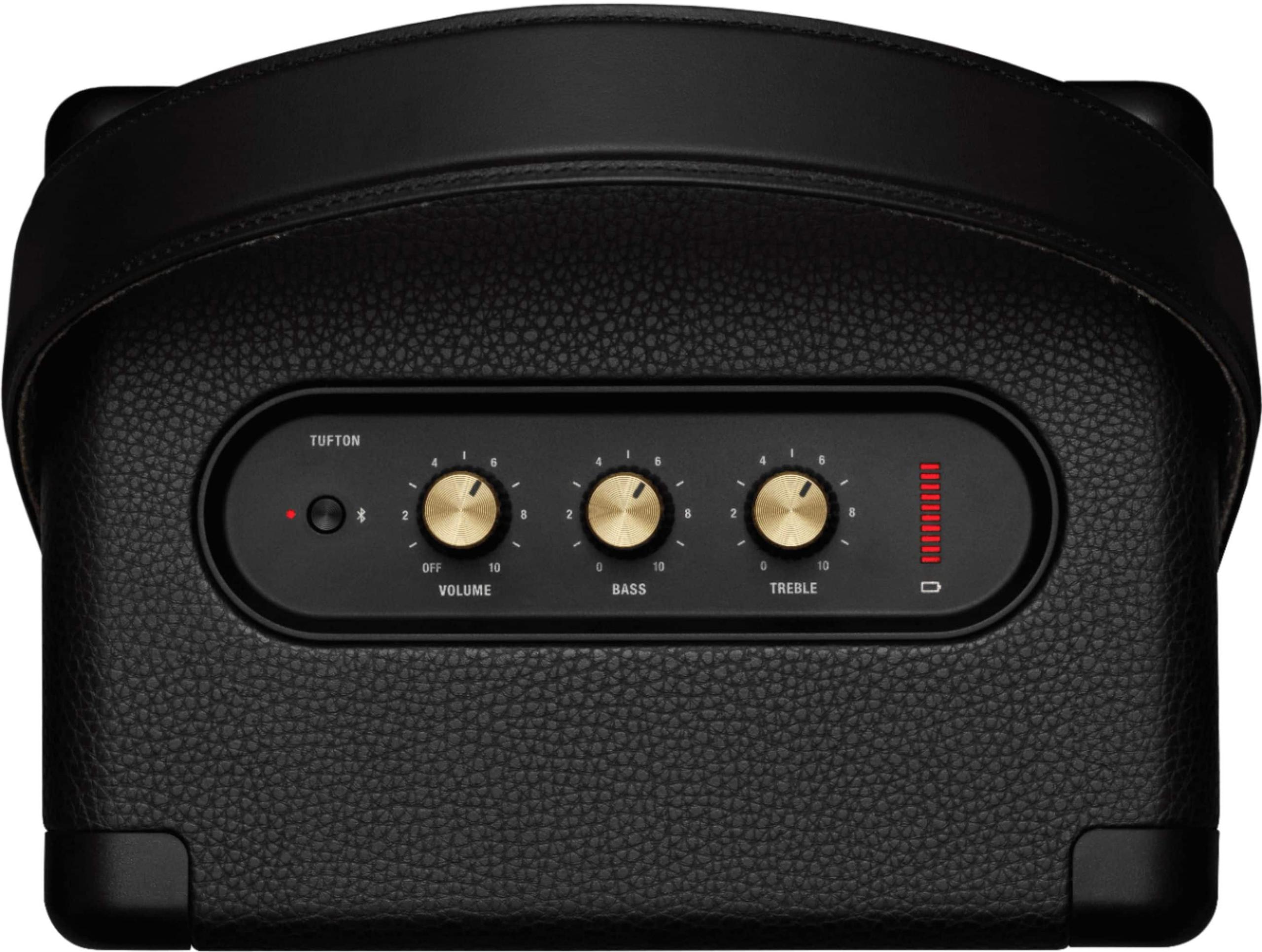
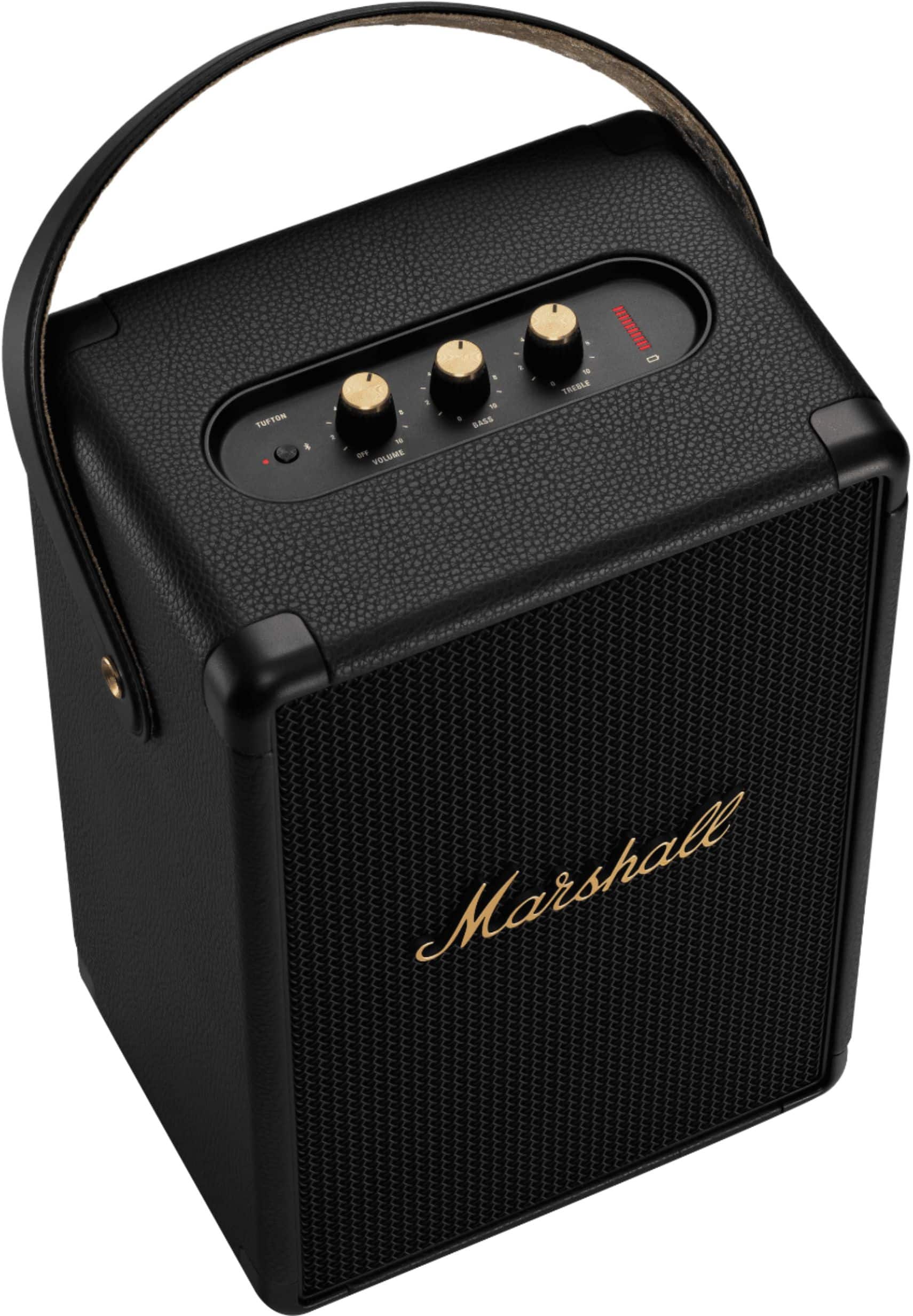
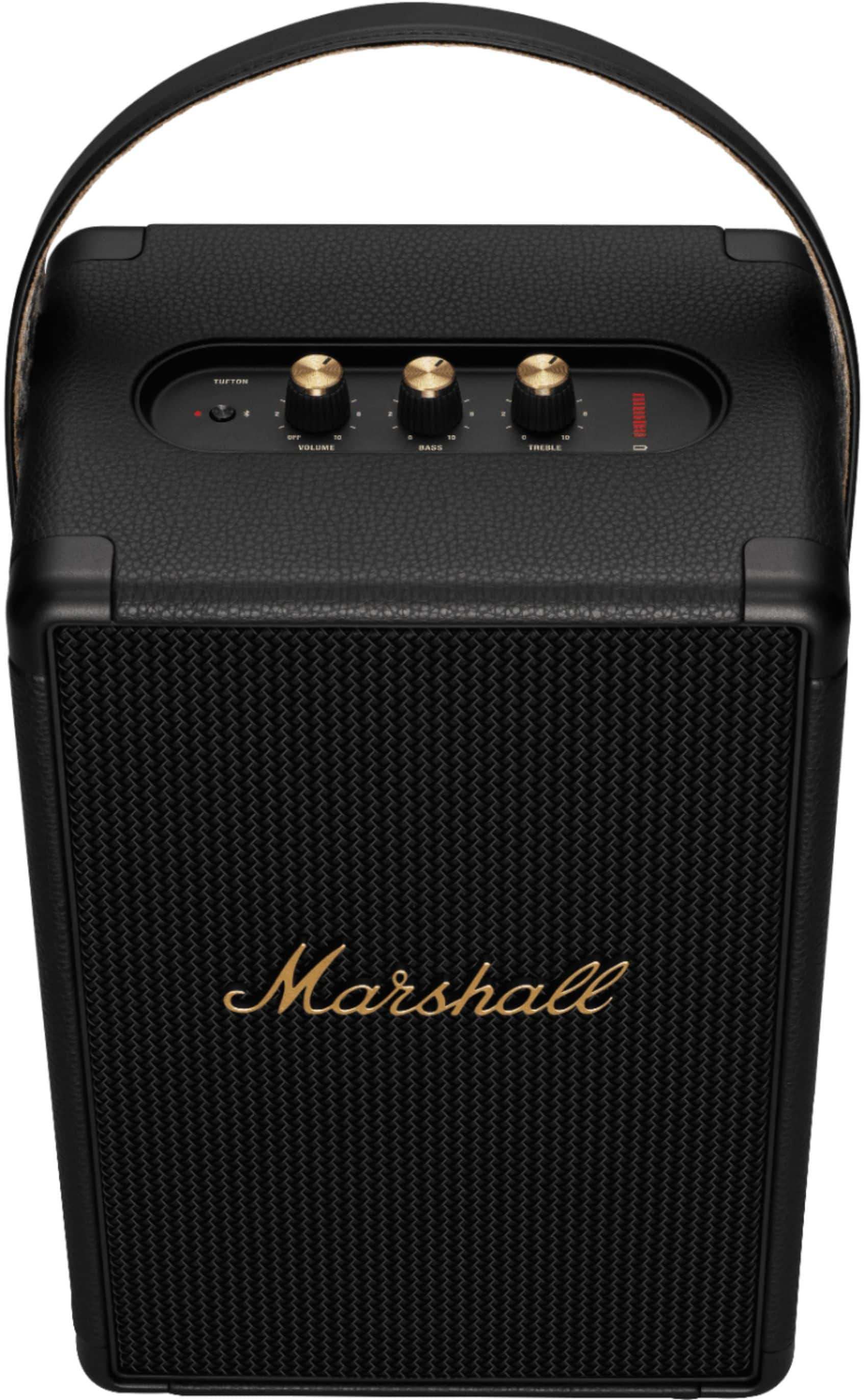
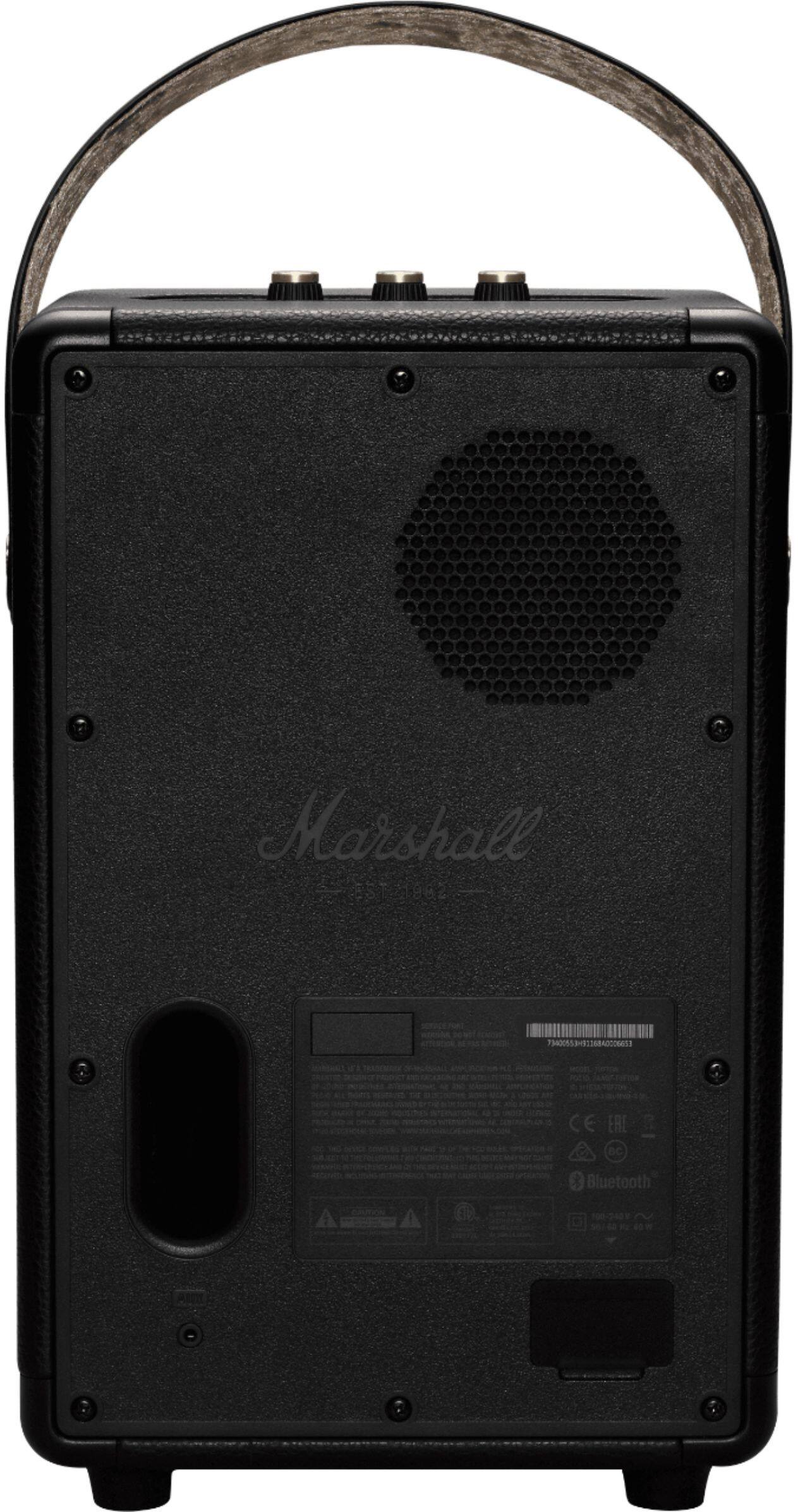
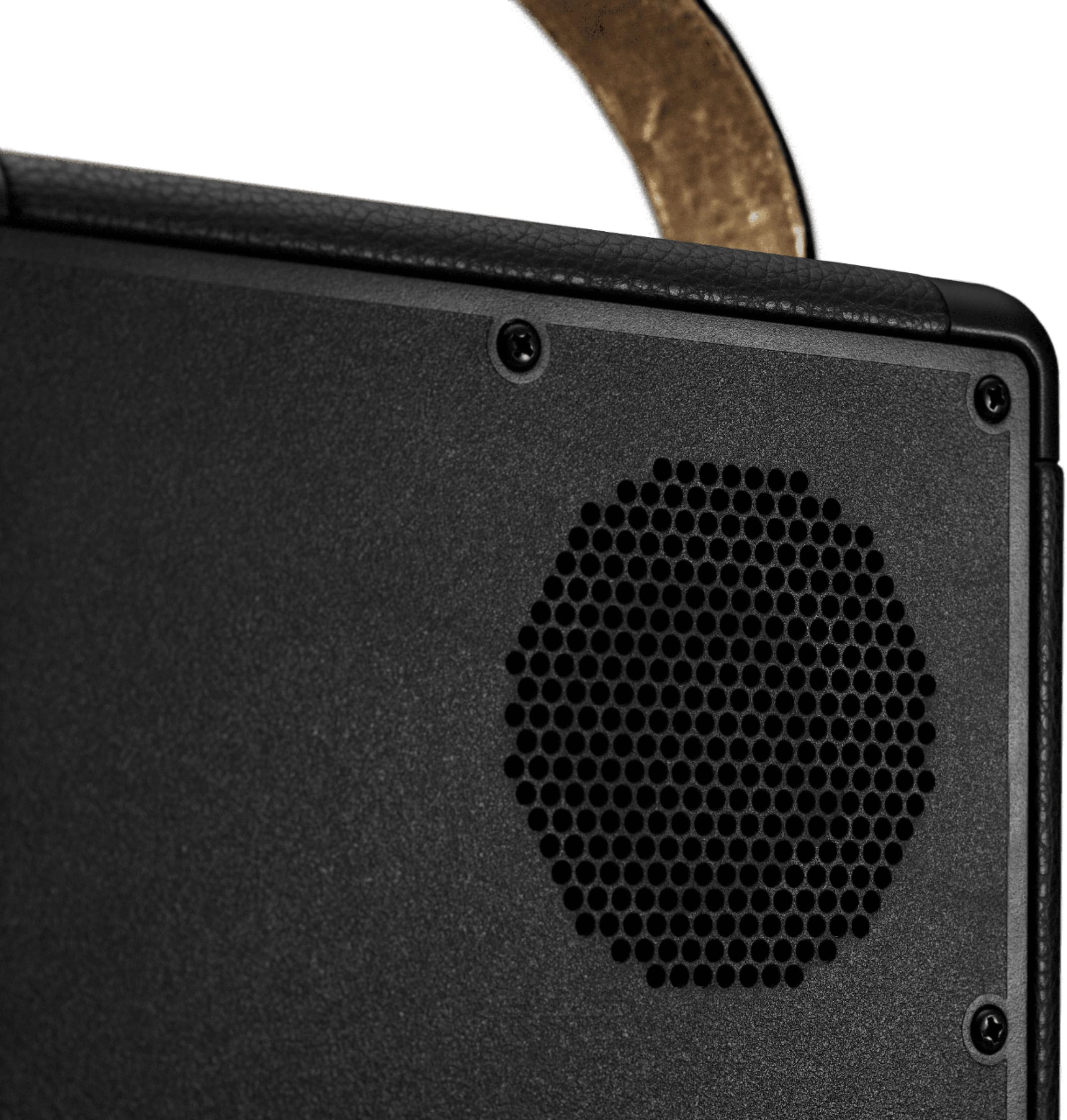
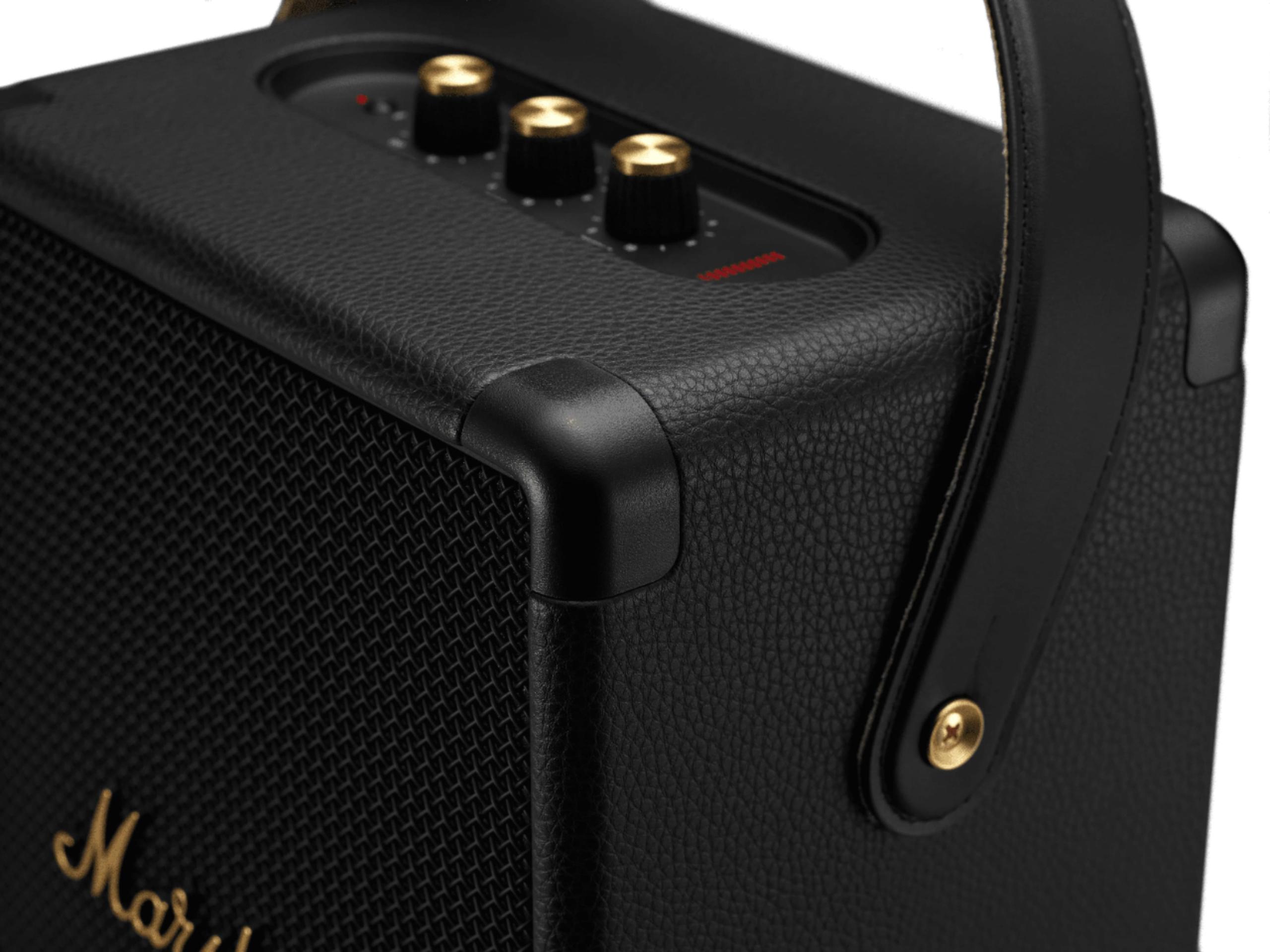

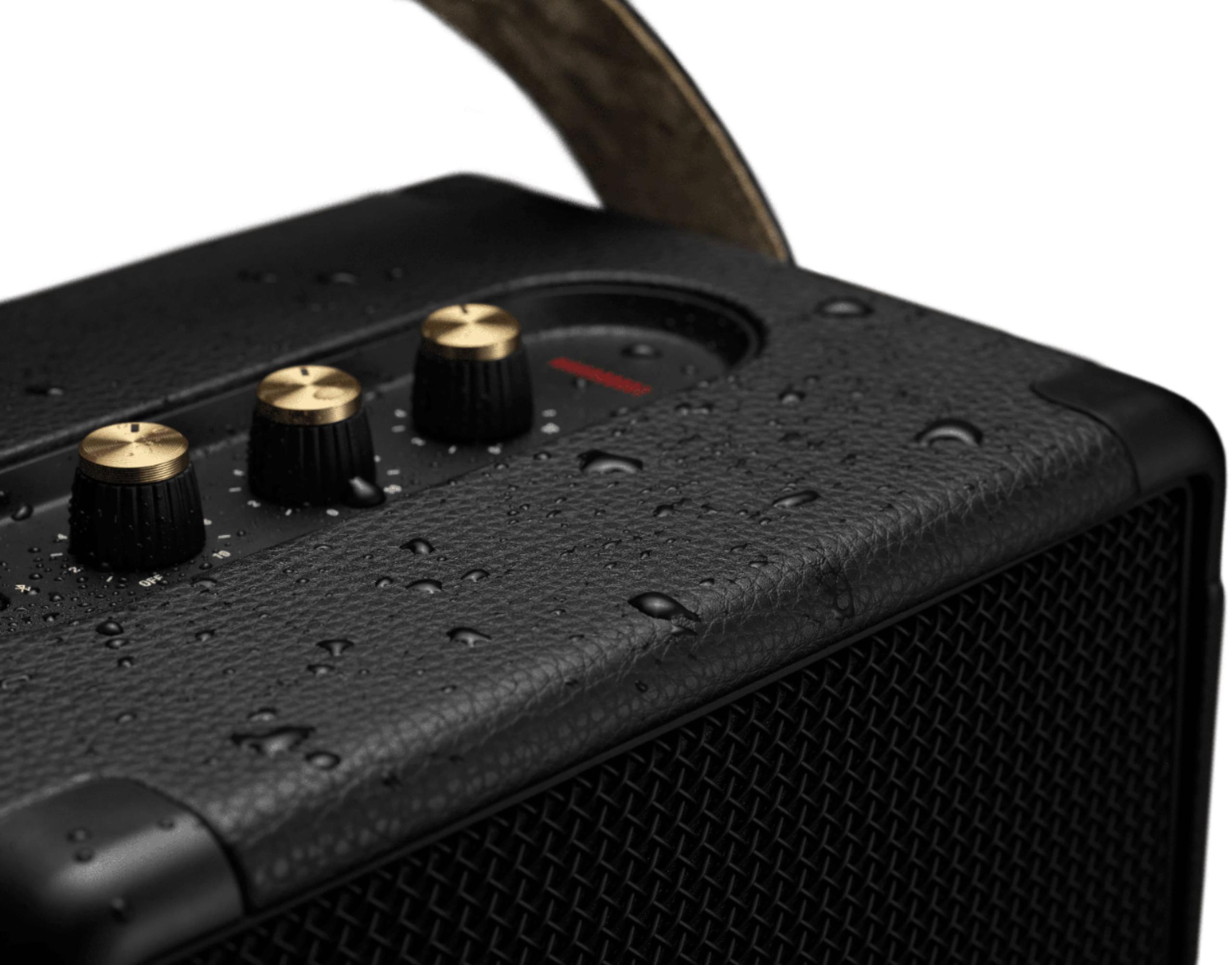
When it comes to premium Bluetooth speakers, Marshall has established itself as a leader in both home and portable audio. Today, we're comparing the newer Marshall Stanmore III ($379) and the Marshall Tufton ($299) - two impressive speakers with distinct purposes and capabilities.
The Marshall Stanmore III, released in August 2022, represents the latest iteration of Marshall's home speaker line. It brings several technological improvements over its predecessor, including Bluetooth 5.2 and advanced room compensation features. The Tufton, launched in May 2019, took a different approach by focusing on portability while maintaining Marshall's signature sound quality.
The fundamental distinction between these speakers lies in their intended use. The Stanmore III is designed as a permanent fixture in your home audio setup, while the Tufton serves as a premium portable solution that can move from room to room or venture outdoors.
Both speakers employ sophisticated sound systems, but their approaches differ significantly. The Stanmore III uses a two-way driver design with dedicated amplifiers: a 50-watt amp for the woofer and two 15-watt amps for the tweeters. This configuration delivers exceptional clarity across frequencies, with particularly impressive stereo imaging - the ability to create a sense of space and direction in the music.
The Tufton takes a different approach with its multi-directional sound design. It uses a three-way system with multiple drivers, including a rear-firing speaker that helps create a more immersive sound field. While this works brilliantly in outdoor settings where sound tends to dissipate quickly, it can sometimes result in slightly less precise imaging in indoor spaces.
Having tested both speakers extensively, I've found the Stanmore III offers superior detail and clarity for critical listening. However, the Tufton's sound signature works remarkably well for its intended use - outdoor gatherings and portable scenarios where sound dispersion is more important than pinpoint accuracy.
Both speakers offer 80 watts of total power, but they utilize this power differently. The Stanmore III's power distribution is optimized for room-filling sound in indoor environments. It includes Dynamic Loudness compensation, which automatically adjusts frequency response based on volume level - ensuring music sounds balanced whether you're listening at low volumes late at night or cranking it up for a party.
The Tufton's power handling is tuned for outdoor performance, where different challenges exist. Its sound signature emphasizes mid-bass frequencies that tend to get lost in outdoor settings, and its multi-directional design helps maintain consistent sound levels across a wider area.
The Stanmore III introduces several notable technical improvements:
The Tufton offers its own set of innovations:
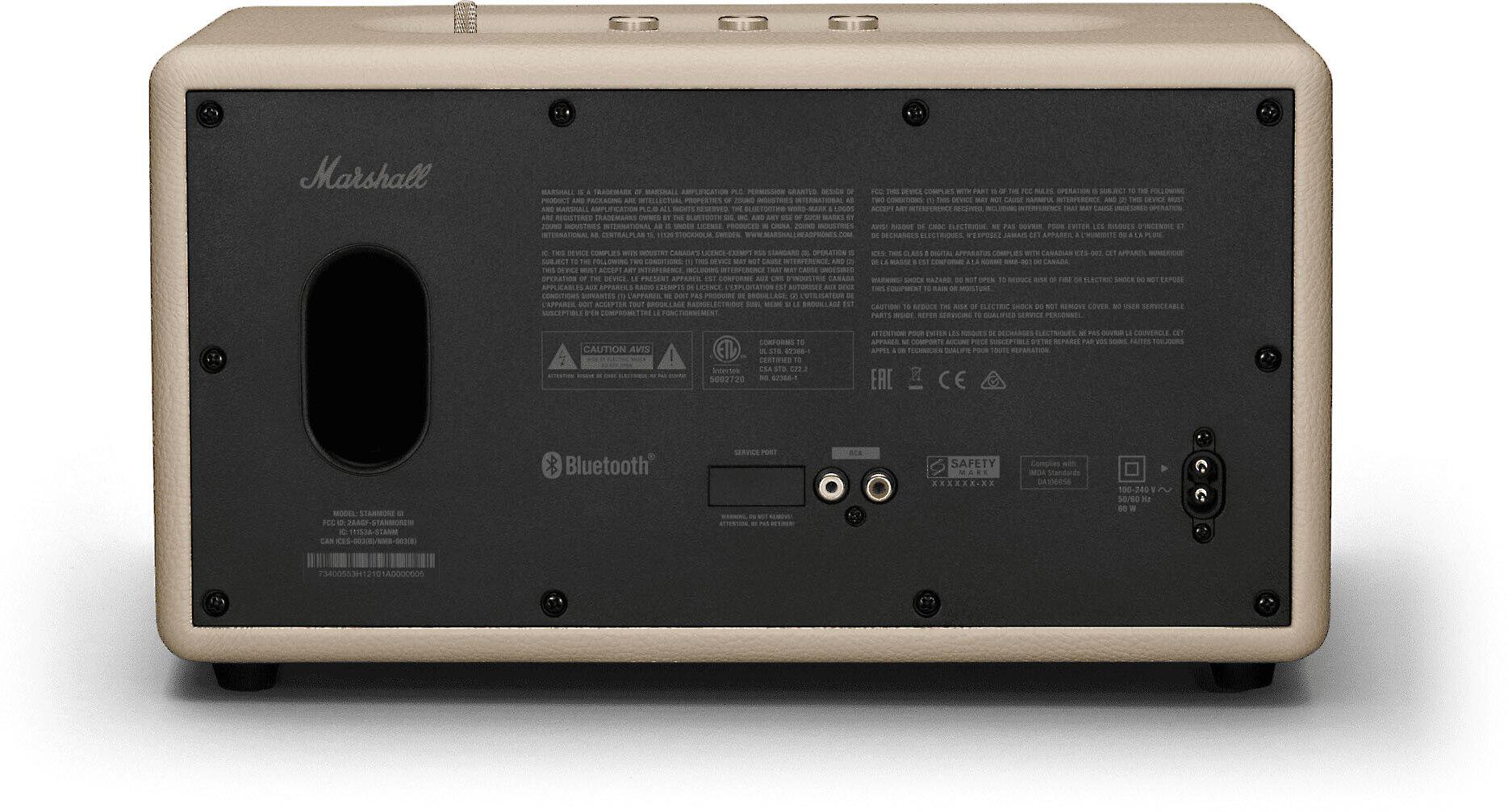
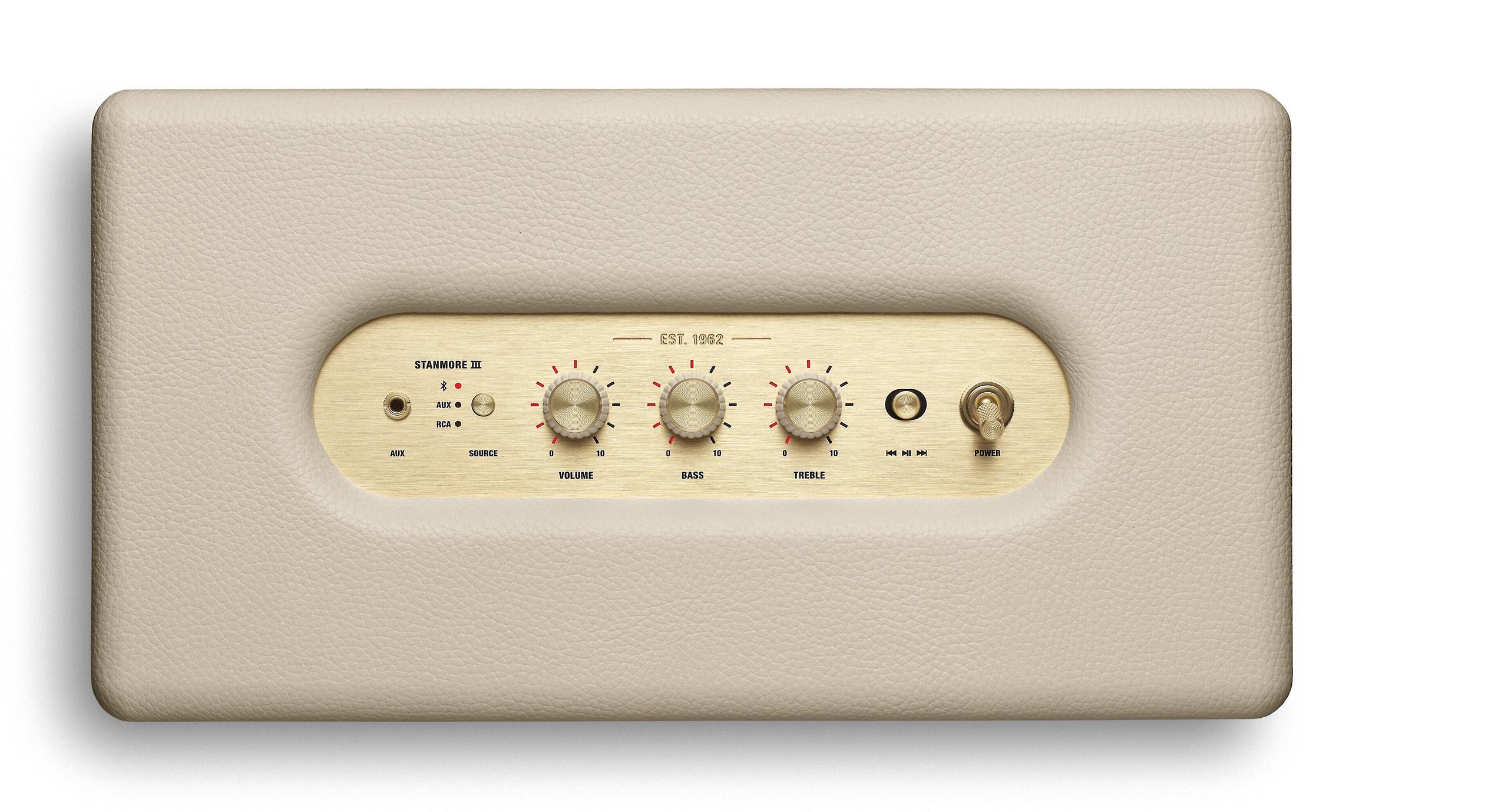
The Stanmore III excels in home theater applications, particularly as a high-quality TV speaker. Its RCA inputs allow direct connection to most TVs, and the speaker's detailed midrange ensures clear dialogue reproduction. The room compensation feature helps optimize sound based on placement, whether it's on a TV stand or bookshelf.
The Tufton, while capable of connecting to a TV via its 3.5mm input, isn't optimized for this use case. Its portable nature and lack of RCA inputs make it less suitable as a permanent home theater solution.
Both speakers handle music beautifully, but their strengths appear in different contexts. The Stanmore III delivers exceptional detail and clarity for genres ranging from classical to rock. Its stereo imaging creates a convincing soundstage that's particularly noticeable with well-recorded acoustic music.
The Tufton excels with music styles that benefit from its powerful bass response and wide sound dispersion. Electronic music, hip-hop, and rock sound particularly engaging on this speaker, especially in outdoor settings where its multi-directional design shines.
When considering value, it's essential to look beyond the price tags. The Stanmore III at $379 offers superior sound quality and connectivity options for home use. Its recent release also means it has the latest technology and will likely receive software updates for years to come.
The Tufton at $299 provides excellent value for those needing portability. Its durable construction, weather resistance, and long battery life make it a versatile option for various environments.
Choose the Stanmore III if:
Choose the Tufton if:
Both speakers support firmware updates through Marshall's app, ensuring they can receive new features and improvements over time. The Stanmore III's newer Bluetooth 5.2 implementation gives it an edge in future-proofing, particularly as new Bluetooth audio features become available.
After extensive testing and comparison, it's clear that both speakers excel in their intended roles. The Stanmore III represents the pinnacle of Marshall's home audio technology, while the Tufton offers a compelling portable solution without significantly compromising sound quality.
Your choice should ultimately depend on how you plan to use the speaker. If you're primarily looking for exceptional home audio quality and don't need portability, the Stanmore III is the clear winner. However, if you value flexibility and need a speaker that can move with you while still delivering impressive sound, the Tufton makes more sense despite its slightly older technology.
Both speakers carry Marshall's legendary build quality and attention to detail, ensuring whichever you choose will provide years of enjoyable listening. The decision ultimately comes down to your specific needs regarding portability versus optimal sound quality in a fixed location.
| Marshall Stanmore III | Marshall Tufton |
|---|---|
| Power Output - Determines maximum volume and sound clarity | |
| 80W (50W woofer, 2x15W tweeters) | 80W (40W woofer, 2x15W mid, 10W tweeter) |
| Frequency Response - Range of sound reproduction | |
| 45Hz - 20kHz (excellent for most music) | 40Hz - 20kHz (slightly deeper bass) |
| Connectivity - Options for connecting devices | |
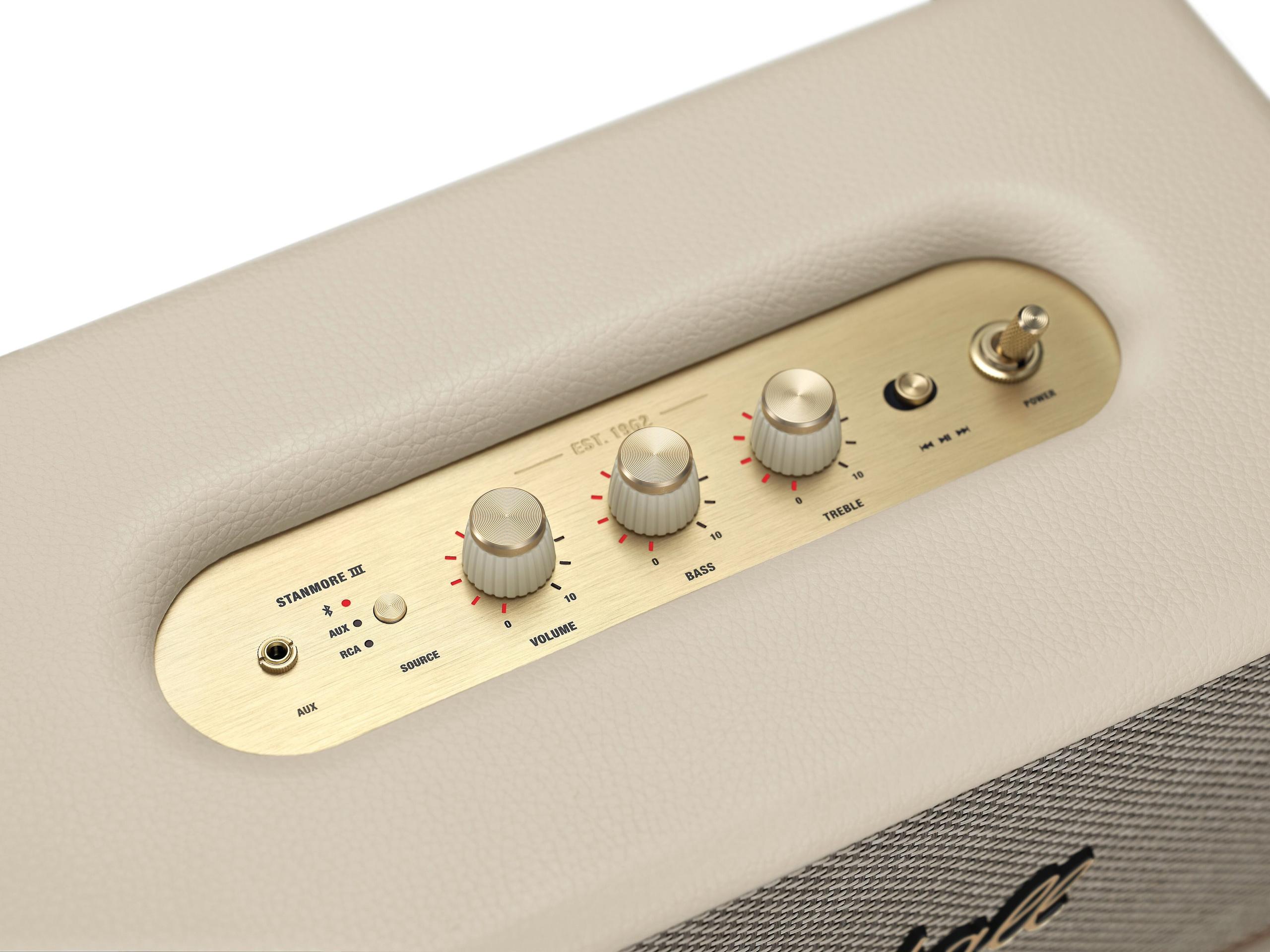
| Bluetooth 5.2, 3.5mm aux, RCA inputs | Bluetooth 5.0, 3.5mm aux input only |
| Portability Features - Flexibility of placement | |
| AC power only, meant for fixed location | 20+ hour battery, carry strap, IPX2 water resistance |
| Dimensions - Physical space requirements | |
| 13.8" x 8.1" x 8.4" (compact home unit) | 14.1" x 10.1" x 6.4" (larger but portable) |
| Weight - Impacts mobility | |
| 9.37 lbs (stationary design) | 10.8 lbs (heavier but includes battery) |
| Special Features - Enhanced functionality | |
| Dynamic loudness, room compensation, app control | Quick charge (4hrs play/20min charge), multi-directional sound |
| Price - Value consideration | |
| $379 (premium home speaker pricing) | $299 (competitive for portable premium audio) |
| Primary Use Case - Best application | |
| Dedicated home audio, home theater capability | Indoor/outdoor versatility, parties, travel |
| Sound Signature - Audio characteristics | |
| Precise stereo imaging, balanced sound profile | Wide dispersion, outdoor-optimized sound |
The Marshall Stanmore III is better for home use with its dedicated AC power, room compensation technology, and multiple input options including RCA. The Tufton is designed primarily for portable use, though it can work at home.
The Stanmore III costs $379, while the Tufton is priced at $299. The price difference reflects their different capabilities rather than overall quality.
The Marshall Tufton is specifically designed for outdoor use with IPX2 water resistance and battery power. The Stanmore III requires AC power and isn't weather-resistant, making it unsuitable for outdoor use.
The Stanmore III offers superior sound quality for critical listening with better stereo imaging and room-optimized sound. The Tufton focuses on wide sound dispersion and outdoor performance.
The Marshall Tufton offers 20+ hours of battery life and features quick charging. The Stanmore III doesn't have a battery and requires constant AC power.
The Marshall Tufton is better for parties due to its portability, outdoor capability, and multi-directional sound. The Stanmore III works well for indoor parties but lacks mobility.
The Stanmore III connects easily to TVs via RCA or 3.5mm inputs. The Tufton only offers 3.5mm input, making it less ideal for TV use.
The Stanmore III features newer Bluetooth 5.2 technology, while the Tufton uses Bluetooth 5.0. Both perform well, but the Stanmore III is more future-proof.
The Tufton can easily move between rooms thanks to its battery power and handle. The Stanmore III needs to remain plugged in, limiting its mobility.
The Marshall Tufton is more durable with weather resistance and rugged construction for portable use. The Stanmore III is well-built but designed for stationary indoor use.
Both the Stanmore III and Tufton work excellently with mobile devices via Bluetooth, offering easy connection and control through the Marshall app.
The Tufton at $299 offers better value if you need portability. The Stanmore III at $379 is better value for pure home audio quality.
We've done our best to create useful and informative comparisons to help you decide what product to buy. Our research uses advanced automated methods to create this comparison and perfection is not possible - please contact us for corrections or questions. These are the sites we've researched in the creation of this article: techgadgetscanada.com - camelcamelcamel.com - crutchfield.com - bestbuy.com - dxomark.com - crutchfield.com - crutchfield.com - marshall.com - marshall-production-1.mobify-storefront.com - exhibit.tech - ooberpad.com - av-connection.com - techradar.com - youtube.com - youtube.com - bestbuy.com - trustedreviews.com - crutchfield.com - eriksonconsumer.com - youtube.com - runbazaar.com - marshall.com

Privacy Policy
Terms and Conditions - Affiliate Policy
Home Security
© Copyright 2008-2026.
11816 Inwood Rd #1211, Dallas, TX 75244