

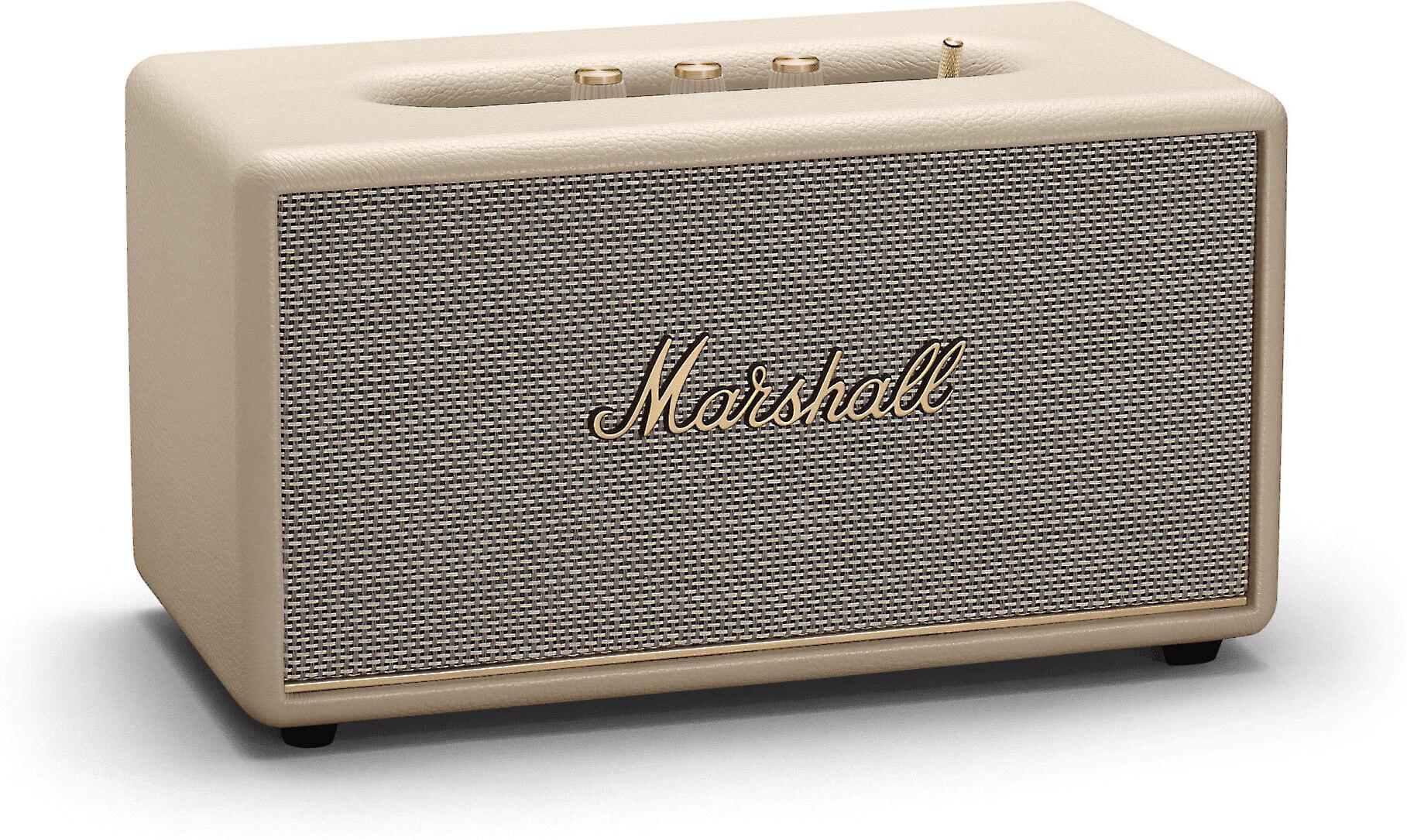
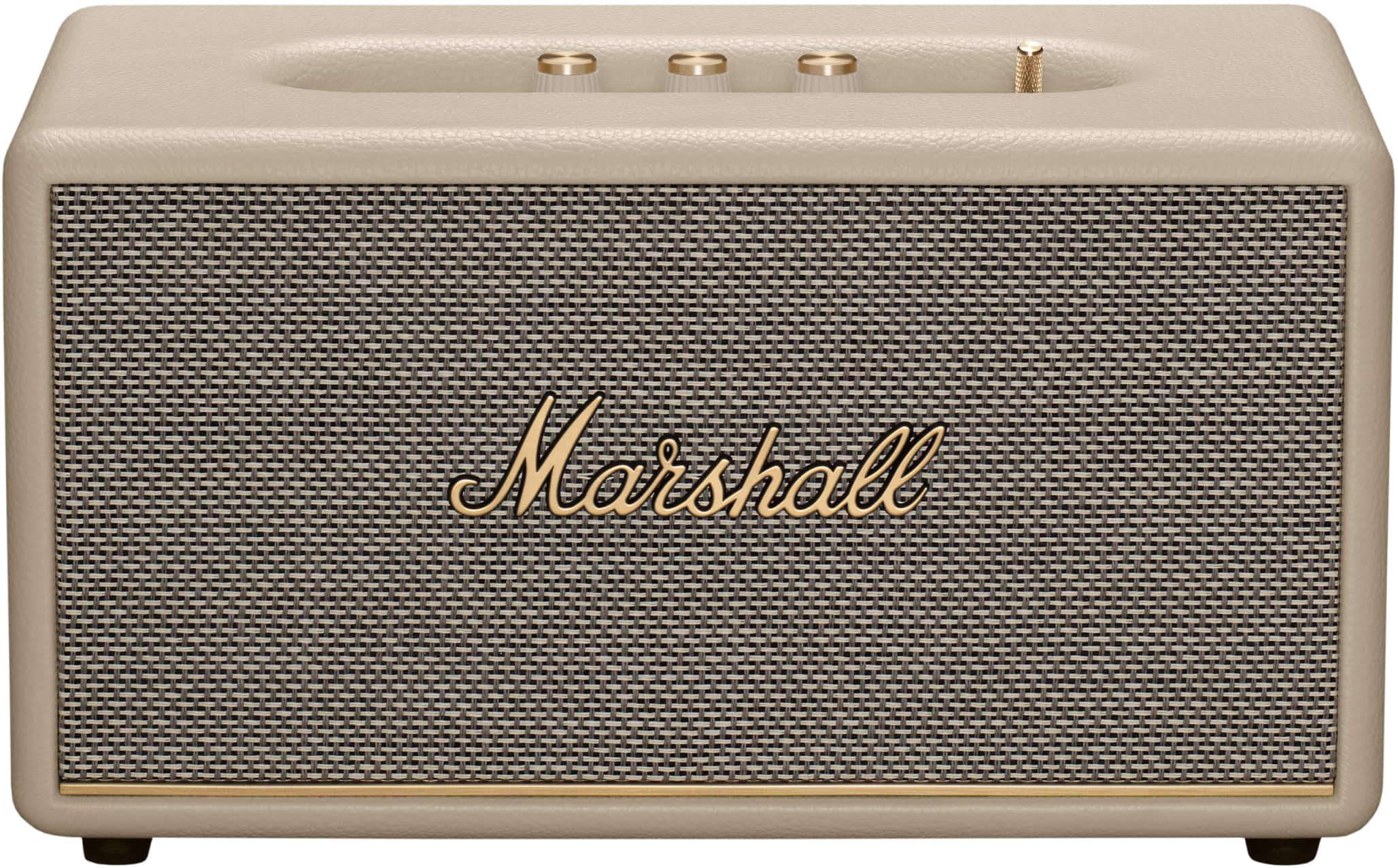
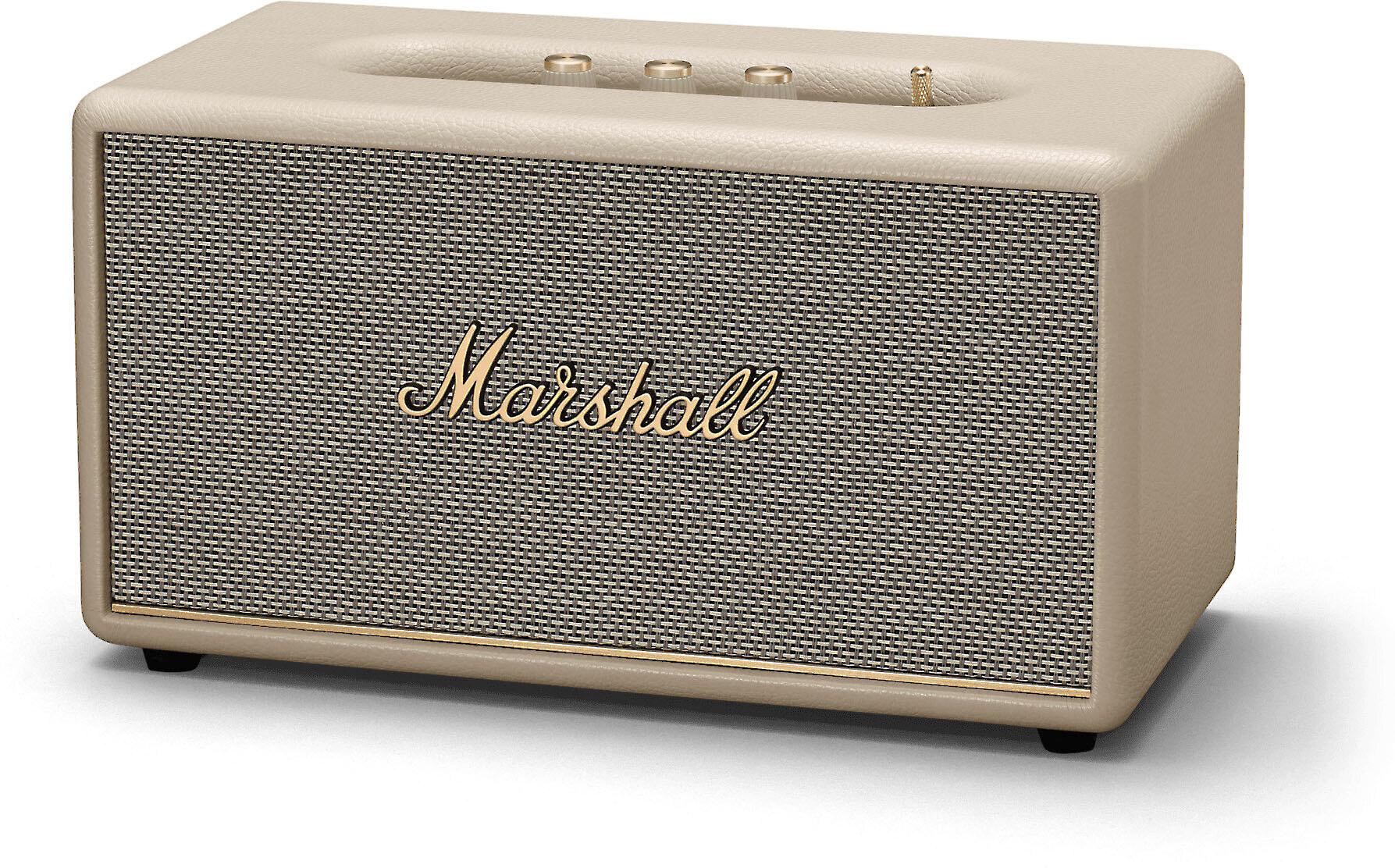
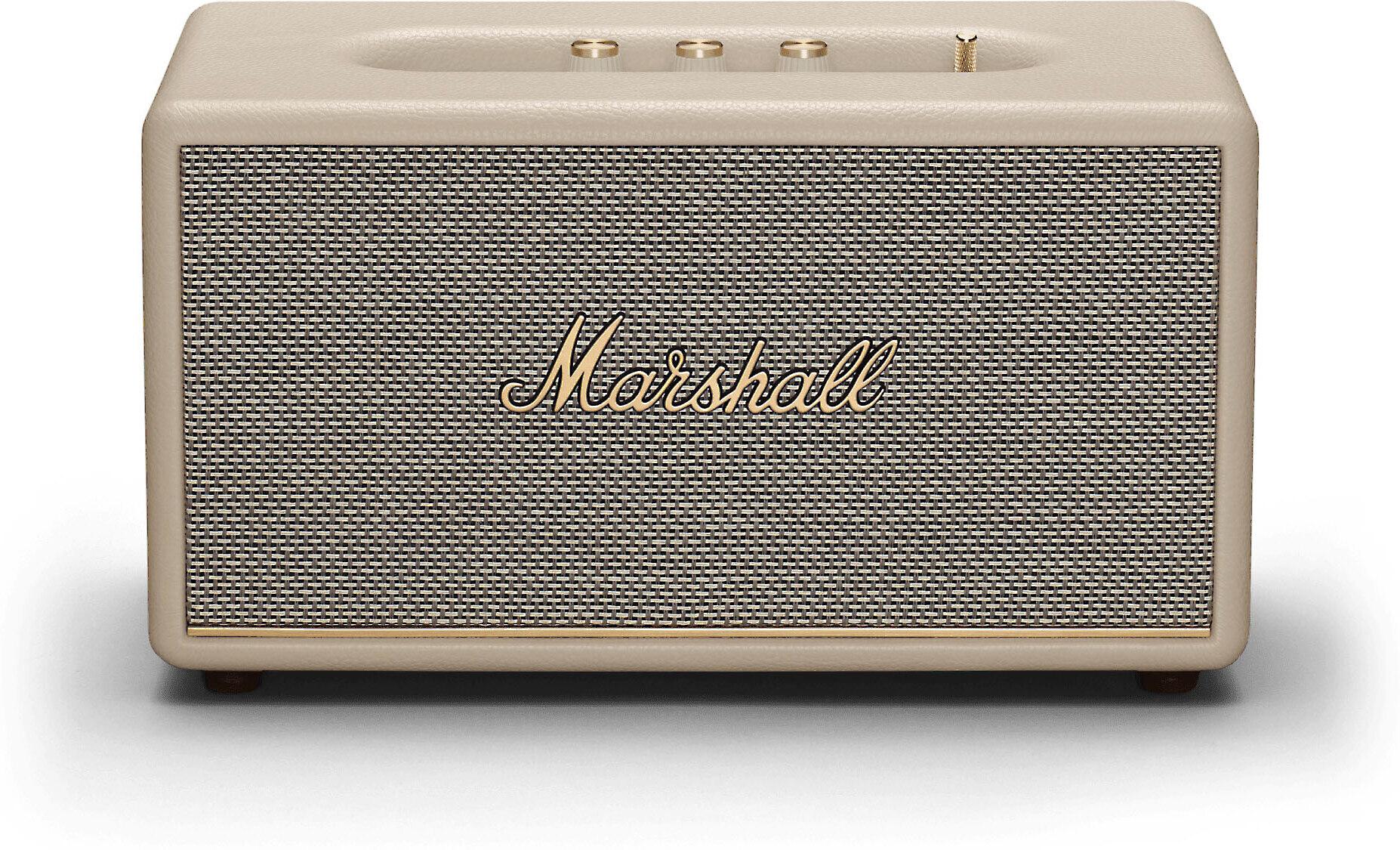
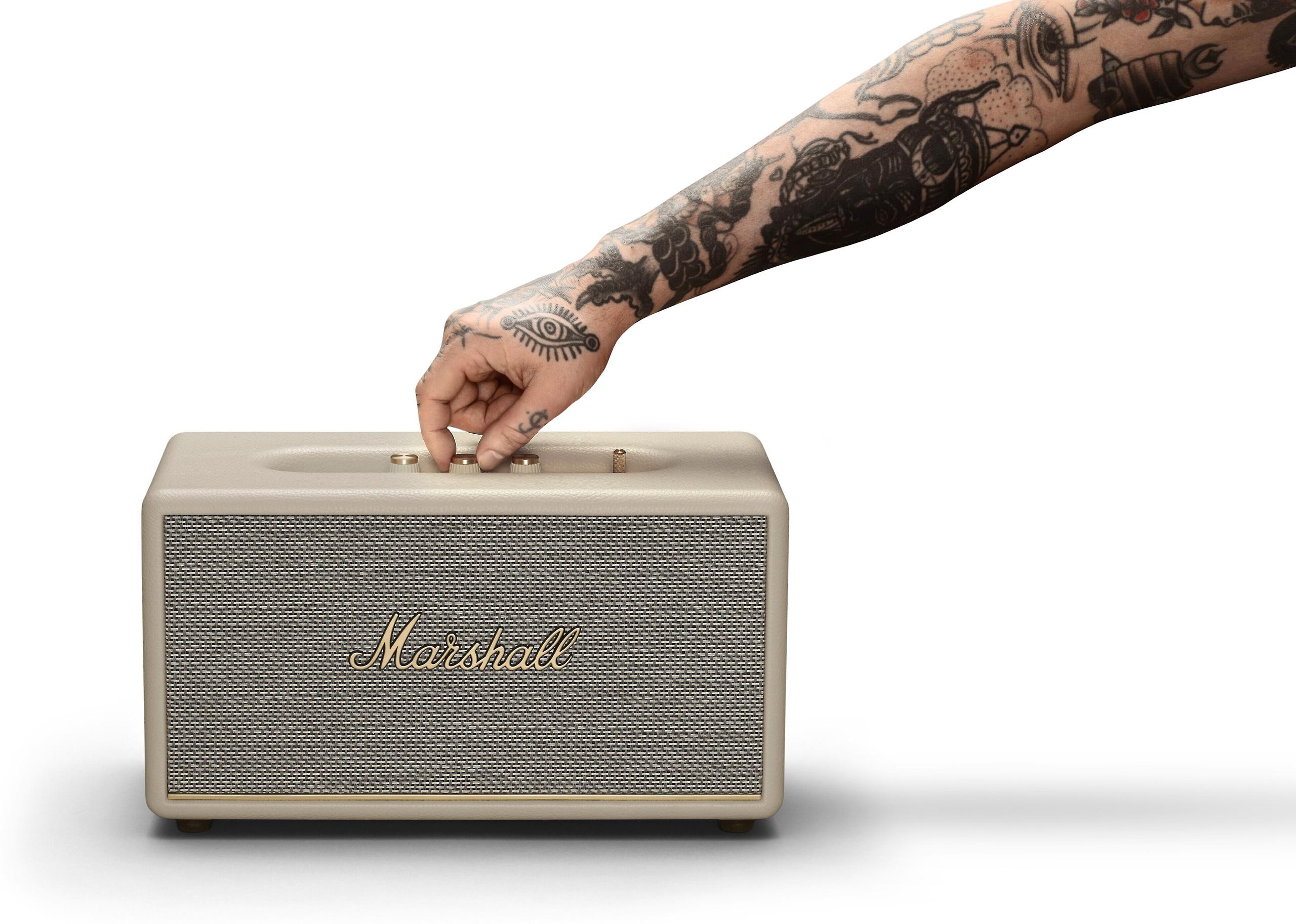
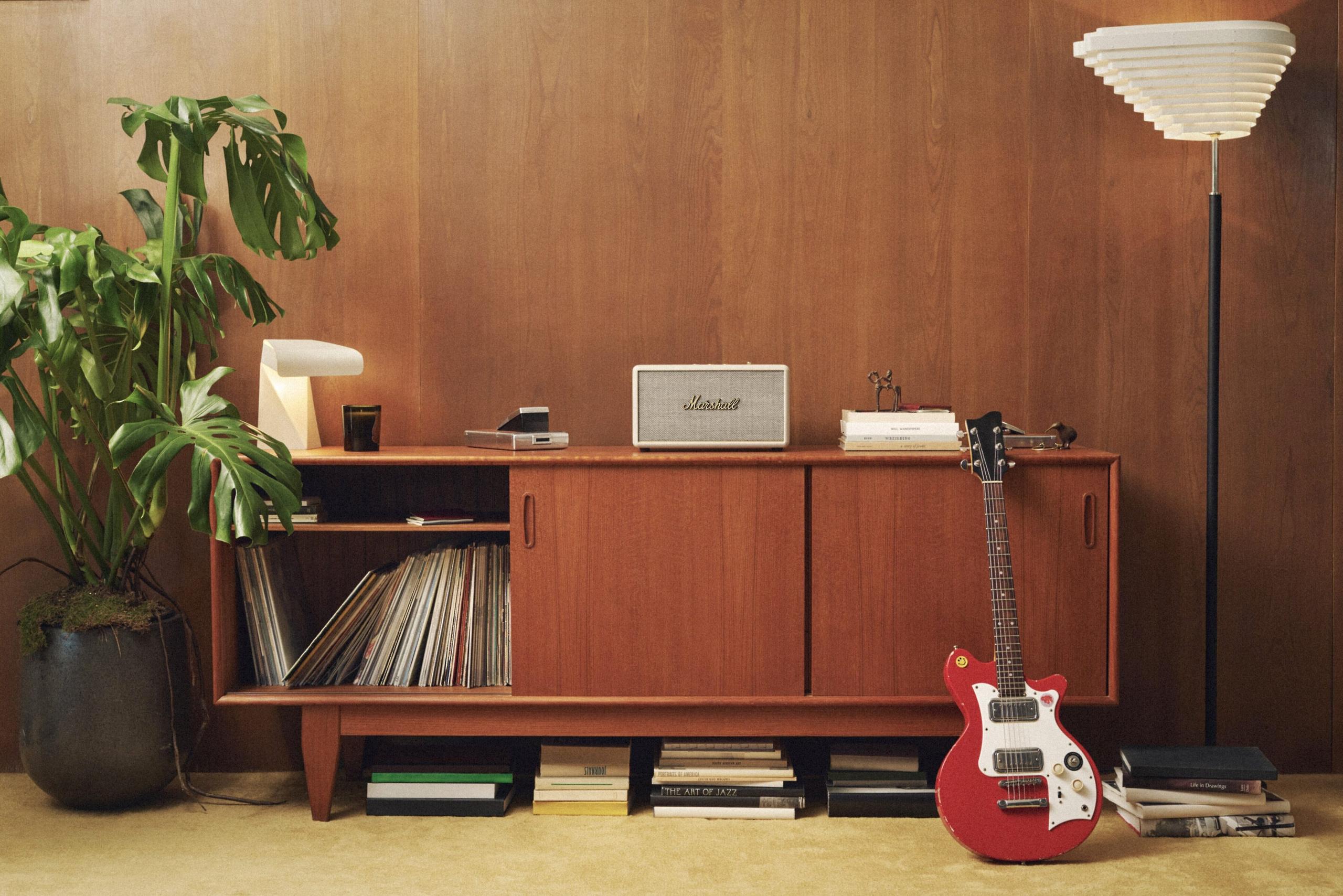


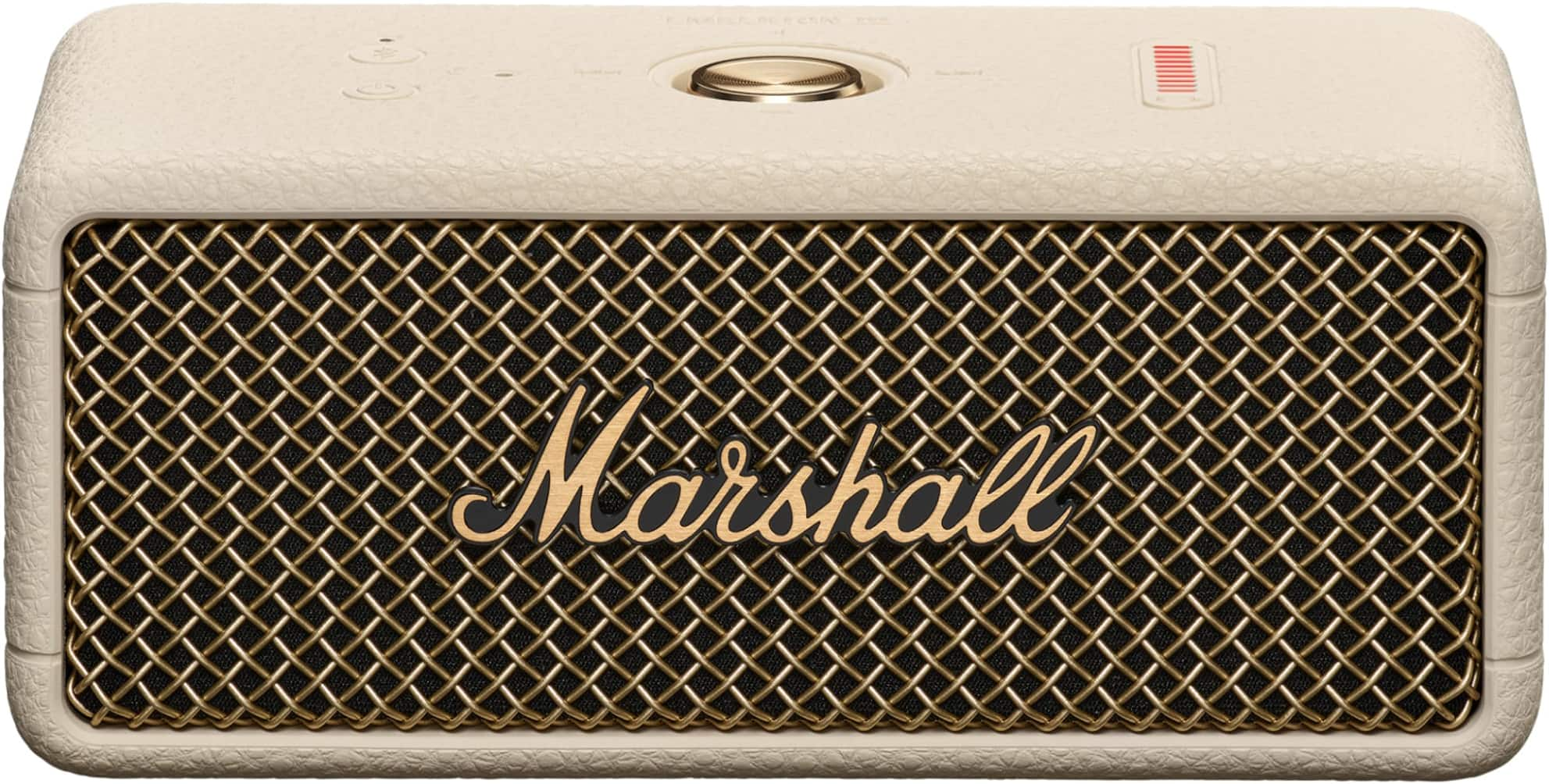
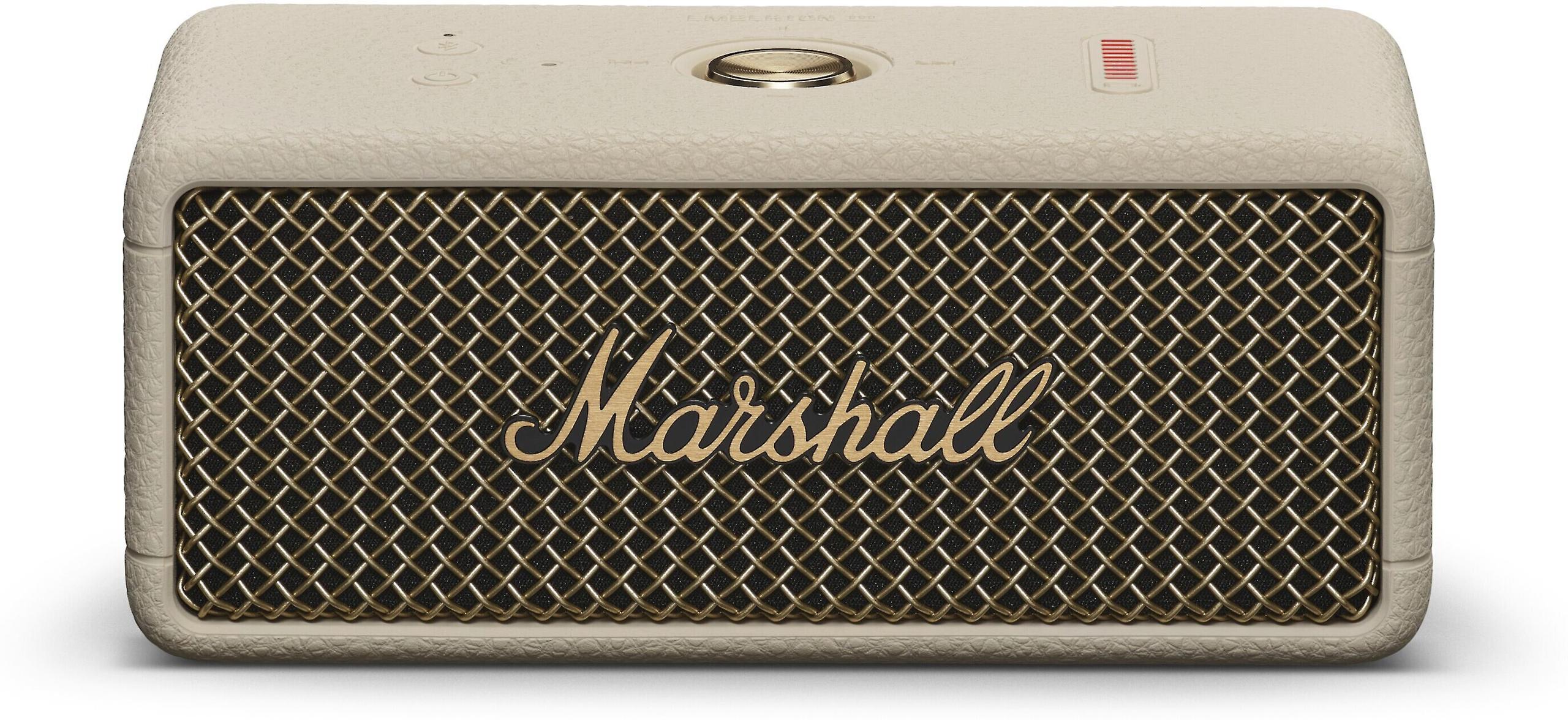
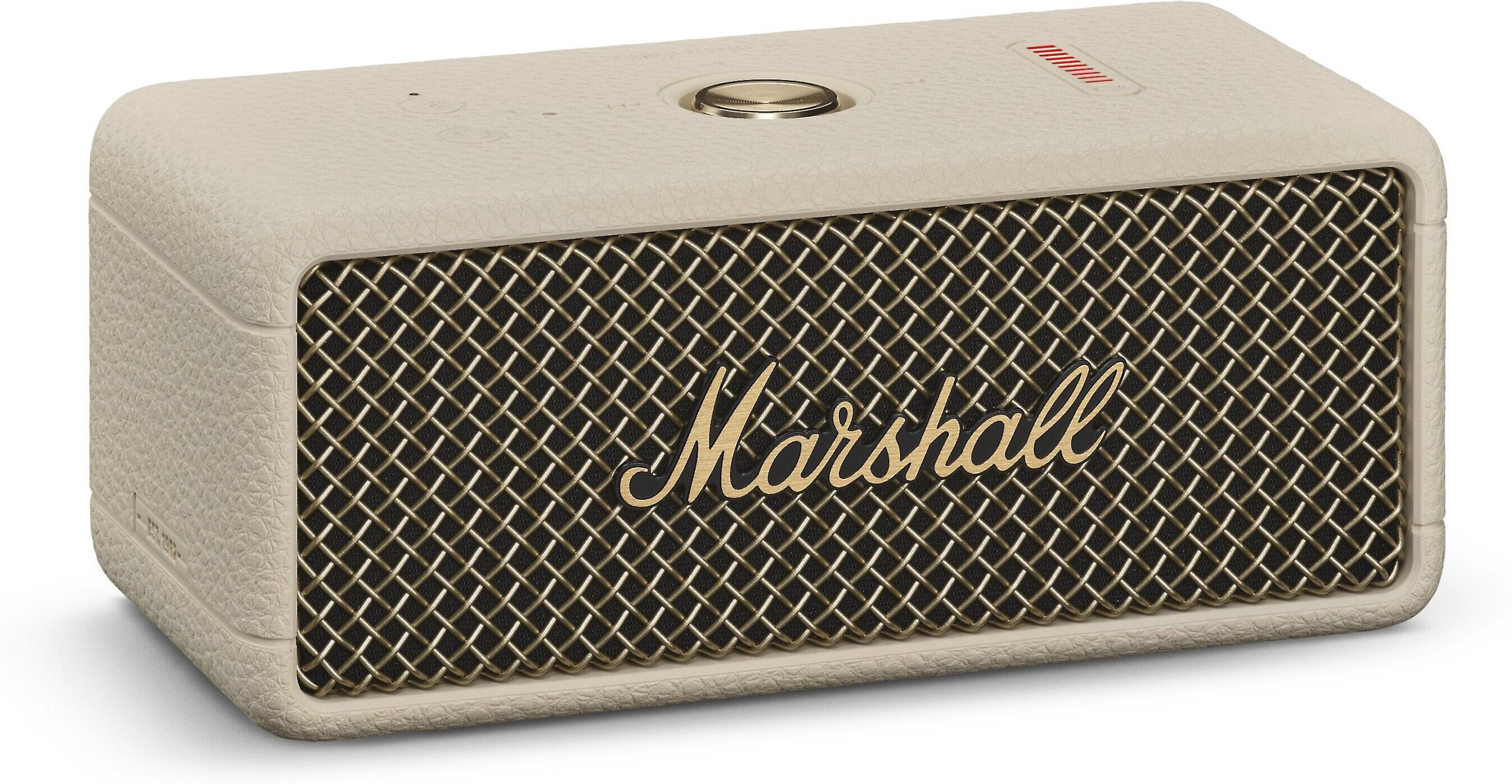




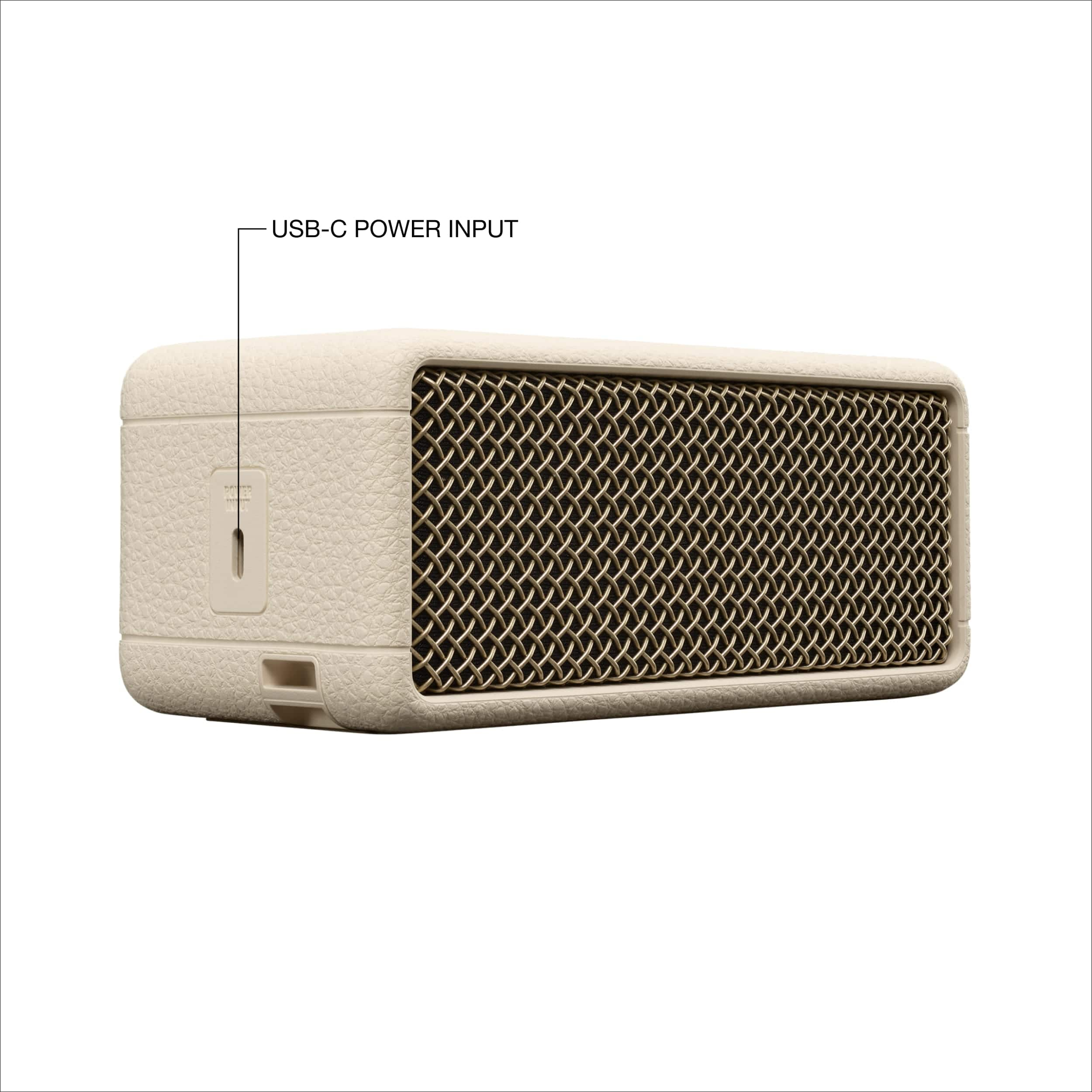
When Marshall released the Stanmore III ($379) in September 2022, they aimed to create the ultimate home Bluetooth speaker. Less than a year later, they launched the Emberton III ($169) in August 2023, targeting the portable market. While both speakers carry the iconic Marshall brand and similar styling, they serve completely different purposes. Let's dive into what makes each unique and help you decide which one best fits your needs.
Bluetooth speakers have evolved far beyond simple wireless music players. Today's premium models pack sophisticated audio processing, multiple amplifiers, and smart features that rival traditional home audio systems. The key is understanding whether you need a dedicated home speaker or a portable unit you can take anywhere.
For home use, you'll want to prioritize sound quality, room-filling capability, and connectivity options. Portable speakers need to balance sound quality with battery life, durability, and size. Let's see how these Marshall offerings handle these different demands.
The Stanmore III truly shines here with its 80-watt system split across three amplifiers. It uses a dedicated 50-watt amp for the 5" woofer (the speaker that handles bass frequencies) and two 15-watt amps for the tweeters (which handle high frequencies). This separation allows each speaker to focus on its specific frequency range, resulting in clearer, more detailed sound.
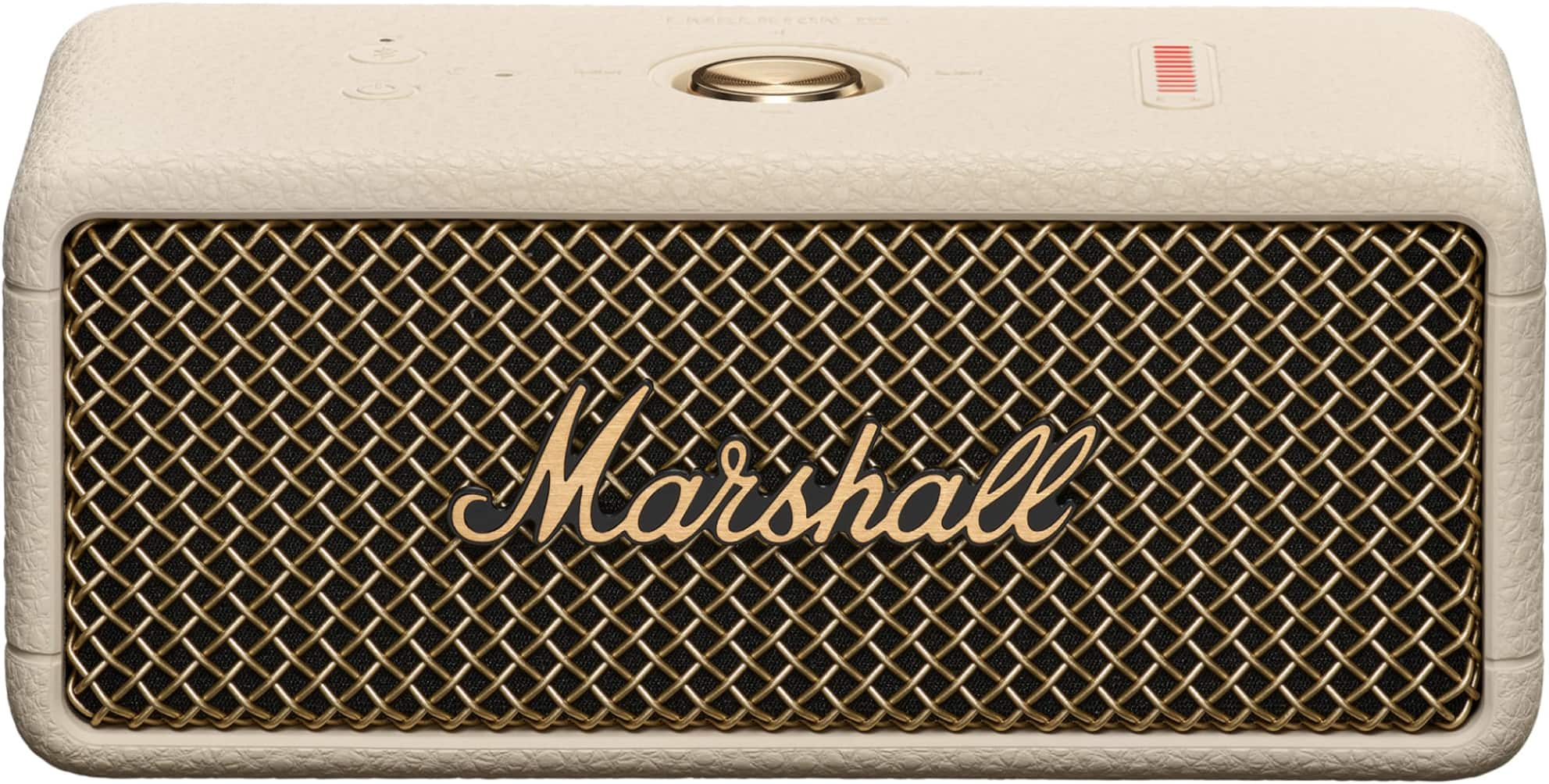
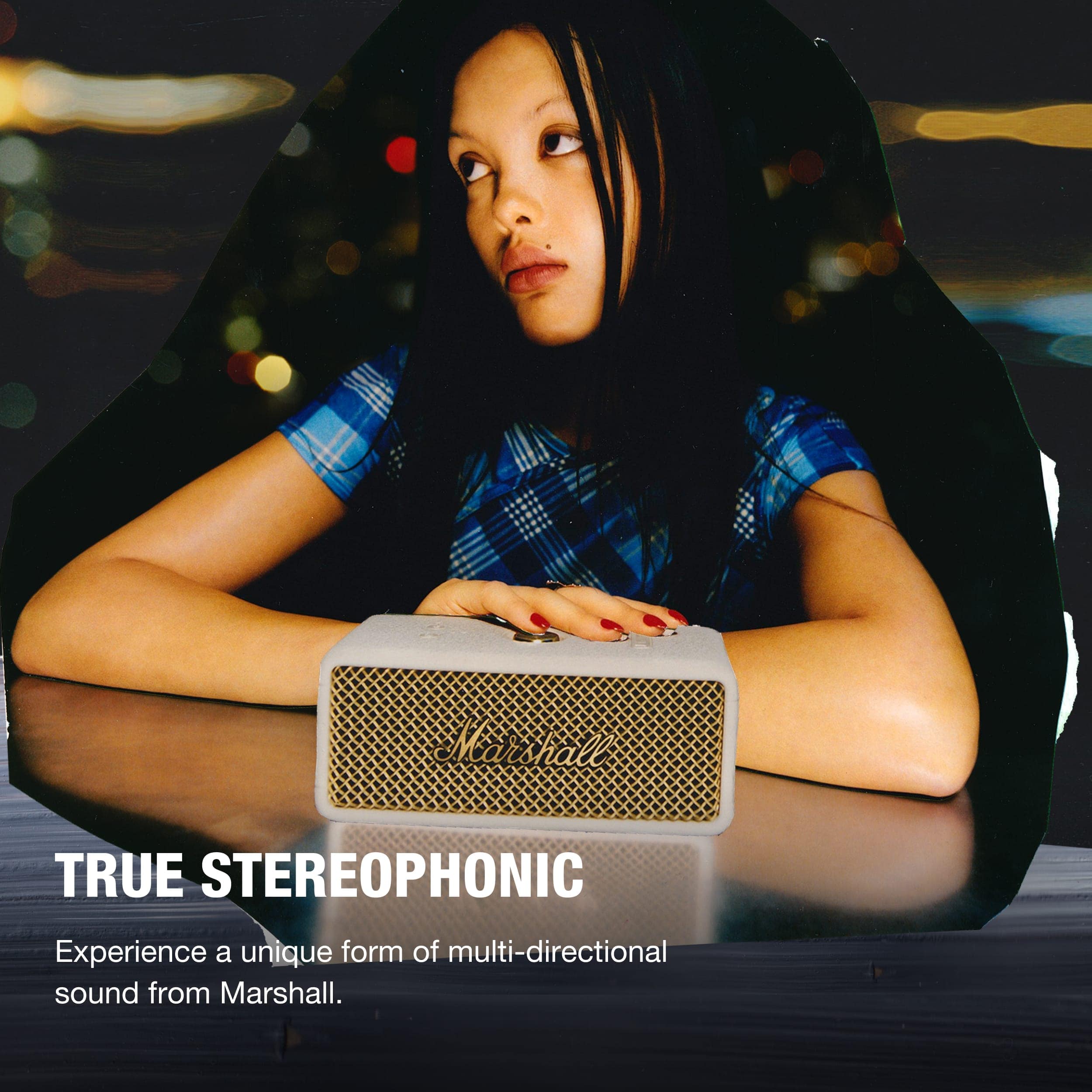
The Emberton III takes a different approach, using two 2" full-range drivers paired with passive radiators. Passive radiators are unpowered speakers that move in response to the air pressure from the powered drivers, helping produce better bass in a small enclosure. While it can't match the raw power of the Stanmore III, the Emberton's True Stereophonic technology creates impressive 360-degree sound that works well for outdoor gatherings or small rooms.
Having tested both speakers extensively, the differences in audio quality are clear. The Stanmore III's frequency response of 45Hz-20kHz means it can reproduce deeper bass notes that you can feel, making it excellent for movies and bass-heavy music. The separate tweeters provide crisp, detailed highs that bring out subtle elements in complex recordings.
The Emberton III's 65Hz-20kHz range means it can't hit those lowest bass notes, but it compensates with well-balanced sound that works great for most music genres. Its Dynamic Loudness feature (which automatically adjusts tone based on volume) helps maintain sound quality even at lower volumes.
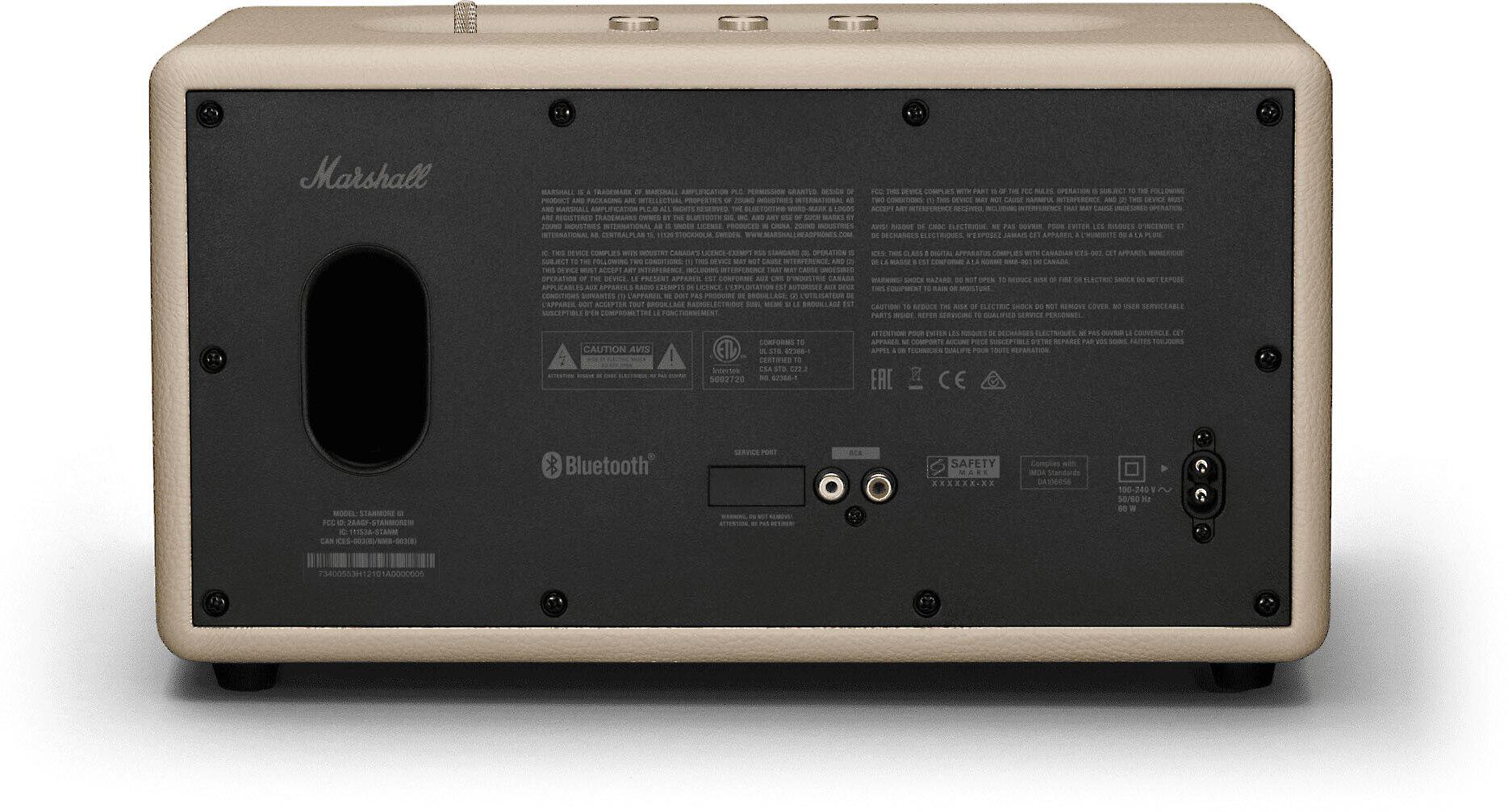
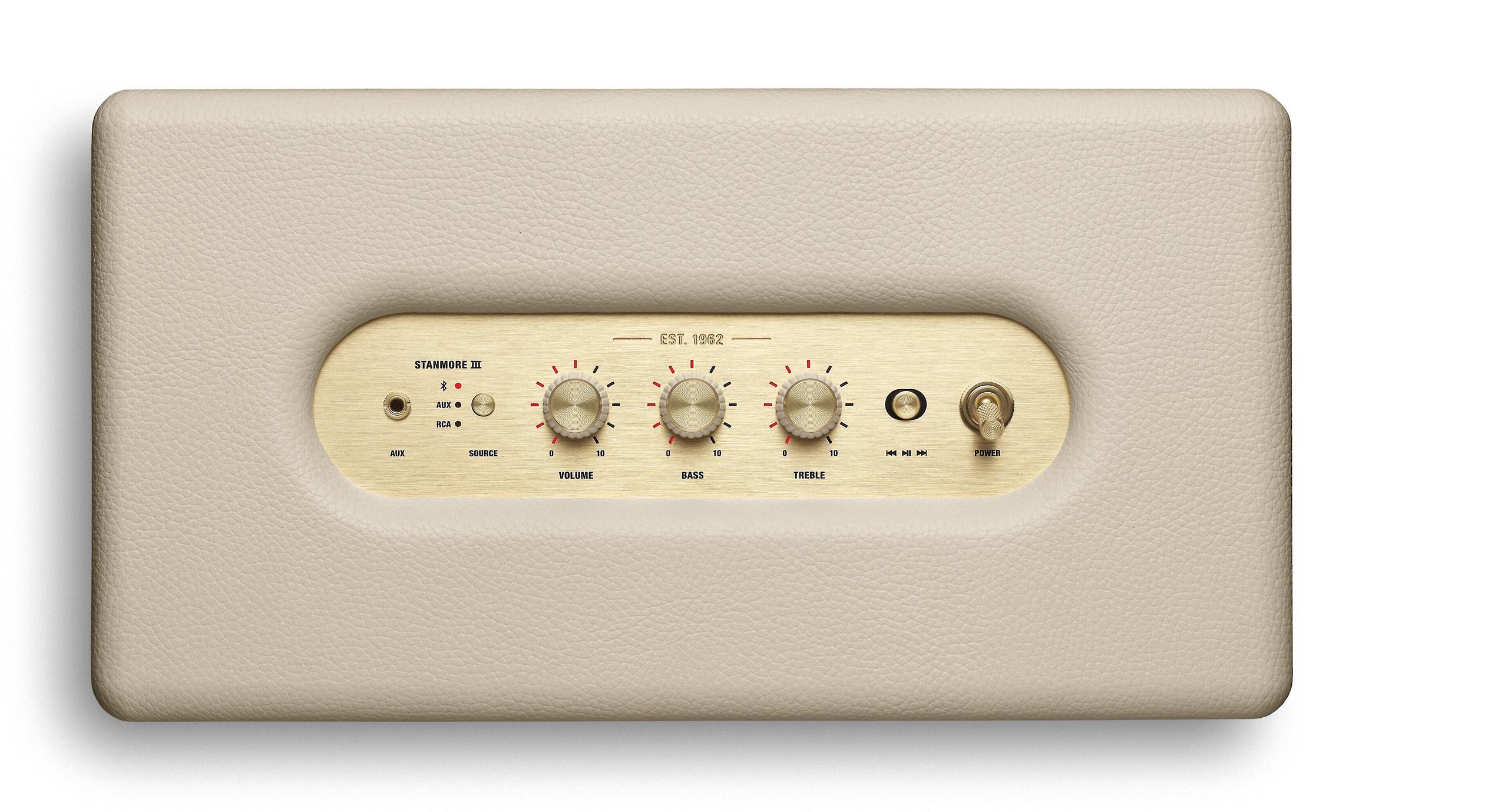
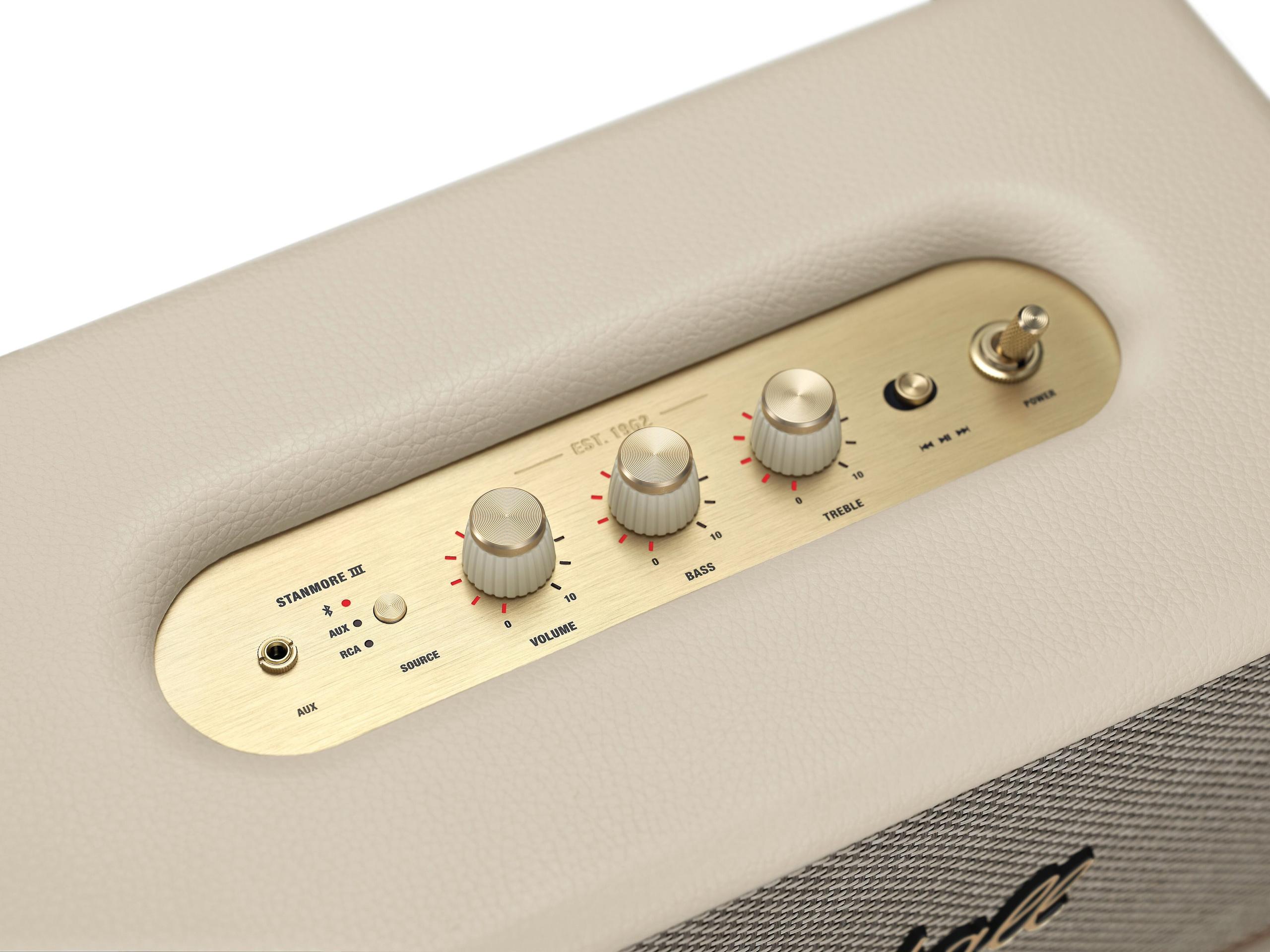
Both speakers offer Bluetooth connectivity, but there are important differences. The Stanmore III uses Bluetooth 5.2 and includes traditional wired inputs (3.5mm aux and RCA), making it more versatile for home theater use. You could connect it to your TV, turntable, or other audio sources.
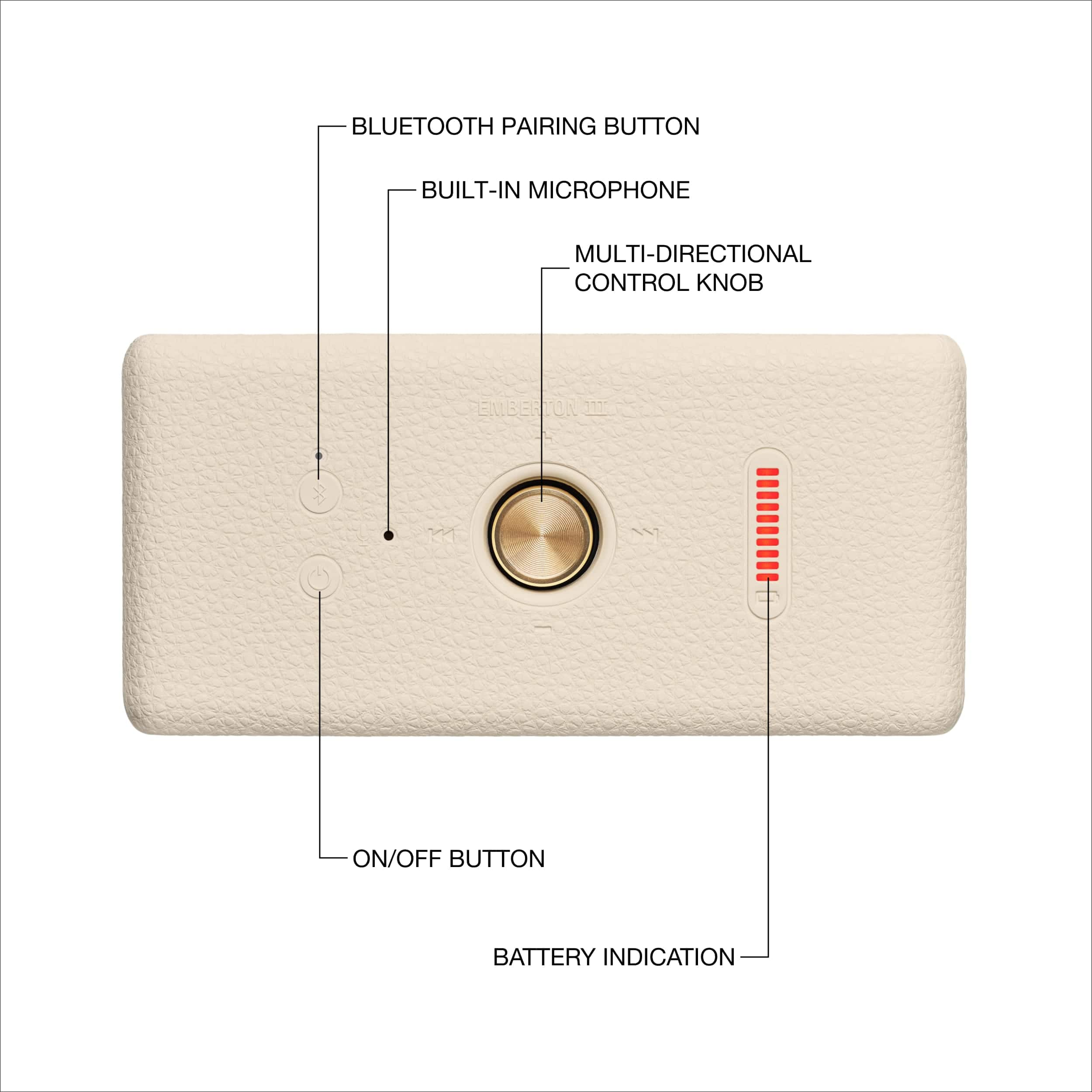
The Emberton III features newer Bluetooth 5.3 LE (Low Energy) technology, which improves battery efficiency and will support Auracast - a feature coming via software update that will let you broadcast audio to multiple compatible speakers simultaneously. It also includes a built-in microphone for hands-free calls, something the Stanmore III lacks.
This is where the speakers' different design philosophies become most apparent. The Stanmore III is a substantial piece of equipment at 9.37 pounds, designed to be placed in your home and left there. It requires constant power and isn't weather-resistant.
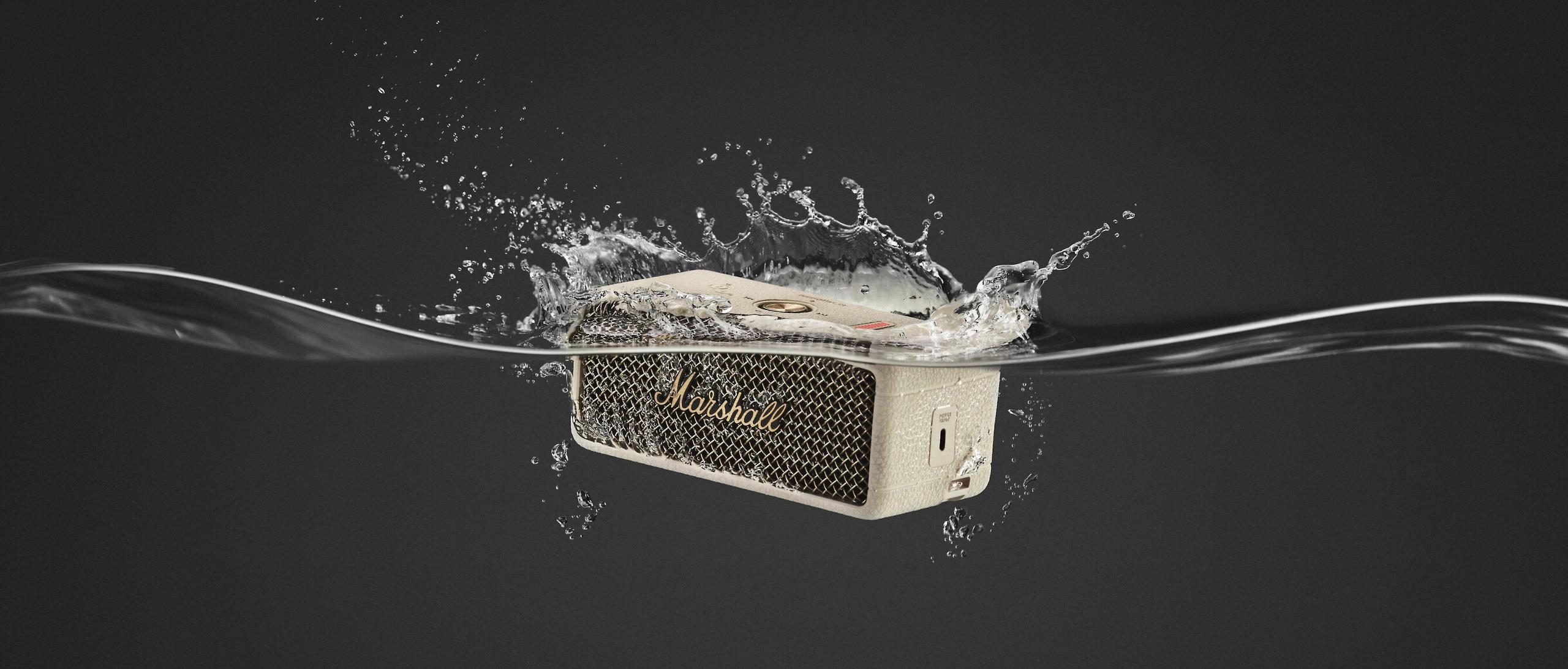
The Emberton III, however, is built for adventure. Its IP67 rating means it's fully dustproof and can be submerged in water up to 1 meter deep for 30 minutes. At just 1.5 pounds, you can easily toss it in a bag. The 32-hour battery life is impressive, and quick charging gives you 6 hours of playback from a 20-minute charge.
If you're considering either speaker for home theater use, the Stanmore III is the clear choice. Its RCA inputs allow direct connection to your TV or audio receiver, and the powerful bass makes movie soundtracks more impactful. The speaker's placement compensation feature adjusts the sound based on nearby surfaces, helpful when positioning it near walls or in entertainment centers.
The Emberton III wasn't designed for home theater use, though it could work in a pinch for improving TV sound in a small room or temporary setup.
The Stanmore III justifies its $379 price tag with superior sound quality, multiple input options, and room-filling capability. If you're setting up a primary music system or want to enhance your TV's audio, it's a solid investment that should last many years.
At $169, the Emberton III offers excellent value for a portable speaker. Its combination of durability, long battery life, and good sound quality makes it a versatile choice for anyone who wants music on the go.
Choose the Stanmore III if:
Choose the Emberton III if:
Both speakers excel at their intended purposes. The Stanmore III is a fantastic home speaker that can serve as the centerpiece of your audio system. The Emberton III is a highly capable portable speaker that can handle almost any environment while delivering impressive sound for its size.
Remember that comparing them directly on specifications alone misses the point - they're designed for different uses. Consider your primary listening environment and needs when making your choice. Either way, you're getting Marshall's legendary sound quality and iconic design, just packaged differently for different purposes.
| Marshall Stanmore III ($379) | Marshall Emberton III ($169) |
|---|---|
| Audio Power - Determines max volume and sound clarity | |
| 80W total (50W woofer + 2x15W tweeters) | Two 2" full-range drivers (power not disclosed) |
| Frequency Response - Range of sounds speaker can reproduce | |
| 45-20,000 Hz (deeper bass, fuller sound) | 65-20,000 Hz (less bass extension) |
| Size & Weight - Impacts placement flexibility and portability | |
| 13.8" x 8.1" x 8.4", 9.37 lbs (stationary use) | 6.3" x 2.7" x 3", 1.5 lbs (highly portable) |
| Connectivity - Available input options | |
| Bluetooth 5.2, 3.5mm aux, RCA inputs | Bluetooth 5.3 LE only |
| Battery Life - Determines mobile usage time | |
| None (AC power only) | 32+ hours, 20-min charge = 6 hours playback |
| Environmental Protection - Outdoor usability | |
| Indoor use only | IP67 waterproof/dustproof rated |
| Sound Features - Audio processing capabilities | |
| Dynamic Loudness, placement compensation, stereo sound | True Stereophonic 360° sound, Dynamic Loudness |
| Controls & App Features - Ease of use and customization | |
| Physical knobs for volume/bass/treble, extensive app EQ | Multi-function control knob, basic app EQ presets |
| Additional Features - Extra functionality | |
| Multiple device connection, premium materials | Built-in mic, Auracast ready (future update) |
| Best Use Case - Primary intended purpose | |
| Primary home audio system, home theater enhancement | Portable audio, outdoor use, travel |
The Marshall Stanmore III ($379) is significantly better for home use, with more power, deeper bass, and multiple input options. The Emberton III ($169) is designed primarily for portable use.
The main difference is their intended use - the Stanmore III is a powerful home speaker, while the Emberton III is a portable, waterproof speaker designed for on-the-go use.
The Stanmore III has superior sound quality with 80W total power and deeper bass response. However, the Emberton III offers impressive sound quality for its portable size.
The Emberton III is specifically designed for outdoor use with IP67 waterproofing. The Stanmore III is not weather-resistant and should only be used indoors.
Only the Emberton III has a battery, lasting 32+ hours per charge. The Stanmore III requires constant AC power.
The Stanmore III is better for indoor parties with its powerful sound. The Emberton III works well for smaller outdoor gatherings.
The Stanmore III can connect to TVs via its RCA or 3.5mm inputs. The Emberton III only offers Bluetooth connectivity.
The Emberton III is more versatile in terms of where you can use it, while the Stanmore III offers more connection options.
The Stanmore III costs $379, while the Emberton III is priced at $169 - a $210 difference.
Both the Stanmore III and Emberton III support multiple device connections via Bluetooth.
The Stanmore III has significantly better bass response with its 50W woofer and lower frequency range (45Hz vs 65Hz).
Both speakers are easy to set up. The Stanmore III needs to be plugged in and connected, while the Emberton III just needs to be charged and paired via Bluetooth.
We've done our best to create useful and informative comparisons to help you decide what product to buy. Our research uses advanced automated methods to create this comparison and perfection is not possible - please contact us for corrections or questions. These are the sites we've researched in the creation of this article: techgadgetscanada.com - camelcamelcamel.com - crutchfield.com - bestbuy.com - dxomark.com - crutchfield.com - crutchfield.com - marshall.com - marshall-production-1.mobify-storefront.com - exhibit.tech - ooberpad.com - av-connection.com - techradar.com - bgr.com - androidcentral.com - crutchfield.com - goodhousekeeping.com - bhphotovideo.com - youtube.com - youtube.com - timesofindia.indiatimes.com - bestbuy.com - group.marshall.com

Privacy Policy
Terms and Conditions - Affiliate Policy
Home Security
© Copyright 2008-2026.
11816 Inwood Rd #1211, Dallas, TX 75244