

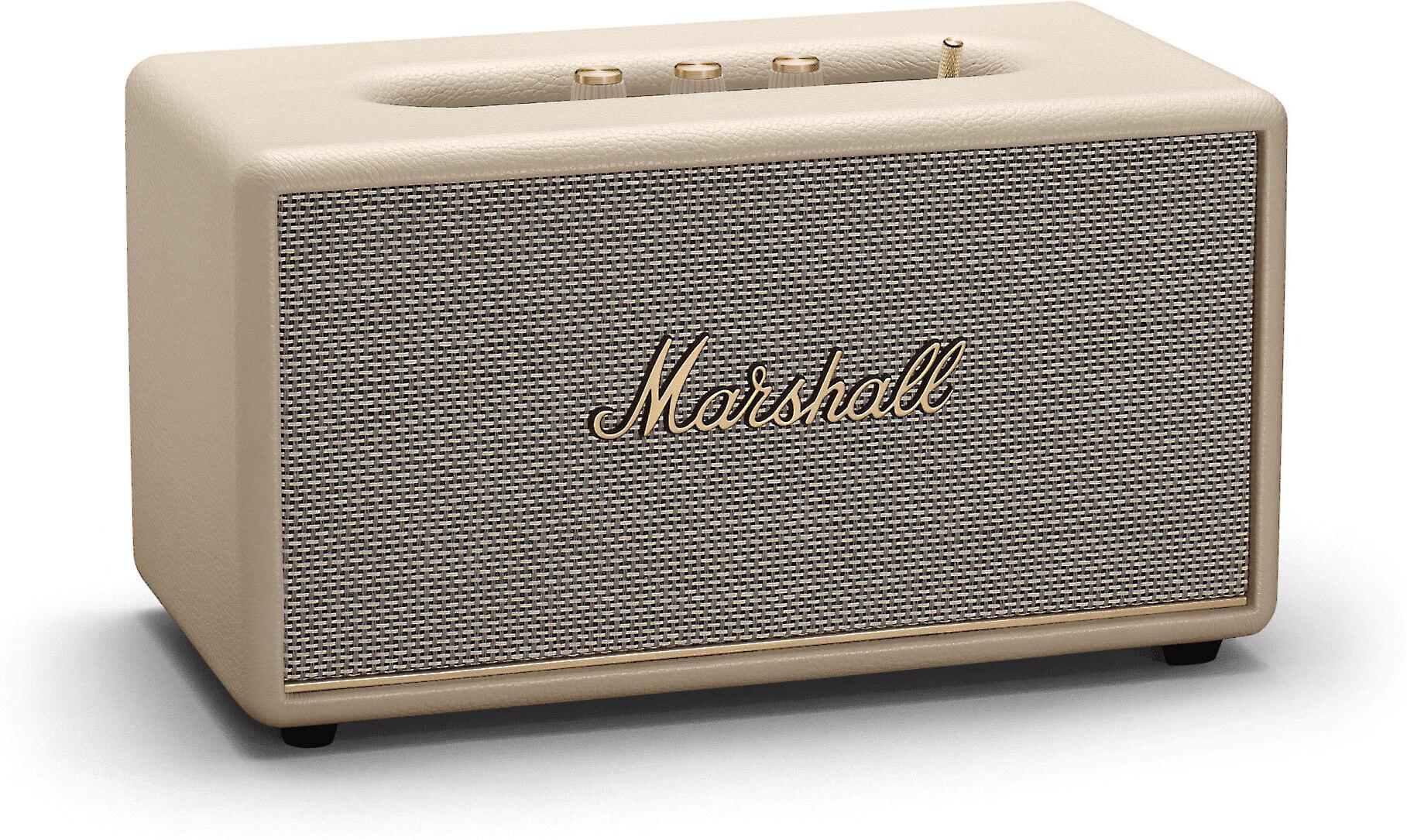
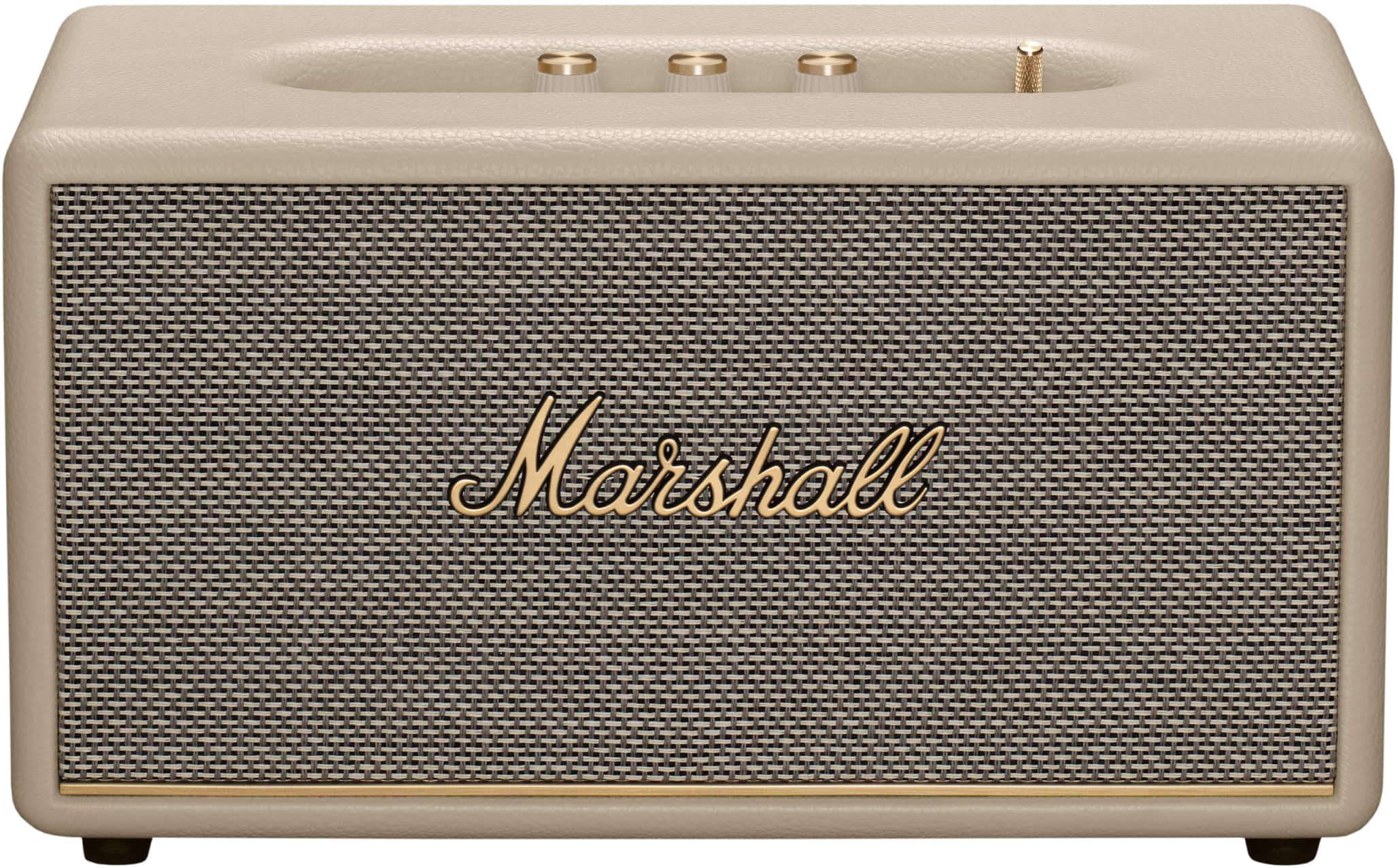
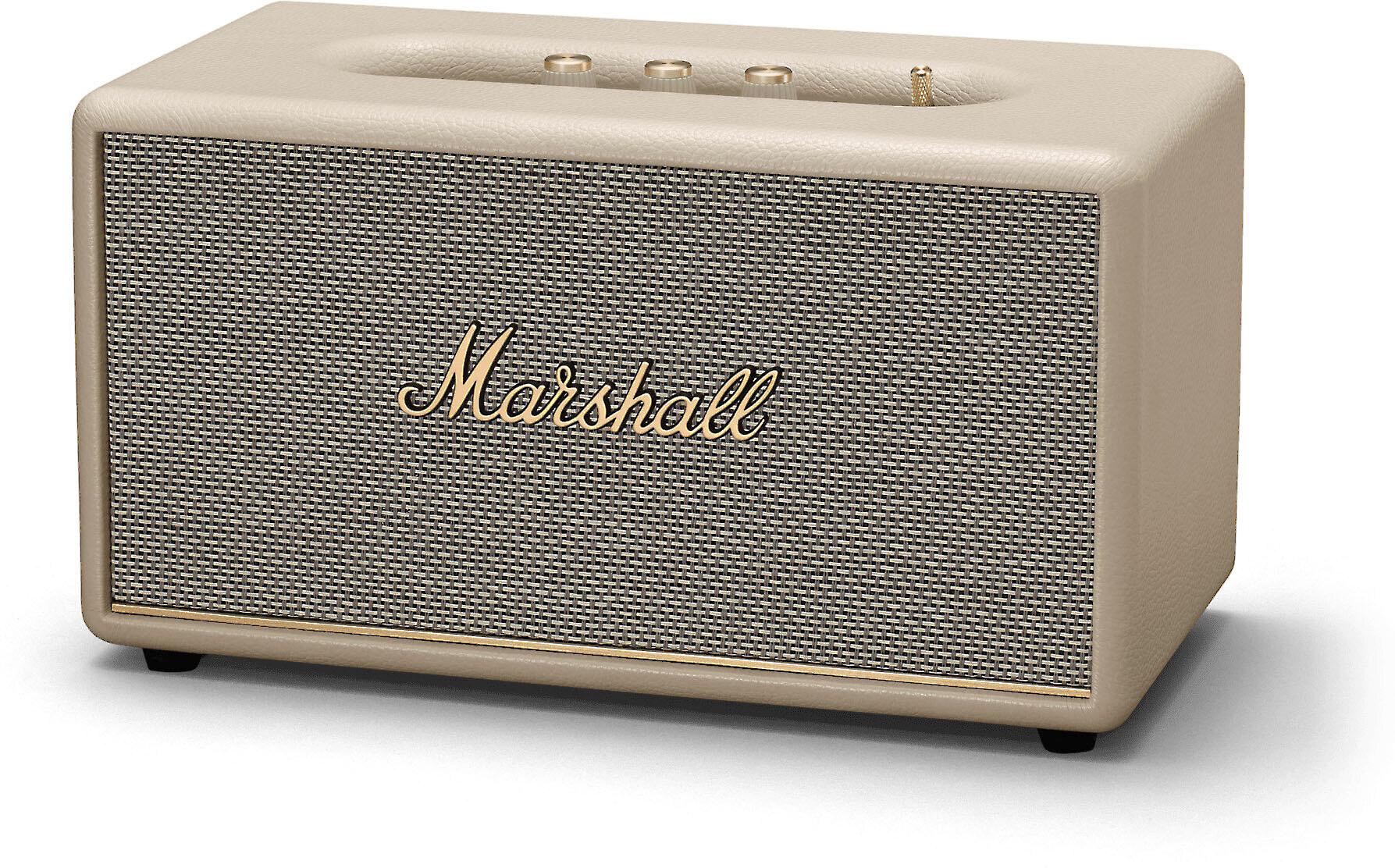
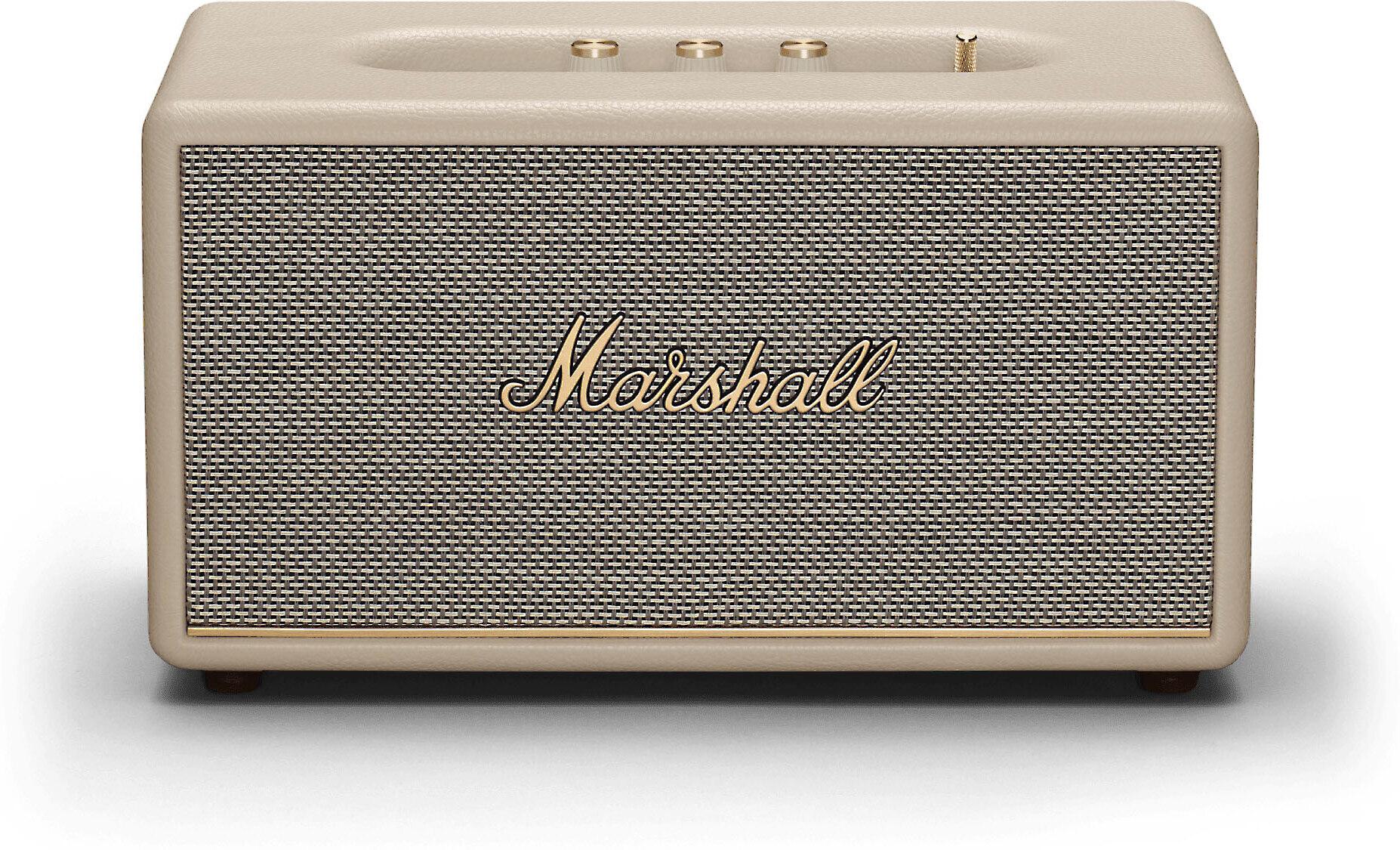
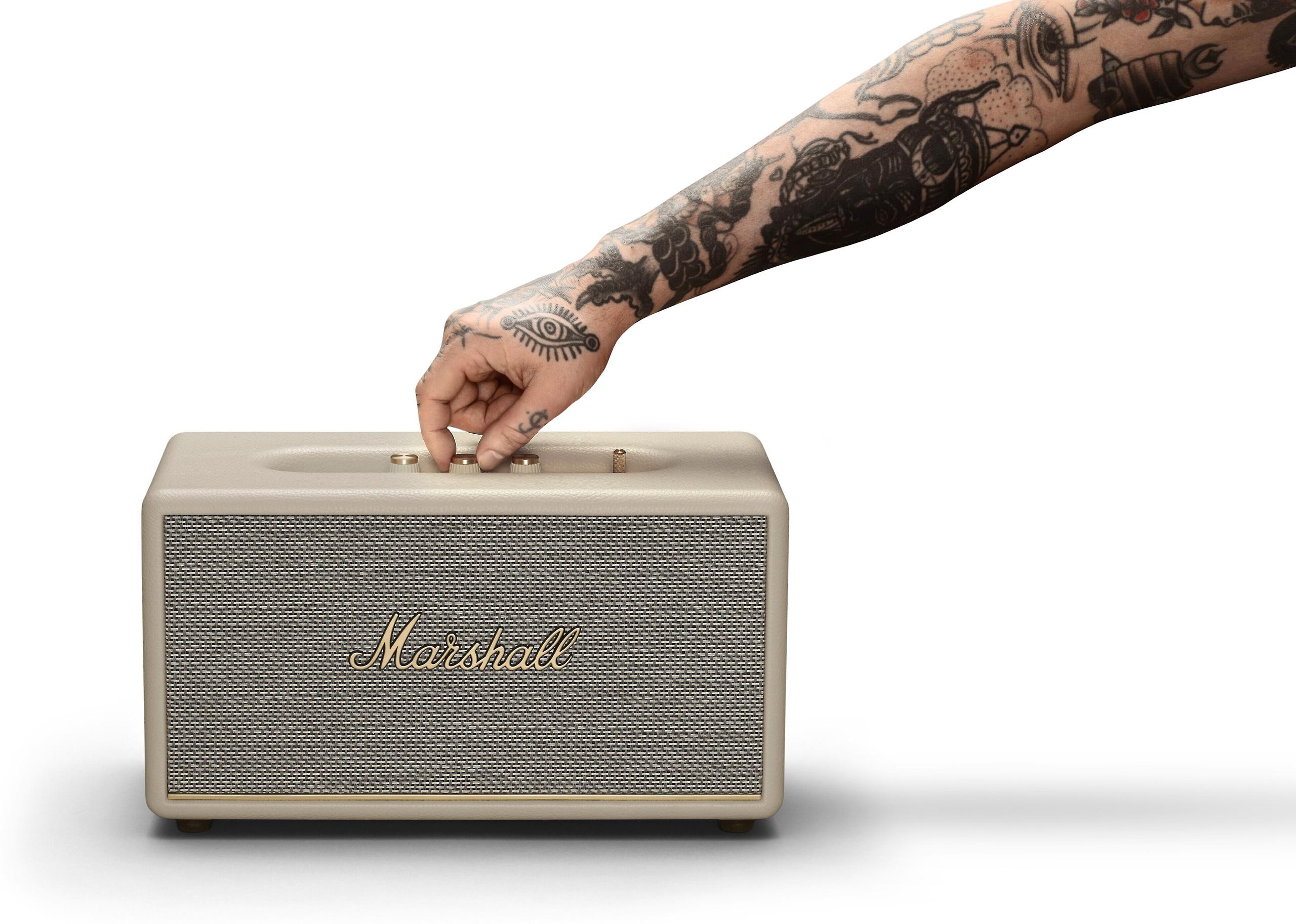
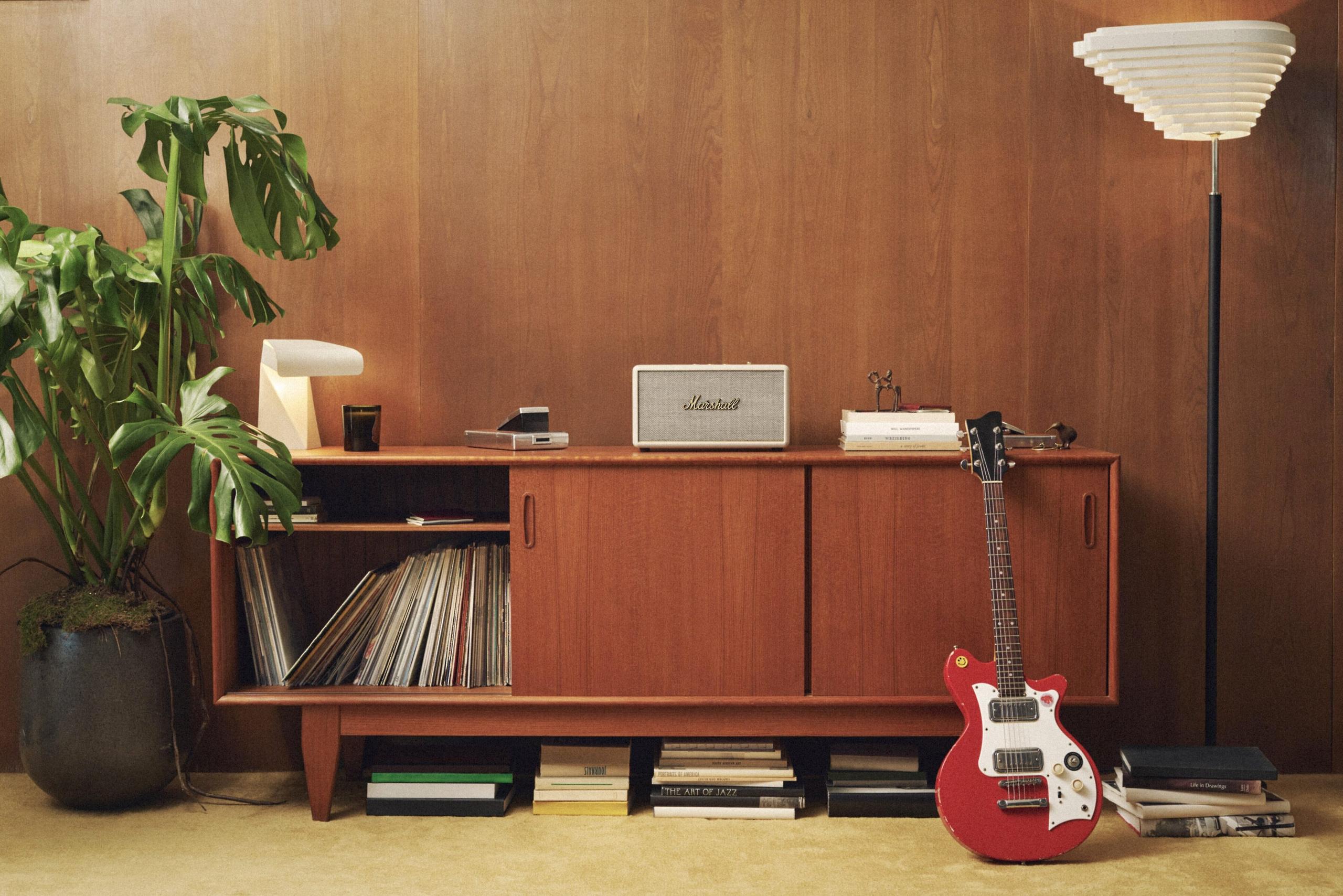


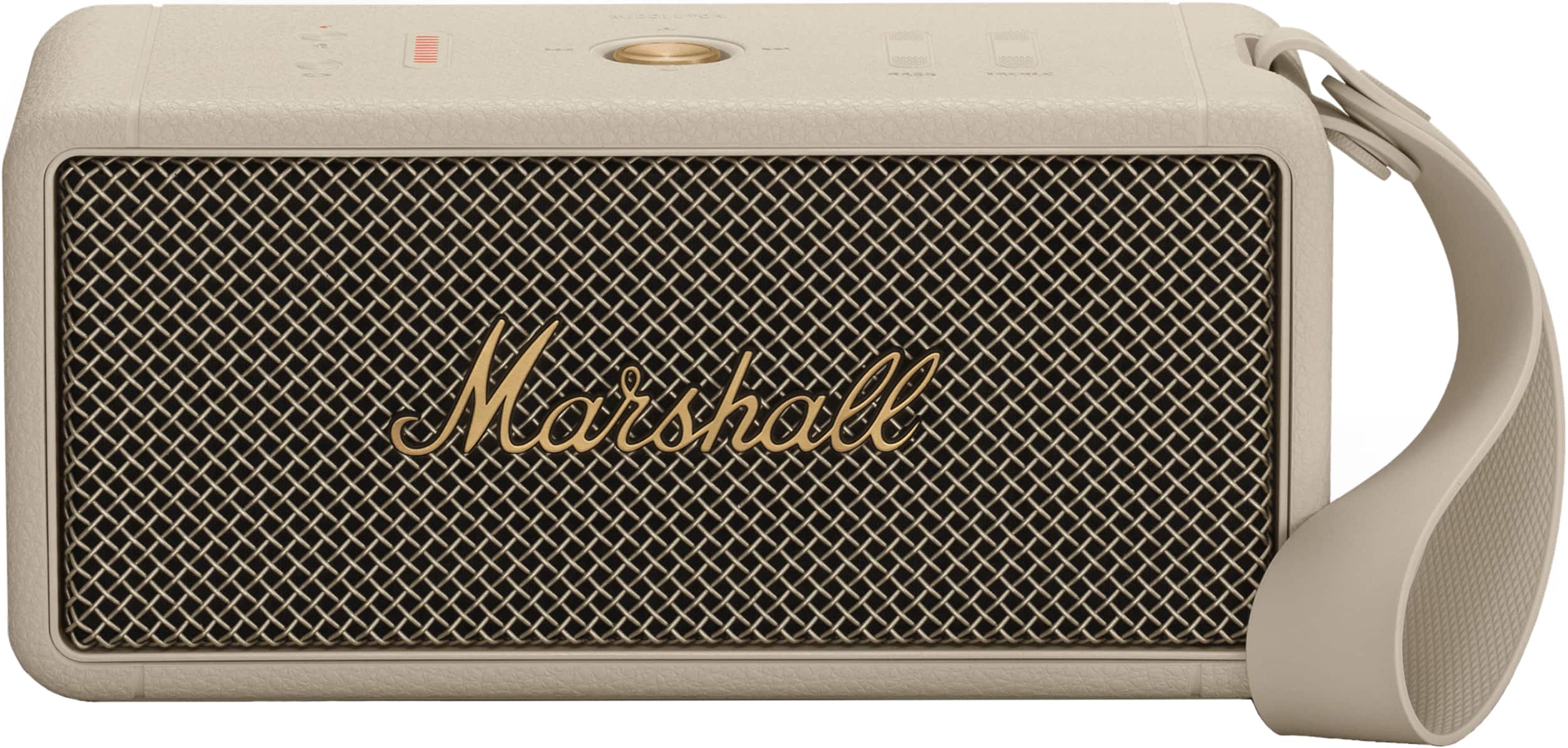
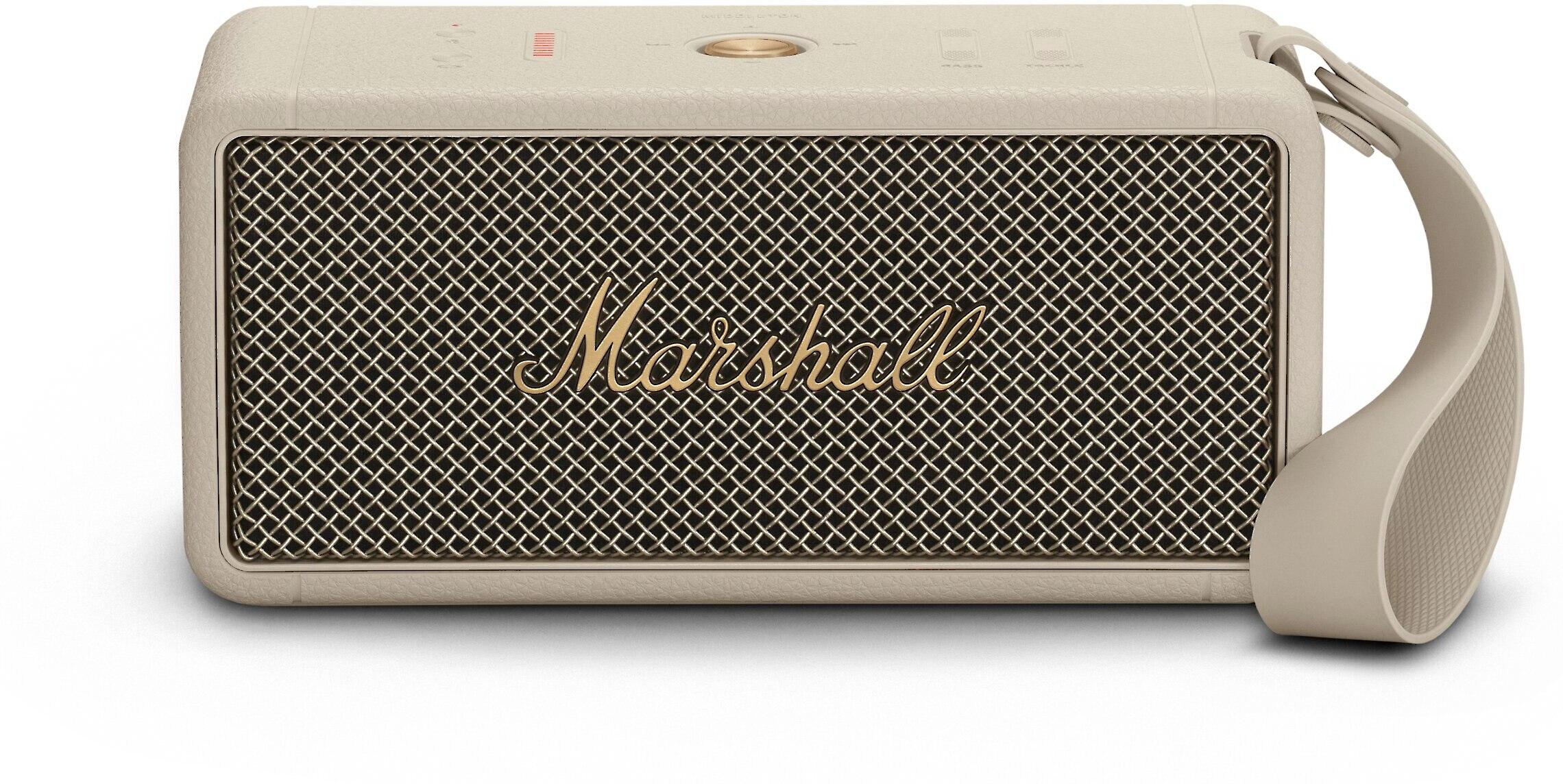



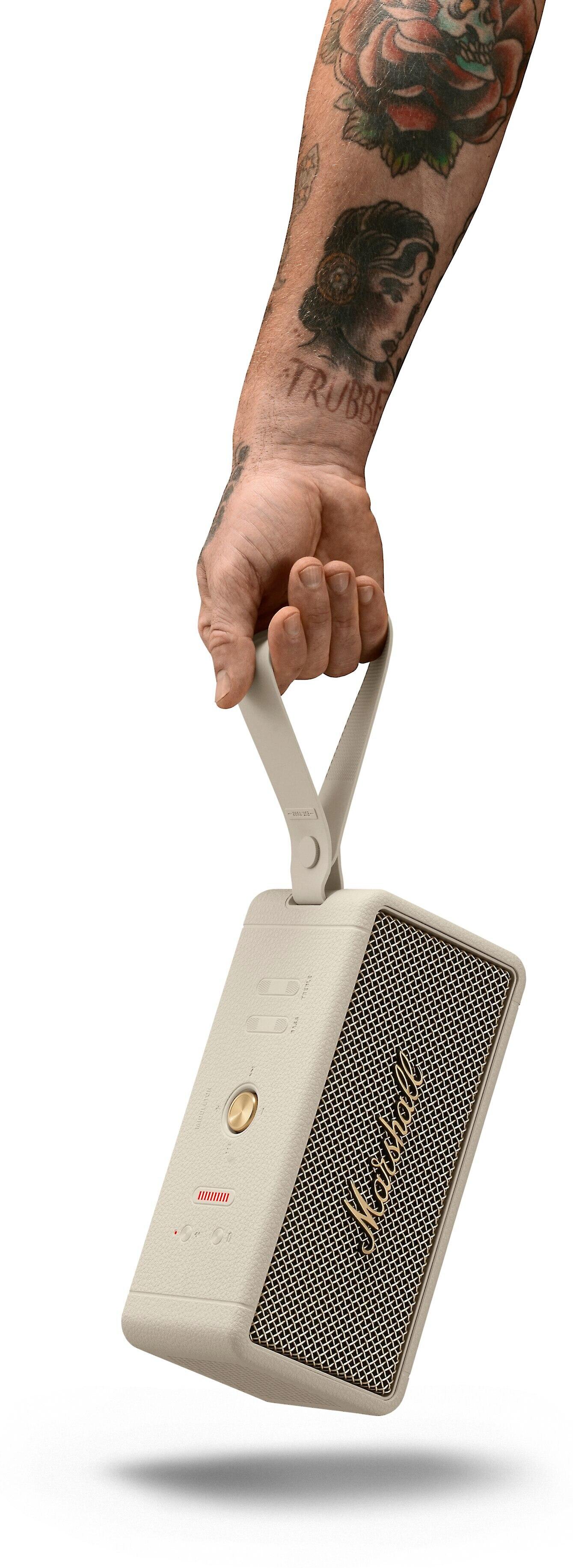
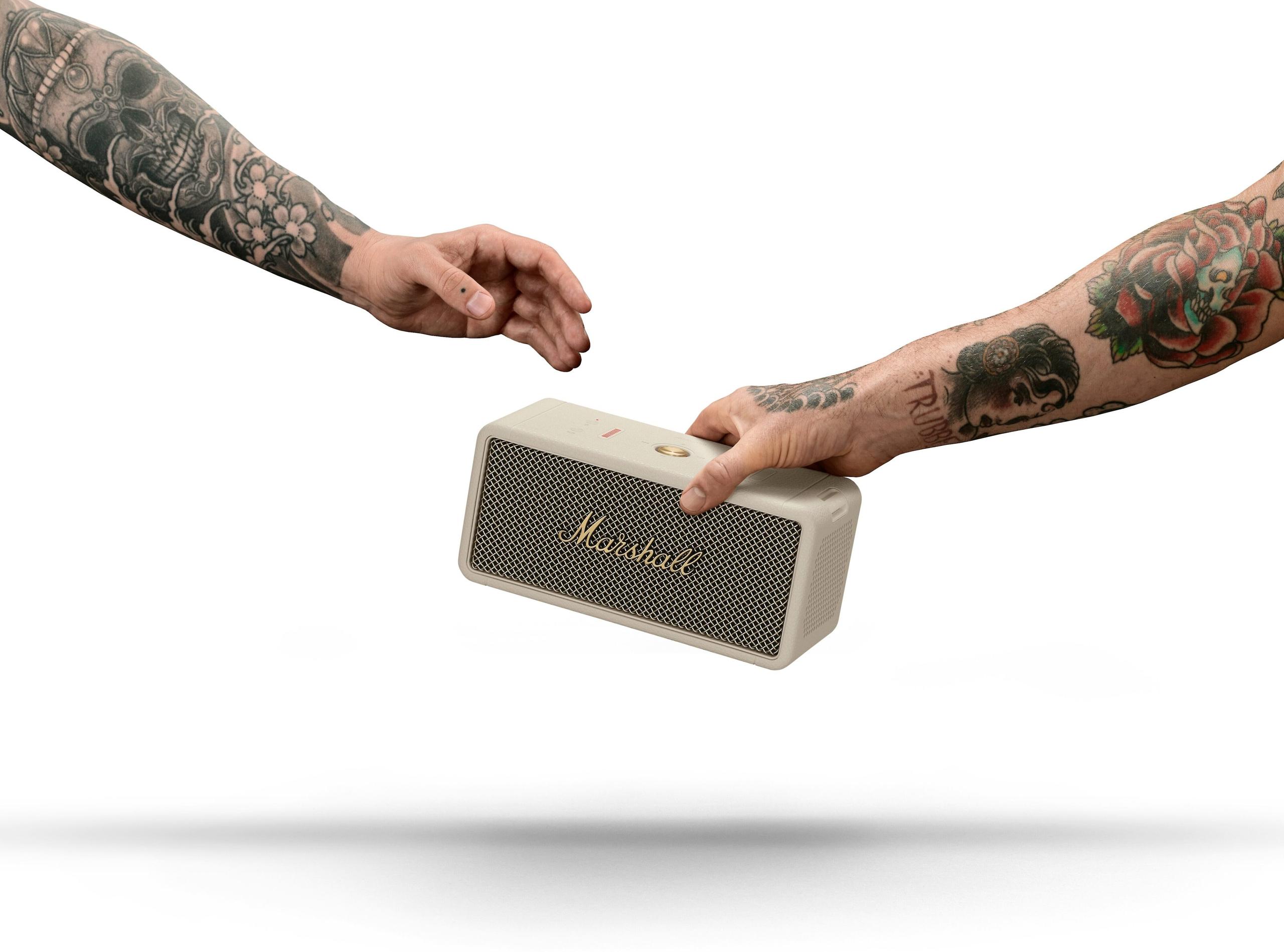
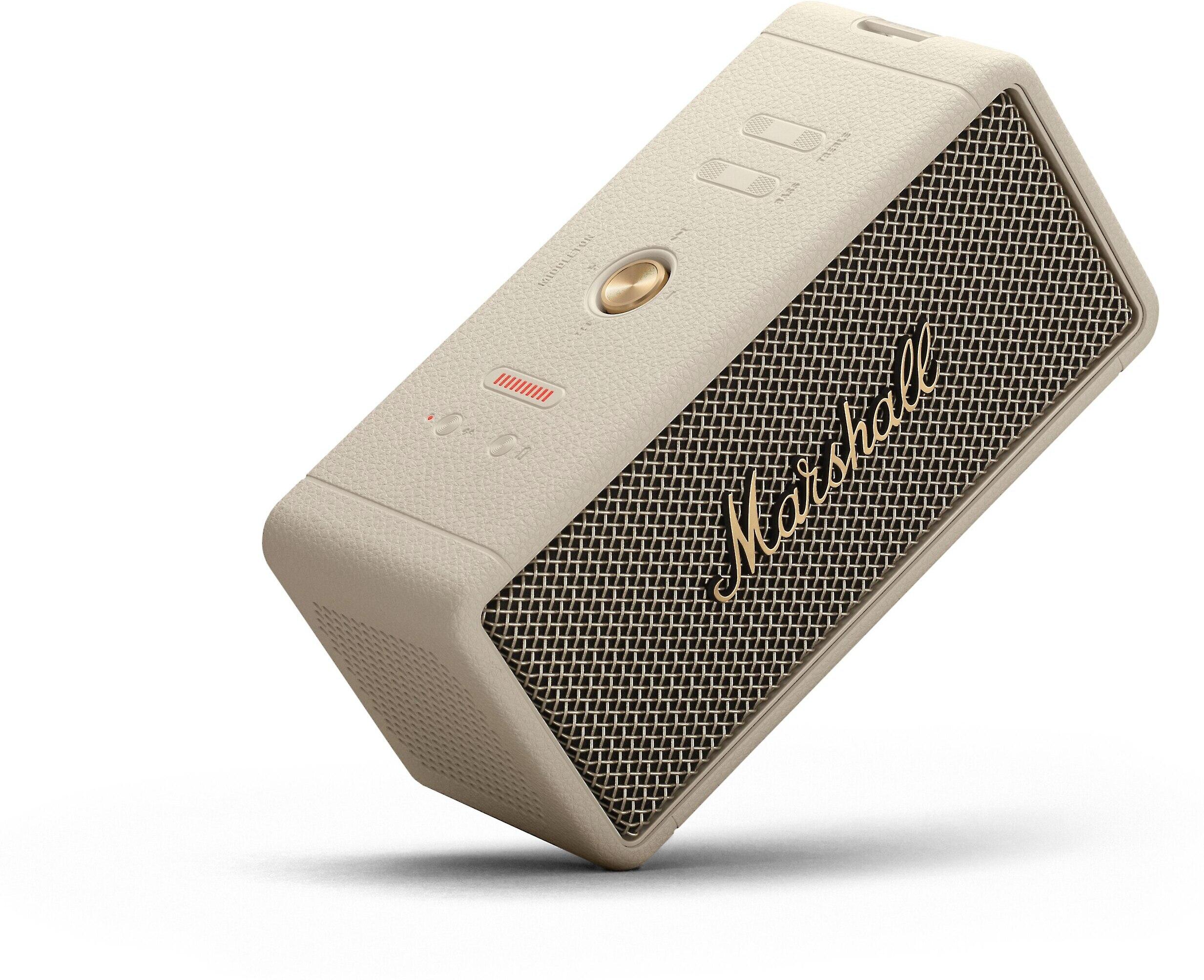




In late 2022 and early 2023, Marshall expanded their speaker lineup with two distinct offerings: the Stanmore III ($379) for premium home audio and the Middleton ($299) for portable performance. While both speakers carry Marshall's iconic styling, they serve notably different purposes. Let's dive into how these speakers compare and help you decide which one best fits your needs.
Modern Bluetooth speakers have evolved far beyond simple wireless audio devices. Today's premium offerings deliver impressive sound quality while integrating advanced features like multi-room audio, customizable EQ settings, and sophisticated driver arrangements. Marshall's latest speakers exemplify this evolution, though they take different approaches to meet varying user needs.
The Stanmore III represents Marshall's vision of the perfect home speaker - powerful, versatile, and designed for permanent placement. Meanwhile, the Middleton tackles the challenge of delivering Marshall's signature sound in a portable package that can handle outdoor adventures.
The Stanmore III's audio capabilities are impressive, leveraging 80 watts of total power through a sophisticated three-driver system. Its 50-watt woofer (the large speaker that handles bass frequencies) pairs with two 15-watt tweeters (smaller speakers that handle high frequencies) to deliver room-filling sound. The speaker reaches down to 45Hz in the bass range - that's low enough to feel the thump of kick drums and bass guitars without requiring a separate subwoofer.
In comparison, the Middleton employs a 60-watt system with two 3-inch woofers and two 0.625-inch tweeters. While it can't match the Stanmore III's raw power or deep bass extension (it starts at 50Hz), it compensates with True Stereophonic technology - a clever system that creates 360-degree sound projection. This makes it particularly effective for outdoor gatherings where listeners might be positioned all around the speaker.
Both speakers incorporate Marshall's Dynamic Loudness system, which automatically adjusts frequency balance as volume changes. This is particularly important because our ears perceive different frequencies differently at varying volumes - what sounds balanced at low volume might seem bass-heavy when turned up. The system compensates for this, maintaining consistent sound character regardless of volume level.
The Stanmore III adds placement compensation, which adjusts the sound based on whether the speaker is near walls or in a corner. This might seem like a small detail, but it makes a noticeable difference in real-world use, preventing the boomy bass that often plagues speakers placed near walls.
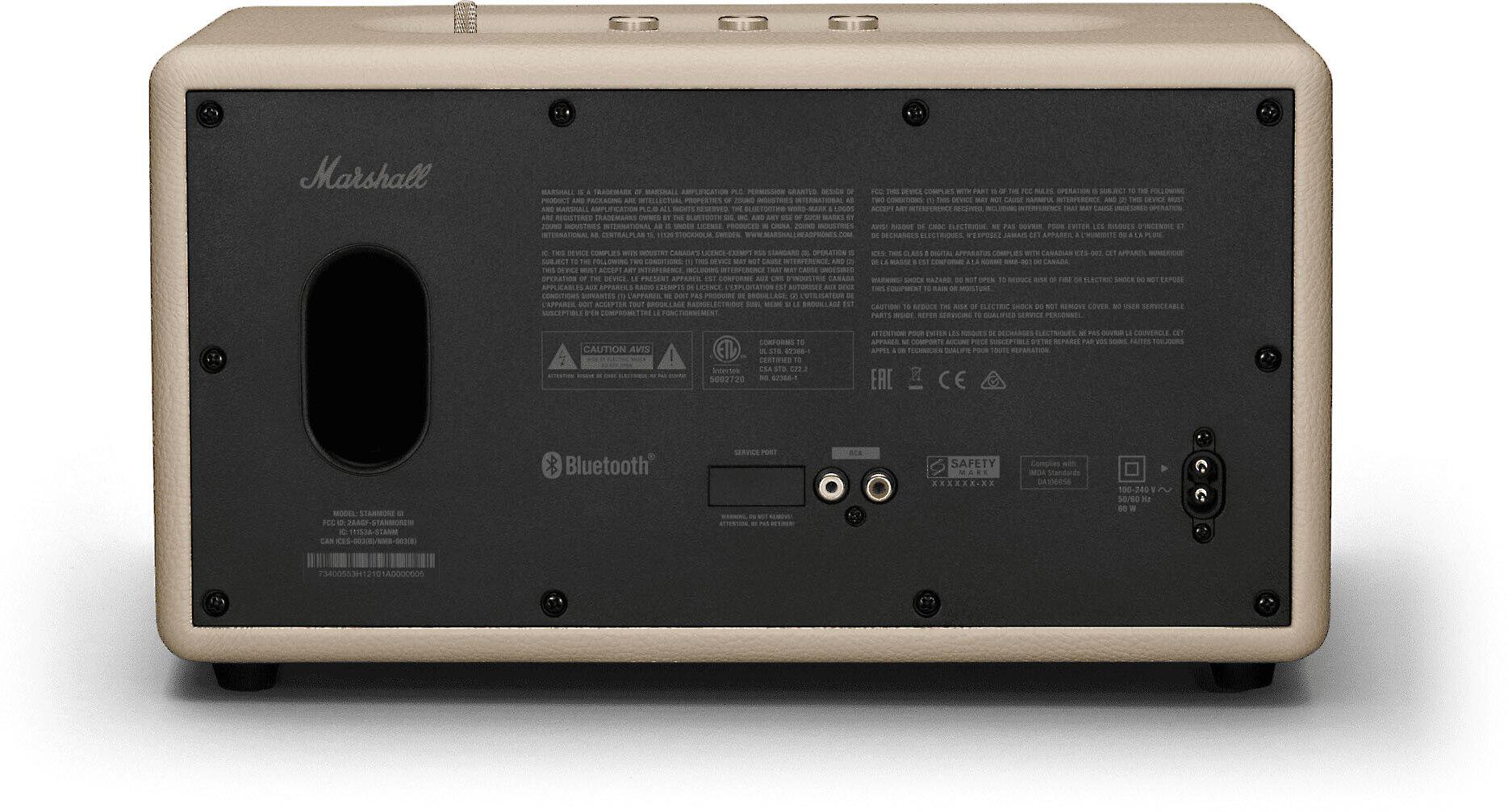
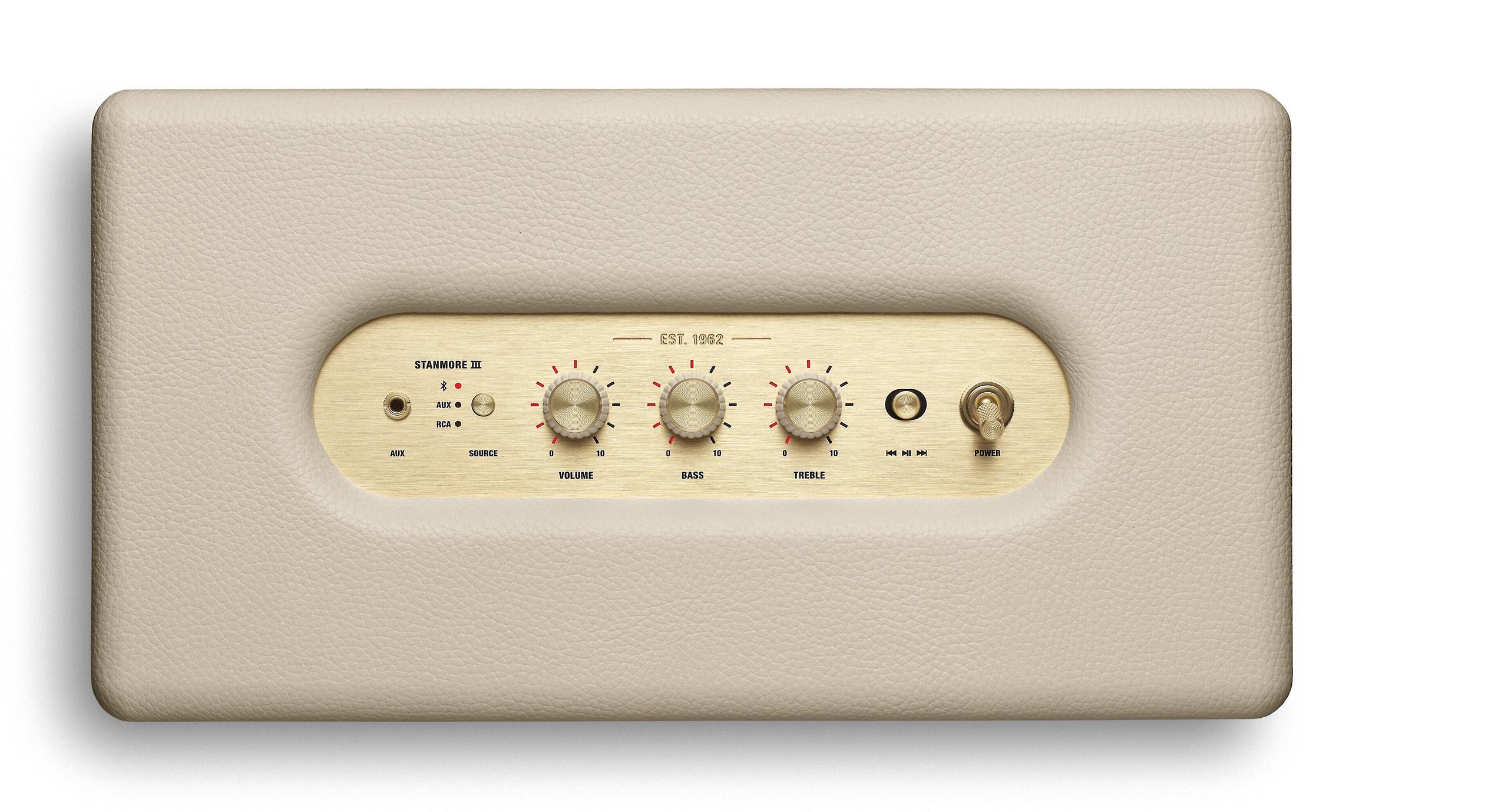
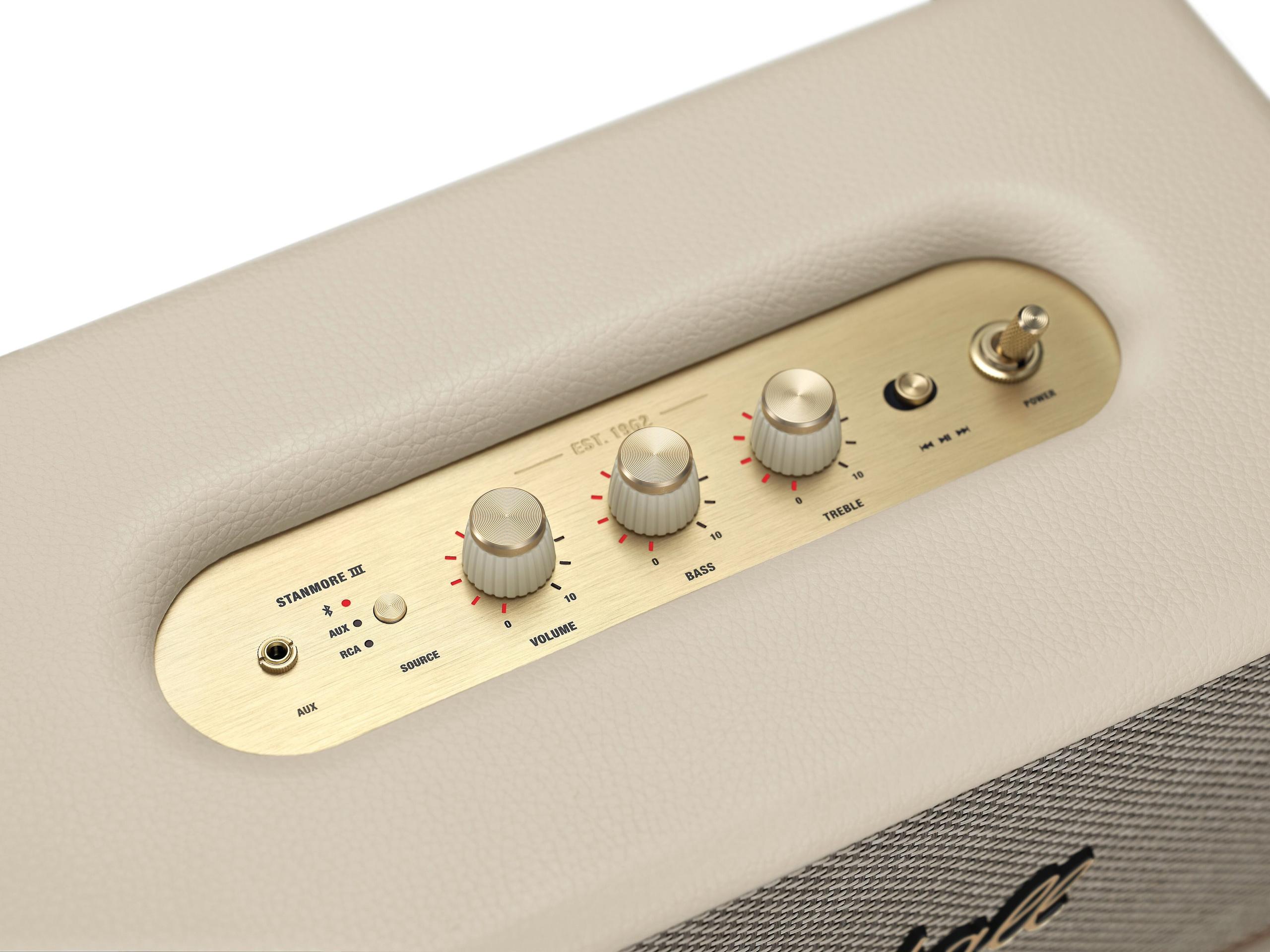
Released with Bluetooth 5.2, the Stanmore III offers slightly better wireless range and stability compared to the Middleton's Bluetooth 5.1. Both support multi-device pairing, but the Stanmore III's additional RCA inputs make it more versatile for home theater use - you could connect it to your TV while maintaining Bluetooth connectivity for music streaming.
The Middleton emphasizes different connectivity strengths, featuring Stack Mode for wireless pairing with other Middleton speakers. This creates a larger sound system that's still portable - perfect for outdoor events or larger indoor spaces.
At $379, the Stanmore III represents a significant investment, but its performance justifies the price for dedicated home audio use. It's particularly compelling when you consider its ability to serve as both a music speaker and TV sound upgrade through its various inputs.
The Middleton's $299 price point feels reasonable given its portability and durability. The IP67 water and dust resistance rating means it can handle rain, poolside splashes, and dusty environments without issue. Add in the 20+ hour battery life and power bank functionality (you can charge your phone from the speaker), and it becomes a versatile companion for both home and outdoor use.
Since their release, both speakers have received firmware updates improving their performance. The Stanmore III has seen updates to its placement compensation algorithm and Dynamic Loudness system, while the Middleton has received optimizations for battery life and Stack Mode performance.
The Marshall Bluetooth app supports both speakers, offering EQ customization and firmware updates. However, the Stanmore III gets additional placement optimization controls that the Middleton doesn't need due to its portable nature.
The Stanmore III excels as a TV speaker upgrade, particularly in small to medium-sized rooms. Its RCA inputs allow direct TV connection, while the powerful bass means you won't miss having a separate subwoofer for most content. The speaker's ability to handle both music and movies makes it a versatile choice for entertainment spaces.
The Middleton shines in outdoor settings where its True Stereophonic sound dispersion ensures everyone gets good audio regardless of position. Its rugged construction and water resistance mean you don't have to worry about weather changes or accidents, and the long battery life covers even extended events.
The choice between the Stanmore III and Middleton ultimately comes down to your primary use case:
Choose the Stanmore III if:
Choose the Middleton if:
Both speakers deliver Marshall's signature sound quality and style, but they serve different purposes. The Stanmore III is the clear choice for dedicated home audio, while the Middleton offers flexibility and durability for varied environments. Consider your specific needs and usage patterns when making your decision, and remember that the best speaker is the one that fits your lifestyle.
| Marshall Stanmore III ($379) | Marshall Middleton ($299) |
|---|---|
| Total Power - Determines maximum volume and sound quality at high levels | |
| 80W (50W woofer + 2x15W tweeters) - Superior for large rooms | 60W (2x20W woofers + 2x10W tweeters) - Ample for medium spaces |
| Frequency Response - Range of sound from bass to treble | |
| 45-20,000 Hz (deeper bass, fuller sound) | 50-20,000 Hz (slightly less bass extension) |
| Size and Weight - Impacts placement flexibility and portability | |
| 13.8" x 8.1" x 8.4", 9.37 lbs (stationary design) | 9.1" x 4.3" x 3.7", 4 lbs (portable friendly) |
| Power Source - Affects where you can use it | |
| AC power only (needs outlet) | 20+ hour battery (portable use) |
| Durability Rating - Important for outdoor use | |
| No water resistance (indoor only) | IP67 (waterproof/dustproof) |
| Connectivity Options - Flexibility for different sources | |
| Bluetooth 5.2, RCA, 3.5mm aux | Bluetooth 5.1, 3.5mm aux |
| Special Features - Unique capabilities | |
| Placement compensation, Dynamic Loudness | True Stereophonic 360° sound, Stack Mode, Power bank function |
| Primary Use Case - Where each excels | |
| Home audio, TV sound, permanent setup | Portable use, outdoor events, travel |
| App Support - Control and customization | |
| Full EQ, placement optimization, updates | Basic EQ, Stack Mode control, updates |
| Value Proposition - What you get for the price | |
| Higher cost but superior sound quality and power | More versatile with strong portability features |
The Marshall Stanmore III ($379) is better for home audio with superior sound quality and power, while the Marshall Middleton ($299) is better for portable use with water resistance and battery power. Choose based on your primary use case.
The Stanmore III costs $379, while the Middleton is priced at $299, an $80 difference. The price difference reflects the Stanmore III's higher power output and premium home audio features.
The Middleton is designed for outdoor use with IP67 water/dust resistance and battery power. The Stanmore III requires AC power and isn't water-resistant, making it suitable for indoor use only.
The Stanmore III offers superior sound quality with 80W total power and deeper bass (45Hz), compared to the Middleton's 60W and 50Hz bass response. However, the Middleton provides excellent sound quality for its portable size.
The Middleton offers 20+ hours of battery life on a single charge. The Stanmore III doesn't have a battery and requires constant AC power.
The Stanmore III works well with TVs using its RCA or 3.5mm inputs. The Middleton can connect via 3.5mm aux, but it's not primarily designed for TV use.
The Middleton is better for parties due to its portability, water resistance, and 360-degree sound. The Stanmore III provides more powerful sound but requires a fixed location with power.
The Middleton features Stack Mode for pairing multiple Middleton speakers. The Stanmore III doesn't support multi-speaker pairing.
The Stanmore III features slightly newer Bluetooth 5.2 compared to the Middleton's Bluetooth 5.1, but both provide reliable wireless connections and multi-device pairing.
Both the Stanmore III and Middleton work with the Marshall Bluetooth app for EQ adjustment and firmware updates. The Stanmore III has additional placement optimization controls.
The Middleton is more durable with IP67 water/dust resistance rating. The Stanmore III is well-built but designed for indoor use only.
The Stanmore III is larger at 13.8" x 8.1" x 8.4" and 9.37 lbs. The Middleton is more compact at 9.1" x 4.3" x 3.7" and 4 lbs, making it easier to transport.
We've done our best to create useful and informative comparisons to help you decide what product to buy. Our research uses advanced automated methods to create this comparison and perfection is not possible - please contact us for corrections or questions. These are the sites we've researched in the creation of this article: techgadgetscanada.com - camelcamelcamel.com - crutchfield.com - bestbuy.com - dxomark.com - crutchfield.com - crutchfield.com - marshall.com - marshall-production-1.mobify-storefront.com - exhibit.tech - ooberpad.com - av-connection.com - t3.com - whatsthebest.co.uk - youtube.com - techradar.com - timesofindia.indiatimes.com - crutchfield.com - bestbuy.com - camelcamelcamel.com - marshall.com - marshall.com - crutchfield.com - corporatespecialties.com - rtings.com - itworld.com.my

Privacy Policy
Terms and Conditions - Affiliate Policy
Home Security
© Copyright 2008-2026.
11816 Inwood Rd #1211, Dallas, TX 75244