

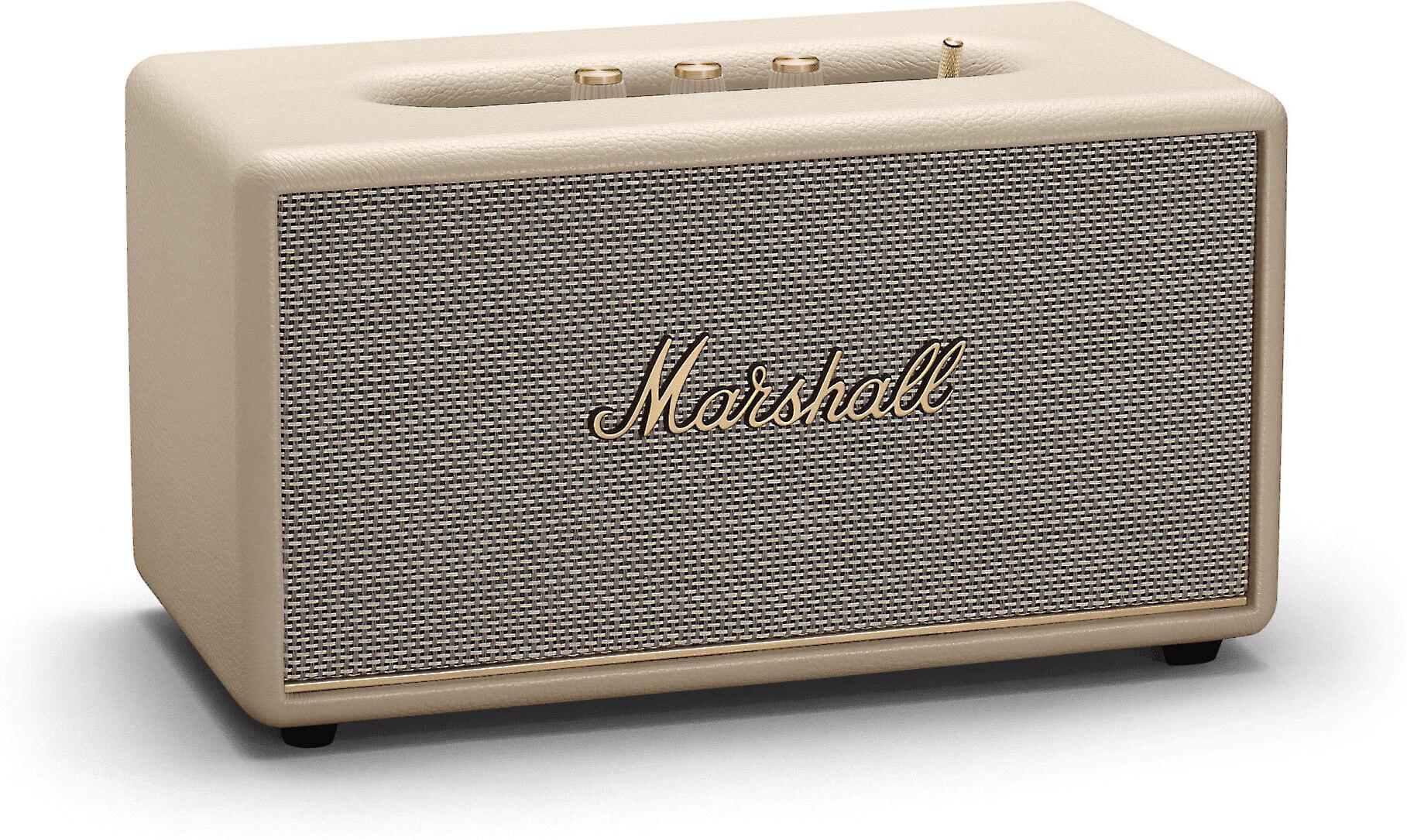
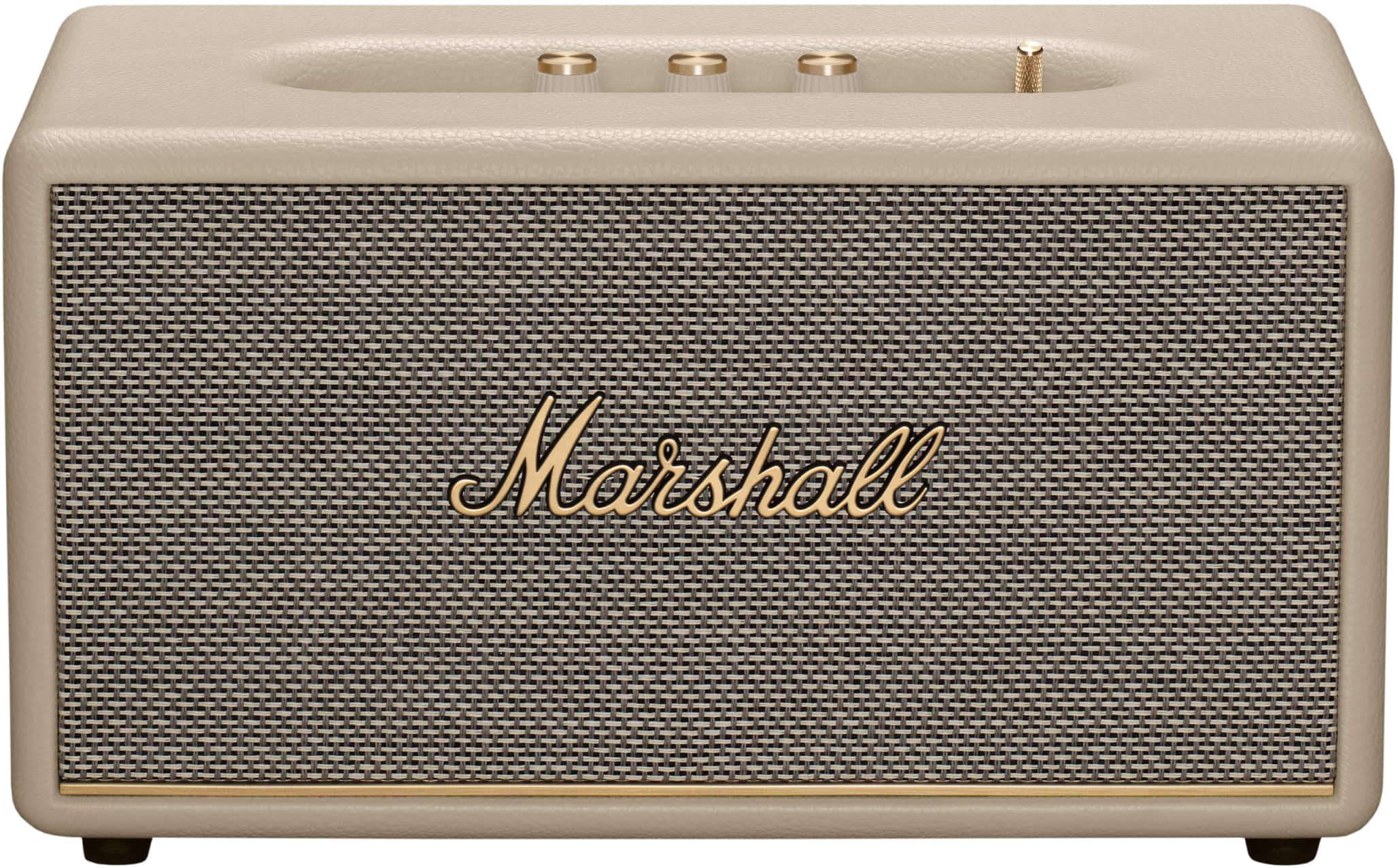
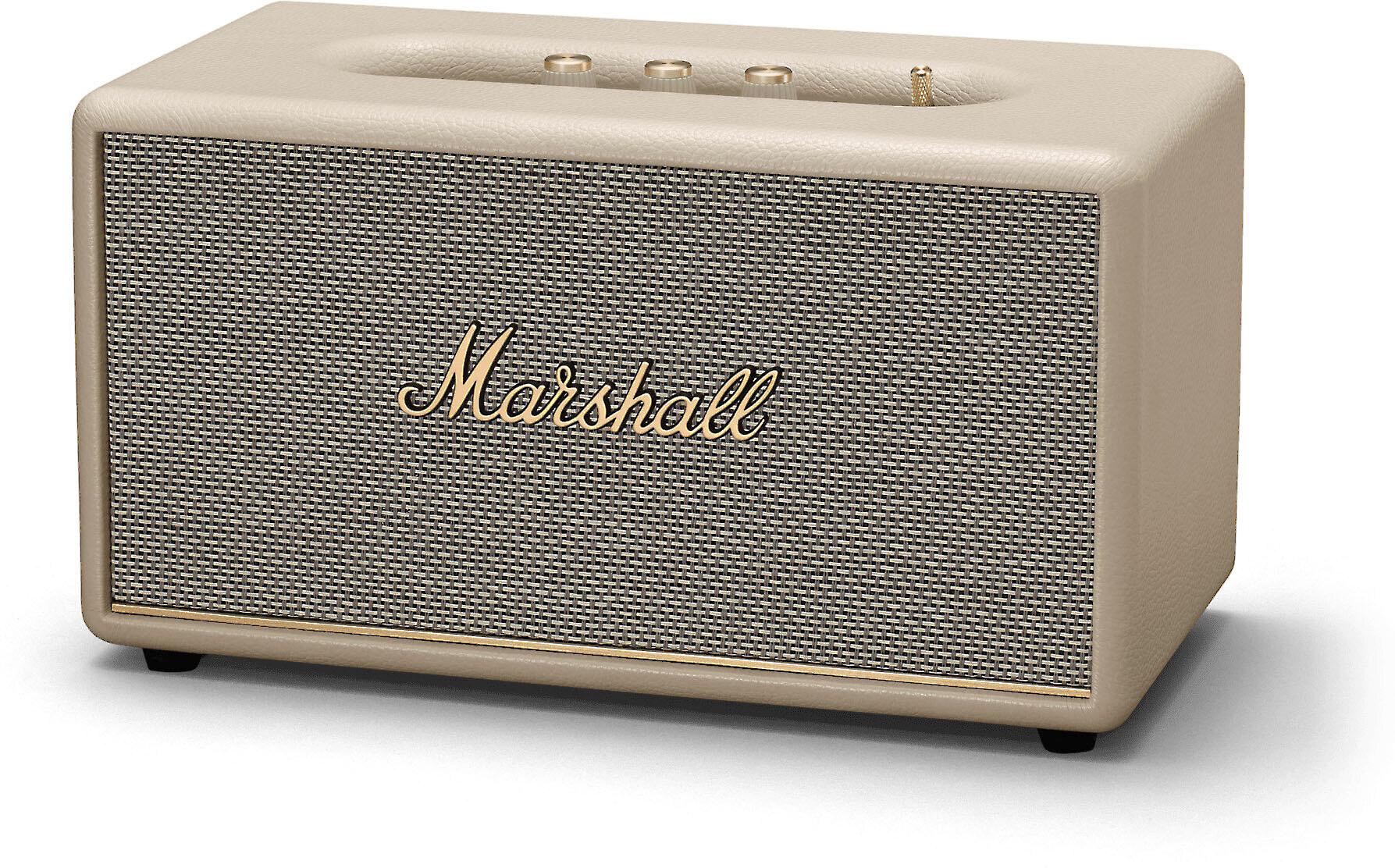
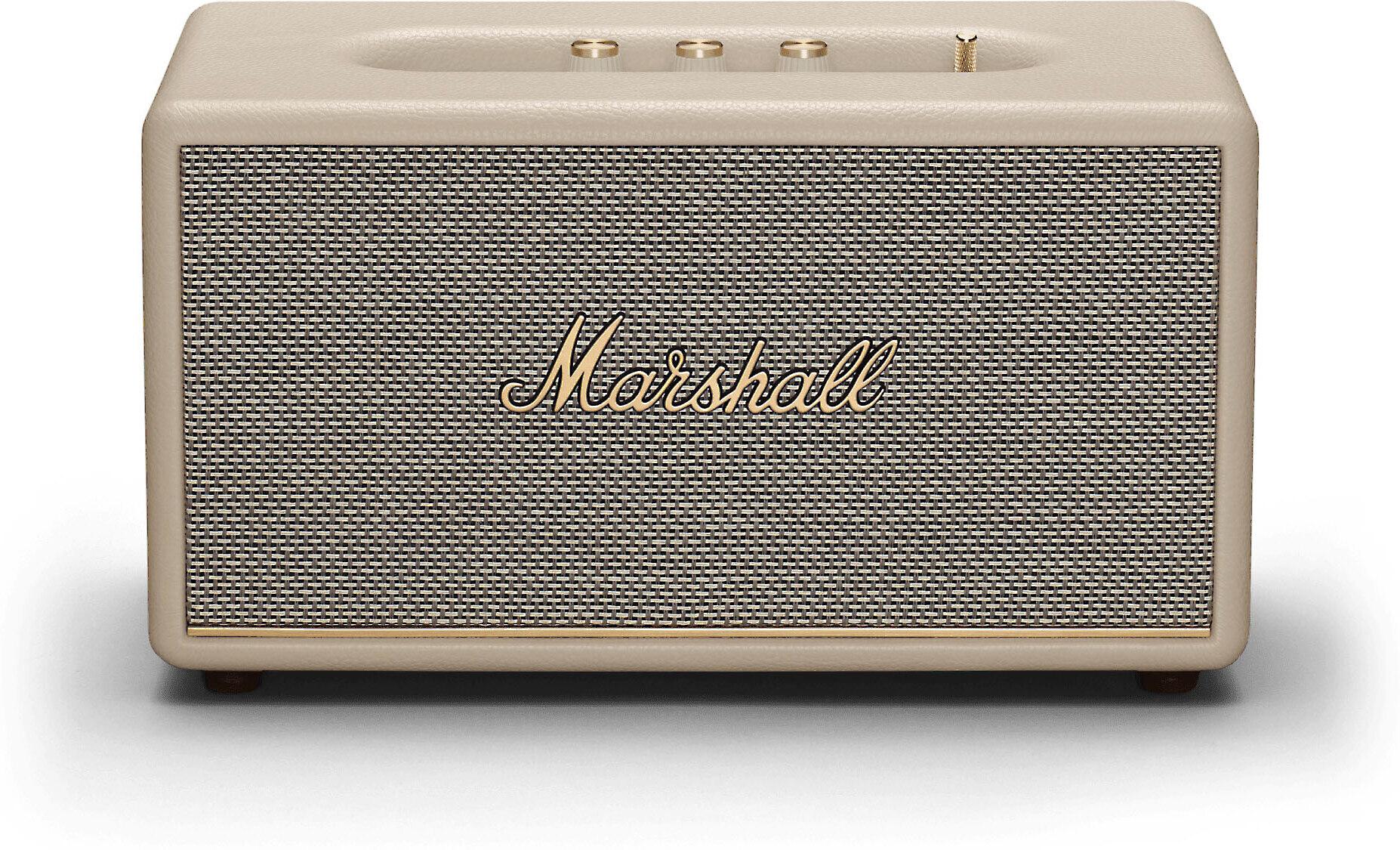
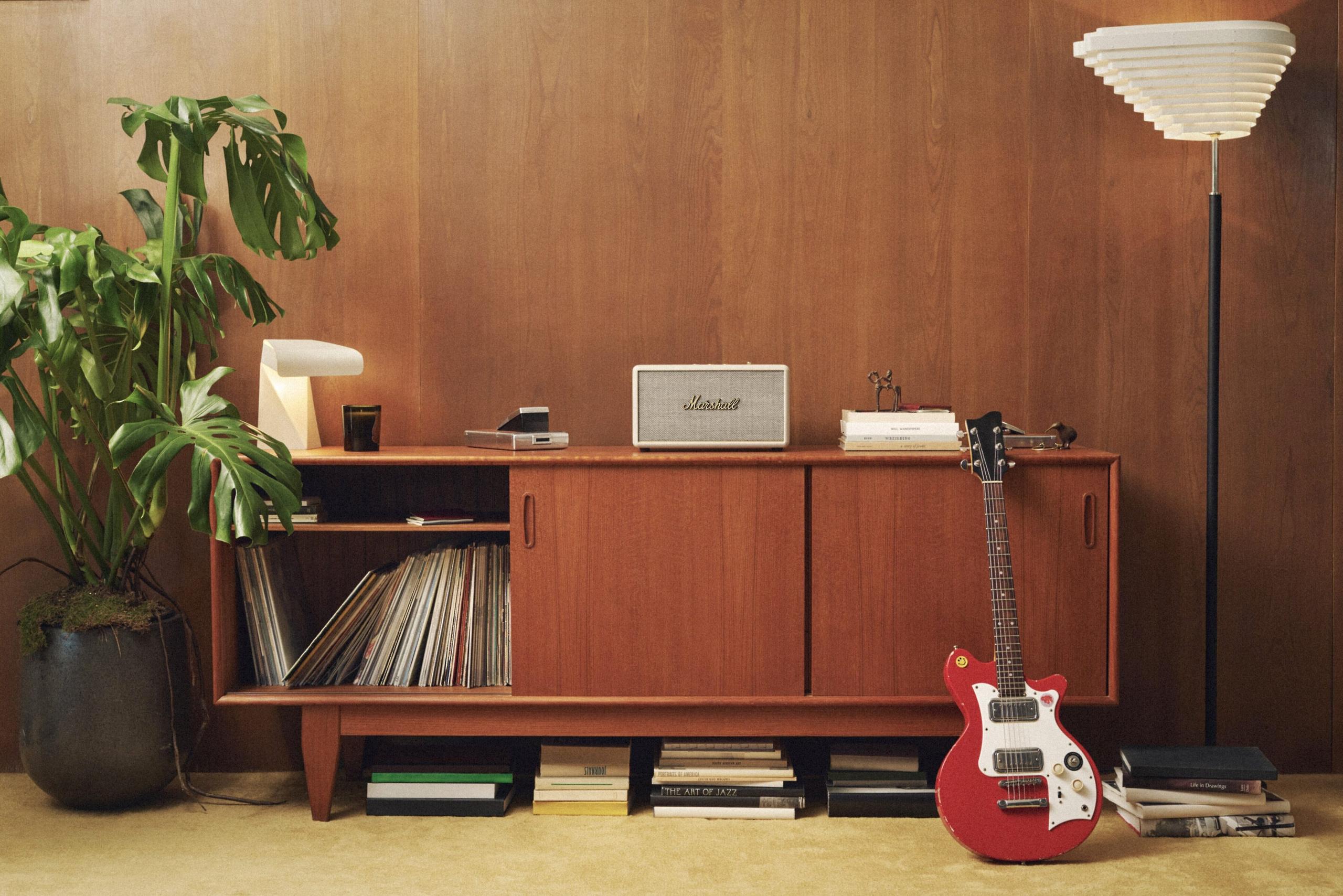
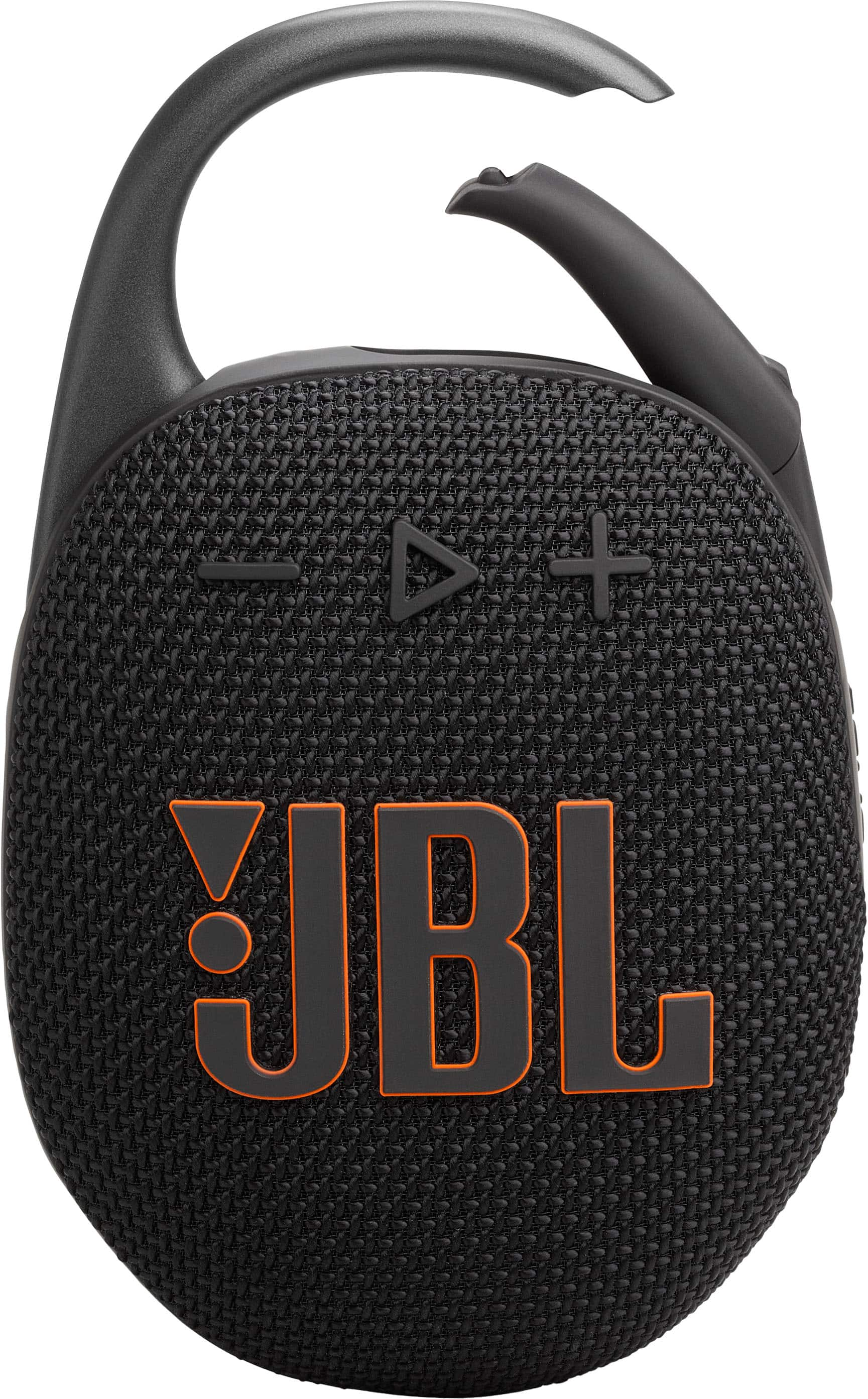




When it comes to wireless audio, few decisions have a bigger impact on your listening experience than choosing between a dedicated home speaker and an ultra-portable option. Let's explore two popular but very different approaches - the premium Marshall Stanmore III ($379) and the compact JBL Clip 5 ($57).
The Bluetooth speaker market has evolved significantly in recent years, splitting primarily into two categories: premium home audio solutions and portable companions. While both types stream music wirelessly, their fundamental approaches to sound reproduction and intended use cases differ dramatically.
Home speakers like the Stanmore III prioritize sound quality and room-filling capability, while portable speakers like the Clip 5 focus on convenience and durability. Understanding these differences is crucial for making the right choice for your needs.
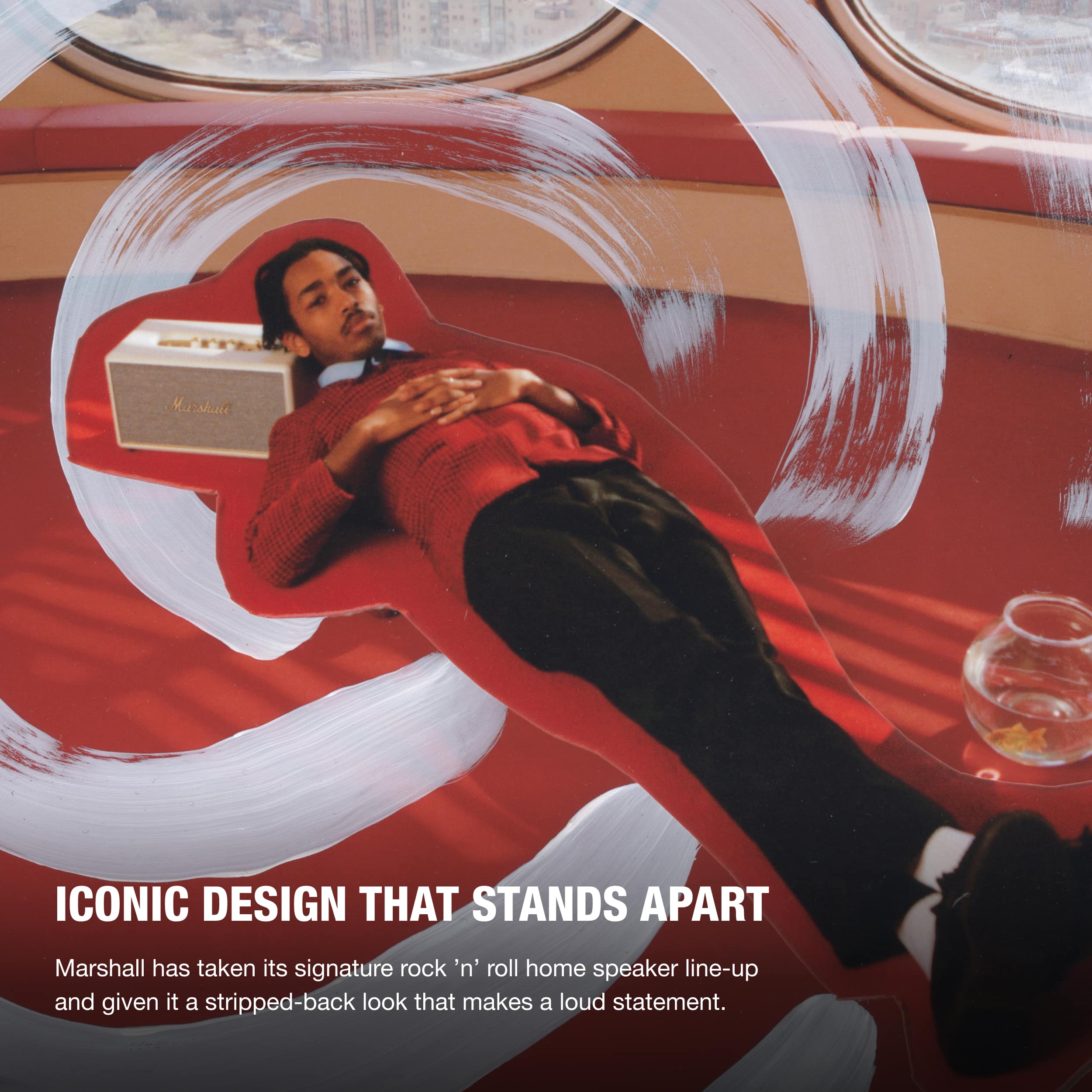
The Marshall Stanmore III, released in 2022, represents the third generation of Marshall's premium home speaker line. It builds on previous models with improved audio processing, enhanced connectivity through Bluetooth 5.2, and new features like Dynamic Loudness - which automatically adjusts tonal balance as volume changes. The classic Marshall amp styling remains, but with modern refinements like sustainable materials and over-the-air update capability.
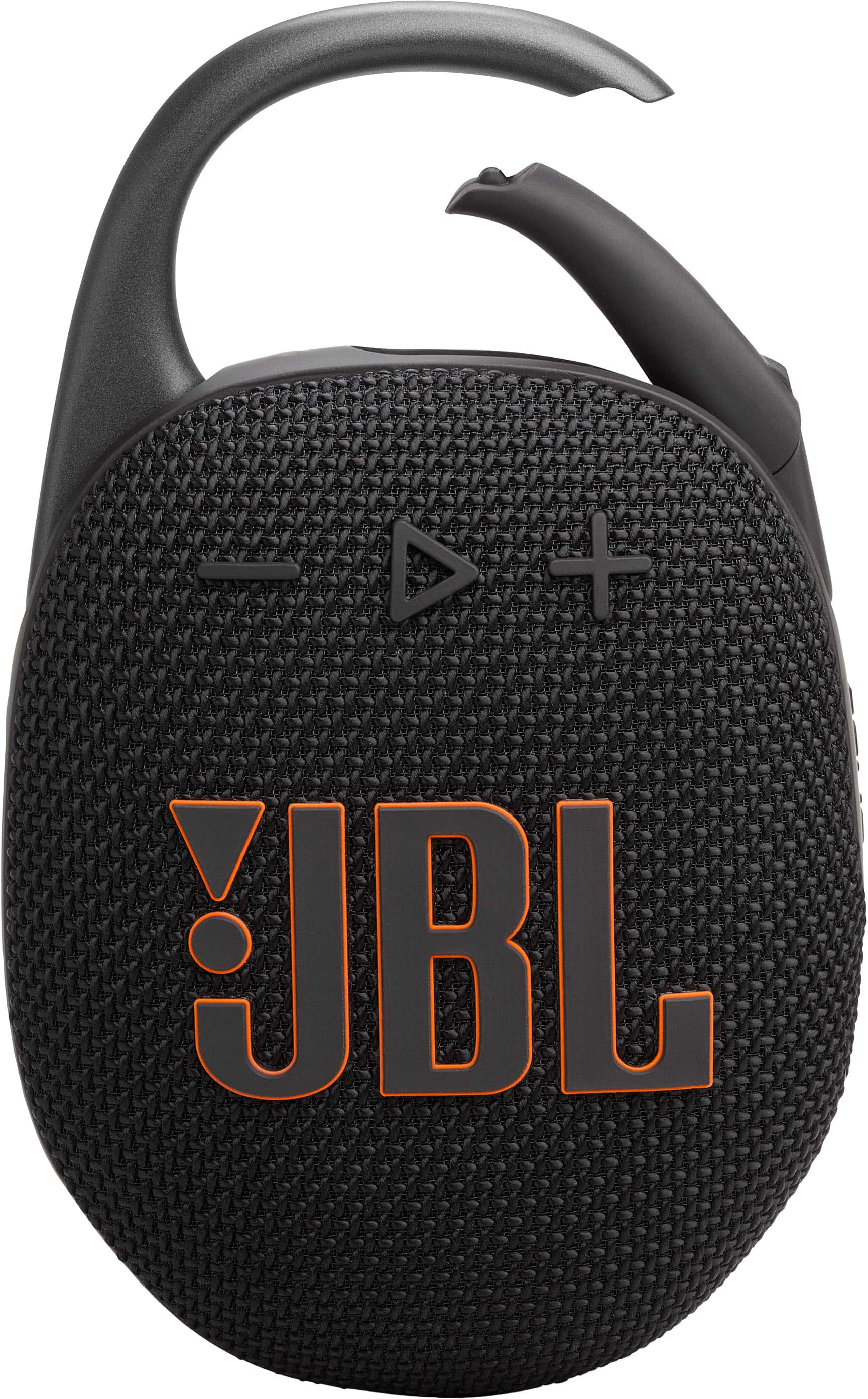
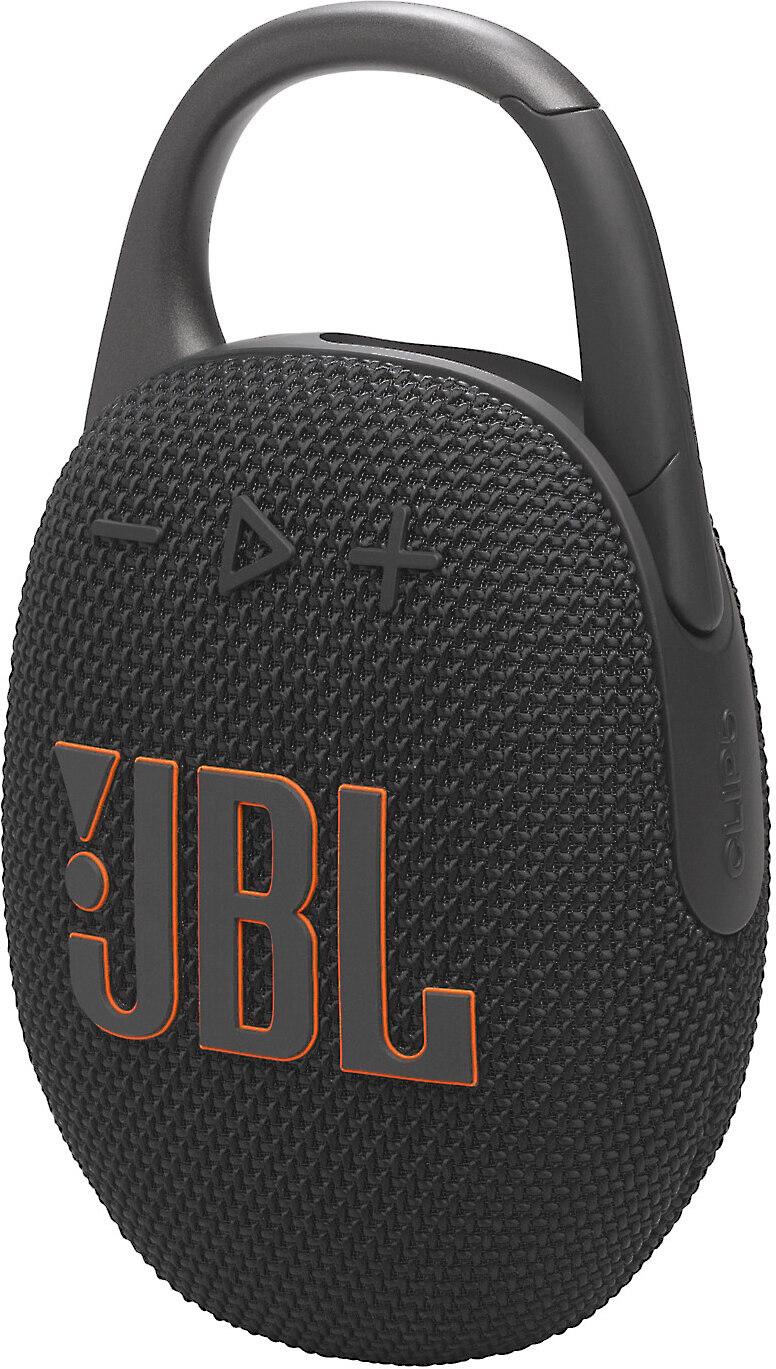
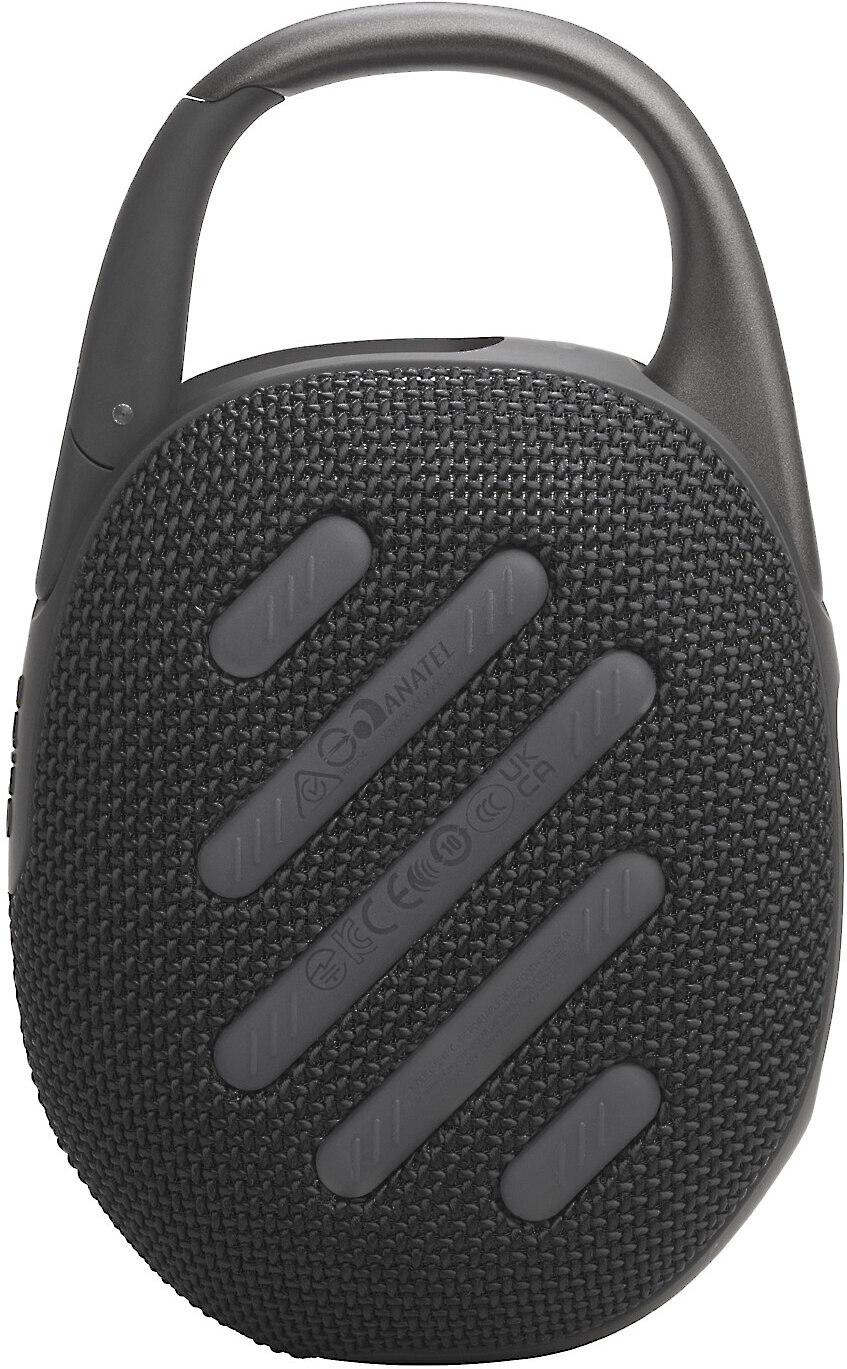
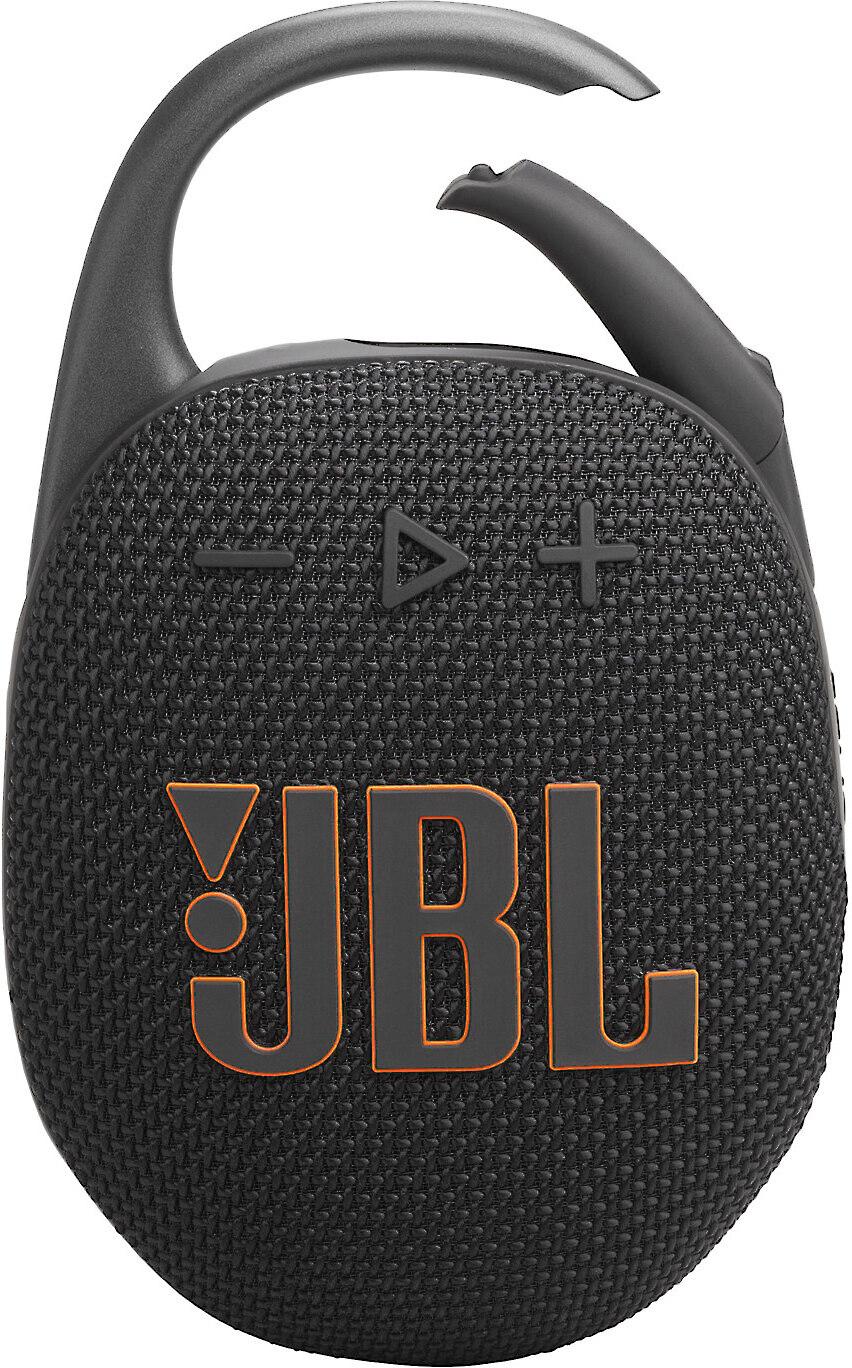
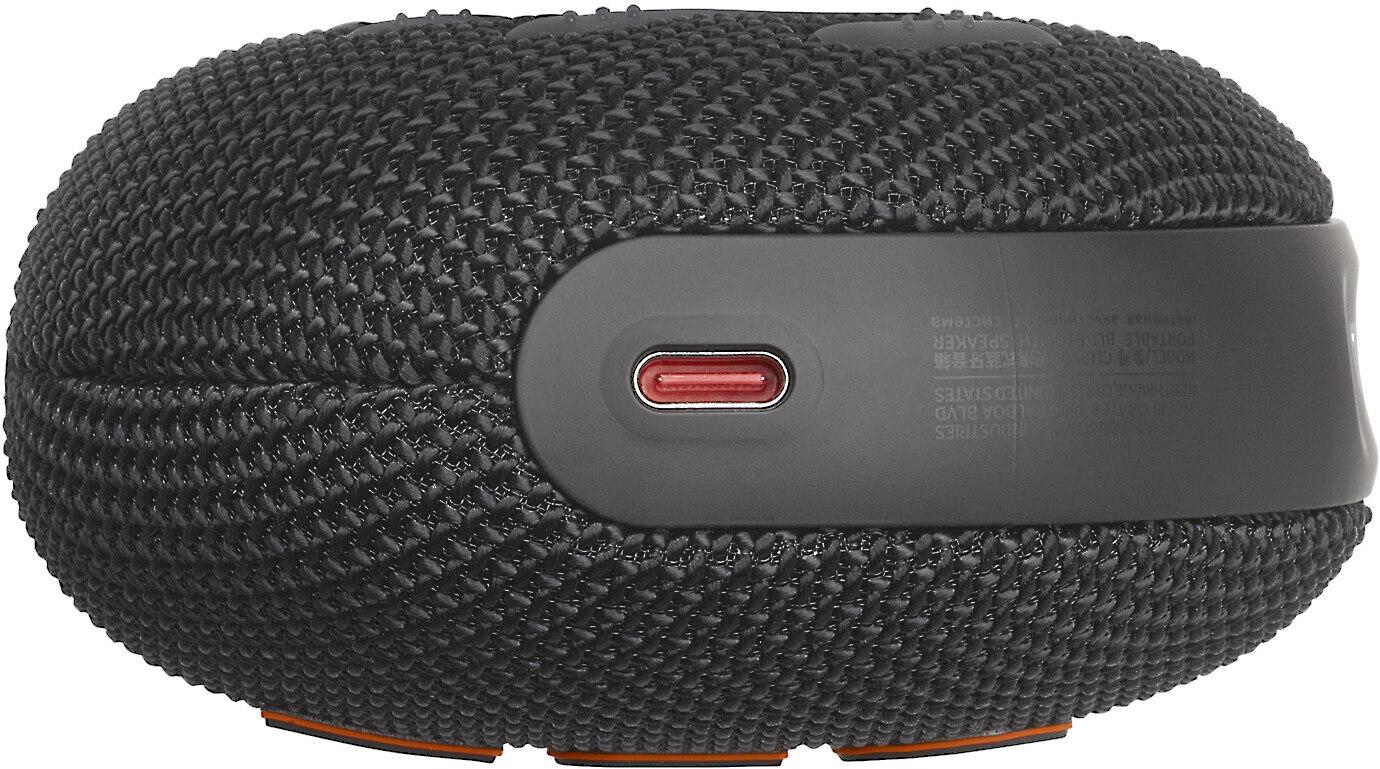
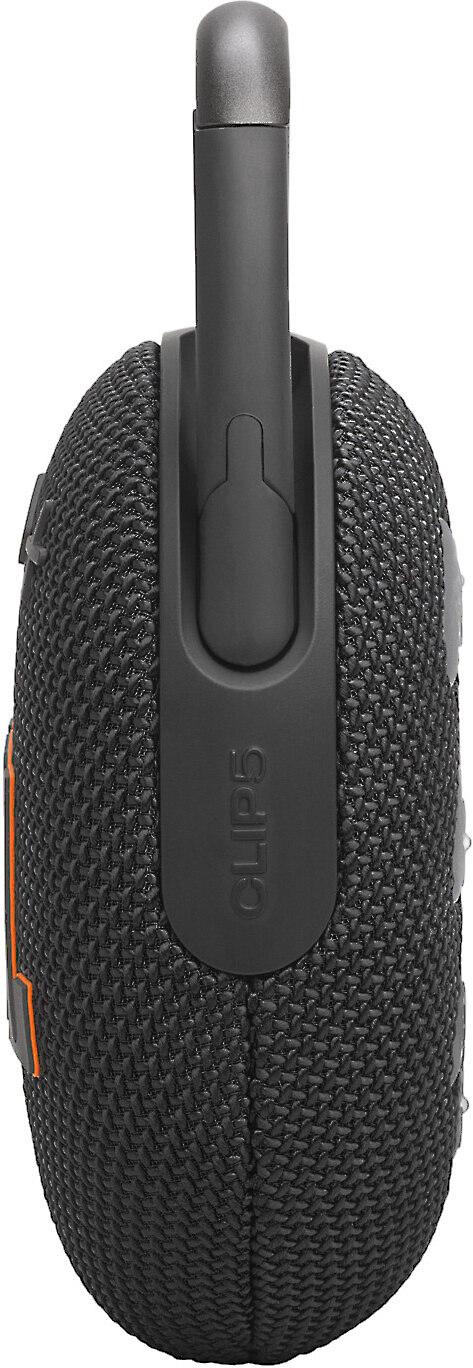
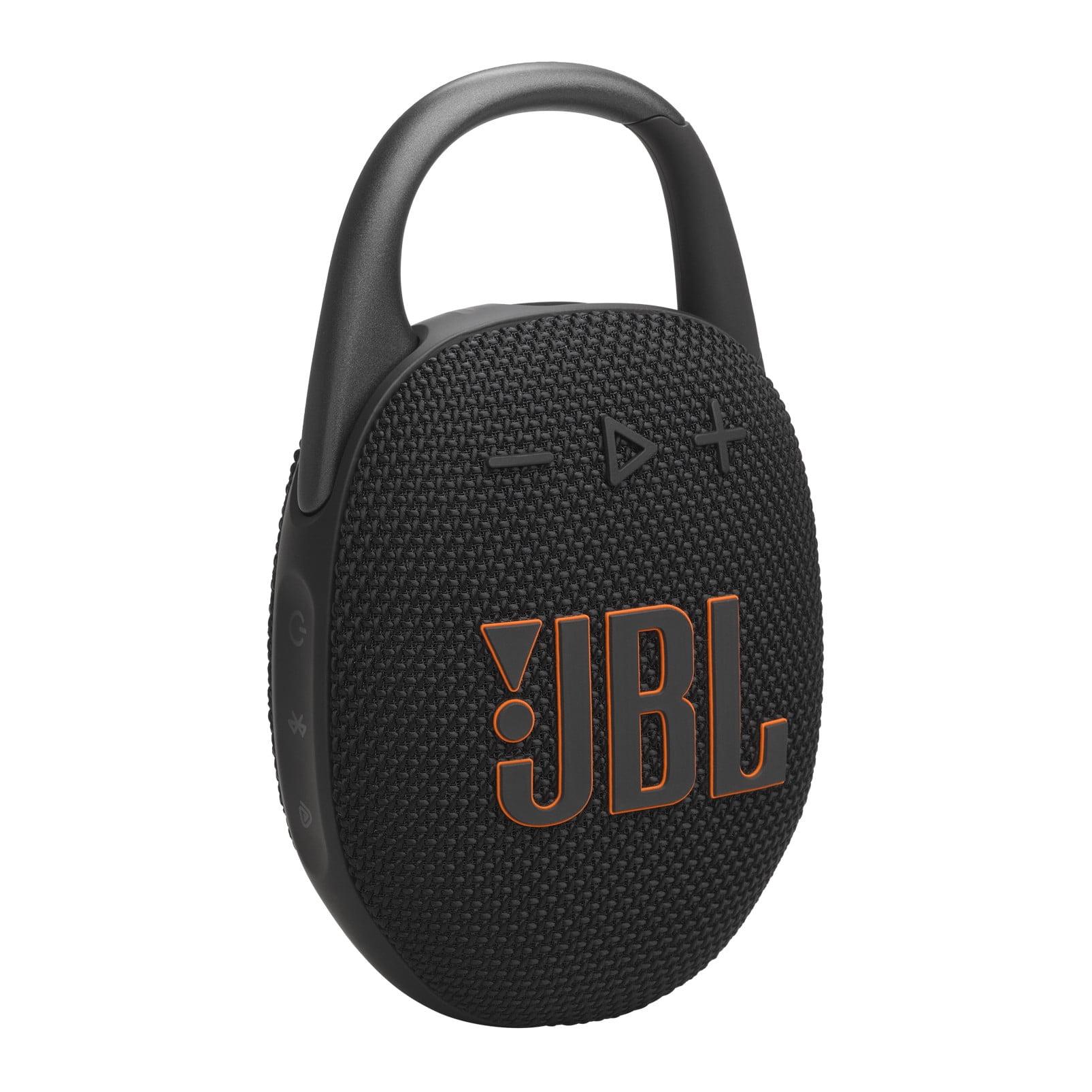
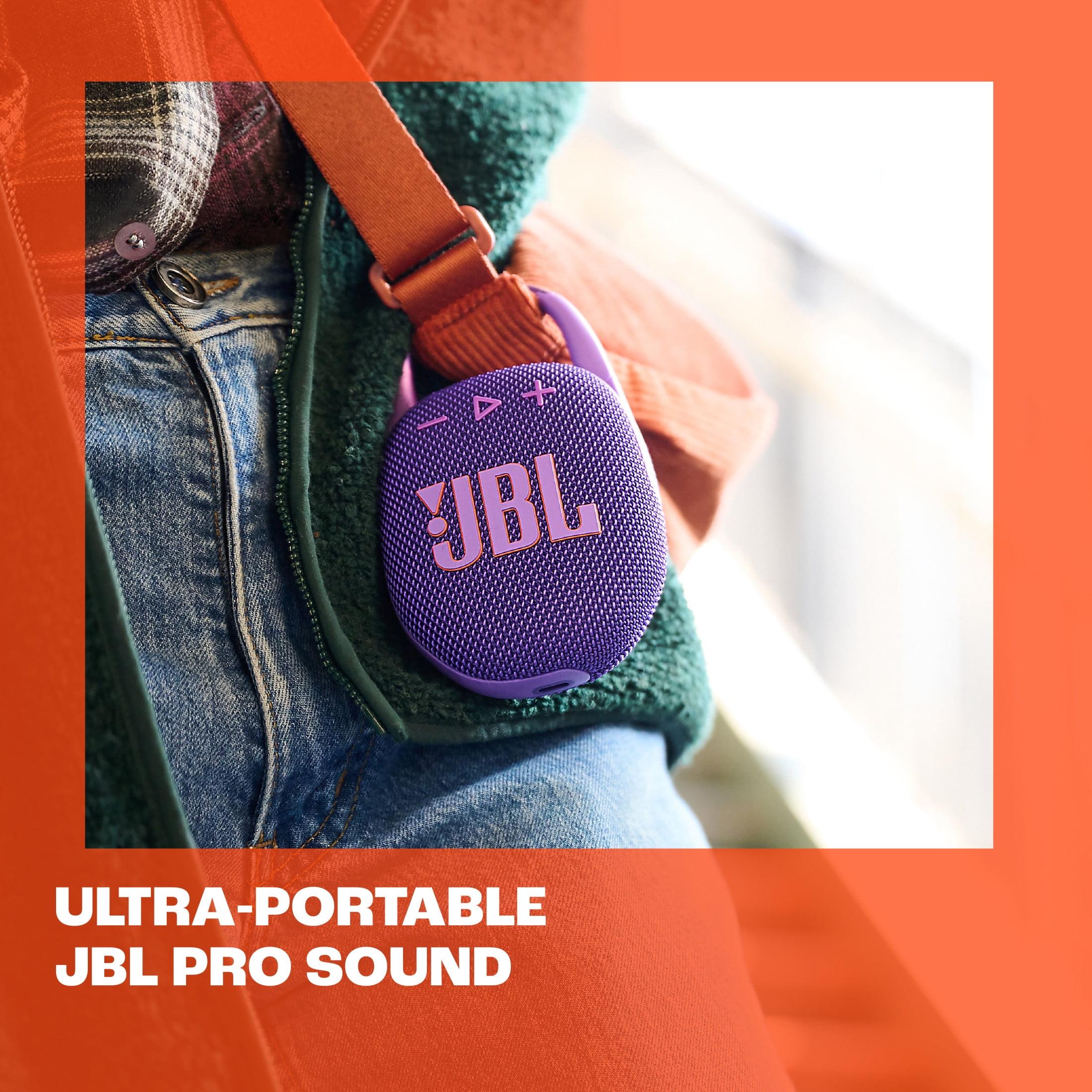
In contrast, the JBL Clip 5 (2020) takes a radically different approach, focusing on maximum portability without sacrificing too much sound quality. Its integrated carabiner clip design and IP67 waterproofing showcase JBL's focus on practical durability. Recent updates have improved battery life and added features like Auracast for connecting multiple speakers.
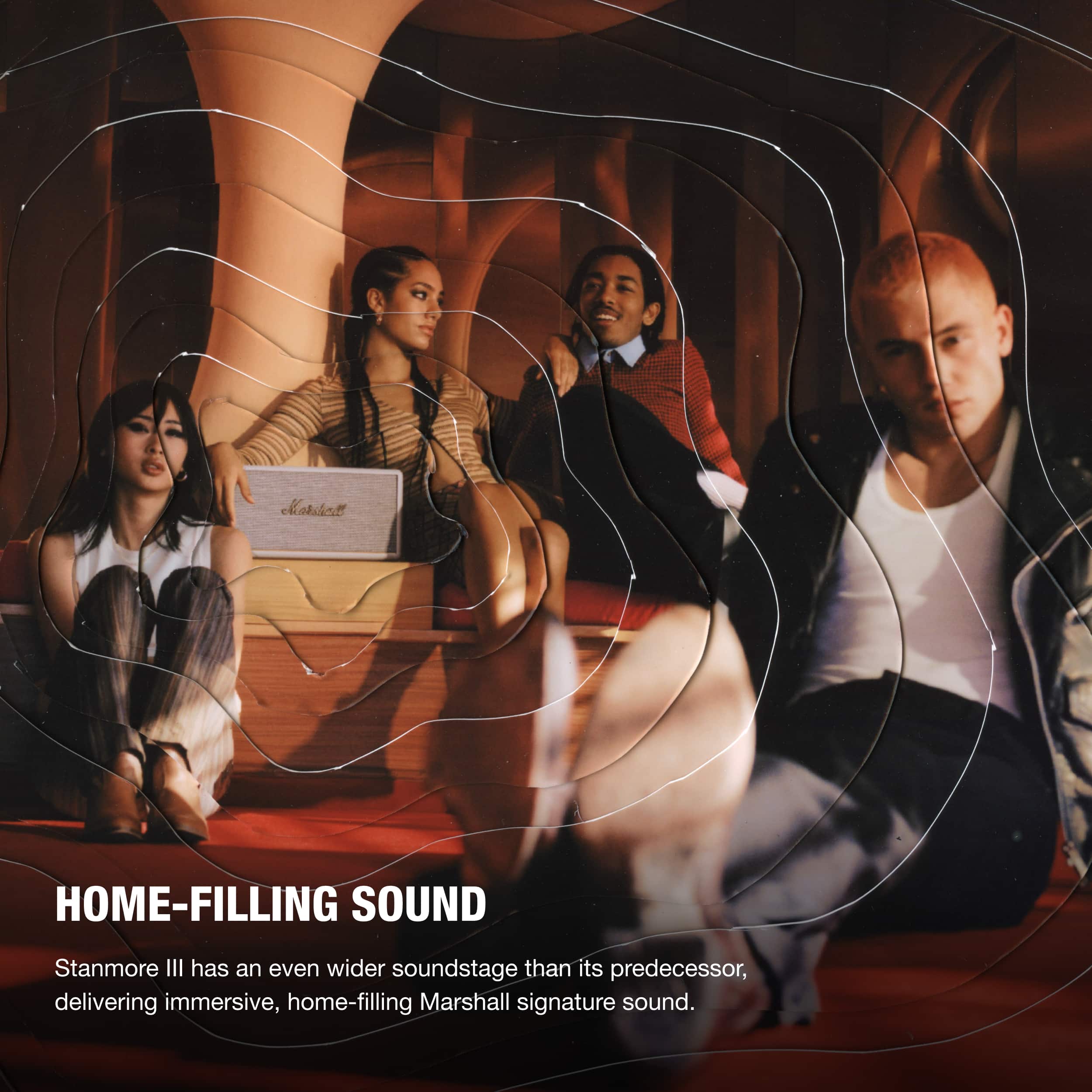
The Stanmore III's 80-watt system (two 15W tweeters and a 50W woofer) delivers impressive room-filling sound. Its frequency response of 45-20,000 Hz means it can reproduce nearly the full range of human hearing. The bass is particularly noteworthy - deep enough for home theater use and music genres that demand powerful low end.
The Clip 5 takes a different approach with its single driver design. While it can't match the Stanmore's power or bass response, it delivers surprisingly clear mids and highs for its size. The speaker excels at personal listening distances of 3-10 feet, though it won't fill a room like its larger competitor.
The Stanmore III offers exceptional clarity across the frequency spectrum. Its dedicated tweeters handle high frequencies with precision, while the woofer delivers controlled, punchy bass. The speaker's Dynamic Loudness feature ensures balanced sound at any volume - particularly useful for background music or late-night listening.
The Clip 5 focuses on clarity in the mid-range, where most vocals and melodic instruments live. While bass response is limited by physics (small speakers struggle with low frequencies), JBL's tuning makes the most of the available range. The result is clear, engaging sound that works well for podcasts, acoustic music, and general listening.
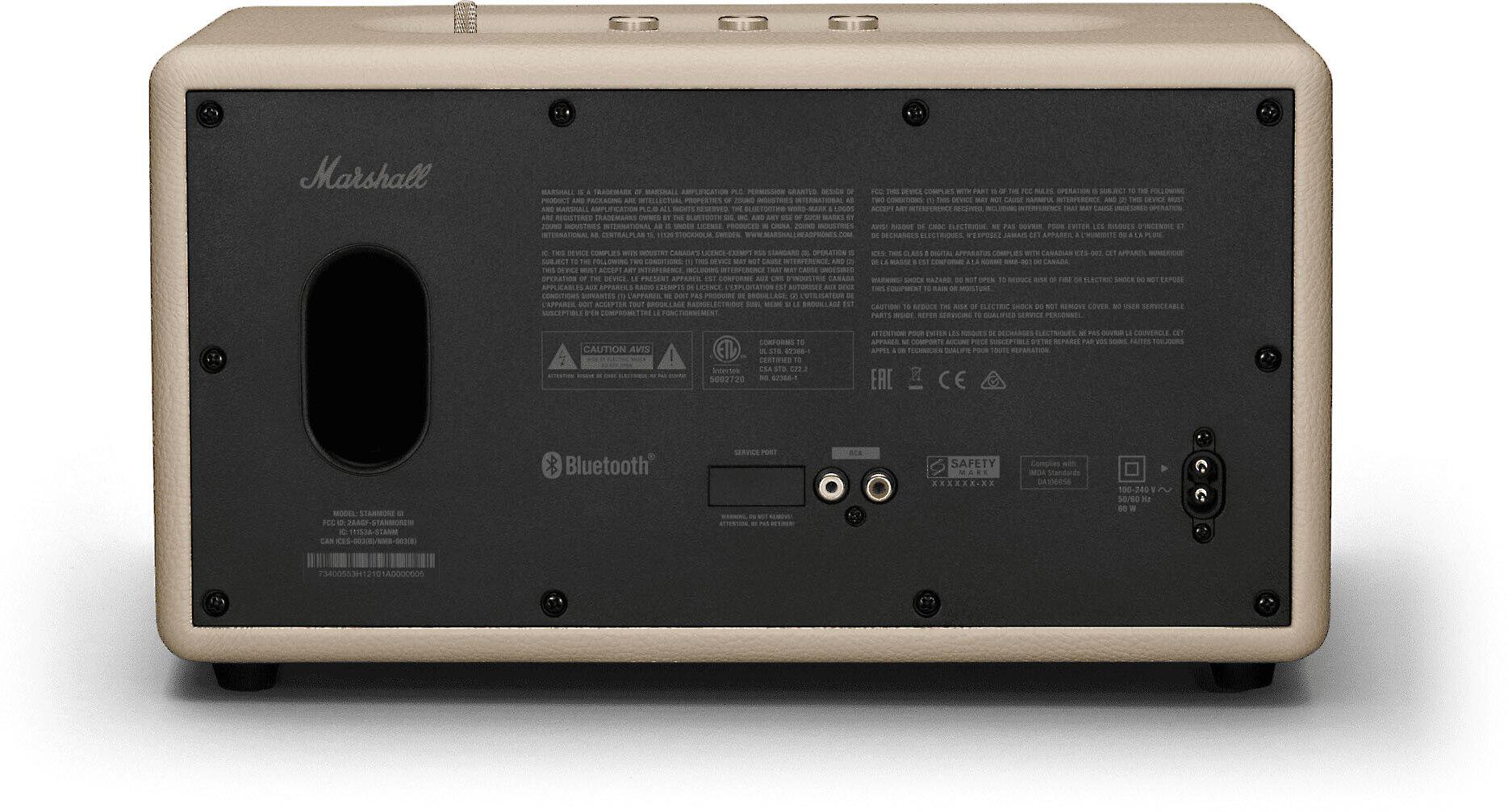
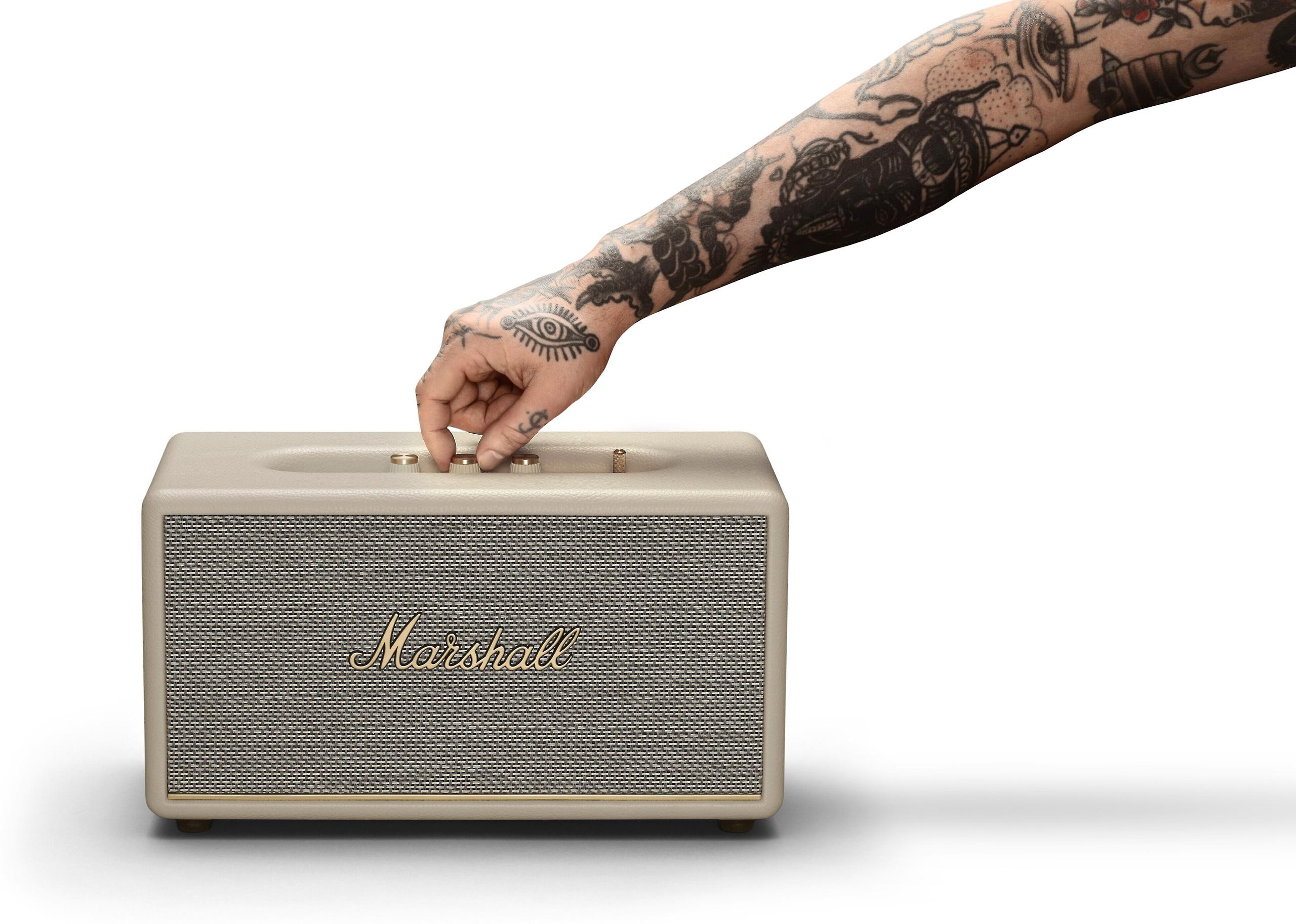
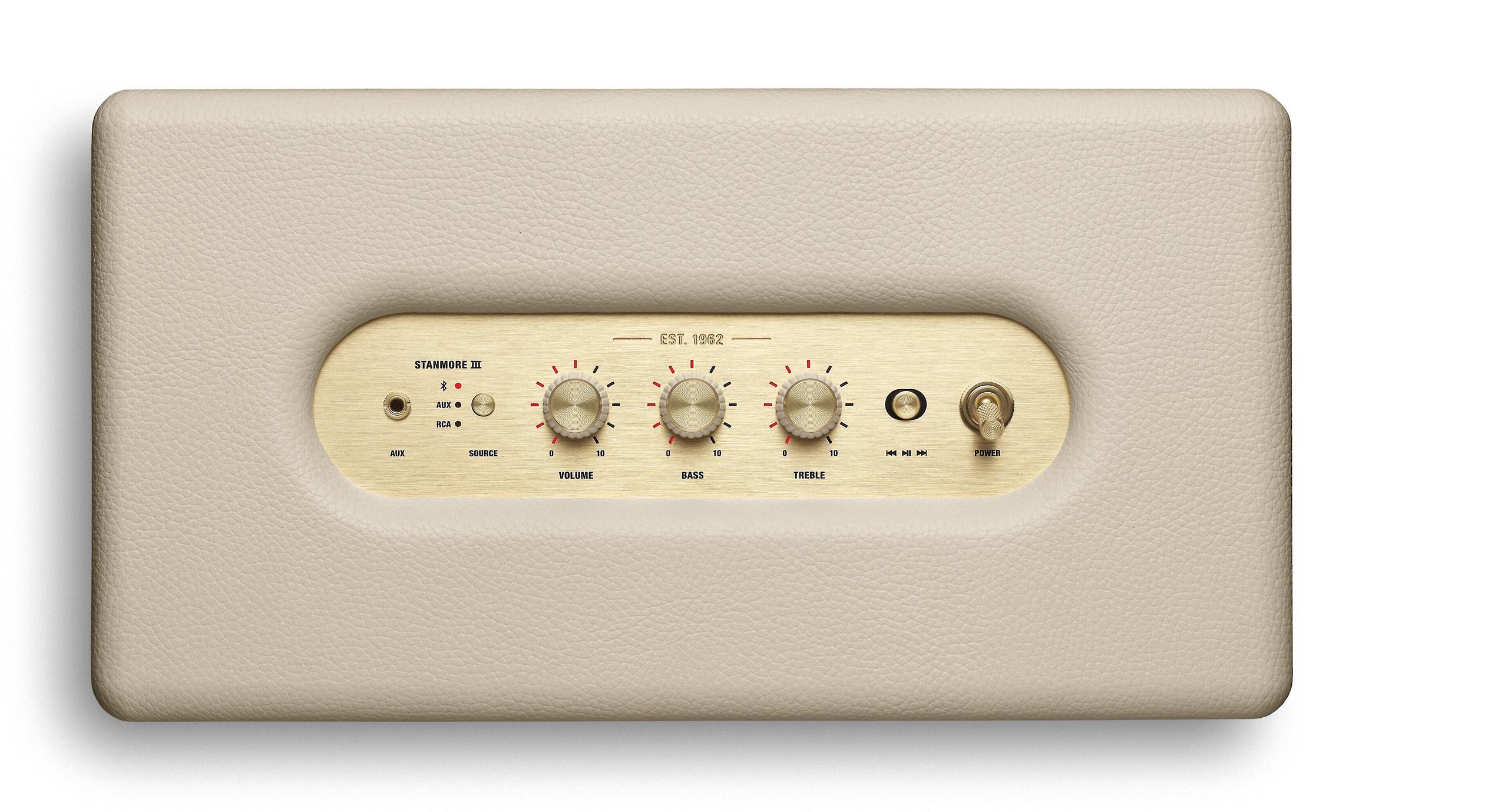
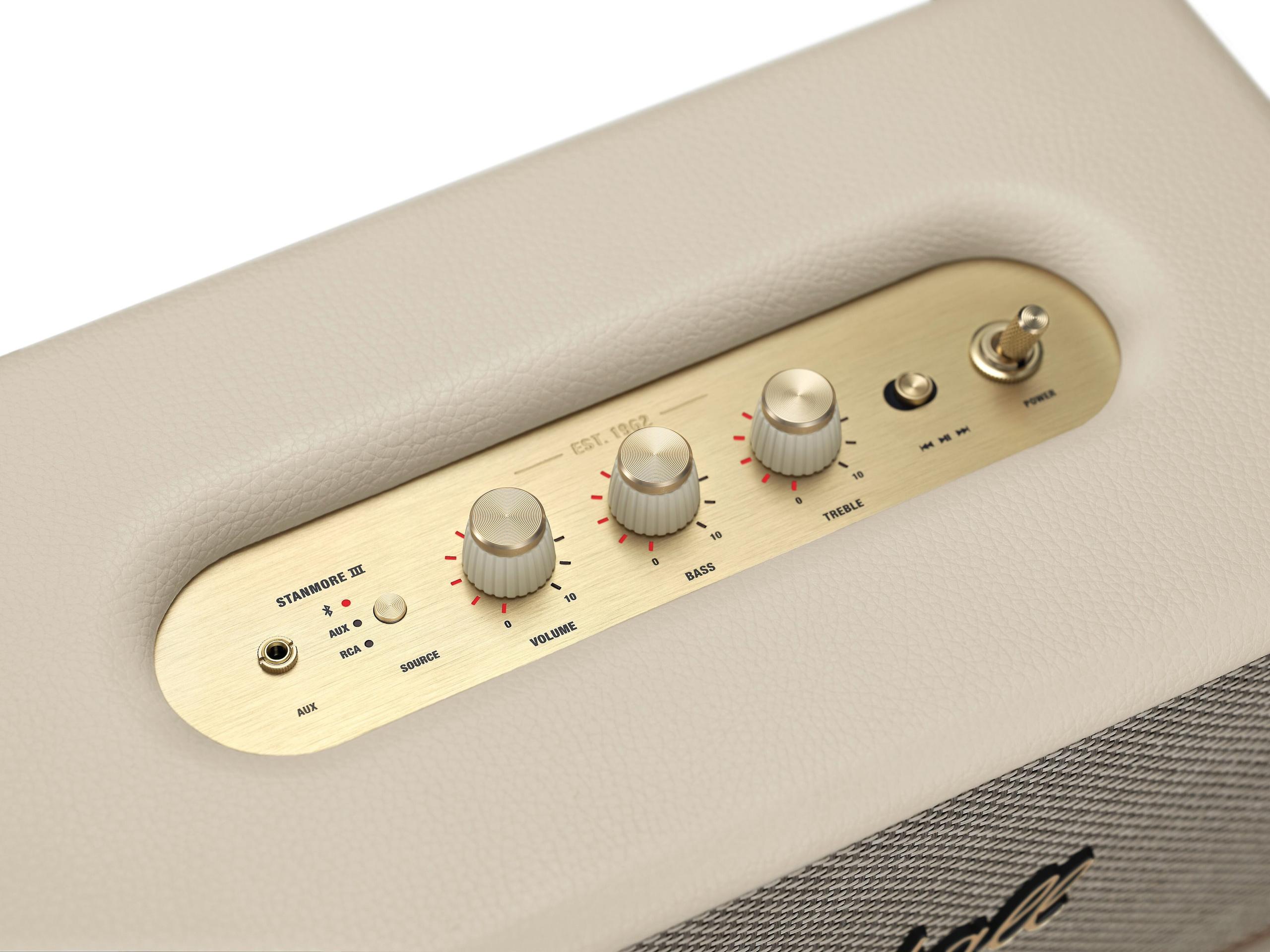
The Stanmore III offers extensive connection options: Bluetooth 5.2, RCA inputs, and a 3.5mm aux port. Physical controls on top provide tactile adjustment of volume, bass, and treble. The Marshall app adds EQ presets and firmware updates.
The Clip 5 keeps things simple with Bluetooth 5.1 as its sole connection option. Basic controls handle playback and volume, while the JBL app offers some EQ customization. This streamlined approach matches its portable nature.
The Stanmore III excels as a home entertainment center. Its powerful output and multiple inputs make it ideal for:
The Clip 5 serves better as a personal audio companion for:
Battery life becomes a key differentiator - the Stanmore III requires AC power but delivers consistent performance, while the Clip 5 offers 12 hours of portable playback. The Stanmore's weight (10.25 lbs) keeps it home, while the Clip 5 (0.63 lbs) goes anywhere.
At $379, the Stanmore III represents a significant investment but delivers premium audio quality and versatility. Its ability to serve as both a music system and TV speaker adds value.
The Clip 5 at $57 offers exceptional value for portable use. Its durability and water resistance mean it should last years of active use, while delivering audio quality that exceeds its price point.
Choose the Stanmore III if:
Choose the Clip 5 if:
Both speakers represent modern approaches to their respective categories. The Stanmore III's firmware update capability suggests future feature additions, while the Clip 5's Auracast support points toward expanded multi-speaker capabilities.
Ultimately, these speakers serve different needs excellently. The choice comes down to your primary use case - room-filling home audio or portable personal sound. Both deliver impressive performance within their intended roles, making either a solid choice for the right user.
Remember, the best speaker is the one that fits your specific needs and usage patterns. Consider how and where you'll use it most often, and choose accordingly.
| Marshall Stanmore III | JBL Clip 5 |
|---|---|
| Price - Initial Investment | |
| $379.99 (premium home audio) | $56.96 (affordable portable option) |
| Power Output - Determines volume and sound quality | |
| 80W total (2x15W tweeters + 50W woofer) | Single driver system (approximately 5W) |
| Size & Weight - Impacts placement and portability | |
| 13.8" x 8.1" x 8.4", 10.25 lbs (stationary) | 5.3" x 3.4" x 1.8", 0.63 lbs (ultra-portable) |
| Frequency Response - Range of sound reproduction | |
| 45-20,000 Hz (full range audio) | 95-20,000 Hz (limited bass response) |
| Battery Life - Determines mobility | |
| AC powered only (no battery) | 12 hours (up to 15 with Playtime Boost) |
| Connectivity Options - Flexibility of use | |
| Bluetooth 5.2, RCA, 3.5mm aux | Bluetooth 5.3 only |
| Water Resistance - Durability for outdoor use | |
| None (indoor use only) | IP67 (waterproof and dustproof) |
| Sound Customization - Control over audio | |
| Physical bass/treble knobs + app EQ | App-based EQ only |
| Special Features - Additional capabilities | |
| Dynamic Loudness, placement compensation, OTA updates | Integrated carabiner, Auracast support, multi-point connection |
| Primary Use Case - Best suited for | |
| Home audio system, room-filling sound | Personal audio, outdoor activities, travel |
| Maximum Volume (SPL) - Sound projection capability | |
| 97 dB at 1 meter (fills large rooms) | ~80 dB at 1 meter (personal listening range) |
| Build Quality - Longevity and durability | |
| Premium materials, wooden cabinet, metal accents | Durable plastic, rubber coating, metal carabiner |
| Warranty Coverage - Purchase protection | |
| 1 year limited warranty | 1 year limited warranty |
The Marshall Stanmore III ($379) is better for home audio with superior sound quality and volume, while the JBL Clip 5 ($57) is better for portable use and outdoor activities. They serve different purposes, so "better" depends on your specific needs.
The biggest difference is that the Stanmore III is a powerful home speaker that needs to be plugged in, while the Clip 5 is an ultra-portable, battery-powered speaker with a built-in clip for attachment.
The Marshall Stanmore III delivers significantly better sound quality with its 80W system and full-range audio. However, the JBL Clip 5 offers impressive sound for its small size, just with less bass and volume.
The JBL Clip 5 is designed for outdoor use with IP67 waterproofing. The Stanmore III is not weather-resistant and must stay indoors.
The Marshall Stanmore III is better for parties with its room-filling sound and higher volume capability. The JBL Clip 5 is more suited for personal listening or small groups.
The Stanmore III is AC-powered and runs indefinitely when plugged in. The Clip 5 offers 12 hours of battery life per charge, extendable to 15 hours with power-saving features.
The Stanmore III can connect to TVs via its RCA or 3.5mm inputs. The Clip 5 only has Bluetooth, making TV connection more limited.
The Marshall Stanmore III has significantly better bass response with its dedicated 50W woofer. The JBL Clip 5's bass is limited by its small size.
The JBL Clip 5 supports Auracast for connecting multiple compatible JBL speakers. The Stanmore III currently doesn't support multi-speaker pairing.
The JBL Clip 5 offers excellent value at $57 for portable use. The Stanmore III at $379 is more expensive but justifies its price with superior sound quality and features.
Both speakers come with a 1-year limited warranty covering manufacturing defects.
Both speakers work without apps, but each has a companion app for additional features. The Marshall app offers more extensive EQ controls, while the JBL app provides basic customization.
We've done our best to create useful and informative comparisons to help you decide what product to buy. Our research uses advanced automated methods to create this comparison and perfection is not possible - please contact us for corrections or questions. These are the sites we've researched in the creation of this article: techgadgetscanada.com - camelcamelcamel.com - crutchfield.com - bestbuy.com - dxomark.com - crutchfield.com - crutchfield.com - marshall.com - marshall-production-1.mobify-storefront.com - exhibit.tech - ooberpad.com - av-connection.com - howtogeek.com - soundguys.com - youtube.com - rtings.com - gymcaddy.net - jbl.com - mm.jbl.com - soundguys.com - th.jbl.com - hu.harmanaudio.com

Privacy Policy
Terms and Conditions - Affiliate Policy
Home Security
© Copyright 2008-2026.
11816 Inwood Rd #1211, Dallas, TX 75244