

When you're shopping for a Bluetooth speaker in 2025, you're essentially choosing between two completely different philosophies about how music should fit into your life. The Monster Shock Plus S21 represents the "take your music anywhere" approach, while the Marshall Stanmore III embodies the "serious home listening" mindset. Both are excellent speakers, but they solve fundamentally different problems.
Understanding which approach works better for you requires diving into what makes each speaker tick—and more importantly, understanding what you'll actually use it for day-to-day.
The Bluetooth speaker market has essentially split into two distinct categories over the past few years. Portable speakers prioritize convenience, battery life, and durability for active lifestyles. Home speakers focus on sound quality, power output, and visual aesthetics for dedicated listening spaces.
This wasn't always the case. Early Bluetooth speakers were mostly terrible-sounding gadgets that happened to be wireless. But as the technology matured—particularly with improvements in battery efficiency, driver design, and digital signal processing (the computer chips that optimize audio output)—manufacturers could finally choose to excel in specific areas rather than compromise across the board.
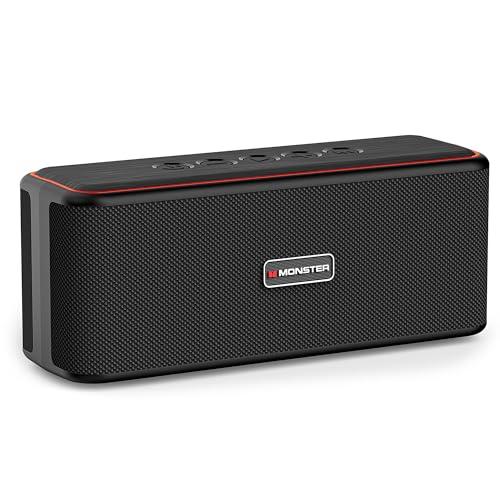
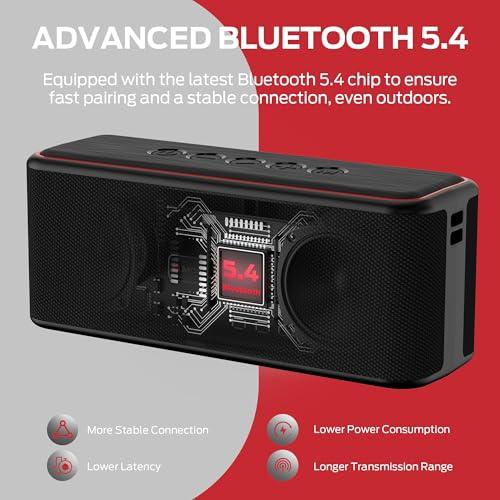
The Monster Shock Plus S21, released in 2025, showcases how far portable speaker technology has advanced. Its Bluetooth 5.4 connectivity offers lower latency (less delay between pressing play and hearing sound) and more stable connections than older versions. The speaker also demonstrates how manufacturers can now pack legitimate audio power into lightweight, weather-resistant packages.
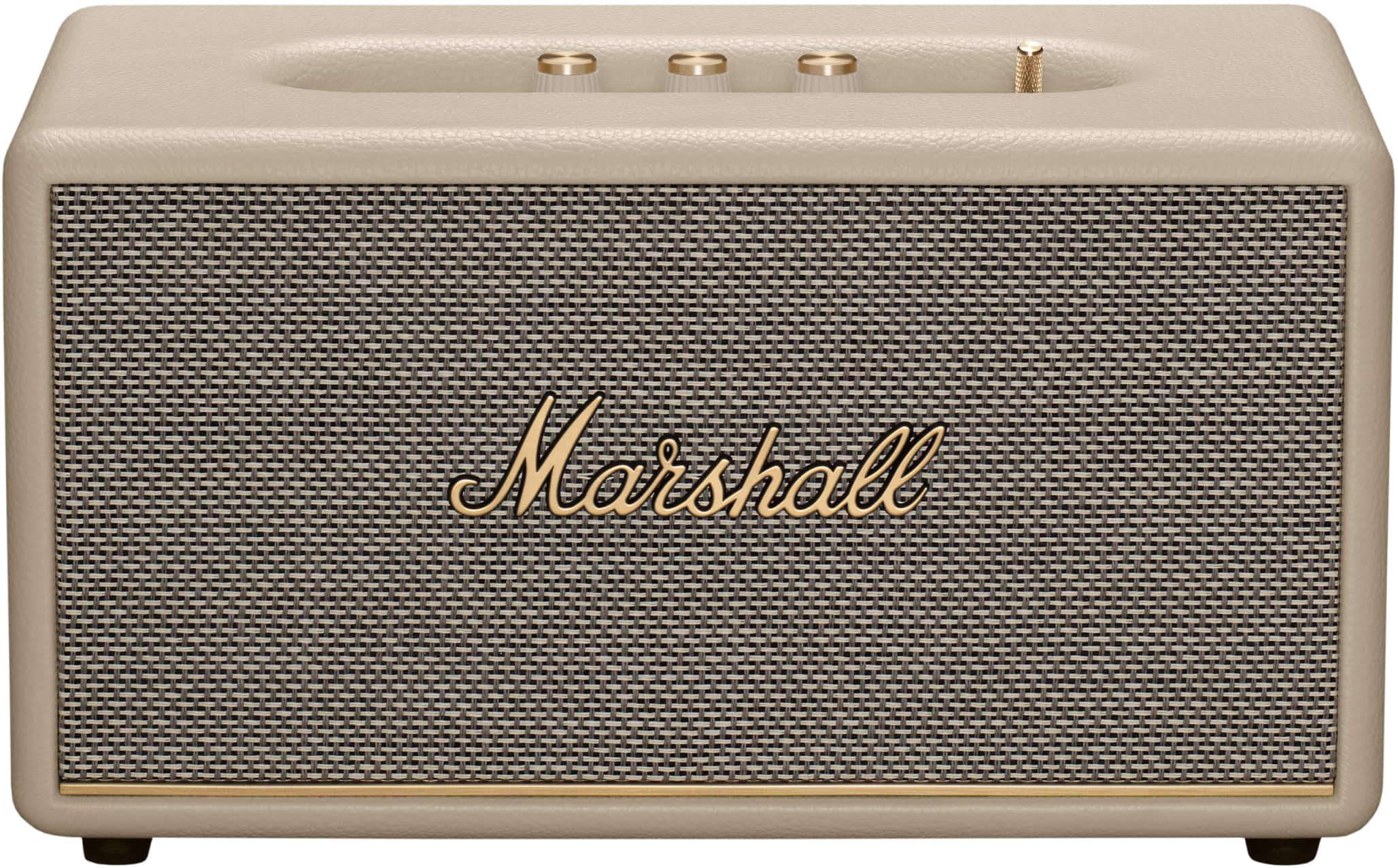
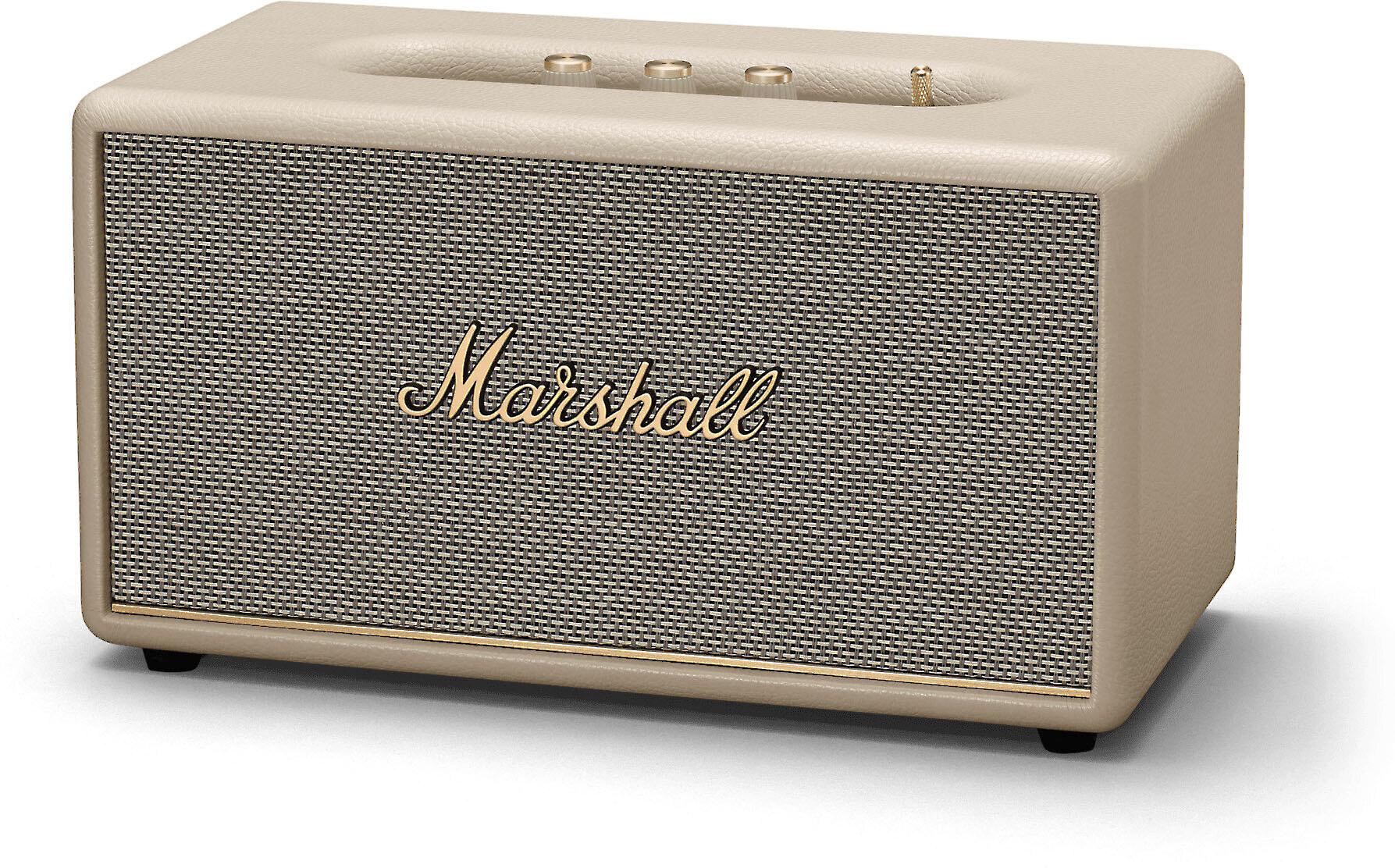
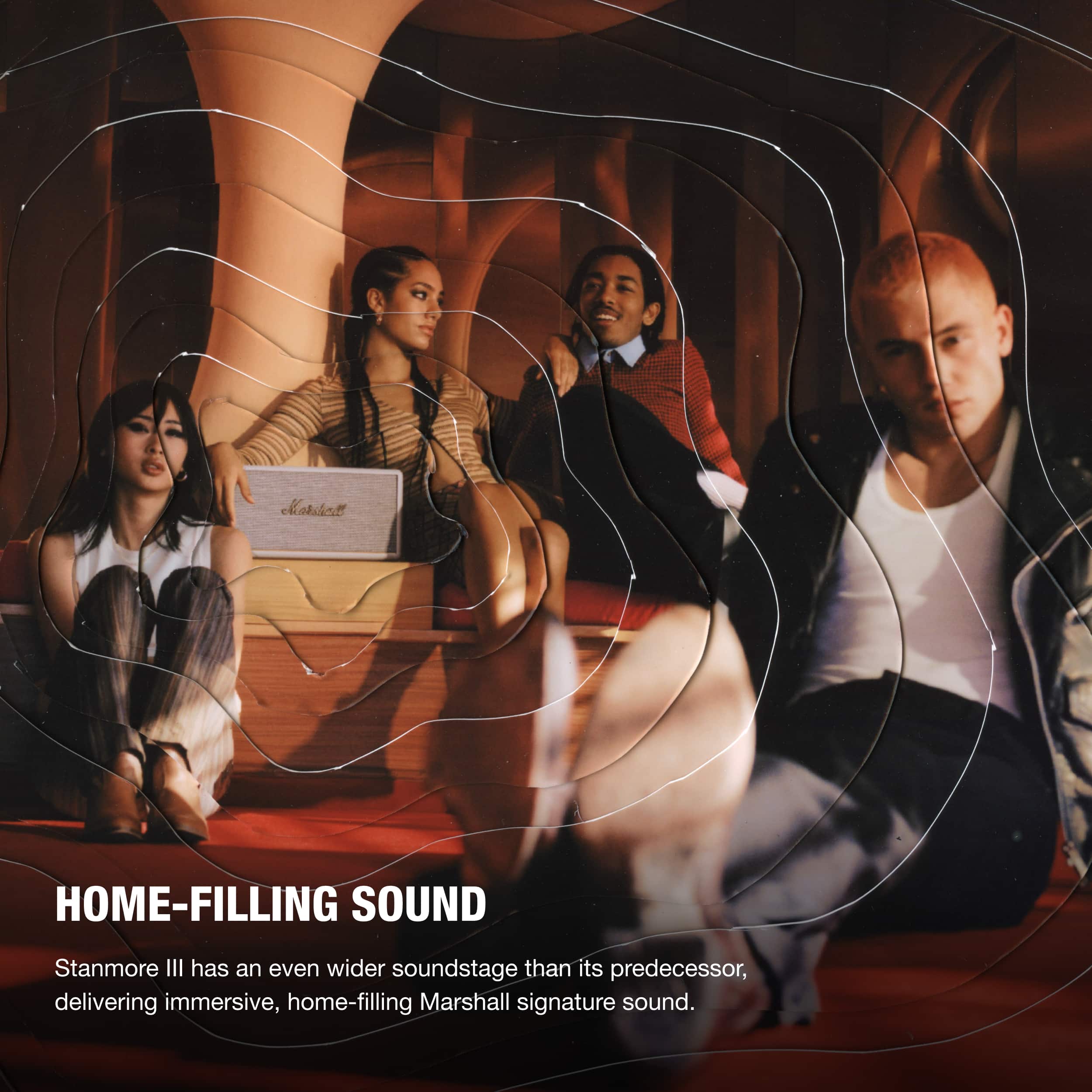
The Marshall Stanmore III, from an earlier generation, represents the maturation of home Bluetooth speakers. Rather than trying to be everything to everyone, it focuses entirely on delivering room-filling sound with the kind of build quality and aesthetic appeal that makes you want to display it prominently.
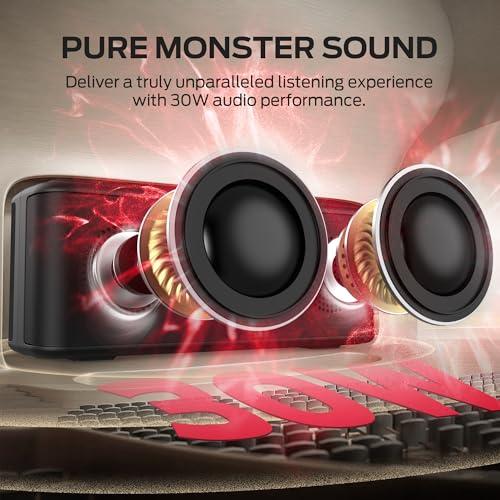
The Marshall Stanmore III delivers 80 watts of total system power compared to the Monster Shock Plus S21's 30 watts, but raw wattage only tells part of the story. What matters more is how that power gets distributed and controlled.
The Marshall uses what's called a 2-way driver system—essentially two different types of speakers working together. Its 5-inch woofer handles bass and midrange frequencies, while two dedicated tweeters (small speakers optimized for high frequencies) handle the treble. This division of labor means each driver can focus on what it does best, resulting in cleaner sound with less distortion.
The Monster Shock Plus S21, constrained by its portable design, uses a simpler driver arrangement. However, it compensates with smart digital processing and surprisingly effective passive radiators (additional speaker cones that vibrate sympathetically to reinforce bass) for its size class.
In practical terms, the Marshall can fill a large living room with authority, while the Monster excels at providing clear, balanced sound in smaller spaces or for personal listening. If you've ever tried to play music for a dinner party and found your speaker straining at high volumes, you understand why power headroom matters.
Both speakers handle the full range of human hearing, but they prioritize different parts of the audio spectrum. The Marshall Stanmore III is tuned with Marshall's signature rock-and-roll DNA—emphasizing punchy bass and crisp highs that make electric guitars and driving rhythms sound particularly engaging.
This tuning philosophy, often called a "V-shaped" sound signature, slightly boosts the low and high frequencies while keeping midrange frequencies more neutral. It's designed to make music sound exciting and immediate, even if it's not technically the most accurate reproduction.
The Monster Shock Plus S21 takes a more balanced approach, prioritizing clarity across all frequencies. This makes it more versatile for different types of content—podcasts sound as good as music, and you won't find certain instruments or voices getting lost in the mix.
For home theater use, these differences become particularly important. The Marshall's enhanced bass response helps with movie soundtracks and action sequences, making explosions feel more impactful. However, its midrange tuning might make dialogue sound slightly recessed compared to the Monster's more neutral approach.
Dynamic range refers to a speaker's ability to handle both quiet and loud passages without compression or distortion. This is where the Marshall Stanmore III's higher power output and more sophisticated amplification really shine.
During our research into user experiences and professional reviews, a consistent theme emerged: the Marshall maintains composure even when pushed to high volumes. Its Class D amplification (a highly efficient type of power amplifier) provides clean power delivery without the heat buildup that can cause distortion in smaller speakers.
The Monster Shock Plus S21 performs admirably for its size, but physics imposes limitations. Push it too hard, and you'll hear the compression that's inevitable when small drivers try to move lots of air. This isn't a flaw—it's a trade-off for portability.
The Monster Shock Plus S21's Bluetooth 5.4 connectivity represents the cutting edge as of 2025, offering several practical advantages over the Marshall Stanmore III's Bluetooth 5.2 implementation.
Bluetooth 5.4 introduces improved audio codecs (the algorithms that compress and decompress audio for wireless transmission) and better power efficiency. More importantly for daily use, it provides more stable connections in environments with lots of wireless interference—think apartments with dozens of Wi-Fi networks or offices with multiple Bluetooth devices competing for bandwidth.
The Marshall compensates with multi-host functionality, allowing two Bluetooth devices to stay connected simultaneously. You can have your phone and laptop both paired, switching between them without the annoying re-pairing process that plagues many speakers.
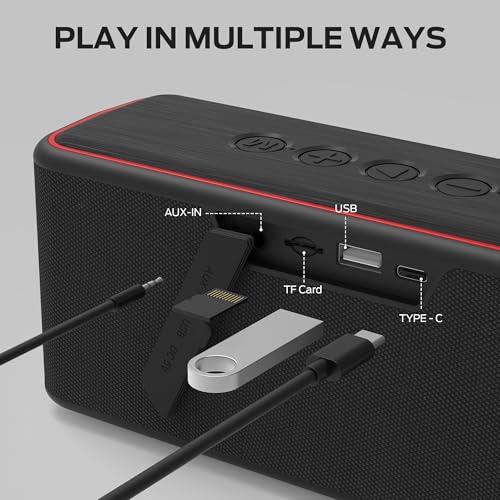
This is where the Monster Shock Plus S21 shows its versatility advantage. Beyond Bluetooth, it accepts audio from 3.5mm auxiliary cables, USB drives, and TF (microSD) cards. This flexibility proves invaluable when Bluetooth fails, when you want to play music from a device without Bluetooth, or when you need to conserve your phone's battery.
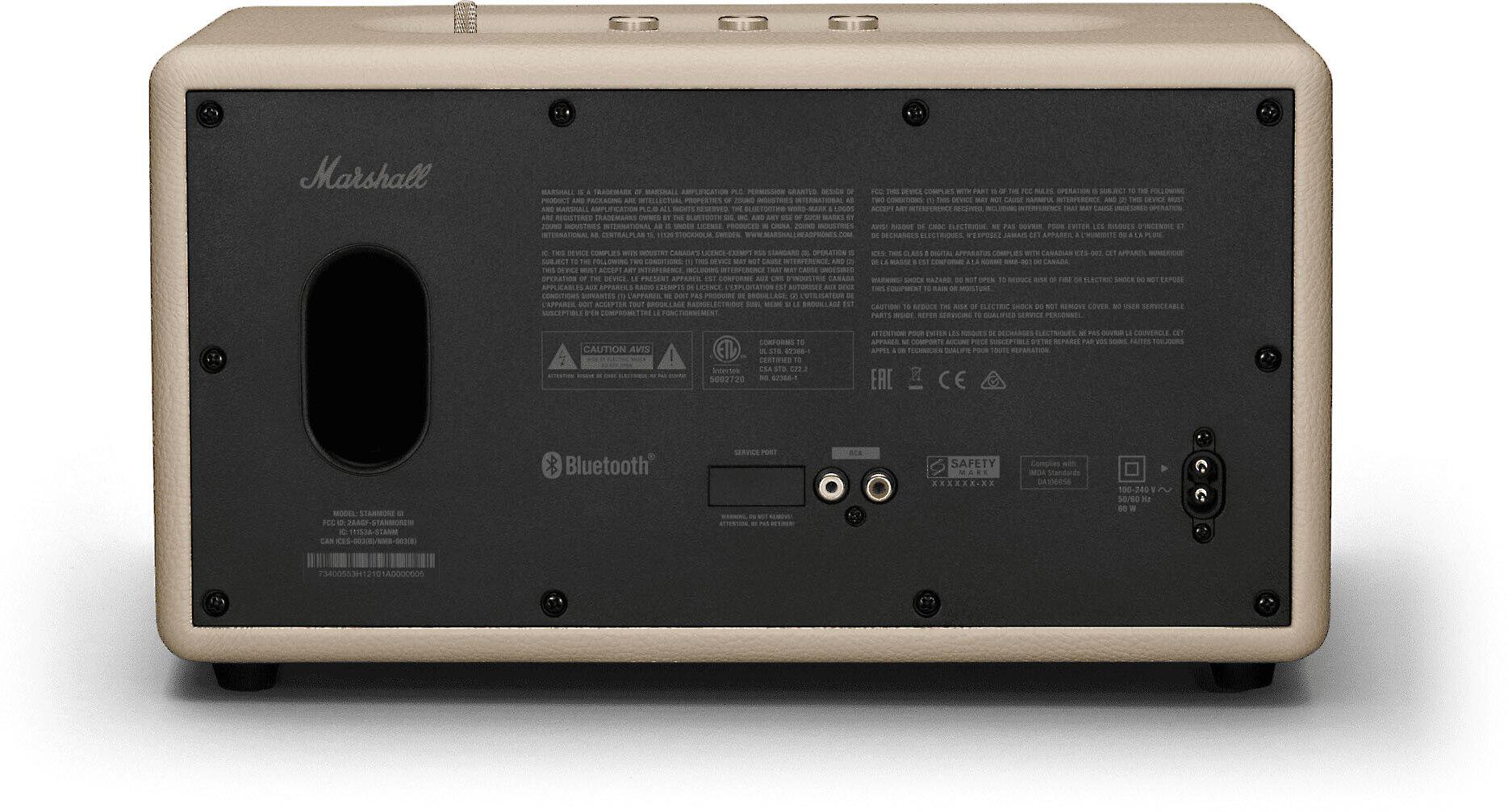
The Marshall Stanmore III offers RCA inputs (the red and white cables you might remember from older audio equipment) alongside standard 3.5mm auxiliary. RCA connections can provide better audio quality than Bluetooth for listeners who care about every detail, but they require more setup and limit your mobility.
For home theater integration, the Marshall's RCA inputs allow direct connection to TV audio outputs or dedicated streaming devices, potentially providing better sound quality than Bluetooth for movie watching.
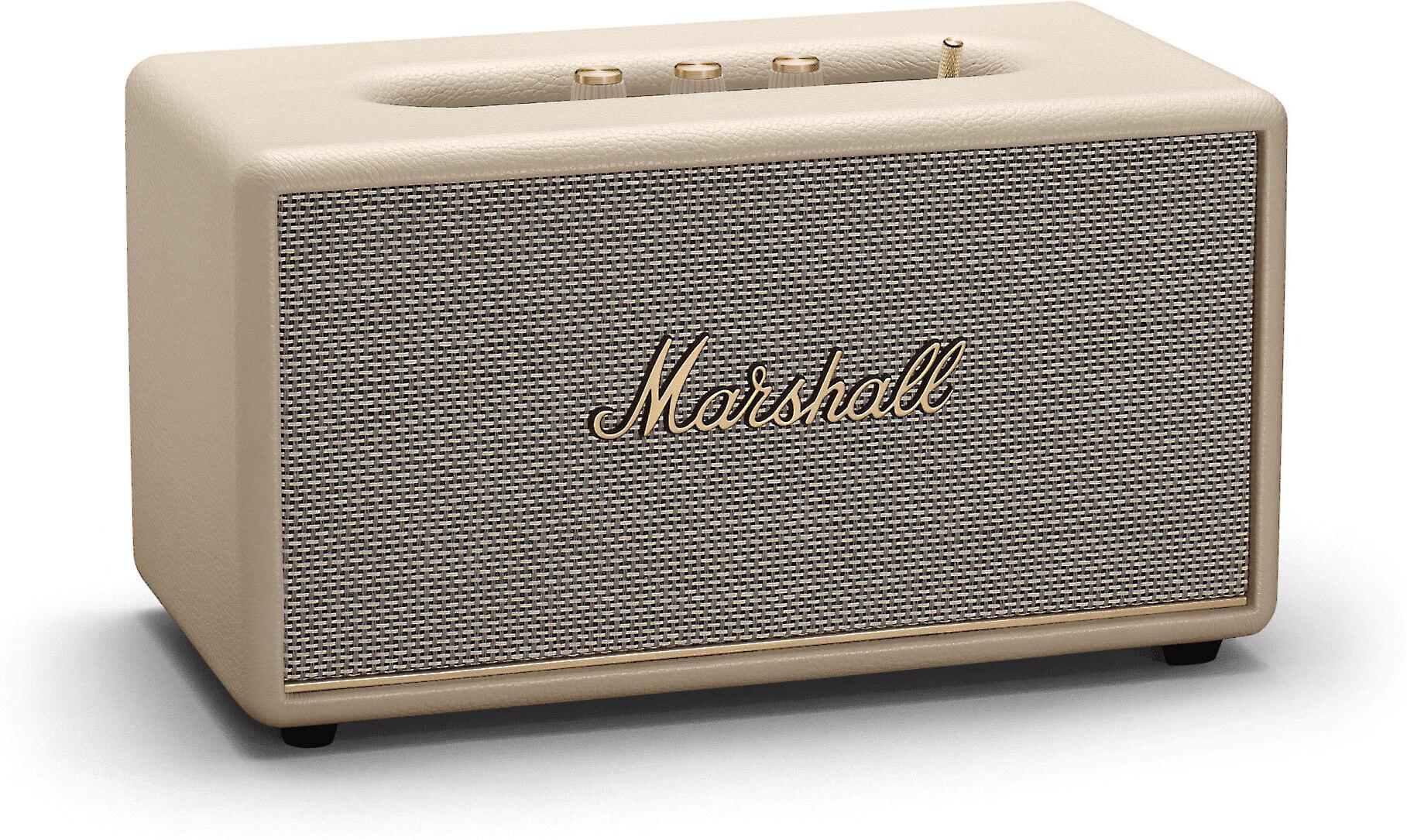
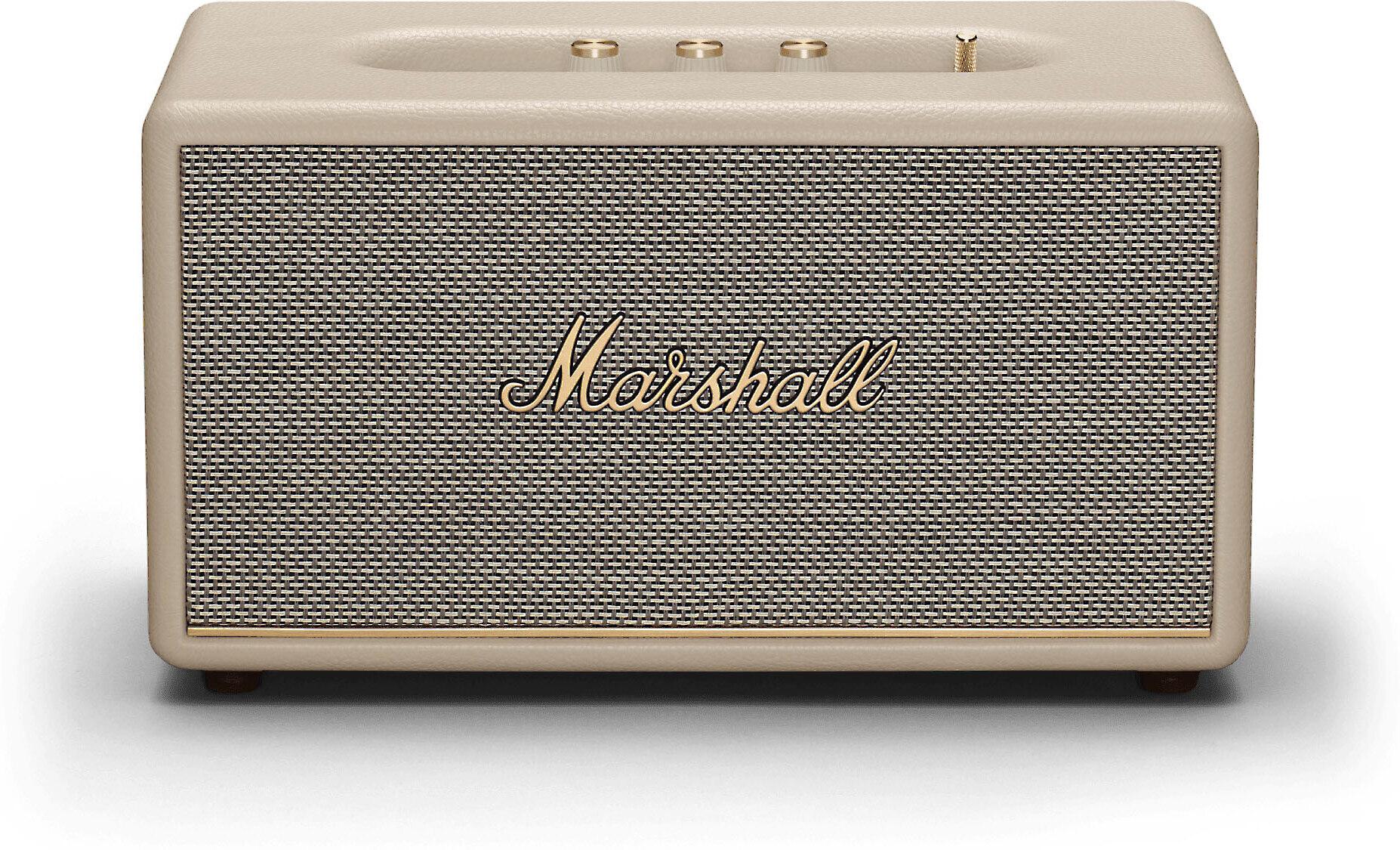
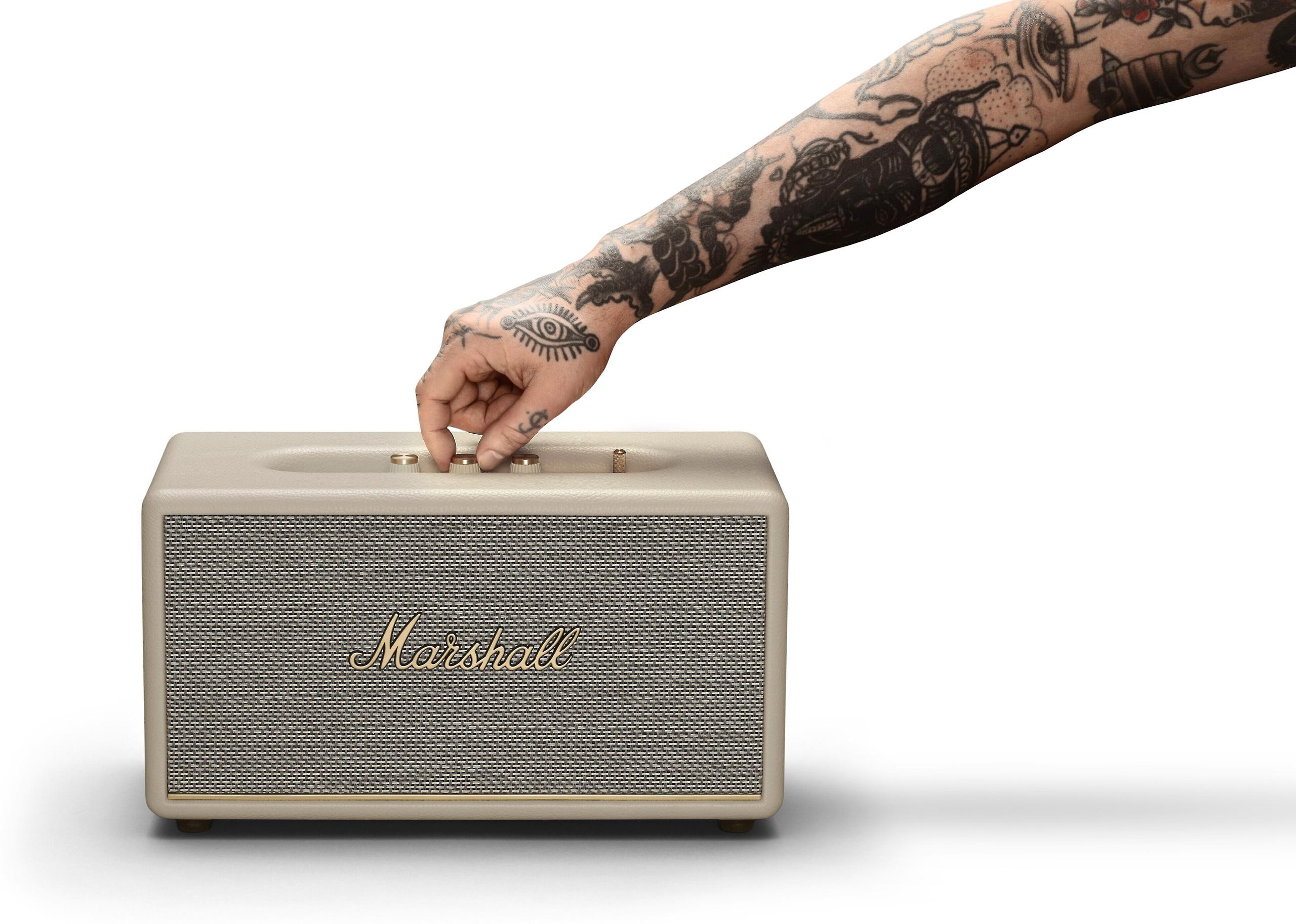
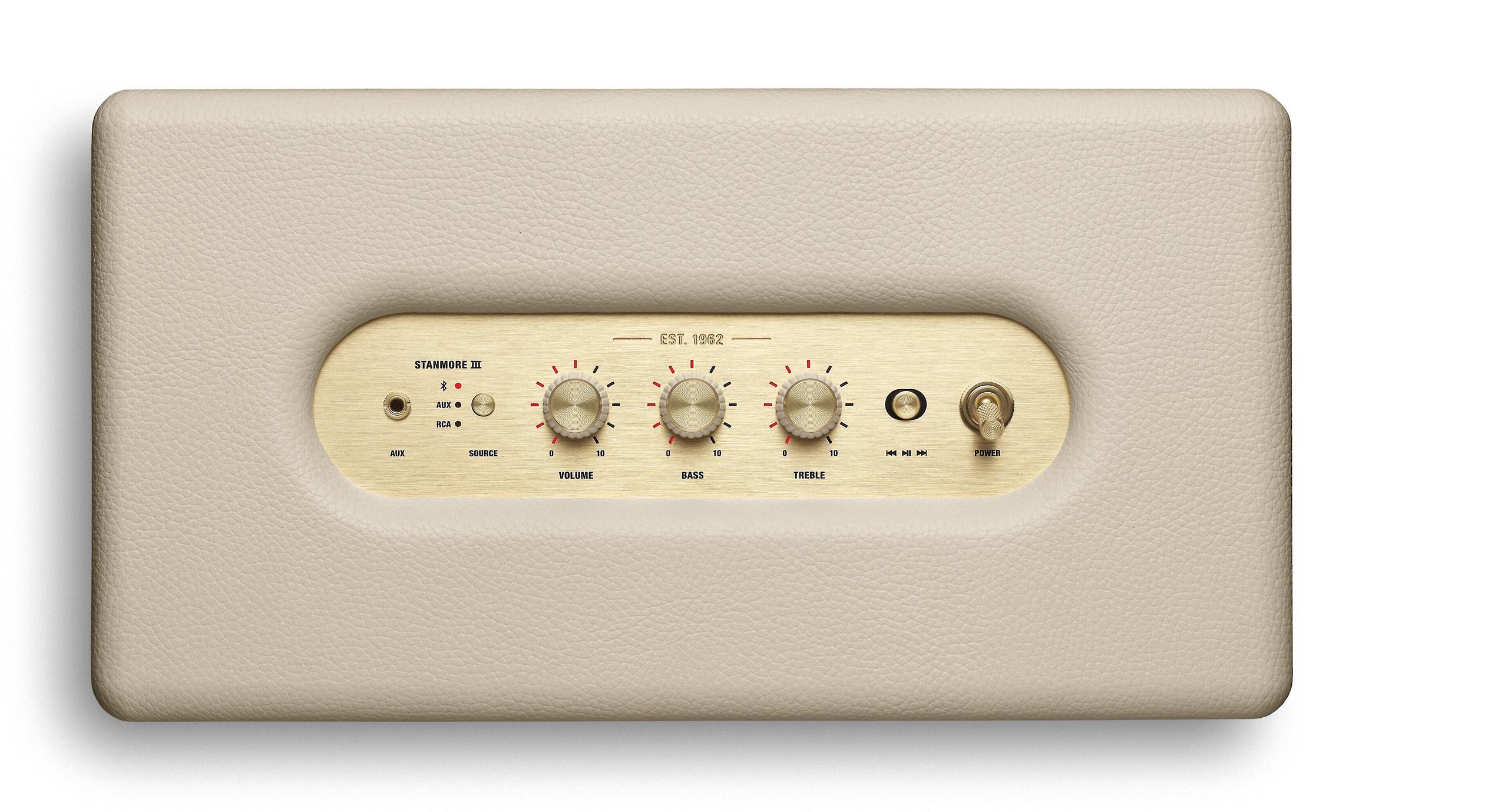
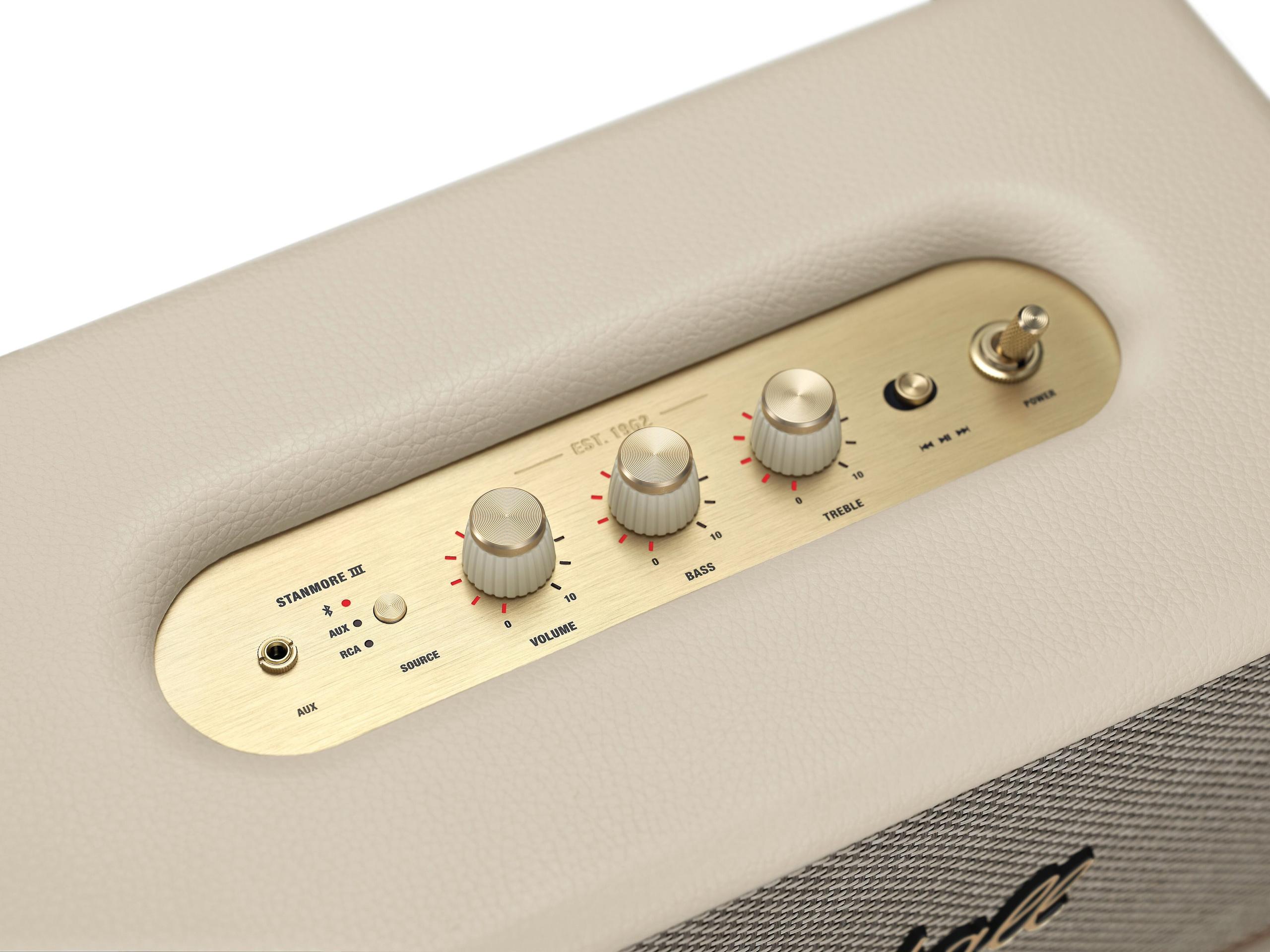
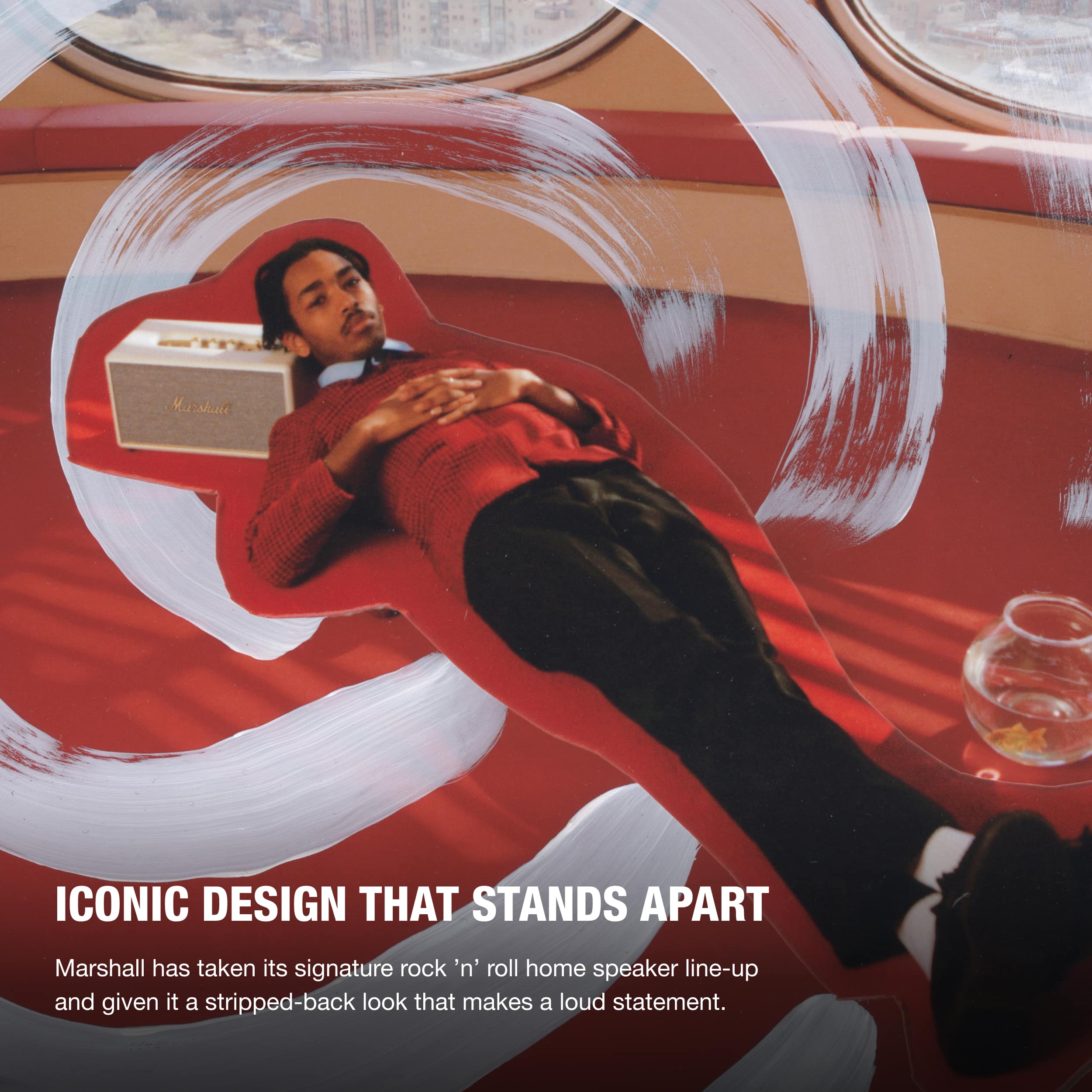
The Marshall Stanmore III doesn't just play music—it makes a statement. At 9.4 pounds, it has the substantial feel of professional audio equipment. The textured vinyl covering and brass control knobs directly reference Marshall's legendary guitar amplifiers, creating an immediate visual connection to rock history.
This isn't just nostalgia marketing. The physical controls offer genuine advantages over app-based alternatives. When you want to quickly adjust bass or treble during a listening session, reaching for a tactile knob beats fumbling with your phone. The analog controls also work regardless of your phone's battery level or connection status.
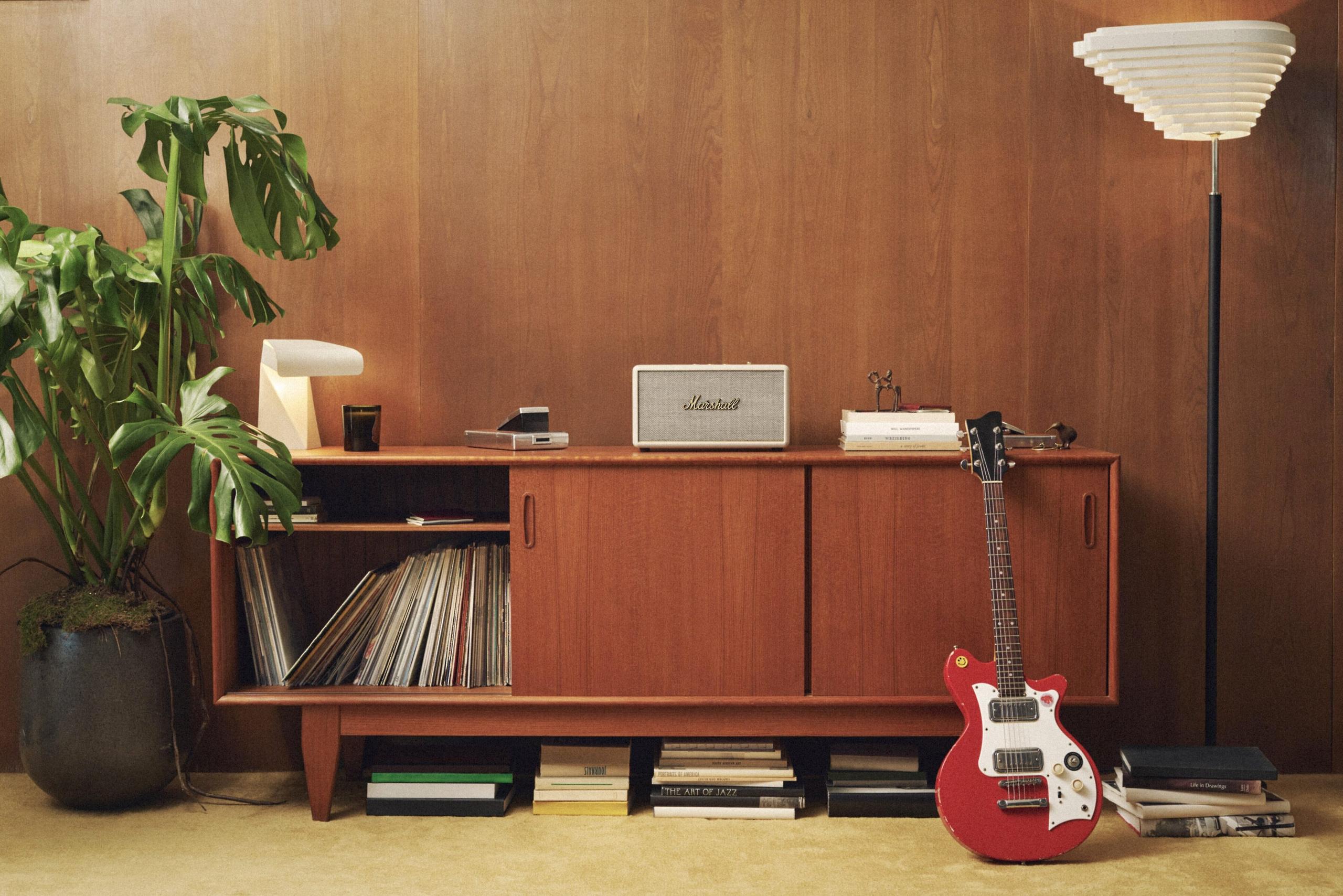
The build quality reflects its intended permanent placement. Multiple users have noted that the Marshall feels like a piece of furniture rather than a gadget—something you'd be happy to have visible in your living room for years.
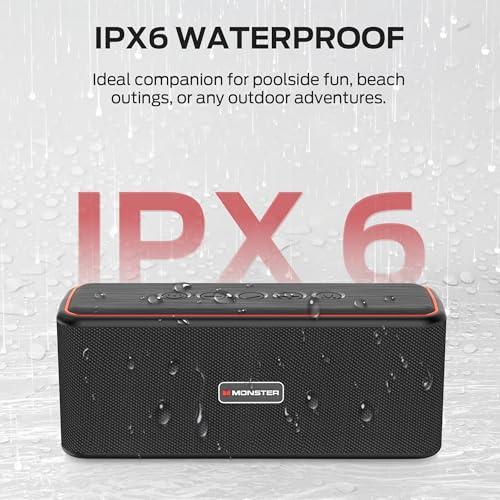
The Monster Shock Plus S21 prioritizes practical durability over visual impact. Its IPX6 water resistance rating means it can handle splashes, spills, and light rain without damage. This might seem like a minor feature until you're using it poolside or at a beach gathering where accidents are inevitable.
At just over 2 pounds with an integrated carrying handle, the Monster disappears into daily life. It's the speaker you can grab without thinking when heading to the backyard, packing for a weekend trip, or moving between rooms.
The plastic construction might seem less premium than the Marshall's materials, but it serves the portable mission. Plastic doesn't dent, doesn't show water spots, and weighs significantly less than metal or wood alternatives.
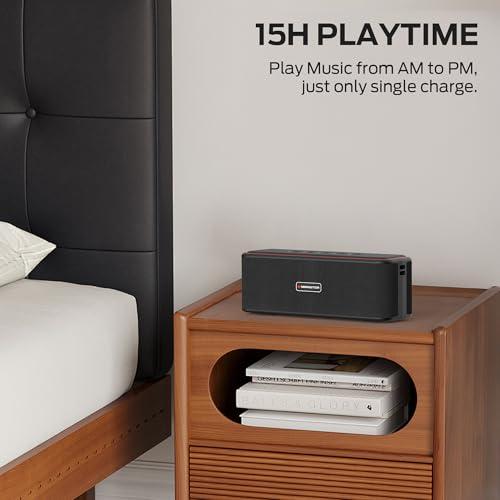
The fundamental difference between these speakers becomes most apparent when you consider power sources. The Monster Shock Plus S21's 15-hour battery life provides genuine all-day freedom, while the Marshall Stanmore III's AC-only operation ensures consistent performance but eliminates portability entirely.
That 15-hour rating deserves context. Battery life varies significantly based on volume levels, content type, and environmental factors. Playing bass-heavy music at high volumes will drain the battery faster than acoustic music at moderate levels. However, our research suggests most users easily get through full days of normal use without needing to recharge.
The Monster's USB-C charging represents modern convenience—the same cable that charges many phones and laptops can power the speaker. The approximately 2-hour charging time means you're never stuck without music for long.
The Marshall's always-plugged-in approach eliminates battery anxiety entirely. You never have to worry about charge levels or remember to plug it in overnight. For dedicated home use, this reliability often outweighs the mobility limitation.
At the time of writing, these speakers occupy different value tiers entirely. The Monster Shock Plus S21 frequently appears at significantly discounted prices, making it one of the best price-to-performance ratios in portable audio. Even at full retail pricing, it offers remarkable versatility for the money.
The Marshall Stanmore III commands a premium that reflects its specialized mission. You're paying not just for audio performance, but for build quality, design aesthetics, and the Marshall brand heritage. When considering its price point, compare it to other dedicated home speakers rather than portable alternatives.
The value equation changes based on your specific needs. If you need one speaker to handle multiple scenarios—home, office, travel, outdoors—the Monster's versatility makes it effectively several products in one. If you want the best possible sound quality for dedicated home listening, the Marshall's specialization justifies its higher cost.
Both speakers can enhance TV and movie audio, but with different strengths. The Marshall Stanmore III's powerful bass response and wide soundstage create more cinematic impact for action movies and dramatic content. Its physical presence also matches the visual scale of larger TVs better than compact portable speakers.
However, the Marshall's rock-tuned sound signature might not be optimal for all content. Dialogue-heavy content like news or documentaries might benefit from the Monster Shock Plus S21's more neutral midrange response.
For room acoustics, the Marshall's Dynamic Loudness feature automatically adjusts tonal balance at different volume levels, which helps with late-night movie watching when you need clear dialogue without booming bass that disturbs neighbors.
Choose the Monster Shock Plus S21 if your life demands flexibility. If you move between rooms regularly, spend time outdoors, travel frequently, or simply want one speaker that handles every situation competently, its versatility is unmatched in this price range. The water resistance and battery operation make it genuinely worry-free.
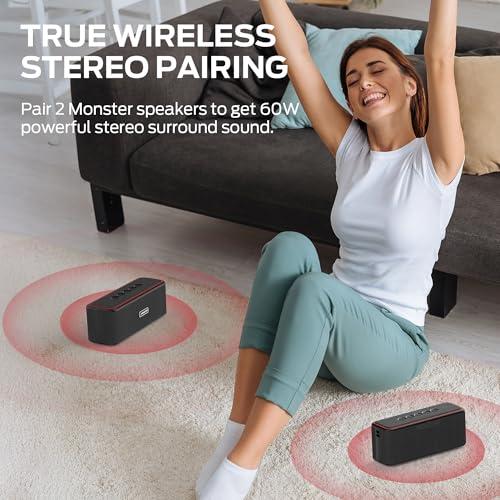
The Monster also makes sense as a first Bluetooth speaker purchase. Its multiple input options, hands-free calling capability, and ability to pair with a second unit for stereo sound provide room to grow as your needs evolve.
Choose the Marshall Stanmore III if you prioritize audio quality above all else and have a dedicated space where the speaker will primarily live. If you're upgrading from smaller speakers and want to experience what room-filling sound really means, the Marshall delivers in ways that portable speakers simply cannot match.
The Marshall also appeals to anyone who views their audio equipment as part of their home's aesthetic. If you want speakers that look intentional and premium rather than like tech gadgets, the amplifier-inspired design serves dual purposes.
These speakers represent peak evolution in their respective categories. The Monster Shock Plus S21 maximizes what's possible in portable audio, while the Marshall Stanmore III shows what happens when you optimize purely for home listening quality.
Neither approach is inherently better—they solve different problems. The Monster gives you music anywhere life takes you. The Marshall gives you the best possible sound quality when you're staying put.
For most people, the decision comes down to honest self-assessment: Do you actually need portability, or do you just think you do? If you genuinely move your speaker around regularly, the Monster is transformative. If it would mostly sit in one room anyway, the Marshall's superior sound quality makes the extra investment worthwhile.
The beauty of the current market is that both approaches have reached maturity. Whatever you choose, you're getting genuinely good audio—just optimized for different aspects of how you actually live with music.
| Monster Shock Plus S21 | Marshall Stanmore III |
|---|---|
| Power Output - Determines maximum volume and room-filling capability | |
| 30W (60W with TWS pairing) | 80W with dedicated amplifiers |
| Power Source - Affects where and how you can use the speaker | |
| Rechargeable battery (15-hour life) | AC power only (always plugged in) |
| Portability - Whether you can easily move it between locations | |
| 2.01 lbs with carrying handle | 9.4 lbs stationary design |
| Water Resistance - Protection against spills and outdoor use | |
| IPX6 rated (splash and rain resistant) | None (indoor use only) |
| Bluetooth Version - Connection stability and audio quality | |
| 5.4 (latest standard, better stability) | 5.2 (multi-device connectivity) |
| Driver Configuration - How sound is produced and separated | |
| Single driver with passive radiators | 2-way system: 5" woofer + dual tweeters |
| Physical Controls - Ease of adjusting sound without phone | |
| Basic buttons on top panel | Brass bass/treble knobs + volume control |
| Input Options - Ways to connect audio sources | |
| Bluetooth, AUX, TF card, USB | Bluetooth, RCA, 3.5mm AUX |
| Sound Signature - How the speaker colors your music | |
| Balanced for versatility across content types | Warm, rock-tuned with enhanced bass |
| Build Materials - Durability and aesthetic appeal | |
| Durable plastic construction | Premium vinyl with brass accents |
| Additional Features - Extra functionality beyond basic audio | |
| Built-in mic, hands-free calling, TWS pairing | Dynamic Loudness, Marshall app integration |
| Ideal Use Case - Where each speaker excels most | |
| Travel, outdoor activities, multi-room use | Dedicated home listening, room centerpiece |
The Monster Shock Plus S21 is significantly better for outdoor use. It features IPX6 water resistance that protects against rain and splashes, plus a 15-hour battery that eliminates the need for power outlets. The Marshall Stanmore III requires AC power and has no water protection, making it unsuitable for outdoor activities like camping, beach trips, or poolside parties.
The Marshall Stanmore III delivers superior sound quality with its 80W power output and 2-way driver system featuring a dedicated 5-inch woofer and dual tweeters. This creates room-filling sound with better bass response and clearer separation between instruments. The Monster Shock Plus S21 offers balanced, clear sound that's impressive for its portable size but can't match the Marshall's power and dynamic range.
The Monster Shock Plus S21 is far more portable, weighing just 2.01 pounds with a built-in carrying handle and 15-hour battery life. You can easily take it anywhere without worrying about power outlets. The Marshall Stanmore III weighs 9.4 pounds and requires constant AC power, making it essentially a stationary speaker designed to stay in one location.
Both speakers can enhance TV audio, but the Marshall Stanmore III is better suited for home theater use. Its 80W power output and enhanced bass response create more cinematic impact for movies, while its RCA inputs allow direct connection to TVs for potentially better audio quality than Bluetooth. The Monster Shock Plus S21 works for casual TV watching but lacks the power for true home theater enhancement.
The Monster Shock Plus S21 typically offers exceptional value, especially when found at discounted prices. It provides remarkable versatility with battery power, water resistance, and multiple connectivity options at a budget-friendly price point. The Marshall Stanmore III commands a premium price but justifies it with superior sound quality, premium build materials, and iconic design for dedicated home listening.
The Monster Shock Plus S21 offers more connectivity versatility with Bluetooth 5.4, 3.5mm AUX, TF card slot, and USB input, plus a built-in microphone for hands-free calling. The Marshall Stanmore III features Bluetooth 5.2 with multi-device connectivity, RCA inputs, and 3.5mm AUX, focusing on higher-quality wired connections rather than variety.
The Marshall Stanmore III excels with bass-heavy music thanks to its dedicated 5-inch woofer and 80W power output that can move more air for deeper, more impactful bass. Its rock-tuned sound signature emphasizes low frequencies. While the Monster Shock Plus S21 produces surprisingly good bass for its size using passive radiators, it cannot match the Marshall's low-end power and depth.
Yes, both speakers offer pairing options but differently. The Monster Shock Plus S21 supports TWS (True Wireless Stereo) pairing, allowing you to connect two units for 60W total power and true stereo separation. The Marshall Stanmore III can connect to other Marshall speakers through the Marshall app, but each unit is designed to be a standalone room-filling speaker.
Only the Monster Shock Plus S21 has a battery, offering up to 15 hours of playback time with approximately 2-hour charging via USB-C. The Marshall Stanmore III operates exclusively on AC power and has no battery option, requiring a constant connection to a wall outlet.
The Marshall Stanmore III features a vintage amplifier aesthetic with premium vinyl covering, brass control knobs, and substantial 9.4-pound construction designed as a home décor piece. The Monster Shock Plus S21 uses practical plastic construction with a modern, compact design focused on portability and durability rather than visual impact.
The Monster Shock Plus S21 is exclusively designed for travel with its lightweight 2.01-pound design, carrying handle, 15-hour battery, and IPX6 water resistance. You can pack it in luggage, use it in hotel rooms, or take it on outdoor adventures without power concerns. The Marshall Stanmore III cannot be used for travel due to its AC power requirement and 9.4-pound weight.
The Marshall Stanmore III offers superior physical controls with dedicated brass knobs for bass, treble, and volume adjustment, plus source selection buttons that work independently of your phone. The Monster Shock Plus S21 features basic button controls for essential functions like play/pause and volume, with most advanced settings requiring smartphone app control.
We've done our best to create useful and informative comparisons to help you decide what product to buy. Our research uses advanced automated methods to create this comparison and perfection is not possible - please contact us for corrections or questions. These are the sites we've researched in the creation of this article: shopabunda.com - manuals.plus - popsci.com - armorsound.com - manuals.plus - youtube.com - shopstaff.net - thestreet.com - rtings.com - youtube.com - businessinsider.com - youtube.com - youtube.com - mensjournal.com - ratebud.ai - youtube.com - ebay.com - monsterstore.com - newegg.com - angelenaspensacola.com - techgadgetscanada.com - camelcamelcamel.com - crutchfield.com - bestbuy.com - dxomark.com - crutchfield.com - crutchfield.com - marshall.com - marshall-production-1.mobify-storefront.com - exhibit.tech - ooberpad.com - av-connection.com

Privacy Policy
Terms and Conditions - Affiliate Policy
Home Security
© Copyright 2008-2026.
11816 Inwood Rd #1211, Dallas, TX 75244