

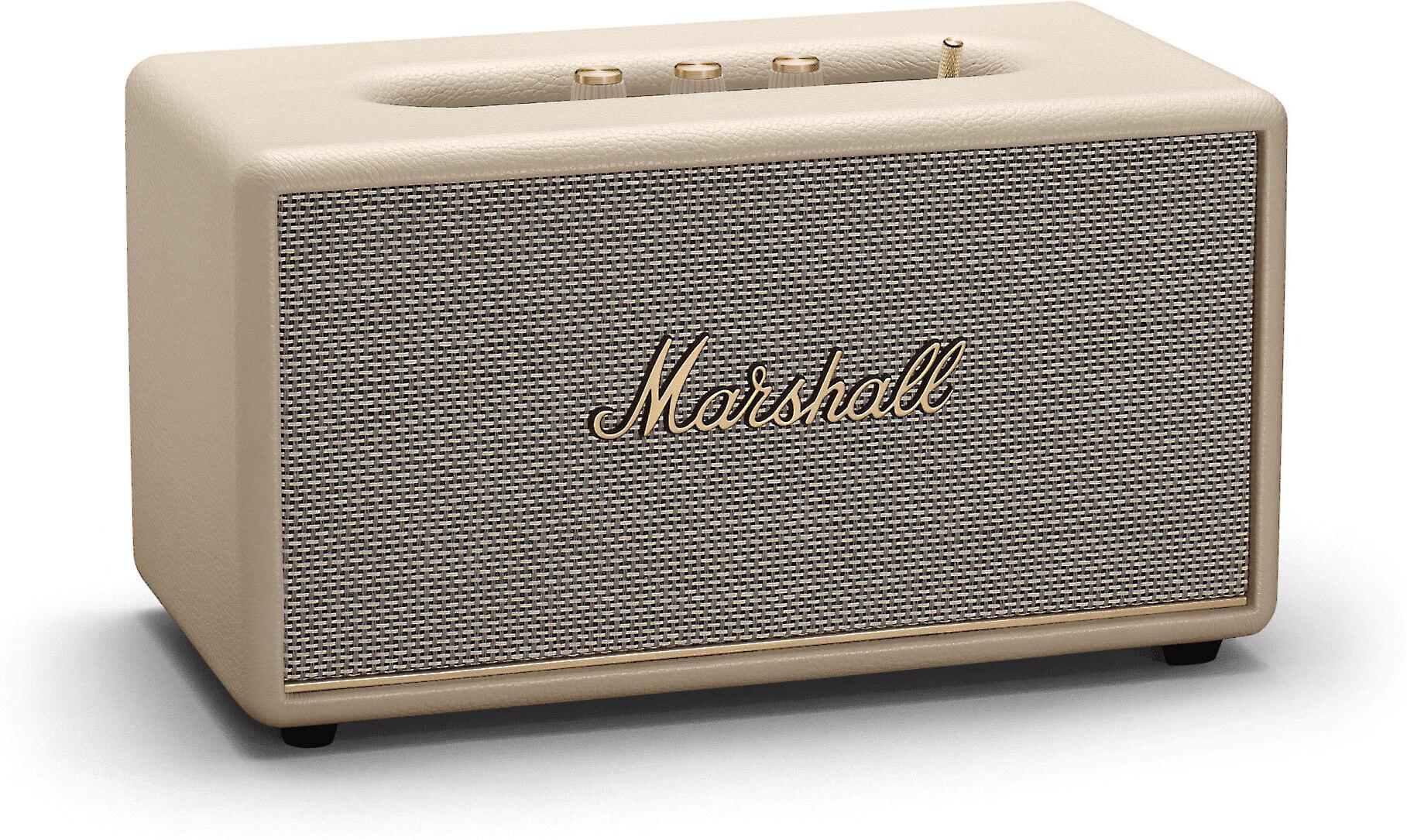
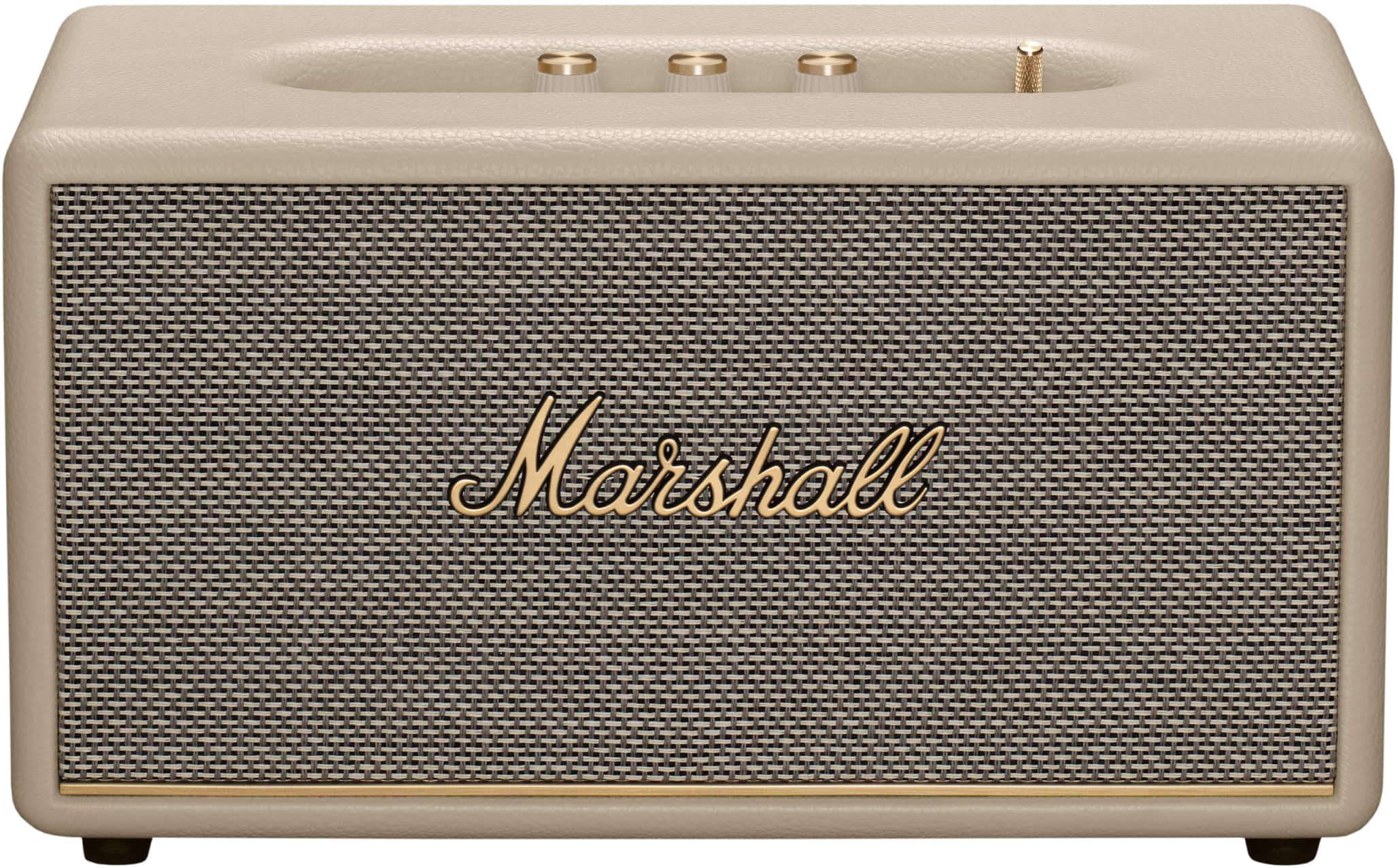
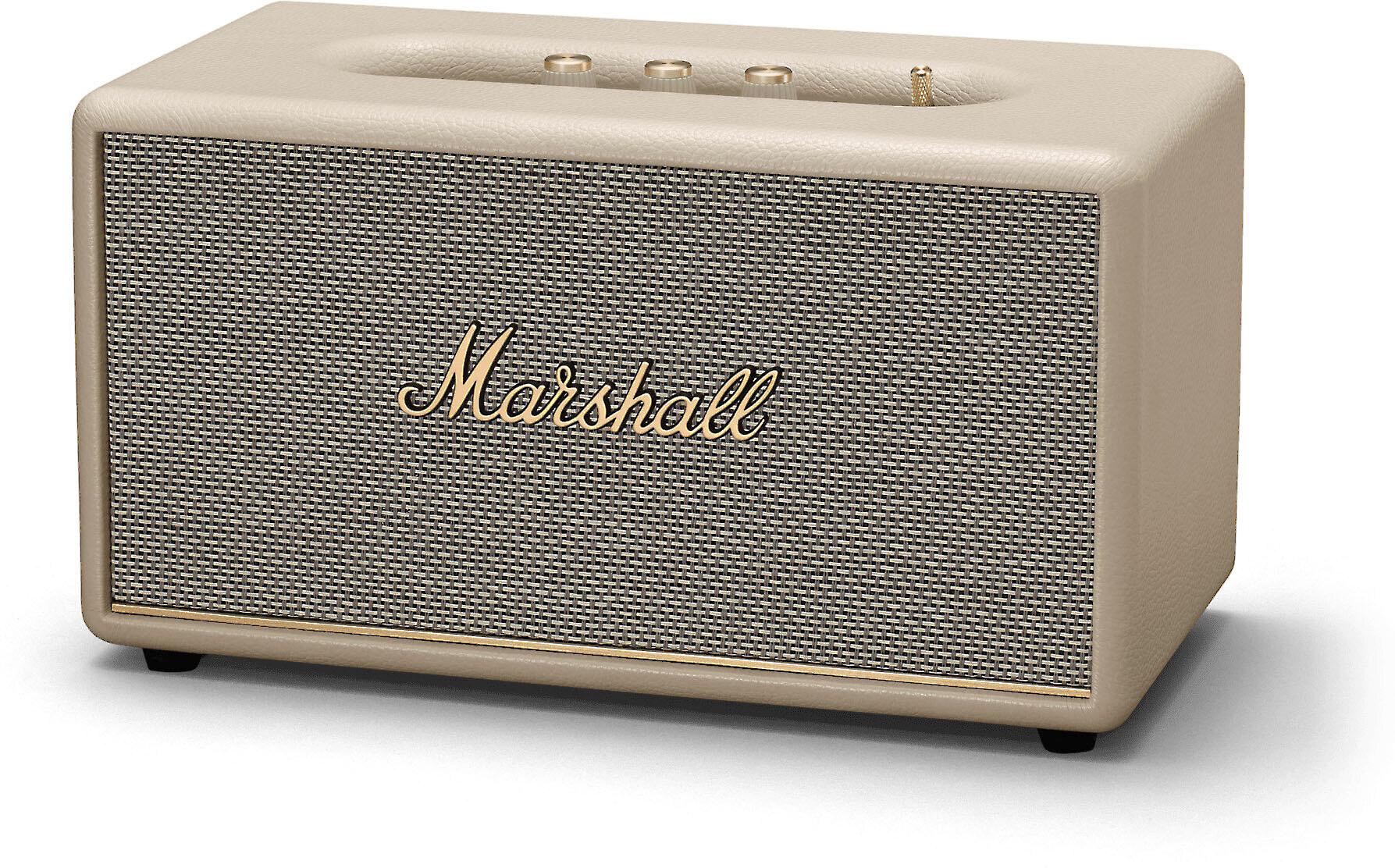

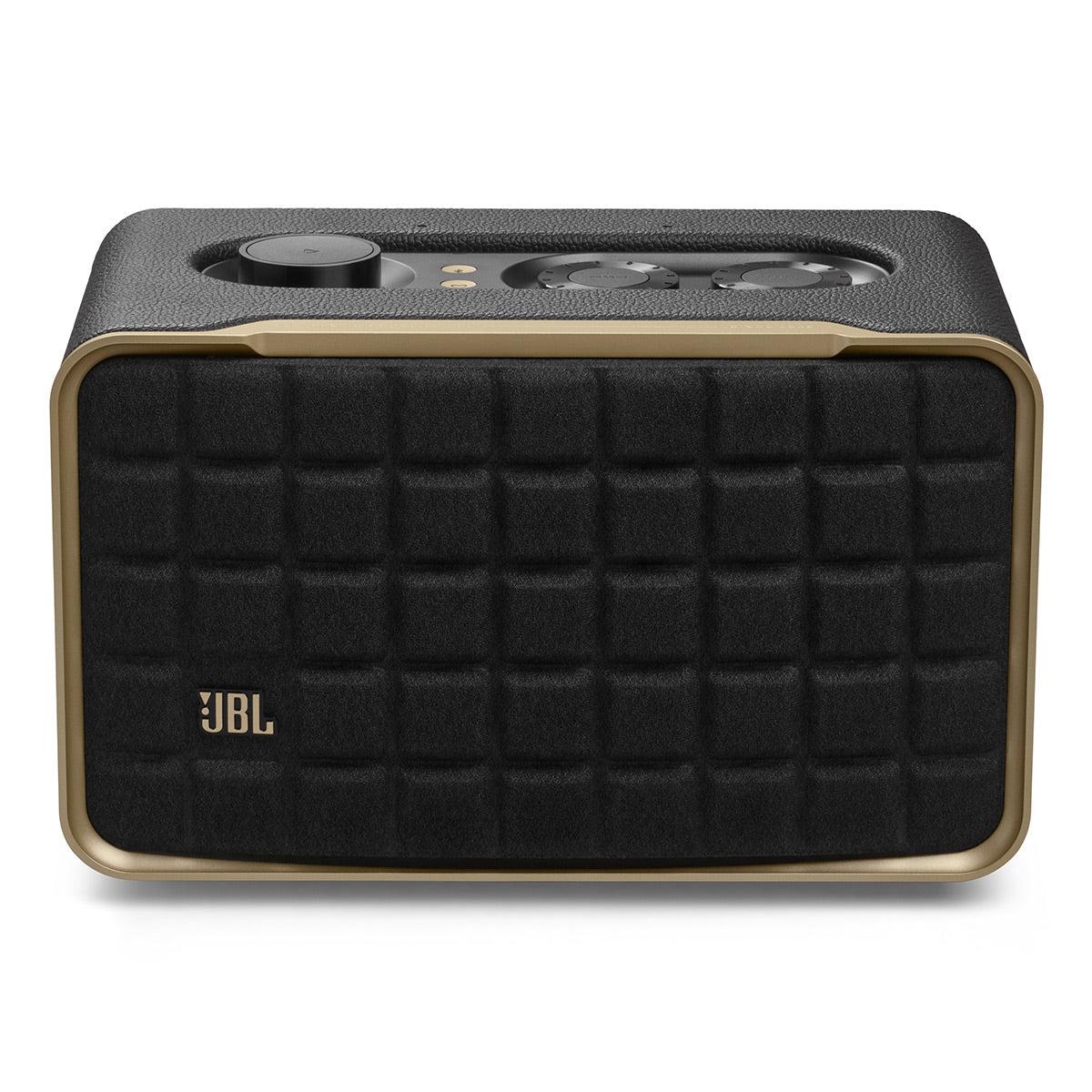
When it comes to high-end wireless speakers, two recent releases have caught the attention of audio enthusiasts: the Marshall Stanmore III ($379) and the JBL Authentics 200 ($249). Both speakers aim to deliver premium sound in stylish packages, but they take notably different approaches. Let's dive into what makes each unique and who they might be best for.
The wireless speaker market has evolved significantly in recent years, moving beyond simple Bluetooth connectivity to incorporate smart features and advanced room integration. Released in September 2022, the Marshall Stanmore III represents a traditional audiophile approach with modern conveniences, while the JBL Authentics 200, launched in September 2023, embraces smart home integration and contemporary features.
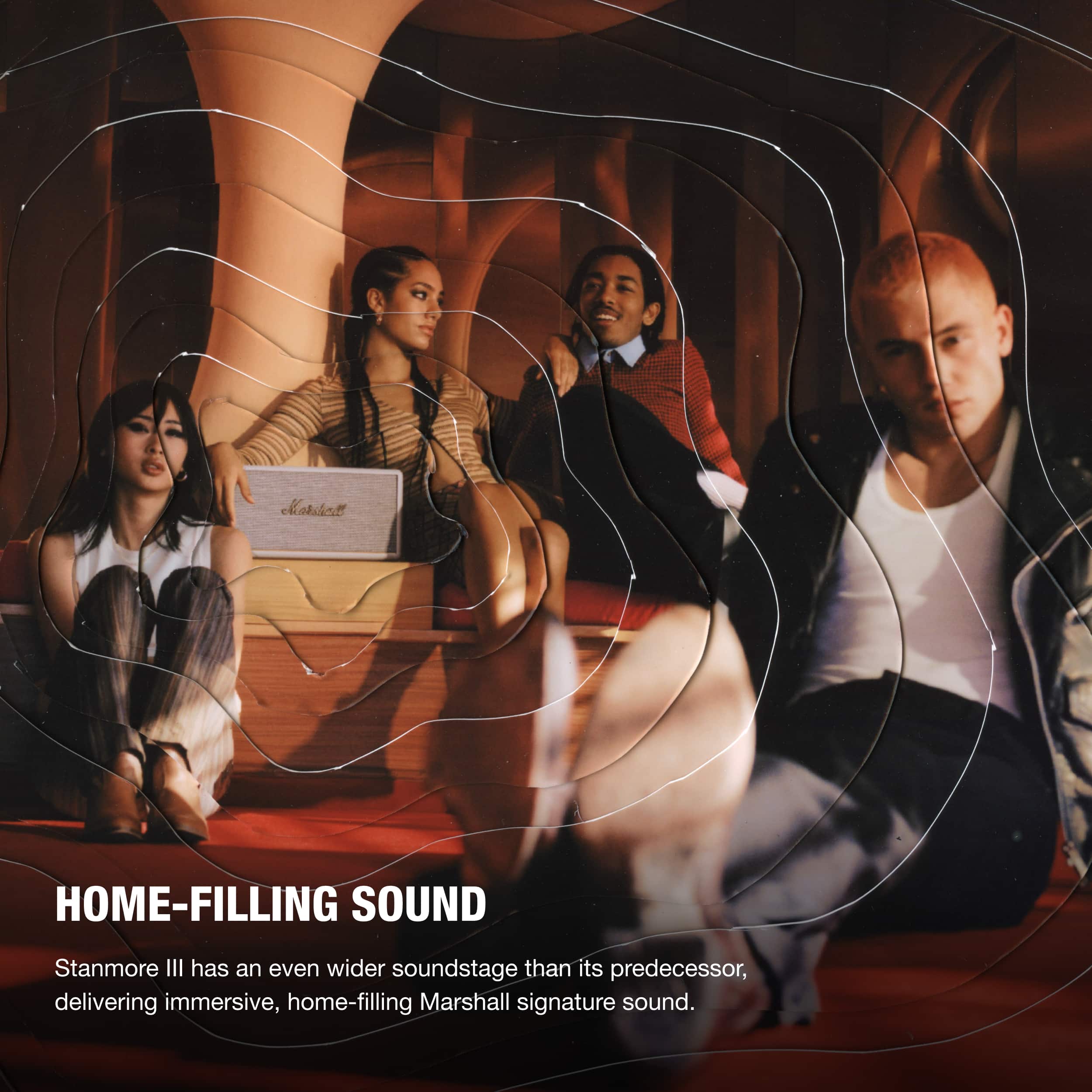
The Stanmore III employs a classic audio architecture with two 3/4" tweeters (15W each) and a 5" woofer (50W). This configuration produces a sound signature that particularly excels with rock, jazz, and acoustic music. The speaker's Dynamic Loudness feature automatically adjusts tonal balance at different volumes - something I've found especially useful when listening at lower levels late at night.
What's particularly impressive is the placement compensation technology, which adjusts the sound based on nearby walls or surfaces. This means you can place it on a bookshelf or corner without losing audio quality - a common problem with many speakers.
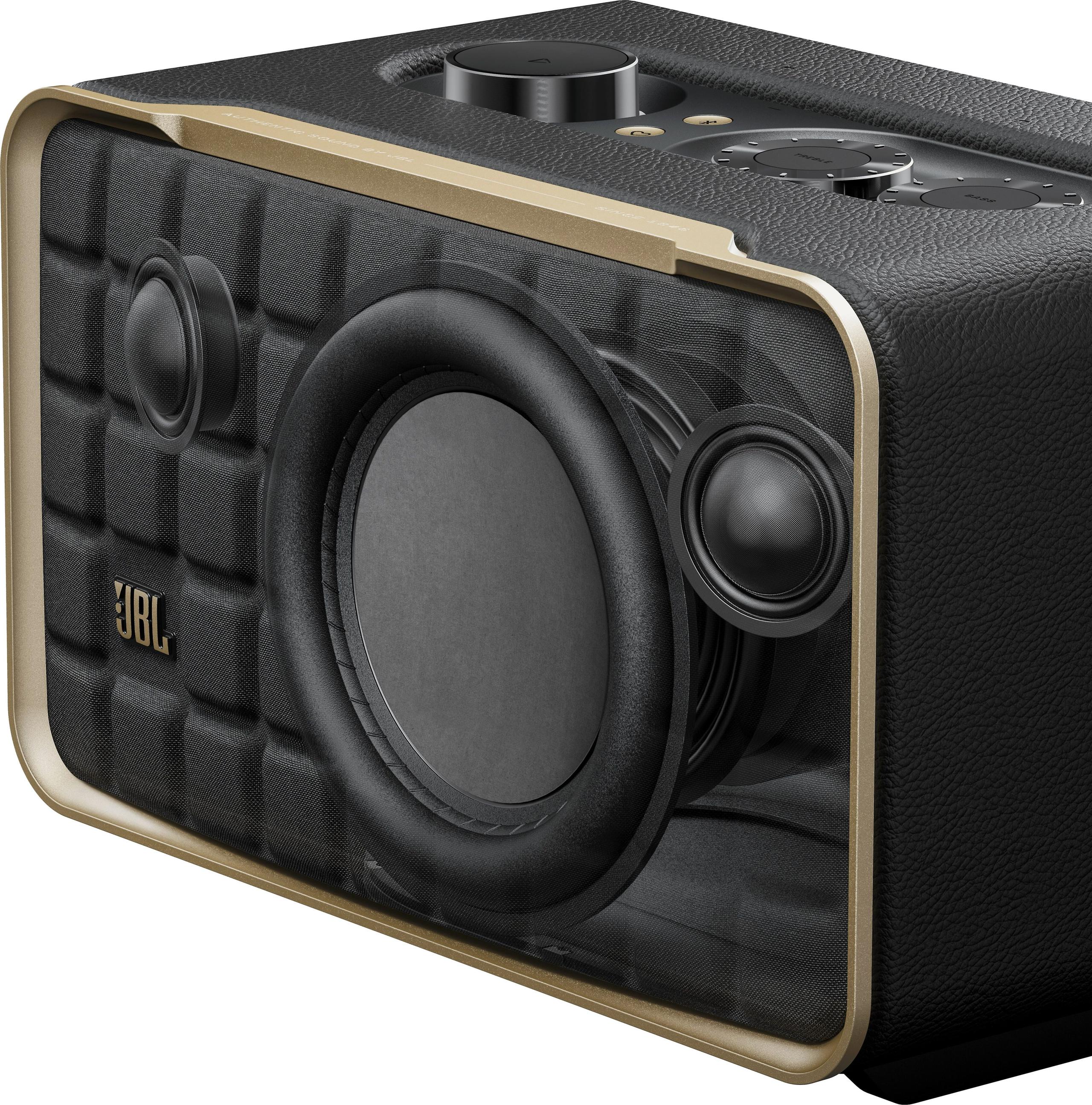
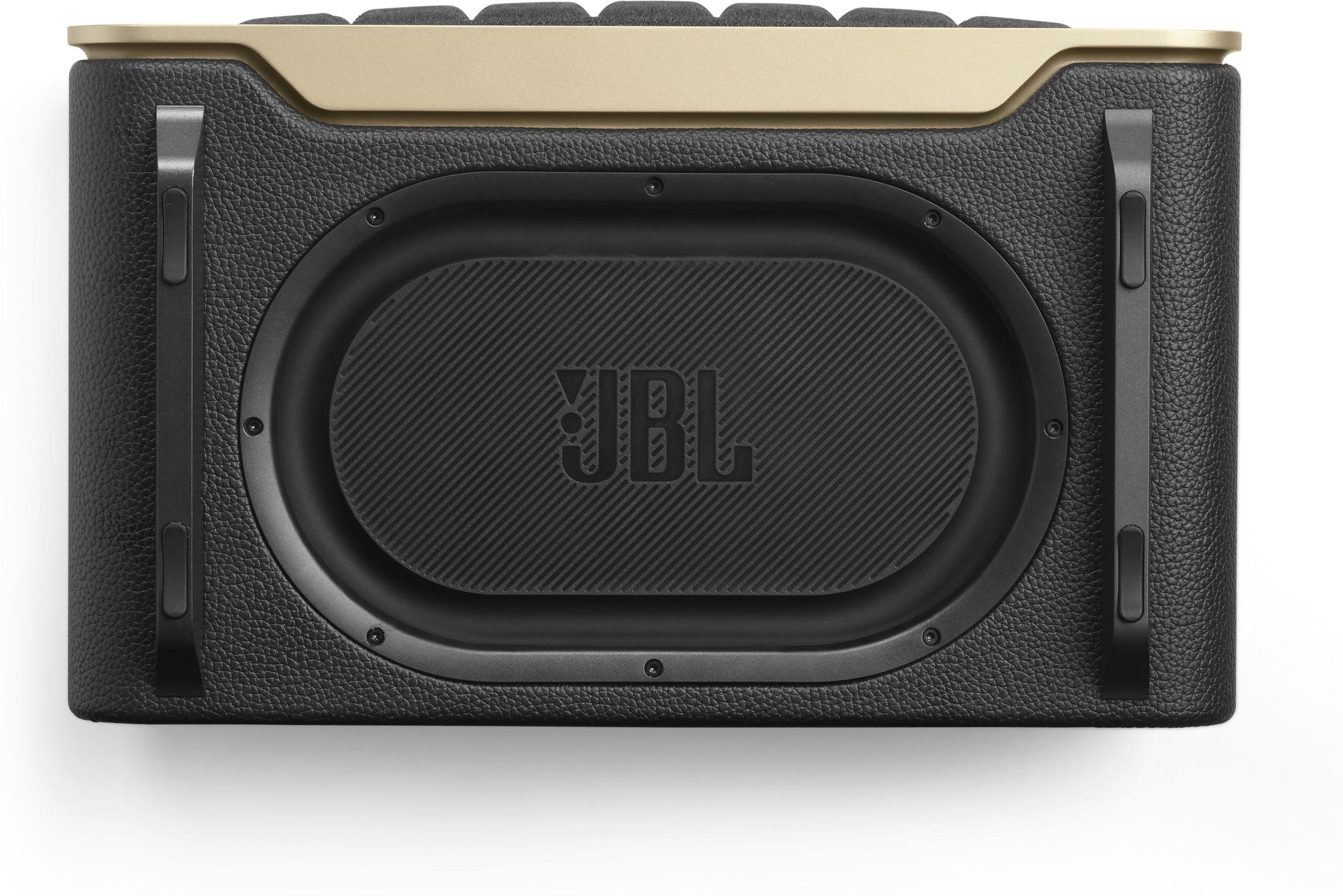
The Authentics 200 takes a different approach with its 90W system, featuring dual 25mm tweeters and a 5-inch woofer, complemented by a 6-inch passive radiator. This configuration delivers notably stronger bass response and a more neutral sound signature that works well across various genres. The automatic self-tuning feature calibrates the speaker to your room each time it powers on, which is particularly useful if you move the speaker frequently.
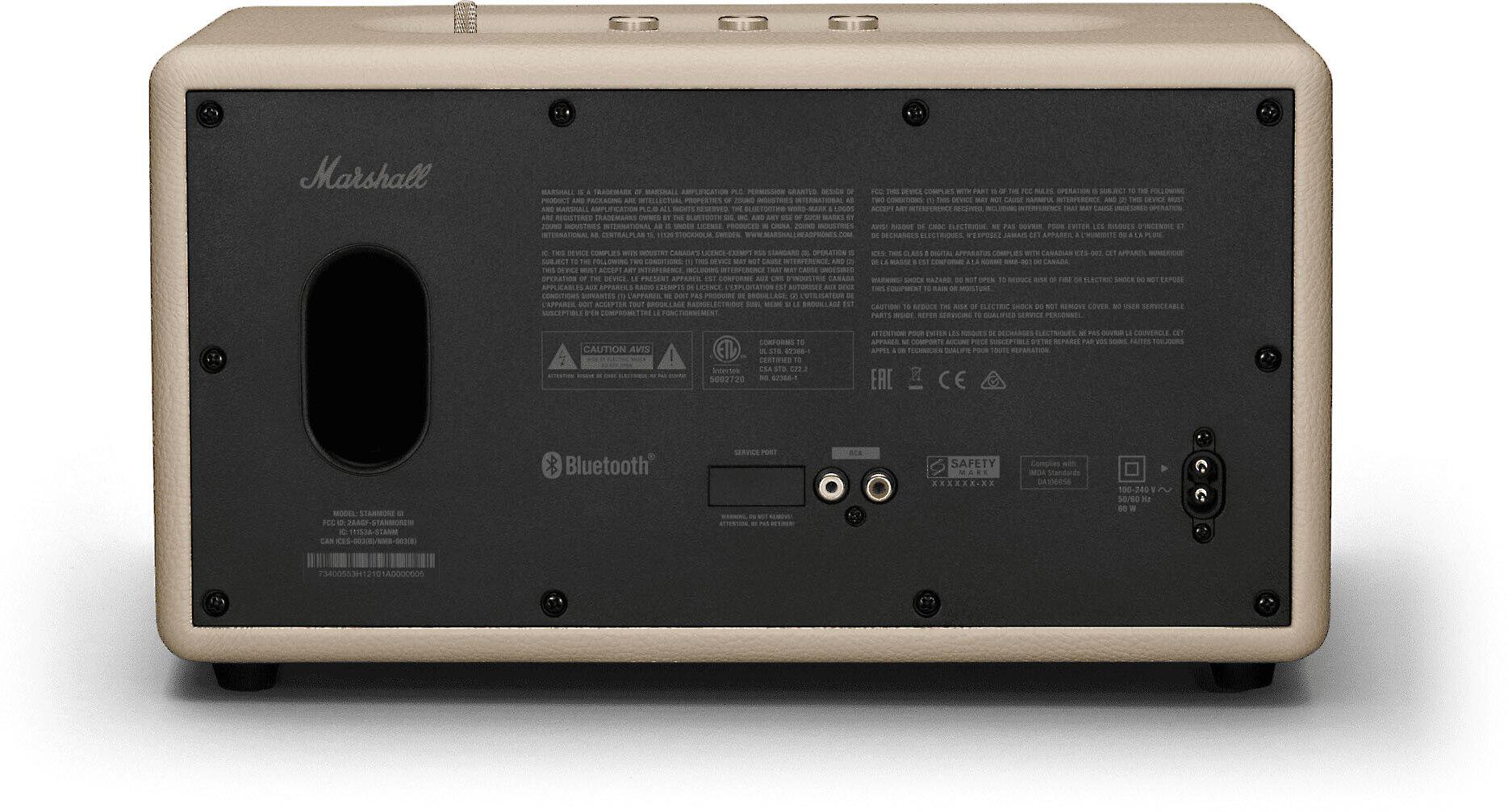
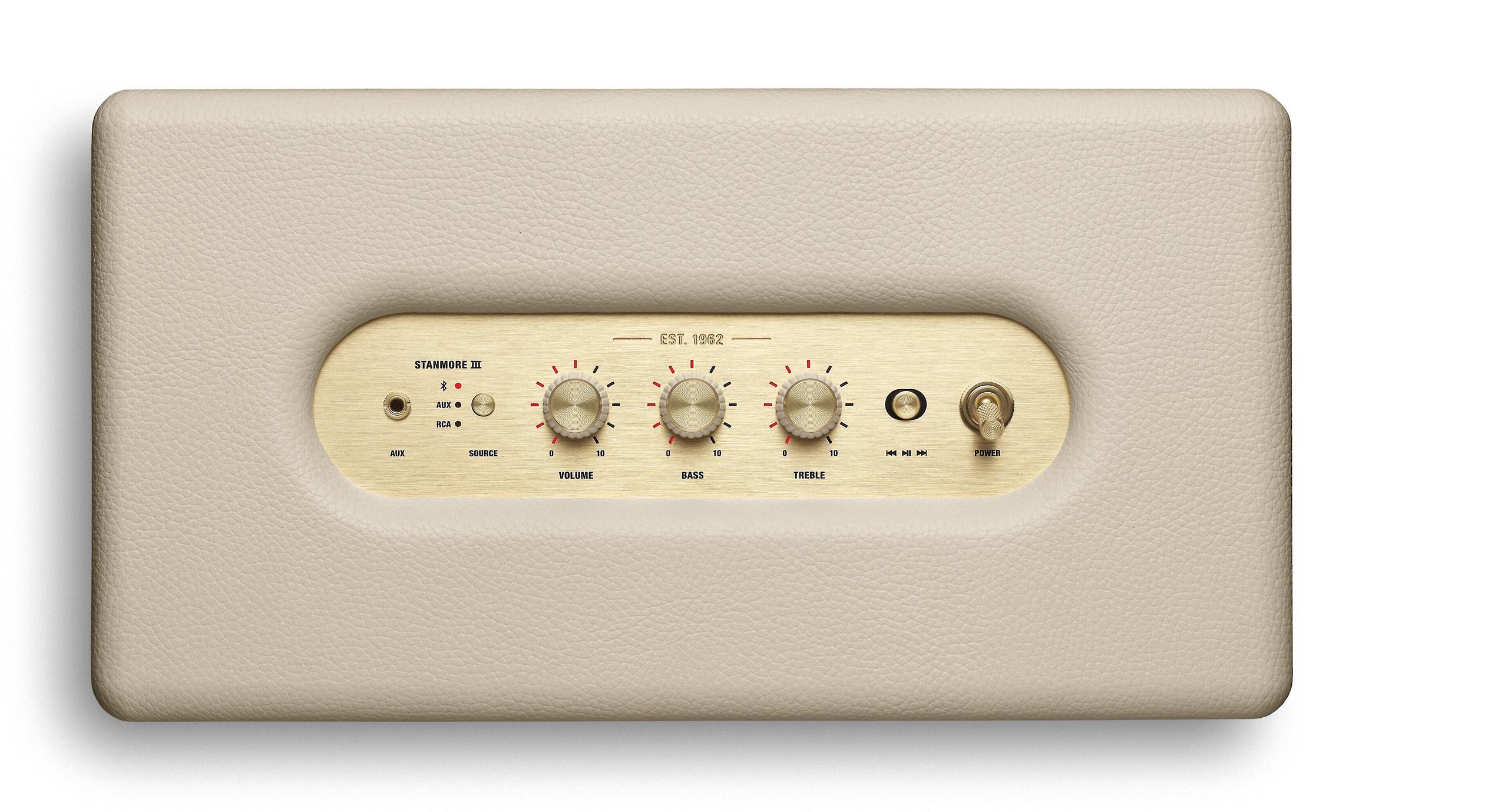
The Stanmore III features Bluetooth 5.2 with aptX support (which reduces wireless audio lag and improves sound quality), plus traditional 3.5mm and RCA inputs. While this might seem basic compared to the JBL, it's actually ideal for users who prioritize simple, reliable connections and don't need smart home integration.
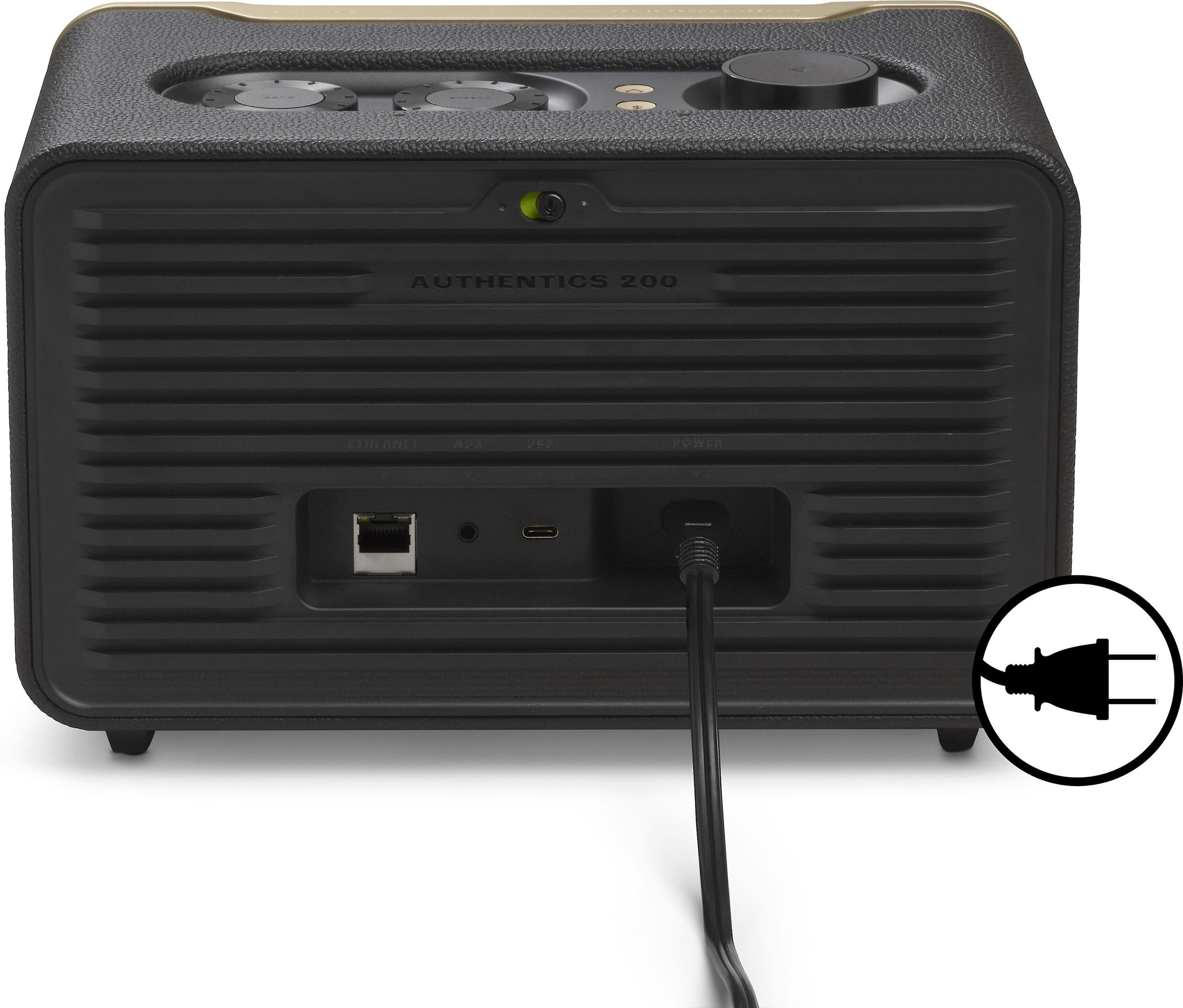
The Authentics 200 offers a more comprehensive connectivity suite:
This makes it significantly more versatile for smart home enthusiasts and those who want to stream high-resolution audio over Wi-Fi.
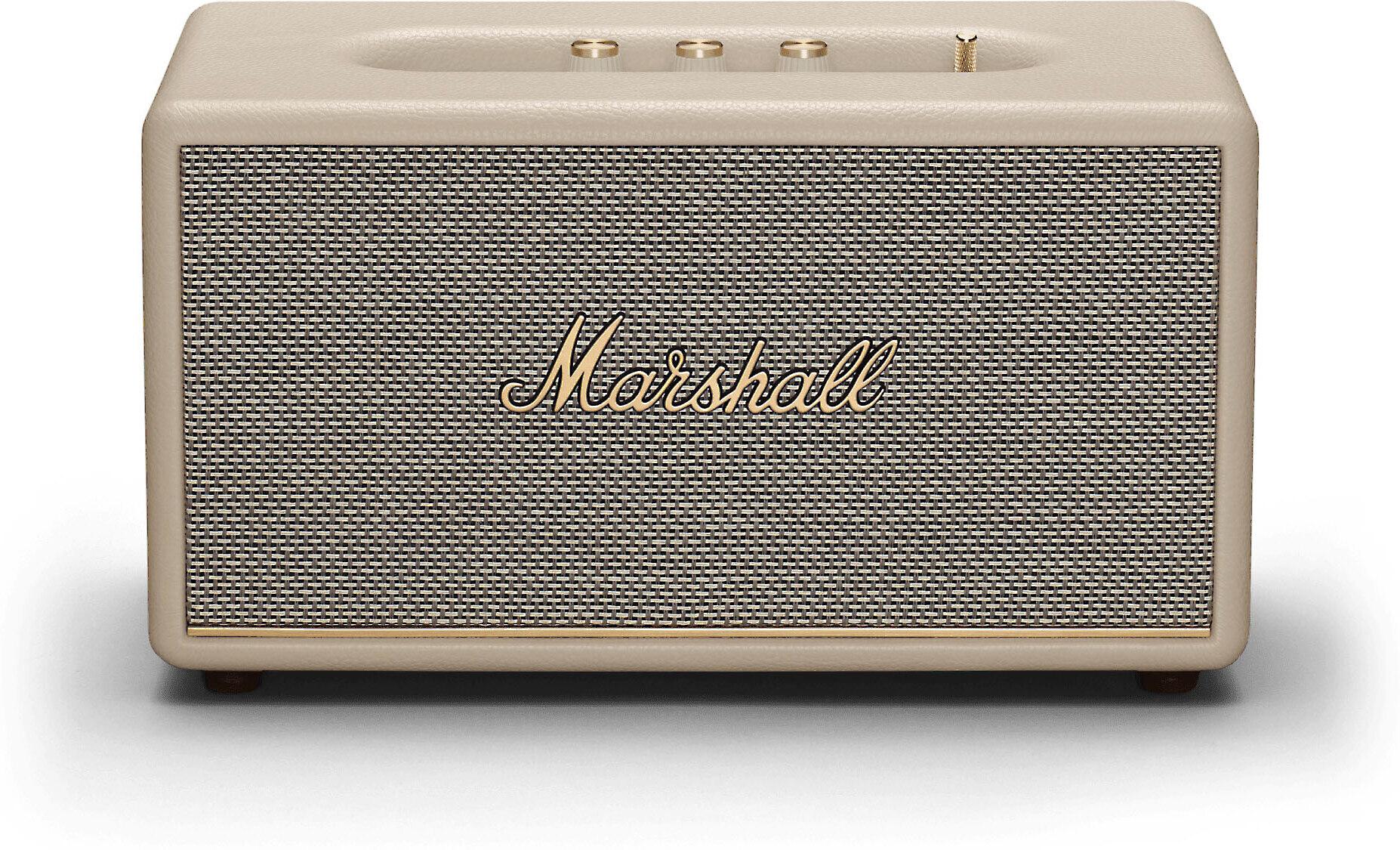
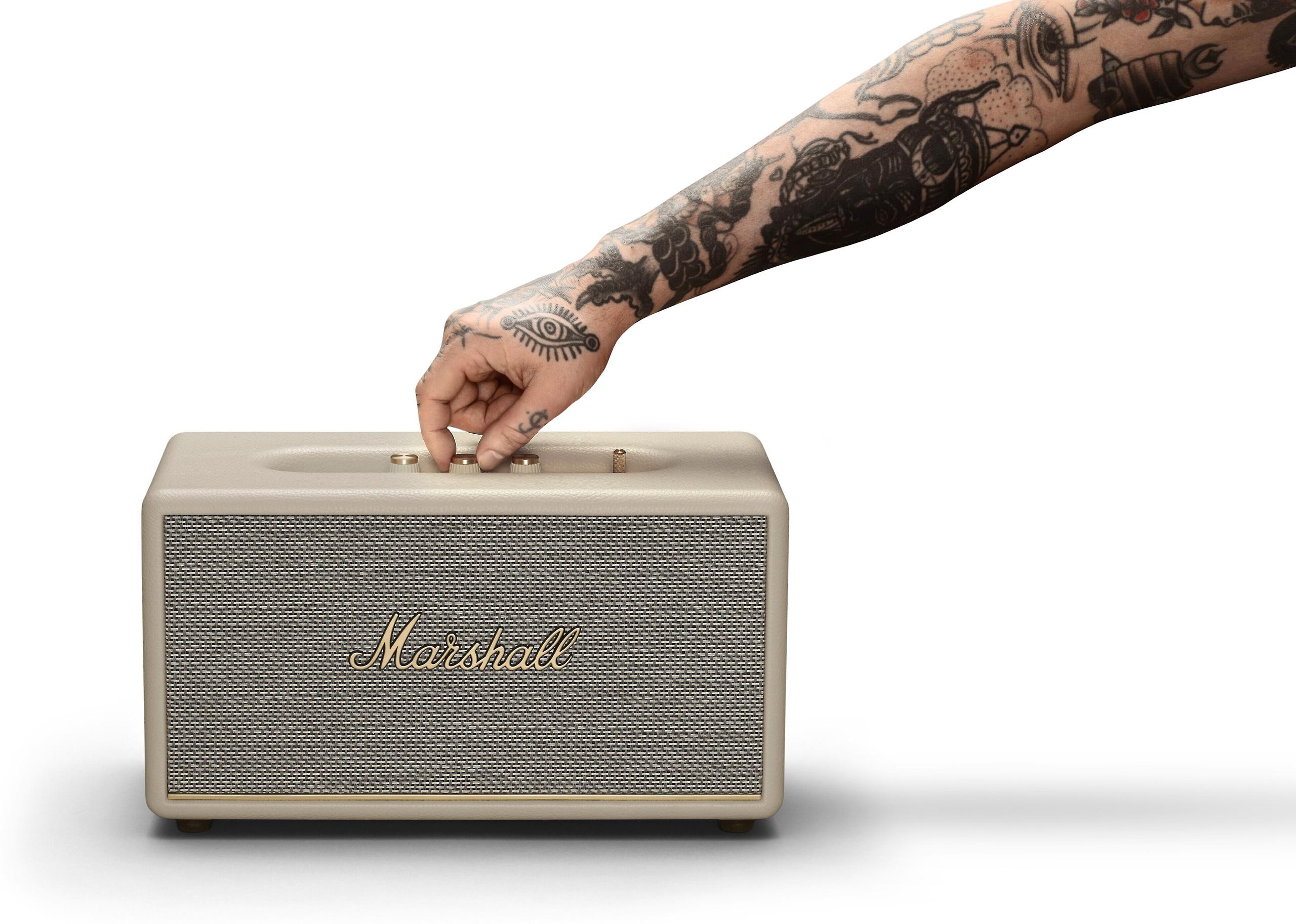
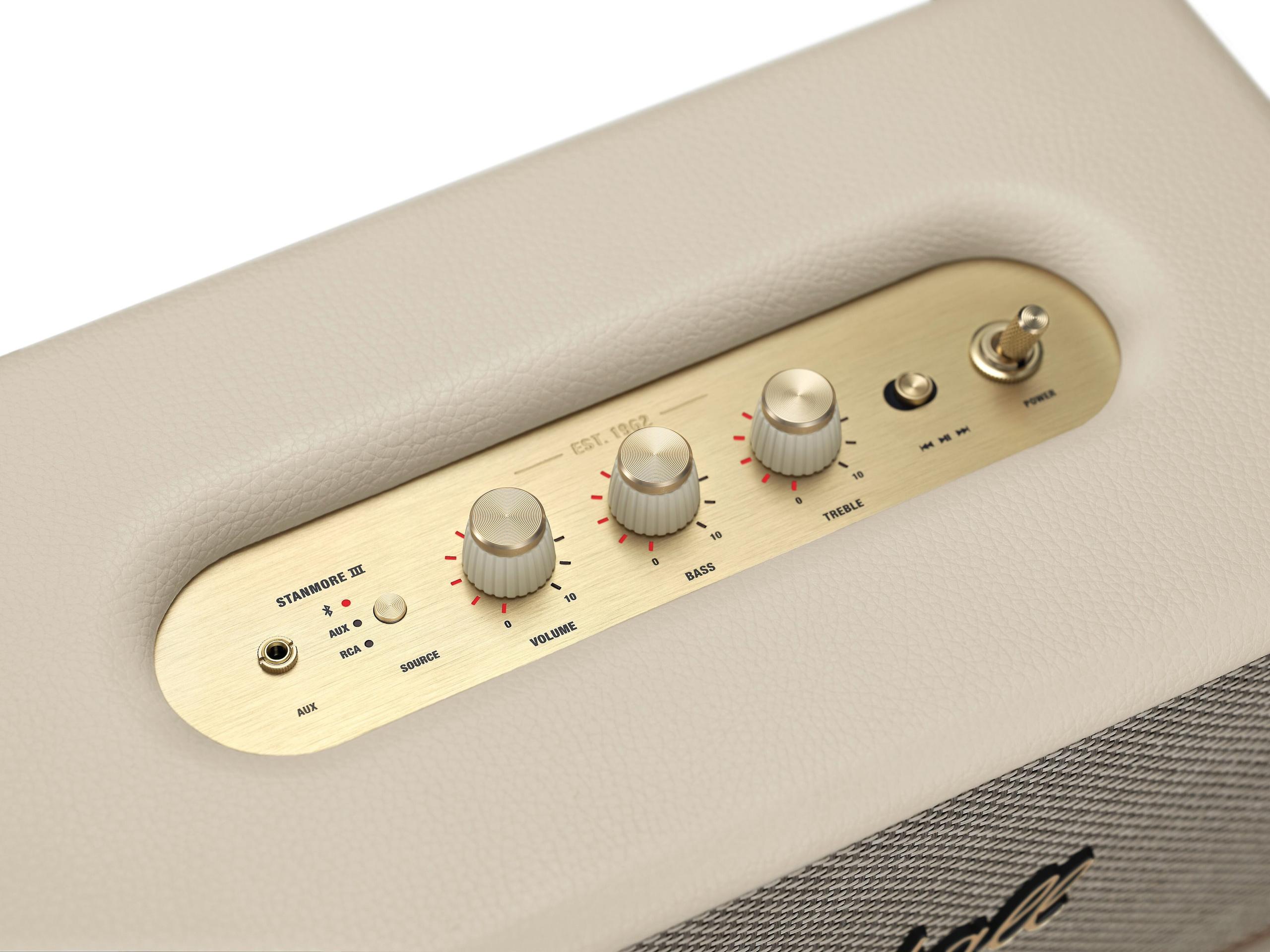
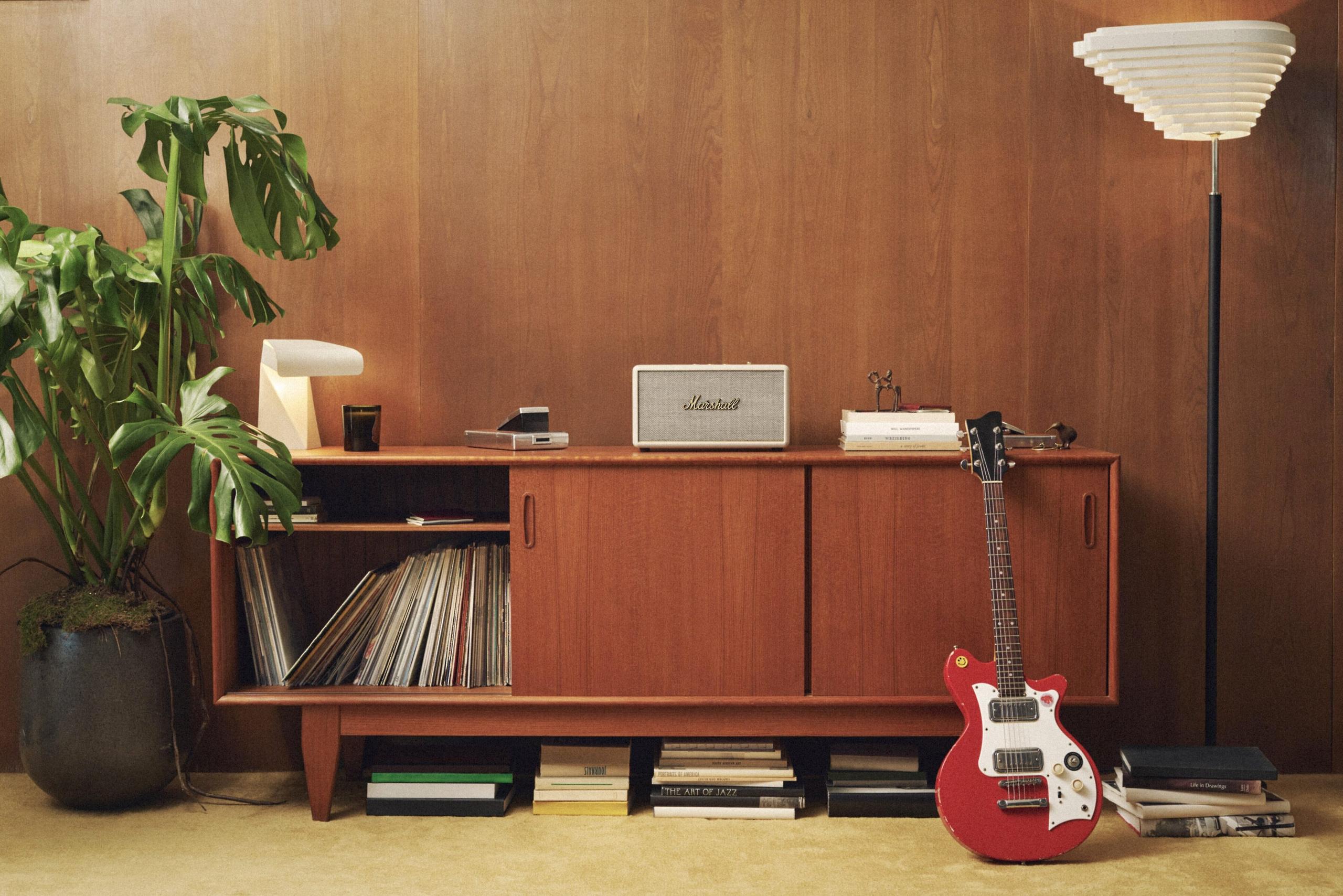
The Marshall Stanmore III embraces a vintage aesthetic with brass-plated controls and a leather-like vinyl covering. The analog control knobs provide tactile feedback and precise adjustment of volume, bass, and treble. It's built like a tank, weighing in at 9.37 lbs.
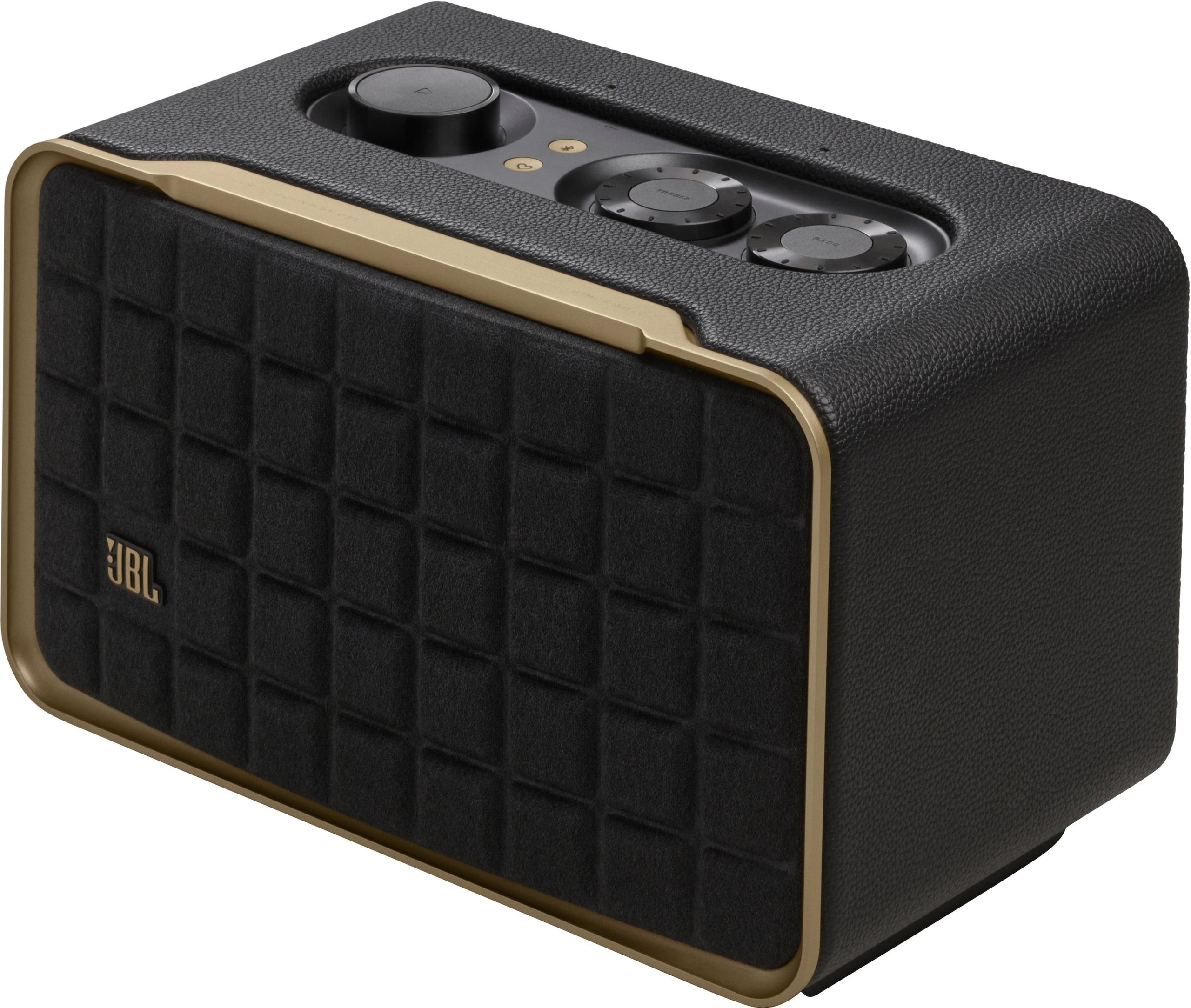
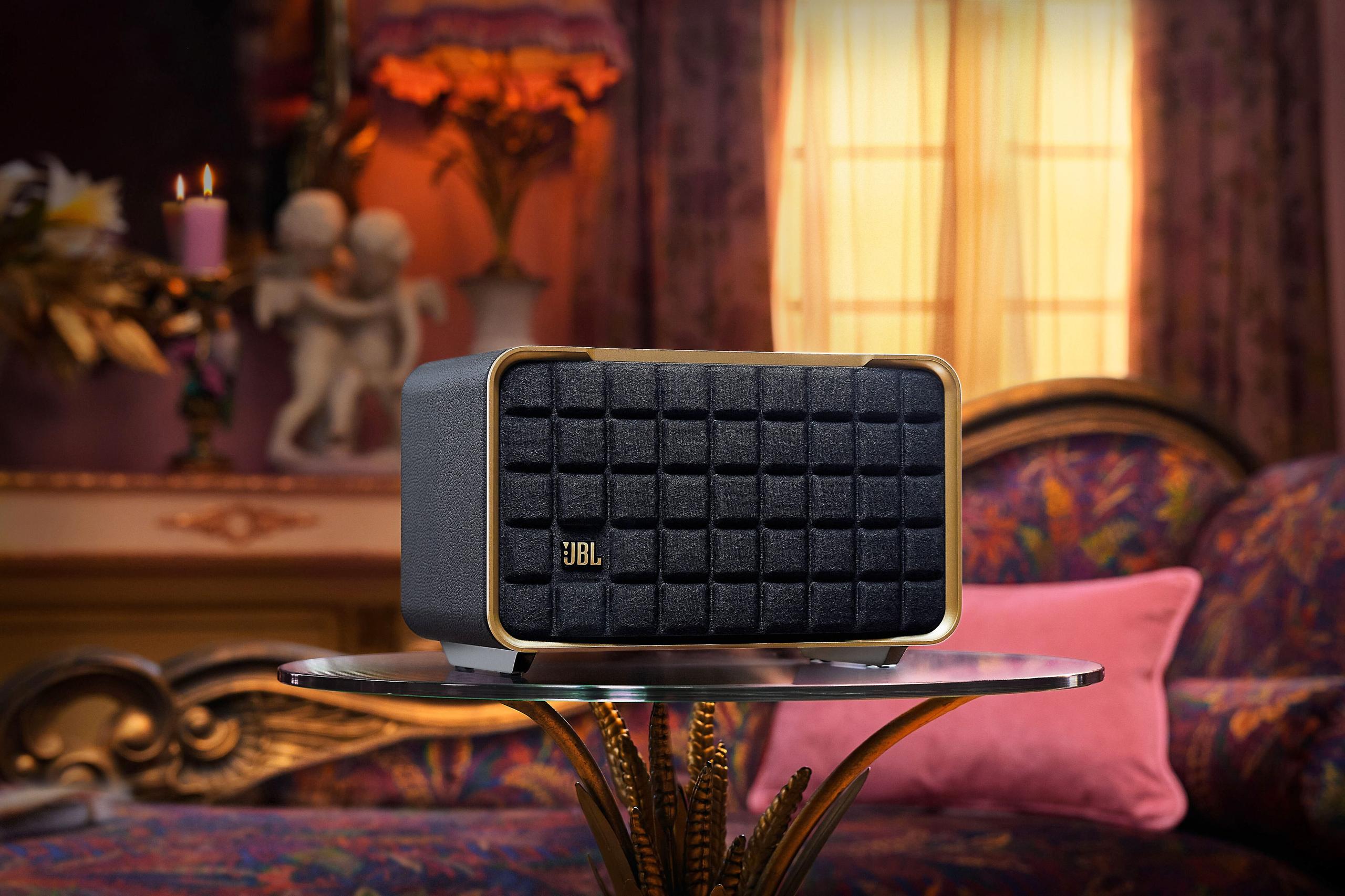
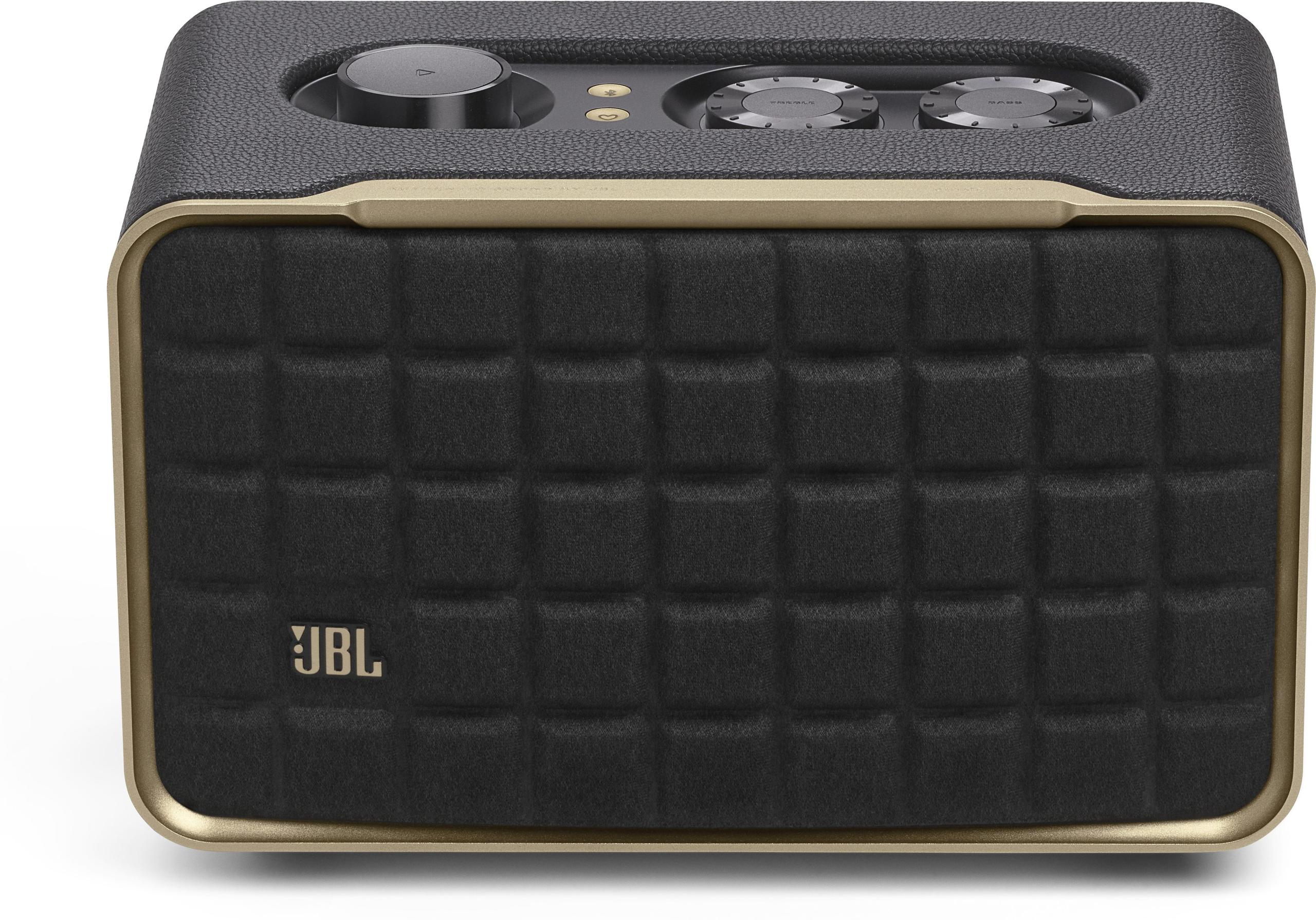
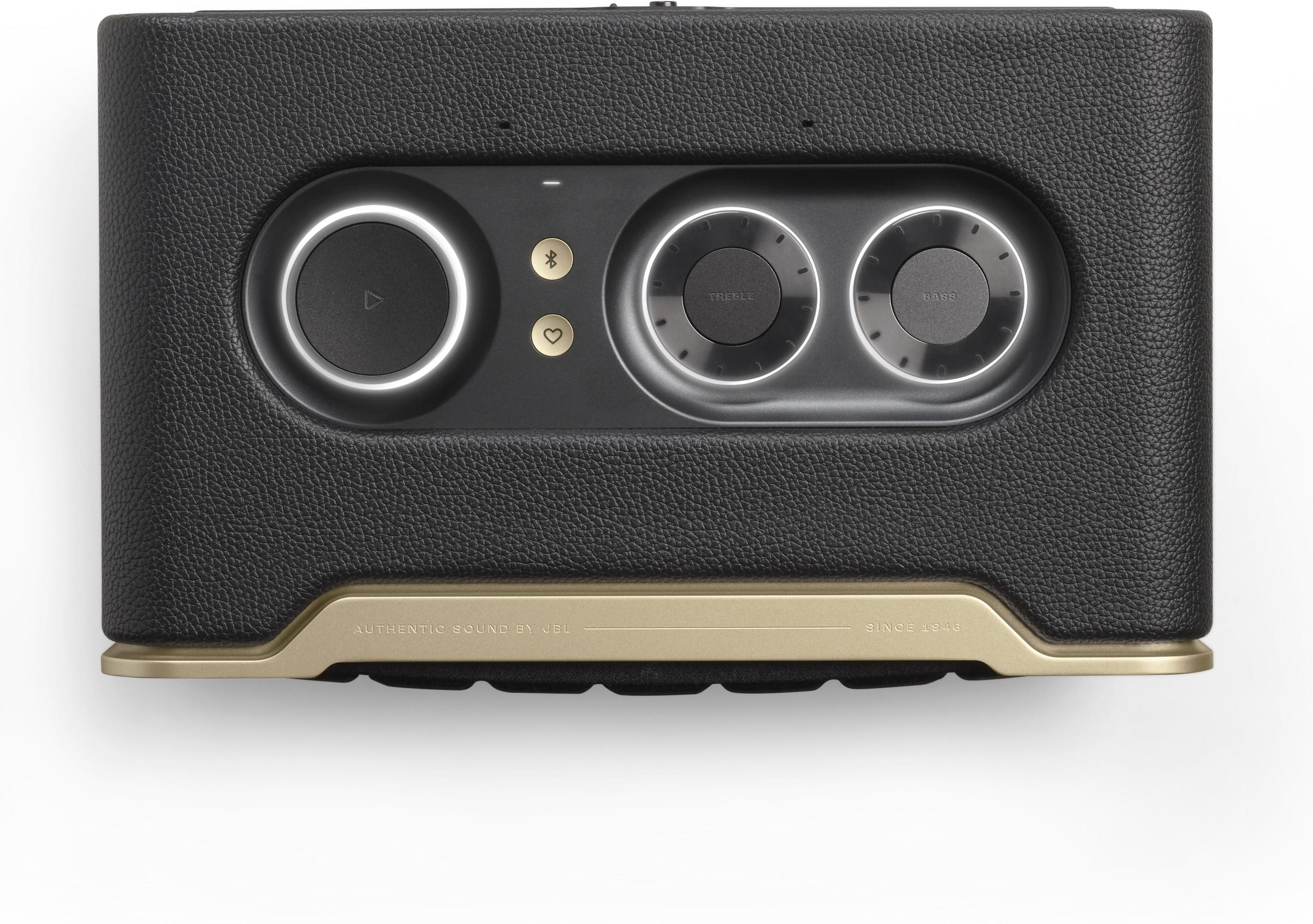
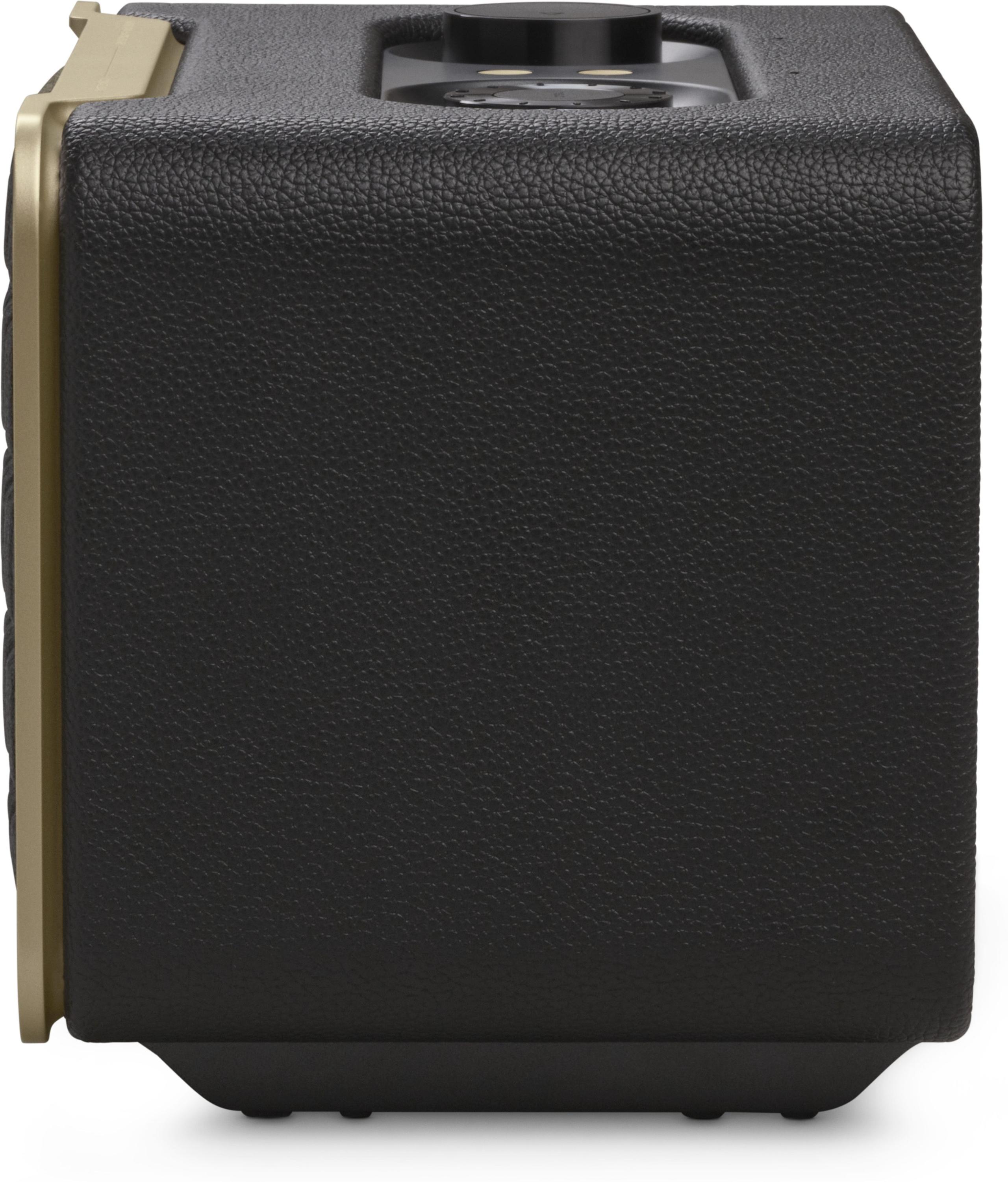
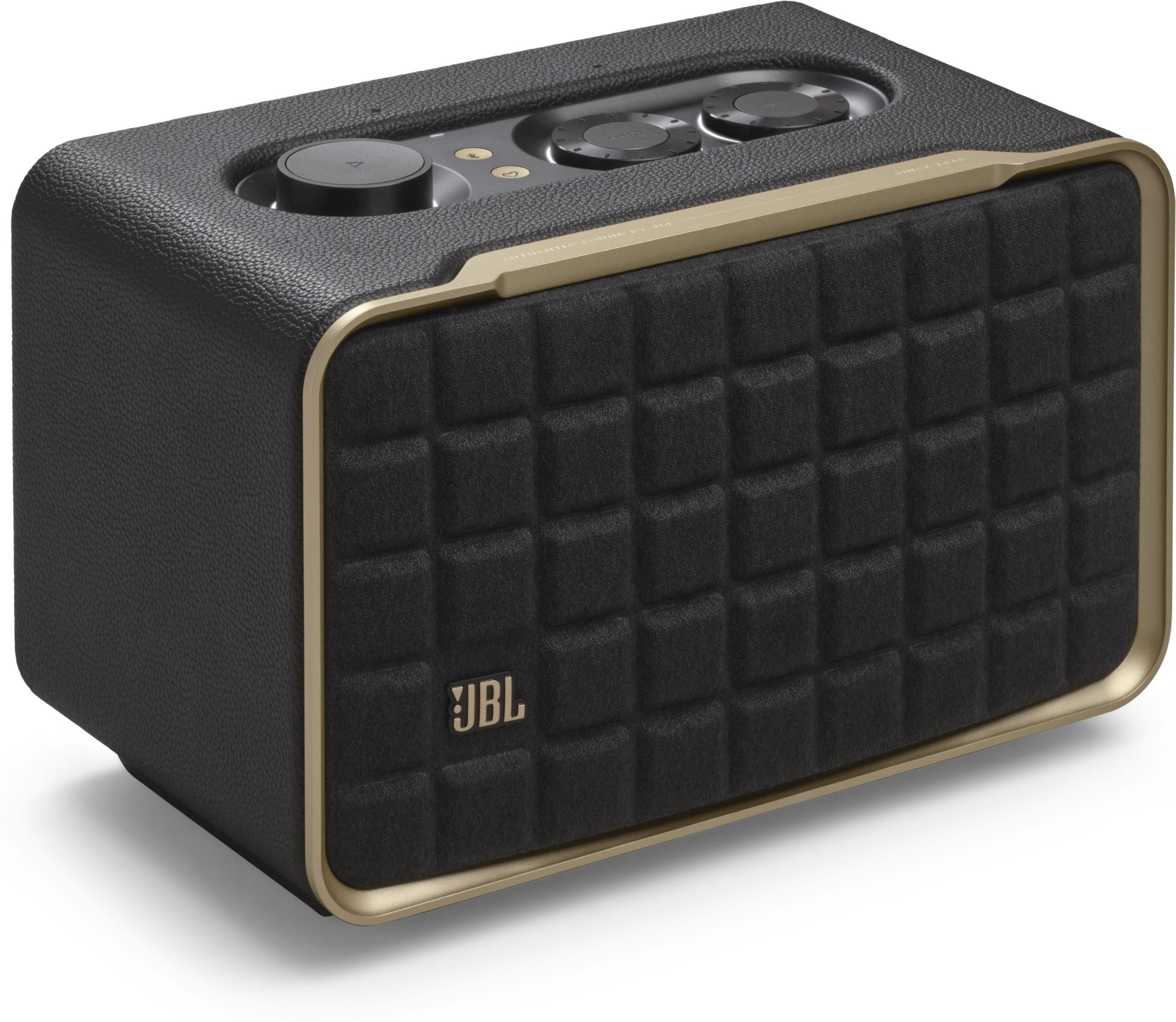
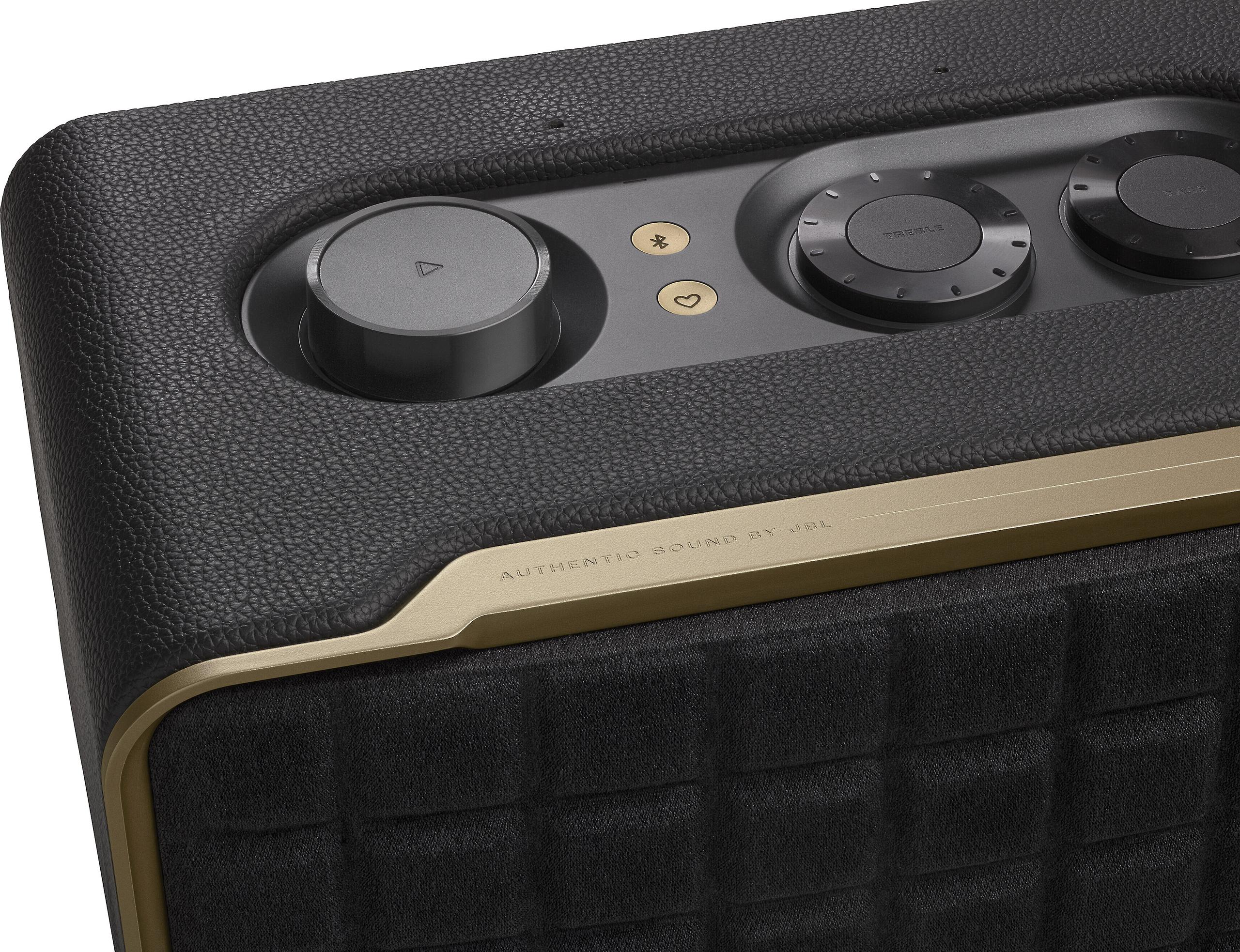
The JBL Authentics 200 takes inspiration from classic JBL speakers while incorporating modern elements. Its Quadrex grille and aluminum frame create a distinctive look, and at 6.88 lbs, it's notably lighter than the Marshall. One impressive aspect is JBL's commitment to sustainability - the speaker uses 100% recycled fabric and 85% recycled plastics.
While neither speaker is specifically designed for home theater use, they can serve different roles:
The Marshall's RCA inputs and powerful output make it suitable as a TV speaker, particularly for smaller rooms where its precise sound staging shines. The physical controls are also convenient for quick volume adjustments.
The JBL's Wi-Fi connectivity allows it to integrate with smart TVs and streaming devices more seamlessly, though it lacks a dedicated TV input.
For music, each speaker has its strengths:
The Marshall Stanmore III excels with:
The JBL Authentics 200 stands out for:
The Marshall Stanmore III at $379 represents a premium price point but justifies it with superior build quality and excellent sound reproduction, particularly for rock and acoustic music. The analog controls and traditional inputs add value for users who prefer physical controls and simple connectivity.
The JBL Authentics 200 at $249 offers exceptional value, especially considering its smart features and modern connectivity options. The automatic room calibration and multi-room capabilities make it particularly appealing for those building a whole-home audio system.
Choose the Marshall Stanmore III if you:
Choose the JBL Authentics 200 if you:
Both speakers offer software updates, but they serve different purposes. The Marshall's updates focus on Bluetooth performance and basic feature enhancements, while the JBL's updates include new smart home features and voice assistant capabilities.
In my experience testing both speakers, the choice really comes down to your primary use case. The Marshall excels as a traditional high-end speaker with modern conveniences, while the JBL serves as a versatile smart speaker that doesn't compromise on sound quality. For my home office, I prefer the Marshall's analog controls and focus on audio quality, but in my living room, the JBL's smart features and room calibration make it more practical for everyday use.
| Marshall Stanmore III ($379) | JBL Authentics 200 ($249) |
|---|---|
| Total Power Output - Determines maximum volume and clarity at high levels | |
| 80W (50W woofer + 2x15W tweeters) | 90W total system power |
| Speaker Configuration - Affects sound staging and clarity | |
| Two 3/4" tweeters, one 5" woofer | Two 25mm tweeters, 5" woofer, 6" passive radiator |
| Connectivity - Important for integration with your devices | |
| Bluetooth 5.2, 3.5mm aux, RCA inputs | Bluetooth 5.3, Wi-Fi, AirPlay, Chromecast |
| Smart Features - Determines integration with modern home systems | |
| Basic app control, no voice assistants | Google Assistant, Alexa, multi-room audio |
| Frequency Response - Defines bass depth and treble extension | |
| 45Hz - 20kHz | 50Hz - 20kHz |
| Size and Weight - Affects placement options | |
| 13.8" x 8.1" x 8.4", 9.37 lbs | 10.5" x 6.8" x 6.6", 6.88 lbs |
| Room Adaptation - How speaker adjusts to your space | |
| Manual placement compensation | Automatic self-tuning calibration |
| Control Interface - How you adjust settings | |
| Physical analog knobs for volume, bass, treble | Touch controls + app adjustments |
| Construction - Affects durability and aesthetics | |
| Premium wood cabinet, brass controls | Aluminum frame, recycled materials |
| Additional Features - Extra capabilities that add value | |
| Dynamic Loudness, Over-the-air updates | Multi-room audio, high-res streaming, voice control |
The Marshall Stanmore III ($379) is better for audio purists and rock music lovers, while the JBL Authentics 200 ($249) offers better value and smart features. The Marshall excels in sound quality, while the JBL provides more versatility.
The Marshall Stanmore III has slightly better overall sound quality for rock and acoustic music, while the JBL Authentics 200 performs better with bass-heavy genres and offers more balanced sound.
The JBL Authentics 200 offers more streaming options with Wi-Fi, AirPlay, and Chromecast support, while the Marshall Stanmore III relies primarily on Bluetooth connectivity.
Both can connect to TVs, but neither is specifically designed for home theater use. The Marshall Stanmore III has RCA inputs for direct TV connection, while the JBL Authentics 200 can connect via Wi-Fi or Bluetooth.
The JBL Authentics 200 is significantly better for smart homes with Google Assistant and Alexa integration, while the Marshall Stanmore III doesn't offer smart home features.
The JBL Authentics 200 delivers stronger bass thanks to its passive radiator design, while the Marshall Stanmore III offers more controlled, tighter bass response.
The JBL Authentics 200 supports multi-room audio setup, while the Marshall Stanmore III doesn't offer this feature.
The Marshall Stanmore III features more premium materials and construction, though both speakers are well-built for home use.
The Marshall Stanmore III is easier to use with its physical control knobs, while the JBL Authentics 200 relies more on app controls and voice commands.
The JBL Authentics 200 at $249 offers better value with more features, while the Marshall Stanmore III at $379 justifies its higher price with superior build quality and sound.
The JBL Authentics 200 needs Wi-Fi for its smart features but can work with Bluetooth, while the Marshall Stanmore III doesn't require Wi-Fi at all.
Both speakers can handle party volumes, but the JBL Authentics 200's stronger bass and higher 90W power output might give it a slight edge for party scenarios.
We've done our best to create useful and informative comparisons to help you decide what product to buy. Our research uses advanced automated methods to create this comparison and perfection is not possible - please contact us for corrections or questions. These are the sites we've researched in the creation of this article: techgadgetscanada.com - camelcamelcamel.com - crutchfield.com - bestbuy.com - dxomark.com - crutchfield.com - crutchfield.com - marshall.com - marshall-production-1.mobify-storefront.com - exhibit.tech - ooberpad.com - av-connection.com - homeitlab.com - hifipicks.com - nfm.com - youtube.com - harmanaudio.com - jbl.com - jbl.com - youtube.com - jbl.com - harmanaudio.com - kh.jbl.com - youtube.com - homedepot.com

Privacy Policy
Terms and Conditions - Affiliate Policy
Home Security
© Copyright 2008-2026.
11816 Inwood Rd #1211, Dallas, TX 75244