

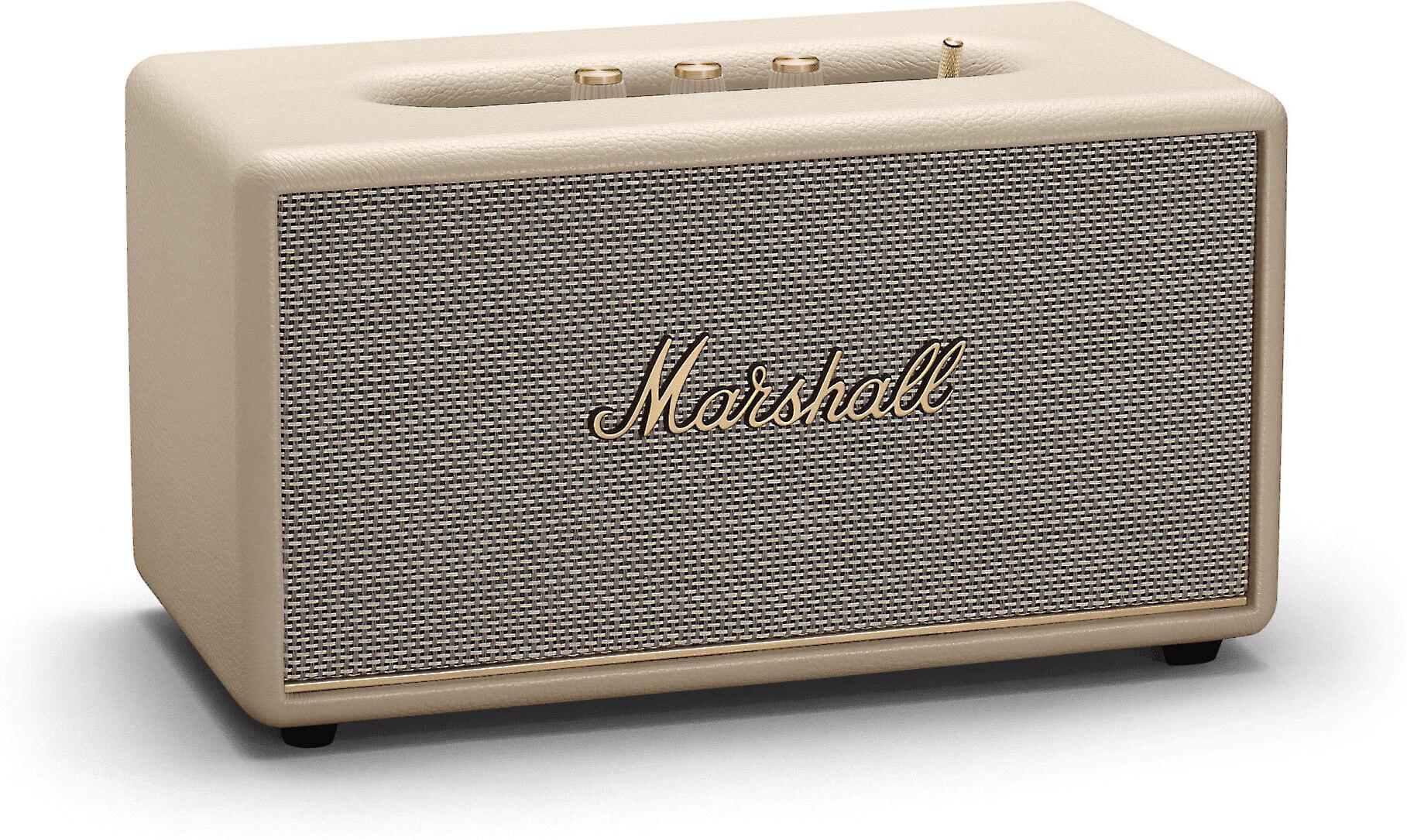
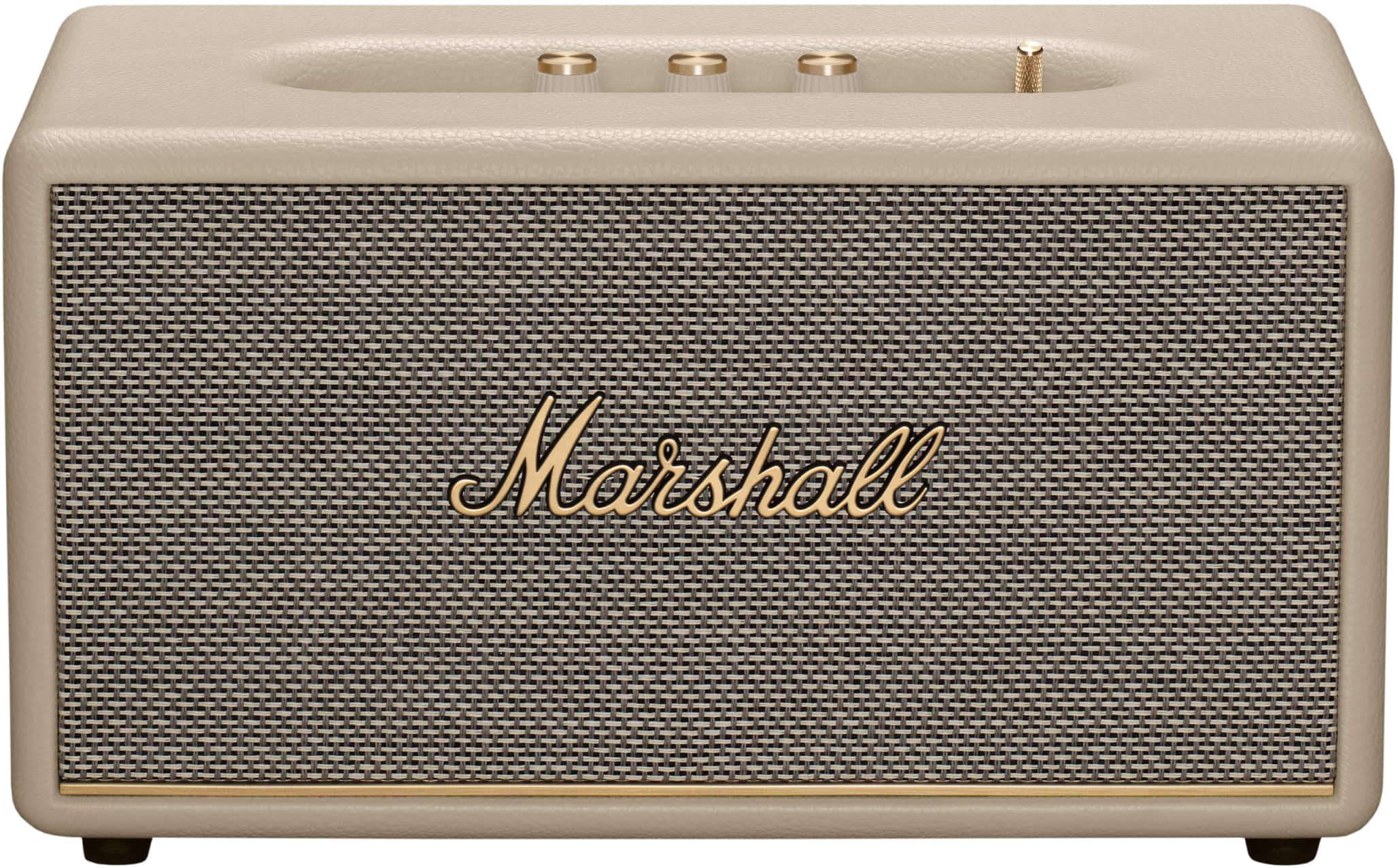
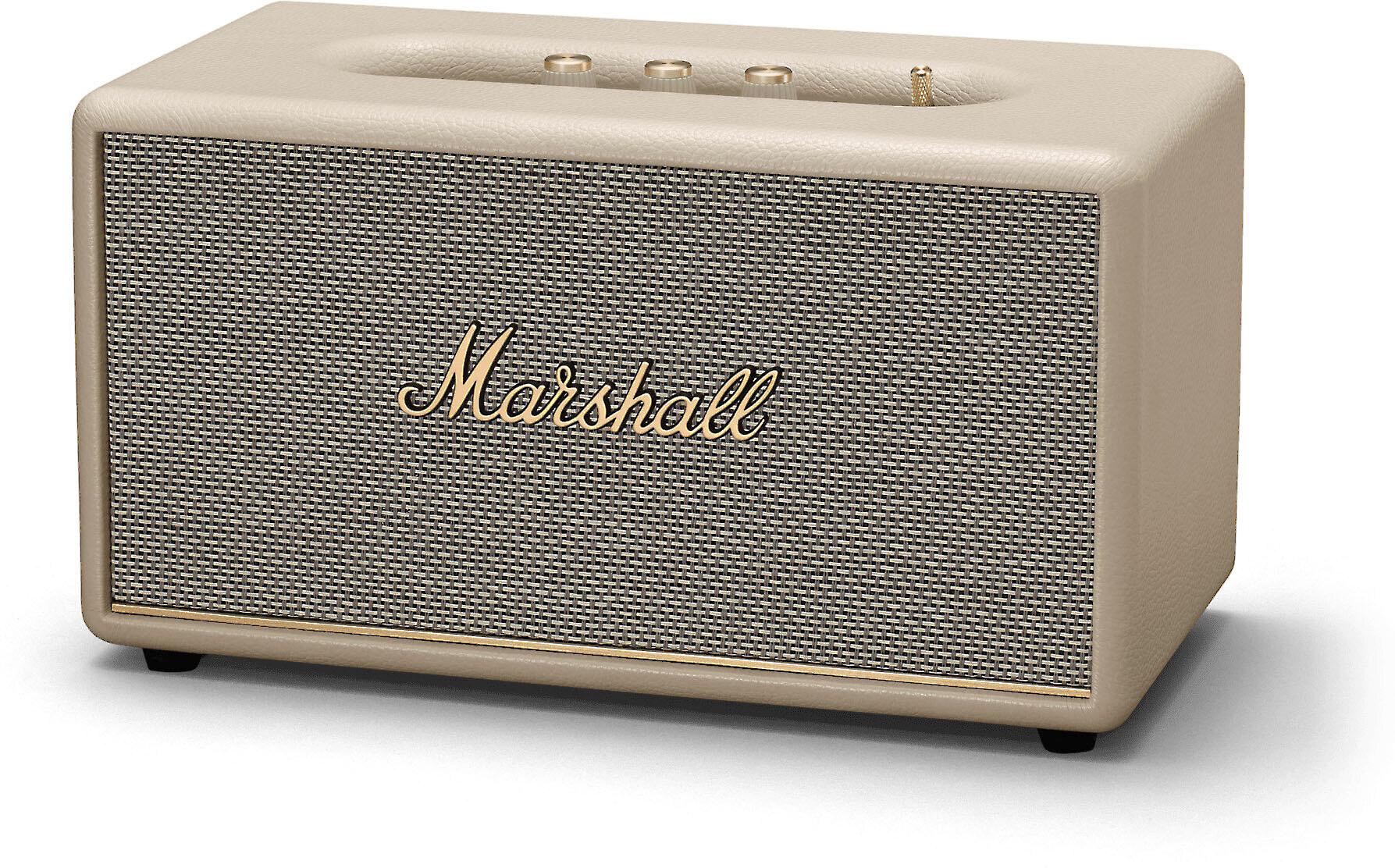
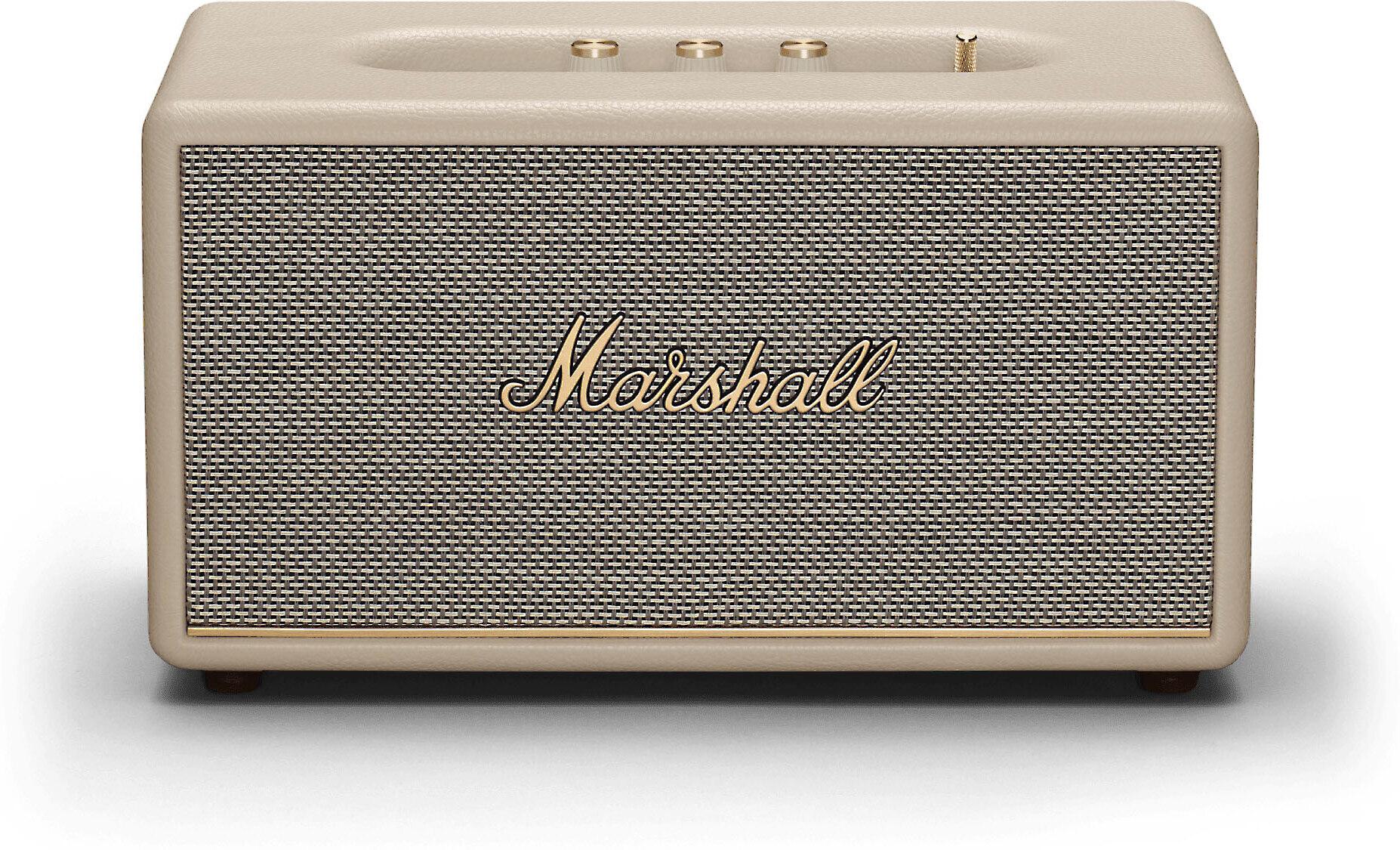
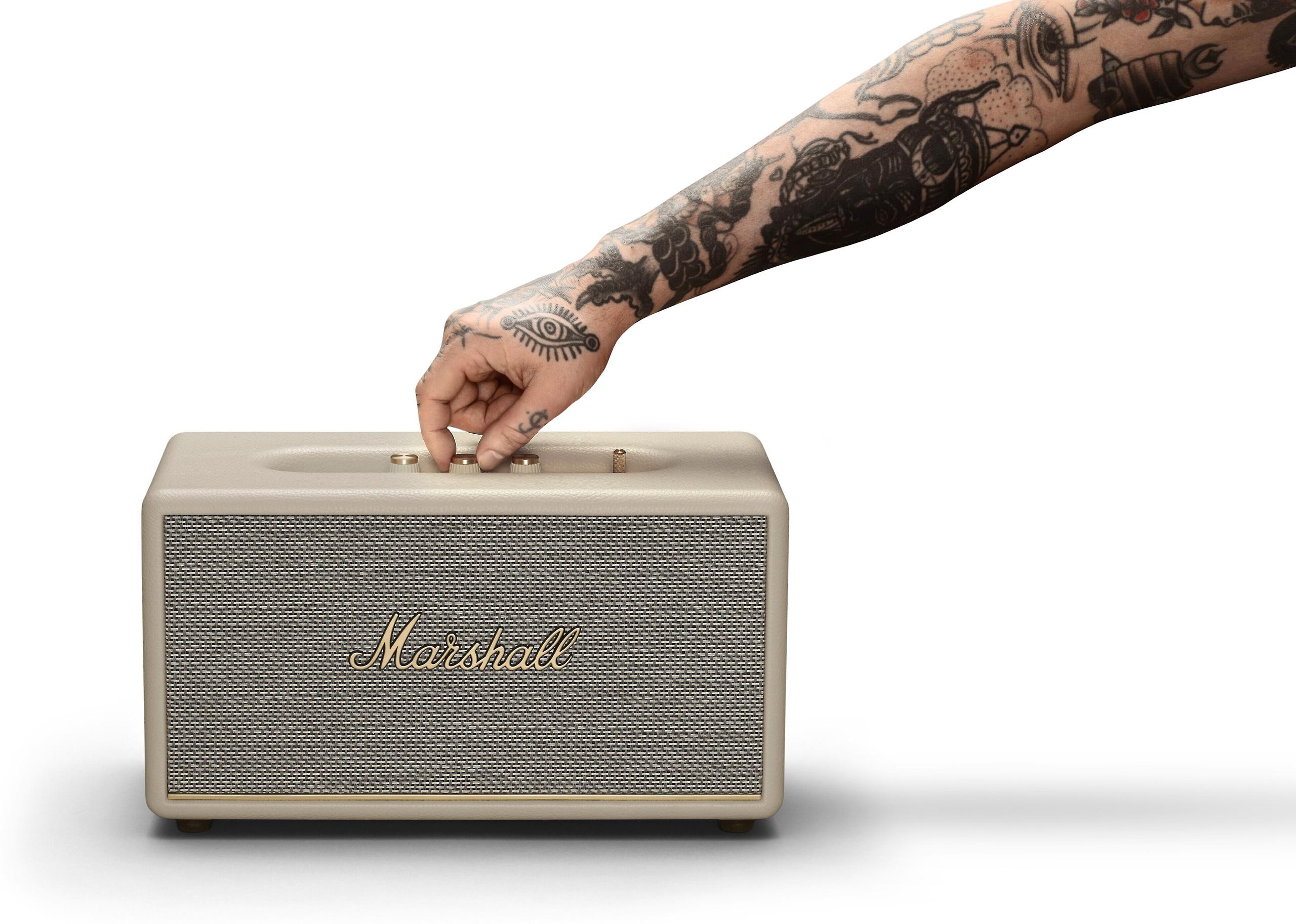
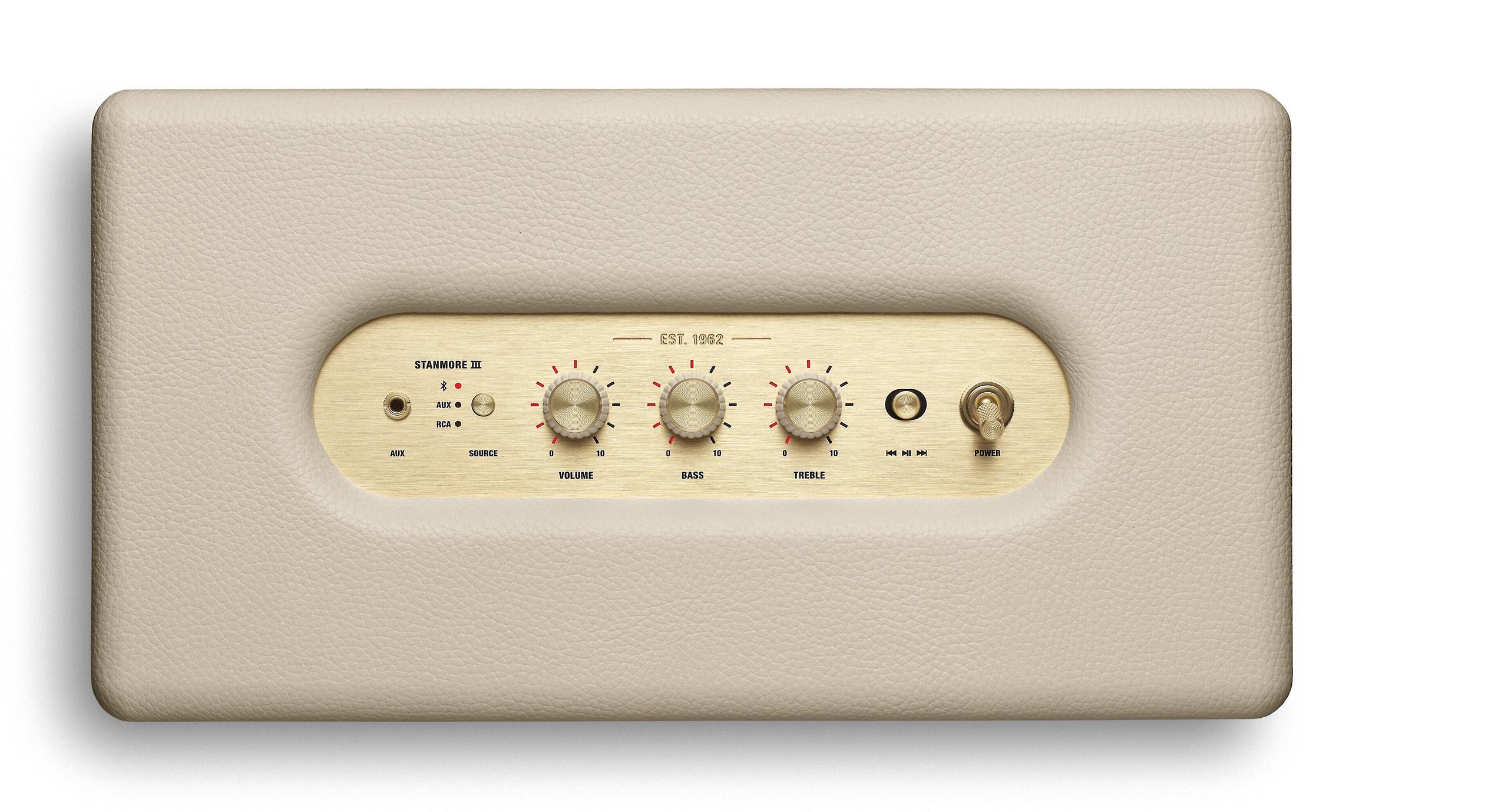
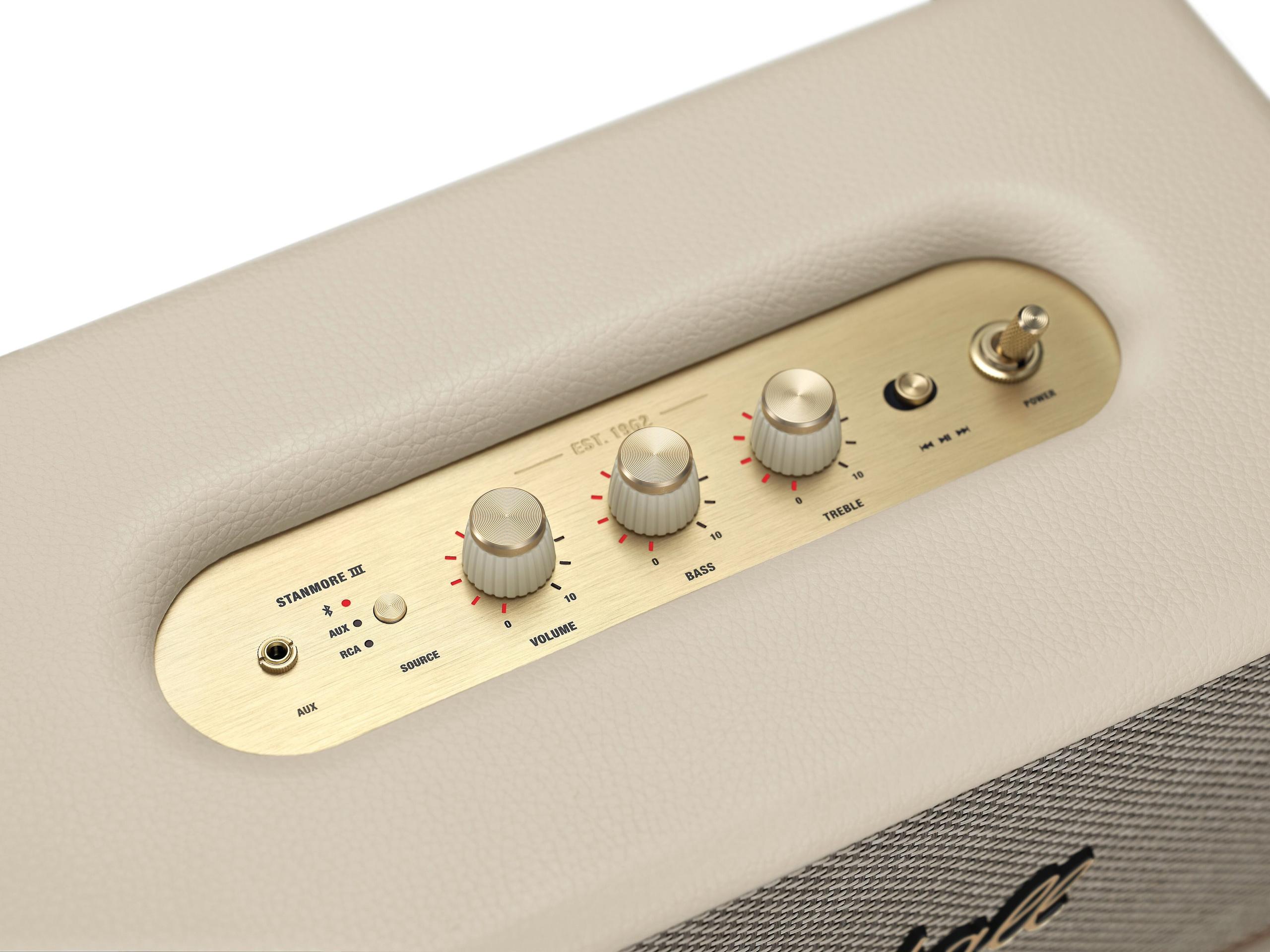
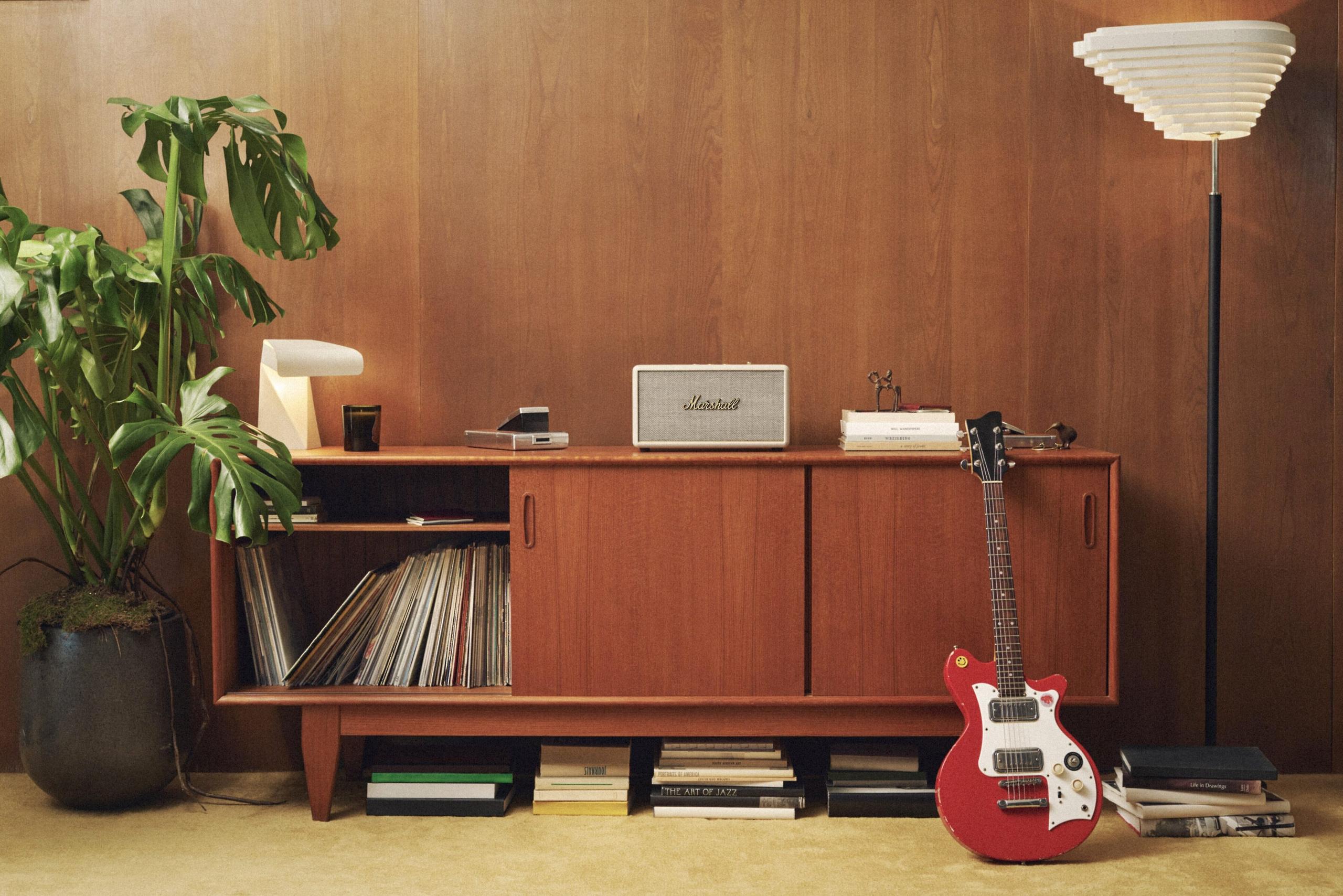


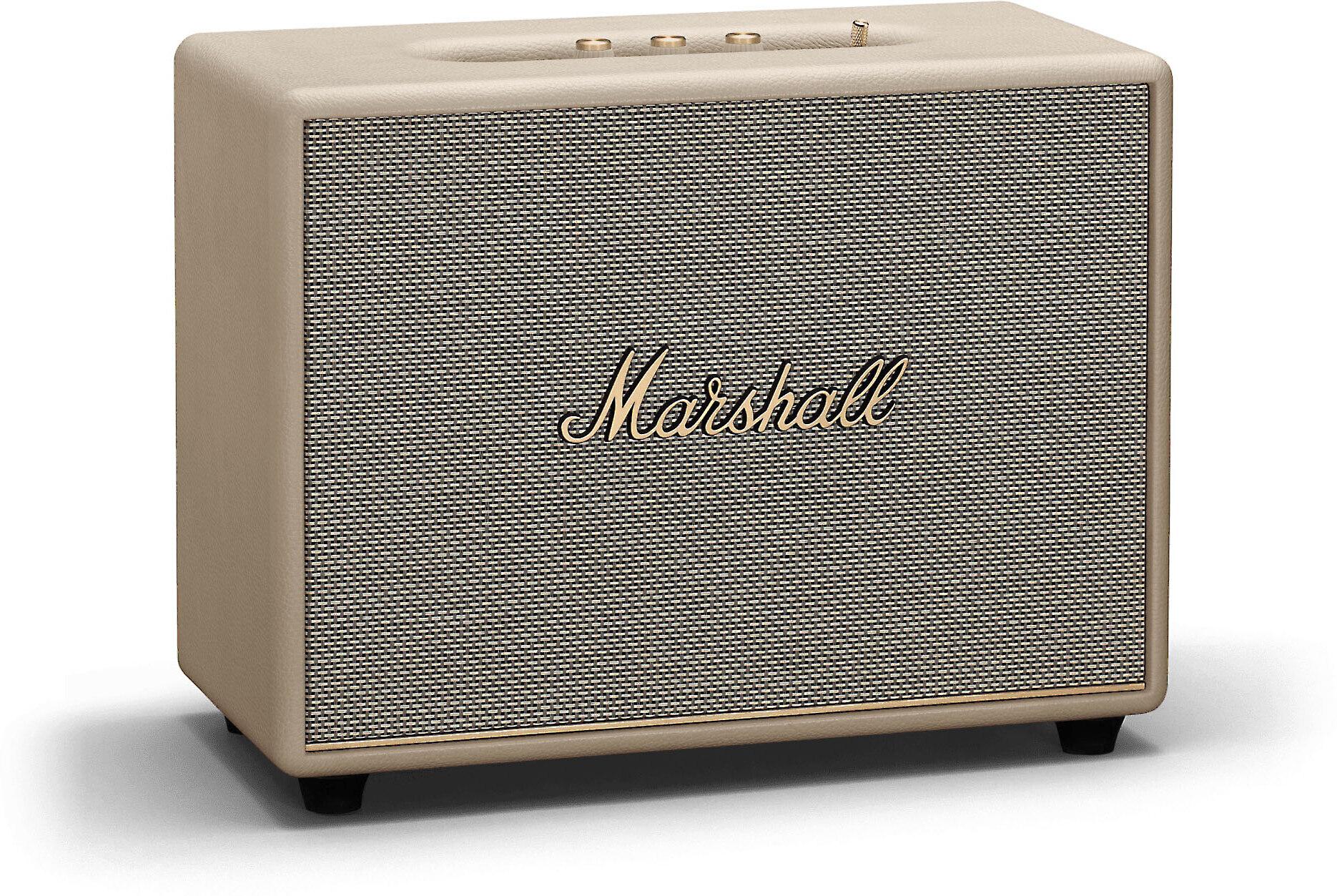
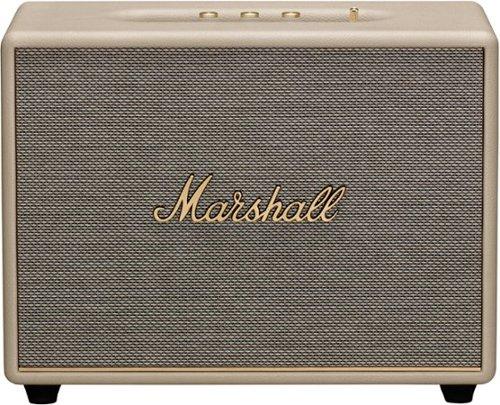
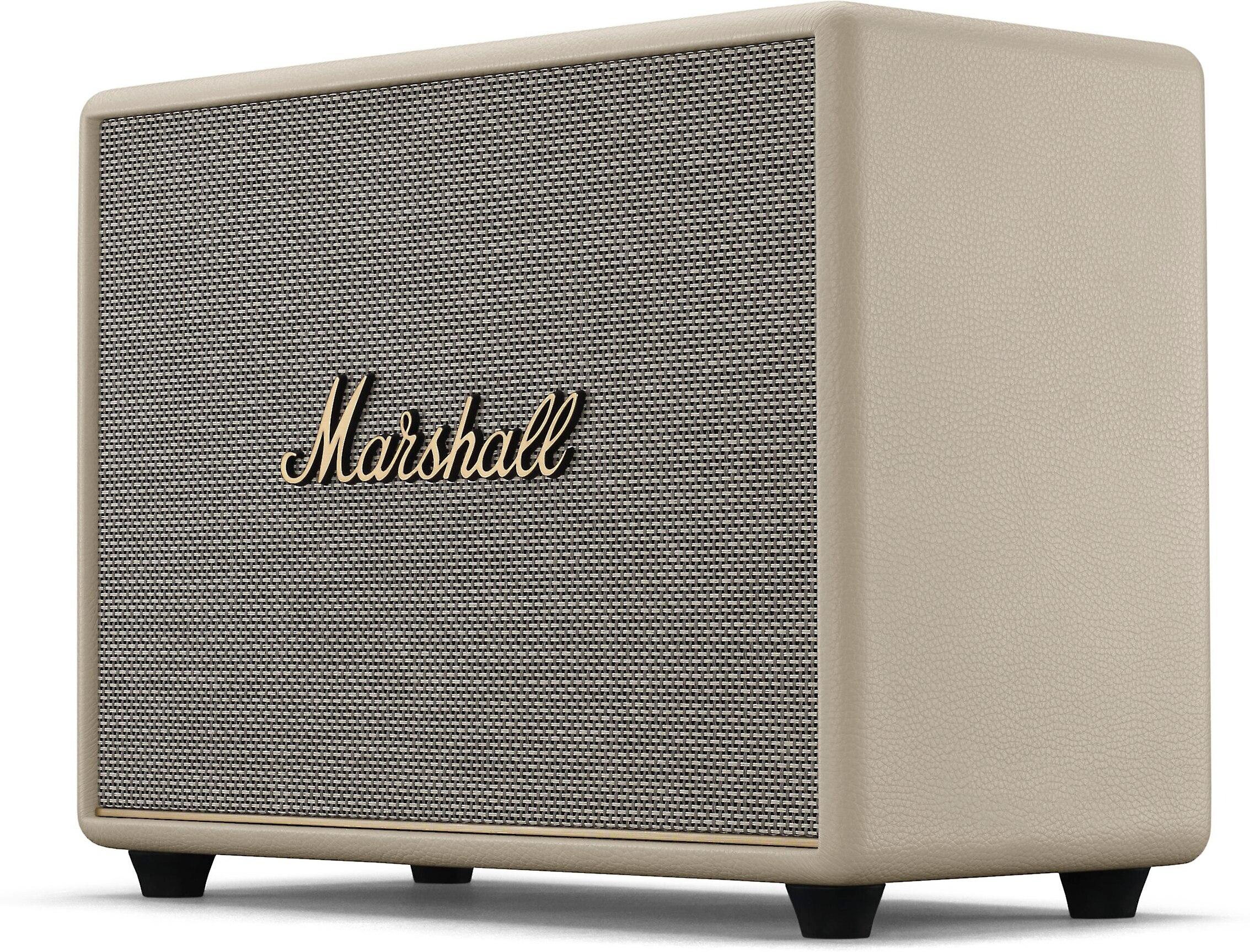
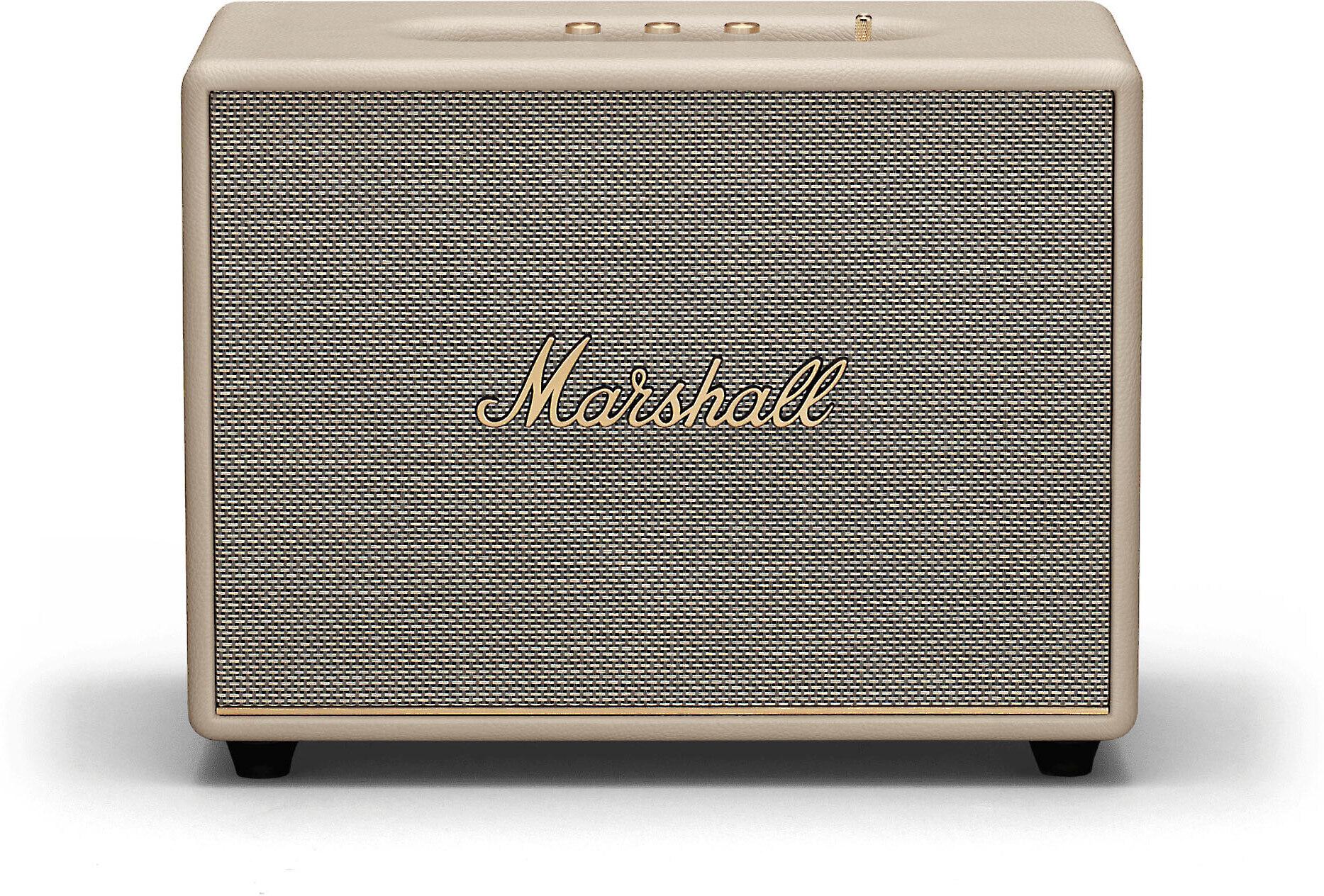
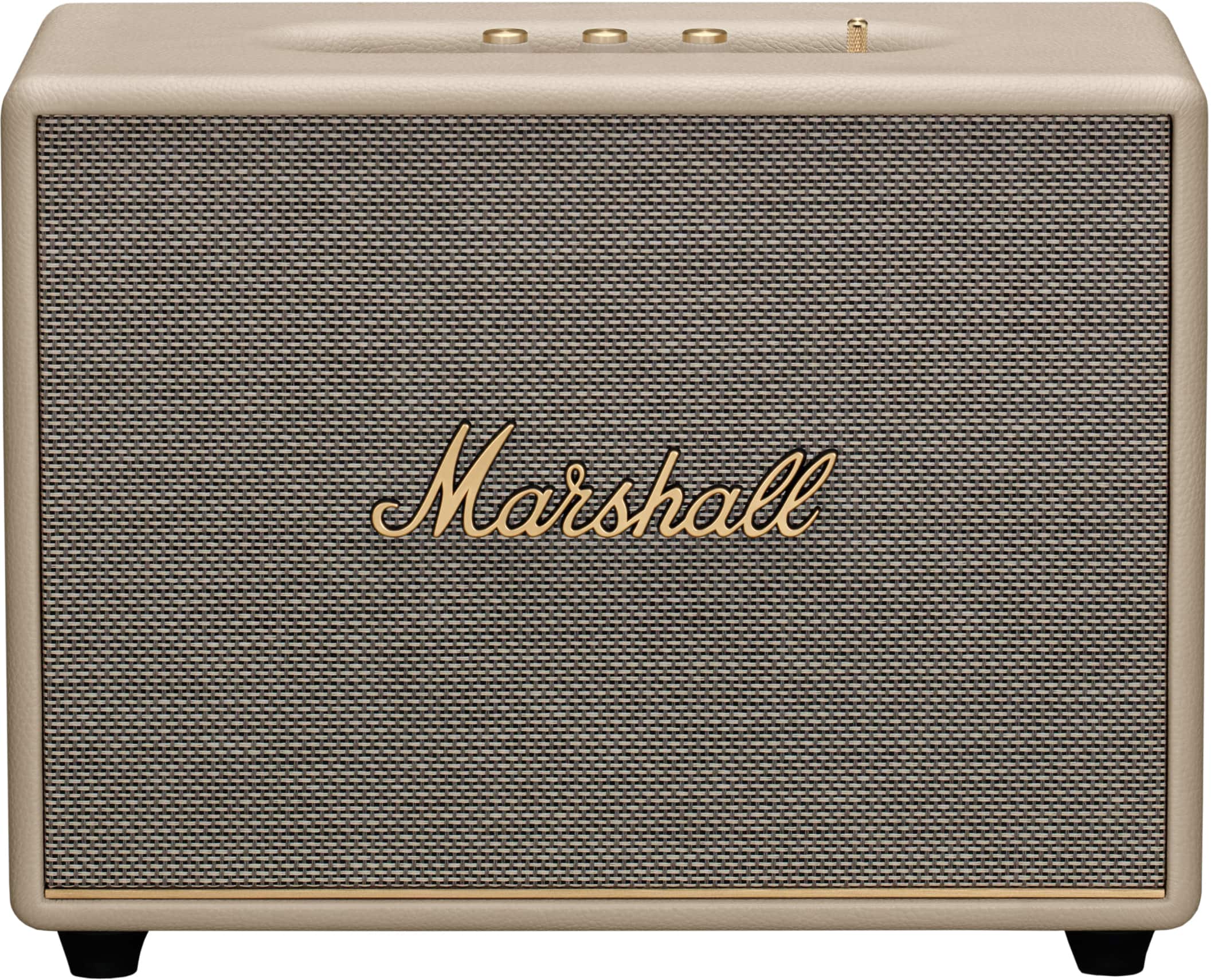

When Marshall released their third generation of home speakers in late 2022, they brought significant improvements to their already popular lineup. Today, we'll compare the mid-sized Stanmore III ($379.99) and the flagship Woburn III ($579.99) to help you decide which one belongs in your home.
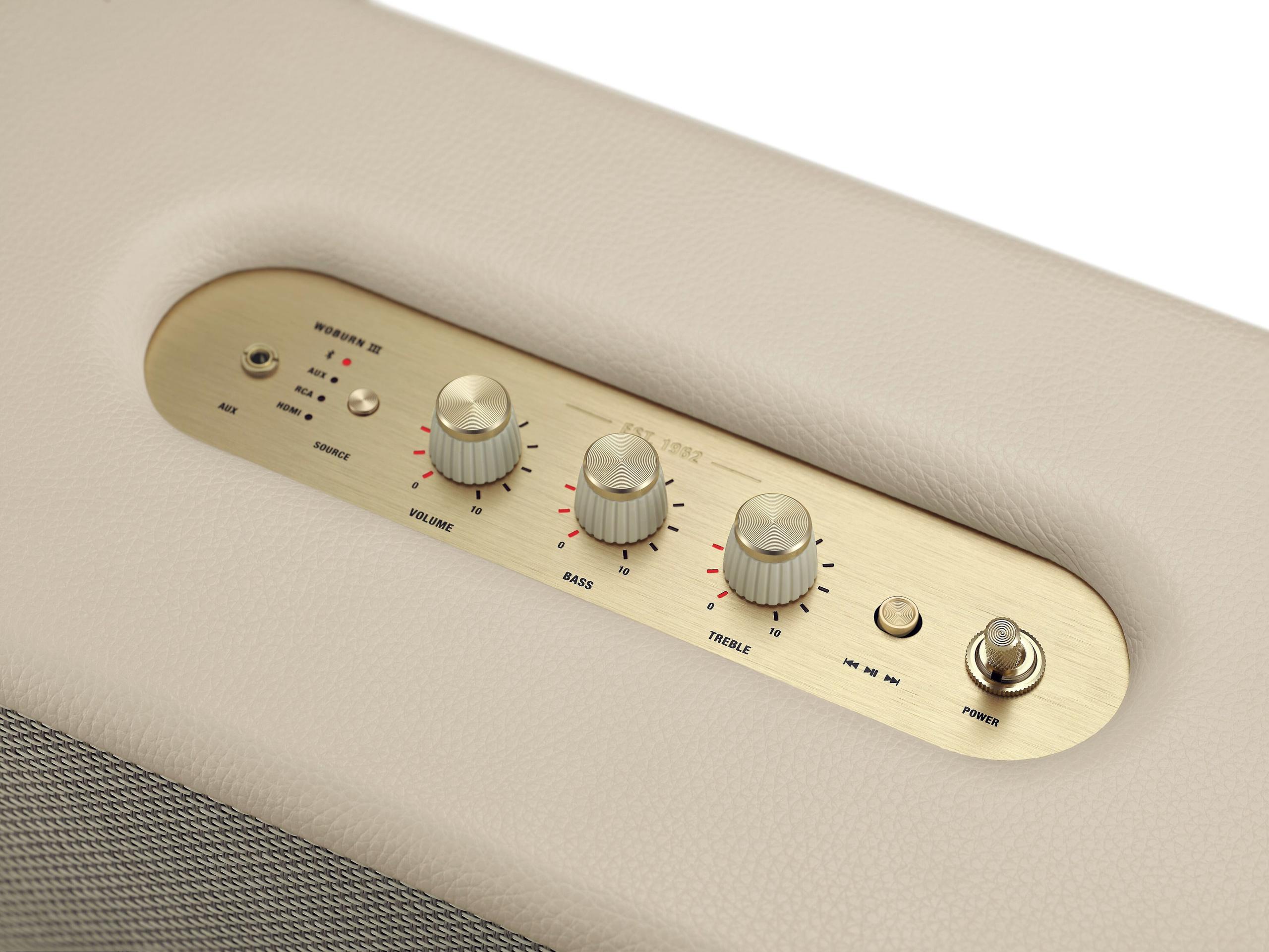
Today's high-end Bluetooth speakers need to deliver more than just good sound. They should offer flexible connectivity, smart features, and room-filling audio that can replace traditional stereo systems. Marshall's latest generation tackles these challenges while maintaining their iconic vintage aesthetic.
Both speakers represent significant upgrades from their predecessors, featuring new waveguides (special surfaces that help direct sound), improved driver designs, and more powerful amplifiers. They've also added "Placement Compensation" - a clever feature that automatically adjusts the sound based on whether the speaker is near walls or in corners.
The Stanmore III and Woburn III share DNA but serve different purposes. Think of the Stanmore III as a powerful bookshelf speaker and the Woburn III as a small floor-standing speaker replacement.
The most obvious difference is size and power. The Stanmore III's 80 watts might sound modest compared to the Woburn III's 150 watts, but what matters more is how they use that power. The Stanmore III dedicates 50 watts to its woofer (the speaker that handles bass) and 15 watts to each tweeter (handling high frequencies). The Woburn III uses its extra power for a larger woofer and adds dedicated midrange drivers, creating a more sophisticated three-way system.
Having spent time with both speakers, the family resemblance in sound signature is clear - both offer what audio enthusiasts call a "musical" presentation, with slightly enhanced bass and treble that makes most music more engaging.
The Stanmore III produces impressive clarity across frequencies. Its two-way design (splitting audio between woofers and tweeters) handles most music beautifully, with particularly good performance in the vocal range. Bass extends down to 45Hz - deep enough for most music genres, though you might miss the lowest notes in electronic music or movie explosions.
The Woburn III takes everything up a notch. Its three-way design adds dedicated midrange drivers, creating more separation between instruments and voices. Bass reaches down to 35Hz, which you'll feel as much as hear. This extra capability makes it especially suitable for home theater use, where those lowest frequencies add impact to movie soundtracks.
Room size significantly impacts speaker performance. The Stanmore III comfortably fills medium-sized rooms (up to about 320 square feet). Its new waveguide design helps spread sound wider than previous generations, creating an impressive soundstage (the perceived width and depth of the audio).
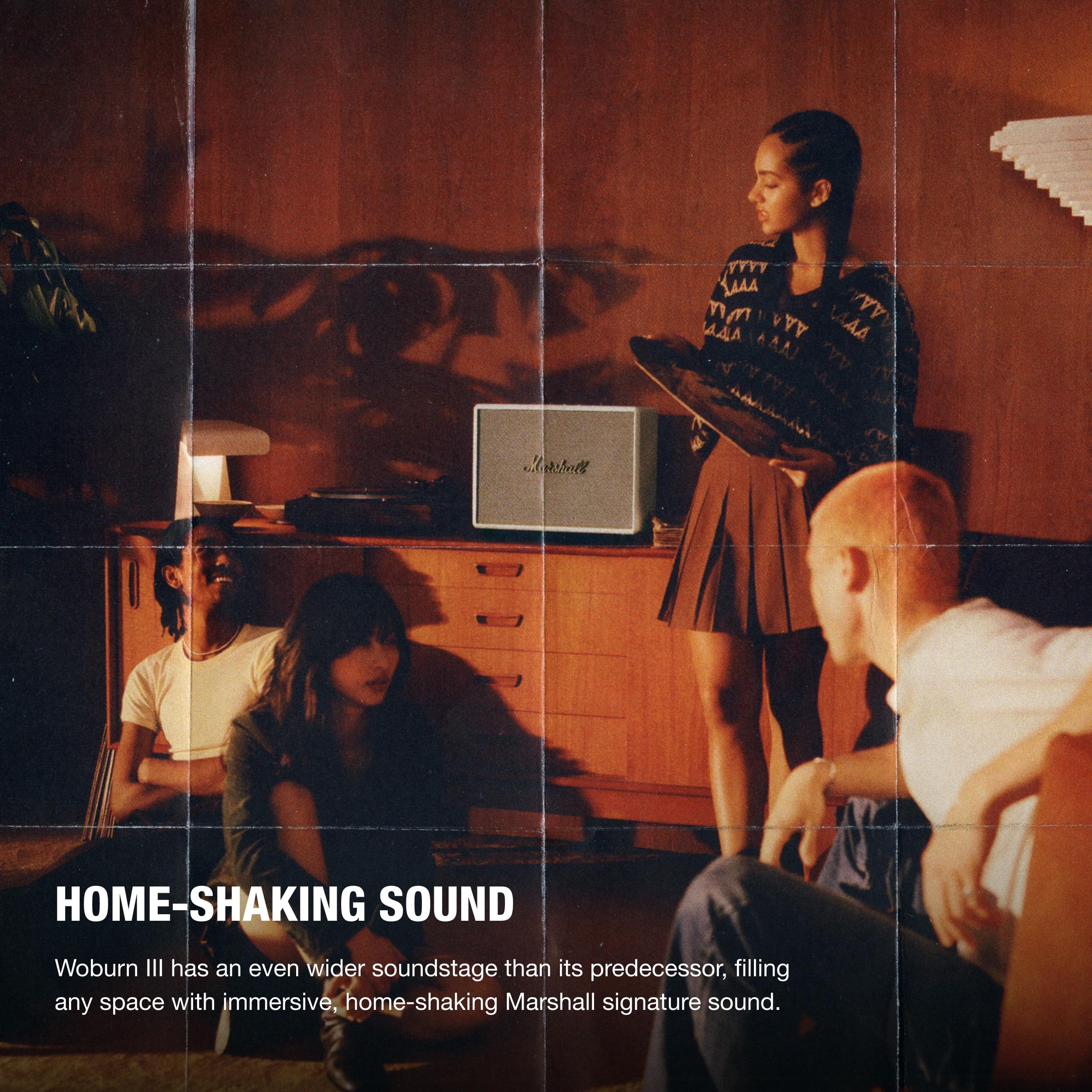
The Woburn III's extra power and larger drivers make it ideal for larger spaces up to 500 square feet. Its bass performance is less dependent on room acoustics, making it more flexible in terms of placement. Both speakers include Marshall's new Placement Compensation feature, which uses digital processing to adjust the sound based on nearby walls - a feature that really works and helps achieve optimal sound in real-world settings.
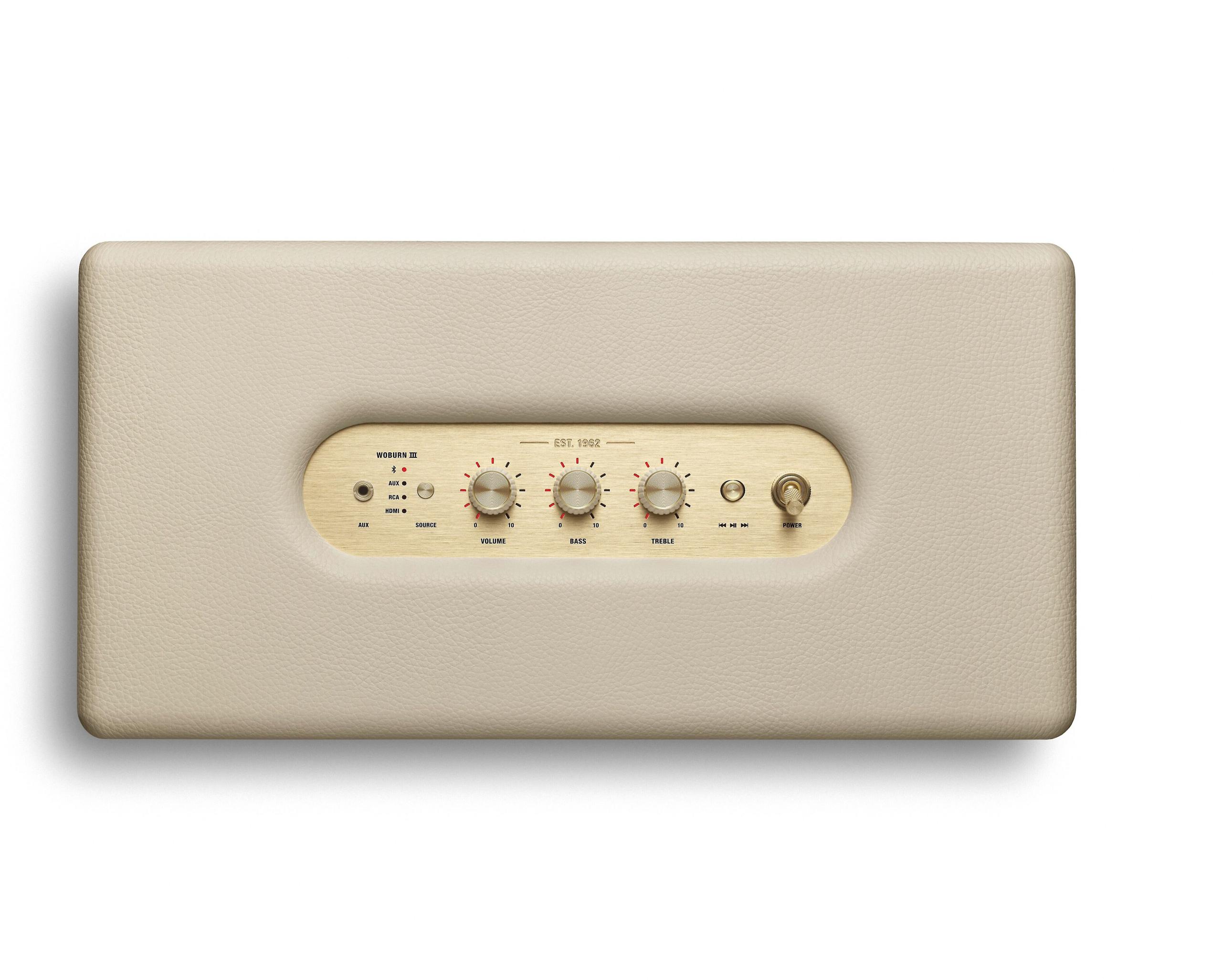
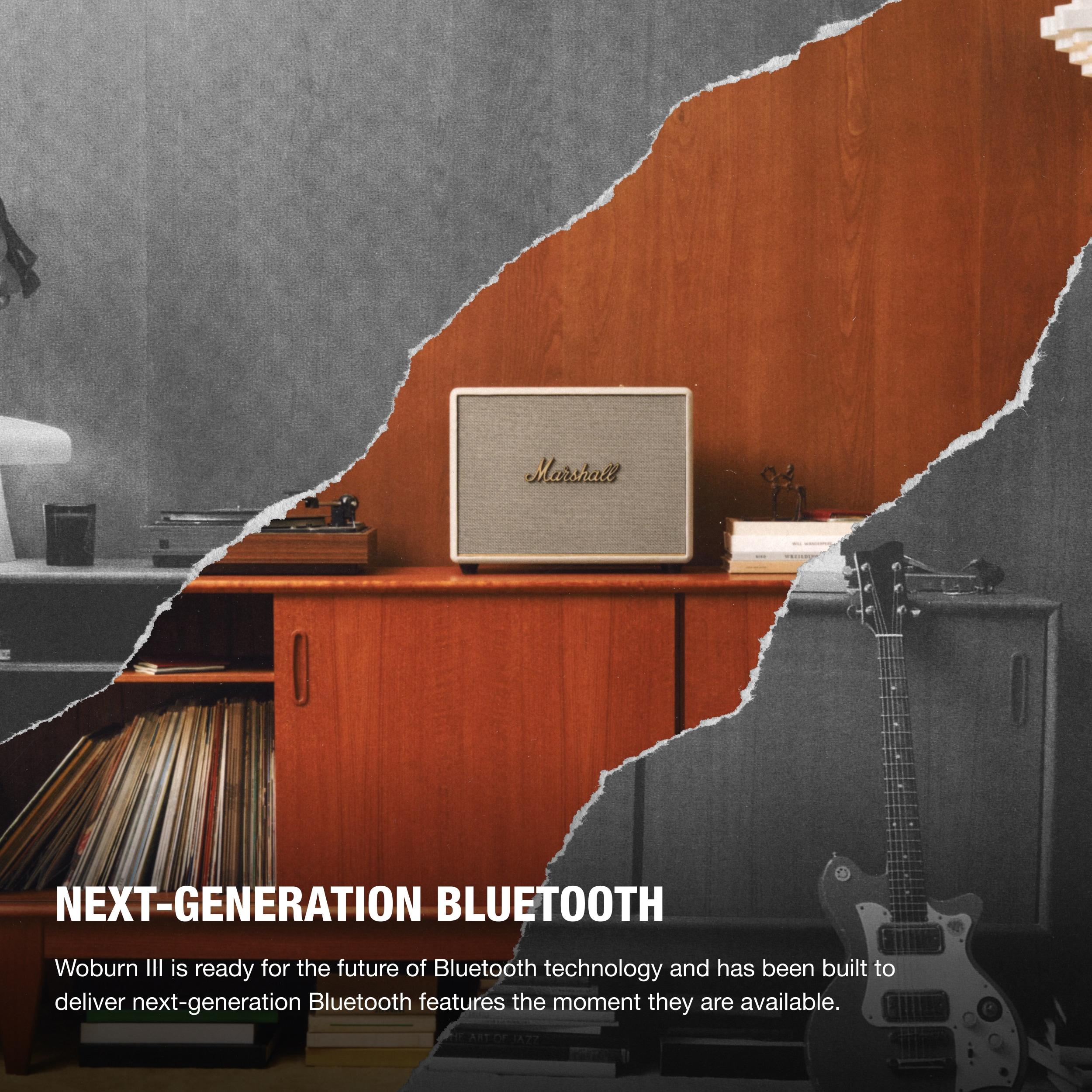
Both speakers showcase Marshall's latest tech innovations:
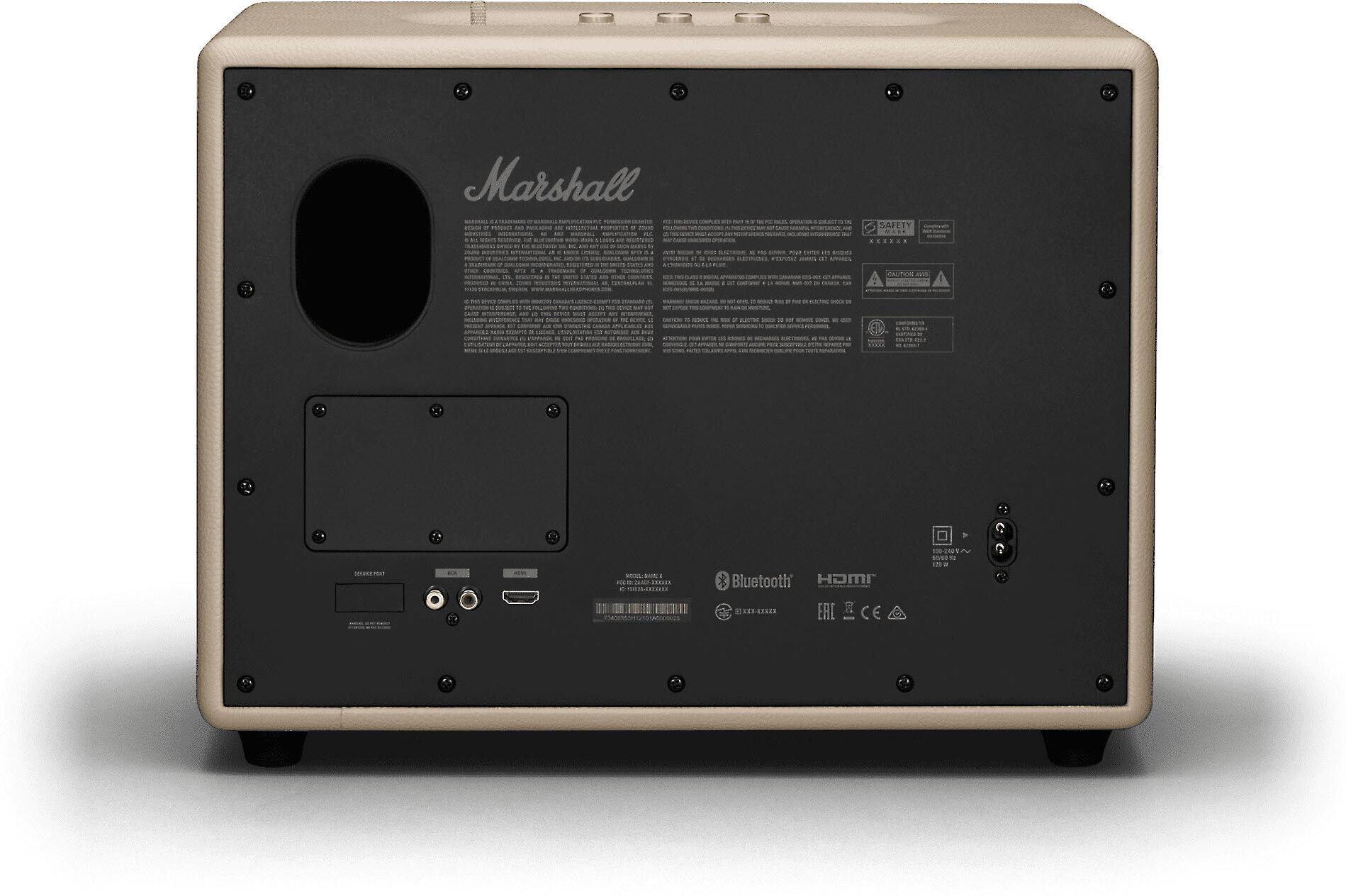
The Woburn III adds HDMI ARC support, which is a significant advantage for home theater use. This allows direct connection to your TV, with volume control through your TV remote. It supports high-resolution audio up to 24-bit/96kHz through this connection - noticeably better than standard Bluetooth audio quality.
After extensive testing, the value proposition becomes clear. The Stanmore III hits a sweet spot for most users, offering excellent sound quality and features at a reasonable price point. It's particularly good for:
The Woburn III justifies its higher price if you:
Consider these key factors when choosing between the two:
Both speakers represent significant improvements over their predecessors and stand out in the premium Bluetooth speaker market. The Stanmore III offers exceptional value and performance for most users, while the Woburn III provides additional capabilities that justify its higher price for those who can take advantage of them.
For most users in medium-sized rooms primarily listening to music, the Stanmore III represents the better value. However, if you're setting up a primary audio system, especially one connected to a TV, or if you have a larger space to fill, the Woburn III's additional capabilities make it worth the investment.
Both speakers continue Marshall's tradition of combining vintage aesthetic with modern technology, and either one will provide years of enjoyable listening. The choice ultimately comes down to your specific needs and space requirements rather than absolute quality - they're both excellent speakers in their respective categories.
| Marshall Stanmore III $379.99 | Marshall Woburn III $579.99 |
|---|---|
| Power Output - Determines volume capability and clarity at higher levels | |
| 80W total (50W woofer, 2x15W tweeters) | 150W total (90W woofer, 2x30W mid-range, 2x15W tweeters) |
| Driver Configuration - Affects sound clarity and frequency separation | |
| Two-way: 1x5" woofer, 2x0.75" tweeters | Three-way: 1x6" woofer, 2x2" mid-range, 2x0.75" tweeters |
| Frequency Response - Determines bass depth and overall range | |
| 45-20,000 Hz (good for most music) | 35-20,000 Hz (deeper bass, better for movies) |
| Room Size Suitability - Critical for optimal performance | |
| Up to 320 sq ft | Up to 500 sq ft |
| Connectivity Options - Affects versatility | |
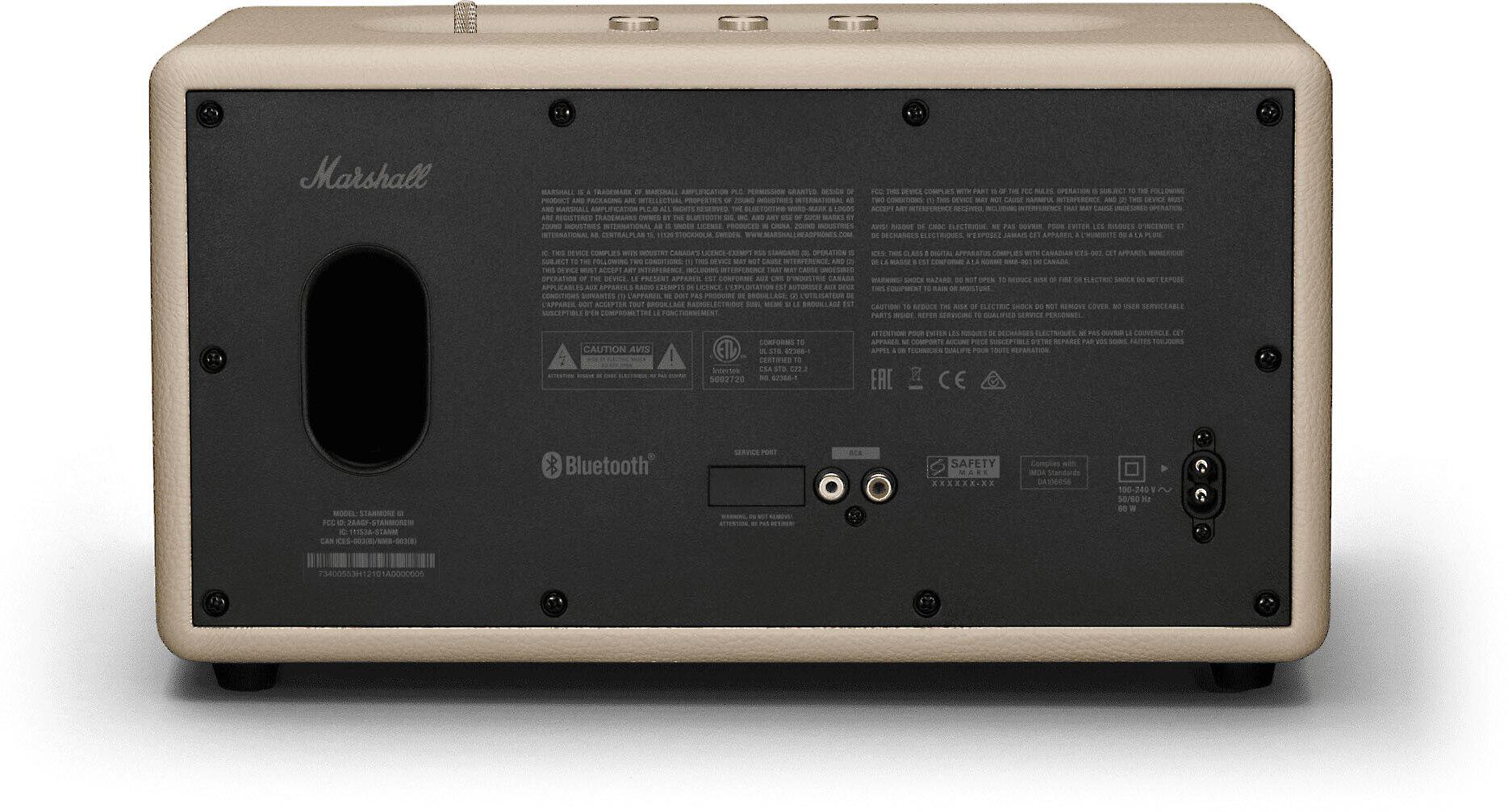
| Bluetooth 5.2, RCA, 3.5mm aux | Bluetooth 5.2, RCA, 3.5mm aux, HDMI ARC |
| Dimensions - Consider your space | |
| 13.8"W x 8.1"H x 8.4"D | 15.75"W x 12.5"H x 9"D |
| Weight - Impacts placement options | |
| 9.37 lbs | 16.42 lbs |
| Maximum SPL - Peak volume capability | |
| 97 dB at 1 meter | 100.5 dB at 1 meter |
| Special Features - Enhances usability | |
| Dynamic Loudness, Placement Compensation, App Control | Dynamic Loudness, Placement Compensation, App Control, Night Mode |
| Primary Use Case - Helps determine best fit | |
| Music in medium rooms, near-field listening | Home theater, large room audio, serious music listening |
The Marshall Woburn III offers better overall sound quality and more features than the Stanmore III, but it's also $200 more expensive. The Woburn III is better if you have a larger room or want home theater use, while the Stanmore III is excellent for medium-sized rooms and music listening.
The Marshall Stanmore III costs $379.99, while the Marshall Woburn III is priced at $579.99, making a $200 difference between the models.
The Marshall Stanmore III is ideal for small to medium-sized rooms up to 320 square feet. The Woburn III might be overkill for smaller spaces.
The Woburn III has HDMI ARC connection for direct TV connectivity, while the Stanmore III doesn't. Both can connect to TVs via auxiliary input, but HDMI provides better sound quality and easier control.
The Woburn III has noticeably better bass response, reaching down to 35Hz compared to the Stanmore III's 45Hz. It also has a larger woofer (6" vs 5") and more power for deeper, stronger bass.
Neither the Stanmore III nor Woburn III are portable - they require constant power connection and are designed as home speakers.
Both speakers excel at music playback. The Stanmore III is great for most music listeners, while the Woburn III offers better detail and stronger bass for audiophiles.
Yes, both the Stanmore III and Woburn III support multi-host functionality, allowing two devices to be connected via Bluetooth simultaneously.
Yes, both the Stanmore III and Woburn III work with the Marshall Bluetooth app for iOS and Android, offering EQ controls and firmware updates.
The Woburn III is louder, reaching 100.5 dB compared to the Stanmore III's 97 dB. It also has nearly twice the power (150W vs 80W).
Both can handle party situations, but the Woburn III is better suited for larger gatherings due to its higher volume capability and stronger bass. The Stanmore III works well for smaller parties.
The Woburn III offers more connectivity options with HDMI ARC in addition to Bluetooth 5.2, RCA, and 3.5mm aux inputs. The Stanmore III has all the same connections except HDMI.
We've done our best to create useful and informative comparisons to help you decide what product to buy. Our research uses advanced automated methods to create this comparison and perfection is not possible - please contact us for corrections or questions. These are the sites we've researched in the creation of this article: techgadgetscanada.com - camelcamelcamel.com - crutchfield.com - bestbuy.com - dxomark.com - crutchfield.com - crutchfield.com - marshall.com - marshall-production-1.mobify-storefront.com - exhibit.tech - ooberpad.com - av-connection.com - bestbuy.com - crutchfield.com - rtings.com - idownloadblog.com - digit.in - crutchfield.com - epicrewards.com.ph - ione.com.kh - youtube.com - onward.ph - economictimes.indiatimes.com

Privacy Policy
Terms and Conditions - Affiliate Policy
Home Security
© Copyright 2008-2026.
11816 Inwood Rd #1211, Dallas, TX 75244