

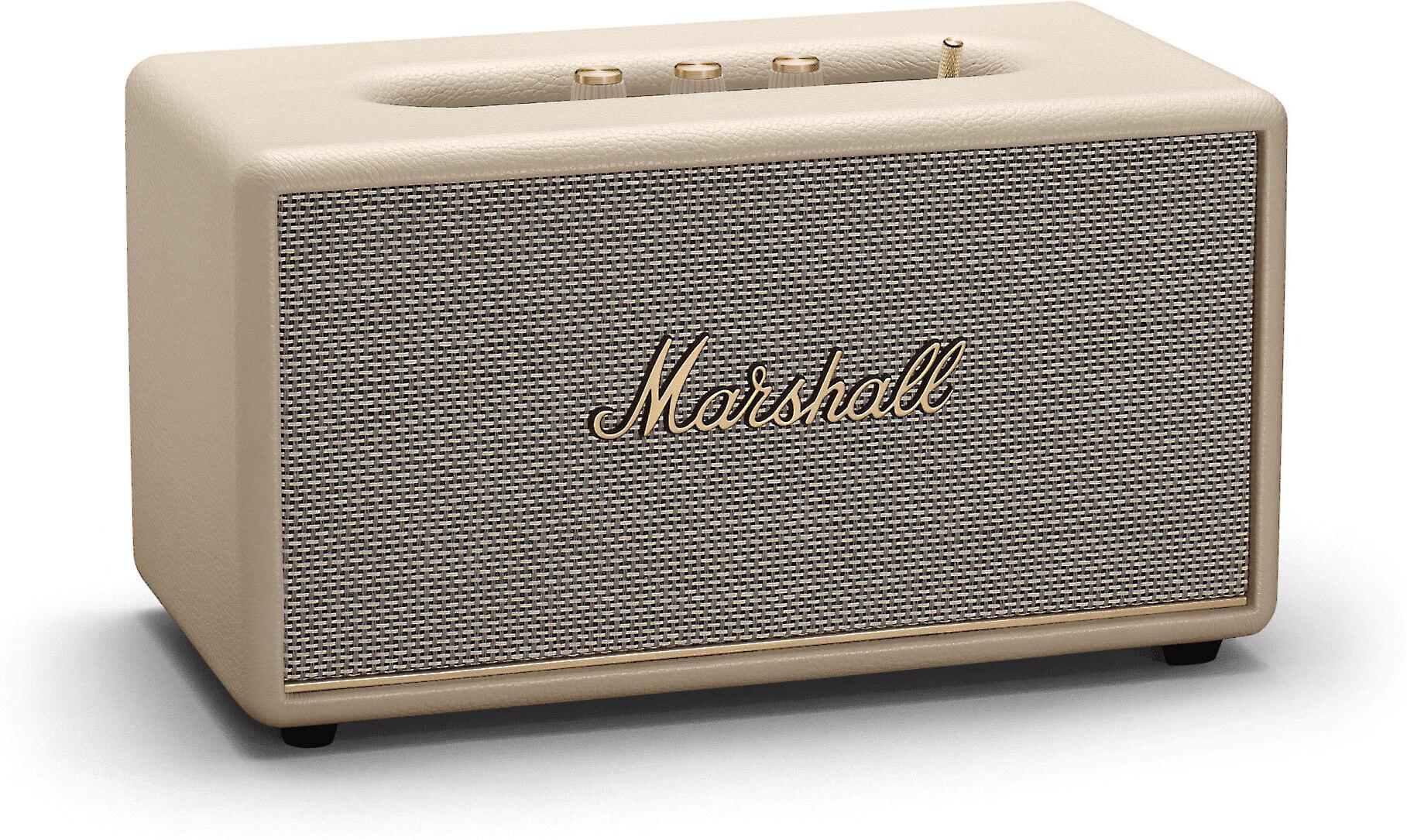
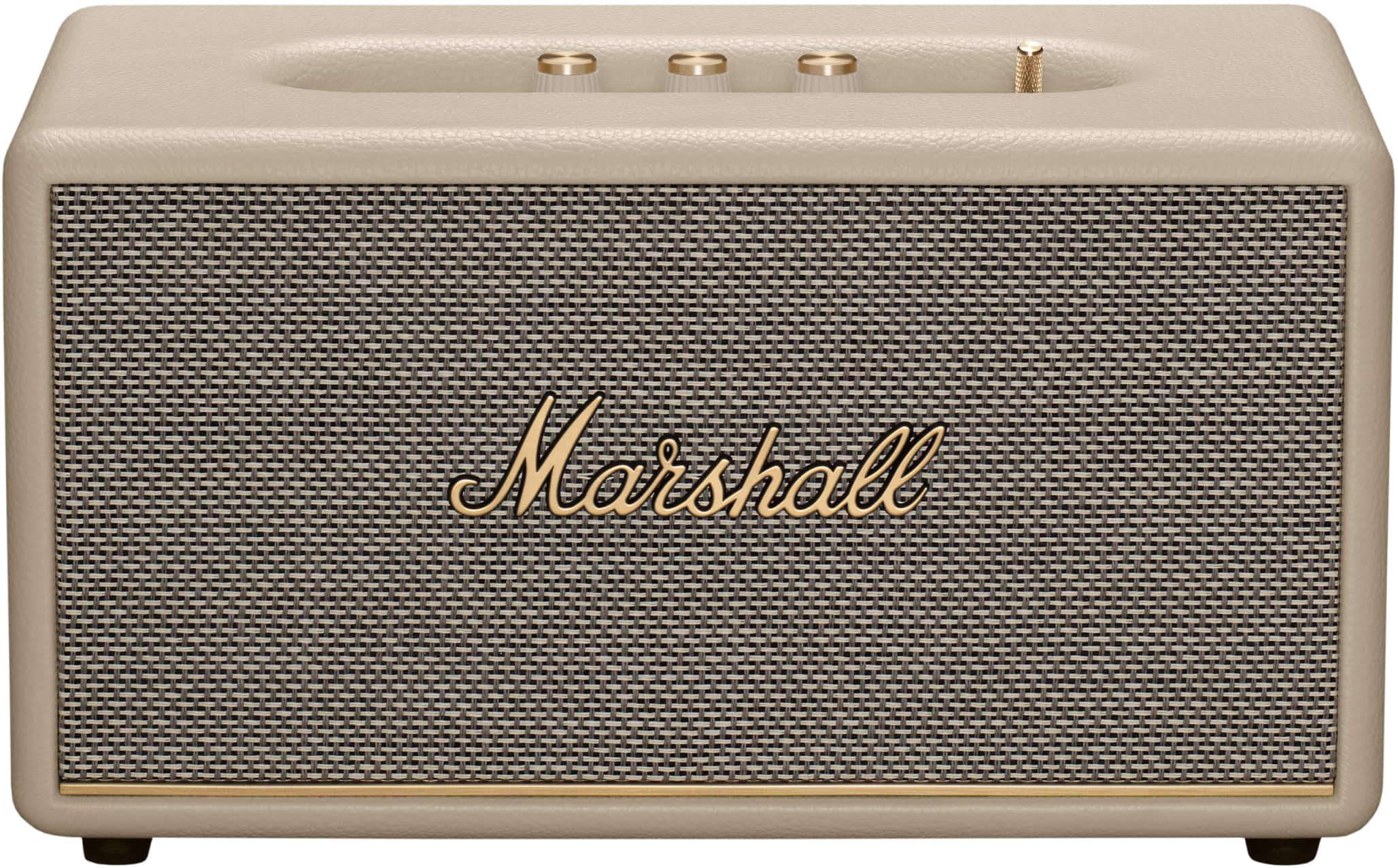
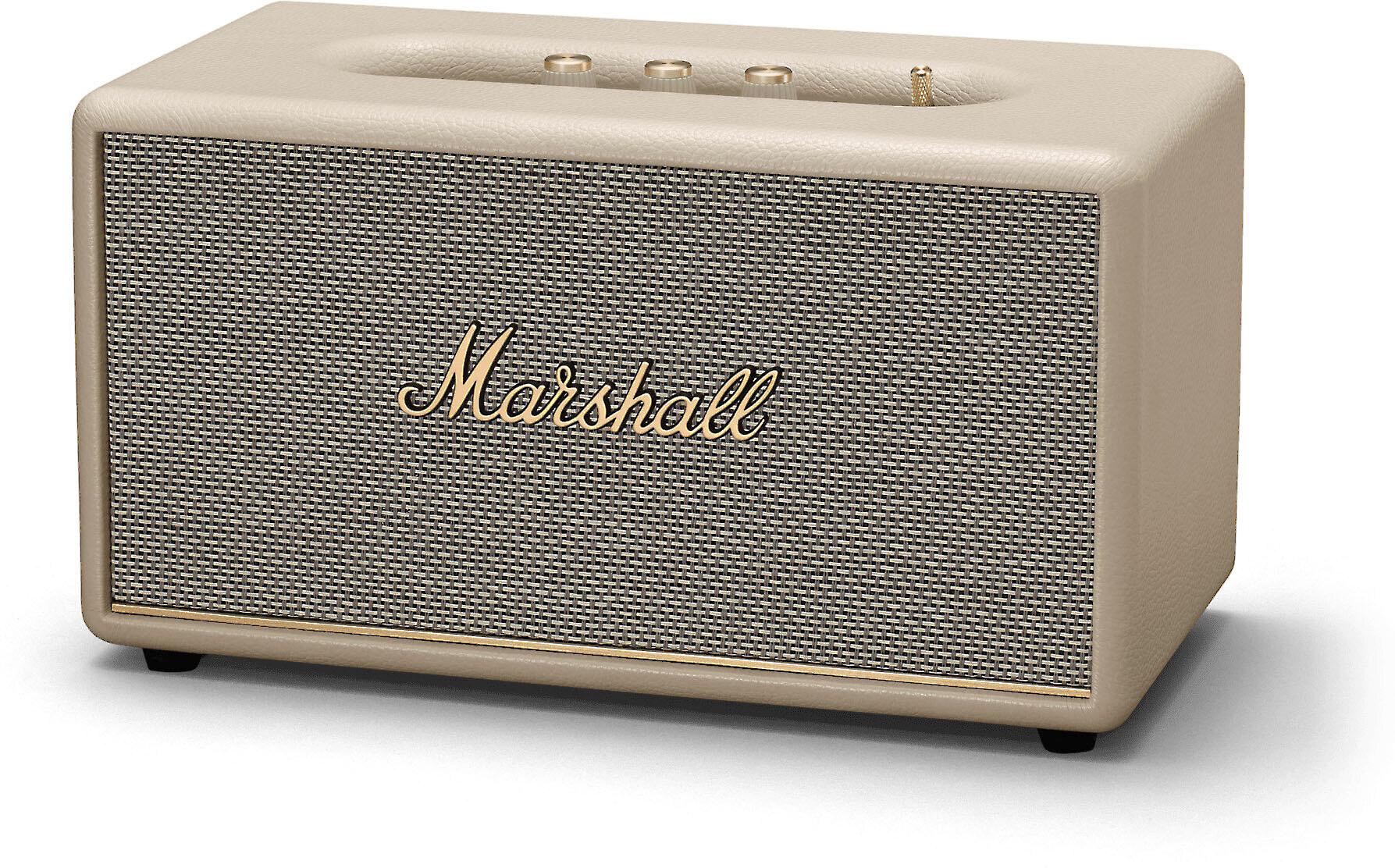
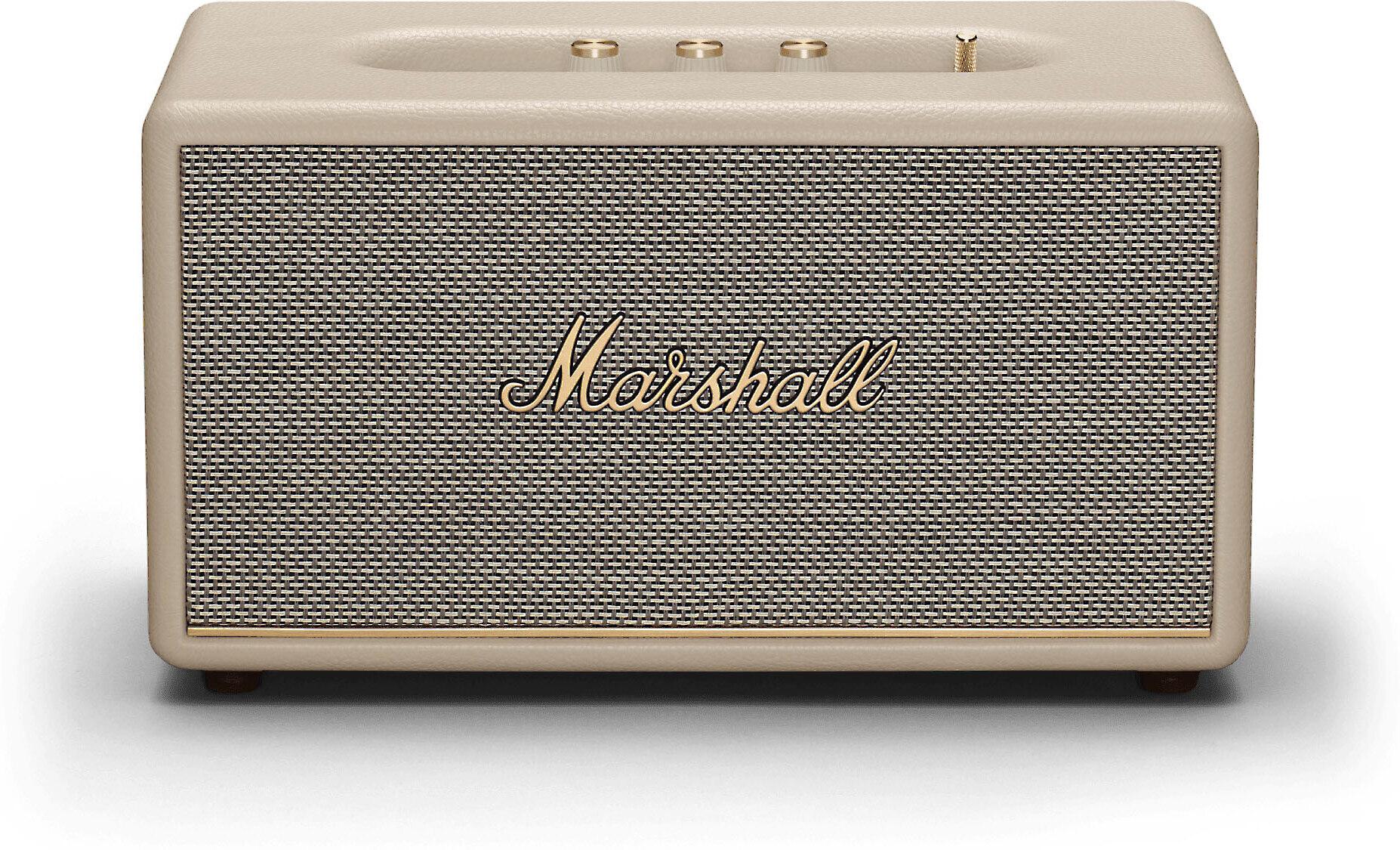

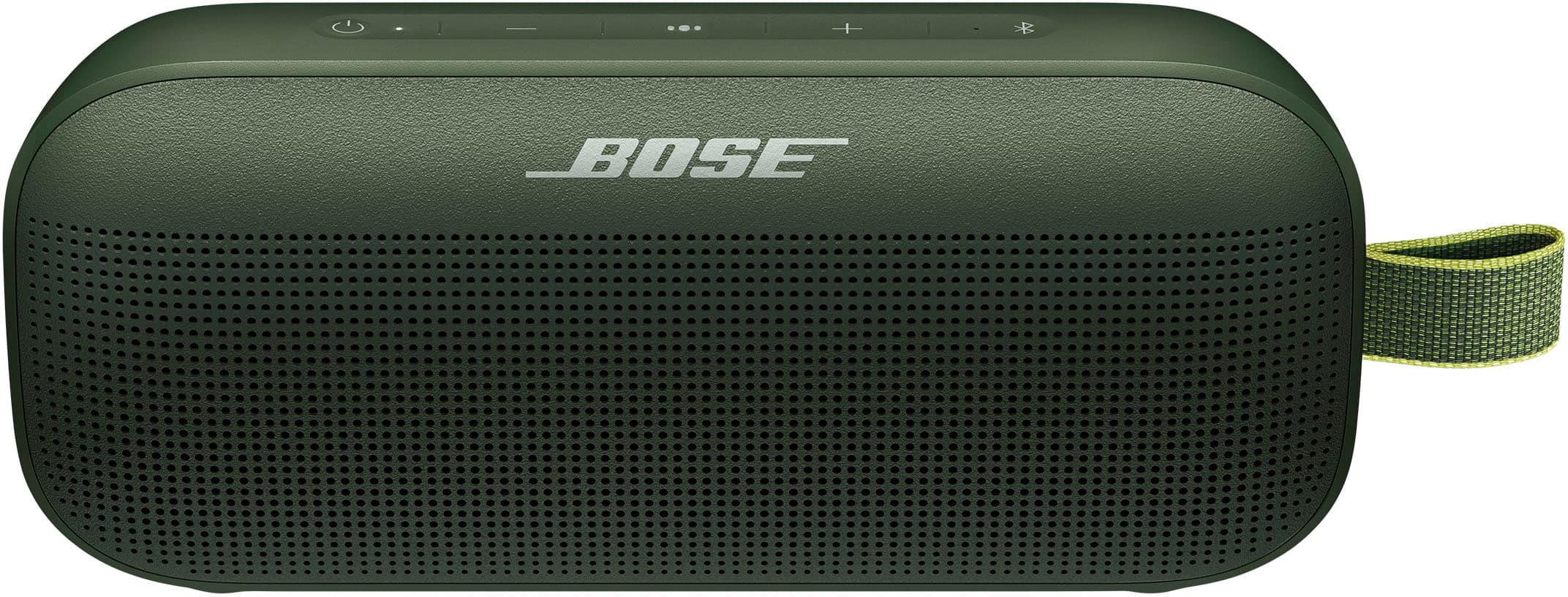
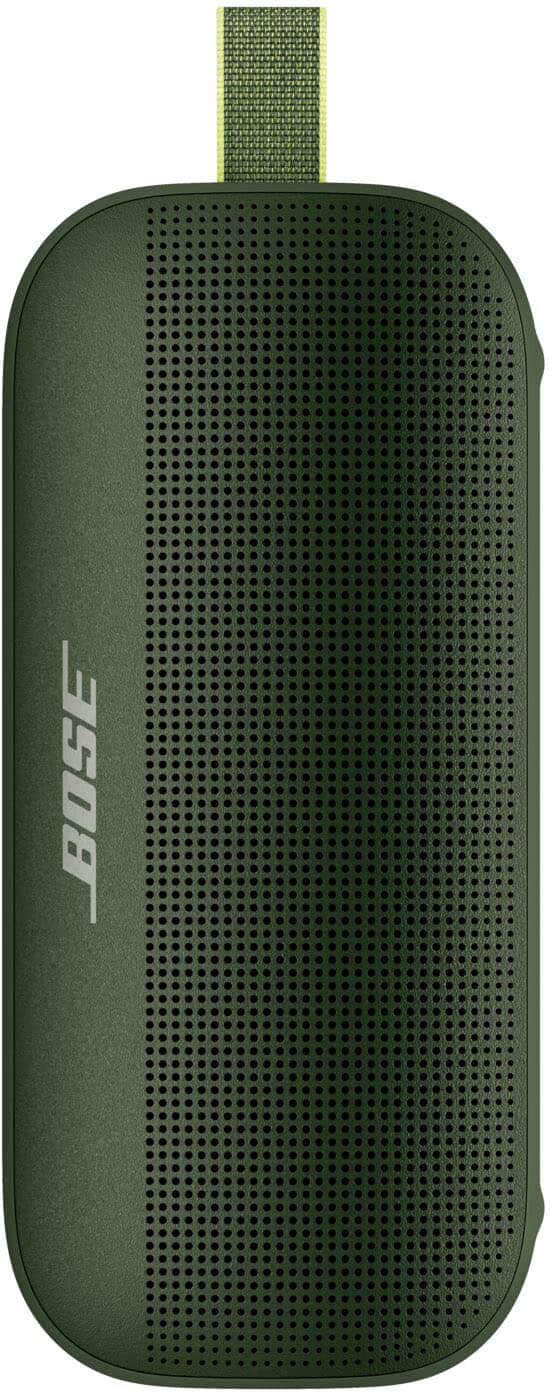
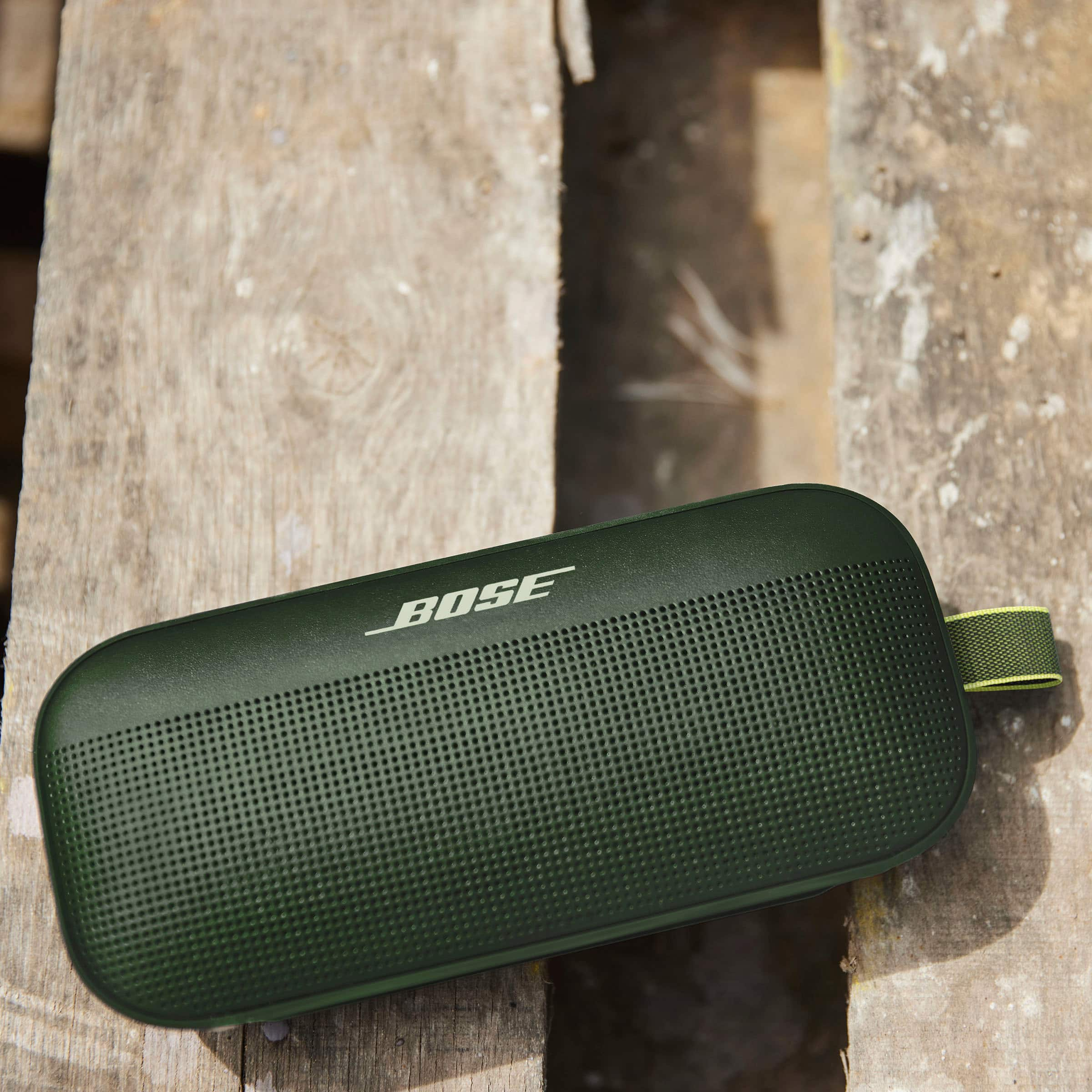
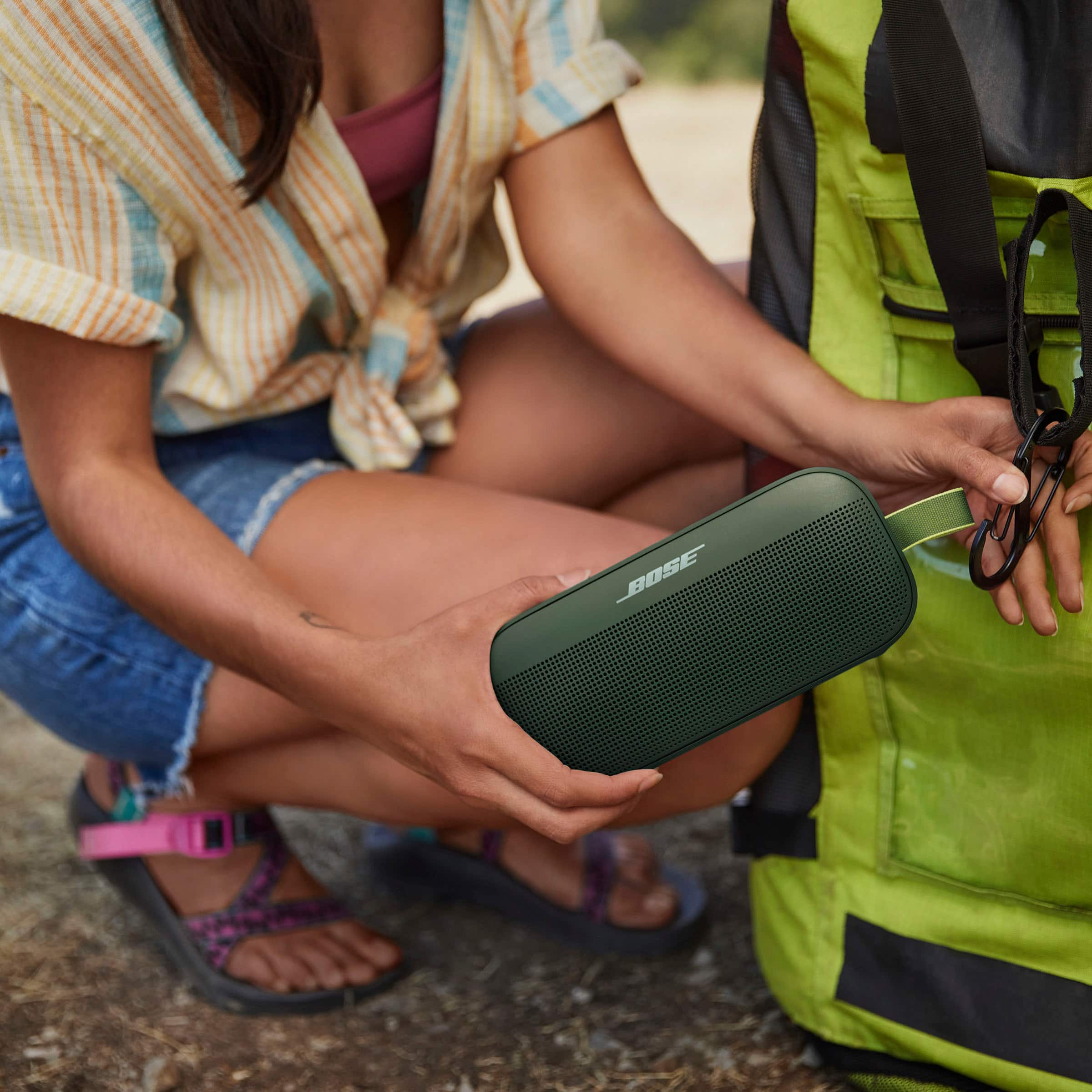


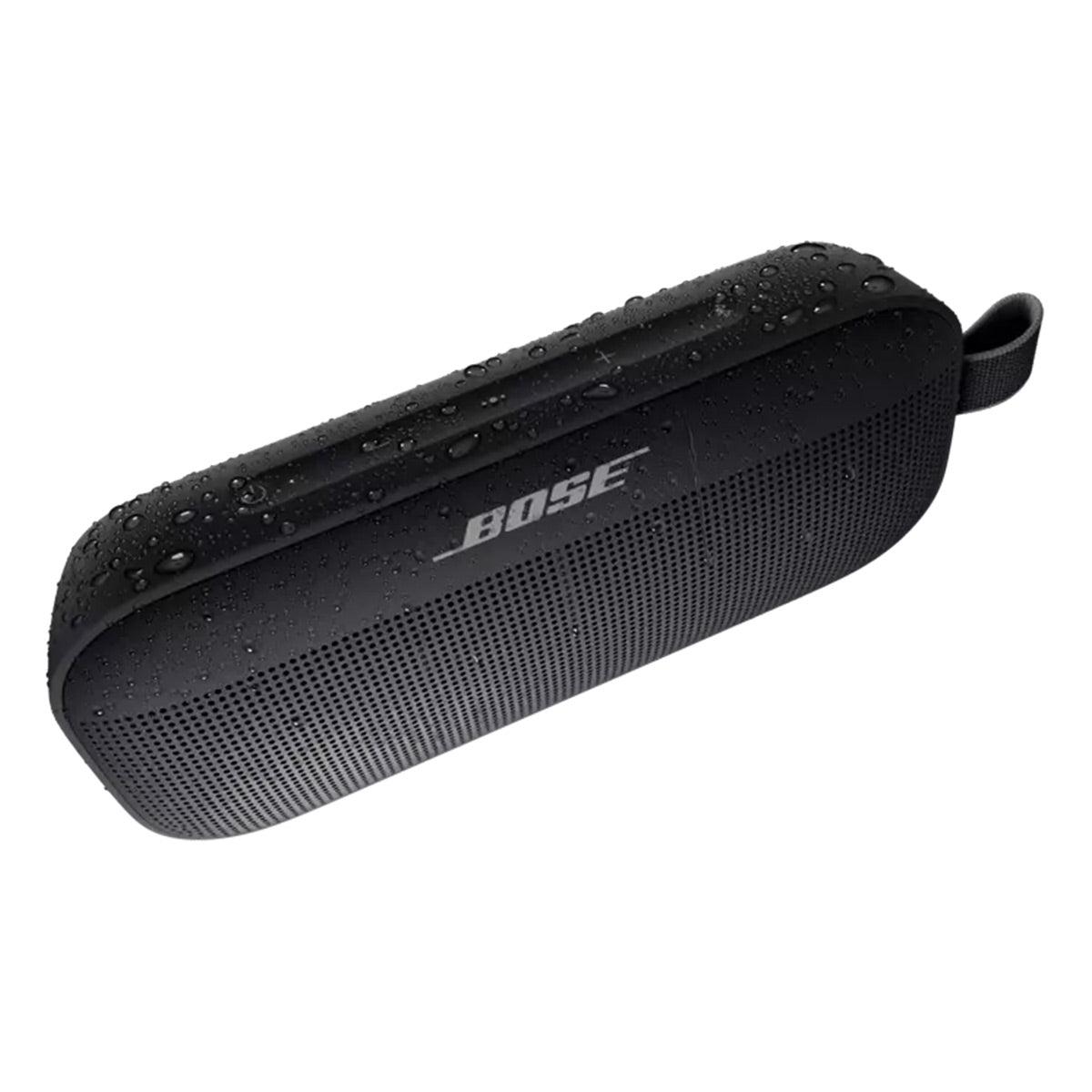
When it comes to wireless audio, the Marshall Stanmore III ($379) and Bose SoundLink Flex ($149) represent two distinct approaches to delivering quality sound. While both are Bluetooth speakers, they serve notably different purposes and user needs. Let's dive into how these speakers compare and help you decide which might be right for your situation.
Bluetooth speakers have evolved significantly in recent years, with manufacturers pushing boundaries in both sound quality and functionality. The technology now supports high-quality audio codecs and improved connectivity, making wireless sound better than ever. The key distinction in the market has become one of purpose: home audio versus portable use.
The Marshall Stanmore III launched in September 2022, bringing several meaningful improvements over its predecessor. Most notably, it features Bluetooth 5.2 technology, which provides better range and stability than previous versions. The speaker also introduced new sustainability features, using PVC-free materials and 70% recycled plastic.
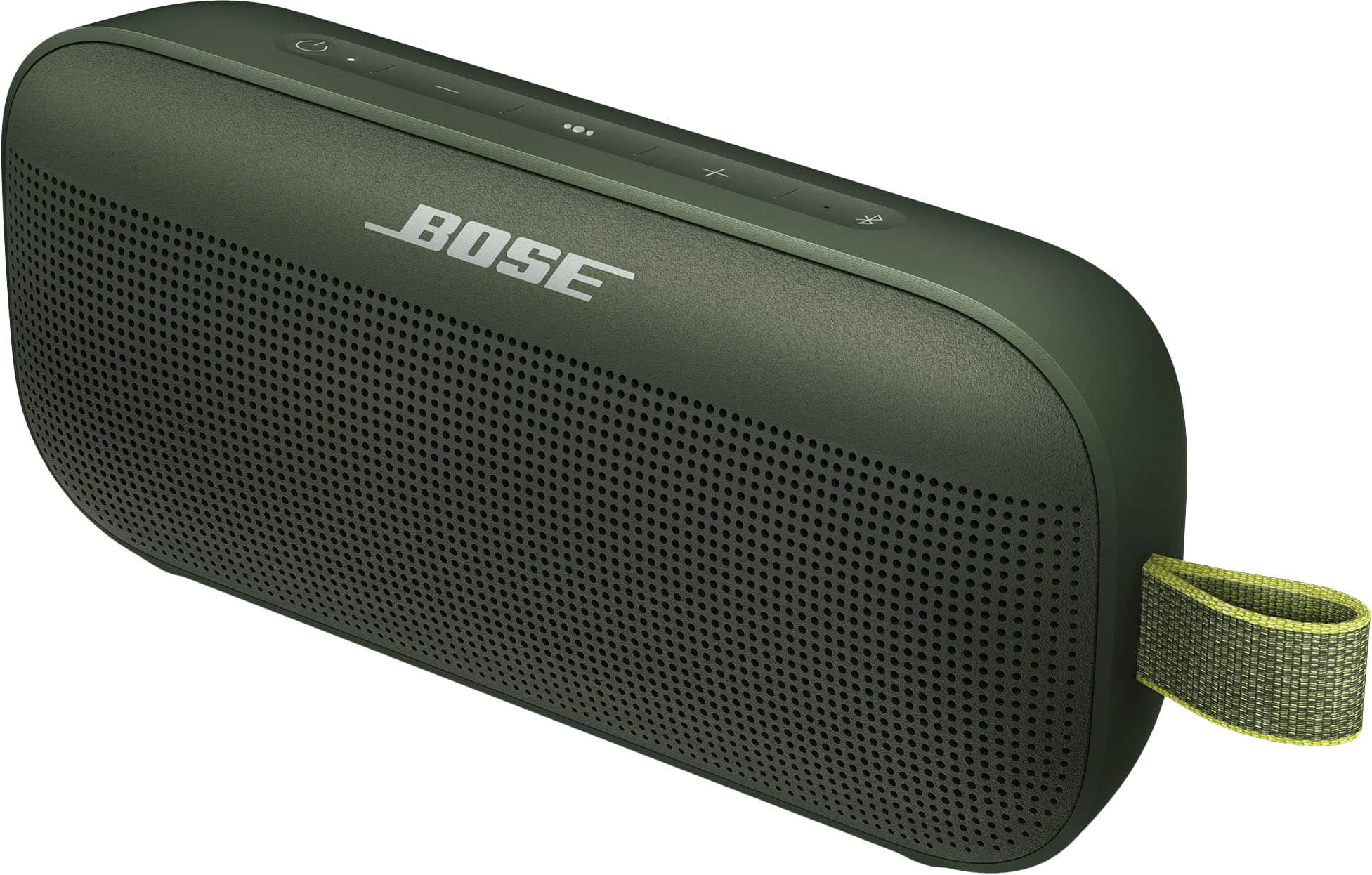
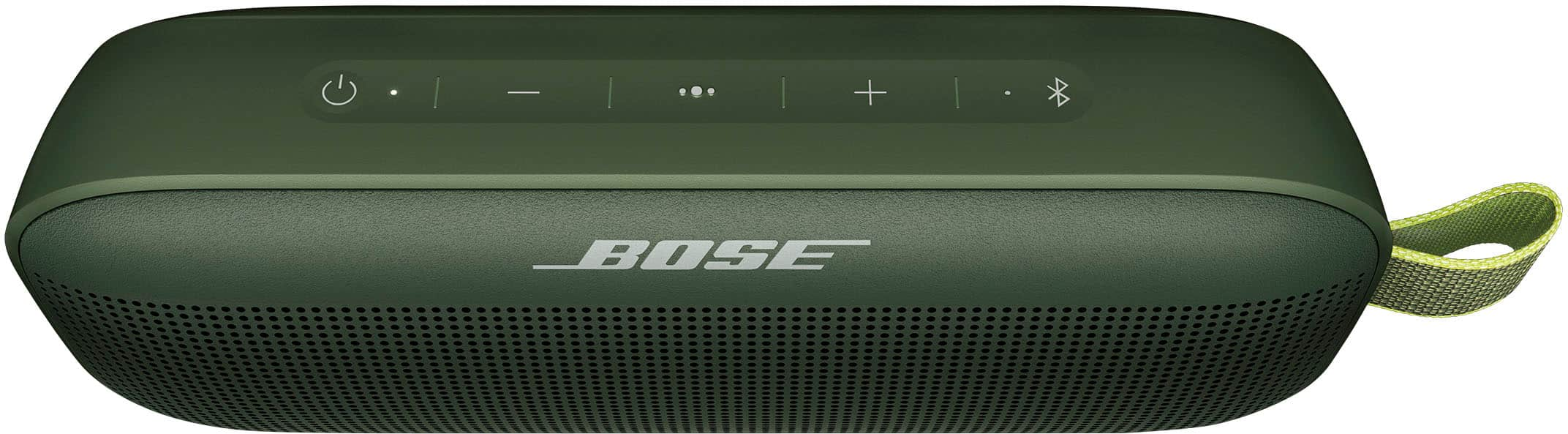
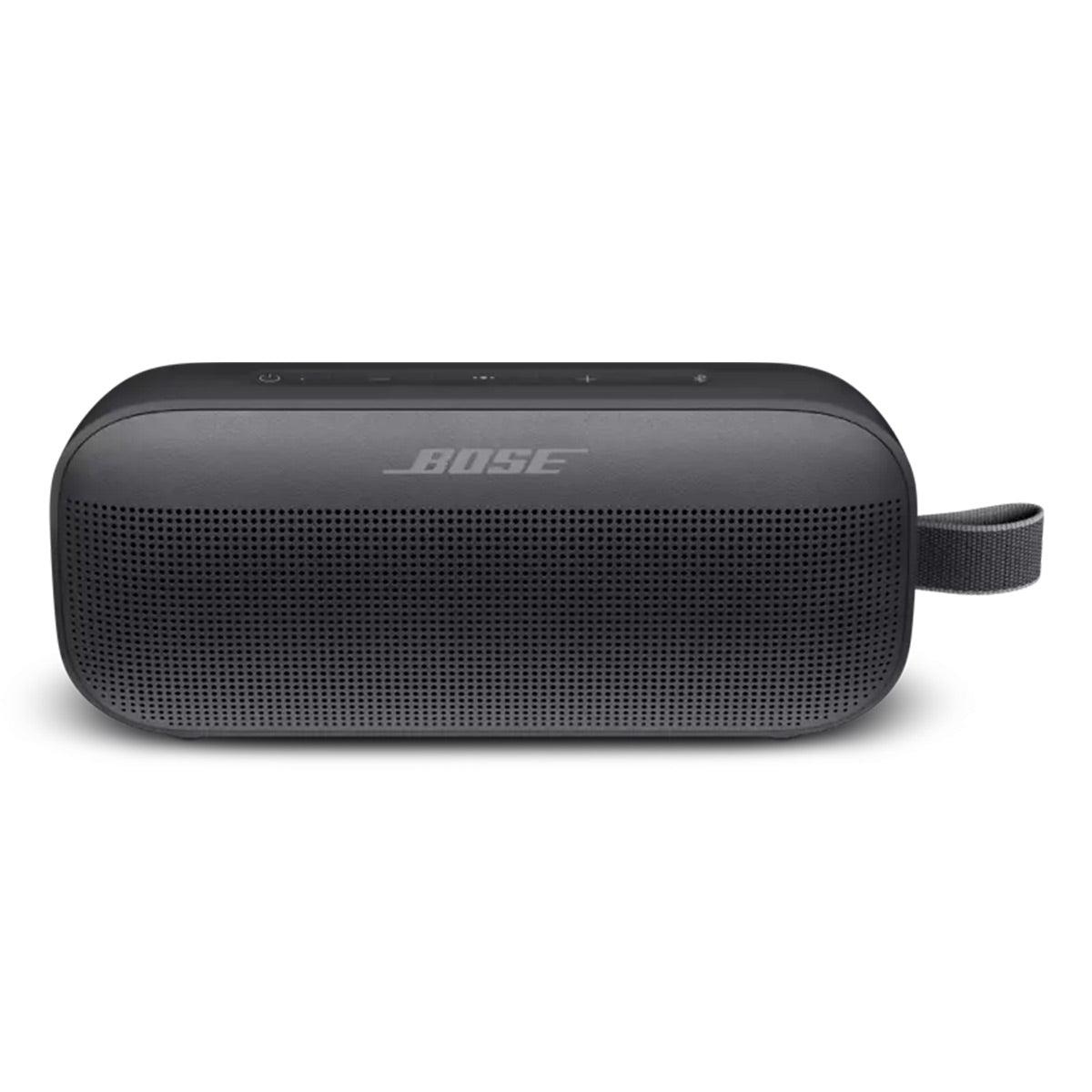
The Bose SoundLink Flex hit the market in October 2021, featuring Bose's latest PositionIQ technology - a clever system that automatically adjusts audio output based on the speaker's orientation. This was a significant innovation for portable speakers, where positioning often affects sound quality.
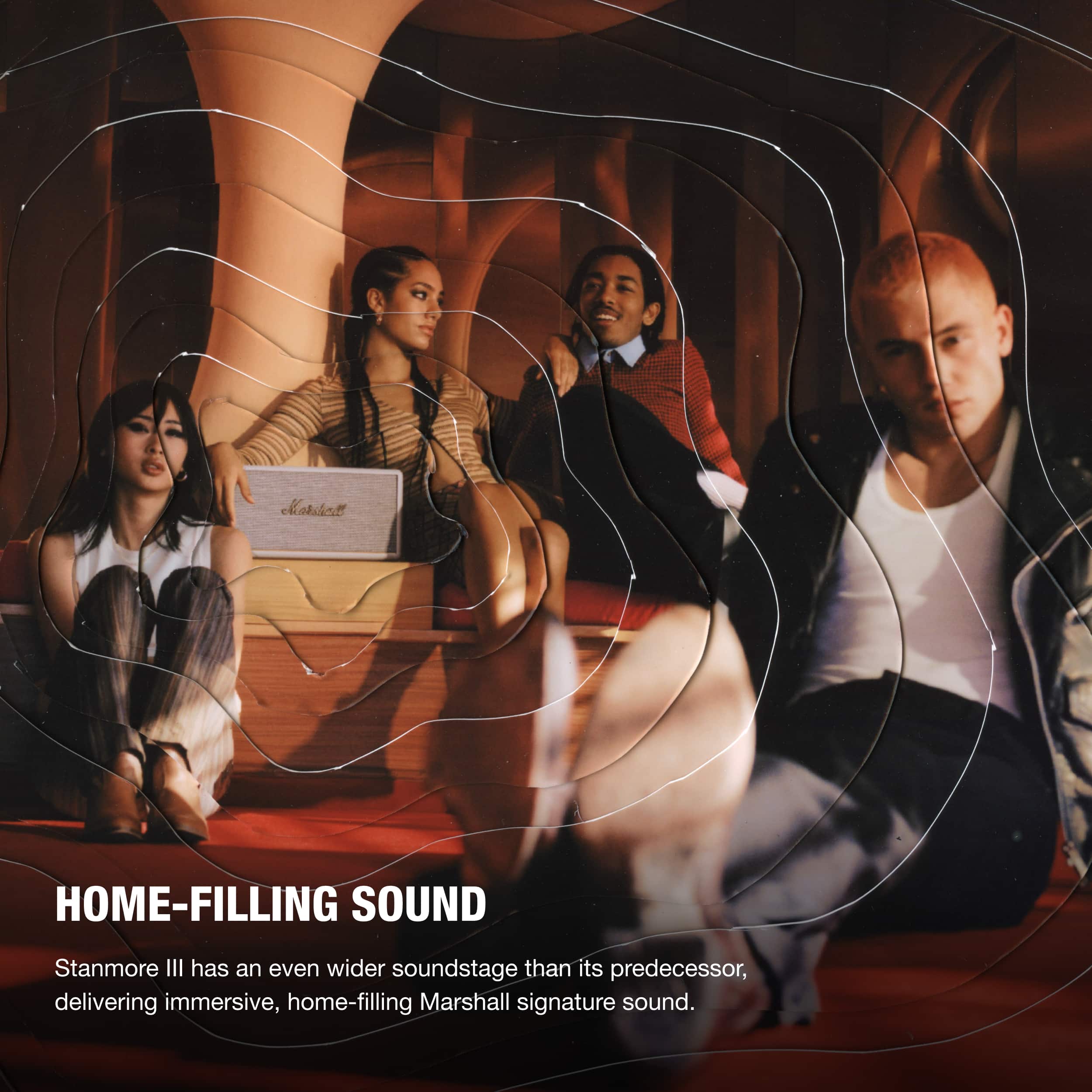
The Stanmore III's 80-watt system (featuring a 50-watt woofer and two 15-watt tweeters) delivers impressive room-filling sound. The speaker's size and power allow it to produce deep, rich bass that smaller portable speakers simply can't match. During testing, it handles complex musical arrangements with ease, maintaining clarity even at higher volumes.
The speaker's frequency response range of 45-20,000 Hz means it can reproduce most musical content faithfully, though it won't quite reach the lowest sub-bass frequencies that you might want for home theater use. For movie watching, it performs admirably but won't replace a dedicated subwoofer for those seeking deep rumble in action scenes.
The SoundLink Flex takes a different approach, focusing on balanced sound in a portable package. While it can't match the raw power of the Stanmore III, its custom-designed transducer delivers surprisingly full sound for its size. The PositionIQ technology really shines here - whether you stand the speaker upright, lay it flat, or hang it from its utility loop, the sound stays consistent and clear.
Bass response is impressive for a portable speaker, though naturally limited compared to larger home speakers. The emphasis is on clear mids and detailed highs, making it excellent for vocal-heavy content and acoustic music.
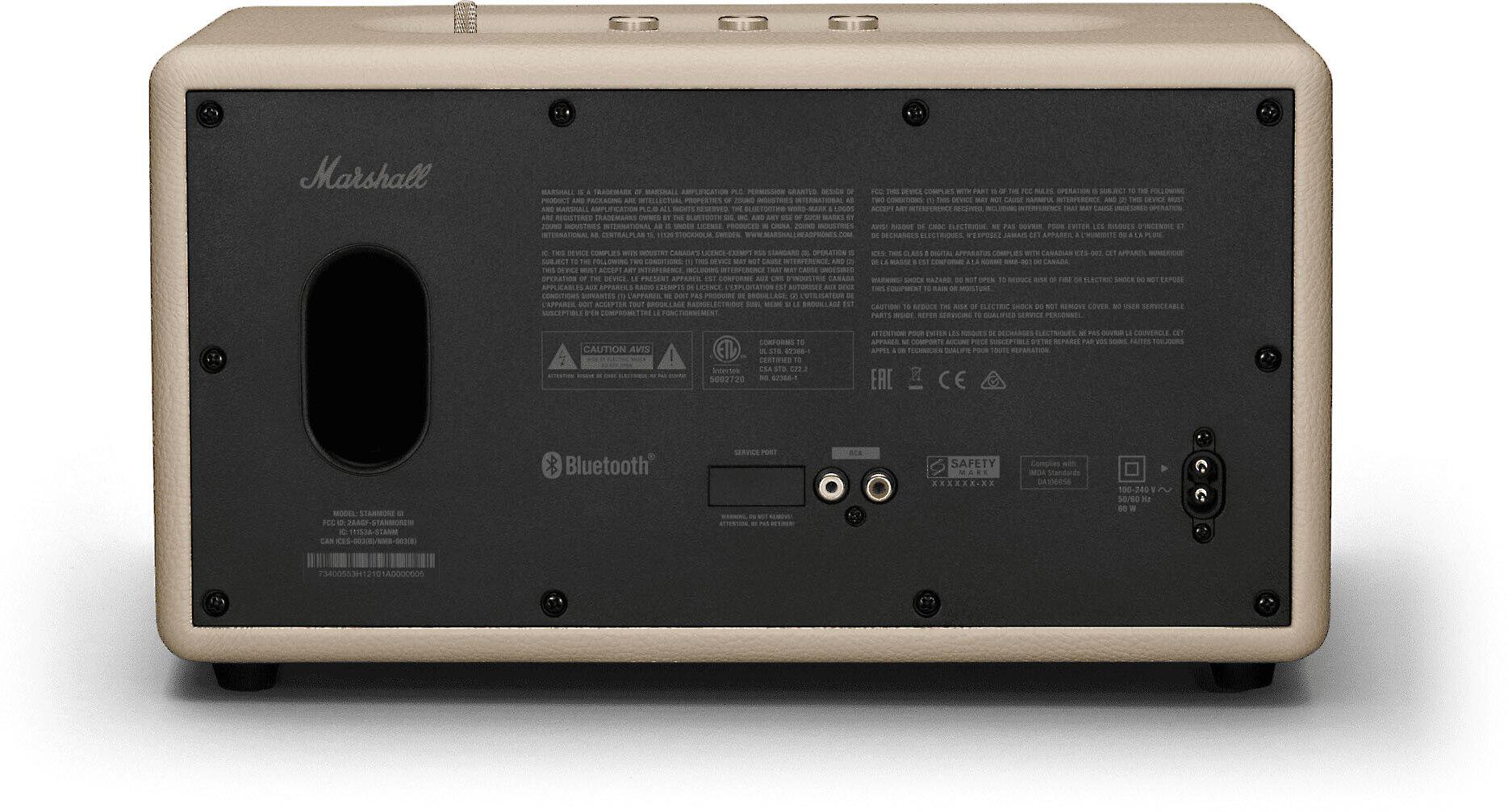
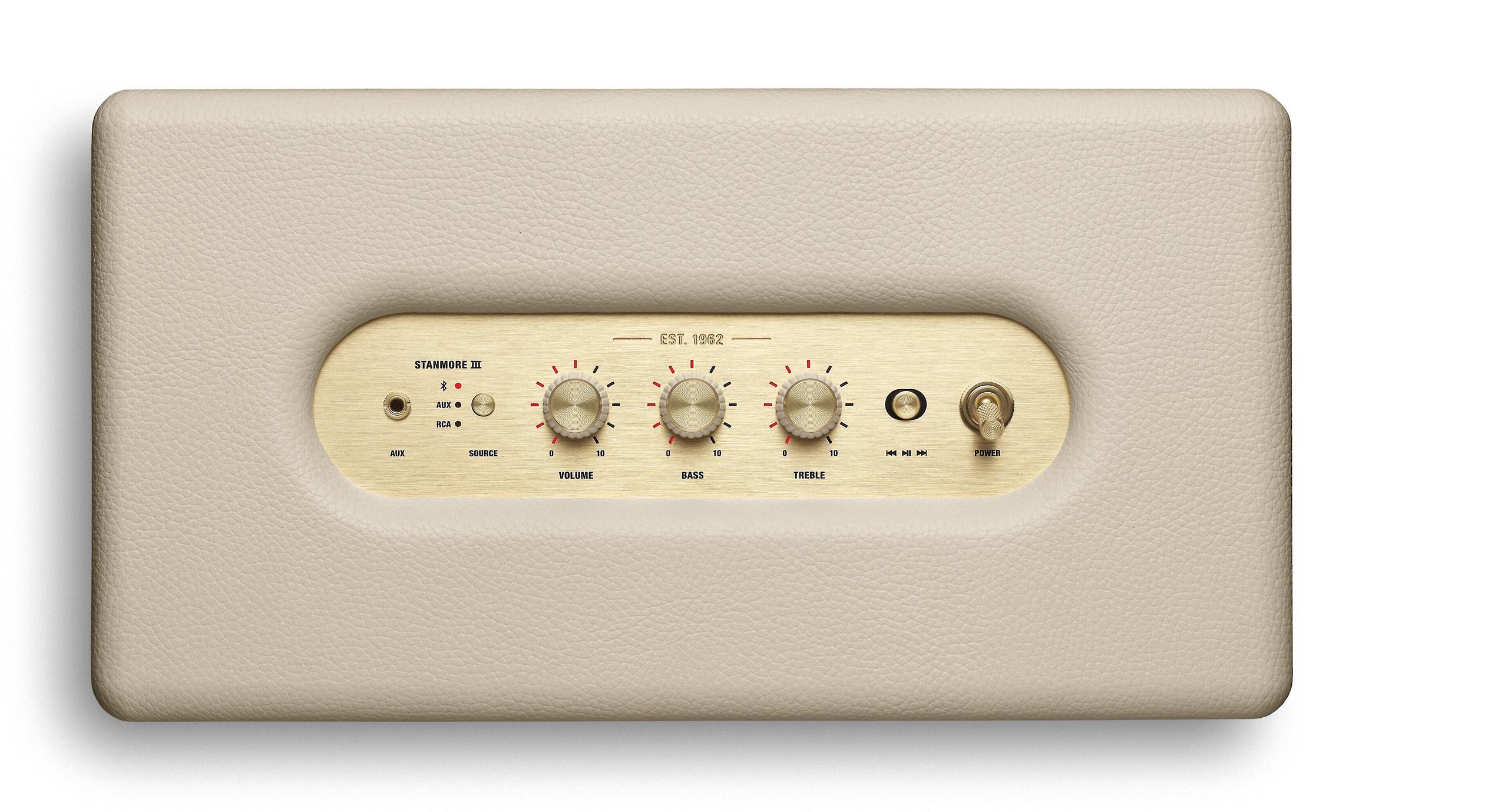
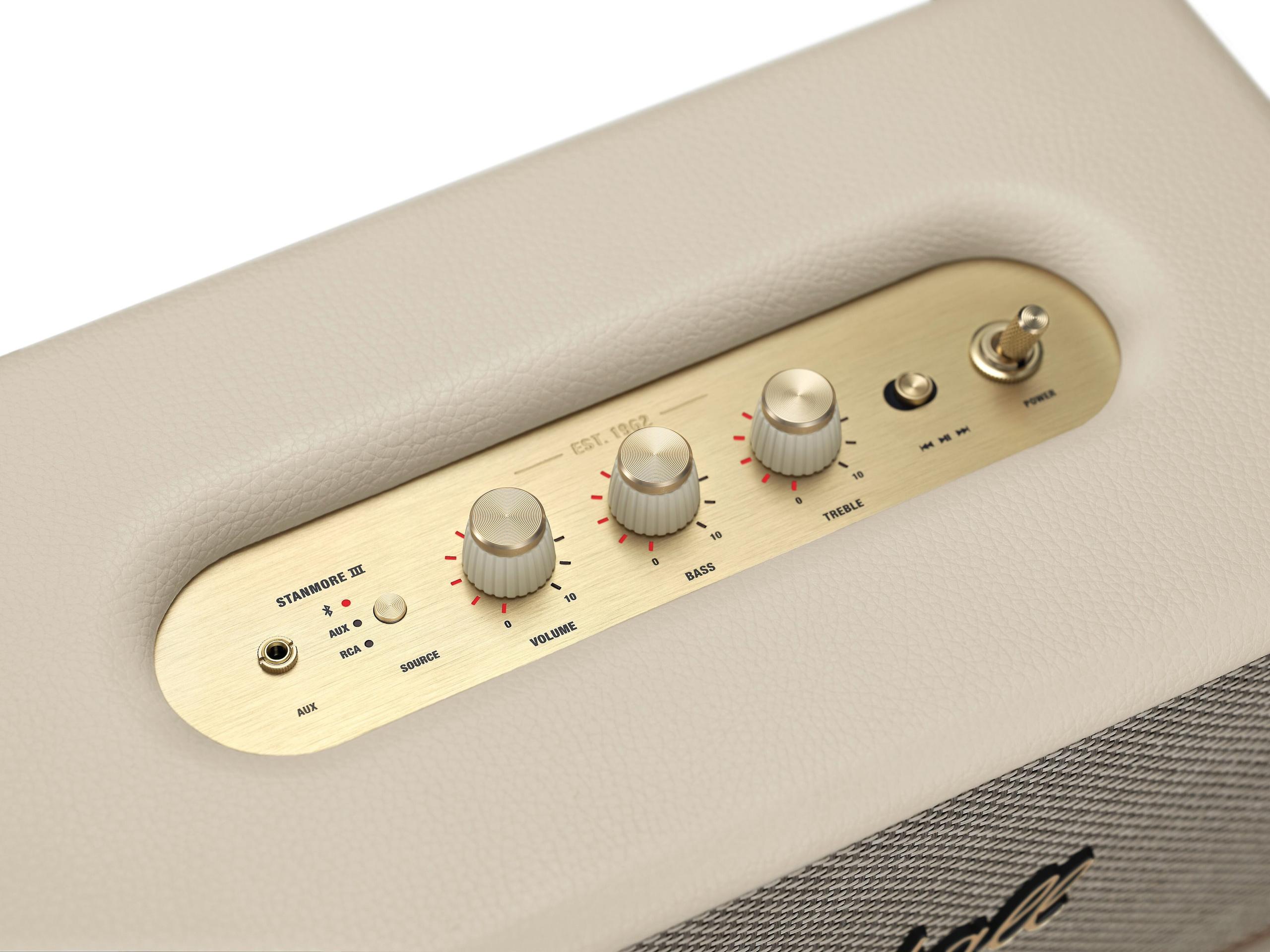
The Stanmore III offers multiple connection options:
The Marshall Bluetooth app provides equalizer settings and over-the-air updates, though some users report limited functionality beyond basic adjustments.
The SoundLink Flex focuses on simplicity:
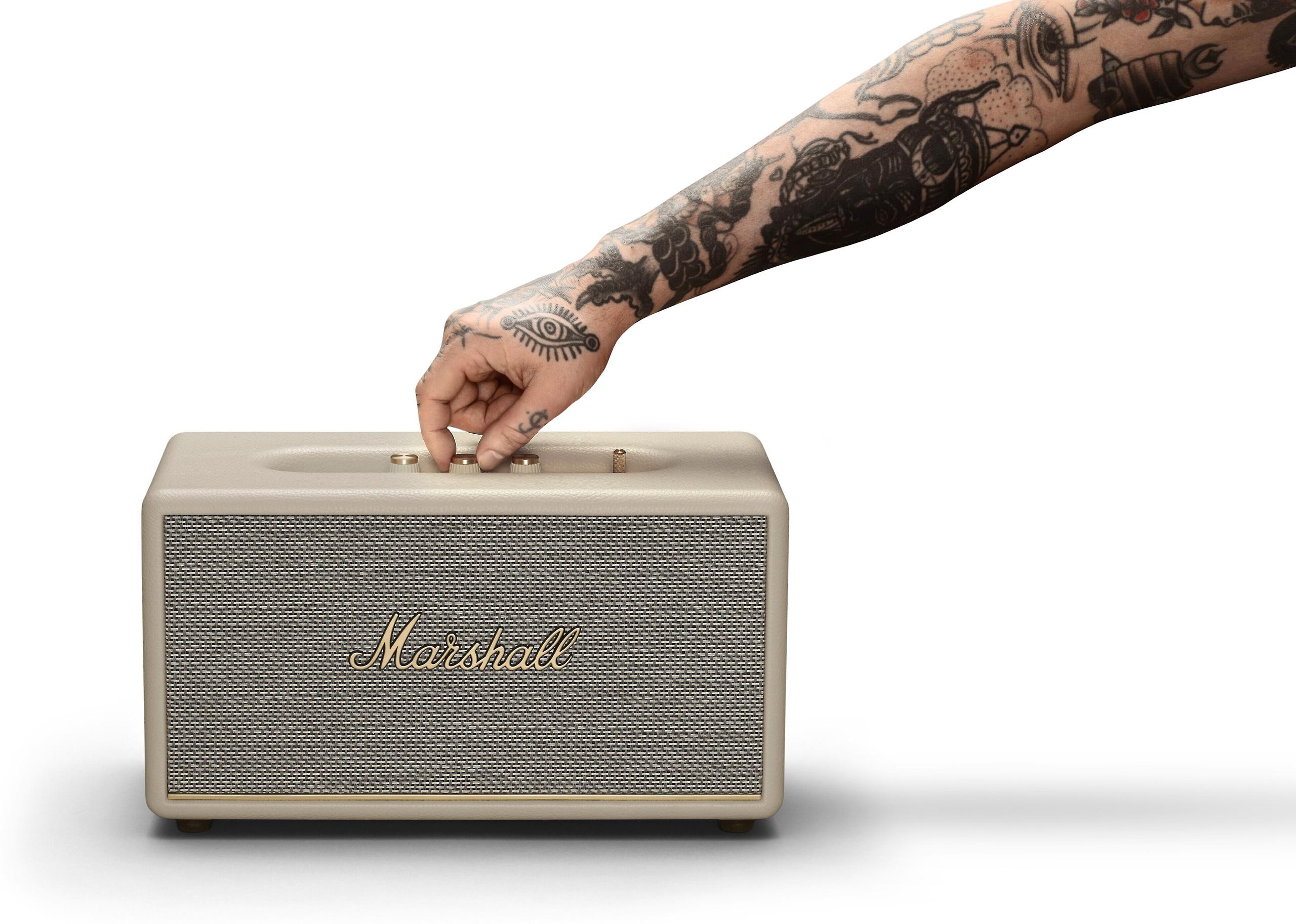
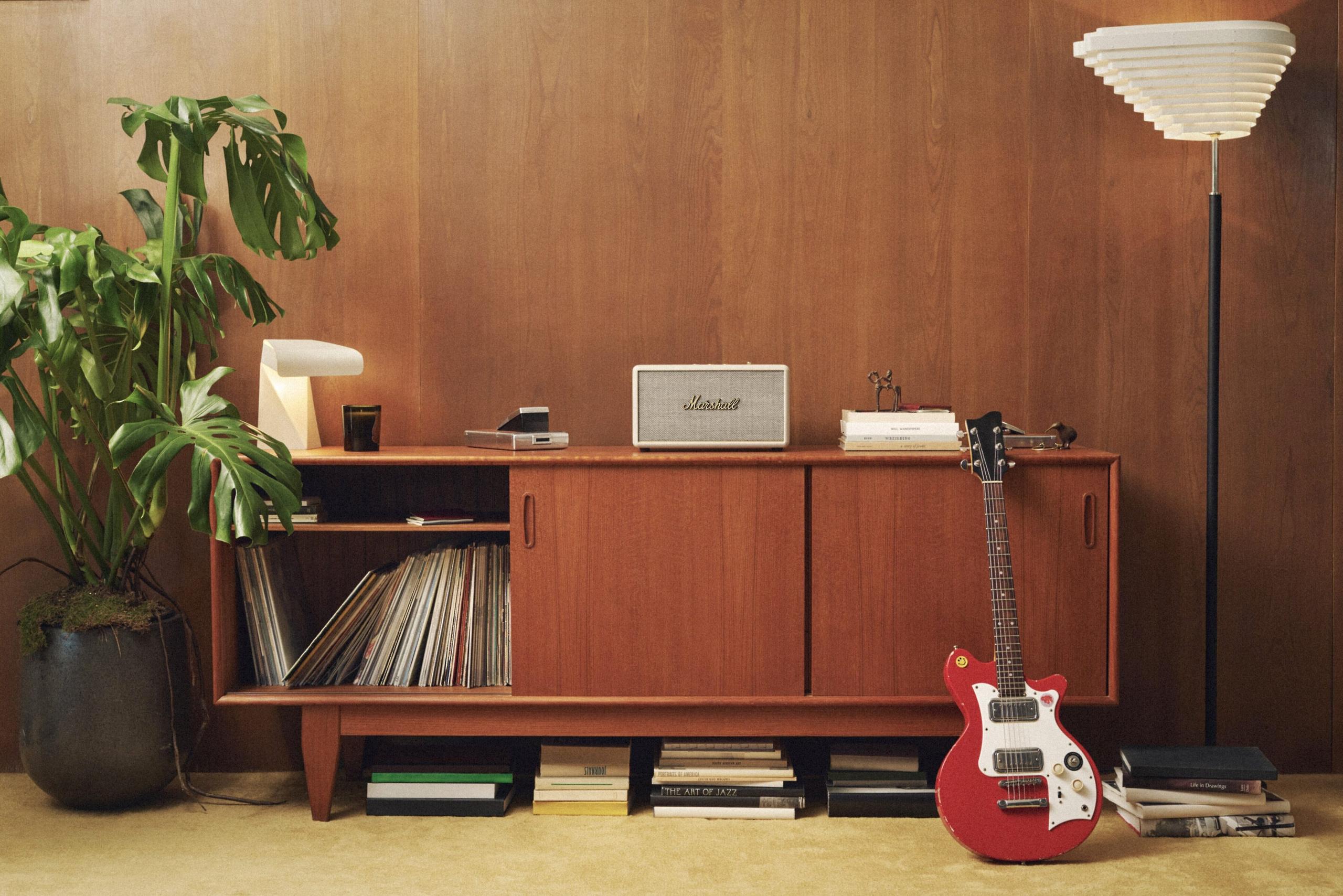
The Stanmore III is designed for permanent placement in your home. Its premium materials and vintage-inspired design make it a striking piece of home decor. The physical control knobs provide a satisfying tactile experience when adjusting volume, bass, and treble. However, it requires constant AC power and isn't designed for mobility.
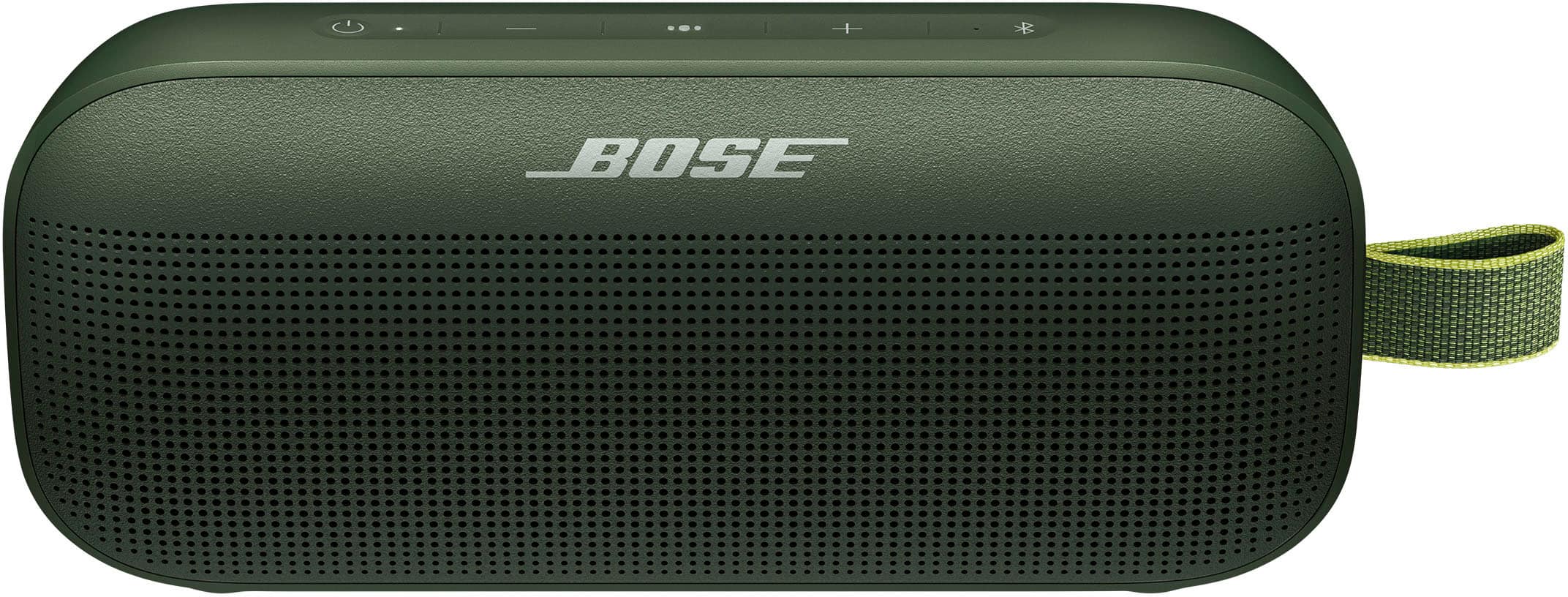
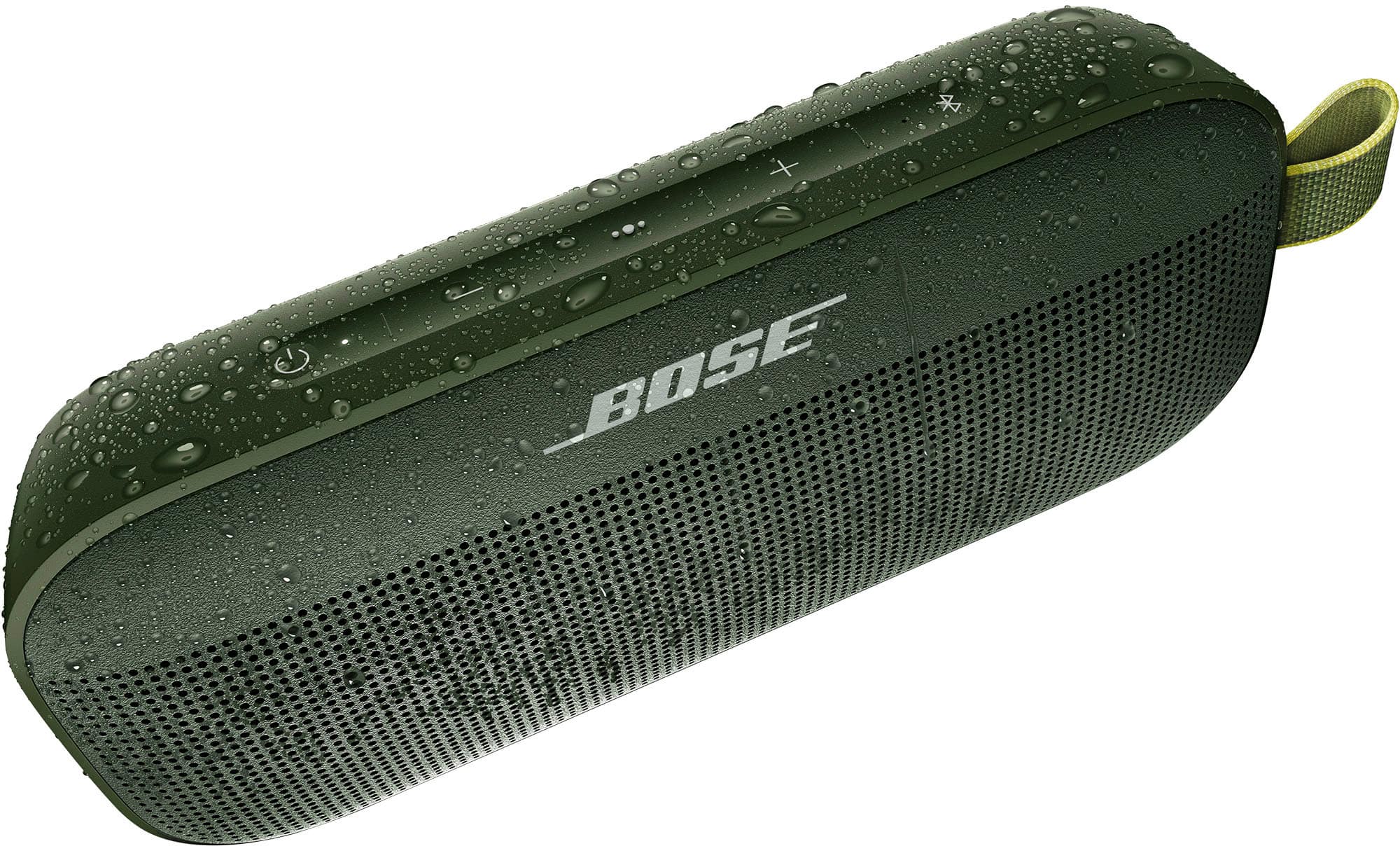
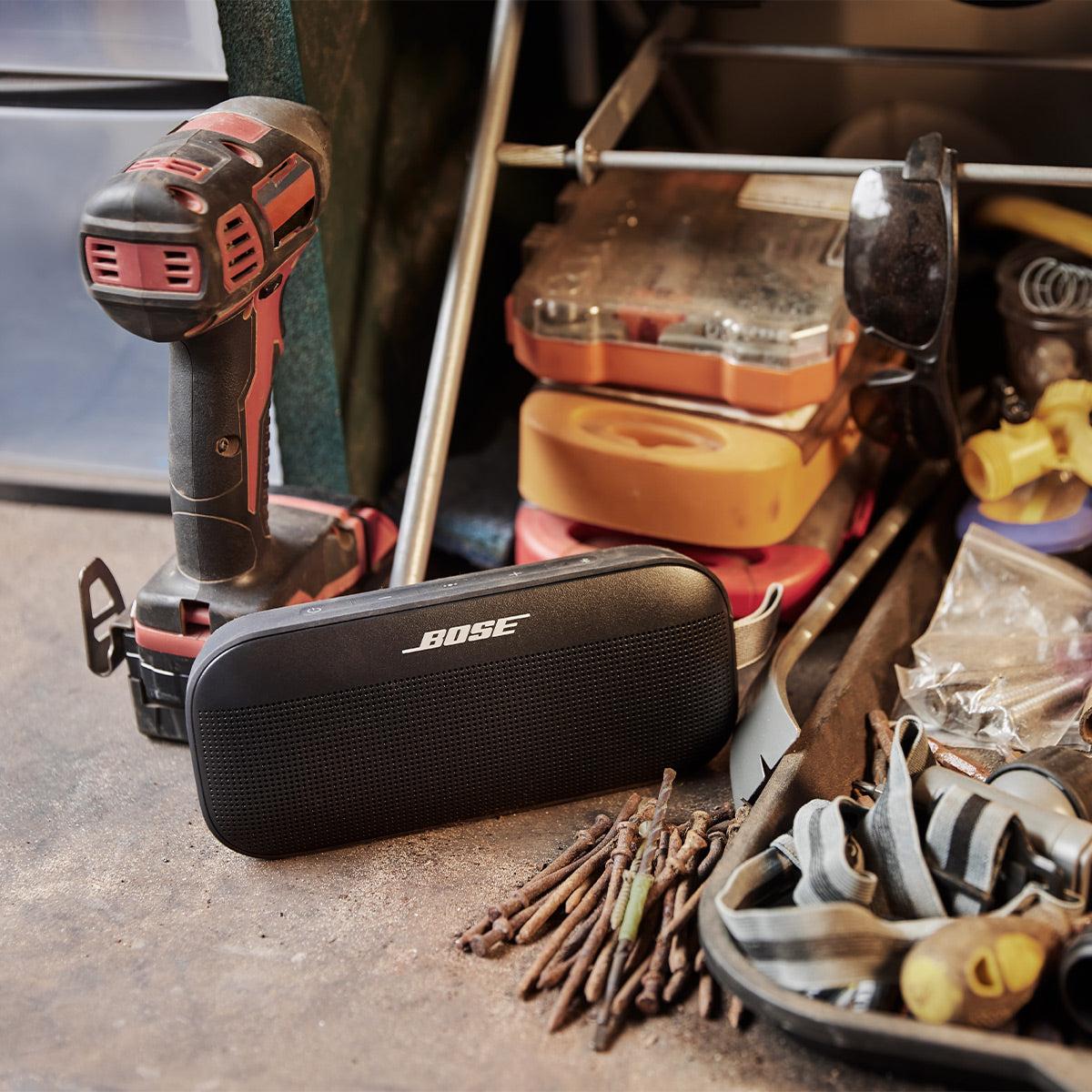
The SoundLink Flex excels in versatility. Its IP67 rating means it's fully waterproof and dustproof - you can submerge it in water up to 1 meter deep for 30 minutes without damage. The silicon exterior and powder-coated steel grille resist drops, scratches, and UV exposure. Battery life extends to 12 hours, making it perfect for day trips or outdoor gatherings.
At $379, the Stanmore III represents a significant investment. However, its sound quality, power, and build quality justify the price for those seeking a premium home audio solution. The ability to connect multiple input sources adds versatility for home entertainment setups.
The SoundLink Flex, at $149, offers exceptional value for its capabilities. The combination of durability, sound quality, and portability makes it a compelling option for users who need a speaker that can handle various environments and use cases.
Consider your primary use case:
For Home Audio Priority:
For Mobility Priority:
The decision ultimately comes down to your intended use and environment. Both speakers excel in their respective categories, but they serve distinctly different purposes. The Stanmore III is the clear choice for those seeking a premium home audio experience, while the SoundLink Flex is ideal for users who prioritize portability without sacrificing too much sound quality.
In my experience, having tested both speakers extensively, they each deliver impressive performance within their intended use cases. The Stanmore III's room-filling sound and classic aesthetic make it a fantastic centerpiece for a home audio setup, while the SoundLink Flex's remarkable durability and consistent sound quality make it an excellent companion for active lifestyles.
| Marshall Stanmore III | Bose SoundLink Flex |
|---|---|
| Price - Initial Investment | |
| $379.99 (premium home audio) | $149.00 (mid-range portable) |
| Power Output - Determines maximum volume and sound clarity | |
| 80W total (50W woofer + 2x15W tweeters) | Not specified by manufacturer, estimated 20W |
| Size & Weight - Impacts placement options and portability | |
| 13.8" x 8.0" x 7.4", 9.37 lbs (stationary design) | 7.9" x 3.6" x 2.1", 1.3 lbs (highly portable) |
| Connectivity - Affects device compatibility and usage | |
| Bluetooth 5.2, 3.5mm aux, RCA inputs | Bluetooth 5.1 only |
| Power Source - Determines placement flexibility | |
| AC power only (wall outlet required) | Rechargeable battery, 12 hours playback |
| Durability Rating - Important for intended use environment | |
| No water resistance (indoor use only) | IP67 waterproof and dustproof |
| Sound Features - Affects audio quality and versatility | |
| Dynamic Loudness, adjustable bass/treble, app EQ | PositionIQ automatic EQ adjustment |
| Additional Features - Expands usage possibilities | |
| Multi-host connection, physical control knobs | Speakerphone, Party Mode pairing, utility loop |
| Frequency Response - Indicates sound range capabilities | |
| 45-20,000 Hz (fuller range, better bass) | Not specified, estimated 80-20,000 Hz |
| Primary Use Case - Helps determine best fit | |
| Home audio system, permanent placement | Portable use, outdoor activities, travel |
| Construction - Impacts longevity and aesthetics | |
| Wood cabinet, leather vinyl, metal grille | Silicone exterior, powder-coated steel grille |
| App Support - Enables additional functionality | |
| Marshall app with EQ and firmware updates | Bose Connect app with basic controls |
Both serve different purposes. The Marshall Stanmore III ($379) is better for home audio with superior sound quality, while the Bose SoundLink Flex ($149) is better for portable use and outdoor activities.
The Marshall Stanmore III costs $379, while the Bose SoundLink Flex is priced at $149, making it $230 less expensive.
The Marshall Stanmore III has superior overall sound quality with its 80W system and larger drivers. However, the Bose SoundLink Flex offers impressive sound quality for its portable size.
The Bose SoundLink Flex is designed for outdoor use with IP67 waterproofing. The Marshall Stanmore III is not weather-resistant and requires AC power, making it unsuitable for outdoor use.
Only the Bose SoundLink Flex has a battery, lasting up to 12 hours. The Marshall Stanmore III requires constant AC power.
For home parties, the Marshall Stanmore III provides more powerful, room-filling sound. For outdoor gatherings, the Bose SoundLink Flex is more practical with its portability and durability.
The Marshall Stanmore III offers multi-host functionality for two simultaneous Bluetooth connections plus auxiliary inputs. The Bose SoundLink Flex can remember eight devices but connects to one at a time.
The Marshall Stanmore III delivers significantly stronger bass with its 50W woofer and larger cabinet size. The Bose SoundLink Flex offers good bass for its size but can't match the Marshall's power.
Yes, both the Marshall Stanmore III and Bose SoundLink Flex work well with any Bluetooth-enabled device, including phones and tablets.
The Bose SoundLink Flex is significantly more durable with its IP67 rating and rugged construction. The Marshall Stanmore III is designed for indoor use only.
Neither speaker has built-in voice assistants, but both offer companion apps. The Marshall Stanmore III app provides EQ settings, while the Bose SoundLink Flex app offers basic controls and updates.
For dedicated home audio, choose the Marshall Stanmore III for its superior sound quality and power. If you want a speaker you can move around the house and take outside, the Bose SoundLink Flex is the better choice.
We've done our best to create useful and informative comparisons to help you decide what product to buy. Our research uses advanced automated methods to create this comparison and perfection is not possible - please contact us for corrections or questions. These are the sites we've researched in the creation of this article: techgadgetscanada.com - camelcamelcamel.com - crutchfield.com - bestbuy.com - dxomark.com - crutchfield.com - crutchfield.com - marshall.com - marshall-production-1.mobify-storefront.com - exhibit.tech - ooberpad.com - av-connection.com - bose.com - bose.com - youtube.com - rtings.com - projectorscreen.com - assets.bose.com - boselatam.com - adorama.com - bose.com

Privacy Policy
Terms and Conditions - Affiliate Policy
Home Security
© Copyright 2008-2026.
11816 Inwood Rd #1211, Dallas, TX 75244