









When shopping for a Bluetooth speaker, you'll quickly discover that not all wireless speakers are created equal. Some are designed to be your constant companion, while others are built to be the centerpiece of your home audio setup. The Beats Pill Kim Kardashian Edition and Marshall Stanmore III represent these two very different philosophies in wireless audio, and understanding their approaches will help you make the right choice for your needs.
Before diving into specifics, it's important to understand that Bluetooth speakers fall into distinct categories with different priorities. Portable speakers like the Beats Pill prioritize battery life, durability, and convenience above all else. They're designed to go wherever you go, whether that's a beach trip, camping adventure, or just moving from room to room in your house.
Home speakers like the Marshall Stanmore III, on the other hand, are designed to stay put and deliver the best possible sound quality for their size and price range. They plug into the wall, often weigh significantly more, and focus their engineering budget on drivers (the components that actually make sound) rather than batteries and weather sealing.
The key considerations when choosing between these categories include whether you need portability, how important maximum sound quality is to you, where you'll primarily use the speaker, and what your budget looks like. At the time of writing, portable speakers in the premium range typically cost significantly less than their home audio counterparts, though both categories offer excellent value in their own ways.
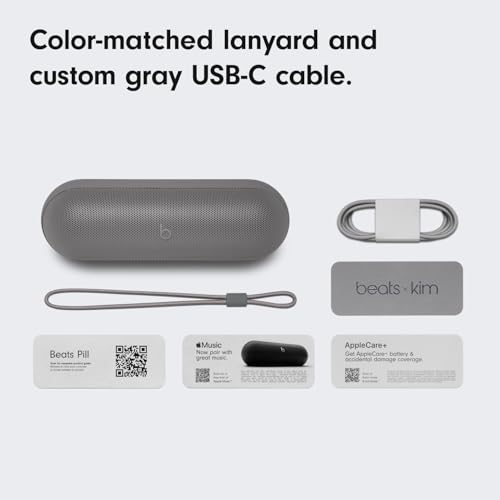
The Beats Pill Kim Kardashian Edition launched in 2024 as a special colorway collaboration, building on the completely redesigned Beats Pill that debuted the same year. This wasn't just a cosmetic update—Beats rebuilt the entire speaker platform with new drivers, improved battery technology, and better wireless connectivity. The Kim Kardashian edition offers the same technical specifications as the standard model but comes in exclusive Dark Gray and Light Gray colorways that reflect her signature neutral aesthetic.
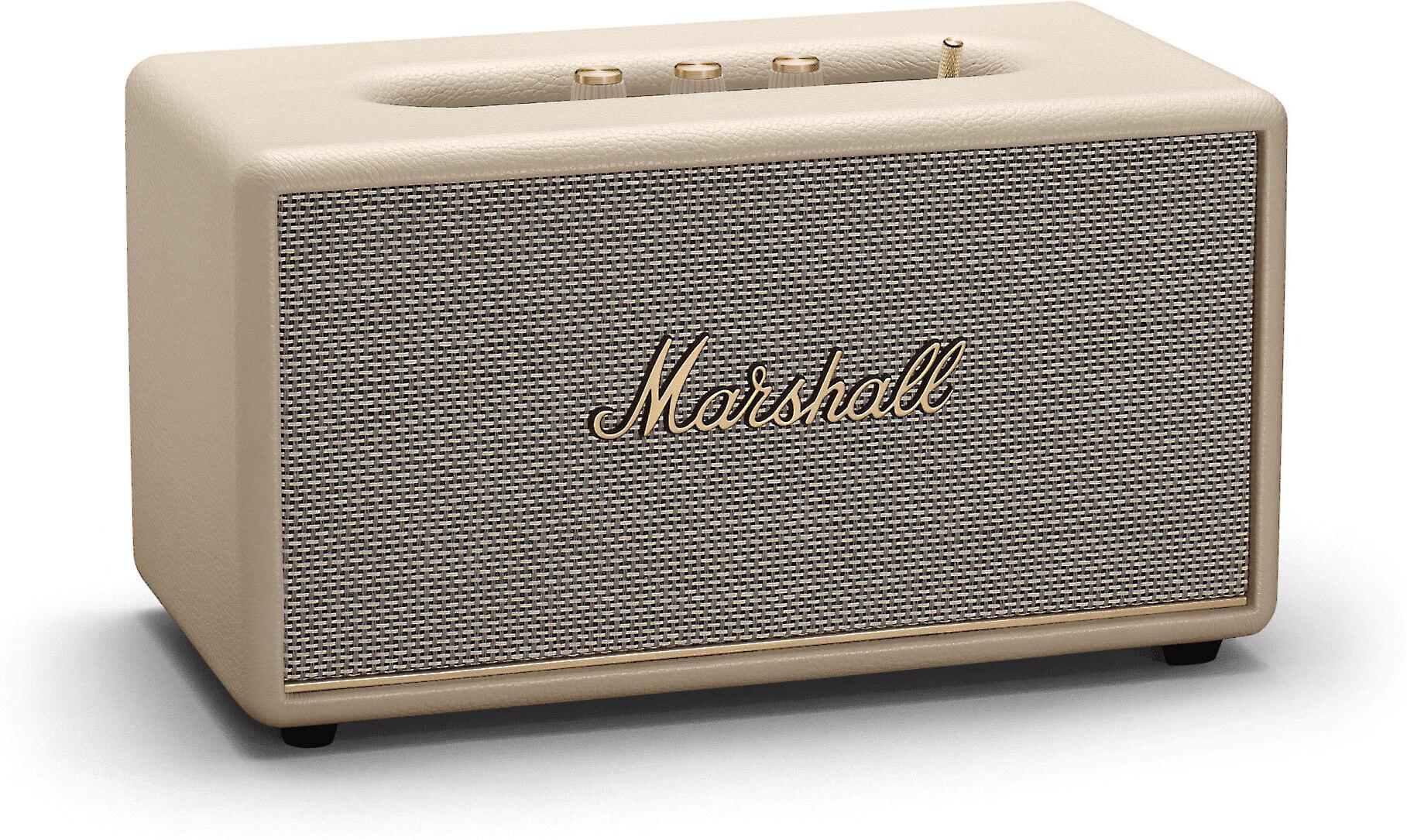
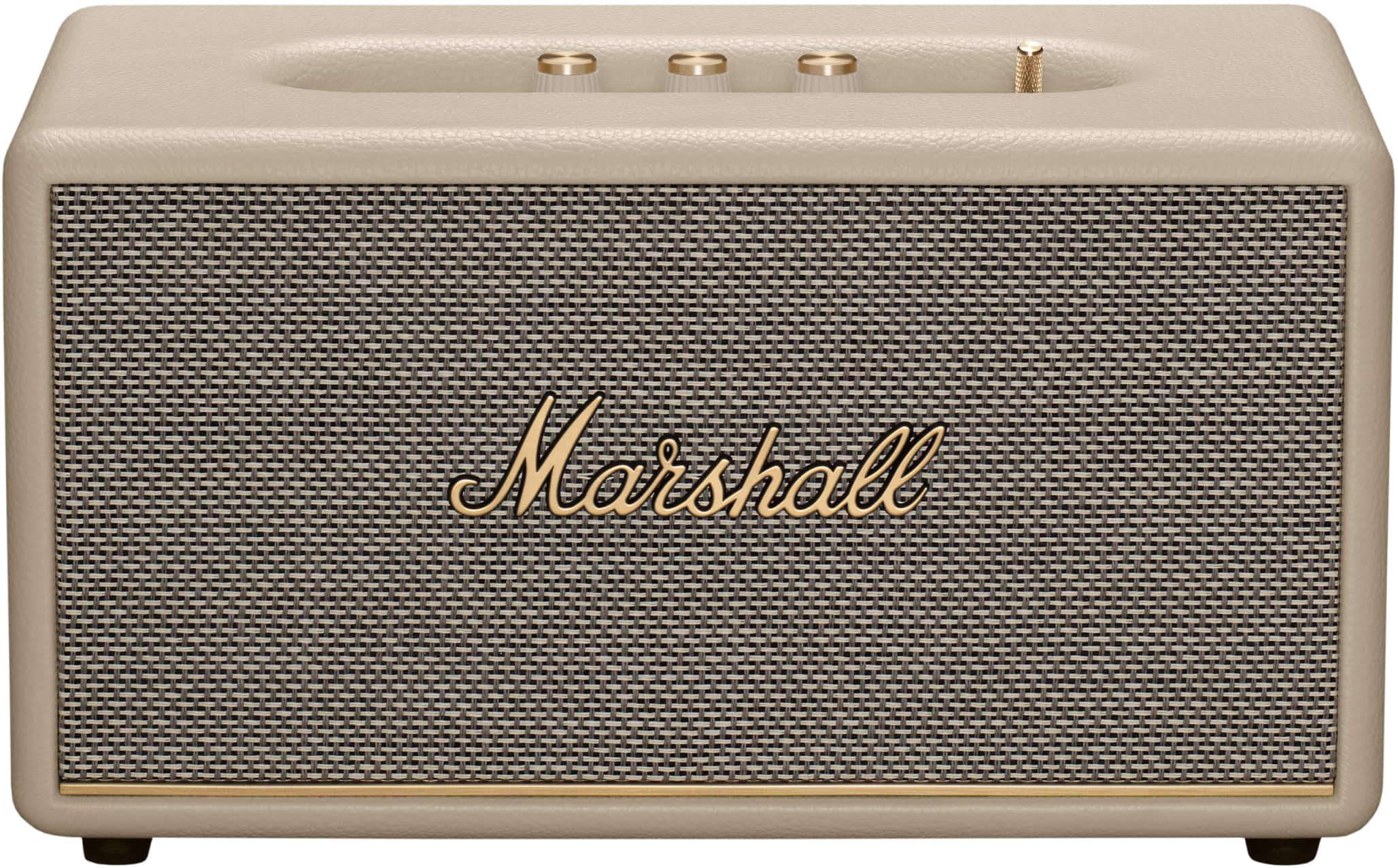
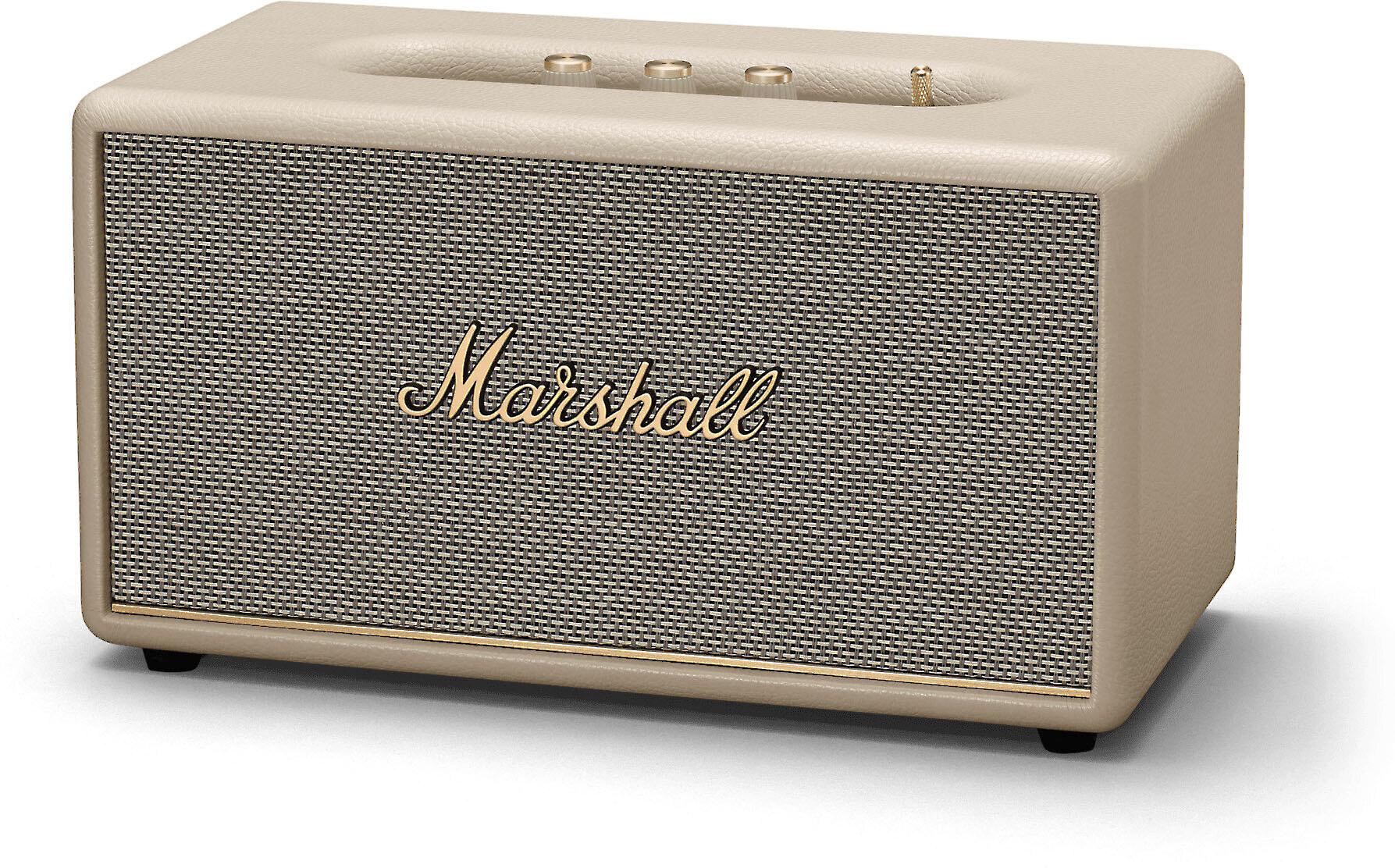
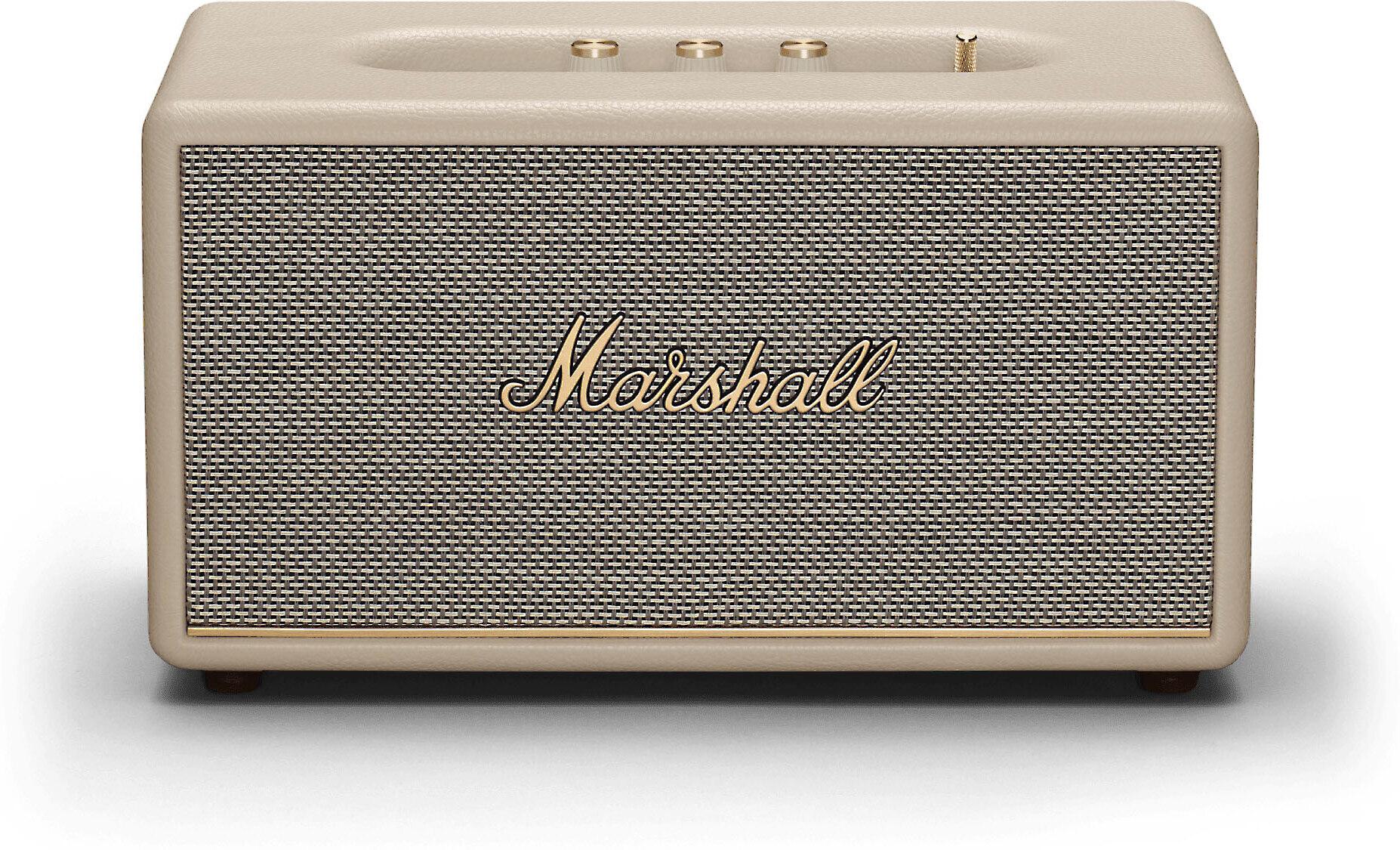
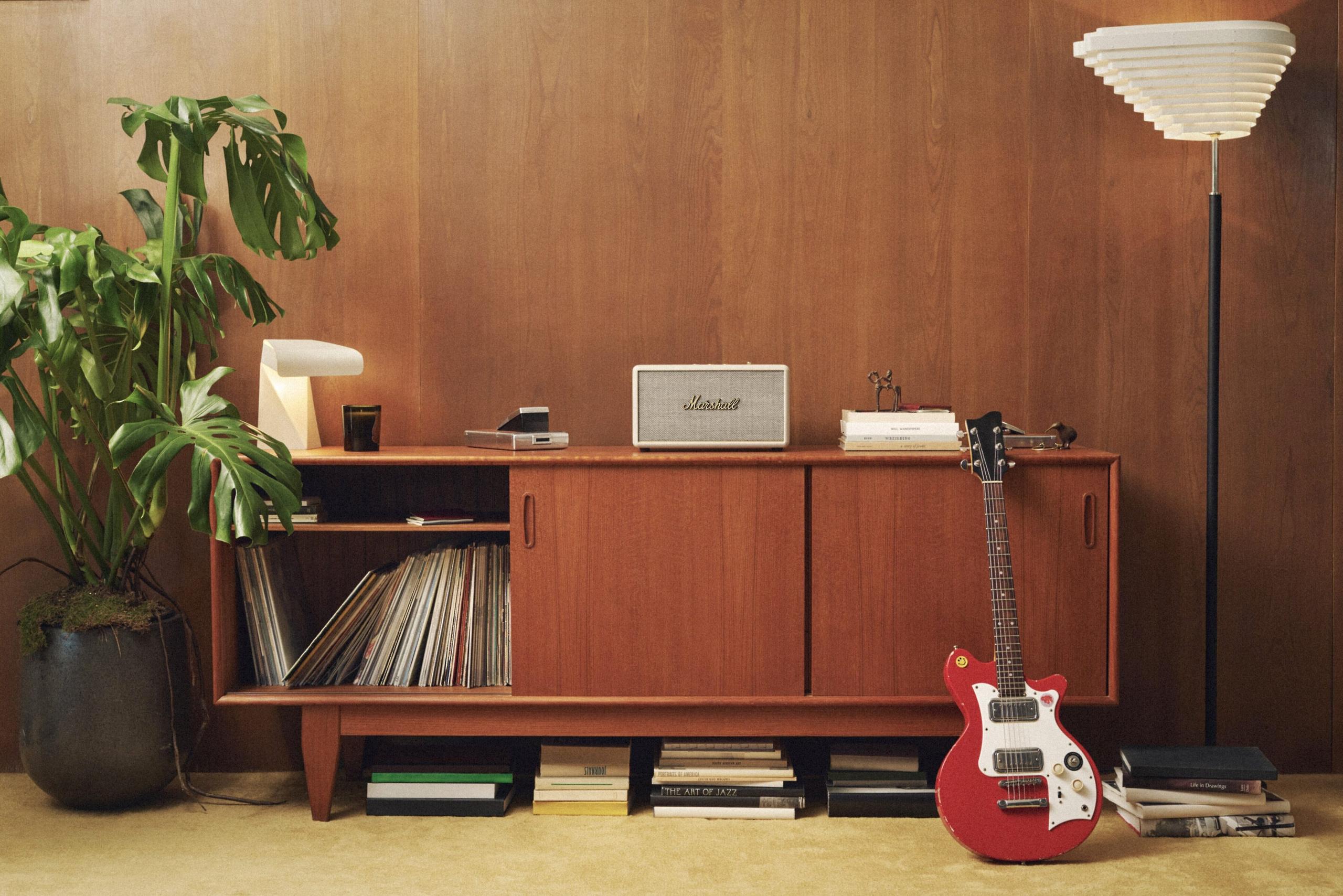
The Marshall Stanmore III represents the third generation of Marshall's popular home speaker line. Marshall, famous for their guitar amplifiers that have powered rock music for decades, brought their acoustic expertise to the home audio market several years ago. The Stanmore III maintains the classic amplifier look that made Marshall speakers instantly recognizable while incorporating modern wireless technology and sound optimization features.
When it comes to audio performance, these speakers take fundamentally different approaches, and the differences are immediately apparent when you listen to them side by side.
The Marshall Stanmore III packs significantly more acoustic power, with 80 watts of total system power distributed across three separate amplifiers—a 50-watt Class D amplifier for the main woofer and two 15-watt amplifiers dedicated to the tweeters. Class D amplification is a modern approach that's highly efficient and can deliver substantial power without generating excessive heat, which is why it's become the standard in both portable and home speakers.
The Beats Pill, being battery-powered, can't match this raw power output, but it uses its available power efficiently. The redesigned racetrack woofer (an oval-shaped driver that fits more surface area into a compact space) features innovative ridges and contours that minimize distortion in the low frequencies. The speaker also incorporates neodymium magnets that are 28% more powerful than the previous generation, allowing for better control and more accurate sound reproduction.
Frequency response tells you how well a speaker reproduces different pitches, from deep bass to high treble. The Marshall Stanmore III extends slightly deeper into bass territory, reaching down to 45 Hz compared to the Beats Pill's 56.6 Hz. To put this in perspective, this difference means the Marshall can reproduce some of the deepest bass notes in electronic music and movie soundtracks that the Beats simply can't produce.
However, the most significant difference isn't in the numbers—it's in the overall sound character. Our research into user and expert reviews reveals that the Beats Pill delivers a balanced midrange that excels at rendering vocals and speech with impressive clarity for its size. This makes it excellent for podcasts, phone calls, and music where vocals are prominent. Unfortunately, it suffers from an overly bright treble response that can make cymbals, hi-hats, and sibilant sounds (like "s" and "sh" sounds in vocals) harsh and fatiguing during longer listening sessions.
The Marshall Stanmore III, by contrast, delivers what reviewers consistently describe as "heavy but balanced" sound with controlled bass that "really roars" without overwhelming the midrange and treble. The stereo separation—having dedicated left and right channels—creates a much wider soundstage that fills rooms more effectively than the Beats Pill's mono output.
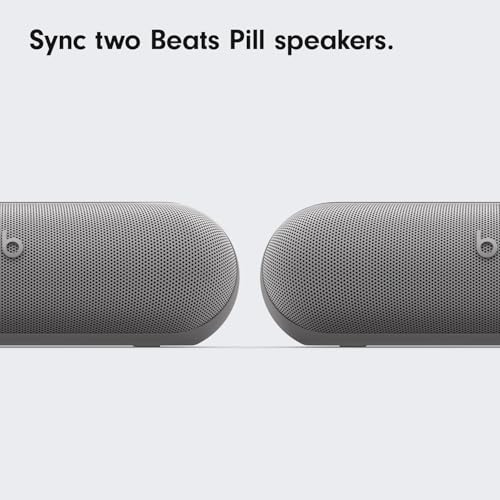
Here's a crucial technical detail that many shoppers overlook: the Beats Pill is essentially a mono speaker. While it can play stereo music files, it mixes the left and right channels together into a single audio stream. This isn't necessarily bad—many portable speakers work this way—but it does limit the sense of width and spatial separation in your music. Beats does offer a solution: you can pair two Beats Pills together in "Stereo Mode" to get true left and right channel separation, but this obviously doubles your cost and requires carrying two speakers.
The Marshall Stanmore III provides true stereo sound from a single unit, with angled tweeters and updated waveguides (the horn-like structures that direct sound) that create what Marshall calls a soundstage so wide "it chases you around the room."
Both speakers incorporate thoughtful technology features, but they serve different purposes based on their intended use cases.
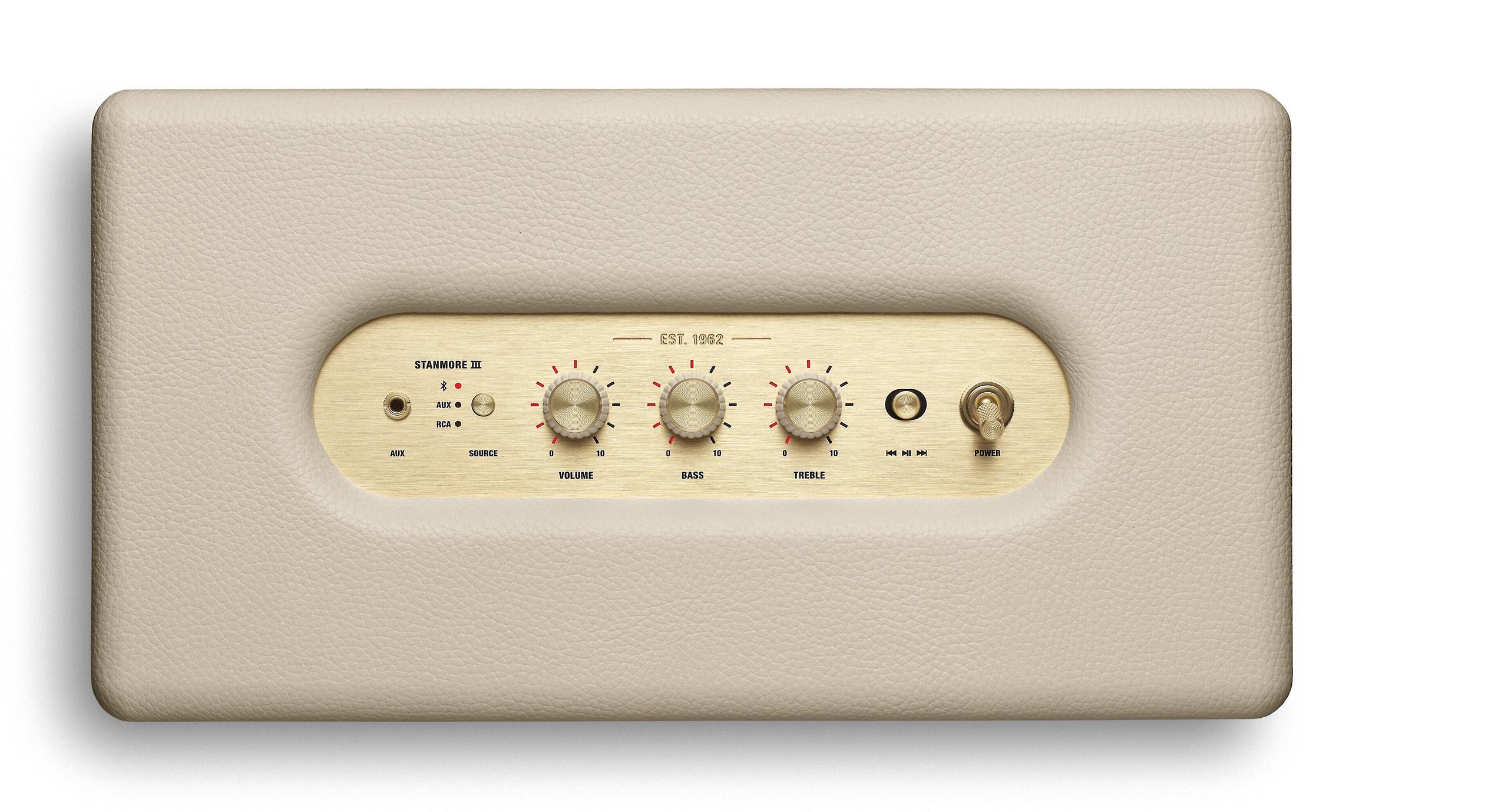
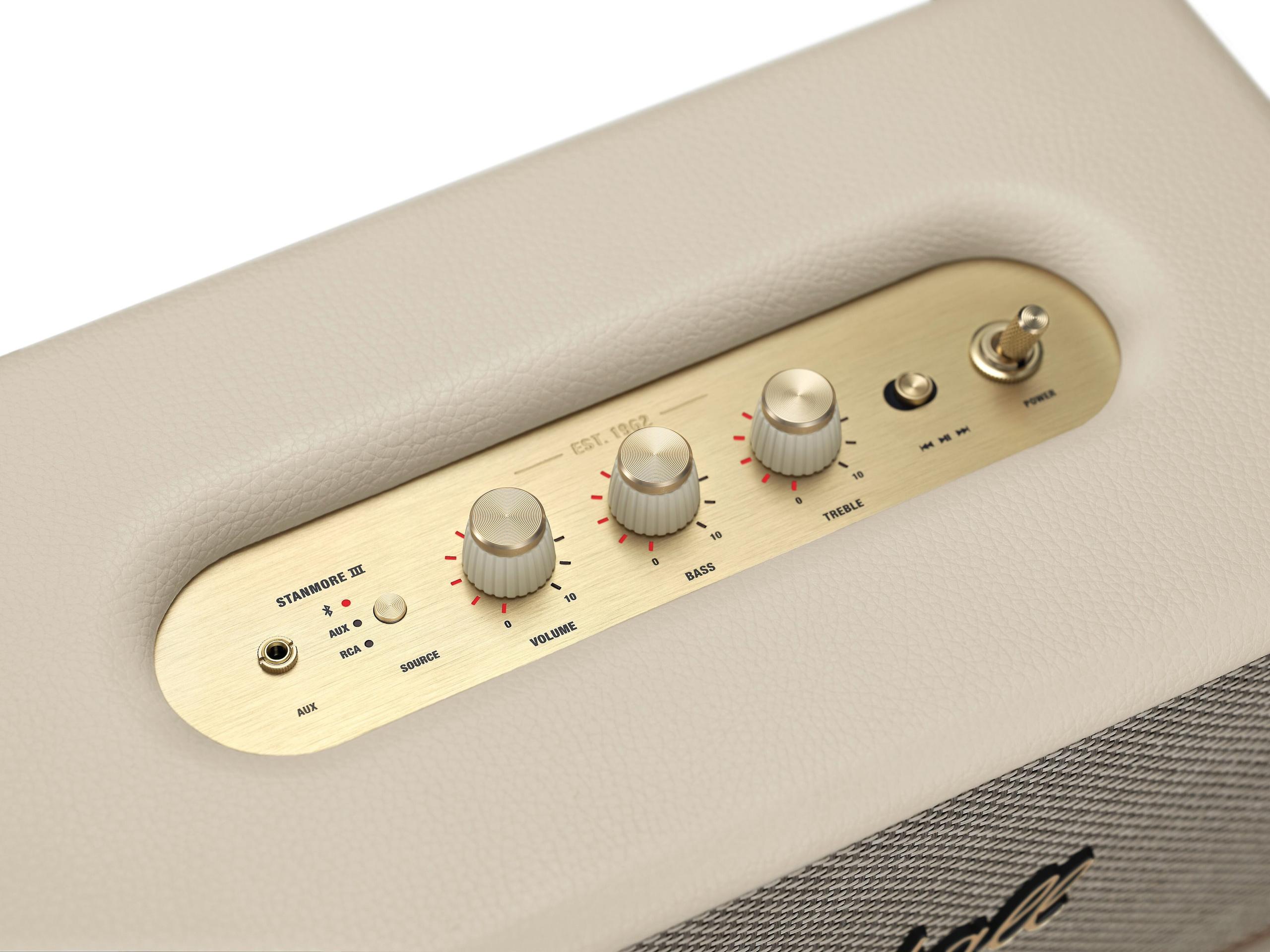
The Marshall Stanmore III includes two standout features that optimize its performance automatically. Dynamic Loudness adjusts the tonal balance as you change volume levels—at low volumes, it boosts bass and treble slightly so music still sounds full and engaging, while at high volumes it pulls back these frequencies to prevent harshness. This is similar to the "loudness" button found on high-end stereo systems.
Placement Compensation is even more sophisticated. Using built-in microphones and processing, it detects when the speaker is placed near walls or in corners and automatically adjusts the sound to compensate for bass buildup and reflections. This means the Marshall sounds consistently good whether it's on a bookshelf, in a corner, or out in the open.
The Beats Pill takes a different approach, focusing on features that enhance its portable nature. The redesigned form factor includes a 20-degree upward tilt that projects sound toward listeners rather than straight ahead, helping compensate for the typical placement on tables or floors. The speaker can also function as a power bank, charging your phone or other USB-C devices from its substantial battery.
Both speakers support modern Bluetooth standards, but with different emphases. The Marshall Stanmore III uses Bluetooth 5.2 with multi-host functionality, meaning two devices can stay connected simultaneously and you can easily switch between them. This is incredibly convenient for households where multiple people want to play music from different phones or tablets.
The Beats Pill emphasizes extended range and stability with Class 1 Bluetooth, which provides longer range and fewer dropouts compared to standard Bluetooth implementations. It also supports one-touch pairing with both iOS and Android devices and integrates with Find My (Apple) and Find My Device (Android) services, so you can locate it if it goes missing.
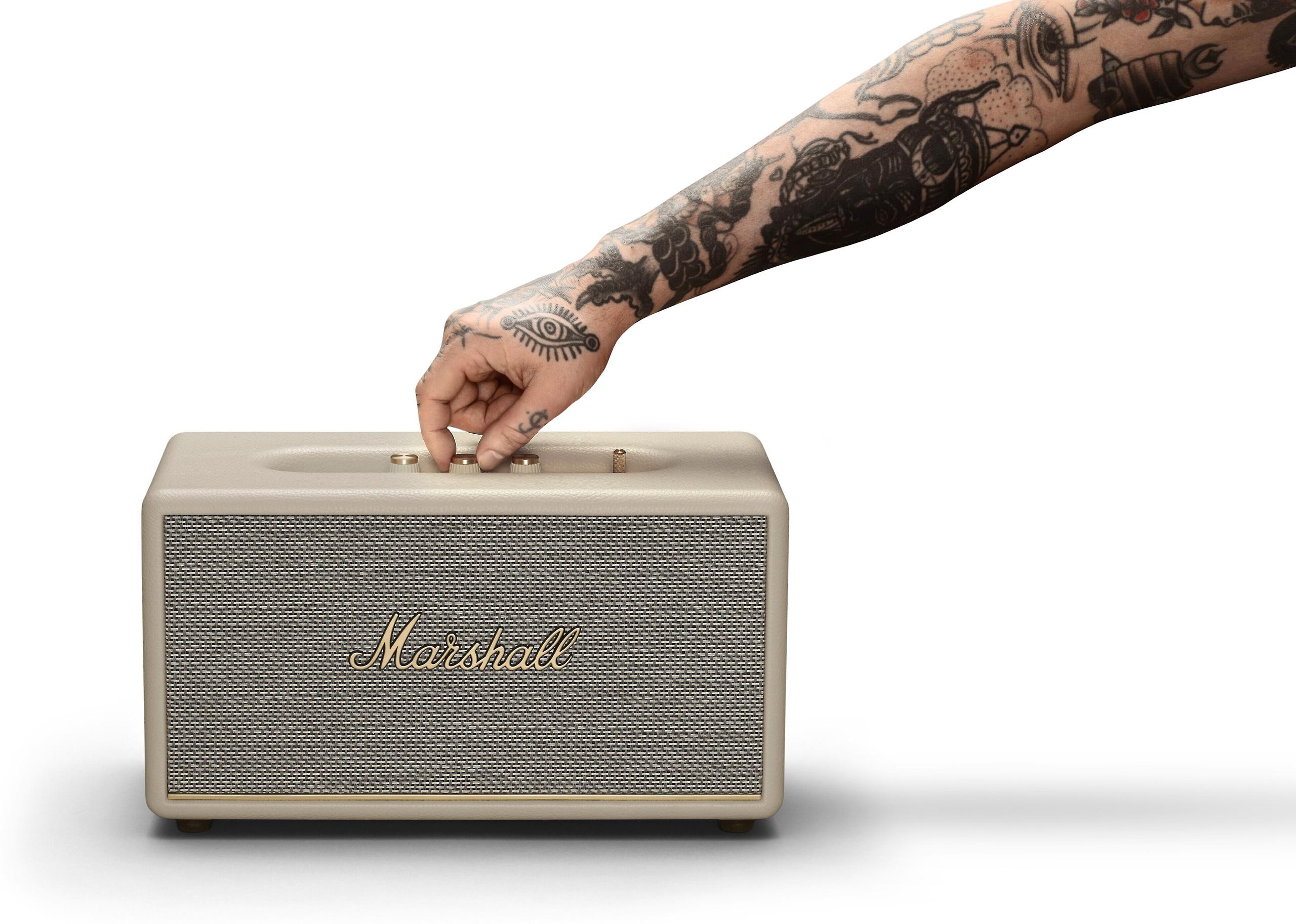
The companion apps reveal different philosophies about user control. The Marshall Stanmore III app provides three EQ presets, over-the-air firmware updates, and source switching between Bluetooth and wired inputs. However, the real appeal of the Marshall is its physical controls—dedicated knobs for bass, treble, and volume right on the speaker, just like a guitar amplifier.
The Beats Pill app is more limited, offering only basic controls without EQ customization. This is frustrating given the speaker's overly bright treble response that could benefit from user adjustment. However, the physical controls on top of the speaker provide intuitive playback control without needing to reach for your phone.
The portability difference between these speakers cannot be overstated. The Beats Pill weighs about 1.5 pounds and includes a removable lanyard, making it genuinely portable for hiking, beach trips, or just moving between rooms. The 24-hour battery life (at moderate volumes) means you can use it for extended periods without worrying about power outlets.
The IP67 rating deserves explanation: this means the speaker is completely dustproof and can survive being submerged in up to one meter of water for 30 minutes. In practical terms, you don't need to worry about rain, splashing around a pool, or sandy beach conditions.
The Marshall Stanmore III, weighing nearly 9.4 pounds and requiring constant connection to an electrical outlet, is designed for permanent placement. This isn't a limitation—it's a design choice that allows Marshall to focus entirely on sound quality without the compromises required for battery power and weather sealing.
At the time of writing, the Beats Pill Kim Kardashian Edition represents excellent value in the premium portable speaker category, offering features typically found in more expensive competitors. The combination of long battery life, weather resistance, and the cache of the Kim Kardashian collaboration makes it appealing for users who want a speaker that's both functional and fashionable.
The Marshall Stanmore III commands a significantly higher price, positioning it in the home audio category where it competes based on sound quality rather than portability features. When frequently discounted, it becomes much more compelling, offering performance that can satisfy serious music listeners without the expense of separating audio components.
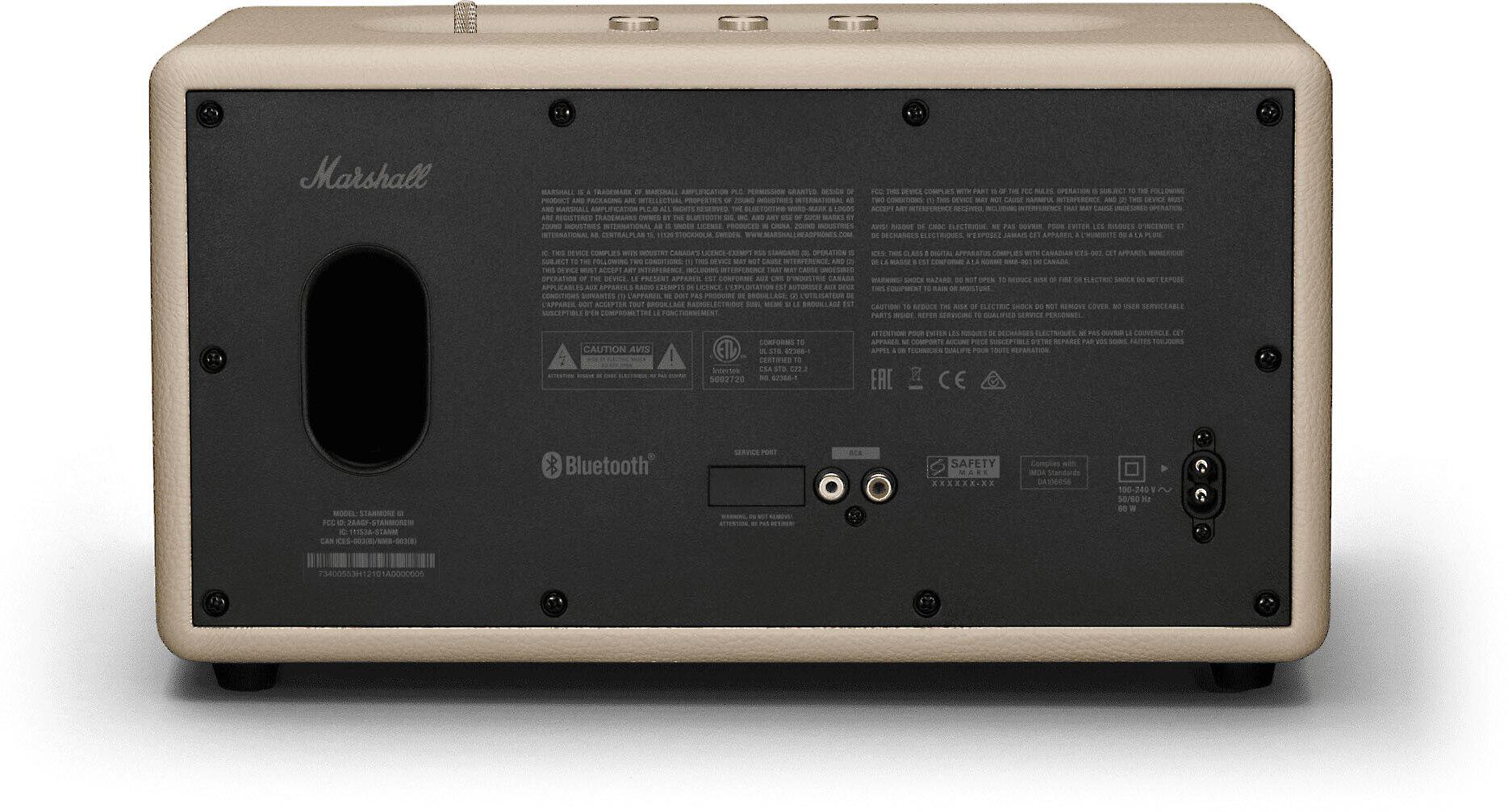
For home theater use, the Marshall Stanmore III has distinct advantages. Its multiple input options—RCA and 3.5mm auxiliary—make it easy to connect to TVs, game consoles, or other entertainment devices. The stereo separation and room-filling power make it a legitimate upgrade from typical TV speakers, though it won't match a dedicated surround sound system.
The Beats Pill can serve as an occasional TV speaker via Bluetooth, but its mono output and size limitations make it less suitable for serious home theater use. It's better suited for casual viewing or as a bedroom TV companion.
Based on our analysis of user feedback, the Beats Pill performs best with pop, hip-hop, and electronic music where its tight, punchy bass response and clear midrange vocals shine. The bright treble, while sometimes harsh, can add excitement to these genres. However, it struggles with classical music, jazz, and other genres that benefit from wide dynamic range and subtle detail.
The Marshall Stanmore III is more versatile across genres. Its controlled bass response works well for rock and electronic music without becoming boomy, while the stereo imaging and balanced frequency response make it suitable for classical, jazz, and acoustic music that requires more nuanced reproduction.
Choose the Beats Pill Kim Kardashian Edition if you prioritize flexibility and lifestyle integration over maximum sound quality. It's ideal for users who want one speaker that can handle beach days, office work, bedroom listening, and travel without compromise. The collaboration aesthetic adds appeal for fashion-conscious users, and the reasonable price makes it accessible for younger buyers or as a secondary speaker.
The harsh treble response is a real limitation that affects long-term listening enjoyment, and the mono output means you're missing some of what stereo music has to offer. However, for casual listening and portable use, these compromises are reasonable given the benefits.
Choose the Marshall Stanmore III if sound quality is your primary concern and you want a speaker that can serve as your main music system. It's perfect for users who have a dedicated space for a speaker and who listen to music regularly rather than just occasionally. The vintage aesthetic appeals to users who appreciate classic design, and the physical controls offer a more tactile experience than app-based adjustment.
The lack of portability and weather resistance are only limitations if you need those features. For home use, these aren't compromises—they're conscious choices that allow Marshall to focus on what matters most for stationary listening.
Both speakers represent thoughtful engineering for their intended purposes. The Beats Pill succeeds as a lifestyle accessory that happens to be a capable speaker, while the Marshall Stanmore III succeeds as a serious audio component that happens to be wireless. Understanding which category fits your needs better will lead you to the right choice.
| Beats Pill Kim Kardashian Edition | Marshall Stanmore III |
|---|---|
| Speaker Type - Determines where and how you can use it | |
| Portable battery-powered with 24-hour life | Mains-powered home speaker (requires outlet) |
| Audio Architecture - Affects sound quality and stereo imaging | |
| Mono speaker (single channel, pairs needed for stereo) | True stereo two-way system with separate tweeters |
| Total System Power - Impacts maximum volume and room-filling capability | |
| Battery-limited portable power | 80 watts (50W woofer + dual 15W tweeters) |
| Frequency Response - Shows bass depth and treble extension | |
| 56.6 Hz - 19,600 Hz (good bass for size) | 45 Hz - 20,000 Hz (deeper bass, wider range) |
| Weather Resistance - Critical for outdoor and mobile use | |
| IP67 rated (dustproof, waterproof to 1m for 30min) | Indoor use only (no weather protection) |
| Weight and Portability - Determines ease of transport | |
| 1.5 lbs with removable lanyard (ultra-portable) | 9.37 lbs (permanent placement required) |
| Connectivity Options - Affects versatility with different devices | |
| Bluetooth 5.3, USB-C audio, device charging port | Bluetooth 5.2, RCA input, 3.5mm aux input |
| Sound Optimization Features - Smart tech that improves audio quality | |
| 20-degree upward tilt, Amplify/Stereo modes | Dynamic Loudness, Placement Compensation, physical EQ controls |
| Multi-Device Support - Convenience for households with multiple users | |
| One device at a time, easy pairing | Two devices can stay connected simultaneously |
| App Control and Customization - User control over sound preferences | |
| Basic controls only, no EQ adjustment available | 3 EQ presets, firmware updates, source switching |
| Special Features - Unique capabilities that add value | |
| Can charge other USB-C devices, Find My integration | Physical bass/treble knobs, vintage amplifier aesthetics |
| Ideal Use Cases - Where each speaker excels | |
| Travel, outdoor activities, multi-room flexibility | Home music listening, TV audio, permanent installation |
The Beats Pill Kim Kardashian Edition is designed for portability with a 24-hour battery life, 1.5-pound weight, and IP67 water resistance. The Marshall Stanmore III requires a power outlet and weighs over 9 pounds, making it strictly for home use. If you need to move your speaker around or use it outdoors, the Beats Pill is the clear winner.
The Marshall Stanmore III delivers significantly better sound quality with 80 watts of power, true stereo separation, and deeper bass response down to 45 Hz. The Beats Pill Kim Kardashian Edition offers impressive sound for its size but is limited to mono playback and can sound harsh at high volumes. For serious music listening, the Marshall Stanmore III is superior.
The Marshall Stanmore III works well for home theater with its RCA and 3.5mm inputs, stereo sound, and room-filling power that improves TV audio significantly. While you can connect the Beats Pill via Bluetooth, its mono output and smaller size make it less suitable for serious home theater use.
The Beats Pill Kim Kardashian Edition offers excellent value for a premium portable speaker with long battery life and weather resistance. The Marshall Stanmore III costs significantly more but delivers substantially better sound quality for home use. Value depends on whether you prioritize portability or audio performance.
Both the Beats Pill Kim Kardashian Edition and Marshall Stanmore III support Bluetooth connectivity with iOS and Android devices. The Marshall also offers wired connections via RCA and 3.5mm inputs for turntables, TVs, and other devices, making it more versatile for home audio setups.
The Beats Pill Kim Kardashian Edition is specifically designed for outdoor use with IP67 water and dust resistance, battery power, and portable design. The Marshall Stanmore III has no weather protection and requires an electrical outlet, making it unsuitable for outdoor use.
The Beats Pill Kim Kardashian Edition supports Amplify Mode (sync two speakers for louder mono sound) and Stereo Mode (separate left/right channels). The Marshall Stanmore III doesn't support multi-speaker pairing but provides built-in stereo sound from a single unit.
The Beats Pill offers up to 24 hours of battery life and can even charge other USB-C devices. The Marshall Stanmore III has no battery and must remain plugged into a wall outlet at all times. For wireless, untethered use, only the Beats Pill is truly wireless.
The Marshall Stanmore III produces deeper, more powerful bass with its larger drivers and 50-watt dedicated amplifier, extending down to 45 Hz. The Beats Pill Kim Kardashian Edition has impressive bass for its compact size but can't match the depth and power of the larger Marshall speaker.
The Marshall Stanmore III offers Dynamic Loudness (auto-adjusts sound at different volumes), Placement Compensation (corrects for room acoustics), and an app with EQ presets. The Beats Pill has basic app controls but no EQ adjustment, though it includes Find My integration and speakerphone functionality.
The Marshall Stanmore III handles all music genres well with its balanced sound and stereo imaging, excelling with rock, classical, and jazz. The Beats Pill Kim Kardashian Edition works best with pop, hip-hop, and electronic music but can sound harsh with genres requiring subtle dynamics due to its bright treble response.
Choose the Beats Pill Kim Kardashian Edition for portability, outdoor use, all-day battery life, and style at a lower cost. Choose the Marshall Stanmore III for superior sound quality, home audio performance, stereo imaging, and room-filling power when portability isn't needed.
We've done our best to create useful and informative comparisons to help you decide what product to buy. Our research uses advanced automated methods to create this comparison and perfection is not possible - please contact us for corrections or questions. These are the sites we've researched in the creation of this article: digitalreviews.net - routenote.com - androidcentral.com - youtube.com - beatsbydre.com - youtube.com - rtings.com - youtube.com - rtings.com - youtube.com - macrumors.com - consolecreatures.com - tomsguide.com - beatsbydre.com - bestbuy.ca - beatsbydre.com - designertale.com - yearbookscanning.com - moneycontrol.com - techgadgetscanada.com - camelcamelcamel.com - crutchfield.com - bestbuy.com - dxomark.com - crutchfield.com - crutchfield.com - marshall.com - marshall-production-1.mobify-storefront.com - exhibit.tech - ooberpad.com - av-connection.com

Privacy Policy
Terms and Conditions - Affiliate Policy
Home Security
© Copyright 2008-2026.
11816 Inwood Rd #1211, Dallas, TX 75244