

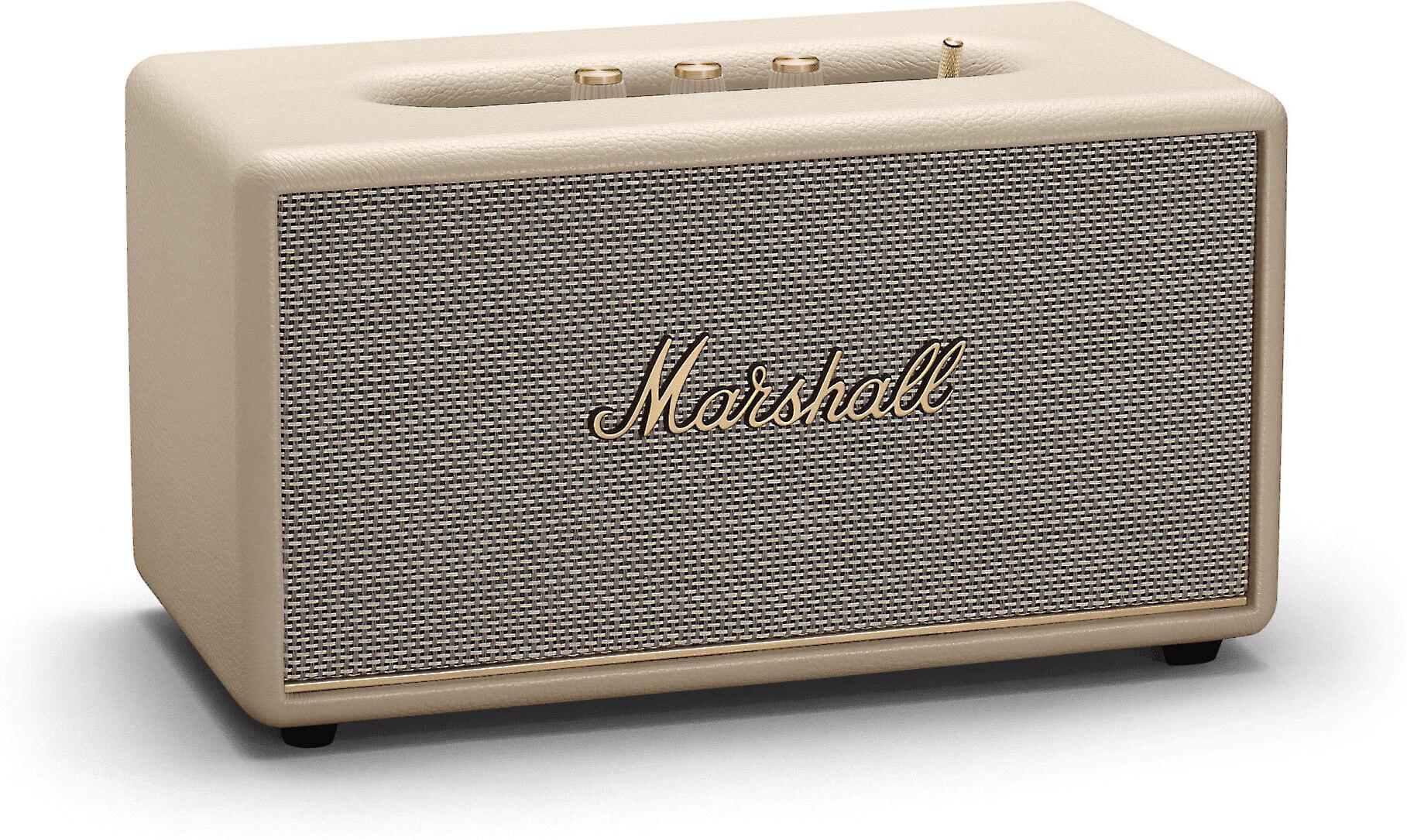
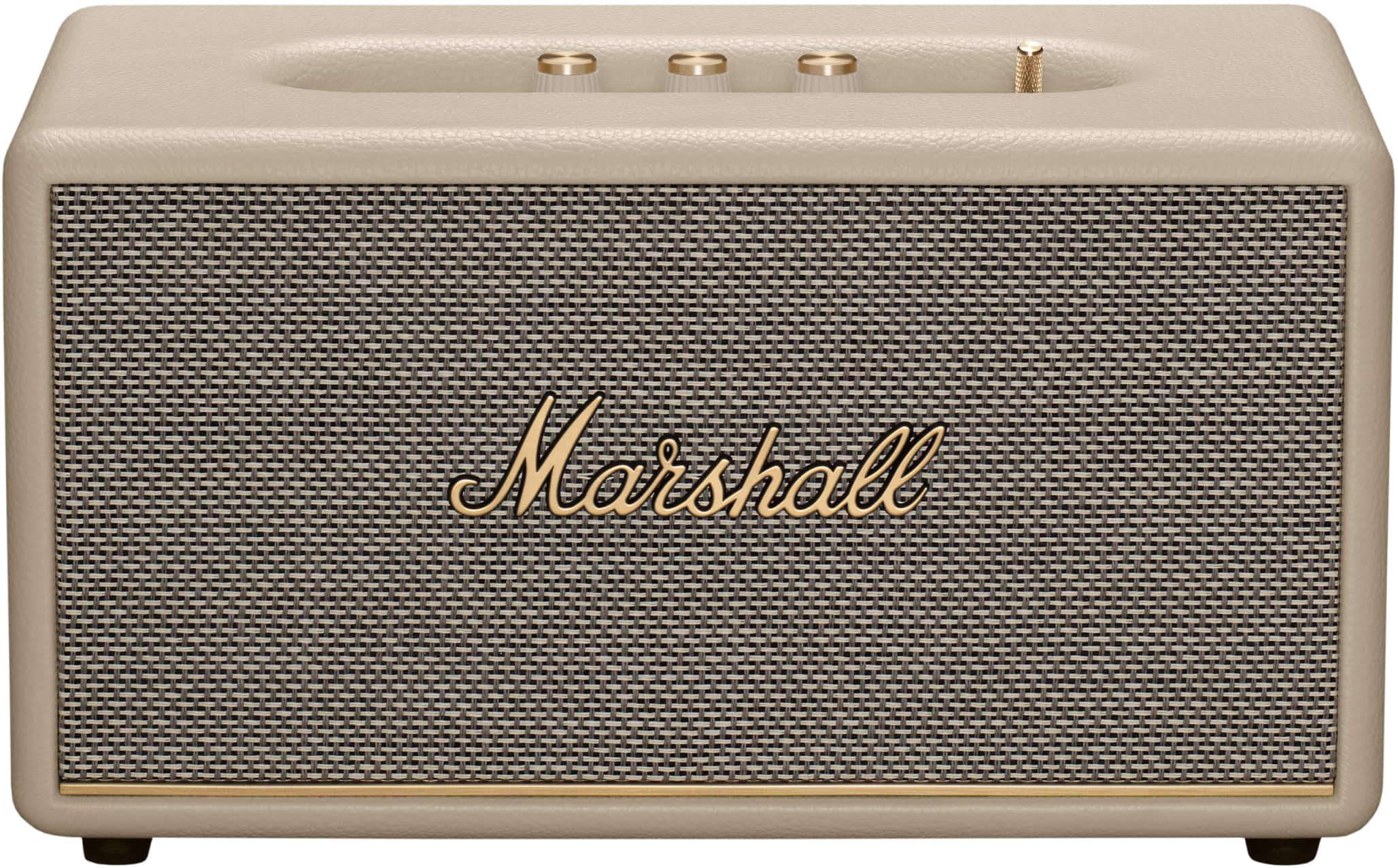
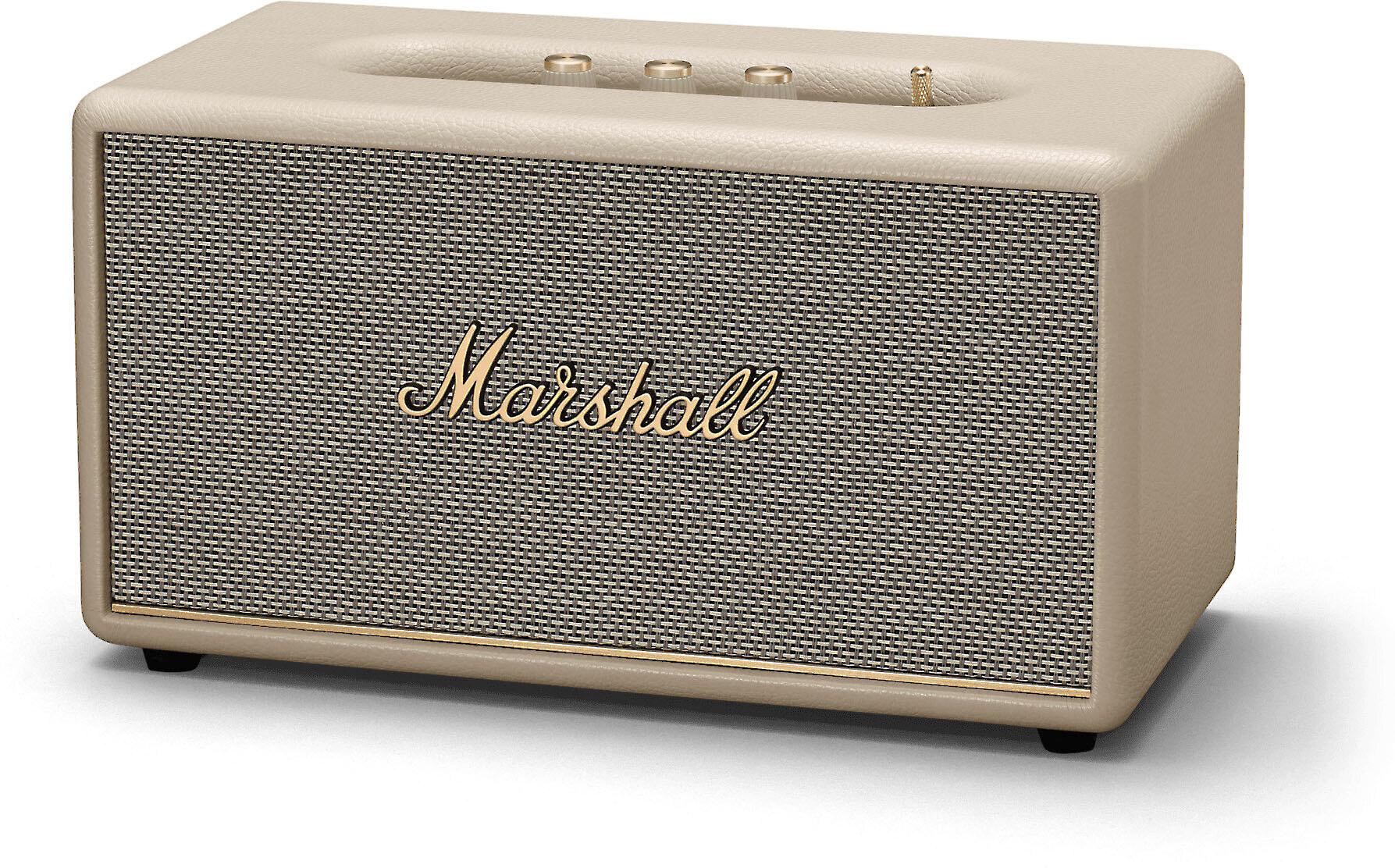
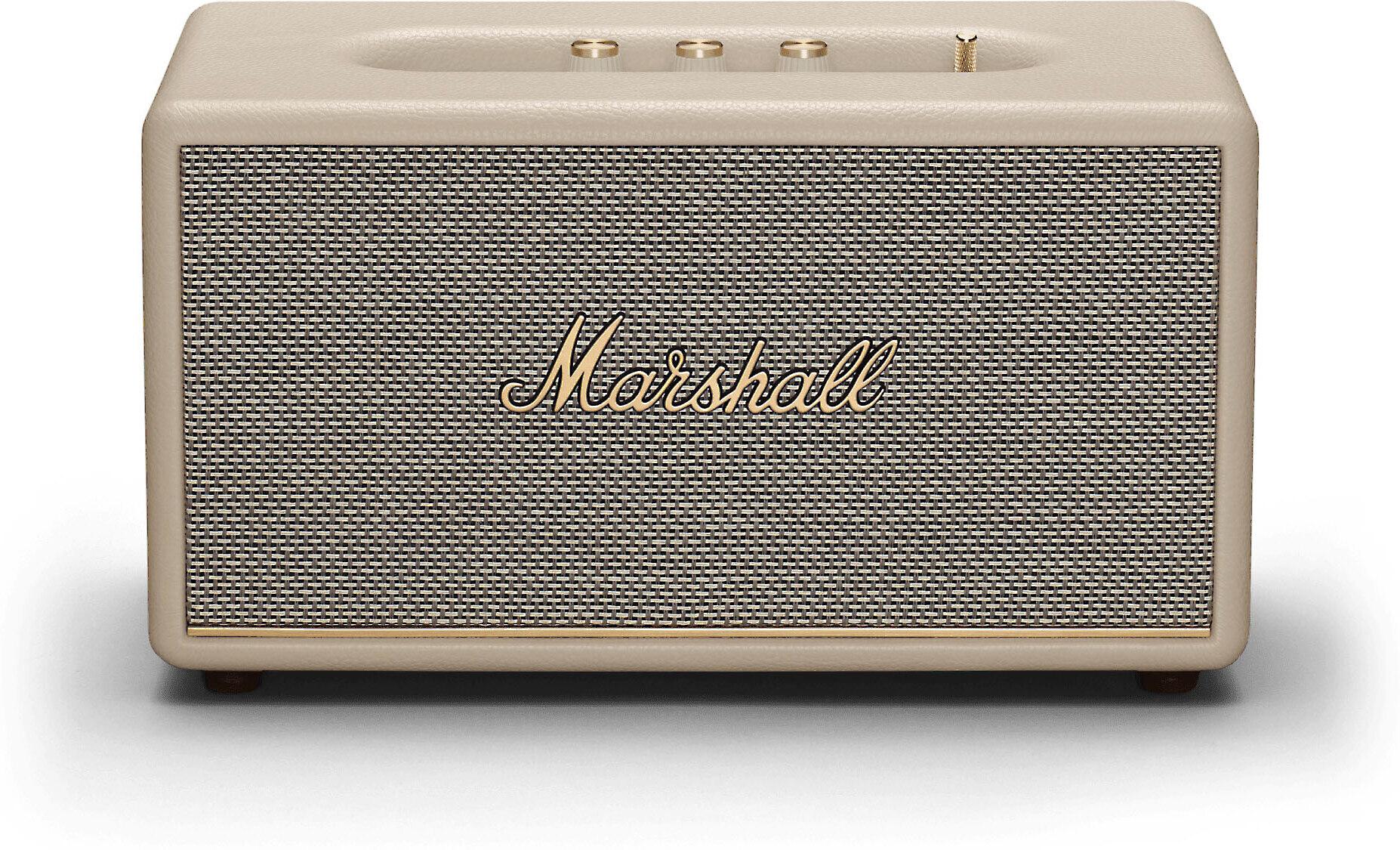
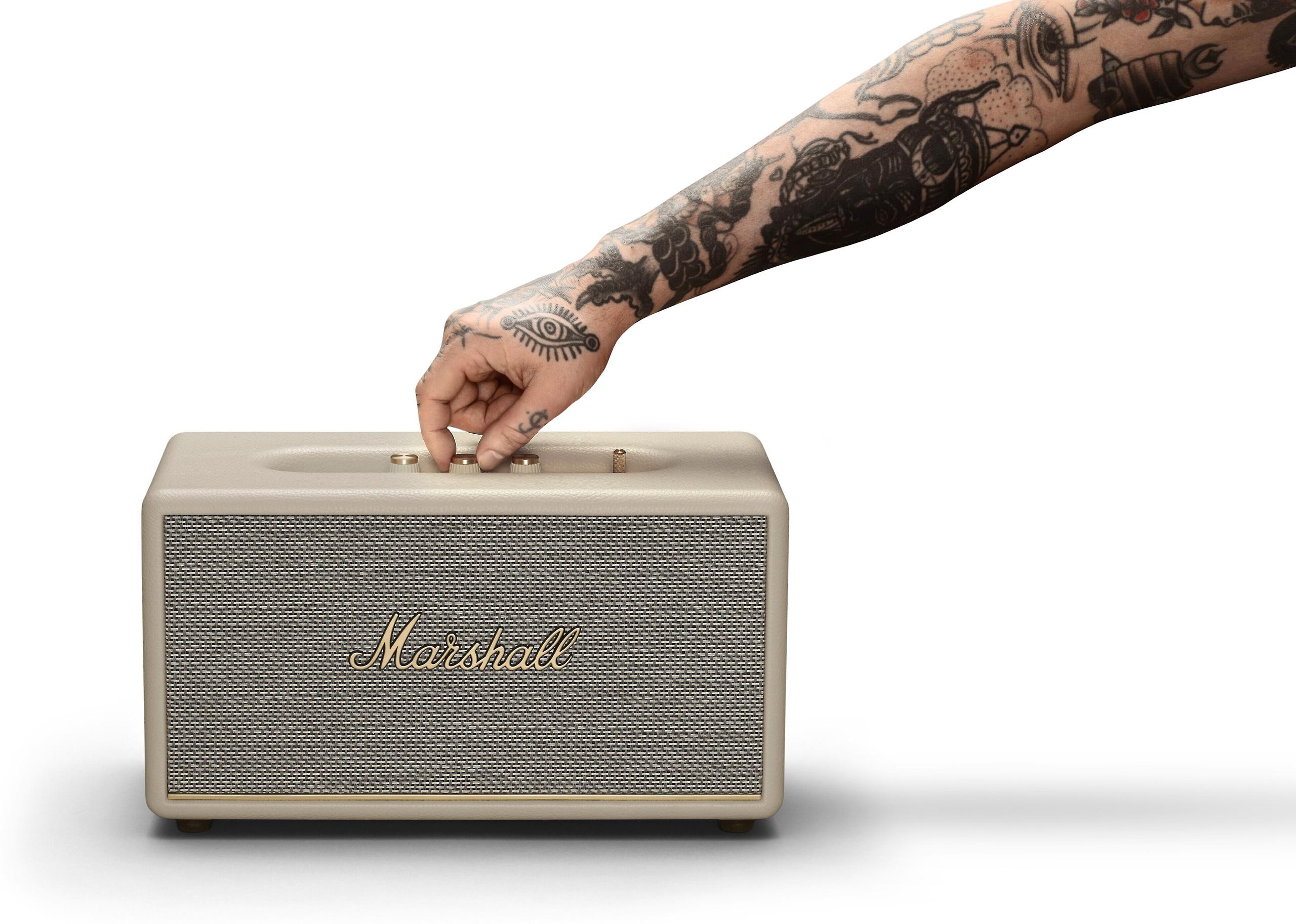
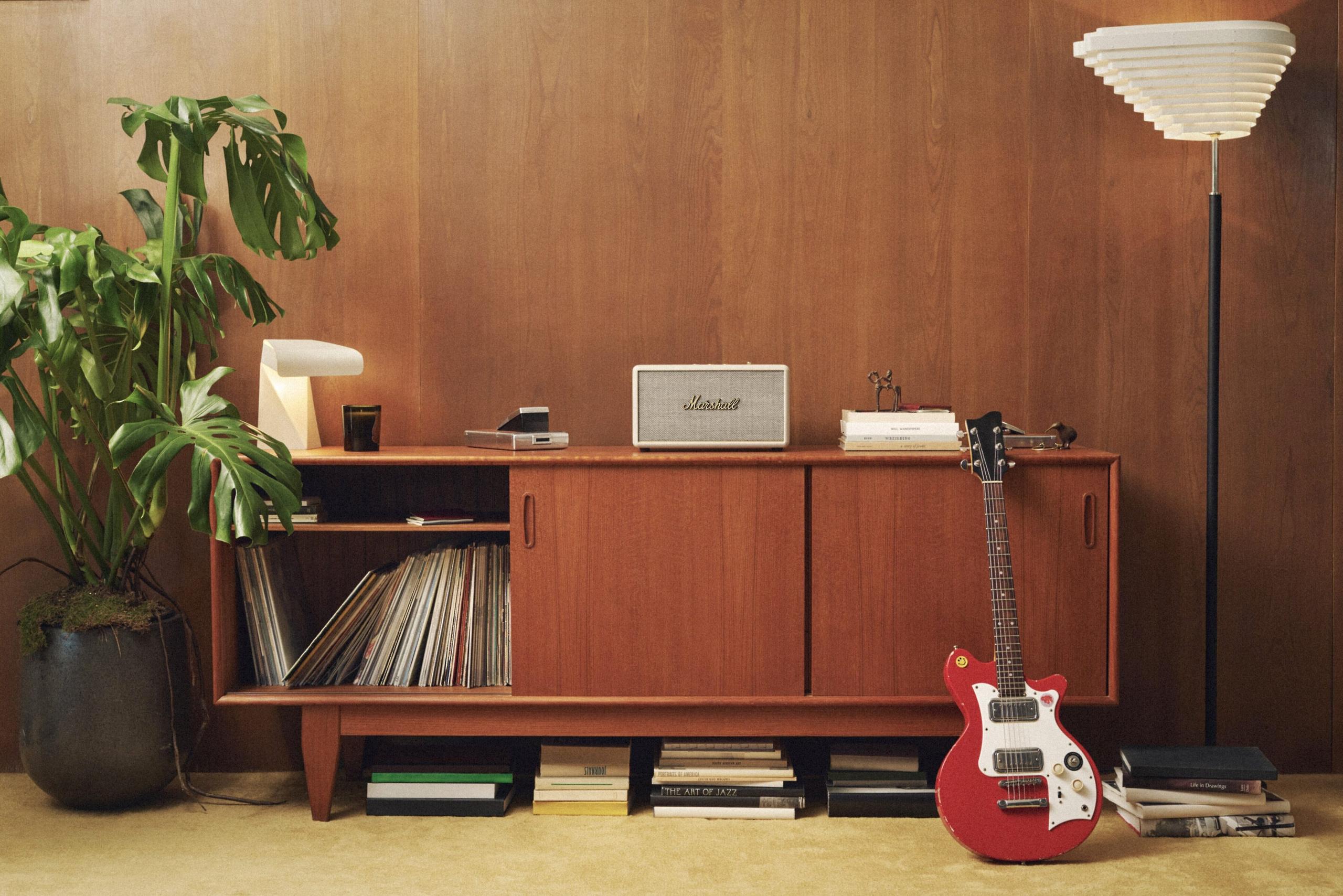

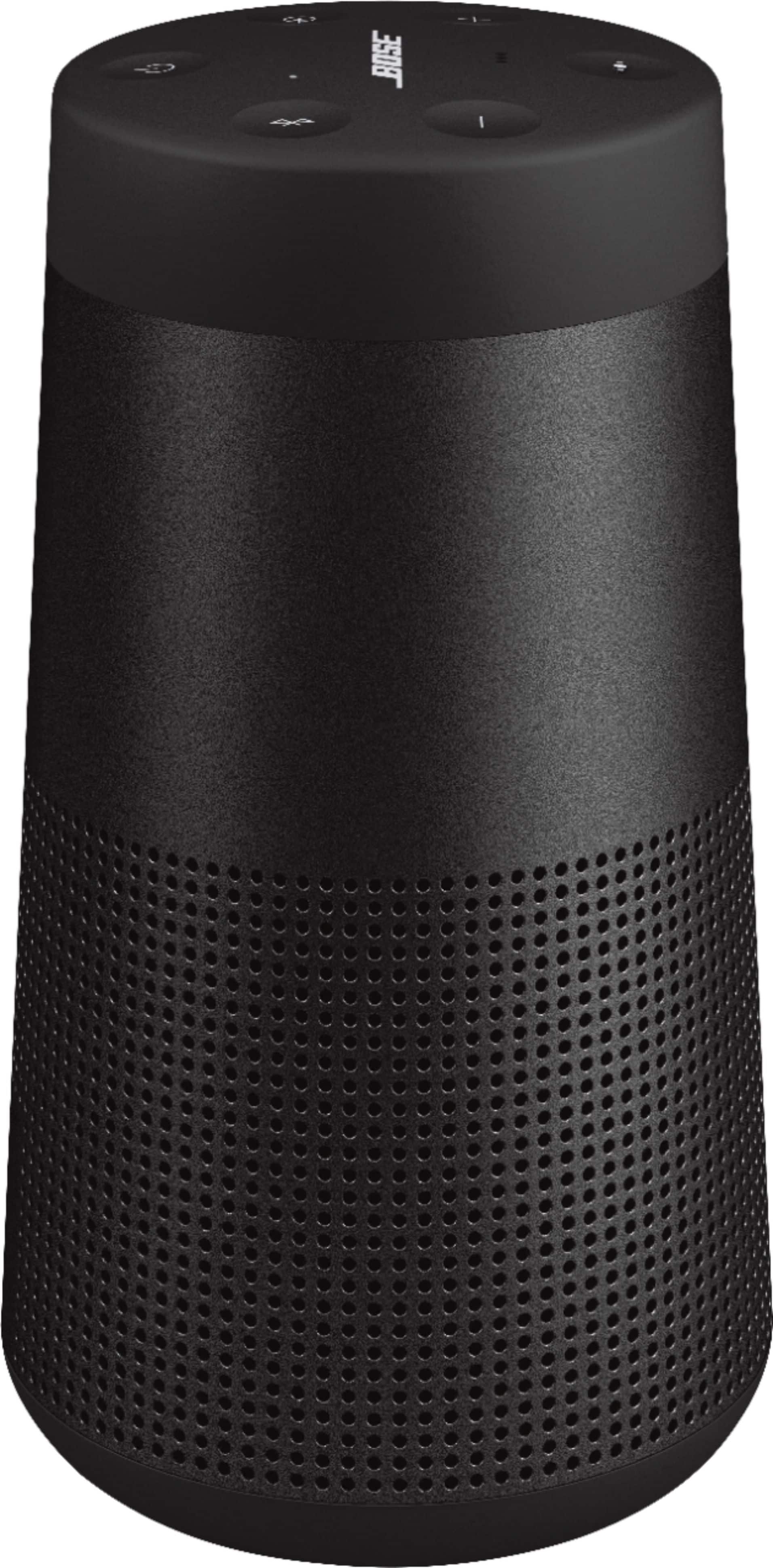
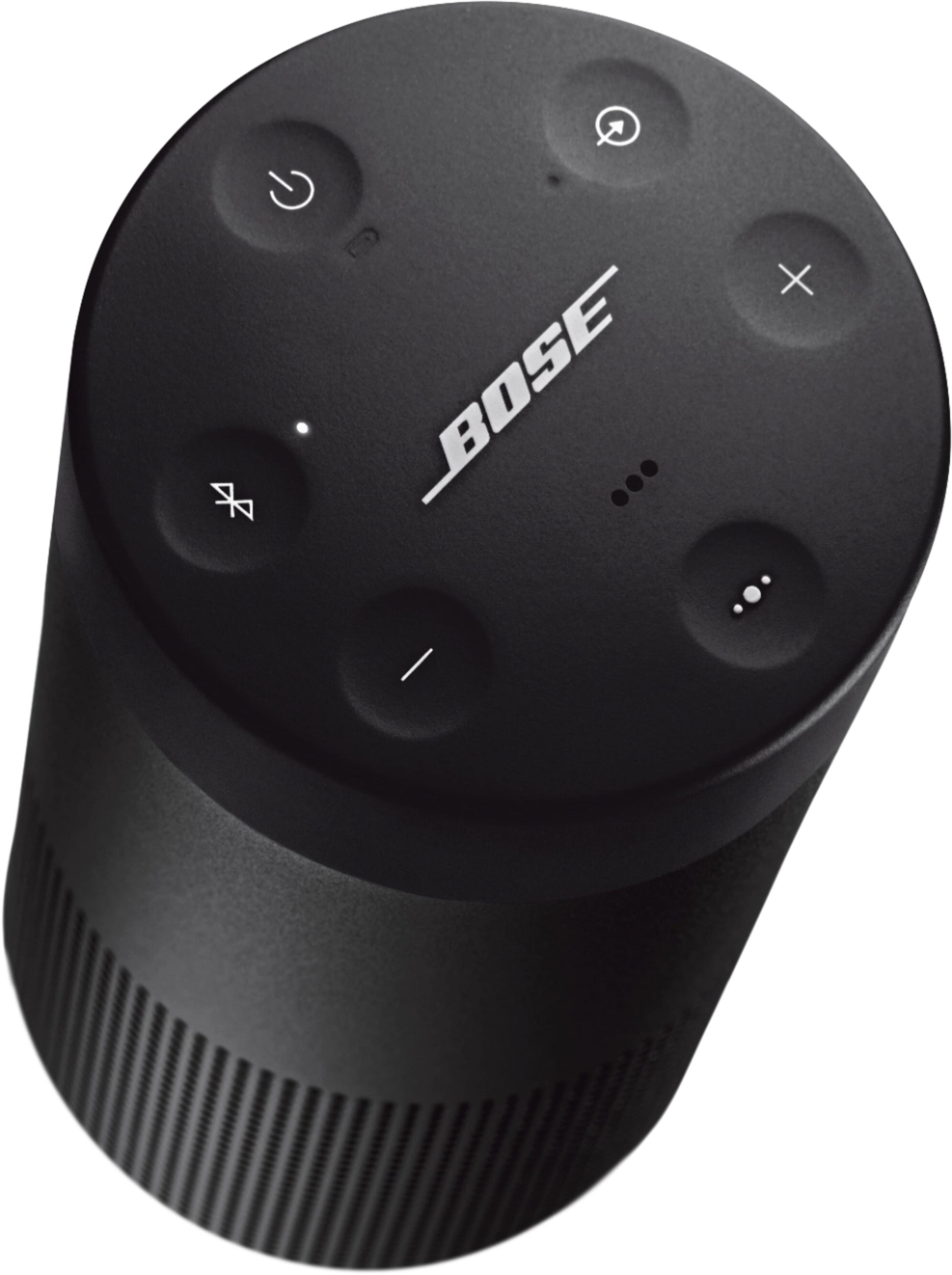
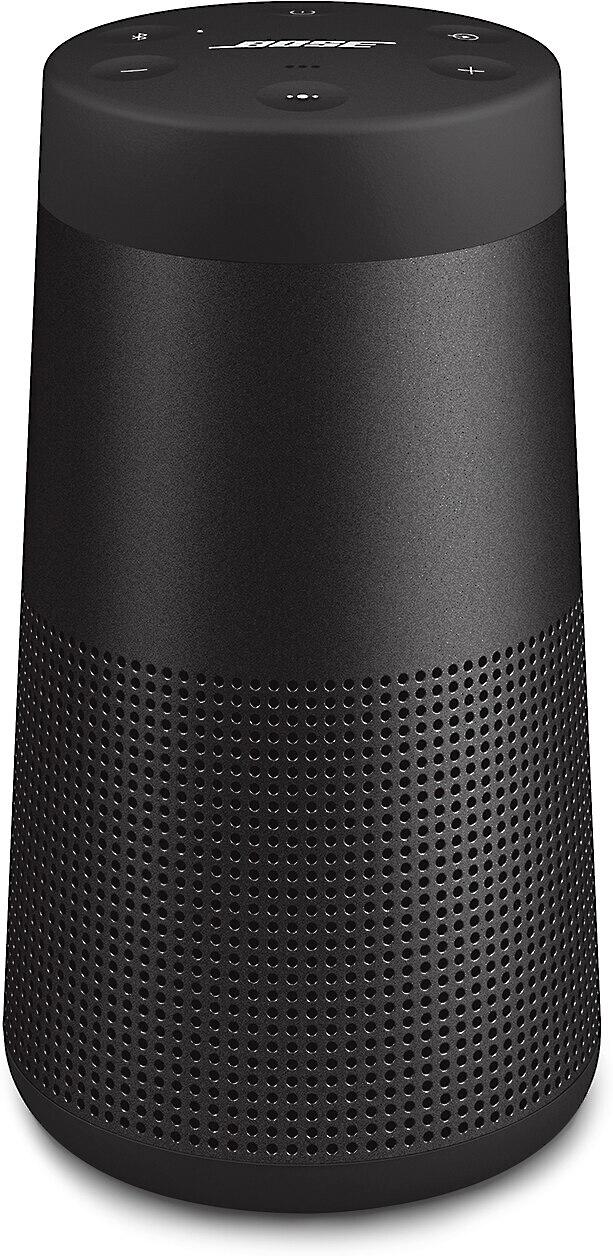
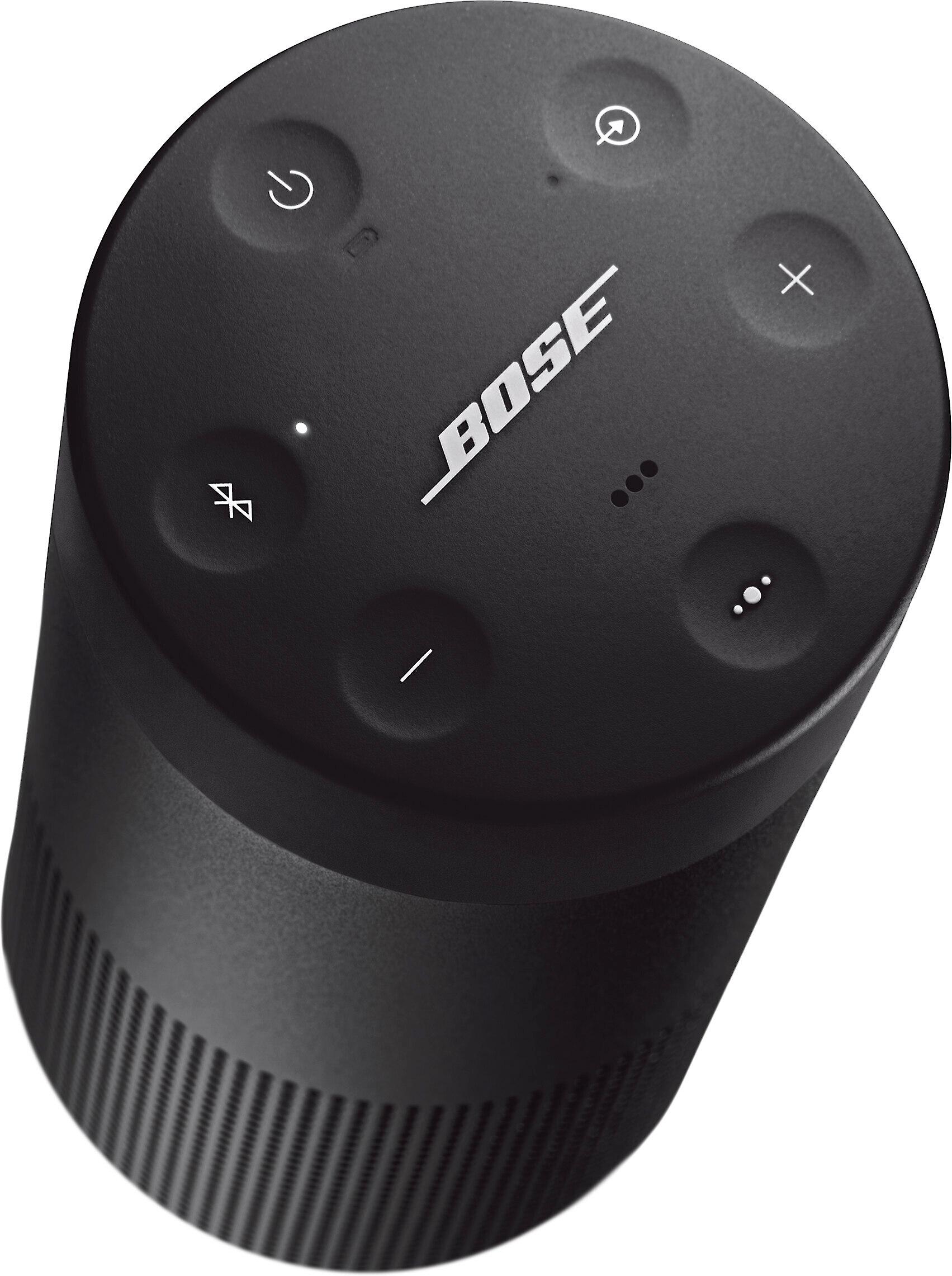
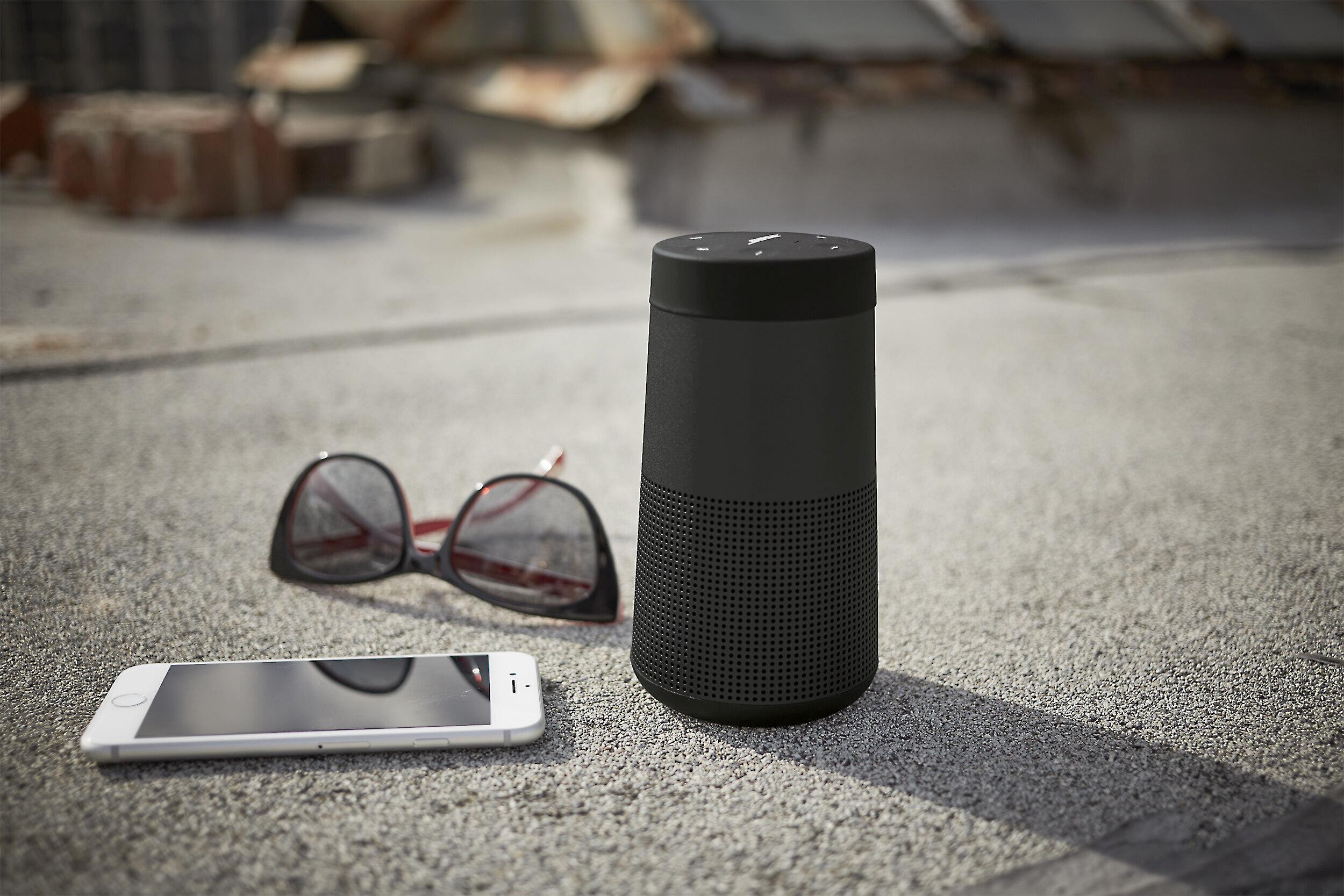
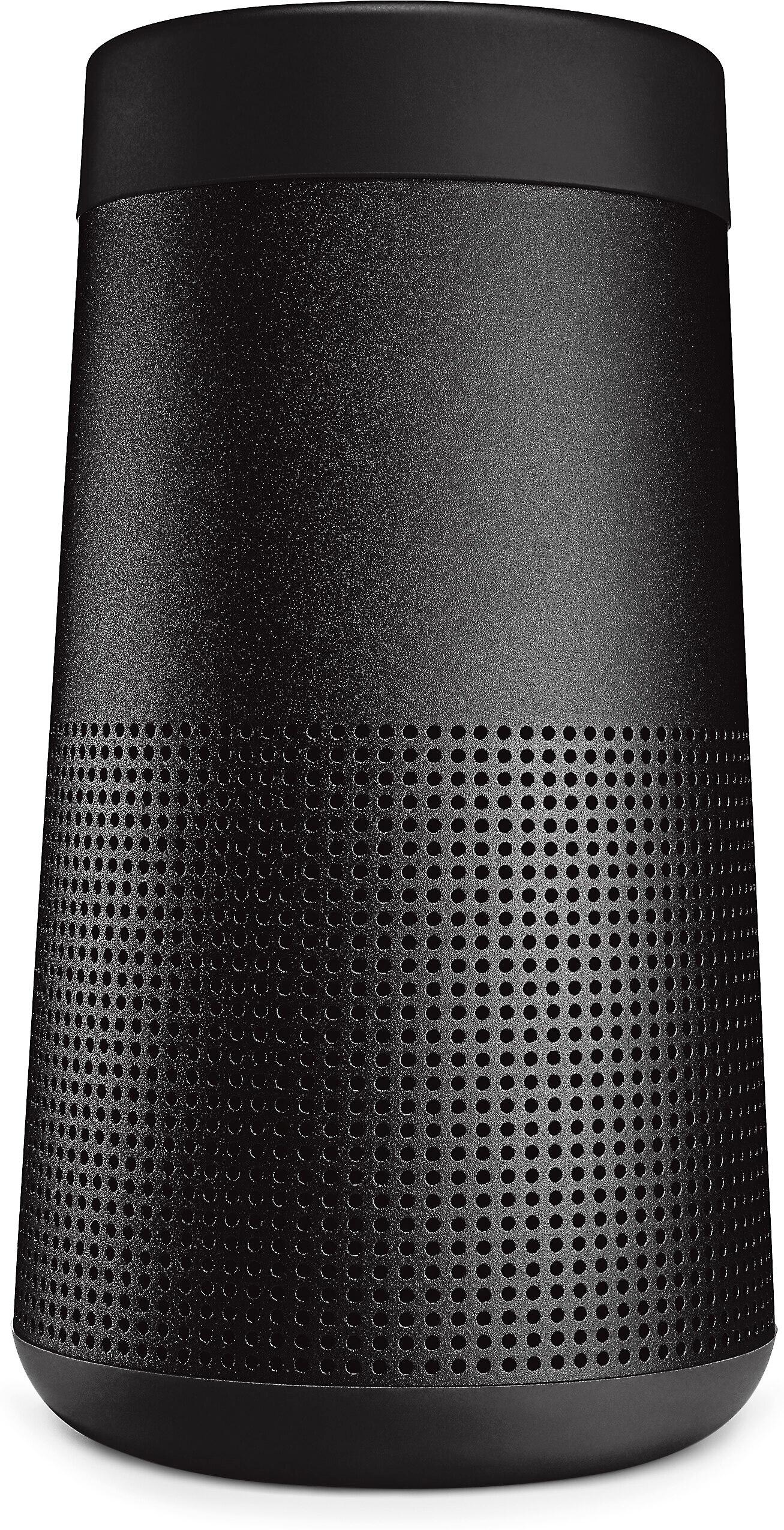
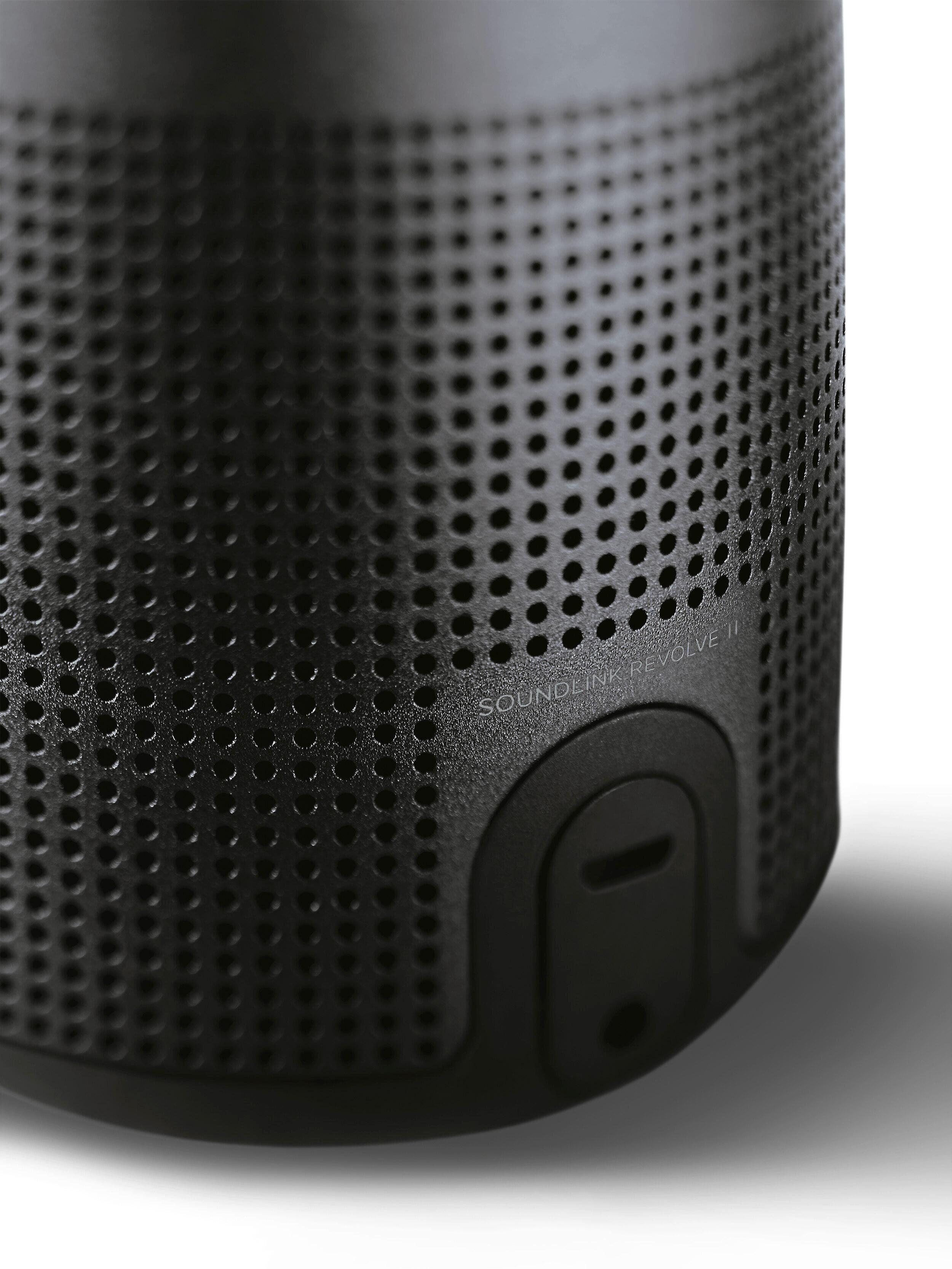
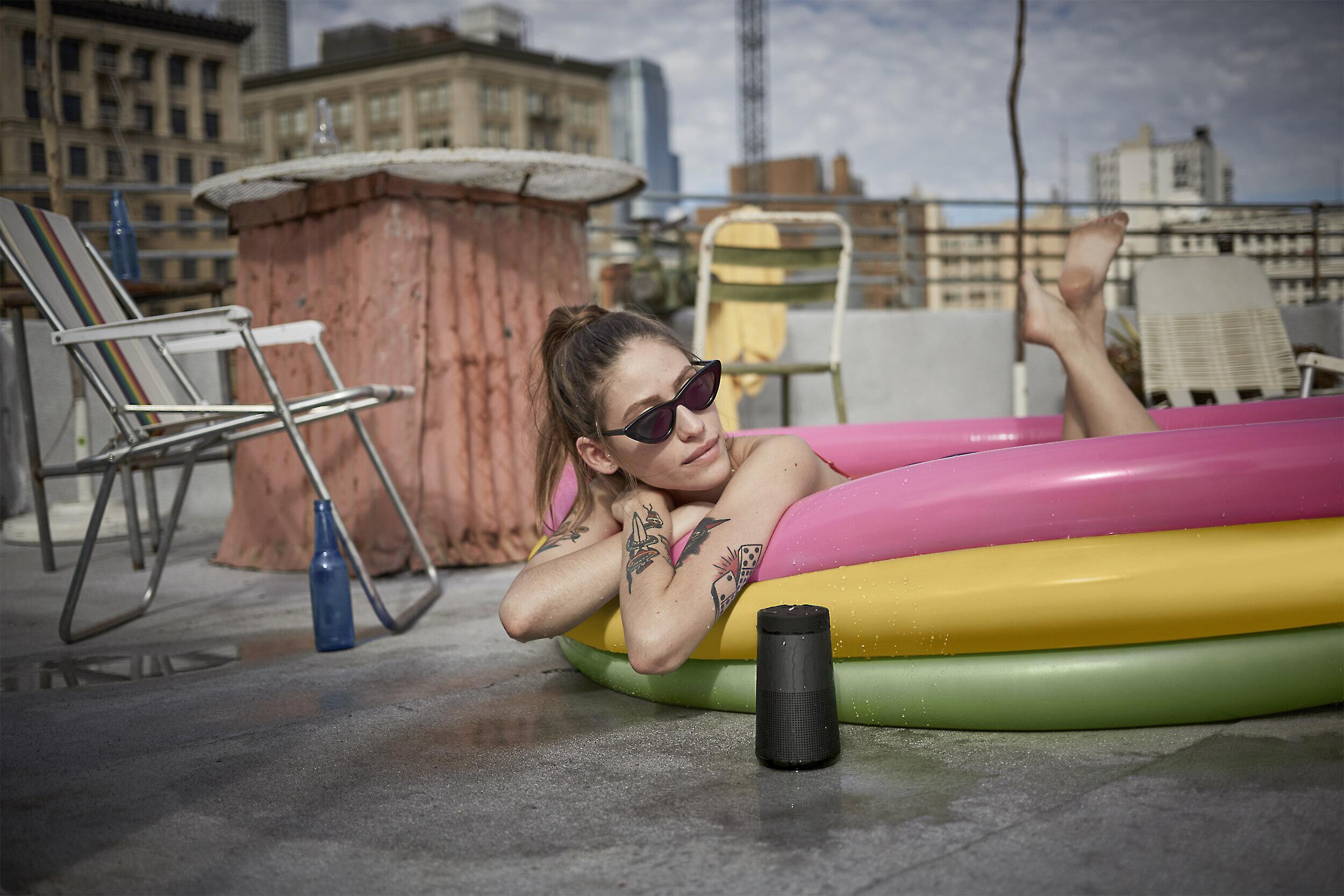
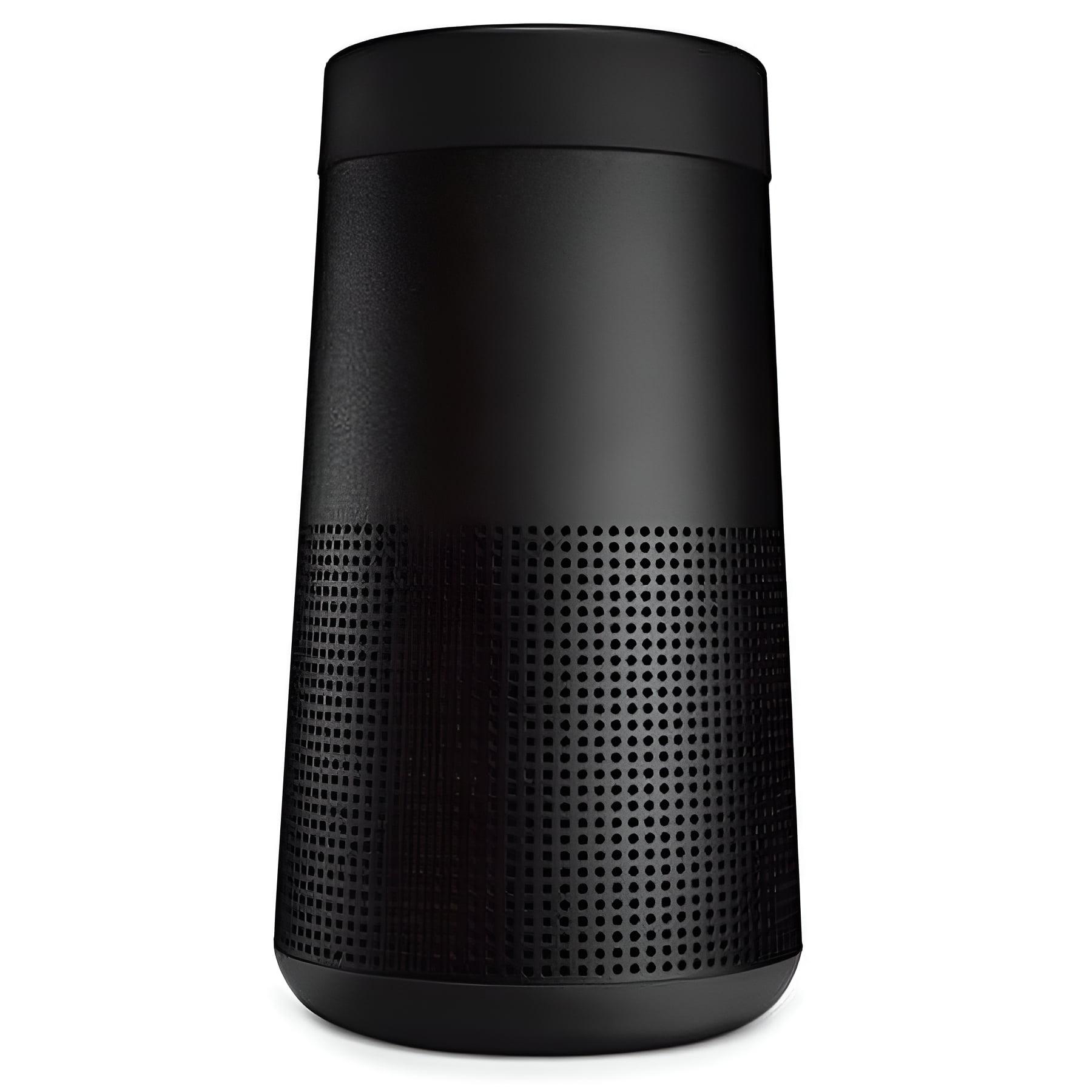
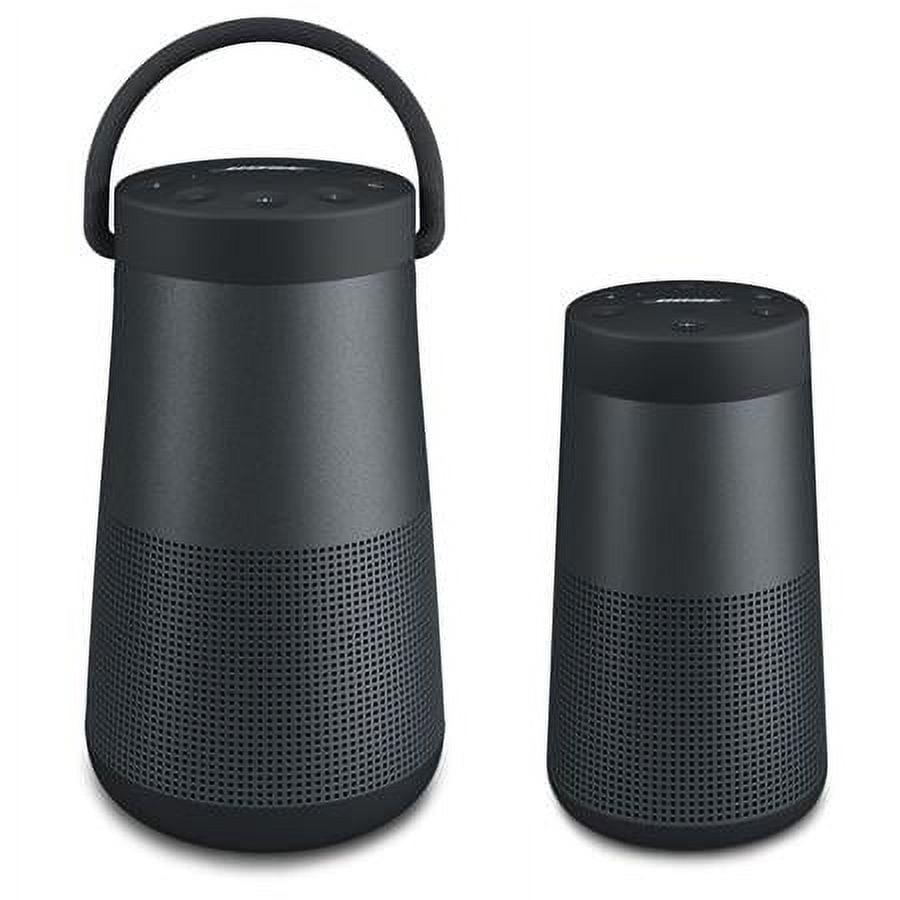
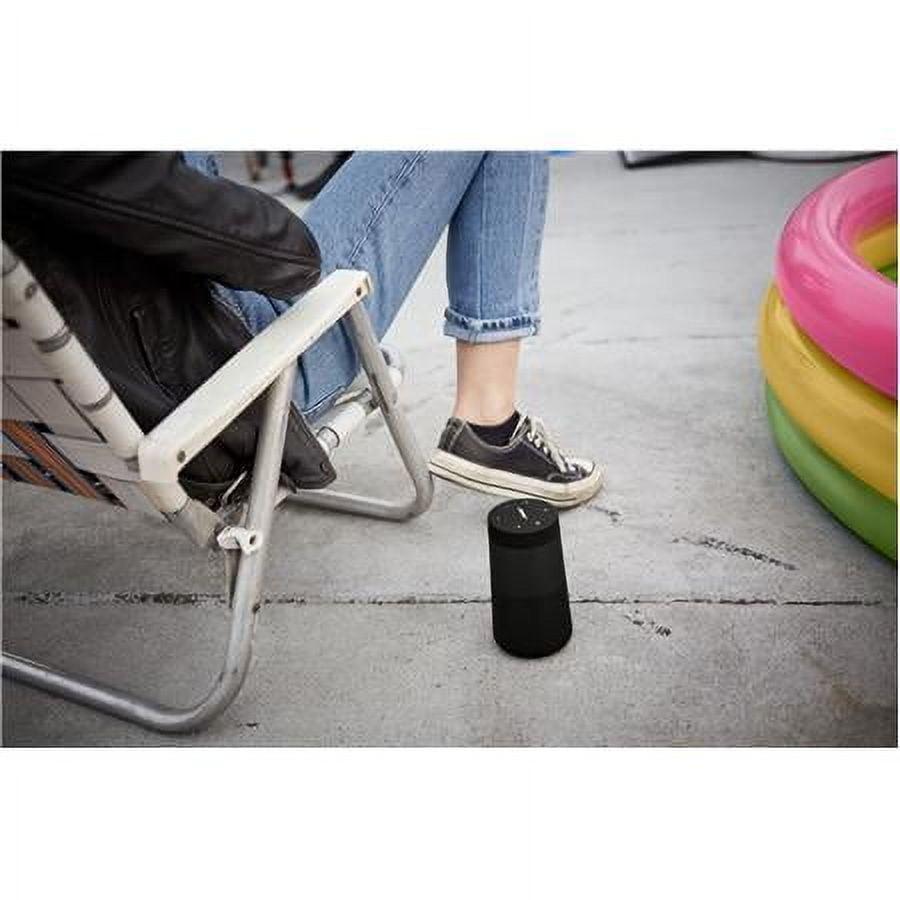

The Bluetooth speaker market has evolved significantly in recent years, splitting primarily into two distinct categories: powerful home speakers and portable options. The Marshall Stanmore III ($379) and Bose SoundLink Revolve II ($219) represent these different approaches perfectly, each excelling in their intended use case while sharing some overlapping capabilities.
Released in late 2022, the Stanmore III represents Marshall's latest home speaker technology, packing an impressive 80 watts of power into its vintage-inspired frame. The Revolve II, launched in early 2022, takes a different approach with its portable, 360-degree sound design. These fundamental differences shape everything from sound quality to everyday usability.
The Stanmore III's 80-watt system (comprising a 50W woofer and two 15W tweeters) delivers seriously impressive audio performance. This "two-way" speaker design, where different drivers handle different frequency ranges, results in clearer, more detailed sound compared to single-driver systems. The speaker reaches down to 45Hz in bass response - that's deep enough to feel hip-hop beats and movie explosions with real impact.
The Revolve II takes a different approach. While Bose doesn't publish exact power specifications, its omnidirectional design creates an even sound field throughout a room. This means everyone gets the same listening experience regardless of where they're sitting. However, it can't match the raw power or bass response of the Stanmore III.
The Stanmore III really shines with music. Its dedicated woofer and tweeters separate complex arrangements clearly - you can hear distinct separation between instruments and vocals. The bass response is particularly impressive, handling everything from electronic music to classical with authority. The included app lets you adjust EQ settings to match your preferences or room acoustics.
The Revolve II produces surprisingly full sound for its size. Its 360-degree projection works especially well in social settings where people are moving around. While it can't match the Stanmore III's bass response or maximum volume, it produces clear, balanced audio that works well for most music styles at moderate volumes.
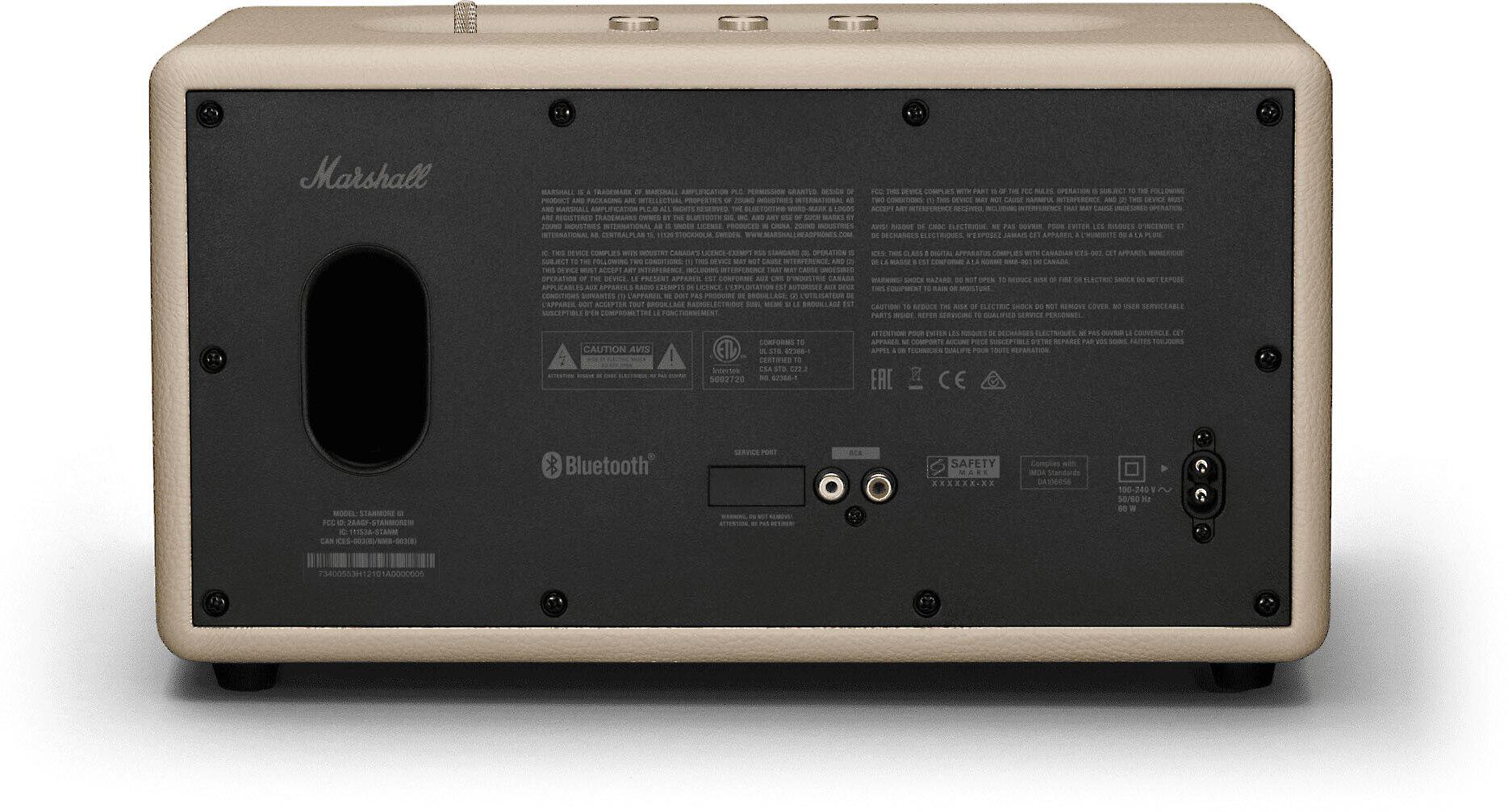
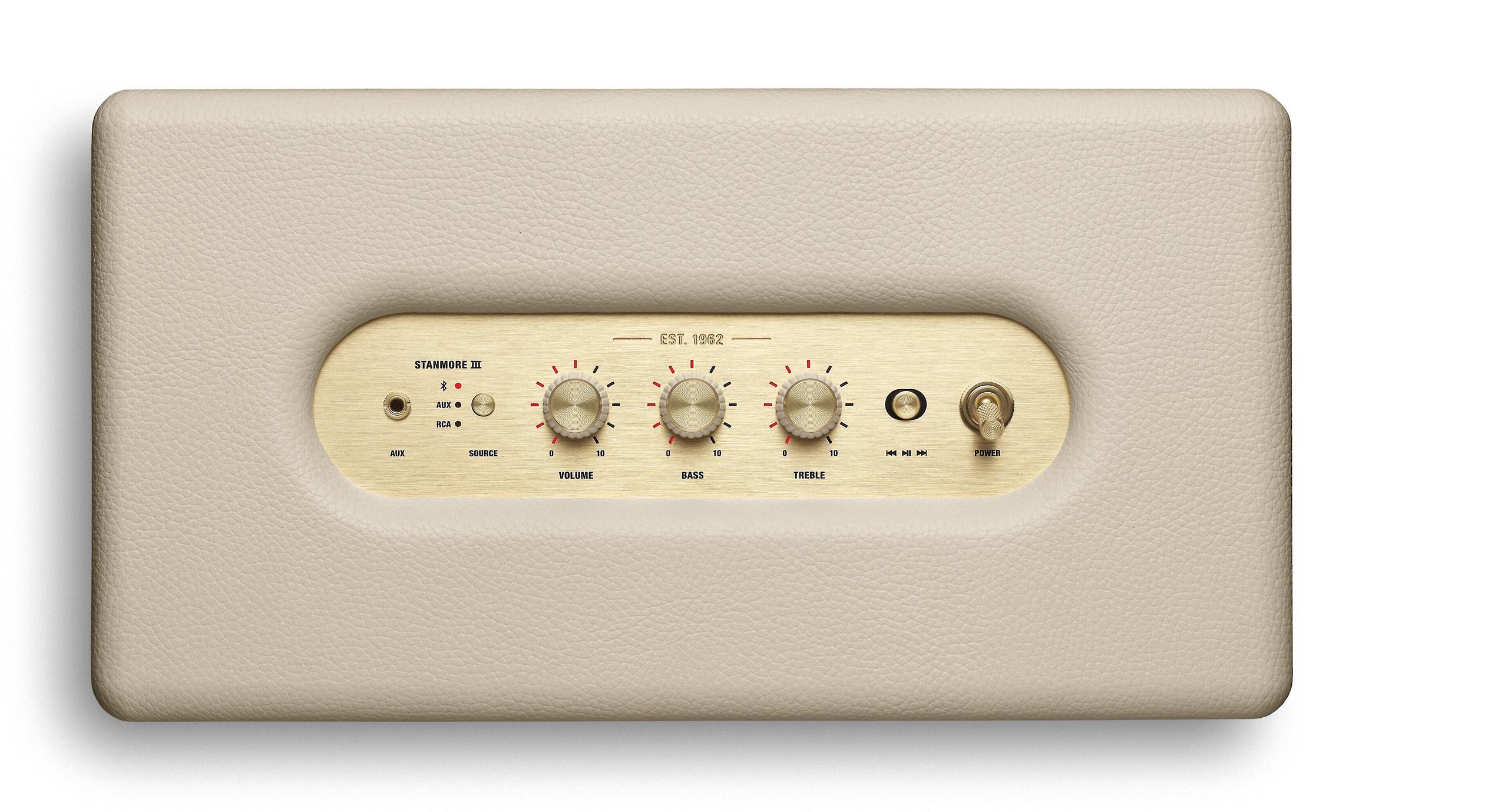
If you're considering either speaker for TV or movie watching, the Stanmore III has clear advantages. Its RCA inputs allow direct connection to TVs or other audio sources, and the powerful bass adds impact to movie soundtracks. The speaker's front-firing design also helps with dialogue clarity.
The Revolve II wasn't really designed for home theater use. While you could connect it via its 3.5mm aux input, the lack of dedicated RCA inputs and its omnidirectional design make it less ideal for this purpose.
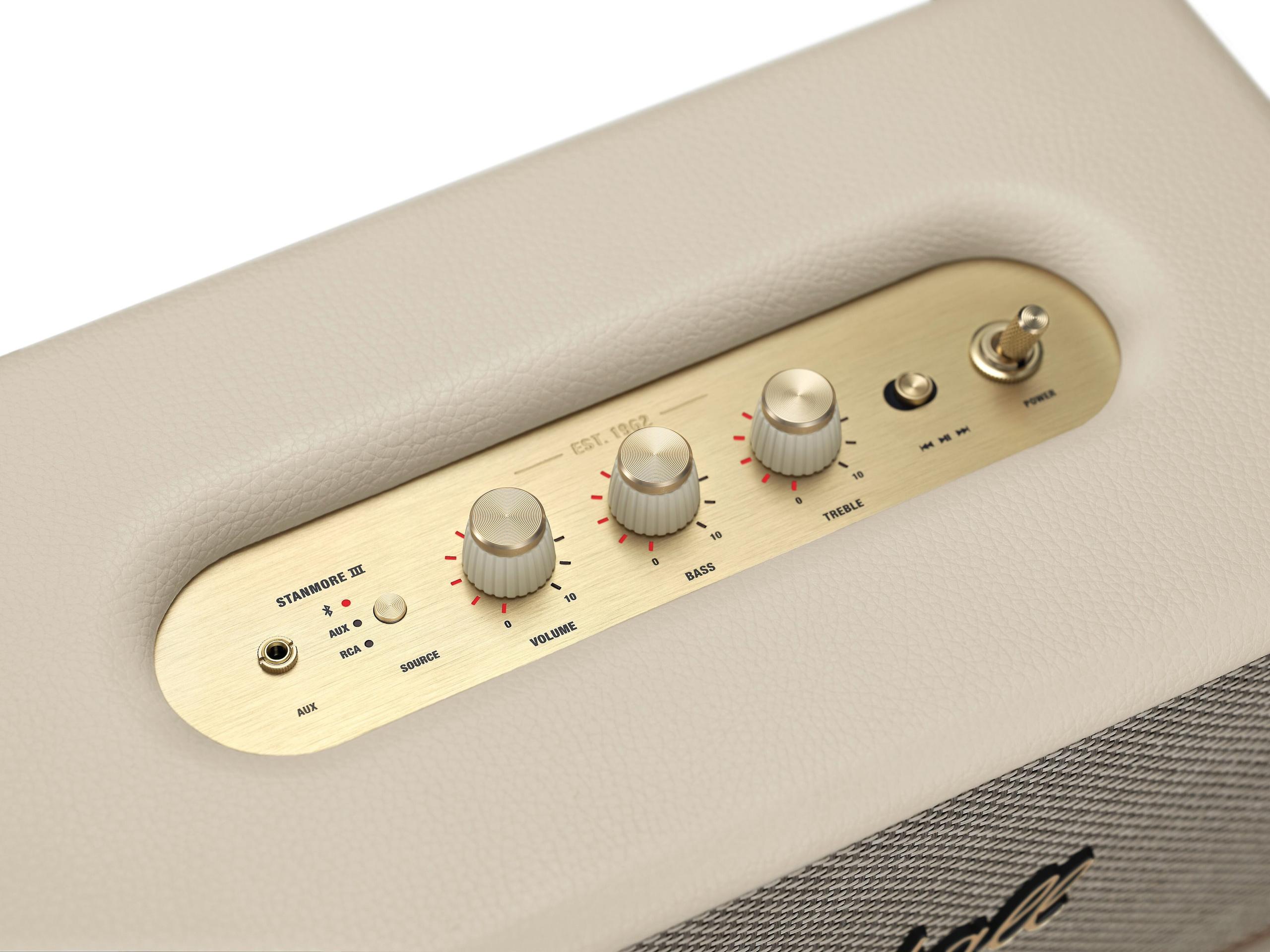
The Stanmore III's Bluetooth 5.2 support provides better range and stability compared to the Revolve II's older Bluetooth 4.1. This newer standard also helps with audio quality and battery life for compatible devices. Both speakers include 3.5mm aux inputs, but the Stanmore III adds RCA inputs for more flexibility with home audio equipment.
Both speakers offer companion apps, but the Stanmore III's app provides more extensive control over sound settings. The Revolve II focuses more on basic functions and speaker pairing features. Neither speaker includes built-in voice assistants, though both can access your phone's assistant through button controls.
The Stanmore III features premium materials including a wooden frame and metal accents. Its vintage-inspired design looks particularly striking in home settings. While it's well-built, it's not designed for outdoor use.
The Revolve II is built for mobility with its IP55 water and dust resistance rating (meaning it can handle rain and dust exposure). Its aluminum body feels solid while remaining lightweight enough for easy transport.
At $379, the Stanmore III represents a significant investment. However, its superior sound quality and power make it competitive with other high-end home speakers. For those prioritizing audio performance and planning to use it primarily in one location, it offers good value despite the higher price.
The Revolve II at $219 hits a sweet spot for portable speakers. Its combination of durability, battery life, and sound quality justifies the price for those needing a versatile, mobile solution.
Both speakers support firmware updates through their companion apps, but the Stanmore III's newer Bluetooth standard gives it an edge for future compatibility. Its higher power output also means it's less likely to feel underpowered as your needs grow.
These speakers excel in different scenarios, and choosing between them largely depends on your specific needs. The Stanmore III delivers superior audio performance and is ideal for dedicated home use, while the Revolve II offers exceptional portability and versatility. Consider your primary use case, budget, and whether you value power over portability when making your decision.
Remember that the best speaker is the one that fits your lifestyle and listening habits. If you're still unsure, think about where and how you'll use the speaker most often - that should guide you to the right choice.
| Marshall Stanmore III | Bose SoundLink Revolve II |
|---|---|
| Power Output - Determines maximum volume and sound clarity | |
| 80W total (50W woofer + 2x15W tweeters) | Not specified, significantly lower power |
| Sound Projection - Affects how sound fills the room | |
| Front-firing directional sound, ideal for home theater | 360-degree omnidirectional sound |
| Bass Response - Important for music and movie impact | |
| Down to 45Hz, strong bass presence | Limited bass extension, focused on mid-range |
| Bluetooth Version - Affects connection quality and range | |
| Bluetooth 5.2 with multi-host support | Bluetooth 4.1 |
| Physical Connections - Provides flexibility for different sources | |
| 3.5mm aux + RCA inputs | 3.5mm aux only |
| Portability - Determines where you can use it | |
| Home speaker (13.8" x 8.1" x 8.4"), 9.37 lbs | Portable (6" x 3.2" x 3.2"), 1.46 lbs |
| Battery Life - Important for mobile use | |
| AC power only | 13 hours rechargeable |
| Water Resistance - Affects outdoor usability | |
| None | IP55 water and dust resistant |
| Sound Customization - Allows tailoring to preferences | |
| Physical EQ knobs + app with presets | Basic app controls only |
| Price - Value consideration | |
| $379 (premium home speaker pricing) | $219 (competitive portable speaker pricing) |
| Best Use Case - Key deciding factor | |
| Primary home speaker system, home theater | Portable use, outdoor events, travel |
The Marshall Stanmore III is significantly better for home use with its 80W power output and dedicated home speaker design. The Bose SoundLink Revolve II is primarily designed for portable use and can't match the Stanmore III's room-filling sound.
The Marshall Stanmore III offers superior sound quality with its two-way speaker design (woofer + tweeters) and higher power output. It delivers deeper bass and clearer highs compared to the Revolve II.
The Bose SoundLink Revolve II is designed for outdoor use with IP55 water resistance and battery power. The Stanmore III is not weather-resistant and requires AC power, making it unsuitable for outdoor use.
For home parties, the Stanmore III provides more power and better bass. For outdoor gatherings, the Revolve II is more practical with its portability and 360-degree sound.
The Bose SoundLink Revolve II offers 13 hours of battery life. The Stanmore III doesn't have a battery and requires constant AC power.
The Marshall Stanmore III is better for TV use with its RCA inputs and front-firing design. The Revolve II isn't designed for home theater use.
The Marshall Stanmore III costs $379, while the Bose SoundLink Revolve II is priced at $219, a $160 difference.
The Stanmore III features newer Bluetooth 5.2 with better range and stability, while the Revolve II uses older Bluetooth 4.1.
Both speakers easily connect to phones via Bluetooth. The Stanmore III can connect to two devices simultaneously, while the Revolve II offers simpler single-device connection.
The Bose SoundLink Revolve II is designed for portability at 1.46 lbs with a compact size. The Stanmore III weighs 9.37 lbs and isn't meant to be moved frequently.
The Marshall Stanmore III offers physical EQ knobs and app-based sound customization. The Revolve II has basic app controls but fewer adjustment options.
Choose the Marshall Stanmore III for dedicated home use and superior sound quality. Pick the Bose SoundLink Revolve II if you need a portable speaker for various locations and outdoor use.
We've done our best to create useful and informative comparisons to help you decide what product to buy. Our research uses advanced automated methods to create this comparison and perfection is not possible - please contact us for corrections or questions. These are the sites we've researched in the creation of this article: techgadgetscanada.com - camelcamelcamel.com - crutchfield.com - bestbuy.com - dxomark.com - crutchfield.com - crutchfield.com - marshall.com - marshall-production-1.mobify-storefront.com - exhibit.tech - ooberpad.com - av-connection.com - dxomark.com - bose.com - youtube.com - rtings.com - consumerreports.org - soundguys.com - boselatam.com - boselatam.com - bose.com - adorama.com - leedsworldrefill.com - bose.com - bestbuy.com

Privacy Policy
Terms and Conditions - Affiliate Policy
Home Security
© Copyright 2008-2026.
11816 Inwood Rd #1211, Dallas, TX 75244