

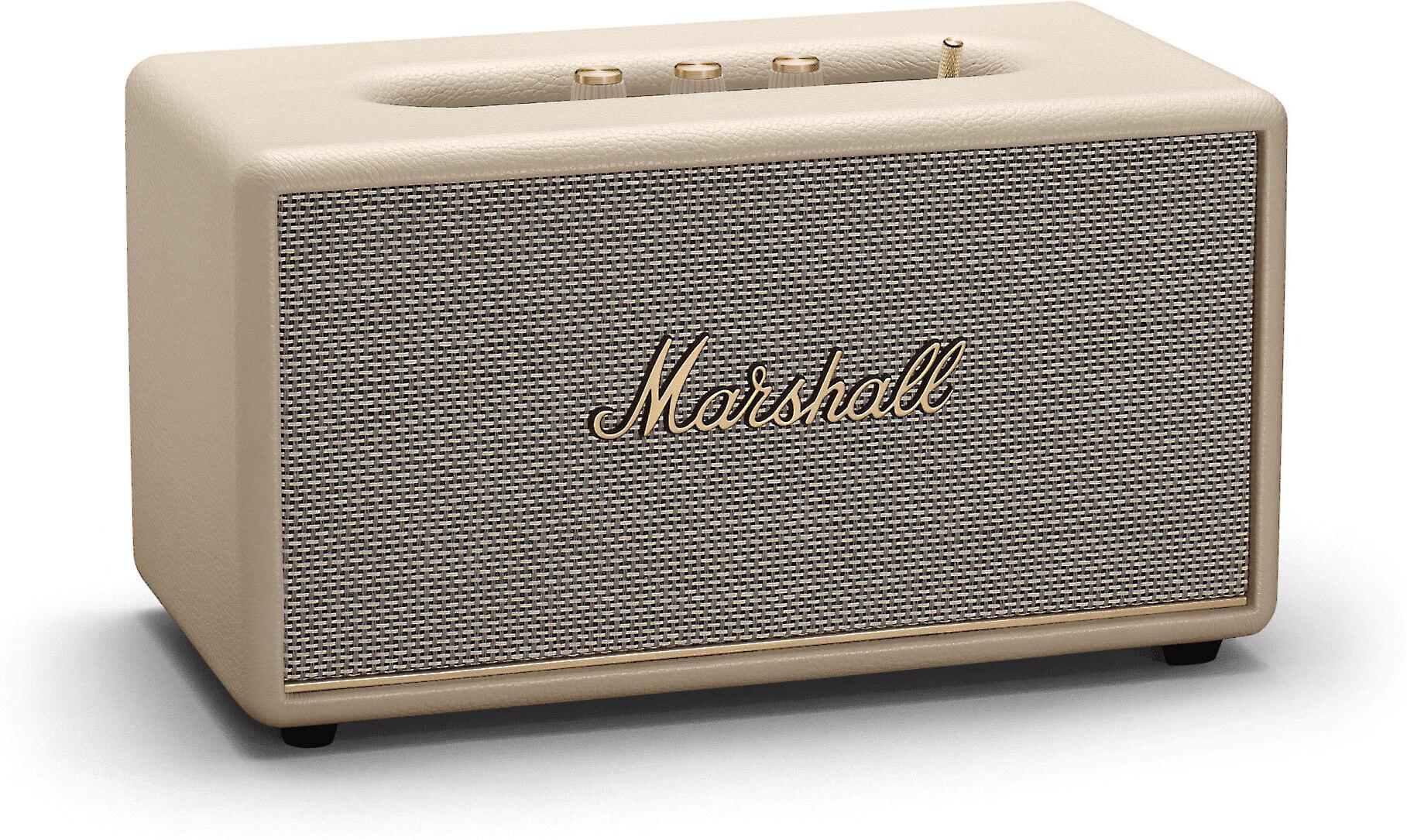
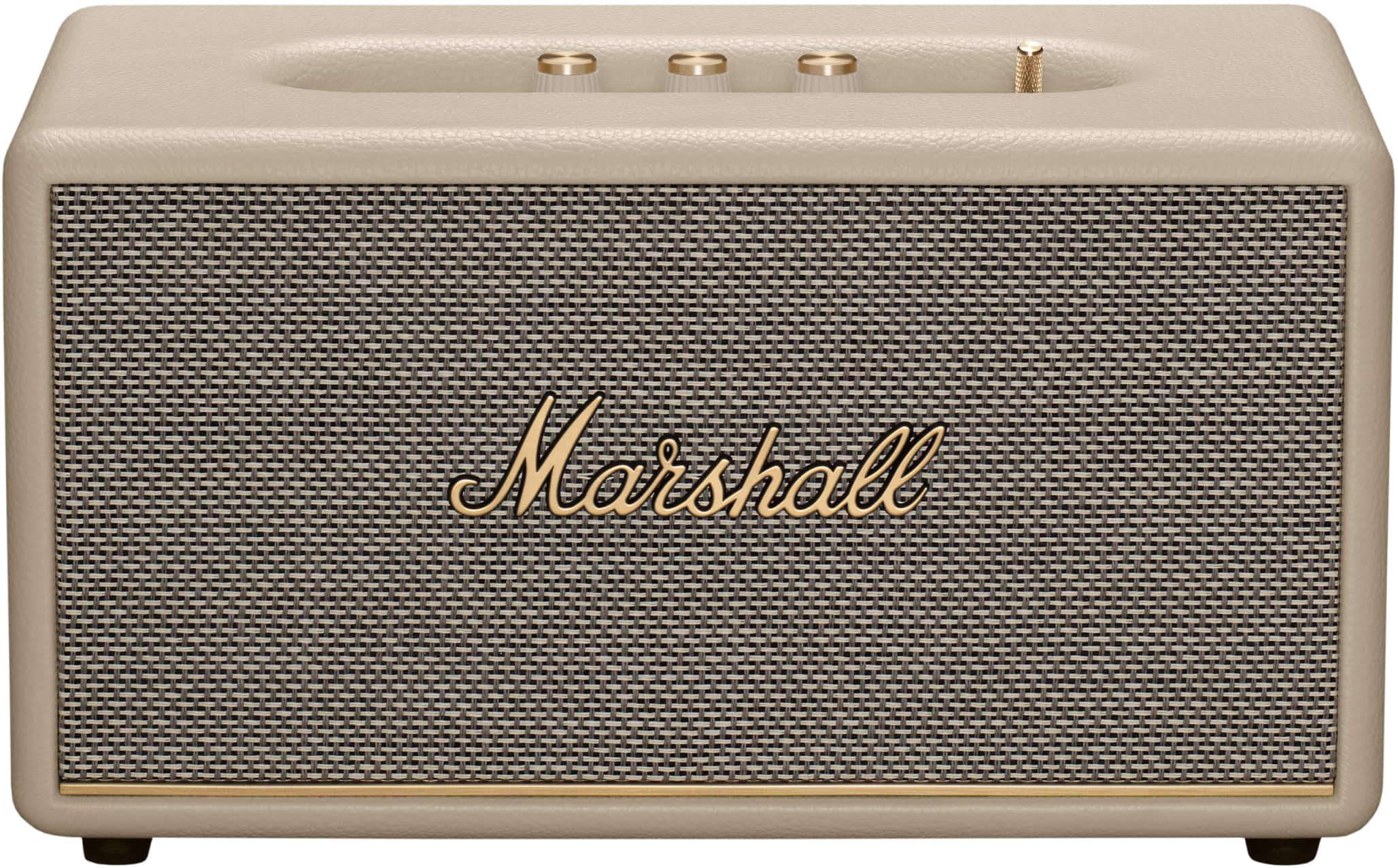
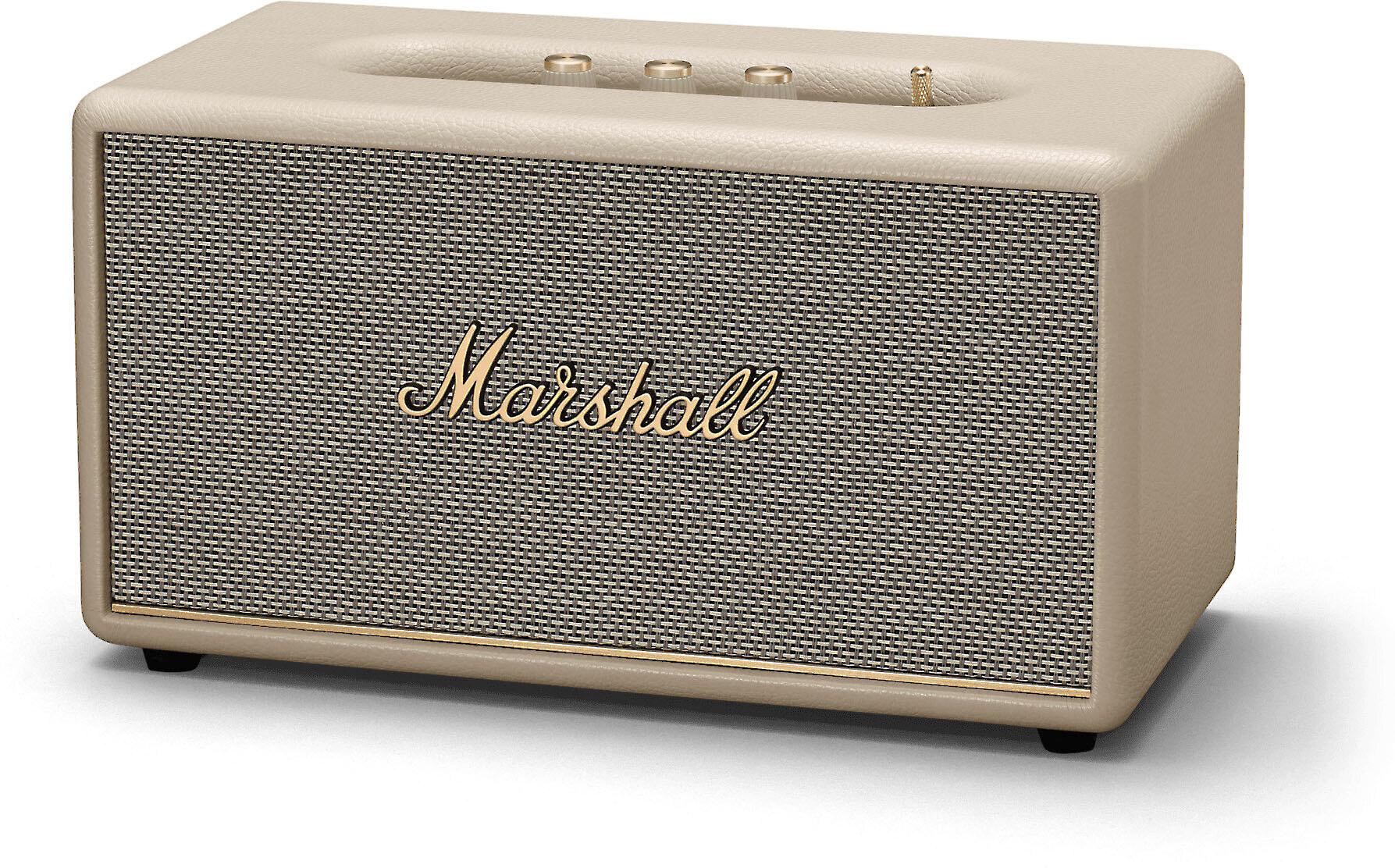
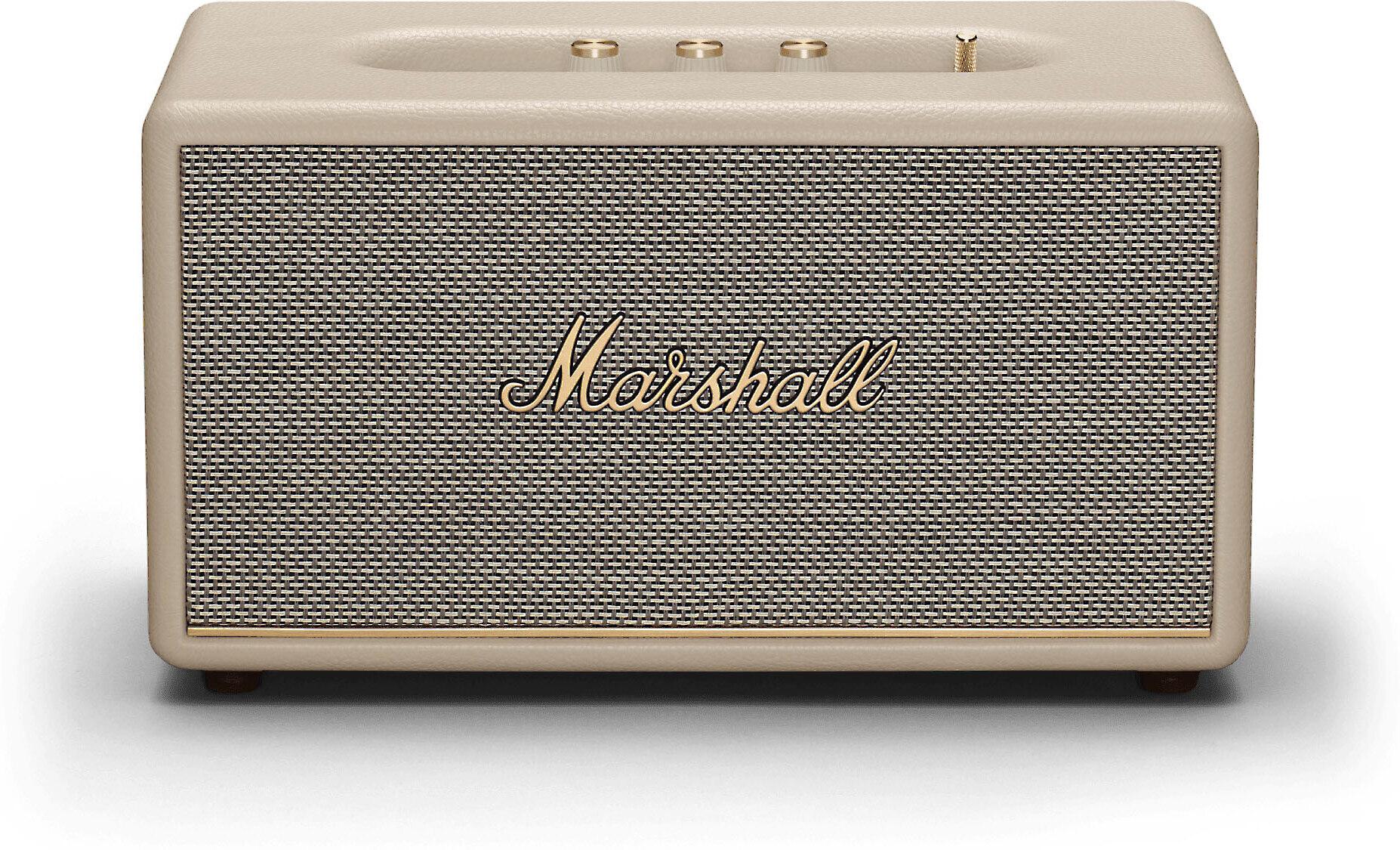
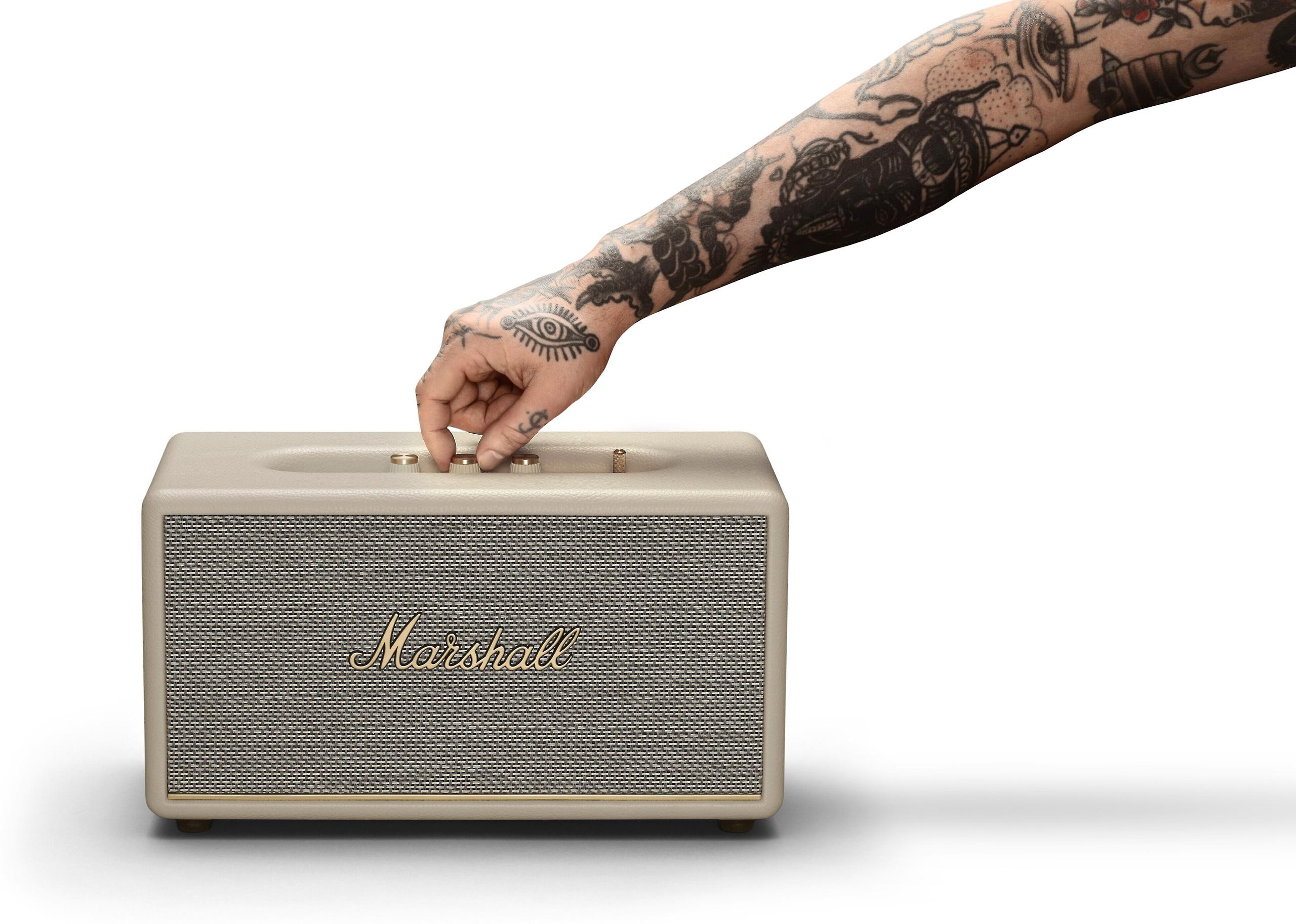
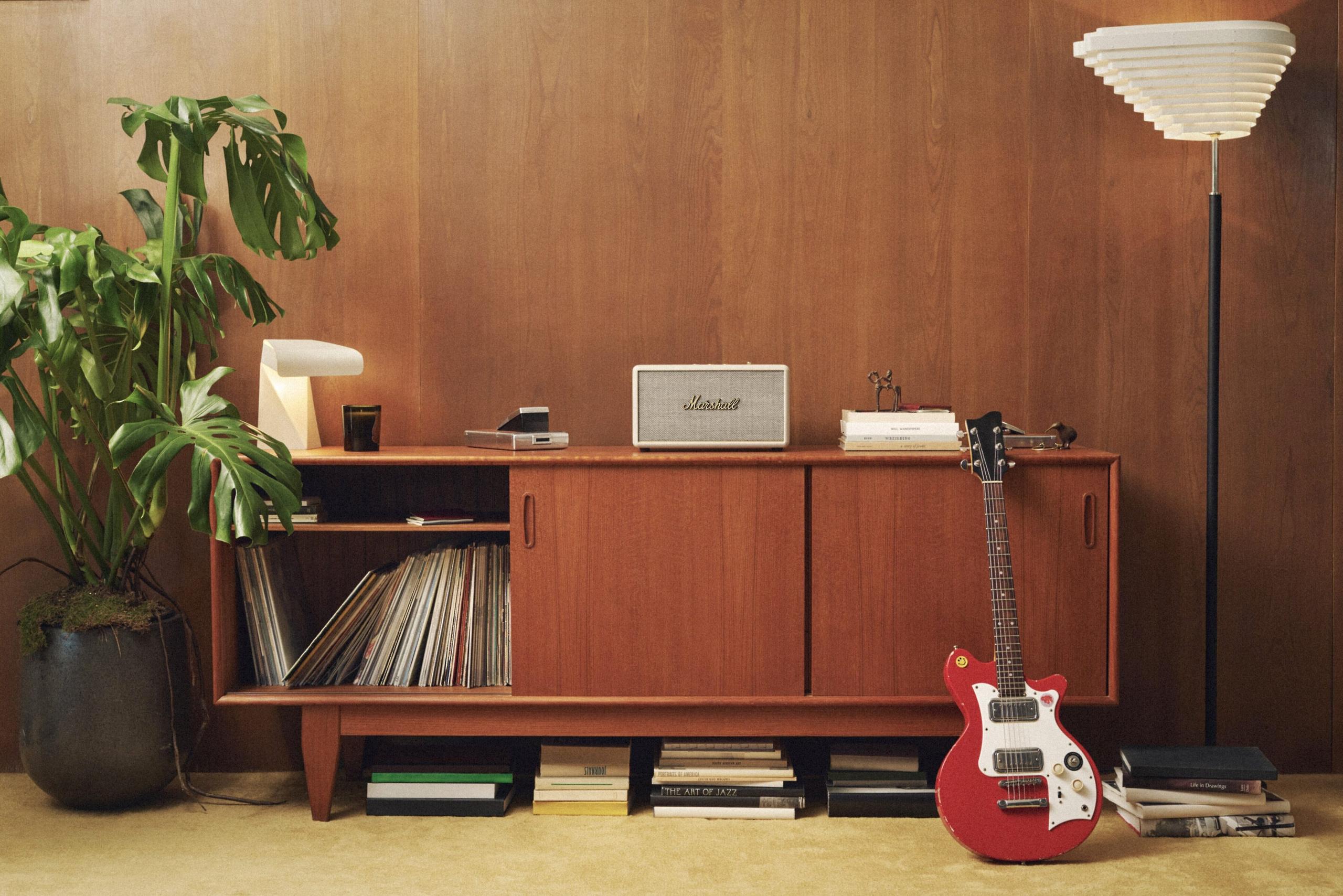
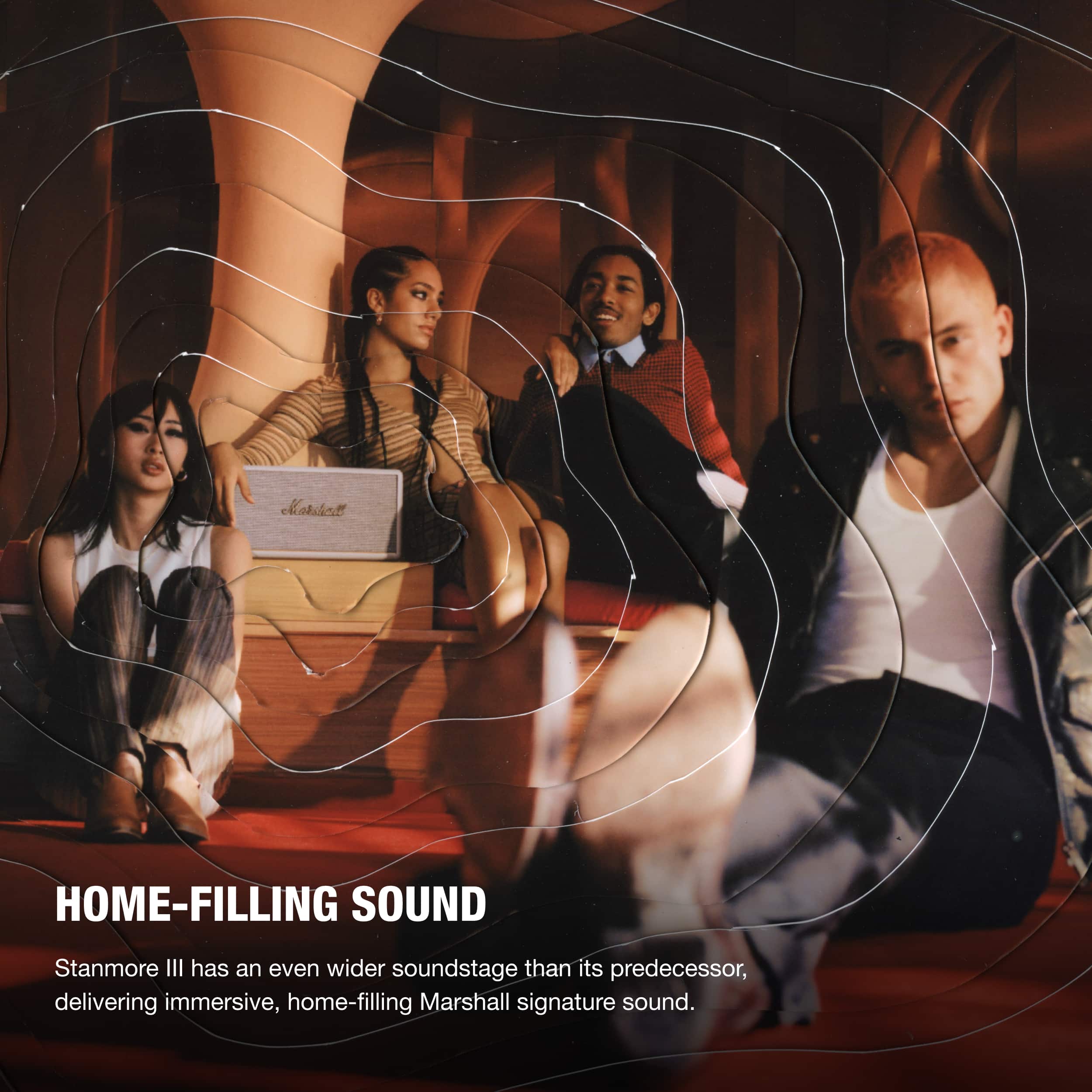

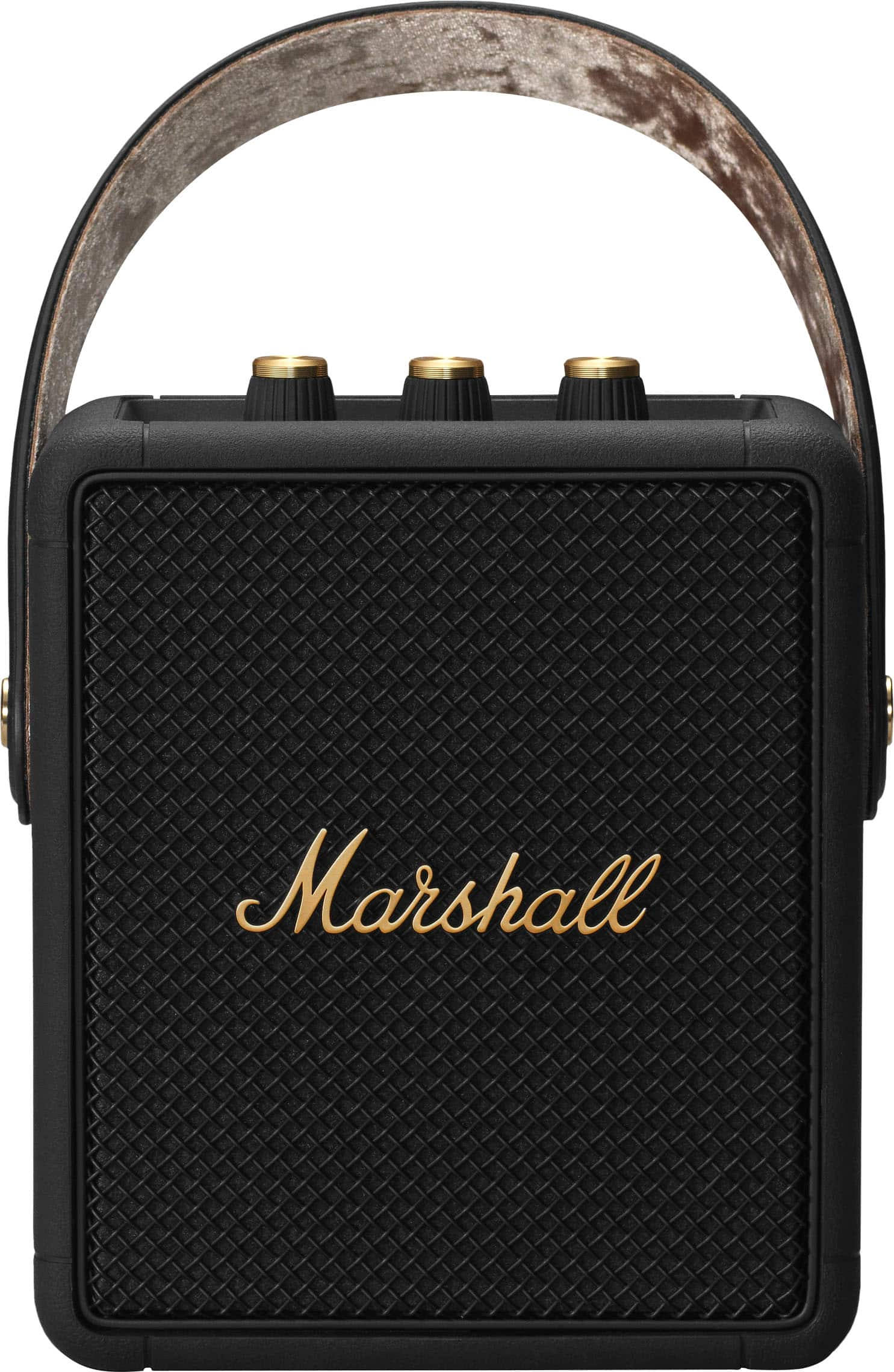
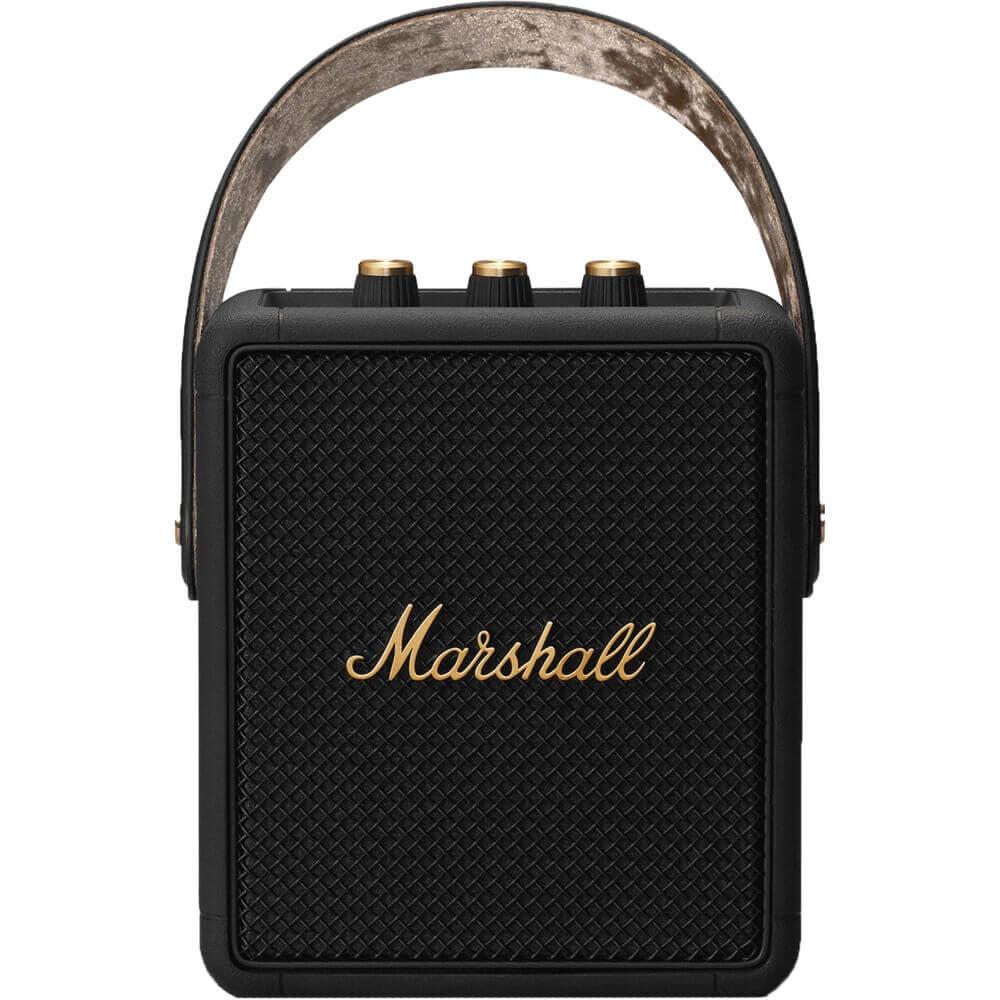
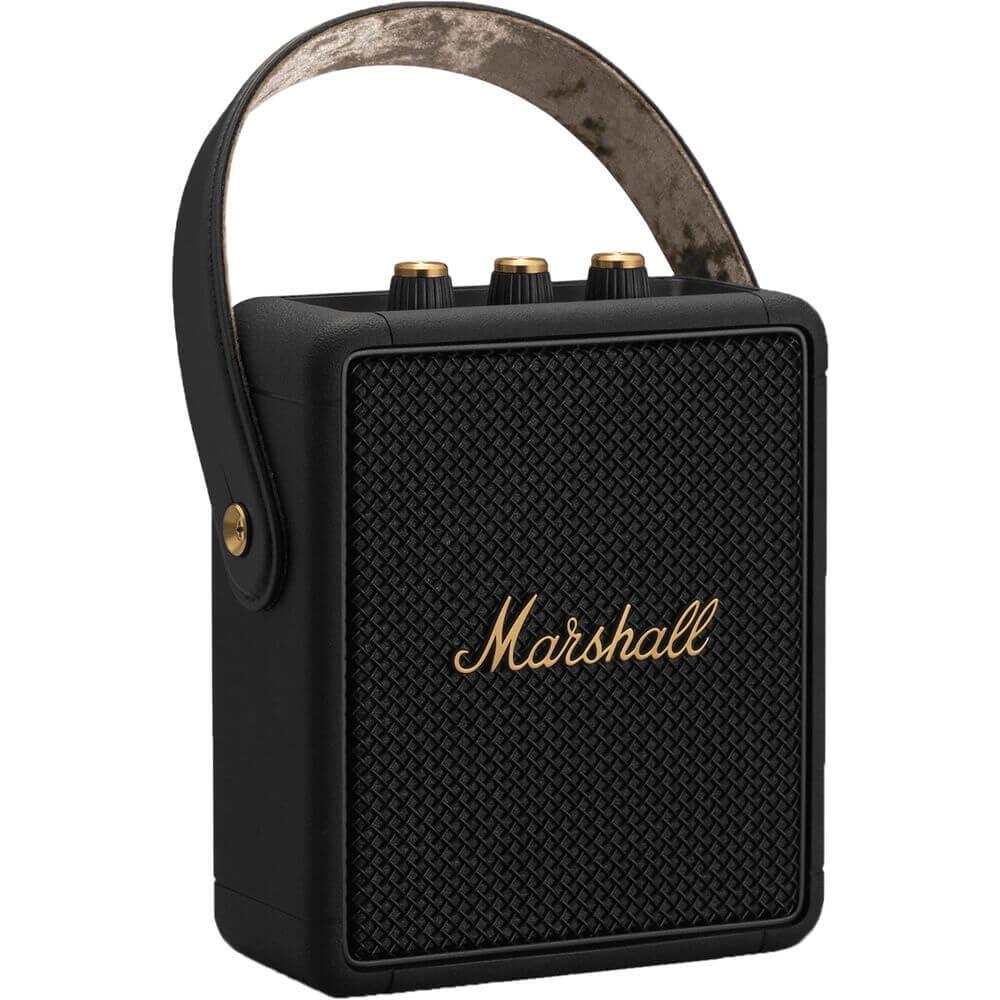

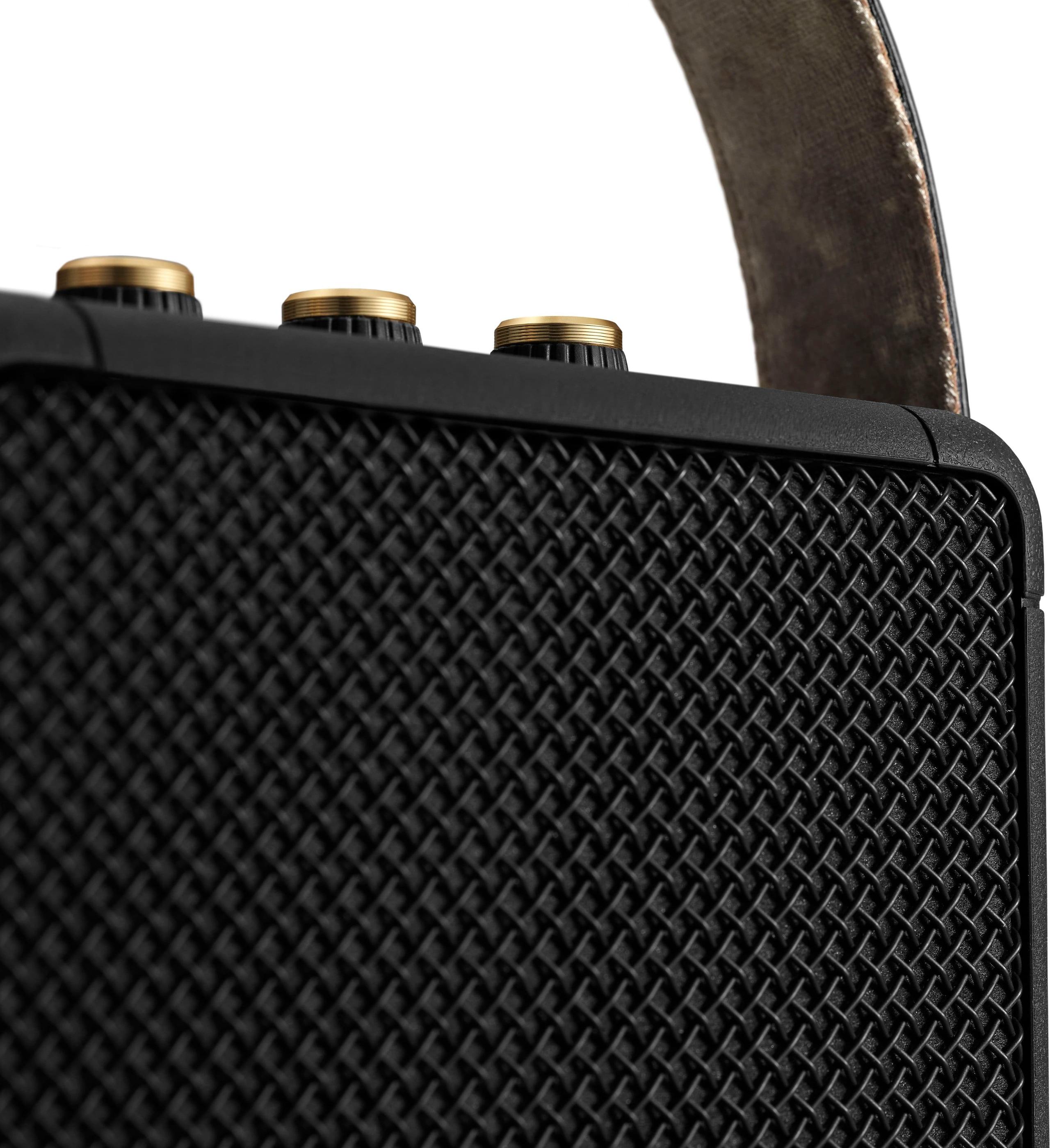
When it comes to premium Bluetooth speakers, Marshall is a name that carries serious weight. Today, we're comparing their Stanmore III home speaker ($379) and the portable Stockwell II ($149) to help you understand which might be right for your needs.
Marshall released the Stockwell II back in late 2018, while the Stanmore III is their latest home speaker, launching in September 2022. Though they share the iconic Marshall amp styling, these speakers serve distinctly different purposes. The Stanmore III represents Marshall's vision for modern home audio, incorporating their latest audio tech, while the Stockwell II focuses on portability without sacrificing too much sound quality.
The Stanmore III packs some serious audio hardware into its frame. With 80 watts of total power split between a 5-inch woofer (50W) and two 0.75-inch tweeters (15W each), it's built to fill rooms with sound. The speaker uses something called "Dynamic Loudness" - think of it as a smart volume control that automatically adjusts different frequencies as you change volume levels, ensuring music always sounds balanced whether you're playing quietly or cranking it up.
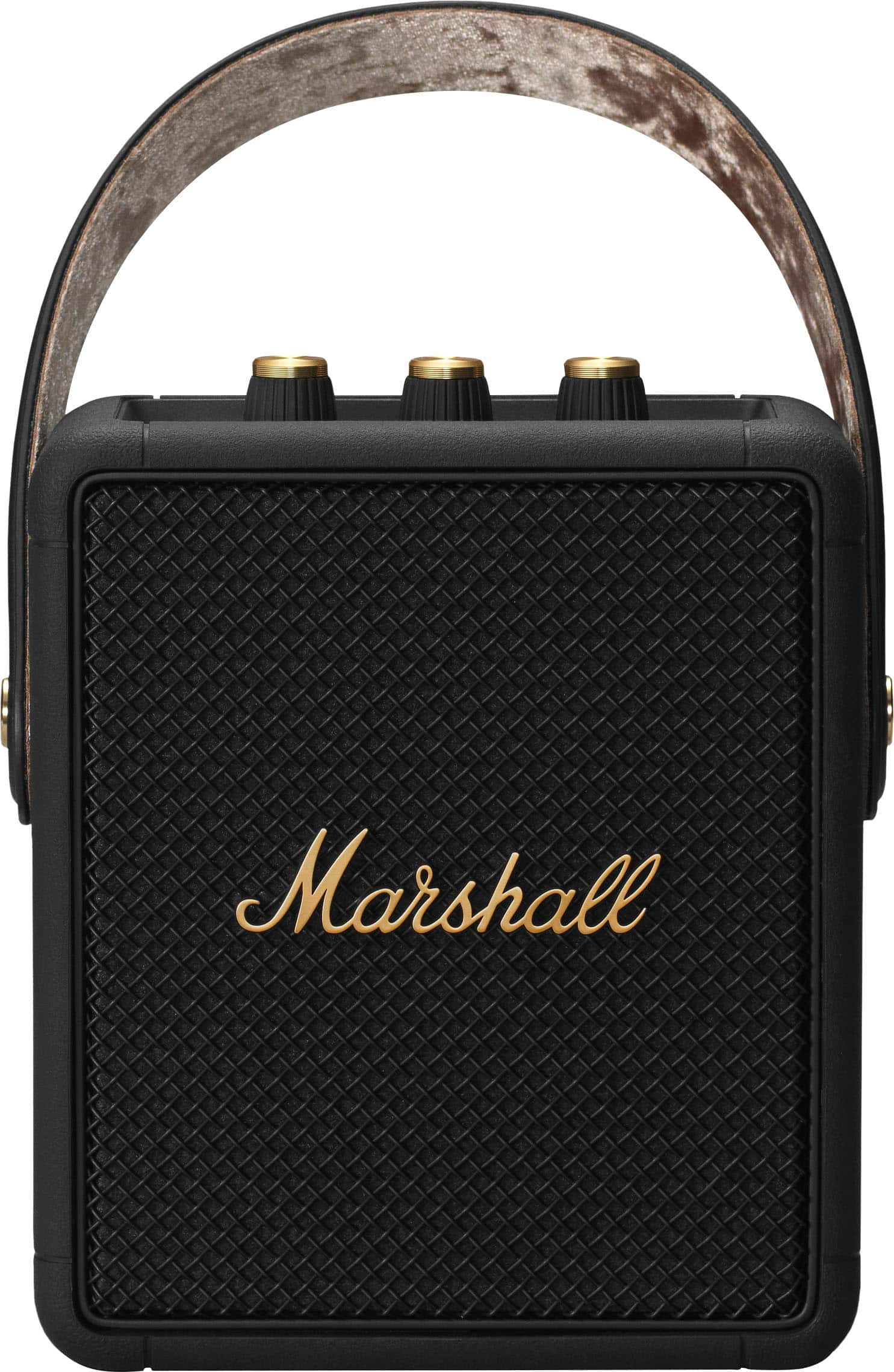
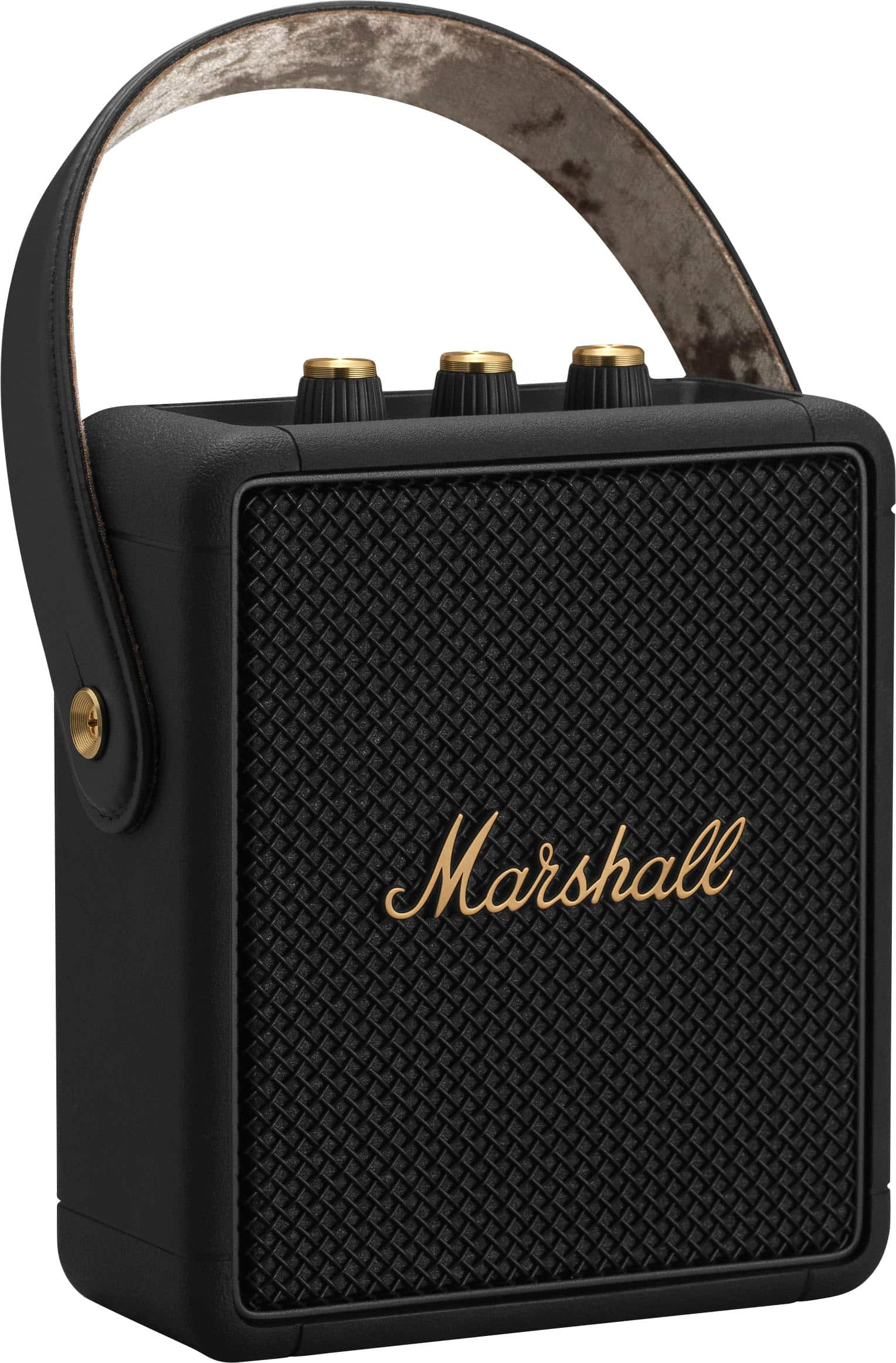
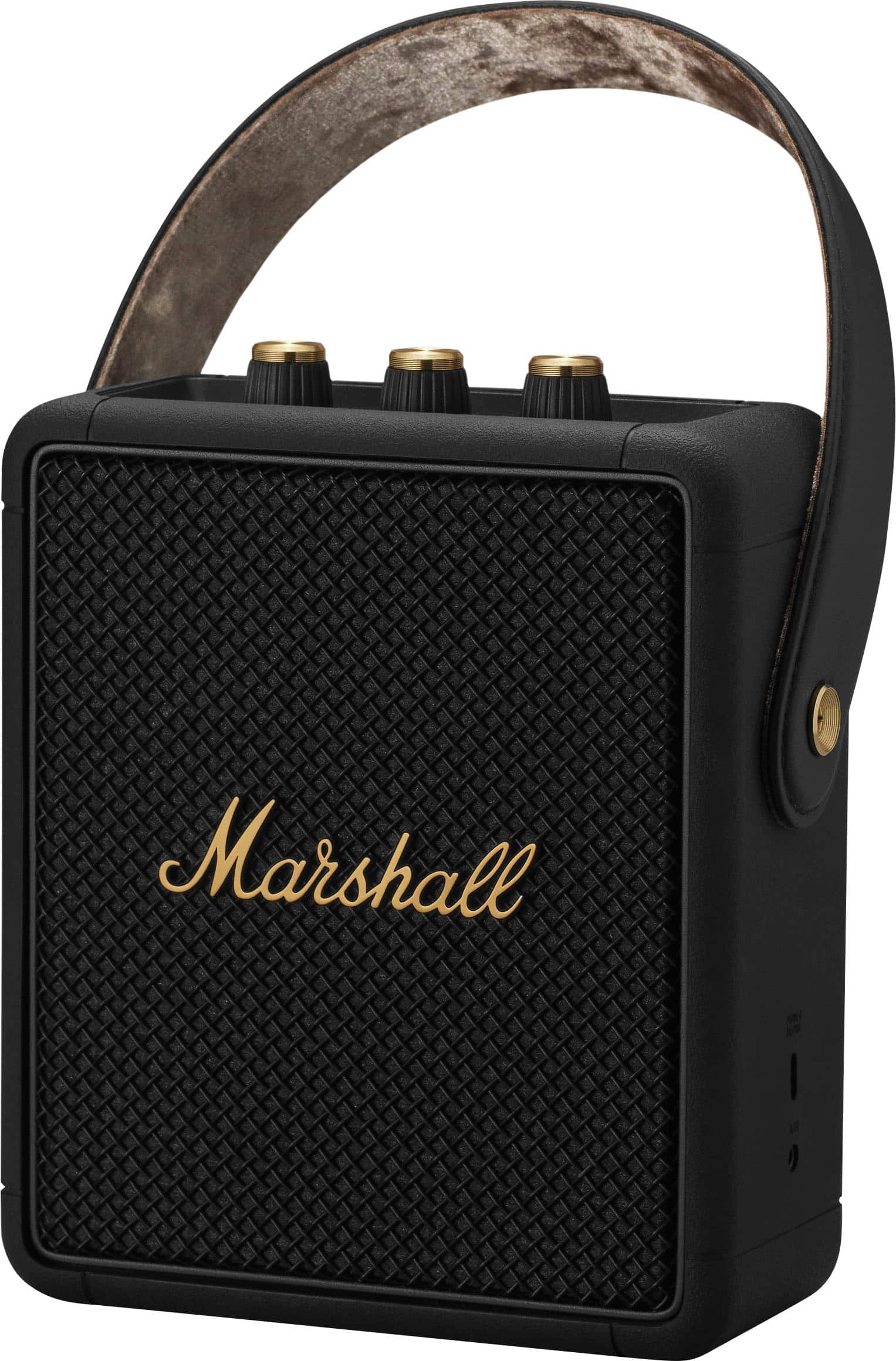
In contrast, the Stockwell II uses a clever arrangement of two 2.25-inch full-range drivers and passive radiators (which help produce deeper bass without requiring power) to generate its sound. While its 20-watt output might seem modest compared to its bigger sibling, it's quite impressive for a portable speaker this size.
The Stanmore III's larger cabinet and woofer give it a clear advantage in bass reproduction. It can reach down to 45Hz (deep enough for most music's lowest notes) compared to the Stockwell II's 60Hz limit. In practical terms, this means the Stanmore III delivers that satisfying thump in bass-heavy music and movie soundtracks that the Stockwell II simply can't match.
However, both speakers handle the midrange (where most vocals and instruments live) quite well. The Stanmore III offers more separation between instruments and a wider "soundstage" - the perceived width and depth of the music - thanks to its angled tweeters and new waveguide design that helps spread high frequencies more evenly throughout the room.
The Stanmore III really shines when you need to fill a large space with sound. Its 80-watt amplification system provides plenty of headroom, meaning it can play loud without distorting. I've found it remains clear and composed even during dynamic peaks in music or movie explosions.
The Stockwell II, while not as powerful, is surprisingly capable for its size. It can easily handle background music for a small gathering or provide enough volume for outdoor listening. However, you'll notice some compression (where the sound starts to flatten out) if you push it to maximum volume.
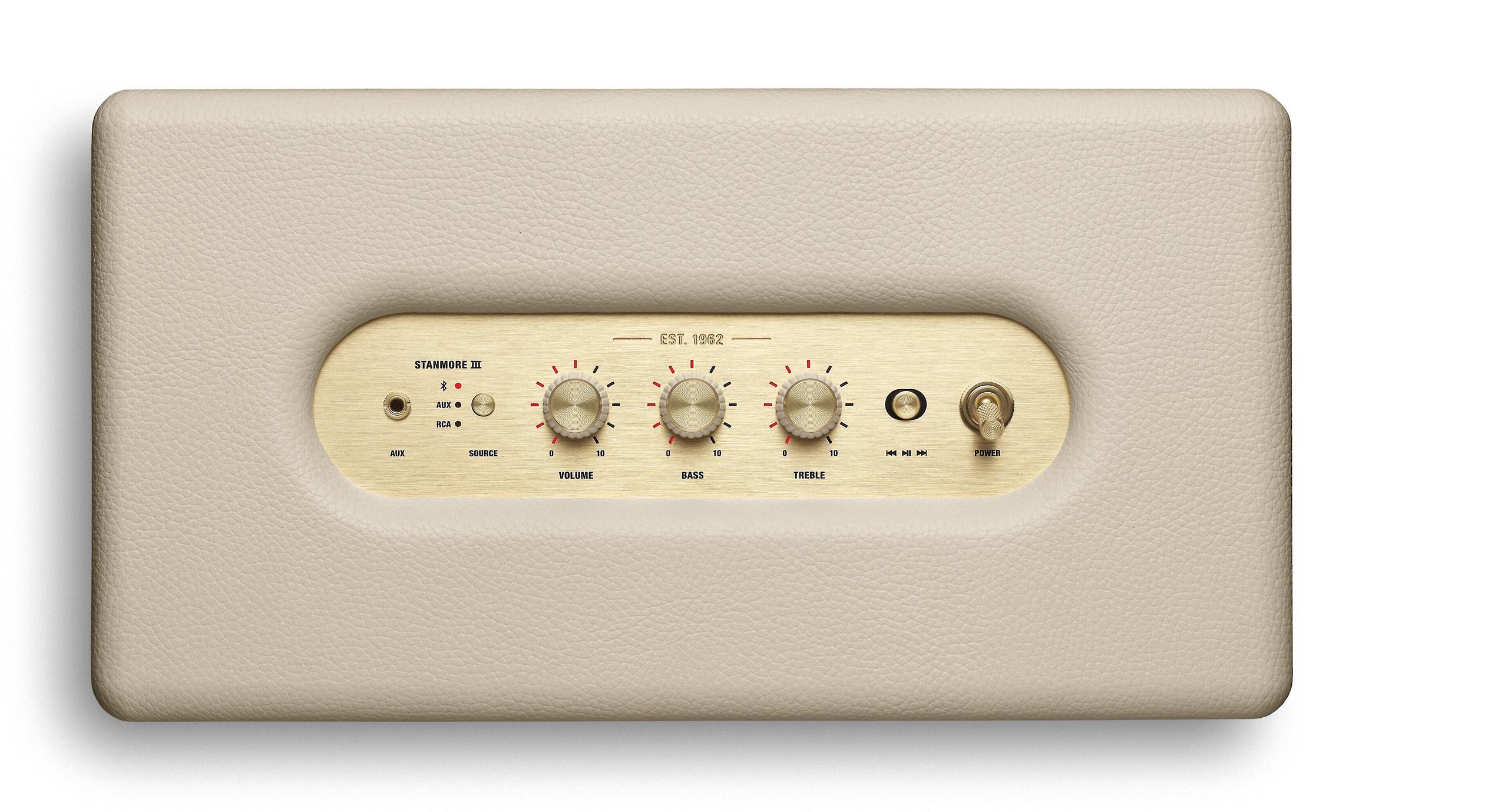
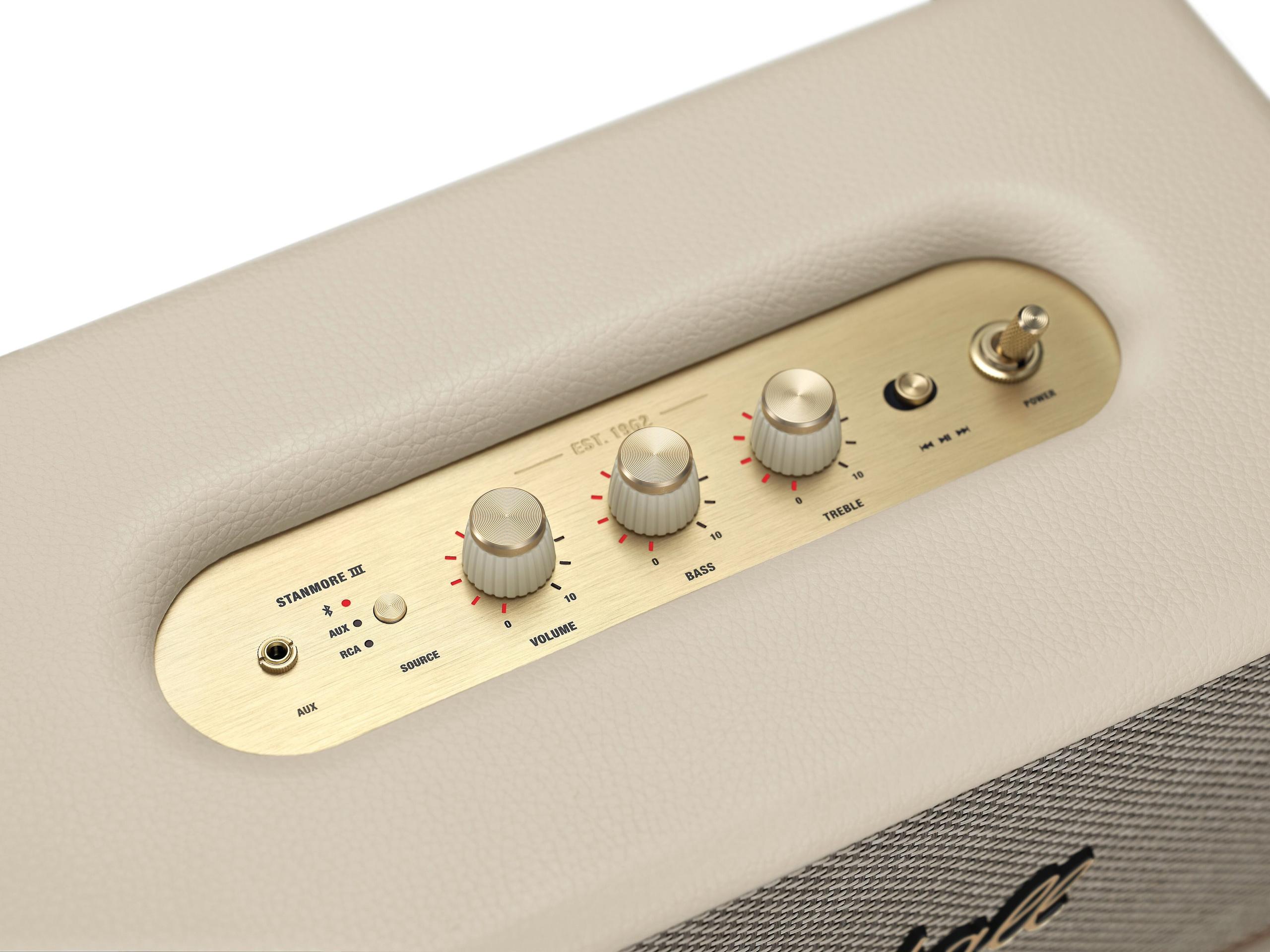
The newer Stanmore III brings some notable tech improvements over previous models. Its Bluetooth 5.2 implementation allows for better range and stability, plus it can remember multiple paired devices. The companion app offers EQ presets and the ability to adjust placement compensation (which helps correct for nearby walls or surfaces that might affect the sound).
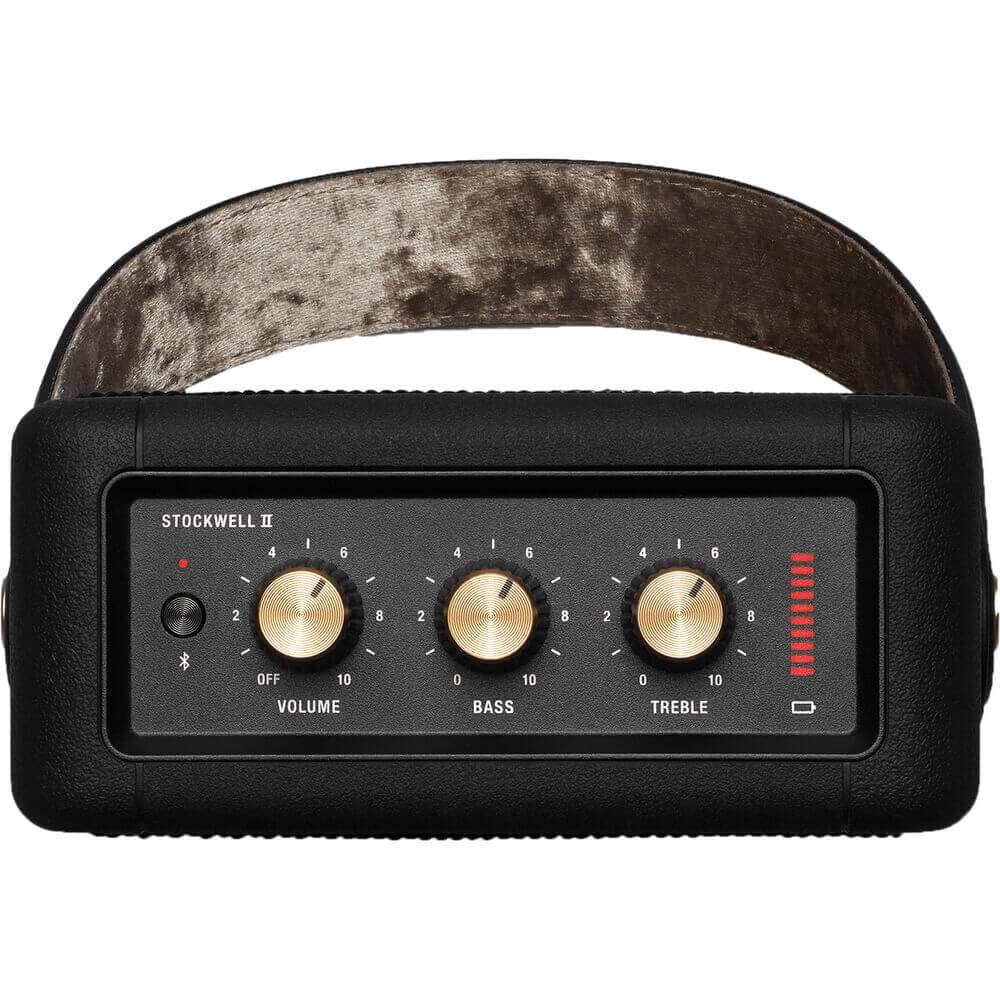
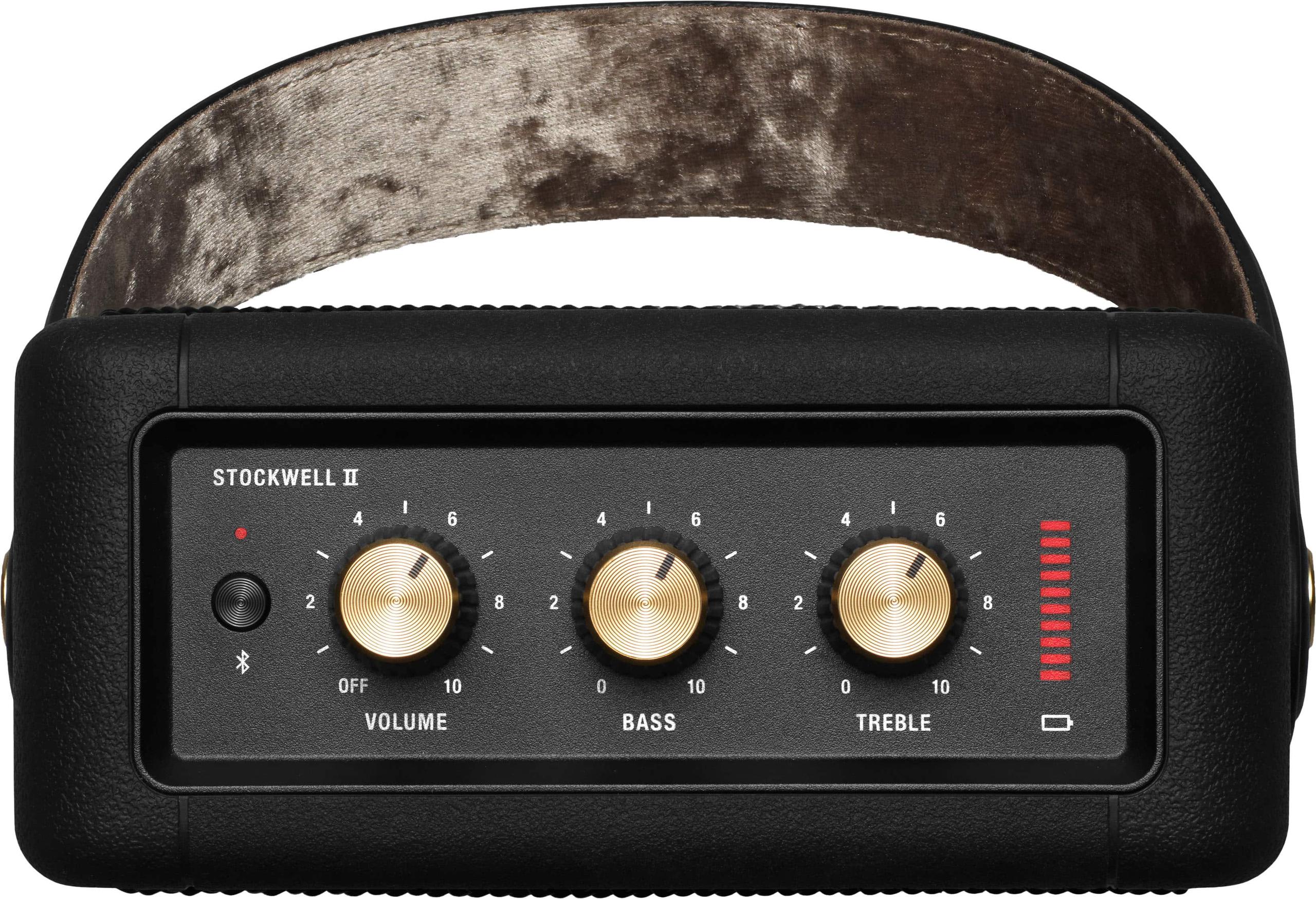
The Stockwell II uses slightly older Bluetooth 5.0 technology but still maintains solid connection quality. While it lacks app control, the physical knobs for bass and treble adjustment work well and feel satisfyingly tactile - very much in keeping with Marshall's amp heritage.
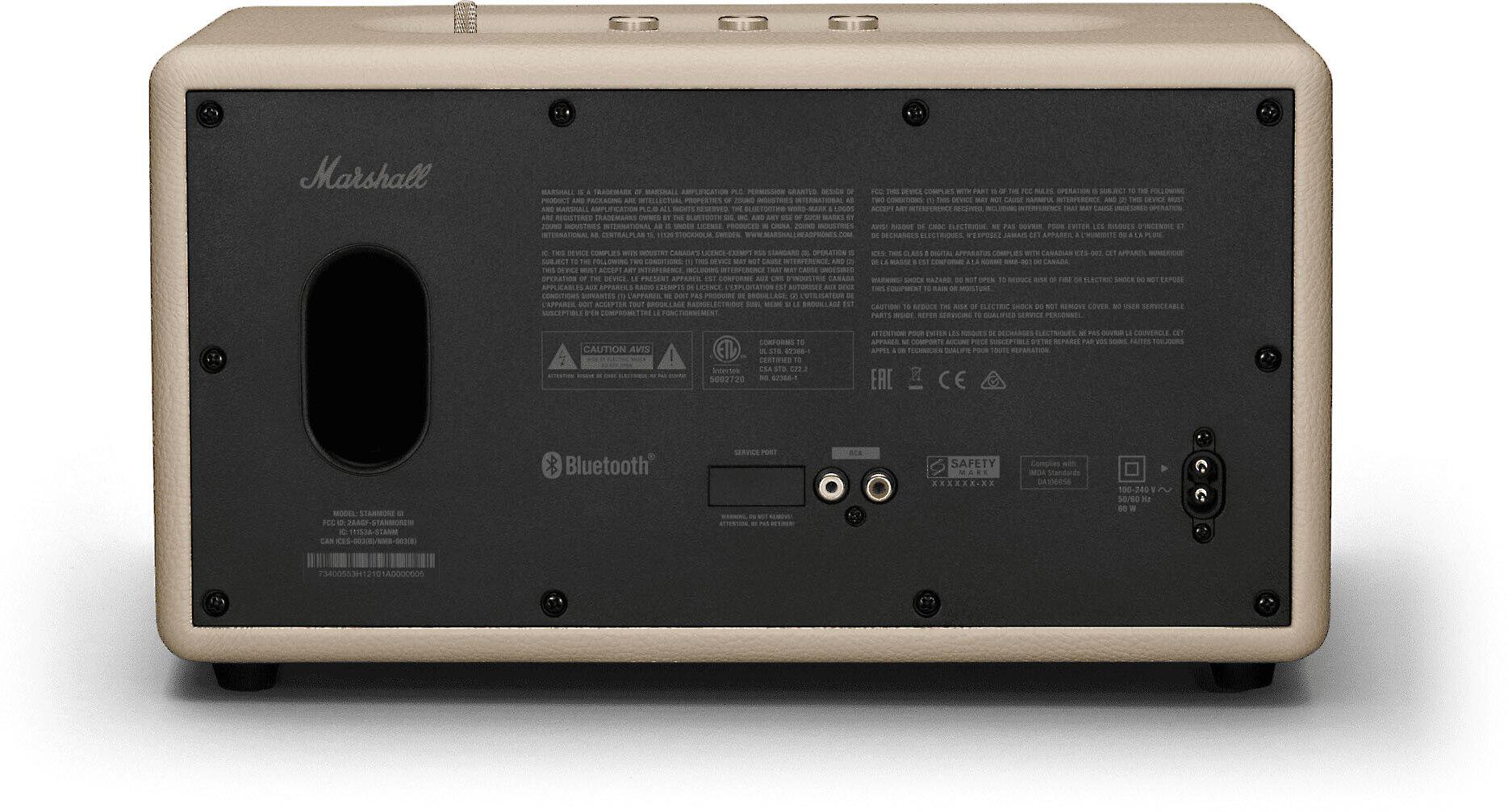
If you're considering either speaker for home theater use, the Stanmore III is clearly the better choice. Its RCA inputs allow for direct connection to TVs or other audio sources, and the higher power output helps deliver impact during movies. The wider soundstage also creates a more immersive experience, though it's worth noting that neither speaker can replace a proper surround sound system.
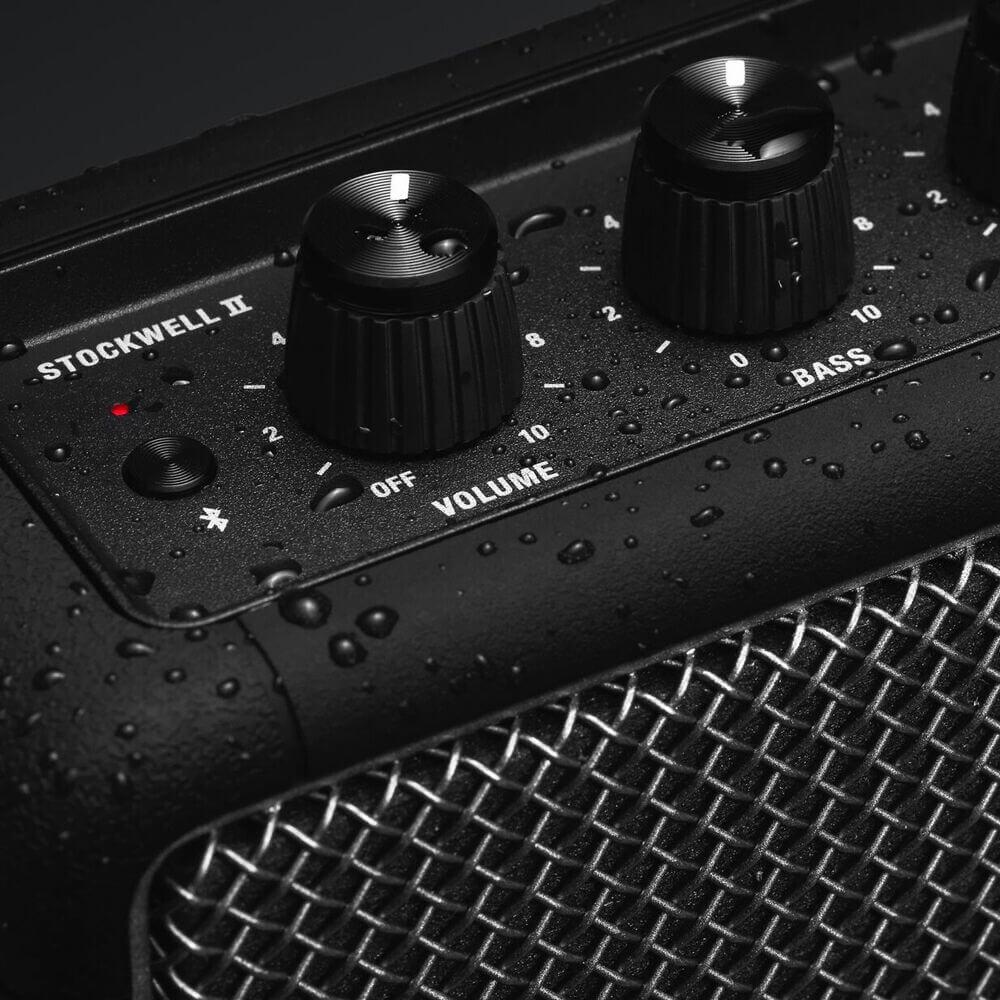
The Stockwell II's 20+ hour battery life and IPX4 water resistance make it incredibly versatile. It's equally at home providing tunes for a beach day, soundtracking a backyard BBQ, or serving as a desktop speaker in your home office. The USB-C charging and power bank functionality are thoughtful additions that add real utility.
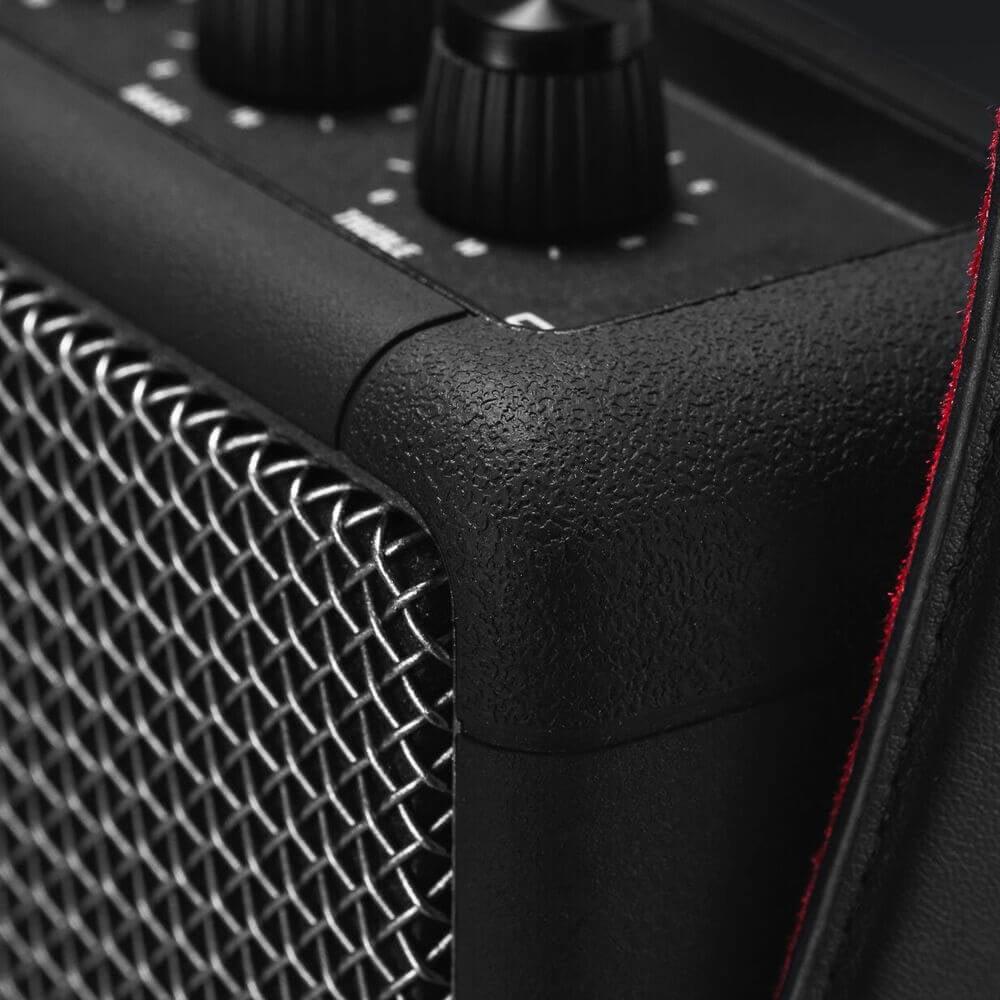
At $379, the Stanmore III represents a significant investment, but it's competitive with other premium home speakers offering similar features and power. The build quality, sound performance, and latest tech features help justify the price for those seeking a primary audio system.
The Stockwell II at $149 (down from its original $249) offers excellent value for those needing a portable solution. Its combination of sound quality, battery life, and durability make it a compelling option in the premium portable speaker market.
Choose the Stanmore III if:
Go for the Stockwell II if:
Remember, these aren't competing products so much as complementary ones designed for different uses. Some audio enthusiasts might even find value in owning both - using the Stanmore III as their main home speaker while having the Stockwell II for portable needs.
The Marshall heritage shines through in both speakers, but they serve distinctly different purposes. Your choice should ultimately come down to how and where you'll primarily use the speaker, rather than trying to compare them directly on specs alone.
| Marshall Stanmore III | Marshall Stockwell II |
|---|---|
| Price - Investment vs Portability | |
| $379 - Premium home audio investment | $149 - More affordable portable option |
| Power Output - Impacts volume capability and sound quality | |
| 80W total (50W woofer, 15W x 2 tweeters) - Room-filling sound | 20W total - Good for personal listening |
| Speaker Configuration - Determines sound staging and clarity | |
| 5" woofer + two 0.75" tweeters - Full range sound | Two 2.25" full-range drivers + passive radiators |
| Frequency Response - Bass depth and overall range | |
| 45-20,000 Hz - Deep bass capability | 60-20,000 Hz - Limited low end |
| Connectivity - How you can connect devices | |
| Bluetooth 5.2, 3.5mm aux, RCA inputs | Bluetooth 5.0, 3.5mm aux only |
| Smart Features - Added functionality | |
| App control, EQ presets, placement compensation | Basic physical controls only |
| Power Source - Affects where you can use it | |
| AC power only - Stationary use | 20+ hour battery - Portable use |
| Size & Weight - Consider your space and mobility needs | |
| 13.8" x 8.1" x 8.4", 13.5 lbs - Substantial presence | 7" x 6.3" x 2.8", 3 lbs - Highly portable |
| Environmental Protection - Durability for different uses | |
| Indoor use only | IPX4 water resistance - Outdoor capable |
| Additional Features - Extra value considerations | |
| Dynamic loudness, multi-host pairing, OTA updates | Quick charging, power bank function, multi-directional sound |
The Marshall Stanmore III ($379) is better for home audio with superior sound quality and power, while the Stockwell II ($149) is better for portable use with battery power and weather resistance.
The main difference is that the Stanmore III is a powerful home speaker requiring AC power, while the Stockwell II is a compact portable speaker with 20-hour battery life.
The Stanmore III has notably better sound quality with 80W total power, deeper bass, and clearer highs compared to the Stockwell II's 20W system.
The Stockwell II is designed for outdoor use with IPX4 water resistance, while the Stanmore III should stay indoors as it requires AC power and isn't weather-resistant.
The Stanmore III is better for indoor parties with room-filling sound, while the Stockwell II works well for smaller outdoor gatherings.
The Stanmore III costs $379, while the Stockwell II is priced at $149, reflecting their different capabilities and use cases.
The Stanmore III offers RCA inputs for TV connection, while the Stockwell II only has Bluetooth and aux input options.
Only the Stockwell II has a battery, lasting 20+ hours. The Stanmore III requires constant AC power.
The Stanmore III has a companion app for EQ and settings control, while the Stockwell II only offers physical controls.
The Stockwell II is more compact and suitable for small spaces, while the Stanmore III needs more room for optimal sound performance.
Both the Stanmore III and Stockwell II support multi-host functionality, allowing connection to two Bluetooth devices simultaneously.
The Stockwell II offers better value if you need portability, while the Stanmore III justifies its higher price through superior sound quality and features for home use.
We've done our best to create useful and informative comparisons to help you decide what product to buy. Our research uses advanced automated methods to create this comparison and perfection is not possible - please contact us for corrections or questions. These are the sites we've researched in the creation of this article: techgadgetscanada.com - camelcamelcamel.com - crutchfield.com - bestbuy.com - dxomark.com - crutchfield.com - crutchfield.com - marshall.com - marshall-production-1.mobify-storefront.com - exhibit.tech - ooberpad.com - av-connection.com - bestbuy.com - stuff.tv - idownloadblog.com - stereoguide.com - kendallgiles.com - termagoods.com - aplaze.com - manua.ls - youtube.com - sg.tcacoustic.asia - marshall.com - youtube.com

Privacy Policy
Terms and Conditions - Affiliate Policy
Home Security
© Copyright 2008-2026.
11816 Inwood Rd #1211, Dallas, TX 75244