

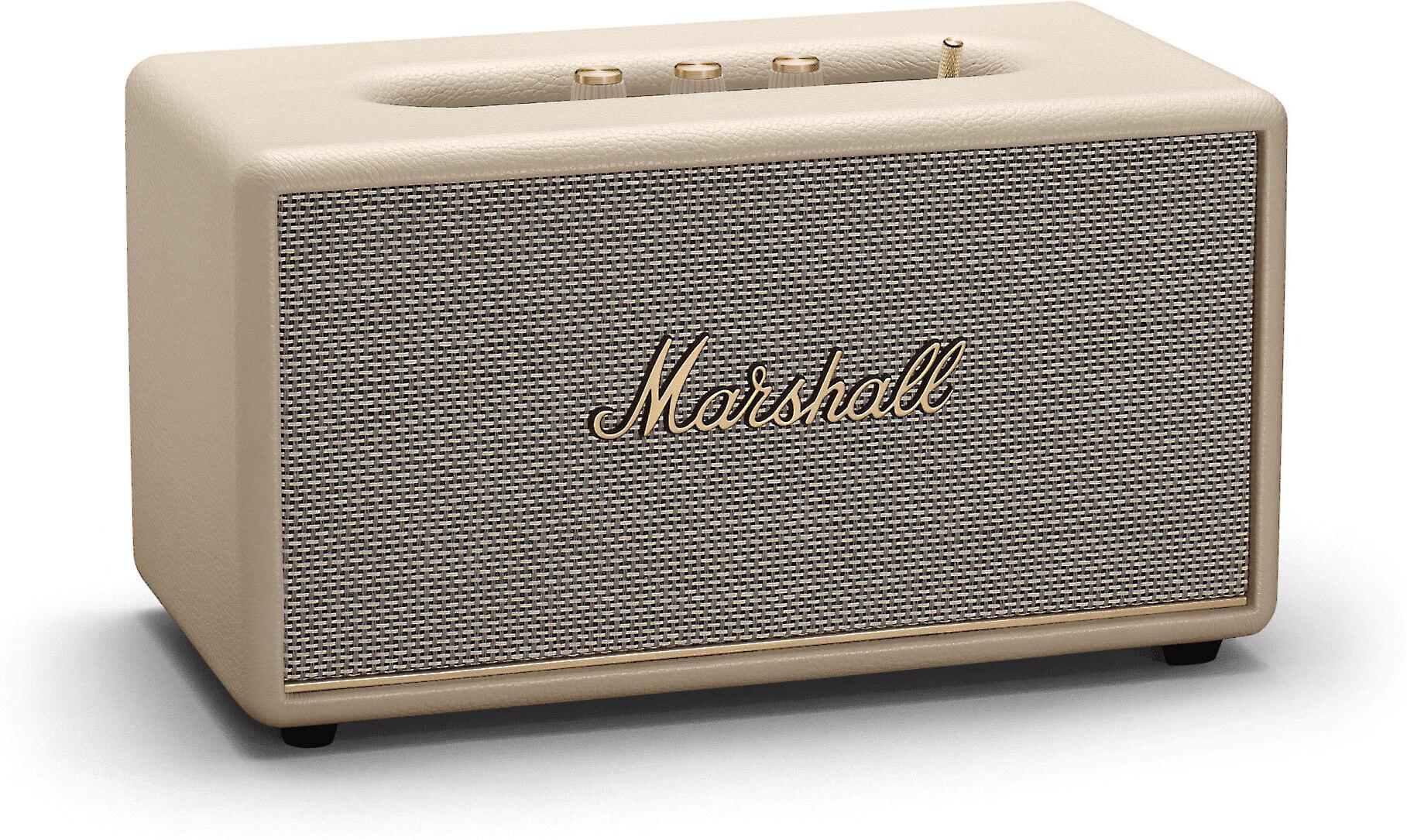
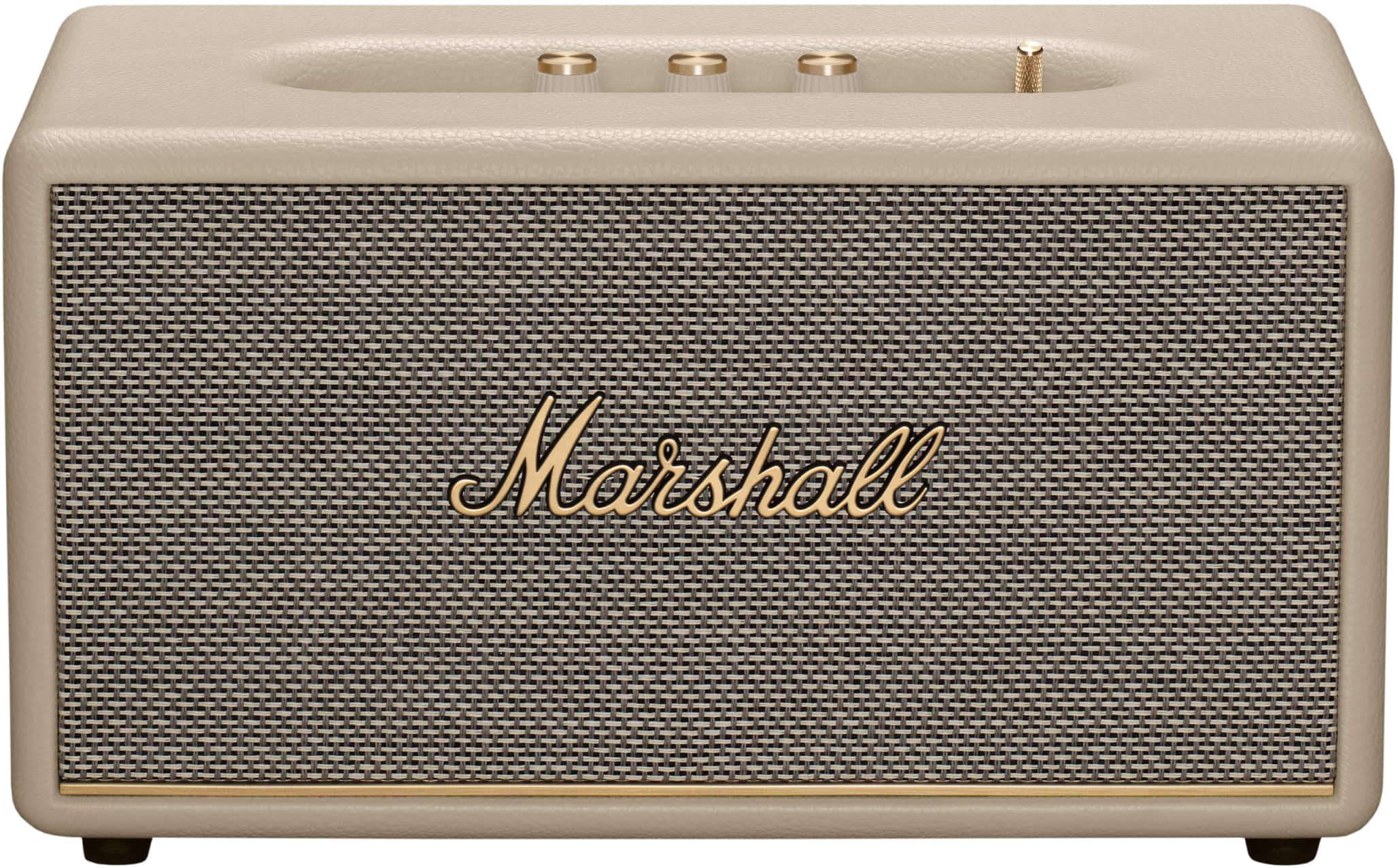
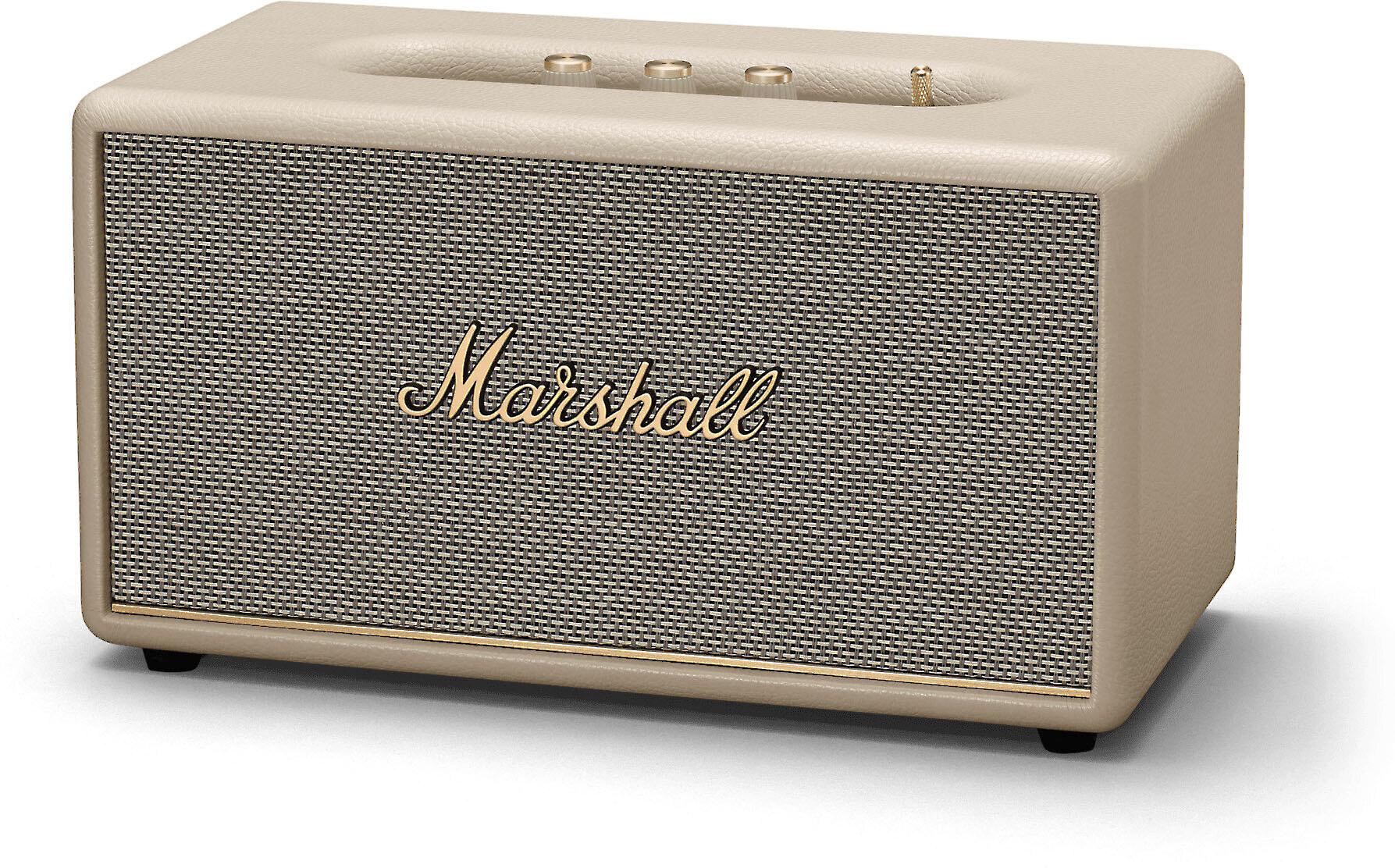
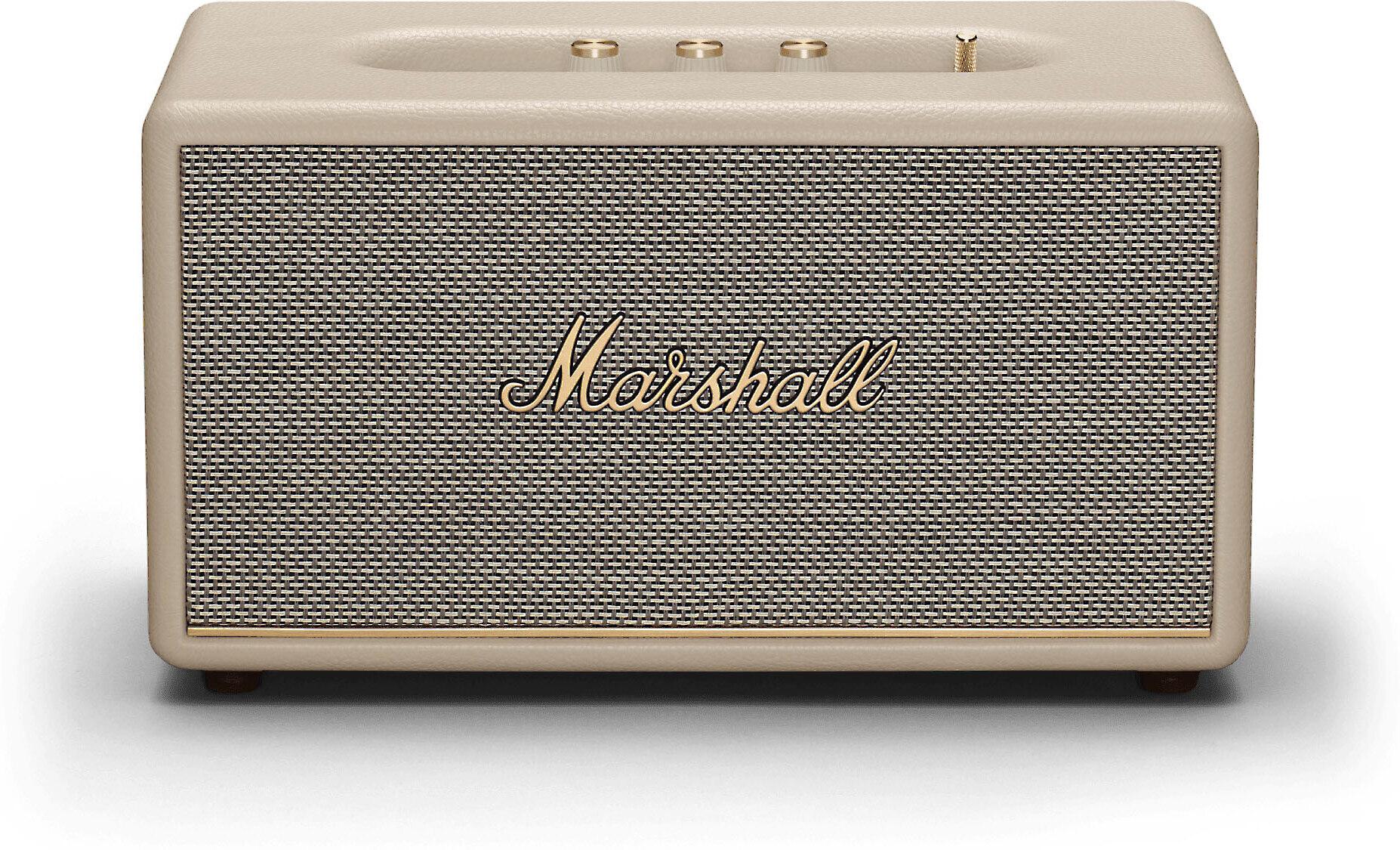
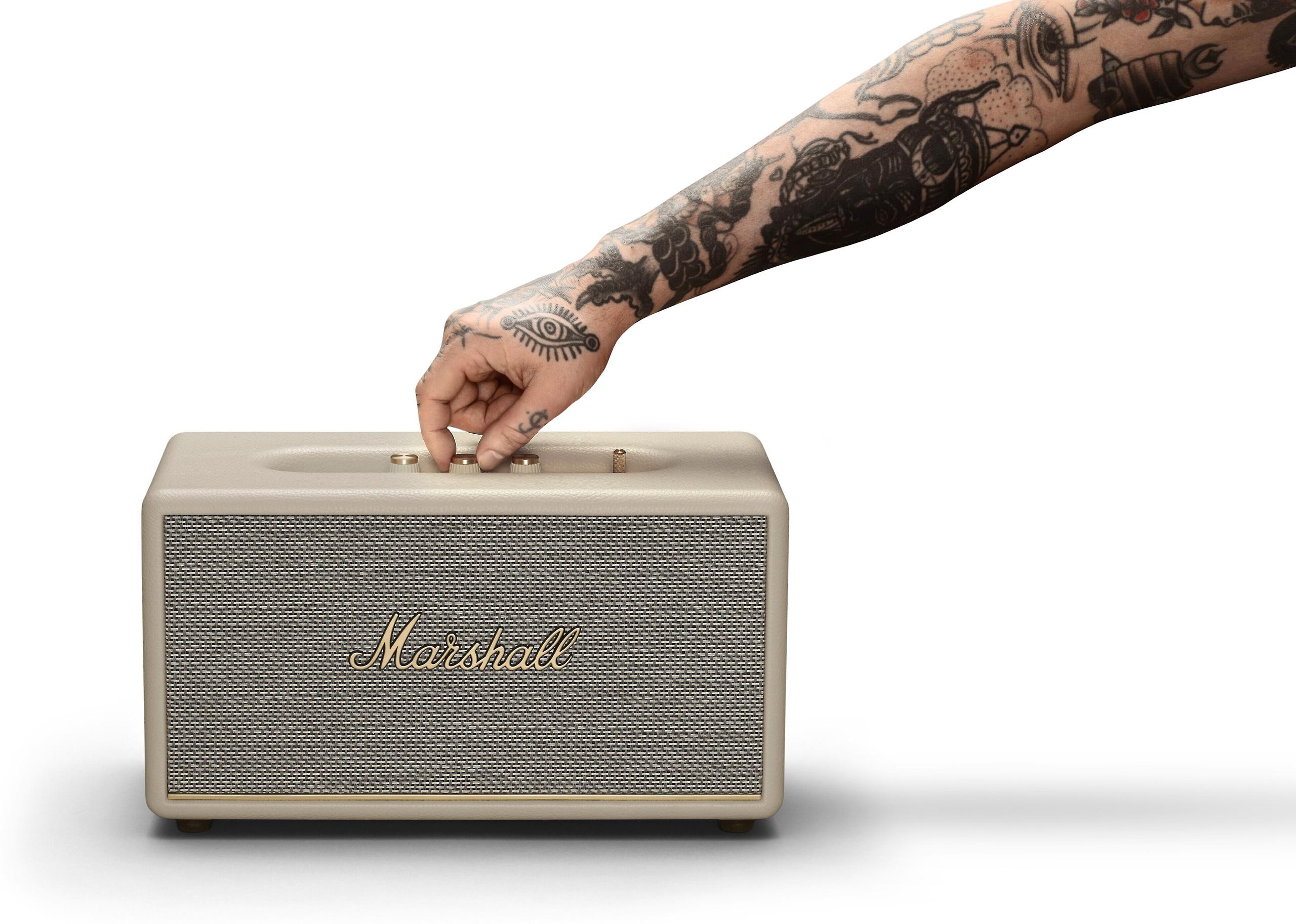
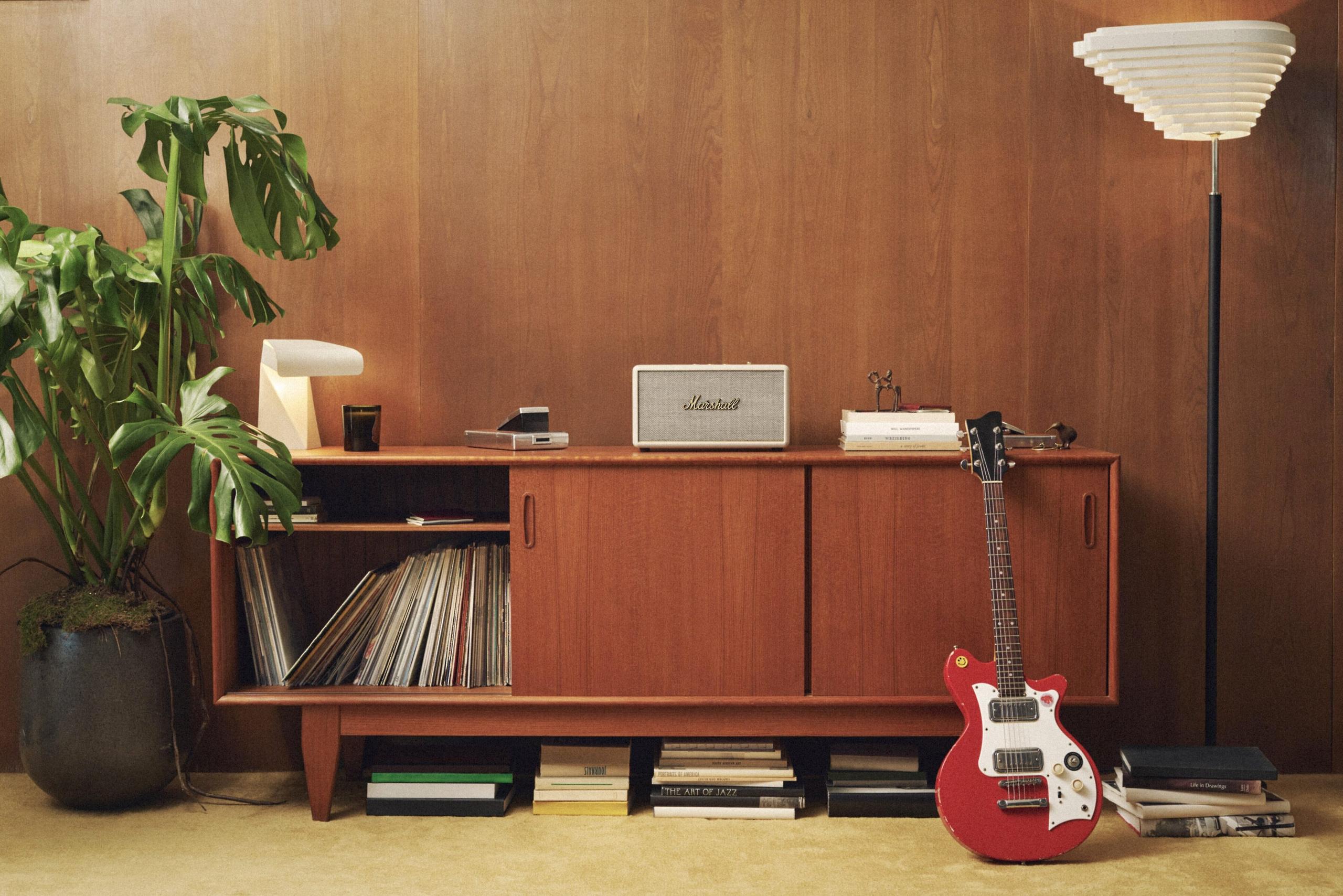


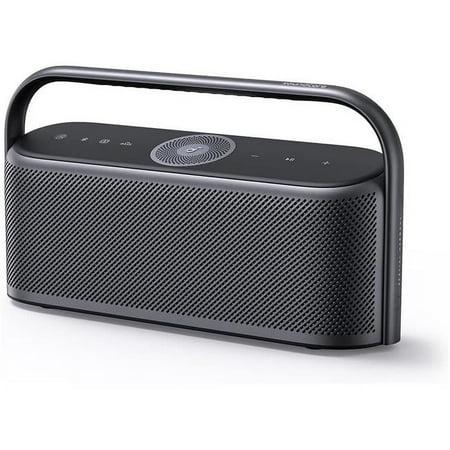
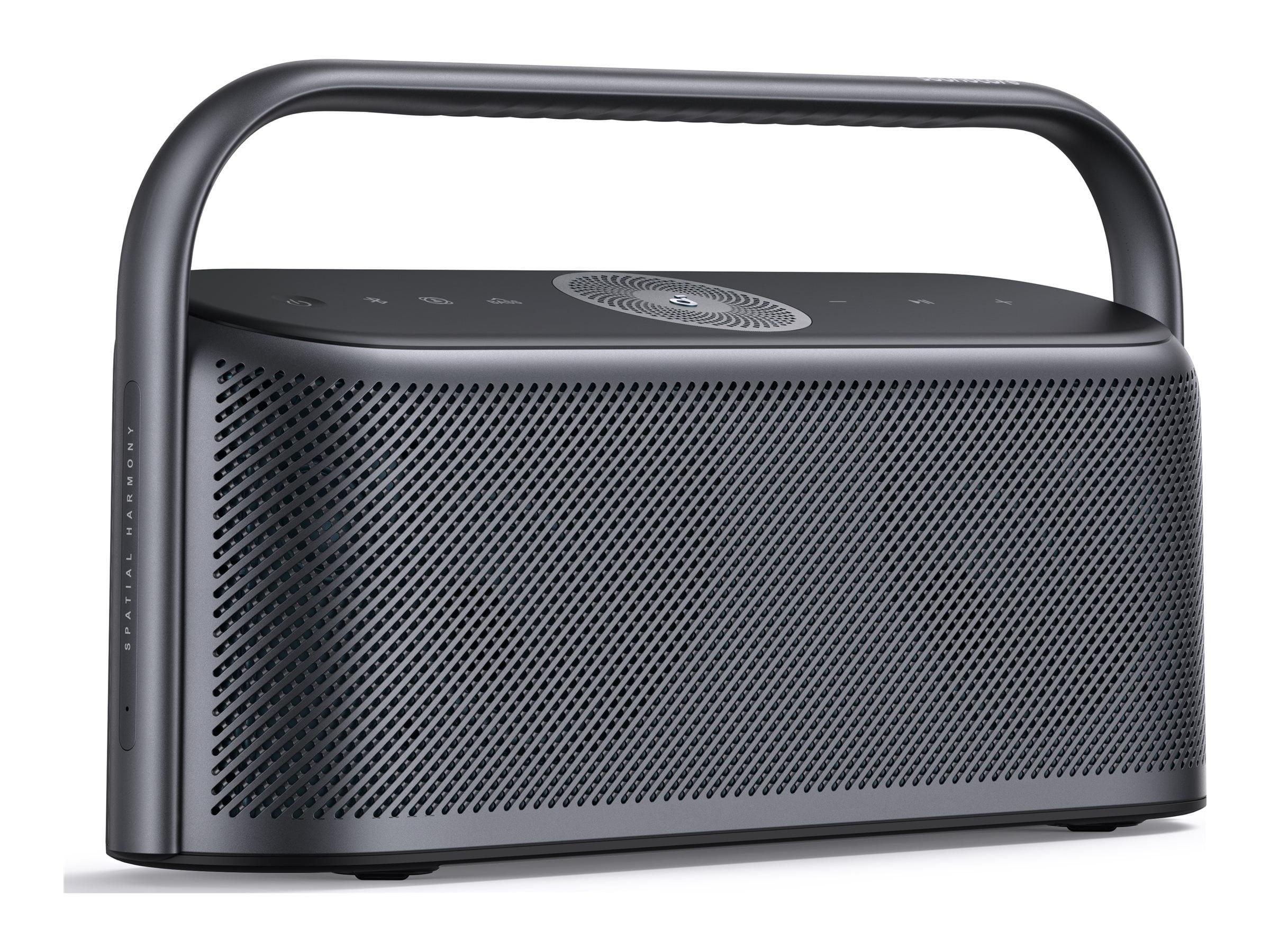
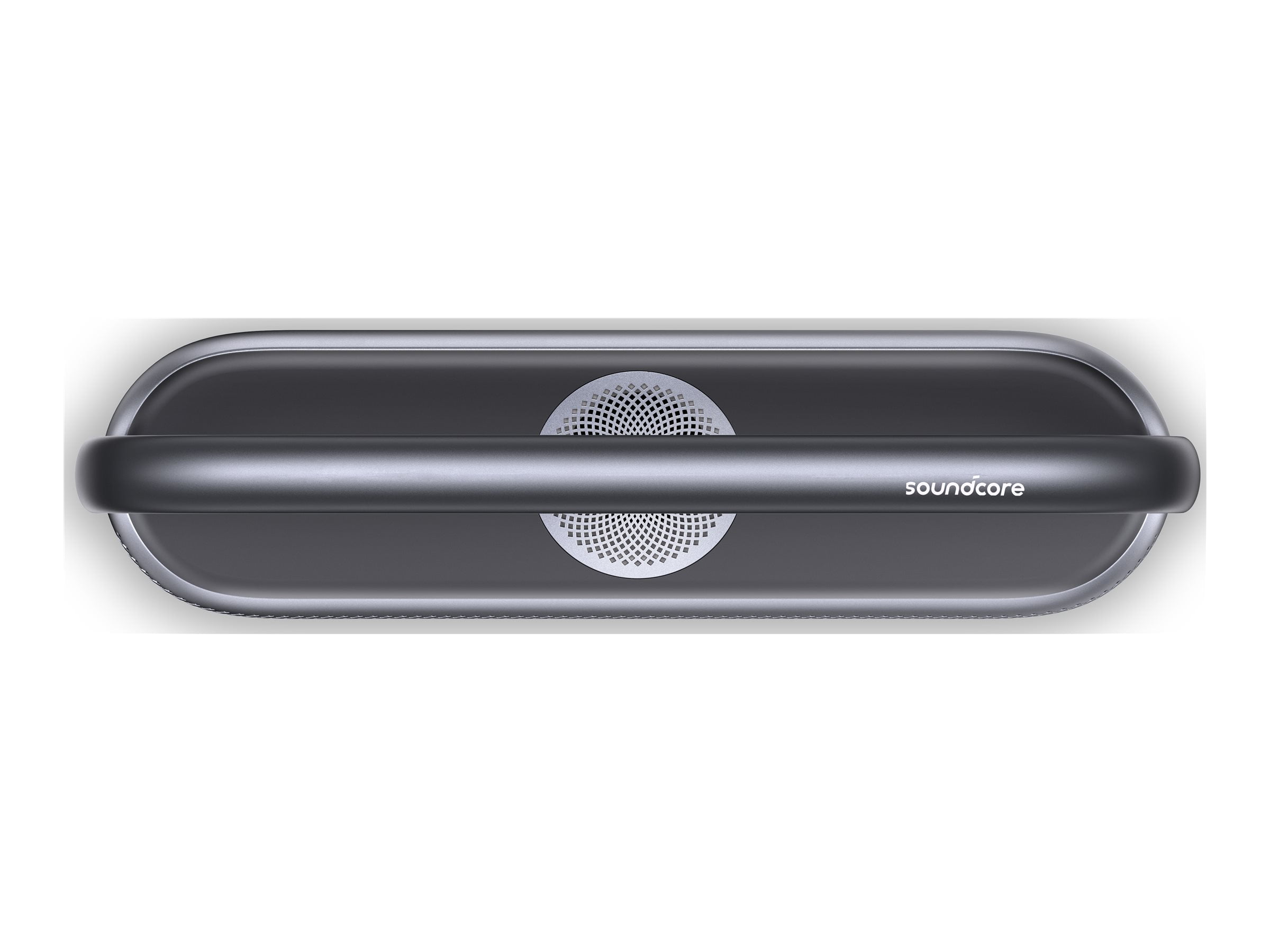


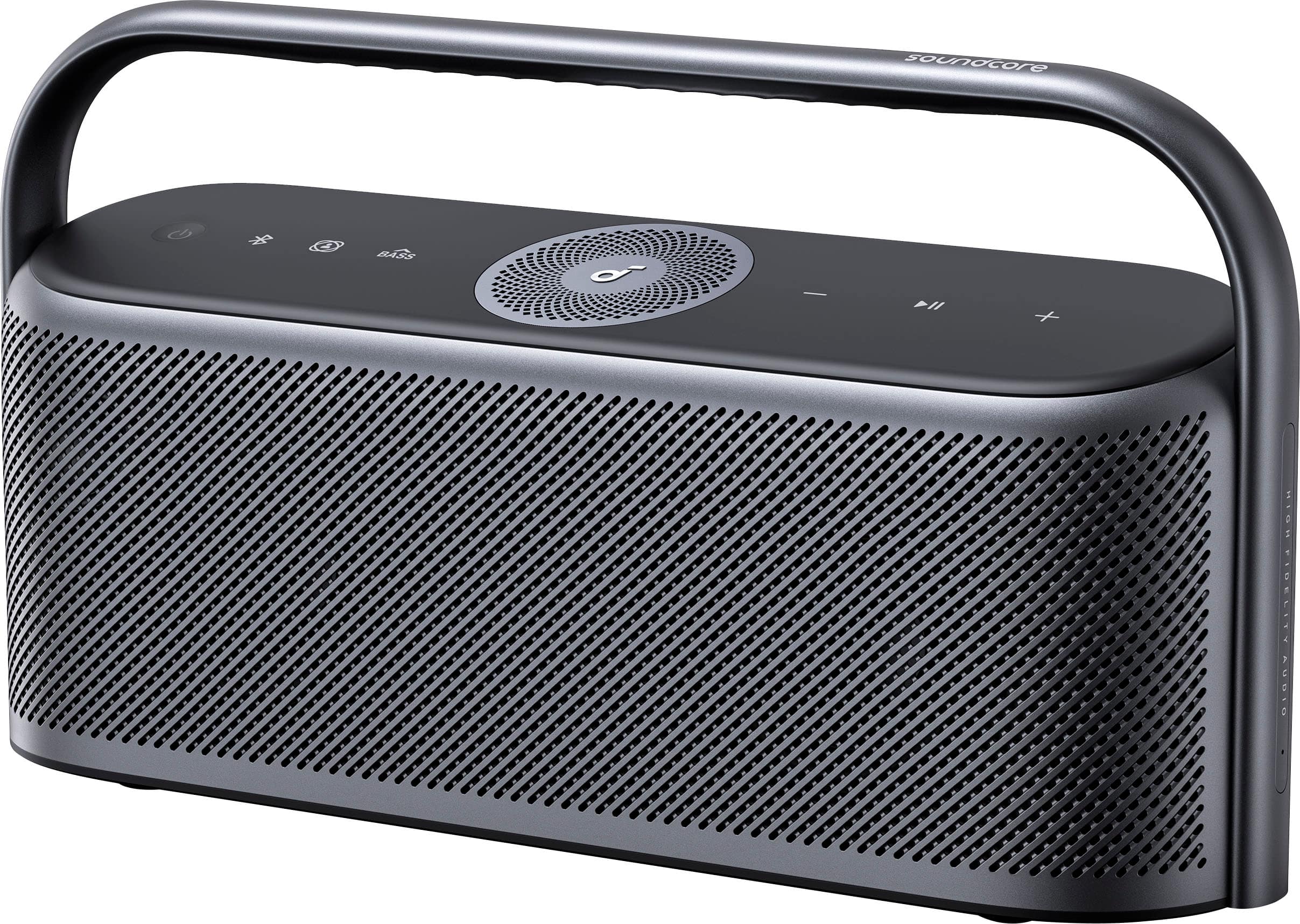
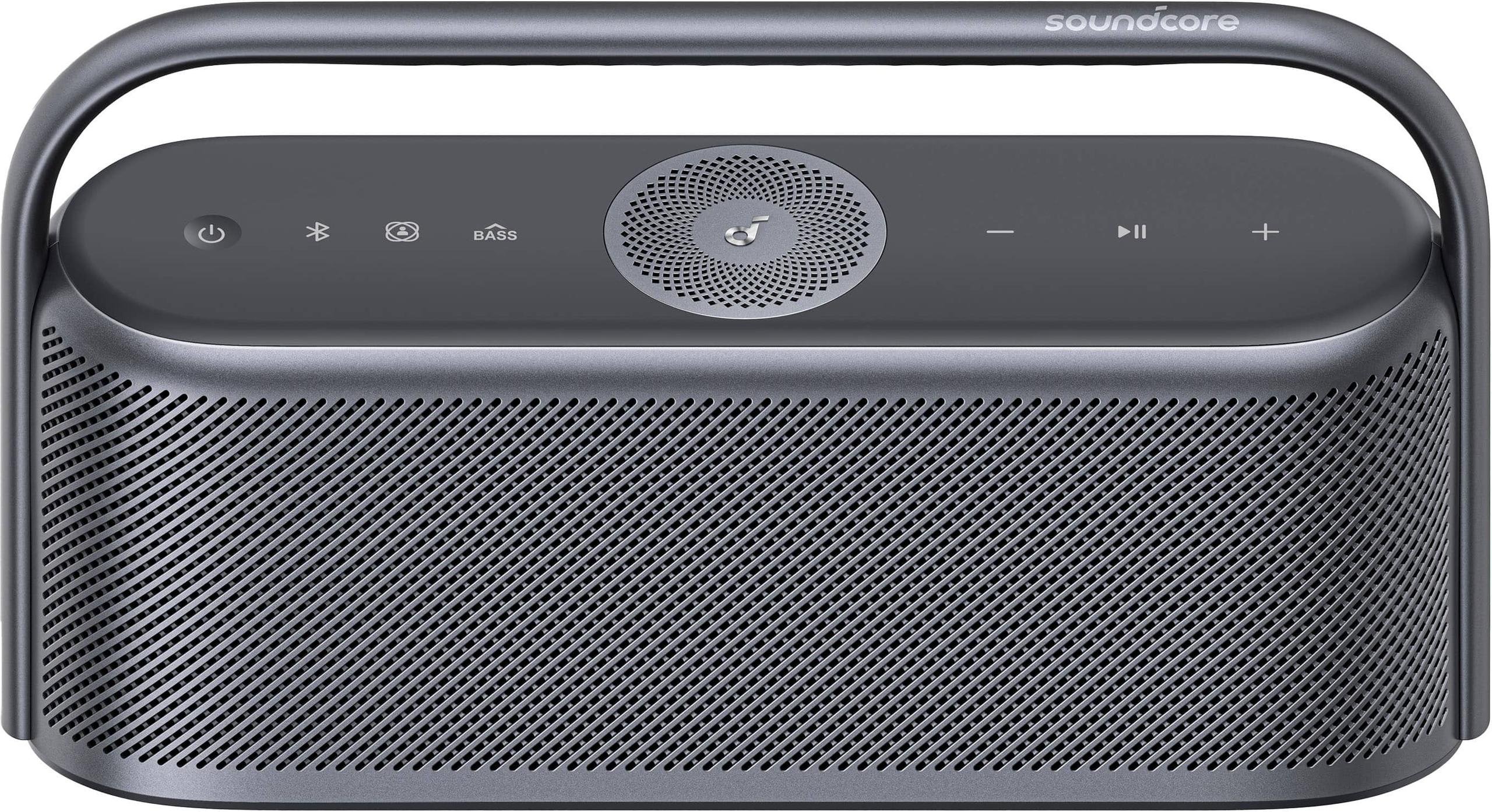



The world of premium Bluetooth speakers has evolved significantly in recent years, with manufacturers pushing boundaries in both sound quality and feature sets. Today, we'll compare two compelling options: the classic-styled Marshall Stanmore III ($379) and the feature-packed Soundcore Motion X600 ($199).
While both speakers aim to deliver premium audio experiences, they take notably different approaches. Released in September 2022, the Stanmore III continues Marshall's tradition of amplifier-inspired home speakers. The Motion X600, launched in May 2023, represents the latest in portable audio technology, incorporating spatial audio and premium materials in a travel-friendly design.
The Marshall Stanmore III delivers impressive power through its 80-watt system, utilizing a 50-watt woofer and two 15-watt tweeters. This configuration creates a rich, room-filling sound that's particularly noticeable in medium to large spaces. The speaker's frequency response of 45Hz-20kHz means it can reproduce deep bass notes that many smaller speakers miss entirely.
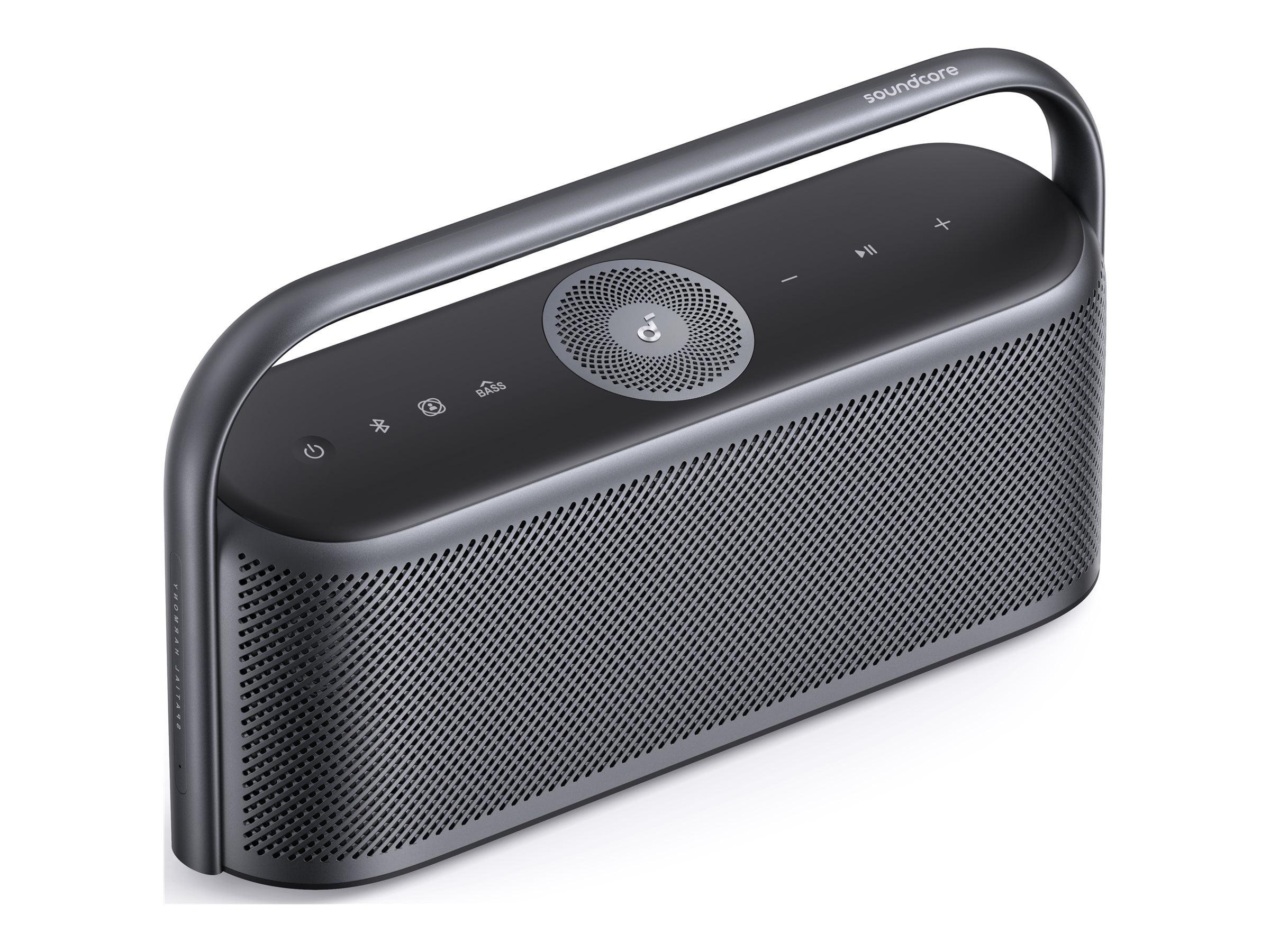
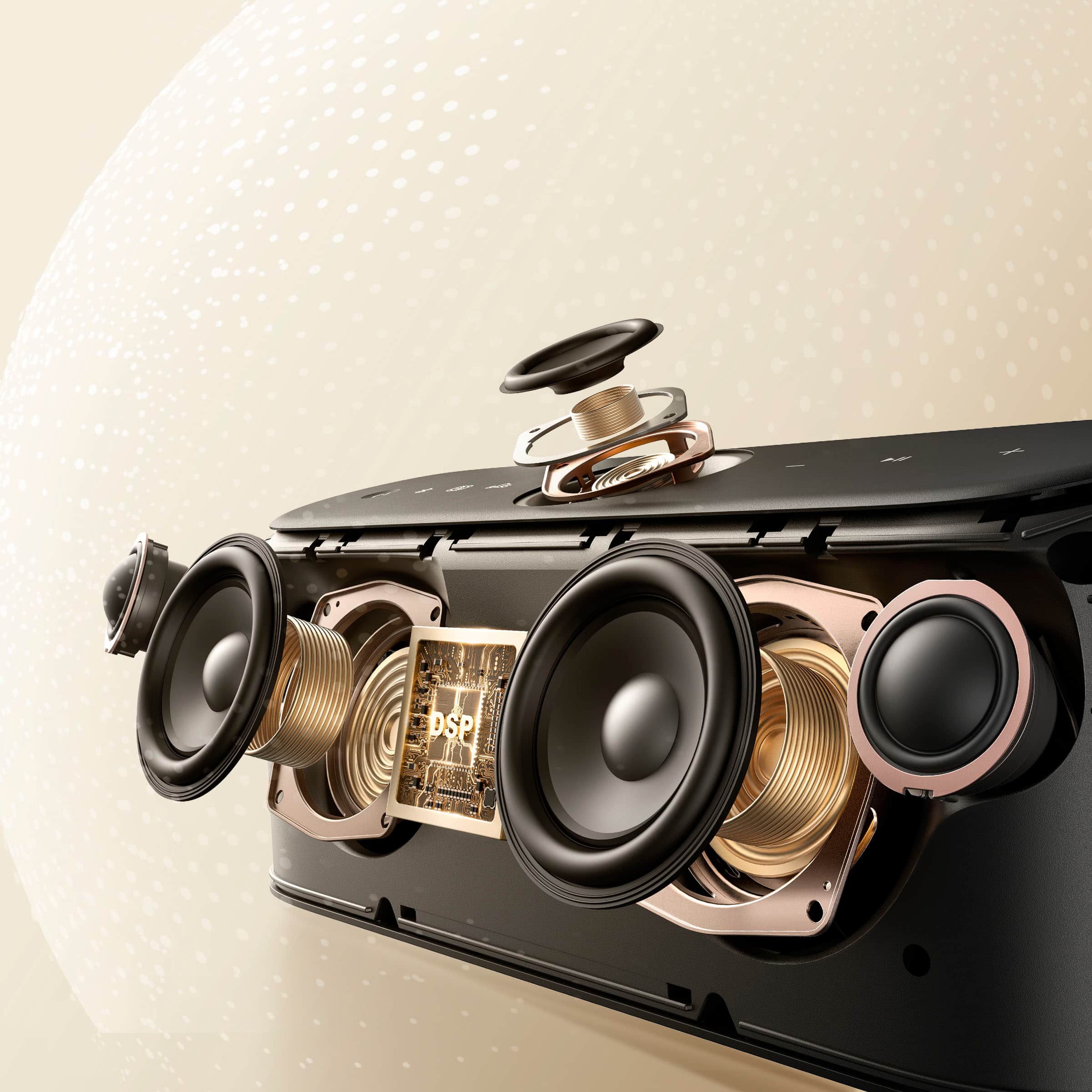
In contrast, the Motion X600 takes a different approach with its 50-watt system spread across five drivers, including an upward-firing speaker for spatial audio effects. While it can't match the Stanmore's raw power, it compensates with sophisticated digital signal processing (DSP) and support for LDAC - a high-quality Bluetooth codec that can transmit nearly three times the data of standard Bluetooth audio.
In practical use, these technical differences translate to distinct listening experiences. The Stanmore III excels at delivering powerful, room-filling sound with particularly impressive bass response - perfect for rock, electronic, or hip-hop genres. Its Dynamic Loudness feature automatically adjusts tonal balance as you change volume levels, ensuring consistent sound quality regardless of playback level.
The Motion X600's spatial audio creates a more immersive soundstage, making it feel like music is coming from all around you rather than a single point. This effect is particularly noticeable with well-recorded classical music or live performances. The speaker's LDAC support means you'll hear more detail in your music, provided your source device supports this advanced codec.
Both speakers offer modern Bluetooth 5.2 connectivity, but implement it differently. The Stanmore III includes multi-host functionality, allowing two devices to remain connected simultaneously - perfect for households where multiple people want to control the music. The Motion X600 adds LDAC support, providing near-CD quality wireless audio when paired with compatible devices (mostly higher-end Android phones).
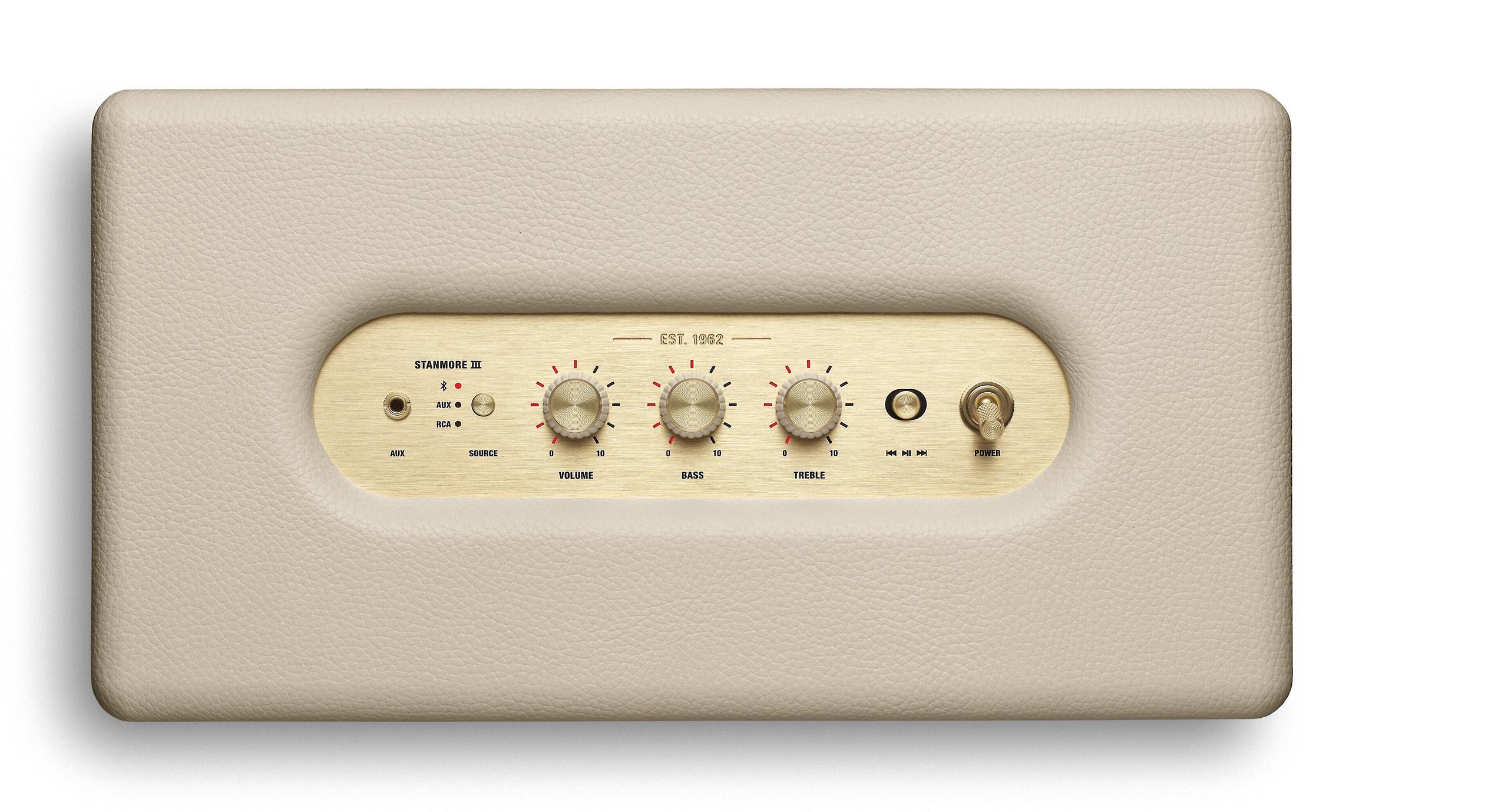
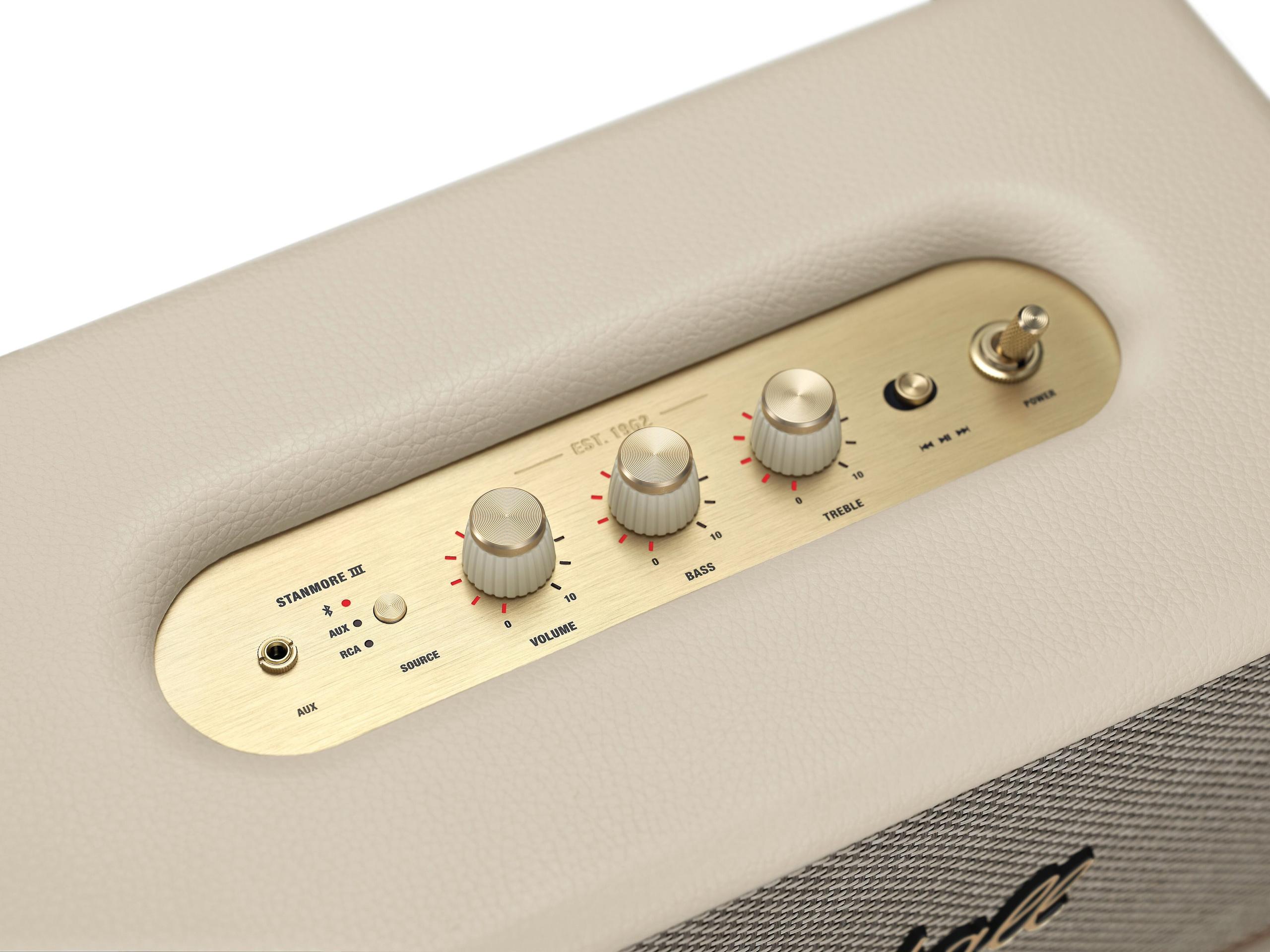
The Stanmore III maintains Marshall's signature analog control scheme with physical knobs for volume, bass, and treble. These tactile controls provide immediate feedback and don't require opening an app, though app control is available for deeper customization.
The Motion X600 leans more heavily on its companion app, offering a 9-band equalizer for precise sound tailoring. The spatial audio feature can be toggled on and off, and the speaker includes customizable EQ presets for different listening scenarios.
While neither speaker is primarily designed for home theater use, they can serve different roles. The Stanmore III's powerful output and consistent placement make it an excellent option for enhancing TV audio in smaller rooms, particularly when space or budget doesn't allow for a full surround system.
The Motion X600's spatial audio capabilities can create an engaging movie experience, though its portable nature makes it less ideal as a permanent home theater solution. However, its flexibility means it can serve as both a home theater enhancer and portable speaker.
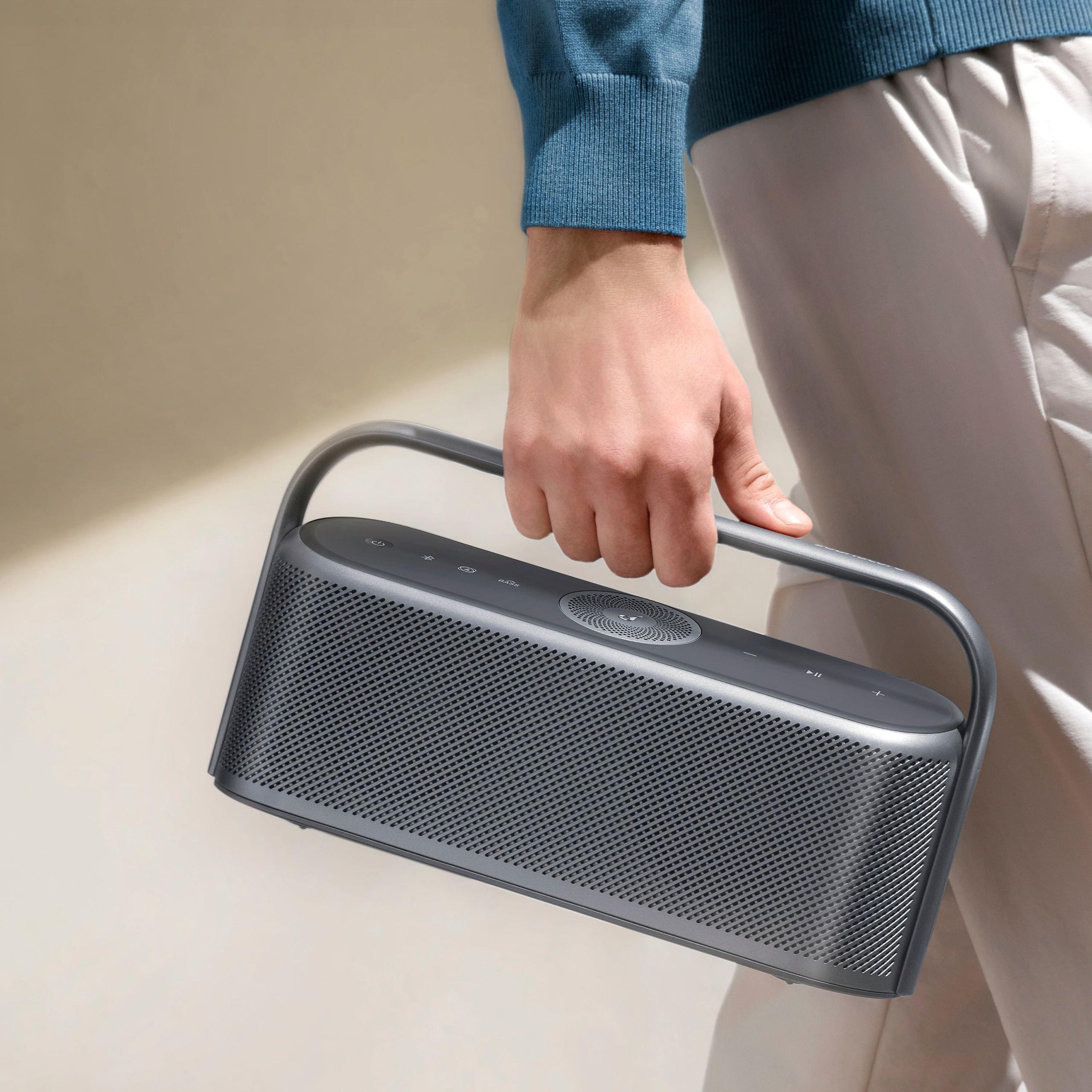
This is where the products diverge significantly. The Motion X600's IPX7 waterproof rating means it can handle rain or poolside use without concern. Its 12-hour battery life and built-in handle make it perfect for outdoor gatherings or moving from room to room.
The Stanmore III, requiring constant AC power, is designed to be a statement piece in a fixed location. While this limits its flexibility, it allows for more powerful amplification and consistent performance.
The price difference between these speakers is significant, with the Stanmore III costing nearly twice as much as the Motion X600. However, value depends heavily on your specific needs:
The Marshall Stanmore III justifies its higher price through:
The Motion X600 offers value through:
Consider these key factors when choosing between these speakers:
The Stanmore III is the clear choice if you:
Choose the Motion X600 if you:
Both speakers represent excellent options in their respective categories, with the final decision largely depending on your specific needs and preferences regarding portability versus maximum sound quality in a fixed location.
| Marshall Stanmore III ($379) | Soundcore Motion X600 ($199) |
|---|---|
| Power Output - Determines maximum volume and sound clarity | |
| 80W total (50W woofer + 2x15W tweeters) | 50W total (5x10W drivers) |
| Driver Configuration - Affects sound quality and dispersion | |
| 2-way system: 5" woofer, two 3/4" tweeters | 5-driver array: 2 tweeters, 2 mid/bass, 1 upward-firing |
| Frequency Response - Range of sounds speaker can reproduce | |
| 45Hz-20kHz (better bass extension) | 50Hz-40kHz (higher treble range) |
| Connectivity - How you can connect devices | |
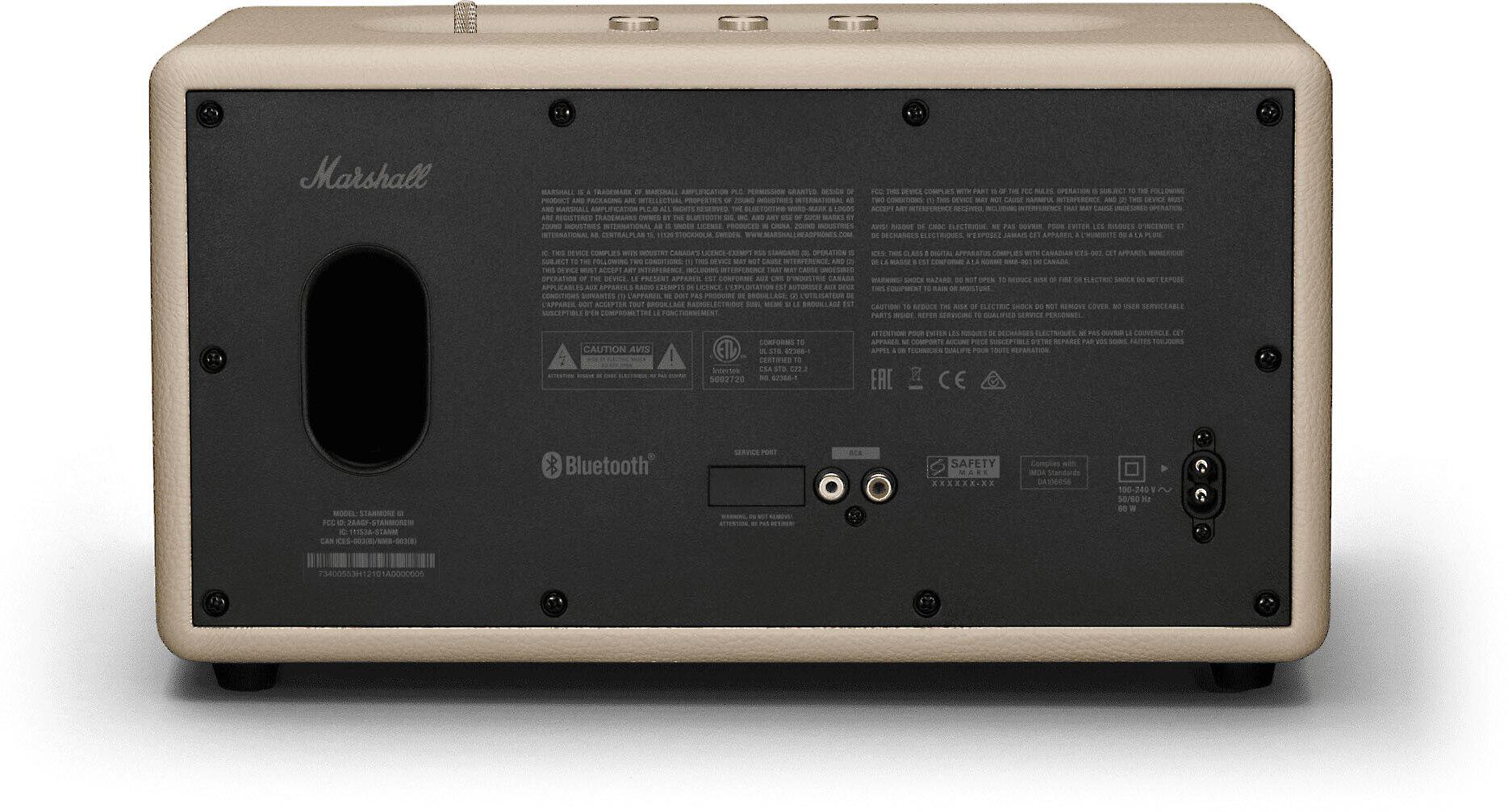
| Bluetooth 5.2, 3.5mm aux, RCA inputs | Bluetooth 5.3 with LDAC, 3.5mm aux |
| Special Features - Additional capabilities that add value | |
| Dynamic Loudness, placement compensation, multi-host connection | Spatial Audio, waterproof IPX7, portable with handle |
| Size and Weight - Impacts placement flexibility | |
| 13.8" x 8.1" x 8.4", 9.37 lbs (stationary) | 12.25" x 6.75" x 3.1", 5.57 lbs (portable) |
| Power Source - Affects where you can use it | |
| AC power only (needs outlet) | Rechargeable battery (12 hours playback) |
| Sound Customization - Ways to adjust audio | |
| Physical bass/treble knobs, basic app EQ | 9-band EQ in app, spatial audio toggle |
| Build Quality and Design - Durability and aesthetics | |
| Premium materials, classic amp styling, wood construction | Aluminum handle, metal grille, modern design |
| Primary Use Case - Best suited for | |
| Permanent home audio solution with maximum power | Versatile portable speaker for indoor/outdoor use |
The Marshall Stanmore III ($379) has superior overall sound quality with its 80W system and larger drivers. However, the Soundcore Motion X600 ($199) offers impressive clarity and spatial audio features that some users might prefer, despite having less power.
The Motion X600 is specifically designed for outdoor use with IPX7 waterproofing and 12-hour battery life. The Stanmore III requires AC power and isn't water-resistant, making it unsuitable for outdoor use.
Both speakers work well for parties, but in different settings. The Stanmore III excels at indoor parties with more powerful sound, while the Motion X600 offers flexibility to move between indoor and outdoor party spaces.
The Stanmore III offers Bluetooth 5.2, 3.5mm aux, and RCA inputs. The Motion X600 features Bluetooth 5.3 with LDAC support and a 3.5mm aux input, offering slightly better wireless audio quality.
The Motion X600 offers better value at $199 with its portability and feature set. The Stanmore III is more expensive at $379 but justifies its price with superior sound power and build quality.
Both can connect to TVs via auxiliary input, but the Stanmore III is better suited as a permanent TV speaker due to its consistent placement and power supply. The Motion X600 works but is designed more for mobile use.
The Stanmore III delivers stronger bass with its 50W woofer and 45Hz low-end frequency response. The Motion X600 offers good bass but can't match the power and depth of the Stanmore III.
Both speakers are simple to set up. The Motion X600 is plug-and-play with Bluetooth, while the Stanmore III requires positioning and power connection but offers straightforward controls.
The Motion X600 is designed for multi-room use with its portable design and battery power. The Stanmore III needs to remain plugged in, making it best for single-room use.
Both work well with phones, but the Motion X600 offers superior Bluetooth codec support with LDAC. The Stanmore III features multi-host connectivity for switching between two devices.
The Stanmore III is built for longevity with premium materials and no battery to degrade. The Motion X600 battery will eventually need replacement but is otherwise well-built.
The Motion X600 offers more extensive app features including a 9-band EQ and spatial audio controls. The Stanmore III app is simpler but includes essential functions like placement compensation.
We've done our best to create useful and informative comparisons to help you decide what product to buy. Our research uses advanced automated methods to create this comparison and perfection is not possible - please contact us for corrections or questions. These are the sites we've researched in the creation of this article: techgadgetscanada.com - camelcamelcamel.com - crutchfield.com - bestbuy.com - dxomark.com - crutchfield.com - crutchfield.com - marshall.com - marshall-production-1.mobify-storefront.com - exhibit.tech - ooberpad.com - av-connection.com - soundguys.com - dxomark.com - soundcore.com - digitaltrends.com - soundcore.com - crutchfield.com - gadgetsoman.com - gadgetoid.com - nelooq.com - soundcore.com - soundcore.com - audioholics.com

Privacy Policy
Terms and Conditions - Affiliate Policy
Home Security
© Copyright 2008-2026.
11816 Inwood Rd #1211, Dallas, TX 75244