

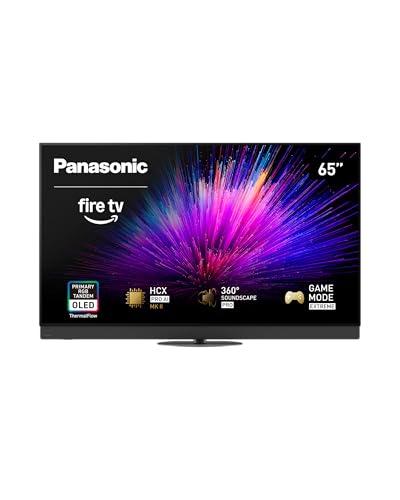
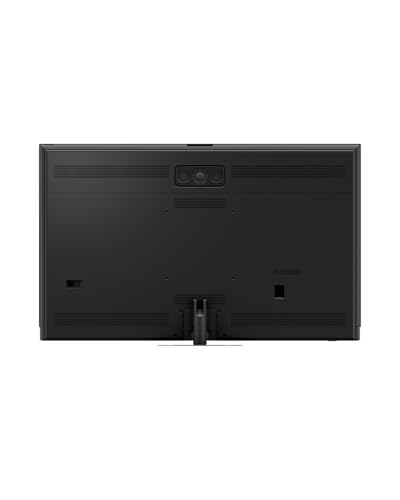
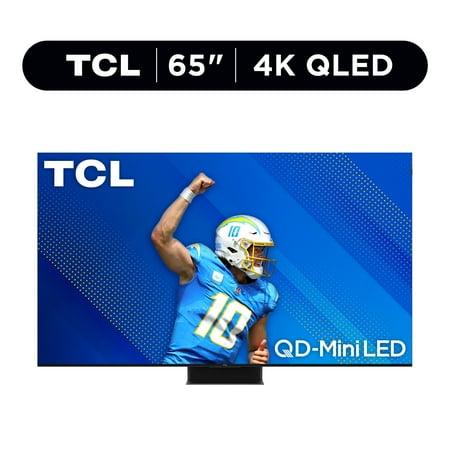




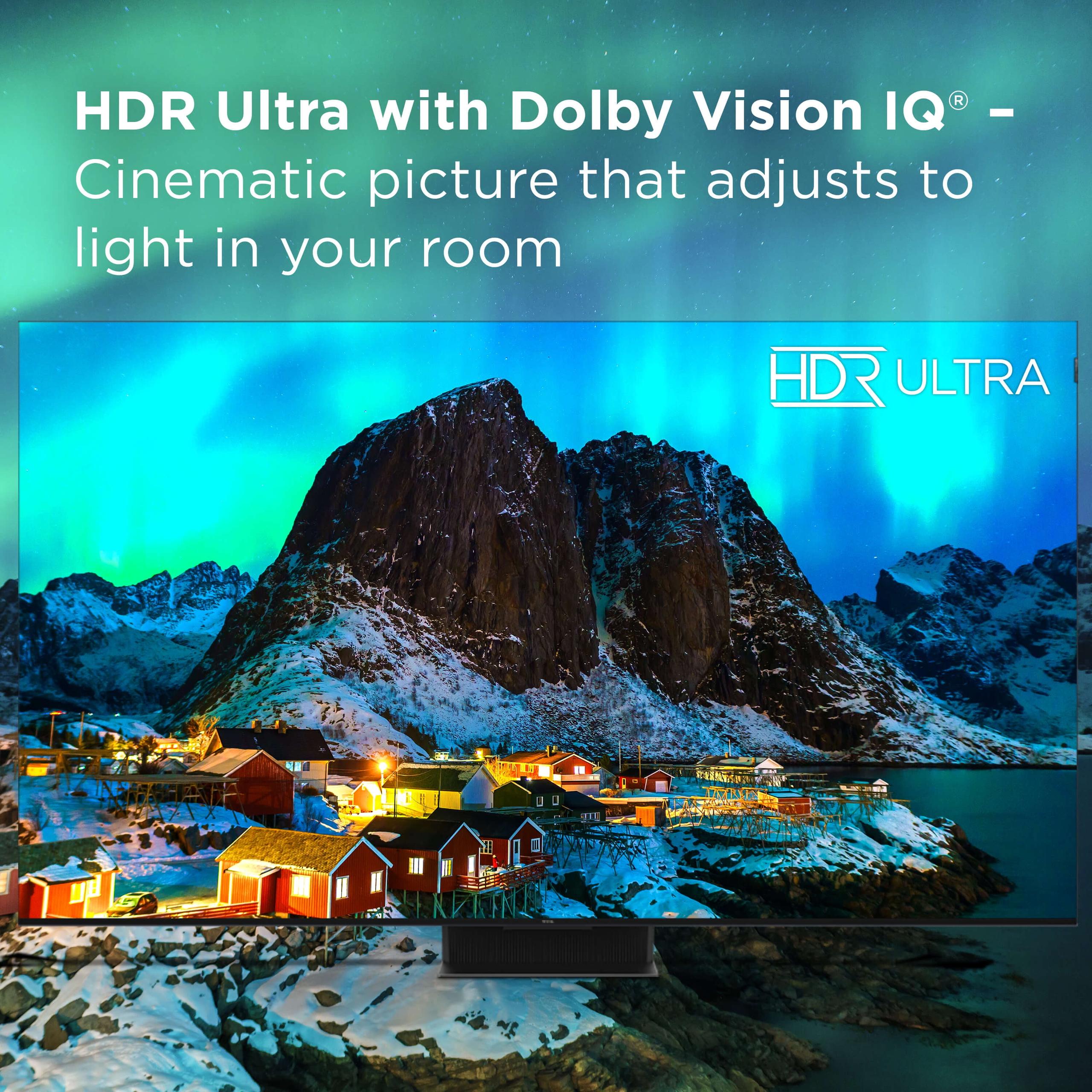
When shopping for a premium 65-inch TV, you'll quickly encounter two dominant display technologies that represent fundamentally different approaches to creating exceptional picture quality. The Panasonic Z95B Series 65" OLED showcases the latest evolution of OLED technology, while the TCL 65" QM8 Mini-LED demonstrates how traditional LCD displays have been revolutionized through advanced backlighting. Both launched in 2024, representing the cutting edge of their respective technologies—but they solve picture quality challenges in completely opposite ways.
Understanding these differences isn't just about specs on paper. The technology behind your TV determines everything from how movies look in your darkened living room to whether you can see the screen clearly during a sunny afternoon game. More importantly, it affects whether you're spending wisely for your specific viewing habits and room setup.
The premium TV market has evolved dramatically over the past few years. Gone are the days when "4K" was the main selling point—now we're deep into an era where display technology, HDR performance, and smart features separate the good from the exceptional. When you're investing in a centerpiece display for your home theater or living room, several key factors determine whether you'll be thrilled with your purchase or left wondering what you're missing.
Display technology forms the foundation of everything else. OLED creates light at the pixel level using organic compounds, while Mini-LED uses thousands of tiny LED lights behind an LCD panel to control brightness with surgical precision. These aren't just different manufacturing approaches—they create fundamentally different viewing experiences.
HDR performance has become equally critical. High Dynamic Range isn't just a marketing buzzword; it's the difference between a sunset that looks realistic and one that looks washed out. How well a TV handles the brightest highlights and darkest shadows while maintaining detail in both determines whether you're seeing the image as content creators intended.
Gaming capabilities now rival picture quality in importance, especially with PlayStation 5 and Xbox Series X pushing 120Hz and beyond. Variable refresh rate (VRR) technology, which synchronizes your TV's refresh rate with your gaming device's frame output to eliminate screen tearing, has become essential for serious gaming.
The smart platform determines your daily experience more than any other feature. A laggy interface or missing streaming apps can make even the most beautiful display frustrating to live with.
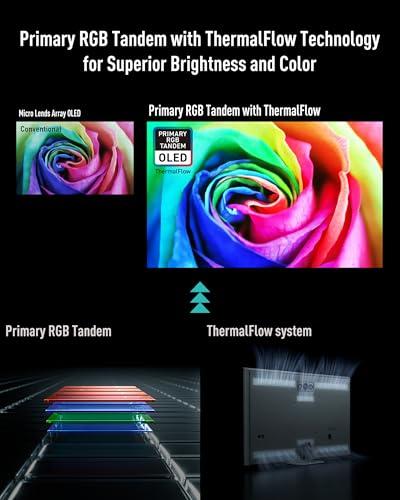
The Panasonic Z95B represents the latest evolution in OLED technology with its Primary RGB Tandem panel structure. Traditional OLED uses a single layer of organic light-emitting diodes, but this "tandem" approach stacks four layers—one red, one green, and two blue—to dramatically increase brightness while maintaining OLED's signature perfect blacks.
Here's what makes OLED special: each pixel creates its own light. When displaying a black pixel, it simply turns off completely, creating true black rather than the dark gray you get from backlit LCD panels. This creates an infinite contrast ratio—the mathematical difference between the brightest white and darkest black—which is impossible to achieve with any backlit display technology.
The Z95B's ThermalFlow cooling system addresses OLED's traditional weakness: heat management. When OLED panels get hot, they dim to protect themselves. Panasonic's aerodynamic cooling design keeps the panel running at peak brightness longer, which is crucial for HDR content that demands sustained high brightness levels.
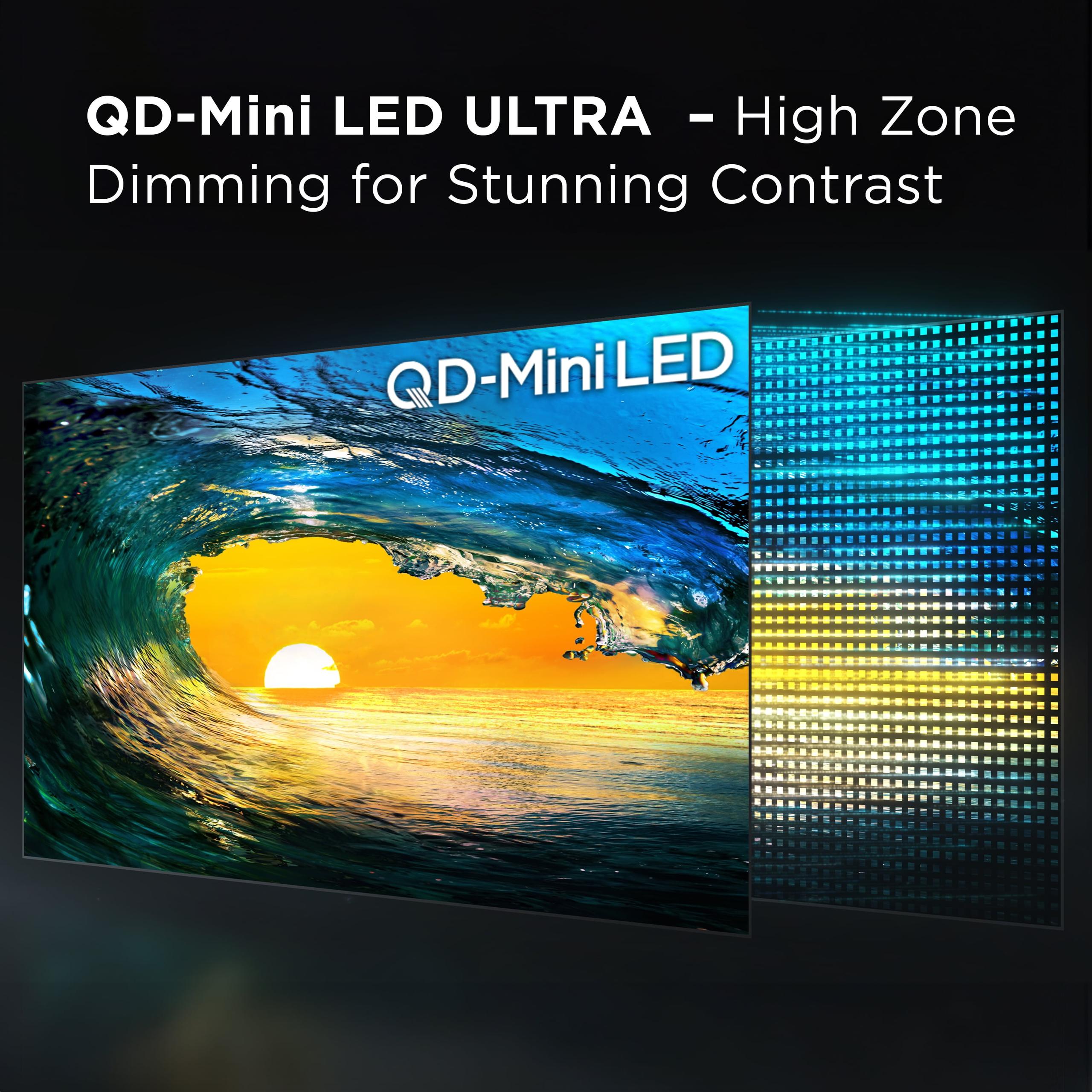
The TCL QM8 takes the opposite approach with its QD-Mini LED technology. Instead of self-emitting pixels, it uses up to 5,000 individual LED zones behind the LCD panel, each capable of independent brightness control. Think of it like having thousands of tiny flashlights that can be dimmed or turned off completely to create contrast.
The "QD" stands for Quantum Dot—microscopic particles that convert blue LED light into precise red and green colors. This technology, combined with the massive number of dimming zones, allows the QM8 to achieve brightness levels that would be impossible with traditional LED backlighting while maintaining much better black levels than older LCD TVs.
Where OLED achieves perfect blacks by turning pixels off, Mini-LED achieves impressive blacks by turning off entire zones of LEDs. With 5,000+ zones controlling a 4K display, each zone covers roughly 800 pixels, providing surprisingly precise control over local contrast.
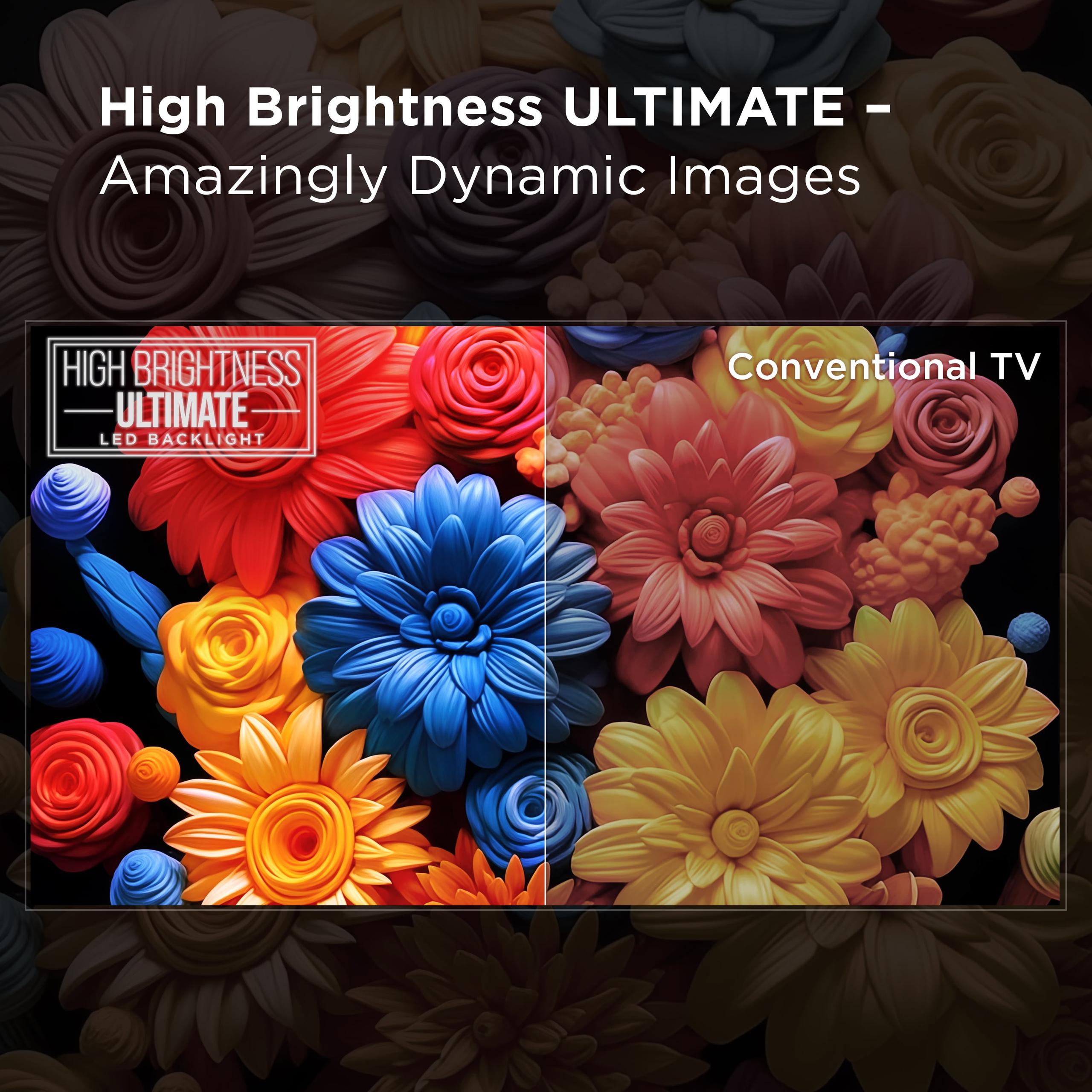
This is where the fundamental differences between these technologies become most apparent. The TCL QM8 can achieve peak brightness levels up to 5,000 nits—bright enough to create truly dazzling highlights that make HDR content pop even in bright rooms. When a superhero movie shows lightning or an explosion, Mini-LED's ability to push extreme brightness in small areas creates impact that older TVs simply couldn't match.
The Panasonic Z95B, despite its advanced tandem OLED structure, typically peaks around 1,000-1,500 nits. This might sound disappointing until you experience OLED's perfect blacks in action. While it can't make highlights as blazingly bright, the infinite contrast ratio creates a sense of depth and realism that many viewers find more engaging than pure brightness.
In practical terms, if you watch a lot of HDR movies during the day or in a bright room, the QM8's superior brightness gives it a clear advantage. But if you primarily watch in controlled lighting—especially for evening movie sessions—the Z95B's perfect blacks create a more cinematic experience.
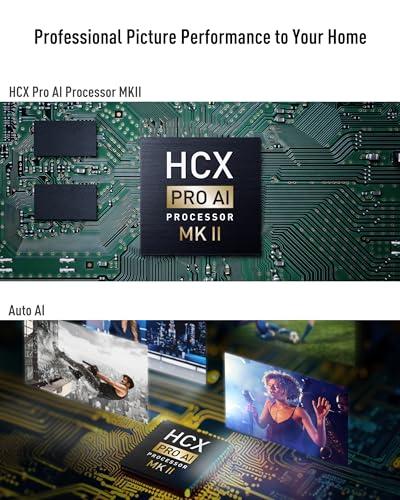
Here's where Panasonic's decades of professional display experience shine. The Z95B includes support for professional calibration standards like ISFccc and Calman, along with modes specifically designed for content creators. Its HCX Pro AI Processor MK II doesn't just make images look punchy; it aims for accuracy that matches what directors and cinematographers intended.
The processor uses AI to analyze content type—automatically recognizing whether you're watching sports, movies, or gaming—and adjusts accordingly. More importantly, it includes sophisticated upscaling that makes lower-resolution content look genuinely better rather than just artificially sharpened.
The TCL QM8 focuses more on immediate visual impact. Its TCL AIPQ PRO processor emphasizes vibrant colors and impressive contrast, though it may not match the Panasonic's commitment to color accuracy. For most content, this approach works brilliantly, creating images that look spectacular without requiring any adjustment.
This represents the most significant philosophical difference between these displays. OLED's ability to turn pixels completely off creates perfect blacks that Mini-LED simply cannot match. When watching dark scenes—think Game of Thrones or any space movie—the Z95B displays truly black areas while maintaining detail in shadows.
The QM8 achieves impressive blacks for an LCD display, but physics limits how dark it can go. Even with zones turned off, some light bleeds through the LCD panel, creating dark gray rather than true black. However, its 5,000+ zones minimize this issue far better than traditional LCD TVs, and the trade-off comes with significantly brighter highlights.
For home theater enthusiasts who primarily watch movies in darkened rooms, OLED's perfect blacks create an experience that feels more like a commercial cinema. The Panasonic Z95B excels here, especially with content that features high contrast scenes.
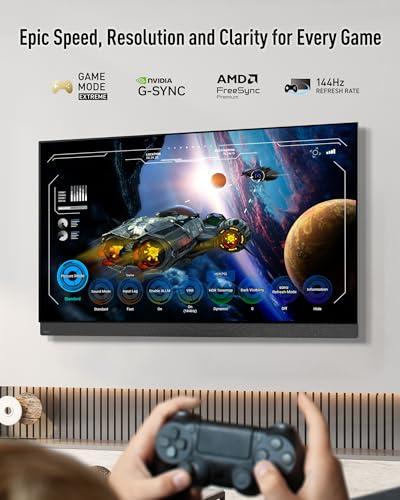
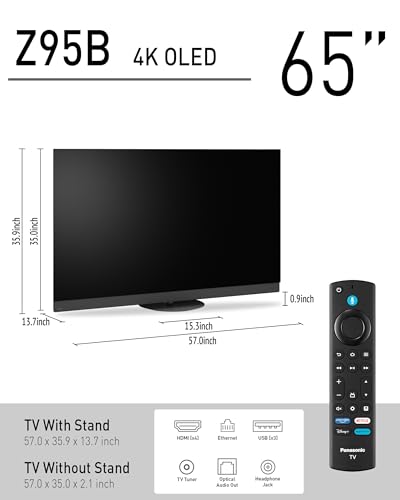
Both displays target serious gamers, but their approaches differ meaningfully. The Panasonic Z95B supports 144Hz refresh rates with HDMI 2.1, making it excellent for PC gaming where frame rates can exceed the 120Hz limit of current consoles. Its OLED technology provides near-instantaneous pixel response times, meaning fast-moving objects appear sharp without motion blur.
The Z95B includes Game Control Board, Panasonic's interface for quickly adjusting gaming-specific settings without diving through menus. More importantly, it supports Dolby Vision gaming—a newer standard that provides enhanced HDR specifically optimized for games rather than movies.
The TCL QM8 offers similar gaming features with 120Hz native refresh and 144Hz VRR support, plus exceptionally low input lag. Its Game Accelerator 240 and Auto Game Mode ensure responsive gameplay, while the superior peak brightness can make HDR games more impactful, especially in bright gaming environments.
For competitive gaming, both perform excellently. The Panasonic might have a slight edge for dark, atmospheric games where perfect blacks enhance immersion, while the TCL excels for bright, colorful games where high brightness creates more impact.
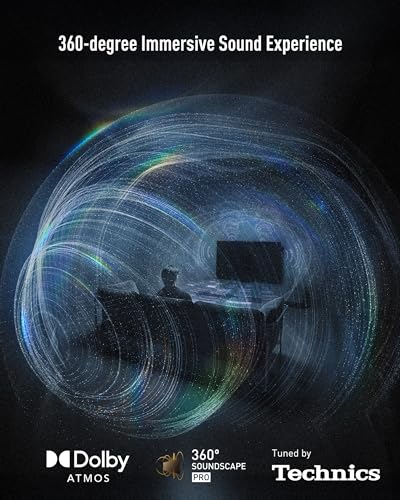
This is where the Panasonic Z95B makes a compelling case for its premium positioning. Its 360° Soundscape Pro system, tuned by Technics, creates genuinely impressive audio that many users find eliminates the need for a separate soundbar. The 5.1.2 channel configuration with 170 watts includes upward-firing speakers for Dolby Atmos effects and side-firing speakers for wider soundstage.
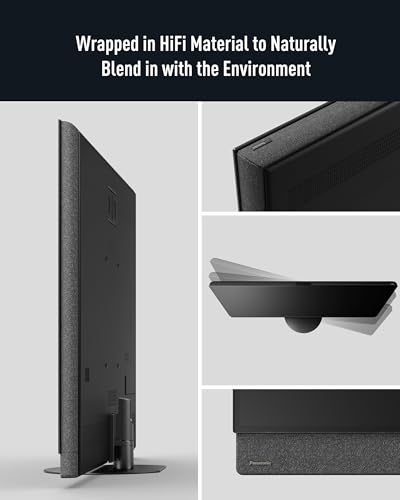
In our research of user experiences, many Z95B owners report being surprised by the audio quality—not just "good for a TV," but legitimately good audio that enhances the viewing experience significantly. The acoustic cloth covering gives the speakers proper acoustic treatment rather than just hiding them behind plastic grilles.
The TCL QM8 includes a respectable ONKYO 2.1.2 system with 80 watts, which performs better than most TV speakers but doesn't reach the Panasonic's level. Most users will eventually want to add a soundbar for the full home theater experience.
The TCL QM8 runs Google TV, which has become the most comprehensive and user-friendly smart TV platform. Its integration with Google services, universal search across apps, and generally snappy performance make daily use pleasant. The interface learns your preferences and surfaces content intelligently.
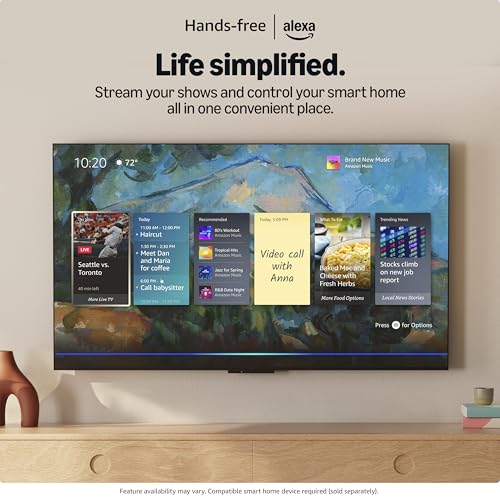
The Panasonic Z95B uses Fire TV, which provides access to all major streaming services but can feel less polished. Fire TV's interface prioritizes Amazon content, which some users find intrusive. However, it includes hands-free Alexa integration and works well once you adapt to its content-forward approach.
For most users, Google TV's superior interface and broader ecosystem integration give the TCL a meaningful advantage in daily usability.
At the time of writing, these TVs represent dramatically different value propositions. The TCL QM8 typically costs roughly one-third the price of the Panasonic Z95B, making it one of the most compelling values in premium TV technology.
The QM8 delivers roughly 85% of flagship performance at 30% of the cost. Its Mini-LED technology provides excellent HDR performance, comprehensive gaming features, and build quality that rivals much more expensive displays. For most users, it represents the sweet spot between performance and value.
The Z95B justifies its premium through cutting-edge technology, superior audio, and the ultimate picture quality that OLED provides. However, this premium only makes sense for users who will actually benefit from these advantages.
For dedicated home theater setups, the Panasonic Z95B often proves worth its premium. Its perfect blacks, color accuracy, and professional calibration support create a truly cinematic experience in controlled lighting. The superior built-in audio reduces system complexity and cost—a high-quality soundbar easily costs $500-1000, partially offsetting the TV's premium.
The TCL QM8 works excellently in home theaters too, especially those with some ambient light. Its superior brightness helps maintain picture quality when you can't achieve complete darkness, and its gaming features make it perfect for multipurpose entertainment rooms.
Choose the TCL QM8 if you want flagship performance without flagship pricing, watch in bright rooms, prioritize gaming, or simply want excellent picture quality without spending premium money. It's also ideal for users who plan to add external audio systems anyway.
Choose the Panasonic Z95B if you're a cinema enthusiast who prioritizes picture accuracy, watch primarily in controlled lighting, want premium built-in audio, or specifically value OLED's perfect blacks. It's the choice for users who want the absolute best regardless of cost.
The TCL QM8 represents exceptional value that will satisfy the vast majority of premium TV buyers. The Panasonic Z95B provides the ultimate experience for those willing to pay for perfection. Both are excellent choices—your decision should align with your viewing habits, room setup, and budget priorities rather than following conventional wisdom about which technology is "better."
| Panasonic Z95B Series 65" OLED 4K Smart Fire TV | TCL 65" QM8 Mini-LED Smart TV |
|---|---|
| Display Technology - Determines picture quality fundamentals | |
| Primary RGB Tandem OLED with 4-layer structure | QD-Mini LED with 5,000+ local dimming zones |
| Peak Brightness - Critical for HDR impact and bright room viewing | |
| ~1,500 nits (excellent for dark rooms, limited in bright spaces) | Up to 5,000 nits (exceptional for any lighting condition) |
| Black Levels - Affects contrast and movie viewing experience | |
| Perfect blacks (pixels turn completely off) | Very good blacks (slight light bleed from LCD panel) |
| Gaming Refresh Rate - Important for PC gaming and future console support | |
| 144Hz native with HDMI 2.1 | 120Hz native with 144Hz VRR support |
| HDR Format Support - Determines compatibility with streaming content | |
| HDR10, HDR10+, Dolby Vision IQ, HLG (rare dual dynamic HDR) | HDR10, HDR10+, Dolby Vision IQ, HLG |
| Built-in Audio System - Can eliminate need for separate soundbar | |
| 360° Soundscape Pro 5.1.2 system, 170W, Technics-tuned | ONKYO 2.1.2 system, 80W with subwoofer |
| Smart Platform - Daily usability and app ecosystem | |
| Fire TV with hands-free Alexa | Google TV with Assistant and broader app integration |
| Professional Calibration Support - Important for cinema enthusiasts | |
| ISFccc, Calman, Prime Video Calibrated Mode | Standard calibration options |
| Motion Handling - Critical for sports and action content | |
| Near-instantaneous OLED response time | Motion Rate 480 with MEMC frame insertion |
| Viewing Angles - Matters for wide seating arrangements | |
| Excellent (OLED maintains quality at all angles) | Limited (LCD technology degrades from sides) |
| Longevity Considerations - Long-term reliability factors | |
| Potential burn-in risk with static content | No burn-in concerns, traditional LCD reliability |
| Value Proposition - Performance relative to typical pricing | |
| Premium flagship targeting cinema enthusiasts | Exceptional value delivering flagship performance at accessible pricing |
The Panasonic Z95B OLED is significantly better for dark room viewing due to its perfect black levels. OLED pixels turn completely off to create true blacks, while the TCL QM8 Mini-LED can only achieve dark gray in black areas due to its LCD panel structure. For home theater setups in darkened rooms, the Panasonic Z95B delivers a more cinematic experience.
The TCL QM8 Mini-LED gets much brighter, reaching up to 5,000 nits compared to the Panasonic Z95B's ~1,500 nits. This makes the TCL QM8 significantly better for bright rooms with lots of windows or daytime viewing when you can't control ambient lighting.
OLED displays like the Panasonic Z95B create light at each individual pixel, allowing perfect blacks and infinite contrast. Mini-LED displays like the TCL QM8 use thousands of LED zones behind an LCD panel for precise brightness control but can't achieve true blacks. OLED excels in contrast, while Mini-LED excels in peak brightness.
Both TVs excel for gaming, but the Panasonic Z95B has a slight edge with 144Hz native refresh rate and near-instantaneous pixel response. The TCL QM8 offers 120Hz with excellent gaming features and extremely low input lag. Both support VRR, HDMI 2.1, and work great with PS5 and Xbox Series X.
The Panasonic Z95B has significantly better audio with its 360° Soundscape Pro system (170W, 5.1.2 channels) that many users find eliminates the need for a soundbar. The TCL QM8 has decent ONKYO speakers (80W, 2.1.2 channels) that are good for a TV but not exceptional.
The TCL QM8 uses Google TV, which most users find more intuitive and comprehensive than the Fire TV platform on the Panasonic Z95B. Google TV offers better app integration, universal search, and generally smoother performance, though both platforms support all major streaming services.
The TCL QM8 offers exceptional value, delivering flagship-level performance at roughly one-third the cost of the Panasonic Z95B. The TCL QM8 provides about 85% of premium performance at 30% of the price, making it one of the best values in premium TV technology.
Both excel at HDR but in different ways. The TCL QM8 creates more impactful bright highlights due to its superior peak brightness, while the Panasonic Z95B offers better shadow detail and perfect blacks. For most HDR content, the TCL QM8's brightness advantage is more noticeable, especially in brighter viewing environments.
The Panasonic Z95B OLED has potential for burn-in with static content displayed for extended periods, though modern OLEDs have protection features. The TCL QM8 Mini-LED has no burn-in risk since it uses LCD technology. For users concerned about longevity with gaming or news channels, the TCL QM8 offers peace of mind.
The Panasonic Z95B OLED maintains excellent picture quality when viewed from the side, while the TCL QM8 Mini-LED shows color shifting and contrast loss at wide angles due to its LCD panel. For rooms with wide seating arrangements, the Panasonic Z95B is clearly superior.
The Panasonic Z95B is typically preferred for dedicated home theaters due to its perfect blacks, color accuracy, professional calibration support, and superior built-in audio. The controlled lighting of a home theater maximizes OLED's advantages while minimizing its brightness limitations compared to the TCL QM8.
Both brands offer solid reliability, but they target different markets. TCL has grown significantly in quality and support, while Panasonic brings decades of professional display experience. The TCL QM8's Mini-LED technology is inherently more durable long-term, while the Panasonic Z95B offers more premium support and professional calibration services for serious enthusiasts.
We've done our best to create useful and informative comparisons to help you decide what product to buy. Our research uses advanced automated methods to create this comparison and perfection is not possible - please contact us for corrections or questions. These are the sites we've researched in the creation of this article: rtings.com - whathifi.com - techradar.com - tomsguide.com - youtube.com - youtube.com - youtube.com - avsforum.com - bestbuy.com - manuals.plus - na.panasonic.com - panasonic.com - displayspecifications.com - valueelectronics.com - flatpanelshd.com - valueelectronics.com - displayspecifications.com - flatpanelshd.com - rtings.com - rtings.com - techradar.com - tcl.com - the-gadgeteer.com - nfm.com - ecoustics.com - careyscommunications.com - pcrichard.com - tcl.com

Privacy Policy
Terms and Conditions - Affiliate Policy
Home Security
© Copyright 2008-2026.
11816 Inwood Rd #1211, Dallas, TX 75244