

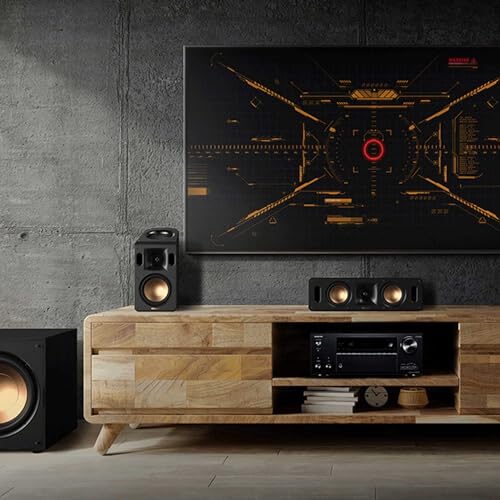
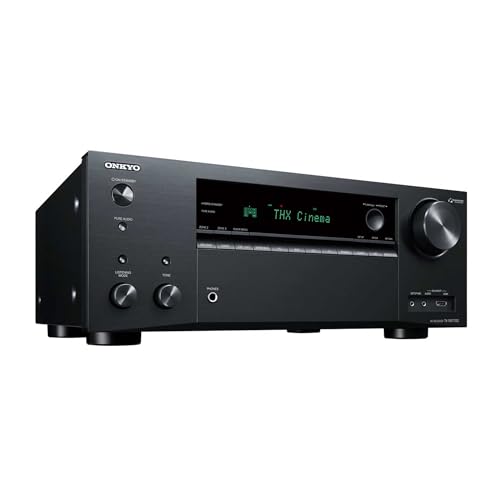
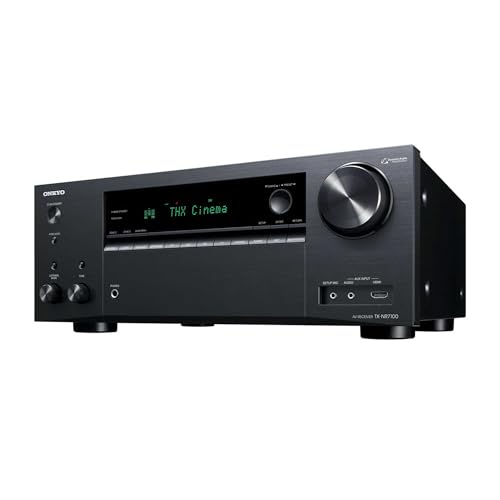
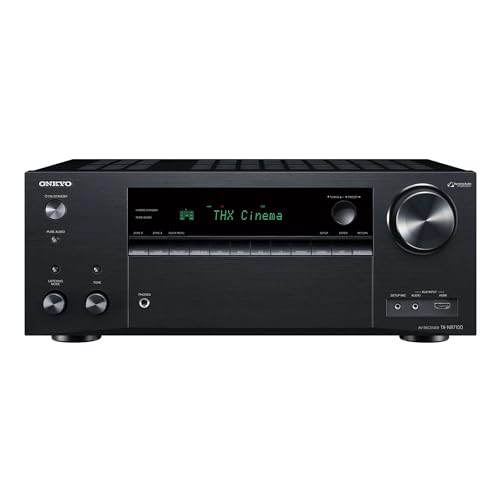
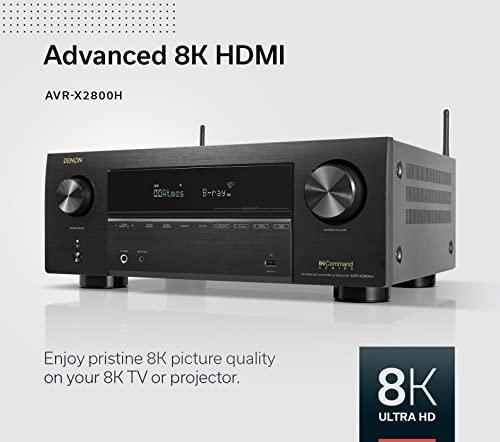
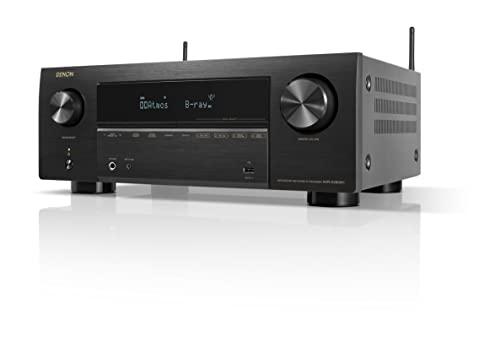

If you're building a home theater or upgrading from a basic sound system, choosing the right AV receiver feels overwhelming. These devices serve as the brain of your entertainment setup, combining amplification, audio processing, and smart features in one box. Today we're comparing two popular mid-range options: the Onkyo TX-NR7100, released in 2021, and the Denon AVR-X2800H, which hit the market in 2022.
Both receivers handle modern 8K video and immersive surround sound, but they take different approaches to delivering great performance. After researching expert reviews and user feedback, we've found clear differences that should guide your decision.
Before diving into specifics, let's clarify what you're buying. An AV receiver combines several components that used to be separate: a multi-channel amplifier (which powers your speakers), an audio processor (which decodes movie soundtracks), a video processor (which handles picture quality), and a smart streaming device (which connects to services like Netflix).
The key considerations when shopping are straightforward: how many speakers can it power, how good does it sound, can it handle your video sources, and how easy is it to use? Modern receivers also need to process immersive audio formats like Dolby Atmos, which adds overhead sound effects that seem to come from above your head.
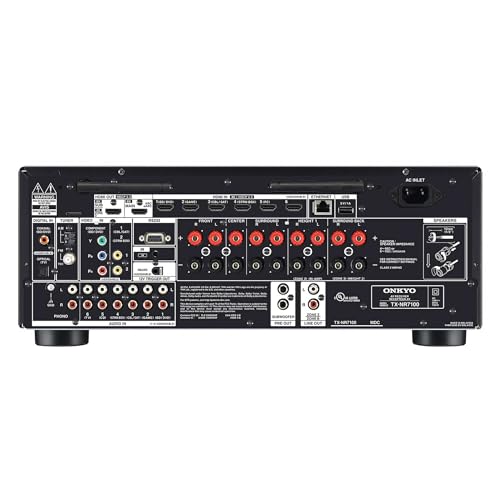
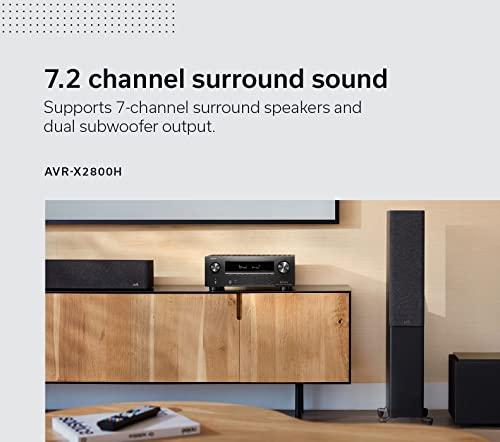
The most obvious difference between these receivers is channel count. The Onkyo TX-NR7100 offers 9.2 channels, while the Denon AVR-X2800H provides 7.2 channels. That ".2" refers to subwoofer outputs - both can handle two separate subwoofers for better bass distribution.
But what do those extra channels mean in practice? With 9 channels, the Onkyo TX-NR7100 can power more ambitious speaker layouts. You could run a 7.2.2 system (seven main speakers plus two overhead Atmos speakers) or even a 5.2.4 setup (five main speakers plus four overhead speakers). The Denon AVR-X2800H tops out at 5.1.2 - five main speakers plus two overhead channels.
This matters because Dolby Atmos works better with more height speakers. The format treats sounds as objects that can move around your room, including overhead. More height speakers create a more convincing bubble of sound around you. However, most people don't need or want the complexity of seven or nine speakers - a 5.1.2 system already delivers impressive immersion.
On paper, the Onkyo TX-NR7100 delivers 100 watts per channel compared to the Denon's 95 watts. But power ratings can be misleading. Both measurements use the same testing standard (8 ohm loads, 20Hz-20kHz frequency response, 0.08% distortion with two channels driven), so they're directly comparable. The five-watt difference is negligible in real-world use.
More important is amplifier design. The Onkyo TX-NR7100 uses Class D amplification, which is highly efficient and generates less heat. It also features what Onkyo calls "hi-current" design, meaning it can deliver sudden bursts of power when movie soundtracks demand it. The Denon AVR-X2800H uses traditional Class A/B amplification, which some audiophiles prefer for its warmer sound character.
Both receivers should easily fill medium to large rooms with sound. The Onkyo TX-NR7100 might have a slight edge in very dynamic movie scenes thanks to its power supply design, but the difference isn't dramatic.
Here's where these receivers really separate themselves. The Onkyo TX-NR7100 includes Dirac Live room correction, which is typically found in much more expensive equipment. Room correction systems use microphones to measure how your room affects sound, then automatically adjust the receiver's output to compensate for problems like boomy bass or harsh treble.
Dirac Live is considered among the best correction systems available. It can take measurements from up to 13 different positions in your room and create a detailed acoustic map. The result is more accurate sound that doesn't vary dramatically depending on where you sit.
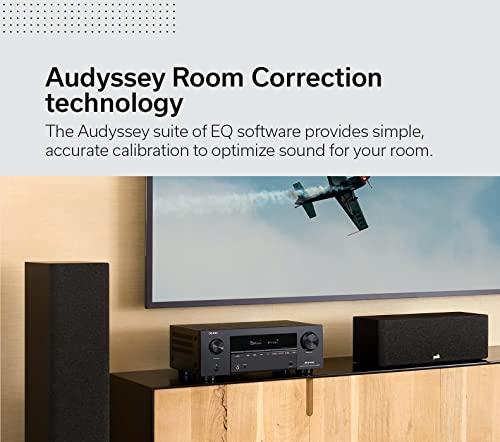
The Denon AVR-X2800H uses Audyssey MultEQ XT, which is simpler but still effective. It measures from up to eight positions and makes similar corrections, though not with Dirac's sophistication. For most users, Audyssey delivers excellent results with less complexity.
Both systems include smartphone apps that let you fine-tune the corrections. Based on user feedback, Dirac Live offers more control but requires more patience to optimize. Audyssey is more plug-and-play.
The Onkyo TX-NR7100 also carries THX Certified Select designation, meaning it passed thousands of tests for reference-quality performance. THX certification ensures the receiver can accurately reproduce movie soundtracks as filmmakers intended, with specific requirements for frequency response, distortion, and dynamic range.
Both receivers handle 8K video at 60Hz and 4K at 120Hz, the latest standards for premium TVs and gaming consoles. However, the Denon AVR-X2800H has a clear advantage in HDMI implementation.
The Denon offers three HDMI 2.1 inputs that support the full 40 Gbps bandwidth needed for uncompressed 8K video. It also includes comprehensive gaming features like Variable Refresh Rate (VRR), which eliminates screen tearing, and Auto Low Latency Mode (ALLM), which reduces input lag when gaming. The Onkyo TX-NR7100 supports these formats but with fewer dedicated high-bandwidth inputs.
This matters significantly if you game on PlayStation 5, Xbox Series X, or a high-end PC graphics card. These systems benefit tremendously from HDMI 2.1 features, and having three inputs means you can connect multiple devices without constantly switching cables.
For video processing, the Denon AVR-X2800H upscales lower-resolution content to 8K and handles HDR (High Dynamic Range) formats including HDR10, HDR10+, Dolby Vision, and Hybrid Log Gamma. The Onkyo TX-NR7100 provides similar video processing but without quite the same polish in its upscaling algorithms.
Modern receivers need robust streaming capabilities, and both deliver solid smart features with different approaches. The Onkyo TX-NR7100 supports multiple ecosystems simultaneously: Chromecast built-in, DTS Play-Fi, AirPlay 2, and even Works with Sonos certification (though that requires a Sonos Port device).
Interestingly, the Onkyo includes aptX and aptX HD Bluetooth codecs, which deliver higher-quality wireless audio than standard Bluetooth. This matters if you frequently stream music wirelessly from phones or tablets.
The Denon AVR-X2800H builds around HEOS, Denon's proprietary multi-room system. HEOS can connect up to 32 devices throughout your home and offers tight integration with popular streaming services. The Denon also supports three zones of audio compared to the Onkyo's two zones, giving you more flexibility for whole-home audio.
Both receivers work with major voice assistants (Alexa, Google Assistant, and Siri), though the Denon tends to respond more quickly to voice commands based on user reports.
For home theater, both receivers excel but with different personalities. The Onkyo TX-NR7100 delivers what reviewers consistently describe as "authoritative" sound. Its THX certification shows in precise surround panning and explosive dynamics during action sequences. The additional channels enable more enveloping Atmos effects when properly configured.
The Denon AVR-X2800H underwent significant tuning for its 2022 release, resulting in what experts call a more "refined" sound signature. It excels at dialogue clarity - voices cut through complex soundtracks without getting muddy. The soundstage feels spacious and coherent rather than aggressive.
Both receivers handle low-frequency effects well, cleanly passing bass information to subwoofers without the boominess that plagued older budget receivers. The Onkyo might have a slight edge in pure impact during explosive movie moments, while the Denon maintains better balance across different content types.
Here's where personal preference becomes crucial. The Onkyo TX-NR7100 takes a neutral approach that doesn't favor any particular genre. Jazz sounds natural, rock maintains its energy, and classical music preserves its dynamic range. The Dirac Live system can be tuned extensively for music listening, creating an almost audiophile-quality stereo experience when desired.
The Denon AVR-X2800H brings more musicality to the table than previous Denon models. Reviewers note improved imaging (the sense of where instruments appear in space) and a warmer overall character that many find more engaging for casual music listening. Its Class A/B amplification contributes to this slightly warmer sound signature.
Both receivers include direct modes that bypass digital processing for purest audio quality, and both handle high-resolution audio files including FLAC and DSD formats seamlessly.
The Denon AVR-X2800H wins decisively for gaming applications. Its superior HDMI 2.1 implementation means lower input lag, better compatibility with next-generation consoles, and support for Variable Refresh Rate gaming. The difference is noticeable in fast-paced games where every millisecond matters.
The Onkyo TX-NR7100 handles gaming adequately but lacks some of the Denon's advanced features. If gaming represents a significant portion of your entertainment time, especially with modern consoles, the Denon provides a noticeably better experience.
Both receivers have improved their user interfaces significantly compared to older models, but they take different approaches. The Onkyo TX-NR7100 offers extensive customization options through its Dirac Live integration, but this comes with complexity. Setting up Dirac Live properly requires patience and multiple measurement sessions.
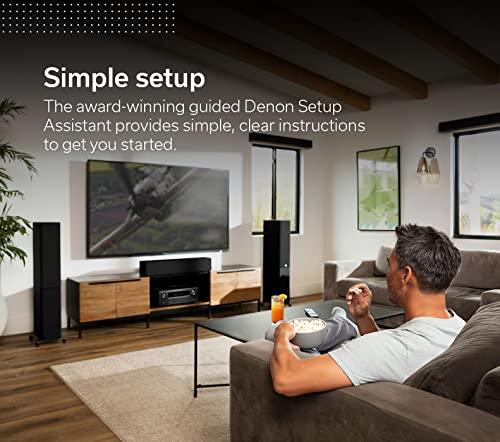
The Denon AVR-X2800H prioritizes ease of use with its modernized setup assistant that guides you through initial configuration. Its room correction runs faster and requires less user intervention, though it provides fewer fine-tuning options.
Daily operation favors the Denon as well. Its smartphone app receives frequent updates and offers intuitive control over volume, inputs, and sound modes. The Onkyo app is functional but less polished, and some users report occasional connectivity issues.
Both receivers include learning remotes, though neither is backlit - a surprising omission at this price level in 2024.
At the time of writing, both receivers occupy similar price ranges in the mid-tier AV receiver market, though the Onkyo TX-NR7100 typically commands a slight premium due to its additional channels and Dirac Live inclusion. The value proposition depends heavily on your specific needs.
The Onkyo TX-NR7100 offers more raw capability per dollar if you can utilize its additional channels and appreciate its professional-grade room correction. For dedicated home theater enthusiasts planning complex speaker layouts, it represents excellent value despite its higher complexity.
The Denon AVR-X2800H delivers more refined performance with superior convenience features. Its gaming optimization, easier setup process, and polished daily operation justify its pricing for mainstream users who want great results without extensive tweaking.
Choose the Onkyo TX-NR7100 if you're building a dedicated home theater room with ambitious speaker layouts. Its nine channels enable more immersive Atmos configurations, while Dirac Live room correction can optimize sound for your specific space with professional-grade precision. The THX certification and neutral sound signature make it ideal for serious movie enthusiasts who want reference-quality performance.
The Onkyo also suits users who appreciate having control over their audio processing. If you enjoy tweaking settings and don't mind spending time optimizing your system, its extensive customization options reward patience with superior results.
Select the Denon AVR-X2800H if you want excellent performance with minimal hassle. Its superior HDMI 2.1 implementation makes it the clear choice for gamers with modern consoles, while its refined sound signature pleases both movie and music listeners. The easier setup process and more intuitive daily operation make it ideal for users who want great sound without becoming home theater experts.
The Denon particularly excels in mixed-use scenarios where one receiver handles movies, music, and gaming equally well. Its three-zone capability and robust HEOS integration also make it better for whole-home audio systems.
After extensive research into expert reviews and user feedback, both receivers deliver impressive performance for their respective target audiences. The Onkyo TX-NR7100 rewards enthusiasts with maximum flexibility and professional-grade features, while the Denon AVR-X2800H offers refined performance with superior convenience. Your choice should align with whether you prioritize ultimate capability or polished everyday usability.
| Onkyo TX-NR7100 | Denon AVR-X2800H |
|---|---|
| Channel Configuration - Determines speaker layout flexibility and Atmos capabilities | |
| 9.2 channels (supports up to 7.2.2 or 5.2.4 Atmos setups) | 7.2 channels (limited to 5.1.2 Atmos maximum) |
| Power Output - Affects volume levels and dynamic range in larger rooms | |
| 100W per channel (8Ω, 2ch driven) | 95W per channel (8Ω, 2ch driven) |
| Room Correction System - Critical for optimizing sound in your specific room | |
| Dirac Live (professional-grade, up to 13 measurement positions) | Audyssey MultEQ XT (simpler setup, 8 measurement positions) |
| HDMI 2.1 Gaming Support - Essential for PS5/Xbox Series X at 4K/120Hz | |
| Limited HDMI 2.1 implementation | 3 full-bandwidth HDMI 2.1 inputs with VRR/ALLM support |
| Audio Certification - Validates reference-quality performance standards | |
| THX Certified Select (cinema reference quality) | No THX certification |
| Amplifier Design - Affects sound character and efficiency | |
| Class D with hi-current power supply | Class A/B discrete amplification |
| Multi-Zone Capability - For whole-home audio distribution | |
| 2 zones supported | 3 zones supported |
| Streaming Ecosystem - Determines smart features and app quality | |
| Multiple platforms (Chromecast, DTS Play-Fi, AirPlay 2, Sonos compatible) | HEOS built-in with comprehensive voice assistant support |
| Bluetooth Audio Quality - Important for wireless music streaming | |
| aptX and aptX HD support (higher quality wireless) | Standard Bluetooth codecs only |
| Setup Complexity - Affects how quickly you get great sound | |
| Advanced but complex (Dirac Live requires patience to optimize) | User-friendly with modernized setup assistant |
The primary difference is channel count: the Onkyo TX-NR7100 offers 9.2 channels while the Denon AVR-X2800H provides 7.2 channels. This means the Onkyo can power more complex Dolby Atmos speaker setups like 7.2.2 or 5.2.4 configurations, while the Denon is limited to 5.1.2 maximum. The Onkyo TX-NR7100 also includes professional-grade Dirac Live room correction, whereas the Denon AVR-X2800H uses the simpler Audyssey MultEQ XT system.
The Denon AVR-X2800H is significantly better for gaming. It features three full-bandwidth HDMI 2.1 inputs that support Variable Refresh Rate (VRR), Auto Low Latency Mode (ALLM), and Quick Frame Transport for smooth 4K/120Hz gaming. The Onkyo TX-NR7100 has limited HDMI 2.1 implementation, making the Denon the clear winner for next-generation console gaming.
Yes, both the Onkyo TX-NR7100 and Denon AVR-X2800H support Dolby Atmos and DTS:X immersive audio formats. However, the Onkyo can handle more ambitious speaker layouts with its 9 channels, supporting up to 7.2.2 or 5.2.4 Atmos configurations. The Denon is limited to 5.1.2 Atmos setups but still delivers excellent immersive sound for most home theaters.
The Onkyo TX-NR7100 includes Dirac Live room correction, which is considered professional-grade technology that can measure up to 13 room positions for precise acoustic optimization. The Denon AVR-X2800H uses Audyssey MultEQ XT, which measures 8 positions and is easier to set up but less sophisticated. For serious home theater enthusiasts, the Onkyo's Dirac Live system offers superior calibration capabilities.
Both receivers provide adequate power for medium to large rooms. The Onkyo TX-NR7100 delivers 100 watts per channel while the Denon AVR-X2800H provides 95 watts per channel. This 5-watt difference is negligible in practice. The Onkyo uses Class D amplification with hi-current design for dynamic performance, while the Denon employs traditional Class A/B amplification preferred by some audiophiles.
The Denon AVR-X2800H is significantly easier to set up and operate daily. It features a modernized setup assistant and more intuitive smartphone app, while its Audyssey room correction runs quickly with minimal user input. The Onkyo TX-NR7100 offers more customization through Dirac Live but requires patience and technical knowledge to optimize properly, making the Denon better for users wanting great sound without complexity.
Yes, both the Onkyo TX-NR7100 and Denon AVR-X2800H support 8K/60Hz and 4K/120Hz video pass-through with HDR formats including HDR10, HDR10+, and Dolby Vision. Both include built-in streaming services like Spotify, TIDAL, and support for AirPlay 2. However, the Denon has superior HDMI implementation with more high-bandwidth inputs, while the Onkyo offers broader multi-room compatibility including Sonos integration.
The Denon AVR-X2800H provides superior multi-room functionality with HEOS built-in supporting up to 32 connected devices and three audio zones. The Onkyo TX-NR7100 supports two zones but offers broader ecosystem compatibility, working with Chromecast, DTS Play-Fi, AirPlay 2, and Sonos systems. For dedicated multi-room setups, the Denon's HEOS integration is more comprehensive and user-friendly.
Both receivers deliver excellent sound quality but with different characteristics. The Onkyo TX-NR7100 provides neutral, reference-quality sound thanks to its THX Certified Select designation and Dirac Live optimization. The Denon AVR-X2800H offers a more refined, musical presentation with excellent dialogue clarity and spacious soundstage. The Onkyo excels in pure accuracy, while the Denon is more forgiving and engaging for casual listening.
For dedicated music listening, the Onkyo TX-NR7100 has advantages with its neutral sound signature, superior Bluetooth codecs (aptX and aptX HD), and extensive Dirac Live tuning options. However, the Denon AVR-X2800H underwent significant tuning for 2022 that improved its musicality, offering better imaging and a warmer character many find more engaging. Both handle high-resolution audio formats excellently, making either suitable for serious music enjoyment.
The Onkyo TX-NR7100 stands out with THX Certified Select designation, professional Dirac Live room correction, superior Bluetooth audio quality with aptX HD, and broader multi-room ecosystem support. The Denon AVR-X2800H differentiates itself with comprehensive HDMI 2.1 gaming features, three-zone capability, intuitive HEOS integration, and faster, easier setup process that delivers great results with minimal tweaking.
Long-term value depends on your priorities. The Onkyo TX-NR7100 offers more channels and professional features that may remain relevant longer as Atmos content evolves. Its Dirac Live system can be continuously refined as you upgrade components. The Denon AVR-X2800H provides better future-proofing for gaming with superior HDMI 2.1 implementation and receives more frequent software updates. Both represent solid investments, with the Onkyo favoring enthusiasts and the Denon serving mainstream users better.
We've done our best to create useful and informative comparisons to help you decide what product to buy. Our research uses advanced automated methods to create this comparison and perfection is not possible - please contact us for corrections or questions. These are the sites we've researched in the creation of this article: crutchfield.com - prohifi.in - bestbuy.com - h-m-entertainment.com - audiosciencereview.com - crutchfield.ca - soundandvision.com - avsforum.com - avgadgets.com - youtube.com - onkyo.com - crutchfield.com - onkyo.com - accessories4less.com - klipsch.com - youtube.com - listenup.com - intl.onkyo-av.com - bestbuy.com - 420spotshop.com - support.onkyousa.com - theaudiotailor.com.au - ecoustics.com - simplehomecinema.com - whathifi.com - audioadvisor.com - youtube.com - bestbuy.com - e-catalog.com - crutchfield.com - avsforum.com - crutchfield.com - whathifi.com - richersounds.com - bestbuy.com - accessories4less.com - projectorscreen.com - adiglobaldistribution.us - youtube.com - bestbuy.com - bestbuy.com - sweetwater.com

Privacy Policy
Terms and Conditions - Affiliate Policy
Home Security
© Copyright 2008-2026.
11816 Inwood Rd #1211, Dallas, TX 75244