

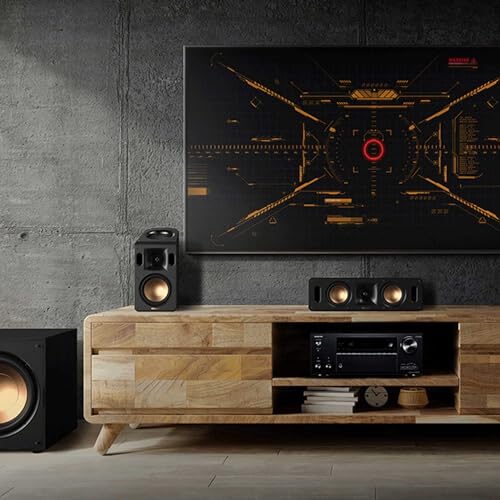
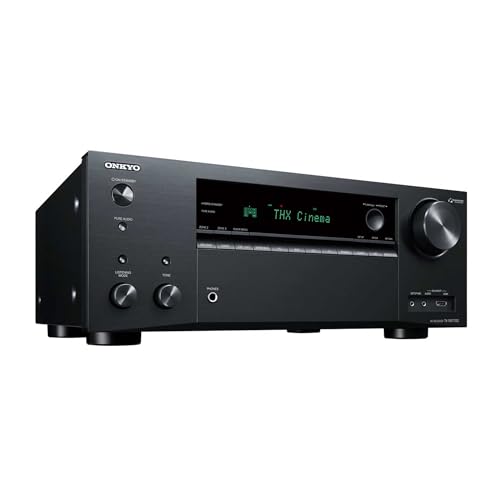
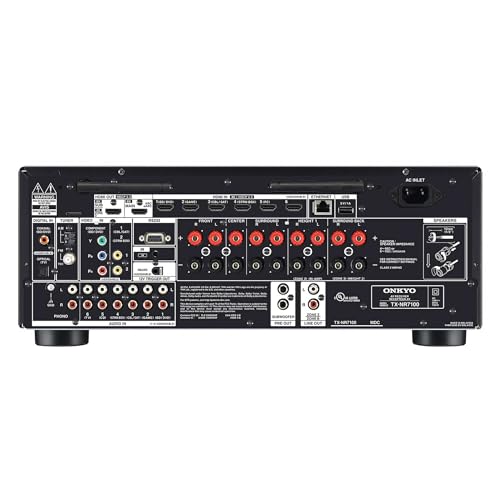
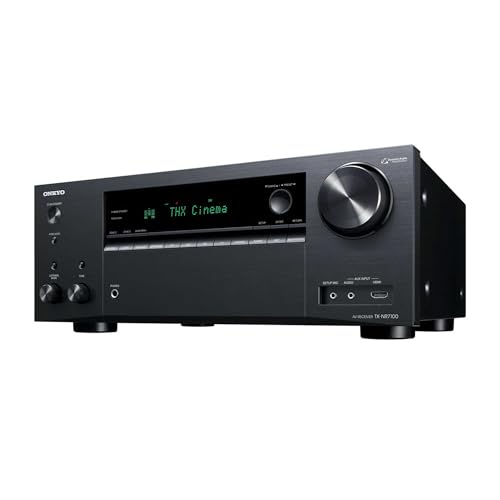
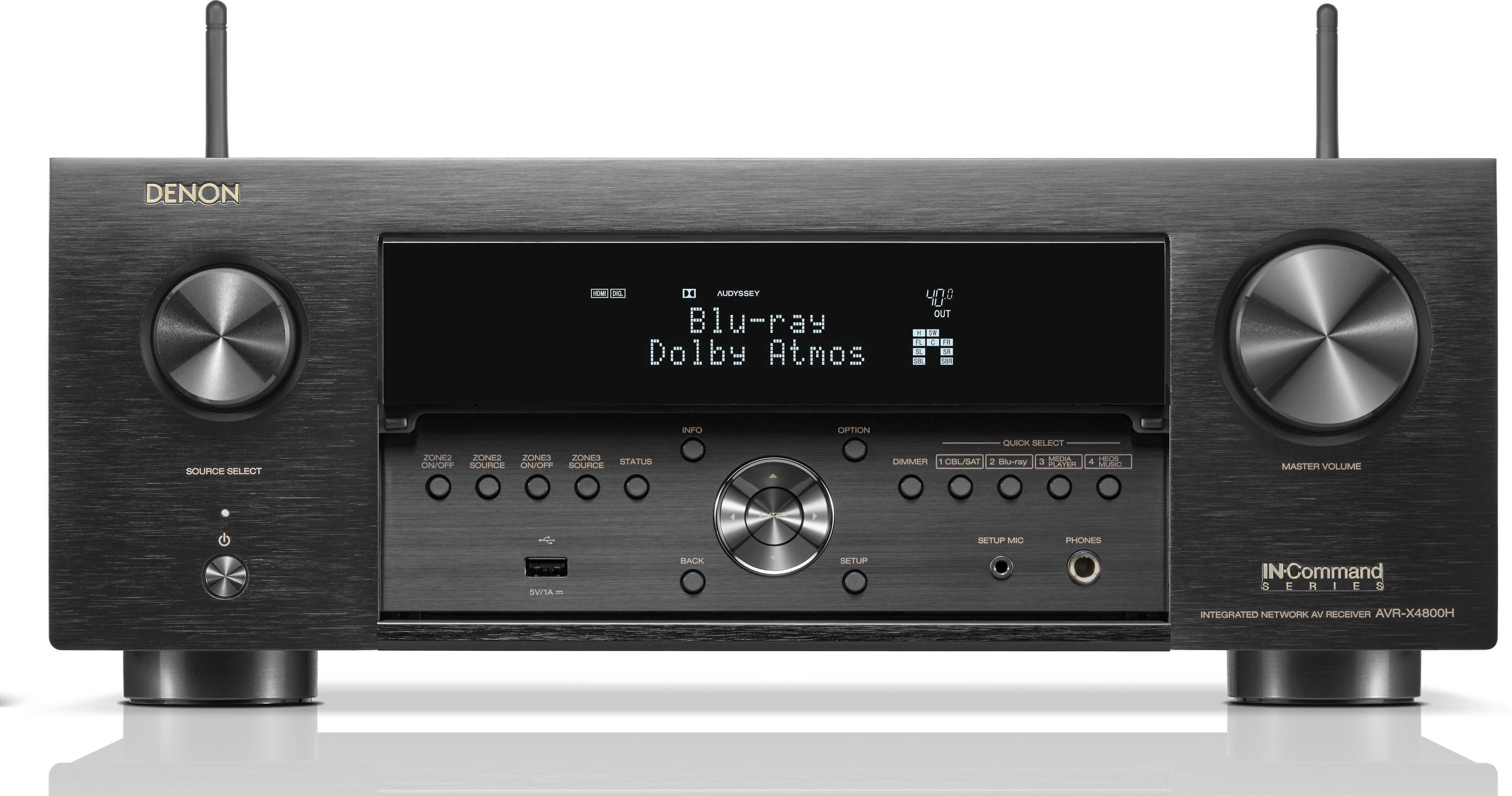
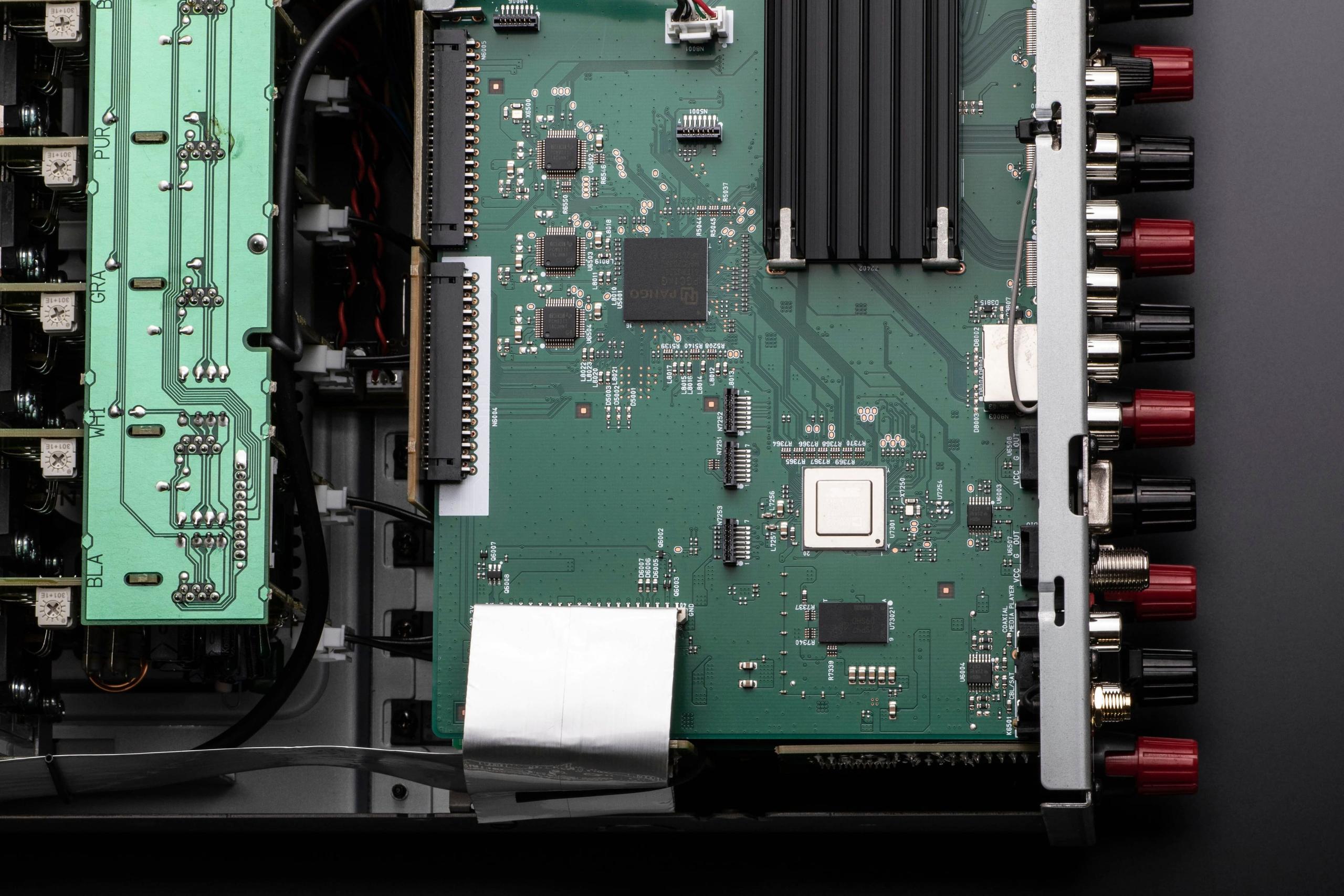
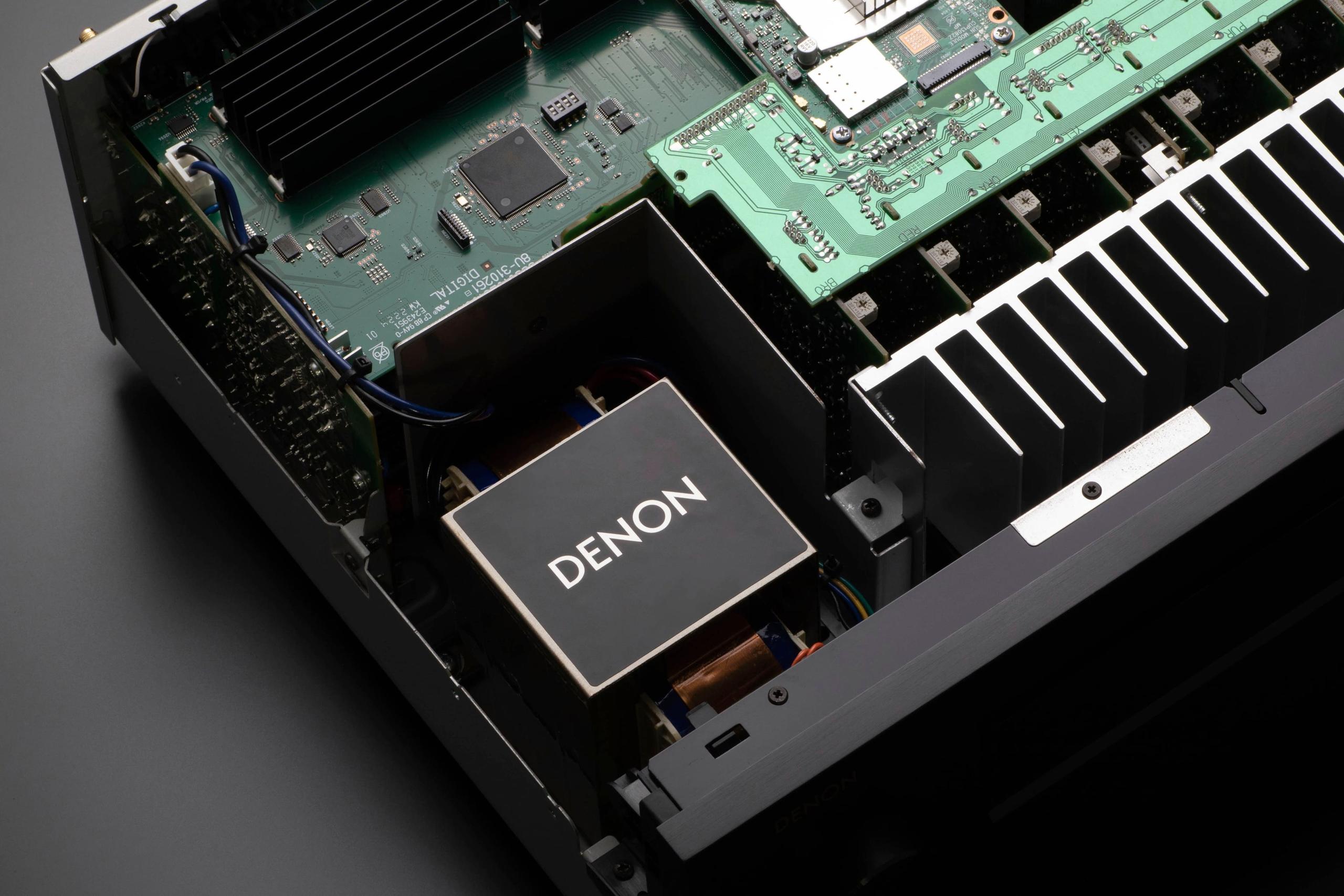
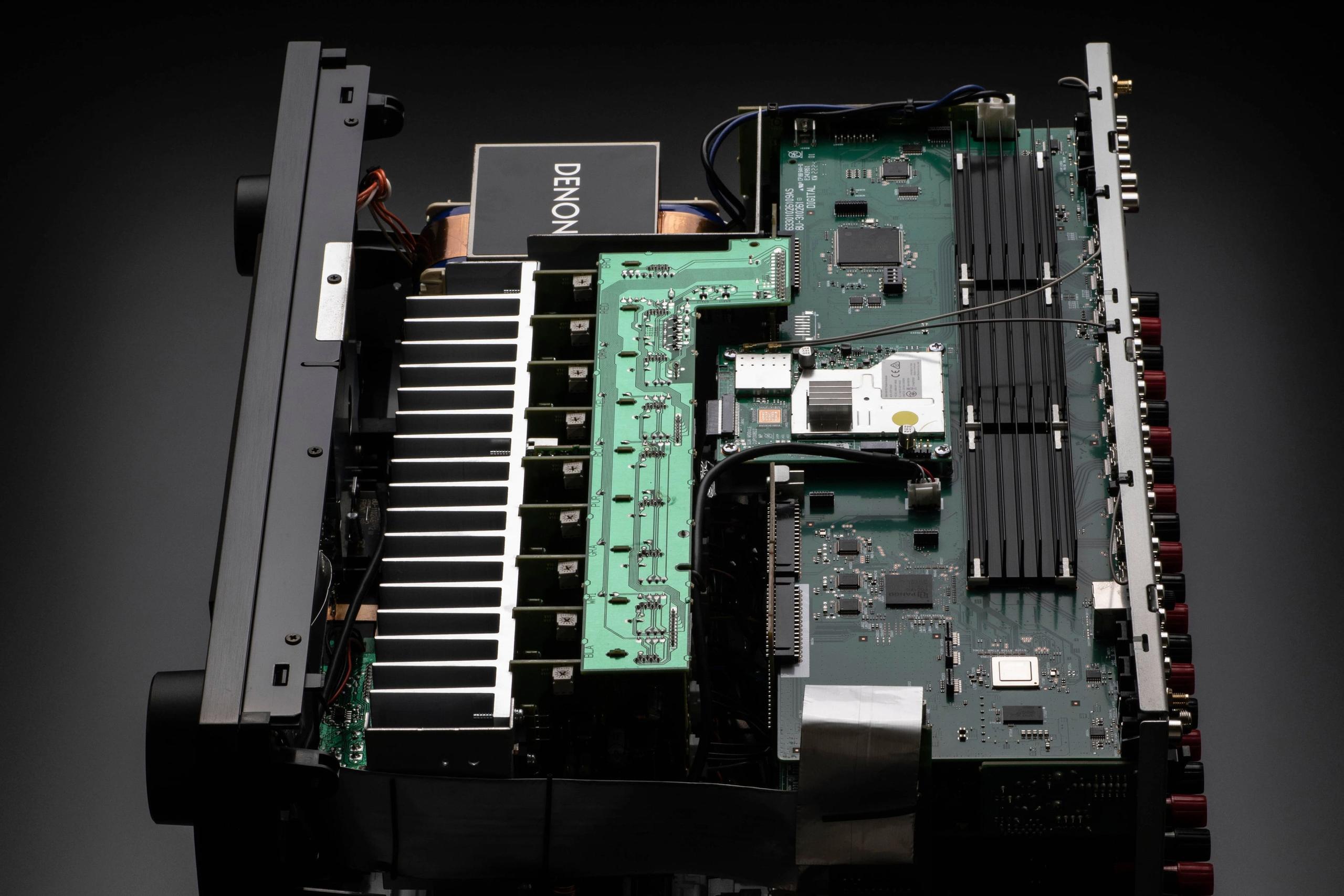
When you're building a serious home theater, the AV receiver serves as the brain of your entire system. It processes all your audio and video signals, powers your speakers, and manages everything from Netflix streaming to Xbox gaming. Today we're comparing two standout 9-channel receivers that take very different approaches to delivering immersive surround sound: the Onkyo TX-NR7100 and the Denon AVR-X4800H.
Both receivers excel at creating those jaw-dropping Dolby Atmos experiences where helicopters fly overhead and rain seems to fall from your ceiling speakers. However, they represent fundamentally different philosophies in AV receiver design, and understanding these differences will help you make the right choice for your setup.
Nine-channel receivers hit the sweet spot for most home theater enthusiasts. They provide enough amplification for sophisticated Dolby Atmos setups without the complexity and cost of 11+ channel monsters. Think of them as the difference between a well-equipped pickup truck and a commercial semi – they handle serious loads without requiring a special license.
These receivers typically support configurations like 5.1.4 (five main speakers, one subwoofer, four height speakers) or 7.1.2 (seven main speakers, one subwoofer, two height speakers). The magic happens when sound engineers place audio objects in three-dimensional space around you. Instead of just left-right-center-surround, you get sounds that move overhead, creating that "you're inside the movie" experience that makes Atmos so compelling.
The key considerations when evaluating these receivers include raw amplification power, audio processing sophistication, video capabilities for modern displays and gaming consoles, configuration flexibility for different room layouts, and overall build quality that ensures years of reliable performance.
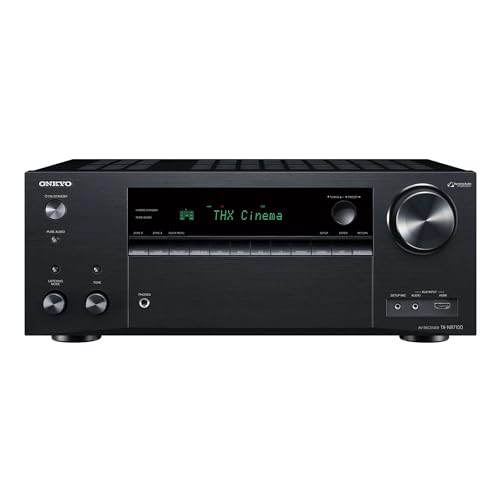
The Onkyo TX-NR7100 launched in 2021 as Onkyo's answer to the growing demand for affordable receivers that didn't sacrifice audio quality. It earned THX certification, meaning it passed thousands of rigorous tests to ensure cinema-reference performance. At the time of writing, it typically costs significantly less than premium alternatives while delivering impressive specifications on paper.
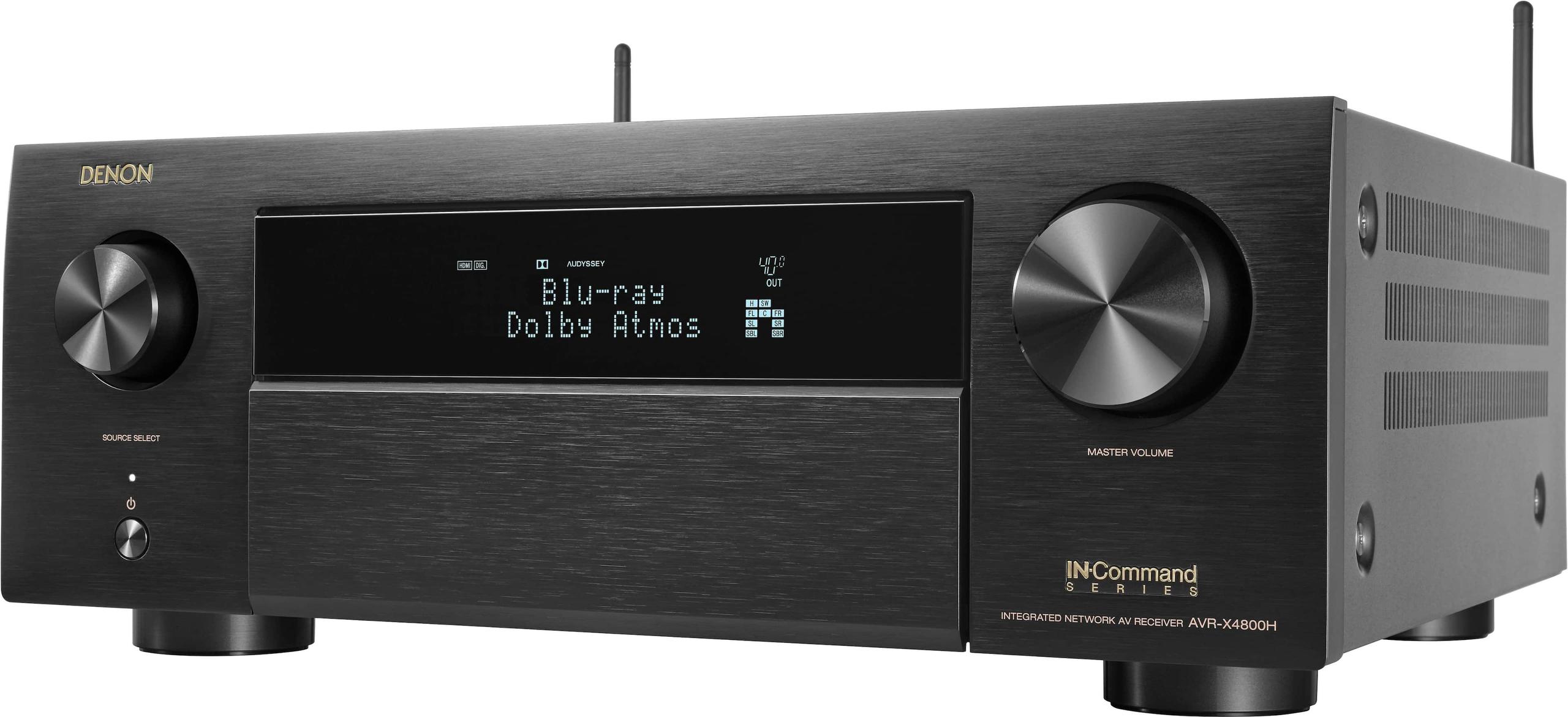
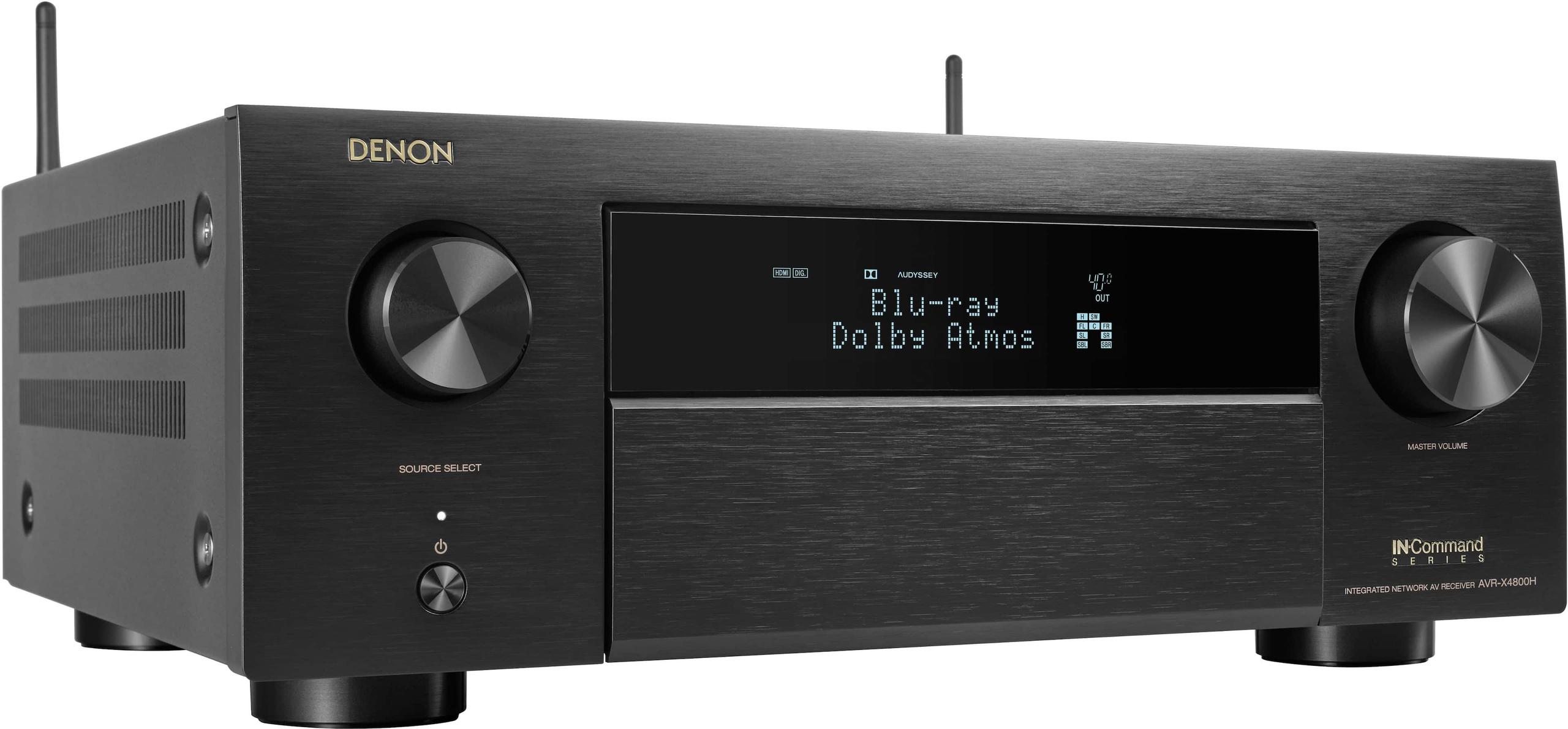
The Denon AVR-X4800H arrived in 2023 as Denon's flagship 9-channel offering, representing nearly a decade of refinement in their receiver technology. It commands a substantial premium over the Onkyo – roughly double at the time of writing – but justifies this with superior build quality, advanced processing capabilities, and maximum configuration flexibility.
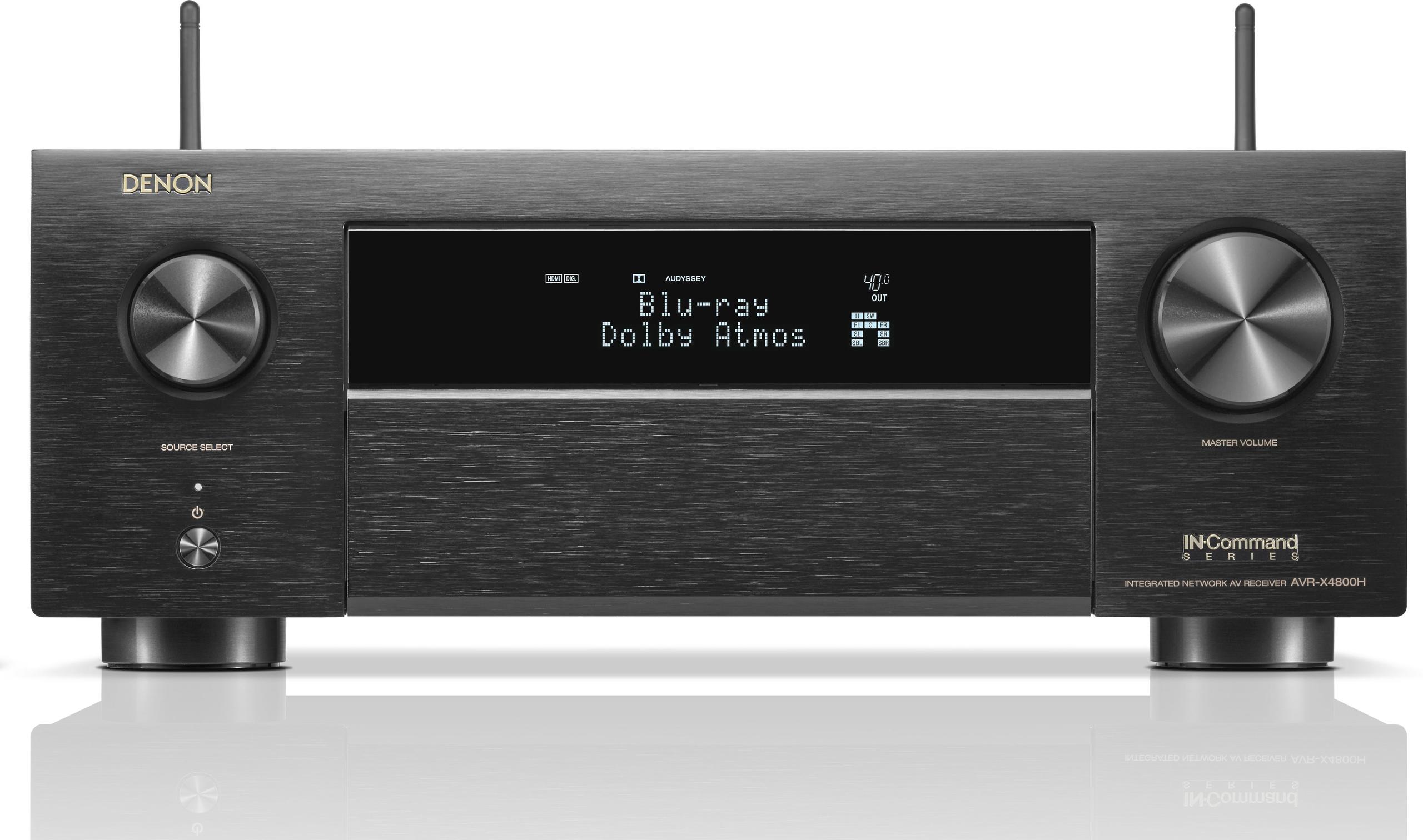
Since the Onkyo TX-NR7100 launched, the home theater landscape has evolved significantly. 8K displays became more affordable, gaming consoles like the PlayStation 5 and Xbox Series X pushed 4K gaming to 120Hz, and room correction technology advanced considerably. The Denon AVR-X4800H incorporates these developments, while the Onkyo remains focused on its original mission of delivering exceptional audio performance at an accessible price point.
When it comes to raw power, the Onkyo TX-NR7100 takes an impressive lead on paper. It delivers 185 watts per channel into 8-ohm speakers, compared to the Denon AVR-X4800H's 125 watts per channel. However, understanding what these numbers actually mean requires diving deeper into amplifier design philosophy.
The Onkyo's approach emphasizes maximum power output using Wide Range Amp Technology (WRAT), which prevents phase shifting – essentially ensuring that all frequencies arrive at your ears at precisely the right time for accurate imaging. When you hear a gunshot move from left to right across your room, WRAT helps ensure that movement sounds natural and precise rather than smeared or delayed.
The Onkyo also features Dynamic Audio Amplification with a High Current Power Supply (H.C.P.S.), which delivers instantaneous high-current power when music or movies demand it. Think of this like having a turbo engine that provides extra power exactly when you need it, rather than constantly running at maximum capacity. This design proves particularly beneficial for speakers that present challenging impedance loads – those difficult-to-drive speakers that make many receivers struggle.
The Denon AVR-X4800H takes a different approach, focusing on consistent multi-channel performance rather than maximum single-channel output. Its discrete amplifier design with advanced thermal management ensures stable power delivery across all nine channels simultaneously. While 125 watts sounds modest compared to the Onkyo's 185 watts, this difference matters less in real-world use than you might expect.
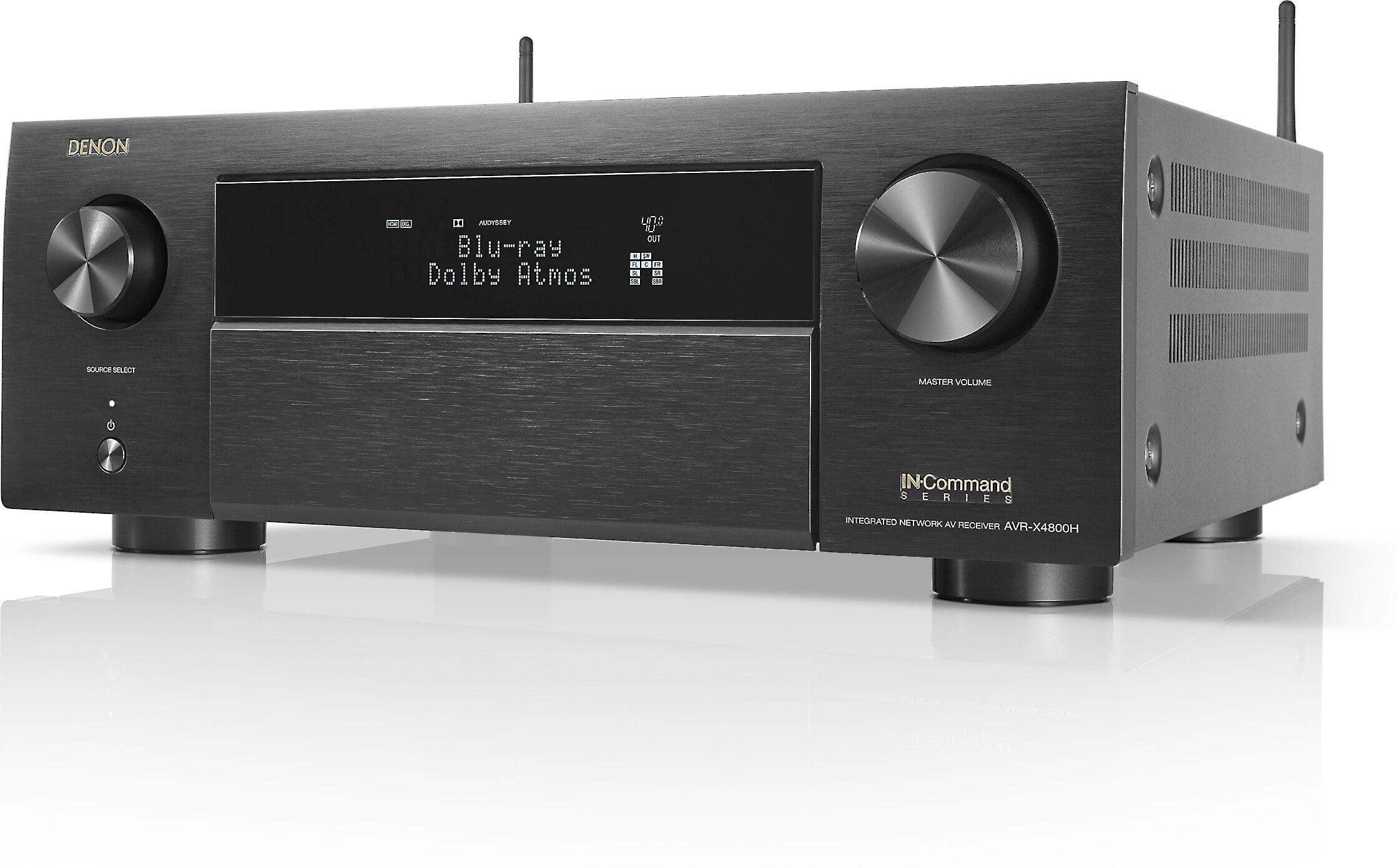
Here's why: Most people listen at levels well below what requires maximum power output. The difference between 125 watts and 185 watts represents about 1.7 dB of maximum volume capability – barely noticeable to human ears. However, the Denon's superior build quality means those 125 watts remain consistent even during demanding multi-channel passages where lesser receivers might start to strain.
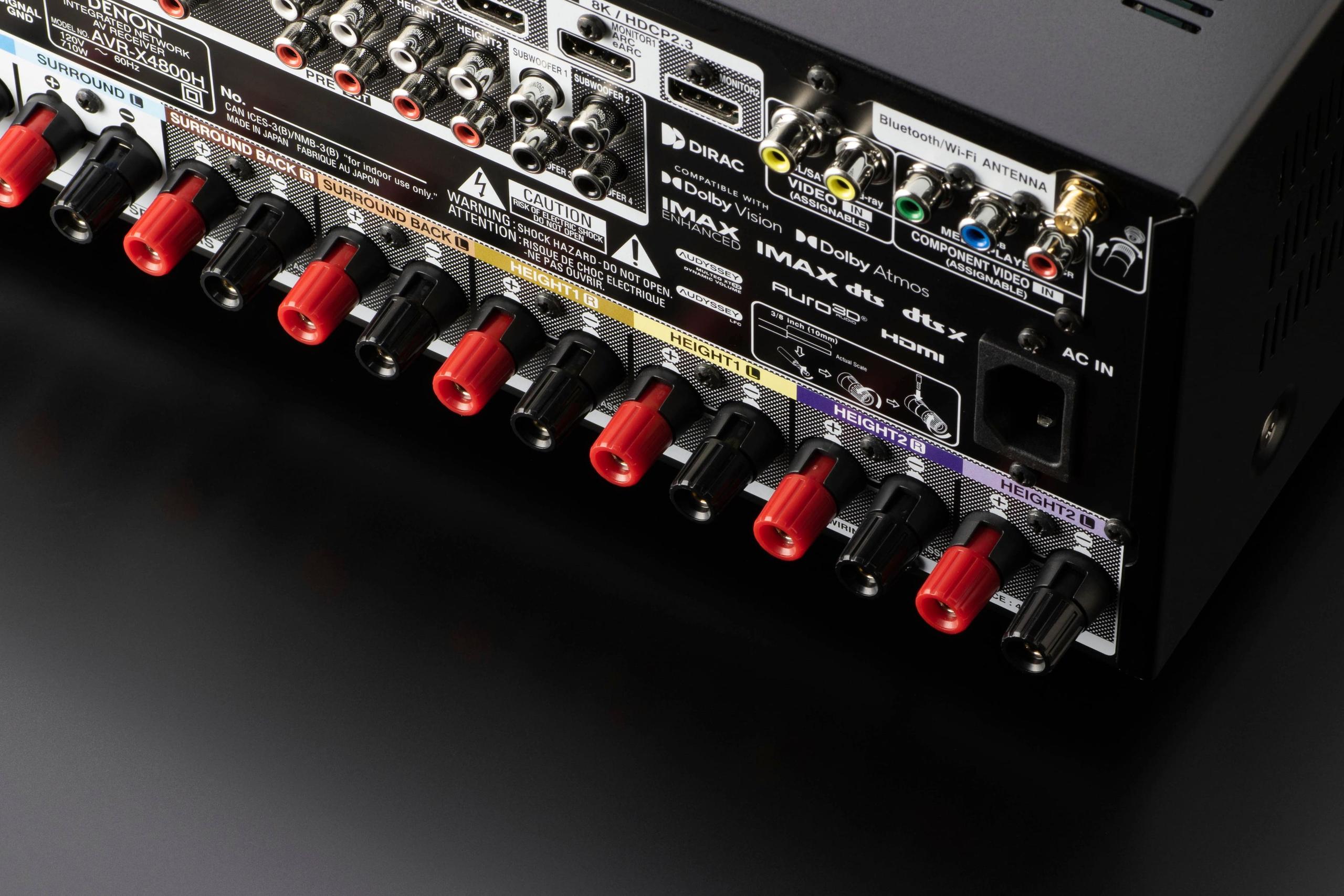
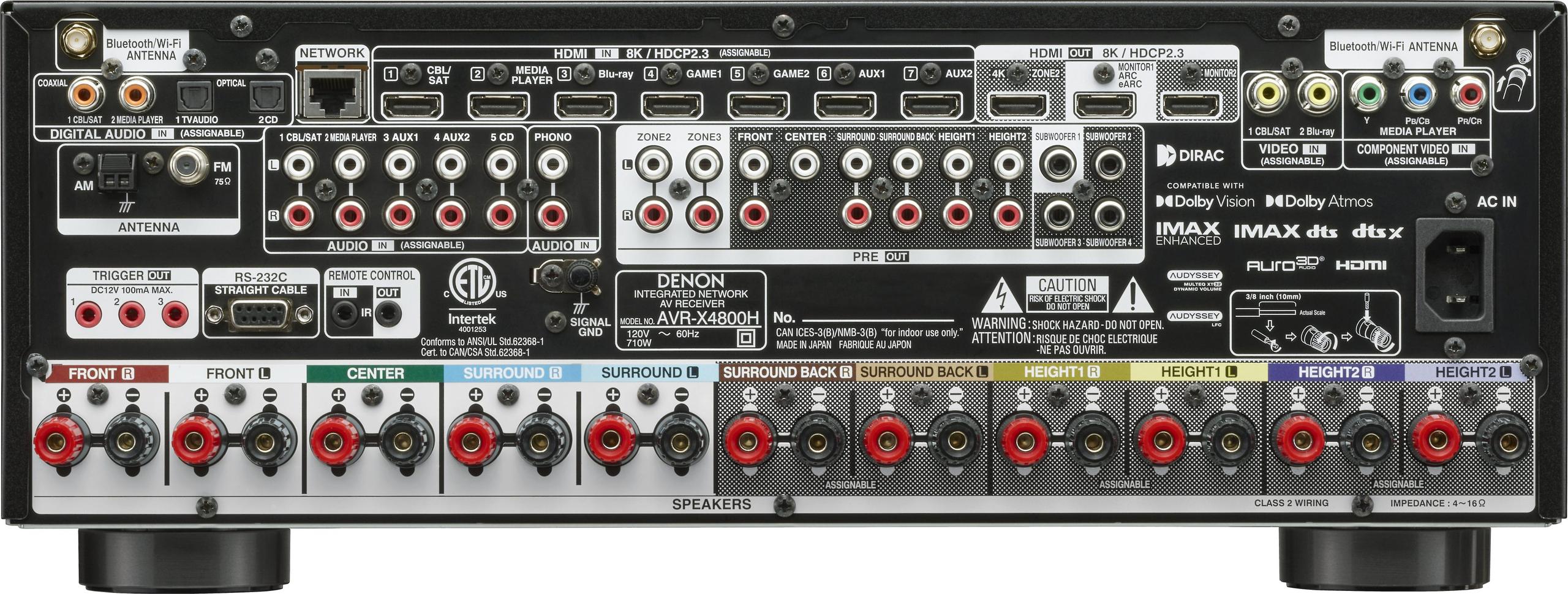
The Denon's four independent subwoofer outputs with advanced bass management also provide more sophisticated low-frequency control. Instead of simply splitting a single subwoofer signal, you can position multiple subwoofers strategically around your room and manage each one independently. This creates smoother bass response throughout your seating area, eliminating those annoying spots where bass either booms or disappears.
Both receivers support modern immersive audio formats like Dolby Atmos and DTS:X, but their approaches to audio processing reveal significant differences in philosophy and capability.
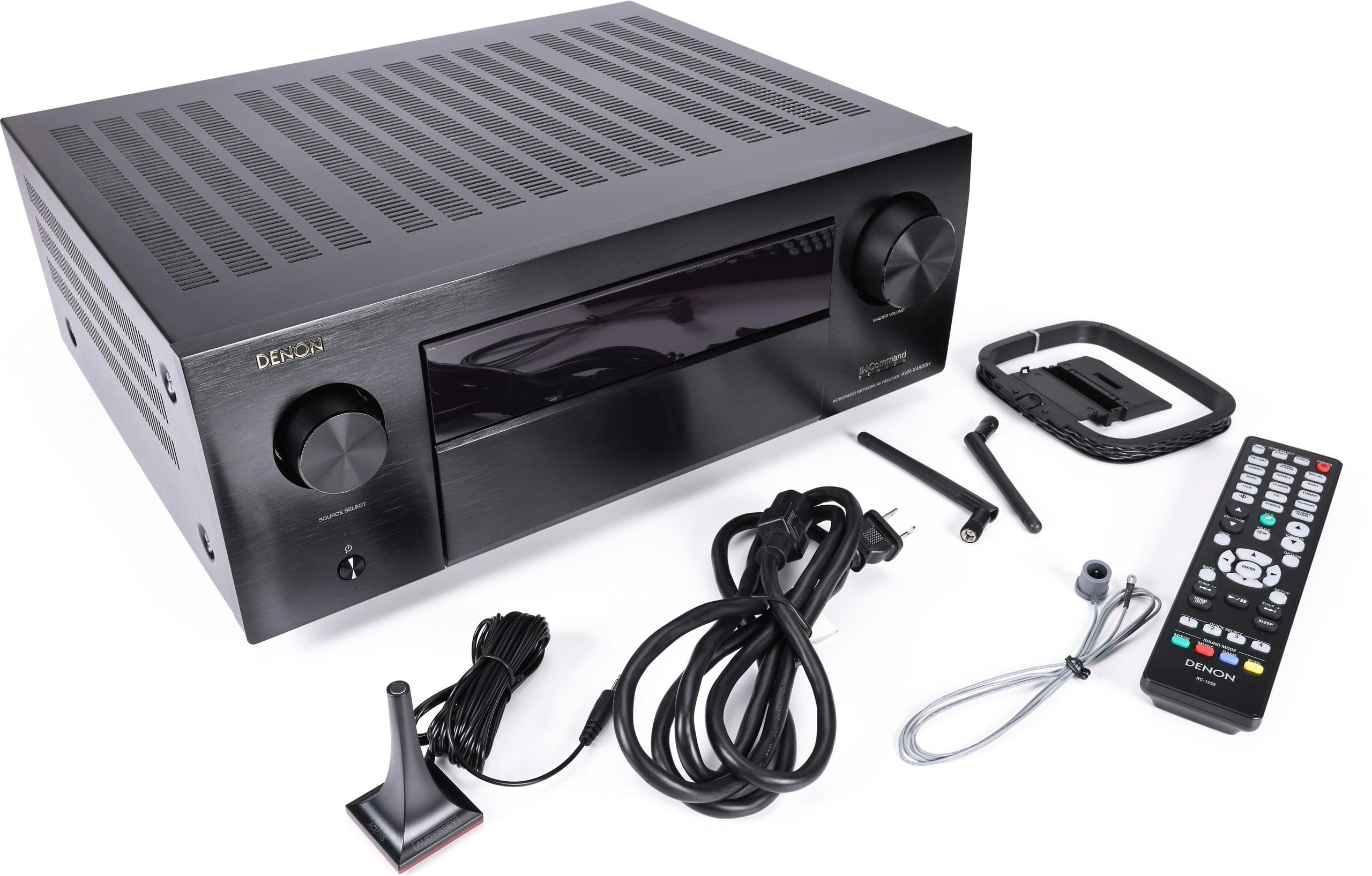
The Onkyo TX-NR7100 includes Dirac Live room correction technology at no additional cost – a feature that typically adds several hundred dollars to a receiver's price. Dirac Live analyzes your room's acoustic properties using a calibration microphone, then applies sophisticated digital signal processing to compensate for room reflections, speaker placement issues, and furniture absorption. The result is remarkably improved clarity, especially in the critical midrange frequencies where dialog and most musical content lives.
The Onkyo also features a premium 384kHz/32-bit digital-to-analog converter (DAC) – the component that translates digital music files into analog signals your speakers can reproduce. Higher-quality DACs reduce digital artifacts and provide better resolution of subtle musical details. The TX-NR7100's DAC specifications exceed most competitors, including the Denon.
Vector Linear Shaping Circuitry (VLSC) further refines the Onkyo's analog signal path by smoothing the digital-to-analog conversion process, reducing the harshness that can occur when digital signals are imperfectly converted. Combined with PLL Jitter-Cleaning Circuit Technology, which eliminates timing errors in digital signals, the Onkyo creates an impressively clean signal path from source to speakers.
The Denon AVR-X4800H counters with dual room correction options: Audyssey MultEQ XT32 comes included, with Dirac Live available as an upgrade. This flexibility allows you to choose the correction system that works best with your room and preferences. Audyssey tends to be more aggressive in correcting room problems, while Dirac Live offers more precise control over the correction process.
More importantly, the Denon features 11.4-channel processing capability, meaning its internal DSP (Digital Signal Processor) can handle audio calculations for eleven main channels plus four independent subwoofers, even though it only provides nine channels of internal amplification. This processing power enables more sophisticated speaker management and bass integration than the Onkyo TX-NR7100's more limited 9.2-channel processing.
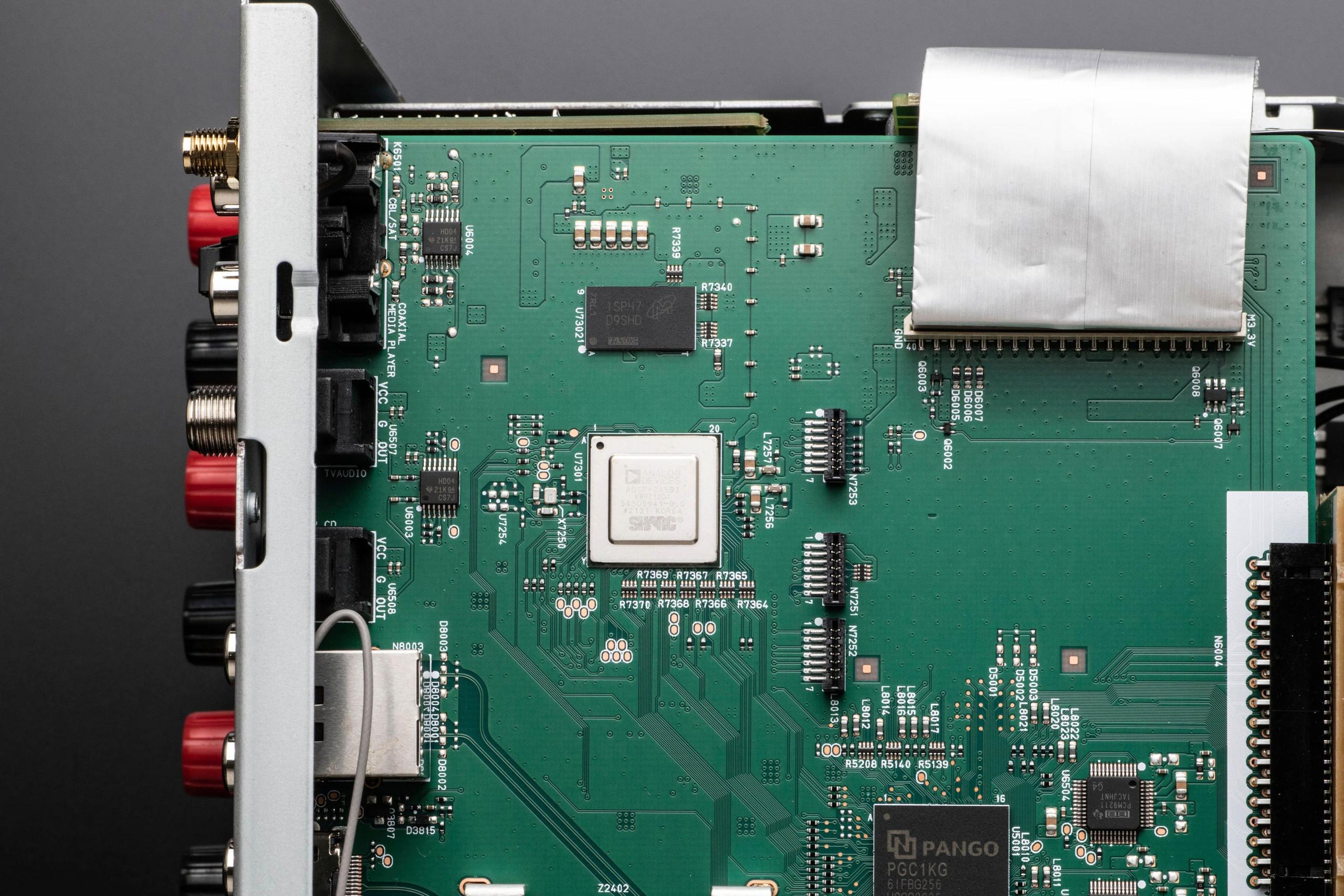
The Denon's dual SHARC+ DSP processors provide exceptional computational power for complex audio algorithms. When you're watching a movie with dozens of simultaneous audio objects moving through 3D space, these processors ensure every sound arrives at exactly the right speaker at precisely the right time.
Modern AV receivers must excel as video processors, not just audio amplifiers. Both receivers support current gaming consoles and 4K displays, but their video capabilities reveal important differences in future-proofing and gaming performance.
The Onkyo TX-NR7100 provides excellent 4K/120Hz gaming performance with comprehensive support for Variable Refresh Rate (VRR), Auto Low Latency Mode (ALLM), and Quick Frame Transport (QFT). These features eliminate screen tearing, reduce input lag, and minimize frame delays – critical for competitive gaming where millisecond timing matters. The receiver handles HDR10 and Dolby Vision content beautifully, delivering enhanced contrast and color accuracy that makes movies and games visually stunning.
However, the Onkyo limits itself to 4K upscaling and processing. While this remains perfectly adequate for current content, it may limit future flexibility as 8K displays become more affordable and 8K content becomes available.
The Denon AVR-X4800H provides comprehensive 8K support on all HDMI inputs, handling 8K/60Hz and 4K/120Hz content with equal expertise. More importantly, it includes 8K upscaling capability, which can enhance the visual quality of current 4K content on 8K displays. The receiver's three HDMI outputs versus the Onkyo's two enable more complex multi-display setups – useful if you want to drive both your main theater display and a secondary monitor or projector.
The Denon's HDMI implementation also proves more robust based on user feedback. While both receivers occasionally experience HDMI handshake issues (the brief delay when switching between sources), the Onkyo TX-NR7100 has received more reports of persistent connectivity problems, including complete loss of audio or video signal requiring power cycling to resolve.
This category reveals the most significant difference between these receivers, and potentially the most important factor in your decision.
The Onkyo TX-NR7100 operates as a strict 9.2-channel system – nine speakers plus two subwoofers maximum. While you can configure these channels in various ways (5.1.4, 7.1.2, or traditional 7.1 plus bi-amped front speakers), you cannot exceed these limitations. For many users, particularly those with smaller rooms or simpler setups, this limitation poses no practical problem.
The Denon AVR-X4800H processes 11.4 channels internally while providing 9.4 channels of amplification – meaning you can add external amplifiers to unlock its full processing capability. This flexibility enables configurations impossible with the Onkyo, including 5.1.6 (six height speakers for incredibly immersive overhead effects) or 7.1.4 (four height speakers with full 7.1 surround).
The Denon's four independent subwoofer outputs prove particularly valuable in larger rooms. Multiple subwoofers, properly positioned and calibrated, smooth bass response throughout your seating area far more effectively than a single subwoofer, regardless of that subwoofer's quality or power.
The Denon can also operate as a pure preamp/processor with its amplification section disabled, making it an excellent foundation for a high-end system using separate power amplifiers. This flexibility provides a clear upgrade path as your system evolves.
Based on extensive research of user experiences and professional reviews, significant differences emerge in build quality and long-term reliability between these receivers.
The Onkyo TX-NR7100 delivers impressive performance for its price point, but several users report HDMI connectivity issues that required extended service periods. Some units experienced complete HDMI board failures, leaving owners without their receivers for months while waiting for replacement parts. While these issues don't affect every unit, they occur frequently enough to warrant consideration if reliability is paramount.
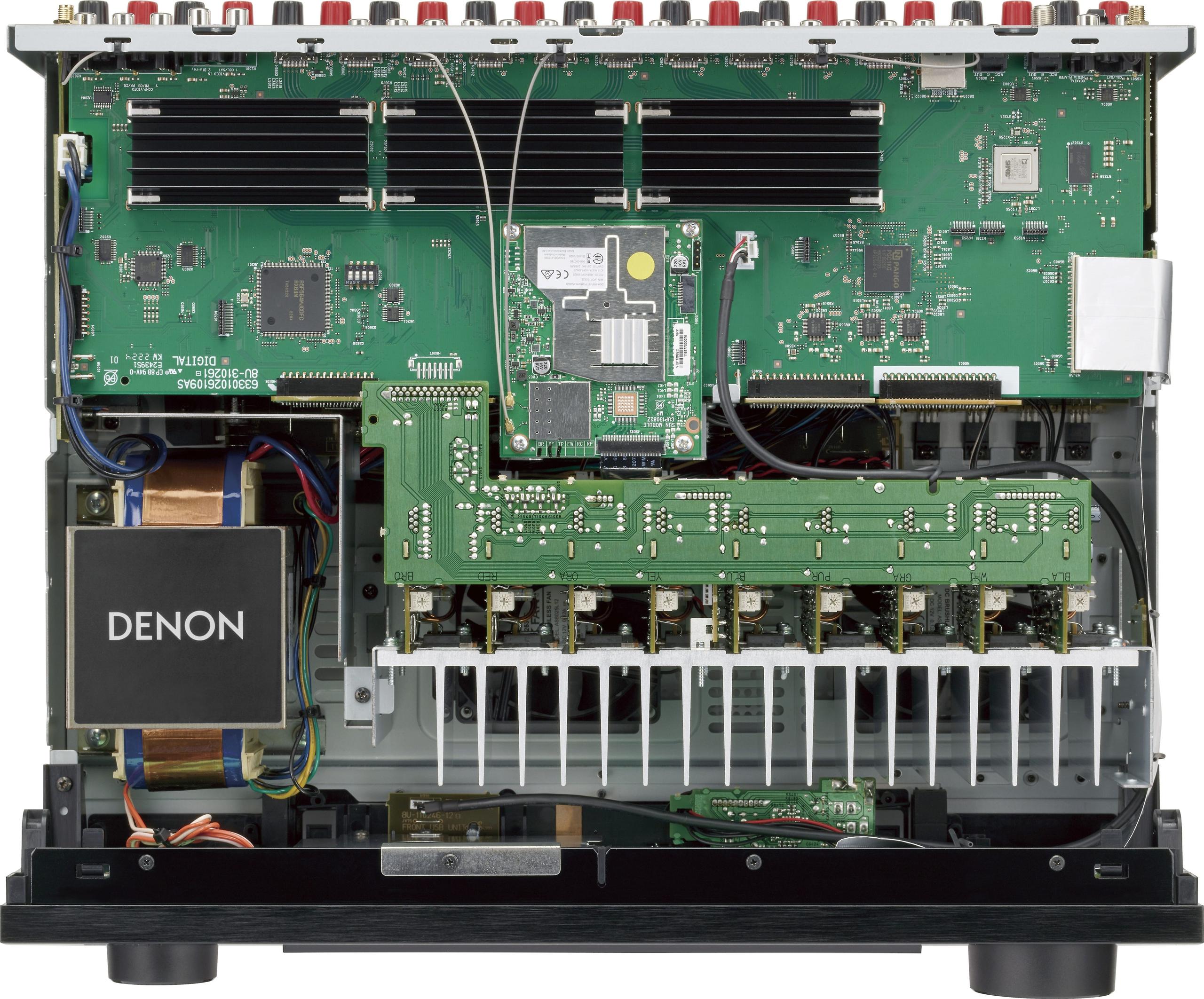
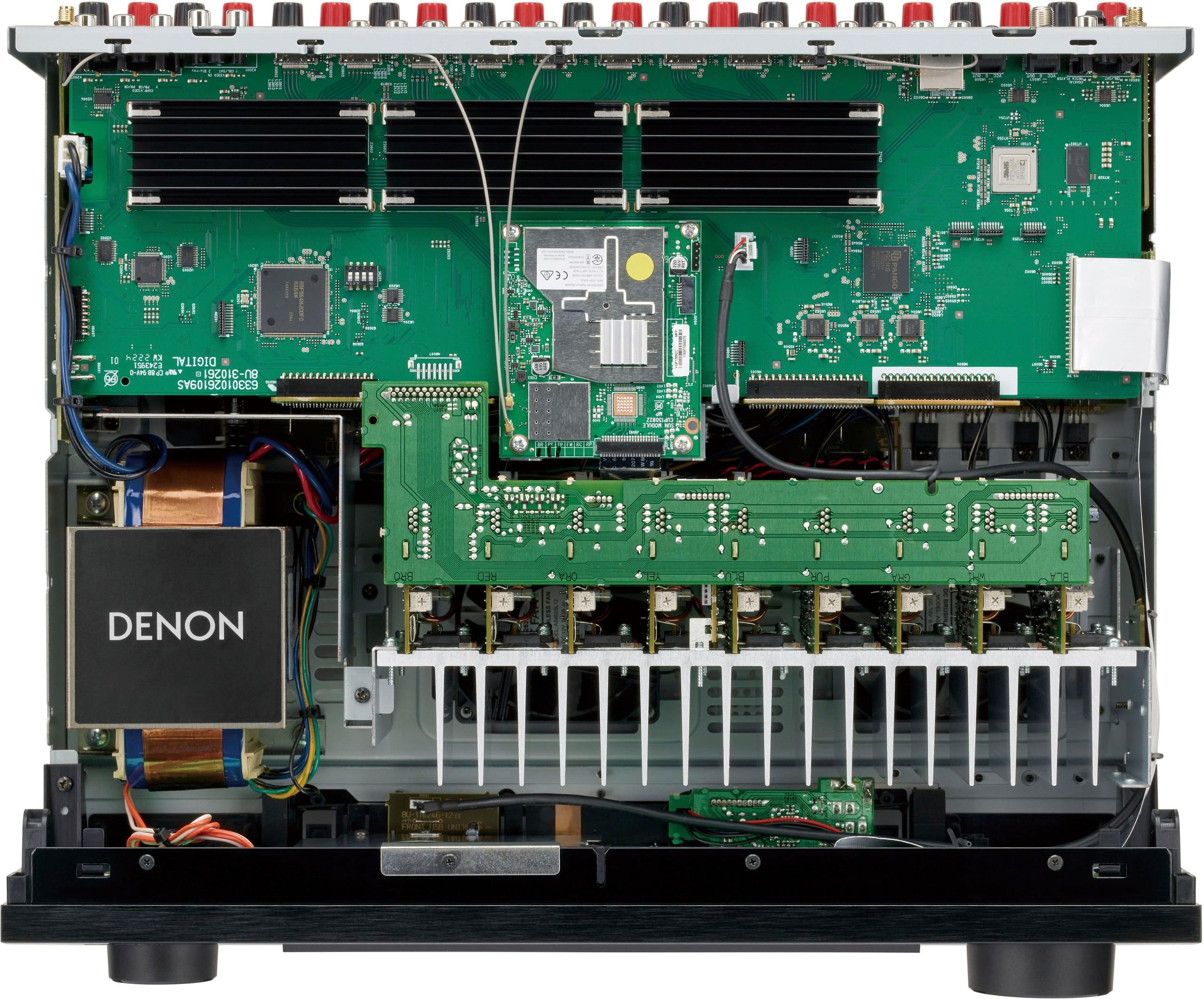
The Denon AVR-X4800H consistently receives praise for its robust construction and reliable operation. Professional reviewers frequently mention its "elite construction" and dual-layer internal design that provides superior component isolation and thermal management. The receiver's heavier weight reflects more substantial internal construction, including larger heat sinks, more robust power supplies, and higher-quality components throughout the signal path.
This build quality difference becomes particularly important in demanding applications. If you regularly push your system to high volume levels for extended periods, or if you live in a warm climate where thermal management becomes critical, the Denon's superior construction provides measurable benefits in long-term reliability and consistent performance.
Audio specifications tell only part of the story. How do these receivers actually sound in your living room?
The Onkyo TX-NR7100 delivers what many users describe as "extraordinary" sound quality, particularly after Dirac Live calibration. Movie soundtracks benefit from precise imaging and powerful dynamics, with overhead effects that create convincing 3D audio bubbles around listeners. Music reproduction tends toward neutral and balanced presentation, avoiding the overly bright or warm colorations that plague some competitors.
Users consistently praise the Onkyo's bass integration, noting that subwoofers blend seamlessly with main speakers rather than drawing attention to themselves. The receiver's high power output proves beneficial with inefficient speakers, maintaining composure and clarity even at high volume levels where lesser receivers begin to strain.
The Denon AVR-X4800H receives consistent praise for delivering "rich, layered sound with movies" while excelling equally with music reproduction. Its sophisticated bass management with four independent subwoofer outputs creates exceptionally smooth low-frequency response, eliminating the boom-and-bust bass response that plagues many home theaters.
The Denon's superior processing power becomes evident during complex movie soundtracks with numerous simultaneous audio objects. Users report more precise localization of effects and better separation between different audio elements, creating a more convincing and immersive experience.
Both receivers excel with modern gaming consoles, but subtle differences may influence your choice depending on your gaming priorities.
The Onkyo TX-NR7100 provides excellent 4K/120Hz gaming performance with low input lag and reliable HDMI signal switching. Users report smooth operation with PlayStation 5 and Xbox Series X, though some experience occasional handshake issues requiring source cycling.
The Denon AVR-X4800H offers similar gaming performance with potentially more robust HDMI implementation. Its 8K capability provides future-proofing for next-generation consoles, while three HDMI outputs enable more complex gaming setups involving multiple displays or recording equipment.
The Onkyo TX-NR7100 makes the most sense for users who prioritize maximum audio performance per dollar spent. If you're building a dedicated home theater with a straightforward 5.1.4 or 7.1.2 Atmos configuration, don't need 8K support, and can accept some risk regarding HDMI reliability, the Onkyo delivers exceptional value. Its included Dirac Live calibration, THX certification, and impressive power output create a compelling package for serious movie watching and music listening.
The Denon AVR-X4800H justifies its premium pricing for users who want maximum flexibility, superior build quality, and comprehensive future-proofing. If you're planning a complex speaker configuration, need reliable operation for daily use, want 8K support for future displays, or require advanced multi-zone capabilities, the Denon provides a more sophisticated and flexible foundation for your home theater.
At the time of writing, the Onkyo TX-NR7100 typically costs roughly half what you'll pay for the Denon AVR-X4800H. This price difference represents the core decision: Do you want maximum performance per dollar, or maximum capability and reliability regardless of cost?
For most users building their first serious home theater, the Onkyo provides tremendous value and performance that will satisfy for years. Its limitations only become apparent when you want to expand beyond standard configurations or require absolute reliability for daily use.
The Denon makes sense when you view your AV receiver as a long-term investment that should accommodate future expansion and provide rock-solid reliability. Its superior processing capability, build quality, and configuration flexibility create a foundation that can grow with your system and needs.
Both receivers excel at their intended missions. Your choice should depend on your budget, reliability requirements, future expansion plans, and how you prioritize raw performance versus sophisticated features. Either way, you'll end up with a receiver capable of delivering truly impressive home theater experiences that justify the investment in immersive surround sound.
| Onkyo TX-NR7100 | Denon AVR-X4800H |
|---|---|
| Power Output - Higher watts drive demanding speakers and fill larger rooms | |
| 185W per channel (excellent for power-hungry speakers) | 125W per channel (adequate for most speakers, more consistent multi-channel) |
| Channel Processing - Determines maximum speaker configuration flexibility | |
| 9.2 channels (limited to 7.1.2 or 5.1.4 Atmos setups) | 11.4 channels (enables 7.1.4 or 5.1.6 configurations with external amps) |
| Video Support - Critical for gaming and future display compatibility | |
| 4K/120Hz, HDR10/Dolby Vision (excellent for current gaming) | 8K/60Hz + 4K/120Hz, HDR10+/Dolby Vision (better future-proofing) |
| HDMI Connectivity - More inputs and outputs provide setup flexibility | |
| 7 inputs, 2 outputs (sufficient for most setups) | 7 inputs, 3 outputs (better for multi-display or complex routing) |
| Room Correction - Automatically optimizes sound for your specific room | |
| Dirac Live included (premium correction worth ~$500) | Audyssey MultEQ XT32 included + Dirac Live upgrade available |
| DAC Quality - Higher specs can improve music playback detail | |
| 384kHz/32-bit (superior technical specifications) | 192kHz/24-bit (excellent quality, industry standard) |
| Subwoofer Outputs - Multiple subs create smoother bass throughout room | |
| 2 outputs (standard for most home theaters) | 4 independent outputs (exceptional bass management flexibility) |
| Build Quality - Affects long-term reliability and consistent performance | |
| Good construction, some HDMI reliability concerns reported | Premium build quality, dual-layer design, excellent reliability record |
| Certifications - Industry standards ensuring reference-quality performance | |
| THX Certified, IMAX Enhanced (cinema-reference audio standards) | No specific certifications (relies on engineering excellence) |
| Pre-Amplifier Outputs - Enable external amplifier expansion | |
| 2 pairs (limited expansion options) | 6 pairs (extensive expansion possibilities) |
| Weight - Heavier units typically indicate more robust internal components | |
| 11 kg (reasonable for price point) | 12.5 kg (indicates substantial internal construction) |
The Denon AVR-X4800H is generally better for serious home theater setups due to its superior build quality, 8K video support, and ability to handle more complex speaker configurations like 7.1.4 or 5.1.6 Dolby Atmos layouts. However, the Onkyo TX-NR7100 offers excellent home theater performance at a lower price point with THX certification and included Dirac Live room correction.
The key difference is flexibility and processing power. The Denon AVR-X4800H can process 11.4 channels and supports more advanced speaker configurations, while the Onkyo TX-NR7100 is limited to 9.2 channels but offers higher power output per channel and includes premium room correction software at no extra cost.
The Onkyo TX-NR7100 delivers significantly more power at 185 watts per channel compared to the Denon AVR-X4800H's 125 watts per channel. This makes the Onkyo better suited for power-hungry speakers and larger rooms, though the Denon's power is more consistent across all channels simultaneously.
No, only the Denon AVR-X4800H supports full 8K/60Hz video processing and upscaling on all HDMI inputs. The Onkyo TX-NR7100 is limited to 4K/120Hz support, which is excellent for current gaming consoles but may limit future compatibility with 8K displays and content.
Both receivers excel for gaming, but they serve different needs. The Onkyo TX-NR7100 offers excellent 4K/120Hz gaming performance with low latency and strong HDMI processing. The Denon AVR-X4800H provides similar gaming performance plus 8K support for future consoles and more reliable HDMI connectivity.
The Onkyo TX-NR7100 supports up to 9 speakers plus 2 subwoofers in configurations like 7.1.2 or 5.1.4 Dolby Atmos. The Denon AVR-X4800H can handle more complex setups including 7.1.4 or 5.1.6 configurations with its 11.4-channel processing, though you'll need external amplifiers for the additional channels.
The Onkyo TX-NR7100 includes premium Dirac Live room correction at no additional cost, which typically adds significant value. The Denon AVR-X4800H comes with Audyssey MultEQ XT32 and offers Dirac Live as an upgrade option, giving you flexibility to choose your preferred correction system.
The Denon AVR-X4800H has a better reliability track record with superior build quality and fewer reported issues. Some users have experienced HDMI connectivity problems with the Onkyo TX-NR7100, though many units operate without issues. The Denon's premium construction generally provides more consistent long-term performance.
The Onkyo TX-NR7100 typically offers better value for most users, delivering excellent audio performance, THX certification, and included Dirac Live room correction at a significantly lower price point. The Denon AVR-X4800H justifies its premium pricing with superior flexibility, build quality, and future-proofing features.
Yes, both the Onkyo TX-NR7100 and Denon AVR-X4800H fully support Dolby Atmos and DTS:X immersive audio formats. The Onkyo supports configurations up to 5.1.4 or 7.1.2, while the Denon can handle more advanced layouts like 5.1.6 or 7.1.4 for even more immersive overhead effects.
Both receivers excel for music, but with different strengths. The Onkyo TX-NR7100 features a superior 384kHz/32-bit DAC and neutral sound signature that many audiophiles prefer. The Denon AVR-X4800H offers more sophisticated bass management and processing flexibility, making it excellent for both stereo music and multi-channel audio formats.
For most first-time home theater builders, the Onkyo TX-NR7100 provides excellent performance and features at a more accessible price point. Choose the Denon AVR-X4800H if you plan to build a complex speaker system, need 8K support, or want maximum reliability and future expansion options for your investment.
We've done our best to create useful and informative comparisons to help you decide what product to buy. Our research uses advanced automated methods to create this comparison and perfection is not possible - please contact us for corrections or questions. These are the sites we've researched in the creation of this article: crutchfield.com - prohifi.in - bestbuy.com - h-m-entertainment.com - audiosciencereview.com - crutchfield.ca - soundandvision.com - avsforum.com - avgadgets.com - youtube.com - onkyo.com - crutchfield.com - onkyo.com - accessories4less.com - klipsch.com - youtube.com - listenup.com - intl.onkyo-av.com - bestbuy.com - 420spotshop.com - support.onkyousa.com - bestbuy.com - audiovisualkart.com - valueelectronics.com - crutchfield.com - tomsguide.com - dreamediaav.com - snapav.com - hometheaterhifi.com - avsforum.com - videoandaudiocenter.com

Privacy Policy
Terms and Conditions - Affiliate Policy
Home Security
© Copyright 2008-2026.
11816 Inwood Rd #1211, Dallas, TX 75244