

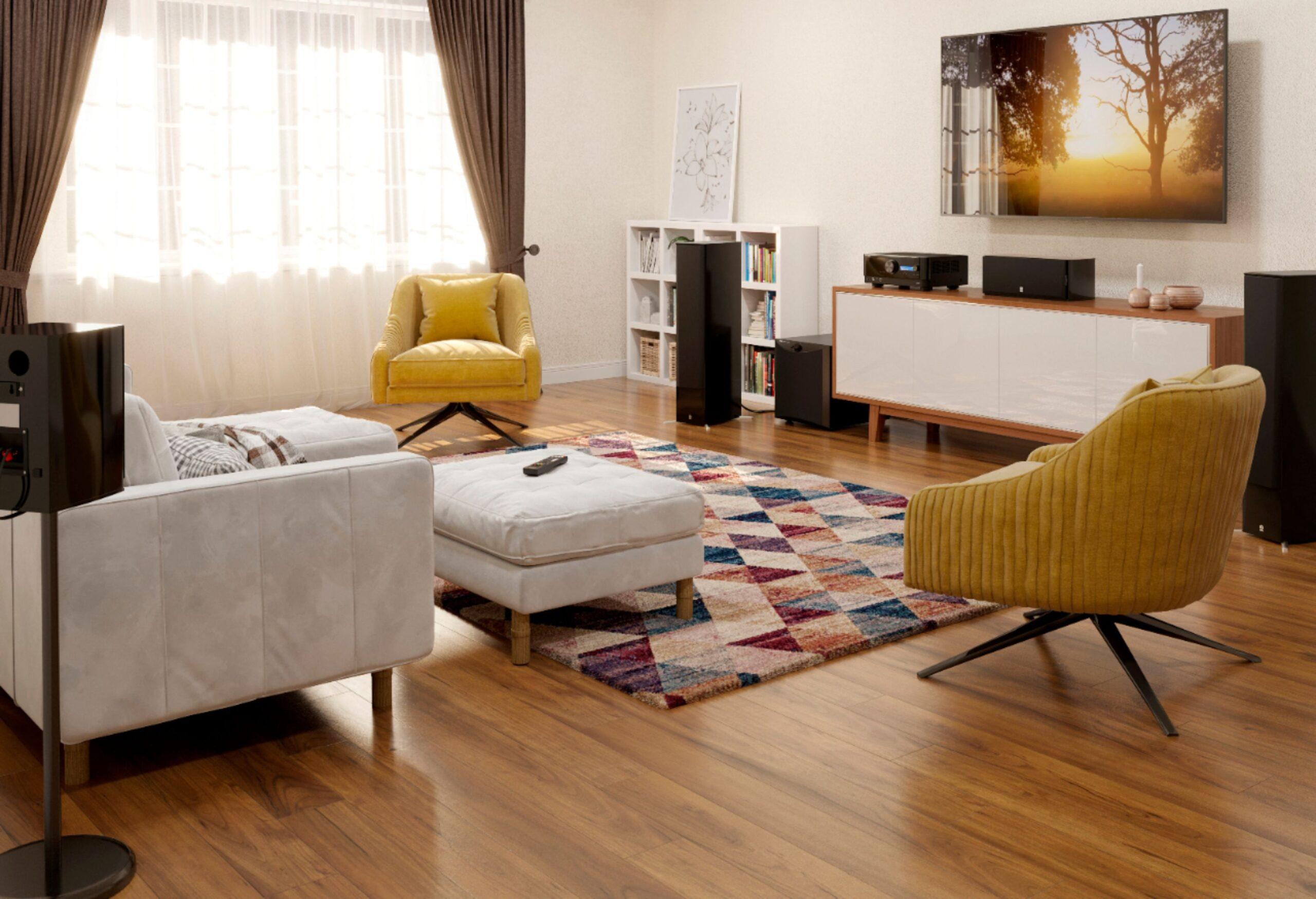
Choosing the right AV receiver can make or break your home theater experience. These devices serve as the brain of your entertainment system, handling everything from powering your speakers to processing the latest surround sound formats and connecting all your devices. In the competitive mid-range market, two receivers consistently rise to the top: the Denon AVR-X2800H and the Yamaha RX-V6A.
Both receivers target serious home theater enthusiasts who want flagship features without flagship prices. At the time of writing, these models represent different approaches to the same goal – delivering immersive audio and video experiences that rival much more expensive systems. The Denon AVR-X2800H typically commands a premium of about $300-400 over the Yamaha RX-V6A, but does that extra cost deliver meaningful benefits?
Before diving into specifics, it's worth understanding what separates good receivers from great ones. Modern AV receivers must juggle multiple demanding tasks: they amplify audio signals cleanly, process complex surround sound formats like Dolby Atmos (which creates overhead sound effects), calibrate your speakers to work optimally in your specific room, handle 8K video signals, and connect to your streaming services seamlessly.
The most critical performance factors include clean amplification (measured in watts per channel), room calibration accuracy (how well it optimizes sound for your space), video processing capabilities, and build quality that ensures reliable operation over many years. In the mid-range category, manufacturers must carefully balance these features with cost constraints, leading to interesting compromises and design philosophies.
When it comes to pure power output, the Yamaha RX-V6A takes the lead with 100 watts per channel compared to the Denon AVR-X2800H's 95 watts (both measured at 8 ohms with two channels driven). While this 5-watt difference might seem negligible, the Yamaha can actually deliver 125 watts when driving a single channel, suggesting more robust power reserves.
However, power specifications only tell part of the story. The Denon AVR-X2800H uses discrete amplifier channels – meaning each channel has its own dedicated amplification components rather than sharing resources. This design typically results in better channel separation (less crosstalk between speakers) and more stable performance when all channels are working hard during intense movie scenes.
The digital-to-analog converter (DAC) – the component that transforms digital music files into analog signals your speakers can use – also differs between these models. The Yamaha RX-V6A features a 32-bit DAC capable of handling ultra-high-resolution audio files up to 384kHz sampling rates. The Denon AVR-X2800H uses 32-bit/192kHz Texas Instruments DACs on all channels, prioritizing consistent performance across every speaker rather than maximum resolution capability.
In practical terms, both receivers will drive most speakers to satisfying volumes in medium to large rooms. The Yamaha's extra power headroom makes it slightly better suited for large, acoustically challenging spaces or inefficient speakers that need more power to reach their potential. The Denon's approach favors precision and consistency, which becomes more apparent during critical music listening sessions.
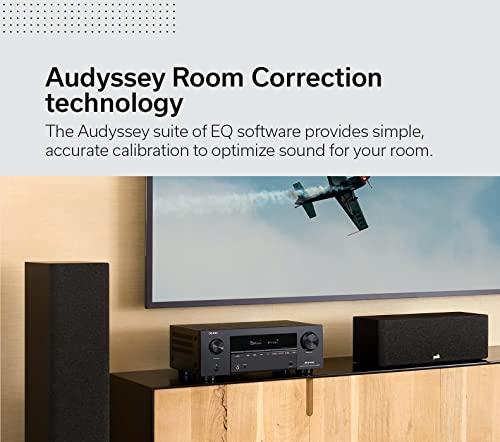
Perhaps the most significant difference between these receivers lies in their room calibration systems. Room calibration technology uses a microphone to measure how your speakers sound in your specific room, then applies corrections to compensate for acoustic problems like reflections, standing waves, and speaker placement issues.
The Denon AVR-X2800H employs Audyssey MultEQ XT, which can measure and optimize up to eight different listening positions in your room. This system is particularly sophisticated at correcting frequency response problems – situations where certain frequencies are too loud or too quiet due to room acoustics. Audyssey also includes advanced bass management features and can work with the optional MultEQ Editor app, giving you granular control over the calibration results.
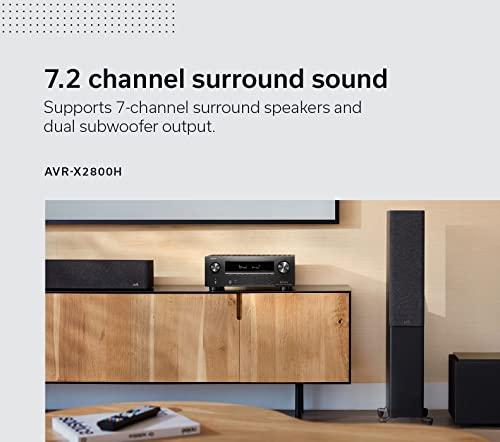
More importantly for many users, the Denon AVR-X2800H offers dual subwoofer outputs with independent processing. This means you can connect two subwoofers and the receiver will optimize each one separately, leading to more even bass response throughout your listening area. This feature alone can transform the low-frequency performance in larger rooms.
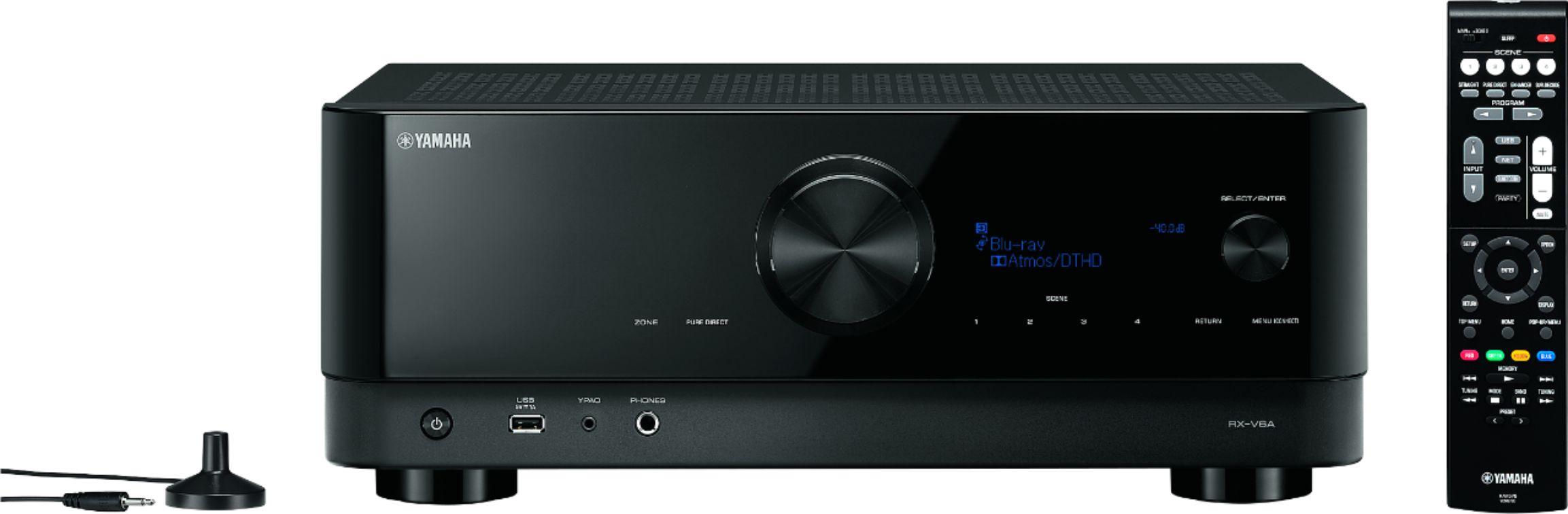
The Yamaha RX-V6A uses YPAO (Yamaha Parametric room Acoustic Optimizer) with Reflected Sound Control. While not as granular as Audyssey, YPAO is notably easier to use and understand. It focuses on the most audible acoustic problems and presents results in a more user-friendly format. For many users, YPAO provides 80% of the benefit with significantly less complexity.
Based on extensive user feedback and professional reviews, Audyssey generally produces more accurate results, particularly for users with problematic room acoustics or demanding listening requirements. However, YPAO's simpler approach often leads to better user satisfaction since it's less likely to over-correct or create new problems.
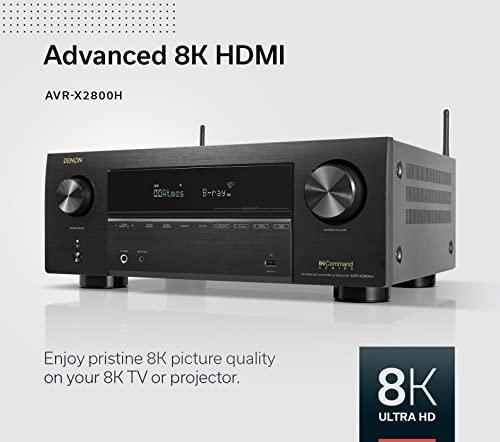
Both receivers launched with strong video specifications for their time. The Yamaha RX-V6A debuted in 2020, while the Denon AVR-X2800H arrived in 2022, giving Denon the advantage of incorporating lessons learned from early HDMI 2.1 implementations.
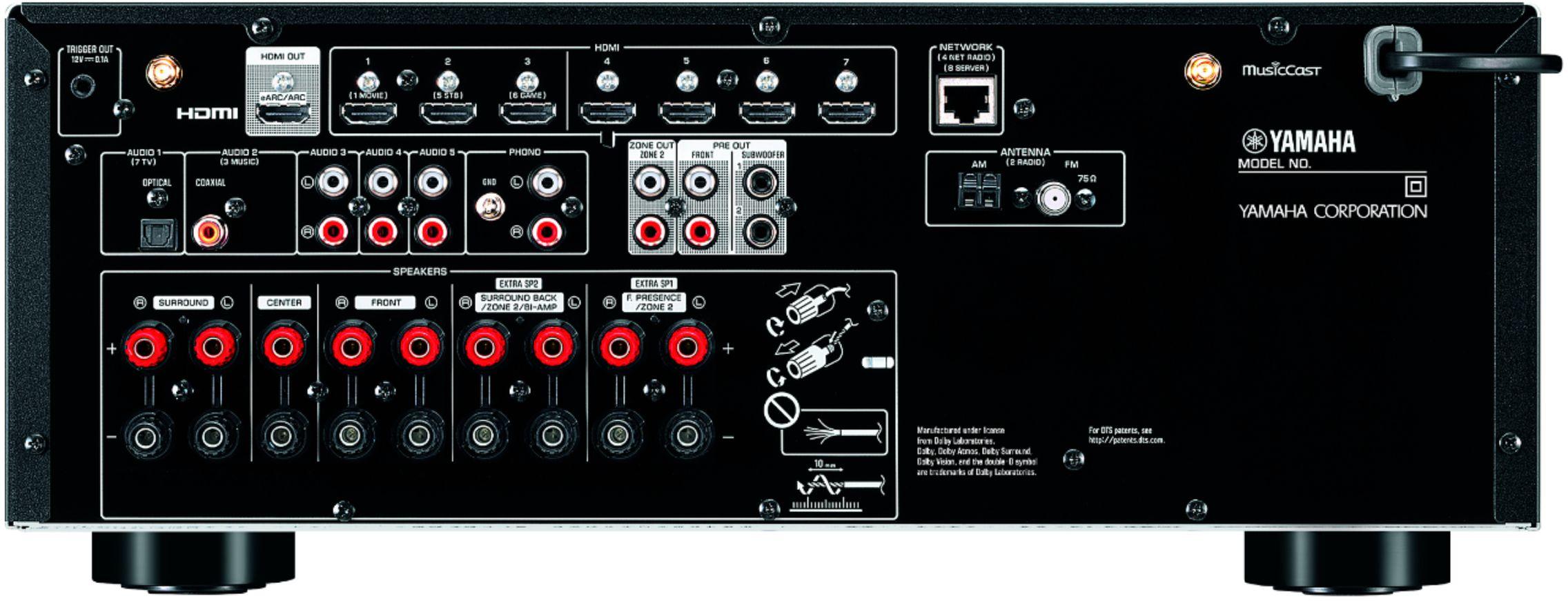
The Yamaha RX-V6A provides seven HDMI inputs with one output, all supporting the latest HDMI 2.1 specifications. However, some advanced features required firmware updates after launch, reflecting the challenge manufacturers faced implementing this new standard. The Denon AVR-X2800H offers six HDMI inputs with two outputs, but three of its inputs and both outputs support full HDMI 2.1 bandwidth of 40 Gbps.
For gaming enthusiasts, both receivers support the key features that make modern consoles shine: 4K/120Hz passthrough for ultra-smooth gaming, Variable Refresh Rate (VRR) to eliminate screen tearing, Auto Low Latency Mode (ALLM) to minimize input lag, and Quick Frame Transport (QFT) for the most responsive gaming experience possible.
The Denon AVR-X2800H's dual HDMI outputs provide a significant advantage for users with complex setups – you might send 8K content to your main TV while simultaneously sending audio to a projector or second zone. This flexibility becomes particularly valuable in custom installation scenarios.
Both receivers handle all current HDR (High Dynamic Range) formats including HDR10, HDR10+, Dolby Vision, and HLG (Hybrid Log-Gamma). These formats dramatically improve picture quality by expanding the range of colors and brightness levels your TV can display. The processing quality is essentially equivalent between the two models.
Through extensive research into professional reviews and user feedback, clear patterns emerge regarding each receiver's sound character. The Denon AVR-X2800H consistently receives praise for its warm, balanced sound signature with exceptional dialogue clarity – a crucial factor for home theater use. Reviewers frequently note its refined treble that avoids harshness even at higher volumes, making it particularly suitable for extended listening sessions.
The Yamaha RX-V6A takes a different approach, delivering what many describe as a more neutral to bright sound signature with punchy, dynamic presentation. This character works exceptionally well for action movies and gaming, where impact and excitement often matter more than absolute accuracy. The Yamaha's sound signature can make dialogue slightly less prominent than the Denon, but it excels at creating an engaging, theatrical experience.
Both receivers handle modern surround sound formats excellently. Dolby Atmos processing – which creates overhead sound effects by treating audio as objects that can be placed anywhere in three-dimensional space – performs well on both units. The Denon AVR-X2800H includes Dolby Atmos Height Virtualization, which can create convincing overhead effects even without dedicated height speakers, though the Yamaha RX-V6A offers similar capabilities through DTS Virtual:X processing.
For music listening, the Denon AVR-X2800H generally receives higher marks from audiophile-oriented reviewers, who appreciate its more accurate frequency response and superior channel matching. The receiver's Pure Direct mode bypasses all digital processing to provide the cleanest possible signal path for critical listening.
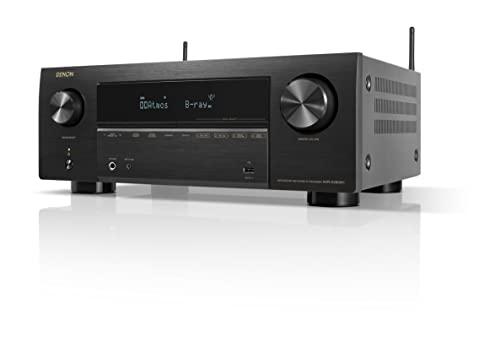
The physical design and construction quality of these receivers reflect their different target markets and price points. The Denon AVR-X2800H follows Denon's traditional approach with a conservative, professional appearance featuring a brushed black finish and clearly labeled controls. The build quality consistently receives praise for its solid construction and excellent thermal management – crucial factors for long-term reliability.
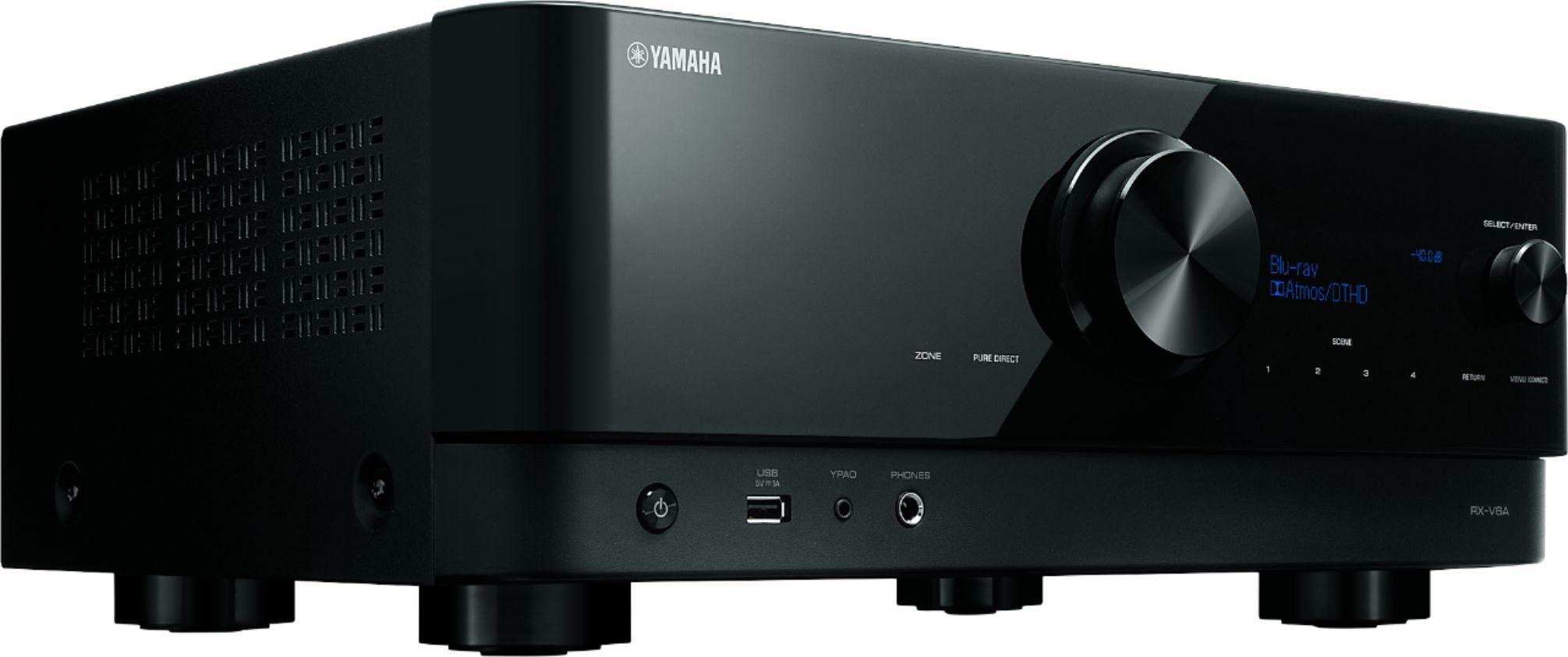
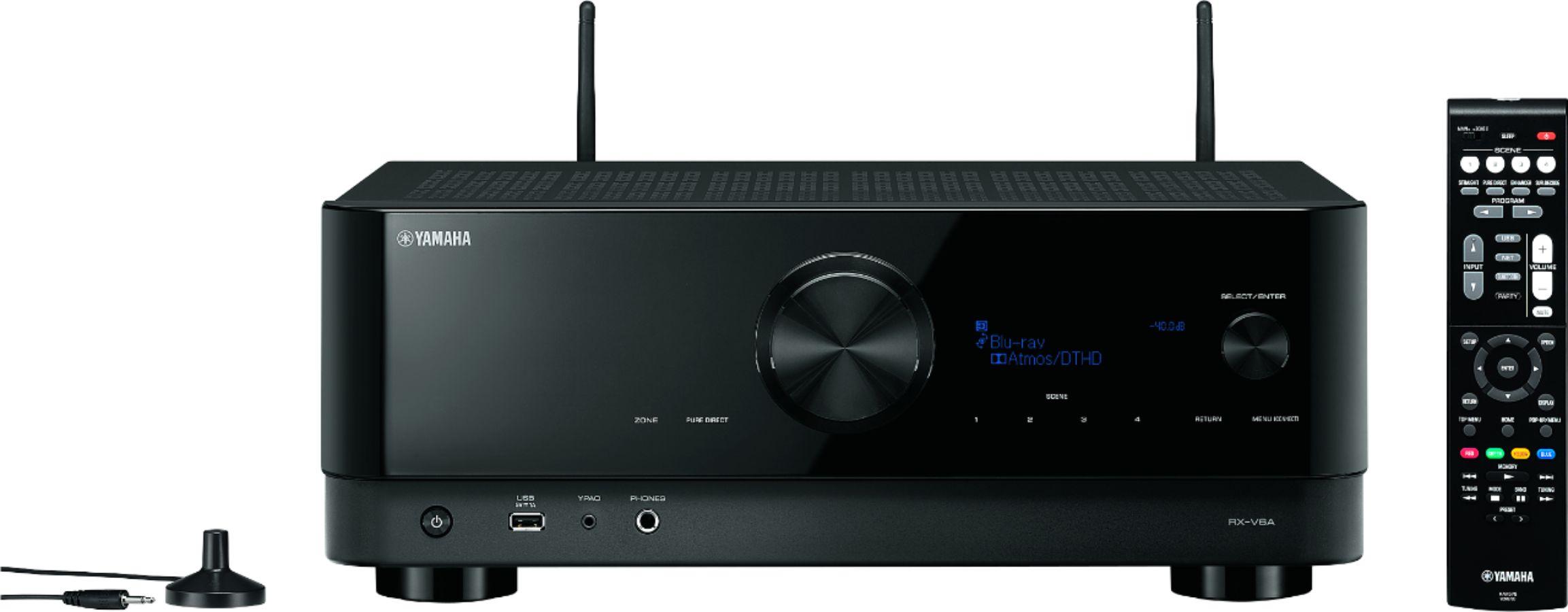
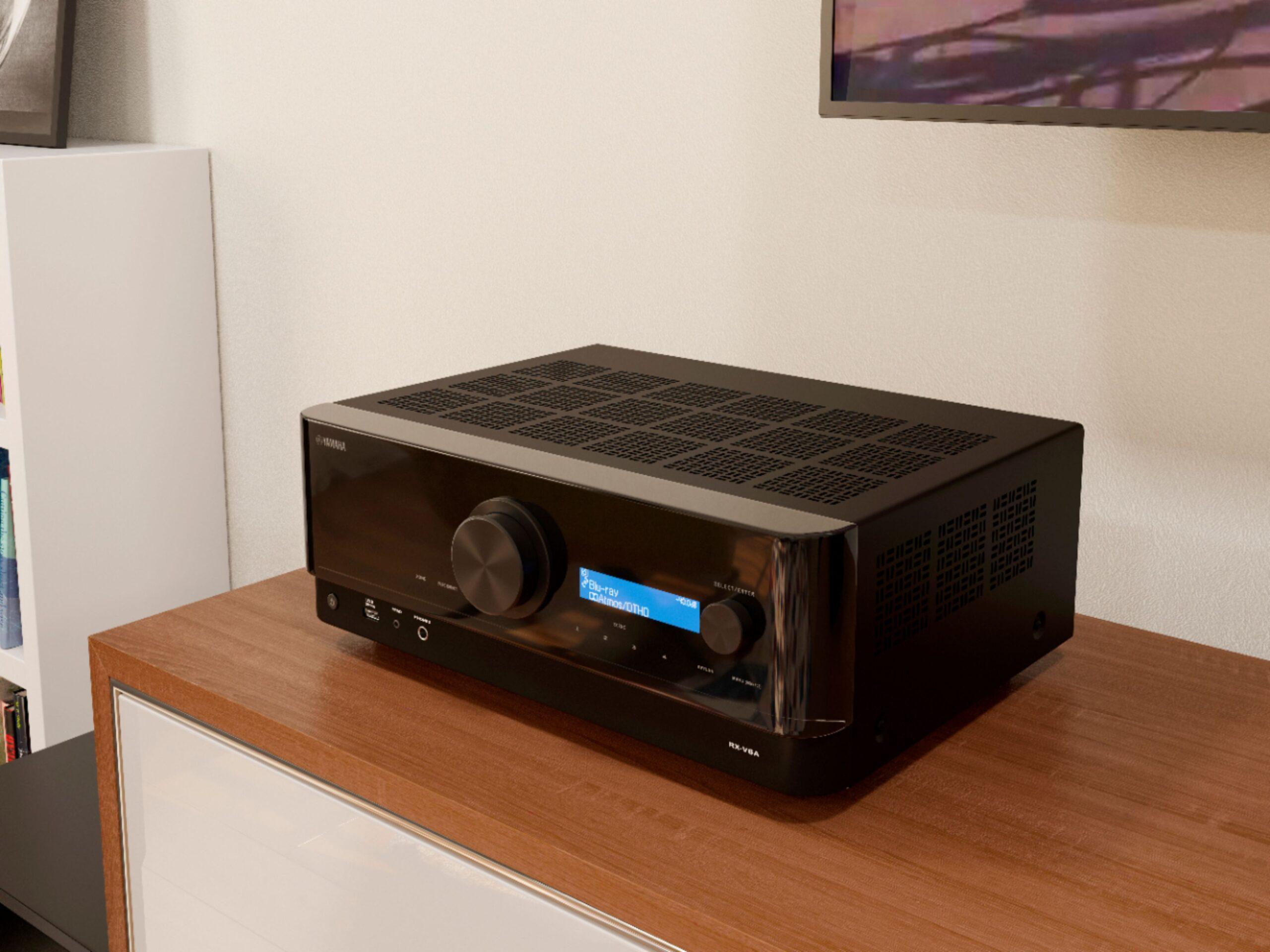
The Yamaha RX-V6A takes a more contemporary approach with its glossy black finish, curved edges, and modern aesthetic that looks at home in contemporary living spaces. However, the glossy finish does show fingerprints and dust more readily than Denon's matte approach. Build quality remains solid, though the construction philosophy differs – Yamaha has optimized for cost efficiency while maintaining performance standards.
Both receivers include comprehensive connectivity beyond HDMI. The Denon AVR-X2800H provides two optical and one coaxial digital input, analog audio inputs, and a moving magnet phono input for turntables. The Yamaha RX-V6A offers similar connectivity with one optical and one coaxial input, plus its own phono stage.
Modern AV receivers must seamlessly integrate with streaming services and smart home ecosystems. Both receivers support the essential wireless protocols: Wi-Fi, Bluetooth, and Apple AirPlay 2. However, their proprietary multi-room systems differ significantly.
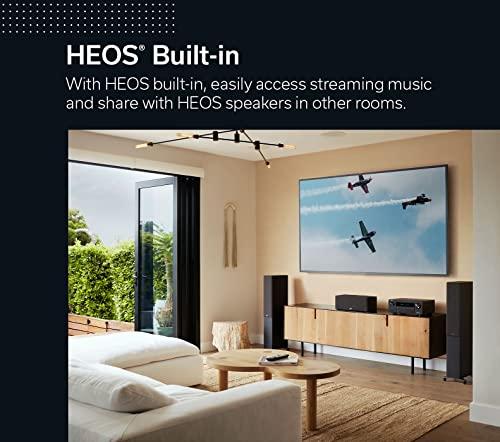
The Denon AVR-X2800H uses HEOS, Denon's multi-room platform that generally receives better reviews for app stability and device compatibility. HEOS can control up to 32 connected devices and integrates well with popular streaming services like Spotify, Amazon Music, and Tidal. Voice control works with Alexa, Google Assistant, and Siri.
The Yamaha RX-V6A employs MusicCast, which offers similar functionality but with a more limited device ecosystem. While MusicCast works well within Yamaha's product line, third-party compatibility isn't as extensive as HEOS. The interface is functional but hasn't received the same level of polish as competing platforms.
Both receivers can stream high-resolution audio files from network sources, supporting formats up to 24-bit/192kHz (and higher on the Yamaha). This capability allows you to take full advantage of high-quality music downloads and streaming services that offer lossless audio.
At the time of writing, the price difference between these receivers is significant enough to influence purchasing decisions. The Yamaha RX-V6A typically costs several hundred dollars less than the Denon AVR-X2800H, making it one of the best value propositions in the mid-range receiver market.
The Yamaha delivers approximately 80-85% of the Denon's performance at roughly 65-70% of the cost. This makes it an excellent choice for users who want modern features and solid performance without paying premium prices. The higher power output, contemporary design, and comprehensive feature set make it particularly appealing to mainstream users.
The Denon AVR-X2800H justifies its premium pricing through superior room calibration, dual subwoofer support, more refined audio processing, and proven long-term reliability. These advantages become more apparent in demanding applications: larger rooms, high-end speakers, critical music listening, or complex multi-zone installations.
After extensive research and evaluation, clear recommendations emerge for different user types and scenarios.
Choose the Yamaha RX-V6A if you want the best overall value with strong performance across all categories. Its higher power output makes it ideal for larger rooms or inefficient speakers, while its user-friendly setup and modern design appeal to mainstream users. The significant cost savings allow you to invest more in speakers or other system components where the performance impact might be greater. This receiver excels for users who prioritize movies and gaming over critical music listening.
Choose the Denon AVR-X2800H if audio accuracy and advanced features matter more than saving money. Its superior room calibration system alone can transform the sound quality in acoustically challenging rooms. The dual subwoofer support is invaluable for larger spaces or users serious about bass performance. This receiver better serves audiophiles, custom installers, and users with high-end speaker systems who want to extract maximum performance.
For most users, the Yamaha RX-V6A provides the better value proposition. Its combination of features, performance, and pricing is difficult to beat in the mid-range market. However, the Denon AVR-X2800H offers genuine advantages that justify its premium pricing for users who can appreciate and utilize its advanced capabilities.
Both receivers represent excellent examples of their manufacturers' design philosophies and will serve most users well for many years. Your choice should ultimately depend on your specific needs, room requirements, and how much you value the incremental improvements that come with premium pricing.
| Denon AVR-X2800H | Yamaha RX-V6A |
|---|---|
| Power Output - Higher wattage drives larger rooms and demanding speakers better | |
| 95W per channel (8 ohms, 2ch driven) | 100W per channel (8 ohms, 2ch driven) |
| Room Calibration System - Critical for optimizing sound in your specific space | |
| Audyssey MultEQ XT (8 positions, very precise but complex) | YPAO R.S.C. (multi-point, easier setup but less granular) |
| Subwoofer Outputs - Dual subs provide much better bass in larger rooms | |
| 2 independent subwoofer outputs with separate processing | 1 subwoofer output |
| HDMI Connectivity - More inputs mean fewer device swapping hassles | |
| 6 inputs, 2 outputs (3 inputs + both outputs are HDMI 2.1) | 7 inputs, 1 output (all HDMI 2.1 capable) |
| Digital Audio Processing - Higher specs can improve sound quality with high-res files | |
| 32-bit/192kHz TI DACs on all channels | 32-bit/384kHz DAC with high-resolution audio support |
| Multi-Room Streaming Platform - Affects app quality and device compatibility | |
| HEOS (more mature platform, better app stability) | MusicCast (good but more limited ecosystem) |
| Sound Signature - Different approaches suit different preferences | |
| Warm, balanced with excellent dialogue clarity | Neutral to bright with punchy, dynamic presentation |
| Build Quality & Design - Impacts reliability and room aesthetics | |
| Conservative black finish, tank-like construction, excellent cooling | Modern glossy design, solid build, shows fingerprints easily |
| Release Year - Newer models often have better HDMI 2.1 implementation | |
| 2022 (refined HDMI 2.1 features from launch) | 2020 (required firmware updates for some HDMI 2.1 features) |
| Value Proposition - Consider performance per dollar spent | |
| Premium pricing justified by advanced features and precision | Excellent value with 80% of premium performance at lower cost |
The Denon AVR-X2800H offers superior dialogue clarity and a warm, balanced sound signature that's ideal for movies and critical listening. The Yamaha RX-V6A provides more punchy, dynamic sound that's excellent for action movies and gaming. Both deliver excellent surround sound processing, but the Denon AVR-X2800H has more precise room calibration through its Audyssey MultEQ XT system.
The Yamaha RX-V6A delivers 100 watts per channel compared to the Denon AVR-X2800H's 95 watts per channel. While this 5-watt difference is minimal, the Yamaha RX-V6A can actually produce 125 watts when driving a single channel, giving it better power reserves for demanding speakers or larger rooms.
The Yamaha RX-V6A offers 7 HDMI inputs with 1 output, while the Denon AVR-X2800H provides 6 HDMI inputs with 2 outputs. Both support 8K/60Hz and 4K/120Hz passthrough, but the Denon AVR-X2800H's dual outputs offer more flexibility for complex setups like simultaneous TV and projector use.
The Denon AVR-X2800H features Audyssey MultEQ XT, which is more precise and can calibrate up to 8 listening positions with granular frequency response correction. The Yamaha RX-V6A uses YPAO, which is easier to use and understand but less detailed in its corrections. For most users, both systems work well, but the Denon AVR-X2800H provides superior accuracy.
Yes, both the Denon AVR-X2800H and Yamaha RX-V6A fully support modern gaming features including 4K/120Hz passthrough, Variable Refresh Rate (VRR), Auto Low Latency Mode (ALLM), and Quick Frame Transport. Both receivers will provide excellent gaming performance with PlayStation 5, Xbox Series X, or high-end PC gaming setups.
The Denon AVR-X2800H generally performs better for critical music listening due to its more accurate frequency response, superior channel matching, and Pure Direct mode that bypasses digital processing. The Yamaha RX-V6A still sounds excellent for music but has a brighter signature that some listeners prefer for rock and pop genres.
Both the Denon AVR-X2800H and Yamaha RX-V6A fully support Dolby Atmos and DTS:X surround sound formats. The Denon AVR-X2800H includes Dolby Atmos Height Virtualization for overhead effects without height speakers, while the Yamaha RX-V6A offers DTS Virtual:X for similar three-dimensional sound enhancement.
The Denon AVR-X2800H uses the HEOS platform, which generally provides better app stability and broader device compatibility. The Yamaha RX-V6A employs MusicCast, which works well but has a more limited ecosystem. Both support Wi-Fi, Bluetooth, AirPlay 2, and major streaming services like Spotify and Amazon Music.
The Denon AVR-X2800H supports two subwoofers with independent processing and optimization, which significantly improves bass performance in larger rooms. The Yamaha RX-V6A has one subwoofer output. For users with larger spaces or those serious about bass performance, the dual subwoofer capability of the Denon AVR-X2800H is a major advantage.
The Yamaha RX-V6A is generally considered more user-friendly with its straightforward YPAO room calibration and intuitive interface. The Denon AVR-X2800H offers more advanced features and customization options, but this can make setup more complex for beginners. Both include helpful setup guides and smartphone apps for configuration.
The Denon AVR-X2800H features robust construction with excellent thermal management and a professional matte black finish. The Yamaha RX-V6A offers solid build quality with a more modern aesthetic and glossy finish that shows fingerprints. Both receivers are well-built and reliable, with the Denon AVR-X2800H having a slight edge in long-term durability based on user reports.
The Yamaha RX-V6A typically offers better value, delivering about 80% of premium receiver performance while costing significantly less than the Denon AVR-X2800H. However, the Denon AVR-X2800H justifies its higher cost through superior room calibration, dual subwoofer support, and more refined audio processing. Choose the Yamaha RX-V6A for best overall value, or the Denon AVR-X2800H if advanced features matter more than price.
We've done our best to create useful and informative comparisons to help you decide what product to buy. Our research uses advanced automated methods to create this comparison and perfection is not possible - please contact us for corrections or questions. These are the sites we've researched in the creation of this article: theaudiotailor.com.au - ecoustics.com - simplehomecinema.com - whathifi.com - audioadvisor.com - youtube.com - bestbuy.com - e-catalog.com - crutchfield.com - avsforum.com - crutchfield.com - whathifi.com - richersounds.com - bestbuy.com - accessories4less.com - projectorscreen.com - adiglobaldistribution.us - youtube.com - bestbuy.com - bestbuy.com - sweetwater.com - soundandvision.com - soundandvision.com - bestbuy.com - hometechnologyreview.com - usa.yamaha.com - au.yamaha.com - bestbuy.com - manual.yamaha.com - hifireport.com - my.yamaha.com - shop.usa.yamaha.com - crutchfield.com

Privacy Policy
Terms and Conditions - Affiliate Policy
Home Security
© Copyright 2008-2026.
11816 Inwood Rd #1211, Dallas, TX 75244