

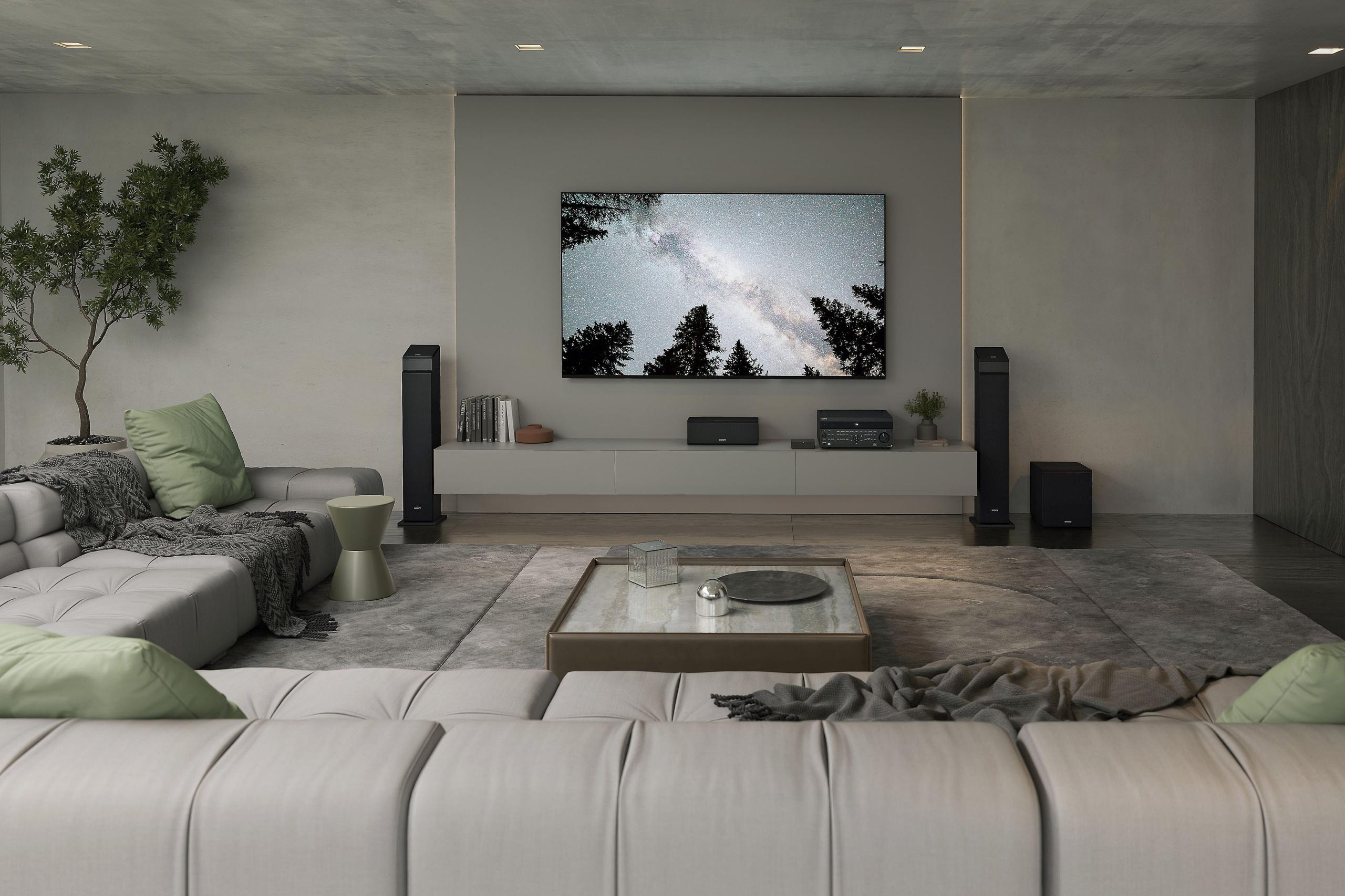
When you're building a home theater, the AV receiver sits at the heart of everything. It's the central command center that processes your video, amplifies your audio, and connects all your devices together. Think of it as the brain and muscle of your entertainment system combined into one box.
But here's where things get interesting: not all AV receivers are created equal, and the differences between models can dramatically impact your viewing and listening experience. Today we're comparing two receivers that represent very different approaches to home theater - the Denon AVR-X2800H and the Sony STR-AZ7000ES.
Before diving into these specific models, it's worth understanding what separates good receivers from great ones. The key factors that matter most are channel count (how many speakers you can connect), power output (how loud and clean your system can sound), video processing capabilities (how well it handles modern formats), and room correction technology (how well it adapts to your specific space).
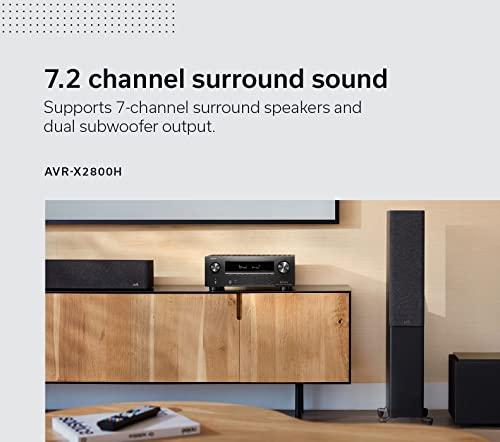
Channel count determines your speaker configuration possibilities. A 7.2 receiver like the Denon AVR-X2800H can handle seven main speakers plus two subwoofers, typically configured as a 5.1.2 Dolby Atmos setup (five main speakers, one subwoofer, and two overhead speakers). Meanwhile, a 13.2 receiver like the Sony STR-AZ7000ES opens up massive configurations like 9.2.4 systems with nine main speakers, two subwoofers, and four overhead speakers.
Power output, measured in watts per channel, affects how loudly and cleanly your system can play. More watts generally means better control over your speakers, especially at higher volumes or with demanding speaker designs. However, the relationship between watts and perceived loudness isn't linear - doubling the power only increases volume by about 3 decibels, which is barely noticeable to most people.
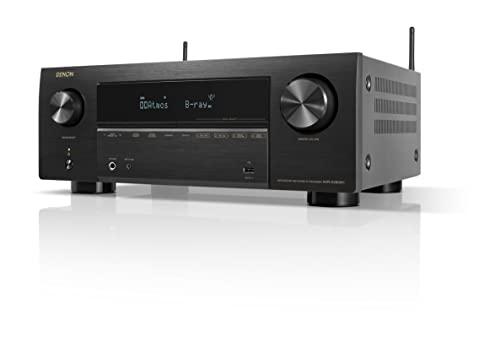
Released in 2022, the Denon AVR-X2800H represents Denon's sweet spot for mainstream home theater enthusiasts. At the time of writing, it sits in the mid-range pricing category, offering premium features without the premium price tag that flagship models command.
The receiver delivers 95 watts per channel across its 7.2 configuration, using discrete Class AB amplification - a design approach that prioritizes sound quality over efficiency. What sets it apart is the inclusion of high-quality 32-bit/192kHz Texas Instruments DACs (digital-to-analog converters) across all channels. DACs are crucial because they convert the digital audio from your streaming services, Blu-rays, and games into the analog signals that actually drive your speakers. Having premium DACs on every channel ensures consistent sound quality regardless of which speakers are playing.
The Denon excels particularly in gaming applications. It supports Variable Refresh Rate (VRR), which eliminates screen tearing by matching your display's refresh rate to your gaming console's output. Auto Low Latency Mode (ALLM) automatically switches your TV and receiver to their lowest-delay settings when gaming, reducing the time between pressing a button and seeing the action on screen. These features might sound technical, but they make a real difference in competitive gaming where every millisecond counts.
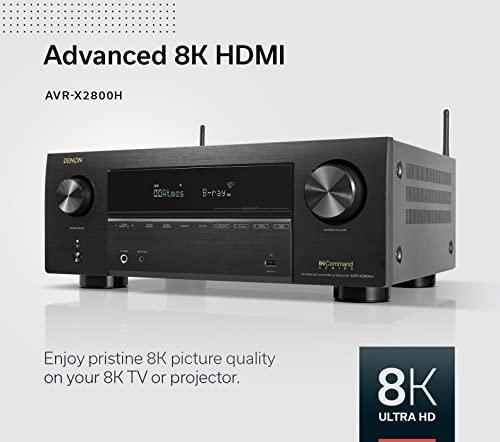
For video connectivity, the Denon provides six HDMI inputs with three supporting full 8K/60Hz and 4K/120Hz passthrough. This means you can connect three next-generation gaming consoles or 8K sources while still having three additional ports for older devices. The dual HDMI outputs let you send video to both your main display and a projector or second zone simultaneously.
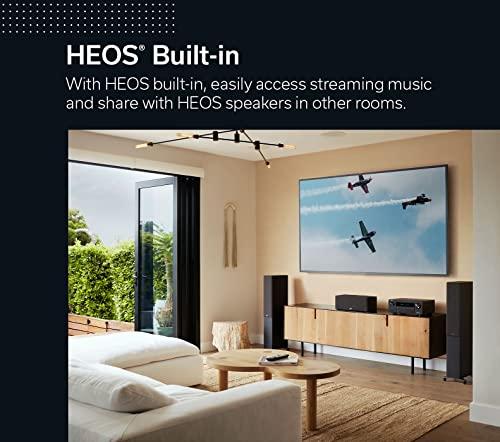
One of Denon's strongest features is its HEOS (Home Entertainment Operating System) multiroom platform. HEOS lets you stream music wirelessly throughout your home, controlling different zones from a single app. You can play different music in your living room and bedroom, or sync everything together for whole-house audio. This ecosystem integration extends to voice control through Alexa, Google Assistant, and Siri.
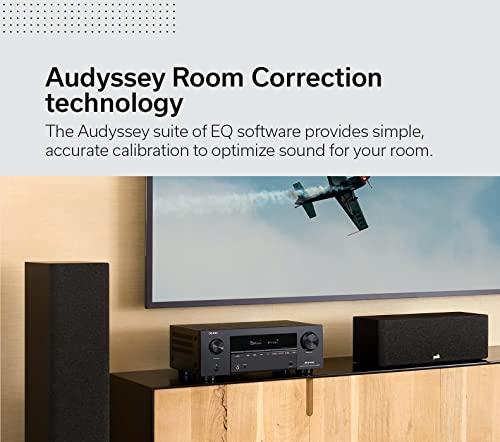
The Denon's Audyssey MultEQ XT room correction system deserves special mention. Room correction addresses the fact that every listening space affects sound differently - hard surfaces create reflections, room dimensions cause standing waves, and furniture absorbs certain frequencies. Audyssey uses a microphone to measure your room from up to eight different listening positions, then applies digital filters to compensate for these acoustic issues. The result is more accurate sound that's tailored to your specific space.
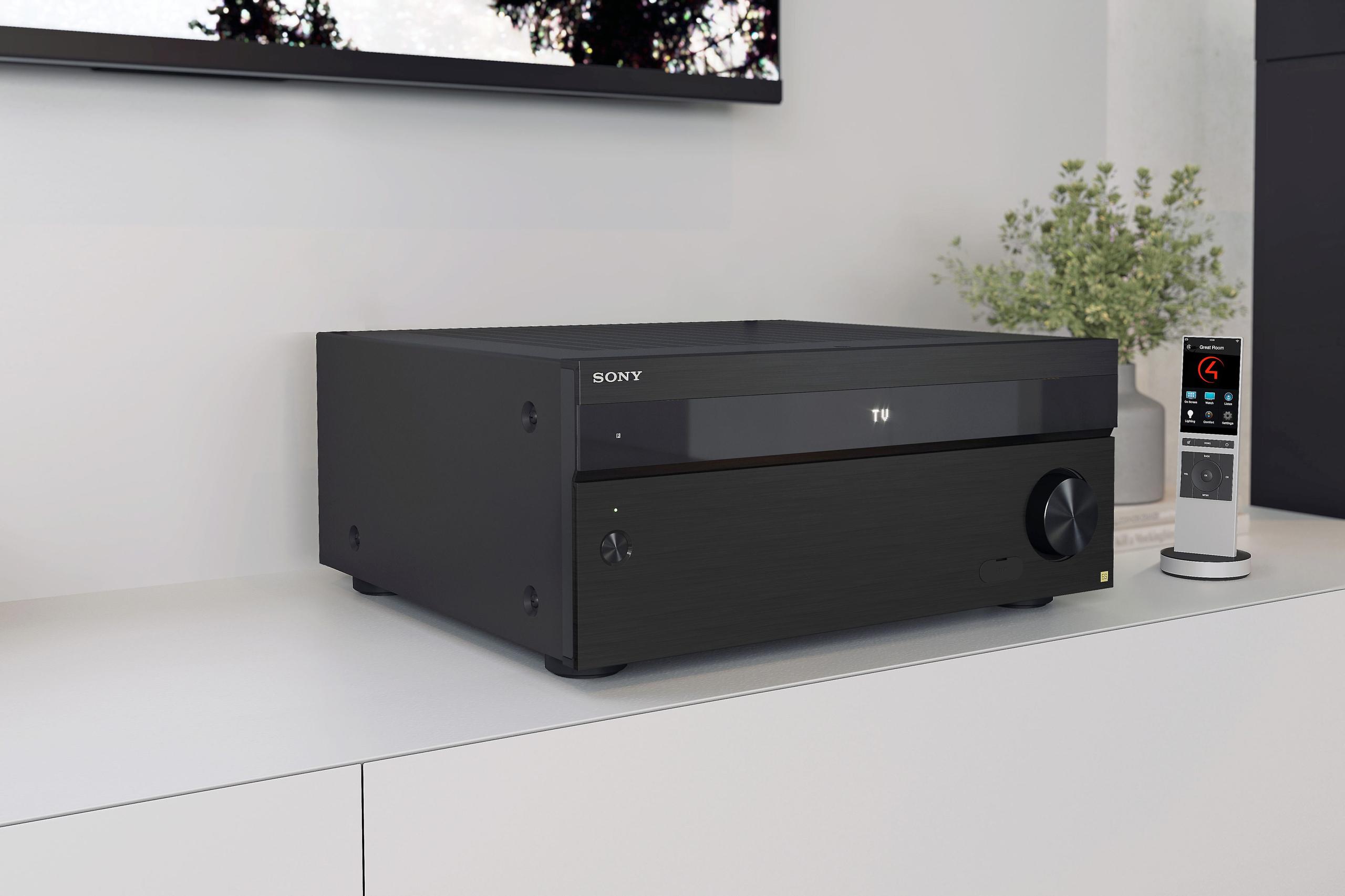
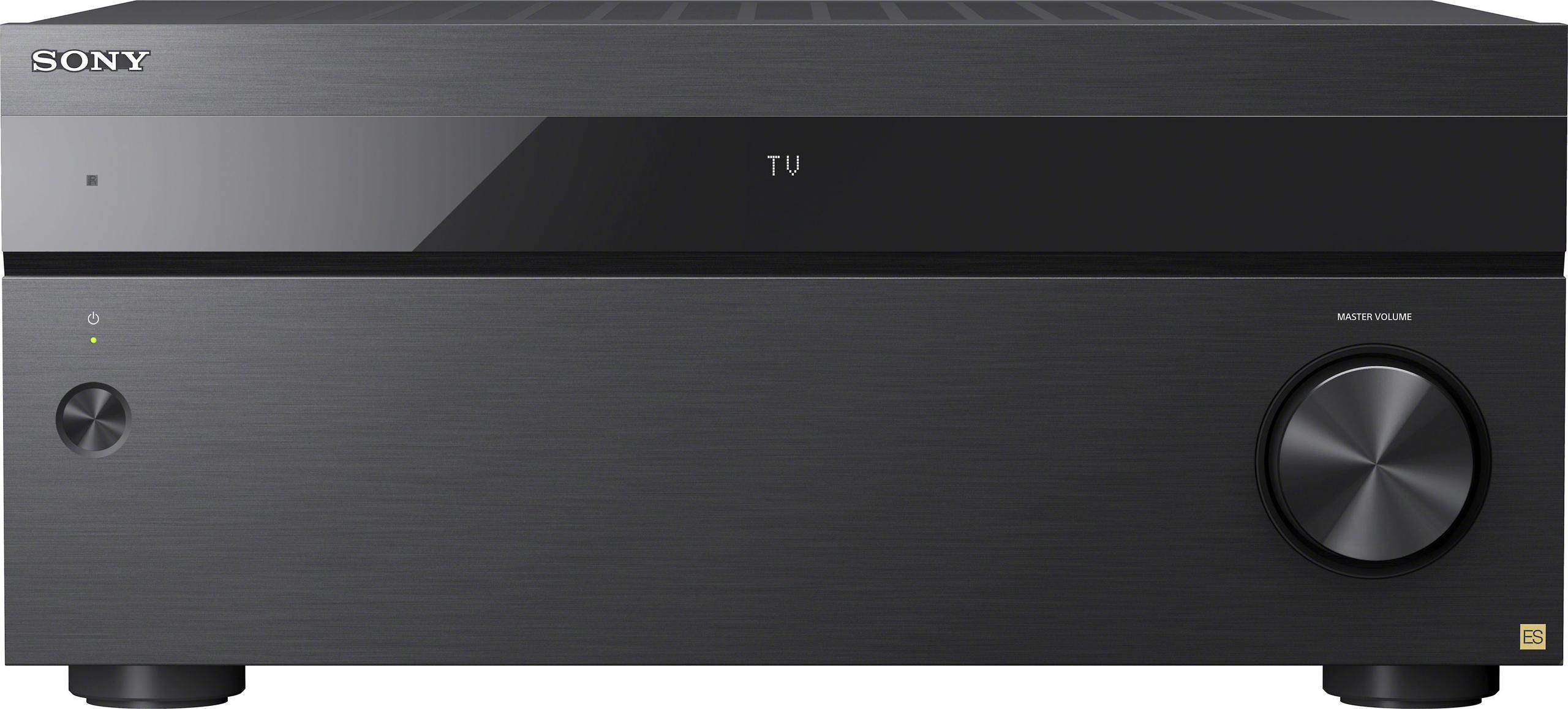
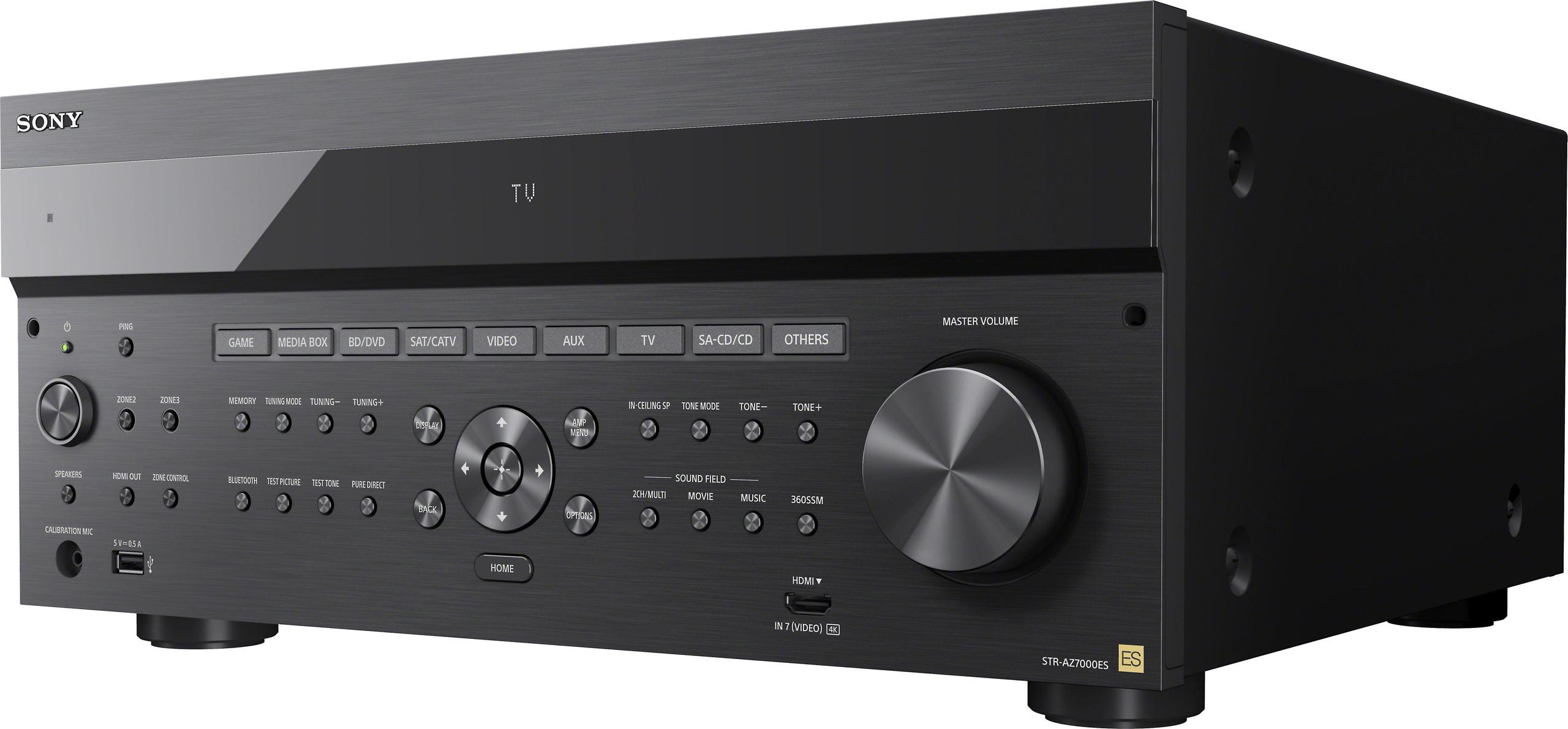
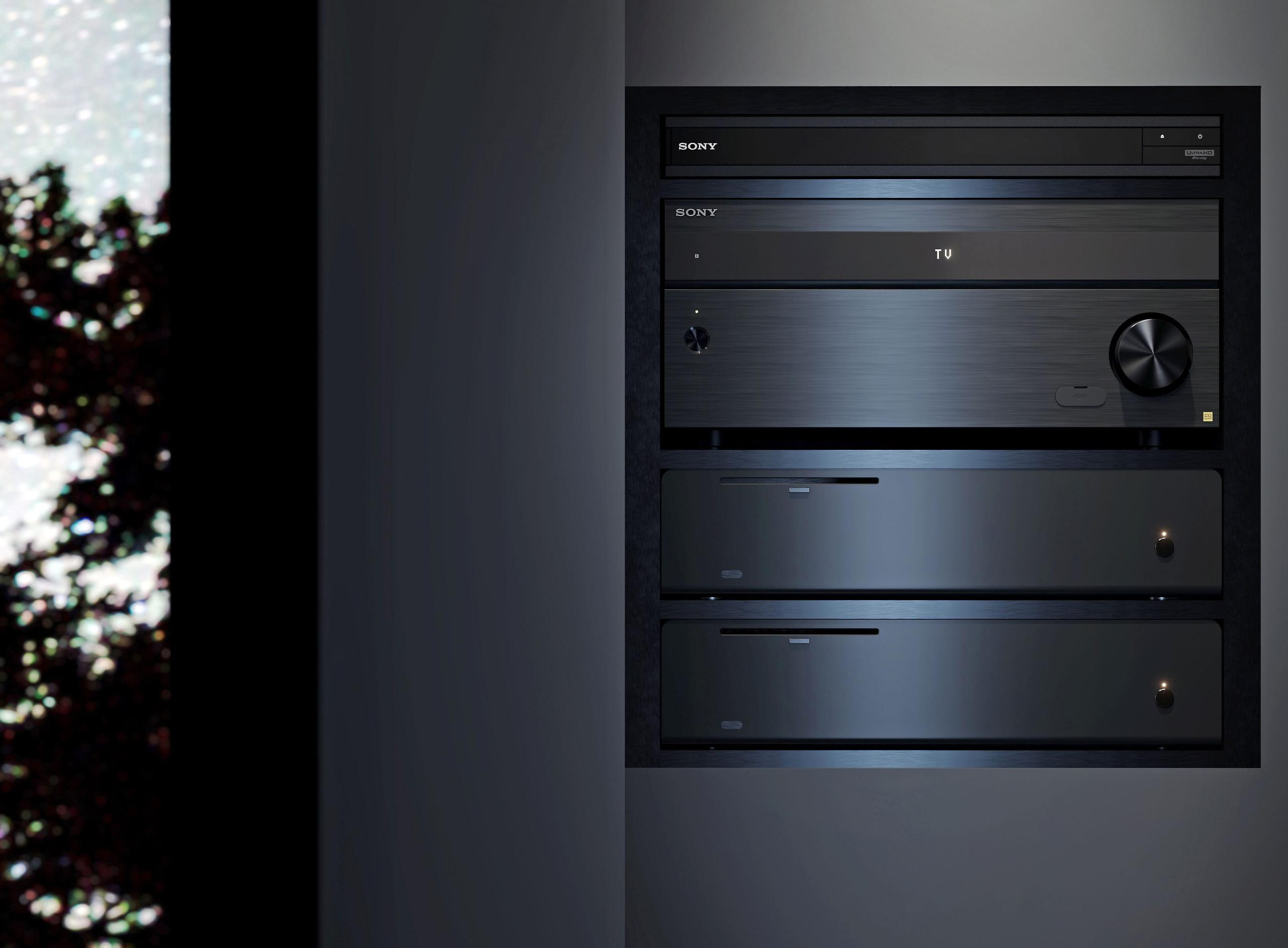
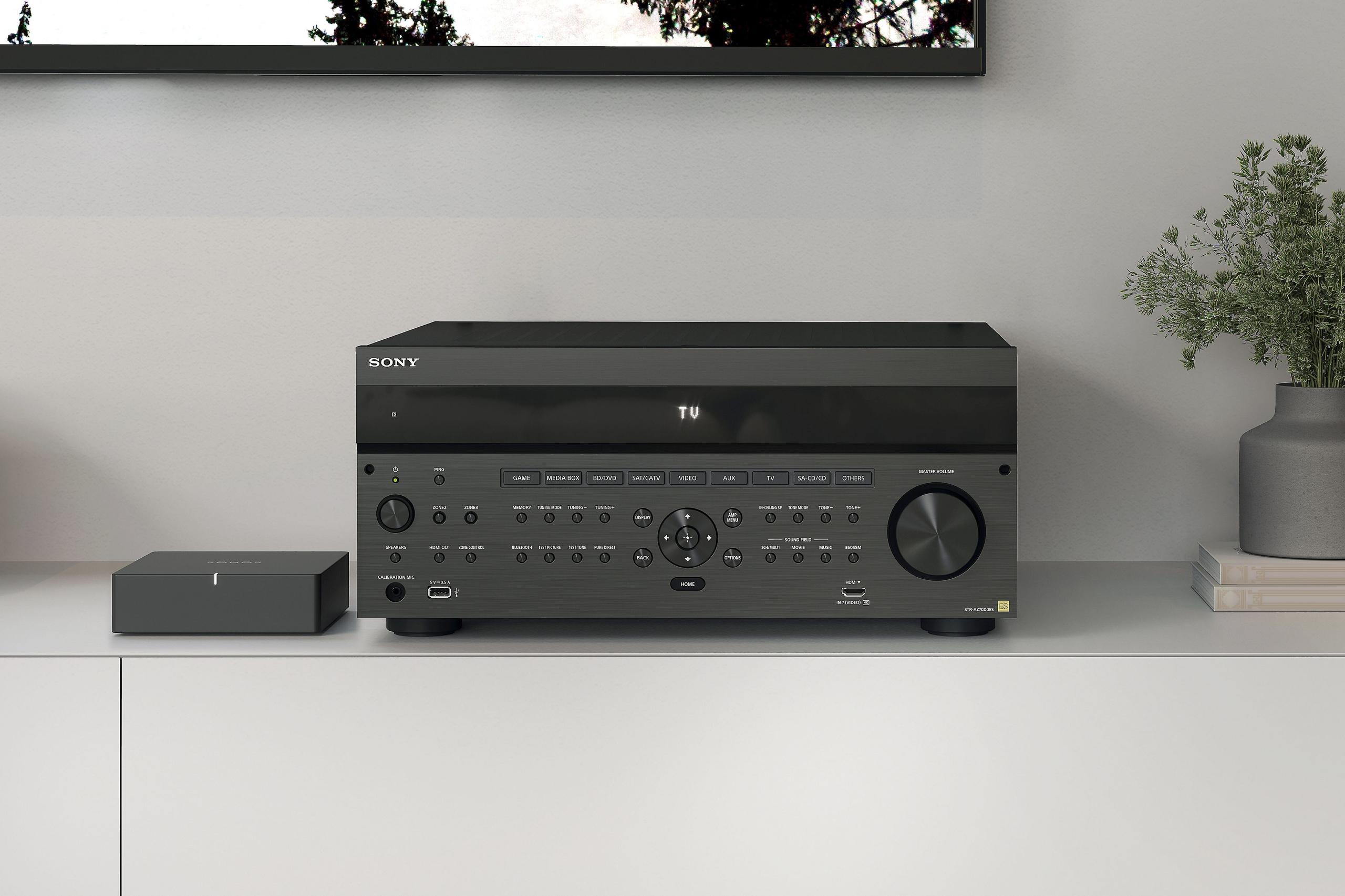
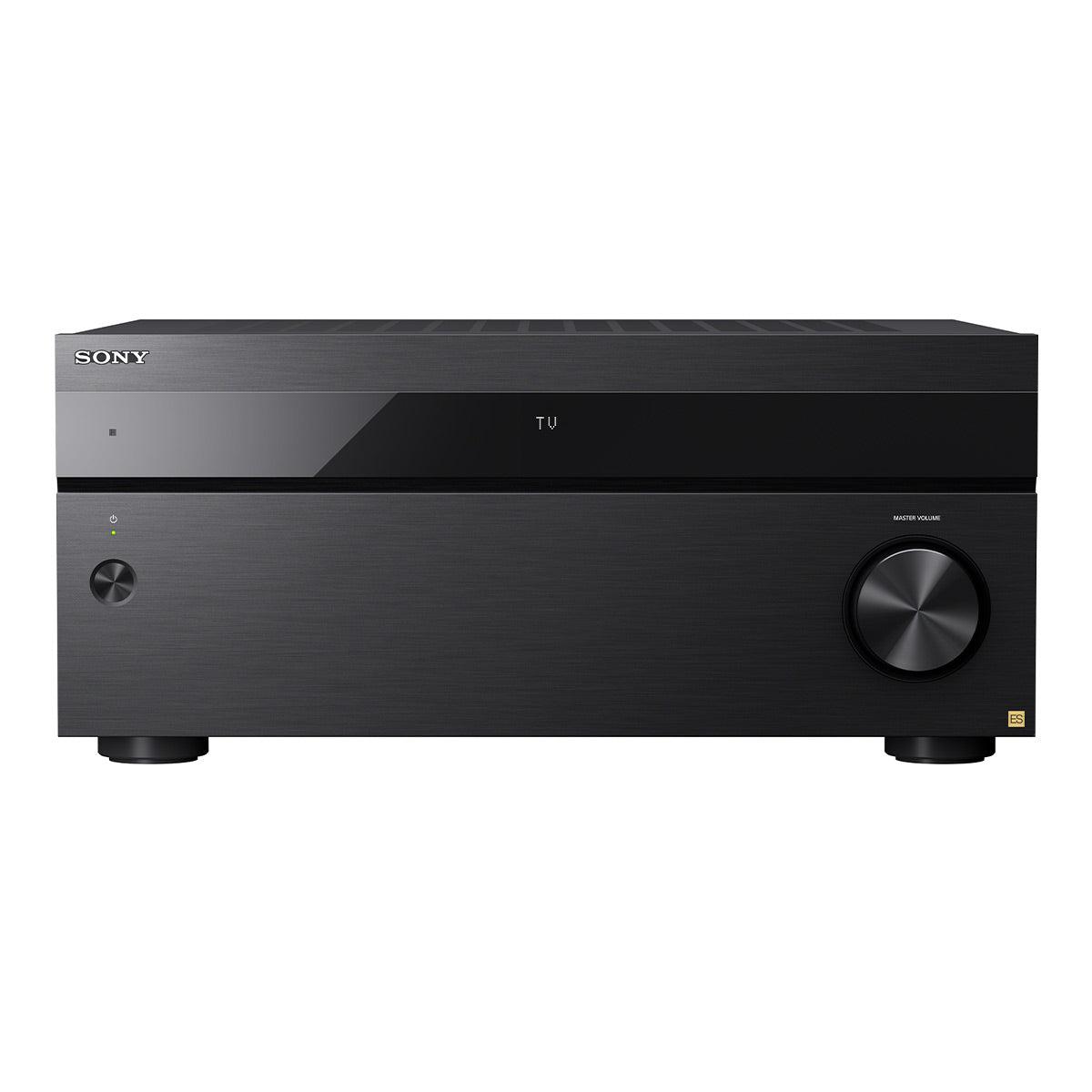
Sony's return to the AV receiver market in recent years has been notable, and the STR-AZ7000ES represents their flagship effort. Part of Sony's ES (Elevated Standard) series, this receiver targets serious home theater enthusiasts and custom installers who demand maximum performance and flexibility.
The channel count difference is immediately apparent - 13.2 channels versus the Denon's 7.2 channels. This isn't just about having more speakers; it fundamentally changes what's possible in your theater setup. You could run a 9.2.4 Dolby Atmos configuration with nine speakers around your seating area, two powerful subwoofers, and four overhead speakers for truly immersive object-based audio. Alternatively, you might choose a 7.2.6 setup with six overhead speakers for even more precise overhead sound placement.
The power difference is substantial too - 130 watts per channel compared to the Denon's 95 watts. That 38% increase in power provides better headroom, meaning the Sony can handle demanding passages without strain while maintaining clean, undistorted sound. This matters most with inefficient speakers or in large rooms where you need serious volume levels.
Sony's exclusive 360 Spatial Sound Mapping technology represents a different approach to room optimization than traditional room correction. Instead of just measuring and correcting frequency response, this system creates a three-dimensional map of your room's acoustic properties and adapts the sound field accordingly. It's particularly effective with object-based audio formats like Dolby Atmos, where sounds need to appear to move through three-dimensional space.
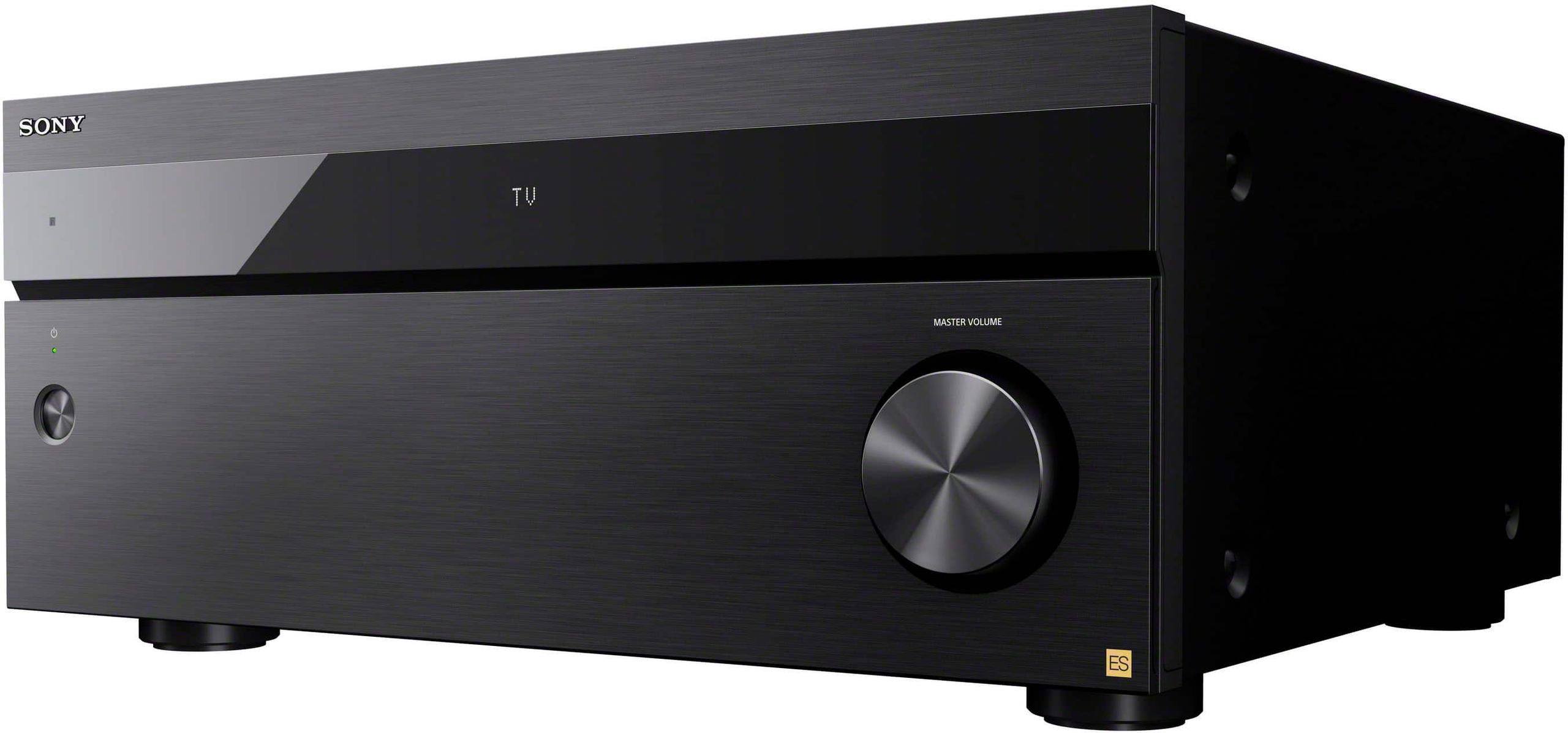
The Sony's ES-series build quality is immediately apparent. The internal layout uses audiophile-grade components throughout, with careful attention to power supply design and electromagnetic shielding. The updated heat sink design not only manages thermal performance but also reduces vibration that could affect sound quality - details that matter in high-end audio reproduction.
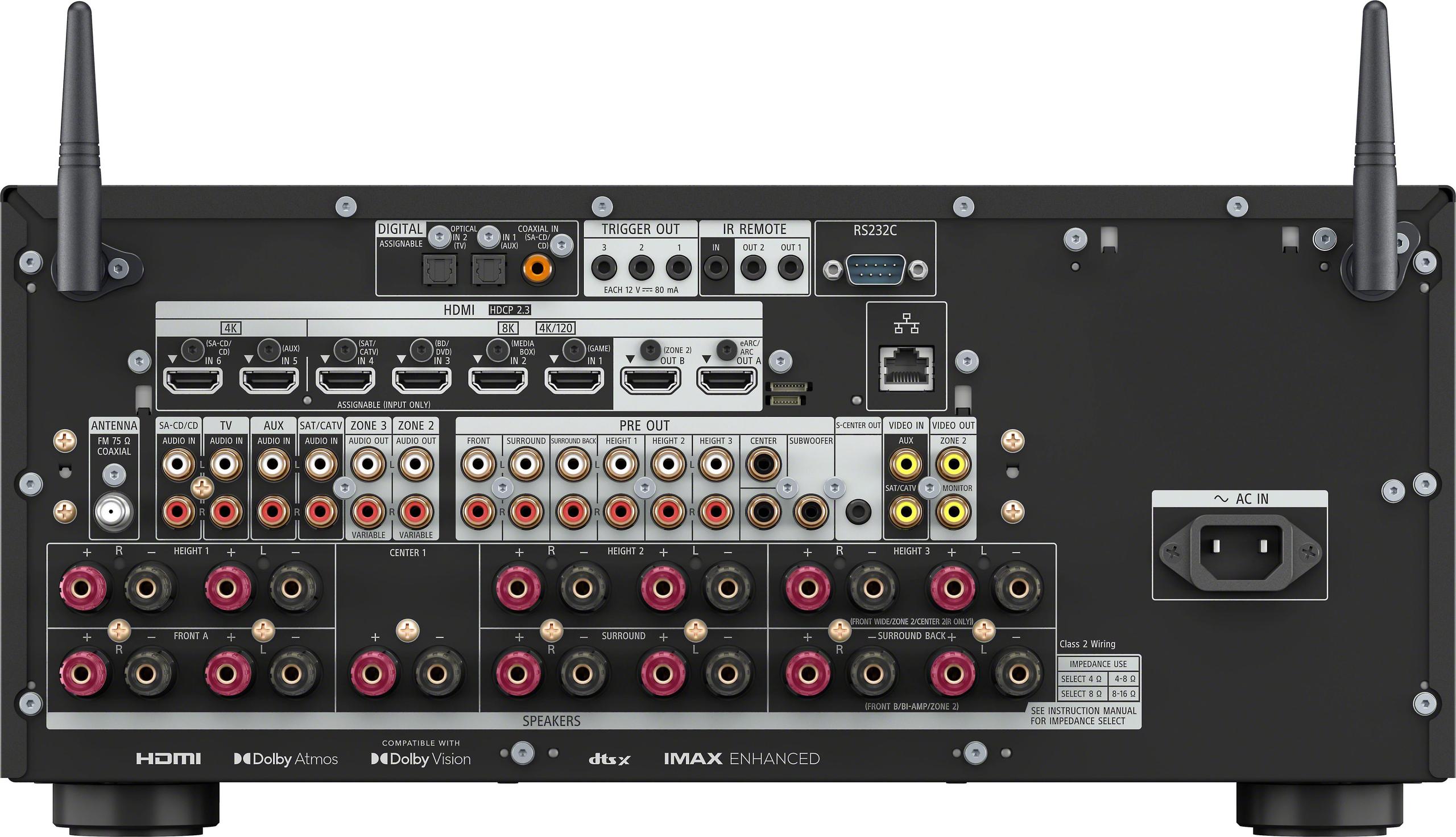
For video processing, the Sony takes a quality-over-quantity approach with four HDMI inputs that all support full 8K and 4K/120Hz specifications, compared to the Denon's six inputs where only three support these highest bandwidths. The Sony also includes IMAX Enhanced support, which provides optimized settings for IMAX-formatted content with enhanced brightness and expanded color gamut.
In our research of expert and user reviews, the power advantage of the Sony STR-AZ7000ES becomes most apparent in large rooms or with demanding speakers. The additional 35 watts per channel might not sound like much, but it represents significantly better control and headroom. This translates to cleaner sound at higher volumes and better dynamic range - the difference between the quietest whispers and loudest explosions in movie soundtracks.
The Denon AVR-X2800H, however, punches above its weight class. The discrete amplifier design and high-quality DACs deliver remarkably clean and detailed sound that competes with much more expensive receivers. User reviews consistently praise its balanced sound signature - it doesn't artificially emphasize bass or treble but presents music and movies with natural tonality.
For music listening specifically, both receivers excel but in different ways. The Sony's ES-series components and higher power output provide exceptional detail retrieval and soundstage width - you can clearly hear the position of individual instruments and the acoustic space of the recording venue. The Denon offers a more intimate presentation that many find engaging for smaller listening sessions, with its Pure Direct mode bypassing all digital processing for the cleanest possible signal path.
The channel count difference becomes crucial here. The Sony STR-AZ7000ES can create truly enveloping Dolby Atmos experiences with its ability to drive four, six, or even eight overhead speakers simultaneously. Object-based audio - where sounds can be precisely placed and moved through three-dimensional space - reaches its full potential only with adequate speaker placement options.
The Denon's 5.1.2 Atmos limitation isn't necessarily a deal-breaker for most rooms, but it does constrain your options. Two overhead speakers can still create convincing height effects, especially with Dolby's Height Virtualization technology that can simulate additional overhead speakers using psychoacoustic processing.
Both receivers handle traditional surround formats like DTS-HD Master Audio and Dolby TrueHD excellently, with the processing power to decode these lossless formats without compression or quality loss.
This is where the Denon AVR-X2800H pulls ahead significantly. Its comprehensive gaming feature set - including VRR, ALLM, Quick Frame Transport, and Quick Media Switching - creates an optimized gaming experience that the Sony can't quite match. The difference in input lag can be measurable, potentially giving competitive gamers a real advantage.
The Denon's additional HDMI inputs also matter for gaming setups. With modern consoles, streaming devices, and PC gaming rigs all requiring high-bandwidth HDMI connections, having six inputs instead of four provides valuable flexibility.
Room correction technology might be the most important feature most people don't fully understand. Every room has acoustic problems - parallel walls create standing waves, hard surfaces cause reflections, and furniture absorbs sound unevenly. These issues can make even expensive speakers sound poor in certain rooms.
The Denon's Audyssey system takes a methodical approach, measuring frequency response from multiple positions and applying corrective filters. It's effective and relatively easy to use, with an optional smartphone app that provides more detailed control over the correction curves.
Sony's approach with 360 Spatial Sound Mapping is more sophisticated in some ways. Instead of just correcting frequency response, it maps your room's three-dimensional acoustic properties and optimizes the entire sound field. Early reports suggest this creates more natural-sounding results, particularly with immersive audio formats, though the technology is still relatively new.
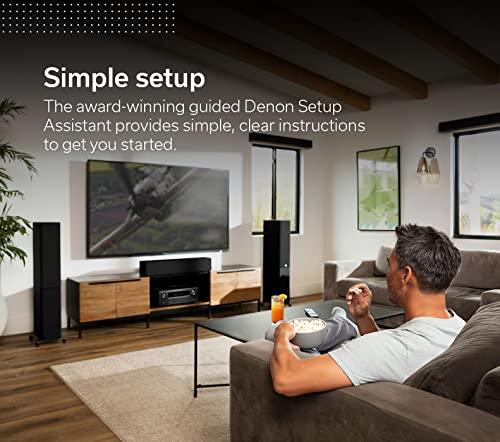
The Denon AVR-X2800H benefits from years of refinement in user interface design. The on-screen menus are logical and comprehensive, while the HEOS app provides intuitive control over streaming and multiroom functions. Voice control integration works reliably with major platforms.
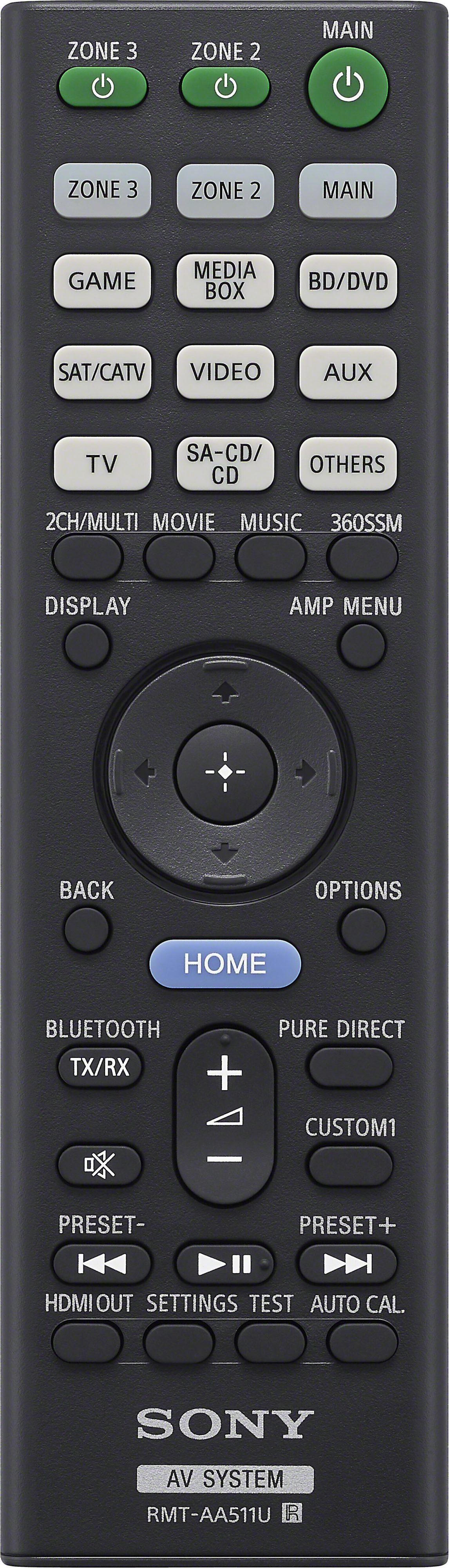
The Sony STR-AZ7000ES targets a more professional market with its interface design. It's comprehensive and powerful, but potentially overwhelming for casual users. However, custom installers and serious enthusiasts appreciate the detailed control options and professional integration capabilities with systems like Control4 and Crestron.
At the time of writing, the pricing difference between these receivers is substantial - the Sony STR-AZ7000ES costs nearly four times as much as the Denon AVR-X2800H. This price gap reflects real capability differences, but also raises questions about value and practical utility.
The Denon represents exceptional value for most users. It provides all the essential modern features - 8K video support, immersive audio processing, comprehensive streaming capabilities, and effective room correction - at a price that doesn't require premium budget allocation. For medium-sized rooms and typical 5.1 or 7.1 speaker configurations, it delivers performance that's effectively indistinguishable from much more expensive alternatives.
The Sony justifies its premium pricing through genuine capability advantages, but only if you'll actually use them. The additional channels, higher power output, and premium components provide measurable benefits in large rooms with demanding speaker systems. However, in smaller spaces or with modest speaker configurations, these advantages may not be fully realized.
Your room is under 3,000 cubic feet and you're planning a 5.1, 7.1, or 5.1.2 speaker configuration. This covers the vast majority of home theater setups, including most living rooms and dedicated theater spaces in typical homes.
Gaming is important to your entertainment mix. The Denon's comprehensive gaming features make it the clear choice for households where Xbox Series X, PlayStation 5, or PC gaming represents significant usage.
You want whole-house audio capabilities. HEOS multiroom streaming is mature, reliable, and well-integrated with popular music services. If you envision playing music throughout your home from a central system, the Denon excels here.
Budget efficiency matters. The Denon delivers about 80% of what the Sony offers at roughly 25% of the cost. That price difference could fund better speakers, acoustic treatments, or a larger display - investments that might provide more noticeable improvements than the receiver upgrade.
You have a large dedicated theater room where the additional power and channels will be fully utilized. If you're planning a 9-channel or larger speaker system with multiple subwoofers and overhead speakers, the Sony's capabilities become essential rather than excessive.
Audio quality is your absolute priority, and budget is less constrained. The ES-series components, advanced room mapping, and audiophile-grade signal processing provide genuinely superior sound quality that discerning listeners will appreciate.
Professional installation and integration matter. Custom installers prefer working with receivers that offer comprehensive control options and reliable integration with high-end automation systems. The Sony excels in these applications.
You're building a system with room to grow. While the Denon is essentially fixed in its 7.2 configuration, the Sony can accommodate massive future speaker additions or room expansions.
Both receivers represent significant advances over their predecessors from just a few years ago. The widespread adoption of HDMI 2.1 with 8K and 4K/120Hz support was barely available in 2020, and now it's becoming standard even in mid-range models like the Denon.
Object-based audio processing has also matured considerably. Early Dolby Atmos implementations often felt gimmicky, but current processing in both receivers creates genuinely immersive experiences when paired with appropriate speaker configurations.
Room correction technology continues advancing rapidly. Traditional systems like Audyssey focus primarily on frequency response correction, while newer approaches like Sony's 360 Spatial Sound Mapping attempt more comprehensive acoustic optimization. This evolution suggests that room adaptation will become increasingly important in receiver selection.
For most readers, the Denon AVR-X2800H represents the smarter choice. It provides all essential modern features, excellent sound quality, and comprehensive connectivity at a price that doesn't strain typical home theater budgets. The gaming optimizations and HEOS multiroom capabilities add significant value for many households.
The Sony STR-AZ7000ES serves a more specific audience - those building large, dedicated home theaters where its additional channels and power output provide tangible benefits. If you're planning a 9+ speaker system or have a room larger than most living spaces, the Sony's capabilities become necessary rather than excessive.
Consider also that the price difference between these receivers could fund significant improvements elsewhere in your system. Better speakers, acoustic treatments, or a larger display might provide more noticeable improvements than upgrading from the Denon to the Sony.
The sweet spot for most home theater enthusiasts remains in the mid-range category that the Denon AVR-X2800H represents so well. It delivers premium performance without premium pricing, making it easier to allocate budget toward the components that typically matter most - your speakers and display.
Ultimately, both receivers are excellent at what they do. Your choice should depend on matching capabilities to your actual needs rather than pursuing maximum specifications for their own sake. The Denon serves mainstream users exceptionally well, while the Sony provides the ultimate platform for serious enthusiasts with rooms and budgets that can fully utilize its capabilities.
| Denon AVR-X2800H | Sony STR-AZ7000ES |
|---|---|
| Channel Configuration - Determines maximum speaker setup possibilities | |
| 7.2 channels (up to 5.1.2 Dolby Atmos) | 13.2 channels (up to 9.2.4 or 7.2.6 configurations) |
| Power Output - Affects volume capability and speaker control | |
| 95 watts per channel (adequate for most rooms) | 130 watts per channel (38% more power for demanding setups) |
| HDMI Connectivity - Critical for modern gaming and 8K sources | |
| 6 inputs (3 with 8K/4K120Hz), 2 outputs | 4 inputs (all with 8K/4K120Hz), 2 outputs |
| Gaming Features - Important for console and PC gaming | |
| VRR, ALLM, QFT, QMS (comprehensive gaming optimization) | Standard HDMI 2.1 gaming features |
| Room Correction Technology - Optimizes sound for your specific space | |
| Audyssey MultEQ XT (proven, app-controllable) | 360 Spatial Sound Mapping + Digital Cinema Auto Cal IX |
| Streaming and Multiroom - Wireless audio distribution capabilities | |
| HEOS built-in (mature multiroom ecosystem) | Basic streaming (no multiroom system) |
| Professional Integration - Matters for custom installations | |
| Consumer-focused smart home integration | Control4, Crestron, Savant compatibility with RS-232 |
| Audio Processing Quality - Affects music and movie sound reproduction | |
| 32-bit/192kHz TI DACs on all channels | ES-series audiophile components throughout |
| Target Room Size - Guides appropriate application | |
| Medium rooms, living rooms, smaller dedicated theaters | Large dedicated theaters, custom installations |
| Value Proposition - Performance per dollar consideration | |
| Exceptional features at mid-range pricing | Premium performance at flagship pricing |
The biggest difference is channel count and target audience. The Denon AVR-X2800H offers 7.2 channels for typical home theater setups, while the Sony STR-AZ7000ES provides 13.2 channels for large, dedicated theater rooms. The Sony also delivers significantly more power at 130 watts per channel versus the Denon's 95 watts.
The Denon AVR-X2800H is clearly superior for gaming, offering comprehensive features like Variable Refresh Rate (VRR), Auto Low Latency Mode (ALLM), Quick Frame Transport (QFT), and Quick Media Switching (QMS). It also provides more HDMI inputs (6 vs 4) for connecting multiple gaming consoles and devices.
The Denon AVR-X2800H supports up to 7 speakers plus 2 subwoofers, typically configured as 5.1.2 Dolby Atmos (5 main speakers, 1 subwoofer, 2 overhead speakers). The Sony STR-AZ7000ES can drive up to 13 speakers plus 2 subwoofers, enabling massive configurations like 9.2.4 or 7.2.6 Dolby Atmos setups.
For most users, the Denon AVR-X2800H provides exceptional value, delivering about 80% of the Sony's performance at roughly 25% of the cost. The Sony STR-AZ7000ES justifies its premium pricing only if you need its additional channels and power for large theater rooms.
Yes, both the Denon AVR-X2800H and Sony STR-AZ7000ES support 8K video passthrough and upscaling. The Denon has 3 HDMI inputs that support 8K/4K120Hz, while all 4 of the Sony's HDMI inputs support these high-bandwidth formats.
Both excel at music reproduction but in different ways. The Sony STR-AZ7000ES offers audiophile-grade ES-series components and higher power for superior detail and soundstage width. The Denon AVR-X2800H provides excellent musical performance with its high-quality DACs and Pure Direct mode, at a much more accessible price point.
The Sony STR-AZ7000ES delivers 130 watts per channel compared to the Denon AVR-X2800H's 95 watts - a 38% increase. This extra power provides better headroom for demanding speakers, cleaner sound at higher volumes, and superior control in large rooms or with inefficient speakers.
Both offer advanced room correction but use different approaches. The Denon AVR-X2800H uses proven Audyssey MultEQ XT technology with smartphone app control. The Sony STR-AZ7000ES features newer 360 Spatial Sound Mapping technology that creates three-dimensional acoustic maps for more comprehensive optimization.
The Denon AVR-X2800H excels here with built-in HEOS multiroom streaming, allowing wireless music distribution throughout your home. The Sony STR-AZ7000ES focuses on single-room performance and lacks a comparable multiroom ecosystem.
The Denon AVR-X2800H is more user-friendly with intuitive on-screen menus, comprehensive HEOS app control, and voice assistant integration. The Sony STR-AZ7000ES targets professional installers and serious enthusiasts with more complex but comprehensive control options.
The Denon AVR-X2800H works well in medium-sized rooms under 3,000 cubic feet, including most living rooms and smaller dedicated theaters. The Sony STR-AZ7000ES is designed for large dedicated theater rooms where its additional power and channels can be fully utilized.
Both brands have excellent reputations, but serve different markets. Denon is known for reliable, feature-rich receivers that offer great value for mainstream users. Sony's ES series represents their premium line with audiophile-grade components and professional installation focus. Choose the Denon AVR-X2800H for proven mainstream performance or the Sony STR-AZ7000ES for maximum capability in high-end applications.
We've done our best to create useful and informative comparisons to help you decide what product to buy. Our research uses advanced automated methods to create this comparison and perfection is not possible - please contact us for corrections or questions. These are the sites we've researched in the creation of this article: theaudiotailor.com.au - ecoustics.com - simplehomecinema.com - whathifi.com - audioadvisor.com - youtube.com - bestbuy.com - e-catalog.com - crutchfield.com - avsforum.com - crutchfield.com - whathifi.com - richersounds.com - bestbuy.com - accessories4less.com - projectorscreen.com - adiglobaldistribution.us - youtube.com - bestbuy.com - bestbuy.com - sweetwater.com - crutchfield.com - merlinstv.com - new-age-electronics.com - crutchfield.com - avsforum.com - sweetwater.com - projectorscreen.com - projectorscreenstore.com - skybygramophone.com - youtube.com - audiolab.com

Privacy Policy
Terms and Conditions - Affiliate Policy
Home Security
© Copyright 2008-2026.
11816 Inwood Rd #1211, Dallas, TX 75244