

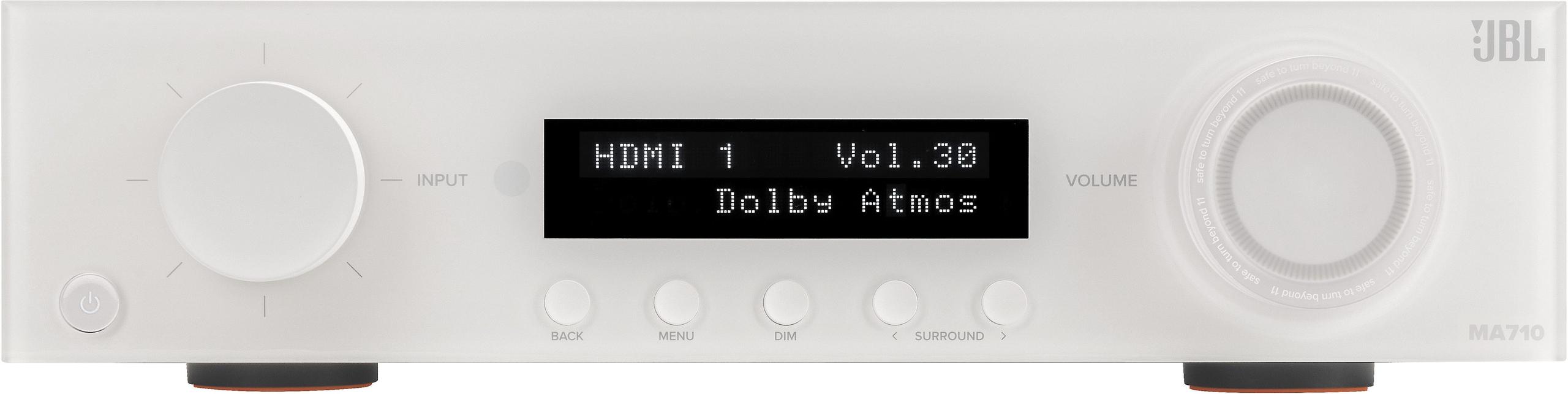
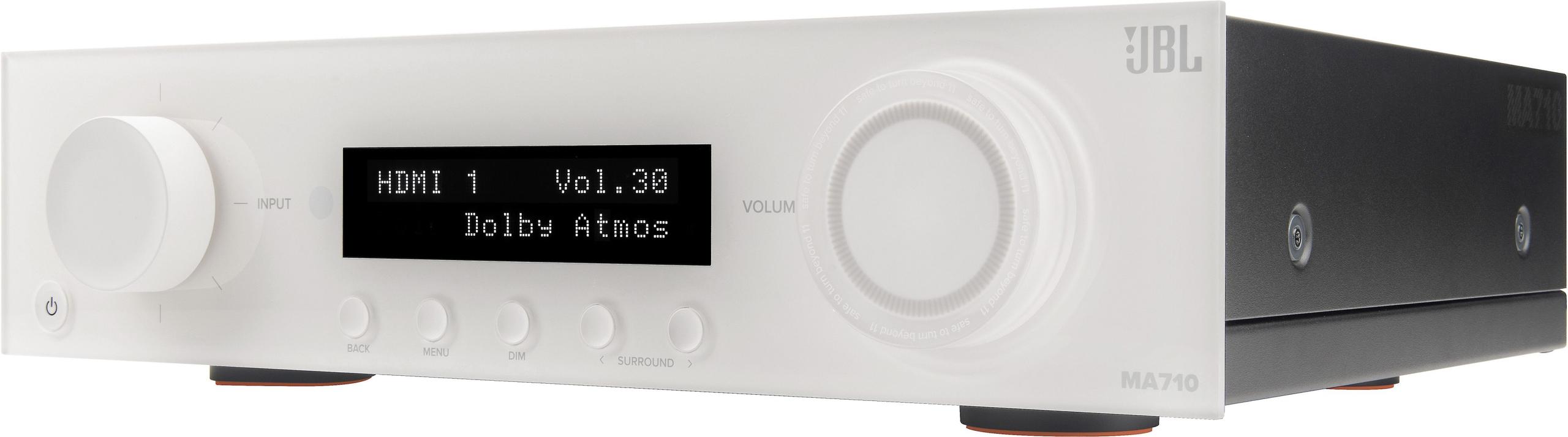
When building a home theater system, the AV receiver serves as the central command center that ties everything together. It's the brain that processes your audio and video signals, amplifies sound to your speakers, and connects all your devices—from gaming consoles to streaming boxes. Today we're comparing two compelling options in the 7.2 channel category: the established Denon AVR-X2800H and the newer JBL MA710.
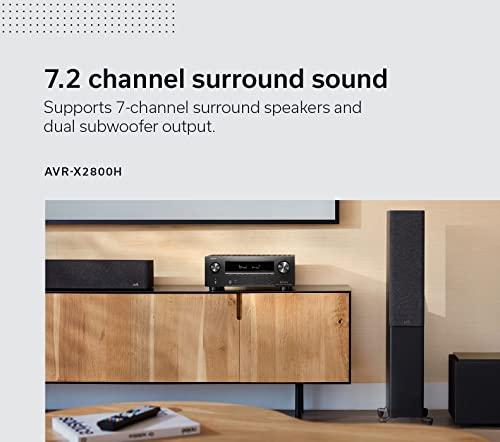
Before diving into specifics, let's clarify what a 7.2 channel receiver actually does. The "7.2" designation means it can power seven main speakers plus two subwoofers. This setup enables immersive surround sound formats like Dolby Atmos in a 5.1.2 configuration—that's five speakers around you at ear level, one center channel, and two height speakers above for overhead effects. The ".2" refers to dual subwoofers for enhanced bass response.
These receivers also handle video processing, converting and passing through signals from your source devices to your TV or projector. Modern units support 8K video resolution (four times sharper than 4K) and advanced gaming features that reduce input lag for console players.
The key considerations when choosing an AV receiver include audio performance, video capabilities, room correction technology (which automatically adjusts sound for your specific space), connectivity options, and overall value. At the time of writing, both receivers we're examining fall into the mid-range price category, though they take different approaches to reach that market position.
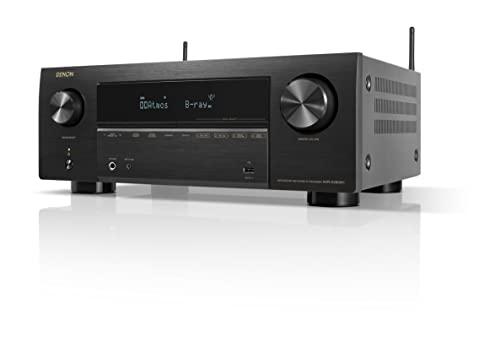
The Denon AVR-X2800H launched in 2022 as part of Denon's established X-series lineup. Denon has been making AV receivers for decades, and this model represents an evolution of their proven approach. It replaced the popular AVR-X2700H, bringing several meaningful improvements while maintaining the brand's reputation for refined sound quality.
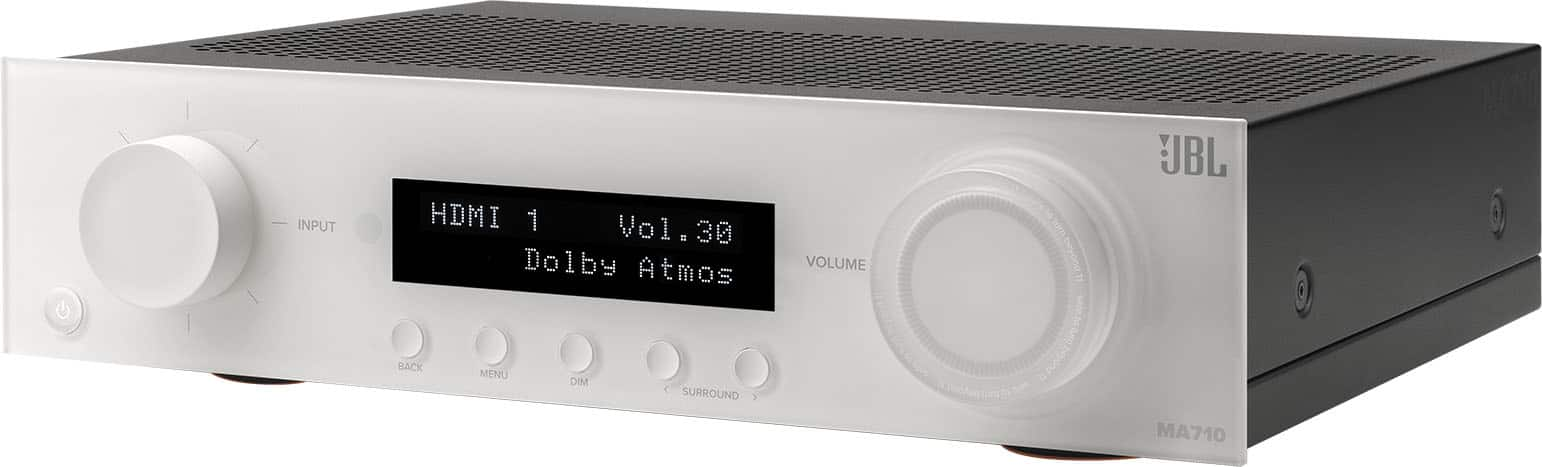
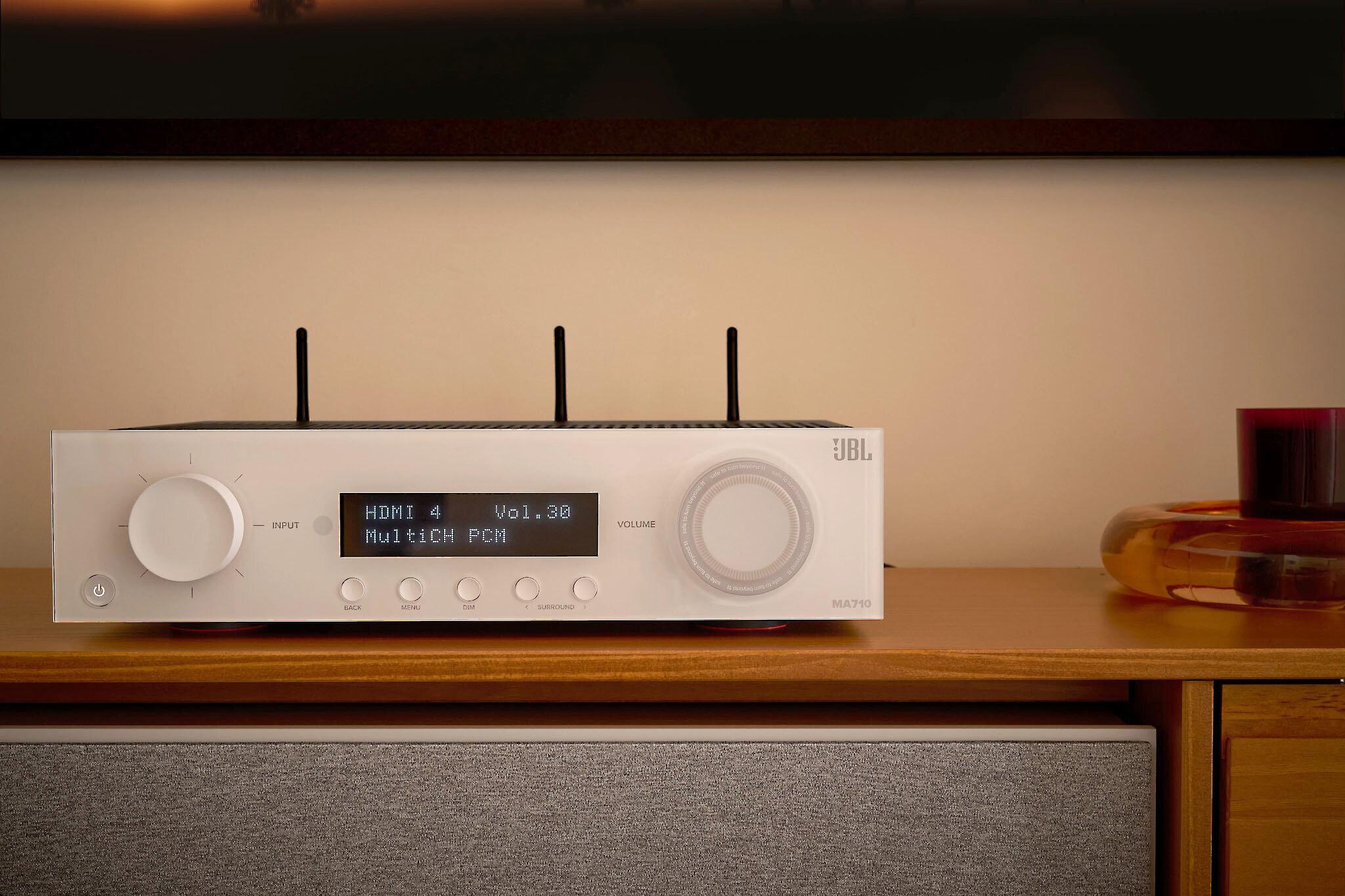
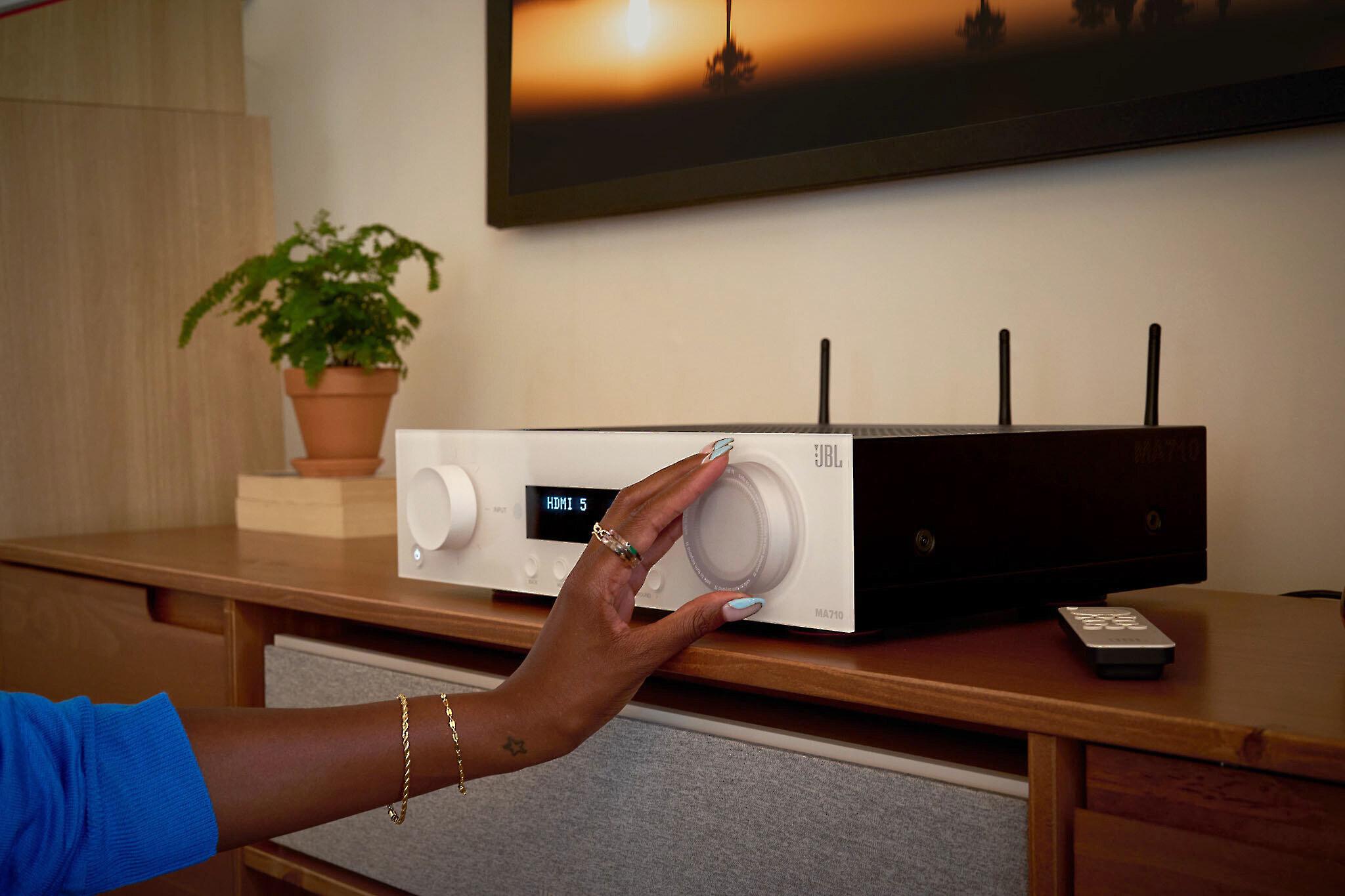
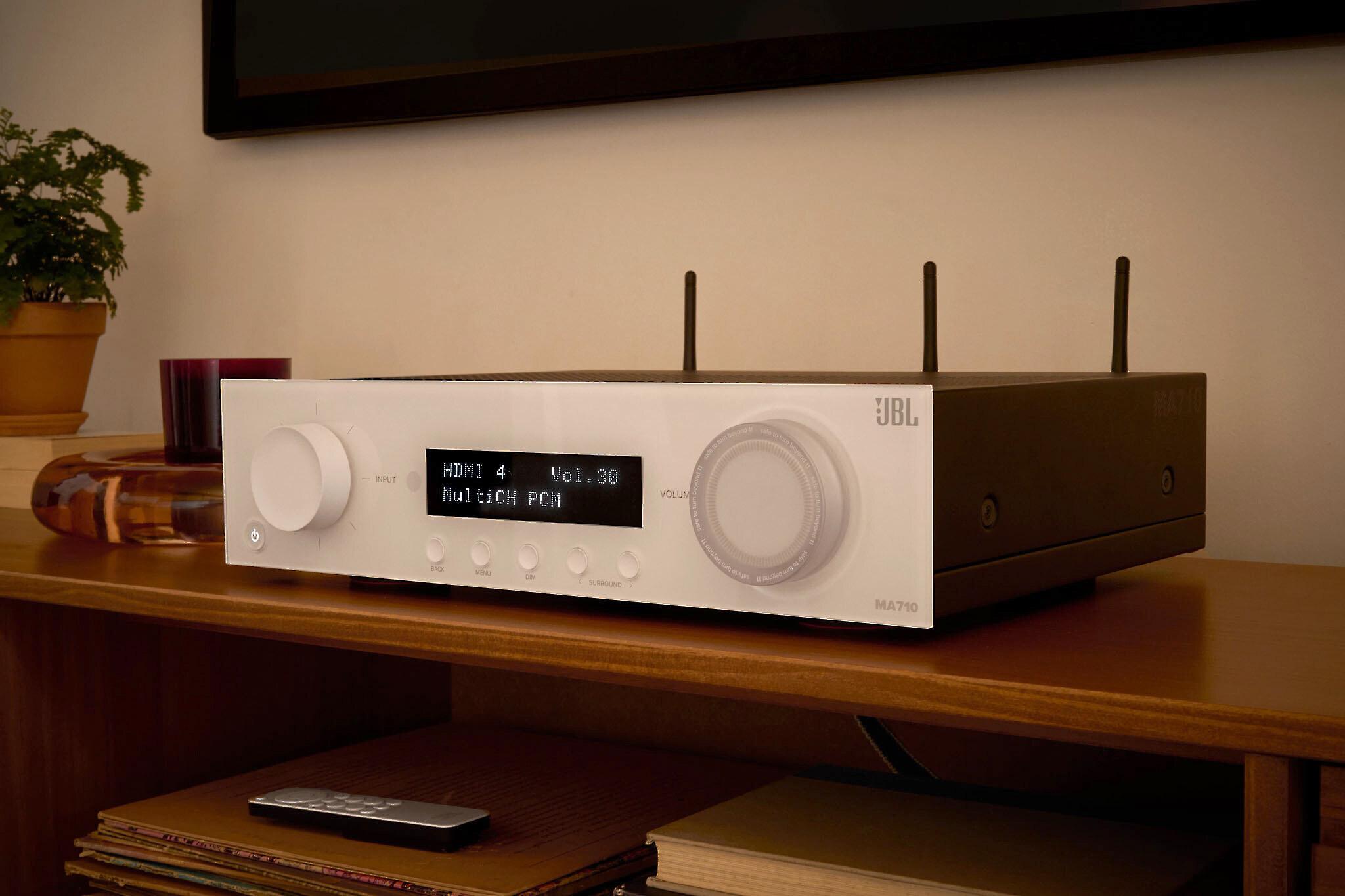
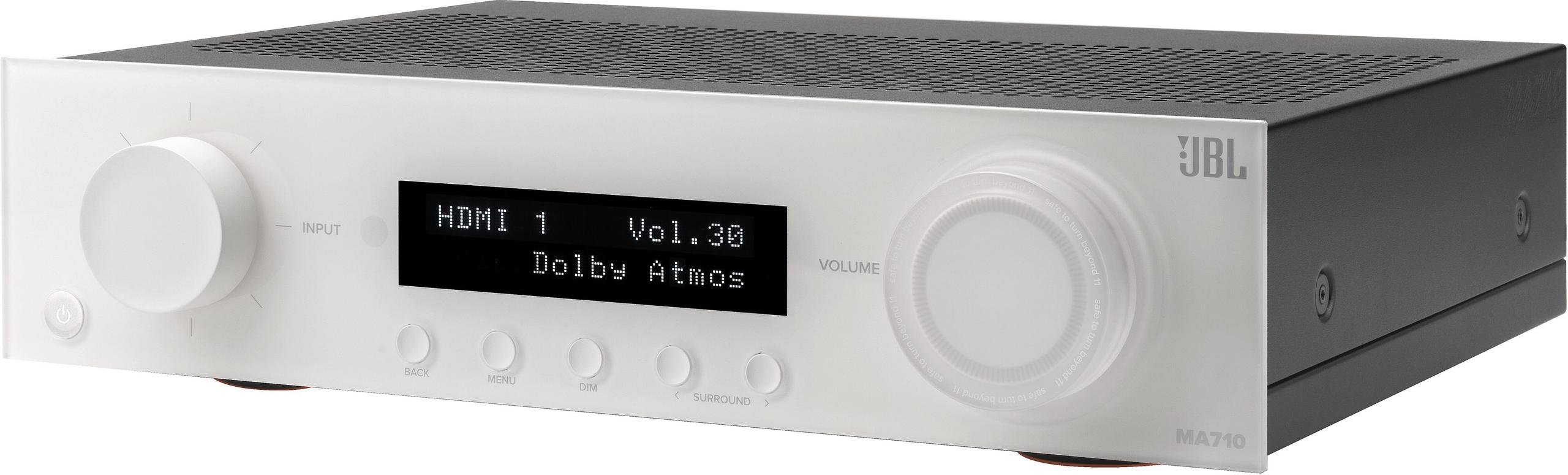
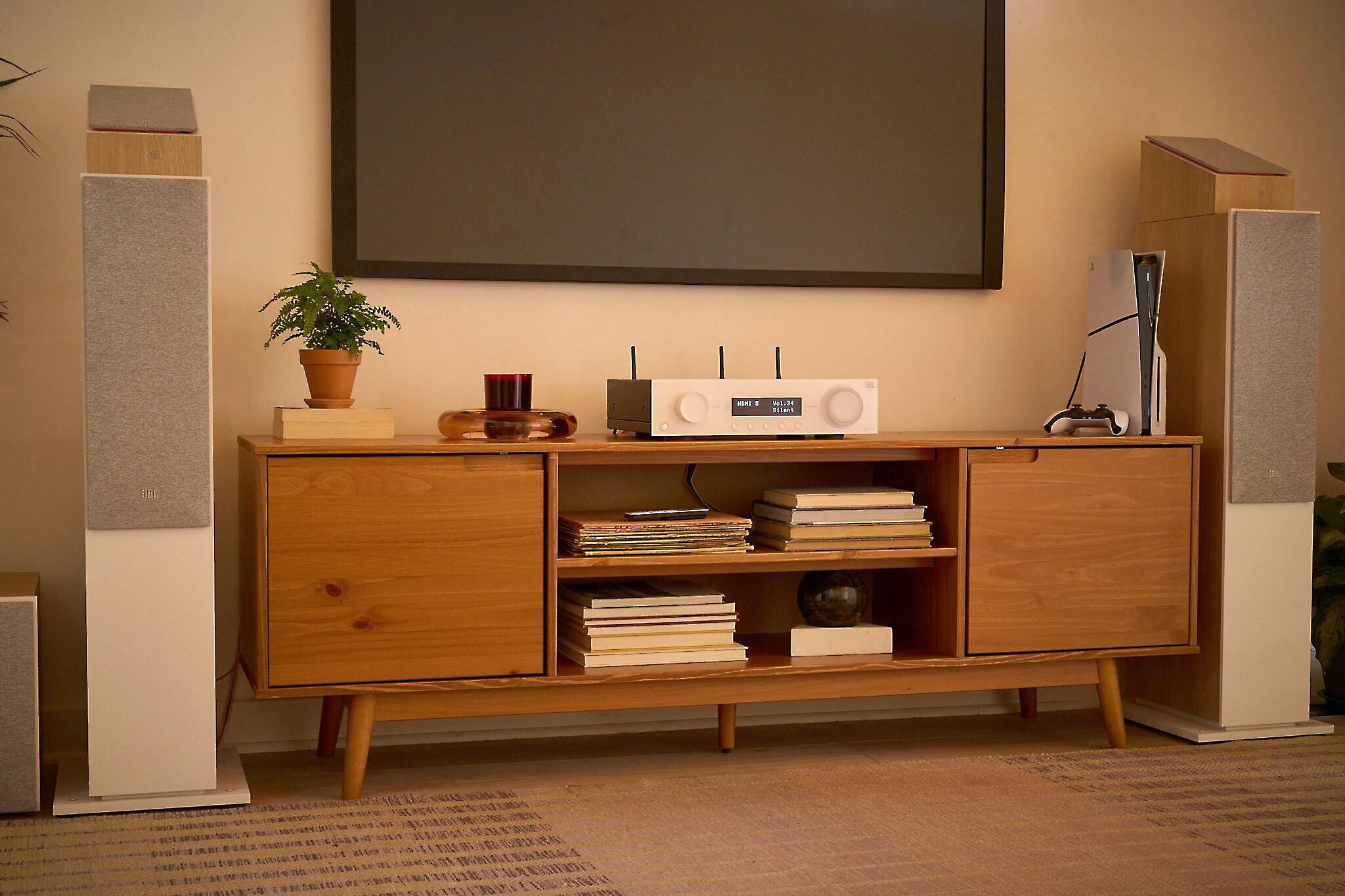
The JBL MA710, on the other hand, arrived in 2024 as JBL's bold entry into the AV receiver market. While JBL is legendary for speakers—you've probably heard their products in movie theaters, concerts, or professional studios—they've historically stayed out of the receiver business. The MA710 represents their attempt to capture market share from established players like Denon by offering competitive features at attractive pricing.
When evaluating AV receivers, power output often gets the most attention, but it's not as straightforward as bigger numbers being better. The Denon AVR-X2800H delivers 95 watts per channel when driving two speakers simultaneously into 8-ohm loads. This measurement standard (2 channels driven, 8 ohms, 20Hz-20kHz) provides the most realistic indication of actual performance since it reflects how much power each channel receives when others are also working.
The JBL MA710 claims 110 watts per channel under similar conditions, giving it a 15-watt advantage on paper. However, the two receivers use fundamentally different amplification technologies. The Denon employs traditional Class AB discrete amplification—a design that's been refined over decades and preferred by many audiophiles for its natural sound characteristics. Class AB amplifiers run warmer but typically offer excellent linearity and low distortion.
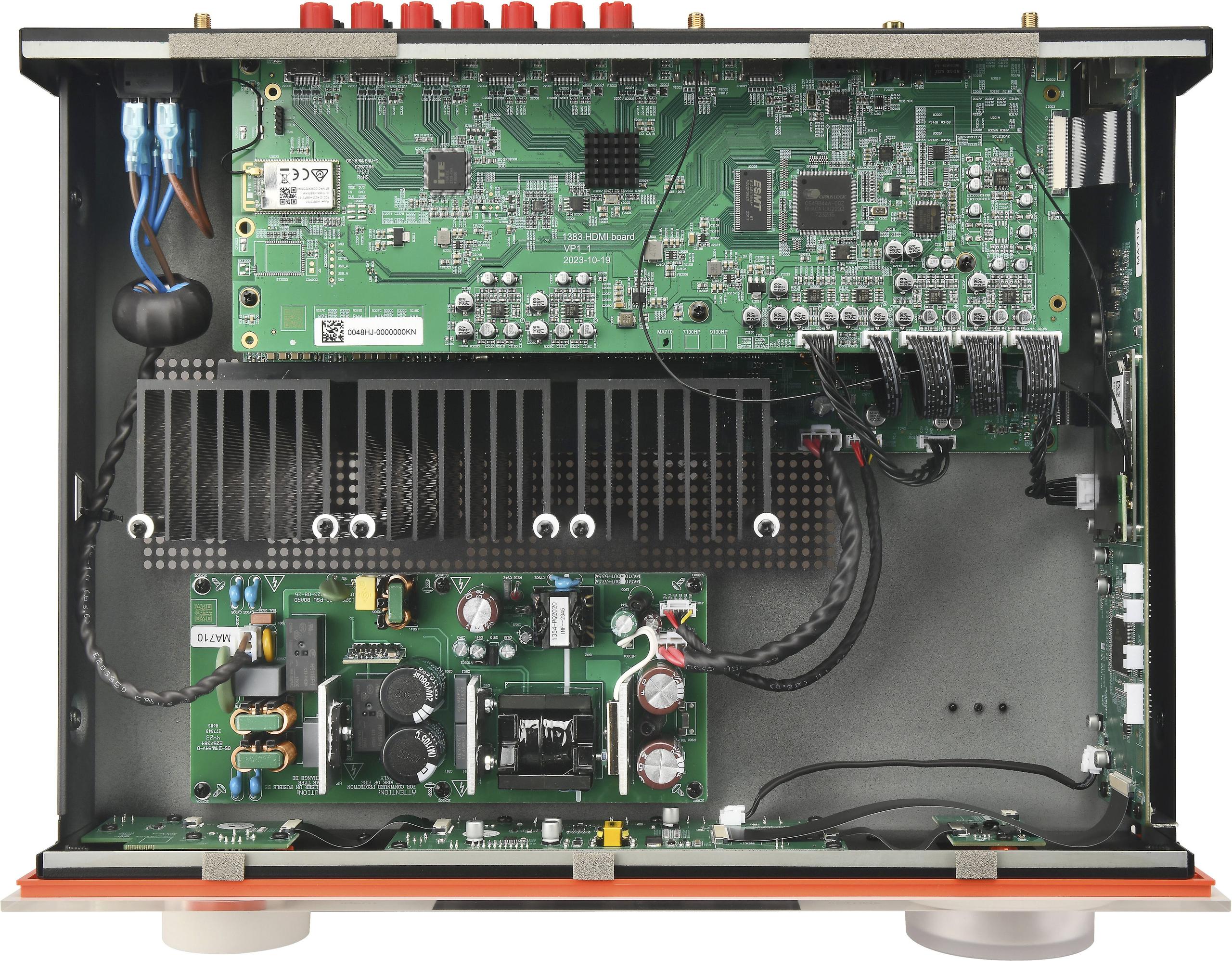
JBL chose Class D amplification, which uses high-frequency switching to achieve greater efficiency. Class D amps generate less heat, consume less power, and can deliver more watts in a smaller package. The trade-off has historically been slightly harsher sound characteristics, though modern Class D designs have largely eliminated this issue.
In real-world performance, both receivers provide sufficient power for medium to large rooms. The Denon's approach emphasizes refinement and tonal accuracy, while the JBL prioritizes efficiency and raw output. For most users, either will drive popular speaker models to satisfying volume levels without strain.
Audio performance separates good receivers from great ones, and this is where the Denon AVR-X2800H demonstrates its pedigree. User reviews consistently praise its "authoritative but spacious" sound signature, with particular strength in dialogue clarity—crucial for movie watching. The receiver uses high-quality 32-bit Texas Instruments DACs (digital-to-analog converters) on all channels, ensuring precise conversion of digital audio signals to the analog signals your speakers need.
Compared to its predecessor, the AVR-X2700H, the Denon AVR-X2800H offers a more open soundstage with better separation between instruments and effects. Reviews note improved timing that makes music playback more engaging, addressing a common criticism of previous Denon models being too movie-focused. The sound is described as less bass-heavy than earlier generations, resulting in clearer midrange and better overall balance.
The JBL MA710 aims to excel at both music and movies, leveraging JBL's decades of acoustic expertise. Early user reports describe clear, punchy sound with good dynamics, though comprehensive long-term reviews remain limited due to its recent introduction. JBL's speaker heritage suggests they understand how to tune amplifiers for optimal performance, but the proof will come as more users provide feedback over time.
Both receivers support modern surround sound formats including Dolby Atmos and DTS:X, which create three-dimensional audio by placing specific sounds in precise locations around and above the listener. The Denon AVR-X2800H includes additional proprietary listening modes like "Rock Arena" and "Jazz Club" that simulate different acoustic environments, plus Dolby Atmos Height Virtualization technology that creates overhead effects without dedicated ceiling speakers.
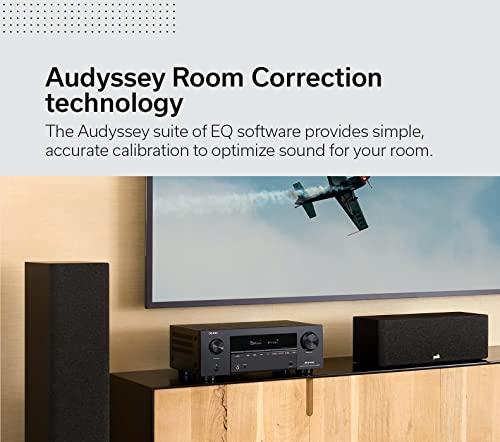
Perhaps the most underappreciated feature in modern AV receivers is room correction technology. No matter how good your speakers are, room acoustics significantly impact what you hear. Hard surfaces create reflections, furniture absorbs certain frequencies, and room dimensions cause resonances that muddy the sound.
The Denon AVR-X2800H includes Audyssey MultEQ XT, which uses a supplied microphone to measure your room from up to eight different listening positions. The system then creates custom filters to compensate for acoustic problems, optimizing frequency response and timing for each speaker. Audyssey has been refined over many years and is considered among the most effective room correction systems available. For users wanting even more control, the optional MultEQ Editor app allows detailed customization of the correction curves.
JBL takes a simplified approach with their EZ Set EQ system, which uses your smartphone's microphone to calibrate each speaker group in about two minutes. While less comprehensive than Audyssey, this approach reduces setup complexity—potentially appealing to users intimidated by traditional room correction procedures.
The difference here is significant for sound quality. Effective room correction can transform mediocre-sounding systems into impressive ones by addressing acoustic problems you might not even realize exist. The Denon AVR-X2800H's more sophisticated approach provides better results, especially in challenging rooms with irregular shapes or problematic acoustic characteristics.
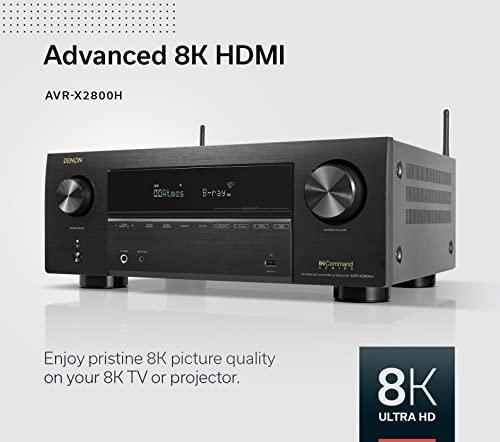
Both receivers support 8K video—resolution so high that content barely exists yet—but their implementations differ in important ways. The Denon AVR-X2800H provides six HDMI inputs and two outputs, with three inputs supporting full HDMI 2.1 specifications. HDMI 2.1 enables 8K video at 60 frames per second or 4K at 120 frames per second, important for next-generation gaming consoles like PlayStation 5 and Xbox Series X.
Having dual HDMI outputs proves valuable for complex setups—you might send video to both a projector and a TV, or route signals to a separate audio system. The Denon AVR-X2800H also supports advanced gaming features like Variable Refresh Rate (VRR), which eliminates screen tearing, and Auto Low Latency Mode (ALLM), which minimizes input lag for competitive gaming.
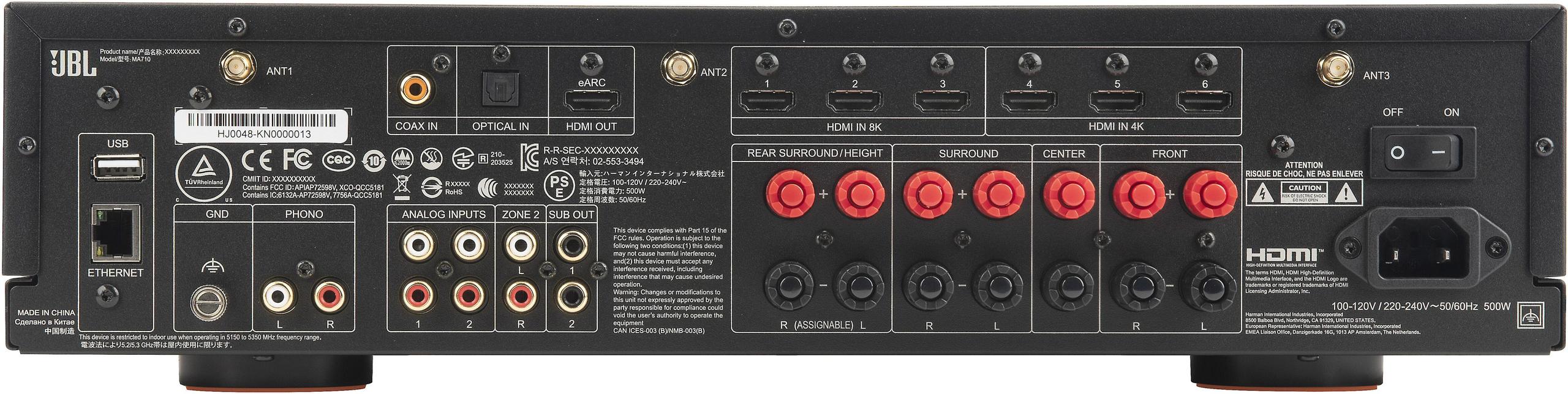
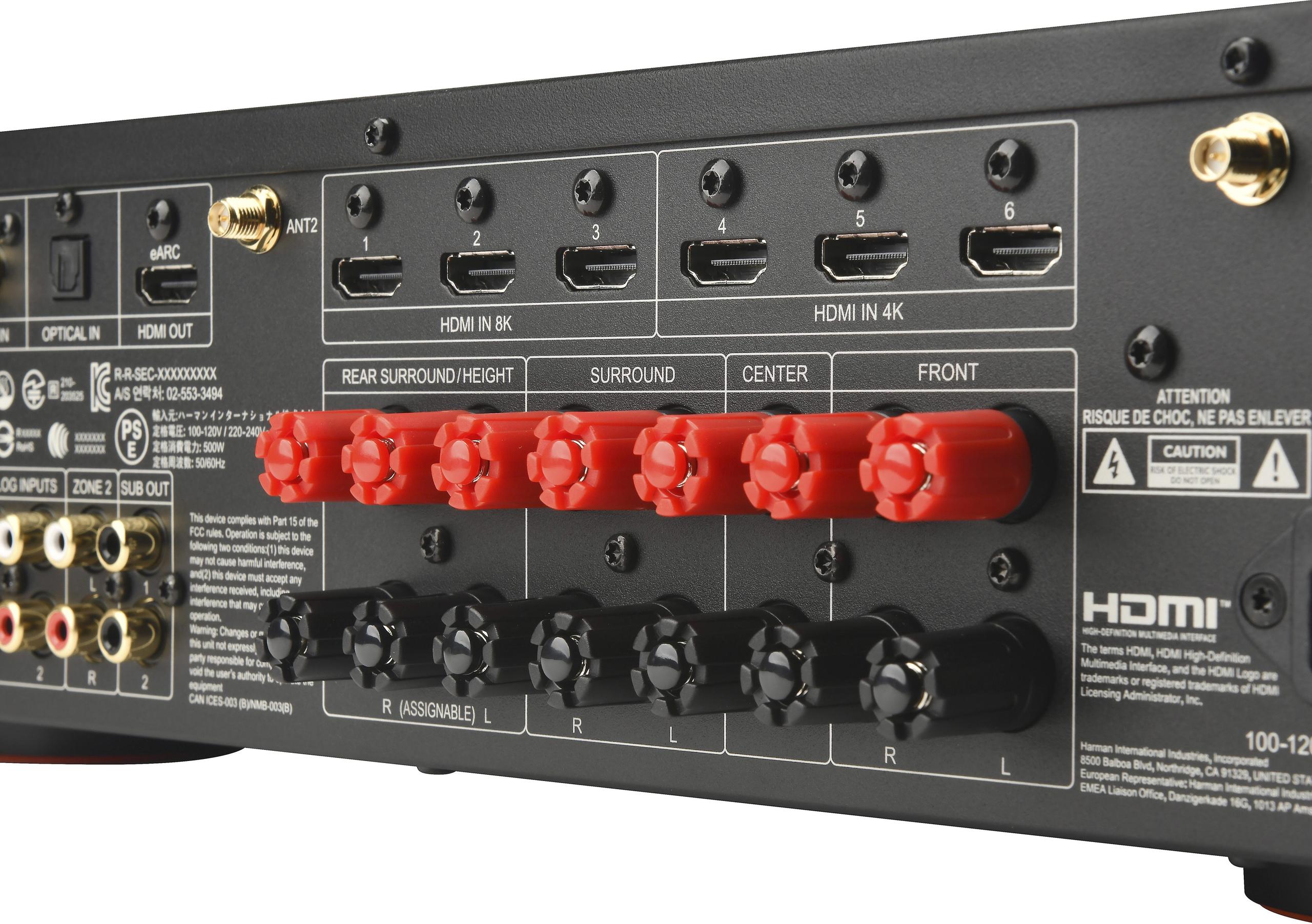
The JBL MA710 offers six HDMI inputs but only one output, with three inputs supporting HDMI 2.1. While adequate for most setups, this limits flexibility compared to the Denon. Both receivers handle HDR (High Dynamic Range) formats including HDR10, HDR10+, and Dolby Vision, which provide greater contrast and more vivid colors on compatible displays.
For gaming enthusiasts, the Denon AVR-X2800H's superior HDMI implementation provides more options and better future-proofing. The dual outputs alone justify the difference for many users planning sophisticated home theater installations.
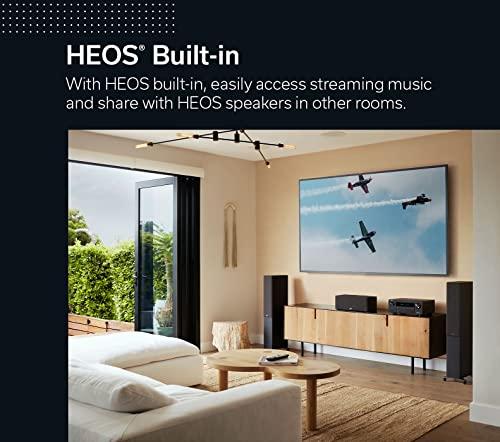
Modern AV receivers serve as smart home hubs, and connectivity options vary significantly between these models. The Denon AVR-X2800H includes comprehensive wireless streaming through HEOS multi-room technology, AirPlay 2, Spotify Connect, and Roon support. HEOS allows you to create a whole-home audio system with compatible Denon and Marantz products, streaming different music to different rooms simultaneously.
The receiver also supports voice control through Alexa, Google Assistant, and Siri, plus Bluetooth transmission to wireless headphones—useful for late-night viewing without disturbing others. A dedicated phono input accommodates turntables for vinyl enthusiasts.
The JBL MA710 provides AirPlay 2, Google Chromecast built-in, and Bluetooth connectivity with support for high-quality aptX HD and aptX Adaptive codecs. These codecs reduce the quality loss typically associated with Bluetooth transmission, making wireless music streaming more enjoyable. Like the Denon, it includes a phono input for turntables.
While both receivers cover essential connectivity needs, the Denon AVR-X2800H's HEOS ecosystem provides more comprehensive multi-room capabilities for users planning to expand their audio systems over time.
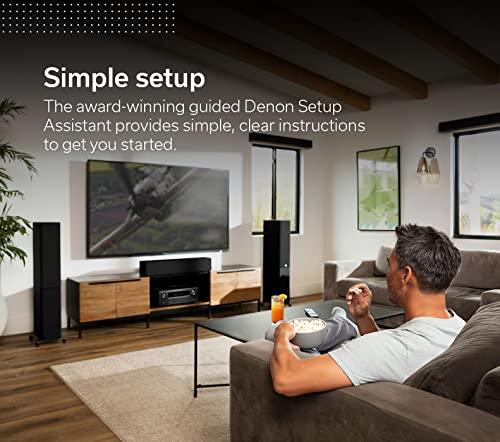
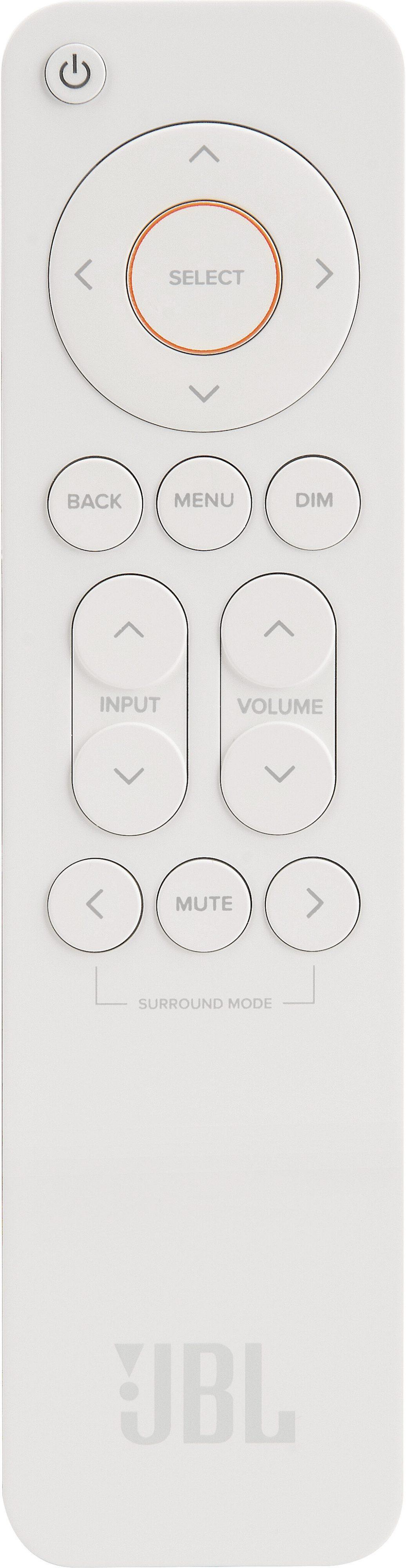
One area where the Denon AVR-X2800H significantly improved over its predecessor is the user interface. The new 1080p full-screen setup assistant (upgraded from 480p) makes initial configuration much more pleasant, with clear graphics and logical menu flow. The on-screen interface handles everything from speaker configuration to network setup, reducing reliance on the physical remote control.
The JBL MA710 emphasizes simplicity throughout the user experience. The EZ Set EQ room correction epitomizes this philosophy—rather than requiring multiple microphone measurements and complex menus, it uses your phone to quickly optimize sound quality. The overall interface prioritizes ease of use over extensive customization options.
Both approaches have merit. The Denon AVR-X2800H appeals to enthusiasts who enjoy tweaking settings and exploring advanced features, while the JBL MA710 serves users who want great performance without complexity.
At the time of writing, the JBL MA710 typically sells for considerably less than the Denon AVR-X2800H, making it attractive for value-conscious buyers. For this lower price, you get competitive power output, essential smart features, and JBL's audio expertise. The simplified setup process appeals to users who want quality results without investing significant time in configuration.
The Denon AVR-X2800H commands a premium but justifies it through superior HDMI implementation, more sophisticated room correction, comprehensive streaming capabilities, and proven reliability. The dual HDMI outputs, advanced Audyssey room correction, and HEOS multi-room support provide functionality that many users will appreciate over the product's lifetime.
Choose the Denon AVR-X2800H if you value refined audio performance, comprehensive features, and proven reliability. Its superior room correction system alone can significantly improve sound quality in challenging spaces. The advanced HDMI capabilities and multi-room streaming make it ideal for sophisticated home theater installations or users planning system expansion.
The JBL MA710 makes sense for value-focused buyers who want competitive performance without paying for advanced features they won't use. Its simplified approach appeals to users who prefer straightforward setup and operation over extensive customization options. The higher power output and efficient Class D amplification provide excellent performance for the money.
Both receivers will deliver satisfying home theater experiences, but they target different user priorities. The Denon excels through refinement and feature completeness, while the JBL impresses with value and simplicity. Consider your budget, technical comfort level, and long-term plans when making your choice—either receiver will serve as a capable foundation for years of movie and music enjoyment.
| Denon AVR-X2800H | JBL MA710 |
|---|---|
| Power Output - More watts means louder volumes and better dynamics | |
| 95W per channel (8 ohms, 2 channels driven) | 110W per channel (8 ohms, 2 channels driven) |
| Amplification Type - Affects efficiency and sound character | |
| Class AB discrete amplification (traditional, audiophile-preferred) | Class D amplification (more efficient, runs cooler) |
| Room Correction - Critical for optimizing sound in your specific space | |
| Audyssey MultEQ XT with 8-position measurement | EZ Set EQ with smartphone-based 2-minute calibration |
| HDMI Inputs/Outputs - More ports mean more connected devices | |
| 6 inputs, 2 outputs (3 inputs with HDMI 2.1) | 6 inputs, 1 output (3 inputs with HDMI 2.1) |
| 8K/4K Video Support - Future-proofs your setup for next-gen content | |
| 8K/60Hz, 4K/120Hz on 3 inputs and both outputs | 8K/60Hz, 4K/120Hz passthrough on 3 inputs |
| Gaming Features - Reduces lag and improves console performance | |
| VRR, ALLM, QFT on multiple HDMI 2.1 ports | VRR and ALLM on HDMI 2.1 ports |
| Multi-Room Audio - Stream different music to different rooms | |
| HEOS built-in with whole-home integration | Zone 2 pre-outs only |
| Streaming Services - Access music without additional devices | |
| AirPlay 2, Spotify Connect, HEOS, Roon, voice assistants | AirPlay 2, Google Chromecast, Bluetooth aptX HD/Adaptive |
| User Interface - Affects daily operation and setup experience | |
| 1080p full-screen interface with comprehensive setup | On-screen display with simplified operation |
| Brand Heritage - Indicates long-term support and reliability | |
| Decades of AV receiver specialization | New entry from legendary speaker company |
| Release Year - Shows how current the technology is | |
| 2022 (established, proven platform) | 2024 (newest technology, limited field testing) |
The JBL MA710 delivers more power at 110 watts per channel compared to the Denon AVR-X2800H at 95 watts per channel. However, both provide sufficient power for most home theater setups. The 15-watt difference is less important than the amplification type - JBL uses efficient Class D while Denon uses traditional Class AB amplification.
The Denon AVR-X2800H is praised for its refined, spacious sound with excellent dialogue clarity and balanced performance. The JBL MA710 aims for clear, punchy sound suitable for both music and movies. Denon has more proven track record in audio tuning, while JBL brings decades of professional speaker expertise to their receiver design.
The Denon AVR-X2800H features superior room correction with Audyssey MultEQ XT, measuring up to 8 listening positions for comprehensive acoustic optimization. The JBL MA710 uses simplified EZ Set EQ that calibrates via smartphone in about 2 minutes. Denon's system provides more thorough correction for challenging room acoustics.
Both the Denon AVR-X2800H and JBL MA710 offer 6 HDMI inputs, but the Denon provides 2 HDMI outputs while JBL has only 1 output. Both have 3 HDMI 2.1 ports supporting 8K/60Hz and 4K/120Hz. The Denon's dual outputs offer more flexibility for complex home theater setups.
The Denon AVR-X2800H offers superior gaming features with VRR, ALLM, and QFT across multiple HDMI 2.1 ports, plus dual outputs for flexible display configurations. The JBL MA710 supports VRR and ALLM but with fewer HDMI 2.1 ports and single output. Both handle 4K/120Hz gaming from modern consoles.
Yes, both the Denon AVR-X2800H and JBL MA710 support Dolby Atmos and DTS:X for immersive 3D surround sound. The Denon additionally offers Dolby Atmos Height Virtualization for overhead effects without ceiling speakers, plus proprietary listening modes like Rock Arena and Jazz Club.
The Denon AVR-X2800H provides more comprehensive streaming with HEOS multi-room, AirPlay 2, Spotify Connect, Roon, and voice assistant support. The JBL MA710 offers AirPlay 2, Google Chromecast, and high-quality Bluetooth with aptX HD/Adaptive. Denon excels in whole-home audio integration while JBL focuses on essential wireless features.
The JBL MA710 emphasizes simplified setup with quick smartphone-based room calibration and streamlined interface. The Denon AVR-X2800H offers comprehensive 1080p on-screen setup with extensive customization options. JBL appeals to users wanting easy configuration, while Denon serves enthusiasts who enjoy detailed system tuning.
The JBL MA710 typically costs significantly less while providing competitive features and higher power output, making it excellent value for budget-conscious buyers. The Denon AVR-X2800H commands a premium but justifies it through superior room correction, dual HDMI outputs, comprehensive streaming, and proven reliability.
Both the Denon AVR-X2800H and JBL MA710 can handle medium to large rooms effectively. The JBL's higher 110-watt output provides slight advantage for very large spaces, while the Denon's superior room correction technology helps optimize performance regardless of room size. Speaker efficiency matters more than power differences for most installations.
The Denon AVR-X2800H comes from a company with decades of AV receiver specialization and established service networks. The JBL MA710 represents JBL's new entry into receivers, backed by their legendary speaker expertise but with limited field reliability data. Denon offers proven long-term support while JBL brings fresh innovation to the market.
Yes, both the Denon AVR-X2800H and JBL MA710 include moving magnet phono inputs for connecting turntables directly. This eliminates the need for separate phono preamps when playing vinyl records. Both receivers provide proper RIAA equalization and gain adjustment for optimal turntable performance in your home theater system.
We've done our best to create useful and informative comparisons to help you decide what product to buy. Our research uses advanced automated methods to create this comparison and perfection is not possible - please contact us for corrections or questions. These are the sites we've researched in the creation of this article: theaudiotailor.com.au - ecoustics.com - simplehomecinema.com - whathifi.com - audioadvisor.com - youtube.com - bestbuy.com - e-catalog.com - crutchfield.com - avsforum.com - crutchfield.com - whathifi.com - richersounds.com - bestbuy.com - accessories4less.com - projectorscreen.com - adiglobaldistribution.us - youtube.com - bestbuy.com - bestbuy.com - sweetwater.com - bestbuy.com - musicdirect.com - safeandsoundhq.com - bestbuy.com - bestbuy.com - puretheatre.com - crutchfield.com - mm.jbl.com - av-connection.com - electronics.woot.com - worldwidestereo.com - th.jbl.com - skybygramophone.com

Privacy Policy
Terms and Conditions - Affiliate Policy
Home Security
© Copyright 2008-2026.
11816 Inwood Rd #1211, Dallas, TX 75244