

When building a home theater system, the AV receiver acts as mission control—it's the brain that processes all your audio and video signals, amplifies sound to your speakers, and routes everything to your TV. Think of it as the central hub where your PlayStation, Apple TV, Blu-ray player, and streaming devices all connect. But with receivers ranging from a few hundred to several thousand dollars, choosing the right one can feel overwhelming.
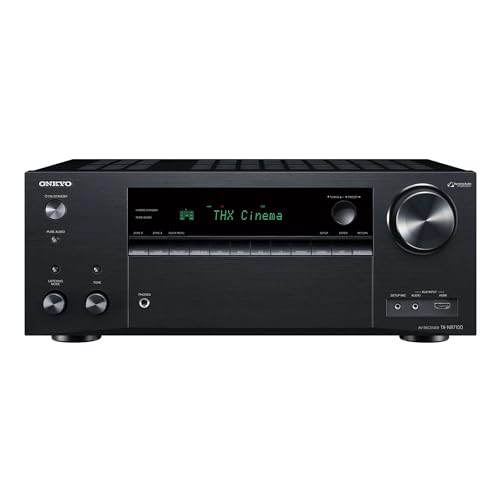
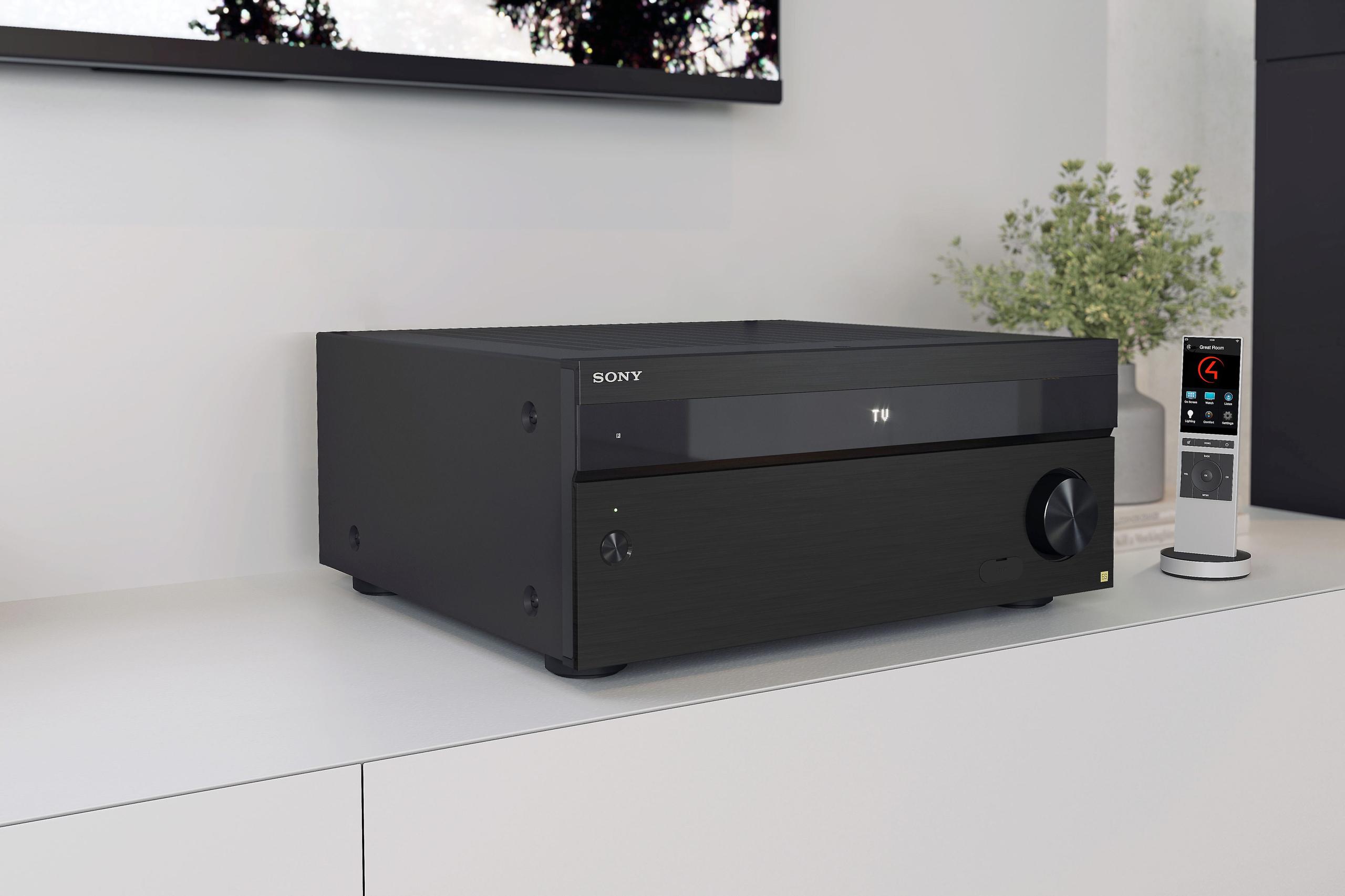
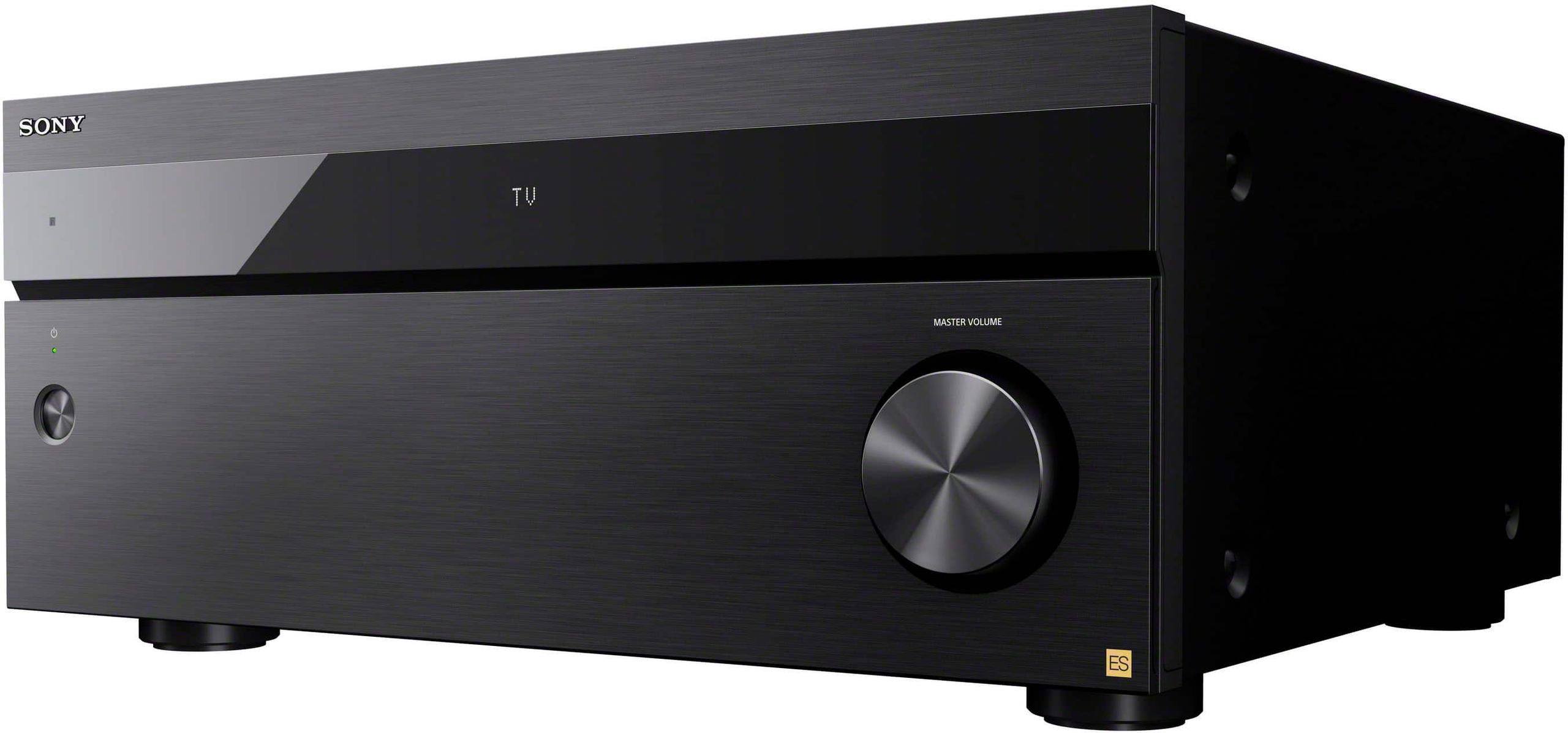
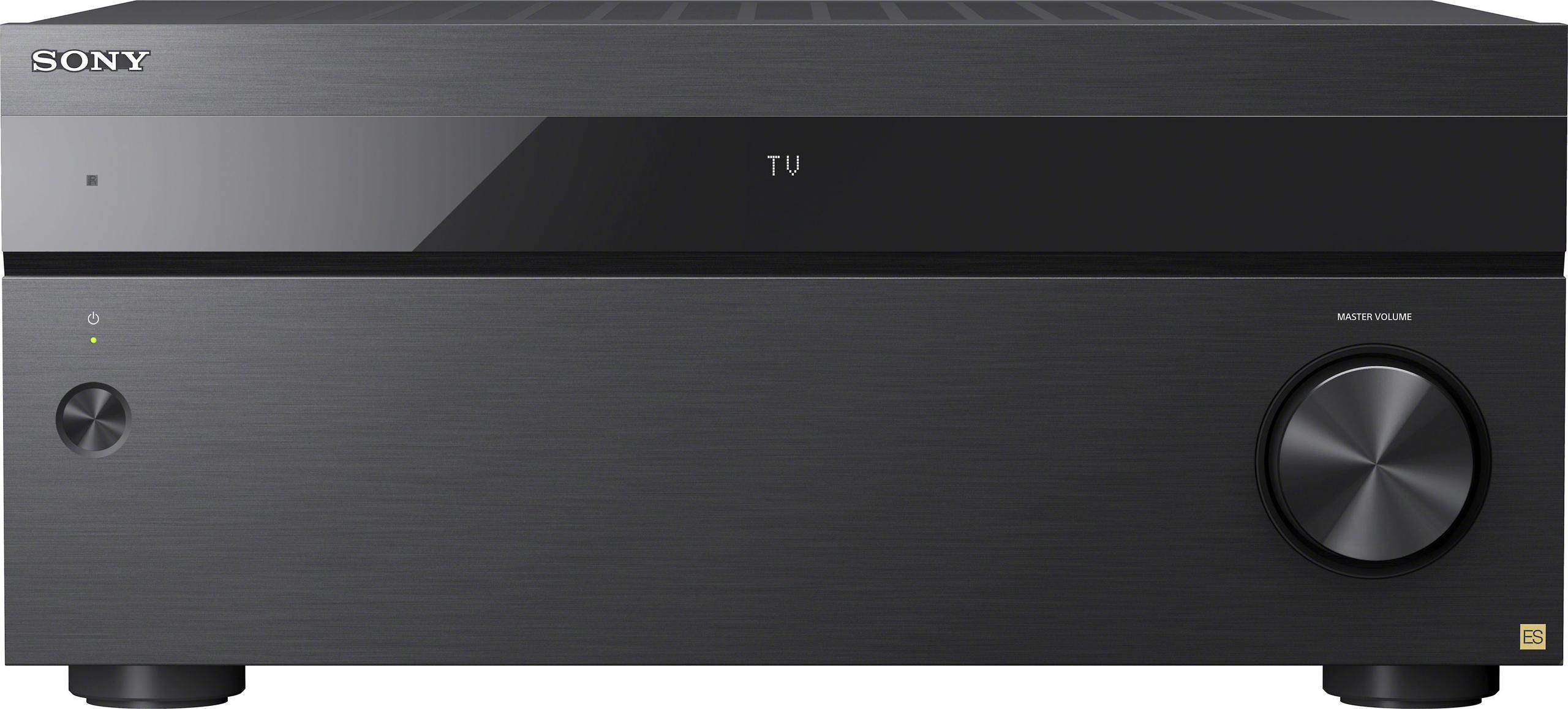
Today we're comparing two very different approaches to home theater: the Onkyo TX-NR7100, a mid-range workhorse that punches above its weight, and the Sony STR-AZ7000ES, a flagship powerhouse that represents Sony's return to the premium receiver market after a seven-year absence. These aren't really competitors in the traditional sense—they target completely different budgets and use cases—but understanding their differences will help you figure out what you actually need.
Before diving into specifics, let's establish what matters most in an AV receiver. The channel count tells you how many speakers you can connect—a 9.2 receiver like the Onkyo TX-NR7100 handles 9 regular speakers plus 2 subwoofers, while the Sony STR-AZ7000ES's 13.2 configuration opens up much more complex speaker arrangements.
Power output, measured in watts per channel, determines how loud your system can go and how well it controls your speakers. More importantly, it affects the receiver's ability to handle demanding audio passages without distortion—think of those movie scenes where dialogue suddenly erupts into explosive action.
HDMI connectivity might seem boring, but it's crucial. Every device you connect needs an HDMI input, and with gaming consoles, streaming boxes, and Blu-ray players all requiring connections, you can run out of inputs quickly. Modern receivers also need to handle 4K and 8K video signals without degrading picture quality.
Room correction technology automatically adjusts audio output to compensate for your room's acoustics. No room is acoustically perfect—hard surfaces create echoes, furniture absorbs certain frequencies, and speaker placement is often a compromise. Good room correction can transform a mediocre-sounding system into something special.
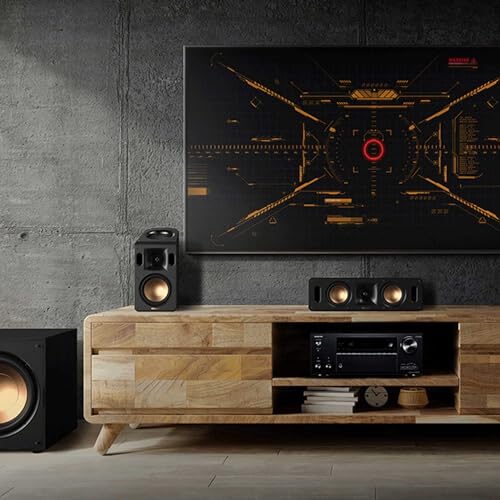
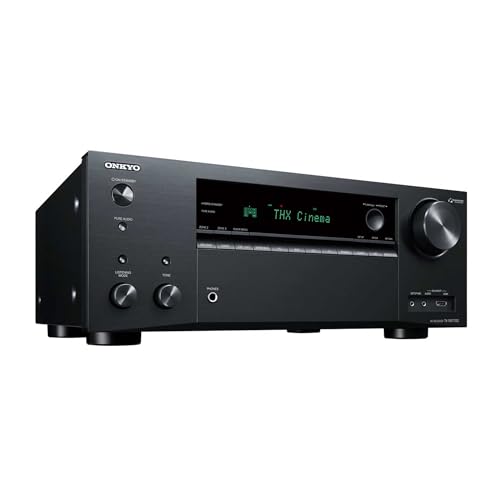
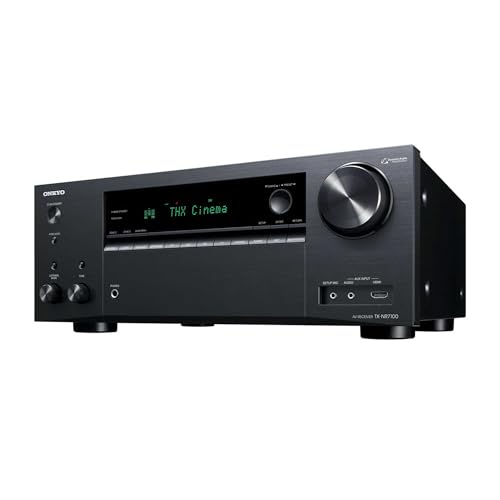
The Onkyo TX-NR7100 represents what most people actually need in a home theater receiver. Released as part of Onkyo's mid-range NR series, it delivers 100 watts per channel across 9.2 channels, which provides plenty of power for most home theater setups without breaking the bank.
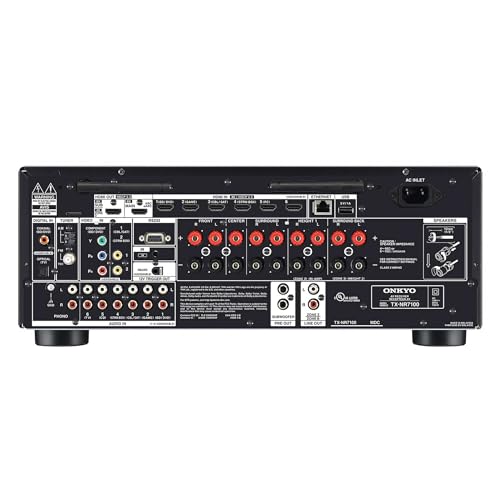
What immediately stands out is its HDMI connectivity—seven HDMI 2.1 inputs plus two outputs. This might not sound exciting, but it's genuinely useful. With a PlayStation 5, Xbox Series X, Apple TV, Nvidia Shield, and Blu-ray player, you're already at five inputs before adding a cable box or other devices. Having seven inputs means never playing musical chairs with HDMI cables.
The HDMI 2.1 specification matters because it supports 4K video at 120 frames per second and 8K at 60 frames per second—crucial for next-generation gaming consoles that can actually output at these formats. Variable Refresh Rate (VRR) and Auto Low Latency Mode (ALLM) are gaming features that reduce input lag and eliminate screen tearing, making games feel more responsive.
For audio processing, the Onkyo TX-NR7100 handles Dolby Atmos and DTS:X, the two major object-based audio formats that create three-dimensional soundscapes. Instead of traditional surround sound that places audio in fixed speaker locations, object-based audio treats sounds as objects that can move freely through your room—imagine a helicopter flying overhead or rain falling around you.
The receiver's 9.2-channel configuration supports speaker layouts like 5.1.4 (five main speakers, one subwoofer, four height speakers) or 7.1.2 (seven main speakers, one subwoofer, two height speakers). These configurations provide convincing overhead effects for Atmos content without requiring an excessive number of speakers or amplifier channels.
Where Onkyo traditionally excels is in straightforward, reliable operation. The interface isn't flashy, but it's logical and responsive. Setup is relatively painless, and the receiver just works day after day without fuss. For many users, this reliability and simplicity matter more than cutting-edge features.
Multi-room audio capabilities let you send music to other zones in your house—maybe you want Spotify playing in the kitchen while watching a movie in the living room. The Onkyo TX-NR7100 integrates well with popular multi-room systems and supports modern streaming protocols like Chromecast and AirPlay 2.
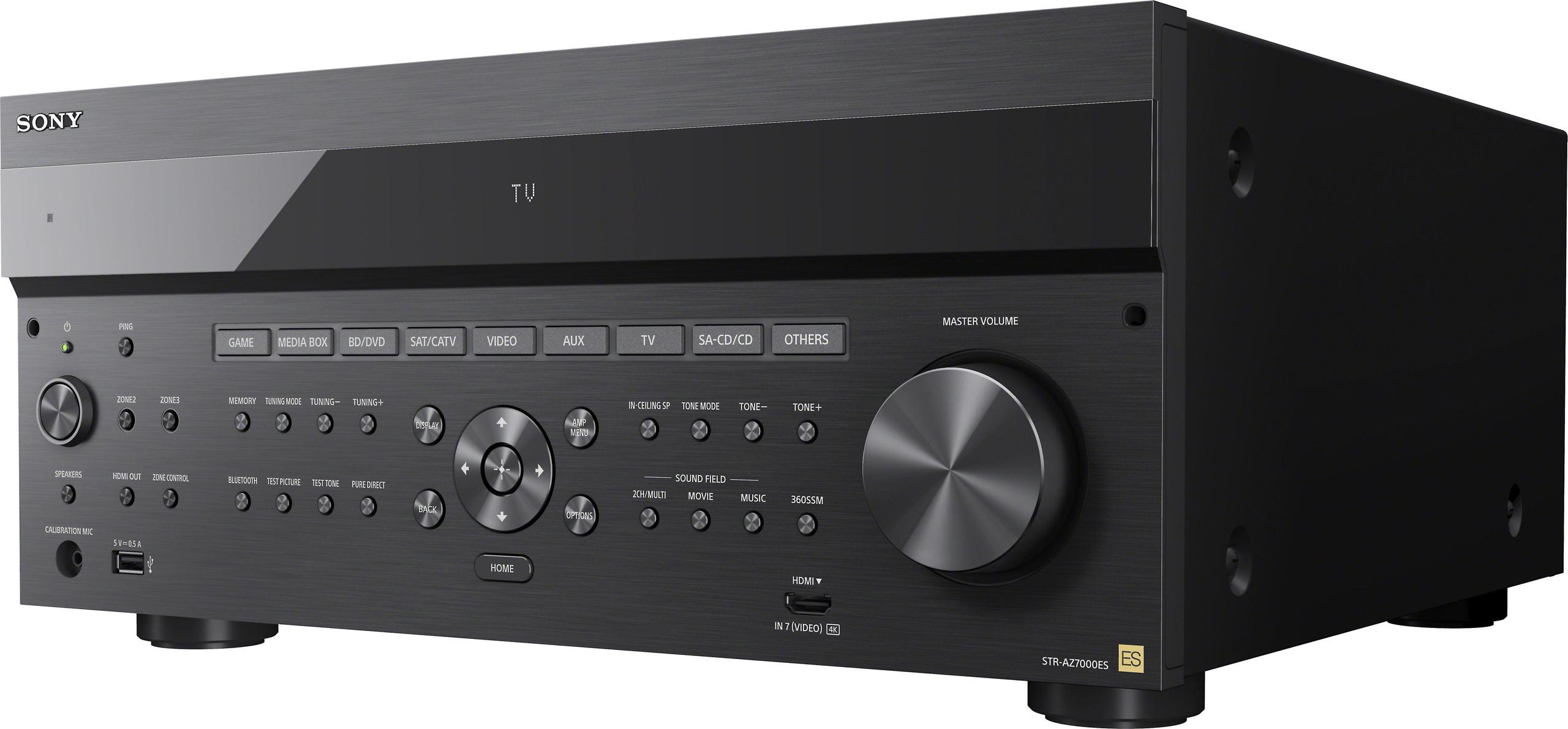
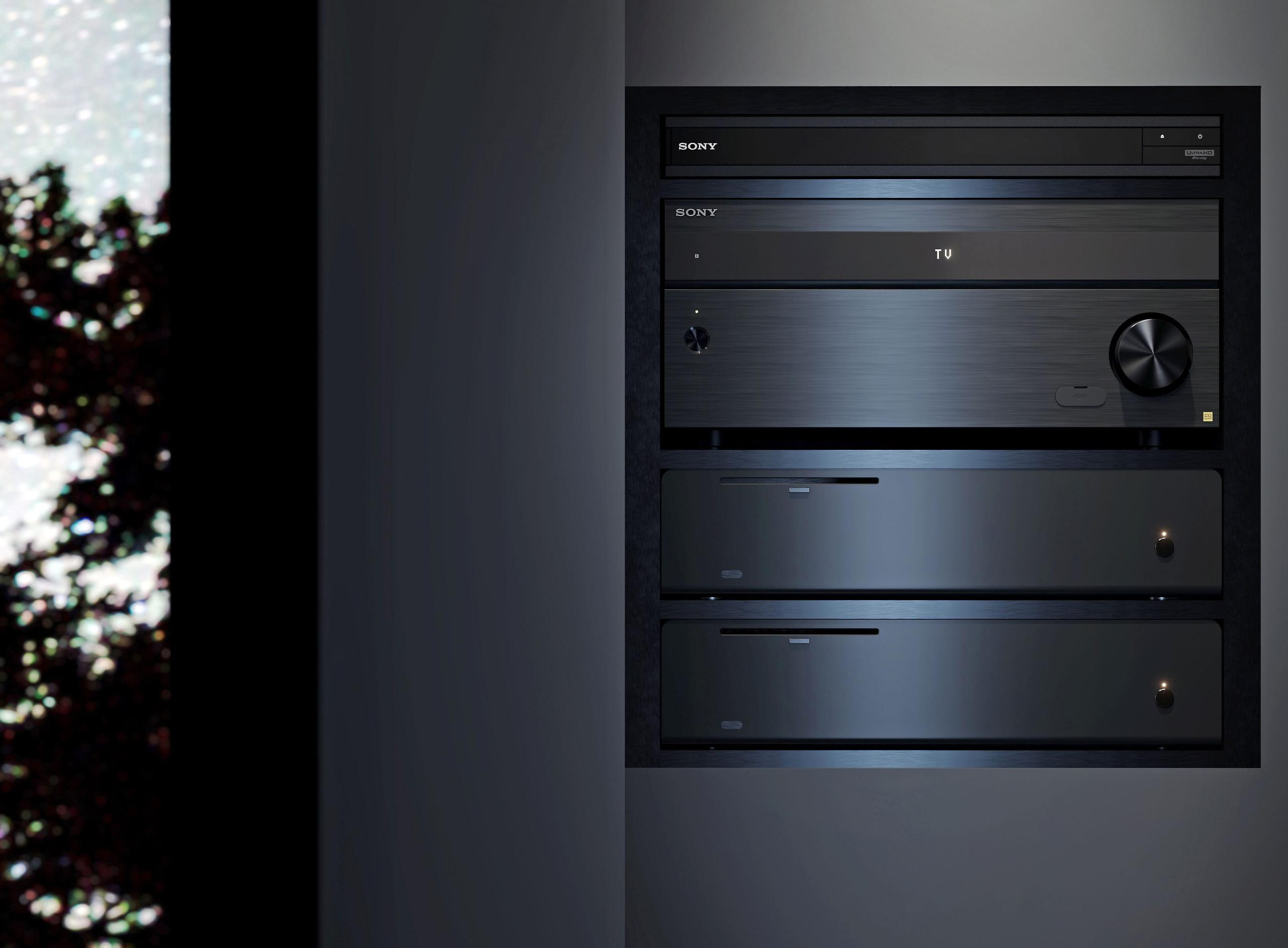
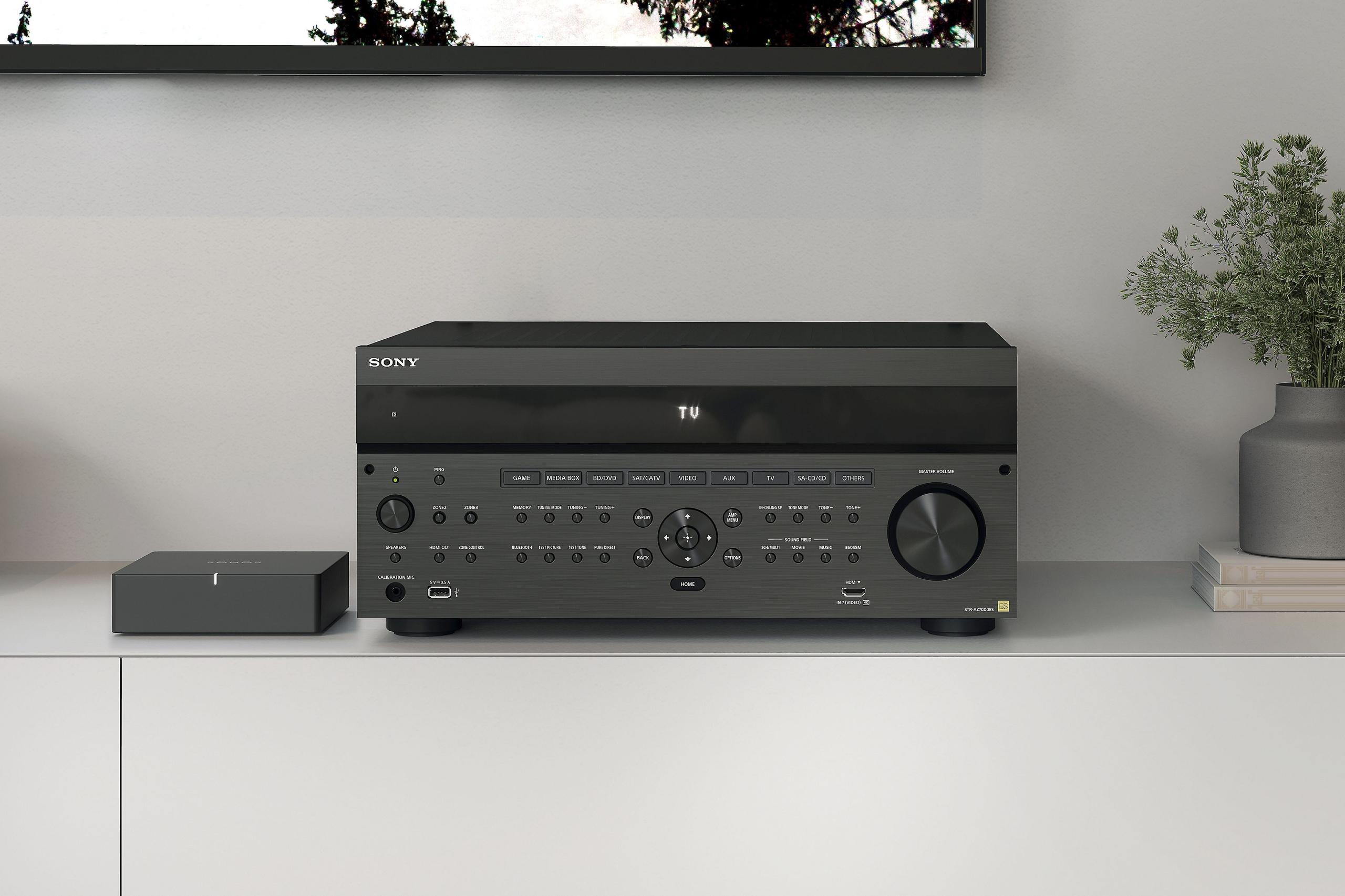
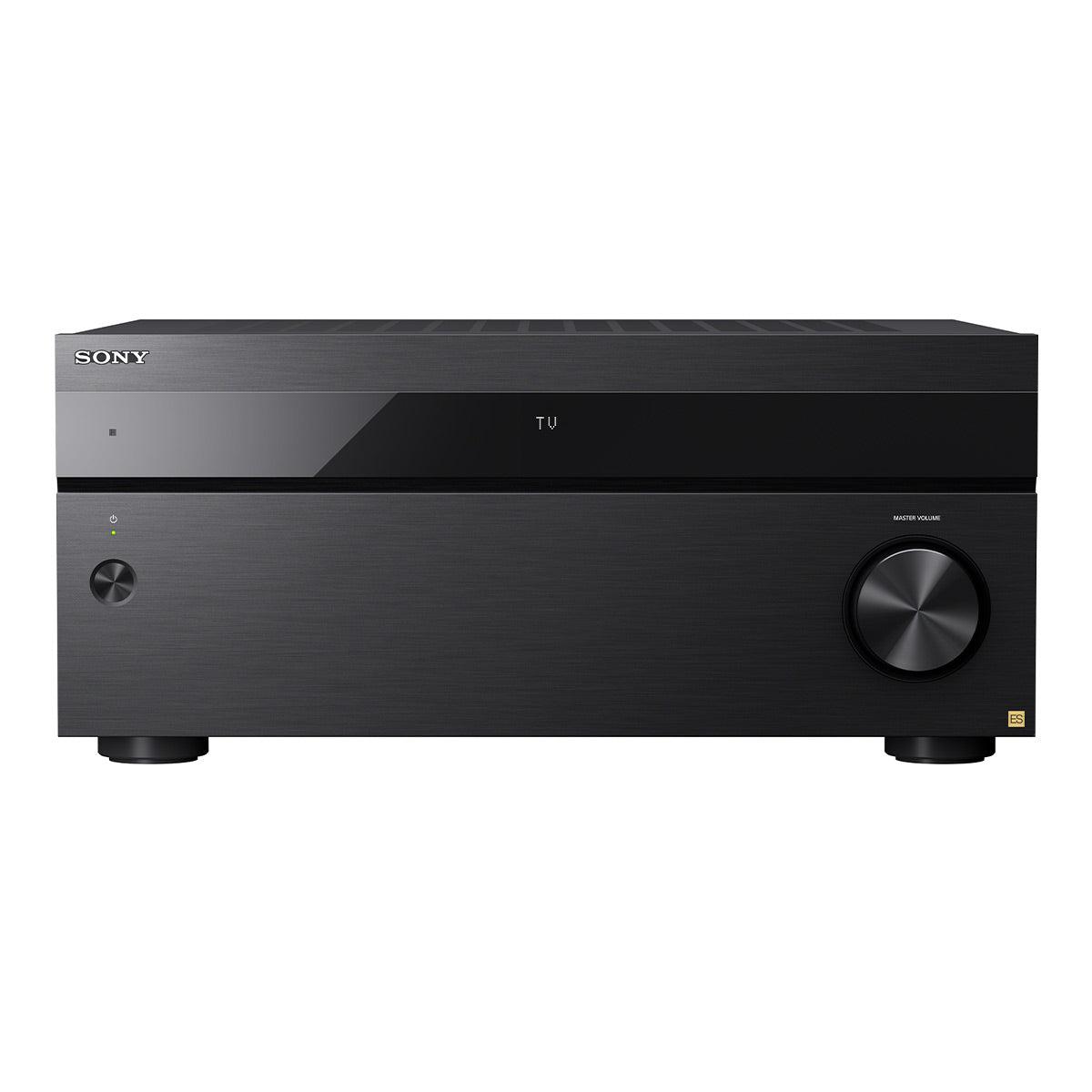
The Sony STR-AZ7000ES, launched in 2023, represents Sony's dramatic return to the high-end AV receiver market. After abandoning receivers for seven years, Sony came back swinging with flagship-level engineering and a price to match.
The most obvious difference is the 13.2-channel configuration with 14 channels of processing. This isn't just about having more speakers—it enables fundamentally different speaker arrangements. You could run a 7.1.6 system (seven main speakers, one subwoofer, six height speakers) for incredibly immersive Atmos, or add front wide speakers to a 9.1.4 setup for enhanced stereo imaging and a wider soundstage.
The additional channels also allow for dual center speakers, which might sound excessive but actually serves a purpose in large rooms or wide seating arrangements. Two center speakers can provide more even dialogue coverage across multiple seats, ensuring everyone hears clear vocals regardless of where they're sitting.
Power output jumps to 150 watts per channel, providing meaningful headroom over the Onkyo TX-NR7100's 100 watts. This extra power matters most with demanding speakers or in larger rooms where you need higher volumes to fill the space properly.
Sony's signature feature is 360 Spatial Sound Mapping, a room correction system that goes beyond traditional approaches. Instead of just adjusting frequency response and timing, it attempts to create "virtual" speakers by intelligently routing audio objects through your physical speakers. The system analyzes your room and speaker placement, then optimizes how object-based audio moves through the space.
This technology aims to solve a common problem: most people can't place speakers in ideal positions due to room constraints, furniture, or aesthetic concerns. By creating virtual speaker positions and optimizing audio paths, the system can potentially make a 5.1.4 setup sound like a more complex arrangement.
The Sony STR-AZ7000ES also supports 360 Reality Audio, Sony's own object-based format available through streaming services like Tidal. While content availability remains limited, it represents Sony's attempt to create a more immersive music listening experience.
Digital-to-analog conversion uses dual ESS ES9038 Pro DACs—high-end chips typically found in dedicated audiophile equipment. These DACs offer exceptional specifications: 132 dB signal-to-noise ratio and support for high-resolution audio formats up to 24-bit/768kHz PCM and DSD256. For music listening, this translates to cleaner, more detailed sound reproduction.
Audio Quality and Room Correction
Based on our research into user experiences and professional reviews, both receivers deliver excellent audio quality, but with different strengths. The Onkyo TX-NR7100 provides clean, powerful amplification with good dynamic range—the difference between quiet dialogue and loud explosions feels natural and engaging.
The Sony STR-AZ7000ES's superior DACs and room correction create noticeably more refined audio, particularly for music listening. The 360 Spatial Sound Mapping system receives praise for its ability to create a more cohesive soundfield, though setup can be more complex than traditional room correction systems.
For movie watching, both receivers handle Dolby Atmos and DTS:X effectively, but the Sony's additional channels provide more placement options for height speakers, potentially creating more convincing overhead effects. The extra power headroom also helps with demanding soundtracks that feature wide dynamic range.
HDMI and Gaming Performance
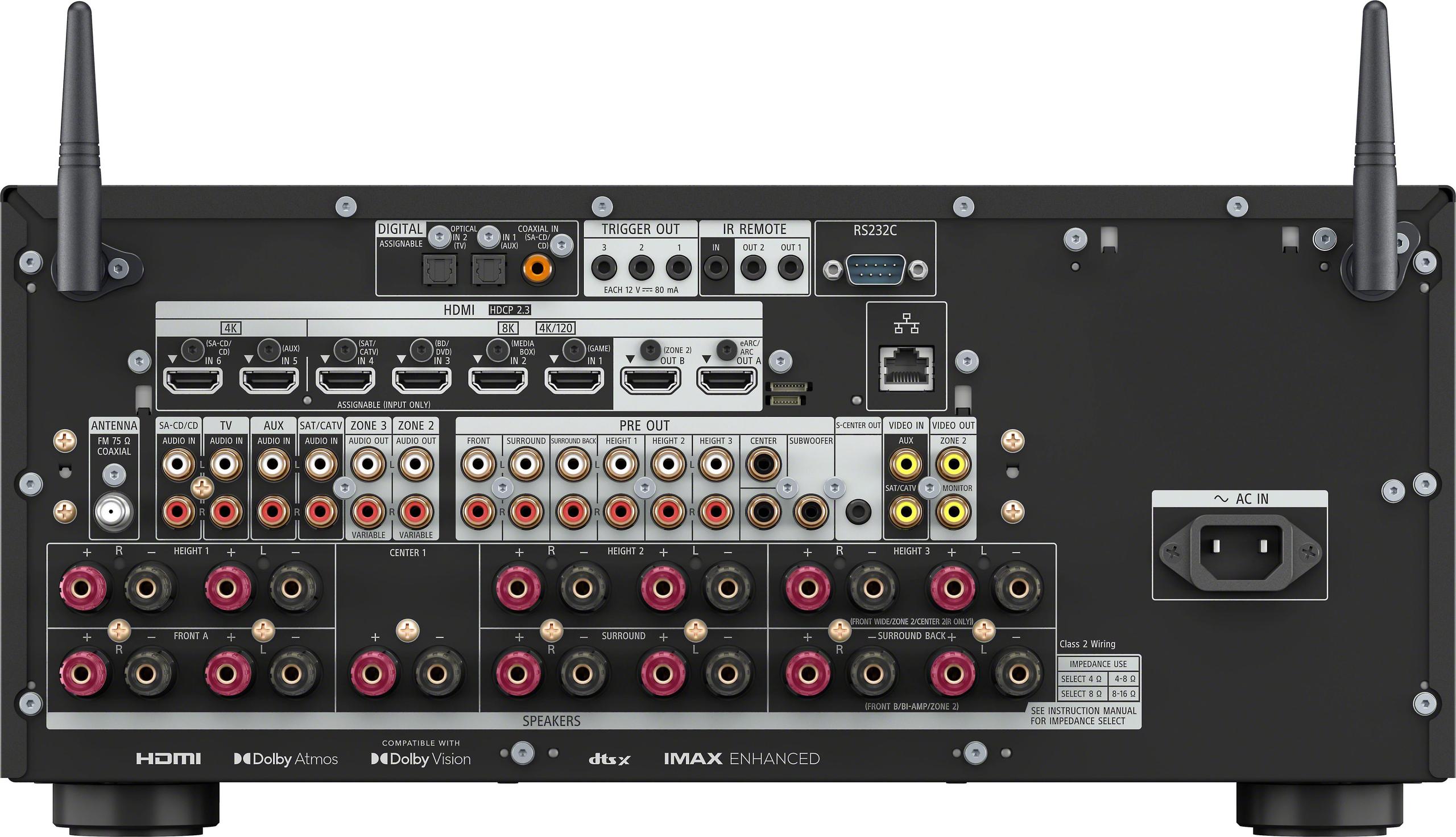
Here's where things get interesting—the Onkyo TX-NR7100 actually has an advantage with its seven HDMI 2.1 inputs versus the Sony's four to six inputs (sources vary on the exact count). For users with multiple gaming consoles, streaming devices, and other sources, input count matters more than theoretical processing power.
Both receivers handle 4K/120Hz and 8K/60Hz video properly, and gaming features like VRR and ALLM work as intended. The Sony STR-AZ7000ES offers slightly better integration with PlayStation consoles through Sony's ecosystem, but the difference isn't dramatic enough to be a deciding factor.
Music Listening
For stereo music reproduction, the Sony's superior DACs and additional channels (particularly front wide speakers) create a more engaging listening experience. The wider soundstage and better stereo imaging make instruments and vocals feel more naturally positioned in space.
The Onkyo TX-NR7100 handles music competently but focuses more on home theater performance. It won't embarrass itself with two-channel audio, but dedicated audiophiles might notice the difference in refinement compared to the Sony.
At the time of writing, these receivers occupy completely different price segments—the Onkyo TX-NR7100 typically costs several times less than the Sony STR-AZ7000ES. This massive price gap fundamentally changes how we evaluate them.
The Onkyo delivers roughly 80% of premium receiver performance at perhaps 20% of flagship pricing. You get excellent HDMI connectivity, solid amplification, and proven reliability. For most home theater setups, this represents exceptional value.
The Sony justifies its premium pricing through advanced channel flexibility, cutting-edge room correction, and superior audio components. However, the price jump requires specific use cases to make sense—you need to want those additional channels and be willing to pay significantly more for incremental improvements in audio quality.
Choose the Onkyo TX-NR7100 if you:
The Onkyo makes particular sense for first-time home theater builders who want room to grow without overspending initially. Its combination of modern features and reasonable pricing provides an excellent foundation for most installations.
Choose the Sony STR-AZ7000ES if you:
The Sony makes most sense for dedicated home theater enthusiasts building no-compromise systems in dedicated rooms. Its advanced features require both the budget and room layout to fully utilize.
Both receivers require adequate ventilation—the Onkyo TX-NR7100 relies on passive cooling while the Sony STR-AZ7000ES uses internal fans that could potentially generate audible noise, though user reports vary on this issue.
Setup complexity differs significantly. The Onkyo follows traditional receiver conventions—connect speakers, run automatic calibration, and start watching movies. The Sony's advanced features require more configuration time but potentially offer greater optimization for complex installations.
Long-term support considerations also matter. Onkyo has maintained consistent presence in the receiver market with established service networks. Sony's return after seven years brings flagship engineering but raises questions about continued commitment to the receiver market.
The Onkyo TX-NR7100 represents one of the best value propositions in home theater—it delivers genuinely excellent performance with modern features at a reasonable price point. Unless you specifically need the Sony's advanced capabilities, the Onkyo provides everything most people actually need in a home theater receiver.
The Sony STR-AZ7000ES showcases impressive engineering and genuinely advanced features, but the significant price premium limits its appeal to specific use cases. If you're building a flagship home theater and can utilize its advanced channel configurations and spatial audio processing, it delivers on its promises.
For most people reading this, the Onkyo TX-NR7100 offers the better overall value proposition. Save the price difference and invest it in better speakers or room treatments—those improvements will likely have greater impact on your overall experience than moving from a excellent mid-range receiver to a flagship model.
However, if you're the type of enthusiast who wants cutting-edge audio technology and maximum flexibility for complex speaker arrangements, the Sony STR-AZ7000ES provides genuinely advanced capabilities you can't get elsewhere at any price. Just make sure you can actually use those capabilities before making the investment.
| Onkyo TX-NR7100 | Sony STR-AZ7000ES |
|---|---|
| Channel Configuration - Determines speaker layout flexibility and Atmos capabilities | |
| 9.2 channels (supports up to 5.1.4 or 7.1.2 Atmos) | 13.2 channels with 14 processing (supports 7.1.6, 9.1.4, plus front wides) |
| Power Output - Higher wattage means better speaker control and volume headroom | |
| 100 watts per channel (adequate for most rooms) | 150 watts per channel (better for large rooms and demanding speakers) |
| HDMI Inputs - More inputs mean fewer cable swaps with multiple devices | |
| 7 HDMI 2.1 inputs (excellent for complex setups) | 4-6 HDMI 2.1 inputs (may require external switching) |
| HDMI Outputs - Zone flexibility for multi-room video | |
| 2 outputs (Main + Zone 2) | 2 outputs |
| Video Support - Future-proofing for gaming and streaming | |
| 8K/60Hz, 4K/120Hz, VRR, ALLM | 8K/60Hz, 4K/120Hz, VRR, ALLM, enhanced gaming optimization |
| Room Correction - Automatically optimizes sound for your space | |
| Basic calibration (Dirac Live on higher models only) | Digital Cinema Auto Calibration EX with 360 Spatial Sound Mapping |
| DAC Quality - Affects music listening clarity and detail | |
| Standard implementation | Dual ESS ES9038 Pro DACs (audiophile-grade components) |
| Spatial Audio Formats - Immersive surround sound capabilities | |
| Dolby Atmos, DTS:X | Dolby Atmos, DTS:X, 360 Reality Audio, 360 Spatial Sound Mapping |
| Streaming Integration - Built-in music services and multi-room | |
| Chromecast, AirPlay 2, Spotify, multi-room capable | Chromecast, AirPlay 2, Spotify, Sony ecosystem integration |
| Traditional Inputs - Turntable and legacy device connectivity | |
| Standard analog/digital inputs | No phono input, limited legacy connections |
| Cooling System - Affects noise levels during operation | |
| Passive cooling (silent operation) | Active cooling fans (potential noise concern) |
| Price Category - Value positioning in the market | |
| Mid-range value champion | Premium flagship pricing |
| Best For - Target user and use case | |
| Standard home theaters wanting maximum HDMI connectivity and proven performance | Complex installations requiring advanced channel flexibility and cutting-edge audio processing |
The Sony STR-AZ7000ES has significantly more channels with its 13.2-channel configuration compared to the Onkyo TX-NR7100's 9.2 channels. This means the Sony can support more complex speaker layouts like 7.1.6 or 9.1.4 Dolby Atmos setups, while the Onkyo TX-NR7100 is limited to configurations like 5.1.4 or 7.1.2. For most home theaters, the Onkyo's channel count is sufficient, but the Sony offers more flexibility for dedicated theater rooms.
The Sony STR-AZ7000ES delivers 150 watts per channel, while the Onkyo TX-NR7100 provides 100 watts per channel. The Sony's extra 50 watts per channel offers better headroom for demanding speakers and larger rooms. However, for most home theater setups with efficient speakers, the Onkyo TX-NR7100's power output is perfectly adequate for loud, distortion-free playback.
The Onkyo TX-NR7100 actually wins in HDMI connectivity with 7 HDMI 2.1 inputs compared to the Sony STR-AZ7000ES's 4-6 inputs. Both support 8K/60Hz and 4K/120Hz video, but the Onkyo's additional inputs are valuable for users with multiple gaming consoles, streaming devices, and other sources. The Onkyo TX-NR7100 reduces the need for external HDMI switches in complex setups.
Yes, both the Onkyo TX-NR7100 and Sony STR-AZ7000ES support Dolby Atmos and DTS:X object-based audio formats. However, the Sony goes further with proprietary technologies like 360 Spatial Sound Mapping and 360 Reality Audio support. The Sony STR-AZ7000ES also includes more advanced room correction capabilities, while the Onkyo TX-NR7100 uses more traditional audio processing approaches.
Both receivers excel for gaming with HDMI 2.1 support, Variable Refresh Rate (VRR), and Auto Low Latency Mode (ALLM). The Onkyo TX-NR7100 has an advantage with more HDMI inputs for multiple consoles, while the Sony STR-AZ7000ES offers enhanced PlayStation integration within Sony's ecosystem. For pure gaming functionality, the Onkyo TX-NR7100's additional inputs make it more practical for serious gamers.
The Sony STR-AZ7000ES features advanced Digital Cinema Auto Calibration EX with 360 Spatial Sound Mapping technology that creates virtual speaker positions and optimizes object-based audio placement. The Onkyo TX-NR7100 includes basic room correction, though higher-end Onkyo models offer Dirac Live calibration. The Sony STR-AZ7000ES's room correction is more sophisticated and potentially more effective at compensating for room acoustics.
The Onkyo TX-NR7100 offers exceptional value, delivering most premium features at a fraction of flagship pricing. It provides excellent HDMI connectivity, solid amplification, and reliable performance for standard home theater setups. The Sony STR-AZ7000ES commands a significant premium but justifies it through advanced channel flexibility and cutting-edge audio processing. The Onkyo TX-NR7100 represents better value for most users.
Yes, both the Onkyo TX-NR7100 and Sony STR-AZ7000ES support 8K/60Hz and 4K/120Hz video pass-through via HDMI 2.1. They also support HDR formats including Dolby Vision and HDR10+. The video processing quality is comparable between both receivers, making either suitable for the latest gaming consoles and 8K content sources. The Sony STR-AZ7000ES includes slightly enhanced gaming optimization features.
The Sony STR-AZ7000ES has advantages for music with dual ESS ES9038 Pro DACs offering audiophile-grade digital-to-analog conversion and support for high-resolution audio formats up to DSD256. The additional channels also allow for front wide speakers that can enhance stereo imaging. The Onkyo TX-NR7100 handles music well but focuses more on home theater performance. Serious music listeners may prefer the Sony STR-AZ7000ES's superior audio components.
Both receivers support modern streaming with built-in Wi-Fi, Bluetooth, Chromecast, and AirPlay 2 compatibility. Popular services like Spotify, Tidal, and others are accessible through both units. The Sony STR-AZ7000ES offers enhanced integration with Sony's ecosystem and 360 Reality Audio support, while the Onkyo TX-NR7100 provides excellent multi-room audio capabilities and broader compatibility with third-party systems.
The Onkyo TX-NR7100 generally offers simpler setup with straightforward menus and traditional receiver operation. The Sony STR-AZ7000ES includes more advanced features that require additional configuration time, particularly the 360 Spatial Sound Mapping calibration. Both include automatic setup routines, but the Onkyo TX-NR7100 follows more conventional approaches that many users find familiar and intuitive.
Choose the Onkyo TX-NR7100 for excellent value, maximum HDMI connectivity, and reliable performance in standard home theater setups. It's ideal for users wanting modern features without flagship pricing. Choose the Sony STR-AZ7000ES for advanced channel flexibility, cutting-edge audio processing, and no-compromise performance in dedicated theater rooms. The Sony STR-AZ7000ES suits enthusiasts willing to pay significantly more for flagship capabilities and future-proofing.
We've done our best to create useful and informative comparisons to help you decide what product to buy. Our research uses advanced automated methods to create this comparison and perfection is not possible - please contact us for corrections or questions. These are the sites we've researched in the creation of this article: crutchfield.com - prohifi.in - bestbuy.com - h-m-entertainment.com - audiosciencereview.com - crutchfield.ca - soundandvision.com - avsforum.com - avgadgets.com - youtube.com - onkyo.com - crutchfield.com - onkyo.com - accessories4less.com - klipsch.com - youtube.com - listenup.com - intl.onkyo-av.com - bestbuy.com - 420spotshop.com - support.onkyousa.com - crutchfield.com - merlinstv.com - new-age-electronics.com - crutchfield.com - avsforum.com - sweetwater.com - projectorscreen.com - projectorscreenstore.com - skybygramophone.com - youtube.com - audiolab.com

Privacy Policy
Terms and Conditions - Affiliate Policy
Home Security
© Copyright 2008-2026.
11816 Inwood Rd #1211, Dallas, TX 75244