

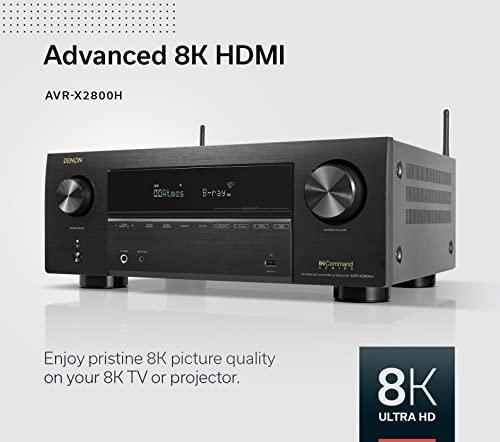
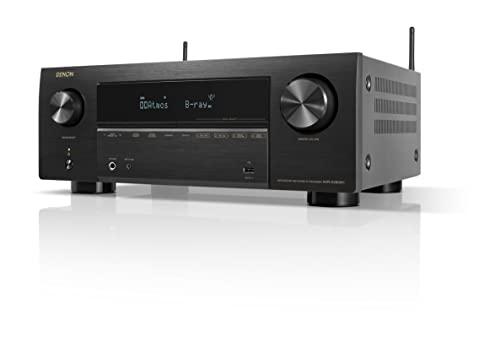
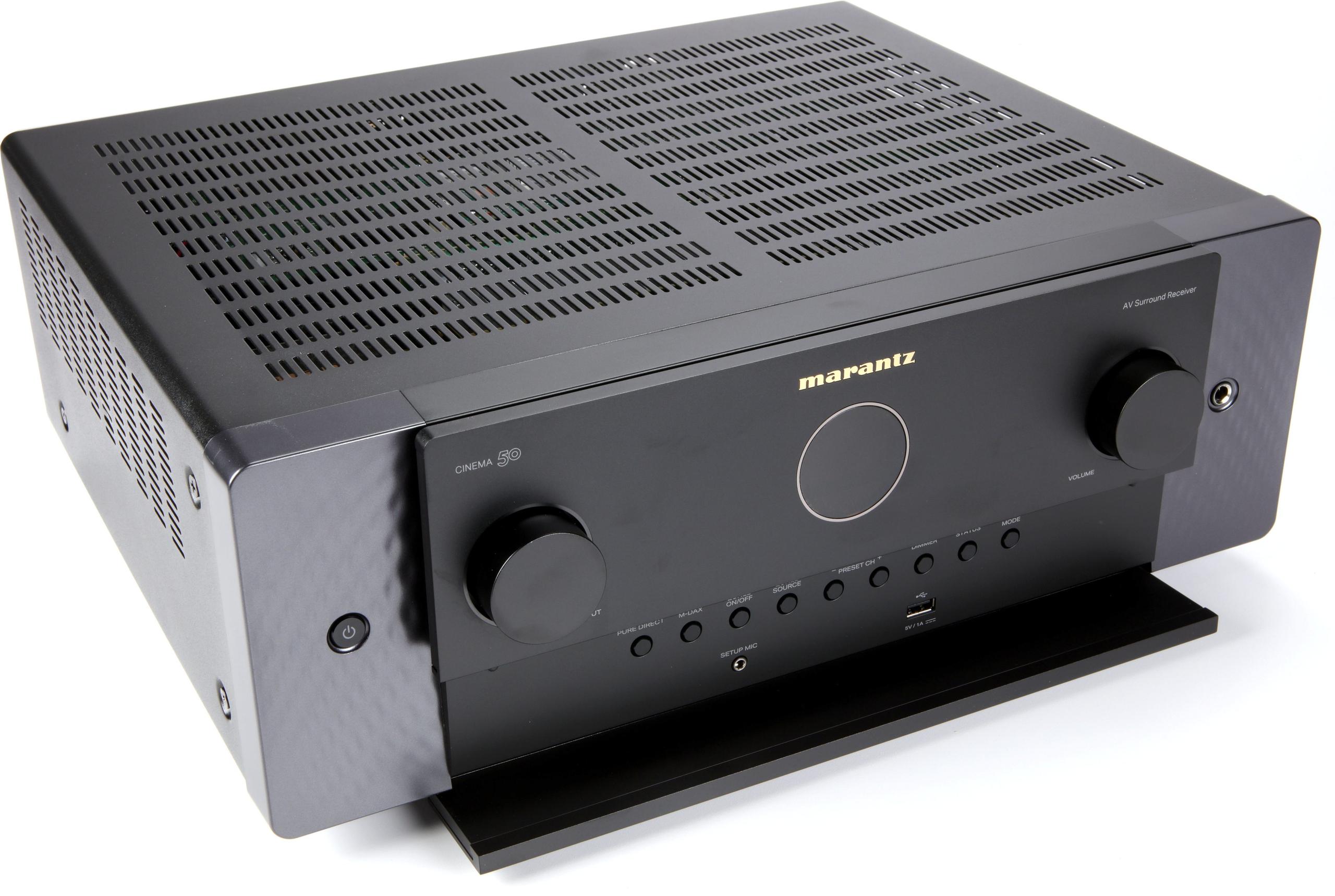
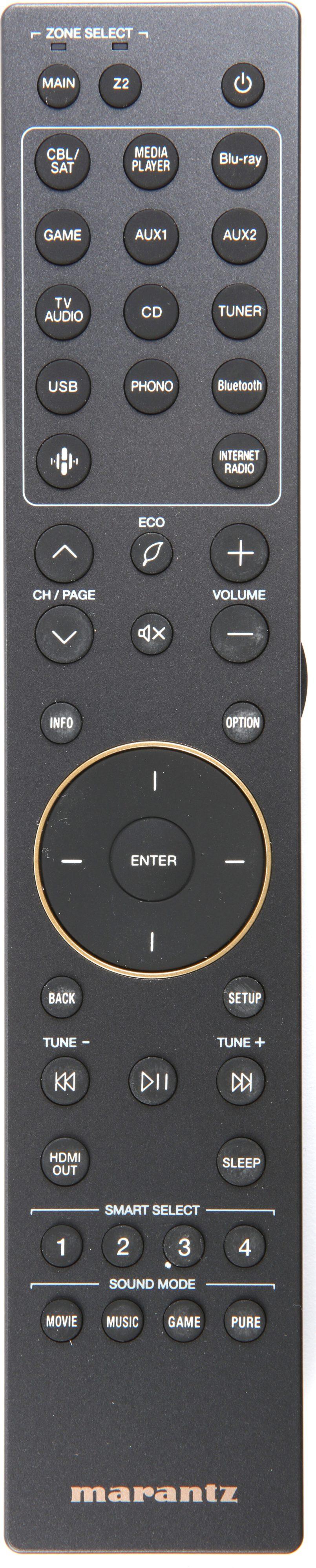
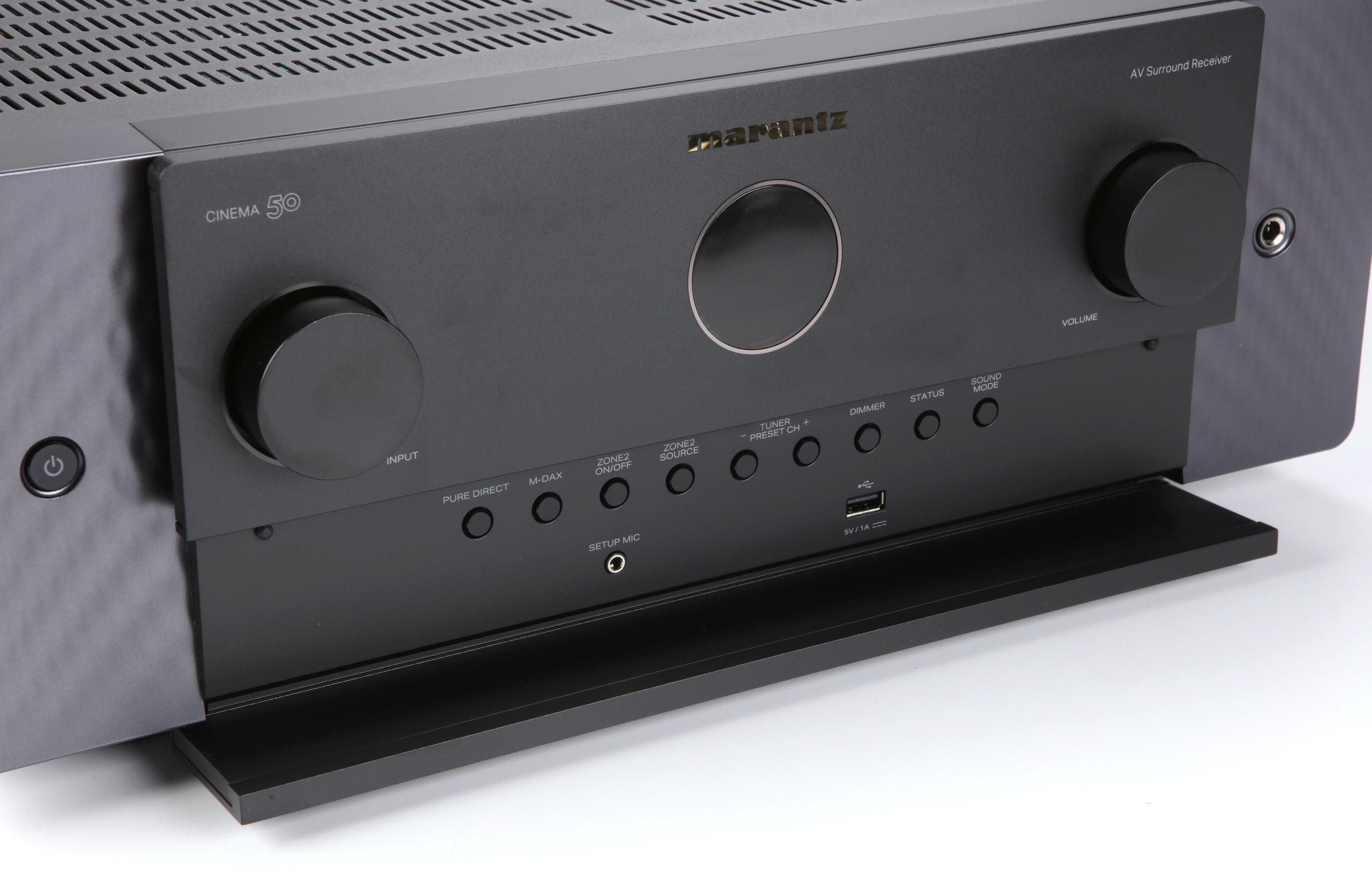
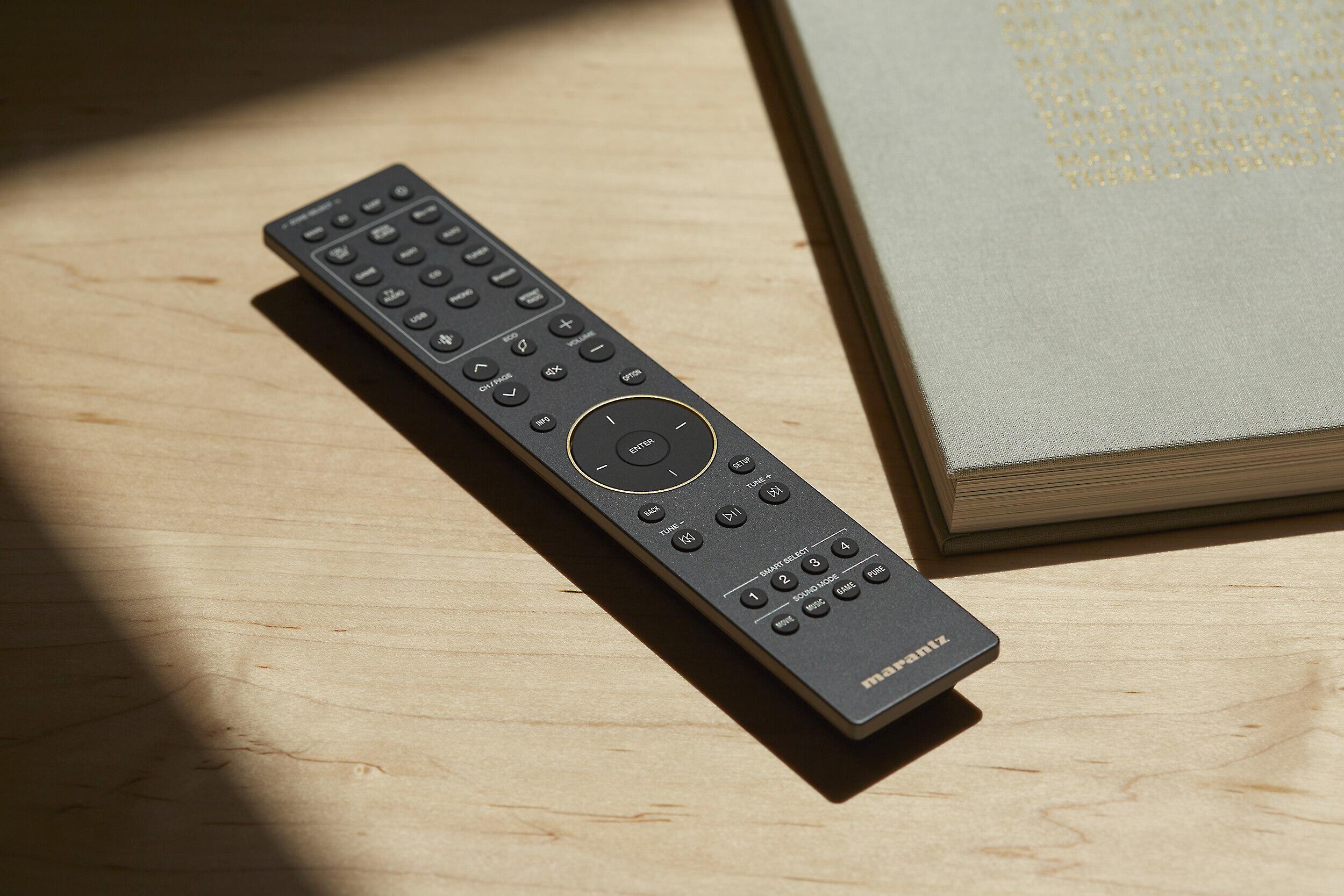
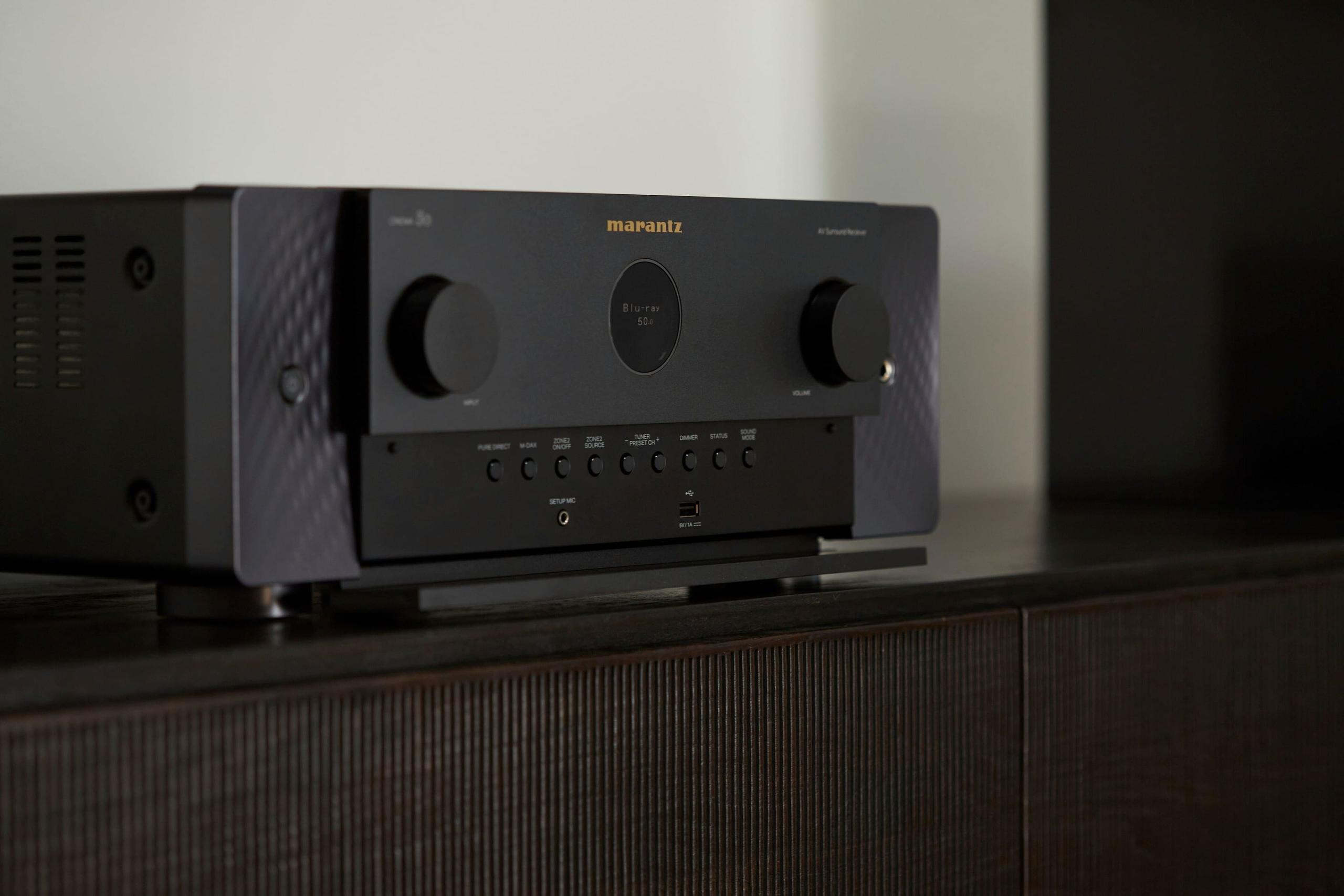
When building a home theater, few decisions matter more than choosing your AV receiver. This single component handles everything from powering your speakers to processing surround sound and switching between your gaming console, streaming device, and Blu-ray player. Today, we're comparing two popular options that represent different approaches to home theater excellence: the Denon AVR-X2800H and the Marantz Cinema 50.
These receivers come from related companies (Marantz is owned by the same parent company as Denon), but they target different users and budgets. At the time of writing, the Denon AVR-X2800H costs significantly less than the Marantz Cinema 50 – we're talking about a price difference of roughly 150-200%. This substantial gap raises an important question: what exactly do you get for that extra money, and is it worth it?
Before diving into specifics, let's establish what makes an AV receiver tick. Think of your receiver as the conductor of an orchestra – it takes audio and video signals from various sources, processes them, and coordinates everything to create a cohesive experience. The key performance areas that separate good receivers from great ones include amplification power, audio processing capabilities, video handling, and connectivity options.
Amplification determines how loud and clear your speakers will sound. Audio processing affects how immersive your surround sound experience feels. Video handling ensures your 4K movies and games look their best. Connectivity determines what devices you can plug in and how future-proof your setup will be.
Both the Denon AVR-X2800H and Marantz Cinema 50 were released in 2022, arriving during a pivotal time for home theater technology. This timing matters because 2022 marked when 8K video support and advanced gaming features became standard rather than premium add-ons. Since then, the industry has refined these technologies, but both receivers remain current and capable.
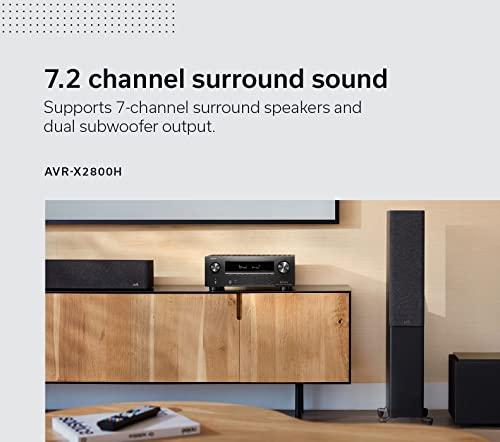
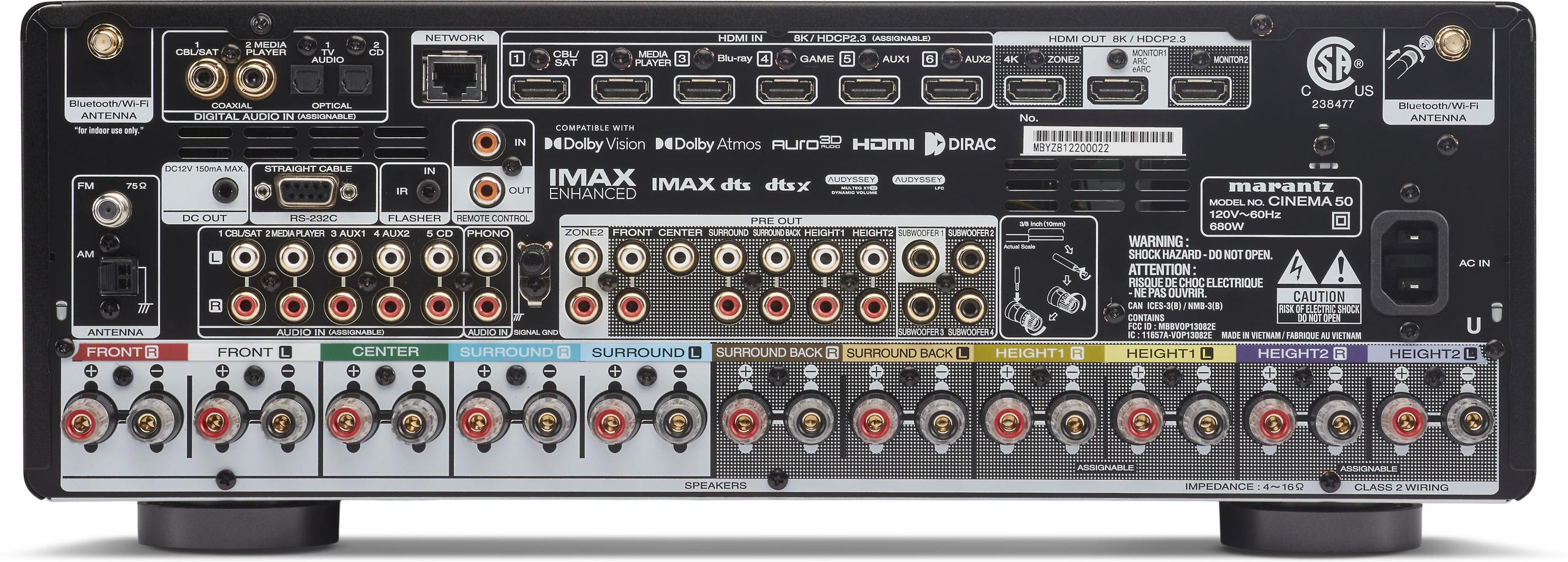
The most fundamental difference between these receivers lies in their amplification capabilities. The Denon AVR-X2800H provides 7 channels of amplification at 95 watts per channel (when driving two channels into 8-ohm speakers). The Marantz Cinema 50 steps up with 9 channels at 110 watts per channel under the same conditions.
Here's why this matters: more channels mean more speakers, and more watts generally mean better control over those speakers, especially at higher volumes. The Denon's 7-channel setup works perfectly for traditional 7.1 surround sound or the increasingly popular 5.1.2 Dolby Atmos configuration (that's five main speakers, one subwoofer, and two height speakers). The Marantz's 9 channels open up possibilities like 7.1.2 Atmos or even more exotic configurations.
But power ratings can be misleading. Both receivers use what's called "two channels driven" measurements, meaning they're only powering two speakers during testing. In real-world use, when all channels are working simultaneously, the actual power output drops – typically to around 70% of the rated specification. This means the Denon delivers roughly 67 watts per channel in normal use, while the Marantz provides about 77 watts.
The power difference becomes more significant when you consider speaker efficiency and room size. Speakers with 87dB sensitivity (a common specification) need about 50 watts to reach loud listening levels in a medium room. Inefficient speakers or large rooms might need 100+ watts per channel, where the Marantz Cinema 50's extra power becomes genuinely valuable.
From our research into user experiences, the Denon AVR-X2800H handles most home theater setups admirably, but the Marantz shows its strength with demanding speakers or in larger rooms exceeding 3,000 cubic feet.
Modern AV receivers do much more than amplify signals – they create immersive soundscapes using advanced processing algorithms. Both receivers support Dolby Atmos and DTS:X, the two dominant object-based surround formats that place sounds in three-dimensional space around you.
Dolby Atmos works by treating sounds as objects that can move freely through your listening space, rather than being locked to specific channels. When a helicopter flies overhead in a movie, Atmos technology calculates how to distribute that sound across your speakers to create the illusion of movement above you. DTS:X works similarly but uses different algorithms and sometimes produces slightly different results.
The Denon AVR-X2800H handles these formats well, with additional height virtualization technology that can simulate overhead effects even without dedicated ceiling speakers. This feature, while not as convincing as real height speakers, makes Atmos accessible to more people.
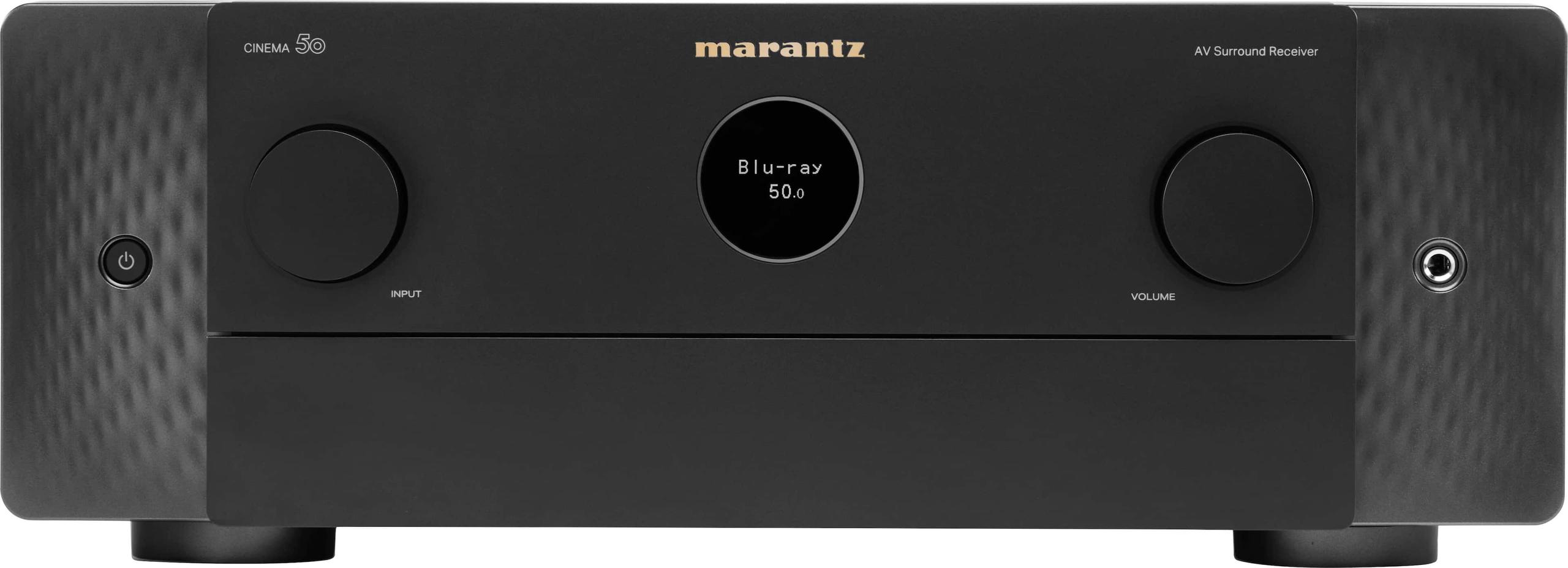
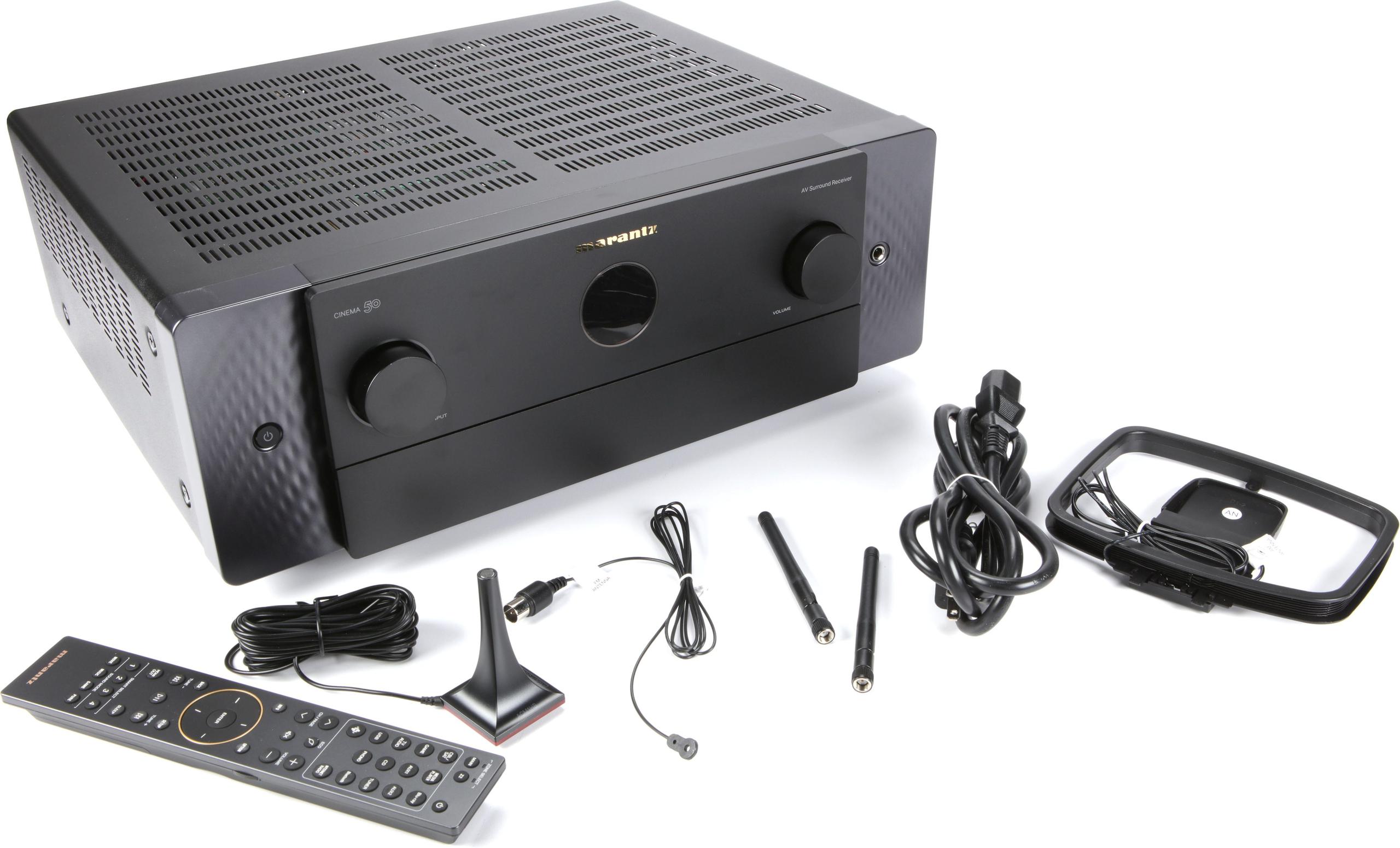
The Marantz Cinema 50 goes further, adding support for Auro 3D (a European surround format), IMAX Enhanced (optimized for IMAX movie releases), and Sony 360 Reality Audio (a music-focused immersive format). While these additional formats aren't universally supported by content, having them provides more flexibility for enthusiasts who seek the ultimate audio experience.
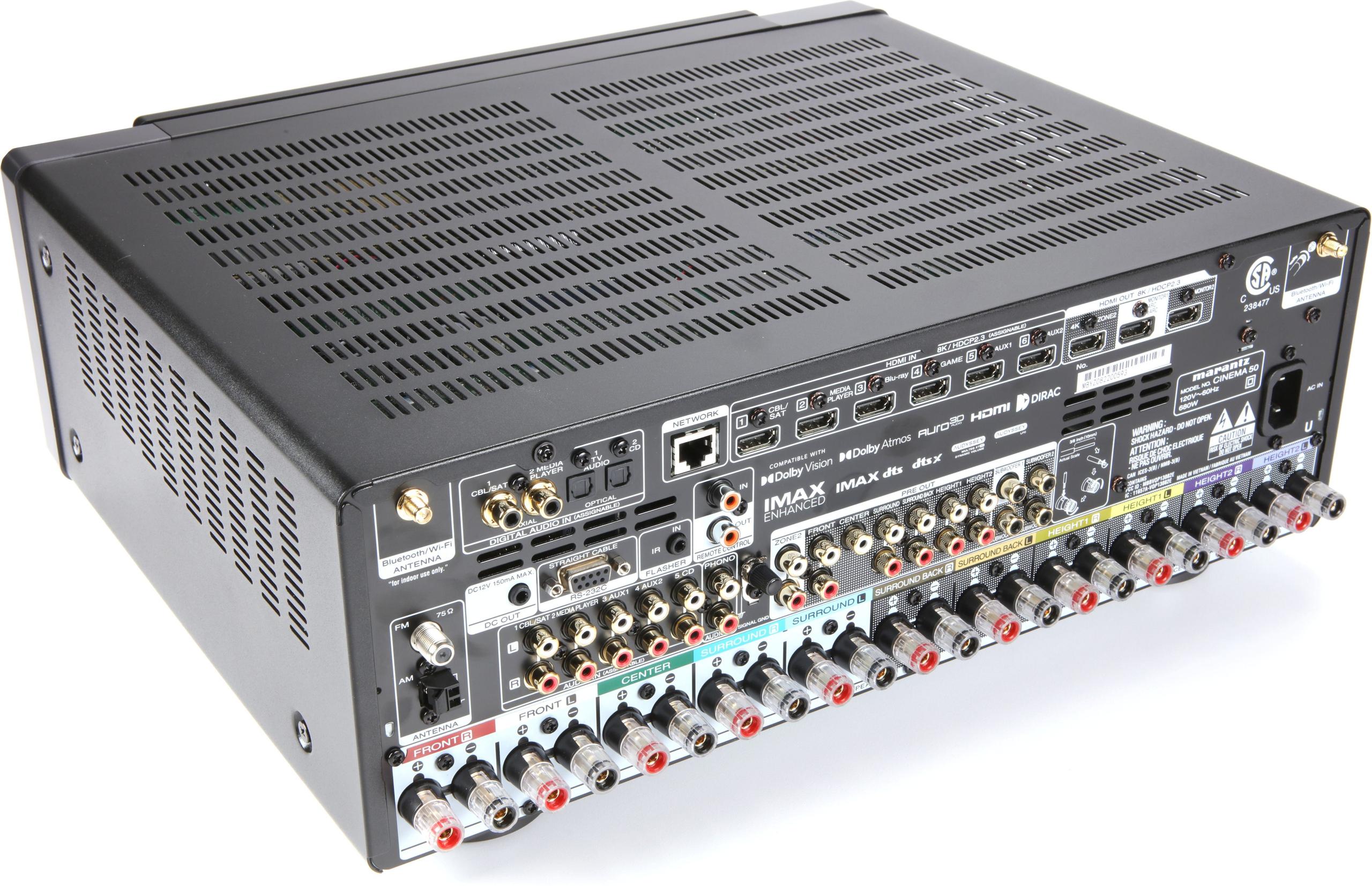
Perhaps more importantly, the Marantz includes four independent subwoofer outputs compared to the Denon's two. Multiple subwoofers help even out bass response throughout a room, reducing the "boomy" spots and "dead zones" that plague many home theaters. The ability to run four subs with independent processing represents a significant advantage for serious installations.
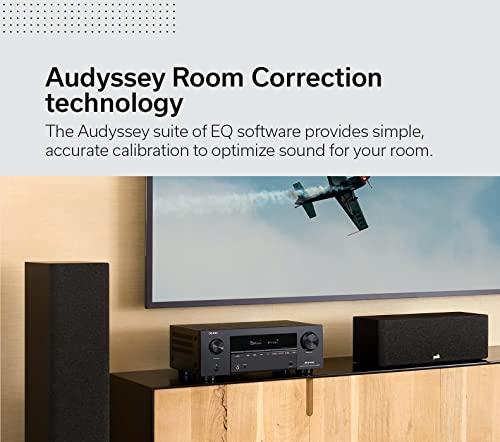
Even the best speakers sound mediocre in an untreated room. Both receivers include Audyssey room correction systems, but at different sophistication levels. The Denon AVR-X2800H uses Audyssey MultEQ XT, which can measure and optimize up to 8 listening positions. The Marantz Cinema 50 steps up to Audyssey MultEQ XT32, a more advanced system that provides finer frequency resolution and more precise corrections.
Room correction works by playing test tones through each speaker while a microphone measures how your room affects the sound. The system then applies digital filters to compensate for acoustic problems. MultEQ XT32 uses more sophisticated algorithms and can identify and correct more subtle acoustic issues than the standard XT version.
Based on expert reviews and user feedback we've analyzed, the difference between these Audyssey versions is noticeable but not dramatic. Most users report satisfaction with both systems, though audio purists often prefer the XT32's more nuanced approach to frequency correction.
Both receivers arrived during the transition to 8K video and advanced gaming features, making their video specifications crucial for long-term satisfaction. The Denon AVR-X2800H includes 6 HDMI inputs (3 supporting full HDMI 2.1 bandwidth) and 2 outputs. The Marantz Cinema 50 offers 6 inputs and 3 outputs, all with 8K compatibility.
HDMI 2.1 matters because it enables several gaming-focused features: Variable Refresh Rate (VRR) eliminates screen tearing, Auto Low Latency Mode (ALLM) reduces input lag, and 4K/120Hz support provides smoother motion in games. Both receivers support these features, making them excellent choices for PlayStation 5 and Xbox Series X owners.
The third HDMI output on the Marantz enables more flexible installations, particularly for users wanting to send different content to a second zone or run both a TV and projector simultaneously. This might seem like a niche feature, but it adds significant flexibility for complex installations.
8K video support might seem premature given limited 8K content, but both receivers can upscale lower-resolution content to 8K displays. More importantly, the high bandwidth capabilities ensure compatibility with future video formats and gaming enhancements.
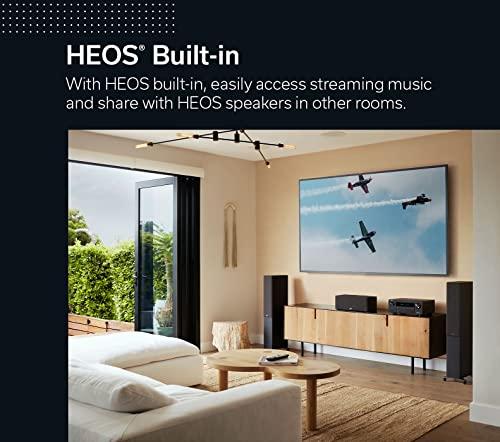
Both receivers include HEOS multiroom technology, which allows streaming music to multiple rooms and integration with other HEOS-compatible devices. This system works well for whole-home audio, though it's not as seamless as dedicated multiroom systems like Sonos.
The Marantz Cinema 50 includes Zone 2 functionality, meaning it can power a second room with independent audio and video. This feature requires running additional speaker wires and possibly HDMI cables, but it's valuable for users wanting distributed audio throughout their homes.
Streaming capabilities are comparable between both receivers, with support for Spotify, Tidal, Amazon Music, and other major services. Both work with Alexa, Google Assistant, and Apple HomeKit for voice control integration.
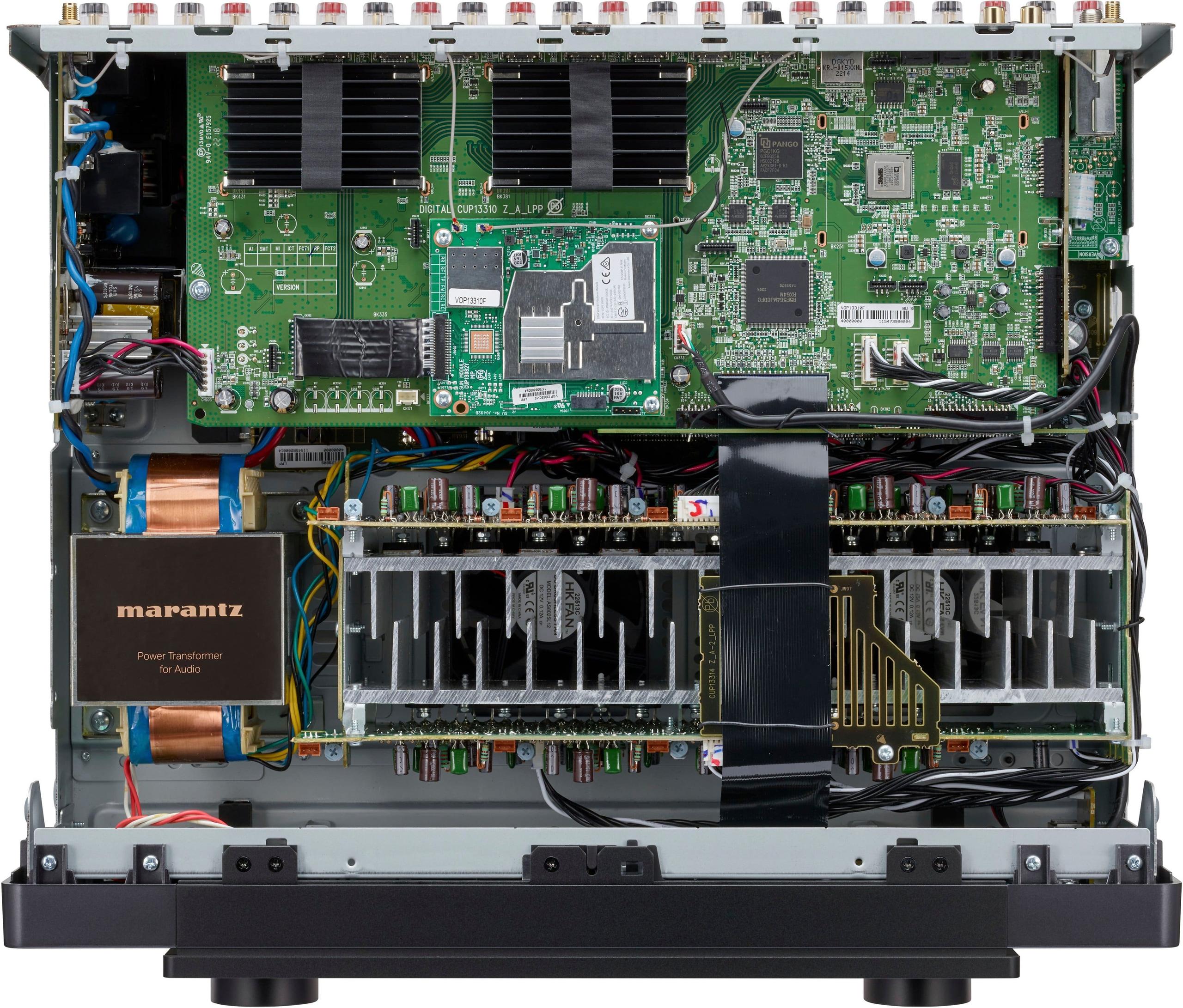
Marantz traditionally emphasizes premium construction and component quality. The Cinema 50 reflects this philosophy with higher-grade capacitors, more robust power supply components, and Marantz's proprietary HDAM (Hyper Dynamic Amplifier Module) circuitry, which is designed to provide a warmer, more musical sound signature.
The Denon AVR-X2800H uses solid construction appropriate for its price point, with discrete amplifier channels and quality components throughout. While not matching the Marantz's premium build, it provides excellent reliability based on long-term user reports we've reviewed.
Both companies have strong reputations for reliability, though Marantz generally commands a premium for its perceived superior build quality and warmer sound character.
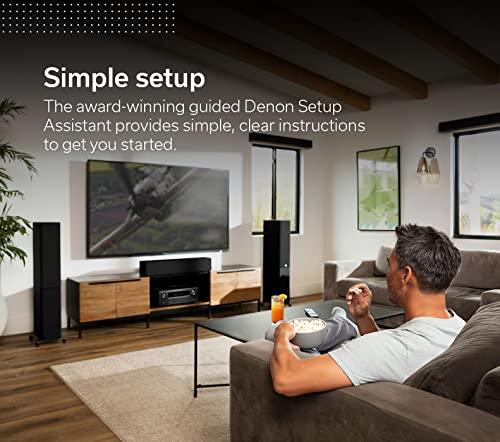
Expert reviews consistently praise both receivers for their performance, but highlight different strengths. The Denon AVR-X2800H earns recognition for delivering flagship-level features at an accessible price point. Reviewers note its balanced sound signature, excellent dialogue clarity, and user-friendly setup process.
The Marantz Cinema 50 receives praise for its more powerful amplification, broader format support, and sophisticated processing capabilities. Music playback particularly benefits from Marantz's HDAM circuitry, which many reviewers describe as more engaging and musical than typical AV receiver amplification.
For movies, both receivers excel at creating immersive soundscapes. The Denon provides excellent dynamics and clear dialogue, while the Marantz offers more headroom for demanding passages and better control over complex speaker loads.
At the time of writing, the price difference between these receivers is substantial – the Marantz Cinema 50 costs roughly double the Denon AVR-X2800H. This premium buys genuine improvements: more amplifier channels, higher power output, advanced room correction, additional audio format support, and Zone 2 capability.
Whether these improvements justify the price depends entirely on your needs and budget. The Denon AVR-X2800H represents exceptional value for users building their first serious home theater or those with moderate requirements. It provides all essential modern features without overwhelming complexity or cost.
The Marantz Cinema 50 targets users with specific high-end requirements: larger rooms, demanding speakers, multiple subwoofers, or multizone audio needs. The price premium makes sense for dedicated home theater rooms where audio quality justifies the investment.
Choose the Denon AVR-X2800H if you want modern home theater features without breaking the bank. It's perfect for medium-sized rooms with 5.1.2 or 7.1 speaker configurations, delivers solid performance with most speakers, and includes all the connectivity you'll need for current and near-future devices.
The Marantz Cinema 50 makes sense for users with larger budgets and specific advanced requirements. If you're planning a 9+ channel system, need multiple subwoofer outputs, want Zone 2 functionality, or simply prefer premium build quality, the additional cost becomes justifiable.
Most users will find the Denon delivers 90% of the performance at roughly half the price. The Marantz provides tangible improvements, but they're meaningful primarily to enthusiasts with demanding setups or specific feature requirements.
Consider your room size, speaker requirements, and long-term plans. If you're unsure about needing the Marantz's additional features, the Denon AVR-X2800H offers an excellent starting point with room to grow. You can always upgrade later if your needs expand, and the money saved initially can go toward better speakers – often a more impactful improvement than receiver upgrades.
Both receivers represent solid choices in their respective categories, but the Denon AVR-X2800H offers better value for the majority of home theater enthusiasts, while the Marantz Cinema 50 serves those with specific high-end requirements who can justify its premium pricing.
| Denon AVR-X2800H | Marantz Cinema 50 |
|---|---|
| Amplification Channels - Determines speaker configuration possibilities | |
| 7.2 channels, 95W per channel | 9.4 channels, 110W per channel |
| Power Output - Critical for driving speakers in larger rooms | |
| 95W (8Ω, 2ch driven), ~67W all channels | 110W (8Ω, 2ch driven), ~77W all channels |
| Audio Format Support - Affects immersive surround sound options | |
| Dolby Atmos, DTS:X, height virtualization | Dolby Atmos, DTS:X, Auro 3D, IMAX Enhanced, Sony 360 Reality Audio |
| Room Correction - Optimizes sound for your specific listening space | |
| Audyssey MultEQ XT (8 measurement points) | Audyssey MultEQ XT32 (more advanced frequency resolution) |
| HDMI Connectivity - Future-proofs your setup for 8K and gaming | |
| 6 inputs (3x HDMI 2.1), 2 outputs | 6 inputs (all 8K compatible), 3 outputs |
| Subwoofer Outputs - More subs = better bass distribution | |
| 2 independent subwoofer outputs | 4 independent subwoofer outputs |
| Video Support - Essential for modern gaming and streaming | |
| 8K/60Hz, 4K/120Hz, VRR, ALLM, HDR10+ | 8K/60Hz, 4K/120Hz, VRR, ALLM, HDR10+ |
| Multi-Zone Capability - Enables audio/video in second room | |
| No Zone 2 functionality | Zone 2 audio and video support |
| Smart Features - Streaming and voice control integration | |
| HEOS multiroom, AirPlay 2, Alexa/Google/Siri | HEOS multiroom, AirPlay 2, Alexa/Google/Siri |
| Build Quality - Affects longevity and sound character | |
| Solid construction, discrete amplifiers | Premium components, HDAM circuitry, warmer sound signature |
| Best For - Target user scenarios | |
| Entry-level premium users, 5.1.2/7.1 setups, medium rooms | Large rooms, 9+ channel systems, multiple subs, Zone 2 needs |
| Value Proposition - Price-to-performance consideration | |
| Exceptional value with all modern features | Premium pricing justified only for specific high-end requirements |
The primary difference is channel count and power output. The Denon AVR-X2800H offers 7.2 channels at 95 watts per channel, while the Marantz Cinema 50 provides 9.4 channels at 110 watts per channel. This means the Marantz can drive more speakers and handle larger rooms more effectively.
The Denon AVR-X2800H is excellent for small to medium home theaters up to about 3,000 cubic feet. It provides all the modern features you need including Dolby Atmos and 8K video support at a more affordable price point, making it ideal for most home theater setups.
Yes, both the Denon AVR-X2800H and Marantz Cinema 50 support Dolby Atmos and DTS:X. However, the Marantz goes further by also supporting Auro 3D, IMAX Enhanced, and Sony 360 Reality Audio, giving it broader format compatibility for enthusiasts.
The Denon AVR-X2800H offers significantly better value for most users. It delivers about 90% of the performance at roughly half the cost of the Marantz Cinema 50. Unless you specifically need the Marantz's additional features, the Denon provides exceptional bang for your buck.
Yes, both the Denon AVR-X2800H and Marantz Cinema 50 support 8K/60Hz and 4K/120Hz video passthrough with gaming features like VRR (Variable Refresh Rate) and ALLM (Auto Low Latency Mode). Both are excellent choices for PlayStation 5 and Xbox Series X owners.
The Marantz Cinema 50 is better suited for large rooms and demanding speakers due to its higher power output (110W vs 95W per channel) and superior amplification design. The additional channels also allow for more complex speaker configurations in larger spaces.
Both receivers include HEOS multiroom technology for streaming music to multiple rooms. However, only the Marantz Cinema 50 offers true Zone 2 functionality, which can power a completely separate room with independent audio and video sources.
The Denon AVR-X2800H supports 2 independent subwoofers, which is sufficient for most home theaters. The Marantz Cinema 50 supports up to 4 independent subwoofers, allowing for more sophisticated bass management in larger or more demanding installations.
The Marantz Cinema 50 includes the more advanced Audyssey MultEQ XT32 room correction system, which offers finer frequency resolution and more precise acoustic corrections compared to the Audyssey MultEQ XT found in the Denon AVR-X2800H.
Yes, both receivers excel at music playback. The Denon AVR-X2800H offers clean, balanced sound reproduction. The Marantz Cinema 50 features premium HDAM amplification circuitry that many users find more engaging and musical, particularly for stereo music listening.
Beginners should strongly consider the Denon AVR-X2800H. It provides all essential modern features including Dolby Atmos, 8K video support, and excellent build quality without overwhelming complexity or cost. It's perfect for learning home theater basics before potentially upgrading later.
The Marantz Cinema 50 justifies its premium pricing if you need more than 7 channels of amplification, plan to use multiple subwoofers, require Zone 2 functionality, have a large dedicated theater room, or specifically prefer Marantz's premium build quality and warmer sound signature. For most users, however, the Denon AVR-X2800H provides better overall value.
We've done our best to create useful and informative comparisons to help you decide what product to buy. Our research uses advanced automated methods to create this comparison and perfection is not possible - please contact us for corrections or questions. These are the sites we've researched in the creation of this article: theaudiotailor.com.au - ecoustics.com - simplehomecinema.com - whathifi.com - audioadvisor.com - youtube.com - bestbuy.com - e-catalog.com - crutchfield.com - avsforum.com - crutchfield.com - whathifi.com - richersounds.com - bestbuy.com - accessories4less.com - projectorscreen.com - adiglobaldistribution.us - youtube.com - bestbuy.com - bestbuy.com - sweetwater.com - tomsguide.com - valueelectronics.com - audiosciencereview.com - crutchfield.com - trustedreviews.com - bestbuy.com - snapav.com - sweetwater.com - marantz.com - soundunited.com - forums.audioholics.com - soundandvision.com - audioadvice.com

Privacy Policy
Terms and Conditions - Affiliate Policy
Home Security
© Copyright 2008-2026.
11816 Inwood Rd #1211, Dallas, TX 75244