

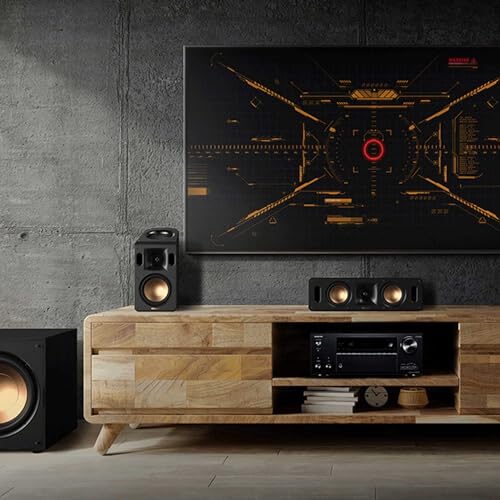
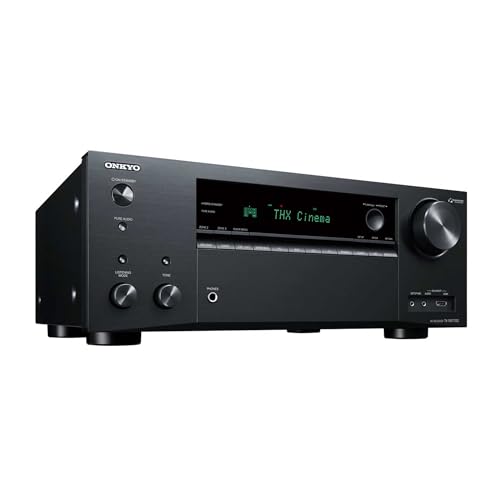
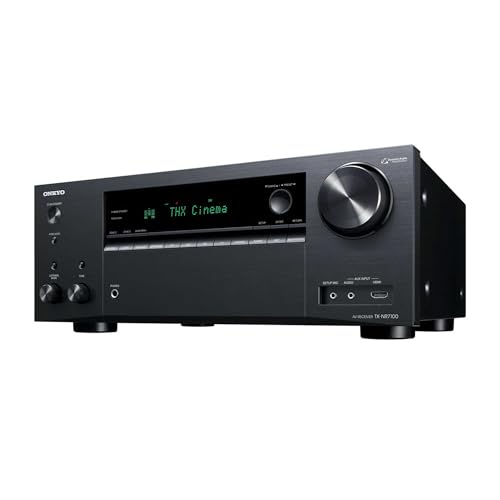
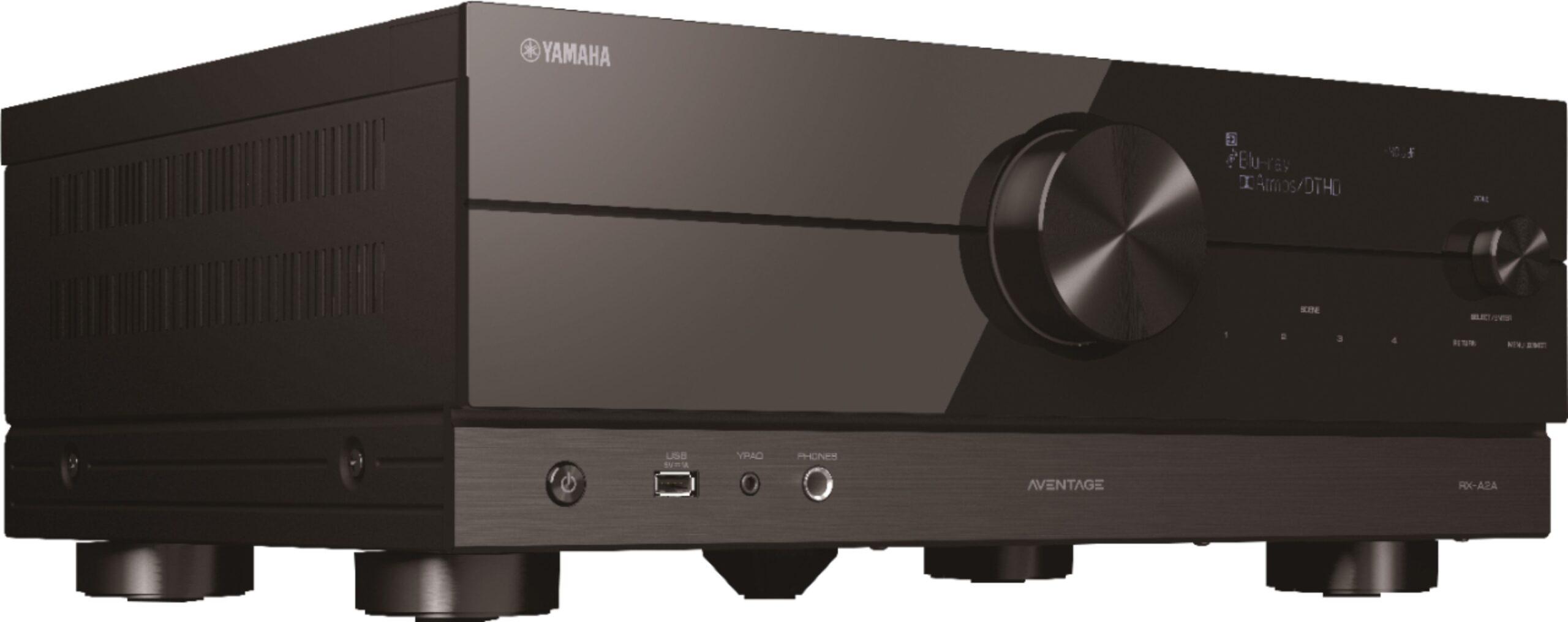
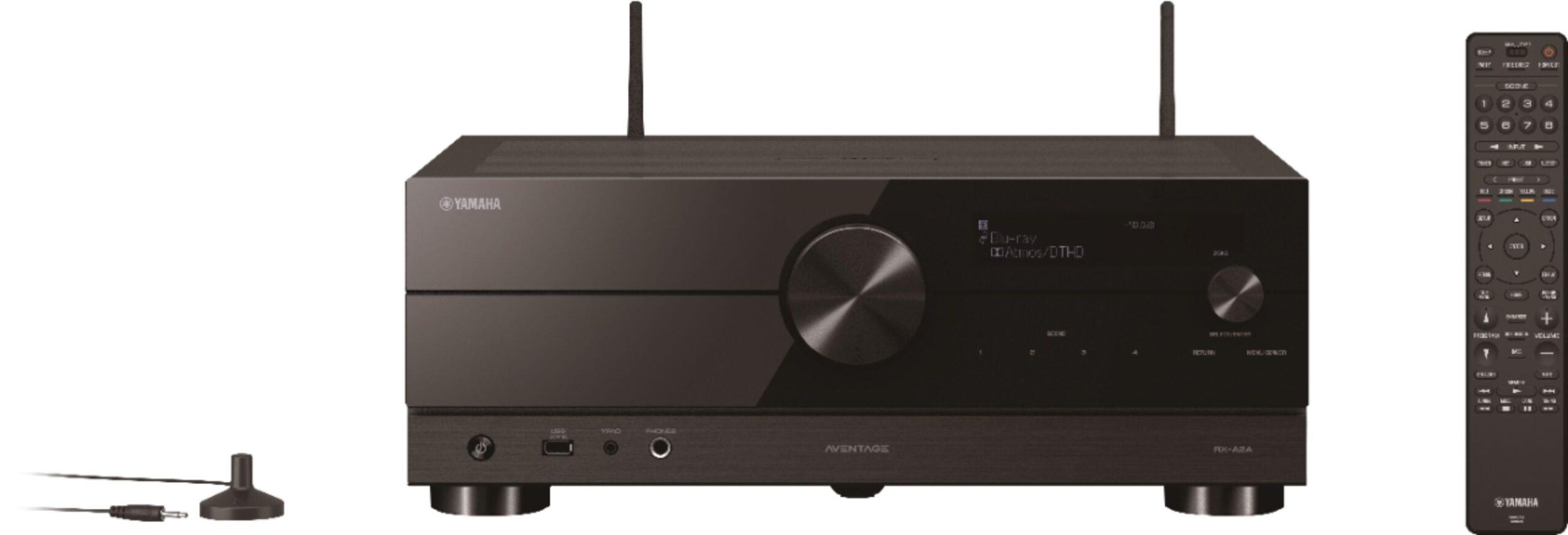
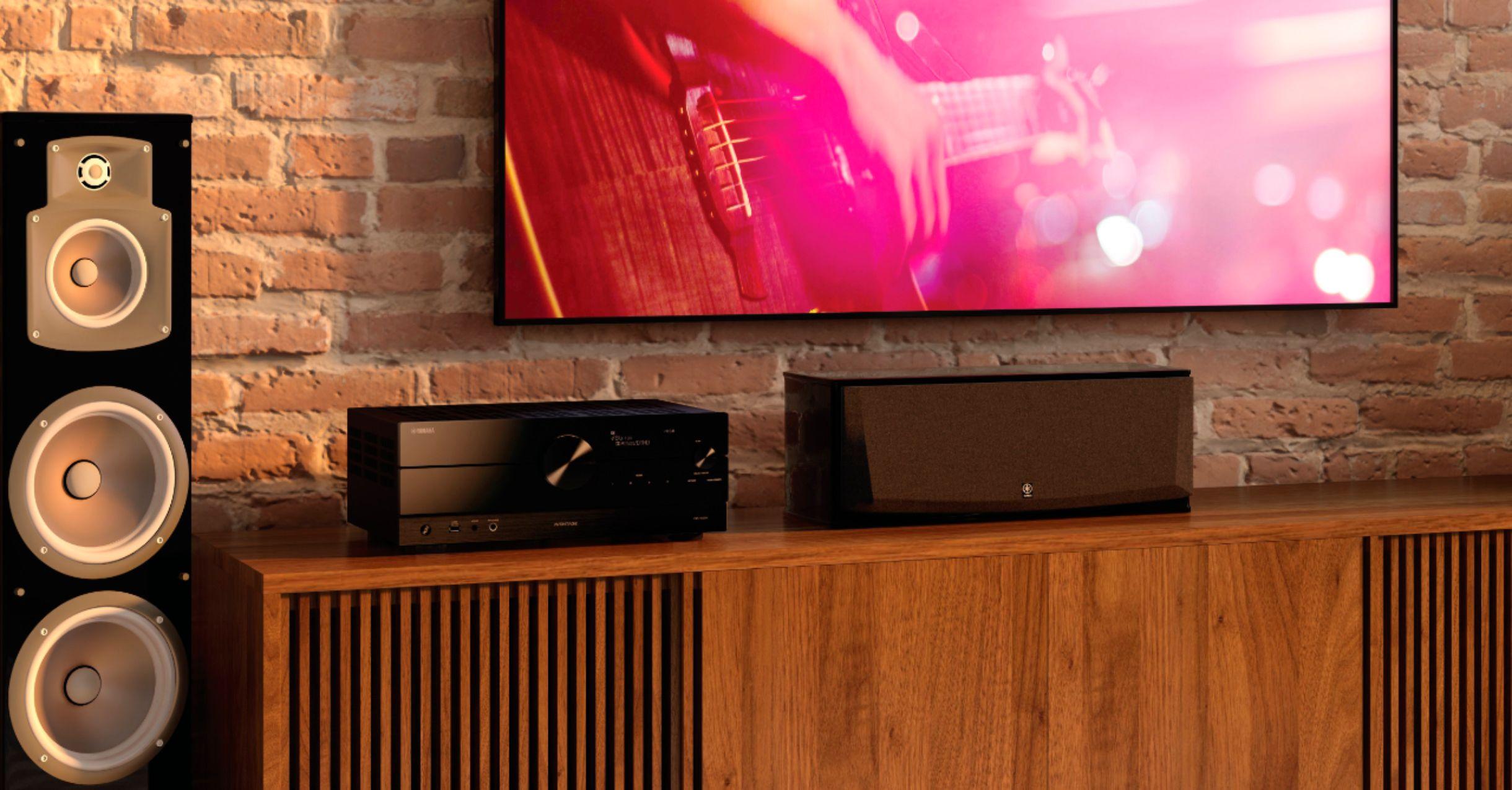
When you're building a home theater system, the AV receiver becomes the beating heart of your entertainment setup. It's the component that takes all your video sources—whether that's a 4K Blu-ray player, gaming console, or streaming device—and routes them to your TV while simultaneously powering your speakers with multichannel surround sound. Think of it as a sophisticated traffic controller and amplifier rolled into one sleek box.
The challenge is that AV receivers have become incredibly complex pieces of technology. Modern units need to handle everything from legacy analog inputs to cutting-edge 8K video signals, all while processing immersive audio formats like Dolby Atmos that can place sounds above, around, and behind you. At the same time, they're expected to integrate seamlessly with smart home systems and wireless streaming services.
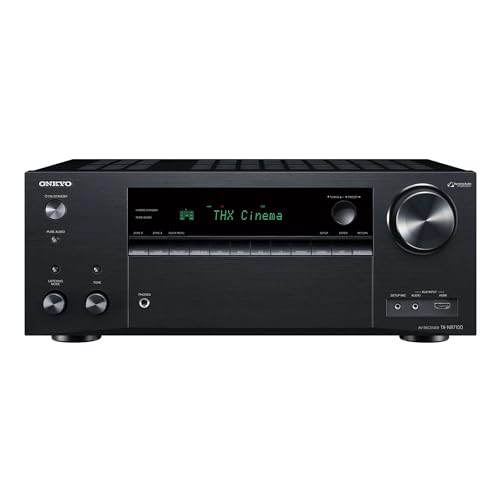
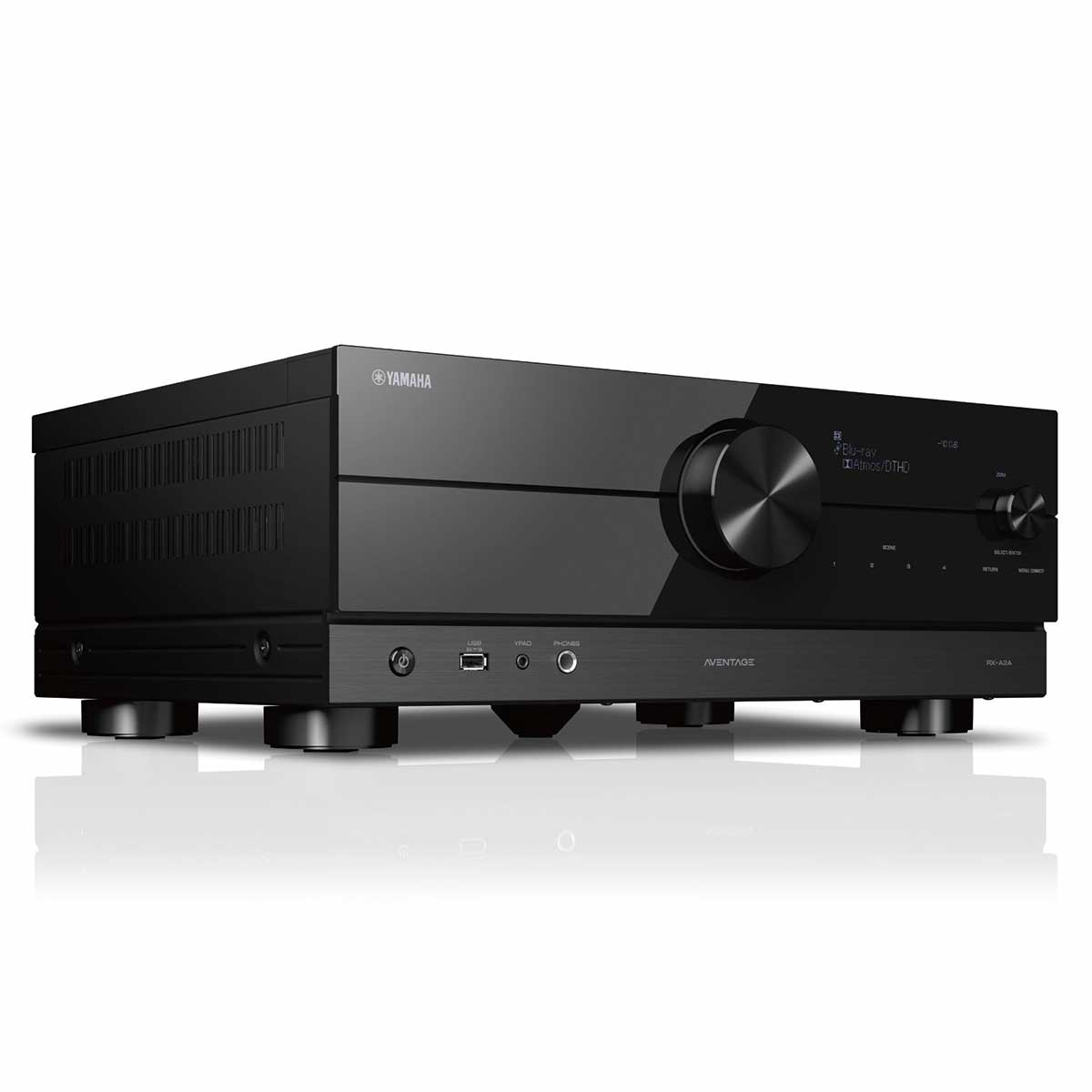
Today we're comparing two receivers that represent different philosophies in this competitive market: the Onkyo TX-NR7100 and the Yamaha Aventage RX-A2A. Both were released around 2020-2021, during a period when manufacturers were rushing to add 8K video support and enhance their room correction technologies. Since then, the technology has matured, making these models particularly interesting as they represent a sweet spot of features without the premium pricing of the newest flagships.
The most fundamental difference between the Onkyo TX-NR7100 and Yamaha RX-A2A lies in their channel configuration. The Onkyo offers 9.2 channels while the Yamaha provides 7.2 channels. Those numbers tell you how many speakers each receiver can power directly—the first number represents the main speakers (front, center, surround, and height channels), while the ".2" indicates support for two subwoofers.
This difference matters more than you might initially think. With 9.2 channels, the Onkyo TX-NR7100 can handle complex Dolby Atmos speaker layouts like 5.1.4 (five main speakers, one subwoofer, and four height speakers) or 7.1.2 (seven main speakers, one subwoofer, and two height speakers). The Yamaha RX-A2A, being limited to 7.2 channels, caps you at configurations like 5.1.2 Atmos setups.
Both receivers deliver 100 watts per channel at 8 ohms, which represents their power output into a standard speaker load. However, the Onkyo also specifies 220 watts at 6 ohms, indicating it can handle lower-impedance speakers that demand more current. The Yamaha achieves slightly lower total harmonic distortion at 0.06% compared to the Onkyo's 0.08%—this technical specification measures how much the amplifier alters the original audio signal, with lower numbers being better.
The heart of any AV receiver's performance lies in how it handles audio, and both manufacturers take distinctly different approaches. The Onkyo TX-NR7100 incorporates Dirac Live room correction, which is genuinely impressive technology. Room correction systems use microphones to measure how your room affects sound, then apply digital filters to compensate for acoustic problems like standing waves, reflections, and frequency response irregularities.
Dirac Live stands out because it can take measurements from up to 13 different positions in your listening area, creating a comprehensive acoustic map of your room. This is significantly more sophisticated than basic auto-calibration systems that only measure from one or two positions. The technology analyzes both the amplitude (volume) and phase (timing) of sound waves, allowing it to correct issues that simpler systems miss entirely.
The Yamaha RX-A2A uses YPAO (Yamaha Parametric room Acoustic Optimizer) with R.S.C. (Reflected Sound Control). While not as advanced as Dirac Live, YPAO has been refined over many years and performs admirably. The R.S.C. component specifically addresses early reflections—sound waves that bounce off nearby walls and arrive at your ears slightly delayed, which can muddy the audio presentation.
Beyond room correction, Yamaha's Cinema DSP 3D technology deserves attention. This creates an expanded soundstage that makes movies feel more immersive by simulating the acoustic characteristics of famous concert halls and movie theaters. Some listeners find this processing enhances their experience, while purists prefer the Onkyo's more neutral approach with its THX Certified Select tuning.
The Onkyo TX-NR7100 also incorporates Vector Linear Shaping Circuitry (VLSC) in its front channels. This technology reconstructs digital audio signals with reduced pulse noise, theoretically providing smoother, more analog-like sound reproduction. While the audible benefits can be subtle, it demonstrates Onkyo's attention to signal path quality.
Both receivers handle modern video formats exceptionally well, supporting 8K/60Hz and 4K/120Hz pass-through—essential for next-generation gaming consoles and high-end streaming content. They both support HDR10+, Dolby Vision, and HLG, which are high dynamic range formats that provide enhanced contrast and color accuracy compared to standard video.
The Onkyo TX-NR7100 distinguishes itself with IMAX Enhanced certification. This means it can optimize both audio and video for content specifically mastered for IMAX theaters. While IMAX Enhanced content remains relatively limited, it's growing, and the certification ensures you'll get the filmmaker's intended experience when available.
More practically, the Onkyo includes video upscaling capabilities that can enhance lower-resolution content. It can upscale 1080p content to 4K or even 8K, and upscale 4K content to 8K. While upscaling can't create detail that wasn't originally there, good processing can make lower-resolution content look cleaner on large modern displays.
Gaming enthusiasts will appreciate that both receivers support Variable Refresh Rate (VRR), Auto Low Latency Mode (ALLM), and Quick Frame Transport (QFT). These technologies reduce input lag and eliminate screen tearing for smoother gaming experiences with Xbox Series X/S and PlayStation 5 consoles.
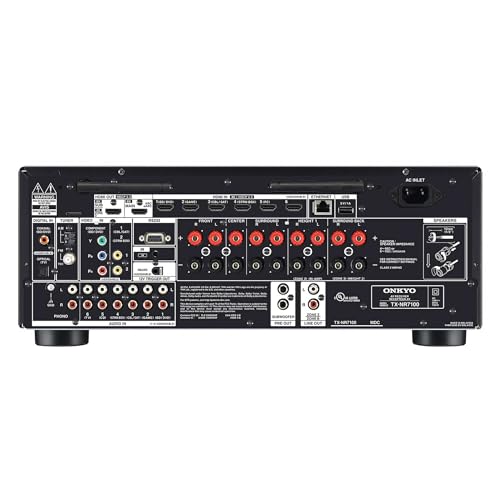
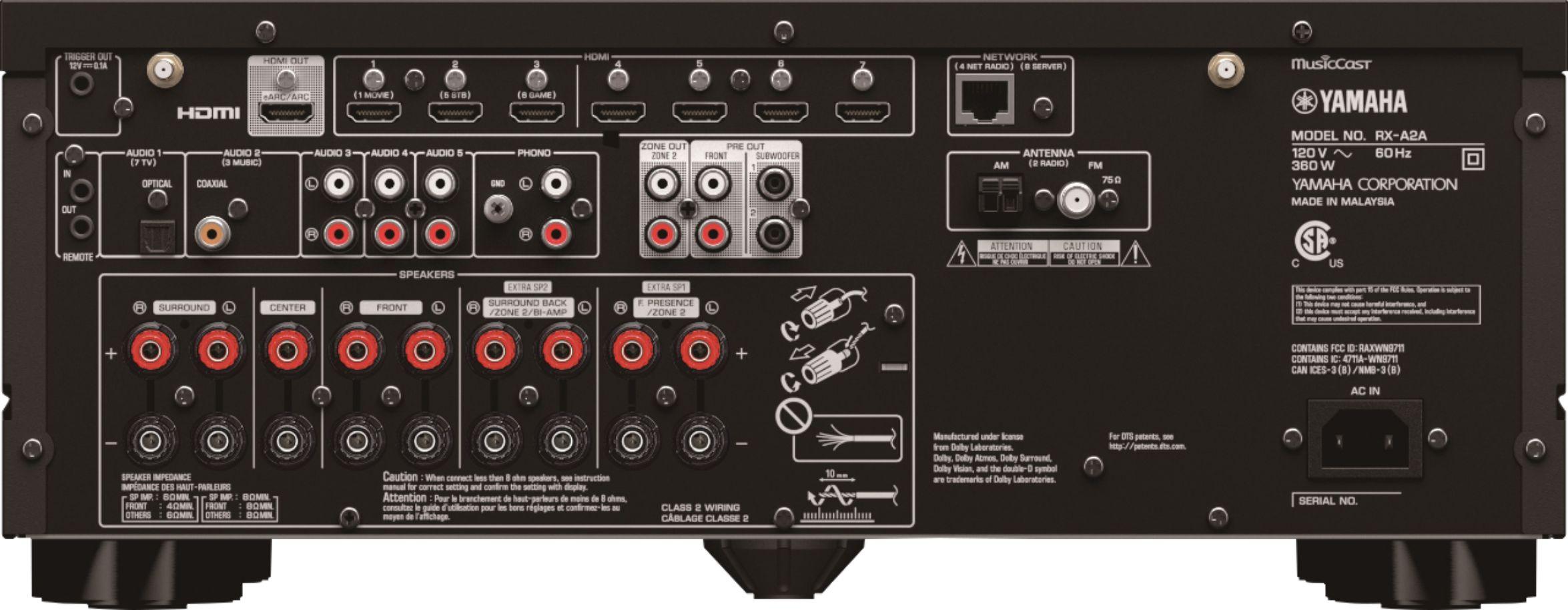
The Onkyo TX-NR7100 provides more comprehensive connectivity options. While both receivers offer 7 HDMI inputs, the Onkyo includes 2 HDMI outputs compared to Yamaha's single output. This might seem minor, but it's valuable if you want to send different content to multiple displays or need to connect both a TV and a projector.
The Onkyo also retains legacy video connections including component and composite inputs. These might seem outdated, but they're incredibly useful if you have older gaming consoles, DVD players, or other devices that don't support HDMI. The Yamaha RX-A2A has completely eliminated these connections, reflecting its focus on modern sources.
For custom installation scenarios, the Onkyo includes an RS-232C port, which allows integration with sophisticated home automation systems like Control4 or Crestron. This professional-grade control interface enables installers to program complex automation sequences and remote control scenarios.
Both receivers support multi-zone audio, but their implementations differ significantly. The Onkyo TX-NR7100 includes Zone 2 HDMI output, meaning you can send both audio and video to a second room. This is genuinely useful—you could watch a movie in your main theater while someone else streams different content in a bedroom or den.
The Yamaha RX-A2A supports multi-zone audio through its MusicCast ecosystem. MusicCast is Yamaha's proprietary wireless audio platform that works with a wide range of Yamaha speakers and soundbars. If you already own MusicCast-compatible devices, the integration is seamless and reliable.
From our research into user experiences, MusicCast tends to be more stable for wireless music streaming compared to the Onkyo's FlareConnect system. However, the Onkyo's inclusion of actual Zone 2 HDMI video output provides functionality that wireless systems simply can't match.
This is where things get interesting, and our research uncovered some important practical considerations. Despite the Onkyo TX-NR7100 featuring aluminum heatsinks and cooling fans, multiple user reports indicate it can enter protective mode during sustained high-volume listening sessions. This thermal protection prevents damage but interrupts your listening experience.
The Yamaha RX-A2A, surprisingly, seems to handle extended operation better despite having a simpler cooling system without fans. This suggests differences in power supply design and thermal management philosophy. Yamaha's Aventage series has built a strong reputation for long-term reliability, which shouldn't be underestimated when you're making an investment that you expect to last many years.
Both receivers require adequate ventilation—stacking them in enclosed cabinets without airflow is asking for trouble regardless of which model you choose.
If your room has challenging acoustics—and most rooms do—room correction becomes critically important. Hard surfaces, odd room shapes, and furniture placement all affect how sound reaches your ears. The Onkyo's Dirac Live system represents some of the most sophisticated room correction technology available at this price point.
Dirac Live doesn't just adjust frequency response like simpler systems. It corrects both magnitude and phase issues, which means it can fix timing problems that cause sounds to seem unfocused or diffuse. The system can also target-curve the sound to your preferences, allowing you to maintain the character you enjoy while correcting obvious problems.
The Yamaha's YPAO system, while less sophisticated, is significantly easier to use. It guides you through the measurement process with clear instructions and typically produces good results without requiring extensive manual adjustment. For many users, this plug-and-play approach is more valuable than ultimate accuracy.
Both receivers embrace modern streaming expectations. They support Spotify Connect, Apple AirPlay 2, and various other wireless protocols. The Onkyo includes Bluetooth transmission with aptX and aptX HD codecs, which provides higher-quality wireless audio compared to standard Bluetooth. This is particularly useful for wireless headphone listening late at night.
The Yamaha RX-A2A integrates more seamlessly with voice assistants like Alexa and Google Assistant, making it easier to control with voice commands. Its mobile app interface is also generally considered more intuitive based on user feedback.
When evaluating AV receiver performance, power output specifications can be misleading. Both receivers claim 100 watts per channel, but these measurements are taken under specific conditions (8-ohm load, 2 channels driven, specific distortion levels). Real-world performance with all channels driven simultaneously will be lower.
More important is the receiver's ability to deliver clean, dynamic sound with your specific speakers. The Onkyo's specification of 220 watts at 6 ohms suggests better current delivery capability, which matters if you have demanding speakers.
Signal-to-noise ratio is another crucial specification—both receivers achieve excellent numbers here, with the Onkyo at 106 dB and specifications suggesting similar performance from the Yamaha. This measurement indicates how much background noise the receiver adds to your audio signal, with higher numbers being better.
The Onkyo TX-NR7100 makes sense if you want maximum flexibility and don't mind a more complex setup process. Its 9.2 channel configuration enables sophisticated Dolby Atmos installations that can truly envelope you in sound. The Dirac Live room correction is genuinely valuable if your room has acoustic challenges, and the extensive connectivity options future-proof your investment.
Choose the Onkyo if you:
The Yamaha Aventage RX-A2A excels if you prioritize audio quality and reliability over maximum features. Its refined amplifier section and proven thermal management make it a safer long-term bet. The simpler setup process and intuitive interface reduce frustration during installation.
Choose the Yamaha if you:
At the time of writing, both receivers occupy similar price tiers, making the decision primarily about features and philosophy rather than pure value. The Onkyo delivers more raw capability and flexibility, while the Yamaha focuses on doing fewer things exceptionally well.
For most home theater enthusiasts, the Onkyo TX-NR7100 represents the better choice if you can manage its complexity and thermal considerations. Its additional channels and advanced room correction provide genuine value that you'll appreciate over years of ownership. However, if you prioritize simplicity and proven reliability, the Yamaha RX-A2A offers a more refined, worry-free experience that may ultimately prove more satisfying for everyday use.
| Onkyo TX-NR7100 | Yamaha Aventage RX-A2A |
|---|---|
| Channel Configuration - Determines maximum speaker setup flexibility | |
| 9.2 channels (enables 5.1.4 or 7.1.2 Dolby Atmos) | 7.2 channels (limited to 5.1.2 Atmos configurations) |
| Power Output - Drives speaker volume and dynamics | |
| 100W/ch (8Ω), 220W/ch (6Ω), 0.08% THD | 100W/ch (8Ω), 150W/ch (8Ω, 1ch), 0.06% THD |
| Room Correction - Optimizes sound for your specific room | |
| Dirac Live (up to 13 measurement positions, phase correction) | YPAO with R.S.C. (simpler setup, proven reliability) |
| HDMI Connectivity - Future-proofing and source flexibility | |
| 7 inputs, 2 outputs, Zone 2 HDMI video distribution | 7 inputs, 1 output, no multi-zone video |
| Video Processing - Enhanced picture quality and gaming features | |
| 8K upscaling, IMAX Enhanced, VRR/ALLM support | 4K upscaling, VRR/ALLM support, no IMAX Enhanced |
| Legacy Connectivity - Support for older equipment | |
| Component, composite, RS-232C for custom install | Modern inputs only, streamlined connections |
| Multi-Room Audio - Whole-home entertainment options | |
| FlareConnect, Zone 2 HDMI output | MusicCast ecosystem (more stable wireless) |
| Wireless Audio - Streaming and headphone quality | |
| Bluetooth with aptX/aptX HD transmission | Standard Bluetooth, superior app interface |
| Build Quality - Long-term reliability considerations | |
| Cooling fans but reports of thermal protection activation | Fanless design with better sustained performance |
| Surround Processing - Movie and music enhancement | |
| THX Certified Select, VLSC front channel processing | Cinema DSP 3D, Yamaha's signature sound tuning |
The Onkyo TX-NR7100 offers 9.2 channels compared to the Yamaha Aventage RX-A2A's 7.2 channels. This means the Onkyo TX-NR7100 can power two additional speakers, making it better for complex Dolby Atmos setups with ceiling speakers or advanced surround configurations.
Yes, both the Onkyo TX-NR7100 and Yamaha Aventage RX-A2A support 8K/60Hz and 4K/120Hz video pass-through. However, the Onkyo TX-NR7100 adds 8K upscaling capabilities and IMAX Enhanced certification for premium content optimization.
The Onkyo TX-NR7100 features Dirac Live room correction, which is more advanced and takes measurements from up to 13 positions. The Yamaha Aventage RX-A2A uses YPAO with R.S.C., which is simpler to use but less comprehensive than the Onkyo's system.
Both receivers offer 7 HDMI inputs, but the Onkyo TX-NR7100 provides 2 HDMI outputs while the Yamaha Aventage RX-A2A has only 1 output. The extra output on the Onkyo TX-NR7100 is useful for connecting multiple displays or Zone 2 video distribution.
The Yamaha Aventage RX-A2A has a stronger reputation for long-term reliability and better thermal management despite lacking cooling fans. Some users report the Onkyo TX-NR7100 entering protection mode during extended high-volume sessions, though the Yamaha RX-A2A maintains consistent operation.
Yes, both support multi-room audio but differently. The Onkyo TX-NR7100 uses FlareConnect and offers Zone 2 HDMI video output. The Yamaha Aventage RX-A2A uses MusicCast, which integrates well with other Yamaha wireless speakers and is generally more stable for streaming.
Both the Onkyo TX-NR7100 and Yamaha Aventage RX-A2A support Dolby Atmos, but the Onkyo's 9.2 channels allow for more sophisticated Atmos configurations like 5.1.4 or 7.1.2 setups compared to the Yamaha's 5.1.2 limitation.
Both offer similar streaming services, but the Yamaha Aventage RX-A2A has a more user-friendly app interface and better voice assistant integration. The Onkyo TX-NR7100 adds Bluetooth transmission with aptX/aptX HD for higher-quality wireless headphone listening.
Both deliver 100W per channel at 8 ohms, but the Onkyo TX-NR7100 specifies 220W at 6 ohms, indicating better current delivery for demanding speakers. The Yamaha Aventage RX-A2A achieves slightly lower distortion at 0.06% compared to the Onkyo's 0.08%.
The Yamaha Aventage RX-A2A is generally easier to set up with its streamlined YPAO calibration and intuitive interface. The Onkyo TX-NR7100 offers more advanced features but requires more time and technical knowledge to optimize, especially the Dirac Live room correction system.
The Onkyo TX-NR7100 includes component and composite video inputs plus RS-232C for custom installations, making it better for older equipment. The Yamaha Aventage RX-A2A focuses on modern connectivity and eliminates most legacy inputs for a cleaner design.
The Onkyo TX-NR7100 provides more features and flexibility with its additional channels, advanced room correction, and comprehensive connectivity. The Yamaha Aventage RX-A2A offers better reliability and ease of use. Choose the Onkyo TX-NR7100 for maximum capability or the Yamaha RX-A2A for refined performance and peace of mind.
We've done our best to create useful and informative comparisons to help you decide what product to buy. Our research uses advanced automated methods to create this comparison and perfection is not possible - please contact us for corrections or questions. These are the sites we've researched in the creation of this article: crutchfield.com - prohifi.in - bestbuy.com - h-m-entertainment.com - audiosciencereview.com - crutchfield.ca - soundandvision.com - avsforum.com - avgadgets.com - youtube.com - onkyo.com - crutchfield.com - onkyo.com - accessories4less.com - klipsch.com - youtube.com - listenup.com - intl.onkyo-av.com - bestbuy.com - 420spotshop.com - support.onkyousa.com - bestbuy.com - safeandsoundhq.com - crutchfield.com - crutchfield.com - usa.yamaha.com - hifimart.com - ca.yamaha.com - usa.yamaha.com - adorama.com - avsforum.com - bestbuy.com

Privacy Policy
Terms and Conditions - Affiliate Policy
Home Security
© Copyright 2008-2026.
11816 Inwood Rd #1211, Dallas, TX 75244