

When you're building a home theater, the AV receiver is like the quarterback of your setup. It's the brain that processes all your audio and video signals, amplifies sound to your speakers, and connects everything together. But with so many options available, choosing between models like Denon's AVR-X2800H and AVR-X4800H can feel overwhelming.
Both receivers launched in 2022 as part of Denon's push into 8K video support, representing significant upgrades from their predecessors. Since then, the AV receiver market has continued evolving, but these models remain highly relevant with their comprehensive feature sets and future-proof connectivity. The key is understanding which one matches your specific needs and room size.
Before diving into the specifics, let's talk about what makes an AV receiver tick. The most important factors are channel count (how many speakers you can connect), power output (how loud and clear your audio will be), audio format support (which surround sound technologies work), video processing capabilities, and connectivity options.
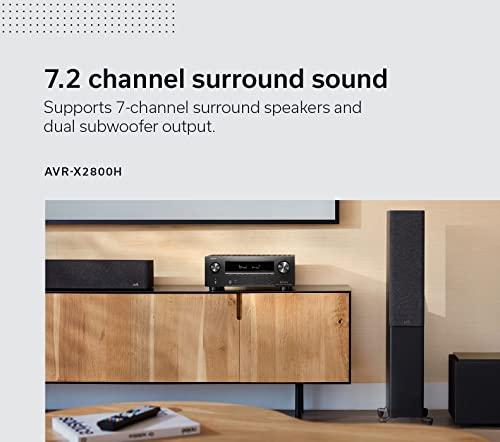
Channel count determines your speaker setup possibilities. A 7.2-channel receiver like the AVR-X2800H can power seven speakers plus two subwoofers, while a 9.4-channel unit like the AVR-X4800H handles nine speakers and four subwoofers. The ".2" or ".4" refers to subwoofer outputs - those dedicated channels for low-frequency effects that make movie explosions feel real.
Power output, measured in watts per channel, indicates how much electrical power the receiver can deliver to your speakers. Higher wattage doesn't just mean louder sound - it means better control over speaker drivers, cleaner audio at all volume levels, and the ability to handle demanding musical passages without distortion.
Audio format support determines which surround sound technologies your receiver can decode. Modern formats like Dolby Atmos add height channels to create three-dimensional soundscapes, while DTS:X offers similar immersive capabilities. Think of these as different languages for surround sound - your receiver needs to speak the same language as your content.
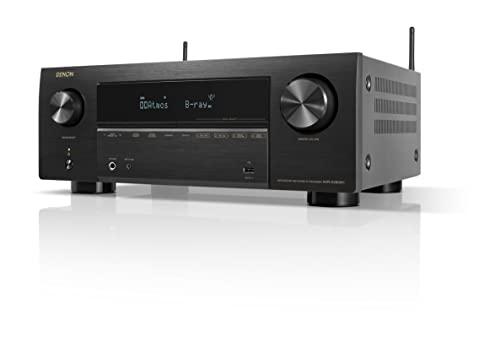
The AVR-X2800H represents Denon's sweet spot for mainstream home theater enthusiasts. With its 7.2-channel configuration and 95 watts per channel output (measured at 8 ohms with two channels driven), it provides enough power for most living rooms and dedicated theater spaces.
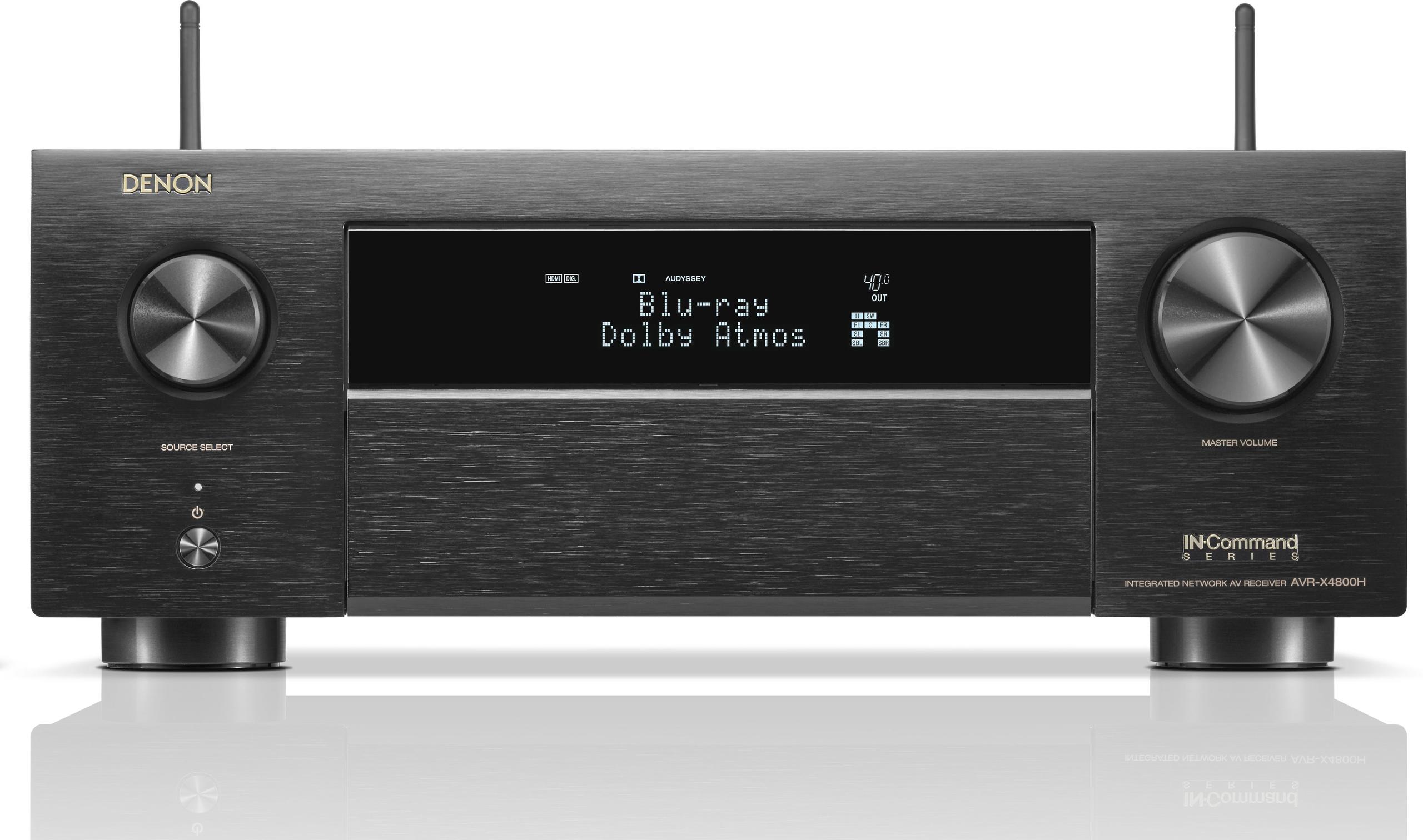
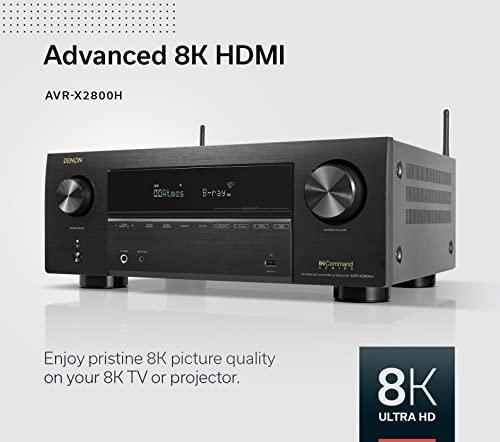
What makes this receiver particularly appealing is its comprehensive 8K video support. All six HDMI inputs can handle modern video signals, with three supporting full 8K resolution at 60Hz or 4K at 120Hz - crucial for next-generation gaming consoles like the PlayStation 5 and Xbox Series X. The receiver also supports variable refresh rate (VRR) and auto low latency mode (ALLM), which reduce input lag and screen tearing during gaming.
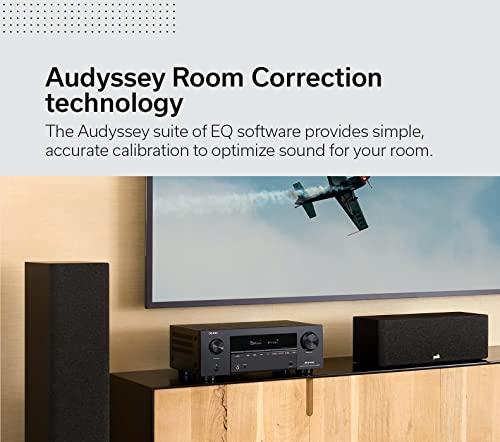
For audio processing, the X2800H handles Dolby Atmos and DTS:X effectively, creating convincing overhead sound effects even in a basic 5.1.2 configuration (five main speakers, one subwoofer, and two height channels). The Audyssey MultEQ XT room correction system automatically adjusts the sound to match your room's acoustics, compensating for furniture, wall materials, and room shape that can muddy audio clarity.
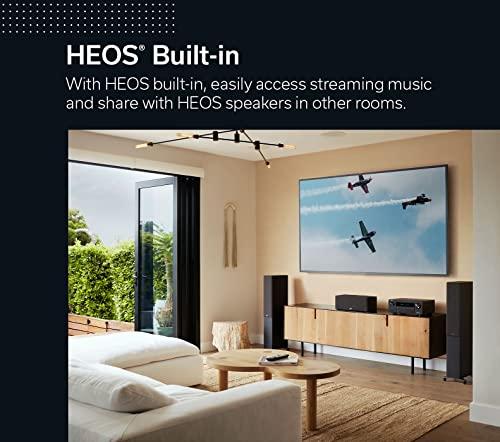
The built-in HEOS streaming platform deserves special mention. This wireless multi-room system lets you stream music from popular services like Spotify and Apple Music directly through the receiver, without needing additional devices. You can also sync audio across multiple HEOS-compatible speakers throughout your home.
However, the X2800H has some notable limitations. It doesn't support premium audio formats like Auro-3D or IMAX Enhanced, which offer alternative approaches to immersive surround sound. The receiver also lacks the processing power for more complex speaker configurations beyond basic Atmos setups.
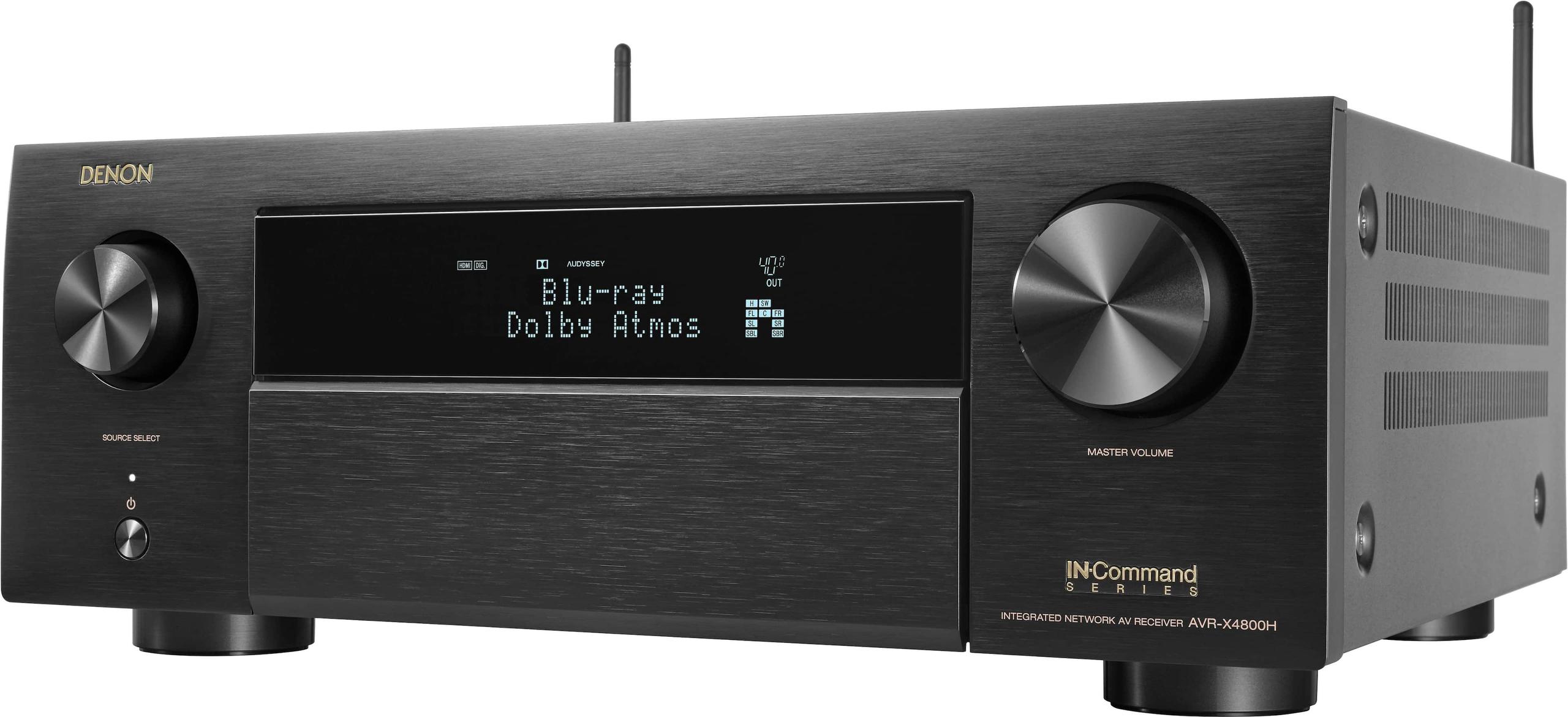
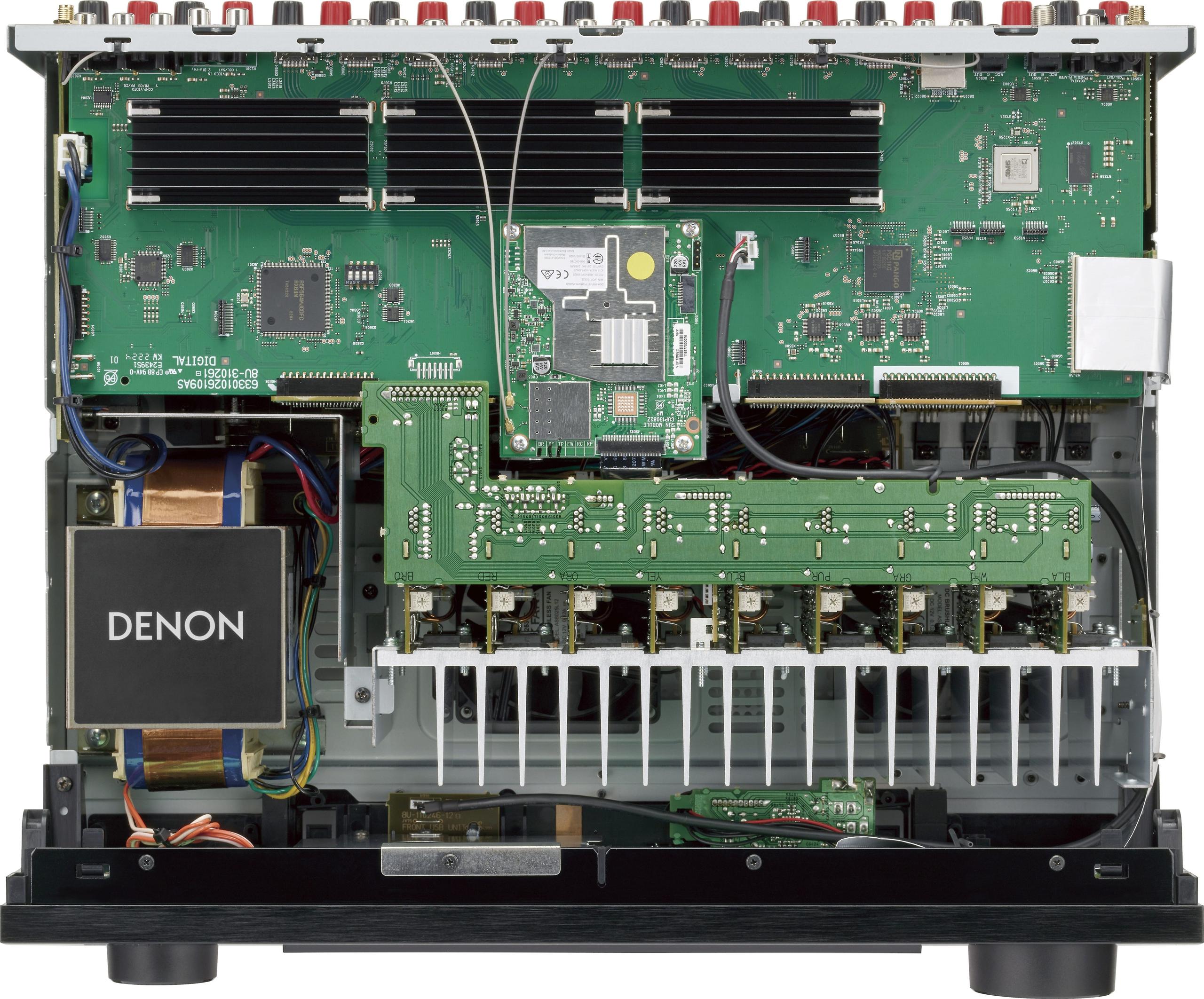
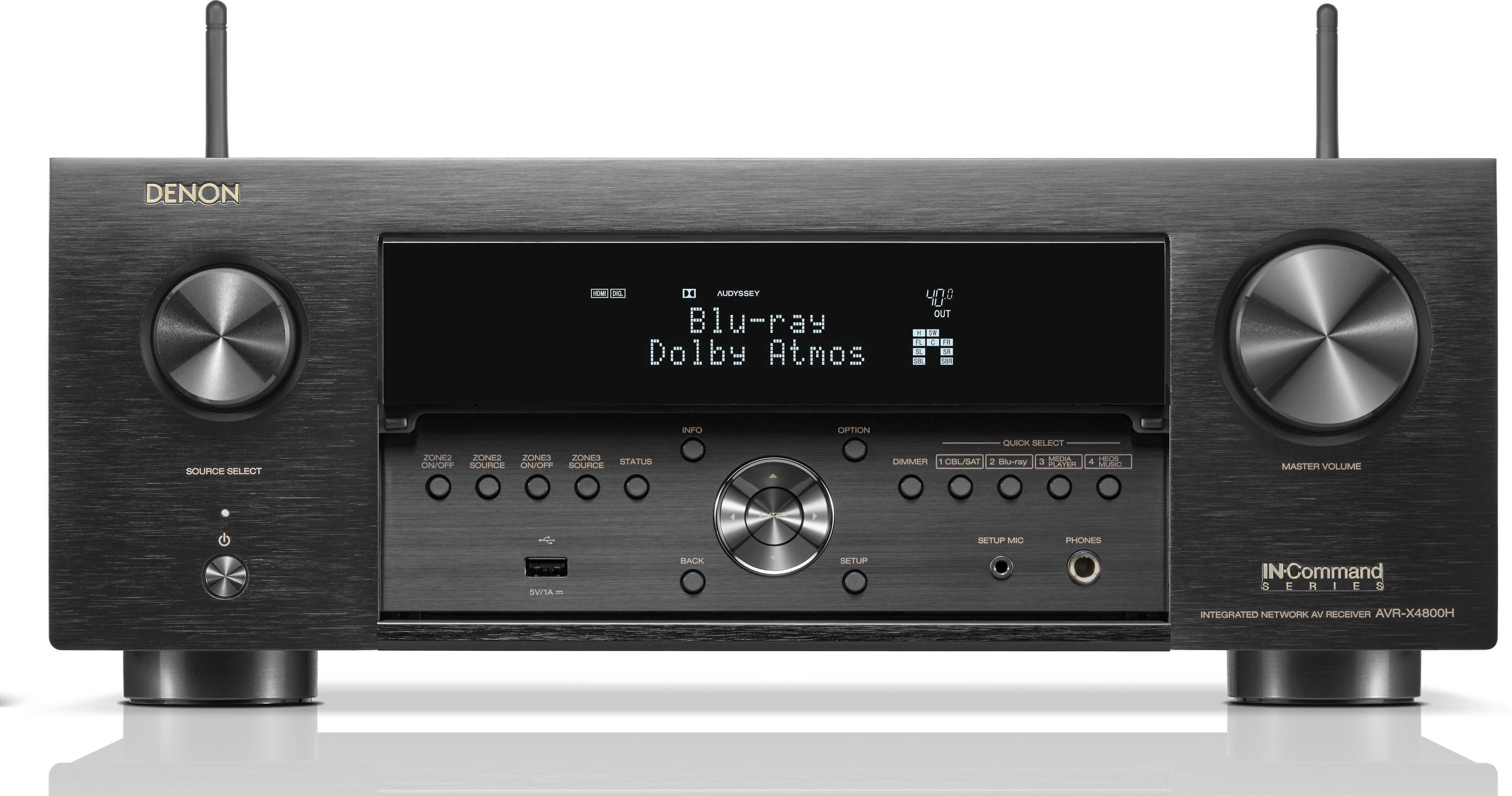
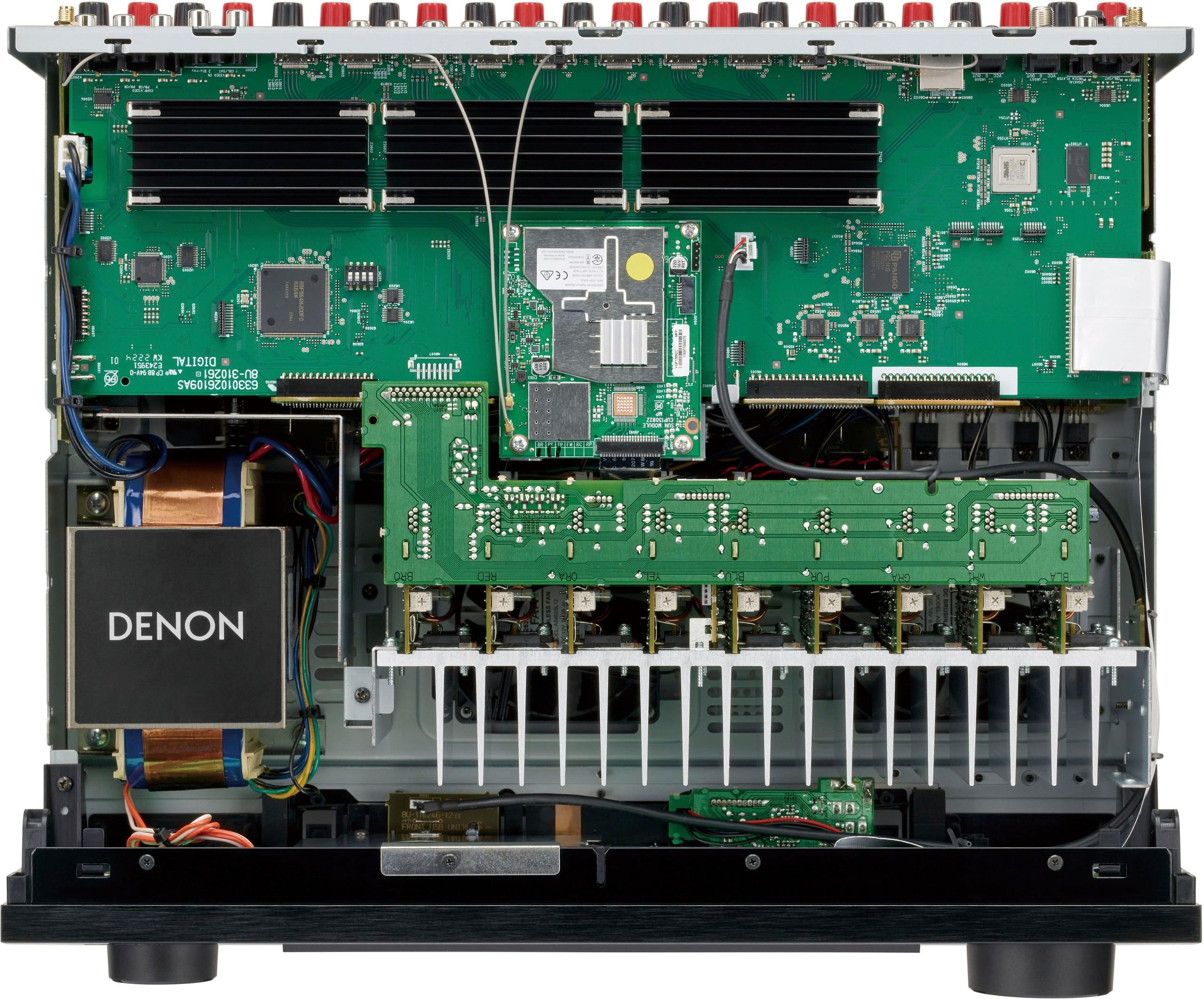
The AVR-X4800H sits near the top of Denon's mainstream lineup, offering significantly more power and flexibility than its smaller sibling. With 125 watts per channel and nine discrete amplifier channels, it delivers 30% more power output - a meaningful difference that translates to better dynamic range and speaker control.
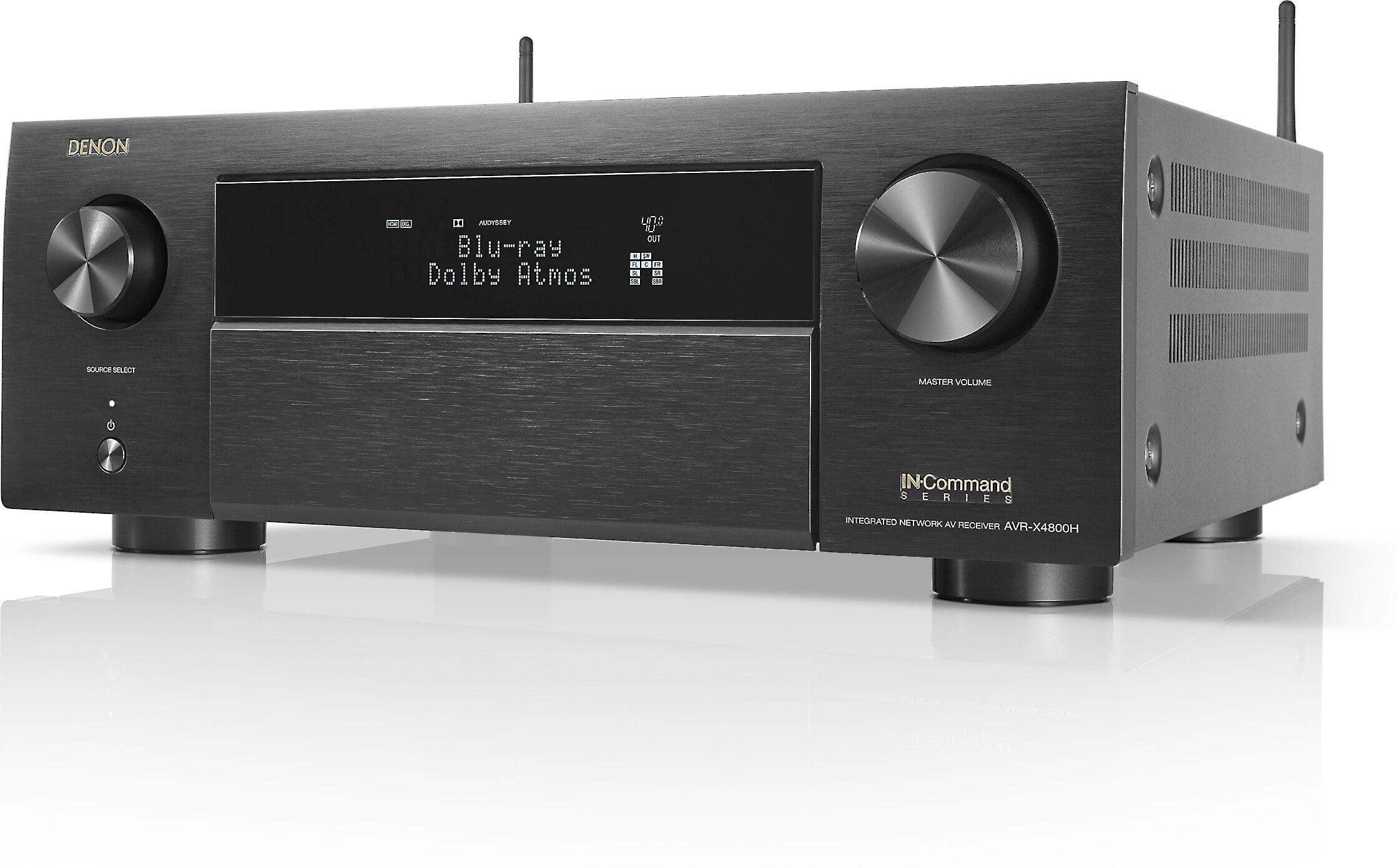
This extra power becomes particularly important with demanding speakers or in larger rooms. The additional headroom means the receiver can handle sudden volume spikes in movie soundtracks without strain, maintaining clarity even during complex musical passages or explosive action sequences.
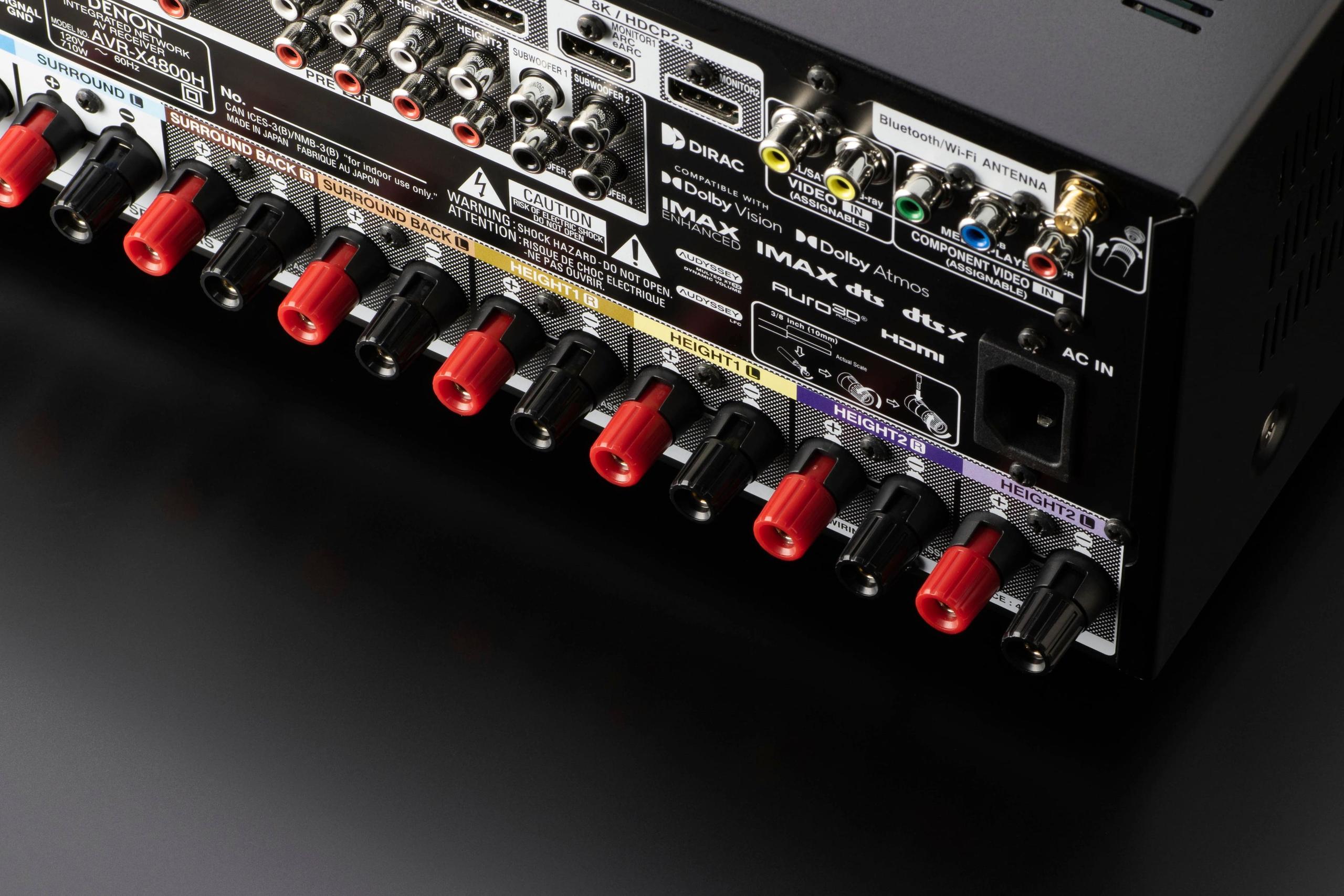
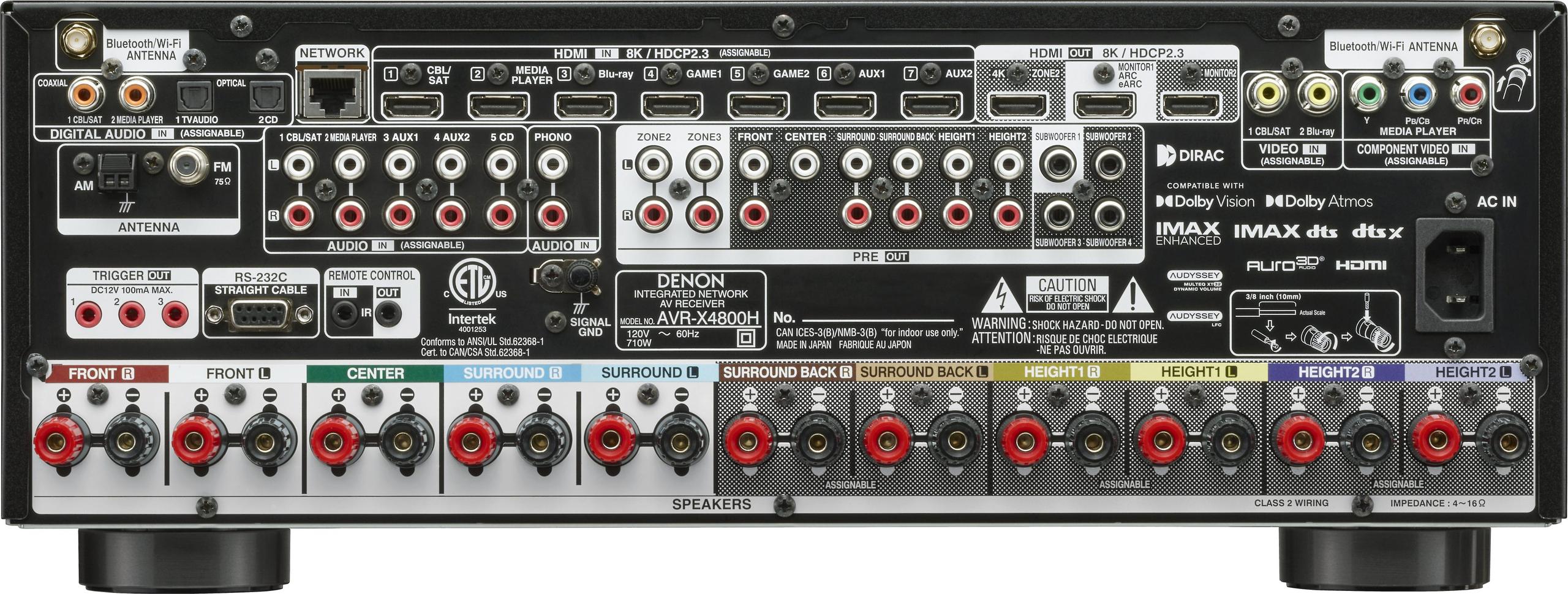
The X4800H supports every major surround sound format currently available, including Auro-3D and IMAX Enhanced alongside Dolby Atmos and DTS:X. Auro-3D uses a different approach to height channels, creating a more dome-like soundfield, while IMAX Enhanced provides specially mastered content that takes advantage of the receiver's full dynamic range capabilities.
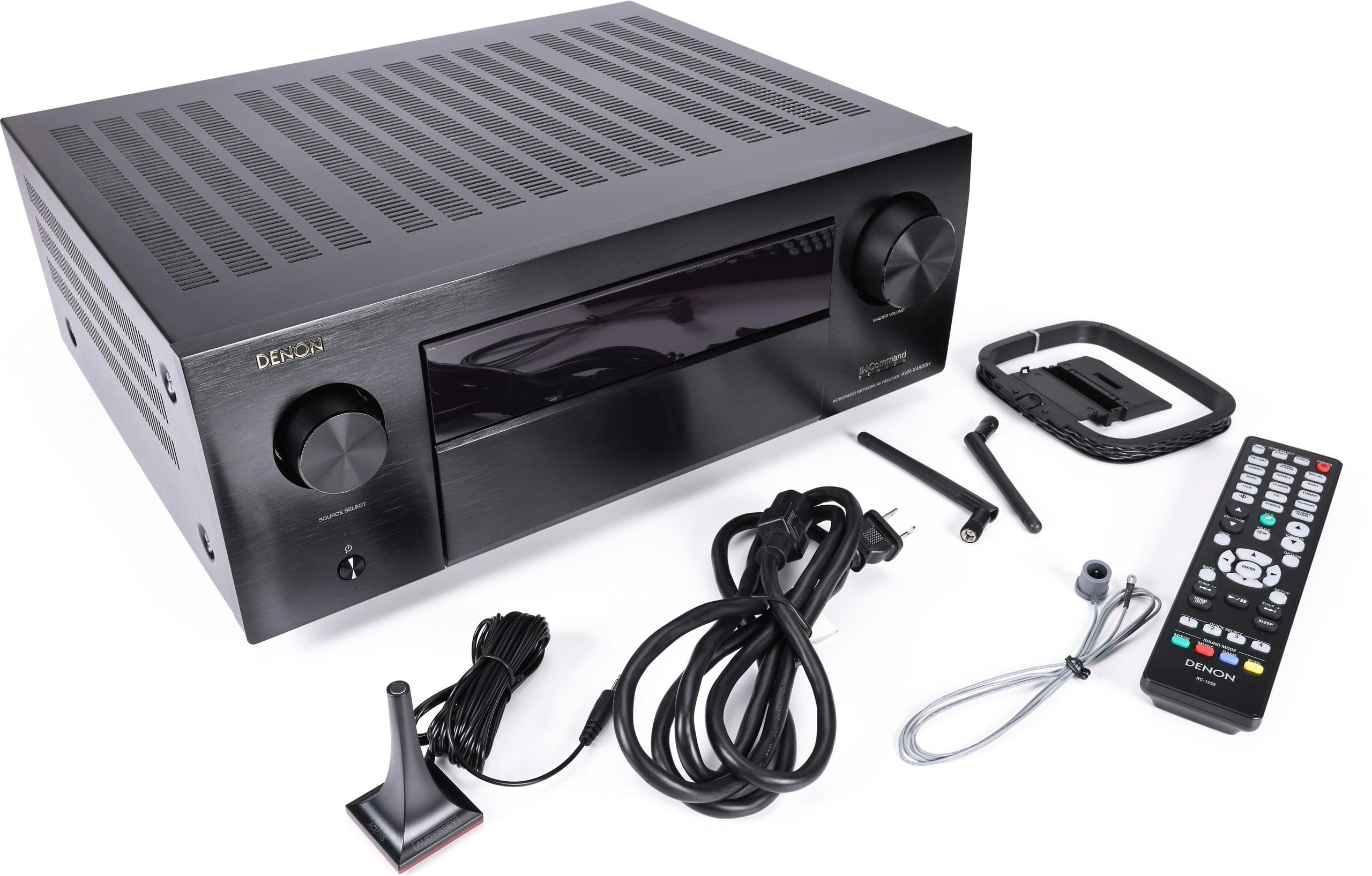
Connectivity is where the X4800H really shines. Seven HDMI inputs (all supporting 8K) and three HDMI outputs provide extensive flexibility for complex setups. The receiver also includes legacy composite and component video inputs - a rarity in modern AV receivers that proves valuable for vintage gaming systems or older source devices.
The Audyssey MultEQ XT32 room correction system in the X4800H represents a significant upgrade over the XT version in the X2800H. XT32 takes more measurements across your listening area and provides finer frequency adjustments, resulting in more precise sound tailoring. The receiver also supports an optional Dirac Live upgrade, which many audiophiles consider the gold standard for room correction.
One unique feature is the X4800H's ability to function as a pure preamplifier. You can disable the internal amplifiers and use the receiver solely for audio/video processing, connecting external power amplifiers for even higher performance. This flexibility makes it an excellent foundation for a system that can grow over time.
Based on our research into user experiences and professional reviews, the performance gap between these receivers is most noticeable in three key areas: power handling, format support, and system flexibility.
Power and Dynamic Range: The X4800H's additional 30 watts per channel might not sound like much, but it represents a 32% increase in available power. This translates to approximately 1.2dB more headroom - enough to make bass impacts feel more authoritative and prevent amplifier strain during loud passages. Users consistently report that the X4800H maintains composure at higher volumes where the X2800H begins to compress dynamics.
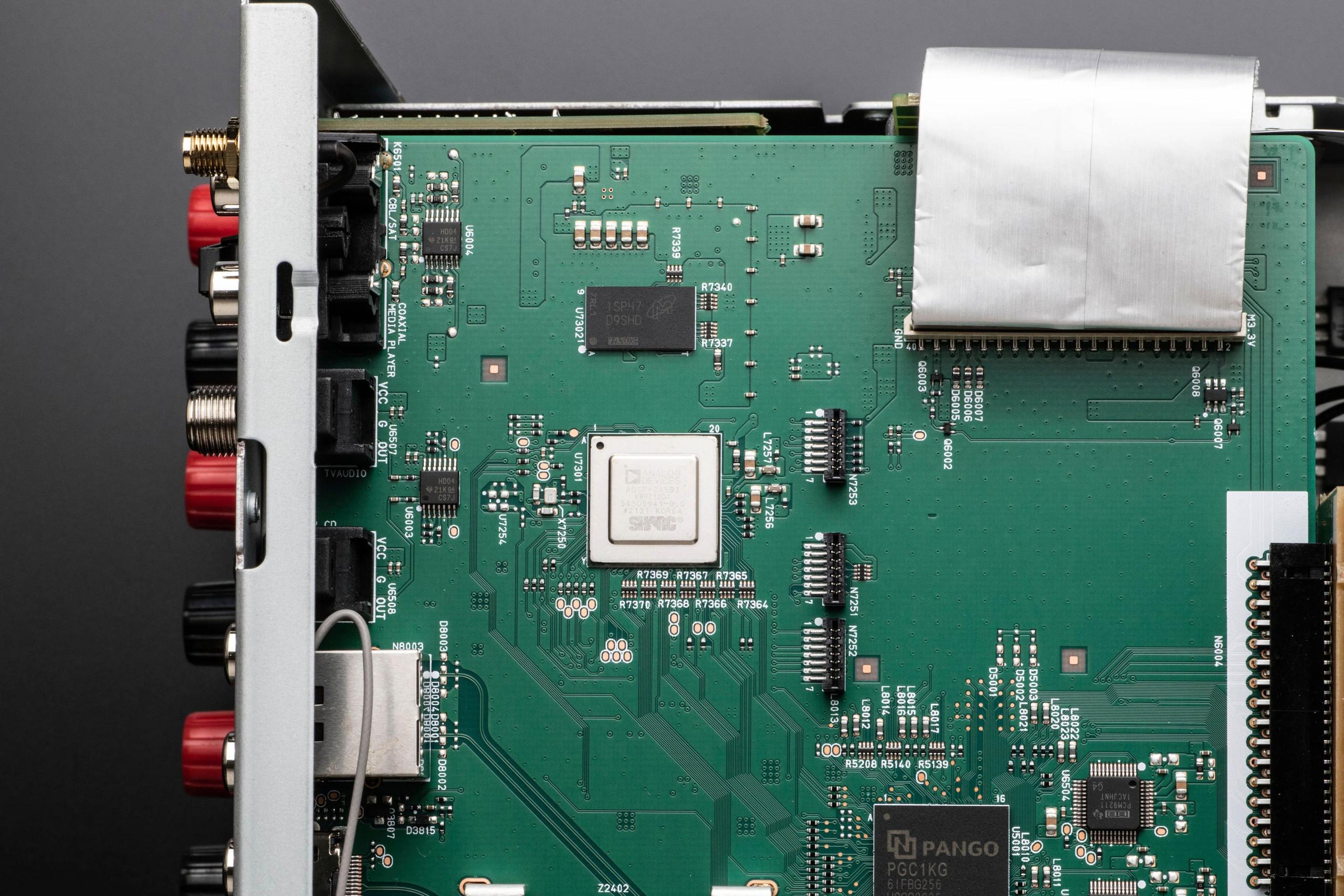
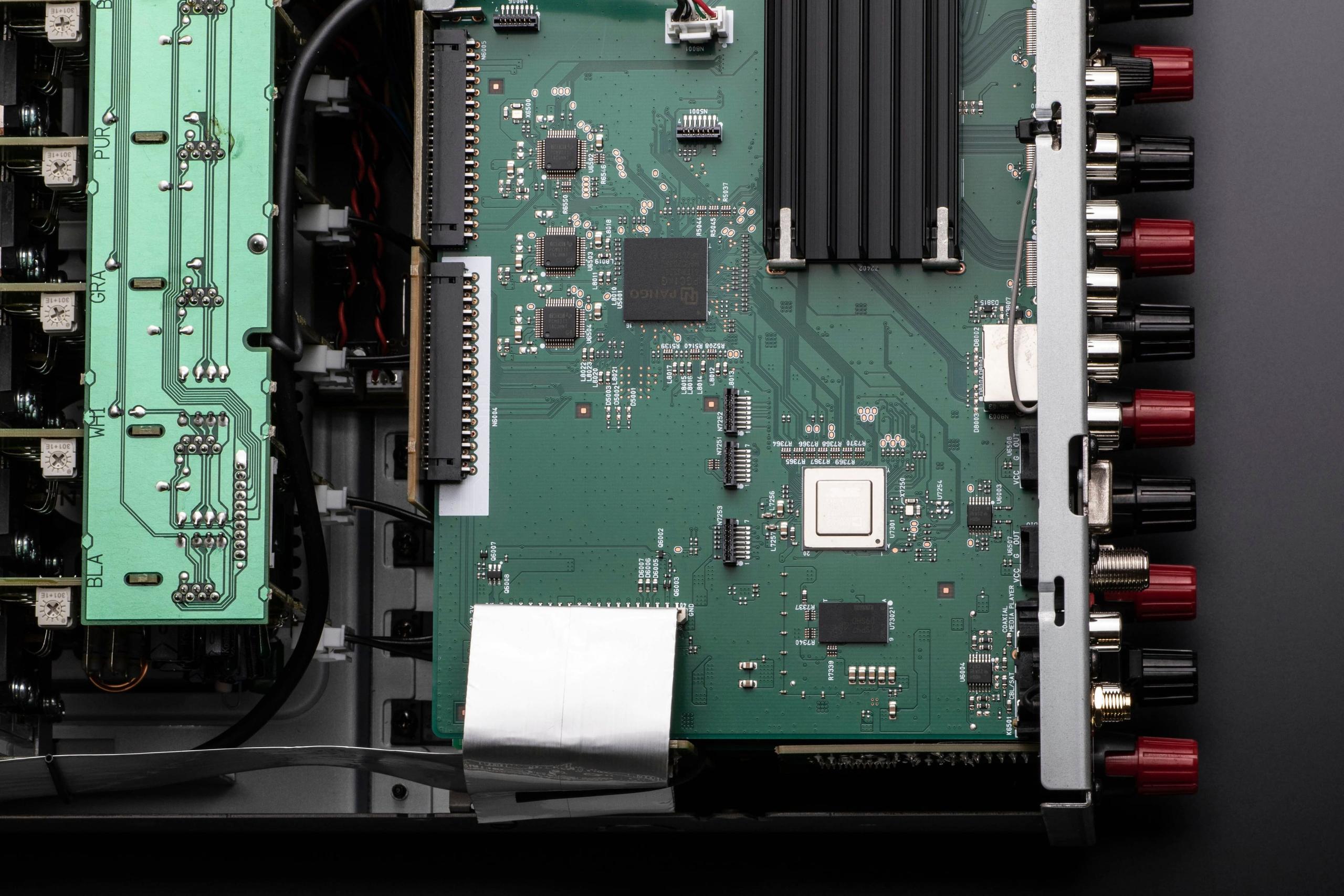
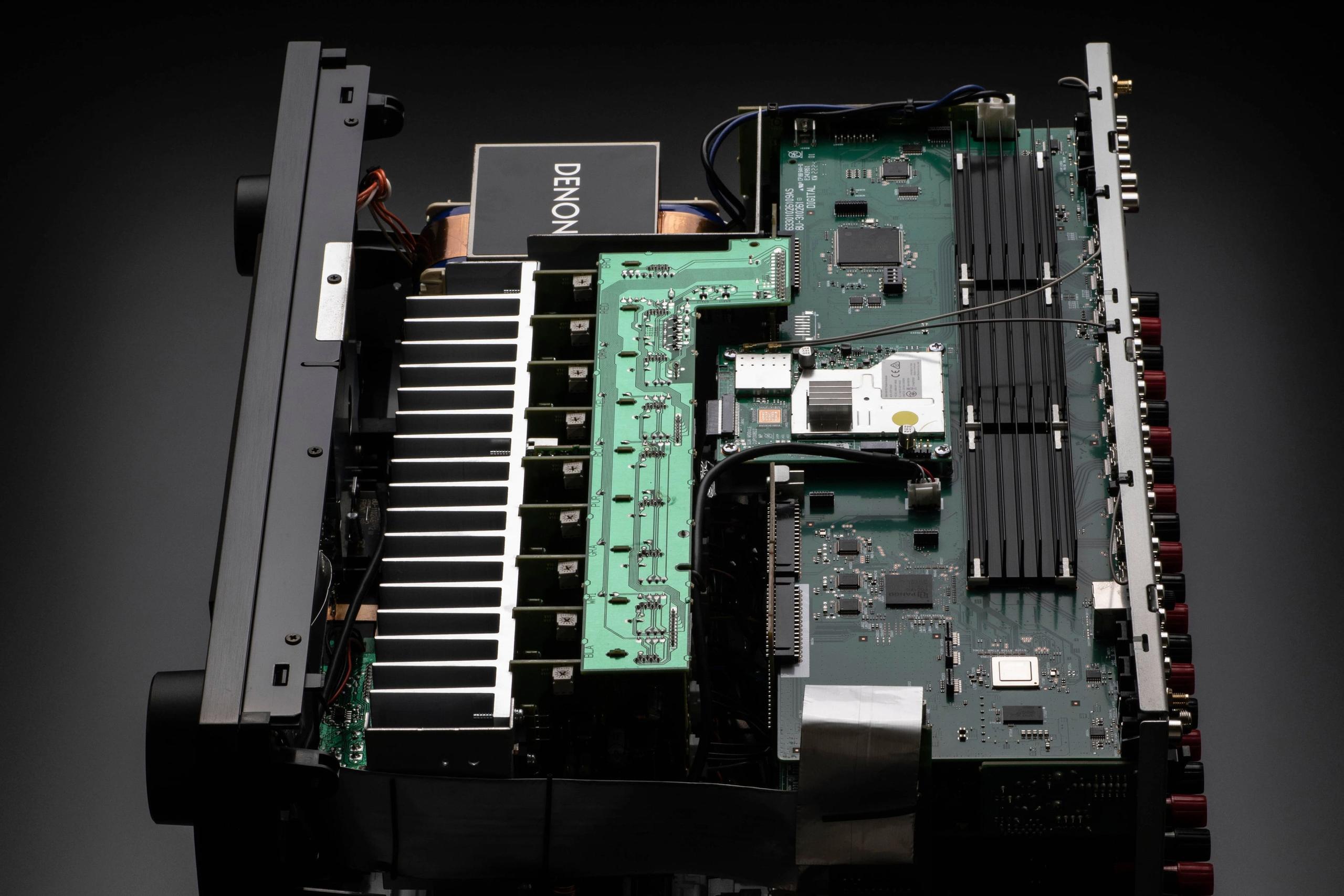
Audio Processing Quality: Both receivers use high-quality 32-bit DACs (digital-to-analog converters) on all channels, but the X4800H benefits from more sophisticated processing chips. The dual SHARC+ DSP cores provide additional computational power for complex audio algorithms, resulting in more precise surround sound steering and better format decoding accuracy.
Bass Management: The four independent subwoofer outputs on the X4800H enable sophisticated bass management across large rooms. You can position subwoofers in different locations to eliminate standing waves and room modes - acoustic phenomena that create uneven bass response. The X2800H with its two subwoofer outputs can still achieve good bass, but lacks this level of fine-tuning capability.
Both receivers excel at video processing, supporting all major HDR formats including HDR10, HDR10+, Dolby Vision, and Hybrid Log Gamma (HLG). They can upscale lower-resolution content to 8K and handle the wide color gamuts that modern displays require.
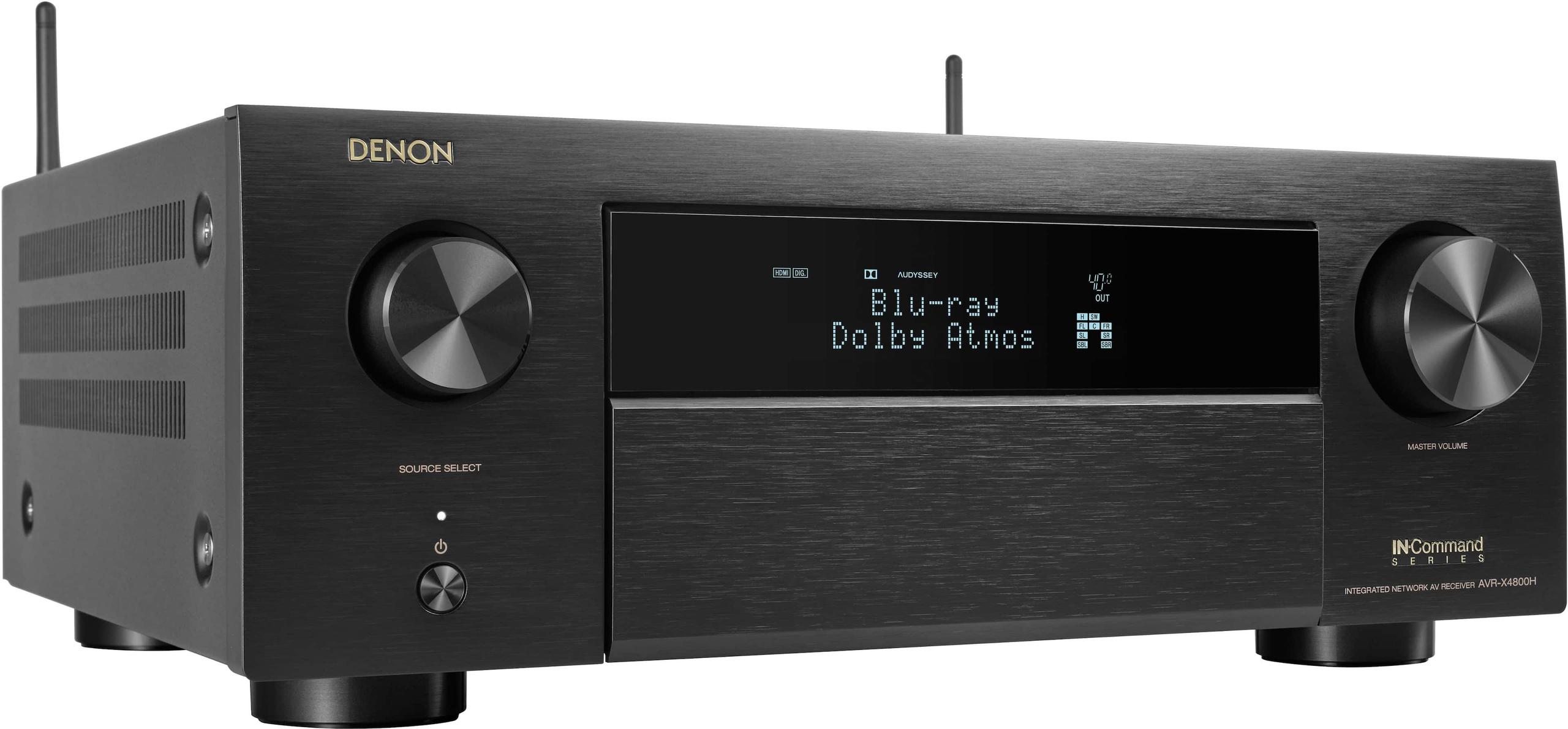
For gaming, both units support the latest HDMI 2.1 features that make next-generation consoles shine. Variable refresh rate eliminates screen tearing, auto low latency mode minimizes input lag, and quick frame transport reduces motion blur. The X4800H provides more HDMI 2.1 inputs, making it better suited for setups with multiple gaming consoles, streaming devices, and other high-bandwidth sources.
Your room size plays a crucial role in determining which receiver makes sense. The X2800H works well in rooms up to about 3,000 cubic feet - think a typical living room or small dedicated theater space. Its 95-watt output provides adequate volume for most bookshelf or tower speakers in these environments.
The X4800H becomes necessary in larger spaces or with less efficient speakers. Rooms over 3,500 cubic feet, or setups using planar magnetic or low-sensitivity speakers, benefit from the additional power reserves. The receiver also supports more complex speaker configurations like 7.1.4 (seven main channels, one subwoofer, four height speakers) that require the extra amplifier channels.
At the time of writing, the X2800H typically retails for under $1,200, while the X4800H commands a price around double that amount. This significant price differential raises important value questions.
The X2800H delivers exceptional value for users who need essential features without paying for capabilities they won't use. If you're building a 5.1.2 or 7.1 system in a medium-sized room, the performance difference may not justify the premium. The receiver provides modern connectivity, solid amplification, and effective room correction at an accessible price point.
The X4800H justifies its premium through measurable performance advantages and future-proofing features. The additional power, complete format support, and expansion capabilities appeal to enthusiasts building reference-quality systems or those planning to upgrade over time. However, these benefits only matter if your room size, speaker selection, and listening preferences can take advantage of them.
The X4800H offers superior multi-zone capabilities, supporting independent audio in a second room while maintaining full surround sound in the main theater. You can listen to music in the kitchen while someone else watches a movie in the living room, with completely separate volume and source control.
The X2800H provides basic Zone 2 functionality but with more limitations. The flexibility difference becomes significant for whole-home audio installations where you want the AV receiver to serve multiple entertainment areas.
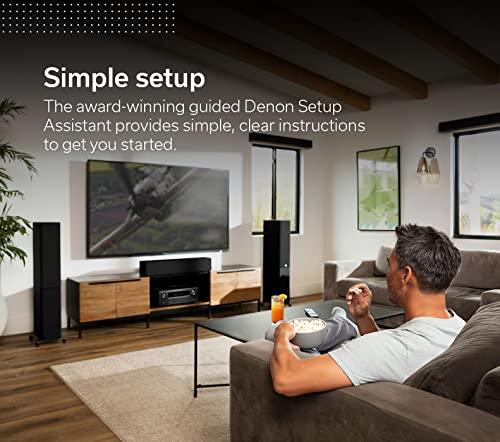
Both receivers benefit from Denon's improved setup assistant, which guides you through initial configuration with clear on-screen instructions. The X4800H includes more advanced calibration options and manual adjustment capabilities, but this can make setup more complex for casual users.
The Audyssey room correction process works similarly on both units, though the XT32 system in the X4800H takes longer due to additional measurement points. Most users find the automated process effective, though audiophiles often prefer manual tweaking of the results.
Choose the X2800H if you're building a straightforward home theater in a typical living room or smaller dedicated space. It's ideal for users who want modern features like 8K support and Dolby Atmos without paying for capabilities they won't use. The receiver works particularly well for apartment dwellers or those with budget constraints who still want quality performance.
The X4800H makes sense for serious home theater enthusiasts with larger rooms, demanding speakers, or plans for system expansion. If you're building a dedicated theater space, want the flexibility of complex speaker configurations, or need extensive connectivity options, the premium pays off through measurably better performance and future-proofing.
Consider your long-term plans as well. If you might move to a larger space or upgrade to more demanding speakers, the X4800H provides the foundation for system growth. The X2800H works excellently within its intended scope but offers limited expansion possibilities.
Both receivers represent solid choices within their respective market segments. The X2800H delivers excellent value for mainstream users, while the X4800H provides the performance and flexibility that serious enthusiasts demand. Your specific room, speakers, and listening preferences will ultimately determine which approach makes more sense for your home theater investment.
| Denon AVR-X2800H | Denon AVR-X4800H |
|---|---|
| Channel Configuration - Determines speaker setup possibilities | |
| 7.2 channels (7 speakers + 2 subs) | 9.4 channels (9 speakers + 4 subs) |
| Power Output - Higher wattage means better speaker control and room-filling capability | |
| 95W per channel (sufficient for medium rooms) | 125W per channel (30% more power for large spaces) |
| Audio Format Support - Premium formats provide enhanced surround sound experience | |
| Dolby Atmos, DTS:X only | Complete suite: Dolby Atmos, DTS:X, Auro-3D, IMAX Enhanced |
| HDMI Connectivity - More ports mean better device integration | |
| 6 inputs, 2 outputs (3 inputs support 8K) | 7 inputs, 3 outputs (all support 8K) |
| Room Correction Technology - Automatically optimizes sound for your space | |
| Audyssey MultEQ XT (effective for most rooms) | Audyssey MultEQ XT32 + optional Dirac Live upgrade |
| Subwoofer Management - Multiple subs provide better bass distribution | |
| 2 independent subwoofer outputs | 4 independent subwoofer outputs with advanced bass management |
| Multi-Zone Capability - Enables audio in multiple rooms simultaneously | |
| Basic Zone 2 support with limitations | Full Zone 2 independence plus bi-amp capability |
| Processing Power - Affects audio quality and format handling | |
| Standard DSP processing | Dual SHARC+ DSP cores for enhanced audio processing |
| Expandability - Future upgrade potential | |
| Limited expansion options | 11-channel preamp processing, can disable amps for external amplification |
| Legacy Video Support - Compatibility with older devices | |
| HDMI only | Includes composite and component video inputs |
| Best For | |
| Entry-level Atmos, medium rooms, value seekers | Large rooms, audiophiles, complex installations, future expansion |
The primary difference is channel count and power output. The Denon AVR-X2800H is a 7.2-channel receiver with 95 watts per channel, while the Denon AVR-X4800H is a 9.4-channel receiver with 125 watts per channel. This means the X4800H can power more speakers and deliver 30% more power to each one.
For rooms under 3,000 cubic feet, the Denon AVR-X2800H provides excellent performance at a more affordable price. Its 95-watt output is sufficient for most bookshelf and tower speakers in typical living rooms or smaller dedicated theater spaces.
Yes, both the AVR-X2800H and AVR-X4800H support 8K video pass-through, 4K/120Hz gaming, variable refresh rate (VRR), and auto low latency mode (ALLM). However, the X4800H has more HDMI inputs that support these features.
The Denon AVR-X4800H supports significantly more audio formats, including Dolby Atmos, DTS:X, Auro-3D, IMAX Enhanced, and Sony 360 Reality Audio. The X2800H only supports Dolby Atmos and DTS:X, which covers most content but lacks premium format compatibility.
The AVR-X2800H can power up to 7 speakers plus 2 subwoofers, enabling configurations like 5.1.2 or 7.1. The AVR-X4800H can power 9 speakers plus 4 subwoofers, supporting complex setups like 7.1.4 or 5.1.4 Dolby Atmos configurations.
The Denon AVR-X4800H is better suited for large rooms over 3,500 cubic feet or inefficient speakers that require more power. Its 125-watt amplifiers provide better dynamic range and speaker control than the X2800H's 95-watt channels.
Yes, both the AVR-X2800H and AVR-X4800H include HEOS built-in streaming, supporting services like Spotify, Apple Music, and Pandora. They also support AirPlay 2, Bluetooth, and voice assistants like Alexa and Google Assistant.
The AVR-X4800H features the superior Audyssey MultEQ XT32 system with optional Dirac Live upgrade capability, providing more precise room calibration. The X2800H uses Audyssey MultEQ XT, which is effective but less advanced.
Both support multi-room audio, but the Denon AVR-X4800H offers more flexibility with full Zone 2 independence and bi-amp capabilities. The X2800H provides basic Zone 2 support with some limitations.
The AVR-X2800H offers better value for users who need essential features without paying for unused capabilities. It's ideal for straightforward home theater setups. The X4800H provides better value for serious enthusiasts who can utilize its additional power and advanced features.
The Denon AVR-X2800H has 6 HDMI inputs with 3 supporting full 8K resolution. The AVR-X4800H has 7 HDMI inputs with all supporting 8K, plus legacy composite and component video inputs for older devices.
The Denon AVR-X4800H is more future-proof with its complete audio format support, higher power output, more HDMI connections, and ability to function as a preamp with external amplifiers. The X2800H covers current standards well but has limited expansion possibilities.
We've done our best to create useful and informative comparisons to help you decide what product to buy. Our research uses advanced automated methods to create this comparison and perfection is not possible - please contact us for corrections or questions. These are the sites we've researched in the creation of this article: theaudiotailor.com.au - ecoustics.com - simplehomecinema.com - whathifi.com - audioadvisor.com - youtube.com - bestbuy.com - e-catalog.com - crutchfield.com - avsforum.com - crutchfield.com - whathifi.com - richersounds.com - bestbuy.com - accessories4less.com - projectorscreen.com - adiglobaldistribution.us - youtube.com - bestbuy.com - bestbuy.com - sweetwater.com - bestbuy.com - audiovisualkart.com - valueelectronics.com - crutchfield.com - tomsguide.com - dreamediaav.com - snapav.com - hometheaterhifi.com - avsforum.com - videoandaudiocenter.com

Privacy Policy
Terms and Conditions - Affiliate Policy
Home Security
© Copyright 2008-2026.
11816 Inwood Rd #1211, Dallas, TX 75244