

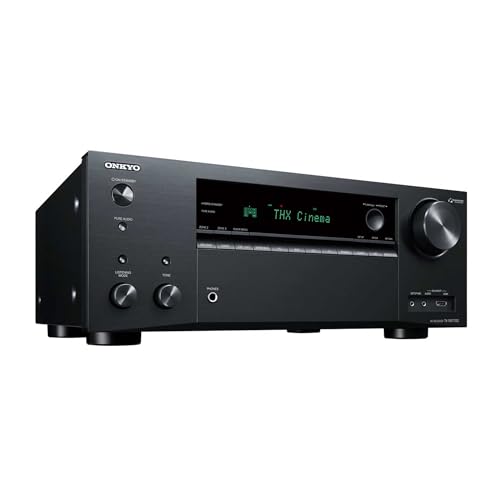
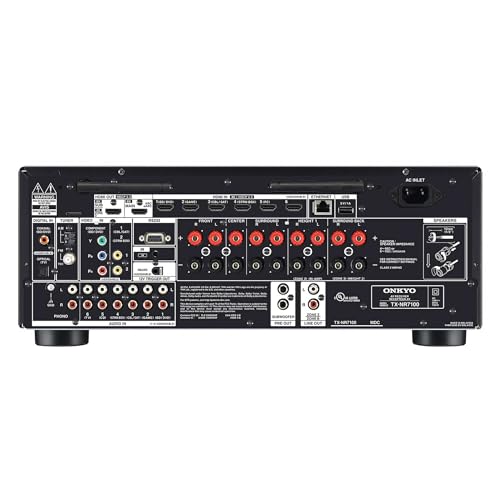
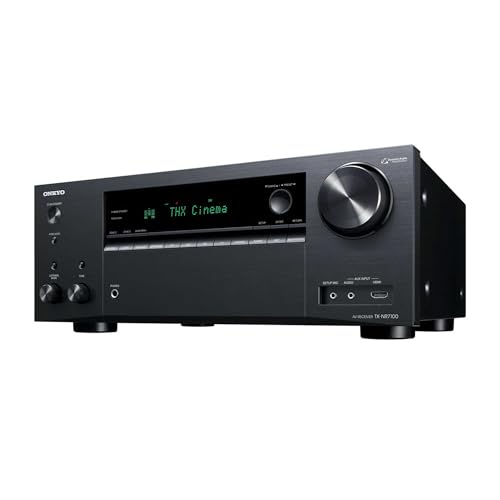
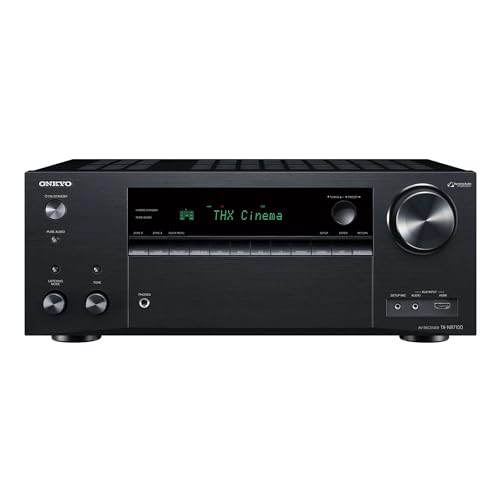
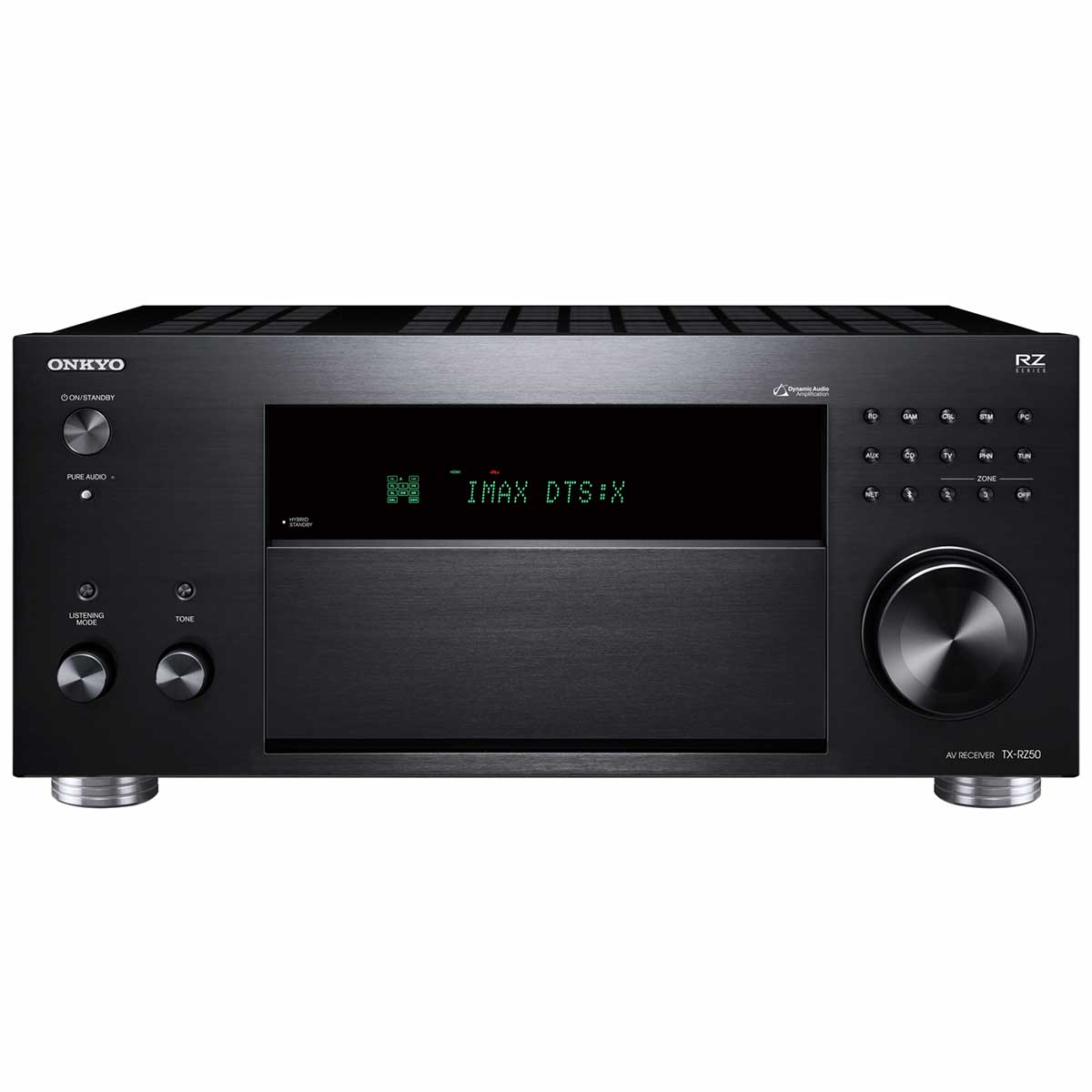
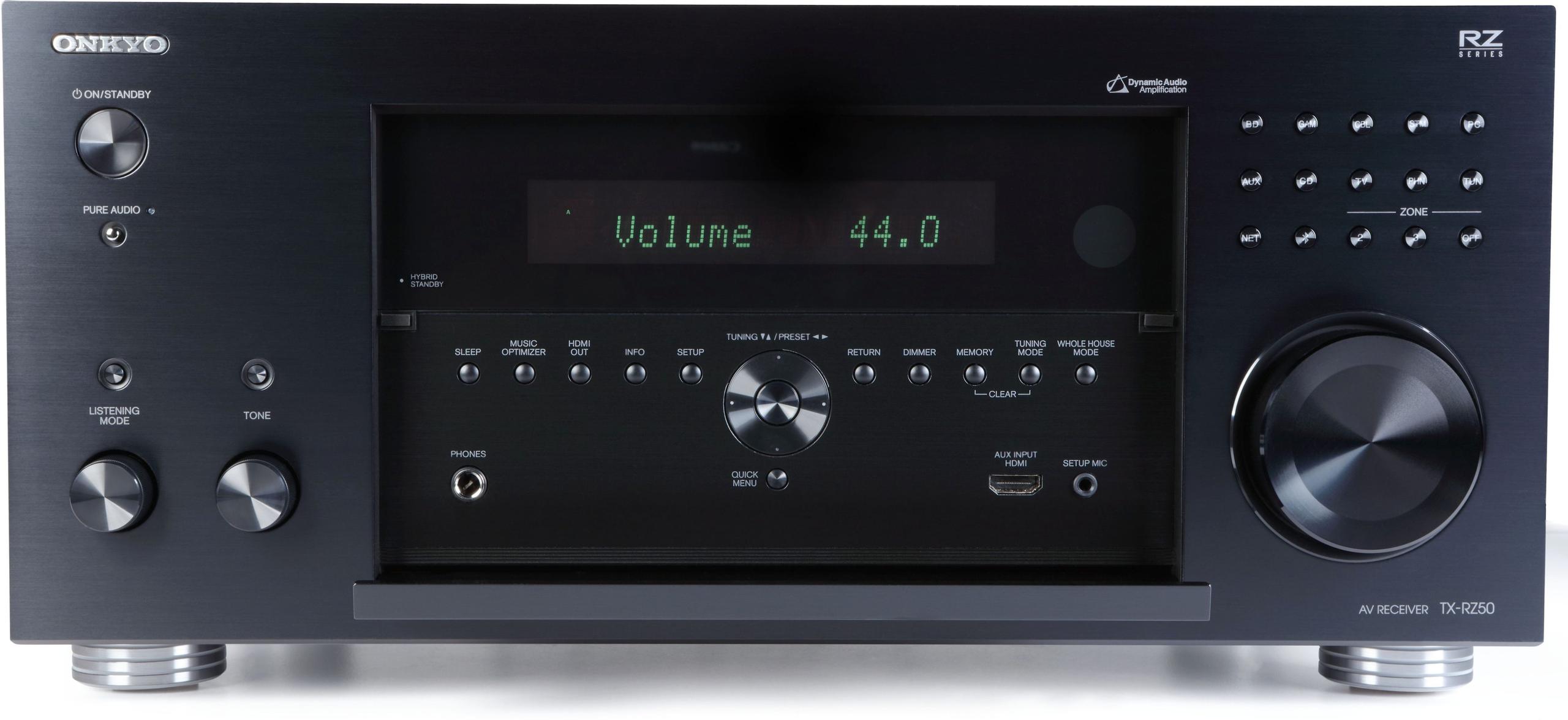
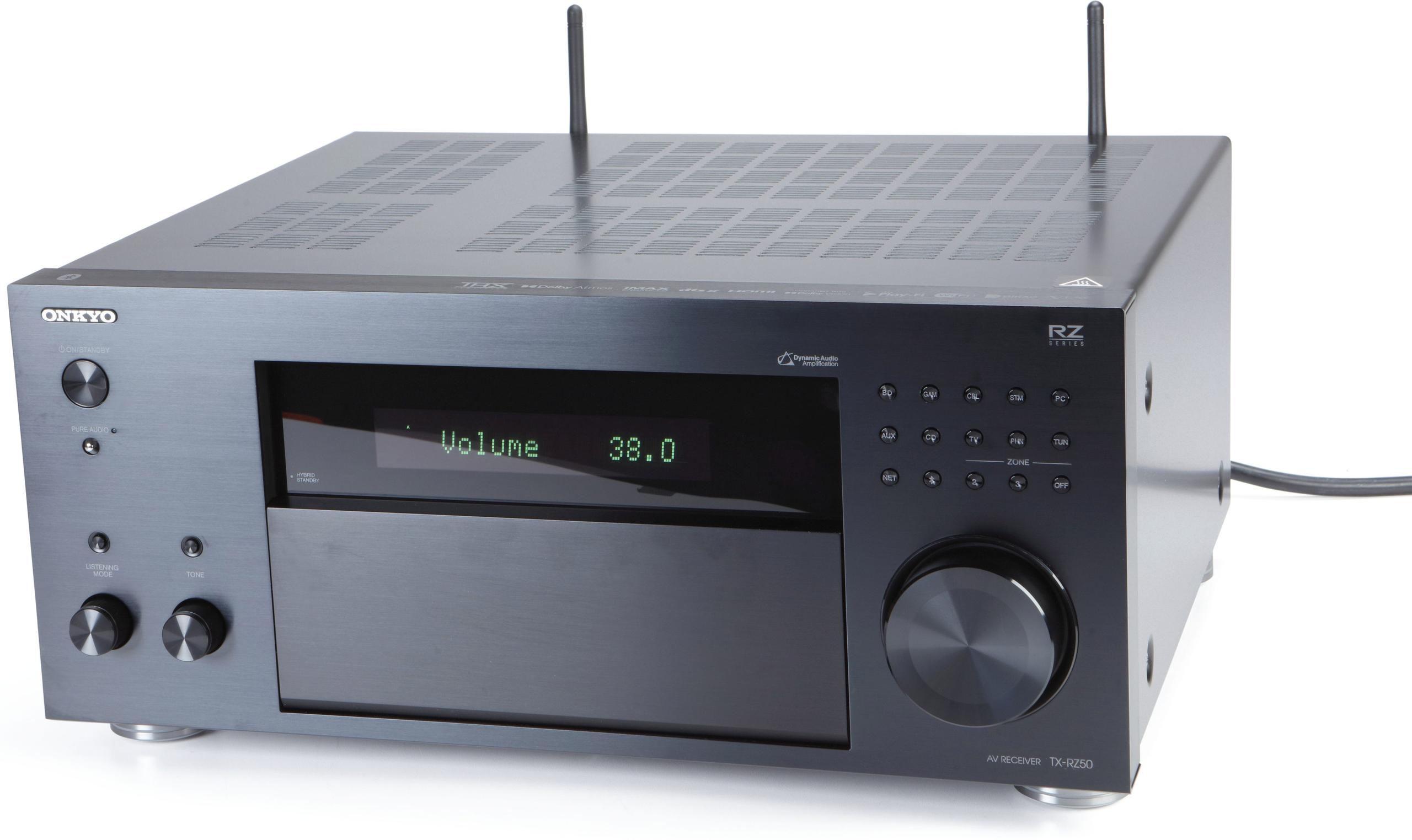
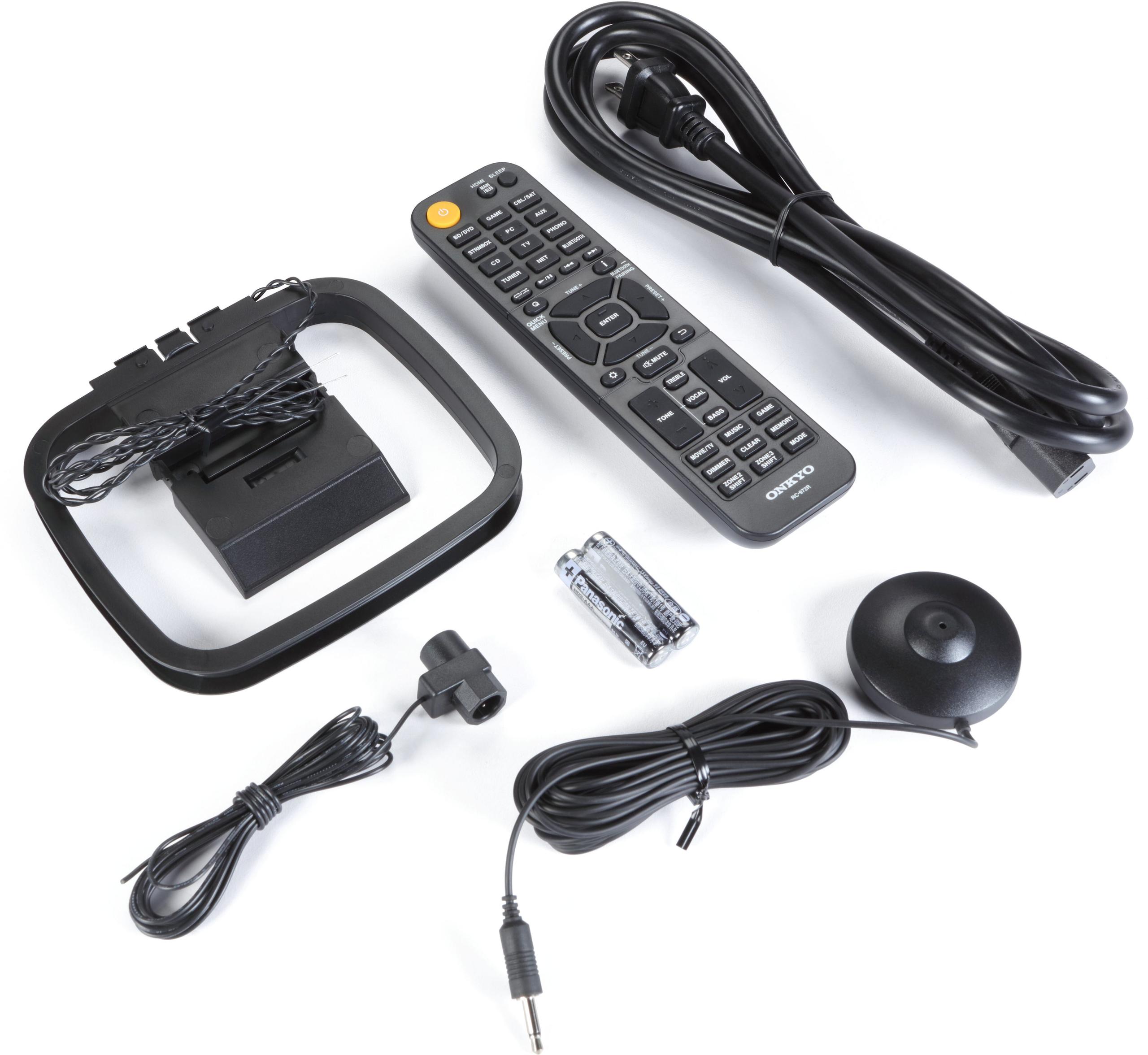
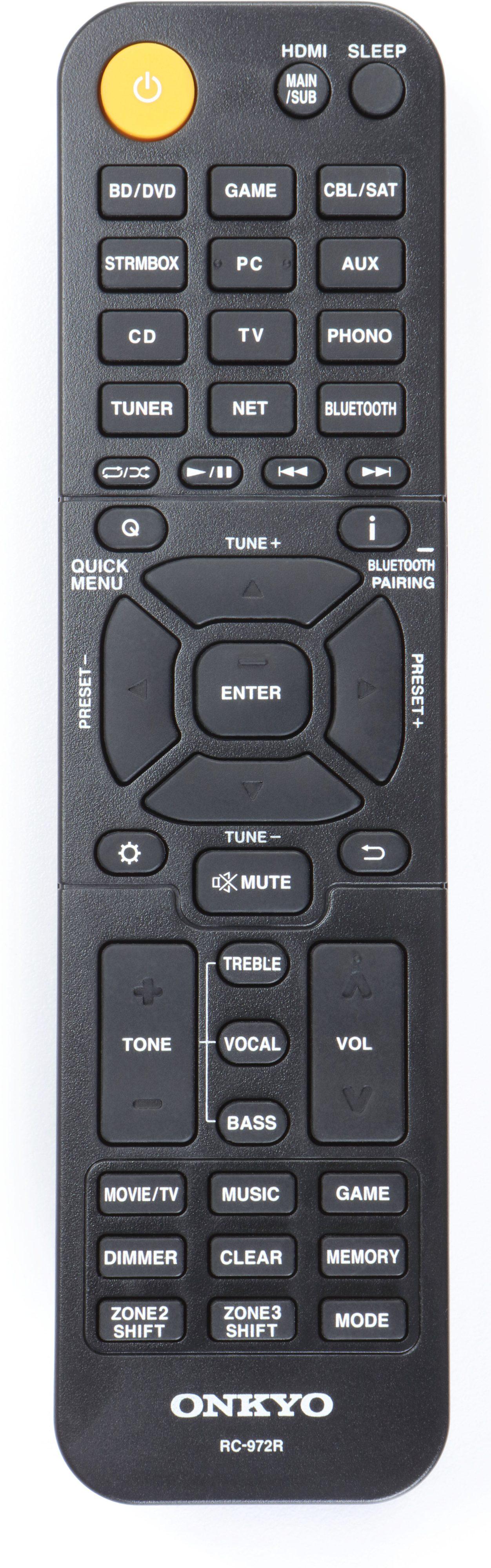
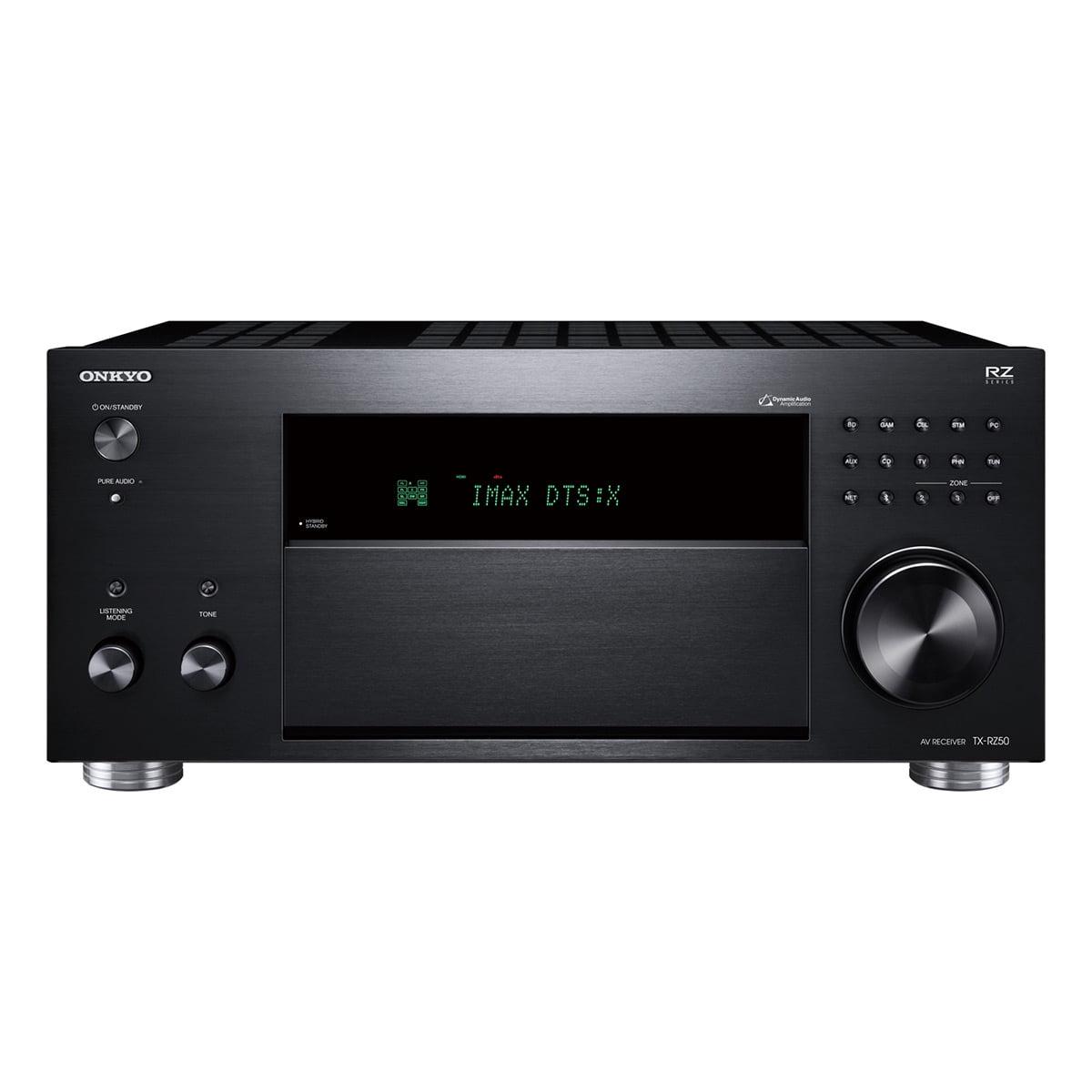
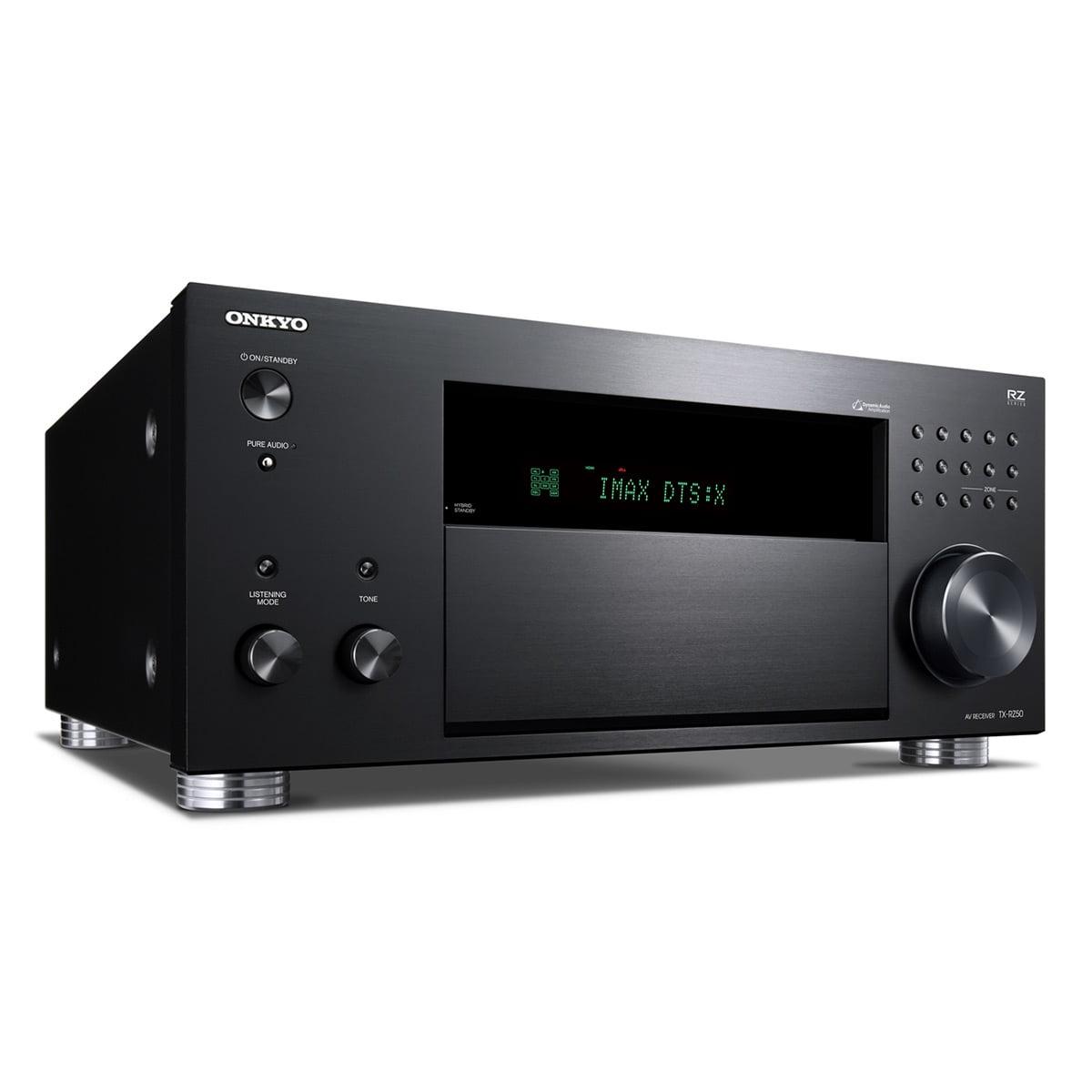
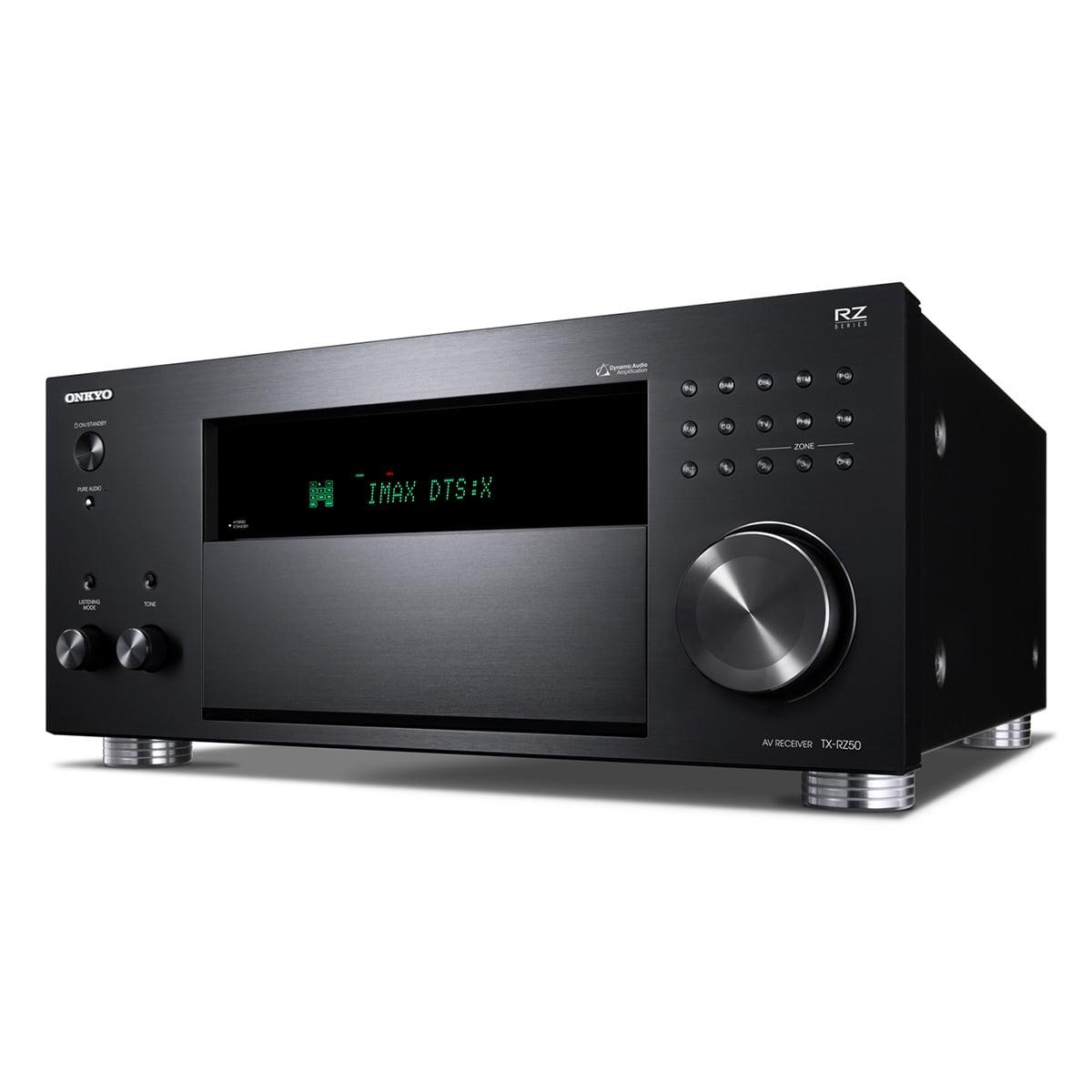
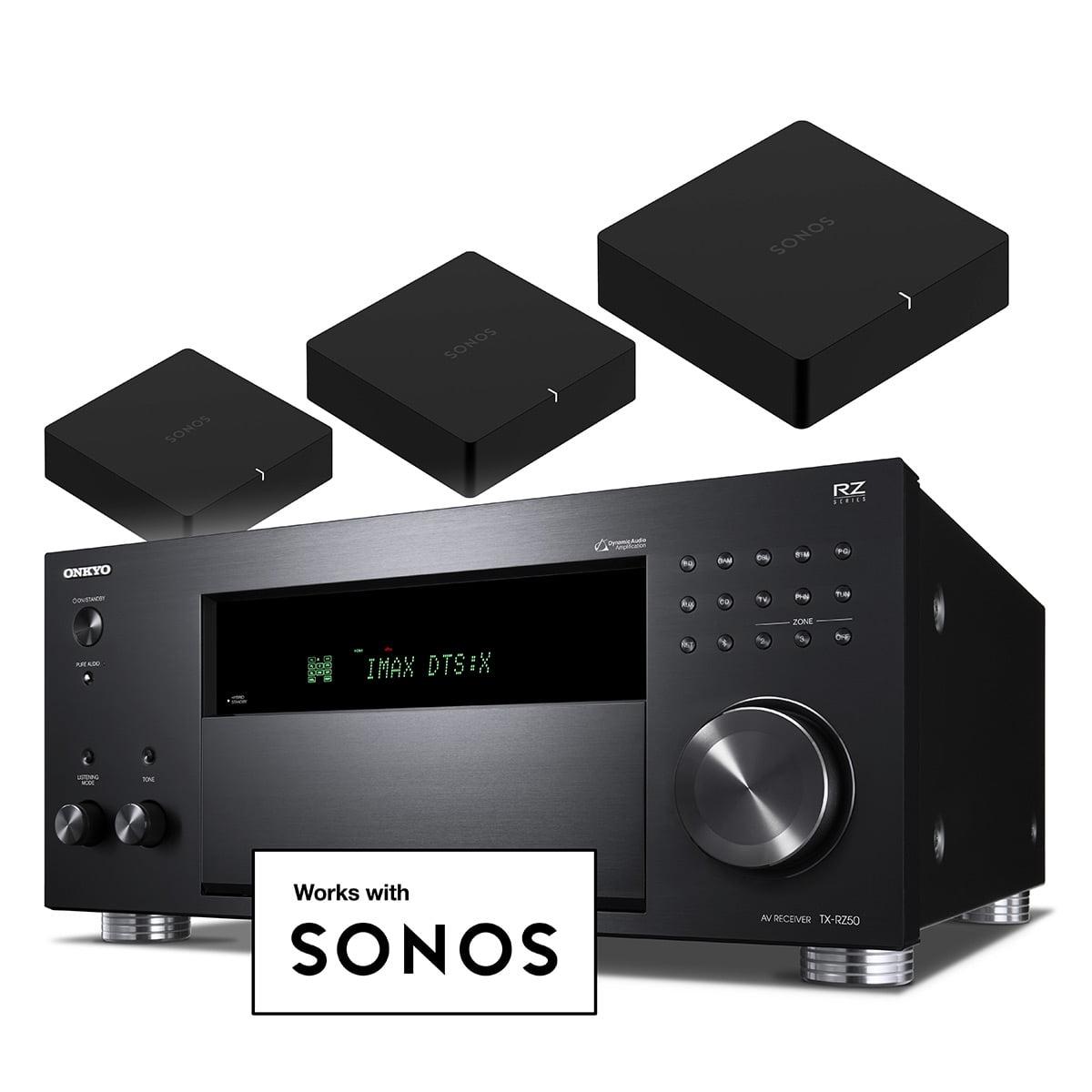
If you've been shopping for a high-quality AV receiver recently, you've probably encountered the Onkyo TX-NR7100 and TX-RZ50. Both were released in 2021 during a particularly interesting time for home theater gear—right when 8K TVs started becoming mainstream and gaming consoles like the PlayStation 5 and Xbox Series X demanded receivers that could handle 4K at 120Hz refresh rates.
These receivers represent two different philosophies within Onkyo's lineup, and understanding their differences can save you hundreds of dollars or help you avoid a costly mistake. Let's break down what makes each receiver unique and which one deserves a spot in your entertainment center.
An AV receiver is essentially the brain of your home theater system. It takes video signals from your sources (gaming consoles, streaming devices, Blu-ray players) and routes them to your TV while simultaneously processing and amplifying audio signals to power your speakers. Think of it as a sophisticated traffic controller that also happens to be a powerful amplifier.
The "9.2-channel" designation tells us these receivers can power nine speakers plus two subwoofers—perfect for immersive surround sound formats like Dolby Atmos, which adds overhead speakers to create a three-dimensional soundscape that makes helicopters feel like they're flying over your head.
When evaluating receivers like the TX-NR7100 and TX-RZ50, the most critical factors are power delivery, room calibration technology, video processing capabilities, and overall build quality. These elements determine whether your system will sound amazing in your specific room and handle the latest entertainment formats without breaking a sweat.
The TX-NR7100 sits in Onkyo's mainstream NR series, targeting enthusiasts who want serious performance without paying audiophile prices. At the time of writing, it typically sells for several hundred dollars less than its premium counterpart, making it attractive to budget-conscious buyers who still want modern features.
The TX-RZ50, meanwhile, belongs to Onkyo's premium RZ series. It's designed for users who demand the absolute best components and are willing to pay extra for superior room correction technology and future-proofing features. The price premium reflects genuinely better internal components and more sophisticated processing capabilities.
This positioning matters because it tells you a lot about where Onkyo cut costs on the TX-NR7100 versus where they invested in the TX-RZ50. Understanding these trade-offs helps you determine which receiver offers better value for your specific needs.
On paper, the TX-RZ50 delivers 120 watts per channel compared to the TX-NR7100's 100 watts per channel. However, focusing solely on wattage misses the bigger picture. That 20-watt difference is essentially meaningless in real-world listening—you'd need to double the power to achieve a noticeable 3dB increase in volume.
What matters more is the quality of that power delivery. The TX-RZ50 uses a more robust power supply with larger capacitors (think of them as electrical storage tanks that provide instant power during demanding passages) and superior heat management. This translates to cleaner power delivery and better control over your speakers, especially during complex movie soundtracks with sudden dynamic swings.
Both receivers use Onkyo's Dynamic Audio Amplification technology, which employs discrete output transistors rather than integrated circuits. This approach provides better current delivery to speakers, resulting in tighter bass control and more detailed midrange reproduction. However, the TX-RZ50's implementation uses higher-quality components throughout the signal path.
For most home theater setups in rooms under 3,000 cubic feet, either receiver provides ample power. The TX-NR7100 will drive typical bookshelf speakers and tower speakers to satisfying volume levels without strain. The TX-RZ50's power advantage becomes meaningful only when driving difficult speaker loads or filling very large rooms.
Here's where the TX-RZ50 justifies its premium pricing. Room calibration technology automatically adjusts your speaker output to compensate for your room's acoustic characteristics—things like wall reflections, furniture absorption, and speaker placement irregularities that can make even expensive speakers sound mediocre.
The TX-NR7100 comes with Onkyo's AccuEQ room calibration system, which performs basic measurements and adjustments. It's functional but relatively crude compared to more sophisticated systems. AccuEQ uses a single measurement position and applies broad frequency corrections, which often results in overly bright or bass-heavy sound depending on your room's characteristics.
The TX-RZ50 includes Dirac Live Full Bandwidth, a professional-grade room correction system that's typically found in receivers costing significantly more. Dirac Live uses advanced algorithms to analyze your room's acoustic signature across multiple measurement positions, then applies precise frequency and phase corrections to each speaker individually.
The difference is immediately audible. Dirac Live creates a more cohesive soundstage where instruments seem to float in specific locations rather than coming from general directions. Dialog clarity improves dramatically, and bass response becomes more even throughout your seating area. For movie watching, this translates to more immersive surround effects and better integration between your main speakers and subwoofers.
If room correction is important to you—and it should be—the TX-RZ50 provides substantially better value. Adding Dirac Live to the TX-NR7100 as a paid upgrade narrows the price gap considerably while still leaving you with inferior processing capabilities.
Both receivers offer 9.2 channels of amplification, but they differ significantly in processing capabilities. The TX-NR7100 processes 9.1 channels, limiting you to configurations like 5.2.4 (five main speakers, two subwoofers, four height speakers) or 7.2.2 (seven main speakers, two subwoofers, two height speakers).
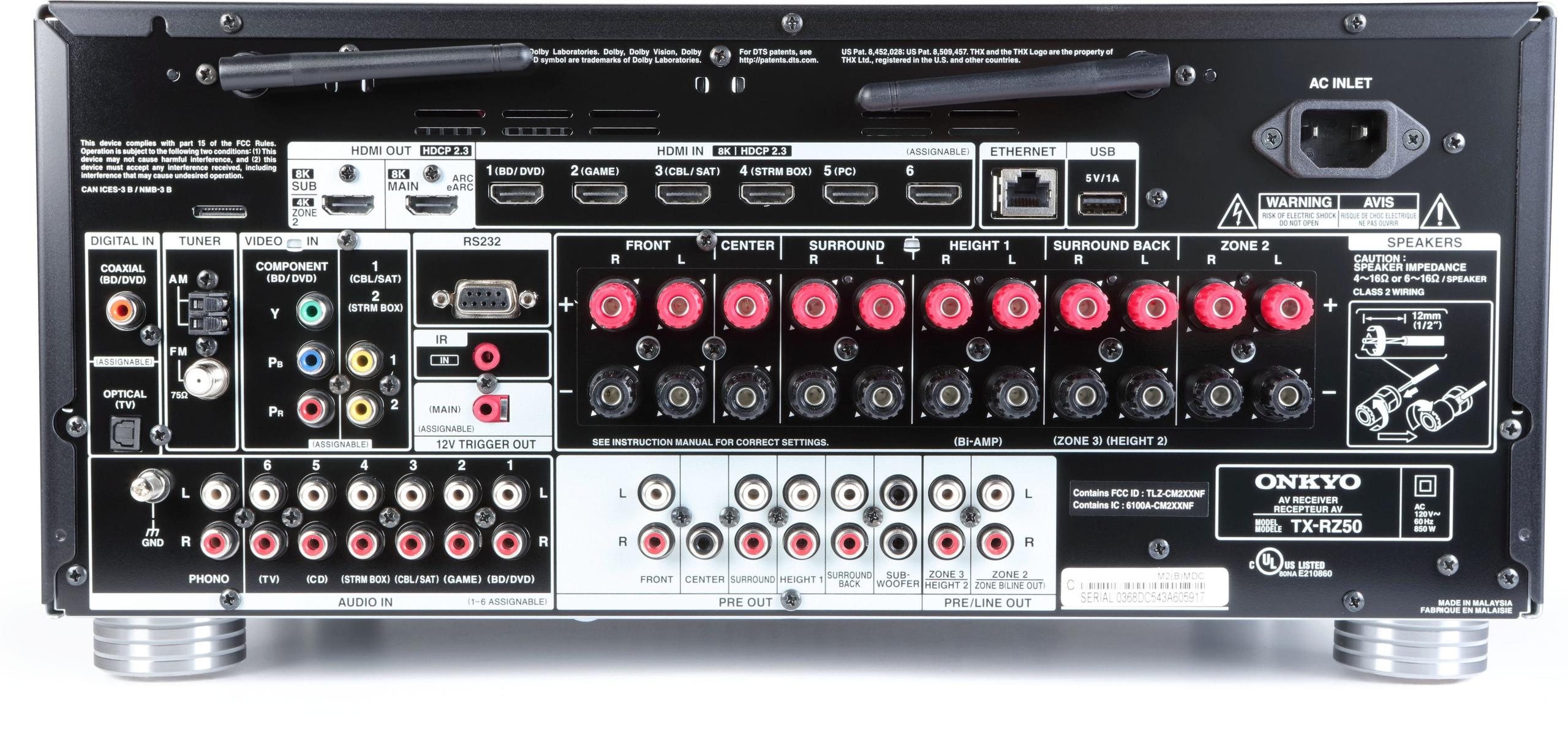
The TX-RZ50 processes 11.2 channels while still providing the same 9.2 channels of amplification. This means you can configure it as 7.2.4 by adding external amplification for the additional channels. More importantly, it includes preamp outputs for all 11.2 channels, giving you flexibility to expand your system over time.
This distinction matters more than you might think. Many users start with a 5.2.2 Atmos setup and later want to add more height speakers or surround speakers. With the TX-NR7100, you're locked into its amplification channels. With the TX-RZ50, you can easily add external amplifiers as your system grows.
The processing difference also affects how each receiver handles complex surround sound mixes. More processing channels allow for better separation of surround effects and more precise localization of sounds in three-dimensional space.
Here's a technical detail that reveals each receiver's design philosophy. The TX-NR7100 treats its two subwoofer outputs as a mono signal—both subs receive identical information. The TX-RZ50 can control each subwoofer independently, allowing its Dirac Live system to optimize each sub separately.
For most users, the TX-NR7100's approach actually works better. Dual subwoofers typically work best when they're playing identical signals but placed in different room locations to smooth out bass response. Independent control is mainly beneficial in very large rooms or when using different subwoofer models.
However, if you're dealing with challenging room acoustics or want maximum flexibility in subwoofer placement, the TX-RZ50's independent control can help eliminate problematic bass peaks and nulls that occur when sound waves from multiple subs interfere with each other.
Both receivers handle video processing identically, which is excellent news for gamers and early 8K adopters. They support HDMI 2.1 with full 40Gbps bandwidth on multiple inputs, enabling 8K video at 60Hz and 4K video at 120Hz—crucial for next-generation gaming consoles.
Gaming-specific features like Variable Refresh Rate (VRR), Auto Low Latency Mode (ALLM), and Quick Frame Transport (QFT) eliminate the stuttering and input lag that can ruin competitive gaming experiences. Both receivers also support enhanced Audio Return Channel (eARC), which allows your TV to send high-quality audio formats back to the receiver.
The video processing parity means your choice between these receivers won't affect your gaming or movie-watching experience from a visual standpoint. Both handle HDR formats like HDR10+, Dolby Vision, and HLG equally well.
The TX-NR7100 includes DTS Play-Fi support alongside standard streaming protocols like AirPlay 2 and Chromecast built-in. Play-Fi creates a wireless multiroom audio ecosystem, allowing you to synchronize music playback across compatible speakers throughout your home.
The TX-RZ50 omits Play-Fi but focuses on custom installation features like RS-232 and IP control protocols. These features matter primarily if you're working with a professional installer or want to integrate your receiver with whole-home automation systems.
For multi-zone audio within your house, the TX-NR7100 surprisingly offers better capabilities with its dedicated Zone 2 and Zone 3 outputs. This allows you to send different audio sources to three separate areas simultaneously—your main theater, a bedroom, and a patio, for example.
Opening up both receivers reveals the TX-RZ50's superior construction. It uses higher-quality capacitors throughout its power supply, better heat sinks for thermal management, and more robust internal wiring. These improvements contribute to long-term reliability and consistent performance under demanding conditions.
The TX-NR7100 uses appropriate components for its price point but makes some cost-saving choices in areas like heat sinking and power supply regulation. For typical home theater use, these compromises won't affect day-to-day performance, but they might impact longevity during extended high-volume listening sessions.
Both receivers include cooling fans, which some users find objectionable. However, modern receivers generate significant heat, and fan cooling prevents the thermal protection circuits from engaging during demanding passages—something that can cause frustrating dropouts during movie climaxes.
One area where the TX-NR7100 excels is multi-zone audio distribution. Its three-zone capability (main room plus two additional zones) surpasses many competitors and even the TX-RZ50 in terms of simultaneous zone count.
If you want to play jazz in your main theater while your teenager listens to pop music in their bedroom and your spouse enjoys classical music on the patio, the TX-NR7100 handles this scenario more elegantly. The TX-RZ50 focuses more on single-zone excellence with its superior room correction and processing capabilities.
While both receivers excel at home theater duties, their musical performance differs subtly. The TX-RZ50 uses higher-quality DACs (digital-to-analog converters) and superior analog circuitry, resulting in more refined two-channel music reproduction.
For critical music listening, the TX-RZ50's Dirac Live room correction proves especially valuable. It can correct phase and frequency response issues that make stereo imaging less precise, resulting in better instrument separation and more natural tonal balance.
However, if you primarily use your receiver for movies and casual music listening, the TX-NR7100's musical performance is entirely satisfactory. The differences become apparent mainly during focused listening sessions with high-quality source material.
The TX-NR7100 offers exceptional value for users building conventional 5.2.4 or 7.2.2 Dolby Atmos systems in typical rooms. Its power output, video processing, and basic room correction prove adequate for most home theater applications at a significantly lower cost than premium alternatives.
The TX-RZ50 justifies its premium through superior room correction, future-proofing features, and better build quality. However, many users won't utilize its advanced capabilities, making it a poor value proposition for simple installations.
At the time of writing, aggressive discounting sometimes narrows the price gap between these receivers, making the value equation more complex. When the TX-RZ50 is available for only $100-200 more than the TX-NR7100, it becomes much more attractive.
Choose the TX-NR7100 if you have a small to medium-sized room, plan to stick with 5.2.4 or 7.2.2 speaker configurations, and want excellent performance without paying for features you won't use. It's particularly appealing if multi-zone audio matters more than ultimate sound quality optimization.
Choose the TX-RZ50 if you have a large room, plan complex speaker configurations requiring external amplification, or consider room correction a high priority. It's also the better choice if you want maximum future-proofing or plan to work with a custom installer.
For most users, the TX-NR7100 provides everything needed for an excellent home theater experience. The TX-RZ50 becomes worthwhile primarily when you need its specific advantages or when pricing makes it competitive with the lesser model.
Both receivers represent solid engineering from a company with decades of audio experience. Your choice should depend on your specific needs, room size, and budget rather than any fundamental shortcomings in either design.
| Onkyo TX-NR7100 | Onkyo TX-RZ50 |
|---|---|
| Power Output - 20W difference is negligible for most rooms | |
| 100W per channel (8Ω, 20Hz-20kHz) | 120W per channel (8Ω, 20Hz-20kHz) |
| Channel Processing - Critical for future speaker expansion | |
| 9.1 channels processed, max 5.2.4 Atmos | 11.2 channels processed, expandable to 7.2.4 |
| Room Correction - Most important feature for sound quality | |
| AccuEQ standard (basic), Dirac Live paid upgrade | Dirac Live Full Bandwidth included (premium) |
| Pre-outputs - Essential for adding external amplifiers | |
| None (limits future expansion) | Full 11.2 pre-outputs (maximum flexibility) |
| Subwoofer Management - Advanced users prefer independent control | |
| Dual mono outputs (simpler setup) | Independent dual sub calibration (room optimization) |
| Multi-Zone Audio - Important for whole-home audio | |
| 3 zones (Main + Zone 2/3) | 2 zones with custom install features |
| Streaming Protocols - Affects wireless audio ecosystem compatibility | |
| AirPlay 2, Chromecast, DTS Play-Fi | AirPlay 2, Chromecast (no Play-Fi) |
| Build Quality - Higher-end components improve longevity | |
| Standard components, adequate cooling | Premium capacitors, superior heat management |
| HDMI Video Processing - Identical gaming and 8K capabilities | |
| 7 HDMI 2.1 inputs, 8K/60Hz, 4K/120Hz, VRR/ALLM | 7 HDMI 2.1 inputs, 8K/60Hz, 4K/120Hz, VRR/ALLM |
| Target Audience - Choose based on your setup complexity | |
| Mainstream users, 5.2.4 systems, value-focused | Audiophiles, complex installs, future-proofing |
The Onkyo TX-NR7100 is more beginner-friendly due to its straightforward setup and lower complexity. While both receivers offer similar basic functionality, the TX-NR7100 doesn't overwhelm new users with advanced features they may not need. Its AccuEQ room correction is simpler to use than the TX-RZ50's more complex Dirac Live system.
The primary difference is room correction technology and processing power. The TX-RZ50 includes premium Dirac Live room correction built-in and processes 11.2 channels, while the TX-NR7100 uses basic AccuEQ correction and processes 9.1 channels. The TX-RZ50 also features higher-quality internal components and better build quality.
We've done our best to create useful and informative comparisons to help you decide what product to buy. Our research uses advanced automated methods to create this comparison and perfection is not possible - please contact us for corrections or questions. These are the sites we've researched in the creation of this article: crutchfield.com - prohifi.in - bestbuy.com - h-m-entertainment.com - audiosciencereview.com - crutchfield.ca - soundandvision.com - avsforum.com - avgadgets.com - youtube.com - onkyo.com - crutchfield.com - onkyo.com - accessories4less.com - klipsch.com - youtube.com - listenup.com - intl.onkyo-av.com - bestbuy.com - 420spotshop.com - support.onkyousa.com - bestbuy.com - audioadvice.com - bestbuy.com - youtube.com - 7review.com - assets.onkyo-av.com - avsforum.com - youtube.com - onkyo.com - support.onkyousa.com - avsforum.com - stereoindex.com - forums.audioholics.com - audioholics.com

Privacy Policy
Terms and Conditions - Affiliate Policy
Home Security
© Copyright 2008-2026.
11816 Inwood Rd #1211, Dallas, TX 75244