


When building a home theater system, the AV receiver sits at the heart of everything. It's the component that takes audio and video signals from your sources—like gaming consoles, streaming devices, and Blu-ray players—then processes and amplifies them before sending them to your speakers and display. Think of it as the conductor of your home theater orchestra, coordinating all the different elements to create a cohesive experience.
The world of AV receivers can feel overwhelming, especially when you're comparing products from different eras and price categories. Today, we're examining two receivers that represent vastly different approaches: the Denon AVR-X2800H, a modern mid-range receiver from 2022, and the Yamaha RX-V385, a budget-focused model from 2018. At the time of writing, these receivers sit at opposite ends of the price spectrum, making this comparison particularly relevant for anyone trying to understand what you actually get when you spend more money on audio equipment.
Before diving into specifics, it's crucial to understand what separates good receivers from great ones. Power output gets most of the attention, but it's just one piece of the puzzle. Modern receivers need to handle increasingly complex audio formats like Dolby Atmos (which uses ceiling speakers to create overhead sound effects) and process 8K video signals that contain four times more information than 4K.
The processing power inside these units has exploded over the past few years. Where older receivers might have basic digital-to-analog converters (DACs)—the chips that convert digital music files into analog signals your speakers can use—newer models often feature multiple high-end DACs running sophisticated room correction algorithms. These systems use microphones to measure how sound bounces around your specific room, then automatically adjust the audio to compensate for acoustic problems.
Connectivity has become equally important. A receiver from 2018 might have felt cutting-edge then, but the gaming revolution brought by PlayStation 5 and Xbox Series X has made features like 4K gaming at 120 frames per second essential for many users. Similarly, streaming has shifted from a nice-to-have feature to an absolute necessity for most households.
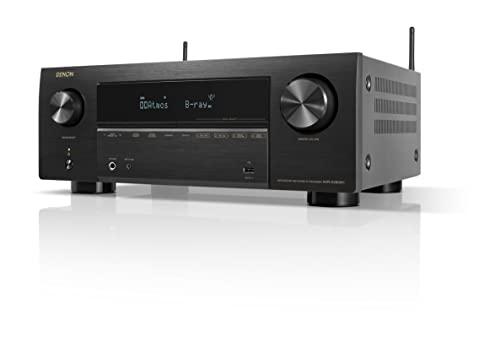
The Denon AVR-X2800H represents what happens when you apply 2022-level engineering to the mid-range AV receiver market. Released during a time when 8K TVs were becoming affordable and immersive audio formats were hitting mainstream adoption, this receiver was designed to handle everything current technology could throw at it while remaining accessible to enthusiasts rather than just wealthy audiophiles.
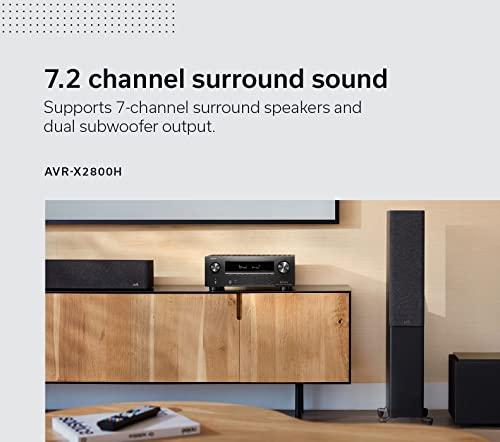
The Denon AVR-X2800H delivers 95 watts per channel across seven channels, which might not sound overwhelming on paper but tells only part of the story. The amplifier design uses discrete components rather than integrated chips, meaning each channel gets its own dedicated amplification circuit. This approach typically results in better performance when driving multiple speakers simultaneously—crucial when you're running a 7.1 surround system or a 5.1.2 Dolby Atmos setup.
What sets this receiver apart is its support for height channels in Dolby Atmos and DTS:X configurations. These formats add speakers above your listening position to create a true three-dimensional soundscape. When a helicopter flies overhead in a movie, you actually hear it moving through the space above you rather than just panning from left to right. The Denon AVR-X2800H can handle 5.1.2 setups (five main speakers, one subwoofer, and two height speakers) natively, or it can use height virtualization technology to simulate overhead effects through your existing speakers.
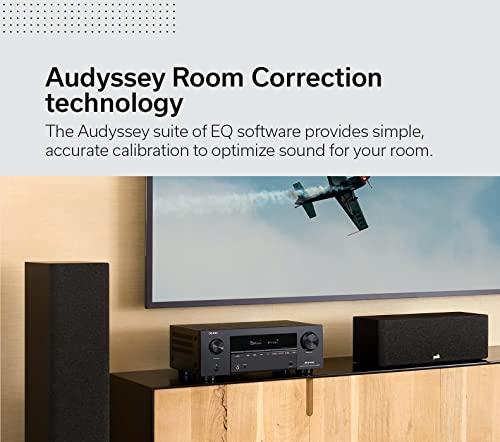
The room correction system, Audyssey MultEQ XT, represents a significant advancement over basic calibration systems. It takes measurements from eight different listening positions rather than just one, building a comprehensive acoustic map of your room. The system then applies sophisticated equalization to compensate for room modes (frequencies that get boosted or cancelled by your room's dimensions) and speaker placement issues. Based on user feedback we've researched, this system consistently delivers noticeable improvements in dialogue clarity and overall tonal balance.
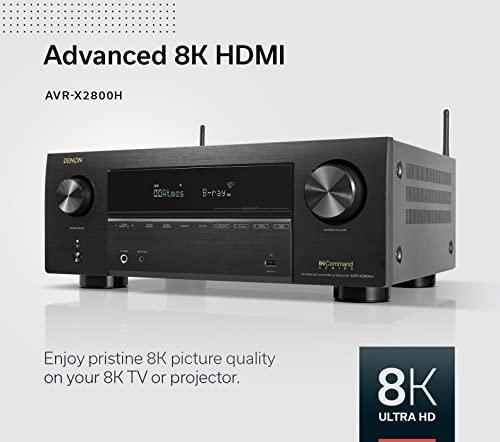
The video processing in the Denon AVR-X2800H addresses real-world needs rather than just checking specification boxes. The 8K/60Hz pass-through capability ensures compatibility with the latest gaming consoles and streaming devices, while 4K/120Hz support handles high-frame-rate gaming that's become standard on PlayStation 5 and Xbox Series X.
More importantly, the receiver includes three HDMI 2.1 inputs capable of handling the full 40Gbps bandwidth these formats require. This matters because many receivers claim 8K support but only provide one or two HDMI 2.1 ports, forcing users to constantly swap cables. The Denon AVR-X2800H provides enough connectivity for a gaming console, streaming device, and future expansion.
The upscaling capabilities also deserve attention. The receiver can take lower-resolution content and intelligently upscale it to 8K, using advanced processing algorithms that go beyond simple pixel doubling. While upscaled content won't match native 8K quality, the improvement over basic TV upscaling can be substantial, particularly for older movies and TV shows.
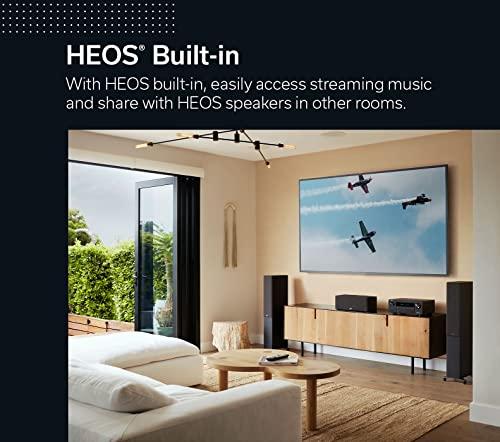
Modern home theater usage has shifted dramatically toward streaming, and the Denon AVR-X2800H embraces this reality completely. The built-in HEOS multi-room system allows you to stream different music to different rooms throughout your house, all controlled from a single app. This isn't just a convenience feature—it fundamentally changes how you use your audio system.
The receiver supports direct streaming from services like Spotify Connect and Tidal, meaning you can bypass your phone or other devices entirely. Voice assistant integration with Alexa and Google Assistant adds another layer of convenience, letting you control volume, change inputs, and even select specific music with voice commands.
Wi-Fi connectivity isn't just about streaming music. The Denon AVR-X2800H can receive firmware updates automatically, ensuring compatibility with new streaming services and fixing potential bugs without requiring manual intervention.
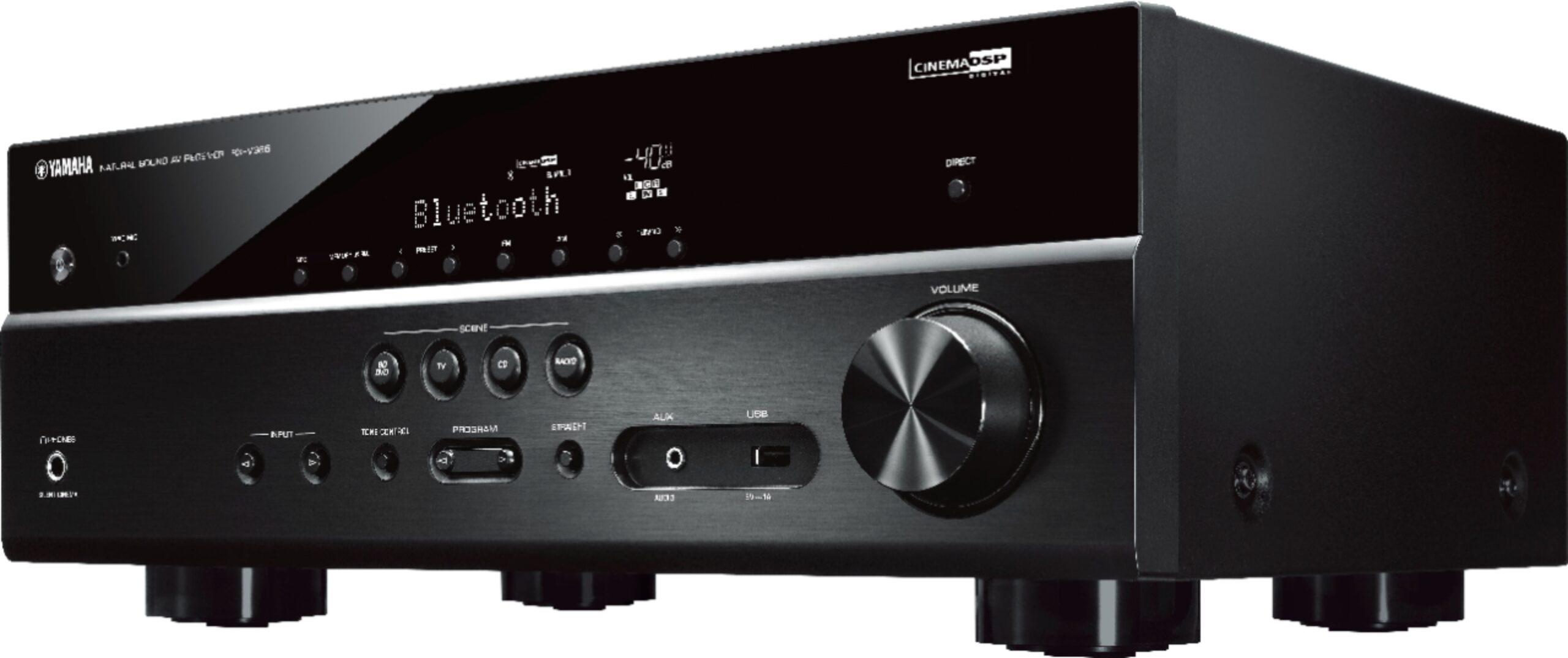
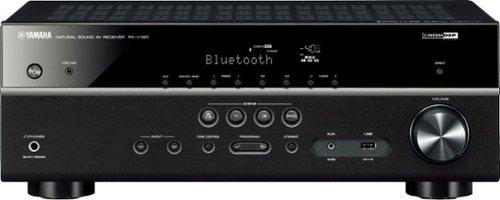
The Yamaha RX-V385 comes from a different era of AV receiver design, released in 2018 when 4K was still considered cutting-edge and Dolby Atmos was primarily an enthusiast feature. At the time of writing, this receiver can be found at remarkably low prices, making it an attractive option for budget-conscious buyers who primarily need basic surround sound functionality.
Yamaha built their reputation on reliable, well-engineered products that deliver consistent performance over many years. The Yamaha RX-V385 continues this tradition with 70 watts per channel across five channels, using quality components including Burr-Brown DACs rated at 32-bit/384kHz—specs that actually exceed the Denon AVR-X2800H on paper.
However, specifications don't tell the complete story. The Yamaha RX-V385 uses these high-quality DACs across fewer channels and lacks the sophisticated processing capabilities of modern receivers. The amplifier design, while reliable, doesn't incorporate the latest efficiency improvements or advanced circuit topologies found in newer models.
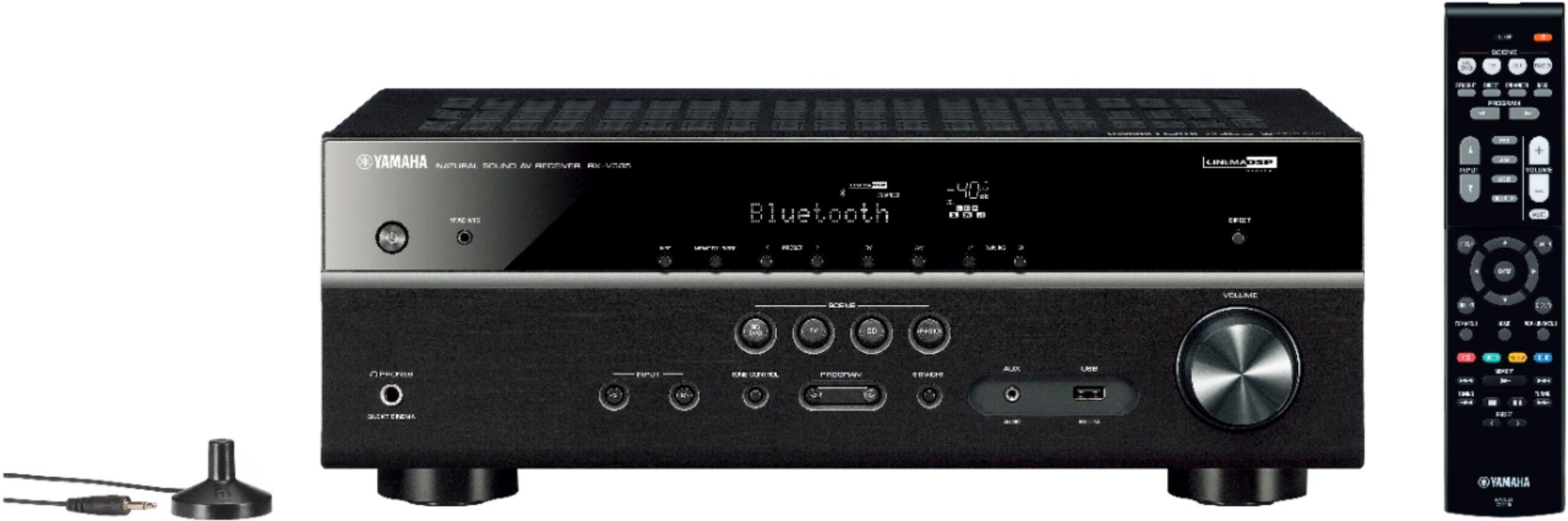
The CINEMA DSP processing deserves recognition as one of Yamaha's signature features. This technology analyzes incoming audio and applies acoustic modeling based on famous concert halls and venues around the world. When it works well, CINEMA DSP can create an impressively spacious soundstage that makes your living room feel larger than it actually is. However, the processing can sound artificial with some content types, particularly music with complex stereo imaging.
The 4K video capabilities of the Yamaha RX-V385 reflect 2018-era thinking about display technology. 4K/60Hz pass-through handles most current content adequately, but the lack of HDMI 2.1 support means no variable refresh rate gaming, no auto low-latency modes, and no 4K/120Hz capability for modern gaming consoles.
This limitation becomes particularly relevant for gaming enthusiasts. The PlayStation 5 and Xbox Series X can output 4K/120Hz in supported games, providing dramatically smoother motion and reduced input lag. The Yamaha RX-V385 would force these consoles to fall back to 4K/60Hz, negating one of their key advantages.
HDR support includes HDR10, Dolby Vision, and HLG formats, which covers most current content. However, the lack of HDR10+ support means missing out on some streaming content optimization, though this represents a minor limitation for most users.
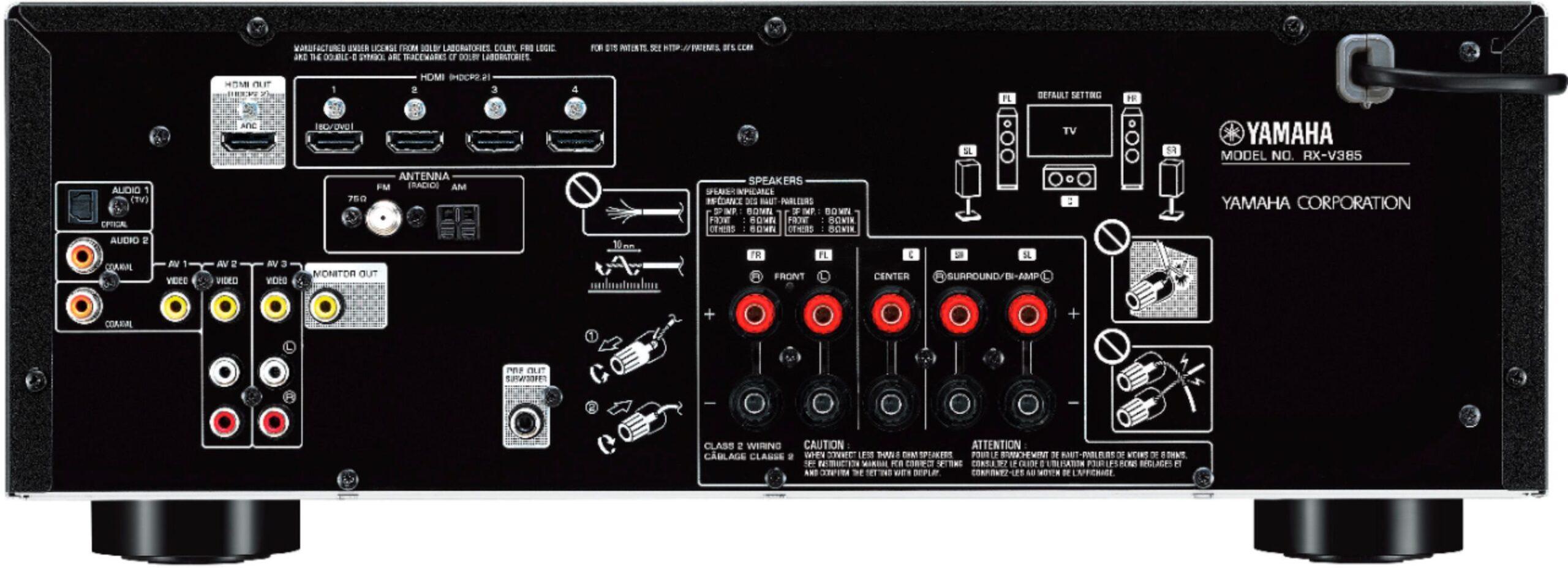
The Yamaha RX-V385 includes Bluetooth connectivity for basic wireless streaming, but the lack of Wi-Fi significantly limits its functionality compared to modern alternatives. Streaming requires connecting a separate device like an Apple TV or Roku, then routing audio back to the receiver through HDMI ARC (Audio Return Channel).
This approach worked well in 2018 but feels increasingly cumbersome as streaming services have added higher-quality audio options and exclusive content. Services like Apple Music Lossless and Tidal HiFi can deliver CD-quality streams directly to compatible receivers, but the Yamaha RX-V385 can't take advantage of these improvements.
The four HDMI inputs provide adequate connectivity for basic setups, though users with gaming consoles, streaming devices, cable boxes, and other sources might find themselves managing cables more often than they'd prefer.
Based on extensive research into user experiences and professional reviews, these receivers exhibit distinctly different sonic characteristics. The Denon AVR-X2800H tends toward a warmer, more relaxed presentation that many users find engaging for both movies and music. Dialogue clarity consistently receives praise, with the advanced processing helping to separate center channel information from background effects and music.
The Yamaha RX-V385 follows Yamaha's traditional approach of neutral, analytical sound reproduction. This can result in more accurate audio reproduction that doesn't color the source material, but some users find it less engaging than Denon's warmer approach. The trade-off between accuracy and engagement often comes down to personal preference and the type of content you consume most often.
Power delivery represents another significant difference. The Denon AVR-X2800H's 95 watts per channel across seven channels provides more flexibility for speaker configurations and room sizes. The discrete amplifier design typically maintains better performance when driving multiple speakers simultaneously, while the Yamaha RX-V385's 70 watts across five channels works well for smaller rooms and simpler setups.
Room correction technology has advanced significantly between 2018 and 2022, and the difference shows clearly between these receivers. The Audyssey MultEQ XT system in the Denon AVR-X2800H takes measurements from eight positions around your listening area, building a comprehensive acoustic map that addresses both frequency response issues and time-domain problems like reflections and standing waves.
The YPAO system in the Yamaha RX-V385 provides basic room correction but lacks the sophistication of modern implementations. While it can address obvious frequency response problems and set appropriate speaker distances, it doesn't handle complex acoustic interactions as effectively as newer systems.
User feedback consistently indicates that modern room correction systems like Audyssey MultEQ XT provide more dramatic improvements in difficult rooms, particularly those with hard surfaces or irregular shapes that create acoustic challenges.
The technology gap between 2018 and 2022 creates significant differences in longevity between these receivers. The Denon AVR-X2800H includes support for audio and video formats that are just beginning to see mainstream adoption, while the Yamaha RX-V385 already shows limitations with current gaming consoles and streaming services.
8K content remains limited as of this writing, but the infrastructure for 8K gaming and streaming continues developing. The Denon AVR-X2800H's 8K capabilities ensure compatibility with whatever content becomes available over the next several years, while the Yamaha RX-V385 will likely require replacement when 8K content becomes commonplace.
Gaming represents the most immediate future-proofing concern. Current-generation gaming consoles already push beyond the Yamaha RX-V385's capabilities, and this gap will only widen as developers optimize games for newer hardware features.
Gaming Enthusiasts: If you own a PlayStation 5, Xbox Series X, or high-end gaming PC, the Denon AVR-X2800H's HDMI 2.1 support becomes essential rather than optional. The 4K/120Hz capability, variable refresh rate support, and auto low-latency modes can dramatically improve gaming experiences in supported titles.
Streaming-Heavy Users: Households that primarily consume content through Netflix, Disney+, Spotify, and similar services benefit enormously from the built-in streaming capabilities and Wi-Fi connectivity. The ability to stream directly to the receiver without additional devices simplifies setup and often improves audio quality.
Future-Conscious Buyers: Anyone planning to keep their receiver for more than three to four years should seriously consider the future-proofing advantages of the Denon AVR-X2800H. The 8K capabilities and advanced audio format support provide insurance against obsolescence.
Medium to Large Rooms: The seven-channel capability and higher power output make the Denon AVR-X2800H better suited for larger spaces and more complex speaker configurations.
Strict Budget Requirements: At the time of writing, the Yamaha RX-V385 offers remarkable value for users who need basic surround sound functionality without advanced features. However, verify pricing and availability, as exceptionally low prices might indicate refurbished or discontinued inventory.
Simple Setups: Users who primarily watch cable TV, DVDs, and Blu-rays through a basic 5.1 speaker system will find the Yamaha RX-V385 perfectly adequate for their needs.
Yamaha Ecosystem Users: If you already own Yamaha speakers or prefer their neutral sound signature, the Yamaha RX-V385 maintains that house sound while providing essential AV receiver functionality.
Secondary Systems: Bedroom theaters, basement setups, or other secondary locations where advanced features aren't necessary can benefit from the Yamaha RX-V385's lower cost and reliable performance.
The choice between the Denon AVR-X2800H and Yamaha RX-V385 ultimately depends on how you balance current needs against future requirements and budget constraints.
If your budget allows for the higher-priced option and you want a receiver that will remain relevant for years to come, the Denon AVR-X2800H provides superior value despite its higher upfront cost. The combination of 8K video support, immersive audio capabilities, extensive streaming integration, and advanced room correction creates a system that can grow with your needs and technological changes.
For users with strict budget limitations or simple requirements, the Yamaha RX-V385 can deliver satisfactory performance in basic home theater applications. However, be prepared for limitations with modern gaming consoles and streaming services, and consider whether you'll outgrow its capabilities relatively quickly.
The four-year technology gap between these products means they're not truly competing in the same market segment. The Yamaha RX-V385 represents what budget home theater looked like in 2018, while the Denon AVR-X2800H incorporates current expectations for mid-range performance and features. Choose based on whether you need a basic receiver for simple tasks or a modern hub for a comprehensive home entertainment system.
| Denon AVR-X2800H | Yamaha RX-V385 |
|---|---|
| Release Year - Indicates technology generation and feature set | |
| 2022 (current-gen features) | 2018 (previous-gen technology) |
| Channels & Power - Determines speaker setup flexibility | |
| 7.2 channels, 95W per channel | 5.1 channels, 70W per channel |
| Immersive Audio Support - Essential for modern movie experiences | |
| Dolby Atmos, DTS:X, Auro-3D | Basic surround only (no height channels) |
| Video Resolution - Future-proofing for displays and gaming | |
| 8K/60Hz, 4K/120Hz pass-through | 4K/60Hz only (no gaming enhancements) |
| HDMI Connectivity - Affects device connection flexibility | |
| 6 inputs (3 HDMI 2.1), 2 outputs | 4 inputs, 1 output (HDMI 2.0) |
| Streaming Integration - Convenience for modern media consumption | |
| Built-in Wi-Fi, HEOS, native streaming apps | Bluetooth only, no Wi-Fi or streaming |
| Room Calibration - Optimizes sound for your specific space | |
| Audyssey MultEQ XT (8 positions) | YPAO basic correction |
| Gaming Features - Critical for PS5/Xbox Series X owners | |
| VRR, ALLM, 4K/120Hz gaming support | None (limited to 4K/60Hz) |
| Multi-room Audio - Whole-house music distribution | |
| HEOS system with voice control | Not supported |
| HDR Video Support - Enhanced picture quality | |
| HDR10, HDR10+, Dolby Vision, HLG | HDR10, Dolby Vision, HLG (no HDR10+) |
The Denon AVR-X2800H is a modern 2022 receiver with 7.2 channels, 8K video support, and built-in streaming, while the Yamaha RX-V385 is a 2018 budget model with 5.1 channels and basic 4K capabilities. The Denon offers significantly more advanced features and future-proofing.
The Denon AVR-X2800H is far superior for modern gaming, supporting 4K/120Hz, Variable Refresh Rate (VRR), and Auto Low Latency Mode (ALLM). The Yamaha RX-V385 is limited to 4K/60Hz and lacks these gaming enhancements that current-gen consoles require.
Only the Denon AVR-X2800H supports Dolby Atmos and DTS:X with dedicated height channels for true overhead audio. The Yamaha RX-V385 is limited to traditional 5.1 surround sound without height channel support.
The Denon AVR-X2800H includes built-in Wi-Fi, HEOS streaming, and direct access to services like Spotify and Tidal. The Yamaha RX-V385 only offers basic Bluetooth connectivity and requires external streaming devices for internet content.
The Denon AVR-X2800H delivers 95 watts per channel across 7 channels, while the Yamaha RX-V385 provides 70 watts per channel across 5 channels. The Denon offers more power and flexibility for larger rooms and speaker configurations.
The Yamaha RX-V385 works well for smaller spaces with basic 5.1 setups, especially given its lower cost. However, the Denon AVR-X2800H offers better room correction and can be configured for smaller spaces while providing upgrade flexibility.
Only the Denon AVR-X2800H supports full 8K/60Hz pass-through and upscaling. The Yamaha RX-V385 is limited to 4K video processing, which may require replacement as 8K content becomes more common.
This depends on your needs. The Yamaha RX-V385 offers exceptional value for basic home theater setups, while the Denon AVR-X2800H provides better long-term value with modern features and future-proofing capabilities.
The Denon AVR-X2800H uses Audyssey MultEQ XT with 8-position measurement for comprehensive room optimization. The Yamaha RX-V385 includes basic YPAO correction that handles simple acoustic adjustments but lacks advanced processing.
The Denon AVR-X2800H supports Alexa, Google Assistant, and Siri for voice control of volume, inputs, and streaming. The Yamaha RX-V385 doesn't include voice assistant integration.
The Denon AVR-X2800H is better positioned for longevity with 8K support, HDMI 2.1, and current audio formats. The Yamaha RX-V385 already shows limitations with modern gaming consoles and may need replacement sooner as technology advances.
The Yamaha RX-V385 offers Yamaha's neutral sound signature that some prefer, extremely low pricing for budget builds, and proven reliability. It's ideal for users who only need basic 5.1 surround sound without modern streaming or gaming features that the Denon AVR-X2800H provides.
We've done our best to create useful and informative comparisons to help you decide what product to buy. Our research uses advanced automated methods to create this comparison and perfection is not possible - please contact us for corrections or questions. These are the sites we've researched in the creation of this article: theaudiotailor.com.au - ecoustics.com - simplehomecinema.com - whathifi.com - audioadvisor.com - youtube.com - bestbuy.com - e-catalog.com - crutchfield.com - avsforum.com - crutchfield.com - whathifi.com - richersounds.com - bestbuy.com - accessories4less.com - projectorscreen.com - adiglobaldistribution.us - youtube.com - bestbuy.com - bestbuy.com - sweetwater.com - usa.yamaha.com - usa.yamaha.com - avsforum.com - crutchfield.com - hifiheaven.net - europe.yamaha.com - my.yamaha.com - hifiengine.com - abt.com - abcwarehouse.com

Privacy Policy
Terms and Conditions - Affiliate Policy
Home Security
© Copyright 2008-2026.
11816 Inwood Rd #1211, Dallas, TX 75244