

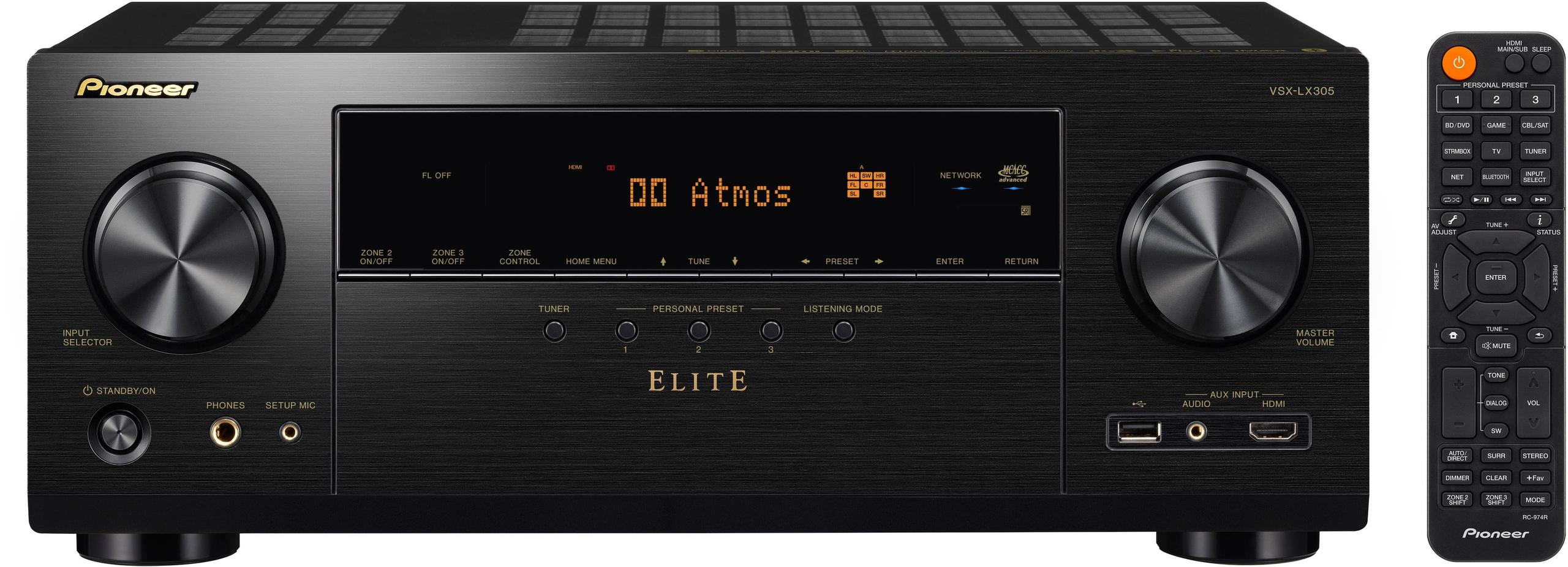
When you're building a home theater system, the AV receiver sits at the heart of everything. It's the brain that processes your audio and video, powers your speakers, and connects all your devices together. Think of it as the conductor of your entertainment orchestra – without a good one, even the best speakers and TV won't reach their potential.
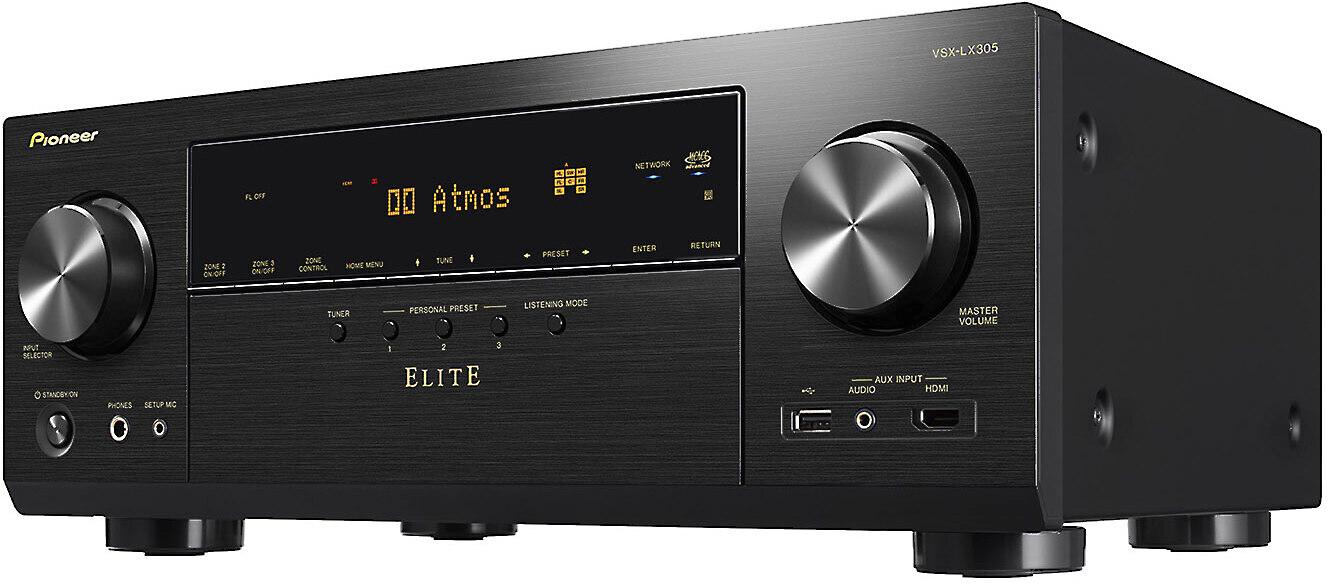
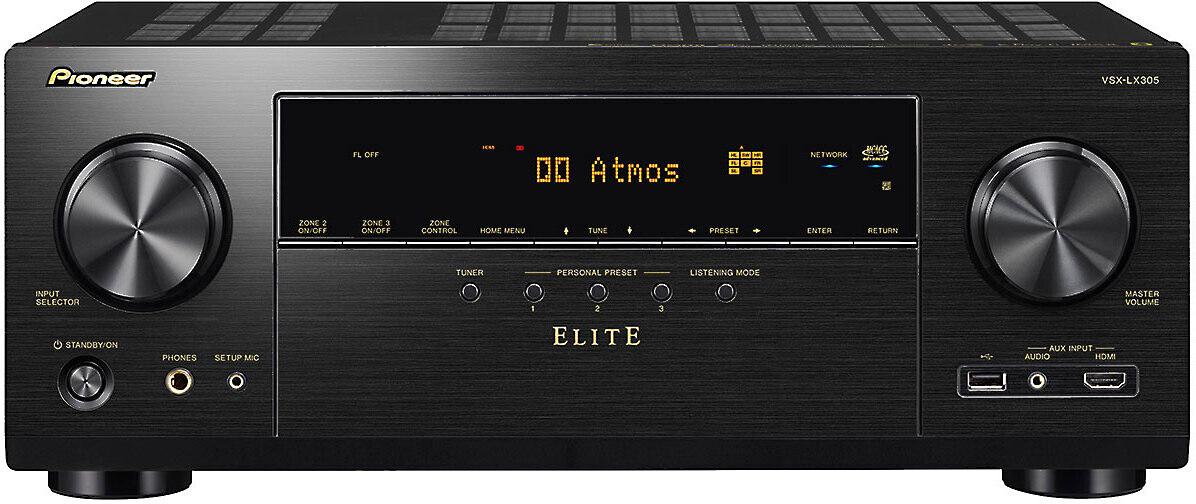
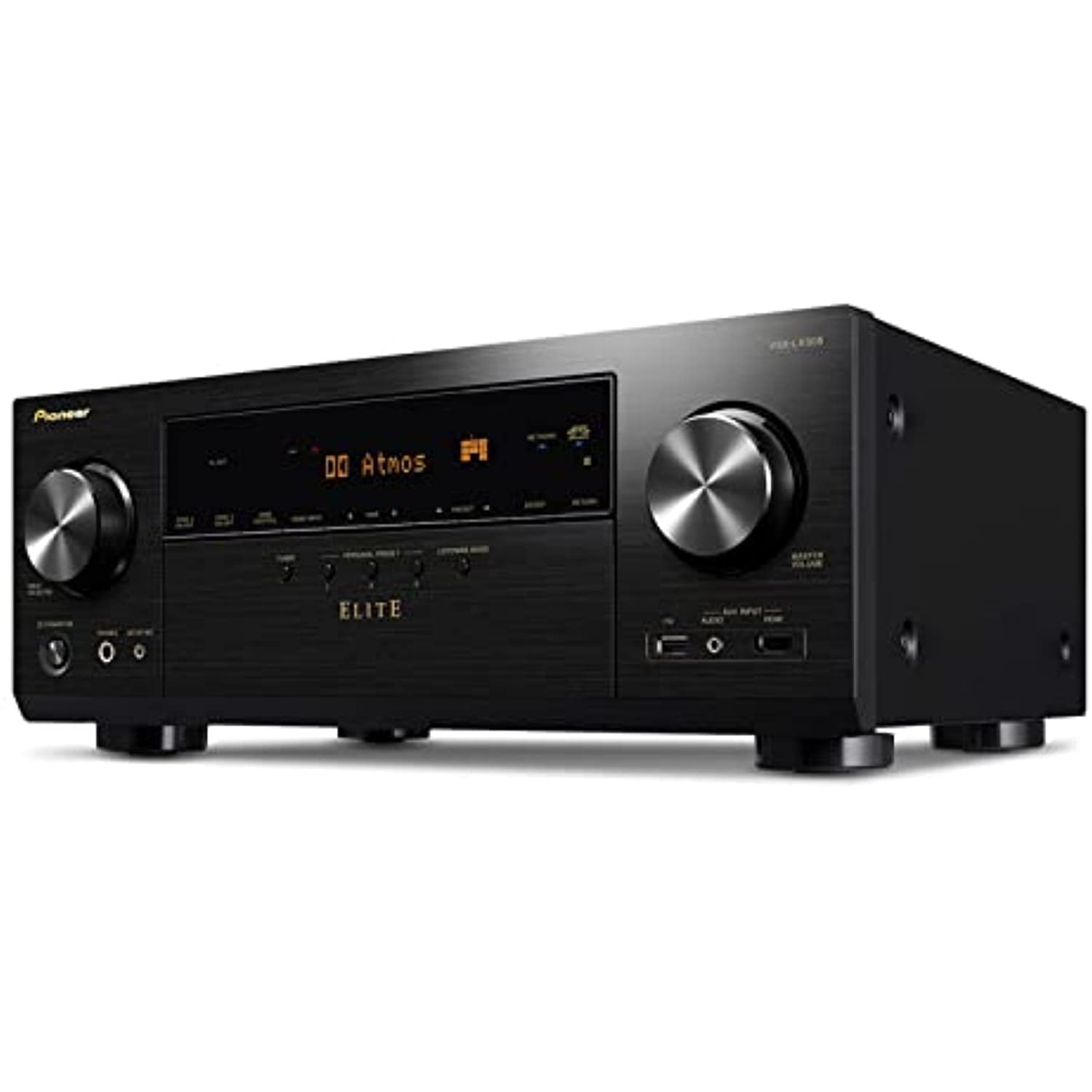
Today we're comparing two popular mid-range receivers that take notably different approaches: the Denon AVR-X2800H and the Pioneer Elite VSX-LX305. At the time of writing, these receivers sit in different price brackets, with the Denon offering compelling value while the Pioneer commands a premium for additional features. Both released within the last few years as the industry adapted to 8K video and next-generation gaming consoles, but they've taken distinctly different paths to appeal to home theater enthusiasts.
Before diving into the comparison, let's establish what makes a great AV receiver. The most important factors include amplifier power and quality (how loud and clean your speakers will sound), surround sound processing capabilities (how well it creates that immersive movie theater experience), video handling for modern 4K and 8K content, room correction technology (software that optimizes sound for your specific room), and connectivity options for all your devices.
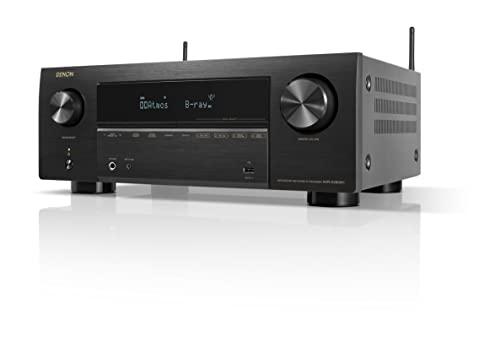
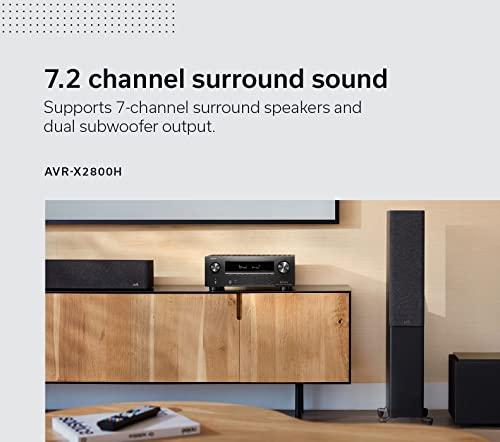
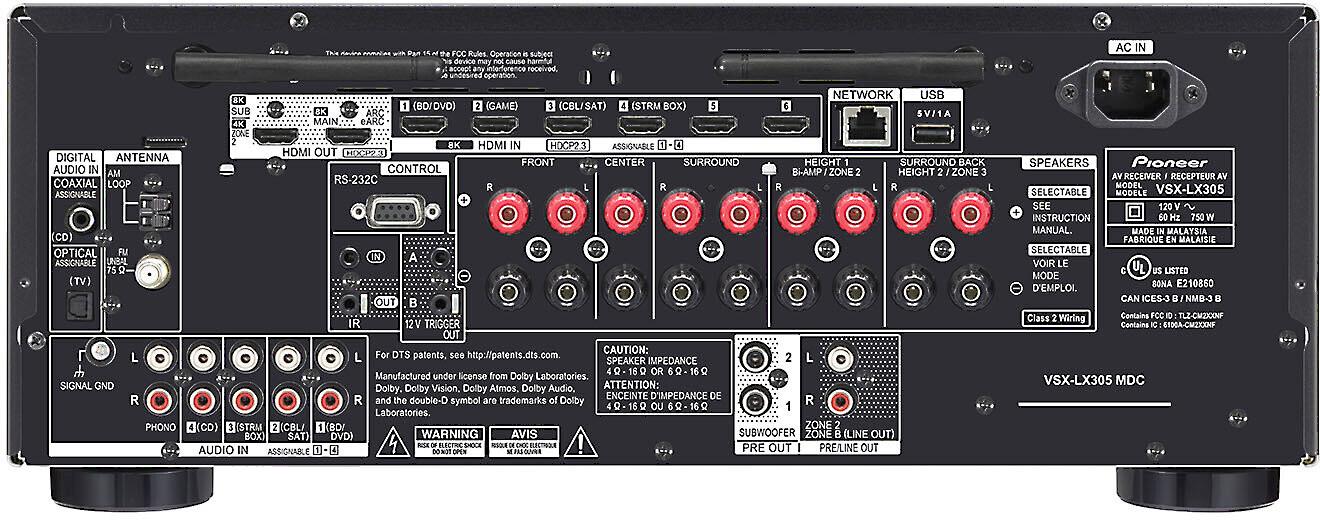
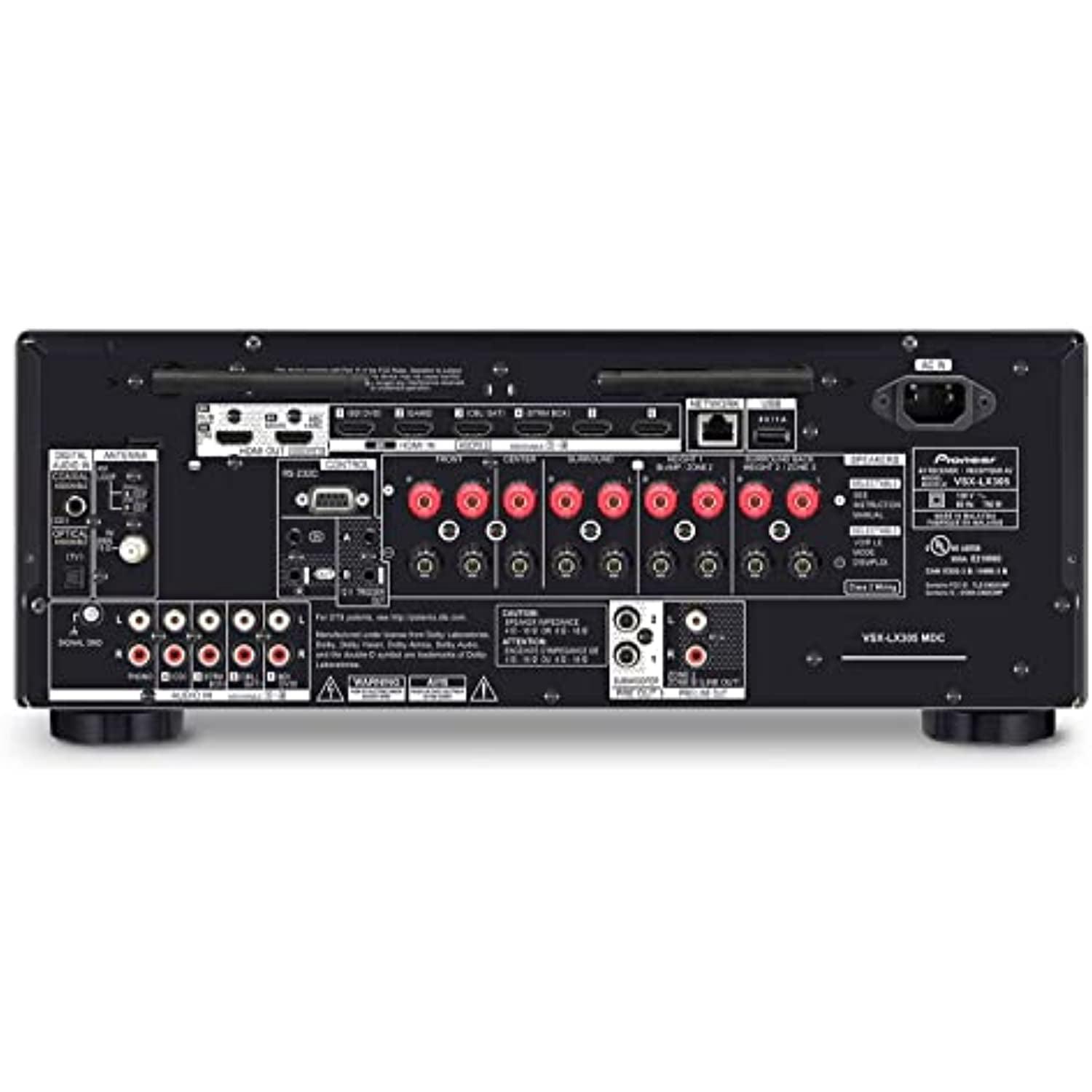
The number after the decimal point in receiver names tells you about channel configuration. A 7.2 receiver like the Denon AVR-X2800H can power seven speakers plus two subwoofers, while the Pioneer Elite VSX-LX305's 9.2 configuration adds two more speaker channels. This difference fundamentally changes what kind of surround sound setups you can create.
The Denon AVR-X2800H, released in 2022, represents Denon's refined approach to the popular 7.2 channel format. It's the successor to the well-regarded X2700H, incorporating lessons learned and addressing user feedback about sound quality and user interface improvements. Denon focused on premium audio processing components and their established Audyssey room correction system.
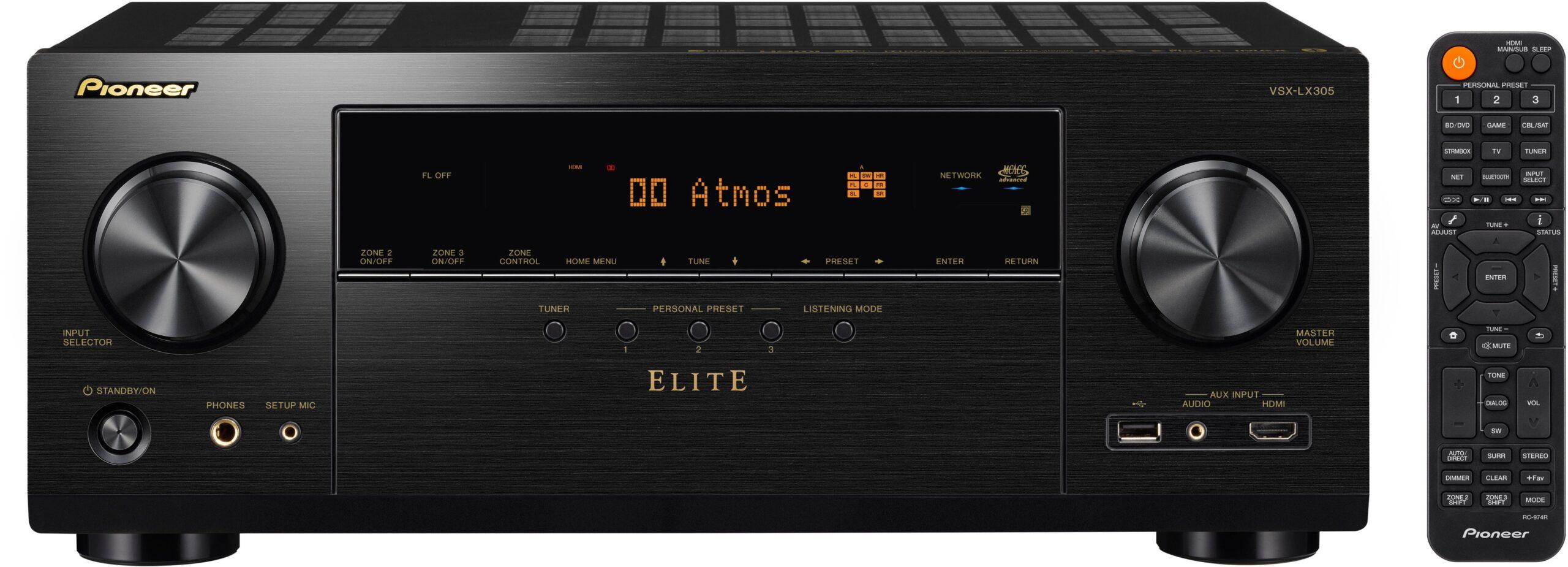
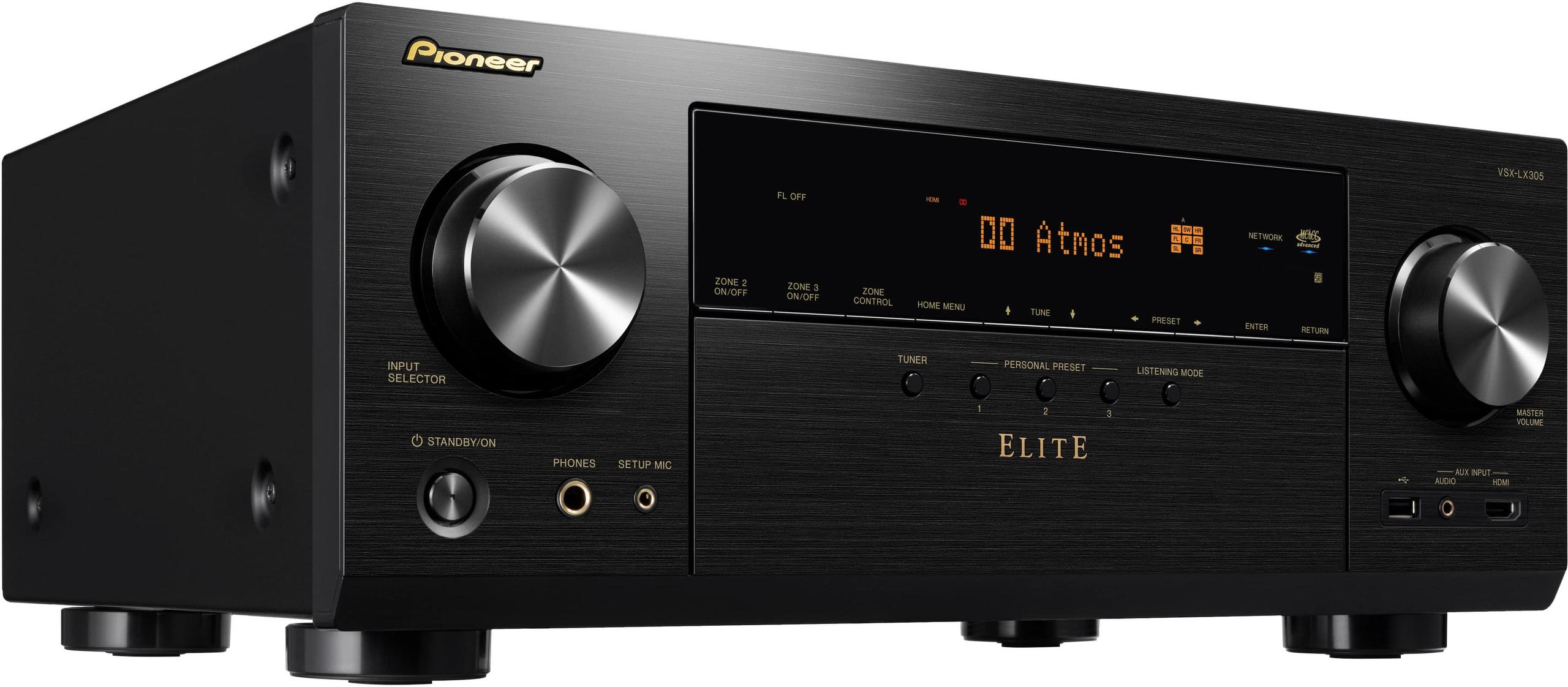
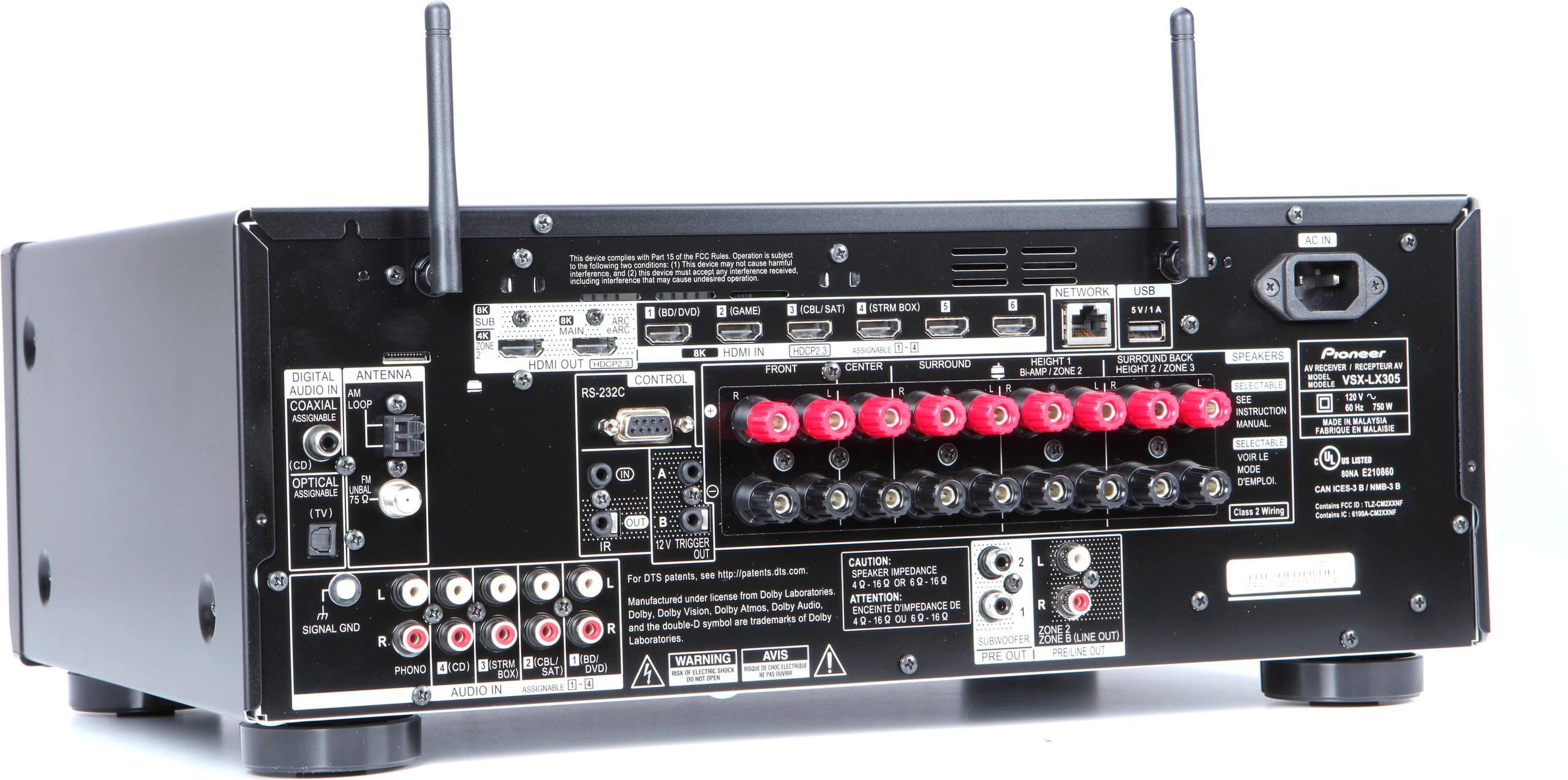
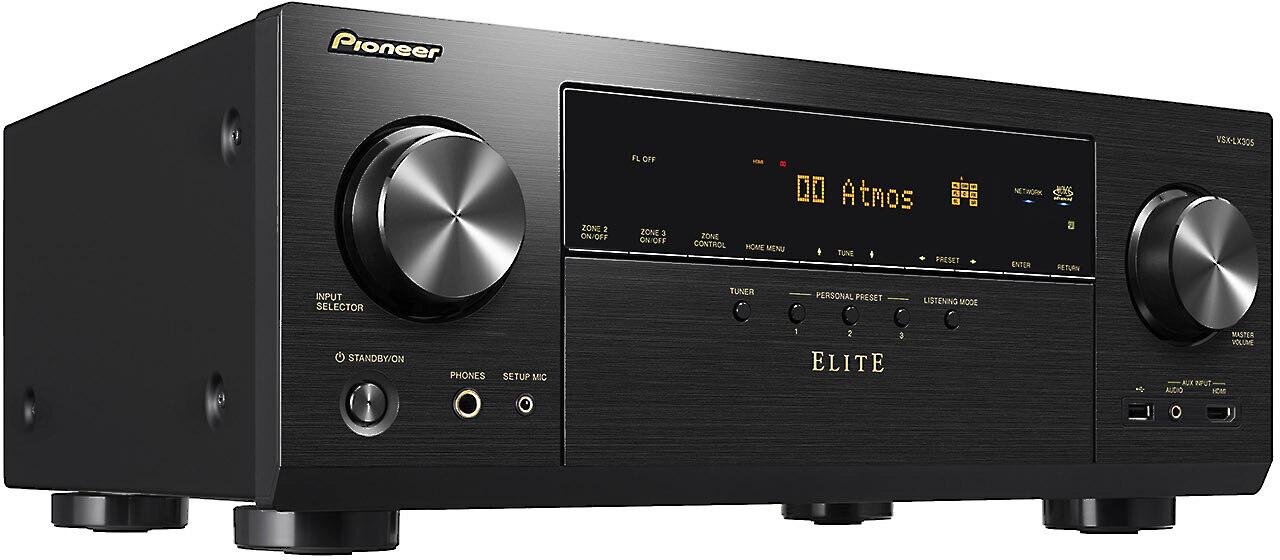
The Pioneer Elite VSX-LX305, from 2021, takes a more ambitious approach with 9.2 channels and advanced room correction technology. Pioneer had been absent from many markets for several years before this model's release, making it something of a comeback product that needed to prove the brand's continued relevance in a competitive field.
The most significant technical difference lies in digital-to-analog conversion – the process that turns digital audio files into the analog signals your speakers actually play. The Denon AVR-X2800H employs 384kHz/32-bit DACs (Digital-to-Analog Converters) across all channels, while the Pioneer Elite VSX-LX305 uses 192kHz/24-bit conversion.
Think of DAC resolution like photo resolution – higher numbers generally mean more detail and accuracy. The Denon's specification suggests it can handle higher resolution audio files with greater precision. This matters most if you listen to high-resolution music formats like FLAC or DSD files, where the extra processing power can translate to cleaner, more detailed sound.
Raw power output shows the Pioneer VSX-LX305 with a slight edge at 100 watts per channel versus the Denon's 95 watts. While this 5-watt difference won't dramatically change volume levels, it provides slightly more headroom for demanding speakers or larger rooms. More importantly, both use discrete amplifier designs rather than integrated circuits, which typically results in better sound quality and reliability.
Based on our research into user experiences and expert reviews, the Denon AVR-X2800H earns praise for its "authoritative and balanced" sound signature with notably improved dialogue clarity compared to its predecessor. Users consistently mention cleaner treble and less bass-heavy presentation, making it versatile for both movies and music.
The Pioneer VSX-LX305, meanwhile, gets described as "clear and neutral" but sometimes "cool and sterile." This isn't necessarily negative – many home theater enthusiasts prefer a neutral sound that doesn't color the original recording. However, it suggests the Pioneer might be less engaging for casual music listening compared to movie watching.
Here's where the Pioneer VSX-LX305's extra channels become crucial. With 9.2 channels, you can run more sophisticated Dolby Atmos configurations like 7.2.2 (seven main speakers, two subwoofers, two height speakers) or even 5.2.4 (five main speakers, two subwoofers, four height speakers). The Denon AVR-X2800H maxes out at 5.1.2 Atmos configurations.
Dolby Atmos uses "object-based" audio, meaning sounds can be precisely placed anywhere in three-dimensional space around you. More channels mean more precise placement and a more convincing surround experience. If you're serious about recreating the movie theater experience at home, those extra channels make a meaningful difference.
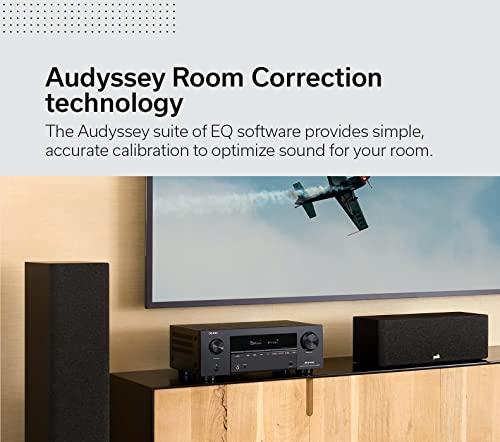
Room acoustics dramatically affect how your speakers sound. Hard surfaces create echoes, furniture absorbs certain frequencies, and room dimensions create peaks and nulls in bass response. Room correction technology uses microphones to measure these problems and applies digital filters to compensate.
The Denon AVR-X2800H uses Audyssey MultEQ XT, a mature and well-established system. It measures up to eight different listening positions and creates filters to smooth frequency response and optimize timing. Audyssey also includes Dynamic EQ, which maintains tonal balance at lower volumes by boosting bass and treble as you turn down the volume – mimicking how our ears naturally work.
The Pioneer VSX-LX305 combines Pioneer's traditional MCACC (Multi-Channel Acoustic Calibration) with Dirac Live room correction. Based on user feedback we've researched, Dirac Live consistently receives more enthusiastic praise. Users describe it as "game-changing" and note that it "perfectly balances all speakers" in ways that made them "watch old movies over again to experience the 'new' sound."
Dirac Live's strength lies in its sophisticated impulse response correction – it doesn't just adjust frequency response but also fixes timing issues that cause smearing and loss of detail. This results in tighter, more focused sound with better imaging and soundstage depth.
Both systems require running the included microphone to multiple positions around your seating area. Audyssey's process is more automated and generally faster, while Dirac Live offers more user control over the correction process. The Pioneer's Dirac Live implementation allows you to see before-and-after measurements and make manual adjustments if desired.
Modern AV receivers must handle increasingly complex video formats while maintaining compatibility with gaming consoles that demand low latency and high refresh rates.
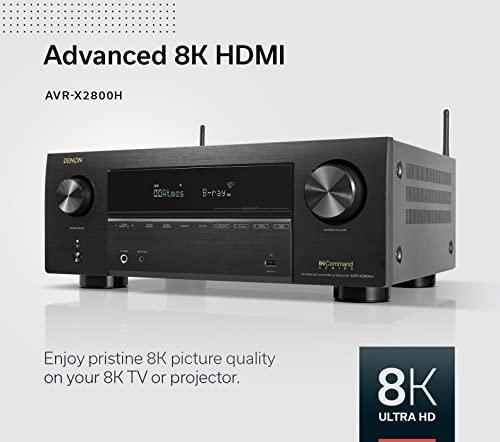
The Denon AVR-X2800H provides six HDMI inputs with three supporting full HDMI 2.1 specifications for 8K/60Hz and 4K/120Hz video. The remaining three inputs handle HDMI 2.0, which supports 4K/60Hz – still adequate for most current content.
The Pioneer VSX-LX305 offers seven HDMI inputs with six on the back panel plus one conveniently located on the front. All inputs support HDMI 2.1, providing more flexibility for connecting multiple high-bandwidth devices like gaming consoles, 8K media players, and high-refresh monitors.
Both receivers support modern gaming features like Variable Refresh Rate (VRR), which eliminates screen tearing, and Auto Low Latency Mode (ALLM), which automatically switches to game mode when it detects gaming content. These features work with PlayStation 5, Xbox Series X/S, and modern PC graphics cards.
The Pioneer's extra HDMI input and front-panel accessibility provide practical advantages for gamers who frequently connect different devices or gaming laptops.
Today's receivers need robust streaming capabilities since many users get their content from Netflix, Disney+, Spotify, and other online services rather than physical media.
This is where we see a significant difference. The Denon AVR-X2800H supports basic SBC Bluetooth codec, which provides acceptable quality for casual listening. The Pioneer VSX-LX305 includes advanced Bluetooth codecs including aptX and aptX HD, which can deliver near-CD quality audio wirelessly from compatible phones and devices.
For streaming music from your phone to the receiver, this difference is quite noticeable. The Pioneer's enhanced Bluetooth support means less compression and cleaner sound when streaming wirelessly.
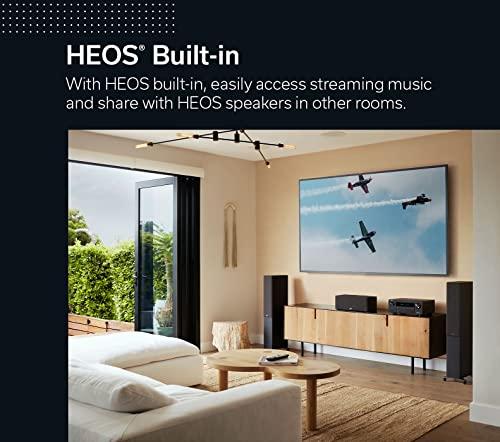
The Denon features built-in HEOS multiroom technology, which works well if you already have other Denon/Marantz products. It also supports AirPlay 2, Spotify Connect, and voice control through Alexa, Google Assistant, and Siri.
The Pioneer takes a more universal approach with support for Chromecast built-in, DTS Play-Fi, AirPlay 2, and even Sonos integration. This flexibility means it can work with almost any multiroom ecosystem you might already have or want to build.
At the time of writing, the Denon AVR-X2800H typically costs several hundred dollars less than the Pioneer VSX-LX305. This price difference reflects their different target markets and capabilities.
The Denon delivers excellent performance for most home theater setups. Its 7.2 channel configuration handles popular speaker arrangements like 5.1.2 Dolby Atmos effectively. The superior DAC specification and Pure Direct mode make it particularly appealing for music listening, while the lower price point makes premium features accessible to more buyers.
Audyssey room correction, while not as sophisticated as Dirac Live, still provides meaningful improvements over no room correction at all. For many users, especially those in smaller to medium-sized rooms, Audyssey's capabilities are entirely adequate.
The Pioneer's higher price reflects its additional channels, advanced room correction, and enhanced connectivity. Those extra two amplifier channels enable more sophisticated surround sound configurations that can create more immersive experiences in larger rooms.
Dirac Live room correction consistently receives better user feedback than competing systems, and the enhanced Bluetooth codec support provides noticeably better wireless audio quality. The three-zone capability also adds value for those wanting whole-home audio distribution.
Based on our research into user experiences and professional reviews, some clear patterns emerge about how these receivers perform in actual home environments.
In typical living rooms and smaller dedicated theater spaces, the Denon AVR-X2800H often provides all the power and channels most users need. Its balanced sound signature and excellent dialogue clarity make it particularly good for rooms where you'll watch movies but also listen to music regularly.
The Pure Direct mode, which bypasses all digital processing for the cleanest possible signal path, gives the Denon an advantage for critical music listening. This feature appeals to audiophiles who want their receiver to disappear electronically and let their speakers perform without any coloration.
The Pioneer VSX-LX305's additional channels and higher power output become more valuable in larger rooms where you need more speakers to create even sound coverage. The 9.2 configuration enables more sophisticated Atmos layouts that can create more convincing overhead effects in rooms with higher ceilings.
Professional reviews consistently note that the Pioneer "never seemed to run out of gas" during demanding passages, suggesting good power supply design and thermal management for sustained performance.
The Denon edges ahead for music listening thanks to its higher-resolution DACs and Pure Direct mode. Users report that stereo music sounds more detailed and engaging through the Denon, particularly with high-resolution files.
For movie watching, the Pioneer takes the lead with its IMAX Enhanced certification and more channels for complex Dolby Atmos soundtracks. The Dirac Live room correction also tends to create better integration between speakers and subwoofers, which is crucial for impactful movie sound.
You're building a system for a small to medium-sized room where 7.2 channels provide adequate coverage. Music listening is important to you, and you appreciate the higher-resolution audio processing and Pure Direct mode. Budget is a significant consideration, and you want proven room correction technology without paying a premium for the latest algorithms.
The Denon makes particular sense if you already own quality bookshelf or tower speakers that will benefit from clean, detailed amplification. It's also ideal if you prefer simpler setups without extensive configuration options.
You have a larger room or plan to install a complex speaker system with height channels for Dolby Atmos. Advanced room correction is a priority, and you're willing to pay more for technology that users consistently praise as superior. You want maximum flexibility for future system expansion and upgrades.
The Pioneer is the better choice if you prioritize home theater performance over music listening, plan to use wireless streaming frequently (thanks to the enhanced Bluetooth codecs), or need features like three-zone audio distribution and system automation through DC trigger outputs.
Both receivers represent solid engineering and good value within their respective price ranges. The Denon AVR-X2800H delivers premium audio processing and proven performance at a more accessible price point. It's the smart choice for most buyers who want excellent sound quality without overspending on features they may not need.
The Pioneer VSX-LX305 costs more but provides meaningfully better room correction technology and greater system flexibility. If you're building a serious home theater and plan to fully utilize its capabilities, the extra cost delivers real benefits.
Your room size, budget, and priorities between music and movies should guide this decision. The Denon offers the better value proposition for most users, while the Pioneer rewards enthusiasts who can take advantage of its advanced features. Both will serve you well for years to come, making this more about matching capabilities to your specific needs than finding a clear winner.
| Denon AVR-X2800H | Pioneer Elite VSX-LX305 |
|---|---|
| Channel Configuration - Determines maximum speaker setup complexity | |
| 7.2 channels (supports up to 5.1.2 Dolby Atmos) | 9.2 channels (enables 7.2.2 or 5.2.4 Dolby Atmos setups) |
| Power Output - Affects volume levels and speaker compatibility | |
| 95W per channel (8 ohms, 2ch driven) | 100W per channel (8 ohms, 2ch driven) |
| Digital Audio Processing - Higher specs mean better sound quality from digital sources | |
| 384kHz/32-bit DACs (premium audio processing) | 192kHz/24-bit DACs (standard high-quality processing) |
| Room Correction Technology - Critical for optimizing sound in your specific space | |
| Audyssey MultEQ XT (proven, automated system) | Advanced MCACC + Dirac Live (user-praised, more sophisticated) |
| HDMI Inputs - More inputs mean fewer device switching hassles | |
| 6 total (3 × HDMI 2.1, 3 × HDMI 2.0) | 7 total (6 rear + 1 front, all HDMI 2.1) |
| 8K Video Support - Future-proofing for next-gen content | |
| 8K/60Hz, 4K/120Hz on 3 inputs | 8K/60Hz, 4K/120Hz on all 7 inputs |
| Bluetooth Audio Quality - Affects wireless streaming from phones/tablets | |
| SBC codec only (basic quality) | SBC, AAC, aptX, aptX HD (near-CD quality wireless) |
| Multi-Zone Audio - Allows music in different rooms simultaneously | |
| 2 zones supported | 3 zones supported |
| System Integration Features - Important for custom installations | |
| No DC trigger outputs | 2 DC trigger outputs (for automated system control) |
| Special Audio Modes - Enhances specific content types | |
| Pure Direct mode (bypasses processing for audiophile listening) | IMAX Enhanced certification (optimized for blockbuster movies) |
| Streaming Platform Support - Determines which services work natively | |
| HEOS, AirPlay 2, Spotify Connect | Chromecast, DTS Play-Fi, AirPlay 2, Sonos integration |
| Release Year - Indicates how current the technology is | |
| 2022 (latest Denon refinements) | 2021 (Pioneer's comeback model with proven features) |
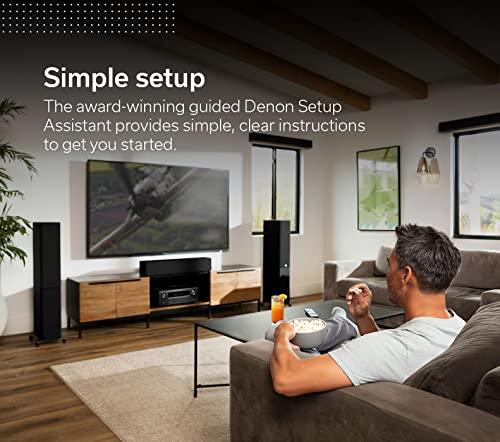
The Denon AVR-X2800H is generally better for beginners due to its simpler 7.2 channel setup and more automated Audyssey room correction. The Pioneer Elite VSX-LX305 offers more advanced features but requires more knowledge to fully utilize its 9.2 channel capabilities and Dirac Live room correction system.
The Denon AVR-X2800H with 7.2 channels can power seven speakers plus two subwoofers, supporting up to 5.1.2 Dolby Atmos setups. The Pioneer Elite VSX-LX305 with 9.2 channels adds two more speaker channels, enabling more complex configurations like 7.2.2 or 5.2.4 Dolby Atmos for larger rooms.
The Denon AVR-X2800H typically delivers better music performance thanks to its higher-resolution 384kHz/32-bit DACs and Pure Direct mode that bypasses all processing. While the Pioneer VSX-LX305 sounds excellent, it's more optimized for home theater use than critical music listening.
For most small to medium rooms, the Denon AVR-X2800H's 7.2 channels provide plenty of power and flexibility. The Pioneer Elite VSX-LX305's 9.2 channels become more valuable in larger rooms or if you plan to expand your speaker system significantly in the future.
Both receivers support modern gaming features like 4K/120Hz and VRR, but the Pioneer VSX-LX305 has a slight edge with more HDMI 2.1 inputs (7 vs 6) and a convenient front-panel HDMI port. The Denon AVR-X2800H still handles gaming excellently with three dedicated HDMI 2.1 inputs.
The Denon AVR-X2800H uses Audyssey MultEQ XT, a proven and automated system that works well for most rooms. The Pioneer Elite VSX-LX305 features Dirac Live room correction, which users consistently praise as more sophisticated and effective, especially for complex room acoustics.
The Pioneer VSX-LX305 provides more universal streaming support with Chromecast built-in, DTS Play-Fi, and Sonos integration, plus superior Bluetooth codec support (aptX HD). The Denon AVR-X2800H focuses on its HEOS ecosystem and AirPlay 2 but has more limited wireless audio quality.
Both receivers provide adequate power for most home theaters - the Denon AVR-X2800H delivers 95W per channel while the Pioneer VSX-LX305 offers 100W per channel. This small difference won't significantly impact volume levels, and both can drive most speakers effectively.
The Pioneer Elite VSX-LX305 excels for home theater with its IMAX Enhanced certification, superior Dirac Live room correction, and ability to create more complex Dolby Atmos configurations. The Denon AVR-X2800H still provides excellent movie performance but with fewer channels and less advanced room correction.
Yes, both the Denon AVR-X2800H and Pioneer VSX-LX305 support 8K/60Hz video passthrough. However, the Pioneer offers 8K support on all seven HDMI inputs, while the Denon provides 8K on three of its six inputs, with the remaining three handling 4K content.
The Denon AVR-X2800H typically offers better value for most users, providing excellent performance at a lower price point. The Pioneer VSX-LX305 costs more but delivers additional channels, advanced room correction, and enhanced connectivity that justify the premium for serious home theater enthusiasts.
Both receivers are well future-proofed with 8K video support and modern gaming features. The Pioneer VSX-LX305 offers slightly better future-proofing with more HDMI 2.1 inputs and 9.2 channel capability for system expansion. The Denon AVR-X2800H provides solid future-proofing for most users' needs at a more accessible price point.
We've done our best to create useful and informative comparisons to help you decide what product to buy. Our research uses advanced automated methods to create this comparison and perfection is not possible - please contact us for corrections or questions. These are the sites we've researched in the creation of this article: theaudiotailor.com.au - ecoustics.com - simplehomecinema.com - whathifi.com - audioadvisor.com - youtube.com - bestbuy.com - e-catalog.com - crutchfield.com - avsforum.com - crutchfield.com - whathifi.com - richersounds.com - bestbuy.com - accessories4less.com - projectorscreen.com - adiglobaldistribution.us - youtube.com - bestbuy.com - bestbuy.com - sweetwater.com - bestbuy.com - hifiheaven.net - forums.redflagdeals.com - audiosciencereview.com - sound-advice.online - pioneerav.ca - pioneerhomeusa.com - crutchfield.com - av-connection.com - pioneerhomeusa.com - avnirvana.com - walmart.com - bestbuy.com

Privacy Policy
Terms and Conditions - Affiliate Policy
Home Security
© Copyright 2008-2026.
11816 Inwood Rd #1211, Dallas, TX 75244