

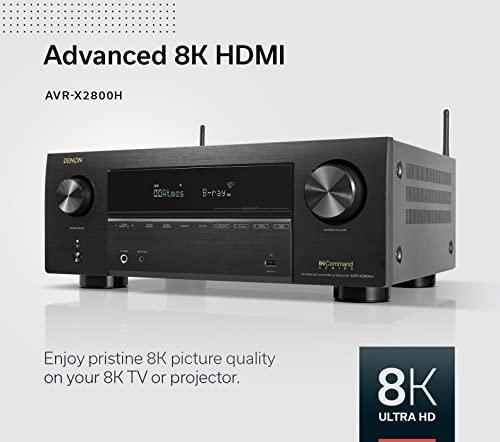
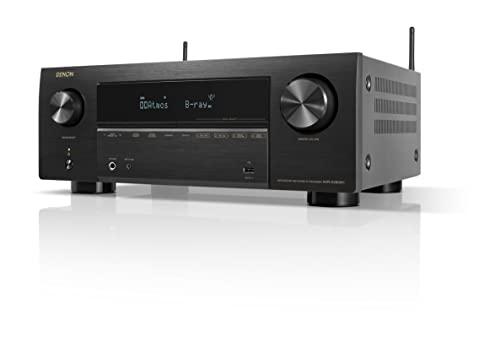
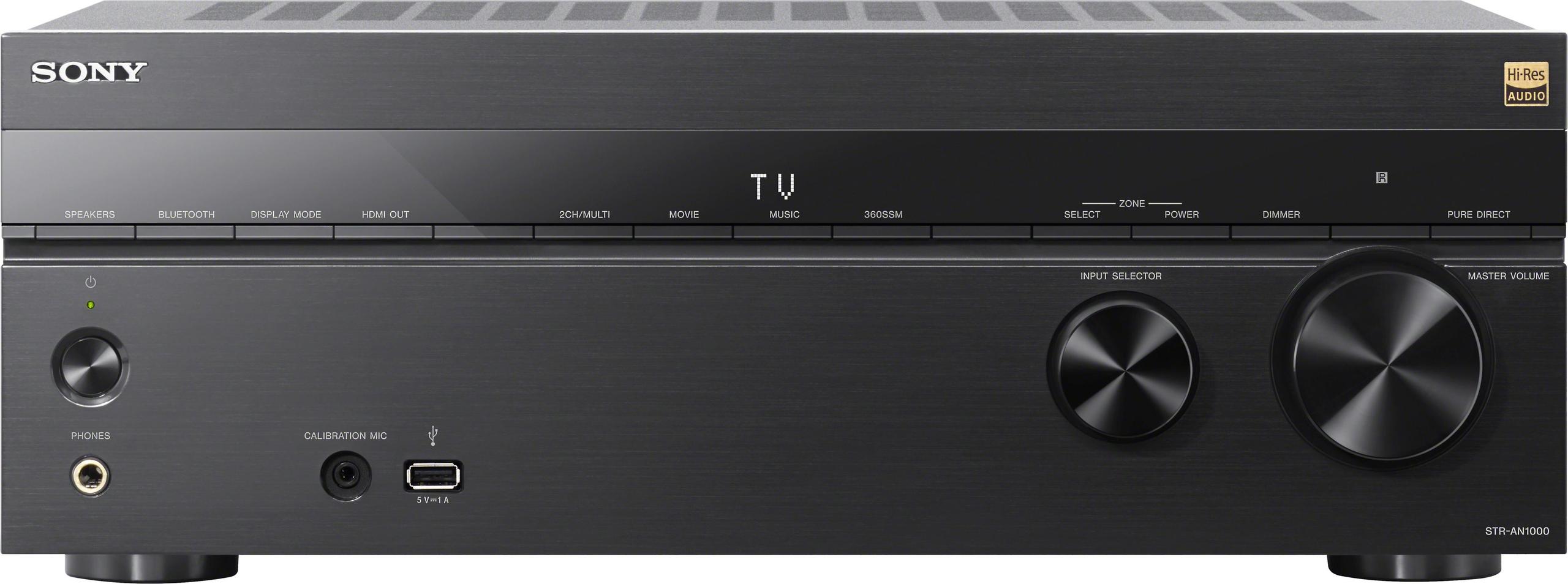


When you're building a serious home theater setup, the AV receiver becomes the heart of your entire system. These powerful devices combine amplification, audio processing, and video switching into one central hub that connects everything from your gaming consoles to your streaming devices. Today we're comparing two popular 7.2-channel receivers: the Denon AVR-X2800H and the Sony STR-AN1000, both released in 2022 and representing different philosophies in home theater design.
At the time of writing, these receivers occupy similar price brackets in the mid-range segment, though the Sony STR-AN1000 typically costs about $150-200 less than the Denon AVR-X2800H. This price difference becomes crucial when evaluating what you get for your money, especially since both units target the same 7.2-channel audience looking for modern 8K video support and immersive audio capabilities.
Before diving into specifics, it's worth understanding what makes an AV receiver tick. These units serve multiple roles: they amplify audio signals to drive your speakers, process surround sound formats like Dolby Atmos (which creates overhead sound effects for more realistic audio), decode video signals from multiple sources, and increasingly act as smart hubs for streaming services.
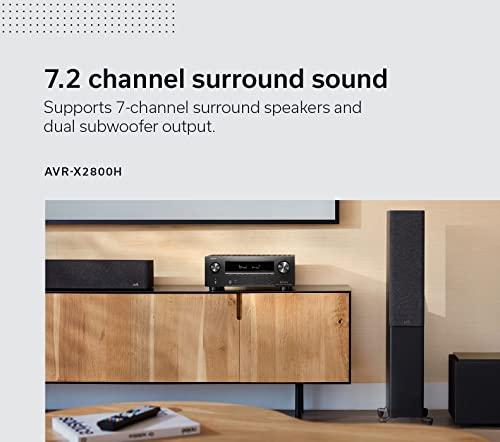
The "7.2" designation means these receivers can power seven main speakers plus two subwoofers. This typically translates to either a traditional 7.1 surround setup (front left/right, center, side left/right, rear left/right, plus subwoofer) or a more modern 5.1.2 Dolby Atmos configuration (five main speakers, one subwoofer, plus two overhead or upward-firing speakers for height effects).
When evaluating AV receivers, four key areas matter most: audio performance, video capabilities, connectivity options, and overall value. Audio performance encompasses not just raw power but also sound quality, room correction capabilities, and how well the unit handles different content types. Video capabilities have become increasingly important with 8K TVs and high-refresh gaming, while connectivity determines how many devices you can connect and how future-proof your setup will be.
The most fundamental difference between these receivers lies in their approach to audio. The Sony STR-AN1000 delivers 165 watts per channel into 6-ohm speakers, significantly more than the Denon AVR-X2800H's 95 watts per channel into 8-ohm loads. While these impedance ratings make direct comparison tricky, the Sony generally provides more headroom for demanding speakers and larger rooms.
More interesting than raw power is how these receivers handle sound. Based on extensive user feedback and professional reviews, the Sony STR-AN1000 takes a more aggressive, dynamic approach. Users consistently report punchy, engaging sound with impressive bass impact that doesn't become overwhelming. The Sony excels at making action movies feel more dramatic, with sound effects that have real weight and vocals that cut through complex soundtracks with enhanced detail and emotion.
The Denon AVR-X2800H, meanwhile, follows Denon's traditional philosophy of warmth and refinement. Users describe a more spacious soundstage with smoother overall presentation and particularly clear dialogue reproduction. The Denon's approach prioritizes musicality and long-term listening comfort over immediate impact. If you're someone who listens to a lot of music through your home theater system, this warmer character often proves more satisfying over extended sessions.
Both receivers support the latest immersive audio formats including Dolby Atmos and DTS:X, which create three-dimensional soundscapes by placing specific sounds at precise locations around and above the listener. However, they implement these technologies differently. The Sony STR-AN1000 includes Sony's proprietary 360 Spatial Sound Mapping (360 SSM), which uses advanced processing to create virtual speakers in your room, effectively expanding the soundstage beyond your physical speaker placement. This proves particularly valuable in rooms with challenging layouts where you can't place speakers in ideal positions.
The Denon AVR-X2800H relies on more traditional approaches like Dolby Atmos Height Virtualization and DTS Virtual:X, which simulate overhead effects through your existing speakers. While these work well, Sony's 360 SSM technology represents a more innovative approach to spatial audio that can transform problematic rooms into convincing surround sound environments.
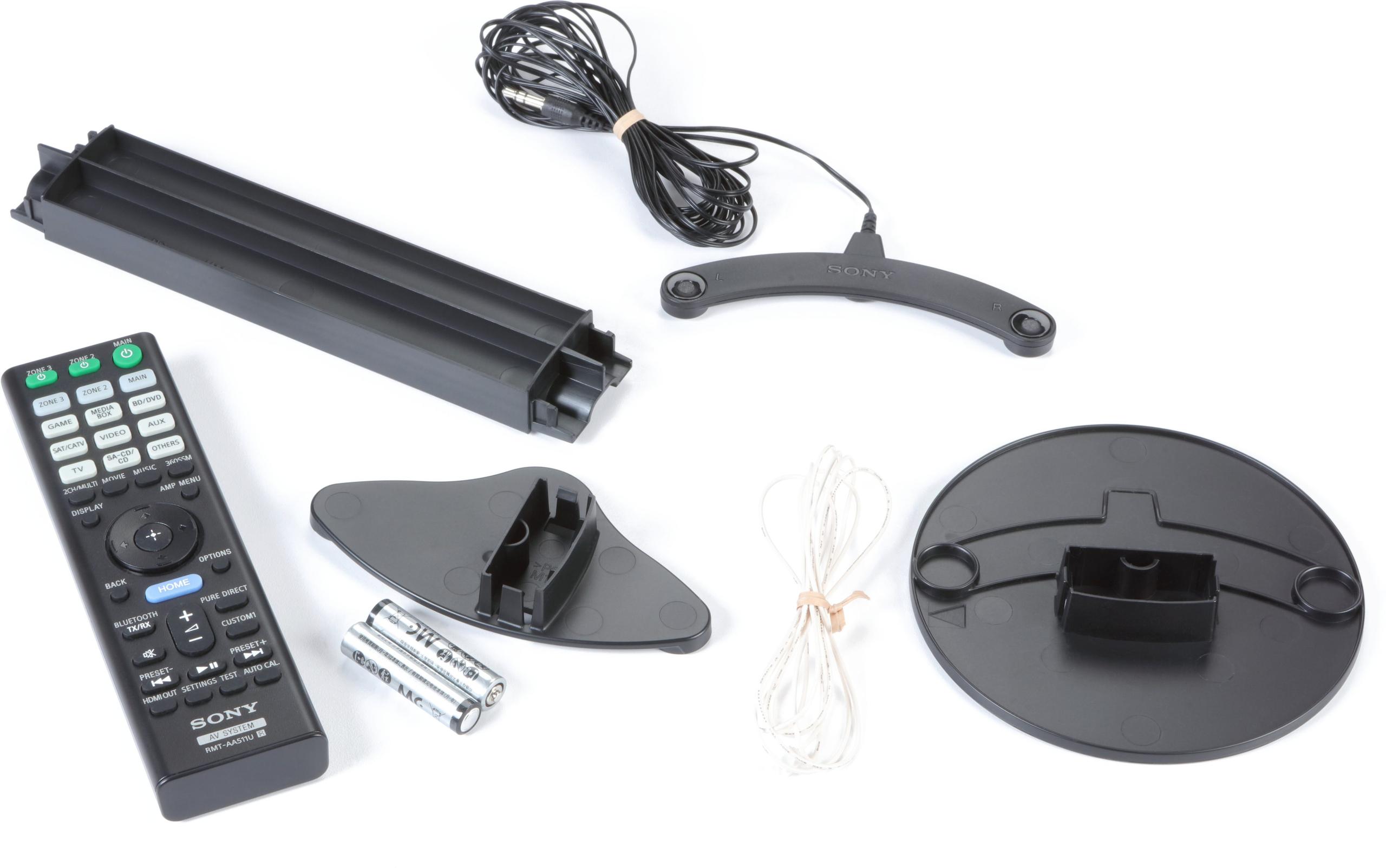
Room acoustics dramatically affect sound quality, which is why both receivers include sophisticated room correction systems. The Sony STR-AN1000 features Digital Cinema Auto Calibration IX (D.C.A.C. IX), which measures your speakers' three-dimensional positions and adjusts for distance, angle, sound pressure, and frequency response. Users report that Sony's system works faster and requires less intervention than competing solutions.
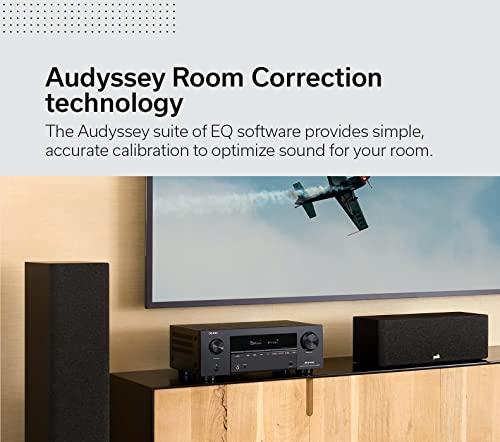
The Denon AVR-X2800H uses Audyssey MultEQ XT, which takes measurements from up to eight different listening positions to create a comprehensive acoustic map of your room. Audyssey has earned respect over many years for its thoroughness, and the system includes additional features like Dynamic Volume (which maintains dialogue clarity at low volumes) and Dynamic EQ (which adjusts frequency response based on volume level). However, Audyssey's setup process requires more time and user involvement than Sony's automated approach.
The choice between these systems often comes down to preference: Sony's approach gets you up and running quickly with good results, while Audyssey offers more granular control for users willing to invest time in fine-tuning their setup.
Both receivers embrace the latest video standards, supporting 8K/60Hz and 4K/120Hz passthrough with HDR (High Dynamic Range, which provides better contrast and color) support. However, their HDMI implementation differs in ways that matter for real-world use.
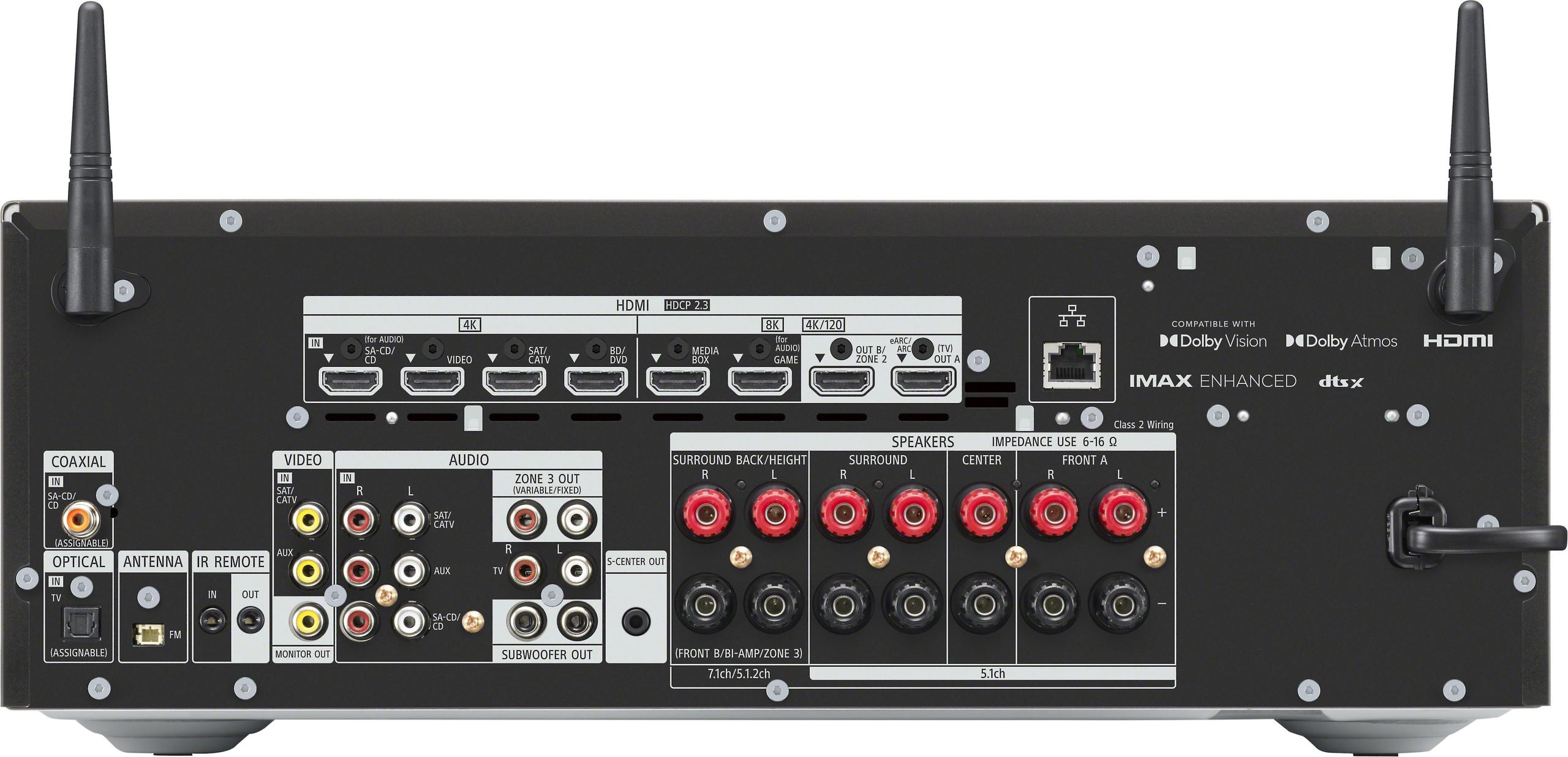
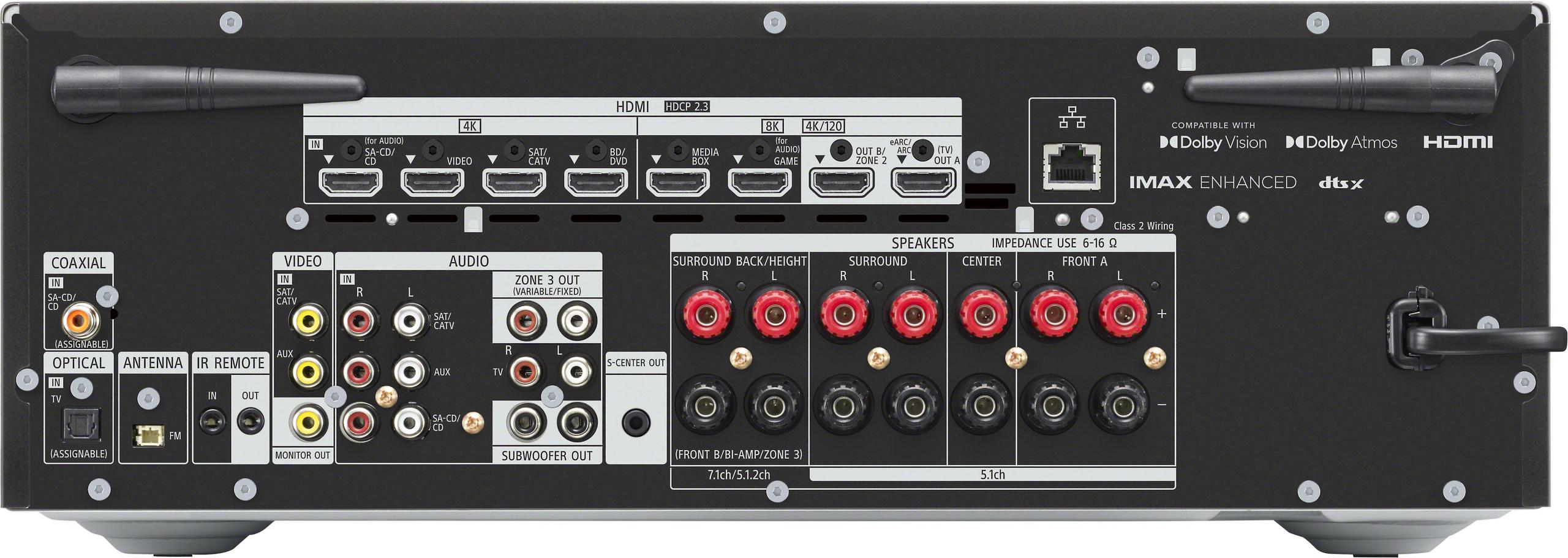
The Denon AVR-X2800H provides six HDMI inputs with three supporting full HDMI 2.1 specifications, while the Sony STR-AN1000 offers the same six inputs but only two with HDMI 2.1 capabilities. This difference becomes significant if you plan to connect multiple gaming consoles, as current-generation PlayStation 5 and Xbox Series X systems benefit from HDMI 2.1's high-bandwidth features.
For HDR support, the Denon AVR-X2800H includes HDR10+ compatibility alongside HDR10, Dolby Vision, and HLG (Hybrid Log Gamma). The Sony STR-AN1000 lacks HDR10+ support, which could matter if you own a Samsung TV that relies on this format for optimal performance with streaming content.
Gaming performance proves excellent on both receivers, with both supporting Variable Refresh Rate (VRR, which eliminates screen tearing), Auto Low Latency Mode (ALLM, which minimizes input delay), and Quick Frame Transport (QFT, which reduces motion blur). The Sony STR-AN1000 advertises gaming-optimized latency under 15 milliseconds, while the Denon AVR-X2800H focuses more on providing maximum connectivity flexibility for complex gaming setups.
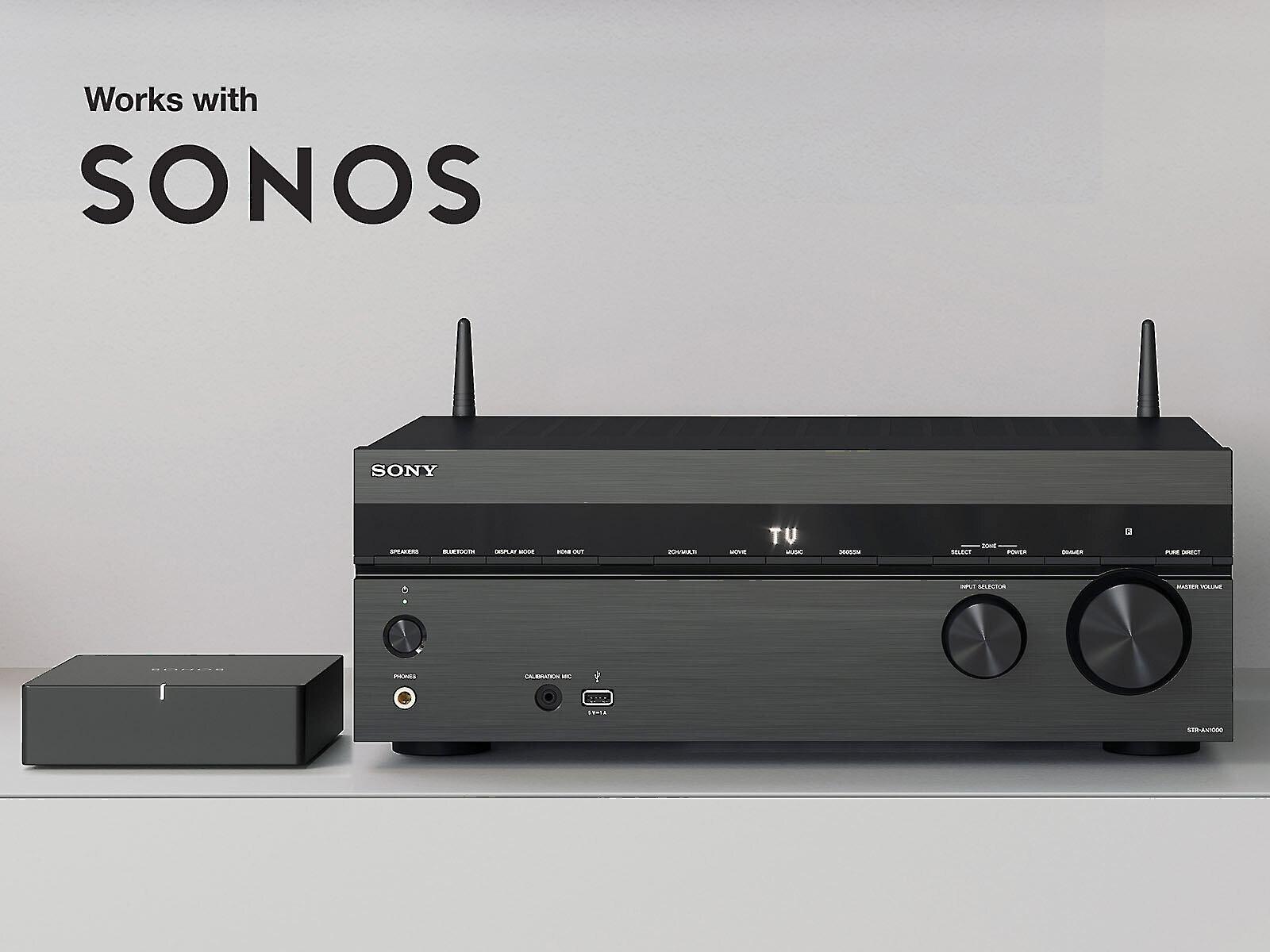
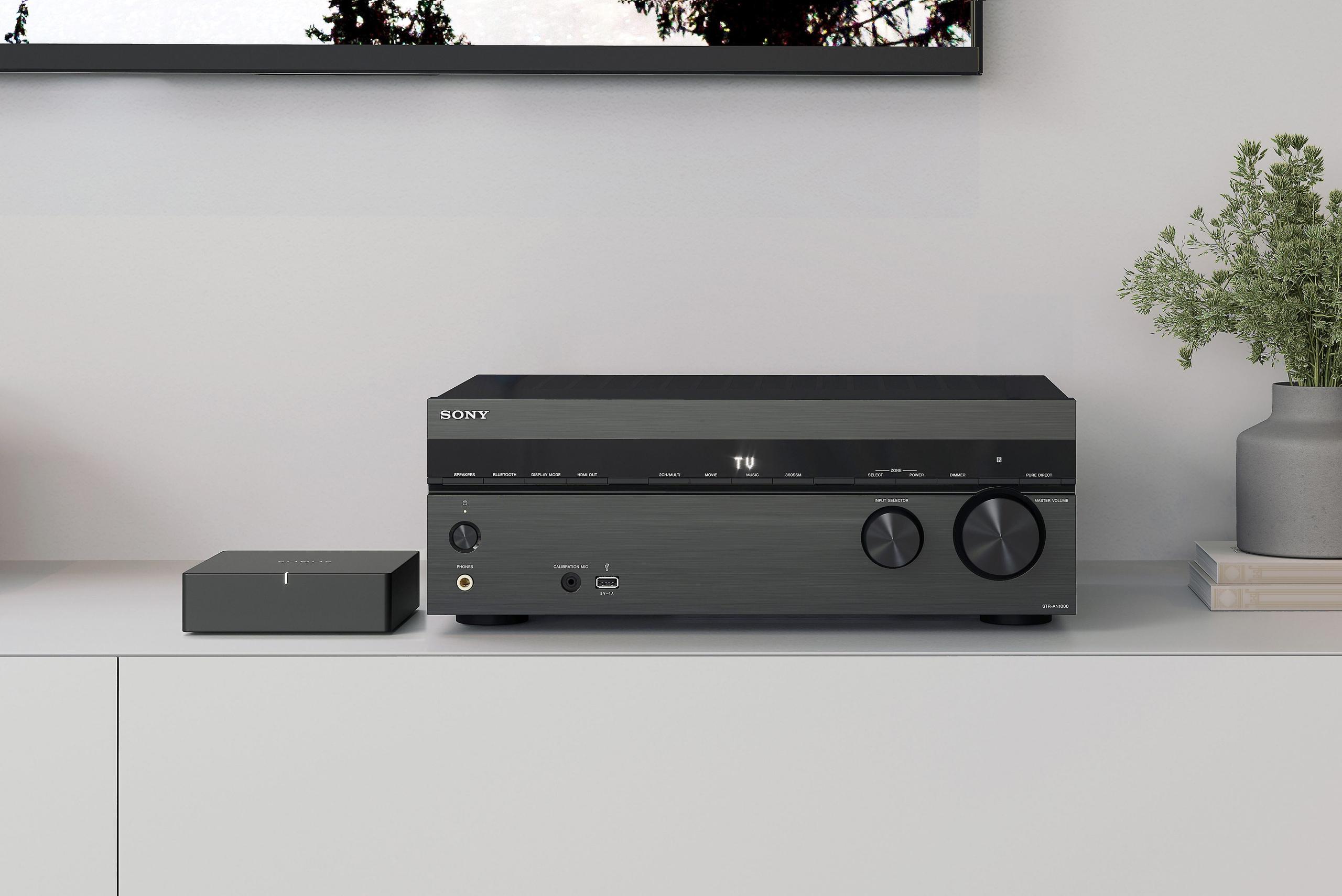
Modern AV receivers serve as smart home hubs, and both units embrace streaming and voice control. The Sony STR-AN1000 includes Chromecast Built-in, Works with Sonos integration, and supports major streaming services through Wi-Fi and Bluetooth. Sony's approach emphasizes simplicity and speed, getting you connected to your content quickly without complex setup procedures.
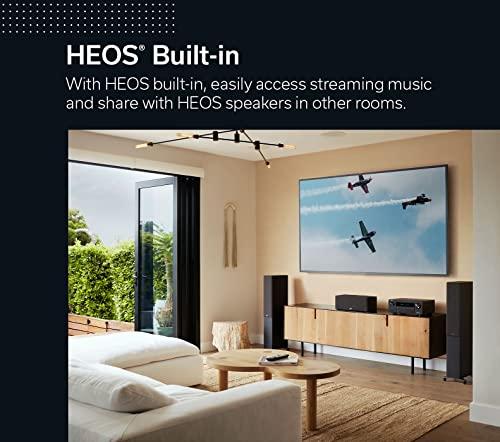
The Denon AVR-X2800H takes a more comprehensive approach with its HEOS multi-room system, which allows you to create a whole-home audio network with other HEOS-compatible devices. HEOS supports services like Deezer and Tidal directly, and the system integrates with voice assistants including Alexa and Google Assistant. The Denon also includes AM/FM radio tuning, making it a true AV receiver rather than just an AV amplifier like the Sony.
For streaming music, both receivers support Apple AirPlay 2, Spotify Connect, and Bluetooth connectivity. The Denon AVR-X2800H additionally supports Roon, which matters if you're serious about high-resolution music streaming and want advanced music library management.
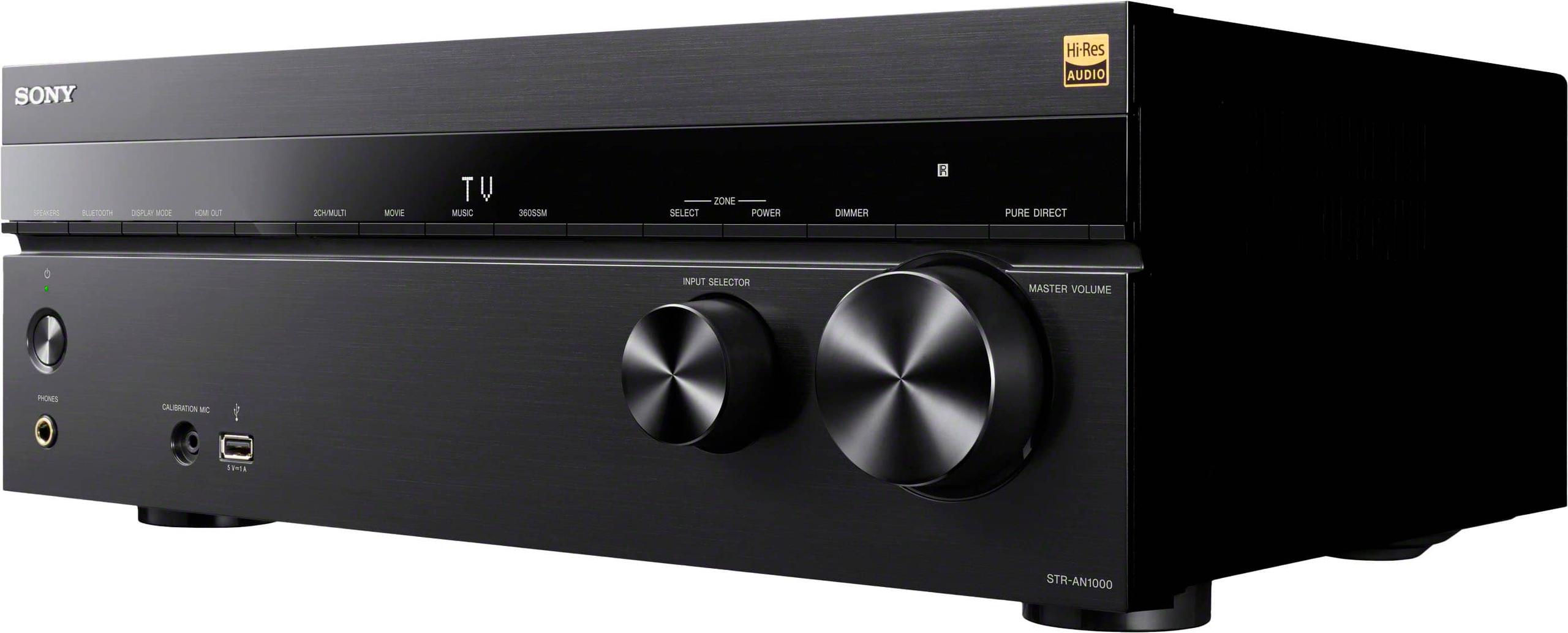
Both receivers demonstrate solid construction appropriate for their price ranges. The Denon AVR-X2800H follows traditional AV receiver design with comprehensive front-panel controls and a familiar button layout. Some users find the appearance somewhat conservative, but the build quality inspires confidence for long-term reliability.
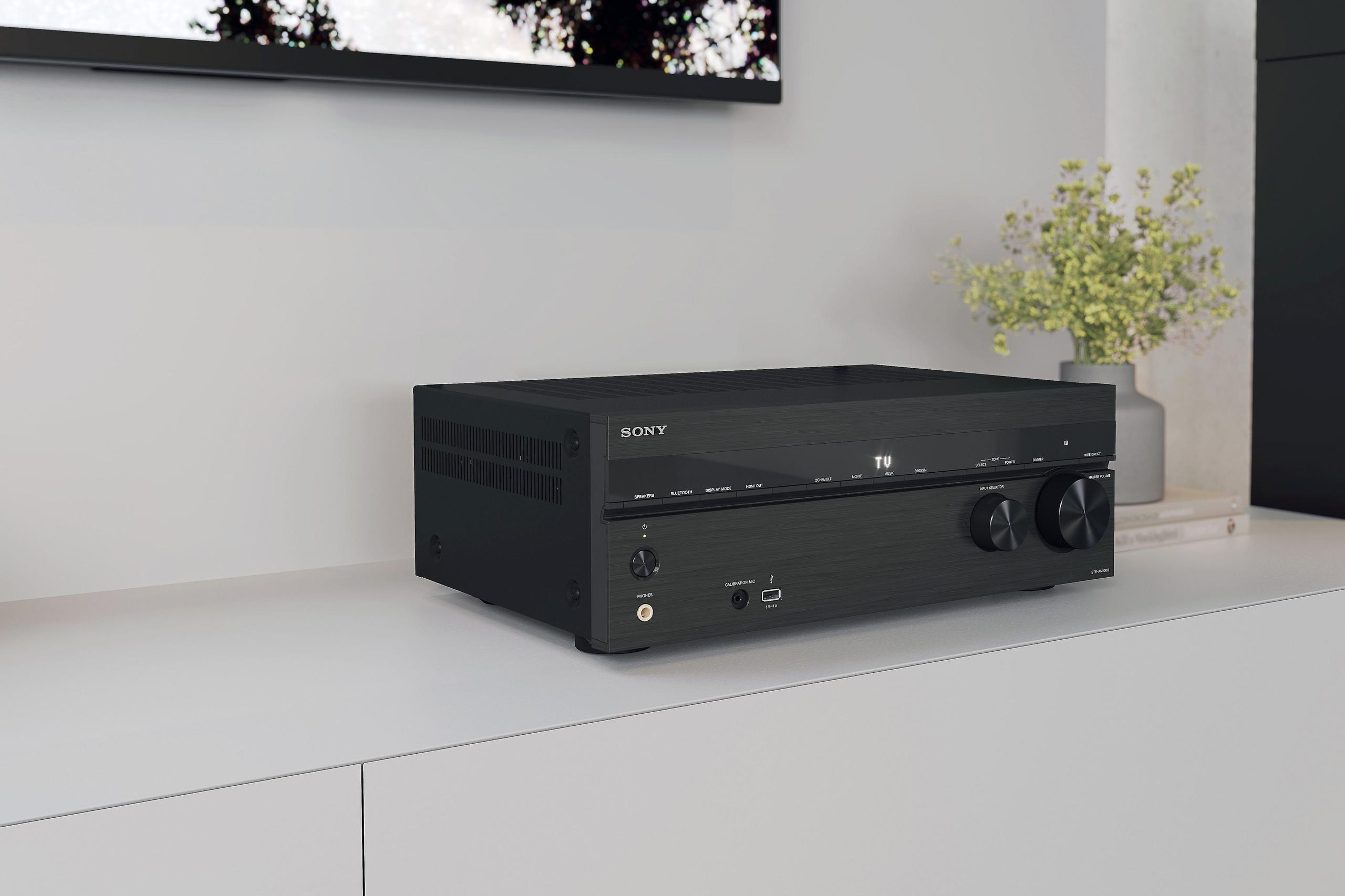
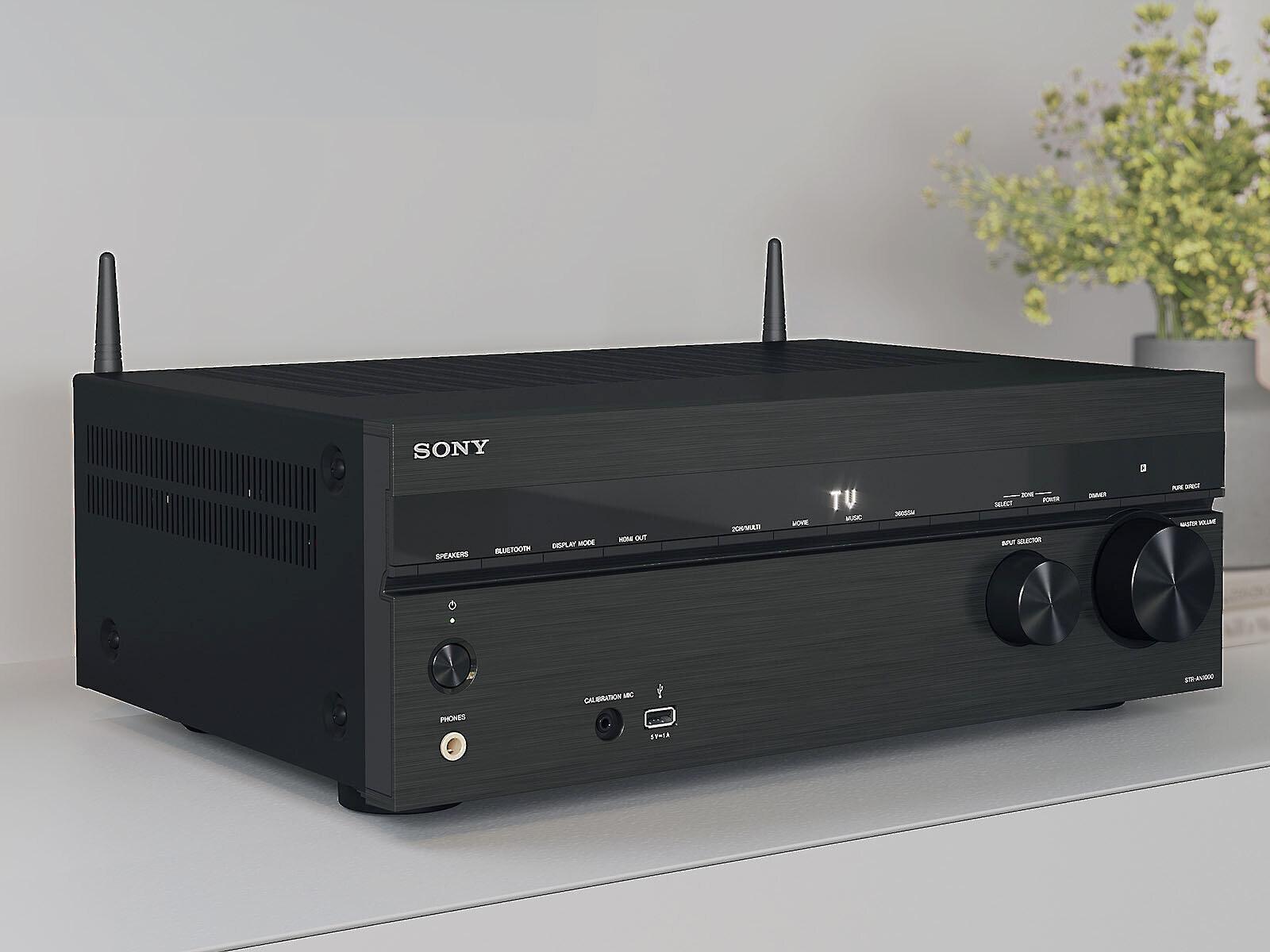
The Sony STR-AN1000 adopts a more modern aesthetic with streamlined controls and a focus on remote and app-based operation. Sony's approach reduces front-panel complexity but may require more reliance on the remote control for basic adjustments.
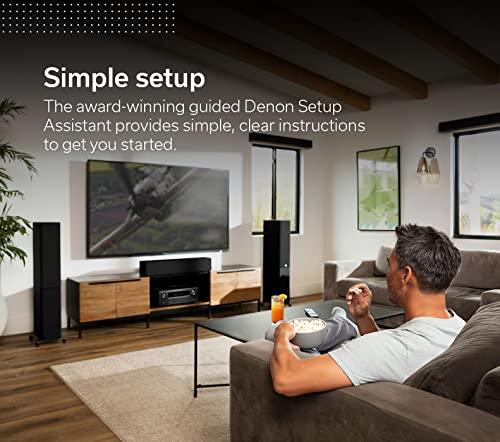
Setup experiences differ notably between these units. The Sony STR-AN1000 emphasizes quick, automated configuration that gets most users running with minimal intervention. The Denon AVR-X2800H offers more detailed setup options but requires more user involvement to achieve optimal results. Neither approach is inherently better, but they appeal to different user preferences.
In typical living room environments, these performance differences manifest in distinct ways. The Sony STR-AN1000 excels with action movies and gaming, where its dynamic sound signature and superior bass impact create more engaging experiences. Users report that action sequences feel more visceral, with sound effects that have genuine weight and presence. The 360 SSM processing proves particularly effective in rectangular rooms where traditional surround speaker placement proves challenging.
For mixed-use scenarios involving both movies and music, the Denon AVR-X2800H often provides more satisfying long-term performance. Its warmer sound signature proves less fatiguing during extended listening sessions, and the detailed room correction helps optimize performance across different content types. Music reproduction through the Denon tends to sound more natural and spacious, which matters if your home theater doubles as a serious music listening room.
Both receivers handle dialogue reproduction well, but they achieve clarity through different means. The Sony STR-AN1000 uses dynamic processing to make vocals cut through complex soundtracks, while the Denon AVR-X2800H relies on careful frequency balance to maintain dialogue intelligibility without artificial enhancement.
At the time of writing, the Sony STR-AN1000 typically costs $150-200 less than the Denon AVR-X2800H, making it the more affordable option with higher power output. This price advantage, combined with Sony's innovative 360 SSM technology and gaming optimizations, creates compelling value for users prioritizing performance per dollar.
However, the Denon AVR-X2800H justifies its premium through additional HDMI 2.1 ports, comprehensive multi-room capabilities, and broader ecosystem compatibility. For users planning complex installations with multiple video sources and whole-home audio integration, these features provide genuine value that extends beyond the receiver itself.
Long-term considerations favor different approaches depending on your priorities. The Sony STR-AN1000 offers more advanced spatial audio processing that may prove increasingly valuable as content creators embrace immersive audio formats. The Denon AVR-X2800H provides more comprehensive connectivity and established ecosystem support that typically ensures longer compatibility with emerging standards.
The Sony STR-AN1000 makes the most sense for users who prioritize engaging sound quality and modern features at competitive pricing. Choose Sony if you primarily watch action movies and play games, have a challenging room layout that could benefit from 360 SSM processing, or want maximum power output for your investment. The Sony also appeals to users who prefer streamlined setup processes and don't need extensive multi-room capabilities.
The Denon AVR-X2800H serves users who want comprehensive features and long-term flexibility. Choose Denon if you need three or more HDMI 2.1 connections for multiple gaming consoles, plan to build a multi-room audio system, listen to significant amounts of music through your home theater, or value extensive room correction options. The Denon also makes sense if you own Samsung TVs that benefit from HDR10+ support or prefer traditional AV receiver features like AM/FM radio.
For most buyers focused purely on performance value, the Sony STR-AN1000 offers superior power output and innovative features at a lower price. However, the Denon AVR-X2800H provides better long-term flexibility and ecosystem integration that may justify its premium for users planning complex installations or prioritizing future expandability.
Both receivers represent solid choices in the competitive 7.2-channel market, but they serve different philosophies of home theater design. Your choice ultimately depends on whether you prioritize immediate impact and value (Sony) or comprehensive features and long-term flexibility (Denon).
| Denon AVR-X2800H | Sony STR-AN1000 |
|---|---|
| Power Output - Higher watts drive larger speakers and fill bigger rooms | |
| 95W per channel (8 ohms) | 165W per channel (6 ohms) |
| HDMI 2.1 Ports - Essential for multiple gaming consoles and 8K devices | |
| 3 HDMI 2.1 inputs (more future-proof) | 2 HDMI 2.1 inputs (may limit multi-console setups) |
| HDR Support - Determines compatibility with your TV's best picture modes | |
| HDR10, HDR10+, Dolby Vision, HLG | HDR10, Dolby Vision, HLG (missing HDR10+) |
| Room Correction - Automatically optimizes sound for your specific space | |
| Audyssey MultEQ XT (8 measurement positions) | Digital Cinema Auto Calibration IX (faster setup) |
| Unique Audio Technology - Proprietary features that set each apart | |
| Dolby Atmos Height Virtualization, DTS Virtual:X | 360 Spatial Sound Mapping (creates phantom speakers) |
| Multi-Room Audio - Extends music throughout your home | |
| HEOS built-in (comprehensive whole-home system) | Works with Sonos (basic integration) |
| Streaming Services - Built-in access to music platforms | |
| Spotify, HEOS, Deezer, Tidal, Roon | Spotify, Chromecast, Apple AirPlay 2 |
| Traditional Features - Classic AV receiver capabilities | |
| AM/FM radio, full AV receiver | No radio, AV amplifier design |
| Sound Character - Overall sonic personality based on user feedback | |
| Warm, spacious, refined (better for music) | Dynamic, punchy, engaging (better for movies/gaming) |
| Setup Complexity - Time investment required for optimal performance | |
| More detailed setup options (requires user involvement) | Faster automated calibration (streamlined process) |
The Sony STR-AN1000 delivers more dynamic, punchy sound that excels with action movies and gaming, while the Denon AVR-X2800H offers warmer, more refined audio that's particularly good for music listening. The Sony STR-AN1000 provides better bass impact and emotional engagement, whereas the Denon AVR-X2800H creates a more spacious soundstage with smoother long-term listening comfort.
The Sony STR-AN1000 outputs 165 watts per channel into 6-ohm speakers, significantly more than the Denon AVR-X2800H's 95 watts per channel into 8-ohm speakers. This gives the Sony STR-AN1000 more headroom for demanding speakers and larger rooms, making it better suited for high-volume listening.
Both receivers excel for gaming, but the Sony STR-AN1000 advertises optimized latency under 15 milliseconds and focuses on gaming performance. However, the Denon AVR-X2800H offers three HDMI 2.1 ports compared to Sony's two, providing more flexibility for connecting multiple gaming consoles like PlayStation 5 and Xbox Series X.
Yes, both the Denon AVR-X2800H and Sony STR-AN1000 support 8K/60Hz and 4K/120Hz passthrough with gaming features like Variable Refresh Rate (VRR) and Auto Low Latency Mode (ALLM). The key difference is that the Denon AVR-X2800H has more HDMI 2.1 ports for future expansion.
The Sony STR-AN1000 features faster, more automated room correction with Digital Cinema Auto Calibration IX, while the Denon AVR-X2800H uses Audyssey MultEQ XT with up to 8 measurement positions. Sony's system gets you running quickly, while Denon's offers more detailed control for users willing to invest setup time.
Both receivers support Spotify Connect, Apple AirPlay 2, and Bluetooth. The Sony STR-AN1000 includes Chromecast Built-in and Works with Sonos, while the Denon AVR-X2800H features the comprehensive HEOS multi-room system with Deezer, Tidal, and Roon support. The Denon AVR-X2800H also includes AM/FM radio.
The Sony STR-AN1000 offers faster, more streamlined setup with automated calibration that requires minimal user intervention. The Denon AVR-X2800H provides more detailed setup options but requires more time and user involvement to achieve optimal results.
Both receivers support Dolby Atmos and DTS:X, but they implement spatial audio differently. The Sony STR-AN1000 includes innovative 360 Spatial Sound Mapping that creates virtual speakers for enhanced spatial effects, while the Denon AVR-X2800H uses traditional Dolby Atmos Height Virtualization and DTS Virtual:X processing.
The Sony STR-AN1000 typically costs less while providing higher power output and innovative spatial audio technology, making it better value for pure performance. The Denon AVR-X2800H costs more but includes additional HDMI 2.1 ports, comprehensive multi-room capabilities, and broader ecosystem compatibility.
The Denon AVR-X2800H provides six HDMI inputs with three supporting HDMI 2.1, while the Sony STR-AN1000 offers six inputs but only two with HDMI 2.1 capabilities. The Denon AVR-X2800H also supports HDR10+ for Samsung TVs, which the Sony STR-AN1000 lacks.
The Sony STR-AN1000 is generally better for large rooms due to its higher 165-watt power output compared to the Denon AVR-X2800H's 95 watts. The Sony's more dynamic sound signature and superior bass impact also help fill larger spaces more effectively.
Choose the Sony STR-AN1000 if you prioritize powerful, engaging sound for movies and gaming at a lower cost, or have challenging room acoustics. Choose the Denon AVR-X2800H if you need maximum HDMI connectivity, want comprehensive multi-room audio, listen to lots of music, or prefer warmer, more refined sound quality.
We've done our best to create useful and informative comparisons to help you decide what product to buy. Our research uses advanced automated methods to create this comparison and perfection is not possible - please contact us for corrections or questions. These are the sites we've researched in the creation of this article: theaudiotailor.com.au - ecoustics.com - simplehomecinema.com - whathifi.com - audioadvisor.com - youtube.com - bestbuy.com - e-catalog.com - crutchfield.com - avsforum.com - crutchfield.com - whathifi.com - richersounds.com - bestbuy.com - accessories4less.com - projectorscreen.com - adiglobaldistribution.us - youtube.com - bestbuy.com - bestbuy.com - sweetwater.com - tomsguide.com - electronics.sony.com - klarna.com - crutchfield.com - cnet.com - skybygramophone.com - bestbuy.com - sony.com - videoandaudiocenter.com - youtube.com - us.community.sony.com - sony-asia.com

Privacy Policy
Terms and Conditions - Affiliate Policy
Home Security
© Copyright 2008-2026.
11816 Inwood Rd #1211, Dallas, TX 75244