

When you're ready to build a serious home theater, the AV receiver becomes the heart of your entire system. It's the command center that processes your movies' soundtracks, amplifies audio to your speakers, switches between video sources, and handles everything from Netflix to your gaming console. Getting this choice right affects every movie night for years to come.
Today we're comparing two receivers that represent completely different philosophies: the Denon AVR-X2800H, a 7.2-channel mid-range champion, and the Yamaha Aventage RX-A8A, an 11.2-channel flagship powerhouse. At the time of writing, these receivers sit about $1,900 apart in pricing, which immediately tells you they're targeting different audiences despite sharing core functionality.
Before diving into specifics, let's establish what really matters in an AV receiver. The channel count (like 7.2 or 11.2) tells you how many speakers the receiver can handle – the first number is regular speakers, the second is subwoofers. Power output, measured in watts per channel, determines how loud and clean your audio can get. Modern receivers also process surround sound formats like Dolby Atmos, which creates three-dimensional audio by bouncing sound off your ceiling.
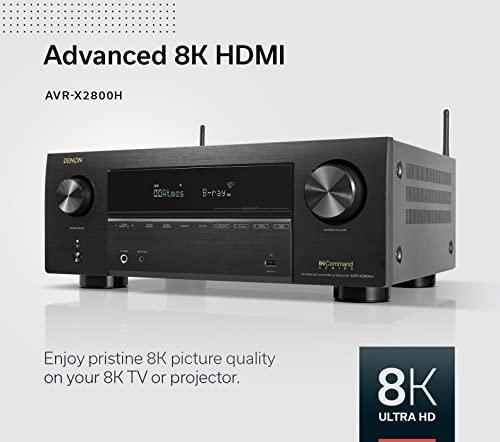
Video processing has become equally important. These receivers switch between your cable box, gaming console, and streaming devices while supporting the latest video standards. HDMI 2.1 support means your receiver can handle 4K video at 120Hz refresh rates – crucial for modern gaming – and even 8K video for future-proofing.
Room correction systems use microphones to measure your space and automatically adjust the audio to compensate for your room's acoustics. This technology can make a dramatic difference in how your system sounds, essentially giving you a professional calibration without hiring an expert.
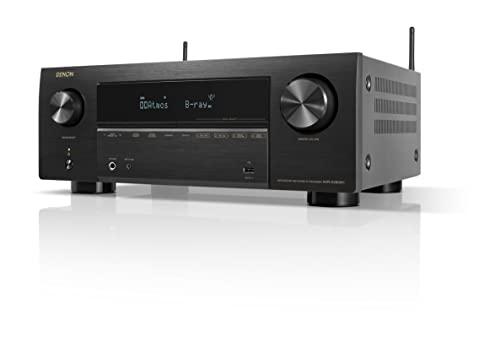
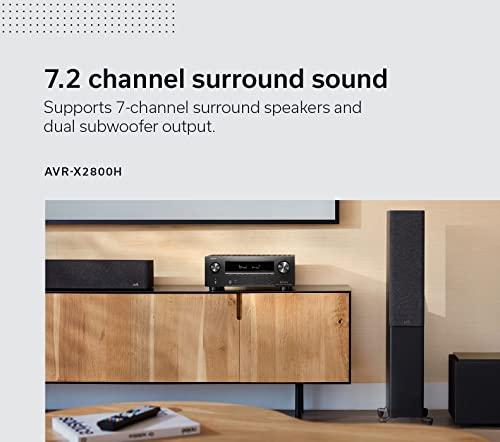
The Denon AVR-X2800H launched in 2022 as part of Denon's updated mid-range lineup. It earned What Hi-Fi?'s award for best entry-level receiver that year, which speaks volumes about its value proposition. This 7.2-channel receiver focuses on delivering premium features without the complexity or cost of flagship models.
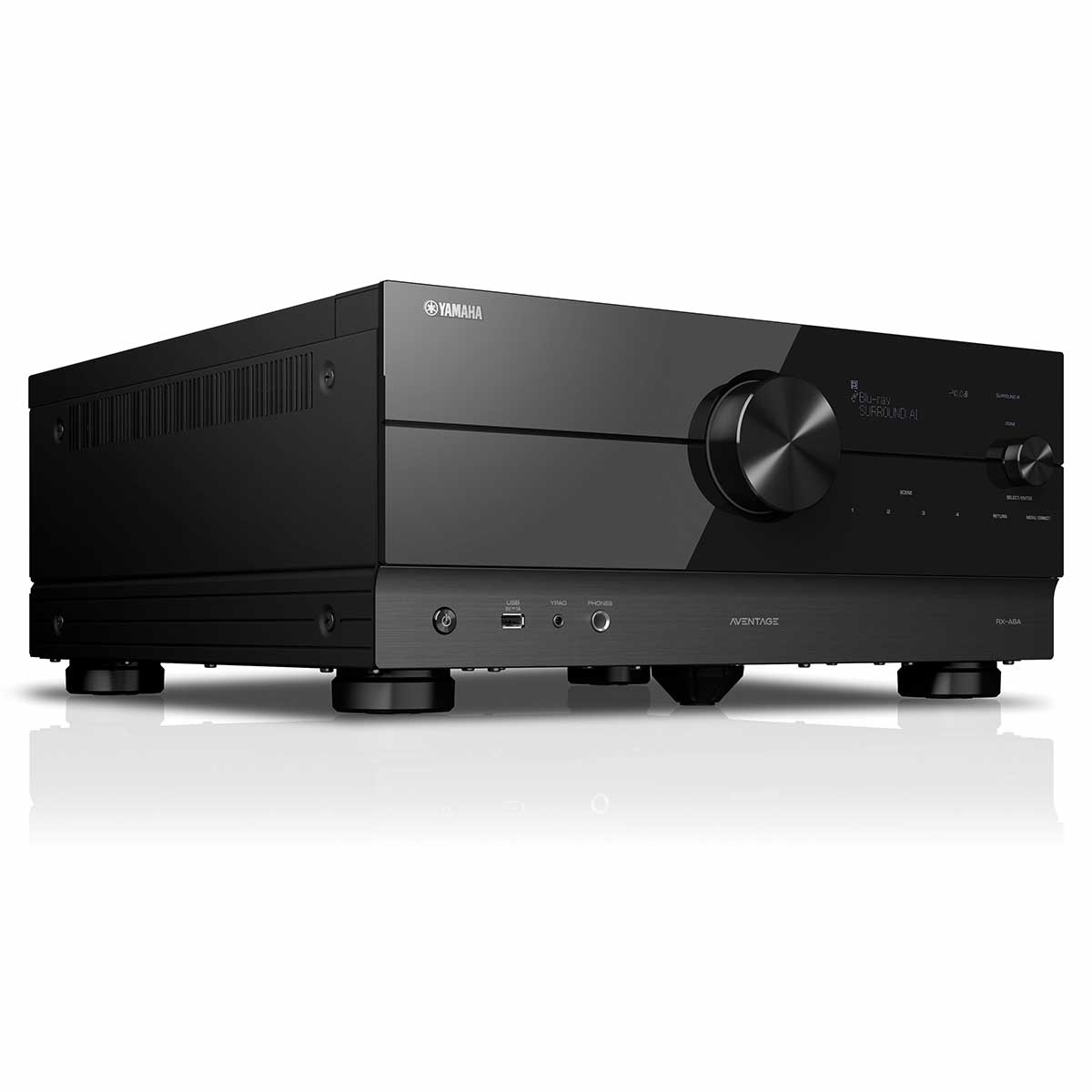
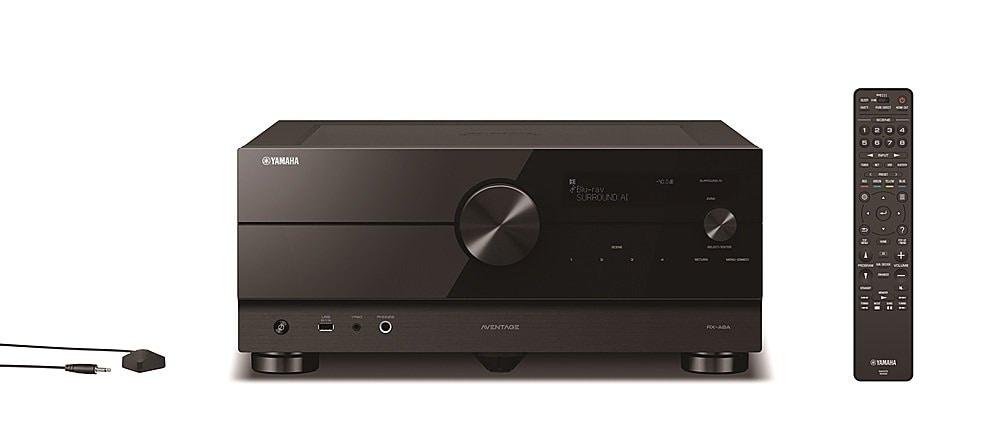
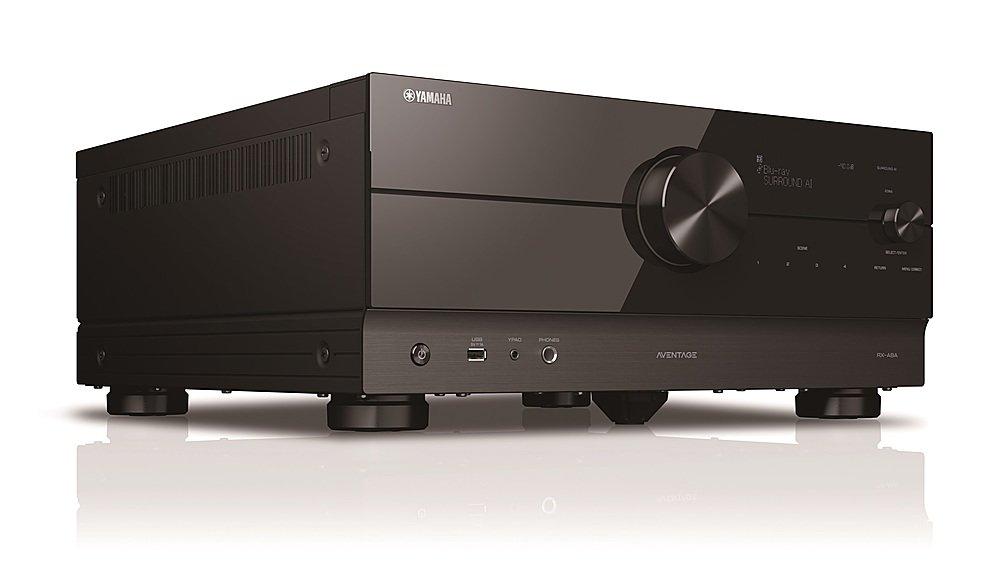
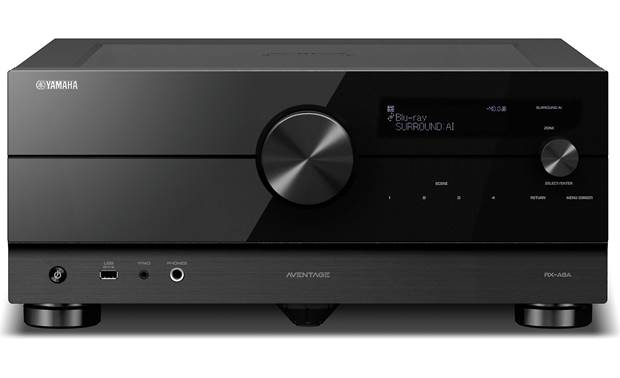
The Yamaha Aventage RX-A8A, released around 2021, represents the absolute pinnacle of Yamaha's receiver lineup. As their flagship 11.2-channel model, it's designed for enthusiasts who want no compromises and have the budget to match. The Aventage series has always been Yamaha's premium line, and the RX-A8A sits at its apex.
The timing difference matters here. The Denon benefits from being newer, incorporating lessons learned from earlier models and featuring updated HDMI capabilities that were still evolving when the Yamaha launched.
When it comes to amplification, these receivers take notably different approaches. The Denon AVR-X2800H delivers 95 watts per channel using a Class AB amplifier design with discrete channels. While 95 watts might sound modest, it's measured under strict conditions (2-channel driven at 8 ohms with minimal distortion), making it adequate for most rooms and speaker setups.
The Yamaha RX-A8A steps up significantly with 150 watts per channel under the same conditions, scaling up to 230 watts when driving a single channel at 4 ohms. This isn't just about volume – extra headroom means cleaner sound during demanding passages and better control over your speakers, especially important with larger, more demanding speakers or in bigger rooms.
But raw power tells only part of the story. The Yamaha's high slew rate amplifier design means it can respond more quickly to audio signals, particularly important for transient sounds like drum hits or explosive effects. The receiver also features intelligent amplifier assignment, automatically allocating its 11 channels based on your speaker configuration and what you're watching.
For most home theaters, the Denon's amplification proves perfectly adequate. Our research into user experiences consistently shows satisfaction with its power delivery in rooms up to medium-large sizes. However, if you're dealing with inefficient speakers, a large room, or simply want maximum headroom for dynamics, the Yamaha's extra muscle becomes genuinely beneficial rather than just impressive on paper.
Modern AV receivers do far more than just amplify signals – they're sophisticated audio processors that can transform how movies and music sound in your room. Both receivers support Dolby Atmos and DTS:X, the current standards for immersive surround sound that place audio objects in three-dimensional space around you.
The Denon AVR-X2800H uses 32-bit/192kHz Texas Instruments DACs (digital-to-analog converters) across all channels. DACs convert the digital audio from your sources into analog signals your speakers can reproduce. Higher-quality DACs generally mean better audio fidelity, and having identical DACs on every channel ensures consistent sound quality throughout your surround setup.
Where the Denon really shines is in its sonic character. Based on extensive user feedback and professional reviews, the 2022 model received significant tuning improvements over its predecessor. The sound signature is described as refined and balanced, with authoritative weight that makes action movies impactful while remaining musical enough for serious stereo listening. This represents a sweet spot that many find immediately appealing without extensive tweaking.
The Yamaha RX-A8A takes audio processing to another level entirely. It employs dual ESS Sabre Pro Premier ES9026PRO DACs, widely considered among the best available. These DACs support up to 32-bit/384kHz processing with advanced jitter reduction – essentially, they can handle higher-resolution audio with less digital noise.
But the Yamaha's real distinction lies in its processing sophistication. Surround:AI analyzes incoming audio in real-time, optimizing surround effects based on content type. Cinema DSP HD3 adds venue-specific reverb and ambiance, while Virtual Presence Speaker technology can convincingly simulate additional speakers you don't actually have. User reports consistently mention being unable to tell whether certain effects were coming from real speakers or virtual processing – a testament to how advanced this technology has become.
The Yamaha also offers three selectable DAC filters: Sharp Roll-Off for maximum clarity, Slow Roll-Off for a gentler presentation, and Short Latency for gaming applications. This level of customization appeals to enthusiasts who enjoy fine-tuning their systems.
From a sonic perspective, Yamaha traditionally delivers a more neutral, precise character compared to Denon's warmer approach. The RX-A8A continues this tradition, offering exceptional detail retrieval and accuracy that some prefer for critical listening, though others find the Denon's more immediately engaging character more appealing.
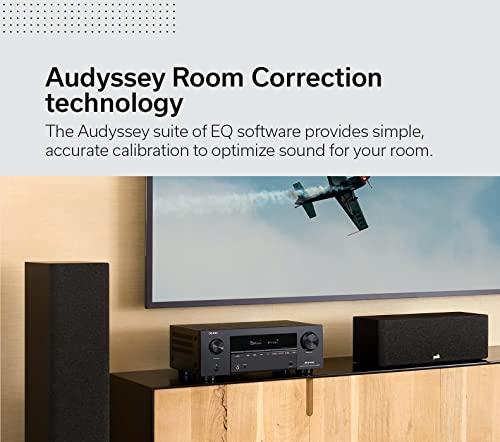
Both receivers include automatic room correction systems, but they work differently and achieve different results. The Denon AVR-X2800H uses Audyssey MultEQ XT, which measures up to eight listening positions using the included microphone. This system has earned praise for its effectiveness across various room types and its relatively straightforward setup process.
Audyssey's strength lies in its broad compatibility and generally pleasing results without extensive user intervention. The system measures each speaker's response, adjusts timing to account for different distances, and applies equalization to smooth frequency response irregularities caused by room acoustics. Most users find the results immediately improve their system's sound.
The Yamaha RX-A8A employs YPAO (Yamaha Parametric Room Acoustic Optimizer), which offers more detailed measurements and adjustments. However, professional reviews have noted that while YPAO is sophisticated, it sometimes requires more user knowledge to achieve optimal results compared to Audyssey's more automated approach.
Based on our research of user experiences, the Denon's Audyssey system tends to deliver consistently good results with minimal fiddling, while the Yamaha's YPAO offers more potential for optimization but may require more expertise to fully exploit.
Video processing has become increasingly important as display technology advances. The Denon AVR-X2800H addresses this head-on with six HDMI inputs, three of which support HDMI 2.1 specifications. This means 8K video at 60Hz or 4K at 120Hz can pass through these inputs – crucial for modern gaming consoles like the PlayStation 5 or Xbox Series X.
The Denon also supports Variable Refresh Rate (VRR), Auto Low Latency Mode (ALLM), and Quick Frame Transport (QFT) – gaming features that reduce input lag and eliminate screen tearing. For gamers, these features can provide a competitive advantage and smoother experience. All HDMI inputs also support 8K upscaling, so even older sources benefit from improved video processing.
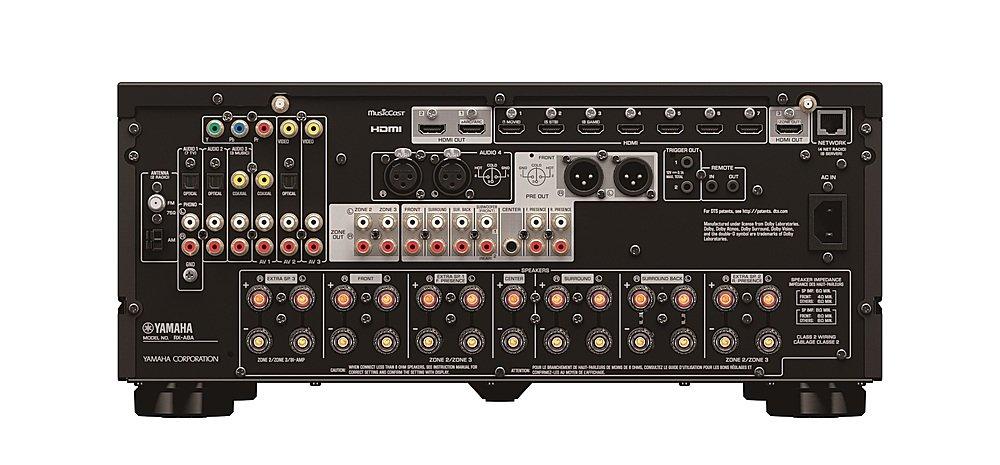
The Yamaha RX-A8A offers seven HDMI inputs and three outputs, providing more connection flexibility. However, its HDMI 2.1 features came via firmware updates, reflecting its earlier development timeline. While it ultimately supports the same modern standards, the Denon's more recent design incorporated these features from the ground up.
Both receivers support eARC (enhanced Audio Return Channel), allowing high-quality audio from your TV's built-in streaming apps to reach the receiver via a single HDMI cable. This seemingly simple feature dramatically improves user experience by eliminating the need for separate audio connections.
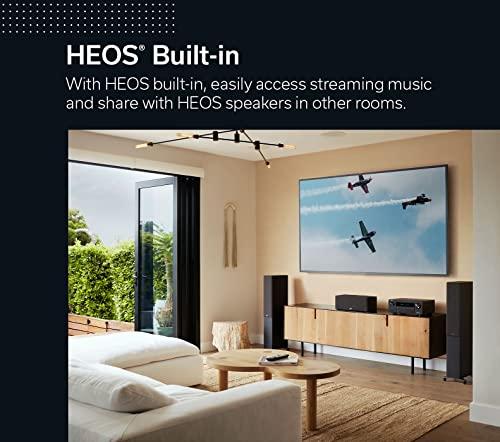
Modern receivers must integrate seamlessly with streaming services and smart home ecosystems. The Denon AVR-X2800H includes HEOS built-in, Denon's multi-room platform that works with Spotify Connect, Tidal, and other services. AirPlay 2 support means easy streaming from Apple devices, while Bluetooth handles quick connections from any phone or tablet.
Voice assistant integration with Alexa, Google Assistant, and Siri adds convenience for those building smart home systems. The Denon also includes a Moving Magnet phono input for turntable enthusiasts – a nice touch in an increasingly vinyl-friendly world.
The Yamaha RX-A8A counters with MusicCast, Yamaha's ecosystem that's particularly strong for multi-zone audio distribution. The receiver supports extensive file formats including high-resolution DSD up to 11.2MHz, appealing to serious music enthusiasts with large digital collections. Its four-zone capability means you can have different audio in multiple rooms simultaneously.
Both platforms work well, but HEOS tends to integrate more broadly with popular streaming services, while MusicCast excels at high-resolution audio and multi-zone applications.
At the time of writing, the Denon AVR-X2800H represents exceptional value in the mid-range market. Its award-winning combination of features, performance, and price makes it accessible to enthusiasts who want premium capabilities without flagship costs. For many users, it provides everything needed for an excellent home theater experience.
The Yamaha RX-A8A commands significantly more money but delivers flagship performance that justifies its premium positioning. You're paying for maximum power, sophisticated processing, extensive customization options, and the ability to handle complex installations that would overwhelm lesser receivers.
The price difference isn't just about features – it reflects different target audiences. The Denon serves users building their first serious home theater or upgrading from basic equipment. The Yamaha targets experienced enthusiasts who understand the benefits of premium components and have systems that can exploit flagship capabilities.
Choose the Denon AVR-X2800H if you want award-winning performance without complexity or flagship pricing. It's ideal for small to medium rooms, first-time serious home theater builders, and anyone who values a refined, musical sound character. The receiver provides all modern features including Dolby Atmos, 8K support, and gaming capabilities while remaining user-friendly and immediately satisfying.
The Yamaha Aventage RX-A8A makes sense for serious enthusiasts with larger rooms, complex speaker configurations, or multi-zone requirements. If you enjoy customizing your audio experience, need maximum power headroom, or want the absolute best processing Yamaha offers, the flagship pricing becomes justified.
Consider your room size, speaker demands, and complexity preferences. The Denon excels at delivering premium performance simply and effectively. The Yamaha provides maximum capability for those who need it and can utilize it.
Both receivers represent excellent engineering within their respective market segments. Your choice should align with both your performance requirements and budget reality, as each excels at serving its intended audience. The Denon AVR-X2800H proves that outstanding home theater doesn't require flagship investment, while the Yamaha RX-A8A demonstrates what becomes possible when budget isn't the primary constraint.
| Denon AVR-X2800H | Yamaha Aventage RX-A8A |
|---|---|
| Channel Configuration - Determines speaker setup flexibility | |
| 7.2 channels (supports 7.1 or 5.1.2 Atmos) | 11.2 channels (supports complex setups like 7.2.4 Atmos) |
| Power Output - Critical for driving speakers and room size | |
| 95W per channel (adequate for most rooms) | 150W per channel (excellent headroom for large rooms) |
| HDMI Inputs - Number of devices you can connect | |
| 6 inputs (3 HDMI 2.1, 3 HDMI 2.0) | 7 inputs (all support modern standards) |
| 8K/4K120 Support - Future-proofing for gaming and video | |
| 3 HDMI 2.1 ports with full gaming features | Full support via firmware updates |
| Room Correction - Automatically optimizes sound for your space | |
| Audyssey MultEQ XT (user-friendly, consistently good) | YPAO (more detailed but requires more expertise) |
| Audio Processing - Quality of digital-to-analog conversion | |
| 32-bit TI DACs on all channels | Dual ESS Sabre Pro Premier DACs (flagship quality) |
| Multi-Zone Capability - Audio in multiple rooms | |
| Zone 2 support | 4-zone capability with intelligent assignment |
| Sound Character - Overall sonic personality | |
| Warm, musical, immediately engaging | Neutral, precise, detail-focused |
| Advanced Audio Features - Sophisticated processing options | |
| Dolby Atmos, DTS:X, Height Virtualization | Surround:AI, Cinema DSP HD3, Virtual Presence Speakers |
| Streaming Integration - Built-in music services | |
| HEOS platform with broad service support | MusicCast with high-res audio focus |
| Target Market - Who each receiver is designed for | |
| First serious home theater, excellent value | Flagship performance, no-compromise enthusiasts |
| Setup Complexity - How much expertise required | |
| User-friendly with modern interface | Extensive customization options, more complex |
The Denon AVR-X2800H is better for most people due to its excellent value proposition and user-friendly design. It delivers award-winning performance with all essential modern features including Dolby Atmos, 8K support, and gaming capabilities at a much more accessible price point than the Yamaha Aventage RX-A8A.
The primary difference is channel count and target market. The Denon AVR-X2800H offers 7.2 channels focused on delivering premium features affordably, while the Yamaha Aventage RX-A8A provides 11.2 channels with flagship-level power and processing for serious enthusiasts willing to pay significantly more.
Both offer excellent sound quality but with different characters. The Denon AVR-X2800H delivers a warm, musical sound that's immediately engaging, while the Yamaha Aventage RX-A8A provides neutral, precise audio with exceptional detail. The Yamaha uses premium ESS Sabre DACs and more sophisticated processing, but many prefer the Denon's more accessible sound signature.
The Denon AVR-X2800H outputs 95 watts per channel, which is adequate for most rooms and speaker setups. The Yamaha Aventage RX-A8A delivers 150 watts per channel with additional headroom, making it better suited for large rooms or demanding speakers that need more power.
Both receivers excel for gaming with full HDMI 2.1 support, but the Denon AVR-X2800H has a slight edge due to its newer design incorporating gaming features from the ground up. Both support 4K/120Hz, VRR, ALLM, and other modern gaming standards that reduce lag and improve performance with PlayStation 5 and Xbox Series X.
Yes, both the Denon AVR-X2800H and Yamaha Aventage RX-A8A fully support Dolby Atmos and DTS:X for immersive surround sound. The Denon supports up to 5.1.2 Atmos configurations, while the Yamaha can handle more complex setups like 7.2.4 Atmos due to its additional channels.
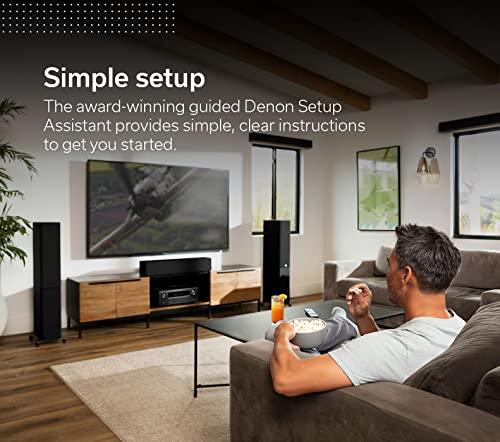
The Denon AVR-X2800H is generally easier to set up thanks to its modernized interface and user-friendly Audyssey room correction system that delivers consistently good results with minimal tweaking. The Yamaha Aventage RX-A8A offers more customization options but requires more expertise to fully optimize.
The Denon AVR-X2800H has 6 HDMI inputs with 3 supporting HDMI 2.1 standards, while the Yamaha Aventage RX-A8A provides 7 HDMI inputs. Both offer sufficient connectivity for most home theater setups including gaming consoles, streaming devices, and cable boxes.
The Yamaha Aventage RX-A8A is better for large rooms due to its higher power output (150W vs 95W per channel) and ability to handle more complex speaker configurations. The additional channels and power headroom make it more suitable for demanding installations and bigger spaces.
Yes, both the Denon AVR-X2800H and Yamaha Aventage RX-A8A support 8K video passthrough and upscaling. The Denon built this support into its design from launch, while the Yamaha added full 8K capabilities through firmware updates.
Both offer excellent streaming capabilities but through different platforms. The Denon AVR-X2800H uses HEOS with broad streaming service support and easy smartphone integration, while the Yamaha Aventage RX-A8A features MusicCast with superior multi-zone capabilities and high-resolution audio support for serious music enthusiasts.
Choose the Denon AVR-X2800H if you want excellent performance at a reasonable price point and don't need more than 7 channels. Opt for the Yamaha Aventage RX-A8A only if you have a large room, complex speaker setup, need maximum power, or want flagship-level customization options and are willing to pay significantly more for these premium features.
We've done our best to create useful and informative comparisons to help you decide what product to buy. Our research uses advanced automated methods to create this comparison and perfection is not possible - please contact us for corrections or questions. These are the sites we've researched in the creation of this article: theaudiotailor.com.au - ecoustics.com - simplehomecinema.com - whathifi.com - audioadvisor.com - youtube.com - bestbuy.com - e-catalog.com - crutchfield.com - avsforum.com - crutchfield.com - whathifi.com - richersounds.com - bestbuy.com - accessories4less.com - projectorscreen.com - adiglobaldistribution.us - youtube.com - bestbuy.com - bestbuy.com - sweetwater.com - bestbuy.com - crutchfield.com - avsforum.com - avnirvana.com - hifiheaven.net - snapav.com - ielectrica.com - bestbuy.com - usa.yamaha.com - shop.usa.yamaha.com - audiosciencereview.com

Privacy Policy
Terms and Conditions - Affiliate Policy
Home Security
© Copyright 2008-2026.
11816 Inwood Rd #1211, Dallas, TX 75244