


When shopping for a new receiver, you're really choosing between two completely different philosophies of home audio. The Denon AVR-X2800H represents the modern approach: pack everything possible into one box to handle your entire entertainment system. The Yamaha R-N602, on the other hand, follows the "do one thing exceptionally well" philosophy—in this case, playing stereo music with remarkable clarity.
This isn't just about picking between two products. You're deciding whether you want a Swiss Army knife that can handle movies, games, and music, or a specialized tool designed specifically for the best possible stereo listening experience. Both approaches have merit, but the right choice depends entirely on how you plan to use your system.
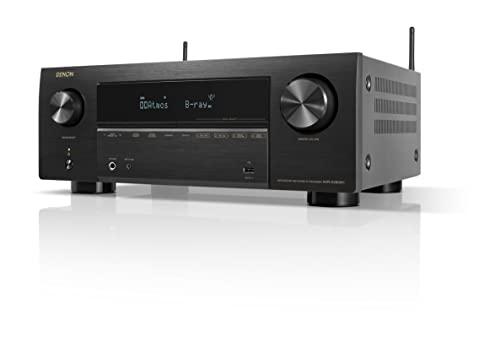
At their core, both receivers amplify audio signals to drive your speakers, but that's where the similarities end. The Denon AVR-X2800H is what we call an AV receiver—"AV" standing for Audio/Video. Released in 2022, it's designed to be the brain of your entire home theater setup, processing everything from Netflix streams to Xbox games to vinyl records.
The Yamaha R-N602, released in 2015, is purely a stereo receiver. It has no video processing whatsoever. Instead, every circuit, every component, and every design decision focuses on reproducing two-channel audio as faithfully as possible. When Yamaha engineers built this receiver, they weren't thinking about HDMI switching or surround sound processing—they were thinking about how to make your favorite album sound exactly as the artist intended.
This fundamental difference affects everything else about these products, from their price points (the Denon costs significantly more at the time of writing) to their complexity to their ultimate sound quality in different scenarios.
On paper, the Denon AVR-X2800H looks more powerful with 125 watts per channel compared to the Yamaha R-N602's 80 watts per channel. But here's where things get interesting—and why you can't judge receivers by power ratings alone.
The Denon has to split its power supply across seven channels. When you're watching an action movie with explosions happening in every speaker, that power gets divided up. It's like having a garden hose connected to multiple sprinklers—the more sprinklers you add, the less water pressure each one gets.
The Yamaha R-N602, meanwhile, dedicates its entire power supply to just two channels. All of its electrical current, all of its amplification circuitry, everything focuses on driving your left and right speakers. This typically results in better dynamics and punch for stereo music, even though the raw watt number is lower.
In practice, this means the Yamaha often sounds more powerful and dynamic when playing stereo music, while the Denon AVR-X2800H excels when you need that power spread across multiple speakers for surround sound.
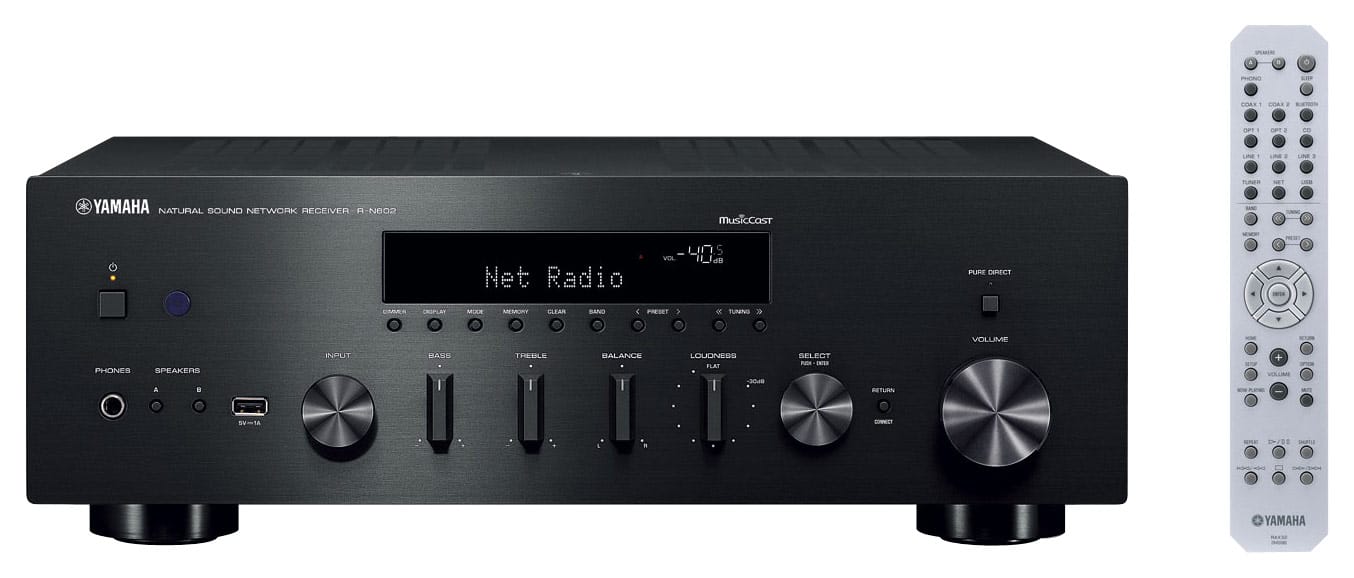
The Yamaha R-N602 uses what Yamaha calls ToP-ART (Total Purity Audio Reproduction Technology). This isn't marketing speak—it's a design philosophy that prioritizes the shortest, cleanest signal path from input to output. The receiver includes a "Pure Direct" mode that literally bypasses tone controls, balance adjustments, and other circuitry that might add coloration to the sound.
This approach shows in real-world listening. According to user reviews and professional evaluations, the Yamaha R-N602 delivers exceptional clarity and detail for stereo music. Vocals sound natural and present, instruments have proper weight and texture, and the overall presentation feels immediate and engaging. The high-quality Burr-Brown DAC (Digital-to-Analog Converter) handles high-resolution music files up to 192kHz/24-bit, preserving every detail from your digital music collection.
The Denon AVR-X2800H takes a different approach. Its audio passes through multiple processing stages—room correction algorithms, surround sound decoders, bass management systems. Each stage adds capabilities but also introduces potential for subtle changes to the original signal. For surround sound content, this processing is beneficial and necessary. For pure stereo music, purists might prefer the Yamaha's more direct approach.
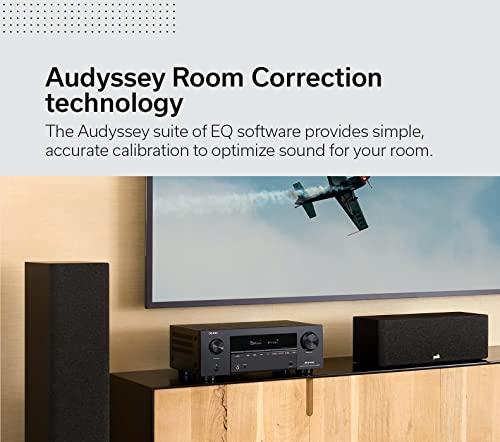
However, the Denon's room correction system (called Audyssey MultEQ XT) can actually improve sound quality in many real-world rooms. It automatically measures your room's acoustics and adjusts the receiver's output to compensate for problems like uneven bass response or early reflections. This can make the Denon AVR-X2800H sound better than the Yamaha in acoustically challenging rooms, even for stereo music.
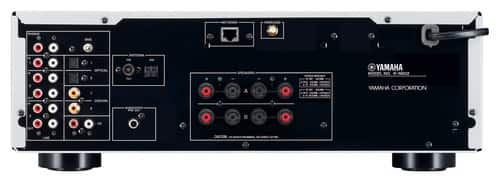
Here's where the Yamaha R-N602 really shines. Its phono stage—the circuit that amplifies the tiny signal from a turntable cartridge—is exceptional for a receiver in this price range. If vinyl playback matters to you, the Yamaha delivers the kind of analog performance that typically requires separate, dedicated phono preamps.
The Denon AVR-X2800H includes a phono input too, but it's clearly an afterthought in a design focused on digital sources and surround sound processing. For casual vinyl listening, it's adequate. For serious record collectors, the Yamaha is in a different league.
This is where the fundamental difference between these products becomes most apparent. The Yamaha R-N602 has absolutely zero video capabilities. No HDMI inputs, no video processing, nothing. It's purely an audio device.
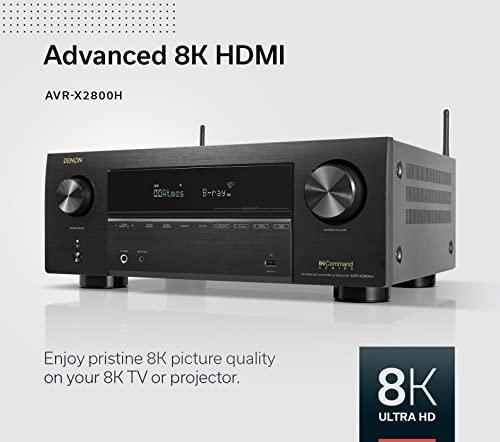
The Denon AVR-X2800H, meanwhile, is built around video processing. It includes six HDMI inputs (three supporting the latest HDMI 2.1 standard), can upscale content to 8K resolution, and supports every current HDR (High Dynamic Range) format including HDR10+, Dolby Vision, and HLG.
For gamers, this is particularly important. Modern gaming consoles like the PlayStation 5 and Xbox Series X can output 4K video at 120Hz—twice the frame rate of typical TV content—but only through HDMI 2.1 connections. The Denon AVR-X2800H can handle these high-bandwidth signals, plus gaming-specific features like Variable Refresh Rate (which eliminates screen tearing) and Auto Low Latency Mode (which reduces input lag).
Since 2022, when the Denon was released, these gaming features have become increasingly important as more games support 120Hz modes and VRR. The Yamaha, being from 2015, predates these developments entirely.
The Denon AVR-X2800H supports the latest surround sound formats that create truly immersive audio experiences. Dolby Atmos, for instance, treats sounds as objects that can be placed anywhere in three-dimensional space around you. Instead of just left/right/center/surround, you get sounds that can move overhead, behind you, and anywhere else in the room.
DTS:X offers similar object-based surround sound, while the receiver's processing can also create virtual height effects even if you don't have ceiling speakers. For movie watching, these technologies can be transformative—helicopter rotors actually sound like they're passing overhead, rain seems to fall around you, and action sequences gain spatial dimension that stereo simply cannot provide.
The Yamaha R-N602 offers none of this. It's strictly stereo, full stop. Some might argue this is actually a benefit for music listening, as many audiophiles prefer the simplicity and purity of well-implemented two-channel reproduction over any surround processing.
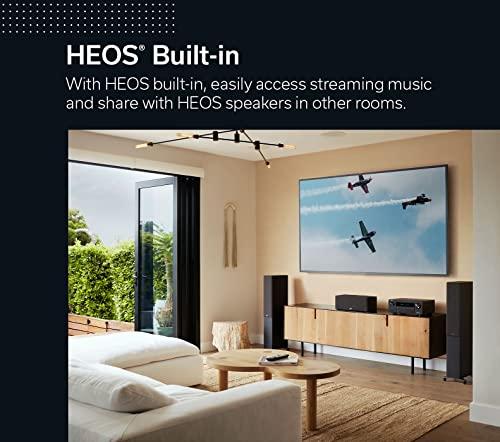
The technology gap between these products, released seven years apart, shows most clearly in their connectivity and streaming features. The Denon AVR-X2800H includes modern conveniences like voice control through Alexa, Google Assistant, and Siri, plus current streaming technologies like AirPlay 2 and comprehensive app control.
The Yamaha R-N602 uses Yamaha's MusicCast system for multi-room audio and streaming. While MusicCast was advanced for 2015, it feels dated compared to current alternatives. The interface is less intuitive, the streaming service integration is more limited, and the overall user experience shows its age.
However, for basic music streaming and network playback, the Yamaha still works perfectly well. It supports all the important file formats including high-resolution FLAC and DSD files, and its built-in DAC handles them with excellent quality.
The Yamaha R-N602 follows traditional stereo receiver conventions. You connect your sources, adjust some basic settings, and you're listening to music. The learning curve is minimal, and most functions are accessible through physical controls on the front panel.
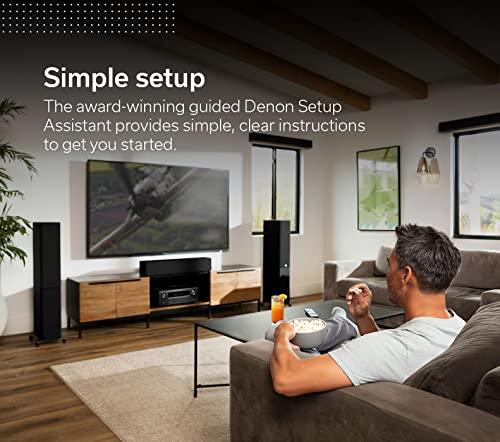
The Denon AVR-X2800H requires significantly more setup time. You need to run room correction, configure surround sound speaker settings, set up HDMI switching, and navigate complex menu systems. The payoff is a highly optimized system, but the initial investment in setup time is substantial.
For users who want to plug in and play music immediately, the Yamaha's simplicity is appealing. For those who enjoy tweaking settings and optimizing performance, the Denon's complexity can be rewarding.
You want one device to handle your entire entertainment system. If you watch movies, play games, stream Netflix, and listen to music all in the same room, the Denon AVR-X2800H's versatility makes it the logical choice. The higher price point (at the time of writing) reflects its comprehensive capabilities and future-proofing.
This receiver makes particular sense for living rooms and dedicated home theater spaces where surround sound enhances the experience. The automatic room correction helps it perform well in challenging acoustic environments, and its extensive HDMI switching eliminates the need for separate video switchers.
Your priority is the best possible stereo music reproduction, especially if vinyl playback matters to you. Despite being older technology, the Yamaha R-N602 offers exceptional value for music-focused listeners. The lower price point (at the time of writing) makes it particularly attractive for those who don't need video processing or surround sound.
This receiver excels in dedicated listening rooms, studies, or any space where music quality takes precedence over entertainment versatility. If you're building around high-quality bookshelf or floor-standing speakers and want them to sound their absolute best, the Yamaha's specialized design delivers.
These products represent fundamentally different approaches to home audio. The Denon AVR-X2800H is the Swiss Army knife—incredibly capable across many different uses, with the complexity and compromises that versatility requires. The Yamaha R-N602 is the specialized tool—doing one thing exceptionally well with elegant simplicity.
Neither approach is inherently better. The right choice depends entirely on your priorities, space, and listening habits. If you value convenience, future-proofing, and comprehensive entertainment capabilities, the Denon justifies its higher price. If you prioritize pure music reproduction and prefer focused simplicity, the Yamaha delivers exceptional value.
The key is being honest about how you actually use your audio system. Many people think they want the flexibility of a full AV receiver but end up using it primarily for stereo music. Others assume they only need stereo playback but later wish they had surround sound for movies and games.
Consider your current usage patterns, your future plans, and most importantly, what type of listening experience brings you the most joy. Both receivers excel at their intended purposes—the question is which purpose aligns with your needs.
| Denon AVR-X2800H | Yamaha R-N602 |
|---|---|
| Channel Configuration - Determines surround sound capabilities and room filling power | |
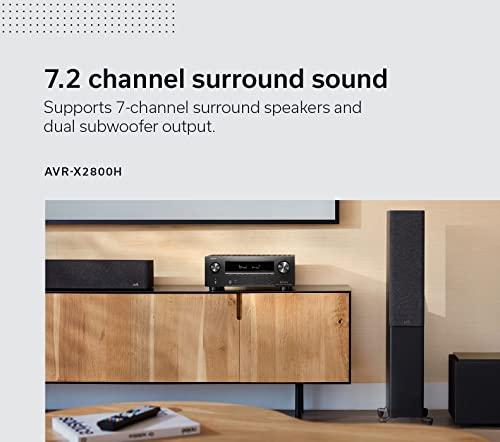
| 7.2 channels (supports full surround sound setups including Dolby Atmos) | 2.0 channels (stereo only, but dedicated power for music listening) |
| Power Output - Raw amplification strength for driving speakers | |
| 125W per channel (shared across 7 channels during multi-channel playback) | 80W per channel (dedicated entirely to stereo, often sounds more powerful for music) |
| Video Processing - Essential for modern home theater integration | |
| Full 8K upscaling, HDR10+, Dolby Vision, 6 HDMI inputs with HDMI 2.1 | None - audio-only device with no video capabilities |
| Surround Sound Formats - Immersive audio technologies for movies and gaming | |
| Dolby Atmos, DTS:X, DTS Neural:X with object-based 3D audio | None - stereo reproduction only |
| Room Correction - Automatic acoustic optimization for your space | |
| Audyssey MultEQ XT with 8-position measurement and app control | None - manual acoustic treatment and speaker positioning required |
| Analog Performance - Critical for vinyl playback and pure music reproduction | |
| Basic phono stage, focus on digital processing | Exceptional MM phono stage with ToP-ART design and Pure Direct mode |
| Gaming Features - Modern console compatibility and performance | |
| 4K/120Hz, VRR, ALLM, QFT gaming support for PS5/Xbox Series X | None - cannot connect gaming consoles directly |
| Network Streaming - Music service integration and smart features | |
| Modern streaming with AirPlay 2, voice assistants, comprehensive app control | MusicCast system from 2015 era, basic streaming services, aging interface |
| Setup Complexity - Time investment required for optimal performance | |
| Complex multi-step setup with extensive calibration options | Simple plug-and-play operation with traditional controls |
| Digital Audio Processing - High-resolution music file support | |
| 32-bit/192kHz processing with multiple conversion stages | High-quality Burr-Brown 192kHz/24-bit DAC with shorter signal path |
| Multi-Room Capabilities - Whole-home audio distribution | |
| Advanced multi-zone with independent source control | Basic MusicCast multi-room networking |
| Release Year & Future-Proofing - Technology relevance and longevity | |
| 2022 release with current 8K and gaming standards | 2015 release, audio quality remains excellent but streaming features show age |
The Denon AVR-X2800H is a full home theater receiver with 7.2 channels, surround sound processing, and video capabilities, while the Yamaha R-N602 is a dedicated 2-channel stereo receiver focused solely on music reproduction. The Denon handles movies, games, and TV with surround sound, whereas the Yamaha excels at high-quality stereo music playback.
The Denon AVR-X2800H is significantly better for home theater use. It supports Dolby Atmos, DTS:X surround sound formats, has 6 HDMI inputs with 8K video processing, and can drive up to 7 speakers plus 2 subwoofers. The Yamaha R-N602 has no video capabilities or surround sound support, making it unsuitable for home theater applications.
For pure stereo music listening, the Yamaha R-N602 typically delivers superior sound quality. Its dedicated 2-channel design, ToP-ART audio circuitry, and Pure Direct mode provide cleaner signal paths and better dynamics for music. The Denon AVR-X2800H offers good music performance but makes compromises due to its multi-channel design and complex processing.
Yes, both receivers have phono inputs for turntables. However, the Yamaha R-N602 has a significantly better phono stage that's optimized for vinyl playback with superior analog circuitry. The Denon AVR-X2800H includes a basic phono input that's adequate for casual vinyl listening but not as refined as the Yamaha's dedicated analog section.
The Denon AVR-X2800H fully supports modern gaming with 4K/120Hz video, Variable Refresh Rate (VRR), and Auto Low Latency Mode (ALLM) for PlayStation 5 and Xbox Series X. The Yamaha R-N602 cannot connect gaming consoles directly since it has no HDMI inputs or video processing capabilities.
Both receivers support streaming, but with different capabilities. The Denon AVR-X2800H offers modern streaming with AirPlay 2, voice assistant integration, and comprehensive app control. The Yamaha R-N602 uses the older MusicCast system with more limited streaming service integration and a less intuitive interface.
The Yamaha R-N602 is much simpler to set up and use, with traditional stereo receiver controls and minimal configuration required. The Denon AVR-X2800H requires extensive setup including room calibration, speaker configuration, and HDMI routing, though it offers automated assistance through its setup process.
The Denon AVR-X2800H can power up to 7 speakers plus 2 subwoofers in various configurations like 7.1 surround or 5.1.2 Dolby Atmos setups. The Yamaha R-N602 powers only 2 speakers in stereo configuration, but dedicates all its amplification resources to those two channels for potentially better dynamics.
Value depends on your needs. The Yamaha R-N602 offers excellent value for music-focused listeners who want high-quality stereo reproduction without paying for video features they won't use. The Denon AVR-X2800H provides better value for those wanting a complete home entertainment solution with future-proof video capabilities and surround sound.
Both support multi-room audio but differently. The Denon AVR-X2800H offers advanced multi-zone capabilities with independent source control and modern networking. The Yamaha R-N602 supports basic multi-room through MusicCast, allowing music streaming to other compatible Yamaha devices throughout your home.
The Denon AVR-X2800H is more future-proof with 2022 technology including 8K video support, HDMI 2.1, and current gaming features. The Yamaha R-N602 from 2015 has aging streaming technology, but its core stereo audio performance remains excellent and won't become outdated like video processing features might.
Choose the Denon AVR-X2800H if you want one device to handle movies, TV, gaming, and music with room to grow your system. Pick the Yamaha R-N602 if you're primarily interested in high-quality music listening, prefer simplicity, and don't need video processing or surround sound capabilities.
We've done our best to create useful and informative comparisons to help you decide what product to buy. Our research uses advanced automated methods to create this comparison and perfection is not possible - please contact us for corrections or questions. These are the sites we've researched in the creation of this article: theaudiotailor.com.au - ecoustics.com - simplehomecinema.com - whathifi.com - audioadvisor.com - youtube.com - bestbuy.com - e-catalog.com - crutchfield.com - avsforum.com - crutchfield.com - whathifi.com - richersounds.com - bestbuy.com - accessories4less.com - projectorscreen.com - adiglobaldistribution.us - youtube.com - bestbuy.com - bestbuy.com - sweetwater.com - theaudiophileman.com - crutchfield.com - forums.whathifi.com - usa.yamaha.com - youtube.com - hifiengine.com - yamaha.com - adorama.com - parts-express.com - usa.yamaha.com - audiosciencereview.com

Privacy Policy
Terms and Conditions - Affiliate Policy
Home Security
© Copyright 2008-2026.
11816 Inwood Rd #1211, Dallas, TX 75244