

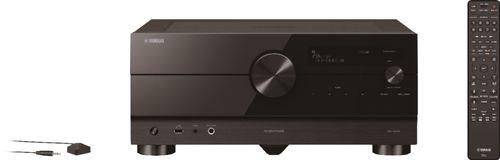
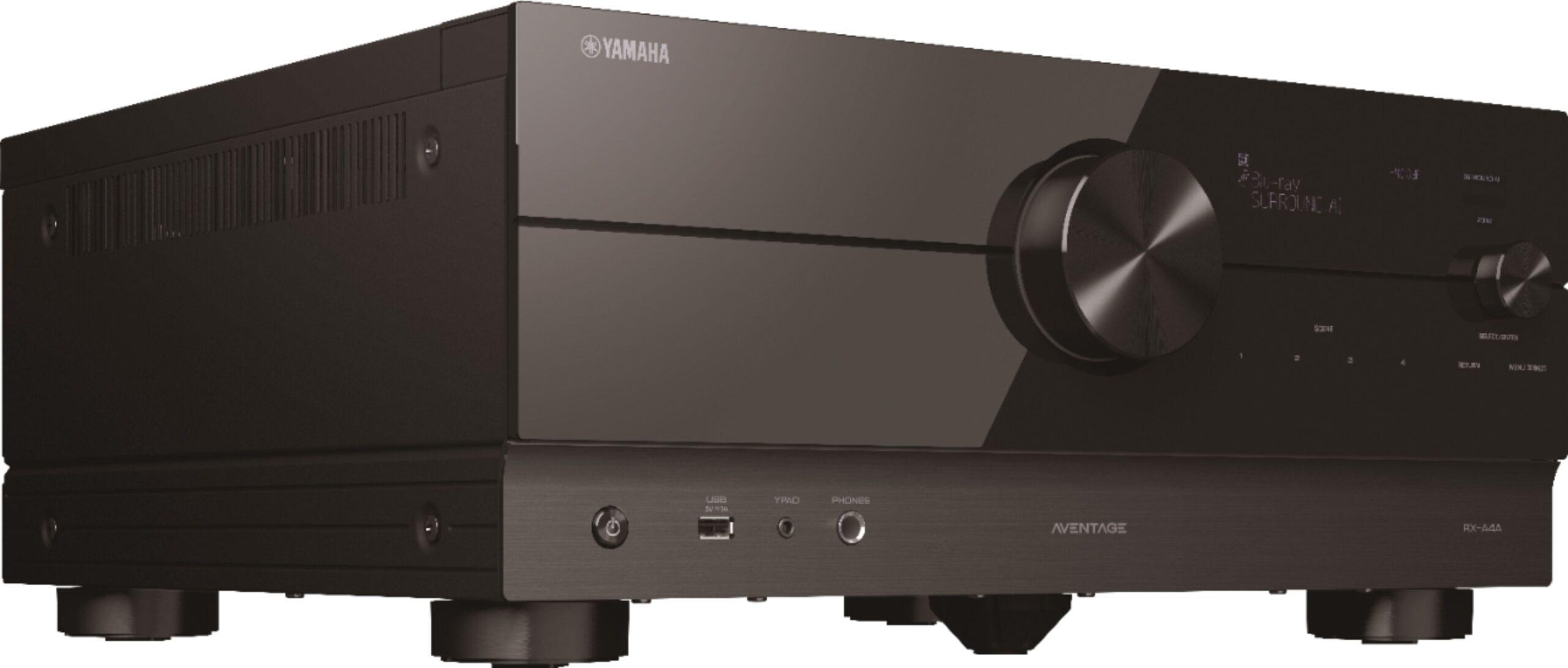
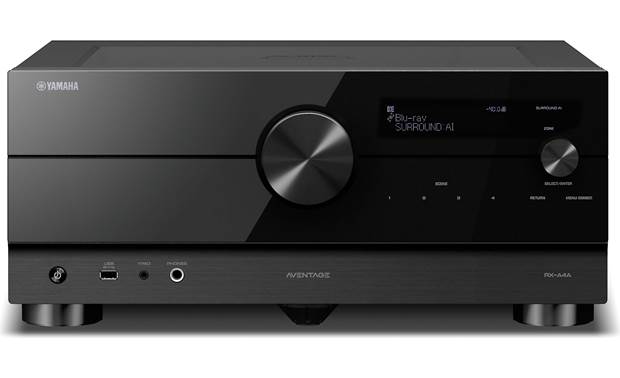
When you're building a home theater system, the AV receiver sits at the heart of everything. It's the brain that controls your speakers, processes surround sound, switches between video sources, and increasingly, streams music from the internet. Think of it as a combination amplifier, video switcher, and smart hub all rolled into one box.
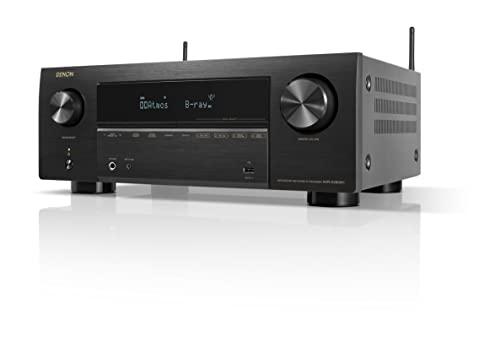
The Denon AVR-X2800H and Yamaha AVENTAGE RX-A4A represent two excellent approaches to this challenge, both offering 7.2 channels of surround sound processing. At the time of writing, both receivers sit in similar price ranges, making the choice between them particularly interesting for anyone looking to invest in quality home theater audio.
Before diving into the specifics, it's worth understanding what really matters in an AV receiver. Power output gets most of the attention, but it's just one piece of the puzzle. Room correction technology—systems that measure your room's acoustics and adjust the sound accordingly—can make a bigger difference than raw watts. Video processing capabilities determine how future-proof your investment will be, while build quality affects both sound quality and long-term reliability.
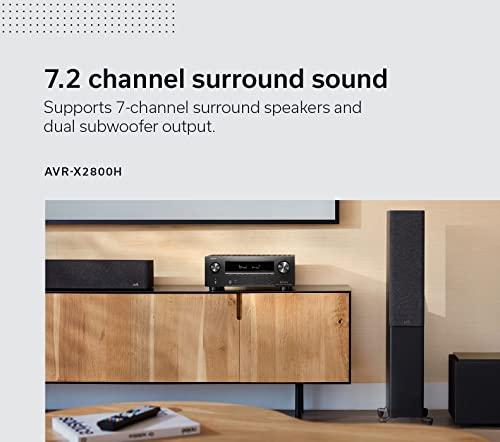
The "7.2" designation means these receivers can power seven main speakers (like front left/right, center, surround left/right, and two height or back speakers) plus two subwoofers. This configuration supports modern surround formats like Dolby Atmos, which adds height information to create truly three-dimensional soundscapes.
The most significant difference between these receivers lies in their amplification sections. The Yamaha RX-A4A delivers 110 watts per channel compared to the Denon AVR-X2800H's 95 watts per channel (both measured at 8 ohms with two channels driven). That 15-watt difference might not sound like much, but it represents about 16% more power—enough to provide noticeably better dynamics and headroom, especially during loud action sequences.
More impressive than the raw numbers is how Yamaha achieves this power. The RX-A4A uses what Yamaha calls Anti-Resonance Technology (A.R.T.), featuring an H-shaped cross frame inside the chassis that reduces vibration and interference. This isn't just marketing speak—mechanical vibration can actually affect audio circuits, creating subtle distortions that blur sound quality. By controlling these vibrations, Yamaha creates a cleaner foundation for audio processing.
The Denon AVR-X2800H takes a different approach, focusing on discrete amplifier design with high-current capability. Discrete amplifiers use separate components rather than integrated circuits, typically offering better performance but at higher cost. While it produces less raw power, Denon's amplifier section emphasizes clean, controlled power delivery.
In practical terms, the Yamaha will play louder with less strain and provide better dynamics—the difference between quiet dialogue and explosive action scenes. If you have a large room or speakers that are harder to drive (meaning they need more power to reach their full potential), the RX-A4A's extra headroom becomes genuinely useful.
Here's where things get really interesting. Both receivers support the same surround sound formats—Dolby Atmos, DTS:X, and their various cousins—but they approach audio processing with distinctly different philosophies.
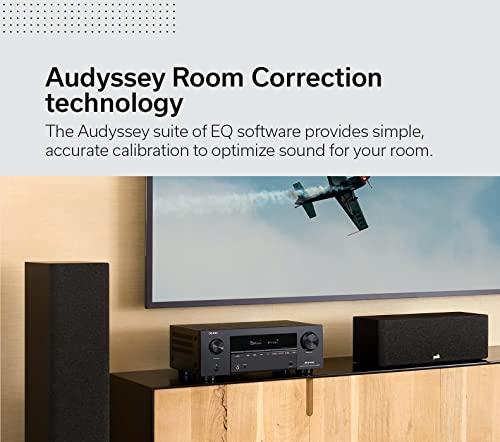
The Denon AVR-X2800H uses Audyssey MultEQ XT for room correction. This system takes multiple measurements throughout your listening area and creates filters to compensate for room acoustics. What sets Denon apart is the Audyssey MultEQ Editor app, which lets you see and adjust the frequency response curves on your phone. It's like having a graphic equalizer, but much more sophisticated. The system can measure up to eight different positions, creating an optimized sound field that works well from multiple seats.
Yamaha's approach with the RX-A4A centers on YPAO (Yamaha Parametric Acoustic Optimizer), which includes what they call R.S.C.—Reflected Sound Control. This technology doesn't just measure your room; it analyzes how sound reflects off surfaces and adjusts accordingly. The system is particularly good at handling the complex interactions between your speakers and room boundaries.
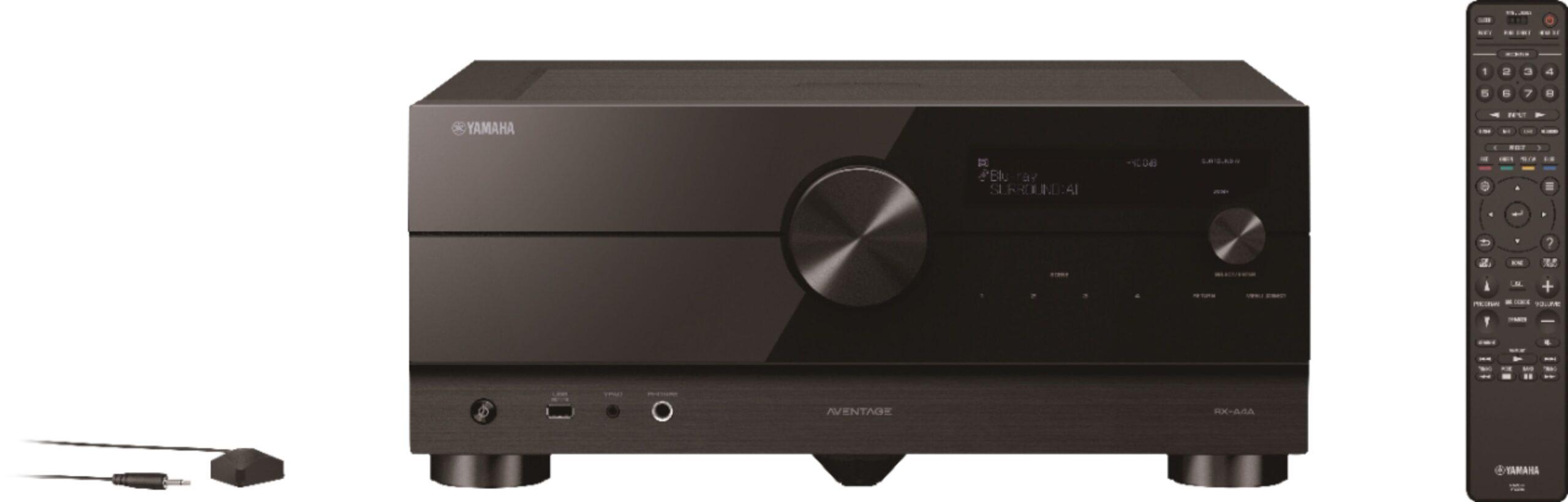
But Yamaha's most intriguing feature is Surround:AI. This system uses artificial intelligence to analyze audio content in real-time, identifying elements like dialogue, background music, and sound effects, then optimizing the surround processing for each scene. It's like having an audio engineer constantly tweaking your system as you watch.
The sound signatures differ considerably. Based on extensive user feedback and professional reviews, the Yamaha RX-A4A tends toward a neutral, analytical presentation that audiophiles often prefer. It reveals details in recordings without adding coloration. The Denon AVR-X2800H, conversely, offers a warmer, more forgiving sound that many find more enjoyable for long listening sessions, especially with compressed sources like streaming music.
For home theater use, these differences become important. The Yamaha's neutral character excels at reproducing movie soundtracks as the mixing engineers intended, while the Denon's warmer approach can make dialogue more pleasant and fatigue less of an issue during movie marathons.
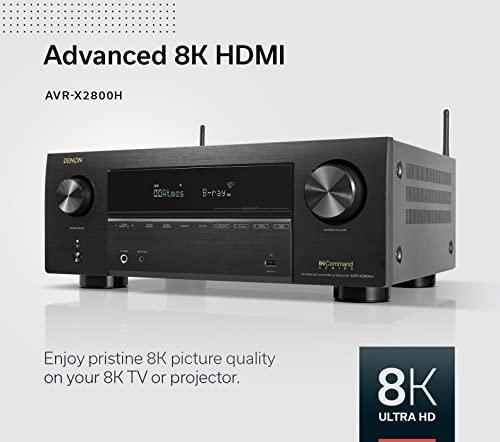
Released in 2022, the Denon AVR-X2800H arrived with more mature HDMI 2.1 implementation than the 2021 Yamaha RX-A4A. This timing matters because HDMI 2.1 represents a significant leap in video capabilities, supporting 4K at 120Hz and 8K at 60Hz frame rates.
The Denon provides true 8K upscaling across all its HDMI inputs, meaning it can take lower-resolution content and intelligently increase its resolution to match an 8K display. The Yamaha, by contrast, only upscales to 4K resolution. While 8K content remains scarce at the time of writing, this difference represents a significant future-proofing advantage for the Denon.
For gaming, this distinction becomes crucial. Modern consoles like the PlayStation 5 and Xbox Series X can output 4K at 120Hz for incredibly smooth gameplay, but they need HDMI 2.1 to do it properly. The Denon AVR-X2800H provides three HDMI 2.1 inputs with full Variable Refresh Rate (VRR) and Auto Low Latency Mode (ALLM) support. These features reduce input lag and eliminate screen tearing, making games feel more responsive.
The RX-A4A also supports these gaming features, but user reports suggest the Denon's implementation is more reliable and mature. Early HDMI 2.1 implementations were sometimes buggy, and Denon seems to have worked out more of these issues.
Both receivers support HDR (High Dynamic Range) video formats including HDR10, HDR10+, and Dolby Vision. HDR makes bright parts of images brighter and dark parts darker, creating more realistic and engaging visuals. The Denon includes HDR10+ support out of the box, while the Yamaha promised this feature via firmware update.
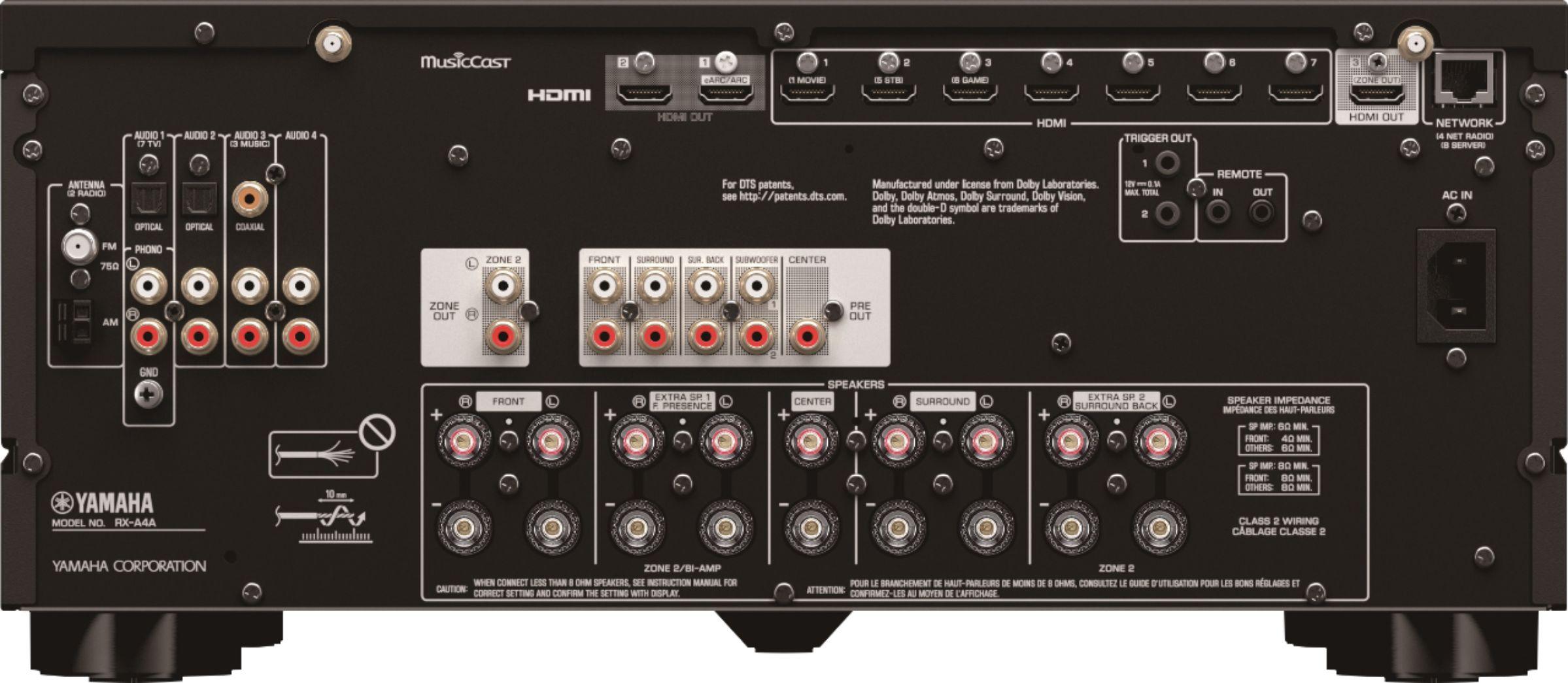
The Yamaha RX-A4A offers more physical connectivity with seven HDMI inputs versus the Denon's six, plus three HDMI outputs compared to two. More importantly for serious enthusiasts, the Yamaha includes full 7.2-channel analog pre-outputs. These outputs let you connect external power amplifiers, potentially upgrading your system's performance without replacing the entire receiver.
This expandability makes the RX-A4A more attractive for complex installations or situations where you might want to bi-amp your speakers (using separate amplifiers for different frequency ranges). The Denon can bi-amp using its internal amplifiers but doesn't offer the same external amplification flexibility.
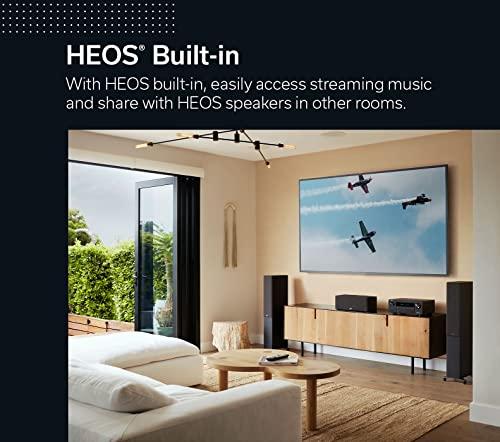
Both receivers excel at streaming and smart home integration. The Denon AVR-X2800H uses HEOS for multi-room audio, allowing you to stream different music to different rooms throughout your house. The Yamaha RX-A4A counters with MusicCast, its own multi-room solution. Both work well with major streaming services and voice assistants like Alexa and Google Assistant.
An often-overlooked difference lies in the phono inputs. Both receivers include them for connecting turntables, but the implementation quality can vary. Based on user feedback, both perform adequately for this purpose, though neither replaces a dedicated phono preamp for serious vinyl listening.
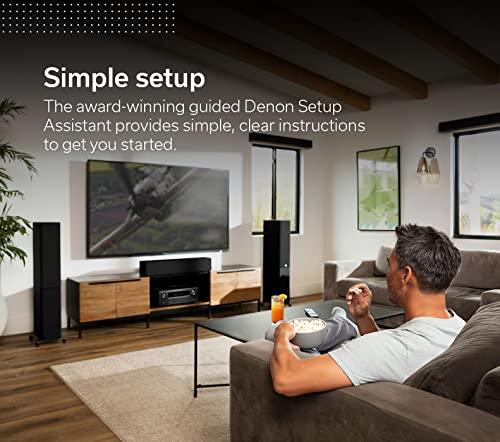
The Denon AVR-X2800H wins clearly in user experience. Its setup wizard is more intuitive, walking you through configuration with clear visual guides. The on-screen interface feels modern and responsive, while the mobile app integration works seamlessly for both setup and daily use.
The Yamaha RX-A4A, being part of the premium Aventage line, offers more granular control over audio parameters. Enthusiasts appreciate the detailed EQ options and the ability to fine-tune every aspect of sound reproduction. However, this flexibility comes with complexity that can overwhelm newcomers to home theater.
For most users, especially those new to AV receivers, the Denon's approach proves more practical. You can achieve excellent results with minimal tweaking, then dive deeper into customization as you learn more about audio.
In home theater use, both receivers excel but in different ways. The Yamaha RX-A4A's extra power and neutral sound signature create more dramatic dynamic range—the difference between whispered dialogue and explosive action feels more pronounced and realistic. This makes action movies and concerts particularly engaging.
The Denon AVR-X2800H's warmer character excels with dialogue clarity and music listening. Its processing tends to make voices more intelligible, even in complex surround mixes. For families who watch a lot of different content types, this consistency proves valuable.
Both receivers handle Dolby Atmos processing well, creating convincing overhead effects when paired with appropriate speakers. The height virtualization features work reasonably well if you can't install ceiling speakers, though nothing truly replaces dedicated height speakers for the full Atmos experience.
Choose the Denon AVR-X2800H if you prioritize ease of use, gaming performance, and future video compatibility. Its 8K upscaling, reliable HDMI 2.1 implementation, and intuitive interface make it ideal for mainstream users who want modern features without complexity. The warmer sound signature appeals to those who value comfortable long-term listening over analytical precision.
The Yamaha AVENTAGE RX-A4A suits users who prioritize audio performance and system expandability. Its higher power output, neutral sound character, and pre-output flexibility appeal to audio enthusiasts who might upgrade components over time. If you have difficult-to-drive speakers or a large room, the extra power becomes genuinely useful.
For gaming-focused setups, the Denon currently offers more reliable next-generation console support. For critical music listening, the Yamaha provides more accurate reproduction. For general home theater use, both excel—your choice depends on whether you prefer the Yamaha's analytical approach or the Denon's more forgiving character.
At the time of writing, both receivers offer excellent value in their price range. The Yamaha commands a slight premium for its Aventage branding and superior build quality, while the Denon provides more cutting-edge video features at a competitive price point.
Neither choice is wrong—both represent solid investments that should provide years of excellent home theater performance. The key is matching your priorities to each receiver's strengths. Consider your room size, speaker requirements, content preferences, and technical comfort level. Both the Denon AVR-X2800H and Yamaha AVENTAGE RX-A4A will reward you with excellent performance when properly matched to your needs and expectations.
| Denon AVR-X2800H | Yamaha AVENTAGE RX-A4A |
|---|---|
| Power Output - More watts means better dynamics and headroom for loud scenes | |
| 95W per channel (8Ω, 2ch driven) | 110W per channel (8Ω, 2ch driven) |
| Sound Signature - Different approaches to audio reproduction | |
| Warmer, more forgiving sound that's easy to listen to | Neutral, analytical sound preferred by audiophiles |
| 8K Video Processing - Future-proofing for next-gen content | |
| Full 8K upscaling on all HDMI inputs | 4K upscaling only (no 8K processing) |
| HDMI 2.1 Inputs - Essential for modern gaming consoles | |
| 3 inputs with mature, reliable implementation | Available but less proven implementation |
| Room Correction Technology - Optimizes sound for your specific room | |
| Audyssey MultEQ XT with mobile app control | YPAO R.S.C. with Reflected Sound Control |
| Gaming Features - Reduces lag and improves console performance | |
| VRR, ALLM, QFT with proven reliability | VRR, ALLM supported but less mature |
| Pre-Outputs - Allows connection of external amplifiers for upgrades | |
| No dedicated pre-outputs (bi-amp capable only) | Full 7.2 pre-outputs for external amplification |
| HDMI Configuration - More ports mean fewer input switching headaches | |
| 6 inputs / 2 outputs | 7 inputs / 3 outputs |
| AI Audio Processing - Automatically optimizes sound for different content | |
| Standard DSP processing modes | Surround:AI with real-time scene analysis |
| Build Quality - Affects long-term reliability and performance | |
| Solid construction with discrete amplifiers | Premium Aventage series with A.R.T. vibration control |
| User Interface - How easy setup and daily operation will be | |
| Modern, intuitive setup with responsive menus | More complex but offers deeper customization |
| Multi-Room Audio - Stream different music to other rooms | |
| HEOS built-in with comprehensive streaming | MusicCast with extensive multi-room capabilities |
The Yamaha AVENTAGE RX-A4A delivers more power at 110 watts per channel compared to the Denon AVR-X2800H's 95 watts per channel. This 15-watt difference provides the Yamaha with better dynamics and headroom, especially important for large rooms or demanding speakers.
The Denon AVR-X2800H offers a warmer, more forgiving sound that's comfortable for long listening sessions, while the Yamaha AVENTAGE RX-A4A provides a neutral, analytical sound signature that audiophiles prefer for accuracy. The Denon is more forgiving with compressed music, while the Yamaha reveals more detail in high-quality recordings.
The Denon AVR-X2800H is superior for modern gaming, offering three HDMI 2.1 inputs with more reliable implementation of gaming features like Variable Refresh Rate (VRR) and Auto Low Latency Mode (ALLM). While the Yamaha RX-A4A supports these features, the Denon has proven more consistent in real-world use.
Yes, both the Denon AVR-X2800H and Yamaha AVENTAGE RX-A4A fully support Dolby Atmos, DTS:X, and other modern surround formats. Both can handle 5.1.2 Atmos configurations with height speakers. The Yamaha adds Surround:AI processing that analyzes content in real-time to optimize the surround experience.
The Denon AVR-X2800H wins decisively for 8K video, offering full 8K upscaling on all HDMI inputs and 8K/60Hz pass-through. The Yamaha RX-A4A only provides 4K upscaling, making the Denon much more future-proof for next-generation video content.
The Denon AVR-X2800H uses Audyssey MultEQ XT with a mobile app that lets you see and adjust frequency response curves. The Yamaha AVENTAGE RX-A4A features YPAO with Reflected Sound Control, which analyzes how sound bounces off room surfaces. Both systems work well, but the Denon offers more user-friendly control through its app.
The Denon AVR-X2800H provides a more user-friendly experience with its intuitive setup wizard and modern on-screen interface. The Yamaha RX-A4A offers more detailed control options but can be overwhelming for beginners. First-time AV receiver buyers typically find the Denon easier to configure and operate.
The Yamaha AVENTAGE RX-A4A includes full 7.2-channel pre-outputs, allowing you to connect external power amplifiers for system upgrades. The Denon AVR-X2800H lacks dedicated pre-outputs but can bi-amp speakers using its internal amplifiers. The Yamaha offers more flexibility for future expansion.
The Yamaha RX-A4A provides seven HDMI inputs and three outputs, while the Denon AVR-X2800H offers six inputs and two outputs. However, the Denon includes three HDMI 2.1 inputs compared to the Yamaha's implementation, making it better for modern devices despite having fewer total ports.
This depends on your preferences. The Yamaha AVENTAGE RX-A4A excels for critical music listening with its neutral sound and superior DAC components, making it ideal for audiophiles. The Denon AVR-X2800H offers a more enjoyable, warmer sound for casual music listening and works better with compressed streaming sources.
Yes, both receivers offer comprehensive streaming capabilities. The Denon AVR-X2800H features HEOS multi-room audio, while the Yamaha RX-A4A uses MusicCast. Both support major streaming services, voice assistants like Alexa and Google Assistant, AirPlay 2, and Bluetooth connectivity.
For most home theater setups, the Denon AVR-X2800H provides better value with its superior video processing, gaming features, and user-friendly operation. The Yamaha AVENTAGE RX-A4A offers better value for audiophiles who prioritize sound quality, build quality, and system expandability. Your choice should depend on whether you prioritize modern video features or premium audio performance.
We've done our best to create useful and informative comparisons to help you decide what product to buy. Our research uses advanced automated methods to create this comparison and perfection is not possible - please contact us for corrections or questions. These are the sites we've researched in the creation of this article: theaudiotailor.com.au - ecoustics.com - simplehomecinema.com - whathifi.com - audioadvisor.com - youtube.com - bestbuy.com - e-catalog.com - crutchfield.com - avsforum.com - crutchfield.com - whathifi.com - richersounds.com - bestbuy.com - accessories4less.com - projectorscreen.com - adiglobaldistribution.us - youtube.com - bestbuy.com - bestbuy.com - sweetwater.com - bestbuy.com - hifiheaven.net - forums.audioholics.com - avsforum.com - crutchfield.com - crutchfield.com - usa.yamaha.com - ooberpad.com - bestbuy.com - usa.yamaha.com - audioadvice.com - avnirvana.com

Privacy Policy
Terms and Conditions - Affiliate Policy
Home Security
© Copyright 2008-2026.
11816 Inwood Rd #1211, Dallas, TX 75244