


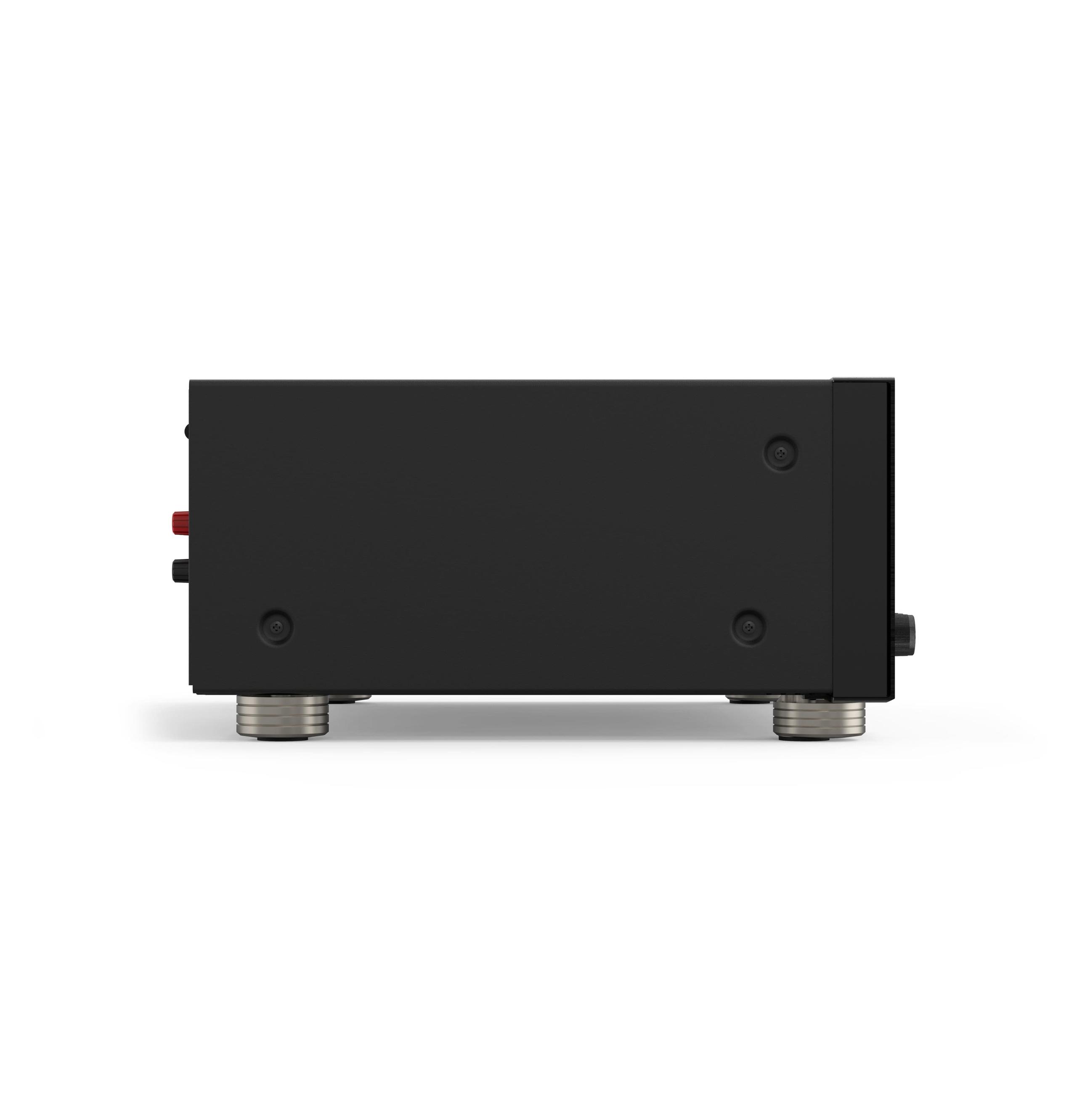
AV receivers are the beating heart of any serious home theater setup, and choosing the right one can make or break your entire entertainment experience. These sophisticated devices do far more than just make things louder—they're digital orchestrators that decode complex surround sound formats, manage multiple video sources, and increasingly serve as smart streaming hubs for your entire home.
When shopping for an AV receiver, you're essentially investing in the central nervous system of your entertainment setup. The receiver processes audio signals from your Blu-ray player, gaming console, or streaming device, then distributes that sound across multiple speakers to create immersive surround experiences. Simultaneously, it handles video switching and processing, ensuring your 4K or 8K content looks its absolute best on your display.
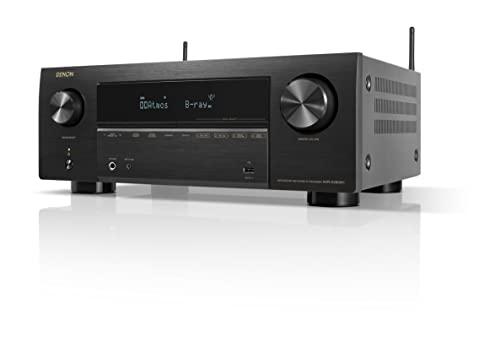
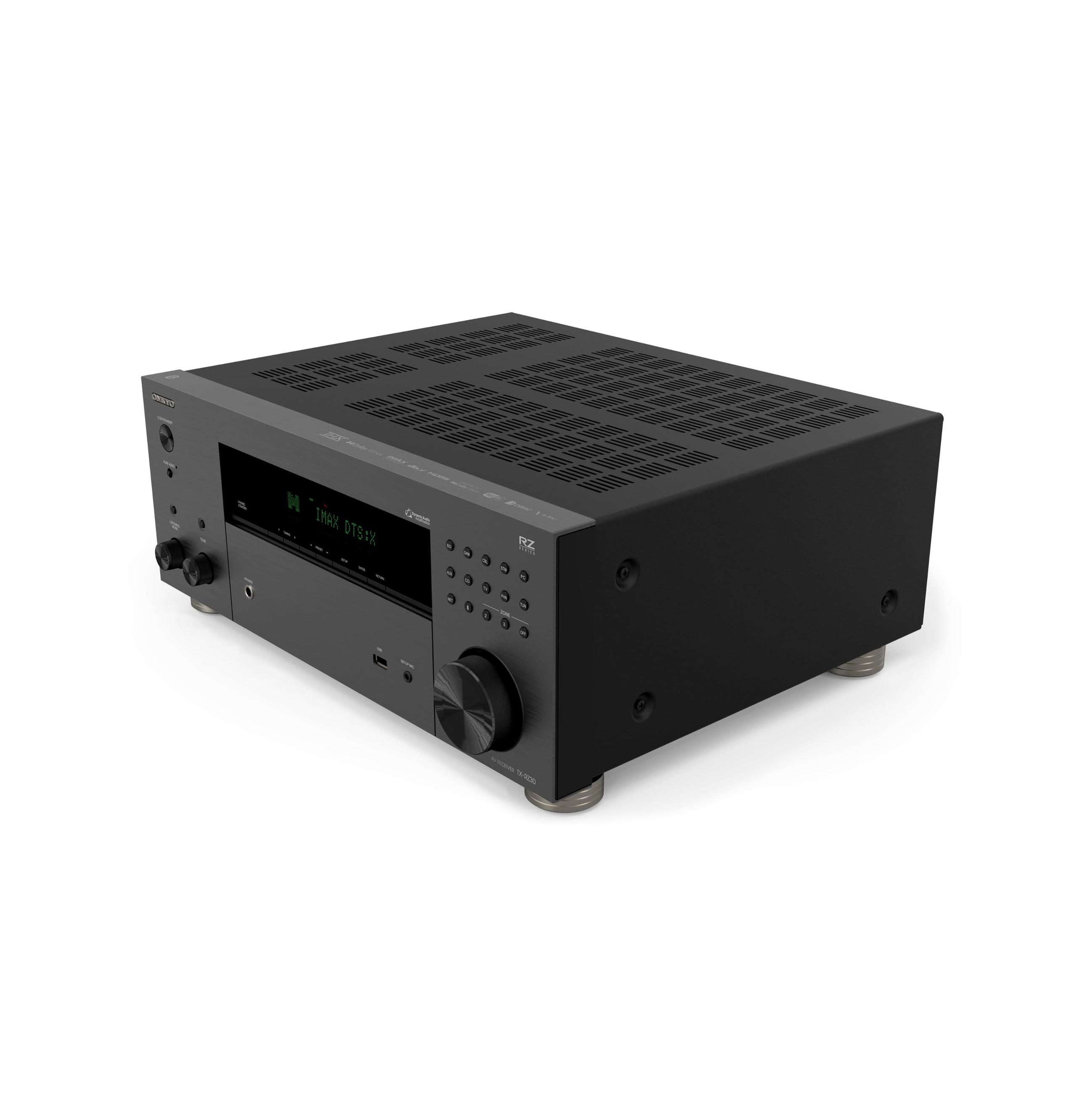
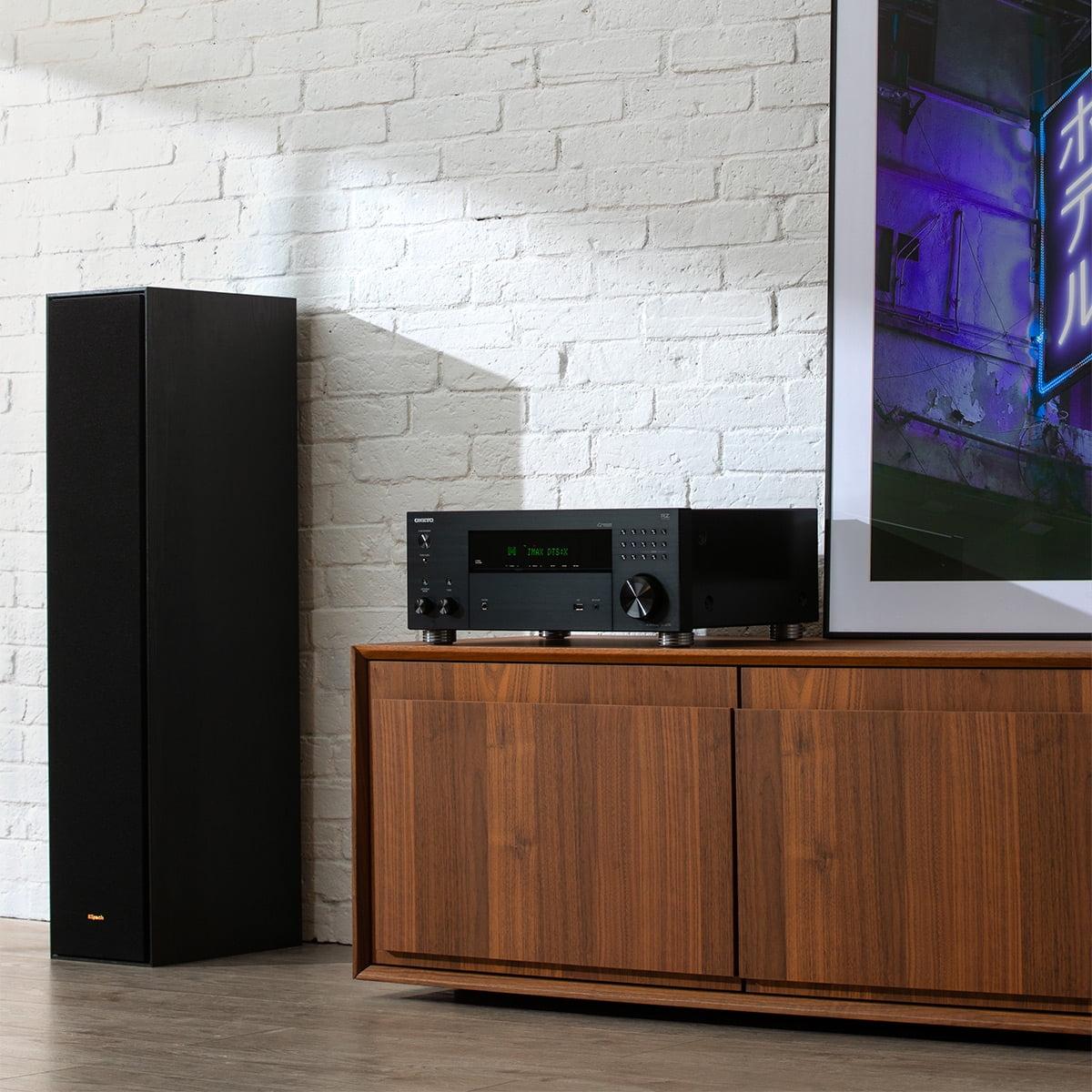
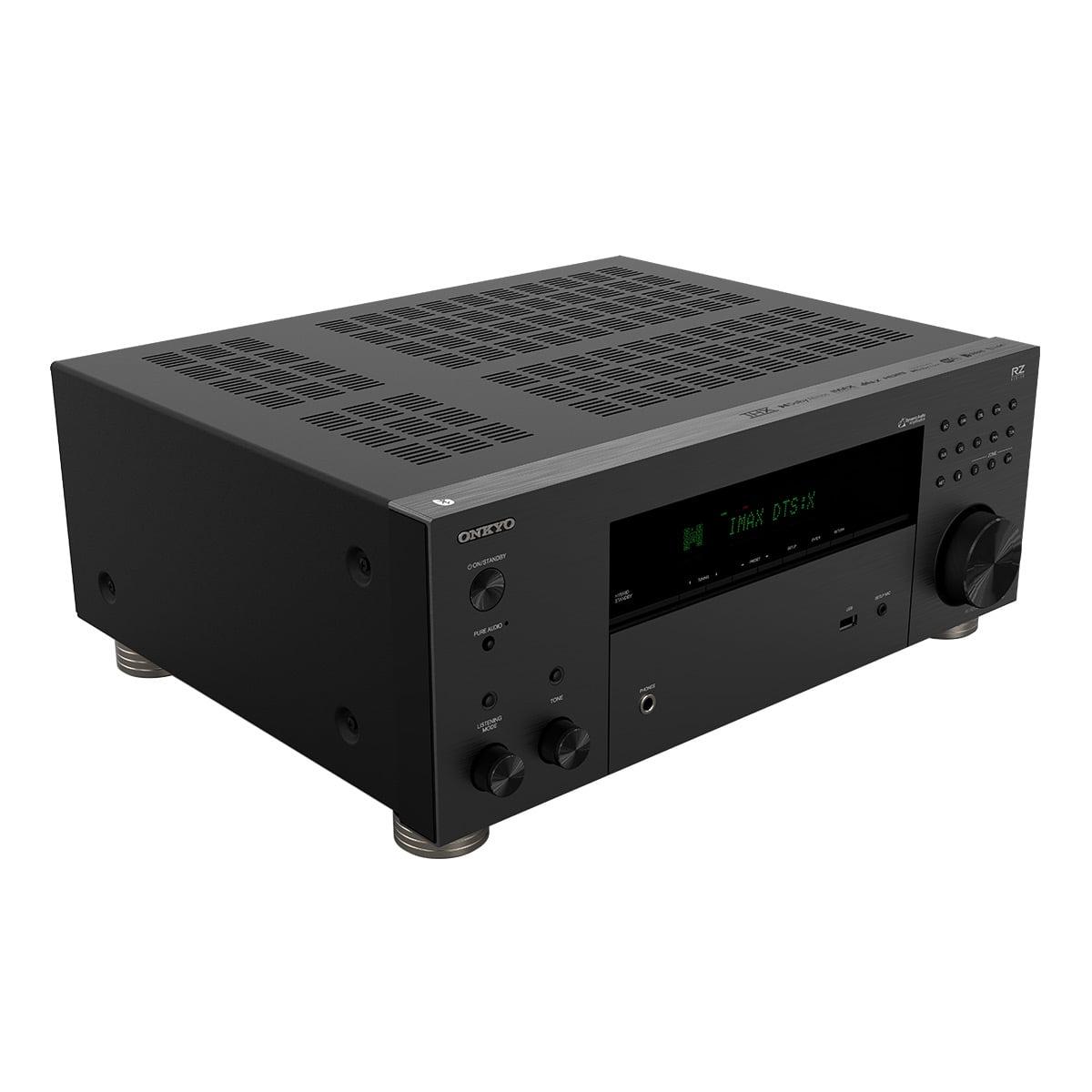
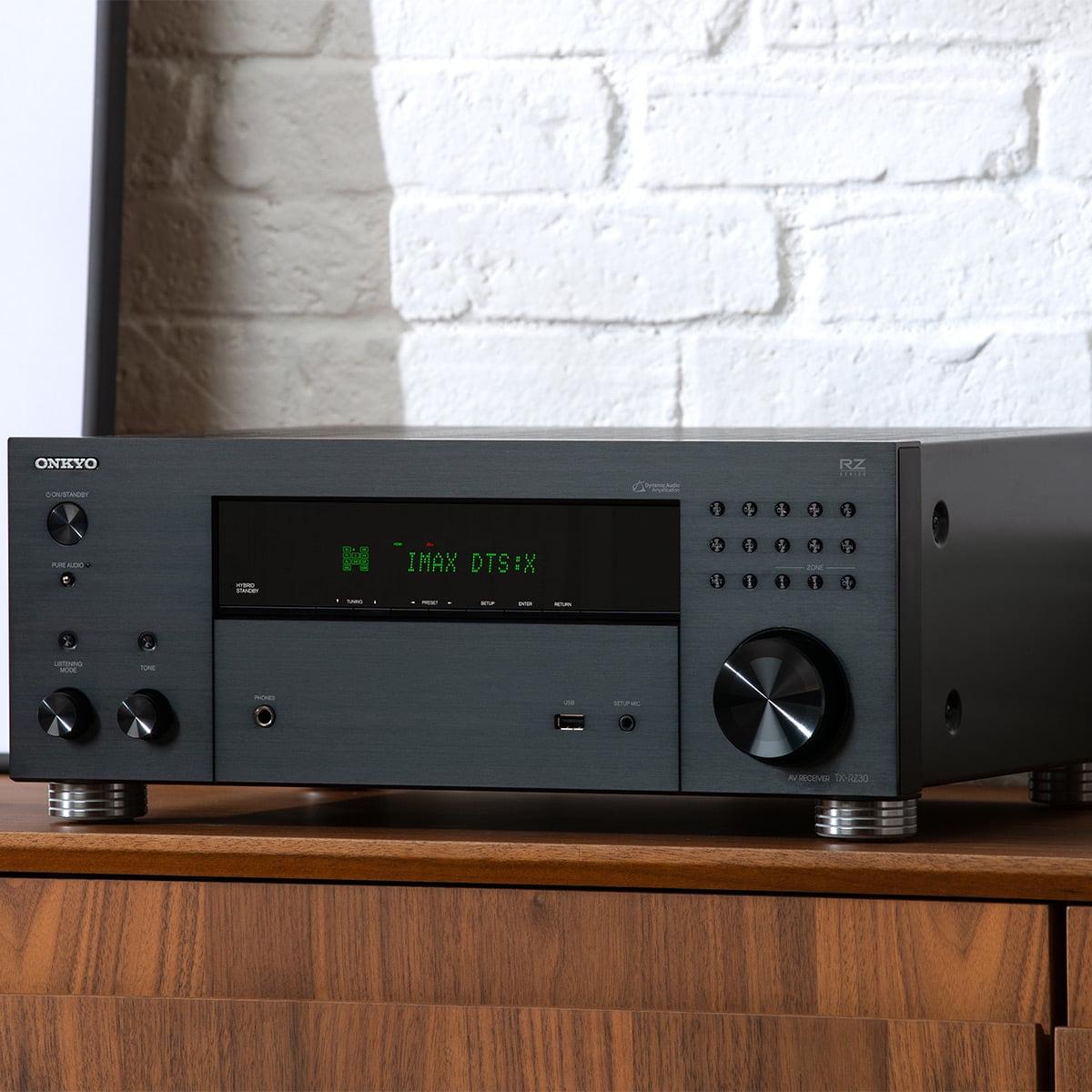
The Denon AVR-X2800H, released in 2022, and the Onkyo TX-RZ30, which hit the market in 2024, represent two compelling but fundamentally different approaches to mid-range AV receiver design. At the time of writing, both receivers occupy similar price tiers in the premium mid-range segment, but they achieve their performance goals through notably different philosophies.
Before diving into specifics, it's crucial to understand what separates good receivers from great ones. The most critical factors include amplification power and channel count, room correction capabilities, video processing and connectivity, and overall ease of use versus customization potential.
Amplification power determines how loud and clean your speakers will sound, especially during dynamic movie scenes with explosions or orchestral crescendos. Channel count dictates your speaker configuration options—more channels mean more flexibility for surround sound setups like Dolby Atmos, which uses overhead speakers to create three-dimensional audio experiences.
Room correction technology has become increasingly important as it automatically compensates for your room's acoustic quirks. Every room has unique characteristics—hard surfaces that cause sound reflections, soft furnishings that absorb certain frequencies, or awkward dimensions that create standing waves. Advanced room correction systems can virtually reshape your room's acoustics through digital processing.
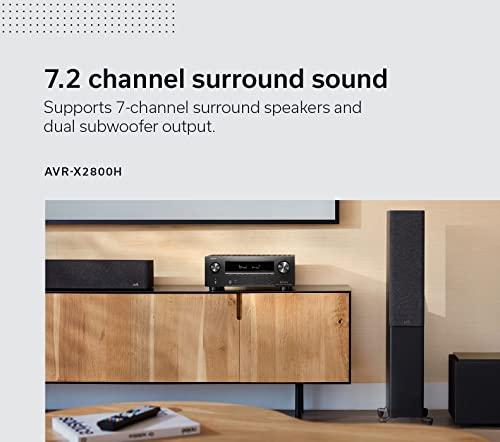
The fundamental difference between these receivers lies in their basic architecture. The Onkyo TX-RZ30 offers 9.2 channels of amplification, meaning it can power nine separate speakers plus two subwoofers simultaneously. The Denon AVR-X2800H, meanwhile, provides 7.2 channels—seven speakers and two subwoofers.
This might seem like a minor distinction, but it dramatically affects your setup options. With the TX-RZ30, you can configure a 7.2.2 Dolby Atmos system (seven main speakers, two subwoofers, and two height speakers) or even a 5.2.4 setup (five main speakers, two subwoofers, and four height speakers for maximum overhead immersion). The X2800H maxes out at 5.2.2 configurations, which is still impressive but more limiting for enthusiasts wanting the ultimate Atmos experience.
Power output tells a similar story. The TX-RZ30 delivers 100 watts per channel into 8-ohm speakers, or an impressive 170 watts per channel into 6-ohm speakers when driving a single channel. The X2800H provides 95 watts per channel into 8-ohm speakers when driving two channels simultaneously. These numbers might seem close, but the Onkyo's higher power reserves become crucial when driving demanding speakers or filling larger rooms with clean, undistorted sound.
In practical terms, this power difference becomes most noticeable during movie scenes with wide dynamic range—think of the quiet dialogue in a thriller suddenly interrupted by an explosion. The TX-RZ30's additional headroom ensures these transients remain clean and impactful rather than compressed or distorted.
Here's where these receivers diverge most dramatically, and frankly, where one clearly outperforms the other. Room acoustics can make or break any audio system—even the most expensive speakers will sound mediocre in a poorly treated room, while modest speakers can sound exceptional with proper acoustic management.
The Onkyo TX-RZ30 includes full-bandwidth Dirac Live room correction as a standard feature. This is remarkable because Dirac Live typically costs hundreds of dollars as an upgrade option on competing receivers. Dirac Live represents the current gold standard in automatic room correction, analyzing your room's acoustic signature across the entire frequency spectrum from 20Hz to 20kHz and applying precise digital filters to compensate for room-induced coloration.
What makes Dirac Live special is its sophisticated approach to frequency response optimization. Rather than simply boosting or cutting frequencies, it applies complex algorithms that consider both magnitude and phase response—essentially correcting not just what frequencies are emphasized or diminished, but also when they arrive at your ears. This results in dramatically improved clarity, imaging, and tonal balance.
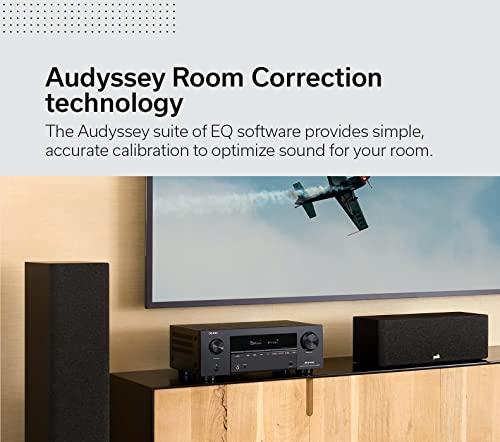
The Denon X2800H uses Audyssey MultEQ XT, which, while competent, operates in a more basic manner. Audyssey focuses primarily on magnitude correction (boosting or cutting specific frequencies) without the sophisticated phase correction that makes Dirac Live so effective. Our research consistently shows that users notice significant improvements when upgrading from Audyssey-based systems to Dirac Live-equipped receivers, particularly in challenging rooms with hard surfaces or irregular dimensions.
For the TX-RZ30, Onkyo offers an optional Bass Control upgrade that takes room correction even further. This $299 addition treats your main speakers and subwoofers as a unified system rather than separate components, optimizing the crossover between them and ensuring seamless bass integration. This level of subwoofer integration typically requires expensive dedicated processors, making it another exceptional value addition.
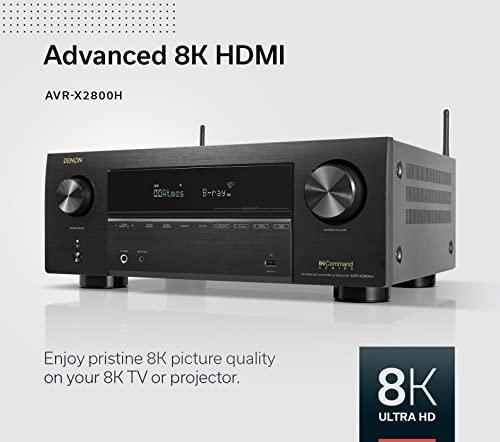
Both receivers embrace the latest video standards, supporting 8K resolution at 60Hz and 4K at 120Hz—crucial for next-generation gaming consoles and future content sources. They handle all current HDR (High Dynamic Range) formats including HDR10, HDR10+, Dolby Vision, and HLG, ensuring compatibility with the latest streaming services and Ultra HD Blu-ray discs.
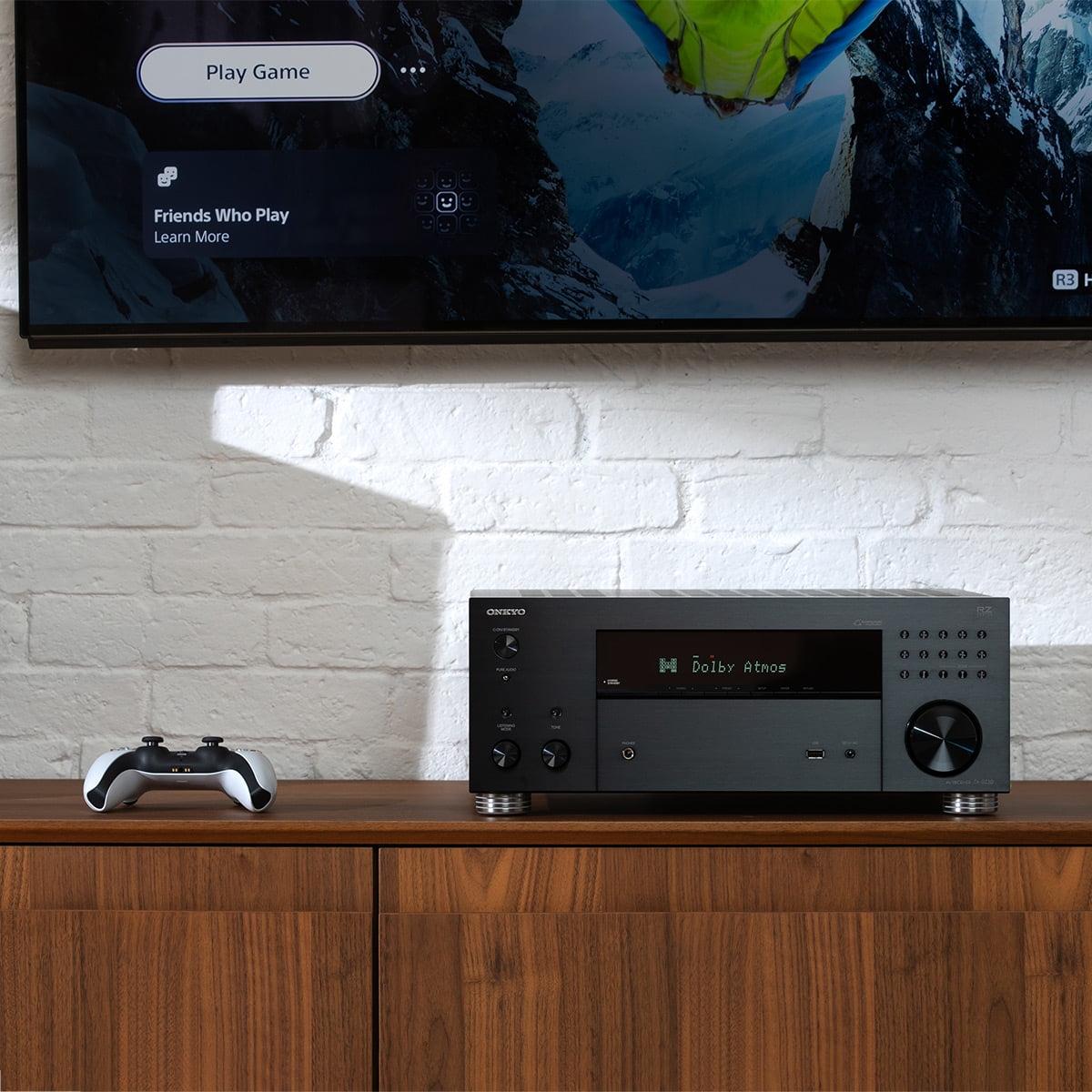
Gaming enthusiasts will appreciate both receivers' support for Variable Refresh Rate (VRR), which synchronizes your display's refresh rate with your console's output to eliminate screen tearing, and Auto Low Latency Mode (ALLM), which automatically switches your TV to its lowest-lag gaming mode when it detects a gaming console input.
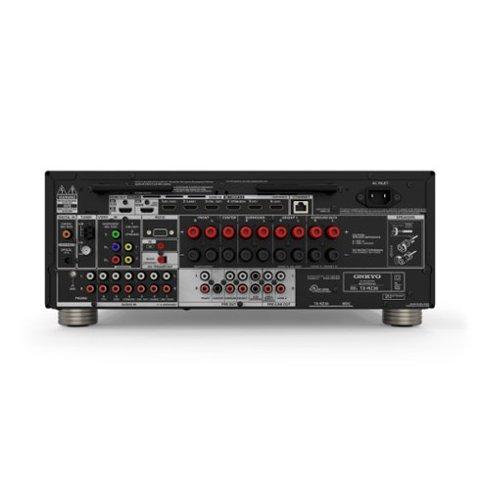
The TX-RZ30 provides six HDMI inputs and two outputs, matching the X2800H's connectivity but adding crucial expandability through multichannel preamp outputs. These preamp connections allow you to add external amplifiers as your system grows, essentially future-proofing your investment. The X2800H lacks these preamp outputs entirely, meaning your amplification is forever limited to the receiver's internal channels.
This expandability difference becomes critical for serious enthusiasts. If you start with a 5.1 system but later want to add height speakers for Atmos, or if you decide to bi-amplify your main speakers for improved performance, the TX-RZ30 can accommodate this growth while the X2800H cannot.
Both receivers function as comprehensive streaming platforms, supporting major services like Spotify, Tidal, Amazon Music, and Apple Music. They integrate with smart home ecosystems through Alexa, Google Assistant, and Siri voice control, and both support wireless music streaming via Bluetooth and AirPlay 2.
The X2800H features Denon's HEOS multi-room system, which allows synchronized music playback throughout your home using multiple HEOS-compatible devices. The TX-RZ30 supports both DTS Play-Fi and Sonos integration for multi-room audio, plus Chromecast Built-in for easy streaming from mobile devices.
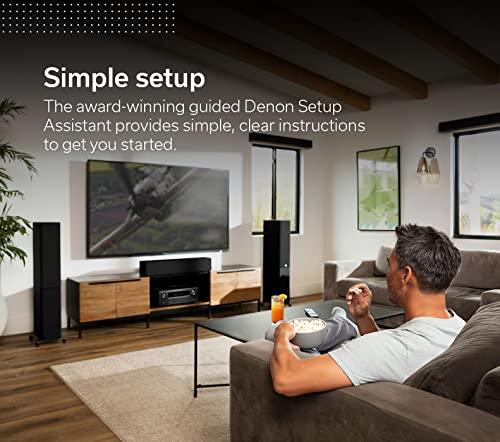
Where they differ significantly is in user interface design and ease of use. The X2800H prioritizes simplicity with an intuitive setup process and straightforward menu system designed to get excellent results with minimal user intervention. The TX-RZ30 offers more granular control options but requires greater investment from users to unlock its full potential.
Based on extensive research of user and expert reviews, these receivers deliver distinctly different listening experiences. The X2800H excels at delivering consistently excellent performance across a wide range of content with minimal setup effort. Its sound signature is balanced and refined, with particular strength in dialogue clarity—crucial for movie watching where understanding every word matters.
The TX-RZ30, when properly configured with Dirac Live engaged, can achieve superior performance, particularly in challenging acoustic environments. Users consistently report dramatic improvements in soundstage width, imaging precision, and tonal balance after running Dirac Live calibration. However, achieving these results requires patience and willingness to experiment with the system's more advanced features.
For music listening, both receivers perform admirably, but with different strengths. The X2800H provides immediate enjoyment with its polished, coherent presentation. The TX-RZ30 rewards careful setup with more precise imaging and better bass integration, particularly valuable for critical music listening in dedicated two-channel or multichannel music configurations.
The power difference becomes most apparent in larger rooms or with less efficient speakers. The TX-RZ30's additional reserves ensure dynamic peaks remain clean and impactful, while the X2800H may compress slightly during the most demanding passages in very large spaces or with power-hungry speakers.
The X2800H benefits from Denon's established reputation for reliable, cool-running operation. The receiver manages heat efficiently and has proven robust in long-term use according to user feedback and reliability databases.
The TX-RZ30 represents Onkyo's return to competitive form after some challenging years in the market. The receiver runs notably warmer than the Denon, requiring adequate ventilation, but appears to have resolved the HDMI board reliability issues that plagued some previous Onkyo models. Recent user reports suggest solid build quality and stable operation, though the brand lacks Denon's extensive track record in this price segment.
For a typical family room setup with a 65-inch TV and 5.1 speaker configuration, the X2800H often proves ideal. Its straightforward setup process gets you excellent results quickly, and its reliable operation means you're unlikely to encounter frustrating technical issues. The receiver handles everything from Netflix streaming to PlayStation gaming with equal competence.
The TX-RZ30 shines in more ambitious installations. If you're building a dedicated home theater with ceiling-mounted Atmos speakers, acoustically challenging room dimensions, or plans for future system expansion, the Onkyo's advanced features become invaluable. The included Dirac Live can transform a mediocre-sounding room into an acoustic experience rivaling commercial theaters.
For music enthusiasts who want their receiver to excel at both movies and critical music listening, the TX-RZ30 again takes the lead. Its superior room correction and potential for external amplification make it more adaptable to serious two-channel music reproduction alongside its home theater duties.
At the time of writing, both receivers command similar pricing in the premium mid-range segment, making value comparison straightforward. The TX-RZ30 delivers objectively more features—additional channels, higher power output, advanced room correction, and expandability options—representing exceptional value for users who will utilize these capabilities.
The X2800H provides excellent value for users prioritizing reliability, ease of use, and proven performance without complexity. Its refined execution and established brand reputation justify its pricing for consumers wanting premium results without the learning curve.
The optional Bass Control upgrade for the TX-RZ30 significantly enhances its performance but increases the total investment. This upgrade transforms the receiver's subwoofer integration from good to exceptional, but users must weigh the additional cost against their specific needs and room acoustics.
Since the X2800H's 2022 release, AV receiver technology has continued evolving, particularly in room correction sophistication and streaming capabilities. The TX-RZ30's 2024 introduction incorporates these advances, most notably in its inclusion of full-bandwidth Dirac Live as standard equipment rather than an expensive option.
Both receivers support the latest HDMI 2.1 specifications, ensuring compatibility with current and near-future video sources. However, the TX-RZ30's preamp outputs provide crucial future-proofing for users who might want to expand their systems as their needs or rooms change.
Choose the Onkyo TX-RZ30 if you're serious about maximizing your home theater's performance potential. Its advanced room correction can transform challenging acoustic environments, its additional channels provide flexibility for complex speaker configurations, and its expandability ensures your investment remains relevant as your system grows. The receiver rewards users willing to invest time in proper setup and configuration.
Select the Denon AVR-X2800H if you prioritize reliable, excellent performance with minimal complexity. Its proven reliability, refined sound quality, and straightforward operation make it ideal for users wanting premium results without extensive technical involvement. The receiver excels at delivering consistently satisfying performance across all content types.
Both receivers represent smart investments in their respective categories, but your choice should align with your technical comfort level, room requirements, and long-term system ambitions. The TX-RZ30 offers superior performance potential for enthusiasts willing to unlock it, while the X2800H provides exceptional user experience for those prioritizing simplicity alongside high performance.
| Denon AVR-X2800H | Onkyo TX-RZ30 |
|---|---|
| Channel Configuration - Determines speaker setup flexibility and Atmos capabilities | |
| 7.2 channels (max 5.2.2 Dolby Atmos) | 9.2 channels (up to 7.2.2 or 5.2.4 Dolby Atmos) |
| Power Output - Critical for driving demanding speakers and filling larger rooms | |
| 95W per channel (8Ω, 2 channels driven) | 100W per channel (8Ω) / 170W per channel (6Ω, 1 channel) |
| Room Correction - Most important feature for optimizing sound quality in your space | |
| Audyssey MultEQ XT (basic correction) | Full-bandwidth Dirac Live included (premium correction worth $300+ elsewhere) |
| HDMI Connectivity - Essential for modern gaming and 8K future-proofing | |
| 6 HDMI 2.1 inputs, 2 outputs (3 inputs support 8K/4K120) | 6 HDMI 2.1 inputs, 2 outputs (8K/60Hz, 4K/120Hz support) |
| Expandability - Critical for future system upgrades and external amplification | |
| No multichannel preamp outputs (limited expansion) | 11.2 multichannel preamp outputs (full expansion capability) |
| Multi-Room Audio - For whole-home music distribution | |
| HEOS Built-in system | DTS Play-Fi, Sonos integration, Chromecast Built-in |
| Build Quality & Heat Management - Affects long-term reliability | |
| Cool-running, established reliability record | Runs warmer, requires good ventilation but improved reliability |
| Setup Complexity - Impacts user experience and time investment | |
| Simple setup, excellent out-of-box performance | More complex but rewards careful configuration with superior results |
| Voice Control & Streaming - Modern smart home integration | |
| Alexa, Google Assistant, Siri, AirPlay 2, Spotify Connect | Alexa, Google Assistant, AirPlay 2, Roon Ready, multiple streaming platforms |
| Target User - Who should buy each receiver | |
| Users wanting excellent performance with minimal complexity | Enthusiasts seeking maximum performance and future expandability |
The Onkyo TX-RZ30 offers 9.2 channels compared to the Denon AVR-X2800H's 7.2 channels. This means the TX-RZ30 can power two additional speakers, allowing for more complex Dolby Atmos configurations like 7.2.2 or 5.2.4 setups, while the X2800H maxes out at 5.2.2 configurations.
The Onkyo TX-RZ30 delivers 100 watts per channel (8Ω) or 170 watts per channel (6Ω), while the Denon AVR-X2800H provides 95 watts per channel (8Ω). The TX-RZ30's higher power output makes it better suited for larger rooms or demanding speakers that need more amplification.
The Onkyo TX-RZ30 includes full-bandwidth Dirac Live room correction as standard, which is considered superior to the Denon AVR-X2800H's Audyssey MultEQ XT system. Dirac Live provides more sophisticated frequency and phase correction across the entire audio spectrum, resulting in better sound optimization for your specific room.
Yes, both the Denon AVR-X2800H and Onkyo TX-RZ30 support 8K/60Hz and 4K/120Hz video passthrough with HDMI 2.1 connectivity. They also include gaming features like Variable Refresh Rate (VRR), Auto Low Latency Mode (ALLM), and support for HDR formats including Dolby Vision.
The Denon AVR-X2800H is generally easier to set up and operate, with a more intuitive user interface designed for straightforward installation. The Onkyo TX-RZ30 offers more advanced configuration options but requires more time and technical knowledge to fully optimize its performance capabilities.
Only the Onkyo TX-RZ30 offers multichannel preamp outputs for connecting external amplifiers, providing significant expandability for future system growth. The Denon AVR-X2800H lacks preamp outputs, limiting your ability to add external amplification or expand beyond its built-in channels.
The Denon AVR-X2800H runs cooler and has an established track record for reliability in long-term use. The Onkyo TX-RZ30 runs warmer and requires better ventilation, though recent models appear to have resolved previous reliability concerns that affected some earlier Onkyo receivers.
Both the Denon AVR-X2800H and Onkyo TX-RZ30 support major streaming platforms like Spotify, Amazon Music, and Apple Music, plus voice control through Alexa and Google Assistant. The X2800H features HEOS multi-room, while the TX-RZ30 offers DTS Play-Fi, Sonos integration, and Chromecast Built-in.
The Onkyo TX-RZ30 is better suited for large home theater rooms due to its higher power output (100-170W per channel), additional amplification channels for complex speaker setups, and superior Dirac Live room correction that can handle challenging acoustics in bigger spaces.
The Onkyo TX-RZ30 offers an optional Dirac Live Bass Control upgrade that provides advanced subwoofer integration and bass management. The Denon AVR-X2800H doesn't offer significant optional upgrades, focusing instead on delivering excellent performance out of the box.
The Onkyo TX-RZ30 offers exceptional value by including premium Dirac Live room correction as standard, plus more channels and higher power output. The Denon AVR-X2800H provides excellent value for users who prioritize reliability and ease of use over maximum feature count and customization options.
For first-time buyers, the Denon AVR-X2800H is often the better choice due to its simpler setup process, proven reliability, and excellent out-of-box performance. The Onkyo TX-RZ30 is ideal for more experienced users or those planning complex installations who can take advantage of its advanced features and expandability options.
We've done our best to create useful and informative comparisons to help you decide what product to buy. Our research uses advanced automated methods to create this comparison and perfection is not possible - please contact us for corrections or questions. These are the sites we've researched in the creation of this article: theaudiotailor.com.au - ecoustics.com - simplehomecinema.com - whathifi.com - audioadvisor.com - youtube.com - bestbuy.com - e-catalog.com - crutchfield.com - avsforum.com - crutchfield.com - whathifi.com - richersounds.com - bestbuy.com - accessories4less.com - projectorscreen.com - adiglobaldistribution.us - youtube.com - bestbuy.com - bestbuy.com - sweetwater.com - youtube.com - onkyo.com - cnet.com - audioholics.com - theabsolutesound.com - bestbuy.com - audiosciencereview.com - onkyo.com - onkyo.com - ecoustics.com - cine-craft.de

Privacy Policy
Terms and Conditions - Affiliate Policy
Home Security
© Copyright 2008-2026.
11816 Inwood Rd #1211, Dallas, TX 75244