

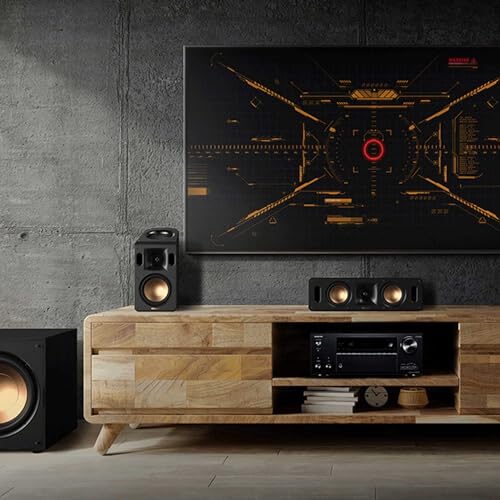
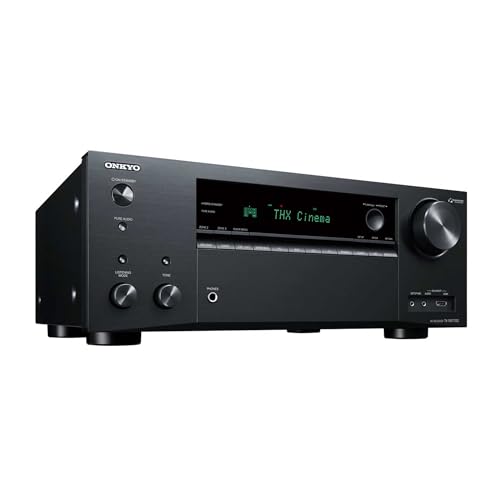
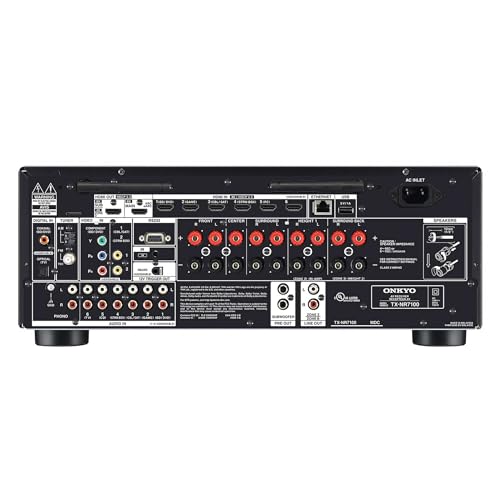
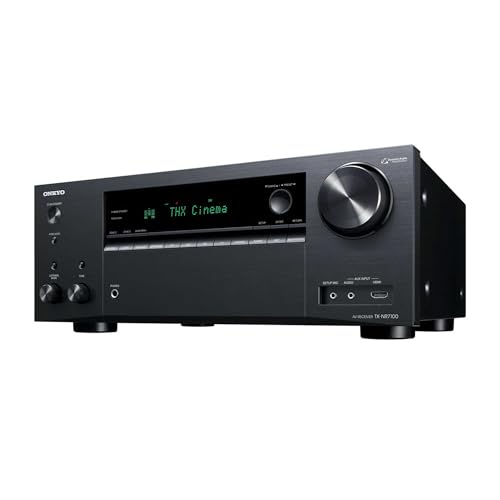

When you're ready to upgrade from your TV's built-in speakers or that aging soundbar, the world of AV receivers can feel overwhelming. These devices serve as the brain of your home theater system, handling everything from powering your speakers to processing video signals and managing multiple input sources. But with options ranging from basic budget models to feature-packed powerhouses, how do you know what you actually need?
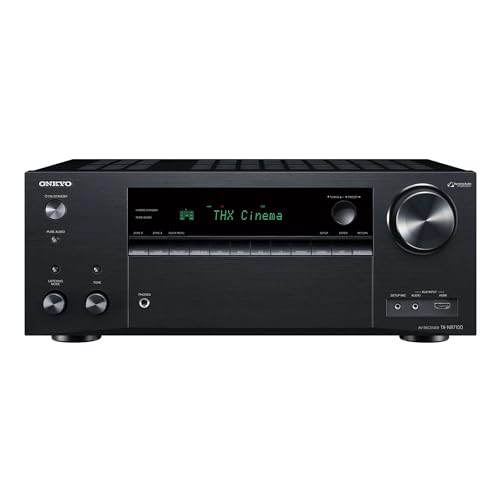
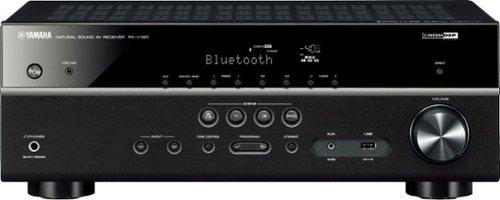
I've spent considerable time researching two receivers that represent opposite ends of the spectrum: the Onkyo TX-NR7100, a 9.2-channel beast released in 2021, and the Yamaha RX-V385, a straightforward 5.1-channel model that debuted in 2018. At the time of writing, these receivers sit in completely different price categories, with the Onkyo commanding premium pricing while the Yamaha targets budget-conscious buyers. But understanding their differences goes far beyond just cost—it's about matching the right tool to your specific needs and room.
Before diving into specifics, let's clarify what these machines actually do. An AV receiver combines several components that used to be separate devices: an amplifier to power your speakers, a video processor to handle different input formats, a switching system to manage multiple sources, and increasingly sophisticated digital signal processing to optimize your audio experience.
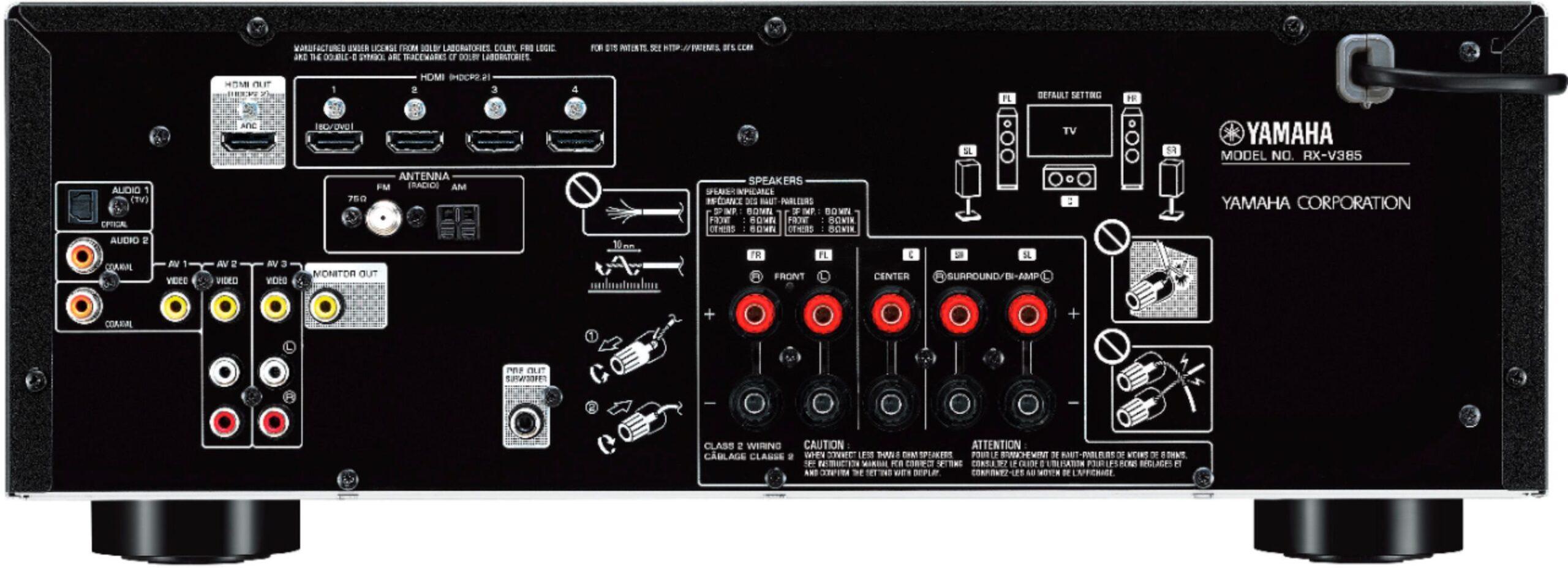
The most fundamental specification is channel configuration. When we say "5.1 channels," we're talking about five main speakers (front left, center, front right, surround left, surround right) plus one subwoofer channel (the ".1"). The Yamaha RX-V385 maxes out at this traditional surround setup. The Onkyo TX-NR7100, with its 9.2 configuration, can handle those same five speakers plus four additional channels—typically used for height speakers that create overhead sound effects in formats like Dolby Atmos.
Power output matters, but it's more nuanced than bigger numbers being automatically better. Both receivers use similar measurement standards, but the Onkyo TX-NR7100 delivers 100 watts per channel compared to the Yamaha RX-V385's 70 watts. More importantly, the Onkyo uses what's called Dynamic Audio Amplification with a hi-current power supply—engineering speak for a design that can deliver sudden bursts of power when your speakers demand it, like during explosive movie scenes.
Here's where these receivers truly diverge. The Onkyo TX-NR7100 supports Dolby Atmos and DTS:X, which represent a fundamental shift in how sound is mixed and played back. Instead of traditional channel-based surround sound, these formats use "object-based audio"—imagine sounds as balls floating in 3D space around your listening position rather than tied to specific speaker locations. When a helicopter flies overhead in a movie, the sound literally moves above you through ceiling-mounted or upward-firing speakers.
This isn't just marketing fluff. Based on our research of user experiences and professional reviews, the difference is immediately noticeable when you have the proper speaker setup. The Onkyo TX-NR7100 can process up to 5.1.4 configurations (five main channels, one subwoofer, four height channels) or 7.1.2 setups, creating that convincing bubble of sound that makes you forget you're listening to speakers.
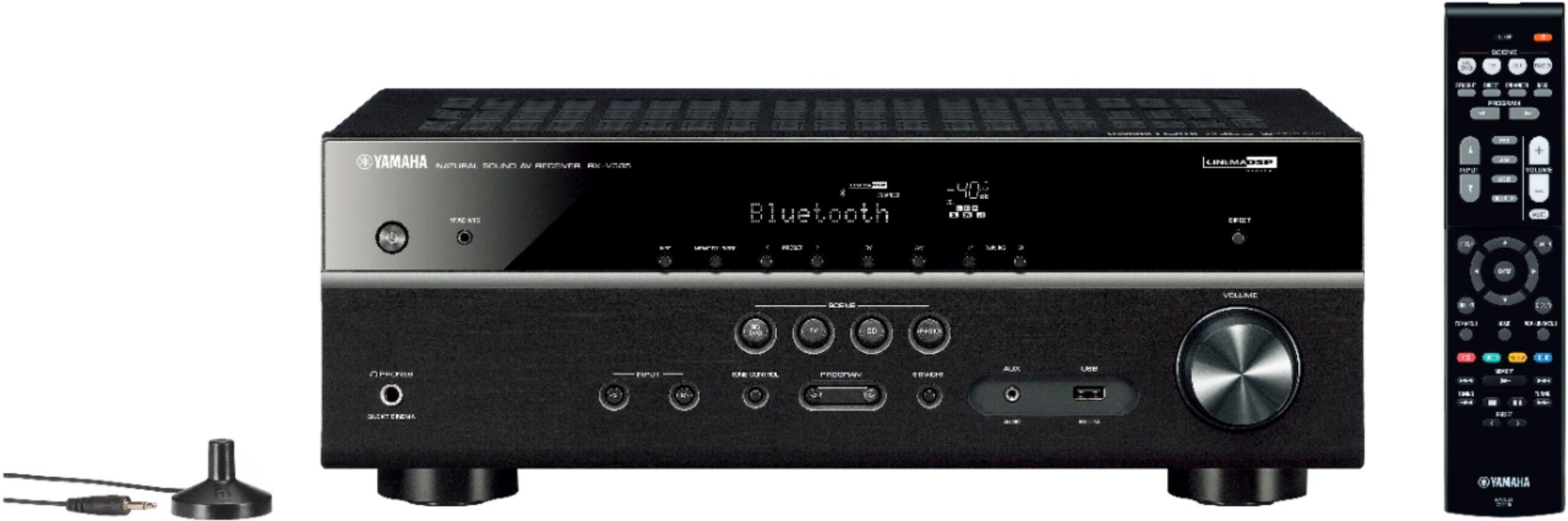
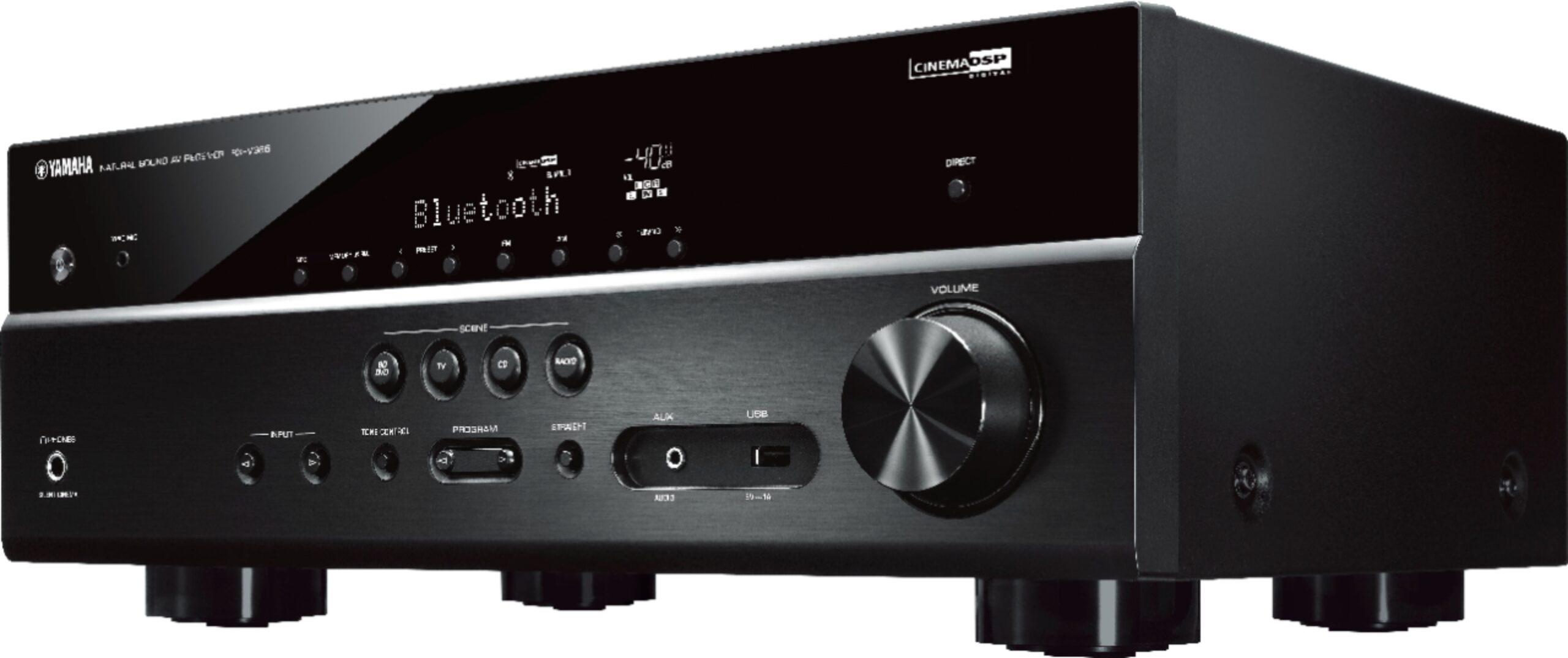
The Yamaha RX-V385 can't process Atmos signals at all. It's limited to traditional surround formats like Dolby TrueHD and DTS-HD Master Audio—which are excellent quality but fundamentally two-dimensional. However, Yamaha includes their Cinema DSP technology with 17 different processing modes. This system analyzes incoming audio and applies acoustic modeling based on real concert halls and venues, creating a sense of spaciousness even with a basic 5.1 setup.
Room correction technology represents another significant gap. The Onkyo TX-NR7100 includes Dirac Live, which is considered among the most sophisticated automatic calibration systems available. It analyzes your room's acoustic characteristics using multiple measurement positions and can correct both frequency response problems and timing issues caused by speaker placement and room reflections. The process is thorough but somewhat complex, requiring either the Onkyo app or separate computer software.
The Yamaha RX-V385 uses YPAO (Yamaha Parametric Room Acoustic Optimizer), which is simpler and faster to set up. While not as comprehensive as Dirac Live, it effectively handles basic room corrections and speaker distance calculations. For most users in typical living rooms, YPAO delivers noticeable improvements without the learning curve.
The video processing differences reveal each receiver's target era and audience. The Onkyo TX-NR7100, released in 2021, was designed with next-generation gaming and 8K displays in mind. Its six HDMI 2.1 inputs can handle 8K video at 60Hz or 4K at 120Hz—specifications that seemed excessive when the receiver launched but now align with PlayStation 5 and Xbox Series X capabilities.
More importantly for current users, those HDMI 2.1 connections support Variable Refresh Rate (VRR), Auto Low Latency Mode (ALLM), and Quick Frame Transport (QFT). In practical terms, this means smoother gaming with reduced input lag and no screen tearing when connected to compatible displays and consoles. The bandwidth available—40 Gbps per connection—leaves headroom for whatever comes next in display technology.
The Yamaha RX-V385, from 2018, predates the current gaming console generation and 8K adoption. Its four HDMI inputs handle 4K at 60Hz, which remains perfectly adequate for current Blu-ray players and most streaming devices. It supports HDR formats including Dolby Vision, so your 4K content will look properly bright and colorful. However, the HDMI bandwidth limitations mean future gaming features aren't available.
Both receivers include HDMI eARC (Enhanced Audio Return Channel), though the Yamaha RX-V385 required a firmware update to enable this feature. eARC allows your TV to send high-quality audio formats back to the receiver, which is essential when using smart TV apps or streaming sticks as sources.
Modern receivers increasingly function as smart home hubs, and this is where the Onkyo TX-NR7100 truly showcases its premium positioning. It includes built-in support for Chromecast, DTS Play-Fi, Apple AirPlay 2, and even works with Sonos systems. This means you can easily stream music from your phone, integrate with existing multi-room setups, or control playback through voice assistants like Alexa or Google Assistant.
The three-zone capability deserves special attention. Zone 2 and Zone 3 outputs let you power speakers in different rooms independently, while Zone 2 even includes HDMI output for sending different video content to another display. Imagine watching a movie in your main theater while someone else streams music in the kitchen—all controlled through the same receiver.
The Yamaha RX-V385 keeps connectivity simpler with Bluetooth streaming and basic network features for firmware updates. While it lacks the sophisticated streaming integrations, it does include Yamaha's Compressed Music Enhancer, which attempts to restore detail lost in MP3 and other compressed audio formats—a thoughtful touch for users who primarily stream music.
Construction quality reflects each receiver's market positioning. The Onkyo TX-NR7100 uses discrete output transistors in its amplifier section rather than integrated circuits, which typically provides better performance and reliability under demanding conditions. Its Vector Linear Shaping Circuitry (VLSC) reconstructs digital audio signals with reduced noise—you won't hear the technical wizardry, but the result is cleaner sound reproduction.
The Yamaha RX-V385 employs quality Burr-Brown digital-to-analog converters, the same components found in much more expensive equipment. While its overall construction targets a different price point, Yamaha's reputation for reliability remains solid across their product range.
Based on user feedback we've researched, both receivers demonstrate good long-term reliability, though the Onkyo TX-NR7100 includes more robust power supply design that should handle challenging speaker loads more gracefully.
Setup complexity differs significantly between these models. The Onkyo TX-NR7100 offers tremendous flexibility but requires more decision-making. You'll need to configure speaker assignments, choose between different Dirac Live calibration approaches, and potentially adjust advanced settings for optimal performance. The payoff is a highly customized experience, but some users find the initial setup overwhelming.
The Yamaha RX-V385 follows a more straightforward philosophy. YPAO calibration runs quickly and automatically, the remote control layout is intuitive, and the limited options prevent configuration paralysis. For users who want immediate improvement without becoming home theater experts, this approach works well.
Music playback reveals different strengths. The Onkyo TX-NR7100 excels with dynamic material—orchestral pieces with sudden crescendos, rock music with heavy bass, or jazz recordings with intricate instrumental separation. However, some users report that it can sound slightly clinical with simple acoustic music, prioritizing detail over warmth.
The Yamaha RX-V385 tends toward a more musical presentation that flatters a wider variety of content. Yamaha's decades of experience in musical instrument manufacturing shows in their tuning choices, creating a sound that rarely offends but might lack the last bit of resolution that audiophiles crave.
The Onkyo TX-NR7100 makes sense for several specific scenarios. If you're building a dedicated home theater room with proper ceiling speaker installation for Atmos, this receiver provides the processing power and flexibility to make that investment worthwhile. Gaming enthusiasts with next-generation consoles will appreciate the 4K/120Hz support and low-latency features. Households wanting multi-room audio distribution benefit from the comprehensive streaming integrations and zone outputs.
Most importantly, choose the Onkyo TX-NR7100 if you view your receiver as a long-term investment that should accommodate future upgrades. The additional channels, advanced video processing, and comprehensive connectivity provide growth room as your system evolves.
The Yamaha RX-V385 serves different priorities excellently. First-time home theater builders who want significant improvement over TV speakers without complexity will find it approachable and effective. Users in apartments or smaller spaces where extensive speaker arrays aren't practical can achieve satisfying surround sound without unused features.
Budget constraints naturally favor the Yamaha RX-V385, but consider the total system cost. If you're planning to add height speakers later, the channel limitation means eventually replacing the entire receiver—potentially making the initial savings illusory.
Since the Yamaha RX-V385's 2018 release, home theater technology has evolved significantly. Dolby Atmos has moved from premium theaters to mainstream content, with streaming services now offering Atmos soundtracks regularly. Gaming has embraced 120Hz displays and VRR technology. HDMI 2.1 has transitioned from future-proofing to current necessity for high-end setups.
The Onkyo TX-NR7100, arriving in 2021, incorporates these developments naturally. Its design assumes users want current-generation gaming features and streaming integrations. This timing difference explains much of the feature gap beyond just price positioning.
Choosing between these receivers ultimately depends on matching capabilities to realistic usage patterns. The Onkyo TX-NR7100 delivers premium performance and future-proofing at premium pricing, while the Yamaha RX-V385 provides excellent value for users with straightforward needs and budget limitations.
Consider the Onkyo TX-NR7100 if you're serious about home theater as a hobby, plan to use gaming features regularly, or need multi-room functionality. Its advanced processing and comprehensive connectivity justify the higher investment for users who will utilize these capabilities.
The Yamaha RX-V385 makes more sense for practical users who want better sound than their TV provides without complexity or high cost. Its reliable performance and musical character suit most living room setups perfectly.
Neither receiver is objectively better—they're optimized for different users and scenarios. The key is honest assessment of your actual needs versus aspirational features you might never use. Both will deliver significantly better audio than basic alternatives, but understanding their fundamental differences ensures your investment aligns with your expectations and usage patterns.
| Onkyo TX-NR7100 | Yamaha RX-V385 |
|---|---|
| Channel Configuration - Determines speaker setup flexibility and future upgrade potential | |
| 9.2 channels (supports Dolby Atmos height speakers) | 5.1 channels (traditional surround only) |
| Power Output - Affects volume capability and speaker compatibility | |
| 100W per channel (8Ω, more headroom for demanding speakers) | 70W per channel (8Ω, adequate for most home setups) |
| Dolby Atmos Support - Essential for immersive 3D audio from modern content | |
| Full Dolby Atmos and DTS:X processing | Not supported (limited to traditional surround formats) |
| HDMI Inputs/Outputs - Critical for connecting multiple 4K sources | |
| 7 inputs, 2 outputs (6 HDMI 2.1 rear + 1 front) | 4 inputs, 1 output (HDMI 2.0 specification) |
| Video Resolution Support - Future-proofing for next-gen gaming and displays | |
| 8K/60Hz, 4K/120Hz with VRR/ALLM gaming features | 4K/60Hz maximum (sufficient for current content) |
| Room Correction Technology - Automatically optimizes sound for your specific room | |
| Dirac Live (professional-grade multi-point calibration) | YPAO (simpler single-point calibration) |
| Multi-Room Capability - Allows independent audio in different zones | |
| 3 zones with powered outputs and Zone 2 HDMI | Basic Bluetooth streaming only |
| Smart Features - Streaming and voice control integration | |
| Chromecast, AirPlay 2, DTS Play-Fi, Alexa/Google | Bluetooth with music enhancement |
| THX Certification - Ensures reference-quality audio performance | |
| THX Certified Select with IMAX Enhanced | Not certified (relies on Yamaha's Cinema DSP) |
| Target Use Case - Best suited for different user types | |
| Serious home theater with height speakers and gaming | Entry-level surround sound upgrade from TV speakers |
The Yamaha RX-V385 is much better for beginners due to its simpler setup process and straightforward operation. It features automatic YPAO room calibration that works quickly without complex configuration, while the Onkyo TX-NR7100 offers more advanced features that can overwhelm new users. The Yamaha RX-V385 provides excellent sound improvement over TV speakers without requiring extensive home theater knowledge.
No, only the Onkyo TX-NR7100 supports Dolby Atmos and DTS:X for immersive 3D audio with height speakers. The Yamaha RX-V385 is limited to traditional 5.1 surround sound formats like Dolby TrueHD and DTS-HD Master Audio. If you want overhead sound effects from modern movies and streaming content, you'll need the Onkyo TX-NR7100.
The Onkyo TX-NR7100 can power up to 9 speakers plus 2 subwoofers (9.2 channels), allowing for configurations like 7.1.2 or 5.1.4 with height speakers. The Yamaha RX-V385 powers 5 speakers plus 1 subwoofer (5.1 channels) in a traditional surround setup. The Onkyo TX-NR7100 offers much more flexibility for larger home theater systems.
The Onkyo TX-NR7100 is significantly better for gaming, especially with PlayStation 5 or Xbox Series X consoles. It supports 4K/120Hz video, Variable Refresh Rate (VRR), and Auto Low Latency Mode (ALLM) through its HDMI 2.1 inputs. The Yamaha RX-V385 is limited to 4K/60Hz and lacks modern gaming features, though it's adequate for older consoles.
Yes, both the Onkyo TX-NR7100 and Yamaha RX-V385 support 4K video passthrough. However, the Onkyo TX-NR7100 goes further with 8K/60Hz support and higher bandwidth HDMI 2.1 connections, while the Yamaha RX-V385 maxes out at 4K/60Hz through HDMI 2.0. Both support HDR formats like Dolby Vision for enhanced picture quality.
The Yamaha RX-V385 offers better value for basic home theater needs, providing significant sound improvement at an entry-level investment. The Onkyo TX-NR7100 offers better long-term value if you plan to build an advanced system with height speakers and need future-proofing features. Your choice depends on whether you want immediate affordability or long-term capability.
With the Yamaha RX-V385, you're limited to the initial 5.1 speaker configuration - you cannot add height speakers for Dolby Atmos later. The Onkyo TX-NR7100 allows you to start with fewer speakers and add height channels, additional surrounds, or multi-room speakers as your system grows. This makes the Onkyo TX-NR7100 more expandable.
Both receivers handle music well, but with different strengths. The Yamaha RX-V385 tends to have a warmer, more musical sound that flatters most genres, drawing on Yamaha's musical instrument heritage. The Onkyo TX-NR7100 provides more detailed and dynamic sound reproduction, especially with high-resolution audio files, though some find it slightly clinical for simple acoustic music.
The Onkyo TX-NR7100 offers comprehensive wireless streaming with Bluetooth, Wi-Fi, Chromecast built-in, Apple AirPlay 2, and DTS Play-Fi, plus built-in access to Spotify, TIDAL, and other services. The Yamaha RX-V385 provides basic Bluetooth streaming with music enhancement technology but lacks the advanced wireless features and streaming service integration of the Onkyo TX-NR7100.
The Yamaha RX-V385 is often better suited for smaller rooms where a full 9-channel setup isn't practical. Its 5.1 configuration works well in apartments and smaller living spaces, while still providing substantial improvement over TV audio. The Onkyo TX-NR7100 is better for larger dedicated home theater rooms where you can take advantage of its additional channels and advanced features.
Both the Onkyo TX-NR7100 and Yamaha RX-V385 have good reliability records based on user feedback. Yamaha has a strong reputation for long-term durability across their product range, while the Onkyo TX-NR7100 uses higher-grade components like discrete output transistors that should provide excellent longevity. Both typically come with manufacturer warranties for peace of mind.
Choose the Yamaha RX-V385 if you want immediate sound improvement without complexity or high cost, and don't plan to add height speakers. Choose the Onkyo TX-NR7100 if you're serious about building a comprehensive home theater system, want Dolby Atmos capability, or need gaming features. The Yamaha RX-V385 is perfect for straightforward upgrades, while the Onkyo TX-NR7100 is an investment in premium home theater capabilities.
We've done our best to create useful and informative comparisons to help you decide what product to buy. Our research uses advanced automated methods to create this comparison and perfection is not possible - please contact us for corrections or questions. These are the sites we've researched in the creation of this article: crutchfield.com - prohifi.in - bestbuy.com - h-m-entertainment.com - audiosciencereview.com - crutchfield.ca - soundandvision.com - avsforum.com - avgadgets.com - youtube.com - onkyo.com - crutchfield.com - onkyo.com - accessories4less.com - klipsch.com - youtube.com - listenup.com - intl.onkyo-av.com - bestbuy.com - 420spotshop.com - support.onkyousa.com - usa.yamaha.com - usa.yamaha.com - avsforum.com - crutchfield.com - hifiheaven.net - europe.yamaha.com - my.yamaha.com - hifiengine.com - abt.com - abcwarehouse.com

Privacy Policy
Terms and Conditions - Affiliate Policy
Home Security
© Copyright 2008-2026.
11816 Inwood Rd #1211, Dallas, TX 75244