


When you're building a home theater system, the AV receiver sits at the heart of everything. It's the component that takes audio and video signals from your sources, processes them, amplifies the sound, and sends everything to your speakers and display. Getting this choice right matters enormously because it affects every movie night, gaming session, and music listening experience you'll have for years to come.
At the time of writing, the market offers receivers spanning from around $300 to well over $2,000, but two models illustrate the dramatic differences between budget and premium approaches: the JBL MA310 representing the entry-level segment and the Onkyo TX-NR7100 targeting serious home theater enthusiasts. The price gap between these receivers reflects fundamental differences in capability, not just brand positioning.
Before diving into specifics, it's worth understanding what separates a basic receiver from a premium one. Channel count determines how many speakers you can connect—a 5.2 receiver handles five main speakers plus two subwoofers, while a 9.2 receiver can drive nine speakers plus two subs. This difference isn't just about volume; it's about creating truly immersive three-dimensional soundscapes.
Power output, measured in watts per channel, affects how loud your system can play and how well it handles demanding audio passages. But raw wattage numbers can be misleading—the quality of that power delivery matters just as much. High-current amplification (the ability to deliver sudden bursts of power) makes the difference between flat, compressed sound and dynamic audio that feels alive.
Room correction technology analyzes your listening space and adjusts the audio to compensate for acoustic problems. Basic systems might offer simple equalization, while advanced systems use sophisticated algorithms that can dramatically improve sound quality in real rooms with furniture, carpets, and odd-shaped walls.
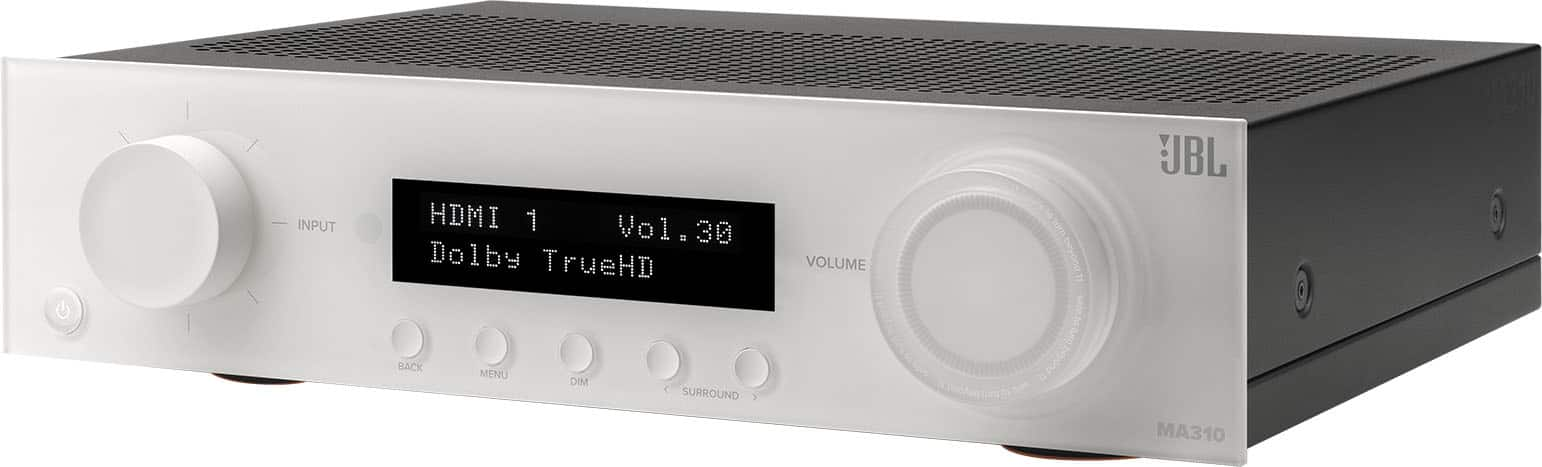
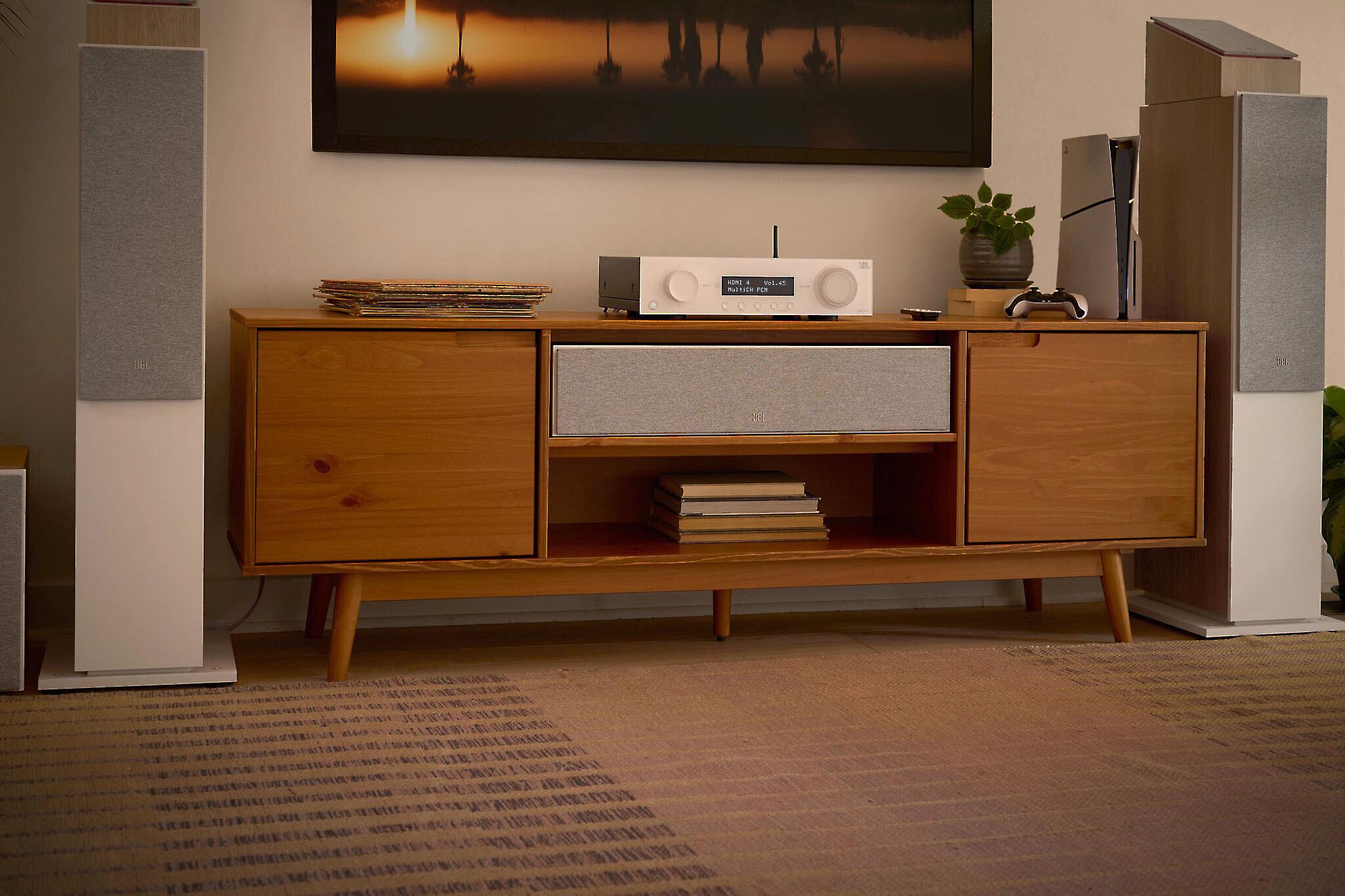
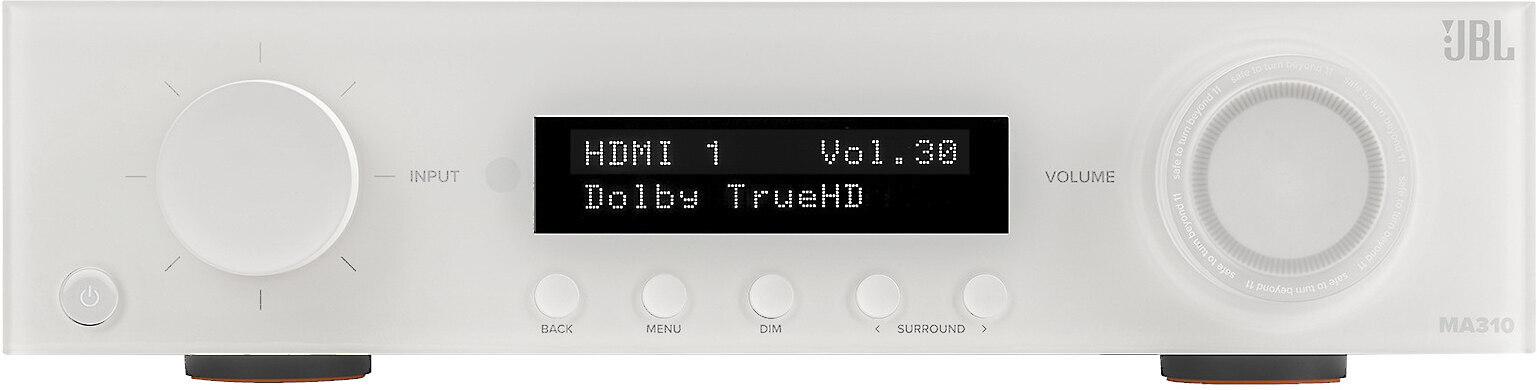
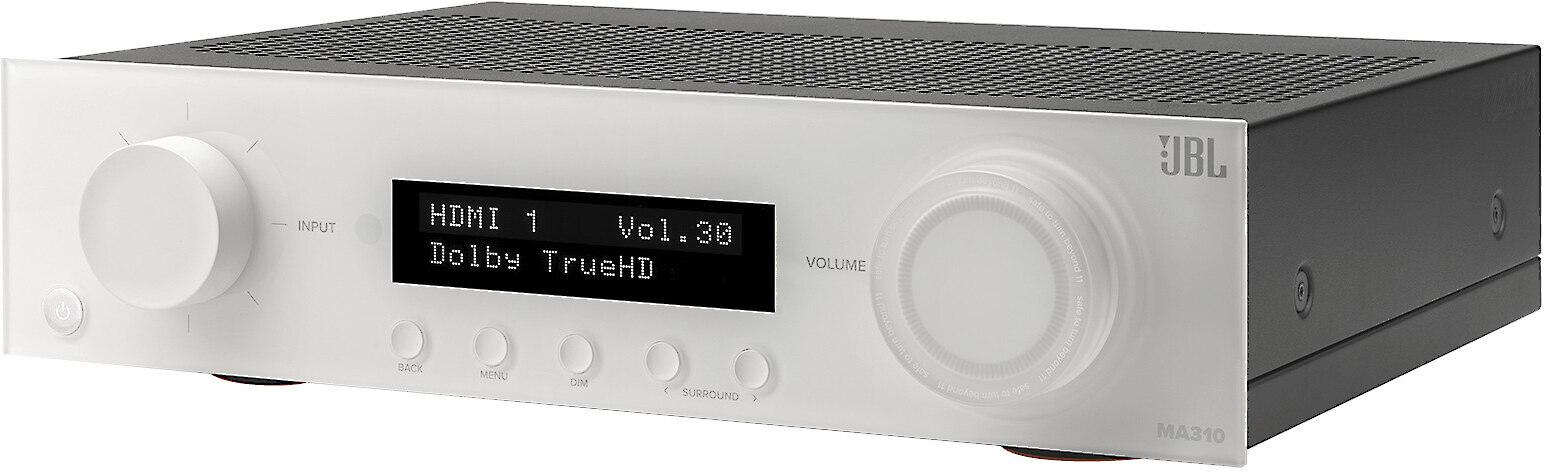
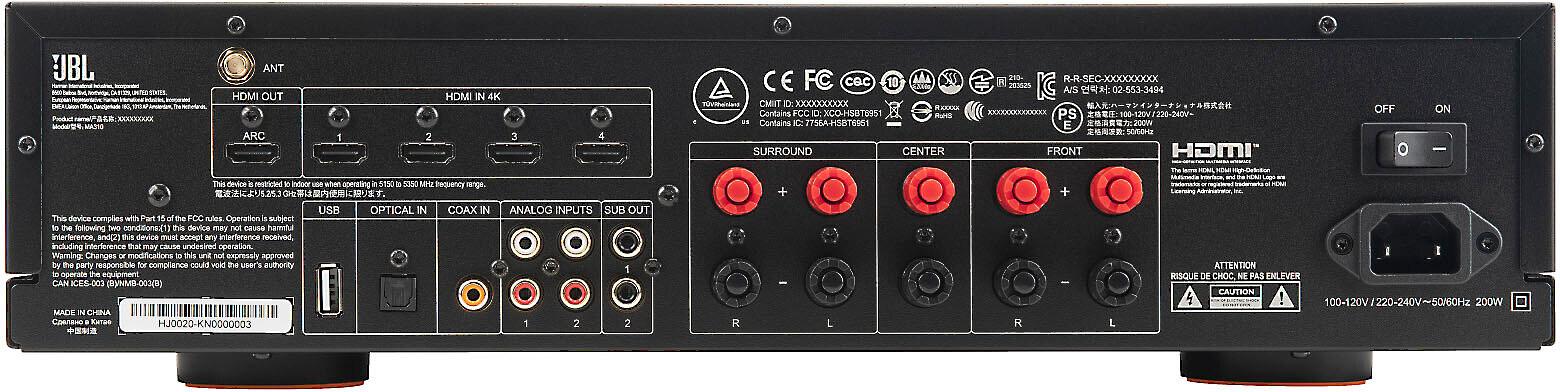
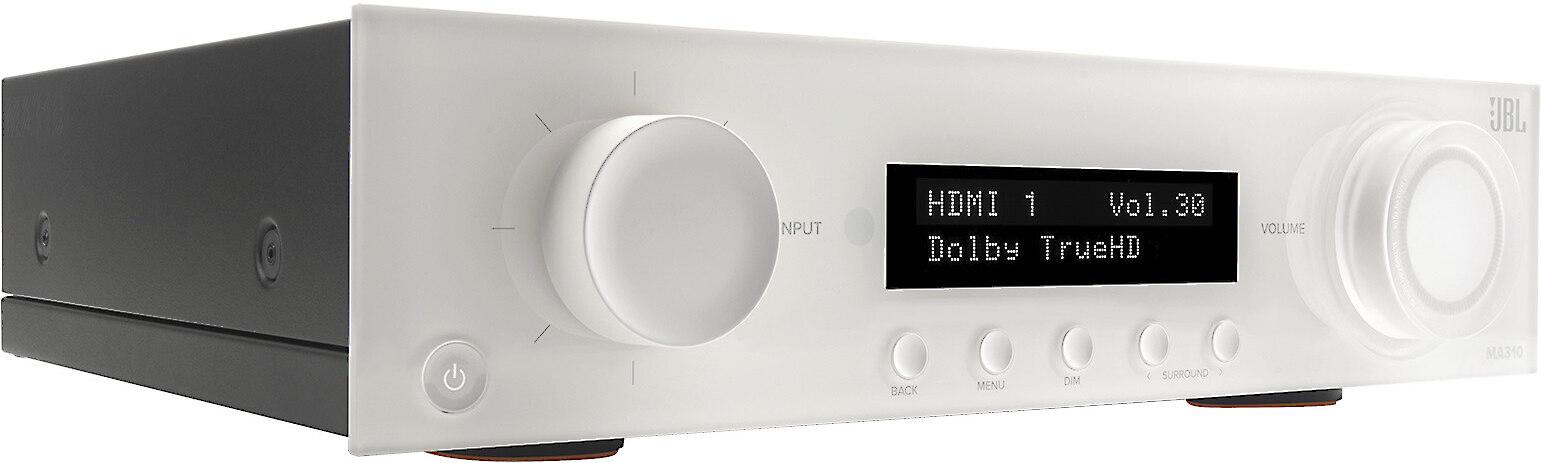
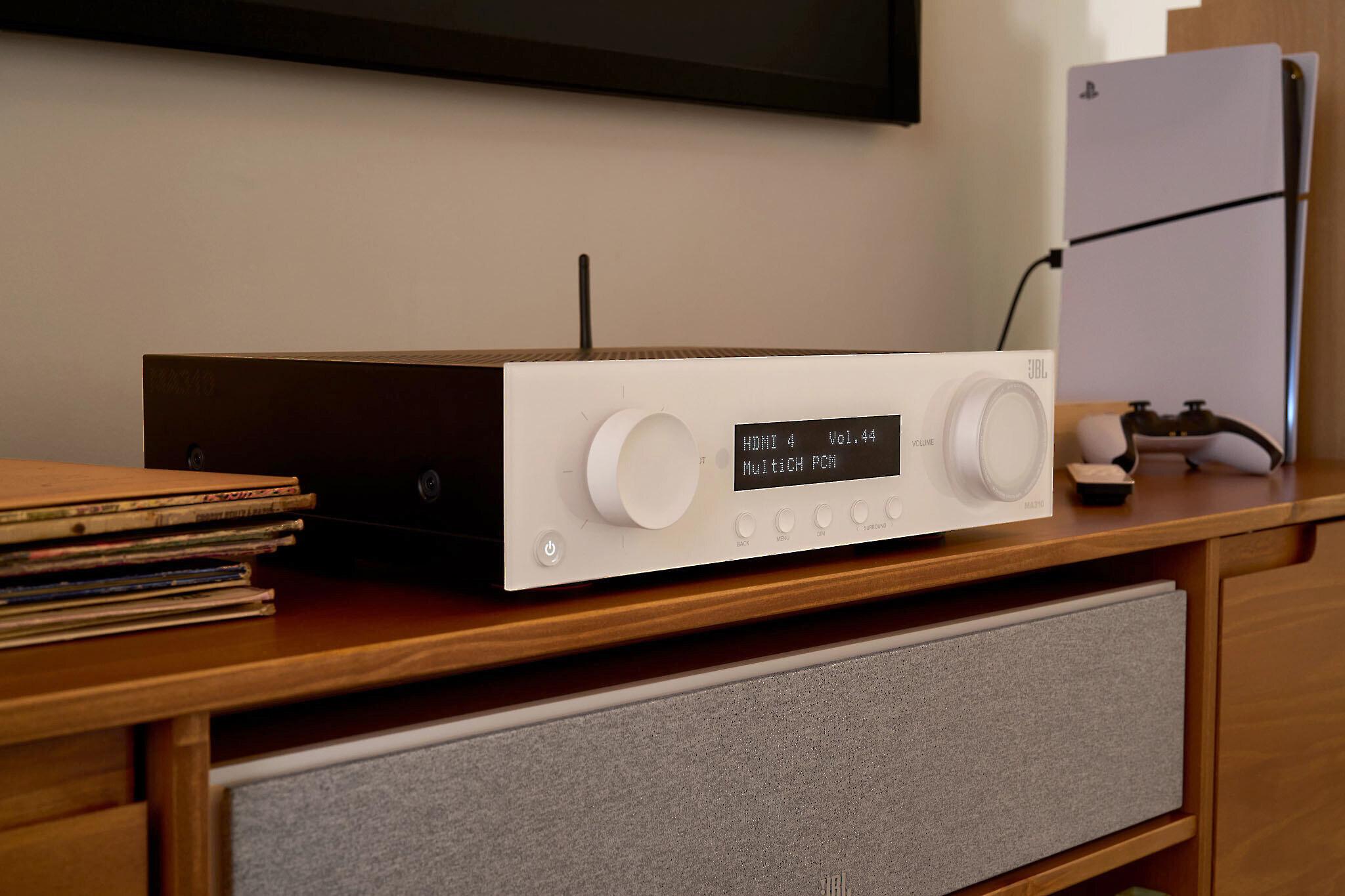
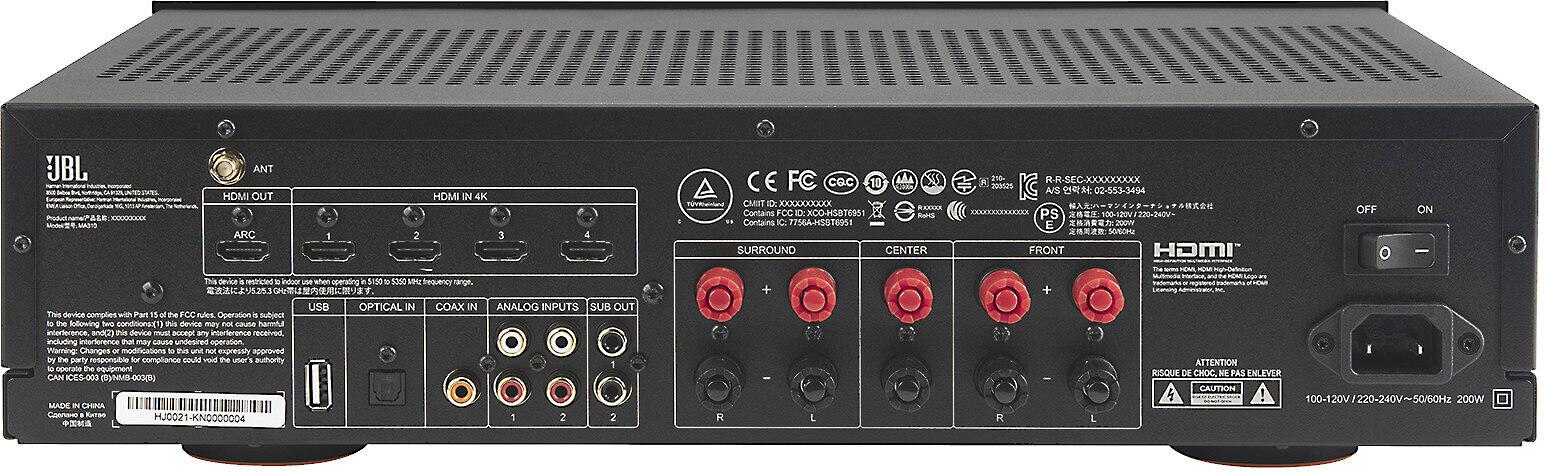
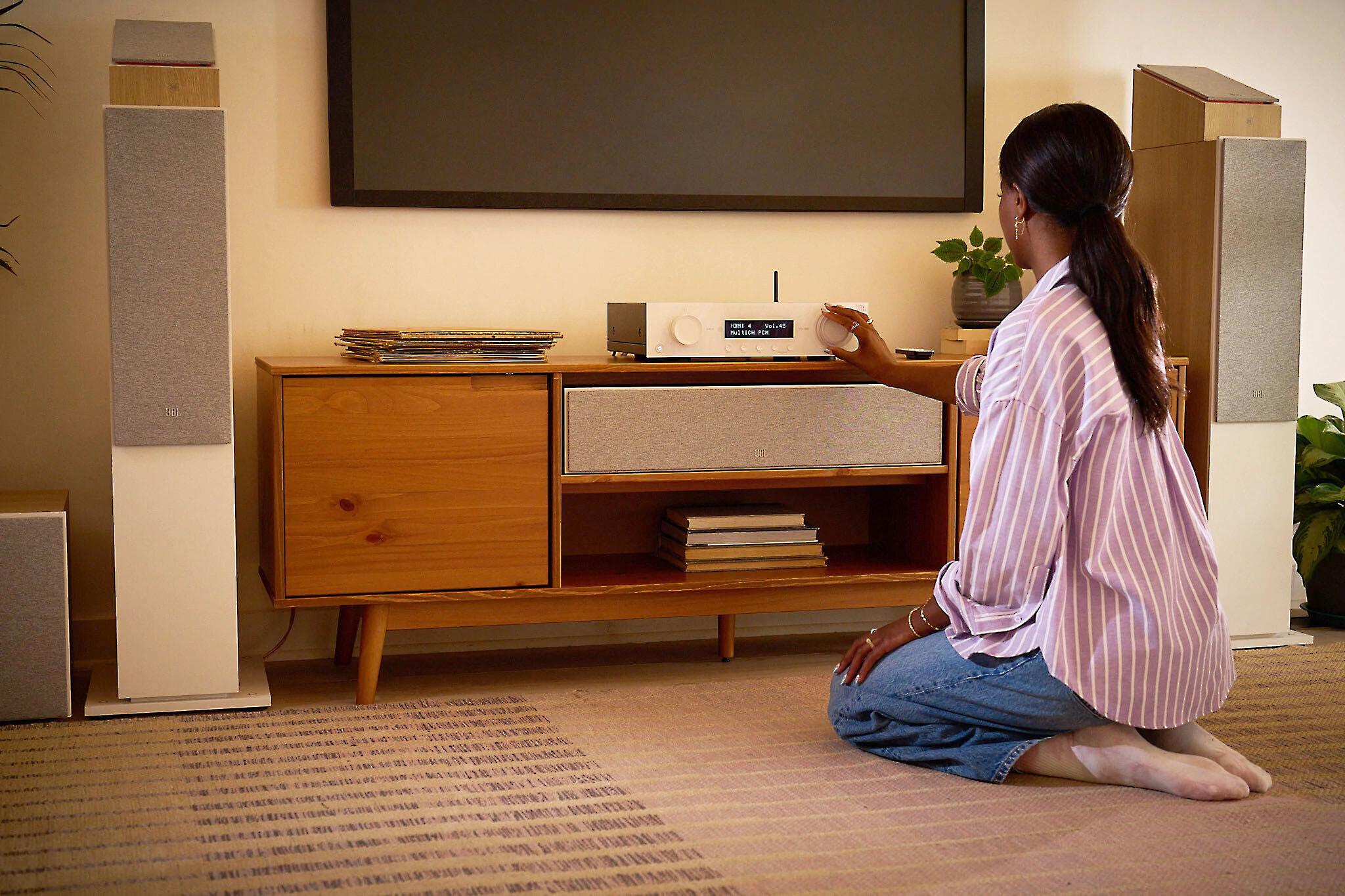
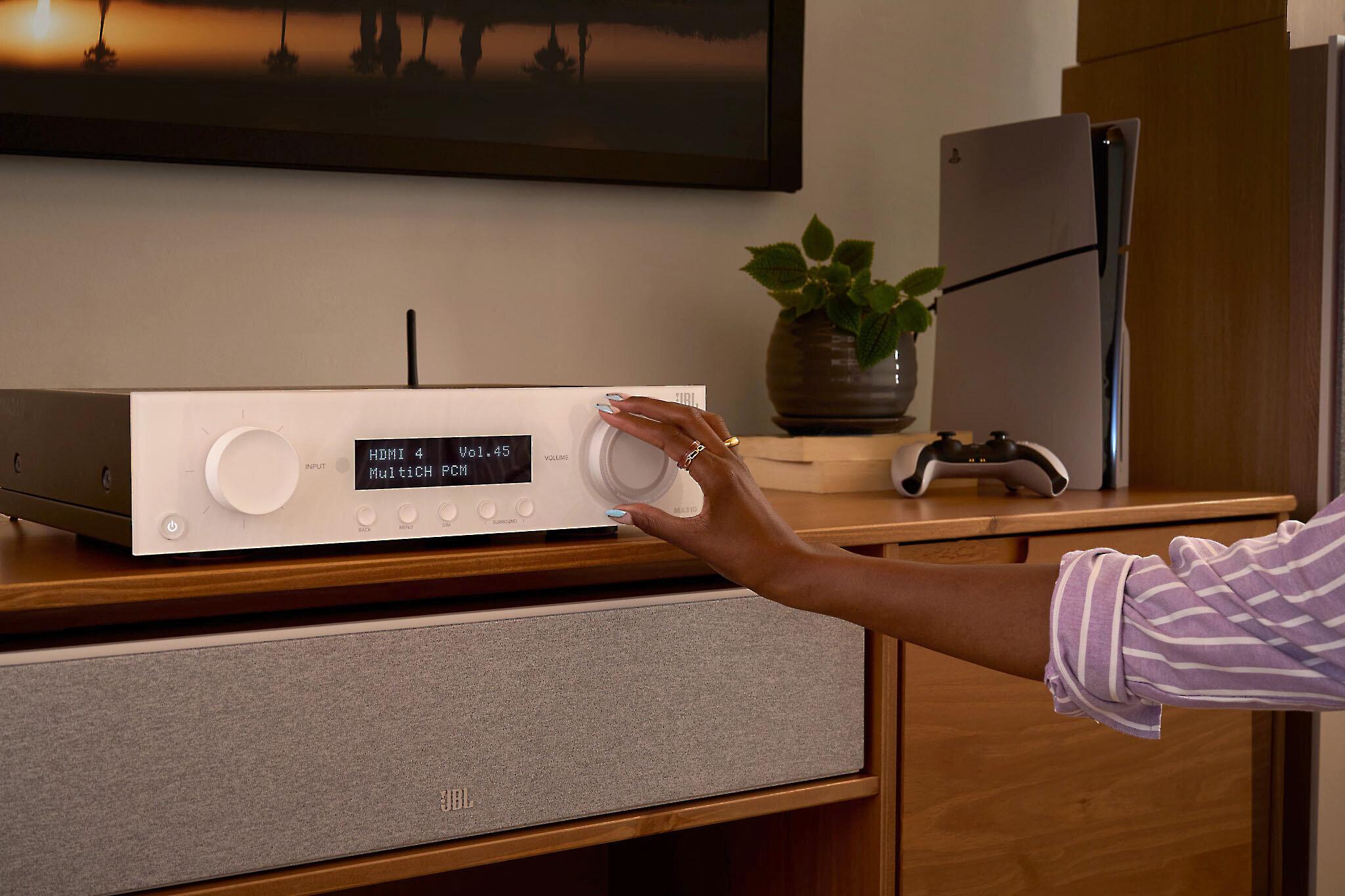
Released in 2024, the JBL MA310 represents JBL's entry into the competitive budget receiver market. At 5.2 channels with 60 watts per channel into 8-ohm speakers (jumping to 100 watts into 4-ohm speakers), it covers the basics of home theater audio without unnecessary complexity.
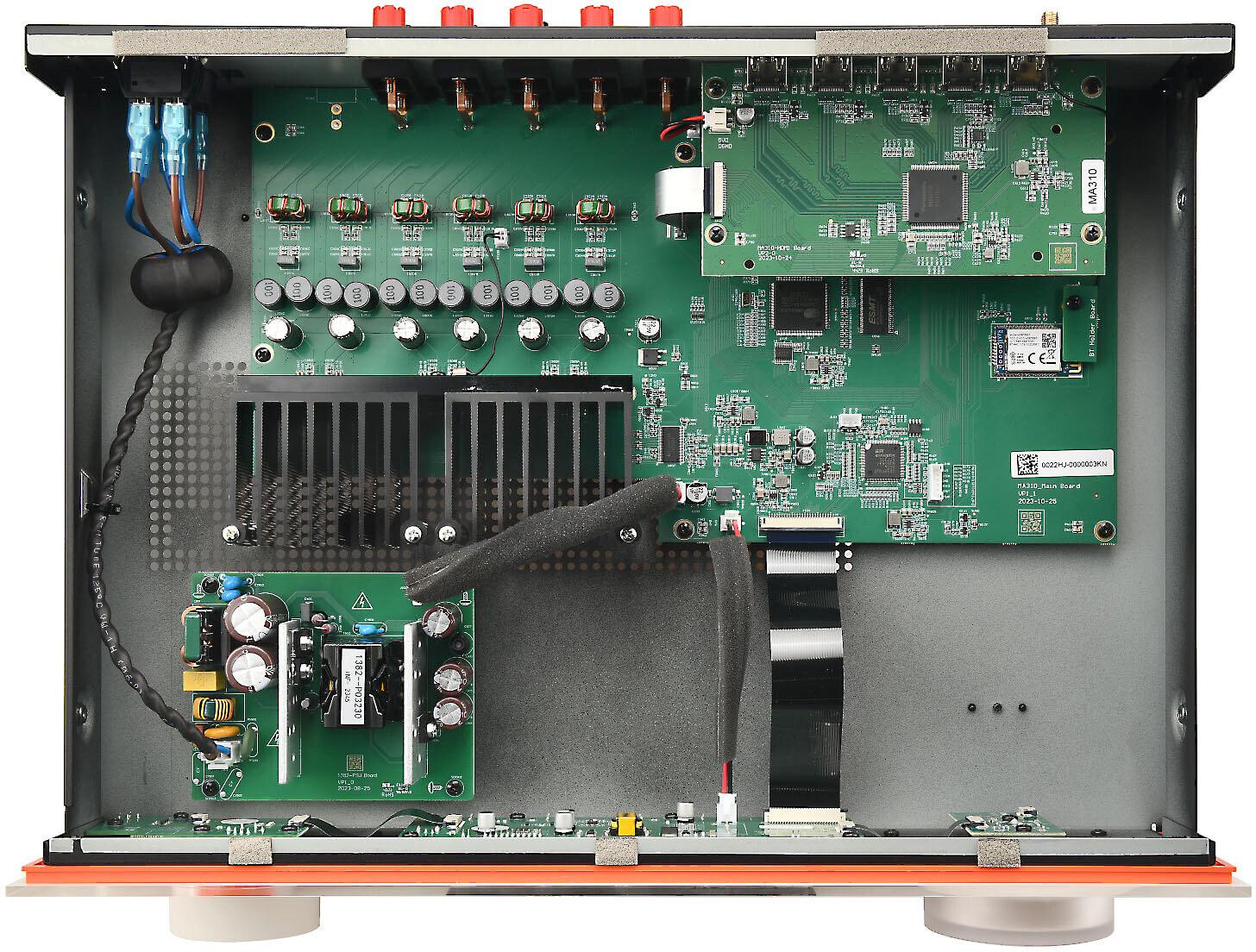
The receiver uses Class D amplification, a more efficient design that generates less heat than traditional amplifiers. While audiophiles sometimes criticize Class D for lacking the warmth of traditional designs, modern implementations have largely overcome early limitations. For most listeners in typical rooms, the MA310 delivers clean, adequate power.
The video section supports 4K resolution at 60 frames per second with HDR10 compatibility. HDR (High Dynamic Range) expands the contrast and color range of video content, making bright scenes brighter and dark scenes more detailed. While the MA310 doesn't support the newest HDR formats like Dolby Vision, HDR10 covers the vast majority of current content.
Four HDMI inputs provide sufficient connectivity for most setups—perhaps a cable box, streaming device, gaming console, and Blu-ray player. The single HDMI output connects to your TV, and Audio Return Channel (ARC) lets audio flow back from your TV's built-in apps through the same cable.
For room correction, JBL includes their EZ Set EQ system. This basic approach measures your room's acoustics and applies broad corrections, though it lacks the sophistication of premium systems. Still, any room correction is better than none, and EZ Set EQ can help tame obvious acoustic problems.
The MA310 includes Bluetooth 5.1 for wireless music streaming from phones and tablets, plus two analog audio inputs and digital optical/coaxial inputs for older sources. It's a straightforward feature set that covers essential needs without overwhelming complexity.
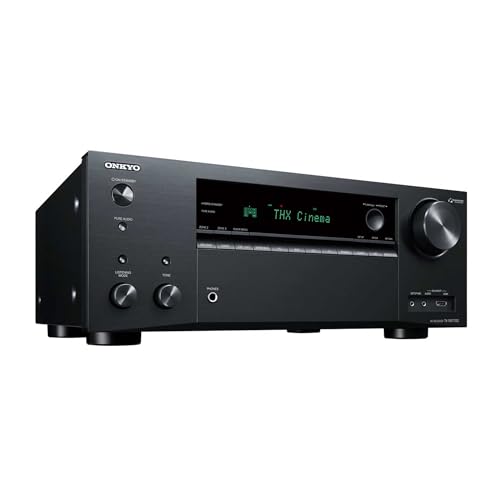
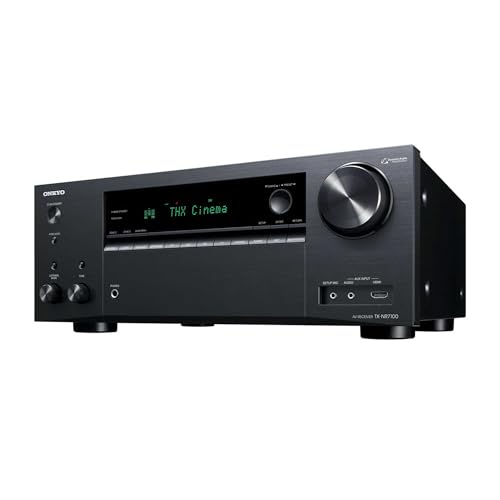
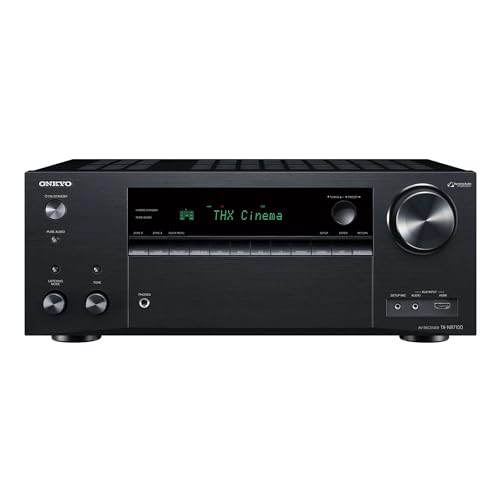
The Onkyo TX-NR7100, released in 2021, takes a dramatically different approach. At 9.2 channels with 100 watts per channel, it enables sophisticated speaker configurations that the JBL MA310 simply cannot match. Those extra channels aren't just for show—they enable height speakers that create three-dimensional soundscapes with audio objects moving overhead.
Dolby Atmos and DTS:X, the latest surround sound formats, use those height channels to place sounds precisely in 3D space. Instead of traditional surround sound that moves audio left-to-right and front-to-back, these formats add vertical dimension. Helicopters fly overhead, rain falls from above, and explosions seem to come from specific locations around and above you. The TX-NR7100 can handle configurations like 5.1.4 (five main speakers, one subwoofer, four height speakers) or 7.1.2 (seven main speakers, one subwoofer, two height speakers).
The amplifier section uses high-current design with discrete output transistors rather than integrated circuits. This architecture delivers instantaneous power bursts that make dynamic audio feel more realistic. When a movie soundtrack suddenly jumps from quiet dialogue to a massive explosion, high-current amplification ensures the transition feels natural rather than compressed.
Perhaps most significantly, the TX-NR7100 includes Dirac Live room correction built-in. Dirac Live typically costs $500+ as an add-on feature, making its inclusion remarkable value. This sophisticated system uses advanced algorithms to analyze your room's acoustic signature and apply precise corrections that can transform mediocre-sounding rooms into great-sounding ones.
The difference between basic and advanced room correction is profound. While simple systems apply broad equalizer adjustments, Dirac Live analyzes how your room affects different frequencies at different listening positions. It can correct phase issues, timing problems, and frequency response irregularities with surgical precision. Many users report that Dirac Live produces the single biggest improvement in their system's sound quality.
The video processing differences between these receivers reflect their target markets. The JBL MA310 handles today's video needs competently with 4K/60Hz support and HDR10 compatibility. For most current content, this proves perfectly adequate.
The Onkyo TX-NR7100 supports HDMI 2.1 specification with 8K/60Hz and 4K/120Hz capability. While 8K content remains rare, 4K/120Hz matters for gaming enthusiasts using PlayStation 5 or Xbox Series X consoles. The receiver also supports Variable Refresh Rate (VRR), which eliminates screen tearing during gaming, and Auto Low Latency Mode (ALLM), which automatically switches TVs to game mode for reduced input lag.
HDR support on the TX-NR7100 extends beyond HDR10 to include Dolby Vision and HLG. Dolby Vision uses dynamic metadata that adjusts HDR settings scene-by-scene for optimal picture quality, while HLG (Hybrid Log-Gamma) is used for HDR broadcasts. These formats will become increasingly important as content libraries expand.
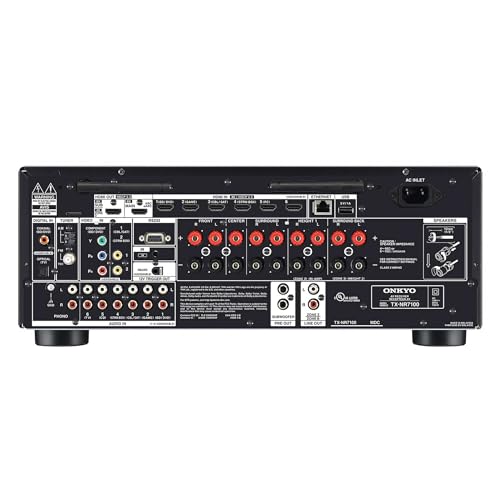
The Onkyo provides seven HDMI inputs versus four on the JBL, important for complex setups with multiple sources. It also includes eARC (enhanced Audio Return Channel) that supports uncompressed audio formats like Dolby TrueHD and DTS-HD Master Audio from TV apps—something basic ARC cannot handle.
Our research into professional reviews and user experiences reveals significant performance gaps between these receivers, particularly in challenging scenarios.
The JBL MA310 performs adequately in small to medium rooms with efficient speakers. Users report satisfactory sound quality for movies and music, though some note that the sound can feel thin with demanding speakers or at higher volumes. The Class D amplification provides clean power within its limits, but those limits become apparent in larger rooms or with power-hungry speakers.
The Onkyo TX-NR7100 demonstrates superior dynamics and authority, particularly noticeable during action movie soundtracks with sudden volume swings. The high-current amplifier design handles these transitions smoothly, maintaining clarity even during complex passages with multiple channels active simultaneously.
However, technical measurements reveal some concerns with the TX-NR7100. Audio Science Review found the DAC (Digital-to-Analog Converter) performance disappointing compared to similarly priced competitors, rating it only "fair" rather than excellent. Despite these measurements, subjective listening tests from Sound & Vision praised the fundamental audio quality as "impressive" with consistently satisfying results across multiple formats.
This measurement-versus-listening discrepancy isn't uncommon. While the Onkyo may not measure as cleanly as some alternatives, real-world performance often depends more on amplifier quality, speaker matching, and room acoustics than pure DAC specifications.
The JBL MA310 focuses on single-zone operation, which suits most users perfectly. You connect your sources, your speakers, and everything works together in one room. Bluetooth streaming adds wireless convenience for casual music listening.
The Onkyo TX-NR7100 offers three independent zones, enabling whole-house audio systems. Zone 2 even includes HDMI output for separate video in another room. This flexibility appeals to users building comprehensive smart home setups, but adds complexity that many won't use.
Wireless capabilities differ substantially. The TX-NR7100 includes Wi-Fi, multiple streaming service integrations, Apple AirPlay 2, Chromecast built-in, and advanced Bluetooth with aptX and aptX HD codecs for higher-quality wireless audio. It's essentially a streaming hub that happens to include amplification.
The MA310 takes a simpler approach with Bluetooth streaming and basic digital inputs. This simplicity can be refreshing—less to set up, fewer things to go wrong, and straightforward operation.
The Onkyo TX-NR7100 carries THX certification, meaning it passed thousands of tests to meet THX's stringent performance standards. THX certification isn't just marketing—it ensures the receiver can reproduce movie soundtracks as directors intended, with specific requirements for frequency response, distortion levels, and dynamic range.
Build quality differences reflect the price gap. The TX-NR7100 uses higher-grade components, better power supplies, and more sophisticated circuitry. However, this complexity can introduce reliability concerns—more sophisticated electronics have more potential failure points.
User reports on the Onkyo show generally positive experiences, though some mention occasional HDMI handshaking issues and setup complexity. The JBL benefits from simpler circuitry that's inherently more reliable, though long-term data remains limited given its recent introduction.
In typical home theater applications, the differences between these receivers become stark. A modest 5.1 setup in a smaller room might work fine with either receiver, but the JBL MA310 reaches its limits quickly as room size or speaker demands increase.
The TX-NR7100 excels in dedicated theater rooms where immersive audio matters. The ability to add height speakers transforms the movie experience—once you've heard properly implemented Dolby Atmos, traditional surround sound feels flat and two-dimensional.
Room correction makes an enormous difference in real listening spaces. Most rooms have acoustic problems—hard surfaces create echoes, furniture causes uneven frequency response, and room dimensions create standing waves. The MA310's basic EQ can help, but Dirac Live on the Onkyo can completely transform problematic rooms.
The JBL MA310 makes sense for specific scenarios: first-time home theater builders working within tight budgets, small apartment systems where neighbors limit volume levels, secondary systems in bedrooms or home offices, and users who prioritize simplicity over features. At its price point, it delivers functional performance without unnecessary complexity.
The Onkyo TX-NR7100 targets serious home theater enthusiasts who want reference-quality performance. If you're planning height speakers, have a dedicated theater room, care about future-proofing with 8K support, or want professional-grade room correction, the additional investment makes sense.
Consider the TX-NR7100 essential if you're building a larger system (7+ speakers), have inefficient speakers requiring lots of power, want multi-room audio capabilities, or plan to use the latest gaming features. The sophisticated feature set justifies the premium for users who'll actually utilize these capabilities.
Since 2021, when the TX-NR7100 launched, HDMI 2.1 has become increasingly important. Gaming consoles now routinely output 4K/120Hz, and more TVs support these advanced features. The receiver's forward-thinking video capabilities have proven prescient.
The MA310's 2024 release timing is interesting—it enters a market where budget-conscious consumers increasingly expect advanced features. JBL has chosen to focus on core functionality rather than trying to match premium receivers feature-for-feature, a reasonable strategy for cost-conscious buyers.
These receivers represent fundamentally different philosophies rather than simple good-versus-better comparisons. The JBL MA310 delivers adequate performance at an accessible price point, while the Onkyo TX-NR7100 provides professional-grade capabilities for serious enthusiasts.
The price difference reflects genuine capability gaps, not just brand positioning. If your budget allows and you're building a serious home theater system, the TX-NR7100 offers significantly more flexibility and performance. However, if you're building a basic 5.1 system for casual viewing, the MA310 might prove perfectly adequate while leaving more budget for speakers—often a wiser allocation of resources.
Consider your long-term plans carefully. Home theater systems often evolve over time, and the Onkyo's expandability and future-proofing may prove valuable even if you don't need all features immediately. Conversely, if you're certain about your needs and they align with the JBL's capabilities, the simpler approach offers its own advantages.
| Onkyo TX-NR7100 | JBL MA310 |
|---|---|
| Channel Configuration - Determines speaker setup possibilities and immersive audio capability | |
| 9.2 channels (enables Dolby Atmos with height speakers) | 5.2 channels (traditional surround sound only) |
| Power Output - Affects volume levels and speaker compatibility | |
| 100W per channel (8 ohms, high-current design) | 60W @ 8Ω, 100W @ 4Ω (Class D amplification) |
| Room Correction - Critical for optimizing sound quality in real rooms | |
| Dirac Live (professional-grade, normally $500+ add-on) | EZ Set EQ (basic room equalization) |
| HDMI Video Support - Future-proofing and gaming compatibility | |
| HDMI 2.1 with 8K/60Hz, 4K/120Hz, VRR, ALLM | HDMI 2.0 with 4K/60Hz only |
| HDMI Inputs/Outputs - Source connectivity options | |
| 7 inputs / 2 outputs (including eARC support) | 4 inputs / 1 output (standard ARC) |
| Surround Format Support - Immersive audio capabilities | |
| Dolby Atmos, DTS:X, Dolby TrueHD, DTS-HD Master Audio | Dolby Digital 5.1, DTS 5.1, PCM only |
| HDR Video Support - Enhanced picture quality compatibility | |
| HDR10+, Dolby Vision, HLG (comprehensive support) | HDR10 only (covers most current content) |
| THX Certification - Cinema-quality audio assurance | |
| THX Certified Select (passed rigorous performance tests) | Not certified |
| Multi-Zone Capability - Whole-house audio potential | |
| 3 independent zones with Zone 2 HDMI output | Single zone operation only |
| Streaming and Wireless - Smart features and connectivity | |
| Wi-Fi, AirPlay 2, Chromecast, aptX Bluetooth, built-in services | Bluetooth 5.1 streaming only |
| Release Year and Market Position | |
| 2021 release, premium enthusiast receiver | 2024 release, budget-focused entry model |
The primary difference is channel count and capability. The Onkyo TX-NR7100 is a 9.2-channel receiver that supports Dolby Atmos with height speakers for immersive 3D audio, while the JBL MA310 is a 5.2-channel receiver limited to traditional surround sound. The Onkyo also includes professional Dirac Live room correction and HDMI 2.1 connectivity.
The Onkyo TX-NR7100 is significantly better for dedicated home theaters due to its Dolby Atmos support, THX certification, and advanced room correction. It can create truly immersive soundscapes with overhead effects. The JBL MA310 works fine for basic home theater setups but lacks the sophistication for serious cinephiles.
Yes, both support 4K video, but with different capabilities. The JBL MA310 supports 4K at 60Hz through HDMI 2.0, which covers most current content. The Onkyo TX-NR7100 supports 4K at 120Hz and 8K at 60Hz through HDMI 2.1, making it better for gaming and future content.
The Onkyo TX-NR7100 has significantly superior room correction with built-in Dirac Live, a professional-grade system that precisely optimizes audio for your room's acoustics. The JBL MA310 includes basic EZ Set EQ, which provides simple acoustic adjustments but lacks the sophistication of Dirac Live.
The Onkyo TX-NR7100 supports up to 9 speakers plus 2 subwoofers in configurations like 5.1.4 or 7.1.2 for Dolby Atmos setups. The JBL MA310 supports 5 speakers plus 2 subwoofers in a traditional 5.1 surround configuration with no height channel capability.
The Onkyo TX-NR7100 is much better for gaming with HDMI 2.1 features including 4K/120Hz support, Variable Refresh Rate (VRR), and Auto Low Latency Mode (ALLM) for next-gen consoles. The JBL MA310 lacks these gaming-specific features and is limited to 4K/60Hz.
Both support wireless streaming but at different levels. The JBL MA310 offers Bluetooth 5.1 for basic music streaming from phones and tablets. The Onkyo TX-NR7100 includes Wi-Fi, advanced Bluetooth with aptX codecs, AirPlay 2, Chromecast built-in, and multiple streaming services.
The JBL MA310 is much simpler to set up with basic connections and straightforward operation. The Onkyo TX-NR7100 offers more sophisticated features but requires more complex setup, especially when configuring Dirac Live room correction and multiple zones.
The Onkyo TX-NR7100 supports multi-zone audio with three independent zones, including HDMI output to a second room. The JBL MA310 is designed for single-zone operation only and doesn't support multi-room functionality.
Value depends on your needs. The JBL MA310 offers good basic functionality at a budget-friendly price point. The Onkyo TX-NR7100 provides exceptional value for serious home theater enthusiasts, including premium features like Dirac Live room correction that would cost extra on other receivers.
The Onkyo TX-NR7100 delivers 100 watts per channel across all 9 channels with high-current amplification for dynamic performance. The JBL MA310 provides 60 watts per channel into 8-ohm speakers or 100 watts into 4-ohm speakers, adequate for smaller rooms and efficient speakers.
Choose the JBL MA310 if you're building a basic 5.1 system on a tight budget and want simple operation. Choose the Onkyo TX-NR7100 if you plan to add height speakers, have a larger room, want future-proofing, or prioritize audio quality with professional room correction features.
We've done our best to create useful and informative comparisons to help you decide what product to buy. Our research uses advanced automated methods to create this comparison and perfection is not possible - please contact us for corrections or questions. These are the sites we've researched in the creation of this article: crutchfield.com - prohifi.in - bestbuy.com - h-m-entertainment.com - audiosciencereview.com - crutchfield.ca - soundandvision.com - avsforum.com - avgadgets.com - youtube.com - onkyo.com - crutchfield.com - onkyo.com - accessories4less.com - klipsch.com - youtube.com - listenup.com - intl.onkyo-av.com - bestbuy.com - 420spotshop.com - support.onkyousa.com - bestbuy.com - av-connection.com - mm.jbl.com - bestbuy.com - safeandsoundhq.com - crutchfield.com - nfm.com - jbl.com - musicdirect.com - crutchfield.com - skybygramophone.com - youtube.com

Privacy Policy
Terms and Conditions - Affiliate Policy
Home Security
© Copyright 2008-2026.
11816 Inwood Rd #1211, Dallas, TX 75244