

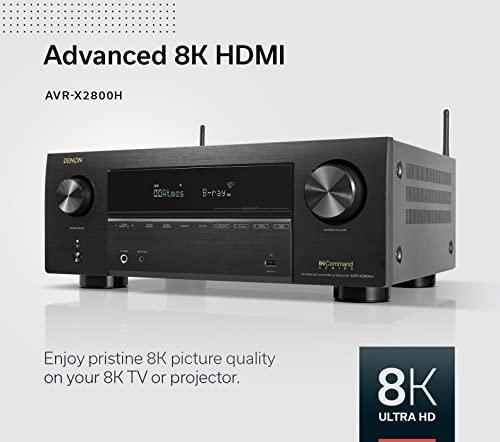
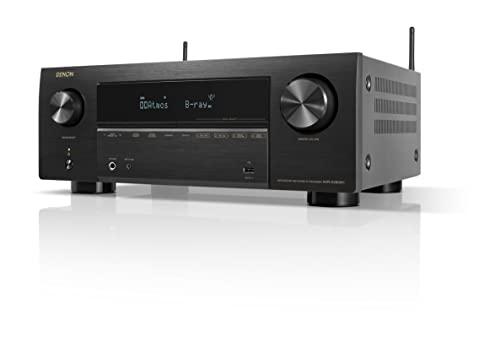
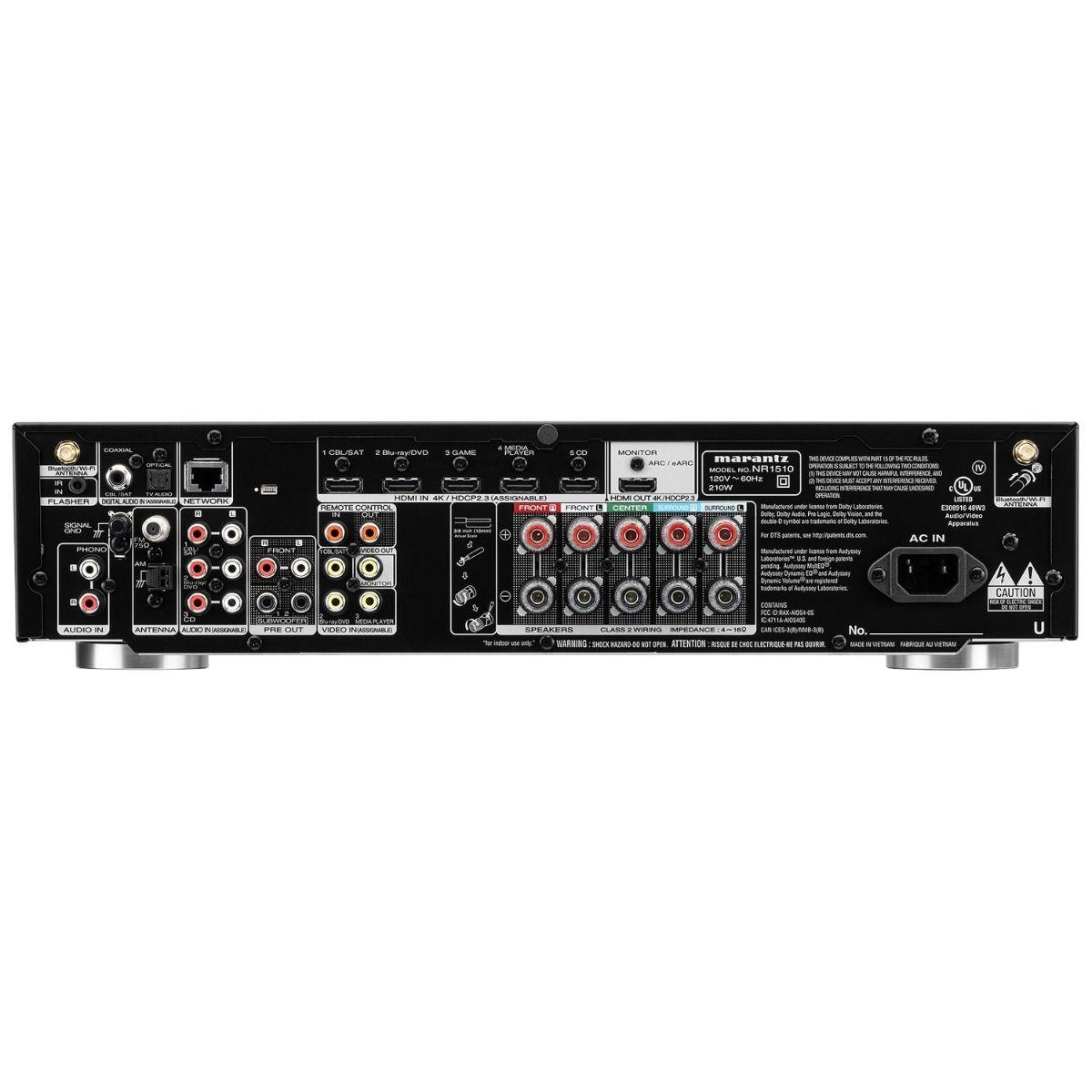
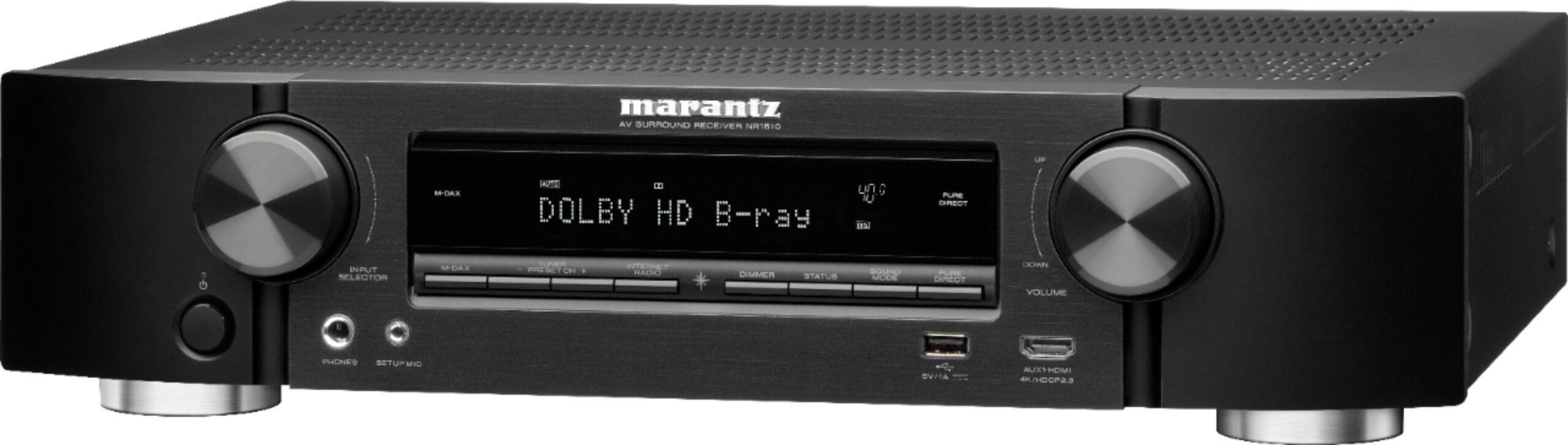
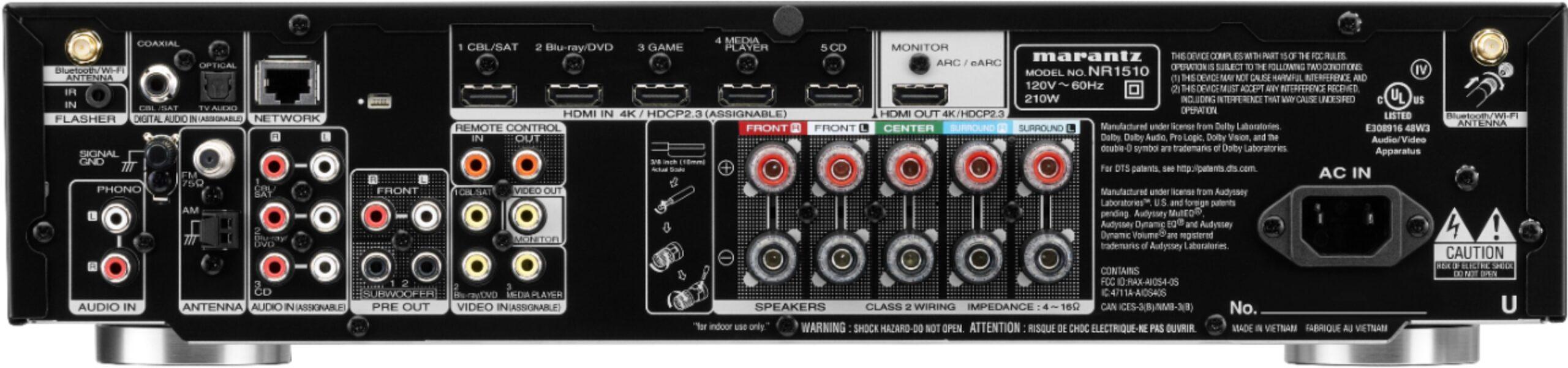
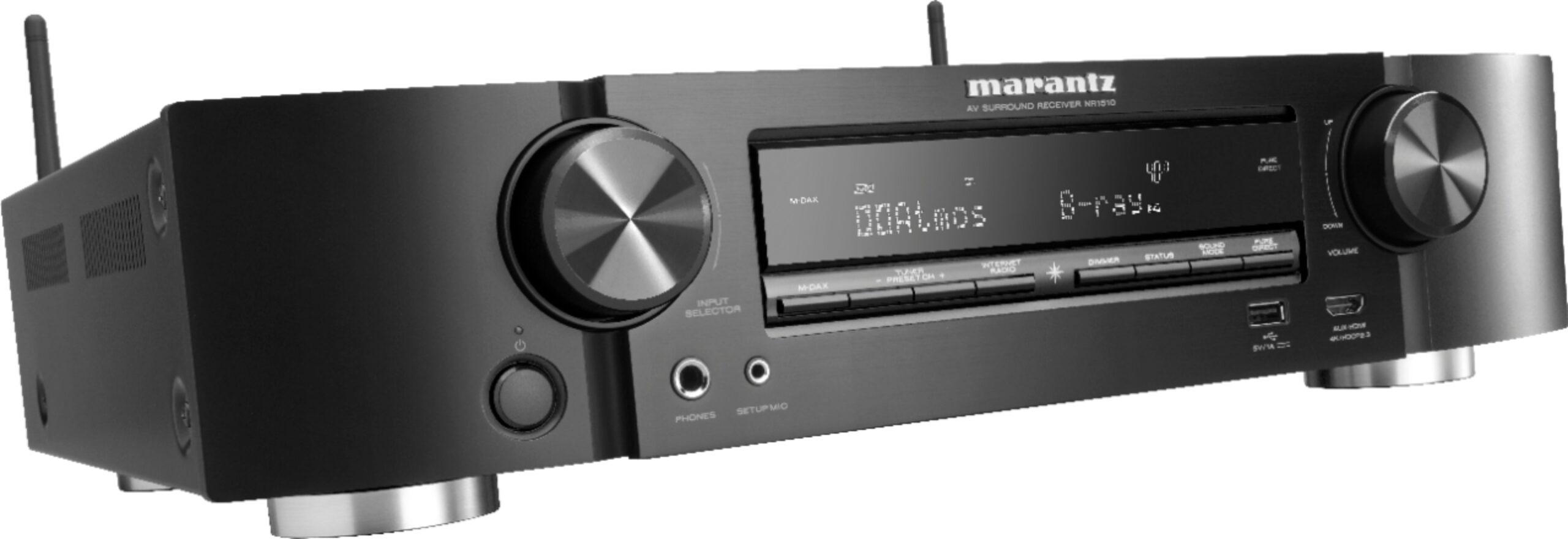
When shopping for an AV receiver in 2024, you'll encounter two fundamentally different approaches to home theater design. The Denon AVR-X2800H, released in 2022, represents the modern mainstream approach with robust amplification, cutting-edge video support, and immersive surround sound capabilities. The Marantz NR1510, launched in 2019, takes the opposite path with a space-saving slim design and simplified feature set. Understanding these philosophical differences is crucial to making the right choice for your specific situation.
AV receivers serve as the nerve center of your home theater, combining several critical functions into one box. They amplify audio signals to drive your speakers, process surround sound formats to create immersive experiences, switch between multiple video sources, and increasingly, stream music from the internet. Think of them as a combination stereo amplifier, surround sound processor, HDMI switch, and streaming device all rolled into one.
The most important considerations when evaluating any AV receiver are power output (how loud and clear it can get), channel configuration (how many speakers it supports), audio format compatibility (what surround sound types it understands), video capabilities (what resolution and features it passes through), and connectivity options (how it integrates with your devices and streaming services).
These two receivers represent dramatically different priorities within this framework. The Denon AVR-X2800H prioritizes comprehensive performance and modern features, while the Marantz NR1510 focuses on space efficiency and operational simplicity, sometimes at the expense of technical capability.
The difference in amplification capability between these receivers is substantial and immediately audible. The Denon AVR-X2800H delivers 95 watts per channel across seven channels using discrete Class AB amplification. This isn't just marketing speak – discrete amplification means each channel has its own dedicated amplifier section rather than sharing components, resulting in better channel separation and more consistent performance when driving multiple speakers simultaneously.
In contrast, the Marantz NR1510 provides 50 watts per channel across five channels. While 50 watts might sound adequate, the reality is more complex. Most speakers require significantly more power to reach realistic volume levels than manufacturers suggest, and dynamic peaks in movie soundtracks can demand several times the continuous power rating. This means the Marantz will struggle to fill larger rooms or drive less efficient speakers to satisfying levels.
From our research into user experiences and professional measurements, this power difference translates to real-world limitations. The Denon confidently drives floor-standing speakers in medium to large rooms, maintaining clarity even during explosive action sequences. The Marantz, while pleasant at moderate volumes in smaller spaces, tends to compress dynamics and lose composure when pushed harder.
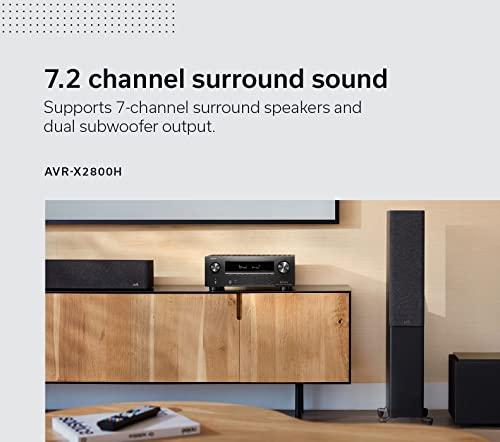
The channel count difference is equally important. The Denon's seven channels support flexible configurations like 7.1 surround, 5.1.2 Dolby Atmos (five main speakers, one subwoofer, two height speakers), or bi-amp setups for enhanced stereo performance. The Marantz maxes out at traditional 5.1 surround sound, limiting your expansion options.
This is where the three-year gap between these products becomes most apparent. The Denon AVR-X2800H supports cutting-edge object-based surround formats like Dolby Atmos and DTS:X, which represent a fundamental advancement in how surround sound works. Instead of sending fixed audio to predetermined speaker locations, these formats treat sounds as objects that can be precisely positioned anywhere in three-dimensional space, including overhead.
When you hear a helicopter in a movie, traditional surround sound might pan it from your front speakers to your rear speakers. With Dolby Atmos, that helicopter can travel smoothly overhead, behind you, or anywhere else in your room. The Denon also includes Dolby Atmos Height Virtualization, which can simulate overhead effects through your main speakers when you don't have dedicated ceiling speakers.
The Marantz NR1510 lacks these modern formats entirely, supporting only traditional surround technologies like Dolby TrueHD and DTS-HD Master Audio. While these formats can still create impressive surround experiences, they're fundamentally limited to horizontal sound placement. It's like comparing a flat painting to a sculpture – both can be beautiful, but one adds an entire dimension of artistic expression.
Based on expert reviews and user feedback, this difference is immediately noticeable when watching modern movies mixed for Atmos. The Denon creates a convincing sense of three-dimensional space that makes you feel inside the action, while the Marantz delivers competent but conventional surround sound that feels somewhat flat by comparison.
The video processing capabilities reveal another significant technology gap. The Denon AVR-X2800H includes three HDMI 2.1 inputs supporting 8K/60Hz and 4K/120Hz passthrough with up to 40Gbps bandwidth. This might seem excessive today, but it addresses real current needs and future requirements.
HDMI 2.1's 4K/120Hz capability is crucial for modern gaming consoles like the PlayStation 5 and Xbox Series X, which can output games at 120 frames per second for incredibly smooth motion. The Denon also supports gaming-specific features like Variable Refresh Rate (VRR), which eliminates screen tearing, and Auto Low Latency Mode (ALLM), which automatically switches your TV to its fastest response mode for competitive gaming.
The HDR (High Dynamic Range) support differs significantly too. The Denon handles HDR10, HDR10+, Dolby Vision, and Hybrid Log Gamma, covering all major HDR formats you'll encounter. The Marantz NR1510 only supports basic HDR10, missing the more advanced Dolby Vision format that's become standard on premium streaming content and 4K Blu-rays.
For 8K content, while still limited, the Denon's support provides genuine future-proofing. More importantly, its 8K upscaling can improve the appearance of lower-resolution content on 8K displays, which are becoming more affordable.
The Marantz handles current 4K/60Hz content adequately but lacks the bandwidth and features for next-generation gaming or premium video formats. If you're satisfied with today's standard streaming and don't game competitively, this might be sufficient.
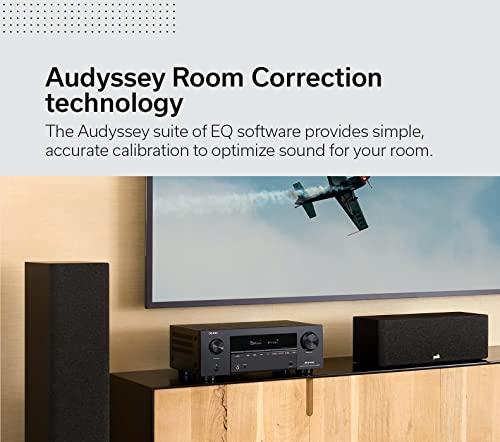
Both receivers include Audyssey room calibration systems, but with different levels of sophistication. The Denon AVR-X2800H features Audyssey MultEQ XT, which can measure up to eight listening positions using the included microphone. This system analyzes your room's acoustic characteristics and adjusts the receiver's output to compensate for reflections, standing waves, and frequency response irregularities.
Room calibration is genuinely transformative – it's like getting prescription glasses for your speakers. Even expensive speakers in poor acoustic environments can sound muddy or bright, while modest speakers properly calibrated can deliver surprisingly engaging experiences.
The Denon's implementation includes additional refinements like Dynamic EQ, which maintains tonal balance at different volume levels (your ears perceive bass and treble differently at low volumes), and Dialog Control, which can boost speech clarity without affecting music and effects.
The Marantz NR1510 includes basic Audyssey MultEQ, which provides similar room correction but with fewer measurement positions and less sophisticated processing. User reports suggest it's effective for basic optimization but lacks the precision and customization options of the Denon's system.
Professional measurements and user experiences indicate that proper room calibration often makes a bigger difference in sound quality than upgrading speakers, making the Denon's superior system a significant advantage.
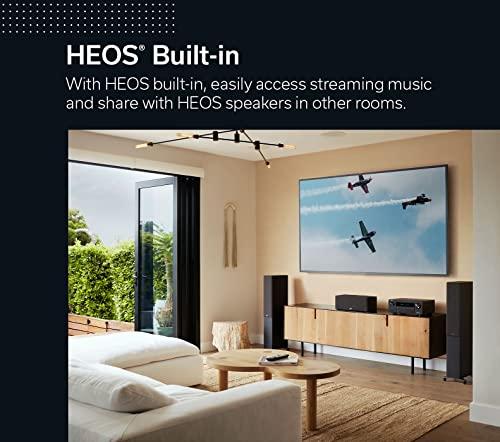
Both receivers embrace modern connectivity, but with different emphases. The Denon AVR-X2800H includes HEOS multi-room streaming, which allows you to play different music in different rooms or sync the same music throughout your house. It supports all major streaming services (Spotify Connect, Tidal, Deezer), voice assistants (Alexa, Google Assistant, Siri), and AirPlay 2 for seamless iPhone and iPad integration.
The Marantz NR1510 offers similar streaming features through HEOS integration, but with some limitations in implementation. Interestingly, despite its compact size, it actually provides more total HDMI inputs than the Denon – eight versus six – though all of the Marantz's inputs are older HDMI 2.0 standards.
Both receivers support high-resolution audio streaming, including lossless formats like FLAC up to 24-bit/192kHz and DSD files. This matters if you stream high-quality music from services like Tidal or have a collection of audiophile-grade digital files.
The Denon includes enhanced Audio Return Channel (eARC) support, which allows your TV to send full-resolution Dolby Atmos audio back to the receiver when using built-in streaming apps. The Marantz supports basic ARC but lacks eARC's bandwidth for uncompressed multichannel audio.
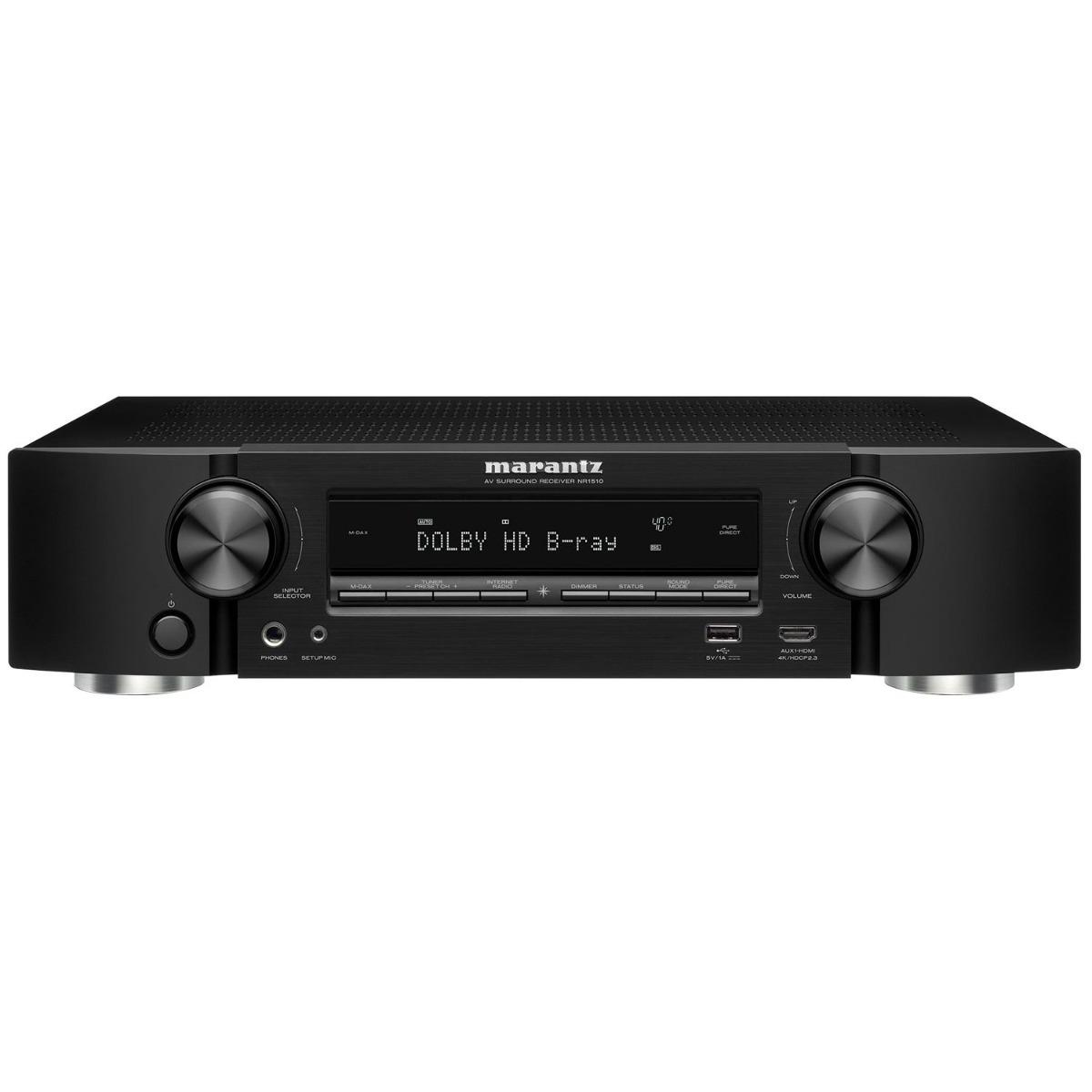
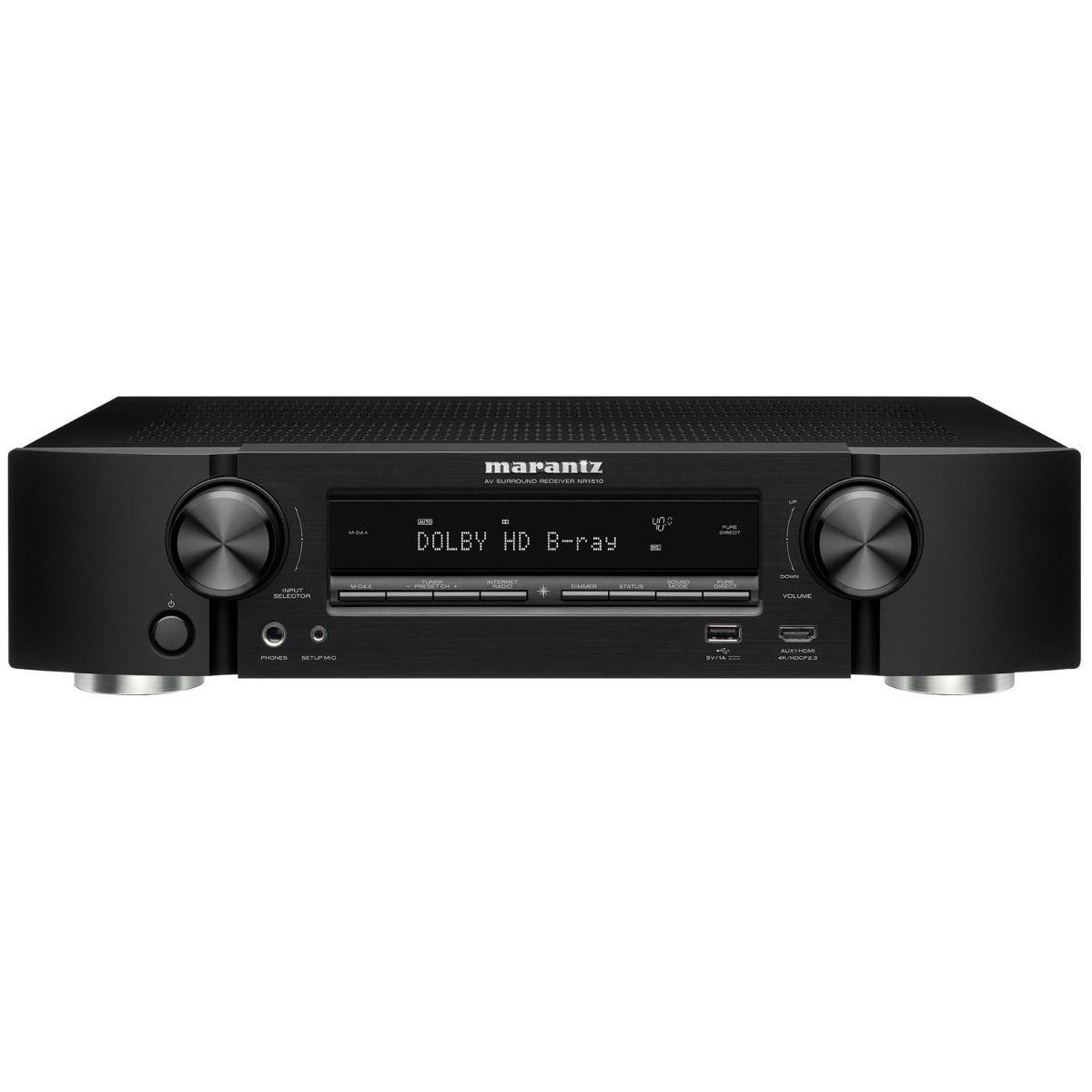
The most obvious difference between these receivers is physical size. The Marantz NR1510 measures just 4.1 inches tall – exactly half the height of a traditional receiver. This slim profile makes it ideal for installations where space is at a premium, such as wall-mounted entertainment centers or minimalist setups where you want the receiver to disappear visually.
However, this compact design comes with thermal and electrical compromises. The Denon AVR-X2800H has room for larger heat sinks, more robust power supplies, and better component spacing, contributing to its superior performance and long-term reliability.
Build quality between the two reflects their different priorities. The Denon feels substantial and includes the internal layout and component quality you'd expect from a serious home theater component. The Marantz, while well-constructed for its size, makes obvious compromises in power supply capacity and thermal management to achieve its slim profile.
Based on extensive user feedback and professional reviews, the performance differences between these receivers are immediately apparent in real-world use. The Denon AVR-X2800H consistently receives praise for its authoritative sound, impressive dynamics, and ability to make even modest speakers sound engaging. Users frequently mention its excellent dialogue clarity and immersive Atmos effects when properly set up.
The Marantz NR1510 garners more mixed reactions. Users love its convenience and compact size, often describing it as "perfect for small apartments" or "exactly what I needed for a bedroom system." However, those who try to push it harder or use it in larger spaces often express disappointment with its limited dynamics and power output.
Professional measurements tell a similar story. While the Denon delivers performance typical of quality mid-range receivers, the Marantz shows some concerning technical limitations, including subpar signal-to-noise ratios and unusual power delivery characteristics that require specific settings to achieve full output.
At the time of writing, these receivers occupy similar price ranges when considering their original MSRPs, though street prices can vary significantly. The value equation depends heavily on your specific needs and constraints.
The Denon AVR-X2800H represents exceptional value for users wanting comprehensive home theater capabilities. You get modern video support, powerful amplification, immersive surround sound, and extensive connectivity in a package that should remain relevant for many years. For serious home theater enthusiasts, this receiver delivers features and performance that would have required much more expensive equipment just a few years ago.
The Marantz NR1510 offers value primarily through its unique form factor. If space constraints make a full-size receiver impossible, or if you specifically prefer its simplified operation, it can represent good value despite its technical limitations. However, at equal prices, it's difficult to recommend over the significantly more capable Denon unless the compact size is genuinely essential.
The Denon AVR-X2800H makes sense for home theater enthusiasts who want comprehensive modern capabilities, gamers requiring advanced video features, users planning Dolby Atmos installations, and anyone prioritizing long-term flexibility and future-proofing. It's ideal for medium to large rooms where its additional power and advanced features can be fully utilized.
The Marantz NR1510 suits users with severe space constraints, those wanting simple operation without complex features, installations in small rooms with efficient speakers, and situations where the compact design is more important than ultimate performance capability.
Unless physical space absolutely demands the Marantz NR1510's compact design, the Denon AVR-X2800H provides substantially better performance, features, and long-term value. The three-year technology gap between these products heavily favors the newer Denon, which incorporates advances in video processing, surround sound, and connectivity that the Marantz simply cannot match.
The Denon represents a comprehensive solution that can grow with your needs and remain relevant as technology evolves. The Marantz serves a specific niche for space-constrained installations but makes significant compromises to achieve its compact size.
For most home theater applications, the Denon AVR-X2800H delivers the better combination of performance, features, and value, making it the clear choice unless your specific situation absolutely requires the Marantz NR1510's unique space-saving design.
| Denon AVR-X2800H | Marantz NR1510 |
|---|---|
| Power Output - Critical for driving speakers and filling rooms | |
| 95 watts per channel (7 channels) | 50 watts per channel (5 channels) |
| Maximum Speaker Configuration - Determines surround sound capabilities | |
| 7.2 channels (supports Dolby Atmos 5.1.2 setups) | 5.2 channels (traditional surround only) |
| Immersive Audio Support - Essential for modern movie experiences | |
| Dolby Atmos, DTS:X, Height Virtualization | None (Dolby TrueHD, DTS-HD only) |
| Video Capabilities - Future-proofing for gaming and streaming | |
| 8K/60Hz, 4K/120Hz, HDR10+, Dolby Vision | 4K/60Hz, HDR10 only |
| HDMI Connectivity - Determines device connection flexibility | |
| 6 inputs (3 HDMI 2.1), 2 outputs with eARC | 8 inputs (all HDMI 2.0), 1 output with basic ARC |
| Gaming Features - Critical for PlayStation 5/Xbox Series X | |
| VRR, ALLM, QFT for 120Hz gaming | None (standard HDMI passthrough) |
| Room Calibration System - Optimizes sound for your specific space | |
| Audyssey MultEQ XT (8 positions) | Basic Audyssey MultEQ |
| Multi-Zone Audio - Whole-home audio distribution | |
| 2-zone capability | None |
| Physical Size - Space requirements in entertainment center | |
| Standard height (6.9" H x 17.3" W) | Slim profile (4.1" H x 17.3" W) |
| Release Year - Technology generation and feature set | |
| 2022 (current-gen features) | 2019 (older technology) |
| Target Use Case - Best application for each receiver | |
| Comprehensive home theater systems | Space-constrained basic surround setups |
The Denon AVR-X2800H is significantly more powerful, delivering 95 watts per channel across 7 channels compared to the Marantz NR1510 which provides 50 watts per channel across 5 channels. This means the Denon can drive larger speakers and fill bigger rooms more effectively.
No, the Marantz NR1510 does not support Dolby Atmos or any modern immersive audio formats. It's limited to traditional surround sound formats like Dolby TrueHD and DTS-HD. The Denon AVR-X2800H fully supports Dolby Atmos, DTS:X, and Height Virtualization for three-dimensional audio experiences.
The Denon AVR-X2800H is much better for modern gaming, featuring HDMI 2.1 inputs that support 4K/120Hz gaming, Variable Refresh Rate (VRR), and Auto Low Latency Mode (ALLM). The Marantz NR1510 only has HDMI 2.0 inputs and lacks these gaming-specific features.
The primary advantage of the Marantz NR1510 is its compact slim design at half the height of traditional receivers. This makes it ideal for tight spaces, wall-mounted entertainment centers, or situations where you want the receiver to be less visually prominent than the full-size Denon AVR-X2800H.
Only the Denon AVR-X2800H supports 8K video passthrough at 60Hz. The Marantz NR1510 is limited to 4K/60Hz video. The Denon also includes 8K upscaling to improve lower-resolution content on 8K displays.
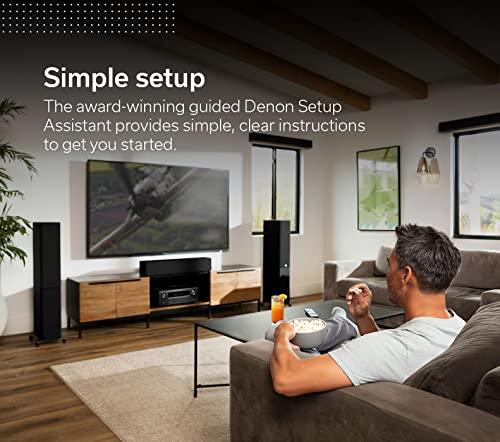
Both receivers offer guided setup processes, but the Marantz NR1510 is generally simpler due to fewer features and configuration options. The Denon AVR-X2800H has more capabilities but requires more setup decisions for optimal performance, though its setup assistant makes the process manageable.
Yes, both the Denon AVR-X2800H and Marantz NR1510 support major streaming services through HEOS integration, including Spotify Connect, Tidal, and others. Both also support AirPlay 2, Bluetooth, and voice assistants like Alexa and Google Assistant.
The Marantz NR1510 is often better suited for small apartments due to its compact size and lower power output that won't overwhelm a small space. However, if you have room for a full-size receiver and want better performance, the Denon AVR-X2800H will still provide superior sound quality even in smaller rooms.
The Denon AVR-X2800H offers more expansion flexibility with its 7.2 channel configuration, supporting various setups including Dolby Atmos configurations. The Marantz NR1510 maxes out at 5.2 channels with no room for additional speakers or height channels.
The Denon AVR-X2800H features more advanced room correction with Audyssey MultEQ XT that can measure up to 8 listening positions for precise calibration. The Marantz NR1510 has basic Audyssey MultEQ with fewer measurement capabilities and less sophisticated processing.
Both receivers can handle music well, but the Denon AVR-X2800H generally provides better musical performance due to its more powerful amplification and superior room correction. The Marantz NR1510 offers decent music performance for smaller setups but may lack the dynamics and clarity of the Denon in demanding passages.
The Denon AVR-X2800H offers significantly better long-term value with its modern HDMI 2.1 connectivity, 8K support, Dolby Atmos capability, and more powerful amplification. The Marantz NR1510 may become outdated more quickly due to its lack of modern video and audio format support, making the Denon the better investment for most users.
We've done our best to create useful and informative comparisons to help you decide what product to buy. Our research uses advanced automated methods to create this comparison and perfection is not possible - please contact us for corrections or questions. These are the sites we've researched in the creation of this article: theaudiotailor.com.au - ecoustics.com - simplehomecinema.com - whathifi.com - audioadvisor.com - youtube.com - bestbuy.com - e-catalog.com - crutchfield.com - avsforum.com - crutchfield.com - whathifi.com - richersounds.com - bestbuy.com - accessories4less.com - projectorscreen.com - adiglobaldistribution.us - youtube.com - bestbuy.com - bestbuy.com - sweetwater.com - bestbuy.com - upscaleaudio.com - youtube.com - hometheatreexperts.in - audiolab.com - crutchfield.com - flanners.com - manuals.marantz.com - marantz.com - youtube.com

Privacy Policy
Terms and Conditions - Affiliate Policy
Home Security
© Copyright 2008-2026.
11816 Inwood Rd #1211, Dallas, TX 75244