

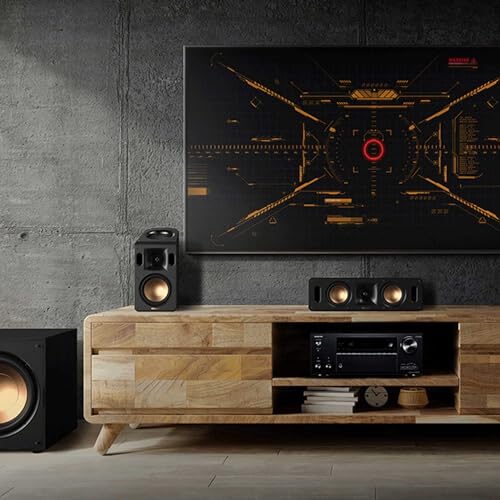
When you're building a home theater system, the AV receiver acts as the brain of your entire setup. It's the component that takes all your video sources—your Apple TV, Xbox, Blu-ray player—and routes them to your TV while simultaneously powering your speakers and processing surround sound formats. Think of it as a sophisticated traffic controller that also happens to be a powerful amplifier.
The AV receiver market has evolved dramatically in recent years, with manufacturers racing to support 8K video, advanced gaming features, and increasingly complex audio formats like Dolby Atmos (which adds height channels for truly three-dimensional sound). At the same time, receivers need to integrate seamlessly with smart home systems and provide multi-room audio throughout your house.
This puts buyers in a challenging position. Do you prioritize raw specifications and features, or focus on build quality and reliability? Should you chase the latest video standards, or invest in superior audio processing? These questions become particularly relevant when comparing two receivers that take fundamentally different approaches to home theater excellence.
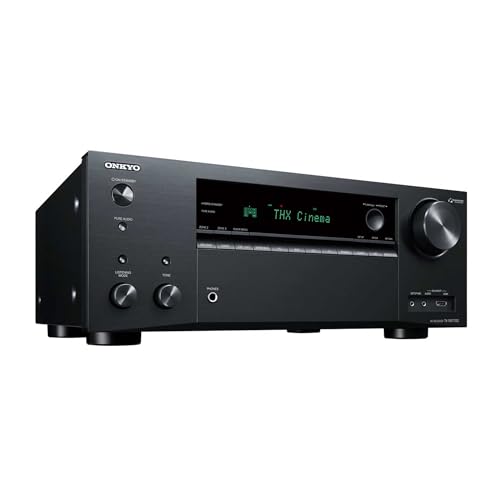
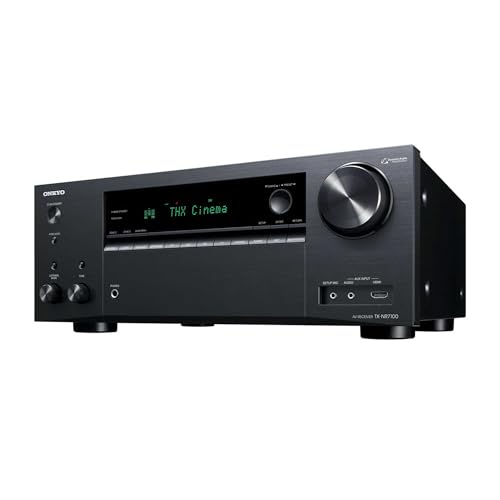
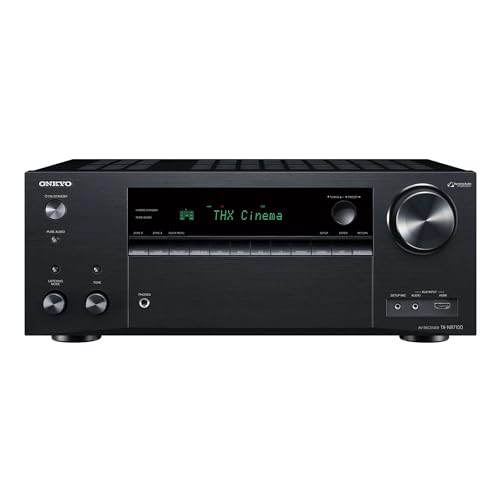
The Onkyo TX-NR7100, released in 2021, represents Onkyo's strategy of packing maximum features and specifications into a competitively priced package. At the time of writing, it typically sells for significantly less than premium alternatives while delivering impressive on-paper performance. It's aimed at enthusiasts who want cutting-edge features without paying flagship prices.
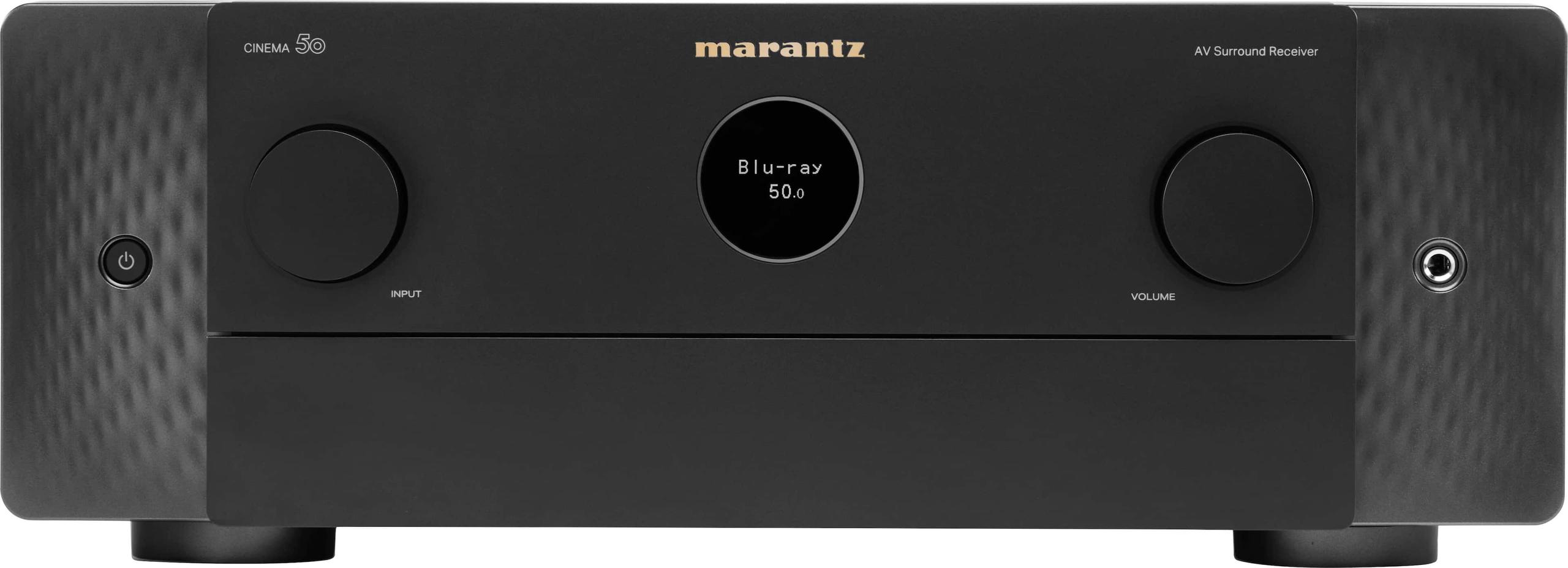
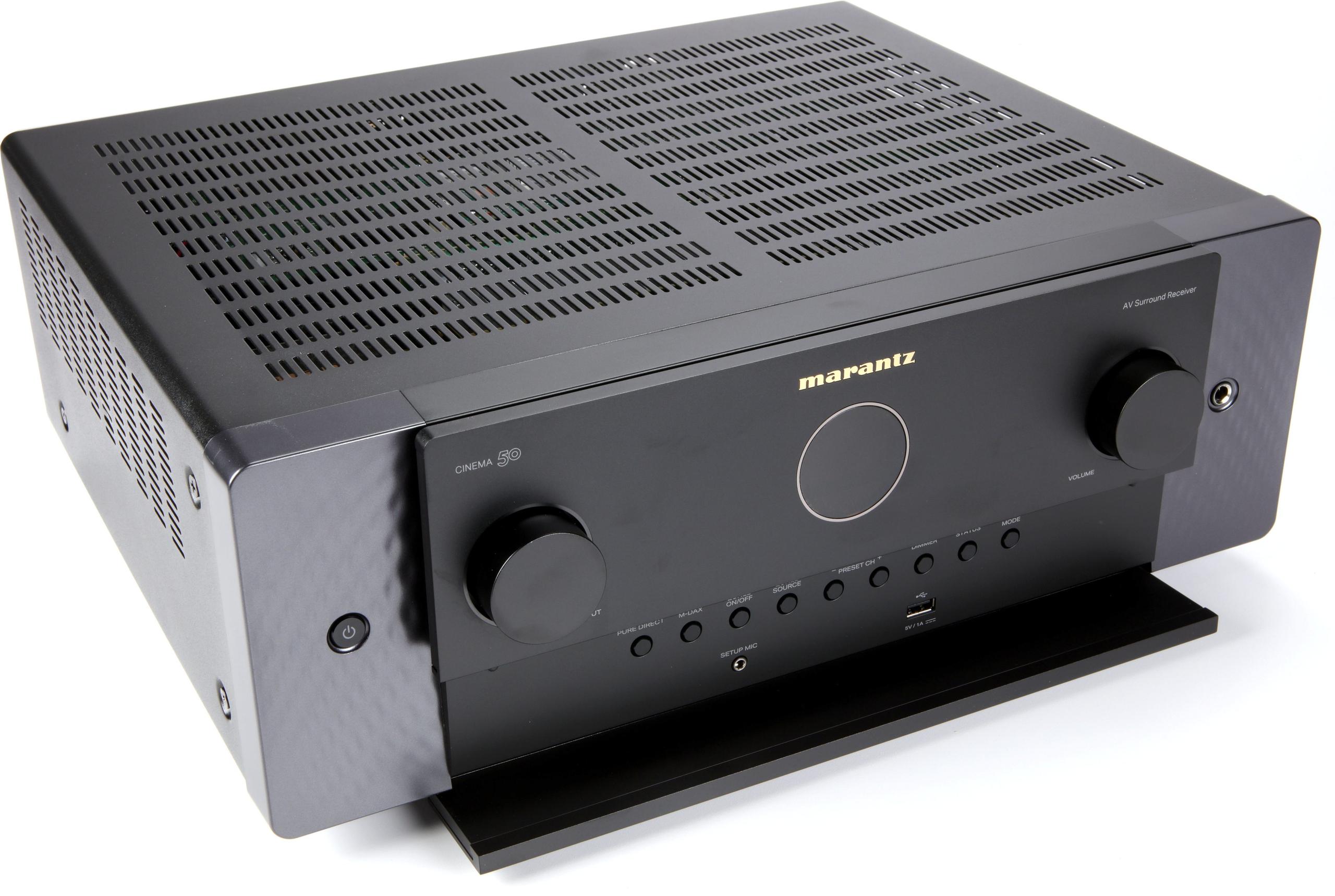
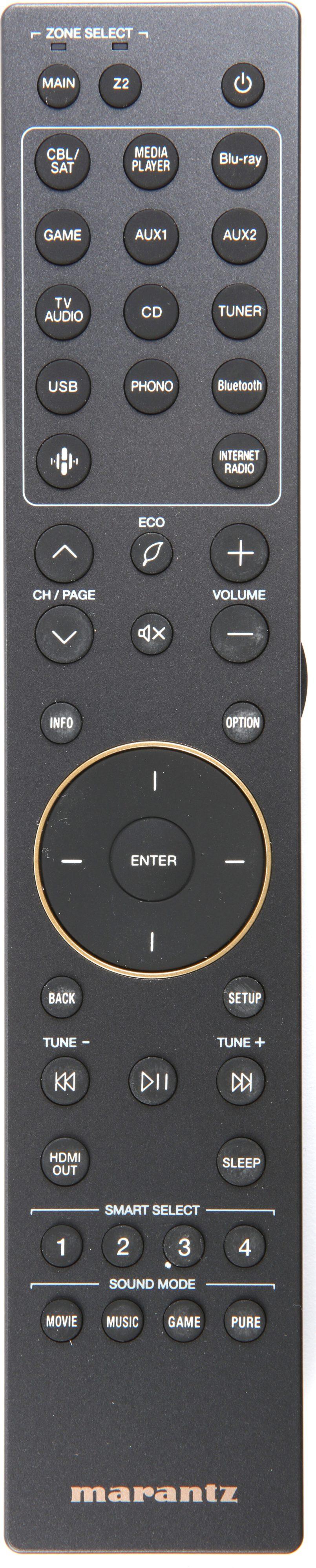
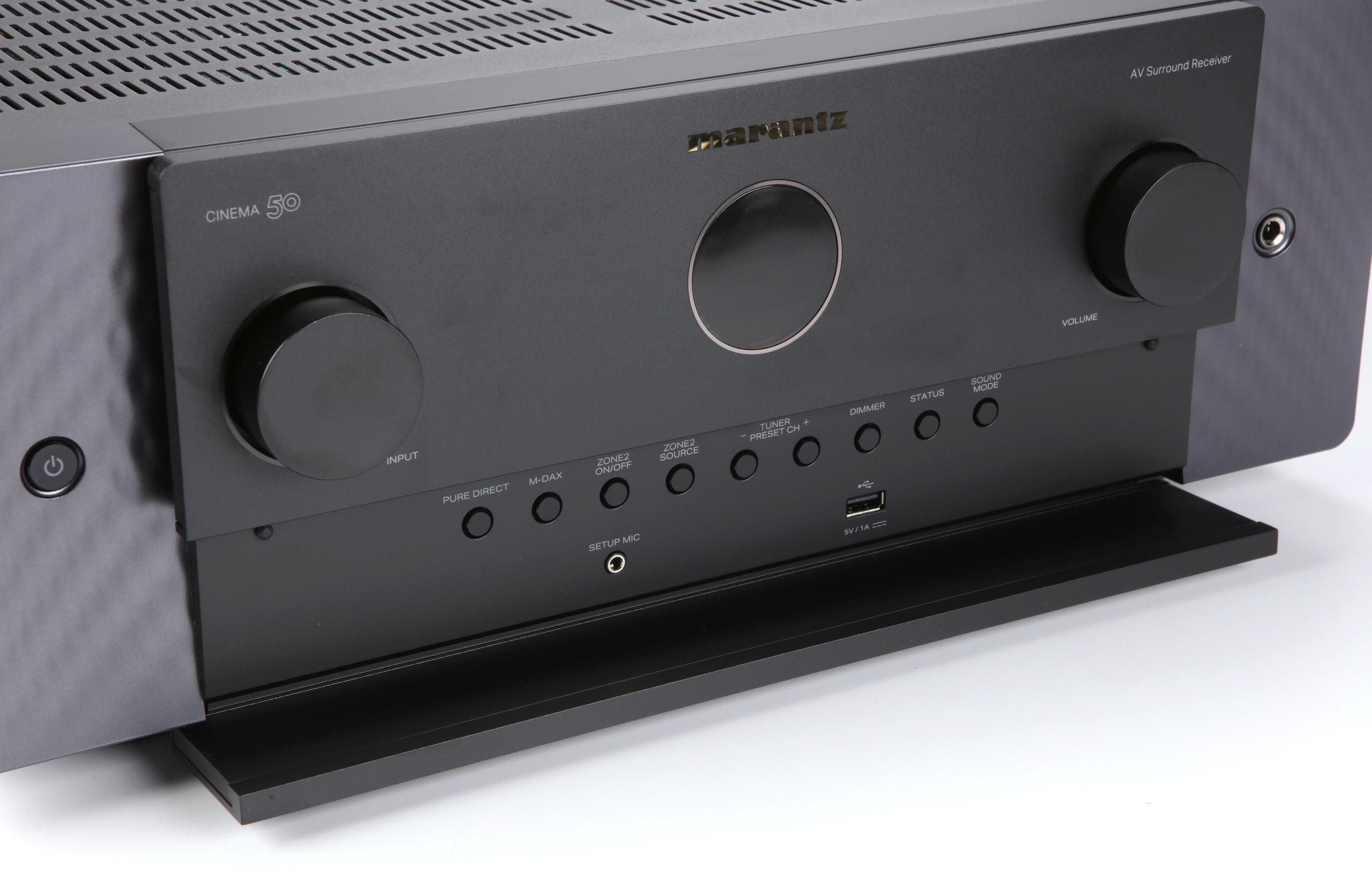
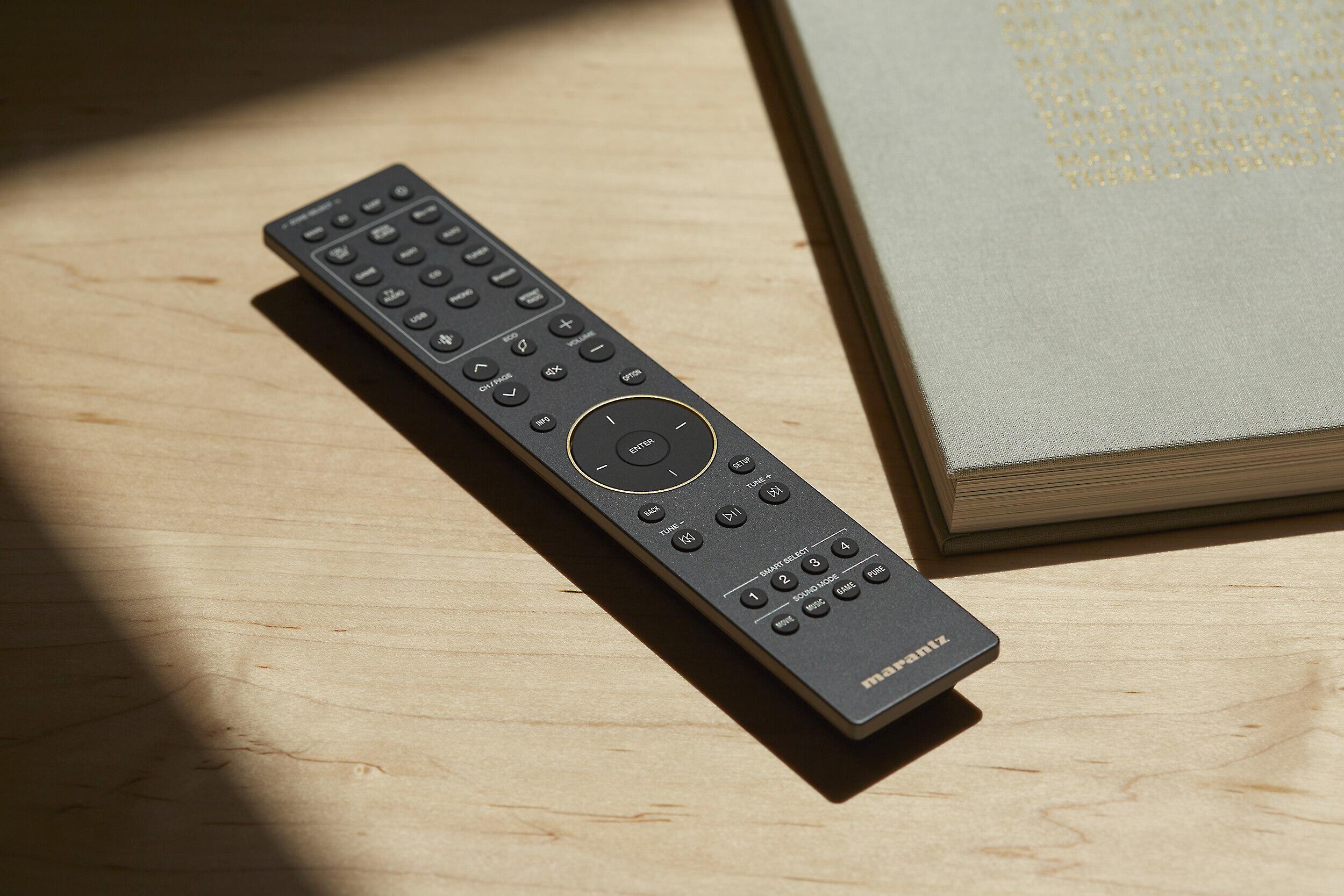
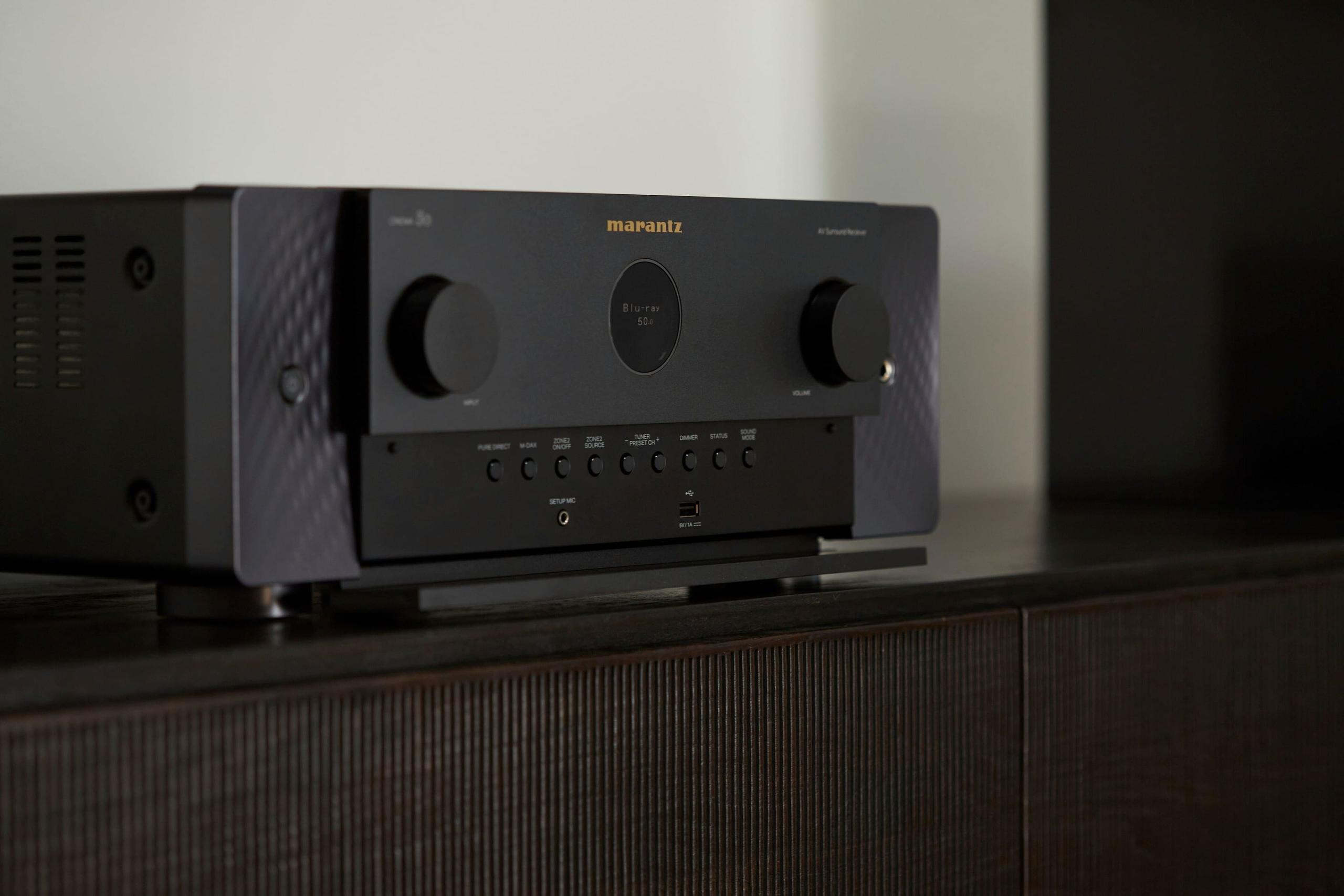
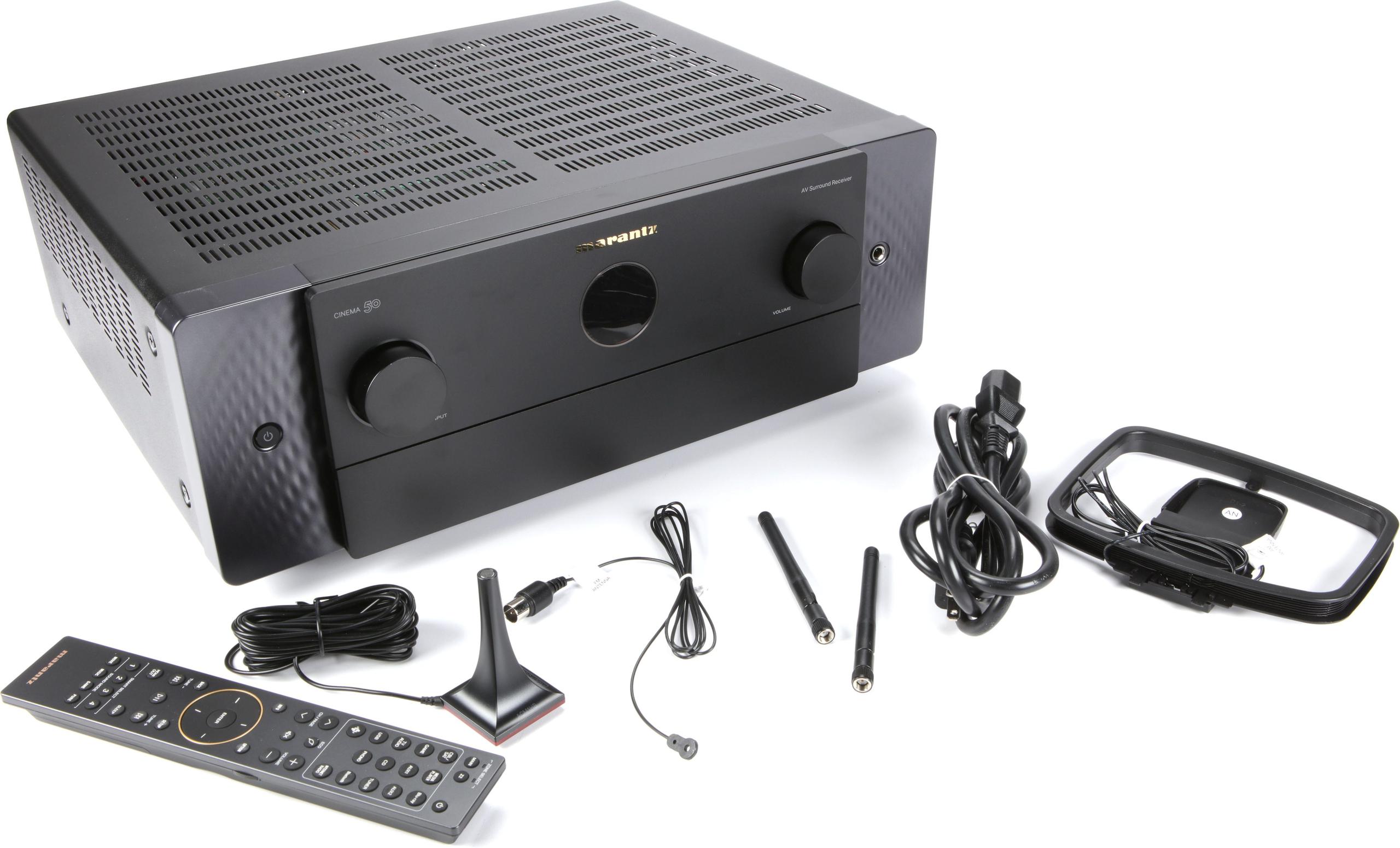
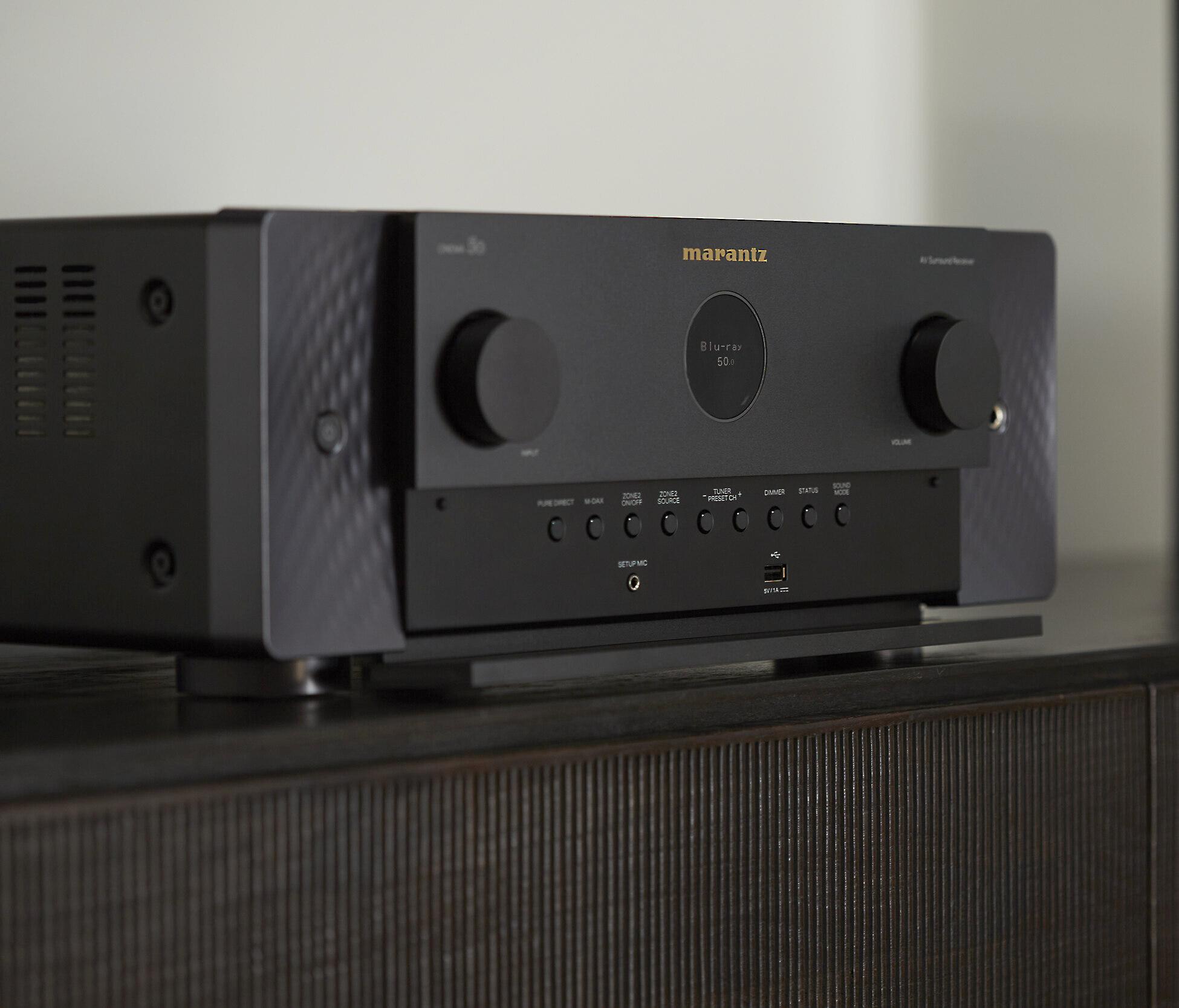
The Marantz Cinema 50, launched in 2022, embodies a different philosophy entirely. Marantz focuses on premium internal components, refined engineering, and the kind of build quality that justifies a substantially higher price point. This receiver targets buyers who prioritize long-term reliability and superior audio reproduction over spec sheet bragging rights.
Both are 9-channel receivers, meaning they can power nine separate speakers simultaneously—perfect for modern surround sound formats that use overhead speakers to create truly immersive audio. However, their approaches to achieving great sound and video differ considerably, and these differences matter more than you might expect.
When evaluating AV receiver performance, power output often dominates discussions, but it's actually one of the least important specifications once you meet basic requirements. The TX-NR7100 delivers 100 watts per channel into 8-ohm speakers, while the Cinema 50 provides 110 watts per channel. In practical terms, this 10-watt difference is negligible—you'd need to double the power to achieve a noticeable increase in volume.
What matters more is how cleanly that power is delivered and how the amplifier handles dynamic passages in movies and music. The TX-NR7100 uses Onkyo's Dynamic Audio Amplification technology, which employs a high-current power supply designed to deliver sudden bursts of power when explosions hit or orchestras swell. This approach prioritizes impact and dynamics, making action movies feel more visceral.
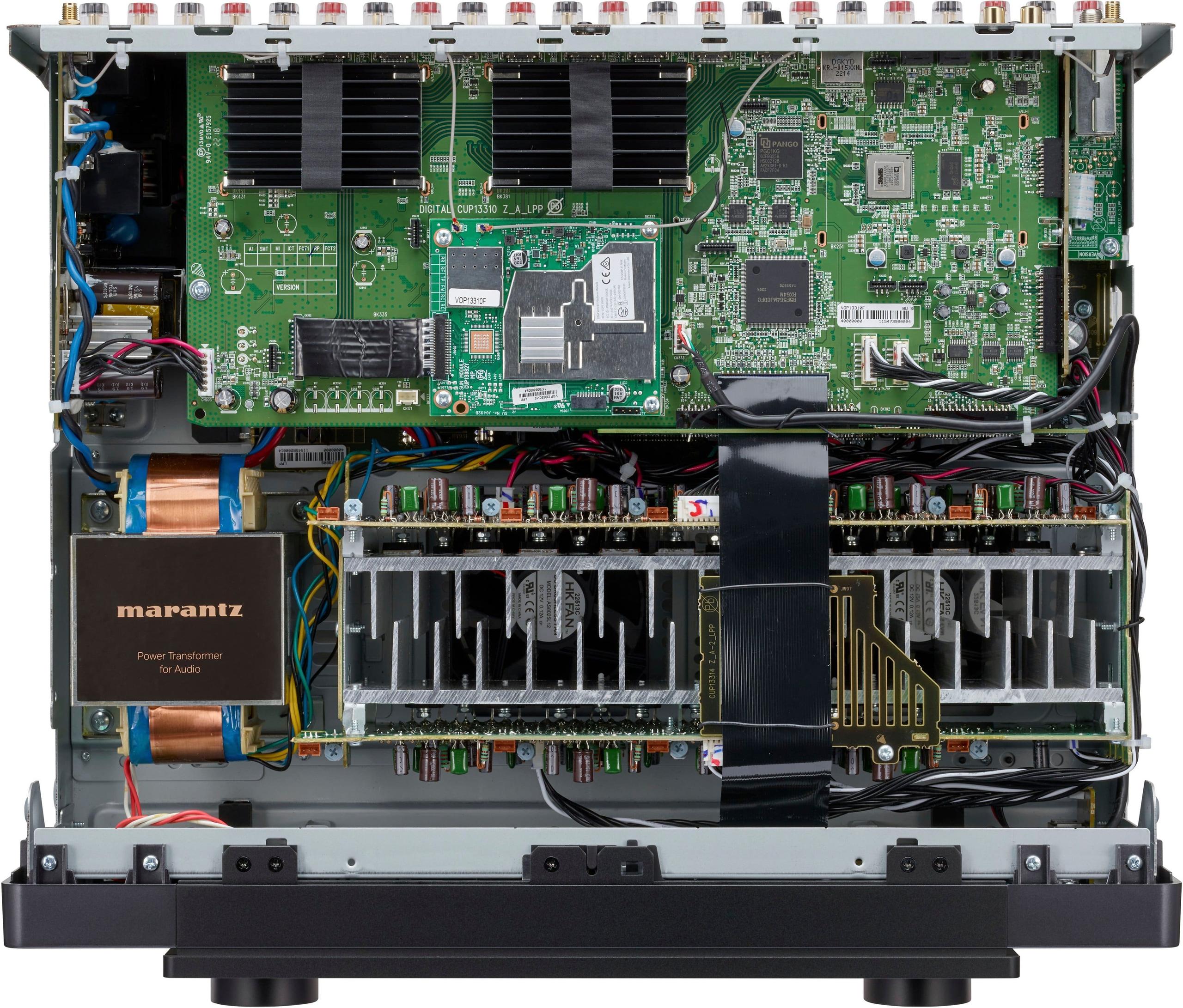
The Cinema 50 takes a different route with its Hyper Dynamic Amplifier Modules (HDAM)—discrete analog circuits that Marantz designs specifically for audio reproduction rather than using off-the-shelf integrated circuits. HDAM technology focuses on preserving the musical qualities of the signal, resulting in more natural-sounding dialogue and smoother, more refined audio reproduction across all content types.
In our research of user experiences, these philosophical differences translate into real-world performance characteristics. The TX-NR7100 consistently receives praise for its ability to create room-shaking, dynamic home theater experiences. Users describe helicopter scenes that genuinely seem to fly overhead and explosions that provide satisfying physical impact. However, some note that music playback, while solid, doesn't quite match the refinement of more expensive alternatives.
The Cinema 50, conversely, earns universal acclaim for its versatility. Expert reviews consistently highlight its ability to excel equally with blockbuster movies, intimate jazz recordings, and vinyl playback. This stems from Marantz's focus on analog circuit design and their Current Feedback Topology, which maintains signal accuracy across the entire frequency spectrum.
Modern AV receivers are essentially sophisticated computers that convert digital audio signals back into analog waveforms your speakers can reproduce. The quality of this digital-to-analog conversion (DAC) significantly impacts what you hear, though manufacturers often obscure these differences behind impressive-sounding specifications.
The TX-NR7100 features a 32-bit/384kHz DAC with Onkyo's Vector Linear Shaping Circuitry (VLSC), which reduces digital artifacts that can make audio sound harsh or fatiguing. It also includes PLL Jitter-Cleaning Circuit Technology—a system that reduces timing errors in digital signals that can blur musical detail. On paper, these specifications are impressive and suggest superior digital processing.
The Cinema 50 uses 32-bit/192kHz DACs across all channels, which sounds less impressive than Onkyo's higher sampling rate. However, Marantz focuses on DAC implementation rather than raw specifications. They use multiple DACs per channel and carefully design the analog output stages to preserve the musical qualities that cheaper implementations often sacrifice.
In practical terms, both receivers handle high-resolution audio files beautifully, but their characters differ. The TX-NR7100 tends to present a more analytical, detailed sound that highlights every element in the mix. The Cinema 50 offers a more cohesive, musical presentation where individual elements blend naturally into a convincing whole.
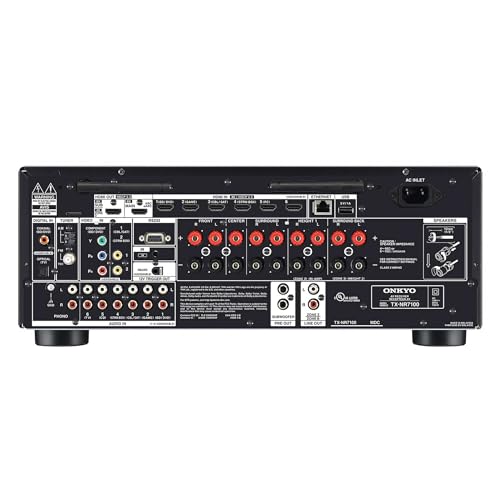
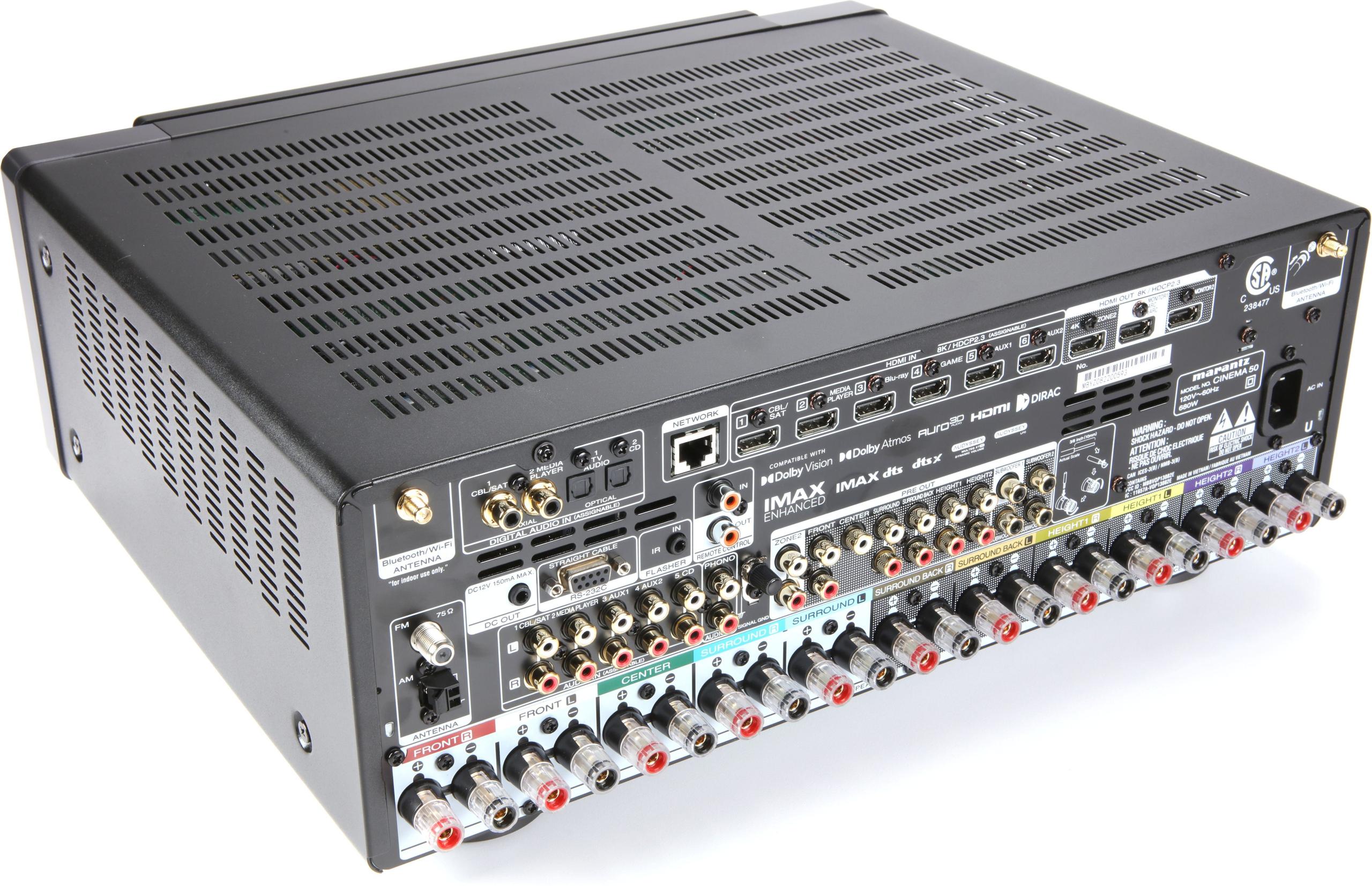
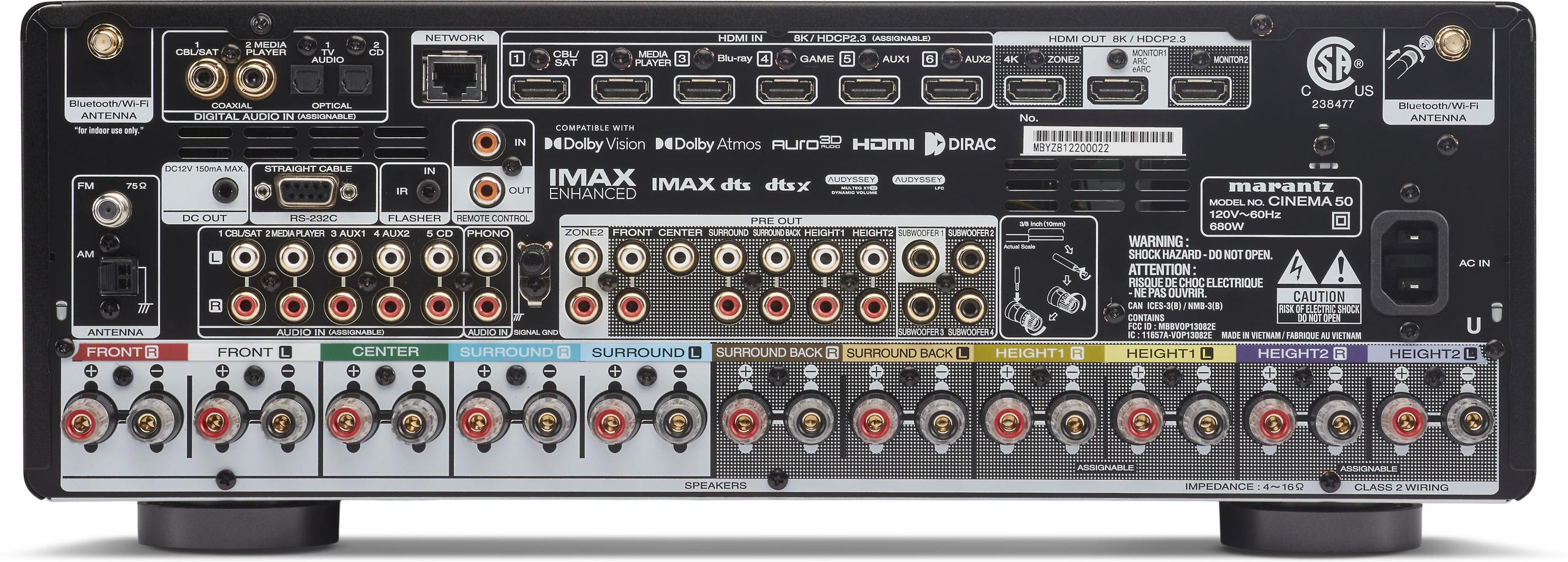
Video processing represents one area where release timing matters significantly. The TX-NR7100, despite being a year older, actually offers more HDMI inputs (seven versus six), which can be crucial if you have multiple sources. However, the Cinema 50 provides three HDMI outputs instead of two, offering more flexibility for complex setups involving projectors or secondary displays.
Both receivers support the latest video standards, including 8K/60Hz and 4K/120Hz pass-through, which ensures compatibility with next-generation gaming consoles and future video sources. They also handle all current HDR (High Dynamic Range) formats, including HDR10+, Dolby Vision, and HLG, which provide more realistic contrast and color reproduction.
For gamers, both receivers include Variable Refresh Rate (VRR), Auto Low Latency Mode (ALLM), and Quick Frame Transport (QFT)—features that reduce input lag and eliminate screen tearing for smoother gameplay. These gaming optimizations have become essential as console manufacturers push frame rates higher and response times lower.
The Cinema 50 distinguishes itself with 8K upscaling capability, which can improve the appearance of lower-resolution content on 8K displays. While native 8K content remains scarce, this feature could prove valuable as 8K adoption increases over the receiver's lifespan.
Here's where a seemingly minor specification difference becomes practically significant. The TX-NR7100 offers 9.2-channel processing, supporting two independent subwoofers. The Cinema 50 provides 9.4-channel capability, handling up to four subwoofers simultaneously.
Why does this matter? Subwoofer placement dramatically affects bass performance, and room acoustics create nulls and peaks that single or dual subwoofers can't always overcome. Multiple subwoofers allow for better bass distribution throughout the listening area, reducing the "boom and bust" bass response that plagues many home theaters.
If you have a large room or challenging acoustics, the Cinema 50's four-subwoofer capability could be transformative. For most users in typical rooms, the TX-NR7100's dual subwoofer outputs prove sufficient, making this an advantage that benefits a specific subset of users rather than everyone.
Both receivers include automatic room correction systems that analyze your room's acoustics and adjust speaker output accordingly, but they use different approaches that suit different user preferences.
The TX-NR7100 includes Dirac Live, widely considered among the best room correction systems available. Dirac Live provides incredibly detailed control over frequency response and supports up to 13 measurement positions for precise calibration. However, users consistently describe the setup process as complex and somewhat frustrating, requiring patience and technical understanding to achieve optimal results.
The Cinema 50 uses Audyssey MultEQ XT32, which offers less granular control but provides more consistent results with minimal user intervention. Audyssey typically delivers good results immediately after running the automatic calibration, making it more suitable for users who want effective room correction without becoming audio engineers.
Based on user feedback, Dirac Live can achieve superior results when properly configured, but Audyssey provides more predictable performance for typical users. Your preference depends on whether you enjoy tweaking audio settings or prefer reliable automatic operation.
Modern AV receivers must integrate with whole-home audio systems and smart home platforms, areas where these receivers show clear differentiation.
The TX-NR7100 supports an impressive array of multi-room platforms, including Chromecast built-in, DTS Play-Fi, Apple AirPlay 2, and Sonos compatibility. This flexibility allows integration with virtually any existing multi-room system, making it ideal for users who've already invested in specific platforms.
The Cinema 50 takes a more integrated approach with HEOS (Home Entertainment Operating System) built directly into the receiver. HEOS provides seamless multi-room audio with other compatible Marantz and Denon products, offering a more cohesive experience if you're building a system from scratch or planning to expand with compatible components.
For smart home integration, the Cinema 50 supports Amazon Alexa, Google Assistant, and Apple Siri, while the TX-NR7100 focuses primarily on Google Assistant and Alexa integration. Both allow voice control of basic functions, though neither offers the comprehensive voice control found in dedicated smart speakers.
Perhaps the most significant difference between these receivers lies in operational reliability, an aspect that specifications don't capture but user experiences reveal clearly.
The TX-NR7100 has documented issues with HDMI switching, eARC operation, and general stability. Users report problems including audio dropouts when switching inputs, inconsistent HDMI-CEC operation, and frustrating setup quirks. While many users eventually achieve stable operation, the process requires patience and technical troubleshooting skills.
One particularly concerning pattern involves HDMI compatibility with certain devices, especially gaming consoles. Some users report that the receiver works perfectly for months before developing intermittent problems that require factory service. These issues don't affect every unit, but they occur frequently enough to represent a legitimate concern for potential buyers.
The Cinema 50 receives consistently positive reliability reports, with users describing trouble-free operation and intuitive setup processes. Marantz's focus on proven technologies and conservative engineering appears to pay dividends in long-term reliability, though this comes at the cost of cutting-edge features and aggressive pricing.
At the time of writing, the TX-NR7100 typically costs several hundred dollars less than the Cinema 50, making it an attractive option for budget-conscious buyers who want flagship-level features. If you measure value purely in specifications per dollar, the Onkyo represents exceptional value.
However, the Cinema 50's higher price reflects genuinely superior components and engineering. The question becomes whether that engineering translates into better real-world performance and user experience sufficient to justify the price premium.
For home theater applications specifically, both receivers deliver excellent performance with modern surround sound formats. The TX-NR7100 might actually provide more visceral impact for action movies, while the Cinema 50 offers more refined dialogue reproduction and better integration between effects and music.
The TX-NR7100 makes sense for technically inclined users who prioritize features and specifications over convenience. If you enjoy tweaking settings, troubleshooting occasional issues, and maximizing performance per dollar, Onkyo's approach offers genuine value. It's particularly suitable for dedicated home theater rooms where reliability issues won't disrupt daily family use.
The Cinema 50 better serves users who want premium performance without the hassle. If you prefer equipment that works consistently, sounds great out of the box, and integrates seamlessly with other components, Marantz's engineering philosophy aligns with your priorities. It's ideal for main living areas where reliability and ease of use matter more than ultimate feature density.
For most buyers, the Cinema 50 represents better long-term value despite its higher initial cost. The combination of superior build quality, consistent operation, and refined audio performance typically provides more satisfaction over the receiver's lifespan than the TX-NR7100's impressive specifications.
However, if budget constraints make the price difference significant, the TX-NR7100 offers legitimate high-end performance at a more accessible price point. Just be prepared to invest time in setup and potentially deal with occasional operational quirks.
Both receivers can anchor excellent home theater systems, but they suit different user priorities and preferences. Your choice should depend on whether you value maximum features and specifications or prefer refined engineering and reliable operation.
| Onkyo TX-NR7100 | Marantz Cinema 50 |
|---|---|
| Power Output - Determines how loud your system can play and speaker compatibility | |
| 100W per channel (8Ω), supports 4-16Ω speakers | 110W per channel (8Ω), 150W (6Ω), optimized for premium speakers |
| Channel Configuration - Affects subwoofer setup flexibility and bass performance | |
| 9.2 channels (dual subwoofer outputs) | 9.4 channels (quad subwoofer outputs for superior bass management) |
| HDMI Connectivity - Critical for connecting multiple sources and future-proofing | |
| 7 inputs / 2 outputs, HDMI 2.1 with 8K/60Hz, 4K/120Hz | 6 inputs / 3 outputs, HDMI 2.1 with 8K upscaling, 8K/60Hz, 4K/120Hz |
| Video Processing - Important for picture quality and gaming performance | |
| HDR10+, Dolby Vision, gaming features (VRR, ALLM, QFT) | HDR10+, Dolby Vision, HLG, 8K upscaling, gaming features (VRR, ALLM, QFT) |
| Audio Formats - Determines surround sound capability and immersion | |
| Dolby Atmos, DTS:X, IMAX Enhanced, THX Select certified | Dolby Atmos, DTS:X, Auro-3D, DTS Virtual:X, IMAX Enhanced |
| Room Correction - Automatically optimizes sound for your specific room | |
| Dirac Live (highly accurate but complex setup) | Audyssey MultEQ XT32 (user-friendly with reliable results) |
| Digital Audio Processing - Affects sound quality and detail reproduction | |
| 32-bit/384kHz DAC with VLSC and jitter reduction | 32-bit/192kHz DACs on all channels with premium analog stages |
| Multi-Room Audio - Enables whole-home audio distribution | |
| 3 zones, supports Chromecast, DTS Play-Fi, AirPlay 2, Sonos | 3 zones with HEOS built-in, AirPlay 2, superior smart home integration |
| Smart Features - Voice control and streaming service integration | |
| Google Assistant, Alexa, extensive streaming platform support | Alexa, Google Assistant, Siri, HEOS ecosystem integration |
| Build Quality & Reliability - Affects long-term ownership experience | |
| Documented HDMI issues, complex setup, excellent performance when working | Premium components (HDAM), consistently reliable operation, refined sound |
| Release Date - Indicates technology generation and current relevance | |
| 2021 (mature platform with known quirks) | 2022 (newer design with refined engineering) |
For most home theater setups, the Marantz Cinema 50 offers superior reliability and refined audio performance, while the Onkyo TX-NR7100 provides more features at a lower price point. The Cinema 50 excels with consistent operation and premium build quality, making it ideal for main living areas where reliability matters most.
The key difference lies in philosophy: the TX-NR7100 prioritizes maximum features and specifications per dollar, while the Cinema 50 focuses on premium internal components and build quality. The Onkyo offers more HDMI inputs and advanced room correction, but the Marantz provides quad subwoofer support and more reliable operation.
The Marantz Cinema 50 delivers slightly more power at 110W per channel compared to the TX-NR7100's 100W per channel. However, this 10-watt difference is negligible in real-world use. More importantly, the Cinema 50 uses premium HDAM amplifier modules for refined sound quality, while the TX-NR7100 emphasizes dynamic impact and high-current delivery.
Yes, both the Onkyo TX-NR7100 and Marantz Cinema 50 support 8K/60Hz and 4K/120Hz video pass-through with HDMI 2.1. Both include gaming features like Variable Refresh Rate (VRR) and Auto Low Latency Mode (ALLM). The Cinema 50 adds 8K upscaling capability, which can improve lower-resolution content on 8K displays.
The Marantz Cinema 50 is significantly better for multiple subwoofers, supporting up to four independent subwoofer outputs (9.4 channels) compared to the TX-NR7100's dual subwoofer support (9.2 channels). This makes the Cinema 50 ideal for large rooms or challenging acoustics where multiple subwoofers can smooth bass response.
Yes, there are notable reliability differences. The Onkyo TX-NR7100 has documented HDMI switching issues and eARC problems that affect some users, while the Marantz Cinema 50 receives consistently positive reliability reports. The Cinema 50 uses more conservative engineering and proven technologies, resulting in more stable long-term operation.
The TX-NR7100 includes Dirac Live, which can achieve superior results when properly configured but requires technical expertise. The Cinema 50 uses Audyssey MultEQ XT32, which provides more user-friendly operation with consistently good results. Choose the Onkyo if you enjoy tweaking settings, or the Marantz for reliable automatic calibration.
The Onkyo TX-NR7100 offers 7 HDMI inputs and 2 outputs, while the Marantz Cinema 50 provides 6 HDMI inputs and 3 outputs. The TX-NR7100 is better if you have many sources to connect, but the Cinema 50 offers more flexibility with three outputs for complex setups involving projectors or secondary displays.
The Marantz Cinema 50 supports more audio formats, including Dolby Atmos, DTS:X, Auro-3D, and DTS Virtual:X. The TX-NR7100 handles Dolby Atmos, DTS:X, and IMAX Enhanced but lacks Auro-3D and DTS Virtual:X support. Both are THX certified, with the TX-NR7100 specifically carrying THX Select certification.
Yes, both support smart home integration, but with different strengths. The Cinema 50 works with Alexa, Google Assistant, and Siri, plus features built-in HEOS for seamless multi-room audio. The TX-NR7100 supports Google Assistant and Alexa, with broader multi-room platform compatibility including Chromecast, DTS Play-Fi, and Sonos.
Value depends on your priorities. The TX-NR7100 offers more features and specifications per dollar, making it excellent value for budget-conscious buyers who want flagship capabilities. The Cinema 50 provides better long-term value through superior reliability, build quality, and refined performance, justifying its higher price for most users seeking hassle-free operation.
Choose the TX-NR7100 if you're technically inclined, want maximum features per dollar, and don't mind occasional troubleshooting. Select the Cinema 50 if you prioritize reliability, refined audio quality, and seamless operation in your main living area. The Marantz suits most buyers better despite its higher price, while the Onkyo appeals to enthusiasts who enjoy optimizing their systems.
We've done our best to create useful and informative comparisons to help you decide what product to buy. Our research uses advanced automated methods to create this comparison and perfection is not possible - please contact us for corrections or questions. These are the sites we've researched in the creation of this article: crutchfield.com - prohifi.in - bestbuy.com - h-m-entertainment.com - audiosciencereview.com - crutchfield.ca - soundandvision.com - avsforum.com - avgadgets.com - youtube.com - onkyo.com - crutchfield.com - onkyo.com - accessories4less.com - klipsch.com - youtube.com - listenup.com - intl.onkyo-av.com - bestbuy.com - 420spotshop.com - support.onkyousa.com - tomsguide.com - valueelectronics.com - audiosciencereview.com - crutchfield.com - trustedreviews.com - bestbuy.com - snapav.com - sweetwater.com - marantz.com - soundunited.com - forums.audioholics.com - soundandvision.com - audioadvice.com

Privacy Policy
Terms and Conditions - Affiliate Policy
Home Security
© Copyright 2008-2026.
11816 Inwood Rd #1211, Dallas, TX 75244